

Plant Profile & Key Characteristics
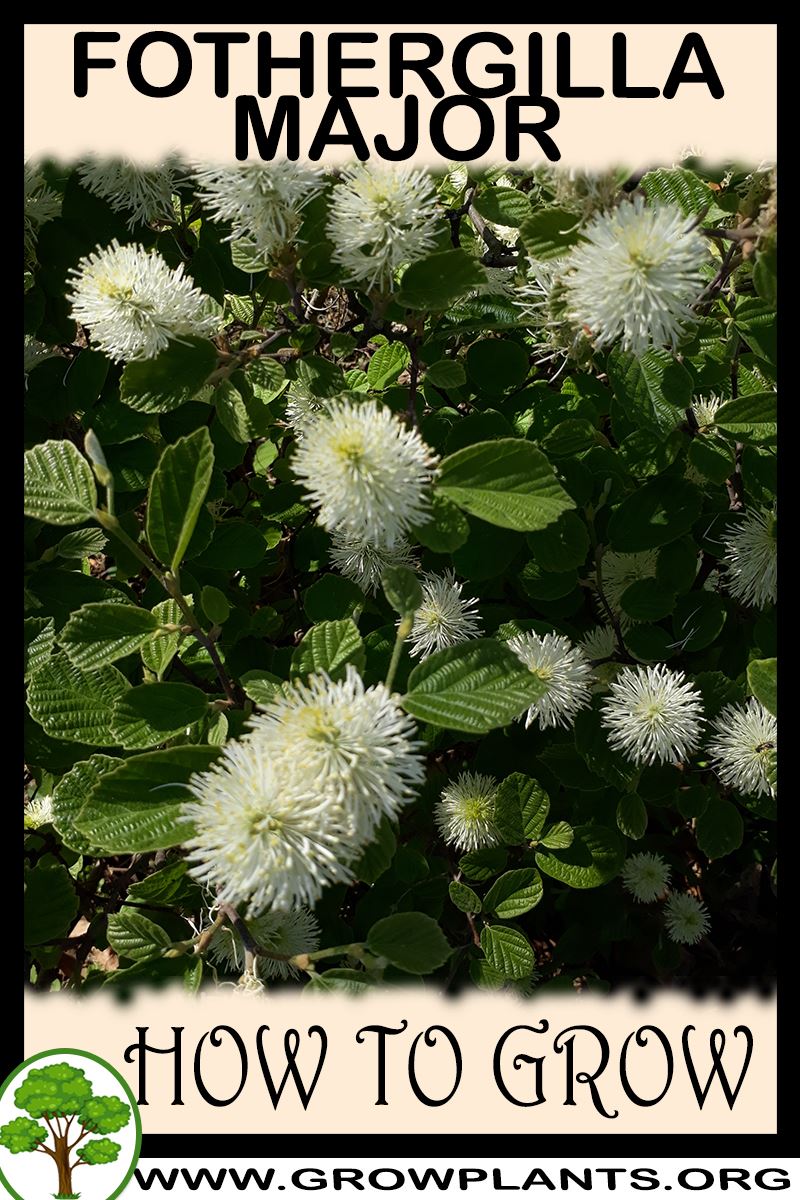
Overview: Fothergilla major (mountain witch alder) is a moderate-to-fast deciduous shrub reaching 1.5–2.5 m (5–9 ft). It is grown ornamentally for its fragrant white bottlebrush flowers in spring and its brilliant red autumn foliage.
Quick Specifications
| Specification | Attribute |
|---|---|
| Plant Type / Life Cycle | Perennial |
| Foliage Type | Deciduous |
| Mature Size | 1.5–2.5 m (5–9 ft) |
| Growth Rate | Moderate to fast |
| Hardiness | USDA 4–8 |
Growth Form & Structure
- Height & Spread: 1.5–2.5 m (5–9 ft) tall shrub of similar spread; also suitable for large containers.
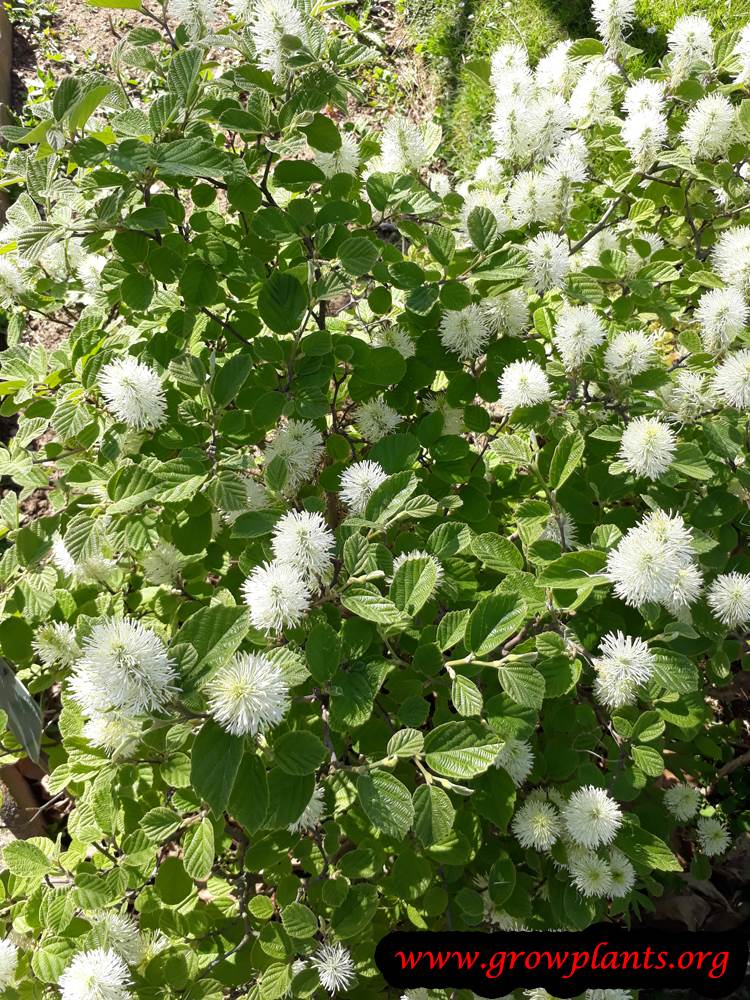
- Growth Habit & Form: Rounded, multi-stemmed deciduous shrub.
- Lifespan & Maturity: Moderate to fast growth to a long-lived flowering shrub.
Anatomy & Physical Features
- Leaves & Foliage: Oval green leaves that turn fiery red in autumn.
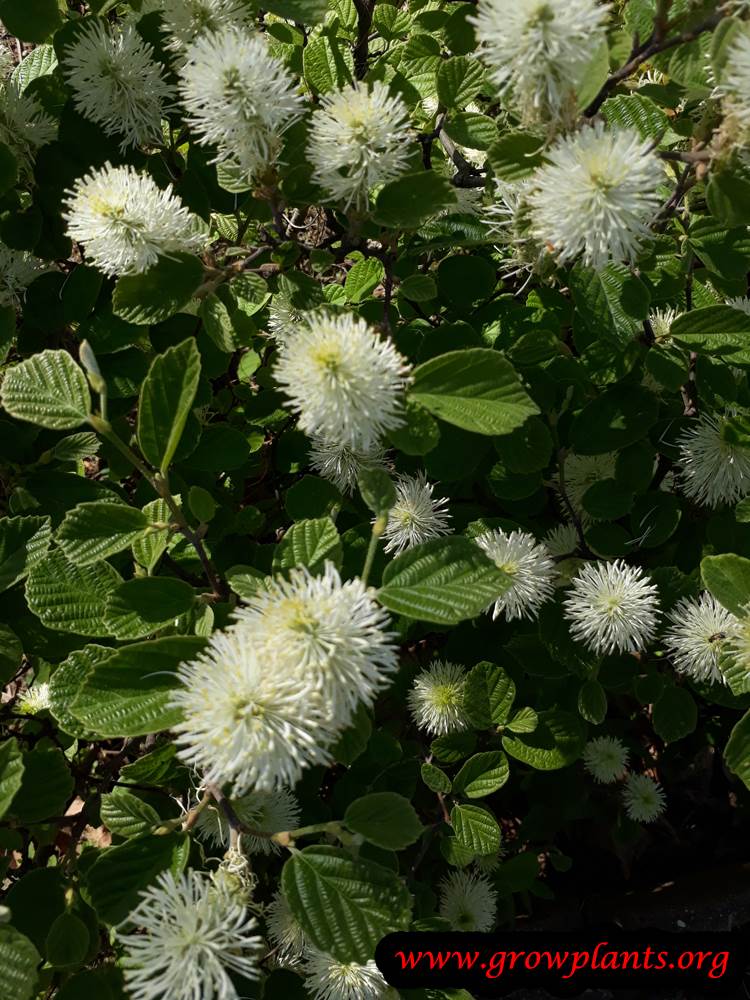
- Flower Characteristics: Fragrant white bottlebrush flower spikes with needle-like petals in spring.
Primary Uses & Landscape Value
- Functional & Ornamental Roles: Ornamental specimen and shrub-border plant grown for fragrant spring bloom and vivid autumn colour.
Care Guide: Planting, Soil & Watering
Overview: Mountain witch alder is a deciduous shrub for cool-winter climates that grows in full sun to part shade and, like its witch-hazel relatives, prefers an acidic, moist yet well-drained soil rich in organic matter. It likes steady moisture and does poorly on dry or alkaline ground.
Quick Care Requirements
| Requirement | Ideal Condition |
|---|---|
| Planting Season | Winter, spring or summer |
| Growth Rate | Moderate to fast |
| Soil Type | Acidic, moist, humus-rich and well-draining |
| Soil pH | Acidic (like azalea and witch-hazel) |
| Water Need | Moderate to high – keep evenly moist, do not let it dry out |
Planting & Establishment
- Best Planting Season: Plant in winter, spring or summer in mild weather; the plant needs a cold winter to thrive.
- How to Plant:
- Hole Preparation: Dig a hole wider than the root ball so roots can spread into loosened, humus-rich soil.
- Soil Amendments: Enrich with plenty of organic matter and leaf mould to hold moisture and keep the soil on the acidic side; avoid lime.
- Planting Depth: Set the shrub at the depth it grew in its pot, with the root collar at soil level.
- Growth Speed & Expectations: Moderate to fairly fast growth to about 1.5-2.5 m (5-9 ft).
Soil, Watering & Drainage Care
- Soil Mix & Drainage Needs: An acidic, moisture-retentive but well-drained soil is ideal; mulch to keep roots cool and moist, and ensure water still drains freely to avoid rot.
- Watering Schedule & Technique:
- Young / Newly Planted: Water regularly to keep the soil consistently moist while it establishes.
- Established: Water deeply and keep the soil from drying out, especially in summer; it prefers moist ground.
- Seasonal Adjustments: More water in summer heat; less in winter, though it should not dry out completely.
Climate, Light & Hardiness
Fothergilla major is a cold-hardy deciduous shrub for temperate and subtropical climates, valued for fragrant spring flowers and red autumn foliage; it needs a cold winter, per its own care notes, and grows well in full sun to half shade across zone 4–8.
Quick Climate Specifications
| Climate Zones | Temperate, subtropical |
|---|---|
| USDA Hardiness Zones | 4–8 |
| Frost Tolerance | High |
| Light Conditions | Full Sun to Half Shade |
Sunlight & Light Exposure
Optimal Light Setup
Full sun brings the best autumn color, though half shade is tolerated.
Temperature Extremes & Hardiness
USDA Hardiness & Regional Limits
Zone 4–8.
Cold Damage & Winter Protection
Very cold hardy, and per its own overview, a cold winter is beneficial to this species rather than merely tolerated.
Extreme Heat Tolerance
Not well suited to hot, humid subtropical extremes beyond zone 8; best performance stays within a genuinely temperate climate.
Wind, Humidity & Microclimate
Rainfall & Seasonal Moisture
Prefers evenly moist, well-drained soil.
Growing in Pots, Balconies & Indoors
Fothergilla offers bottlebrush spring flowers and brilliant autumn colour. The grower rates it for containers but not indoors – it is a hardy, deciduous shrub that needs an acidic, moist mix and a real winter.
Quick Details
- Container Size: A large container, 30-50 L (8-13 gal) with an acidic, moisture-retentive mix
- Indoor Suitability: Not a houseplant (grower); a hardy shrub for acidic outdoor pots
- Best Spot: Full sun to partial shade; a bright spot with some direct sun is ideal.
- Soil & Drainage: Aerated, organic-rich, slightly acidic mix (peat/coir with perlite); it must drain freely.
- Watering in Pots: Keep the mix consistently moist – this one likes water – but make sure it drains freely; never let a potted plant go bone-dry.
Indoors & On the Windowsill
- Not a houseplant: The grower marks it unsuitable indoors; it needs outdoor light, seasonal cold and its autumn display comes from the changing outdoor conditions a room can’t mimic.
- No winter shelter needed: It is hardy and deciduous – leave it outdoors to go dormant over winter.
On a Balcony or Patio
- Light & colour: Sun to part shade suits it; more sun gives stronger autumn colour. Keep the pot from drying out, especially in wind and reflected wall heat.
- Acid-lover: In hard-water areas, use rainwater where you can – it prefers acidic conditions.
Choosing the Pot, Soil & Long-Term Care
- Pot & drainage: A large tub with strong drainage holes and an acidic, moisture-retentive mix; skip a standing-water saucer but never let the roots dry.
- Potting mix: Use a well-aerated, organic-rich mix – quality potting mix, or peat/coir blended with perlite or vermiculite.
- Feeding: Feed with an ericaceous (acid-loving) fertiliser through the growing season.
- Repotting: Refresh the acidic mix and pot up or root-prune every couple of years.
Fertilizing & Feeding
Fothergilla major is grown for its fragrant white bottlebrush flowers in spring and its vivid red autumn foliage. It is a light feeder that prefers acidic, humus-rich soil – balanced feeding after bloom supports steady growth, and heavy or unbalanced feeding is unnecessary and can interfere with the fall color this shrub is prized for.
Quick Fertilizing Specs
| Feeding Level | Light |
|---|---|
| Main Nutrient Priority | Balanced feeding with adequate nitrogen after bloom supports healthy growth; there is no need for a special high-phosphorus formula to improve flowering |
| Best Feeding Period | Spring right after flowering finishes, while new growth is developing |
| Soil pH | Prefers acidic, humus-rich, well-drained soil similar to that favored by azaleas and rhododendrons |
| Reduce/Stop Feeding | Stop feeding by mid-summer so new growth can harden off and the shrub can develop its full autumn leaf color undisturbed |
| Organic Options | Working acidic organic matter such as compost or leaf mold into the planting area, and maintaining a mulch layer, suits this shrub’s soil preferences well |
Feeding by Growth Stage
Post-bloom growth
Support healthy new growth after the fragrant spring flowers fade
| Nutrient direction | Balanced feeding with adequate nitrogen supports steady post-bloom growth; an established shrub in good, humus-rich soil often needs only light supplemental feeding |
|---|---|
| Timing | Spring, right after flowering finishes |
| Frequency | A single light feeding right after bloom is usually enough for an established shrub |
| Fertilizer types | A balanced, complete fertilizer formulated for acid-loving shrubs, A slow-release balanced fertilizer applied once right after bloom |
| Routine trace nutrients | iron, manganese |
| Precautions | Avoid heavy nitrogen feeding, since excess vigor pushes leafy growth without improving flowering, and keep fertilizer away from the base of the stems |
Summer growth maturation
Let the season’s new growth mature and harden off so the shrub can develop strong autumn leaf color
| Nutrient direction | Feeding is rarely needed during this period; the growth is already set by earlier feeding and further nitrogen at this stage does not improve fall color |
|---|---|
| Timing | Mid to late summer as this year’s growth matures ahead of autumn color change |
| Frequency | Minimal feeding is typically needed through this period |
| Fertilizer types | Generally no additional fertilizer is needed at this stage for an established, healthy shrub |
| Precautions | Avoid late-summer or autumn nitrogen feeding, since it can push soft new growth that fails to harden off before cold weather and may dull the autumn foliage display |
Dormant season
Let the shrub rest through winter dormancy after its autumn leaf display fades
| Nutrient direction | None – withhold fertilizer through dormancy |
|---|---|
| Timing | Late autumn through winter while the shrub is leafless and dormant |
| Frequency | No feeding at this stage |
| Fertilizer types | No feeding at this stage; resume light feeding right after bloom in spring |
| Precautions | Do not fertilize a dormant shrub, since feeding now offers no benefit and can encourage tender growth vulnerable to cold damage |
Nutrient Deficiency Signs & Corrections
Fewer fragrant flowers than expected in spring, along with weak or pale growth
| Possible causes | Nitrogen deficiency limiting the post-bloom growth that builds the shrub for next year, Alkaline soil, which this species tolerates poorly and which limits nutrient uptake generally, Too much shade, since flowering and fall color are both best in fuller sun, Root stress from poorly drained soil limiting nutrient uptake |
|---|---|
| Appears first on | New spring growth and the following bloom |
| What to check | Soil pH, since this species strongly prefers acidic soil, Recent feeding history through the growing season, Sun exposure at the planting site, Soil drainage around the root zone |
| Possible correction | Resume a light post-bloom feeding if the shrub has been underfed, and test and correct soil pH toward acidic if it has drifted alkaline, since this affects nutrient availability broadly |
New leaves yellow between the veins while the veins stay green
| Possible causes | Iron deficiency associated with alkaline soil that limits iron uptake, a common issue for this acid-loving species planted in unsuitable soil, Poorly drained or compacted soil restricting root function generally, Cool, wet spring soil temporarily slowing nutrient uptake |
|---|---|
| Appears first on | Newest leaves |
| What to check | Soil pH and drainage around the root zone, Whether yellowing is confined to new growth, which points toward iron, Recent watering pattern and soil temperature |
| Possible correction | Correct soil pH toward acidic and improve drainage first; if chlorosis persists in an otherwise healthy, adequately fed shrub, a chelated iron product applied per its label can help |
Autumn foliage color is dull green or muted rather than the expected vivid red or orange
| Possible causes | Too much shade, since fuller sun produces the most vivid autumn color in this species, Late-season nitrogen feeding delaying the natural color change, Alkaline soil limiting overall plant vigor and nutrient uptake |
|---|---|
| Appears first on | Overall foliage in autumn |
| What to check | Sun exposure at the planting site, Timing of the most recent fertilizer application, Soil pH |
| Possible correction | Avoid feeding after mid-summer so color change is not delayed, and improve sun exposure if the site is heavily shaded, since fertilizer timing rather than more fertilizer usually explains a dull display |
Pruning, Training & Seasonal Maintenance
Fothergilla major is a slow-to-moderate growing deciduous shrub with a naturally neat, rounded habit, grown chiefly for its fragrant white bottlebrush flowers in spring and fiery autumn foliage — it needs very little pruning to look good. Because flower buds form on the previous season’s wood and open before or as the leaves emerge, the safest window for any real shaping is right after flowering rather than during winter dormancy, which is the one time that risks removing the coming season’s bloom. Pruning has almost no effect on overall size or vigor and functions mainly as grooming/renewal, not a structural necessity.
Quick Pruning & Maintenance Specs
| Pruning Tolerance | Low–Moderate |
| Primary Pruning Window | Immediately after flowering (mid–late spring) |
| Secondary Maintenance Window | Winter dormancy – deadwood/damage only |
| Typical Frequency | As needed, not annual |
| Main Objective | Shape & deadwood removal without sacrificing next spring’s flowers |
| Young Plant Priority | Establish natural mounded form; remove only damaged growth |
| Mature Plant Priority | Thin oldest stems at the base to renew vigor and flowering |
| Best Tool Type | Bypass secateurs; loppers for older basal stems |
| Avoid Heavy Pruning During | Winter dormancy (removes set flower buds) and during bloom |
Pruning by Plant Age & Size
Newly Established
Remove only broken or damaged growth from transplanting; do not shape or cut back — let the plant settle into its naturally rounded form.
Young / Formative
No formal training system is used; Fothergilla is grown as a multi-stemmed shrub. Simply correct any awkward or crossing shoots.
Mature / Established
Occasional renewal thinning — remove one or two of the oldest, least productive stems at the base every few years to keep the clump open and encourage fresh flowering wood.
Flowering Wood
Flowers are borne on wood formed the previous growing season and open in spring before or with the new leaves. Cutting back in winter removes already-set flower buds and reduces the spring display; pruning right after flowering gives new growth a full season to mature and set next year’s buds.
Structural Pruning & Training
Remove crossing or rubbing branches and thin congested interior growth occasionally to maintain the shrub’s rounded outline and good air movement. Fothergilla can sucker gently from the base to widen the clump — leave basal shoots if a broader colony effect is wanted, or remove them to keep a tighter form.
Container & Small-Space Pruning
Tolerates container culture well; light post-bloom trimming keeps a potted specimen compact, and root pruning at repotting every few years helps match top growth to the container size.
Tools
Bypass secateurs for most cuts; loppers for older, thicker basal stems during renewal thinning.
Tool Hygiene & Disease Risk
Routine — only aphids are noted as a pest concern; clean, sharp tools are sufficient, with no elevated disease-transmission risk documented for this species.
Cut Placement & Technique
Use thinning cuts at the base for renewal rather than heading cuts partway up a stem, and avoid flush cuts that damage the branch collar.
Heavy Pruning & Rejuvenation
Fothergilla does not need, or particularly benefit from, hard rejuvenation. If a clump becomes overgrown, renew it gradually by removing the oldest stems at the base over two to three seasons rather than cutting the whole shrub back at once.
Post-Pruning Care
Water normally through the following growing season; no fertilizing is needed after light grooming cuts.
Common Pruning Mistakes
Cutting back hard in winter for tidiness, which strips the coming spring’s flower buds; over-thinning the canopy, which weakens the density needed for a strong fall color display.
When NOT to Prune
Avoid pruning in winter dormancy if the spring flower display matters, and avoid cutting during the bloom period itself.
Pruning Troubleshooting
| Problem | Possible Cause | What to Check | Corrective Action |
| Little or no spring bloom | Pruned during winter dormancy | Timing of the last prune relative to flowering | Shift shaping cuts to right after flowering next year |
| Congested, twiggy interior | No renewal thinning over several years | Age and density of the oldest stems | Remove a few of the oldest basal stems at ground level |
Recommended Tools (by task)
- bypass_secateurs – light post-bloom shaping and removing damaged shoots on young to mature plants.
- loppers – cutting older, thicker basal stems during occasional renewal thinning.
Propagation Guide
Fothergilla major is usually propagated by softwood stem cuttings taken in early summer, or by dividing rooted suckers from the colony’s spreading roots; seed is possible but germination is slow and often delayed by complex dormancy, so it is mainly used by breeders rather than home gardeners. Overall difficulty is moderate, since cuttings need attentive humidity and hormone treatment to root well.
Quick Propagation Specs
| Best Propagation Method | Softwood stem cuttings |
| Alternative Methods | Division of rooted suckers; seed |
| Propagation Difficulty | Moderate (Specialist by seed, due to slow double dormancy) |
| Seed True-to-Type | Usually true-to-type for the species |
| Vegetative True-to-Type | Yes |
| Best Propagation Season | Cuttings in early summer; division in the dormant season |
| Seed Germination Time | Slow and often delayed a year or more by seed dormancy |
Growing from Seed
Dormancy & Pre-Sowing Treatment
Like its witch-hazel relatives, Fothergilla seed typically has a hard-to-break double dormancy, often needing a warm period followed by a cold period (warm then cold stratification) before it will germinate; without this treatment germination can be delayed a year or more.
Germination Time
Slow and irregular even with stratification – germination may be spread over more than one season.
Stem Cuttings
Cutting Type
Softwood tip cuttings from new growth.
Best Timing
Early summer, once new growth has begun to firm up slightly but is still flexible.
Rooting Setup
Use a free-draining rooting medium under high humidity (mist or a covered tray); cuttings can be slow and inconsistent to root.
Rooting Hormone
Recommended – a rooting hormone meaningfully improves rooting success on this species.
Rooting Time
Typically several weeks to a couple of months under warm, humid conditions.
Division, Offsets, Pups & Suckers
Fothergilla spreads slowly by suckering from its roots, forming a colony over time. Rooted suckers can be severed from the parent with their own roots attached and moved during the dormant season; only suckers with an established root system of their own should be separated, as unrooted shoots will not survive independently.
Bloom & Flower Guide
Quick Details
- Bloom Season: Spring, around the time the leaves emerge
- Flower Appearance: Fluffy white bottlebrush spikes with fine, needle-like parts
- Edibility: Ornamental only – grown for its spring flowers and fiery autumn foliage, not eaten
Detailed Blooming Overview
Fothergilla flowers in spring with fluffy white bottlebrush spikes. There are no true petals – the show comes from a crowd of white stamens packed into each spike – and they carry a sweet, honey-like fragrance. Appearing around the time the leaves unfold, they are a fresh spring feature on a shrub also grown for its brilliant autumn colour.
Flower Characteristics
- White bottlebrush flower spikes made up of showy stamens (no true petals).
- Fine, needle-like flower parts.
- Sweet, honey-like fragrance.
Bloom Care & Thinning
- Managing the bloom: Needs little; any shaping is best done just after flowering.
Pests, Diseases & Troubleshooting
Overview: Fothergilla is a slow, well-behaved North American shrub in the witch-hazel family, prized for its bottlebrush flowers and brilliant autumn colour; it is genuinely one of the more trouble-free garden shrubs, with almost no significant pests and few diseases. Its real needs are cultural – acidic, moist, well-drained soil and enough sun for good colour – and its main ‘problems’ are chlorosis on alkaline ground and leaf scorch when the roots dry out.
Quick Troubleshooting Overview
| Issue / Pest | Main Symptom | Primary Solution |
|---|---|---|
| Iron chlorosis | Yellow leaves with green veins on alkaline soil | Acidify soil, use chelated iron, mulch |
| Leaf scorch | Brown, dry leaf edges in hot, dry spells | Keep soil moist, mulch, part shade in heat |
| Leaf spot | Minor brown/purplish spotting in wet years | Rake up leaves, improve airflow; usually cosmetic |
| Powdery mildew | Light powdery film late in the season | Airflow and sun; rarely needs treatment |
| Poor autumn colour | Dull fall foliage | Site in more sun; ensure not over-shaded |
Common Pests & Management
- Aphids (Aphidoidea):
- Symptoms: Occasional small colonies of soft green insects on the tender new shoots in spring, with a little honeydew; rarely more than a passing nuisance on this shrub.
- Prevention & Control: Hose them off or tolerate them and let natural predators clear them. Insecticidal soap is more than enough in the unusual event of a heavy colony.
- Spider mites (Tetranychus urticae):
- Symptoms: Faint stippling and a dull cast to the leaves only on plants badly stressed by heat and drought.
- Prevention & Control: Keep the plant well watered and unstressed, hose the foliage, and use insecticidal soap in the rare case they build up. Relieving drought stress usually resolves it.
Diseases & Fungal Issues
- Fungal leaf spot (Phyllosticta / Cercospora spp.):
- Symptoms: Scattered small brown or purplish spots on leaves in prolonged wet weather, generally cosmetic and appearing late in the season.
- Treatment & Management: Rake up and bin fallen leaves, avoid overhead watering, and ensure good air movement. Fungicide is essentially never needed on this shrub.
- Powdery mildew (Erysiphe spp.):
- Symptoms: A light white powdery film on foliage late in the season in humid, shaded, crowded sites.
- Treatment & Management: Grow in good light and airflow; the shrub tolerates minor mildew without harm. Remove badly affected leaves if desired.
Growing Difficulties & Abiotic Problems
- Iron chlorosis on alkaline soil:
- Cause & Symptoms: Fothergilla needs acidic soil; in neutral-to-alkaline ground iron becomes unavailable and the leaves yellow between green veins, with weak growth and poor colour.
- Correction Strategy: Grow in acidic, humus-rich soil, mulch with an acidic organic mulch, and correct chlorosis with chelated iron and soil acidification (elemental sulphur). On chronically alkaline sites, grow in a raised bed or large container of ericaceous mix.
- Leaf scorch from dry soil:
- Cause & Symptoms: In hot, dry, or exposed positions with dry roots, the leaf margins brown and crisp, and stressed plants colour poorly.
- Correction Strategy: Keep the soil consistently moist but well drained, mulch to conserve moisture, and give afternoon shade in hot climates while providing enough sun elsewhere for good autumn colour.
- Poor autumn colour:
- Cause & Symptoms: Too much shade mutes the shrub’s celebrated fall display.
- Correction Strategy: Site in full sun to light shade; more sun (with adequate moisture) gives the most vivid orange-red autumn colour.
- Slow establishment:
- Cause & Symptoms: Fothergilla is naturally slow-growing and resents disturbance and drought while young.
- Correction Strategy: Plant in the right acidic, moisture-retentive soil, water steadily through the first seasons, and be patient – it is a long-lived, low-maintenance shrub once settled.
What Helps – Products & Tools
This is a near-maintenance-free shrub; the priorities are acidic, moist, well-drained soil and adequate sun rather than any spray programme. Keep an acidifying mulch and chelated iron on hand for chlorosis on limey soils; insecticidal soap covers the rare aphid or mite, and leaf-spot/mildew are cosmetic and managed by sanitation and airflow.