Plant Profile & Key Characteristics
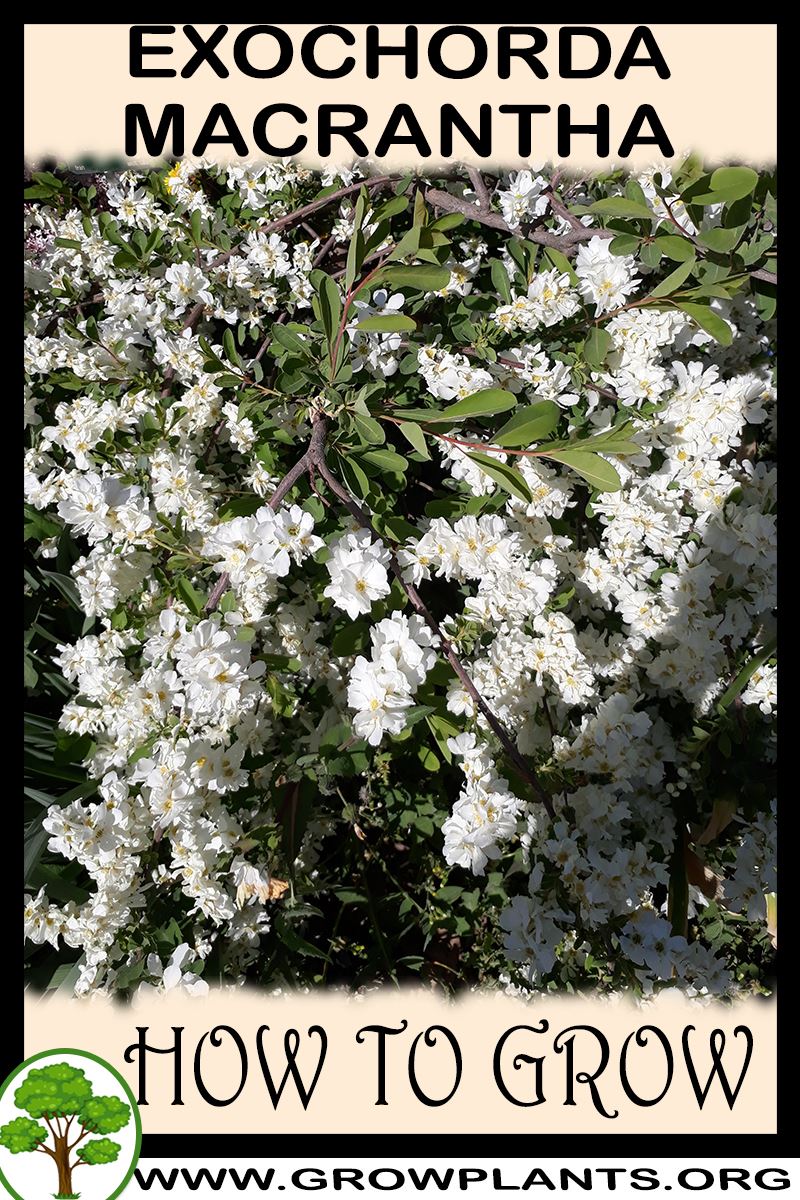
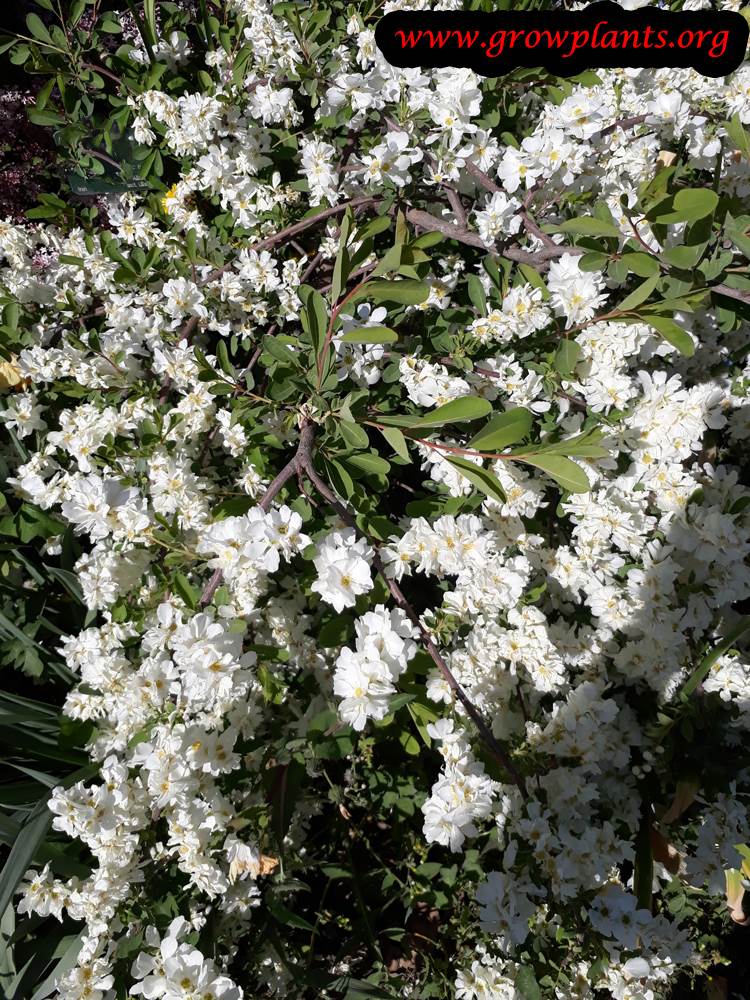
Overview: A deciduous shrub 1-4 m (3-12 ft) tall covered in white bowl-shaped flowers in spring, also known as the bride bush. A hardy, moderate-growing, drought-tolerant ornamental.
Quick Specifications
| Specification | Attribute |
|---|---|
| Plant Type / Life Cycle | Perennial (deciduous shrub) |
| Foliage Type | Deciduous |
| Mature Size | 1-4 m tall (3-12 ft) |
| Growth Rate | Moderate |
| Hardiness | USDA zones 5-8 |
Growth Form & Structure
- Height & Spread: 1-4 m (3-12 ft); can also be grown in large containers.
- Growth Habit & Form: Rounded, arching deciduous shrub.
- Lifespan & Maturity: Long-lived shrub reaching size at a moderate pace.
Anatomy & Physical Features
- Leaves & Foliage: Green oval leaves.
- Flower Characteristics: Pure white, bowl-shaped flowers opening from pearl-like buds in spring (full detail in the Bloom guide).
Primary Uses & Landscape Value
- Functional & Ornamental Roles: Spring-flowering ornamental shrub for borders and containers; drought tolerant once established. Not an indoor plant.
Care Guide: Planting, Soil & Watering
Overview: Exochorda macrantha (pearl bush) is a deciduous, spring-flowering shrub for temperate and subtropical climates (hardiness zone 5-8) that grows best in full sun to half shade. It likes soil that stays moist yet drains well, and is fairly drought tolerant once established.
Quick Care Requirements
| Requirement | Ideal Condition |
|---|---|
| Planting Season | Warm season, spring to summer |
| Growth Rate | Moderate |
| Soil Type | Moist but well-draining |
| Water Need | Low to Moderate – let soil dry between waterings |
Planting & Establishment
- Best Planting Season: Plant in the warm season, from spring to summer, so the shrub establishes before winter.
- How to Plant:
- Hole Preparation: Dig a hole about the depth of the root ball and roughly twice as wide, on well-draining ground.
- Soil Amendments: Mix compost or organic matter into the backfill to hold moisture while keeping the soil open and free-draining.
- Planting Depth: Set the root ball so its top is level with the soil surface, without burying the base of the stems.
- Growth Speed & Expectations: A moderate grower reaching about 1-4 m (3-12 ft); prune after flowering to shape.
Soil, Watering & Drainage Care
- Soil Mix & Drainage Needs: Grow in soil that holds some moisture but drains freely; in containers use a free-draining mix with good drainage holes to prevent root rot.
- Watering Schedule & Technique:
- Young / Newly Planted: Water regularly to keep the soil moist while the shrub establishes its roots.
- Established: Once established it is fairly drought tolerant – water deeply but let the top of the soil dry between waterings.
- Seasonal Adjustments: Water more in summer heat and cut back in the cool, wetter months.
Climate, Light & Hardiness
This pearlbush is a hardy deciduous shrub for temperate and cooler subtropical climates, dropping its leaves and going dormant over winter. It flowers best in full sun to half shade and is cold-hardy, with summer heat at the warm end being the main limitation rather than winter cold.
Quick Climate Specifications
| Climate Zones | Temperate, cooler subtropical |
| USDA Hardiness Zones | Approximately 5–8 (per site data) |
| Optimal Temp Range | Approximately 15–27 °C (59–81 °F) in the growing season |
| Frost Tolerance | High (dormant, deciduous) |
| Light Conditions | Full sun to half shade |
Sunlight & Light Exposure
Optimal Light Setup
Full sun to half shade. The heaviest spring flush of white flowers comes in full sun; light shade is tolerated.
Best Exposure / Orientation
An open, sunny position gives the best display and a well-formed, arching shrub.
Temperature Extremes & Hardiness
USDA Hardiness & Regional Limits
The site places it around zones 5–8, so it is reliably cold-hardy but limited at the warm end - it needs a cool, dormant winter and is not suited to hot, frost-free tropics.
Cold Damage & Winter Protection
As a deciduous shrub it overwinters dormant and withstands hard frost within its zone range without special protection.
Extreme Heat Tolerance
Prolonged extreme heat marks the upper limit; performance declines beyond its zone in very hot regions.
Wind, Humidity & Microclimate
Dry-Air Tolerance
Good - noted as drought-tolerant and comfortable in ordinary dry-summer air.
Wind Tolerance
Moderate; strong winds can whip the long flowering branches, so some shelter helps the display.
Microclimate Recommendations
Best in an open, sunny site with a genuine cool winter; container plants are more exposed to root-zone freezing and wind.
Growing in Pots, Balconies & Indoors
The Bride (Exochorda macrantha) is a deciduous, drought-tolerant flowering shrub for patios and balconies rather than indoors – the grower does not class it as a houseplant, and its winter dormancy rules it out as a room plant. In a large pot it delivers arching sprays of white spring flowers and stays a manageable size.
Quick Details
- Container Size: Large – start around 10-15 L and pot up toward 30-50 L (8-13 gal) as this 1-4 m shrub matures
- Indoor Suitability: Not a houseplant – a deciduous outdoor shrub for patio or balcony pots
- Best Spot: Full sun to half shade; the more sun, the better the bloom
- Soil & Drainage: Moist but well-drained mix; tolerates some dryness once established
- Watering in Pots: Small to average – let the surface dry between waterings; avoid soggy soil
Indoors & On the Windowsill
- Not a houseplant: The grower marks it unsuitable indoors – it needs a full outdoor season and winter chill, and loses its leaves in dormancy.
- Overwintering: Hardy in zones 5-8, it rests outside over winter; just keep the pot from freezing solid in the harshest areas.
On a Balcony or Patio
- Light & wind: Give the sunniest spot for best flowering; reflected heat from walls and paving dries pots fast, so check moisture in summer.
- Weight & runoff: A mature shrub in a big tub is heavy – stand it on a strong point with free drainage.
Choosing the Pot, Soil & Long-Term Care
- Pot & drainage: A large pot with strong drainage holes; skip a standing water saucer to avoid root rot. Terracotta breathes and dries faster, glazed or plastic holds moisture longer.
- Potting mix: A well-aerated, organic-rich mix that drains freely – potting compost with perlite or grit.
- Feeding: Feed through the growing season; potted nutrients leach with watering, so feed regularly but lightly.
- Repotting: Refresh the mix and pot up every couple of years; prune for shape in the dormant season and lightly trim the roots when potting on.
Fertilizing & Feeding
A moderate feeder: give balanced nutrition as growth begins and through the flowering season, then reduce feeding as growth slows and stop during dormancy.
Quick Fertilizing Specs
| Feeding Level | Moderate |
|---|---|
| Main Nutrient Priority | Balanced nutrition; adequate nitrogen supports both foliage and bloom |
| Best Feeding Period | Active growth through the flowering season |
| Soil pH | Adaptable; slightly acidic to near-neutral |
| Reduce/Stop Feeding | Taper off as growth slows and stop feeding during dormancy. |
| Organic Options | Compost or a slow-release organic fertilizer worked into the soil |
| Micronutrients | Rarely limiting in reasonable garden soil |
Feeding by Growth Stage
Spring growth flush
Support new shoots and leaves as growth resumes in spring.
| Nutrient direction | A balanced complete fertilizer with enough nitrogen to drive healthy new growth. |
|---|---|
| Timing | As new growth begins in spring. |
| Frequency | Light feedings through the active growing season as growth develops. |
| Fertilizer types | Balanced complete fertilizer, Slow-release granular fertilizer, Compost or well-rotted organic matter |
| Precautions | Avoid heavy nitrogen, which pushes soft leafy growth at the expense of flowers. |
Flowering period
Sustain flowering and overall vigor during bloom.
| Nutrient direction | Continue balanced nutrition; steady, adequate nitrogen and potassium support flowering better than high-phosphorus bloom products. |
|---|---|
| Timing | Through the flowering season. |
| Frequency | Light, steady feeding while the plant is actively flowering. |
| Fertilizer types | Balanced complete fertilizer, Slow-release granular fertilizer, Compost or well-rotted organic matter |
| Precautions | Do not rely on high-phosphorus bloom boosters; balanced feeding with enough nitrogen drives better flowering. |
Dormancy / winter rest
Let the plant rest through its dormant period; no nutrients are needed while growth has stopped.
| Nutrient direction | None – withhold fertilizer while the plant is dormant. |
|---|---|
| Timing | During the dormant or resting period, generally from late autumn through winter. |
| Frequency | No feeding at this stage. |
| Fertilizer types | No feeding at this stage – withhold fertilizer until active growth resumes in spring. |
| Precautions | Do not fertilize until active growth resumes in spring; feeding a dormant plant risks salt buildup and root injury. |
Nutrient Deficiency Signs & Corrections
Older, lower leaves turn uniformly pale green to yellow and growth is weak and slow.
| Possible causes | Low nitrogen availability in the soil, Cold or waterlogged soil limiting root uptake, Leaching of nitrogen from light, sandy soils |
|---|---|
| Appears first on | Older, lower leaves first. |
| What to check | Recent feeding history, Soil drainage and moisture, Whether older leaves are affected before the new growth |
| Possible correction | Apply a balanced complete fertilizer and correct any drainage or watering problems before adding more. |
The youngest leaves yellow between the veins while the veins themselves stay green.
| Possible causes | Alkaline soil pH reducing iron availability, Waterlogged or cold roots impairing uptake, A genuine shortage of available iron |
|---|---|
| Appears first on | New, young leaves at the shoot tips. |
| What to check | Soil pH, Drainage and root health, Whether only the new growth is affected |
| Possible correction | Correct soil pH toward the plant’s preferred range and, if the problem persists, apply a chelated iron product per its label. |
Brown, scorched leaf edges and tips, sometimes with wilting even when the soil is moist.
| Possible causes | Excess fertilizer or salt buildup in the soil, Under-watering that concentrates salts around the roots, Salt accumulation in containers |
|---|---|
| Appears first on | Leaf margins and tips across many leaves. |
| What to check | Recent fertilizer amounts, Salt buildup or the need to leach the soil, Watering consistency |
| Possible correction | Ease off feeding, leach the soil with plain water, and give only light feeding once the plant recovers. |
Pruning, Training & Seasonal Maintenance
Exochorda macrantha (bride plant / pearlbush, of which ‘The Bride’ is the familiar compact, weeping form) is a deciduous, arching shrub smothered in white bowl-shaped flowers in spring, borne on the previous season’s wood. It needs even less pruning than the taller pearlbush — mostly just old-stem renewal — and the timing rule is the same and non-negotiable: cut right after flowering, because dormant pruning removes the coming bloom. The graceful weeping tips should be preserved, not headed back.
Quick Pruning & Maintenance Specs
| Pruning Tolerance | Moderate – renews well from the base; needs little routine cutting |
| Primary Pruning Window | Immediately after the spring flowering finishes |
| Secondary Maintenance Window | Remove dead or damaged wood at any time |
| Typical Frequency | Light – renewal thinning every 2–3 years |
| Main Objective | Preserve the compact weeping mound and flowering by renewing old wood |
| Young Plant Priority | Let the low, arching, mounded habit form; minimal cutting |
| Mature Plant Priority | Thin the oldest stems at the base; keep the fountain shape |
| Best Tool Type | Bypass secateurs and loppers |
| Avoid Heavy Pruning During | Autumn and winter – dormant cutting removes the spring bloom |
Pruning by Plant Age & Size
Newly Established
Remove only weak or damaged shoots and let the compact weeping frame build. No hard formative cutting.
Young / Formative
Encourage the low arching mound to develop naturally — the beauty of ‘The Bride’ is its cascading tips, so never head them back; simply let several stems arch from low down.
Mature / Established
After flowering, remove a few of the oldest, tiredest stems at the base to make room for young arching canes, keeping the mound youthful and well-flowered.
Seasonal Pruning Schedule
Post-Flowering (late spring)
Objective: renew without losing bloom or form. Take out the oldest stems at the base and any weak or crossing wood, leaving the arching young shoots that will carry next spring’s flowers. Do not shorten the weeping tips.
Ongoing Sanitary
Remove dead, broken or crossing stems as they appear.
Flowering & Fruiting Wood
Flowers form on wood made the previous year, so a tidy-looking dormant cut sacrifices the spring display. Pruning straight after bloom lets the new growth ripen into next year’s flowering wood, while renewing the oldest stems keeps a supply of the young wood that flowers most freely.
Structural Pruning & Training
Thin whole old stems from the base rather than heading the top; the compact weeping outline is maintained by removing old wood, never by shearing or shortening the arches. Keep size in check by taking out tall old canes entirely.
Special Growth to Remove
On its own roots — the basal canes are the plant itself, so keep the vigorous young ones and remove only the oldest exhausted stems in renewal. No graft, so no rootstock suckers.
Container & Small-Space Pruning
The compact weeping form suits a large pot well; renew the oldest stem or two after bloom each year and let it cascade over the rim, resisting any urge to shear it to shape, which would remove flowers and ruin the habit.
Tools
Bypass secateurs for flowered shoots and thin canes; loppers for the thicker old basal stems in renewal. A saw is rarely needed on this smaller form, and hedge shears are inappropriate for a selectively renewed shrub.
Tool Hygiene & Disease Risk
Routine — few serious diseases; clean, sharp tools suffice. Disinfect only after cutting visibly diseased wood.
Cut Placement & Technique
Make renewal cuts flush to the base of the removed stem; leave the arching tips uncut. Favour thinning cuts over heading throughout.
Heavy Pruning & Rejuvenation
Tolerated: an old congested plant can be cut hard back near the base after flowering and will resprout, though you lose a season or two of bloom. On this compact form, staged renewal usually keeps the mound looking good without a full cut-back.
Post-Pruning Care
Water the moist, well-drained soil while new shoots establish after renewal; being drought tolerant it needs little more, and feeding is not routinely required.
Common Pruning Mistakes
- Pruning in autumn or winter and removing the spring flower wood.
- Heading back the weeping tips, destroying the cascading form.
- Never renewing old stems, so the mound turns twiggy and shy-flowering.
When NOT to Prune
Do not prune in dormancy if you want spring flowers, and avoid cutting a drought-stressed plant. Let newly planted specimens establish before any renewal.
Recommended Tools (by task)
- bypass_secateurs — for flowered shoots and thinner canes after bloom.
- loppers — for removing thick old basal stems in renewal.
Pruning Troubleshooting
| Problem | Possible Cause | What to Check | Corrective Action |
| Poor spring bloom | Pruned in dormancy, removing flower wood | When it was last cut | Prune only just after flowering |
| Lost weeping shape | Arching tips headed back | Whether tips were shortened | Renew from the base only; leave the arches uncut |
| Twiggy, sparse mound | Old stems never renewed | Age of the main stems | Remove oldest stems at the base after bloom |
Propagation Guide
This pearlbush is a hybrid, so it is increased vegetatively — by softwood cuttings and layering — to keep the plant true; seed gives variable offspring. Softwood cuttings in early summer are the most straightforward method.
Quick Propagation Specs
| Best Propagation Method | Softwood cuttings |
| Alternative Methods | Ground layering; semi-hardwood cuttings |
| Propagation Difficulty | Moderate |
| Seed True-to-Type | Hybrid offspring vary |
| Vegetative True-to-Type | Yes |
| Best Propagation Season | Early summer for softwood cuttings |
| Cutting Rooting Time | Often a few weeks under mist |
Stem Cuttings
Cutting Type
Softwood tip cuttings of the current season’s growth; semi-hardwood cuttings can follow later.
Best Timing
Early summer, while shoots are still soft.
Rooting Setup
Free-draining medium under mist or a covered propagator.
Rooting Hormone
Optional but helpful for even rooting.
Rooting Time
Usually a few weeks in warm, humid conditions.
Air & Ground Layering
Low, flexible shoots can be pegged down and covered; they root over a season and are then separated — a simple way to keep this hybrid true.
Bloom & Flower Guide
Quick Details
- Bloom Season: Spring into early summer
- Flower Appearance: Pure white, five-petalled bowl-shaped flowers opening from round, pearl-like buds
- Edibility: Ornamental – grown for its flowers, not for eating
Detailed Blooming Overview
This hybrid pearl bush is grown above all for its spring flowering, when round white buds strung along arching branches open into a mass of clean, bowl-shaped white flowers. The large blooms cover the deciduous, drought-tolerant shrub for a few weeks and give it the bridal look behind names such as The Bride.
Flower Characteristics
- Bowl-shaped flowers with five broad, pure white petals
- Open from round, pearl-like buds that give the plant its name
- Carried in short sprays along arching branches
Bloom Care & Thinning
- Pruning for bloom: flowers form on the previous year’s wood, so prune right after flowering
- Thinning: removing a few of the oldest stems keeps growth young and free-flowering
- Siting: full sun gives the heaviest bloom, and it tolerates dry soils once established
Pests, Diseases & Troubleshooting
Overview: This hybrid pearlbush (‘The Bride’ and kin) shares the tough, trouble-free nature of the genus: expect at most occasional aphids, spider mites or scale and some fungal leaf spot, with chlorosis or root rot only on wet, alkaline or poorly drained soils. Full sun, sharp drainage and post-flowering pruning keep it healthy.
Quick Troubleshooting Overview
| Issue / Pest | Main Symptom | Primary Solution |
|---|---|---|
| Aphids | Sticky new shoots & buds, distortion | Water jet, beneficials, insecticidal soap |
| Spider mites | Stippling, bronzing in hot dry spells | Rinse, raise humidity, oil |
| Scale | Brown bumps on stems; honeydew | Prune, horticultural oil |
| Leaf spot | Brown/purple spots on leaves | Rake debris, airflow, copper if severe |
| Chlorosis | Yellow leaves, green veins (alkaline/wet soil) | Improve drainage; chelated iron |
| Root rot | Wilting/decline in wet heavy soil | Improve drainage; avoid waterlogging |
Common Pests & Management
- Aphids (Aphis / Myzus spp.):
- Symptoms: Clusters of green or black soft-bodied insects on soft new shoots and around flower buds, with honeydew, sooty mould and some leaf curl; mostly a spring nuisance on vigorous new growth.
- Prevention & Control: Tolerate light infestations (natural enemies usually clear them), blast heavier colonies off with a water jet, and encourage ladybirds, lacewings and hoverflies. Avoid excess nitrogen; treat only persistent colonies with insecticidal soap or a light horticultural oil.
- Spider mites (Tetranychus urticae):
- Symptoms: Fine pale stippling, bronzing and a dull look to the leaves in hot, dry, dusty conditions, with fine webbing under leaves in bad cases.
- Prevention & Control: Rinse foliage and keep the shrub adequately watered in heat, encourage predatory mites by avoiding broad-spectrum sprays, and spot-treat with horticultural oil or insecticidal soap only if damage is significant.
- Scale insects (Coccidae / Diaspididae):
- Symptoms: Small brown, grey or white fixed bumps along stems and twigs that don’t rub off; soft scales produce honeydew and sooty mould, and heavy encrustation weakens shoots.
- Prevention & Control: Prune out and destroy badly encrusted stems, encourage parasitic wasps and ladybirds, and apply horticultural oil for thorough coverage of stems, repeating to catch crawlers.
- Caterpillars & leaf-rollers (Tortricidae / various Lepidoptera):
- Symptoms: Chewed or rolled leaves with frass; usually light, cosmetic damage on this vigorous shrub.
- Prevention & Control: Handpick and destroy caterpillars and rolled leaves, encourage birds and parasitic wasps, and use Bacillus thuringiensis (BT) only if defoliation becomes significant.
Diseases & Fungal Issues
- Fungal leaf spot (Cercospora / Phyllosticta / Entomosporium spp.):
- Symptoms: Brown, tan or purplish spots and blotches on the leaves, sometimes coalescing and causing early leaf drop in wet, humid, crowded conditions; usually cosmetic on an established shrub.
- Treatment & Management: Rake up and destroy fallen leaves to break the cycle, improve airflow by thinning crowded growth, and avoid overhead watering. A copper fungicide protects valued or repeatedly affected plants; otherwise it rarely needs spraying.
- Powdery mildew (Podosphaera / Erysiphe spp.):
- Symptoms: White powdery film on leaves in crowded, shaded, poorly ventilated sites; generally minor on pearlbush.
- Treatment & Management: Site in sun with good airflow, thin crowded stems, and remove affected leaves; sulfur or potassium bicarbonate is rarely necessary but effective if used.
- Root & crown rot (Phytophthora / Armillaria spp.):
- Symptoms: Decline, sparse pale foliage, dieback and wilting from a rotting root system in heavy, wet, poorly drained soil.
- Treatment & Management: Plant in well-drained soil, avoid waterlogging and deep/wet planting, and don’t overwater established shrubs. There is no cure for advanced root rot; prevention through drainage is key.
Growing Difficulties & Abiotic Problems
- Chlorosis on alkaline soil:
- Cause & Symptoms: Yellowing leaves with green veins (iron chlorosis) in very alkaline or waterlogged soils.
- Correction Strategy: Improve drainage and soil structure, mulch with organic matter, and apply chelated iron and an acidifying feed where high pH causes chlorosis.
- Root rot from wet soil:
- Cause & Symptoms: Decline and dieback where the shrub sits in heavy, poorly drained ground.
- Correction Strategy: Choose a well-drained site or raise the bed, and water deeply but infrequently rather than keeping soil constantly wet.
- Sparse flowering:
- Cause & Symptoms: Few of the characteristic white ‘pearl’ buds and blooms, usually from too much shade or pruning at the wrong time (it flowers on the previous season’s wood).
- Correction Strategy: Grow in full sun to light shade and prune right after flowering, not in winter/spring, so you don’t remove the coming season’s flower buds.
- Frost & wind on soft growth:
- Cause & Symptoms: Blackened or scorched new shoots after late frosts or cold drying winds on the tender spring flush.
- Correction Strategy: Site out of frost pockets and harsh wind; the shrub is hardy overall, so damaged tips can simply be pruned back to healthy wood.
What Helps – Products & Tools
Pearlbush is a genuinely tough, near-trouble-free Rosaceae shrub, so lead with cultural care and reach for products rarely: insecticidal soap or horticultural (neem) oil handle occasional aphids, mites and scale; a copper fungicide covers persistent leaf spot; and chelated iron corrects chlorosis on alkaline soils. Good drainage, full sun, airflow and post-flowering pruning prevent almost every problem.