
Plant Profile & Key Characteristics
Overview: Evening primrose (Oenothera) is a low, spreading herbaceous plant about 30-100 cm (1-3.3 ft) tall used as a groundcover. It is a perennial (evergreen or deciduous) that can also be grown as an annual, valued as an ornamental and medicinal plant with edible leaves.
Quick Specifications
| Specification | Attribute |
|---|---|
| Plant Type / Life Cycle | Perennial (or grown as annual) |
| Foliage Type | Evergreen or deciduous |
| Mature Size | 30-100 cm (1-3.3 ft) tall |
| Growth Rate | Fast to moderate |
| Toxicity | Non-toxic / edible |
| Hardiness | USDA zones 5-11 (perennial), 2-5 (annual), depending on species |
Growth Form & Structure
- Height & Spread: 30-100 cm (1-3.3 ft) tall in the ground; also grown in pots and planters.
- Growth Habit & Form: Spreading, mat-forming herbaceous groundcover that can become aggressive / invasive.
- Lifespan & Maturity: Fast-growing perennial that quickly forms a spreading cover.
Anatomy & Physical Features
- Leaves & Foliage: Green elliptic leaves.
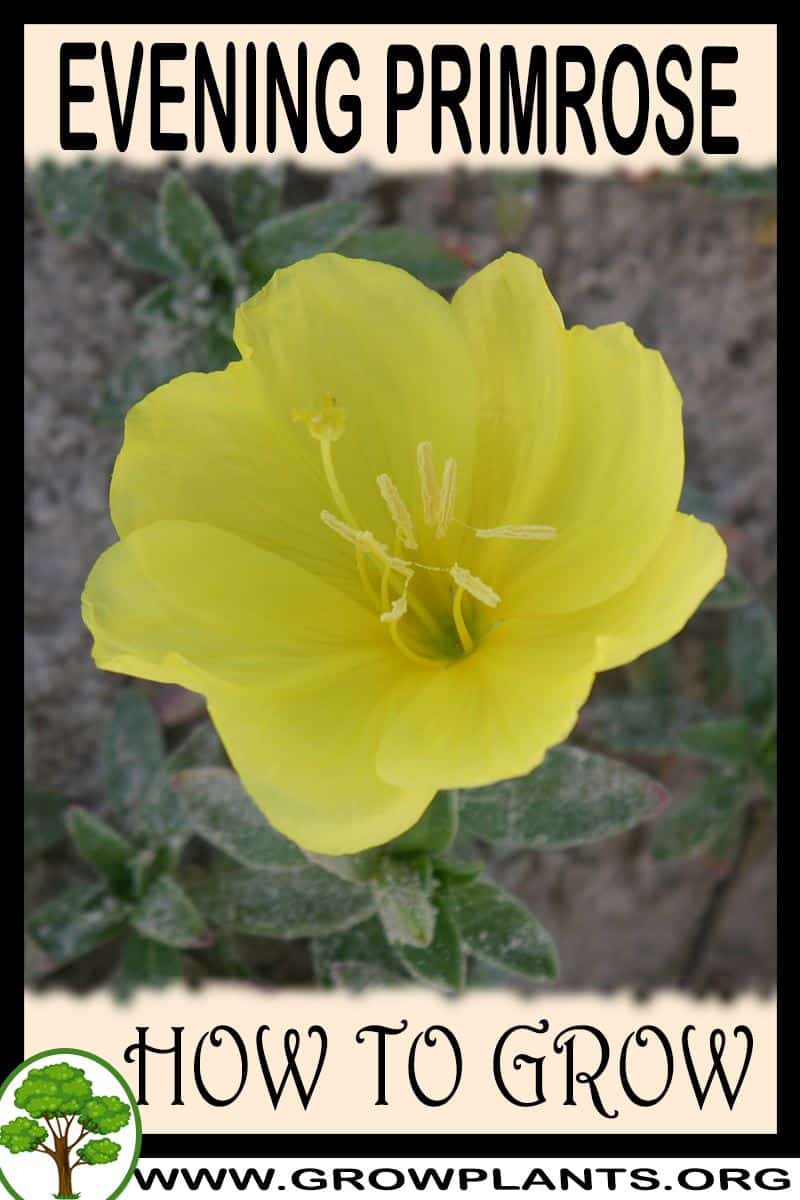
- Flower Characteristics: Four-petalled flowers in pink, purple, white, red or bright yellow, some with a yellow centre (see the Bloom guide).
Primary Uses & Landscape Value
- Edible Uses: Young leaves eaten in salads or cooked.
- Functional & Ornamental Roles: Ornamental flowering groundcover and traditional medicinal plant; suited to containers.
Care Guide: Planting, Soil & Watering
Overview: Evening primroses are tough, drought-tolerant plants that thrive in full sun and light, sandy, sharply drained soil. Once established they ask for very little water and can spread vigorously.
Quick Care Requirements
| Requirement | Ideal Condition |
|---|---|
| Planting Season | In spring after the last frost; year-round in hot climates where it grows as a perennial |
| Growth Rate | Fast to moderate |
| Soil Type | Light, sandy, well-drained soil |
| Water Need | Low to moderate — drought tolerant; let the soil dry between waterings |
Planting & Establishment
- Best Planting Season: Plant in spring after the last frost; in hot climates it can be planted through the warm season as a perennial.
- How to Plant:
- Hole Preparation: Dig a hole as deep as and slightly wider than the root ball.
- Soil Amendments: Work in coarse sand or grit if your soil is heavy; rich soil is not needed and can make growth floppy.
- Planting Depth: Set the root collar level with the soil surface.
- Growth Speed & Expectations: Fast to moderate growth — vigorous and often aggressive or invasive, so give it room or contain the spread.
Soil, Watering & Drainage Care
- Soil Mix & Drainage Needs: Light, sandy, free-draining soil prevents rot; these plants tolerate poor ground and dislike wet feet.
- Watering Schedule & Technique:
- Young / Newly Planted: Water regularly to help the roots establish.
- Established: Water sparingly and deeply — established plants are very drought tolerant.
- Seasonal Adjustments: Give a little more in summer heat and very little over winter.
Climate, Light & Hardiness
Evening primrose (Oenothera) covers a genus of North American wildflowers spanning temperate, desert, mediterranean and subtropical climates, with individual species varying widely in habit and cold tolerance. Most prefer full sun for best flowering, tolerate half shade with a lighter bloom, and will not flower at all in full shade.
Quick Climate Specifications
| Climate Zones | Temperate, desert, mediterranean, subtropical |
|---|---|
| USDA Hardiness Zones | Varies widely by species: roughly zone 5–11 for perennial types, zone 2–5 for species usually grown as annuals |
| Frost Tolerance | Varies by species - ranges from Low (tender perennial types) to High (hardy prairie species reaching zone 2–3) |
| Light Conditions | Full Sun to Half Shade (Full Shade tolerated but non-flowering) |
Sunlight & Light Exposure
Optimal Light Setup
Full sun is best for flowering across the genus; the site's data confirms full sun, half shade and even full shade are all survivable, but full shade specifically suppresses flowering.
Shade & Heat Management
Half shade is a reasonable compromise where afternoon heat is intense, trading some bloom density for reduced stress; full shade keeps the plant alive as foliage only, with no flowers.
Best Exposure / Orientation
An open, sunny bed or border is preferred for reliable flowering across nearly all evening primrose species.
Temperature Extremes & Hardiness
USDA Hardiness & Regional Limits
Because this entry spans the whole Oenothera genus, cold hardiness is not a single fixed value: the site's own data places perennial types anywhere from about zone 5 to zone 11, and species typically grown as annuals as cold-tolerant as zone 2–5 in their native range. Always check the specific species or cultivar for an exact rating rather than relying on a genus-wide figure.
Cold Damage & Winter Protection
As a general rule across the genus, frost blackens soft foliage and flowering stems first, while hardier species survive via a persistent root system that resprouts in spring; young plants of any species are more cold-sensitive than established ones.
Frost Sensitivity
Ranges from very frost-sensitive (tender annual-grown species) to distinctly frost-hardy (cold-prairie perennial species) - this varies enough by species that no single description applies to the whole genus.
Extreme Heat Tolerance
Generally good; most evening primroses are sun-loving, drought-tolerant plants of open, hot habitats, consistent with their use as ground cover and ornamental plants in warm climates.
Wind, Humidity & Microclimate
Dry-Air Tolerance
Most species in the genus are adapted to dry-summer or arid climates and tolerate low humidity well, in keeping with their drought-tolerant reputation.
Wind Tolerance
Generally good for the low-growing, ground-cover species typical of the genus, though taller species may need some shelter from strong, sustained wind.
Rainfall & Seasonal Moisture
Most evening primroses favor seasonally dry climates with well-drained soil over consistently wet conditions; species vary in exact rainfall tolerance.
Microclimate Recommendations
An open, sunny, well-drained site suits the great majority of evening primrose species; for an exact cold-hardiness or microclimate recommendation, identify the specific species or cultivar being grown.
Growing in Pots, Balconies & Indoors
Evening primrose (Oenothera) can be grown indoors as a houseplant – the grower confirms it – and it is equally happy in outdoor containers. The one thing to remember is light: it flowers well in sun to part shade but produces no flowers in deep shade, so give it your brightest window if you want blooms indoors.
Quick Details
- Container Size: A medium pot (roughly 3-7 L) with free drainage; pot up every couple of years as it fills
- Indoor Suitability: A genuine houseplant in a bright spot – the brighter the light, the more it flowers
- Best Spot: Full sun to part shade; a sunny windowsill indoors
- Soil & Drainage: Ordinary free-draining potting mix
- Watering in Pots: A small-to-average amount; keep just moist, never waterlogged
Indoors & On the Windowsill
- A real houseplant: The grower confirms it grows indoors – place it in the brightest room or window you have.
- Windowsill for flowers: In weak light it makes leaves but few flowers (none in full shade), so a sunny sill is the way to keep it blooming indoors.
- Overwintering: As a hardy perennial it needs no protection in most climates; a pot simply lets you shelter it in the coldest zones.
On a Balcony or Patio
- Sun-lover: It thrives in outdoor containers in full sun; deadhead spent blooms and enjoy the long flowering season.
- Contained spread: Some evening primroses spread by seed or runners – growing in a pot is a tidy way to enjoy them while keeping that spread in check. Pots and wall heat dry fast, so check moisture in warm weather.
Choosing the Pot, Soil & Long-Term Care
- Pot & drainage: A pot with strong drainage holes; skip a standing saucer to avoid root rot; terracotta dries faster, plastic or glazed holds moisture longer.
- Potting mix: A free-draining, aerated potting mix suits it well.
- Feeding: Feed lightly through the growing season, as nutrients leach faster from pots.
- Repotting: Refresh the mix and pot up about every two years.
Fertilizing & Feeding
A light feeder – evening primrose is grown as an ornamental and medicinal ground cover with edible young leaves, and it flowers and grows well on lean soil without needing rich, frequent feeding.
Quick Fertilizing Specs
| Feeding Level | Light |
|---|---|
| young_feeding | Very light feeding while a newly planted or freshly sprouted specimen is rooting in |
| mature_feeding | Established plants need only occasional, restrained feeding through the growing season |
| Main Nutrient Priority | Balanced feeding rather than any single nutrient, kept light for a plant whose young leaves may be harvested for eating |
| Best Feeding Period | Through the active growing and bloom season, tapering off as growth slows |
| Soil pH | Tolerates a wide range of well-drained soils; shows no strong pH preference |
| Reduce/Stop Feeding | Ease off as growth slows heading into cooler months or dieback where it dies back seasonally |
| Organic Options | Compost or aged organic matter worked into the soil at planting, a good match for a plant also grown for edible leaves |
Feeding by Growth Stage
Establishment after planting or germination
Help a newly planted specimen, seedling, or container plant root in before pushing top growth.
| Nutrient direction | Hold feeding light while roots establish; this ground cover grows readily without needing rich soil. |
|---|---|
| Timing | The first weeks after planting, transplanting, or germination. |
| Frequency | Skip fertilizer at the moment of planting or sowing; introduce only a light feeding once new growth confirms the plant has rooted in. |
| Fertilizer types | A light, balanced fertilizer once new growth confirms the plant has rooted in, Compost or aged organic matter mixed into the soil at planting |
| Precautions | Avoid fertilizing right at planting or sowing; feeding a stressed, unrooted plant can do more harm than good. |
Bloom season
Support this ground cover’s colorful flowering, which can run from winter through summer, without forcing excess soft growth.
| Nutrient direction | Continue a light, balanced feed; established plants rarely need heavy inputs to keep flowering well. |
|---|---|
| Timing | Through the extended bloom period, spanning winter into spring and summer depending on climate. |
| Frequency | Feed sparingly during bloom – this species flowers reliably on modest inputs, and light feeding also keeps any harvested young leaves from being overly fertilizer-laden. |
| Fertilizer types | A light, balanced fertilizer applied sparingly through the bloom season, Mulch to conserve moisture and moderate soil fertility around the root zone |
| Precautions | If young leaves are harvested for eating, keep feeding light and avoid applying fertilizer directly before harvest. |
Winter dormancy or end-of-cycle decline
Let the plant rest through winter dieback where it behaves as a perennial, or complete its natural decline where it is grown as an annual, without pushing new growth.
| Nutrient direction | None – withhold fertilizer once the plant is dormant, has died back, or is finishing its annual cycle. |
|---|---|
| Timing | The dormant or dieback period, or the natural end of the growing cycle for annual plantings. |
| Frequency | No feeding during this period. |
| Fertilizer types | No feeding at this stage – the plant is dormant, has died back, or is completing its natural cycle and does not need fertilizer. |
| Precautions | Do not fertilize dormant, dying-back, or end-of-cycle growth; for perennial plantings, resume light feeding only once new growth appears. |
Nutrient Deficiency Signs & Corrections
New leaves turning pale yellow between still-green veins
| Possible causes | Iron becoming less available in alkaline or high-pH garden or container soil, Overly wet, poorly drained soil limiting root uptake, Root stress from soil that stays soggy after heavy rain or overwatering |
|---|---|
| Appears first on | Newest leaves and stem tips |
| What to check | Soil pH and whether the bed or potting mix leans alkaline, How well the site or container drains after watering, Whether the plant is sited in a low spot that collects water |
| Possible correction | Improve drainage and confirm the site isn’t holding excess water first; a chelated iron product can help if chlorosis persists, applied per its label. |
Leaves yellowing or the plant wilting despite regular watering
| Possible causes | Overwatering a plant that tolerates only small to average amounts of water, Root rot from soil that stays soggy, whether in the ground or in a container without good drainage, Excess feeding compounding stress on an already waterlogged root system |
|---|---|
| Appears first on | Lower and older leaves first, then spreading through the plant |
| What to check | Actual watering frequency versus this plant’s moderate to low water needs, Drainage in the garden bed or, for potted plants, whether the container has adequate drainage holes, Root condition at the base of the plant if it can be checked |
| Possible correction | Cut back watering and confirm drainage before considering any change to fertilizer; this species usually responds better to less water than to more feeding. |
Pale, stunted growth and fewer flowers than expected in very lean or exhausted soil
| Possible causes | Nutrients leaching quickly through lean, fast-draining soil, Root-bound growth in a container or houseplant pot that has outgrown its space, Heavy competition from this plant’s own aggressive, self-seeded growth crowding the root zone |
|---|---|
| Appears first on | Overall plant vigor and flower count rather than a single leaf pattern |
| What to check | How lean and fast-draining the planting site or potting mix is, Whether a container-grown or houseplant specimen has become root-bound, Whether self-seeded volunteers are crowding the original planting |
| Possible correction | Work light organic matter into lean garden soil, refresh potting mix for root-bound container plants, and thin crowding volunteers before adding fertilizer. |
Pruning, Training & Seasonal Maintenance
Evening primrose (Oenothera) is a herbaceous perennial in mild climates and a self-seeding biennial or annual in colder ones, grown here as an ornamental (and, separately, for its edible young leaves – see the plant’s dedicated uses guide for that). It needs very little pruning: the main decision each season is whether to deadhead spent flower stems to tidy the plant and prolong bloom, or to leave some flowers to mature and self-seed for next year’s succession, since this species relies heavily on reseeding to persist in many gardens.
Quick Pruning & Maintenance Specs
| Pruning Tolerance | Low–Moderate (light, optional) |
| Primary Pruning Window | After flowering: cut back spent stems in autumn/winter (mild climates) or as the season ends (colder climates) |
| Secondary Maintenance Window | Ongoing deadheading during bloom, if a longer flowering display is preferred over self-seeding |
| Typical Frequency | Deadhead as needed while blooming; one cutback of spent growth at season’s end |
| Main Objective | Balance tidiness/prolonged bloom against the self-seeding this species relies on to persist |
| Young Plant Priority | Little to none – let first-season growth establish; avoid disturbing the root system |
| Mature Plant Priority | Cut back spent flowering stems once seed needs (if any) are met; light shaping only |
| Best Tool Type | Precision snips (deadheading), bypass secateurs (end-of-season cutback of thicker stems) |
| Avoid Heavy Pruning During | Active bloom if pollinator forage or seed succession is wanted – bees and butterflies use the flowers, and the plant needs some seed set to return |
Pruning by Plant Age & Size
Newly Established
No pruning needed beyond removing damaged foliage; let the plant put energy into establishing.
Young / Formative
No structural training applies – this is a low, spreading or mounding herbaceous plant (used as ground cover), not one trained to a framework. Pinching is optional and only for a bushier look.
Mature / Established
Decide season by season how much to deadhead: heavier deadheading gives a longer, tidier bloom display; leaving some flowers to set seed sustains the patch through self-sowing, which matters most where the plant behaves as a biennial or annual rather than a true long-lived perennial.
Seasonal Pruning Schedule
Post-Flowering
Objective: tidy the plant once its bloom cycle finishes for the season. Remove: spent, dried flowering stems. Do not remove: any late seed heads you are deliberately leaving to mature for self-sowing. Expected response: a neater basal clump going into the next season; where perennial, often some fresh basal growth. Flowering impact: none – this is after that season’s bloom has finished.
Ongoing Sanitary
Remove dead or damaged leaves as needed through the growing season.
Flowering & Fruiting Wood
Flowers on current growth each season, with no persistent woody framework involved – so there is no "next year’s wood" to protect by pruning timing. The only real trade-off is deadheading (prolongs bloom, prevents seed) versus leaving flowers to mature (ends that stem’s bloom, but produces seed for the self-sowing this species often depends on).
Special Growth to Remove
Recorded as invasive/aggressive and self-seeding; deadhead before seed capsules mature if spread beyond the planting area is unwanted. Where grown as ground cover, trim back any stems rooting or spreading beyond the intended area.
Container & Small-Space Pruning
Grows and flowers well in a pot; deadhead more readily in containers than in a naturalized bed, since there is usually less room or desire for volunteer seedlings. Light, frequent trimming keeps a container specimen in scale.
Tools
Precision snips for deadheading individual flower stems; bypass secateurs for cutting back the somewhat thicker basal stems at season’s end.
Tool Hygiene & Disease Risk
Routine: clean, sharp tools are sufficient; no elevated disease-transmission risk is associated with routine deadheading of this plant.
Cut Placement & Technique
Deadhead just below the spent flower, at a node or side bud, so remaining buds keep developing; cut end-of-season stems back to the basal foliage rather than leaving bare stubs.
When NOT to Prune
Avoid cutting down flowering stems mid-season if you want either continued pollinator forage or seed for next year’s plants – deadhead selectively instead of shearing the whole plant. Avoid disturbing the roots right after transplanting.
Common Pruning Mistakes
Deadheading so thoroughly and consistently that the patch fails to self-sow and thins out over a couple of seasons, where the planting was relying on reseeding to persist. Treating this soft, herbaceous plant like a woody shrub and attempting a hard structural rejuvenation cut it does not need.
Recommended Tools (by task)
- Deadheading individual spent flowers → precision_snips: light, precise cuts on soft flowering stems.
- End-of-season cutback of spent growth → bypass_secateurs: clean cuts through the slightly thicker basal stems without crushing.
Propagation Guide
Evening primrose (Oenothera) is most reliably grown from seed, which germinates readily and many species self-sow freely once established; grafting or other vegetative propagation is not necessary. Perennial, clump- or rhizome-forming types can also be increased by division in spring, and propagation overall is easy.
Quick Propagation Specs
| Best Propagation Method | Seed |
| Alternative Methods | Division (for spreading perennial types) |
| Propagation Difficulty | Easy |
| Seed True-to-Type | Variable (species within the genus hybridize readily) |
| Vegetative True-to-Type | Yes |
| Best Propagation Season | Spring |
| Seed Germination Time | Usually within a few weeks in warm conditions |
| Seed Sowing Depth | Surface-sow or barely cover; seed is fine |
Growing from Seed
Sowing Season
Spring, after the danger of hard frost has passed.
Sowing Depth & Orientation
Seed is fine and best surface-sown or only lightly covered.
Germination Conditions
Keep the sowing medium lightly moist and in a warm, sunny spot; avoid waterlogging.
Germination Time
Usually a few weeks, though timing varies by species and temperature.
Seedling Care
Grow seedlings on in bright light with moderate, even moisture until well rooted, then reduce watering frequency as they establish.
Division, Offsets, Pups & Suckers
For perennial, spreading Oenothera types, lift and divide established clumps in spring (or early autumn in mild climates); replant divisions that carry an intact piece of root or rhizome and keep them consistently moist until re-established.
Bloom & Edible Flower Guide
Quick Details
- Bloom Season: Late winter through summer, depending on species and climate
- Time to First Bloom: Biennial types flower in their second year; perennial types bloom in their first season
- Flower Appearance: Four-petalled flowers in pink, purple, white, red, or bright yellow, some with a yellow centre
- Edibility: The flowers are edible and can be used as a garnish or in salads; the young leaves are also eaten
Detailed Blooming Overview
Evening primrose is named for the way many species unfurl their lightly fragrant flowers in the late afternoon and evening, when they are worked by moths – and by day by bees and butterflies. The four-petalled blooms come in a wide range of colours and appear over a long season.
Flower Characteristics
- Four petals, in pink, purple, white, red, or bright yellow.
- Some cultivars have a contrasting yellow centre.
- Many open toward evening and are lightly fragrant.
Bloom Care & Thinning
- Deadheading: Remove spent flowers to keep the plant blooming freely.
- Position: Full sun suits it best.
- Pollination: Pollinated by bees and butterflies by day and by moths in the evening.
Fruit & Uses
The young leaves of evening primrose (Oenothera) are edible and are used as a leafy green, eaten raw in salads or lightly cooked. No other part of the plant is documented as a food use on this page.
Quick Edible Specs
| Edible Parts | Young leaves |
| Main Use(s) | Culinary – salad green, cooked green |
| Eaten Raw or Cooked | Both – raw in salads or cooked |
| Preparation Required | None for young leaves; older leaves are best cooked, as they become more fibrous and bitter with age |
| Harvest Season | Spring, summer, autumn |
| Time to First Harvest | Once the young plant is established |
| Storage | Best used fresh; a leafy green, does not store for long |
| Safety/Toxicity Caveat | No significant toxicity is known for the leaves; as with any wild-type green, only harvest correctly identified plants |
Leaves & Greens
The part eaten is the young, green, elliptic leaf. Leaves are picked once the plant has established itself; harvesting the youngest leaves gives the mildest flavour, since leaves toughen and turn more bitter as the plant matures and flowers. Pick individual young leaves or shoot tips through spring, summer and autumn, and use them fresh in salads or cook briefly as a potherb.
Preparation, Uses & Safety
Evening primrose leaves are used mainly as a fresh or lightly cooked salad green. Choose the youngest leaves for the mildest flavour and wash before use, as with any leafy green. This page is a genus overview covering several Oenothera species (see the individual species pages), and the exact edible use can vary somewhat between species, so confirm identification before eating.
Pests, Diseases & Troubleshooting
Overview: Evening primroses are tough, sun-loving Onagraceae that are rarely troubled by insects but are strongly prone to foliar fungal disease – powdery mildew, downy mildew and rust – and to root rot in heavy, wet soil. Their best defence is their preferred site: full sun, lean well-drained soil and open airy spacing. Grow them hard rather than lush and most problems disappear.
Quick Troubleshooting Overview
| Issue / Pest | Main Symptom | Primary Solution |
|---|---|---|
| Powdery mildew | White powder on leaves, late-season | Full sun, airflow, resistant plants, bicarbonate/sulfur |
| Downy mildew / rust | Yellow patches, orange pustules on undersides | Remove leaves, airflow, avoid overhead water |
| Aphids | Colonies on buds and soft tips | Water blast, soap, beneficials |
| Flea beetles | Tiny shot-holes in leaves | Tolerate on established plants; row cover seedlings |
| Root rot | Wilt, blackened crown in wet soil | Sharp drainage, lean soil, reduce watering |
Common Pests & Management
- Aphids (Aphis oenotherae and other Aphis spp.):
- Symptoms: Green, pink or black colonies packed onto flower buds, stems and soft new growth, with distortion and sticky honeydew; evening primroses often carry a dedicated aphid.
- Prevention & Control: Blast off with water, encourage ladybirds, lacewings and hoverflies, and use insecticidal soap for heavy clusters. Rarely fatal on an established plant.
- Flea beetles (Altica spp.):
- Symptoms: Many tiny round “shot-hole” punctures in the leaves; the small beetles jump when disturbed. Most damaging to seedlings.
- Prevention & Control: Protect young plants with row cover; established plants tolerate the cosmetic damage. Kaolin clay or a light neem application if severe.
- Japanese beetles (Popillia japonica):
- Symptoms: Skeletonised leaves and chewed flowers where this beetle is present.
- Prevention & Control: Hand-pick into soapy water in the cool of the morning; keep lure traps away from the plants.
- Leaf-mining moths (Mompha spp.) & spider mites:
- Symptoms: Pale winding or blotch mines within the leaves (Mompha is closely tied to Oenothera); fine stippling and webbing from mites in hot dry spells.
- Prevention & Control: Pick off mined leaves; tolerate light damage. Hose foliage and use soap or oil for mite flare-ups in drought.
- Root-knot nematodes (Meloidogyne spp.):
- Symptoms: Stunting, wilting in heat and galled, knotted roots in warm sandy soils.
- Prevention & Control: Rotate, add organic matter, and grow in vigorous, well-watered conditions; avoid replanting into known infested ground.
Diseases & Fungal Issues
- Powdery mildew (Erysiphe / Podosphaera spp.):
- Symptoms: The classic Oenothera disease – a white powdery coating on leaves and stems, usually building through the season and worst in crowding, shade and dry-root/humid-air conditions.
- Treatment & Management: Site in full sun with open spacing and good airflow; avoid excess nitrogen. Remove badly affected foliage; a potassium-bicarbonate, sulfur or milk-based spray checks spread. Choose mildew-tolerant selections.
- Downy mildew (Peronospora spp.):
- Symptoms: Angular yellow patches on the upper leaf with grey-purple growth beneath, in cool damp weather.
- Treatment & Management: Improve airflow, water at the base early in the day, and remove infected leaves. Distinct from powdery mildew – it favours wet, not dry, conditions.
- Rust (Puccinia spp.):
- Symptoms: Orange to rusty-brown pustules on leaf undersides with yellow flecking above; premature leaf drop when heavy.
- Treatment & Management: Remove and bin affected leaves, avoid overhead watering, and improve spacing. Sulfur fungicide for persistent cases.
- Leaf spots (Septoria / Cercospora spp.) & crown/root rot:
- Symptoms: Brown-to-grey spots on foliage; and, more seriously, wilting with a blackened, soft crown in heavy or wet soil.
- Treatment & Management: Sanitation and airflow for leaf spot; for rot, the fix is cultural – sharp drainage, lean soil, and restrained watering, since these plants resent “wet feet”.
Growing Difficulties & Abiotic Problems
- Root rot in wet / heavy soil:
- Cause & Symptoms: The commonest cause of loss – crowns and roots rot and the plant collapses where drainage is poor or watering is generous.
- Correction Strategy: Plant in lean, gritty, well-drained soil in full sun; water only to establish, then leave largely to nature. Raise beds on heavy ground.
- Aggressive spreading / self-seeding:
- Cause & Symptoms: Many species (notably O. speciosa and O. biennis) run by rhizome or seed freely and can overwhelm neighbours – a management, not a health, problem.
- Correction Strategy: Deadhead before seed sets, confine roots, and thin runners; site where vigorous spread is welcome.
- Legginess & poor flowering:
- Cause & Symptoms: Too much shade or rich soil gives floppy, leafy growth with few blooms.
- Correction Strategy: Full sun and lean soil; avoid feeding. Cut back after the main flush to tidy and rebloom.
Species note: As a genus, evening primroses vary from biennials to spreading perennials, but all share the powdery-mildew-and-good-drainage profile above; match care to the specific species you grow.
What Helps — Products & Tools
Disease, not insects, is the focus here: potassium-bicarbonate, sulfur or milk sprays for powdery mildew and rust, plus the cultural basics of full sun, wide spacing and base watering. For the occasional pest, a water jet, insecticidal soap or light neem oil covers aphids, flea beetles and mites. Sharp drainage is the best “product” against root rot.