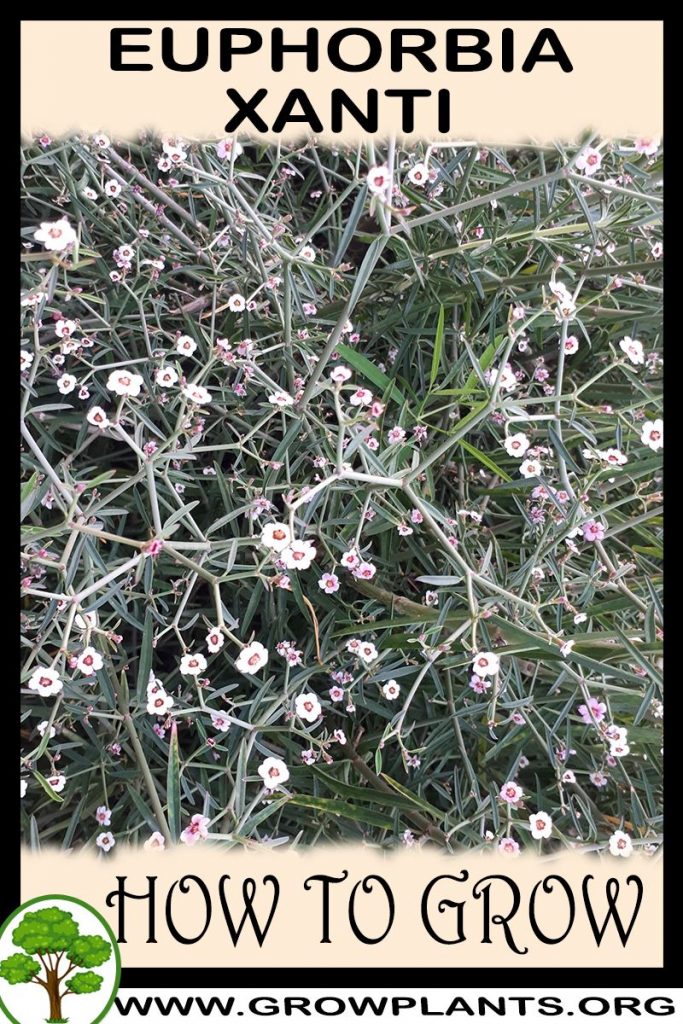
Plant Profile & Key Characteristics
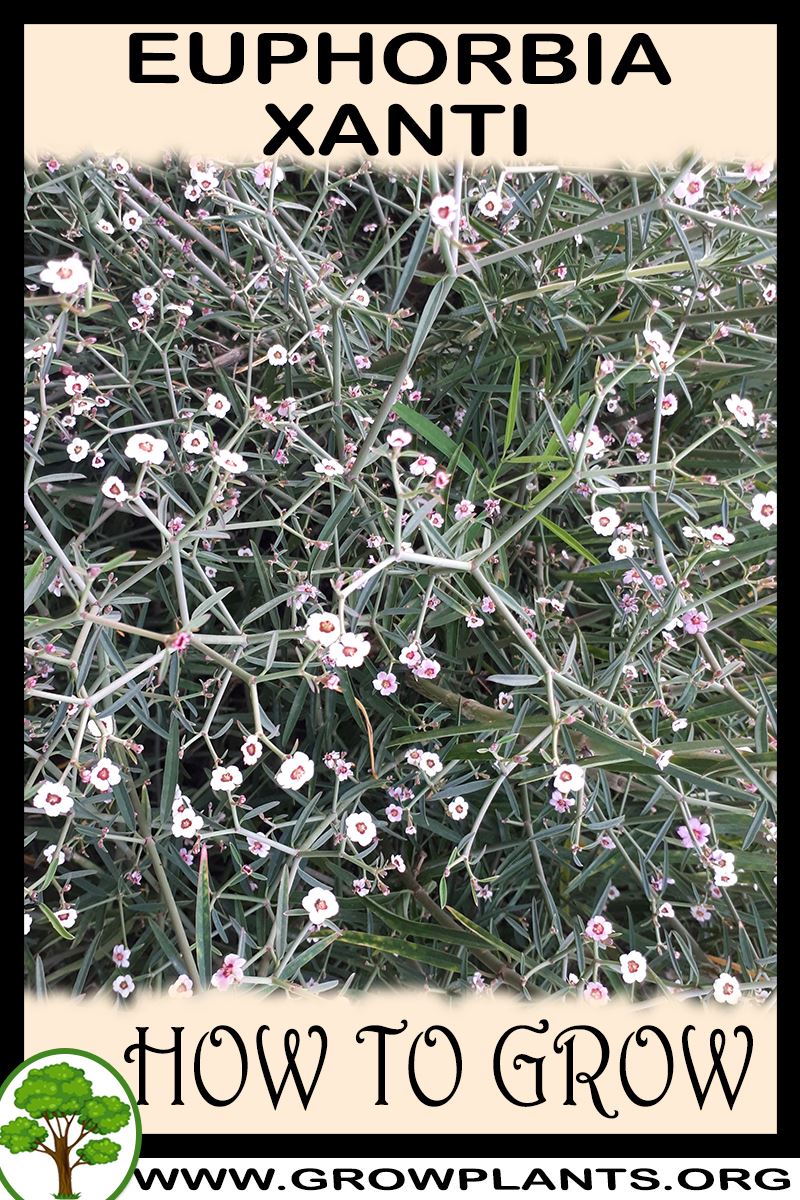
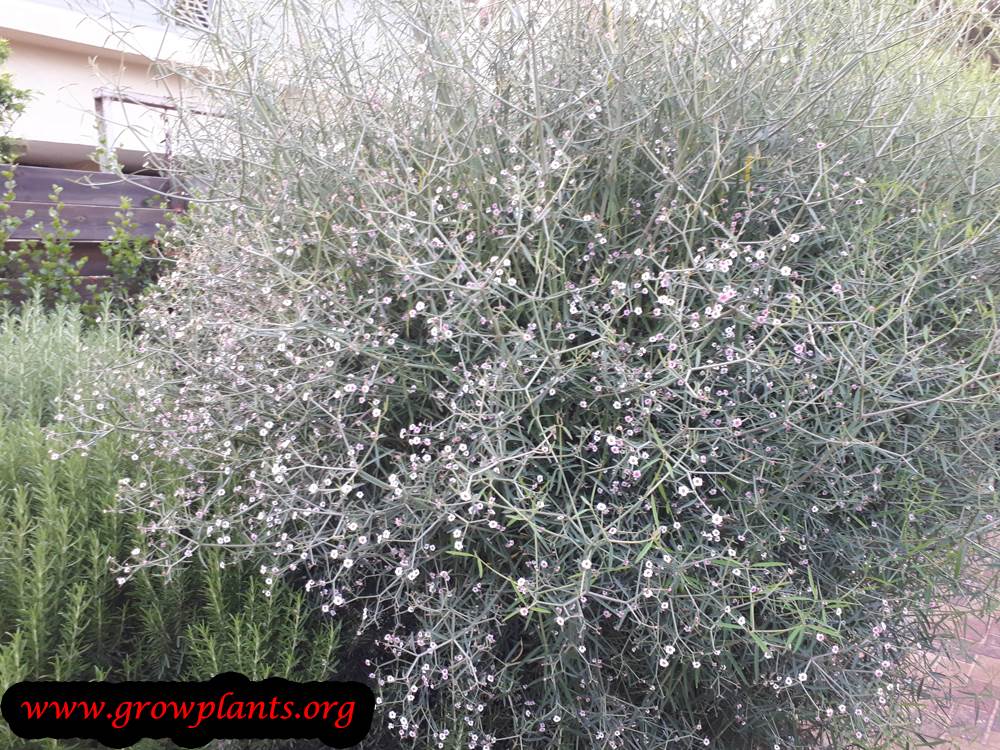
Overview: Euphorbia xanti (Baja Spurge) is a mounding, semi-evergreen succulent shrub 1.5-3 m (5-10 ft) tall with slender green stems that become smothered in white-to-pink flowers. It is a drought-tolerant ornamental grown mainly for its floral display.
Quick Specifications
| Specification | Attribute |
|---|---|
| Plant Type / Life Cycle | Perennial |
| Foliage Type | Evergreen to deciduous (semi-evergreen) |
| Mature Size | 1.5-3 m (5-10 ft) tall |
| Growth Rate | Slow to moderate |
| Toxicity | Toxic – the milky latex sap is a skin, eye and mucous-membrane irritant and is poisonous to people and pets if ingested. |
| Hardiness | USDA zones 10-12a |
Growth Form & Structure
- Height & Spread: Reaches 1.5-3 m (5-10 ft) as an arching mound in the ground; container-growable but not an indoor plant.
- Growth Habit & Form: A mounding, arching shrub of slender stems that, in bloom, becomes covered in flowers.
- Lifespan & Maturity: Slow to moderate growth; may drop leaves in cool or dry spells.
Anatomy & Physical Features
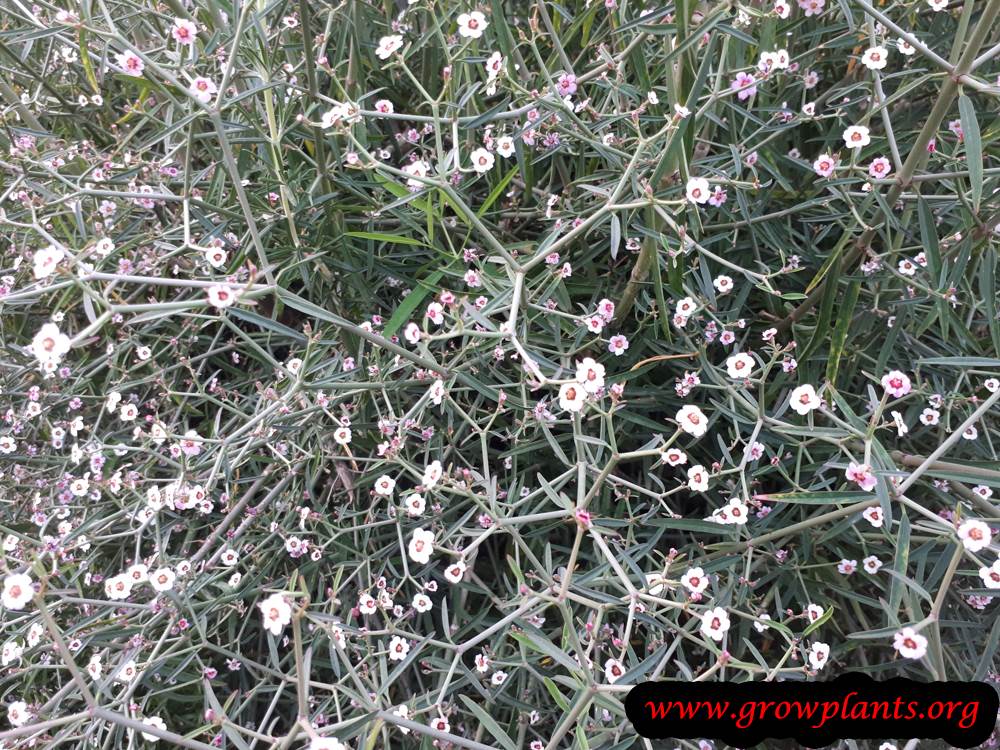
- Leaves & Foliage: Green, linear leaves, fairly sparse along the stems.
- Flower Characteristics: White to pink, rounded flowers in clusters that can cover the whole plant – its main ornamental feature.
Primary Uses & Landscape Value
- Functional & Ornamental Roles: Ornamental flowering shrub for frost-free, drought-tolerant gardens and large containers.
Care Guide: Planting, Soil & Watering
Overview: Euphorbia xanti is a drought-tolerant euphorbia succulent that grows best in full sun to partial shade and frost-free (zones 10–12a) conditions. It needs sharply-drained, gritty soil and only light, occasional watering, as excess moisture at the roots quickly causes rot.
Quick Care Requirements
| Requirement | Ideal Condition |
|---|---|
| Planting Season | Autumn, winter or spring (a cool-season grower) |
| Growth Rate | Slow to moderate |
| Soil Type | Sharp-draining, sandy or gritty cactus/succulent mix, low in organic matter |
| Water Need | Low to moderate – let the top of the soil dry before watering again |
Planting & Establishment
- Best Planting Season: This is a cool-season grower that flowers in the cooler months, so plant in autumn, winter or spring in its frost-free range.
- How to Plant:
- Hole Preparation: Wear gloves and take care with the milky sap, which is a skin and eye irritant common to all euphorbias. Dig a hole about twice the width of the root ball but no deeper, so the plant sits at the level it grew at, and loosen the sides so the roots spread easily.
- Soil Amendments: Blend plenty of coarse sand, grit, perlite or pumice into the backfill to guarantee fast drainage; only a little organic matter is needed.
- Planting Depth: Set the plant so the root collar sits right at soil level – never bury the stem, which invites rot in a succulent.
- Growth Speed & Expectations: Growth is slow to moderate – steady rather than rushed, picking up once the plant is well established.
Soil, Watering & Drainage Care
- Soil Mix & Drainage Needs: These succulents rot quickly in soggy soil, so drainage is everything. Use an open, gritty cactus mix (sand, perlite, lava grit or pumice); in a pot, add a coarse layer at the base and keep the drainage holes clear.
- Watering Schedule & Technique:
- Young / Newly Planted: Water lightly but regularly while the roots or cuttings establish, keeping the mix barely moist and never wet.
- Established: Once established, water deeply but infrequently, always letting the top of the soil dry out before watering again – overwatering is the quickest way to kill it.
- Seasonal Adjustments: Give a little more water during hot, active growth and cut back sharply in cool weather, keeping it nearly dry through a cold or dormant winter.
Climate, Light & Hardiness
Euphorbia xanti (Baja spurge) is a drought-tolerant succulent shrub suited to subtropical, mediterranean, and desert climates, growing best in full sun to half shade on well-drained soil. It is a warm-climate species, hardy only in USDA zones 10–12a, and is frost-sensitive outside that range.
Quick Climate Specifications
| Climate Zones | Subtropical, mediterranean, desert |
|---|---|
| USDA Hardiness Zones | 10–12a |
| Frost Tolerance | Low |
| Light Conditions | Full sun to half shade |
Sunlight & Light Exposure
Optimal Light Setup
Full sun to half shade.
Direct Sun Requirement
Handles full direct, desert-strength sun well.
Shade & Heat Management
Tolerates the intense heat typical of desert and subtropical climates; some afternoon shade is optional rather than required.
Best Exposure / Orientation
Open, sunny desert-garden-style plantings suit it well.
Temperature Extremes & Hardiness
USDA Hardiness & Regional Limits
Hardy only in zones 10–12a - a true warm-climate species not suited to regions with regular freezes.
Cold Damage & Winter Protection
As a frost-tender succulent, cold damage is likely at or near freezing; in marginal areas, site it in a warm, sheltered microclimate and be ready to protect or move container specimens indoors during cold snaps.
Frost Sensitivity
Low tolerance - a hard frost is likely to damage or kill the plant.
Extreme Heat Tolerance
Strong; well suited to the intense heat of desert and subtropical summers given its drought tolerance.
Wind, Humidity & Microclimate
Dry-Air Tolerance
High, consistent with its drought tolerance and suitability for desert and mediterranean climates.
Rainfall & Seasonal Moisture
Adapted to dry-summer, low-rainfall conditions; avoid overwatering or poorly drained, wet soils.
Microclimate Recommendations
A warm, sunny, well-drained site is best; in the cooler parts of its range, a south-facing wall or similarly sheltered microclimate helps buffer occasional cold snaps.
Growing in Pots, Balconies & Indoors
Euphorbia xanti is a slender, sun-loving succulent shrub covered in pale flowers. The grower confirms it is not a houseplant, but it takes well to a free-draining container on a hot, sunny patio – just handle it carefully, as the milky sap is an irritant.
Quick Details
- Container Size: Medium to large – a sturdy, free-draining pot; it can reach 1.5-3 m but stays smaller when potted and pruned.
- Indoor Suitability: No – not a houseplant.
- Best Spot: Full sun to part shade – the more sun, the better the flowering.
- Soil & Drainage: Very free-draining, gritty succulent-type mix.
- Watering in Pots: Sparing – let it dry well between waterings; it stores its own water.
Indoors & On the Windowsill
- Not a houseplant: The grower says no – it wants strong outdoor light and dislikes the low light and dampness of a room.
- Sunny patio plant: Its place is a hot, bright balcony or patio in a sharply drained pot, kept in scale by pruning.
- Safety: The milky sap is a skin, eye and mouth irritant and is toxic if swallowed – wear gloves when pruning and keep it away from children and pets.
On a Balcony or Patio
- Sun, wind and heat: Give it your sunniest, most open spot; walls and railings throw back heat and wind dries pots fast, so check moisture daily in hot weather and stake tall stems on an exposed balcony. A drip irrigation kit with a timer can take over that watering check automatically.
- Warmth: It is frost-tender, so in cold climates move the pot to a bright, frost-free spot for the cold season.
Choosing the Pot, Soil & Long-Term Care
- Sharp drainage: Use a gritty, very free-draining succulent mix and a pot that never stays wet – soggy roots quickly rot it. A ready-made cactus and succulent soil mix provides that structure without mixing it yourself.
- Feeding: Container plants run through nutrients fast because watering washes them out, so feed a little more often through the growing season than you would in open ground.
- Repotting: Refresh the mix or pot up about every couple of years; for perennials, lightly trim the roots and top growth at the same time.
Fertilizing & Feeding
A drought-tolerant succulent shrub that covers itself in small flowers, this species is adapted to lean, well-drained sites and stays healthiest on light feeding during active growth, with none while it rests.
Quick Fertilizing Specs
| Feeding Level | Light feeder |
|---|---|
| Main Nutrient Priority | A light, low-nitrogen feeding that supports the flowering display without encouraging soft, rot-prone growth |
| Best Feeding Period | During the active growing season leading into its main flowering display |
| Reduce/Stop Feeding | Hold off on feeding once the plant’s rest period begins |
| Micronutrients | No routine micronutrient product is typically needed for this species |
Feeding by Growth Stage
Active growing season
Support steady stem and leaf growth on this succulent shrub without pushing it beyond its naturally moderate-to-slow pace.
| Nutrient direction | A light, low-nitrogen feeding suits this drought-adapted succulent far better than a strong, frequent dose. |
|---|---|
| Timing | During the active growing season, once the risk of frost has passed. |
| Frequency | Light, infrequent feeding through the growing season is enough for this naturally lean-adapted plant. |
| Fertilizer types | A diluted, low-nitrogen succulent or cactus fertilizer |
| Precautions | Favor well-drained soil when feeding; this succulent is more prone to root and stem rot in soil that stays wet. |
Flowering display
Support the profuse white-to-pink flower clusters that cover the plant during its bloom period.
| Nutrient direction | Continue light, low-nitrogen feeding through bloom; this succulent flowers well without heavy fertilizing. |
|---|---|
| Timing | During the plant’s main flowering period. |
| Frequency | Minimal feeding is usually enough while the plant is in flower. |
| Fertilizer types | A diluted, low-nitrogen succulent or cactus fertilizer, applied sparingly |
| Precautions | Avoid heavy nitrogen feeding during bloom, which tends to favor leafy stem growth over the flower display. |
Seasonal rest
Let the plant rest during its slow-growth period without added nutrition.
| Nutrient direction | None – withhold fertilizer while the plant is resting. |
|---|---|
| Timing | During the plant’s cooler or drier rest period, depending on climate. |
| Frequency | No feeding at this stage. |
| Fertilizer types | No feeding at this stage; the plant is resting rather than actively growing. |
| Precautions | Do not fertilize during the rest period; this drought-adapted succulent does not need it and cannot use it while inactive. |
Nutrient Deficiency Signs & Corrections
Overall growth looks pale or notably slow even during the active growing season.
| Possible causes | very lean or depleted potting or garden soil, root competition from nearby plantings, poor establishment limiting the root system’s reach |
|---|---|
| Appears first on | newest growth |
| What to check | soil condition and any recent feeding, root competition from neighboring plants, how well the plant has established |
| Possible correction | Apply a light, low-nitrogen feeding during the active growing season rather than repeated heavy applications. |
The base of the plant softens or discolors, and stems may collapse.
| Possible causes | poorly drained soil holding too much moisture around the roots, overwatering a plant adapted to little water, fertilizing during the rest period, encouraging growth that is then stressed |
|---|---|
| Appears first on | base of the stem and roots |
| What to check | soil drainage, watering frequency relative to this drought-tolerant species’ needs, whether feeding occurred outside active growth |
| Possible correction | Improve drainage, reduce watering to match this drought-tolerant plant’s needs, and avoid feeding outside active growth. |
Leaf or stem tips develop dry, scorched patches shortly after a feeding.
| Possible causes | a fertilizer applied too strong for this light-feeding species, feeding a plant that is not actively growing and cannot use the nutrients, salt buildup in a container with limited drainage |
|---|---|
| Appears first on | leaf and stem tips |
| What to check | strength and timing of the last feeding, container drainage, whether the plant was actively growing when fed |
| Possible correction | Water thoroughly to help flush excess salts and return to a lighter, more dilute feeding during active growth only. |
Pruning, Training & Seasonal Maintenance
Euphorbia xanti is a multi-stemmed succulent shrub (1.5–3m) grown for a long, heavy bloom that can cover the whole plant from autumn through spring. Pruning is purely a shaping/size tool, since flowering occurs diffusely across existing growth over many months rather than on a distinct age-class of wood – cutting during peak bloom simply removes the current display rather than costing a future crop. The plant’s own care notes flag it as prunable all year but best in winter, which also limits sap loss and stress compared with cutting during active summer growth. As with all Euphorbias, cut stems exude a milky, irritant latex sap, so gloves and eye protection are recommended whenever pruning.
Quick Pruning & Maintenance Specs
| Pruning Tolerance | Moderate (shaping only; avoid removing large amounts of tissue at once) |
| Primary Pruning Window | Winter (best, per its own care guidance), tolerated year-round |
| Typical Frequency | Occasional shape/size maintenance rather than routine annual cutting |
| Main Objective | Shape and size control (can reach 1.5–3m) |
| Young Plant Priority | Light tip pinching to encourage a fuller, multi-stemmed form |
| Mature Plant Priority | Selectively shorten overly long or leggy stems to manage size and shape |
| Best Tool Type | Bypass secateurs / loppers for thicker mature stems |
| Avoid Heavy Pruning During | Peak bloom (autumn–spring) if the flower display is wanted; active hot summer growth (greater sap loss/stress) |
Pruning by Plant Age & Size
Newly Established
Let the young plant establish undisturbed; remove only clearly damaged growth.
Young / Formative
Naturally multi-stemmed, so no formal leader system is used; light tip pinching can encourage a fuller, bushier young plant.
Mature / Established
Selectively remove or shorten overly long, leggy stems to keep the shrub in shape and within its intended footprint (up to 1.5–3m), preferring winter for these cuts.
Seasonal Pruning Schedule
| Dormant/Winter | Main shaping cuts, size reduction | Avoid removing large amounts of green tissue in one session – this is a medium/slow grower | Lower sap flow and stress during cuts, steady regrowth | Minimal, since it falls outside the heaviest part of the bloom display in most cases |
| Ongoing Sanitary | Remove any frost-damaged or dead stems as they appear (it can behave as evergreen or deciduous depending on conditions, and sits near the cold edge of its zone range) | Do not remove live tissue that is only temporarily dormant-looking | Cleaner appearance, reduced dieback spread | None |
Structural Pruning & Training
- Height & spread control – relevant given its 1.5–3m mature size.
- Leggy stem management – shorten overly long stems to maintain a fuller shape.
Special Growth to Remove
- Frost-damaged or dieback stems – more likely near the cooler edge of its hardiness range (zone 10).
- Overly long, leggy stems – trim back for shape when they outpace the rest of the plant.
Container & Small-Space Pruning
Can be grown in containers, but given its eventual 1.5–3m size, keeping it compact in a pot requires periodic root and top pruning together; without that, a containerized plant will still push toward its full size over time.
Tools
- Bypass secateurs – for shaping cuts on moderate-diameter succulent stems.
- Loppers – for the thicker, older woody-succulent stems on a mature plant.
Tool Hygiene & Disease Risk
Routine for disease – no significant tool-transmissible disease is documented for this species – but treat every cut as a safety task: Euphorbia sap is a well-known skin and eye irritant, so wear gloves and eye protection, and wash tools and hands after pruning.
Cut Placement & Technique
Use clean, sharp cuts at a lateral branch or bud to minimize sap bleed and speed healing; avoid crushing the succulent stem tissue, which invites rot at the wound.
Heavy Pruning & Rejuvenation
Not recommended as routine practice – as a succulent shrub it is best not to reduce it hard in one go. If significant size reduction is needed, spread it over multiple seasons in the cooler winter window to limit sap loss and stress rather than attempting a single hard rejuvenation cut.
Post-Pruning Care
Let cut surfaces dry/callus and avoid heavy watering immediately after pruning to reduce rot risk at the wound; keep the irritant sap off skin and eyes when handling the prunings, and monitor cut sites for rot if conditions turn humid.
Common Pruning Mistakes
- Pruning heavily during active summer growth, causing excess sap loss and stress.
- Handling cut stems without gloves or eye protection.
- Overwatering right after cutting, inviting stem rot at the wound.
When NOT to Prune
Avoid pruning during peak bloom (autumn–spring) if the flower display is wanted, avoid cutting during active hot growth when sap loss is greatest, and avoid pruning a drought-stressed plant.
Recommended Tools (by task)
- bypass_secateurs – routine shaping cuts on moderate stems.
- loppers – thicker, older stems on a mature specimen approaching its full 1.5–3m size.
Propagation Guide
Stem cuttings are the most practical way to propagate this shrubby spurge, and the site notes vegetative propagation isn’t strictly necessary since seed also works well. As with other Euphorbia species, cut stems exude a milky latex sap that needs to dry and callus before rooting. Overall difficulty is easy to moderate.
Quick Propagation Specs
| Best Propagation Method | Stem cuttings |
| Alternative Methods | Seed |
| Propagation Difficulty | Easy |
| Seed True-to-Type | Usually true-to-type |
| Vegetative True-to-Type | Yes |
| Best Propagation Season | Autumn, winter, or spring |
Growing from Seed
Seed is possible but used less often than cuttings for this shrub form. Sow in warm, well-drained conditions; no further site-specific detail on depth or timing is available.
Stem Cuttings
Cutting Type
Firm stem-tip cuttings.
Best Timing
Cooler months, in line with this plant’s autumn-to-spring planting season.
Cutting Preparation
Like other shrubby Euphorbias, this species exudes milky latex sap when cut; wear gloves, since the sap can irritate skin and eyes, and let the cut ends dry and callus for several days in a warm, dry, shaded spot before inserting them into the rooting medium.
Rooting Setup
A very well-drained, gritty mix, kept on the dry side until roots form.
Rooting Hormone
Optional – not essential for this genus.
Rooting Time
Typically several weeks.
Bloom & Flower Guide
Quick Details
- Bloom Season: Autumn, winter and spring — the cooler months
- Time to First Bloom: Establishes quickly and flowers readily once settled
- Flower Appearance: Many small, rounded, white-to-pink flower clusters that can smother the stems
- Edibility: Not edible — the milky sap is a skin and eye irritant and is toxic if swallowed
Detailed Blooming Overview
Baja spurge covers itself in small white-to-pink blooms through the cooler months, sometimes almost hiding the slender stems. As with all euphorbias, the true flowers are tiny and are held in little cup-like structures (cyathia) surrounded by the showy coloured parts, so what reads as a mass of flowers is really many small clusters.
Flower Characteristics
- Numerous small, rounded flower clusters.
- White ageing to soft pink.
- Borne so densely that they can cover much of the plant.
Bloom Care & Thinning
- Site for best flowering: Full sun and free-draining soil; drought tolerant once established.
- Handling: Wear gloves when cutting — the stems bleed a milky latex.
- Safety: The milky sap irritates skin and eyes and is toxic if eaten; wash hands after handling and keep away from children and pets.
Pests, Diseases & Troubleshooting
Overview: This wiry, small-leaved shrubby spurge from Baja is tough and drought-adapted; its realistic problems are the classic dry-loving sap-suckers (mealybug, scale, spider mites, whitefly) and root/stem rot if grown in heavy or wet soil. Keep it lean and well-drained, encourage beneficials, and handle its irritant latex with care.
Quick Troubleshooting Overview
| Issue / Pest | Main Symptom | Primary Solution |
|---|---|---|
| Root / stem rot | Soft, blackening, collapsing base; sour smell | Withhold water; improve drainage; cut back to firm tissue |
| Mealybugs | White cottony tufts in growth points / on roots | Alcohol swab, water spray, oil as needed |
| Spider mites | Fine stippling, bronzing, webbing in tips | Raise humidity, rinse, predatory mites, oil |
| Scale | Fixed brown bumps on stems / ribs | Scrape off, prune, horticultural oil |
| Corking / sunburn | Brown patches or brown corky base | Acclimatise to sun; corking on old growth is normal |
| Latex contact | Skin / eye irritation when cut | Wear gloves and eye protection |
Common Pests & Management
- Mealybugs (Pseudococcus / Planococcus spp.):
- Symptoms: White cottony tufts in growth points, leaf axils, spine cushions and around the base; sticky honeydew and sooty mould follow. Root mealybugs (white “mould” and waxy specks on roots at repotting) are common on potted succulent spurges.
- Prevention & Control: Inspect new plants and quarantine. Dab visible colonies with a cotton swab dipped in dilute alcohol; wash off with a firm water spray. For root mealybug, bare-root, rinse and repot into fresh gritty mix. Encourage predators (ladybirds, Cryptolaemus); as a last resort use horticultural oil or insecticidal soap, testing first as spurges can mark.
- Spider mites (Tetranychus urticae):
- Symptoms: Fine pale stippling and a dusty bronzed look on stems/leaves, with fine webbing in the growth tips; worst in hot, dry, still air.
- Prevention & Control: Raise humidity and airflow; hose down periodically to break the cycle. Introduce predatory mites (Phytoseiulus, Amblyseius). Spot-treat with horticultural oil or insecticidal soap, repeating every 5–7 days; avoid broad-spectrum insecticides that kill mite predators.
- Scale insects (Coccus / Saissetia / Diaspis spp.):
- Symptoms: Fixed brown, tan or grey bumps along stems and spine ridges that do not rub off easily; soft scales produce honeydew and sooty mould.
- Prevention & Control: Scrape or rub off with a soft brush and dilute alcohol. Prune out heavily encrusted stems. Encourage parasitic wasps and lacewings; smother remaining scale with horticultural oil applied in the cool of the evening, repeating to catch crawlers.
- Whitefly (Trialeurodes / Bemisia spp.):
- Symptoms: Tiny white moth-like flies rising in clouds when disturbed; yellow flecking and honeydew on softer, leafier spurges.
- Prevention & Control: Hang yellow sticky traps to monitor and reduce adults. Encourage Encarsia parasitoids and lacewings. Rinse foliage and treat undersides with insecticidal soap or horticultural oil, repeating weekly until clear.
Diseases & Fungal Issues
- Root, basal & stem rot (Pythium / Phytophthora / Fusarium spp.):
- Symptoms: The base softens, browns or blackens and the plant collapses or topples; often a sour smell and mushy interior. Nearly always follows overwatering, a cold wet spell, or a poorly drained mix.
- Treatment & Management: Prevention is everything: fast-draining gritty mineral mix, unglazed pots with drainage, water only when the mix is dry, and keep it drier and warmer in the cool season. If rot appears, cut back to clean firm tissue, dust the wound, dry it off and re-root the healthy top; discard badly rotted roots and refresh the mix.
- Fungal leaf / stem spot (Cercospora / Colletotrichum spp.):
- Symptoms: Sunken tan to black spots or blotches on stems and any leaves, sometimes with concentric rings; spreads in humid, still, crowded conditions.
- Treatment & Management: Improve airflow and avoid wetting the plant when watering. Remove spotted tissue and fallen debris. A copper fungicide can check spread on valued specimens; correct the underlying humidity/crowding.
- Southern blight / crown rot (Sclerotium rolfsii):
- Symptoms: White fungal threads and small mustard-seed-like bodies at the soil line, with rapid wilting and basal collapse in warm, humid, wet conditions.
- Treatment & Management: Remove and destroy affected plants and surrounding mix; avoid burying the crown; improve drainage and airflow. Solarising or replacing infected media helps prevent recurrence.
Growing Difficulties & Abiotic Problems
- Overwatering & rot:
- Cause & Symptoms: The single biggest killer: soft, discoloured, collapsing tissue and mushy roots from too-frequent watering, water-retentive mix, or a cold wet rest period.
- Correction Strategy: Use a gritty mineral mix and pots with drainage; water thoroughly then let the mix dry fully before watering again; keep nearly dry and frost-free during the cool-season rest.
- Sunburn & etiolation:
- Cause & Symptoms: Bleached, brown scorched patches when moved abruptly into strong sun; or pale, stretched, weak growth in too little light.
- Correction Strategy: Acclimatise gradually to brighter light over 2–3 weeks; give bright light (with shade from the fiercest mid-day sun in hot climates) to keep growth compact and firm.
- Corking & cold damage:
- Cause & Symptoms: Brown, corky, bark-like texture on the oldest lower growth (normal ageing); soft, glassy, blackened patches after frost or cold-wet conditions.
- Correction Strategy: Accept basal corking as natural maturity. Protect from frost and keep dry when cold; provide minimum warmth for tender succulent spurges.
- Latex irritation:
- Cause & Symptoms: Milky sap released when cut or broken irritates skin and eyes and is toxic if ingested.
- Correction Strategy: Wear gloves and eye protection; keep pets and children away from cut plants; rinse any sap contact promptly with plenty of water.
What Helps – Products & Tools
For spurges the mainstays are horticultural (neem) oil and insecticidal soap for mealybug, scale, whitefly and mites; isopropyl alcohol on cotton swabs for spot-treating mealybug and scale; yellow sticky traps for monitoring whitefly; predatory mites and Cryptolaemus for biological control; and, for disease, a copper fungicide for leaf/stem spot plus sulfur or potassium bicarbonate for powdery mildew. The best “product”, though, is a fast-draining gritty mix and disciplined watering. Always wear gloves and eye protection because of the irritant latex, and spray oils in the cool of the evening.