Plant Profile & Key Characteristics
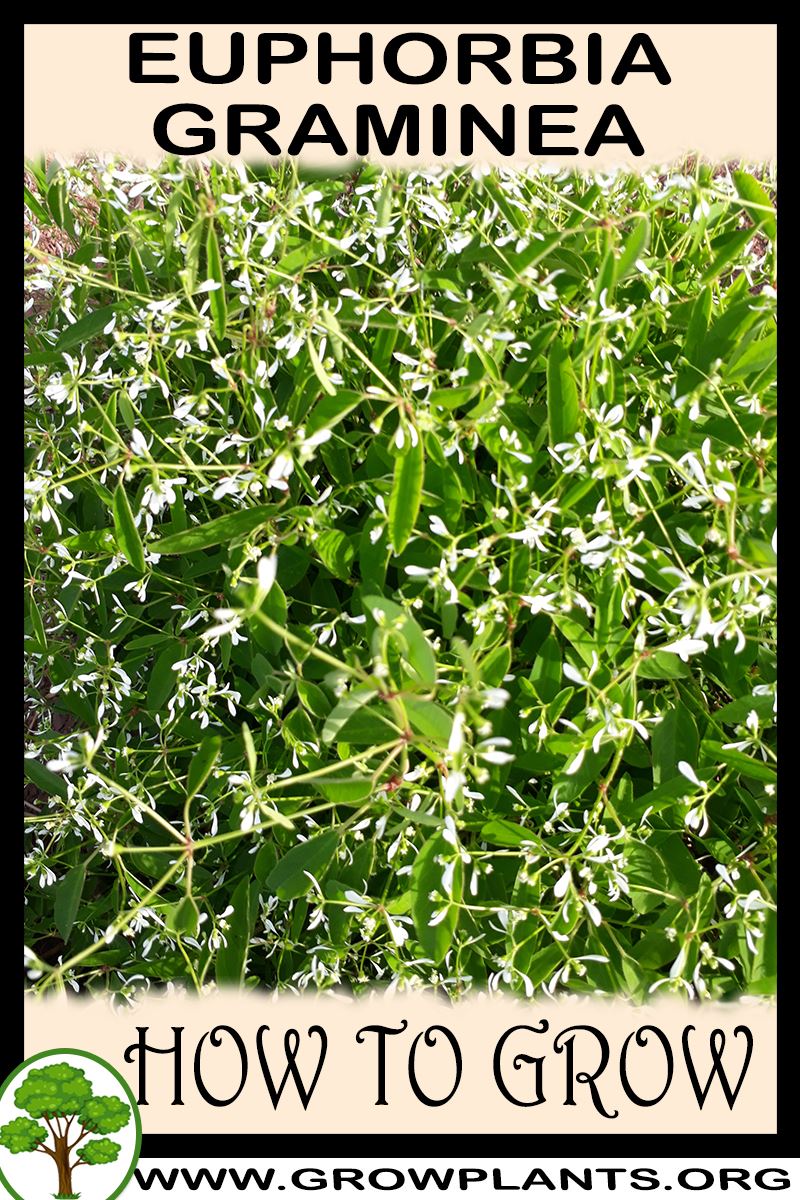
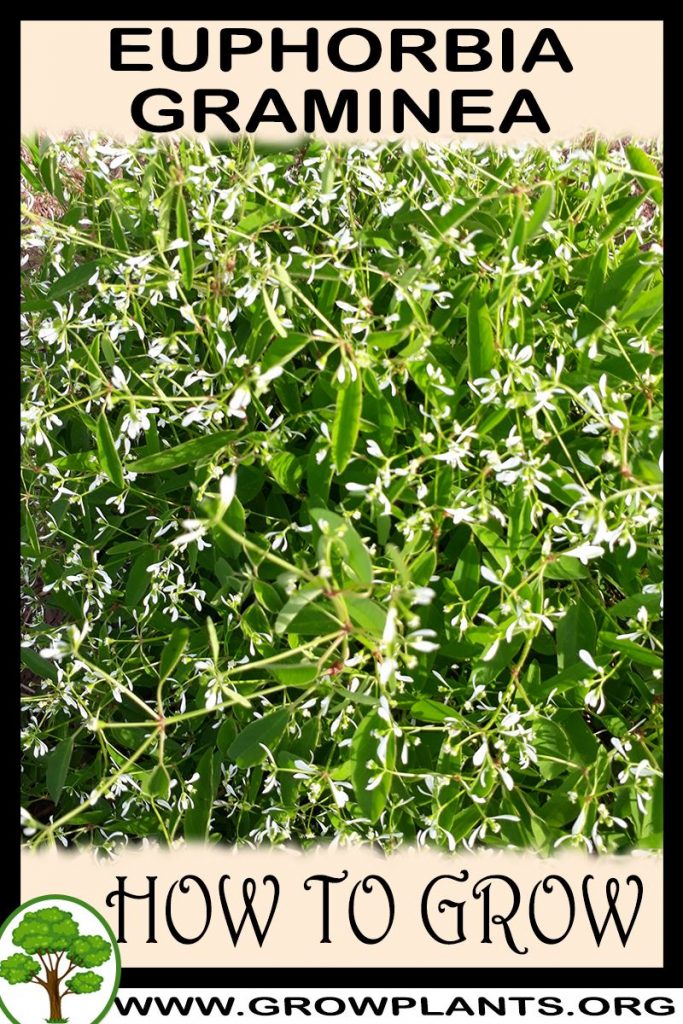
Overview: Euphorbia graminea ‘Glitz’ is an airy ornamental shrublet 0.3-1 m (1-3 ft) tall covered in tiny white bracts. It is an evergreen perennial in frost-free zones and grown as an annual in colder ones, used as a container and bedding filler.
Quick Specifications
| Specification | Attribute |
|---|---|
| Plant Type / Life Cycle | Perennial (grown as an annual in cold zones) |
| Foliage Type | Evergreen (in frost-free zones) |
| Mature Size | 0.3-1 m (1-3 ft) tall |
| Growth Rate | Moderate to fast |
| Toxicity | Toxic – the milky latex sap is a skin, eye and mucous-membrane irritant and is poisonous to people and pets if ingested. |
| Hardiness | USDA zones 10b-11 as a perennial, 6-9 as an annual |
Growth Form & Structure
- Height & Spread: Forms a rounded mound 0.3-1 m (1-3 ft) high and wide; excellent in pots, baskets and beds, and grown indoors with plenty of light.
- Growth Habit & Form: An airy, finely-branched subshrub producing a continuous cloud of small white bracts, much like Euphorbia ‘Diamond Frost’.
- Lifespan & Maturity: Fast to fill out; flowers for most of the year in mild climates.
Anatomy & Physical Features
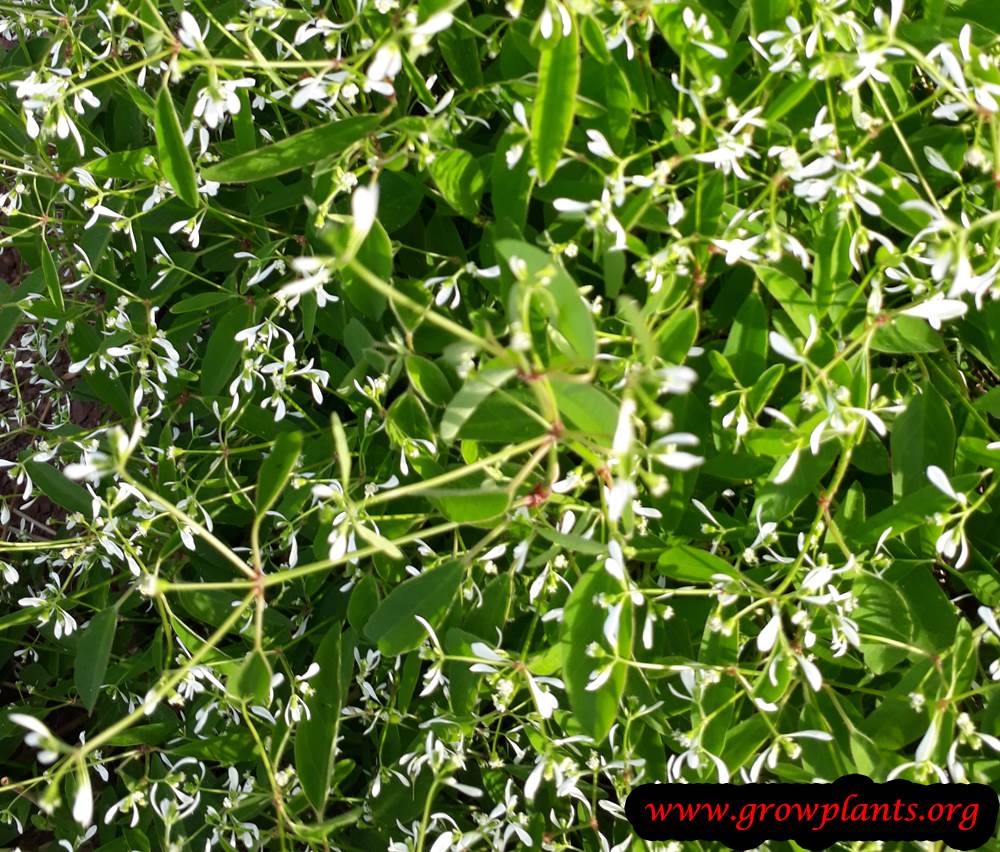
- Leaves & Foliage: Small green oval leaves, largely hidden by the flowering display.
- Flower Characteristics: Tiny, insignificant white flowers surrounded by showy, spoon-shaped white bracts, for most of the year.
Primary Uses & Landscape Value
- Functional & Ornamental Roles: Ornamental ‘filler’ for containers, hanging baskets and bedding; a long-flowering white accent.
Care Guide: Planting, Soil & Watering
Overview: Euphorbia graminea is a hardy in zones 10b–11; grown as an annual in zones 6–9 spurge that grows best in full sun to shade and free-draining soil. It is fairly drought-tolerant once established, needing only modest watering, and dislikes waterlogged ground.
Quick Care Requirements
| Requirement | Ideal Condition |
|---|---|
| Planting Season | Spring (as an annual in cooler zones); spring through autumn where grown as a perennial (zones 10b–11) |
| Growth Rate | Moderate to fast |
| Soil Type | Well-draining soil; tolerates lean, sandy or average garden ground |
| Water Need | Low – water sparingly and let the soil dry out between waterings |
Planting & Establishment
- Best Planting Season: Where it is hardy (zones 10b–11), plant spring through autumn; in cooler zones plant in spring as a warm-season annual after the last frost.
- How to Plant:
- Hole Preparation: Wear gloves and take care with the milky sap, which is a skin and eye irritant common to all euphorbias. Dig a hole about twice the width of the root ball and the same depth, so the plant sits at the level it grew at, and loosen the sides for easy rooting.
- Soil Amendments: Work some grit or compost into heavy ground to open up drainage; these spurges dislike sitting in wet soil.
- Planting Depth: Set the plant so the crown sits at soil level – do not bury the stem base.
- Growth Speed & Expectations: Growth is moderate to fast, filling out quickly in a warm, bright spot through the growing season.
Soil, Watering & Drainage Care
- Soil Mix & Drainage Needs: Give it free-draining soil, as it dislikes waterlogging. Lighten heavy ground with grit or compost, and in a container use a well-draining potting mix with added perlite or sand.
- Watering Schedule & Technique:
- Young / Newly Planted: Water regularly after planting to settle the roots and keep the soil lightly moist while it establishes.
- Established: Once established it is fairly drought-tolerant; water deeply but only when the top few centimetres of soil have dried.
- Seasonal Adjustments: Water more during prolonged heat and much less over the cooler months, when growth slows.
Climate, Light & Hardiness
Euphorbia graminea (Glitz euphorbia) is a frost-sensitive, sun-to-shade-tolerant plant for mediterranean, desert, subtropical, and temperate climates, grown as a true evergreen perennial in the mildest winters and as a cold-season annual further north. It needs frost-free conditions and well-drained soil to thrive.
Quick Climate Specifications
| Climate Zones | Mediterranean, desert, subtropical, temperate |
|---|---|
| USDA Hardiness Zones | 10b–11 as a perennial; 6–9 as an annual |
| Frost Tolerance | Very Low |
| Light Conditions | Full Sun / Half Shade / Full Shade (with light) |
Sunlight & Light Exposure
Optimal Light Setup
Adaptable from full sun to full shade (as long as some light reaches it), making it a flexible choice for varied garden spots.
Direct Sun Requirement
Direct sun is tolerated well but not strictly required, since the plant also performs in half shade to bright full shade.
Best Exposure / Orientation
Flexible placement from open sun to shaded beds; indoors it needs a spot with plenty of light.
Temperature Extremes & Hardiness
USDA Hardiness & Regional Limits
Frost-free conditions are essential (per the care overview): the site data shows it persisting as a true perennial only in USDA zone 10b–11, while gardeners in zone 6–9 grow it as a warm-season annual instead, since freezing winters there prevent it from surviving outdoors.
Cold Damage & Winter Protection
Requires frost-free conditions; in marginal zones bring container plants indoors before any cold snap, since it cannot be relied on to survive freezing weather outdoors.
Frost Sensitivity
Highly frost-sensitive – explicitly described as needing frost-free conditions.
Extreme Heat Tolerance
Good, but the plant is sensitive to overwatering, so extreme heat should be managed with light, careful watering rather than heavy irrigation.
Wind, Humidity & Microclimate
Rainfall & Seasonal Moisture
Prefers a small amount of water and well-drained soil; overwatering is explicitly flagged as capable of killing the plant, so it is best suited to climates or microsites where soil doesn’t stay saturated.
Microclimate Recommendations
A frost-free, well-drained spot with reliable light (sun to bright shade) suits it best; in marginal zones, a warm microclimate such as a sheltered courtyard can help it perform as a longer-lived perennial.
Growing in Pots, Balconies & Indoors
Euphorbia graminea is an airy, free-flowering plant of 0.3-1 m (1-3 ft). The grower lists it as suitable indoors provided it gets a lot of light, and it grows well in pots and planters.
Quick Details
- Container Size: A small to medium free-draining pot
- Indoor Suitability: Yes, in a very bright spot with plenty of light
- Best Spot: Full sun to half shade (full shade with good light)
- Soil & Drainage: Light, very free-draining mix
- Watering in Pots: Small amounts – let it dry between waterings
Indoors & On the Windowsill
- Indoors: The grower marks it as suitable indoors, but only with a lot of light – a bright, sunny window keeps it compact and flowering; it stretches in dim rooms.
- Safety: Like all euphorbias its milky sap is toxic and irritates skin and eyes – keep it away from children and pets and wash your hands after handling.
On a Balcony or Patio
- Light & wind: A bright, warm balcony suits it well; it tolerates heat but not standing wet. Bring it in before cold weather.
Choosing the Pot, Soil & Long-Term Care
- Pot & drainage: A pot with strong drainage holes is essential; skip a permanently full standing-water saucer to avoid root rot. Terracotta breathes and dries faster, while glazed or plastic holds moisture longer.
- Potting mix: Light and fast-draining, with added grit or perlite.
- Feeding: A light feed occasionally in the growing season is enough.
Fertilizing & Feeding
A light feeder: sparing, low-nitrogen feeding through the warm growing season is enough to keep the showy bracts coming, since this drought-tolerant plant grows poorly in rich, overfed conditions.
Quick Fertilizing Specs
| Feeding Level | Light feeder |
|---|---|
| Main Nutrient Priority | Low-nitrogen, balanced feeding – avoid pushing soft growth |
| Best Feeding Period | Warm active growing season, spring through the near-continuous bloom period |
| Organic Options | A light topdressing of compost worked into well-drained soil |
| Reduce/Stop Feeding | Ease off in cool weather or when overwintered indoors with reduced light |
| Micronutrients | Rarely needed beyond a complete fertilizer; correct only a diagnosed issue |
| Soil pH | Tolerates a wide range provided drainage is sharp |
Feeding by Growth Stage
Warm-season active growth
Support steady stem and foliage growth in frost-free, well-drained conditions without encouraging soft, rot-prone growth.
| Nutrient direction | A light, low-nitrogen balanced fertilizer favors sturdy growth over lush, watery foliage in this drought-tolerant plant. |
|---|---|
| Timing | Through the frost-free warm season, or year-round where grown indoors with strong light. |
| Frequency | A sparing feeding at the start of active growth, repeated only occasionally. |
| Fertilizer types | A diluted, low-nitrogen balanced fertilizer, A light topdressing of compost worked into well-drained soil |
| Precautions | This plant dislikes overwatering and overfeeding alike; keep applications light and let well-drained soil do most of the work. The milky sap can irritate skin, so handle plant debris and fertilizer application with care. |
Near-continuous bloom period
Sustain the small flowers and showy bracts that this plant produces for much of the year.
| Nutrient direction | Continue light, balanced feeding; a touch of extra potassium can support bract and flower quality without forcing leafy growth. |
|---|---|
| Timing | Through the extended bloom period in frost-free or indoor bright-light conditions. |
| Frequency | An occasional light feeding is generally enough while bloom continues. |
| Fertilizer types | A light, balanced fertilizer with modest potassium, Compost as an occasional topdressing |
| Precautions | Resist the urge to feed more heavily to chase bigger bracts – excess nitrogen weakens stems and dulls flowering on this naturally lean-feeding plant. |
Cool-weather or low-light rest
Let the plant coast through cool weather outdoors, or through a dim indoor winter, without pushing new growth it cannot support.
| Nutrient direction | None – fertilizer is not needed while growth has slowed with cold or low indoor light. |
|---|---|
| Timing | During cool outdoor weather in marginal climates, or an indoor low-light winter period. |
| Frequency | No feeding during this rest period. |
| Fertilizer types | No feeding at this stage; do not fertilize until active growth resumes. |
| Precautions | Feeding a plant that has slowed for the season wastes nutrients and raises the risk of root and stem rot in already sluggish, poorly draining conditions. |
Nutrient Deficiency Signs & Corrections
Overall pale, washed-out foliage color and slowed stem growth.
| Possible causes | very lean, low-organic-matter soil, extended period without any feeding, nitrogen leaching from unusually heavy rain or watering |
|---|---|
| Appears first on | older growth and the general foliage color |
| What to check | how long since the last feeding, soil organic matter level, drainage and recent watering |
| Possible correction | Apply a light, low-nitrogen balanced fertilizer and work a little compost into the soil surface. |
New growth is pale to yellow while the veins remain green.
| Possible causes | alkaline soil tying up available iron, waterlogged or compacted soil limiting root function, root stress from recent transplanting |
|---|---|
| Appears first on | newest leaves and stem tips |
| What to check | soil pH and drainage, root condition, recent transplant or repotting history |
| Possible correction | Improve drainage and soil aeration, then apply a chelated iron product per its label if the issue persists. |
Stems soften, blacken at the base, or the plant declines despite adequate light.
| Possible causes | excess fertilizer salts in poorly drained soil, overwatering combined with feeding, favoring root and stem rot, container or bed drainage that keeps roots too wet |
|---|---|
| Appears first on | the base of the stems and the root zone |
| What to check | soil drainage and how quickly it dries, recent feeding and watering frequency, any softening or discoloration at the stem base |
| Possible correction | Stop feeding, let the soil dry appropriately between waterings, and improve drainage before resuming light feeding. |
Pruning, Training & Seasonal Maintenance
Euphorbia graminea is a small, fast-to-medium growing evergreen subshrub (0.3–1 m) that tolerates pruning well and responds quickly given its vigorous growth rate. The main objective is shaping and removing dead or frost-damaged growth rather than any formal training, and since the showy white bracts are produced continuously on new growth through most of the year, pruning timing has little effect on the overall bloom display. The safest structural window is the plant’s semi-dormant autumn–winter period, which also avoids pushing tender new growth into any cold snap near the edge of its hardiness range.
Quick Pruning & Maintenance Specs
| Pruning Tolerance | Moderate–High |
| Primary Pruning Window | Autumn – Winter |
| Typical Frequency | Light, as-needed shaping |
| Main Objective | Remove dead/damaged growth; control shape and size |
| Young Plant Priority | Pinch tips lightly to build a bushy base |
| Mature Plant Priority | Prevent legginess; remove frost-nipped tips |
| Best Tool Type | Precision snips / bypass secateurs |
| Avoid Heavy Pruning During | Just before a cold snap (borderline-hardy perennial) |
Pruning by Plant Age & Size
Newly Established
Leave alone beyond removing any damaged growth from transplanting; let the plant fill in on its own vigorous growth.
Young / Formative
No formal training system is needed – light pinching of soft tips encourages a denser, bushier subshrub rather than a single leggy stem.
Mature / Established
Routine tidy-up of dead or frost-damaged stems and shape correction; because it self-renews quickly, mature plants rarely need more than light annual shaping.
Seasonal Pruning Schedule
Dormant / Winter
- Objective: tidy shape and remove any cold-damaged tissue before the next growth flush
- Remove: dead, blackened or frost-nipped stem tips
- Do not remove: healthy green stem tissue that is only slightly discoloured – wait to see if it recovers
- Expected response: fresh growth resumes from below the cut once temperatures rise
- Flowering impact: minimal, since bracts form on new growth produced afterward
Ongoing Sanitary
- Objective: keep the plant tidy through its long bloom period
- Remove: any dead, broken or diseased stems as noticed
- Do not remove: actively budding stem tips
- Expected response: continued bushy growth
- Flowering impact: negligible, given near-continuous bract production
Structural Pruning & Training
Pruning is used mainly for design – shaping the small mounded habit and controlling size within a bed or border, rather than building any formal framework.
Special Growth to Remove
- Dead or rotted stem sections (over-watering is a known cause of dieback in this species)
- Leggy, overextended stems that spoil the mounded form
The milky latex sap is a skin and eye irritant – wear gloves and avoid touching your face when cutting, and rinse any skin contact promptly.
Container & Small-Space Pruning
Grows well in containers if given plenty of light; because it is fast-to-medium growing, container specimens benefit from more frequent light tip pruning than an in-ground plant to keep the mound compact and prevent it from swamping the pot.
Tools
- Precision snips for tip shaping and removing small dead growth
- Bypass secateurs for slightly thicker basal stems
Tool Hygiene & Disease Risk
Routine – no specific transmissible disease is flagged for this species; clean, sharp tools are sufficient. The main hygiene concern is personal safety from the irritant sap rather than plant-to-plant disease spread.
Cut Placement & Technique
Make clean cuts just above a healthy node; wear gloves and, ideally, eye protection, since cut stems exude a caustic latex.
Heavy Pruning & Rejuvenation
Tolerated well given the plant’s fast-to-medium growth rate – a leggy specimen can be cut back harder in spring once frost risk has passed, and it will reflush quickly.
Post-Pruning Care
Keep watering light after cutting back – this species is explicitly noted as being killed by over-watering, and freshly cut stems are no exception. Watch for spider mites or aphids on the tender regrowth flush.
Common Pruning Mistakes
- Handling cut stems without gloves and getting irritant sap on skin or in eyes
- Overwatering after a cutback, which this species tolerates poorly at the best of times
- Hard-pruning right before a cold snap near the edge of its hardiness range
When NOT to Prune
Avoid heavy cuts immediately before an expected cold snap, since this is a frost-tender perennial outside hardiness zone 10b–11. Avoid pruning into wet, poorly-drained soil conditions that could compound the plant’s known sensitivity to over-watering.
Recommended Tools (by task)
- precision_snips – clean, small-diameter cuts for tip shaping and deadwood removal on this soft-stemmed subshrub
- bypass_secateurs – for the occasional thicker basal stem during a rejuvenation cutback
Propagation Guide
This Euphorbia graminea does not produce viable seed, so stem cuttings are the only practical way to propagate it, and cuttings reproduce the plant true-to-type. Propagation is moderately easy: the main challenges are managing the plant’s irritating milky sap and avoiding overwatering while cuttings root.
Quick Propagation Specs
| Best Propagation Method | Stem cuttings |
| Alternative Methods | None practical — the plant is infertile and does not set seed |
| Propagation Difficulty | Moderate |
| Vegetative True-to-Type | Yes |
| Best Propagation Season | Spring to summer, in frost-free, actively growing conditions |
| Cutting Rooting Time | Typically several weeks |
Stem Cuttings
Cutting Type
Stem tip cuttings.
Best Timing
Spring through summer, during active growth and frost-free conditions.
Cutting Preparation
This plant is poisonous and its cut stems ooze a milky latex sap that can irritate skin, so wear gloves when taking cuttings. Letting the cut ends of both the cutting and the parent plant dry/callus briefly before inserting the cutting into the rooting medium helps the sap stop flowing and reduces rot risk.
Rooting Setup
Use a free-draining mix and keep it only lightly moist — this plant is sensitive to overwatering, and that sensitivity carries over to the rooting stage, so avoid a constantly wet medium.
Rooting Hormone
Not required, but can be used to help speed and improve rooting.
Rooting Time
Typically several weeks to establish roots.
Bloom & Flower Guide
Quick Details
- Bloom Season: Much of the year in mild climates
- Flower Appearance: Tiny, insignificant white true flowers surrounded by showy white, spoon-shaped bracts
- Edibility: Toxic — do not eat; the milky sap irritates skin and eyes
Detailed Blooming Overview
In Euphorbia graminea the real flowers are minute (technically cyathia) and easy to overlook — the display comes from a cloud of small white bracts that hover over the foliage like baby’s breath, giving a long, airy show across much of the year in frost-free conditions.
Flower Characteristics
- True flowers small, white and insignificant.
- Showy white, spoon-shaped bracts create the visible ‘bloom’.
- Overall effect is a fine, airy white haze.
Bloom Care & Thinning
- Managing the bloom: Grow in full sun; a light trim of spent bracts keeps it fresh and encourages rebloom.
- Safety first: Wear gloves when cutting or deadheading — the milky latex is a skin and eye irritant and is toxic if eaten. Keep away from children and pets.
Pests, Diseases & Troubleshooting
Overview: Grassleaf spurge is a tender, fast-growing, leafy flowering spurge grown as a frothy annual; under warm, humid or protected conditions its main threats are sap-suckers (whitefly, aphids, spider mites) and, if kept too wet, root rot and foliar mildews. Manage it culturally with good airflow, careful watering and early intervention, and never forget the irritant milky latex.
Quick Troubleshooting Overview
| Issue / Pest | Main Symptom | Primary Solution |
|---|---|---|
| Aphids | Clusters on new shoots, honeydew, distortion | Water jet, beneficials, insecticidal soap |
| Spider mites | Stippling, bronzing, webbing in dry heat | Raise humidity, rinse, oil / predatory mites |
| Powdery mildew | White powdery film on leaves | Improve airflow; sulfur or potassium-bicarbonate spray |
| Leaf spot / rust | Brown or rusty spots and pustules on leaves | Remove affected leaves; copper if severe |
| Root rot | Wilting, blackened base in wet soil | Improve drainage; reduce watering |
| Latex contact | Skin / eye irritation when cut | Wear gloves and eye protection |
Common Pests & Management
- Aphids (Aphis / Macrosiphum spp.):
- Symptoms: Clusters of green, black or grey soft-bodied insects on soft new shoots, flower stems and bud clusters; sticky honeydew, sooty mould and distorted new growth.
- Prevention & Control: Blast off with a firm water jet and squash small colonies. Encourage ladybirds, lacewings and hoverflies with companion planting. Treat persistent infestations with insecticidal soap or a light horticultural oil, spraying in the cool of the evening to protect pollinators.
- Spider mites (Tetranychus urticae):
- Symptoms: Fine pale stippling, bronzing and a dull cast to the foliage, with fine webbing under leaves in hot, dry spells.
- Prevention & Control: Raise humidity and airflow; rinse foliage to knock back populations. Release predatory mites where practical. Spot-treat with horticultural oil or insecticidal soap and avoid broad-spectrum sprays that remove natural enemies.
- Whitefly (Trialeurodes vaporariorum):
- Symptoms: Clouds of tiny white flies from the undersides of leaves when disturbed; yellowing, honeydew and sooty mould on softer, leafy growth.
- Prevention & Control: Monitor with yellow sticky traps; encourage Encarsia and lacewings. Rinse foliage and treat leaf undersides with insecticidal soap or horticultural oil, repeating weekly.
- Sap-sucking scale & mealybug (Coccidae / Pseudococcidae):
- Symptoms: Brown bumps along stems or white cottony tufts in leaf axils, with honeydew and sooty mould; more common on plants under cover.
- Prevention & Control: Wipe off with dilute alcohol, prune out badly infested stems, and support natural enemies. Smother remaining insects with horticultural oil applied in the evening.
Diseases & Fungal Issues
- Powdery mildew (Podosphaera / Erysiphe spp.):
- Symptoms: White powdery patches on upper leaf surfaces and stems, later yellowing and early leaf drop; worst in crowded plants with poor airflow and warm days/cool nights.
- Treatment & Management: Space and thin for airflow, avoid excess nitrogen and overhead watering. Remove affected leaves. Sulfur, potassium-bicarbonate or a light horticultural-oil spray checks spread; choose airy sites.
- Rust (Melampsora / Uromyces spp.):
- Symptoms: Orange, brown or rusty pustules on leaf undersides with yellow flecking above; premature leaf drop in wet seasons.
- Treatment & Management: Remove and destroy infected leaves and clean up debris at season’s end. Improve airflow and keep foliage dry. A sulfur or copper fungicide can protect valued plantings if rust is recurrent.
- Root & crown rot (Pythium / Phytophthora / Rhizoctonia spp.):
- Symptoms: Wilting despite moist soil, browning at the crown, blackened roots and collapse; follows heavy, waterlogged or poorly drained soil.
- Treatment & Management: Plant in free-draining soil, avoid waterlogging and don’t bury the crown. Reduce watering, improve drainage, and remove severely affected plants; refresh soil where rot has occurred.
- Grey mould (Botrytis cinerea):
- Symptoms: Fuzzy grey mould on faded flowers, soft stems and damaged tissue in cool, damp, still weather.
- Treatment & Management: Remove faded flowers and dead material promptly, improve airflow, and avoid overhead watering late in the day.
Growing Difficulties & Abiotic Problems
- Root rot from overwatering:
- Cause & Symptoms: Wilting, yellowing and a blackened crown in heavy, wet or poorly drained soil.
- Correction Strategy: Grow in free-draining soil, water only as needed and avoid waterlogging; don’t bury the crown when planting.
- Chlorosis:
- Cause & Symptoms: Yellowing leaves with green veins in very alkaline, cold or waterlogged soils.
- Correction Strategy: Improve drainage and soil structure; feed a balanced fertiliser and, on alkaline soils, apply chelated iron if needed.
- Sunscald & leaf scorch:
- Cause & Symptoms: Bleached or browned leaf patches and crisped margins in intense sun or drying wind, especially on soft spring growth.
- Correction Strategy: Site with appropriate light for the species, keep evenly moist during establishment, and shelter from harsh drying wind.
- Latex irritation:
- Cause & Symptoms: Milky sap released when stems are cut irritates skin and eyes and is toxic if ingested.
- Correction Strategy: Wear gloves and eye protection when cutting or dividing; wash off any sap promptly; keep away from eyes.
What Helps – Products & Tools
For spurges the mainstays are horticultural (neem) oil and insecticidal soap for mealybug, scale, whitefly and mites; isopropyl alcohol on cotton swabs for spot-treating mealybug and scale; yellow sticky traps for monitoring whitefly; predatory mites and Cryptolaemus for biological control; and, for disease, a copper fungicide for leaf/stem spot plus sulfur or potassium bicarbonate for powdery mildew. The best “product”, though, is a fast-draining gritty mix and disciplined watering. Always wear gloves and eye protection because of the irritant latex, and spray oils in the cool of the evening.