Plant Profile & Key Characteristics
Overview: Epilobium dodonaei (alpine willowherb) is a herbaceous perennial growing 40-80 cm (16-32 in) tall with narrow leaves and spikes of pink-purple flowers. Fast-growing and ornamental, it can spread vigorously.
Quick Specifications
| Specification | Attribute |
|---|---|
| Plant Type / Life Cycle | Herbaceous perennial |
| Foliage Type | Deciduous |
| Mature Size | 40-80 cm (16-32 in) tall |
| Growth Rate | Moderate to fast |
| Root System | Spreading, rhizomatous |
| Hardiness | USDA zone 5-9 |
Growth Form & Structure
- Height & Spread: 40-80 cm (16-32 in) tall, spreading to form colonies; also grown in containers to limit spread.
- Growth Habit & Form: Upright clumping perennial spreading by rhizomes and wind-borne seed (can be invasive).
- Lifespan & Maturity: Herbaceous perennial.
Anatomy & Physical Features
- Leaves & Foliage: Narrow linear green leaves.
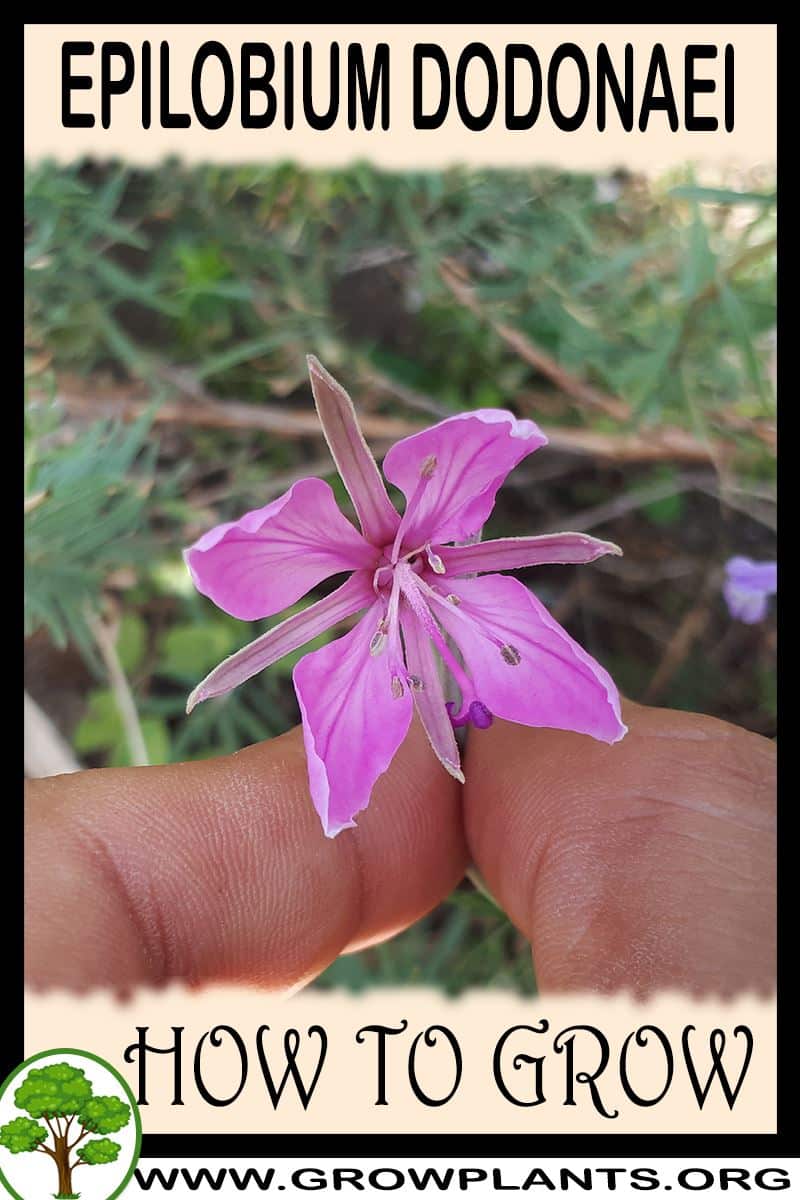
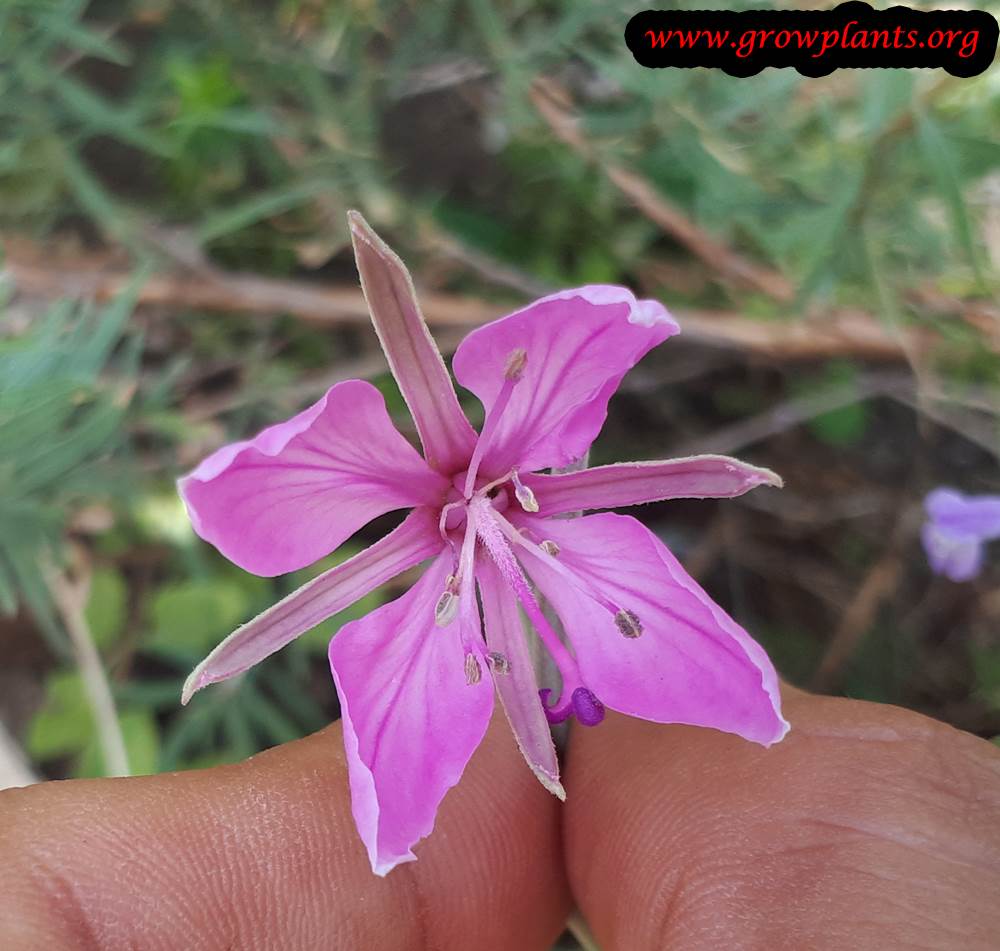
- Flower Characteristics: Purple to pink flowers in a distinctive double-cross form, one pair of petals elliptic and the other linear (full detail in the Bloom guide).
Primary Uses & Landscape Value
- Functional & Ornamental Roles: Ornamental flowering perennial for borders and naturalistic plantings; attractive to pollinators.
Care Guide: Planting, Soil & Watering
Overview: Epilobium dodonaei is an easy, sun-loving perennial that grows quickly in rich soil with moderate, steady moisture. It is adaptable and can spread freely, suiting informal borders and gravelly ground alike.
Quick Care Requirements
| Requirement | Ideal Condition |
|---|---|
| Planting Season | Spring |
| Growth Rate | Moderate to fast |
| Soil Type | Rich, moderately moist, well-drained |
| Water Need | Moderate – keep evenly moist |
Planting & Establishment
- Best Planting Season: Plant in spring as growth resumes and the soil warms.
- How to Plant:
- Hole Preparation: Dig a hole about twice the width of the root ball; because it can spread, allow room or contain it.
- Soil Amendments: Work in compost or organic matter to enrich the soil while keeping it free-draining.
- Planting Depth: Set the crown at soil level, matching its previous depth.
- Growth Speed & Expectations: Growth is moderate to fast; plants establish and fill out within a season or two.
Soil, Watering & Drainage Care
- Soil Mix & Drainage Needs: It likes fertile soil that holds some moisture yet drains freely; sharp drainage prevents rot in winter.
- Watering Schedule & Technique:
- Young / Newly Planted: Water regularly to establish, keeping the soil evenly moist.
- Established: Provide moderate, steady water; it tolerates short dry spells once settled.
- Seasonal Adjustments: Water more in summer heat; it dies back and needs little in winter dormancy.
Climate, Light & Hardiness
Epilobium dodonaei is a temperate-climate perennial suited to USDA zones 5–9, growing best in full sun on rich soil. It is a cold-hardy species that dies back to the ground each winter and resprouts reliably in spring.
Quick Climate Specifications
| Climate Zones | Temperate |
|---|---|
| USDA Hardiness Zones | 5–9 |
| Approx. Survival Minimum | Established, dormant plants typically survive well below freezing, consistent with zone 5 winter minimums (roughly −29°C to −23°C / −20°F to −10°F) |
| Frost Tolerance | High |
| Light Conditions | Full sun |
Sunlight & Light Exposure
Optimal Light Setup
Full sun brings the best flowering and most compact growth.
Direct Sun Requirement
Needs direct sun; doesn't perform as well in shade.
Best Exposure / Orientation
Open, sunny beds; since it spreads assertively (noted as invasive), allow it room or contain the spread.
Temperature Extremes & Hardiness
USDA Hardiness & Regional Limits
Hardy in zones 5–9; as a deciduous perennial it dies back completely each winter and regrows from the roots in spring.
Cold Damage & Winter Protection
Top growth is naturally lost to the first hard frosts of autumn/winter (dead parts are pruned away at that time); no special winter protection is needed within its hardiness range.
Frost Sensitivity
Low sensitivity once dormant; the dormant rootstock is quite cold hardy.
Extreme Heat Tolerance
No strong heat-tolerance signal in the source data; as a temperate-climate species it is best suited to zone 9 and cooler rather than hot subtropical or tropical conditions.
Wind, Humidity & Microclimate
Rainfall & Seasonal Moisture
Grows in rich soil with average water and is not documented as drought tolerant, so consistent seasonal moisture supports best growth.
Microclimate Recommendations
Open, sunny sites with fertile soil; because it can spread assertively, a contained bed or root barrier is worth considering.
Growing in Pots, Balconies & Indoors
Epilobium dodonaei is a sun-loving, willowherb-like perennial that grows well in containers but is not a houseplant. Give it a bright, open, sunny position outdoors.
Quick Details
- Container Size: Medium – a pot suited to a 40-80 cm (16-32 in) upright perennial.
- Indoor Suitability: No – not a houseplant; a very sunny sill at best.
- Best Spot: Full sun.
- Soil & Drainage: Sharp, free-draining, even lean mix.
- Watering in Pots: Moderate – let the surface dry between waterings; it tolerates some dryness.
Indoors & On the Windowsill
- Not a houseplant: The grower’s answer is no – indoors the light is too weak and the still, dry air does not suit it. It belongs outdoors in a container.
- A bright sill at most: If you want to try it inside, only a very bright, sunny windowsill comes close, and even then it is happier out on a balcony or patio.
On a Balcony or Patio
- Sun, wind and heat: Give it your sunniest, most open spot; walls and railings throw back heat and wind dries pots fast, so check moisture daily in hot weather and stake tall stems on an exposed balcony. A drip irrigation kit with a timer can take over that watering check automatically.
- Self-seeding: It seeds itself freely, so deadhead spent flowers in a pot if you want to keep it tidy.
Choosing the Pot, Soil & Long-Term Care
- Pot & drainage: Choose a pot with strong drainage holes and skip a standing-water saucer, which invites root rot; terracotta breathes and dries quickly, while glazed or plastic hold moisture longer.
- Potting mix: Fill with a well-aerated, organic-rich medium – a good potting mix, or peat/coir blended with perlite or vermiculite for drainage.
- Feeding: Container plants run through nutrients fast because watering washes them out, so feed a little more often through the growing season than you would in open ground.
- Repotting: Refresh the mix or pot up about every couple of years; for perennials, lightly trim the roots and top growth at the same time.
Fertilizing & Feeding
A vigorous, spreading perennial grown for its purple-to-pink summer flowers, this species grows fast in fertile soil and benefits from moderate feeding through spring growth and bloom, then goes dormant in winter needing none at all.
Quick Fertilizing Specs
| Feeding Level | Moderate feeder during active growth |
|---|---|
| Main Nutrient Priority | Balanced feeding to support fast spring growth into a long summer-to-autumn bloom |
| Best Feeding Period | From spring growth through the summer and into the autumn flowering period |
| Organic Options | Compost or well-rotted organic matter worked into rich garden soil |
| Reduce/Stop Feeding | Stop feeding as the foliage begins to die back for winter |
| Micronutrients | Usually met by a complete fertilizer in reasonably fertile garden soil |
Feeding by Growth Stage
Spring regrowth
Support vigorous new shoots as this deciduous perennial resumes growth from its rootstock each spring.
| Nutrient direction | A balanced, complete fertilizer supports the fast flush of new stems and foliage typical of this species. |
|---|---|
| Timing | As new shoots emerge in spring. |
| Frequency | A feeding as growth resumes, with a further light feeding as stems lengthen, is usually enough. |
| Fertilizer types | A balanced, complete fertilizer, Compost or organic matter worked into the bed |
| Precautions | This species spreads readily in rich, moist soil; avoid heavy feeding that encourages it to spread more aggressively than wanted in the garden. |
Summer-to-autumn bloom
Sustain the tall flowering stems and their cross-shaped purple or pink flowers through a long bloom season.
| Nutrient direction | Continued balanced feeding supports both ongoing stem growth and the extended flower display. |
|---|---|
| Timing | Through summer and into autumn as flowers continue opening along the stems. |
| Frequency | Occasional feeding through the bloom period supports flowering without pushing excess vegetative spread. |
| Fertilizer types | A balanced, complete fertilizer |
| Precautions | Do not switch to a high-phosphorus “bloom booster”; balanced feeding supports this plant’s natural flowering better. |
Winter dieback and dormancy
Let the plant die back to its rootstock and rest through winter before regrowing in spring.
| Nutrient direction | None – withhold fertilizer while the plant is dormant. |
|---|---|
| Timing | From autumn dieback through winter until new spring growth appears. |
| Frequency | No feeding at this stage. |
| Fertilizer types | No feeding at this stage; the plant is dormant and has no active foliage to use nutrients. |
| Precautions | Do not fertilize dormant rootstock over winter; wait for visible new growth in spring before resuming feeding. |
Nutrient Deficiency Signs & Corrections
Lower leaves fade to pale green or yellow and stems grow noticeably thinner than usual.
| Possible causes | low available soil nitrogen, nutrient leaching in wetter garden sites, competition from the plant’s own dense, spreading clumps |
|---|---|
| Appears first on | older, lower leaves |
| What to check | recent feeding history, soil organic matter, clump density and possible need for dividing |
| Possible correction | Apply a balanced, complete fertilizer and divide overly dense clumps to reduce internal competition. |
The planting spreads well beyond its bed and crowds out neighboring plants.
| Possible causes | rich, moist soil combined with generous feeding encouraging vigorous spread, the species’ own naturally spreading, sometimes invasive growth habit, insufficient physical containment such as edging or root barriers |
|---|---|
| Appears first on | whole-planting effect around the bed edges |
| What to check | recent feeding amount, soil richness and moisture, presence of edging or barriers |
| Possible correction | Reduce feeding to a lighter, balanced level and add physical barriers or edging to contain the naturally spreading habit. |
Leaf margins brown or scorch and growth stalls despite adequate watering.
| Possible causes | fertilizer salt buildup in the root zone, under-watering that concentrates salts around the roots, excessive or too-frequent feeding |
|---|---|
| Appears first on | leaf margins and tips |
| What to check | recent fertilizer amounts, watering consistency, soil drainage |
| Possible correction | Ease off feeding, water thoroughly to flush accumulated salts, then return to lighter balanced feeding. |
Pruning, Training & Seasonal Maintenance
Epilobium dodonaei is a deciduous herbaceous perennial that dies back to the base each winter and regrows from the roots/rhizomes each spring, so it has no woody structure to protect. Flowers form on the current season’s growth through summer and autumn, so cutting back does not sacrifice a future year’s bloom. Because the species is noted as invasive (it spreads by rhizomes and self-seeds readily), pruning here is used as a control tool as much as tidying: deadheading limits seed set, and containing wandering rhizome growth limits spread.
Quick Pruning & Maintenance Specs
| Pruning Tolerance | High (herbaceous, regrows freely from the base) |
| Primary Pruning Window | Dormant/winter cutback to ground level after frost kills the top growth |
| Secondary Maintenance Window | Ongoing deadheading through summer–autumn bloom |
| Typical Frequency | Regular deadheading in bloom season, one full cutback per year |
| Main Objective | Limit self-seeding/spread and tidy dead top growth |
| Mature Plant Priority | Deadhead to reduce seed set; remove wandering rhizome shoots outside the desired area |
| Best Tool Type | Bypass secateurs / precision snips; spade for rhizome control |
Pruning by Plant Age & Size
Newly Established
Do not cut back a newly planted specimen; only remove any damaged growth so it can establish its root system.
Young / Formative
No structural training applies to this herbaceous spreader – growth habit is set by its rhizomes and stems, not by pruning.
Mature / Established
Once established, the priority is ongoing deadheading through the bloom season and containing its spread – sever and remove any shoots emerging from rhizomes that have wandered beyond the intended planting area.
Seasonal Pruning Schedule
| Ongoing Sanitary (summer–autumn, during bloom) | Deadhead spent flower spikes as they fade | Do not remove; buds/flowers still forming further up the same stems | Reduces seed dispersal (important given its invasive tendency) and keeps stems tidy | None – deadheading only prolongs tidiness, doesn’t reduce next bloom |
| Dormant/Winter | Cut all top growth back to near ground level once frost has killed it | Do not cut back green, still-photosynthesizing stems before a killing frost – the plant is still returning energy to the roots | Vigorous fresh regrowth from the base in spring | None – new growth carries next season’s flowers |
Special Growth to Remove
- Root suckers/runners – this species spreads by rhizome; sever and remove shoots emerging outside the desired planting footprint to keep its invasive spread in check.
- Spent flower stems – deadhead to reduce the self-seeding that contributes to its invasiveness.
Container & Small-Space Pruning
Growing this species in a container is itself a useful control measure for a plant noted as invasive, since it physically contains the spreading rhizomes. Within a pot, the same light routine applies – deadhead through bloom and cut back at season’s end – but also periodically check for rhizomes escaping through the container’s drainage holes if it sits directly on soil.
Tools
- Precision snips / bypass secateurs – for deadheading and cutting soft-to-semi-firm stems.
- Garden spade – for severing and lifting wandering rhizomes to contain spread.
Tool Hygiene & Disease Risk
Routine – clean, sharp tools are sufficient; no significant tool-transmissible disease is documented for this species.
Cut Placement & Technique
Deadhead just above the next node or side-bud on the flowering stem; for the dormant cutback, cut stems close to ground level. When removing wandering rhizome shoots, cut or dig them out at their point of origin rather than just topping the visible shoot.
Heavy Pruning & Rejuvenation
Tolerates a full cutback to the base every dormant season without harm – this is standard herbaceous-perennial practice here, not a rejuvenation measure, and the plant regrows vigorously from its roots each spring.
Post-Pruning Care
Water as normal after the dormant cutback; no extra feeding is needed since spring regrowth is already vigorous (fast to medium growing). Keep monitoring for new rhizome shoots appearing beyond the desired area through the growing season.
Common Pruning Mistakes
- Cutting back green top growth too early, before a killing frost, which wastes the plant’s own late-season nutrient return to the roots.
- Letting flower heads go to seed unchecked, worsening the plant’s tendency to spread.
- Only trimming visible rhizome shoots at the surface instead of tracing and removing them at their point of origin.
When NOT to Prune
Avoid a hard cutback in the middle of the bloom season if flowers are wanted (deadhead selectively instead), and avoid disturbing a newly planted specimen before it is established.
Recommended Tools (by task)
- precision_snips – fine deadheading of individual spent flower spikes through the bloom season.
- bypass_secateurs – the annual base cutback of firmer stems at season’s end.
- garden_spade – digging out and containing spreading rhizomes, given the plant’s documented invasive habit.
Propagation Guide
Seed is the easiest way to start Epilobium dodonaei – like other willowherbs it produces abundant, lightweight wind-dispersed seed and self-sows freely, which is consistent with the site’s note that this plant can behave as invasive. Dividing an established clump in spring is a useful alternative that also helps keep its spread in check. Vegetative propagation is not required to keep the species true, and propagation overall is easy.
Quick Propagation Specs
| Best Propagation Method | Seed |
| Alternative Methods | Division of clumps |
| Propagation Difficulty | Easy |
| Seed True-to-Type | Usually true-to-type |
| Vegetative True-to-Type | Yes |
| Best Propagation Season | Spring |
Growing from Seed
Sow in spring. As is typical for Epilobium (willowherb/fireweed) species, the fine, tufted seed disperses easily on the wind and this plant self-sows readily, which is part of why the site flags it as potentially invasive – site or contain accordingly.
Division, Offsets, Pups & Suckers
In spring, lift a rooted section of an established clump with shoots attached and replant it; dividing regularly is also a practical way to manage this species’ spreading habit.
Bloom & Flower Guide
Quick Details
- Bloom Season: Summer into autumn
- Time to First Bloom: A perennial that usually settles in and flowers well from its second year
- Flower Appearance: Cross-like flowers in purple or pink, each with two different petal shapes — one elliptic, one narrow
- Edibility: Grown as an ornamental — the flowers are not eaten
Detailed Blooming Overview
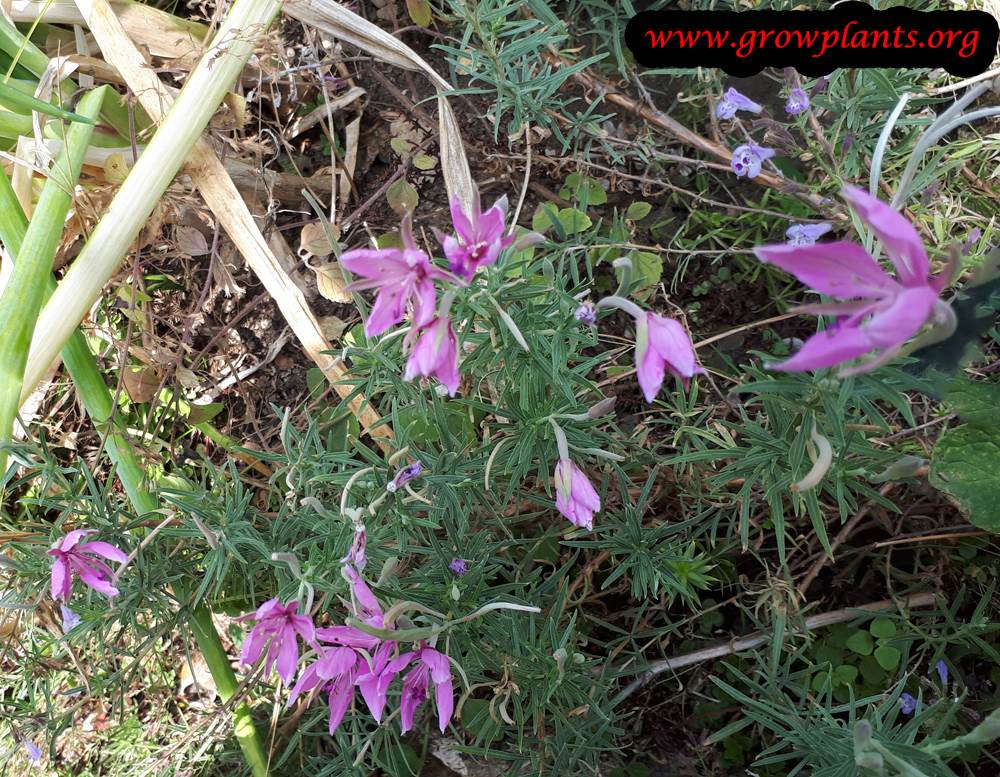
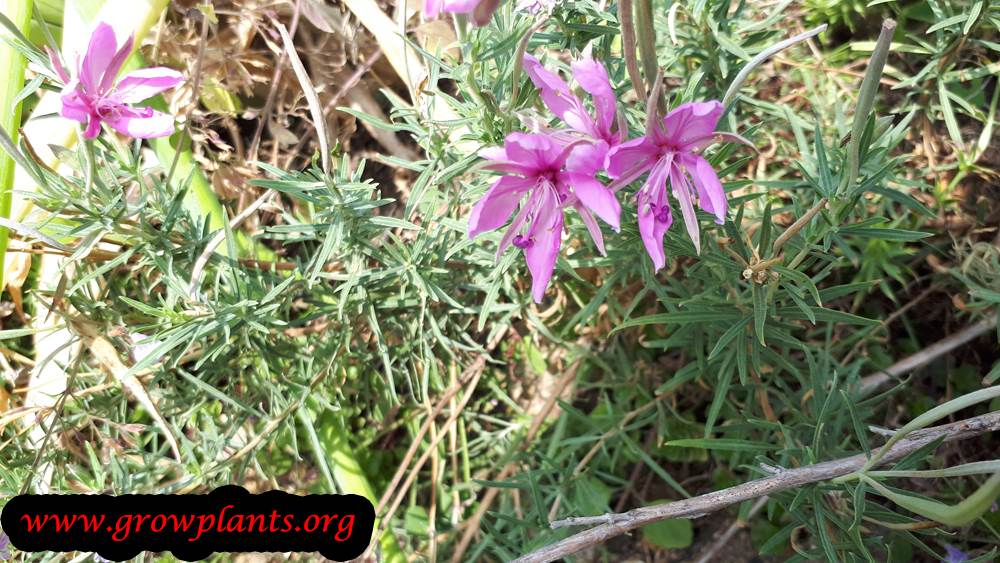
Alpine willowherb carries a long, airy display of pink to purple flowers over fine grey-green foliage from summer into autumn. Like other willowherbs it sets fluffy, wind-borne seed, so it can self-sow where it is happy.
Flower Characteristics
- Flowers built from two distinct petal shapes that together form a cross.
- Colours run from soft pink to deeper purple.
- Held on slender, upright stems.
Bloom Care & Thinning
- Site for best flowering: Full sun and sharp drainage suit this alpine species best.
- Managing the bloom: Deadhead to prolong flowering and to limit self-seeding if you do not want spread.
- Pollination: Worked by bees and other insects.
Fruit & Uses
Any edible use of Epilobium dodonaei (fireweed / alpine willowherb) is a marginal foraging practice, not a confirmed food crop – treat this section as informational rather than a recommendation. Where it is foraged, only the young spring shoots and tender young leaves are used, cooked as a green rather than eaten raw in quantity.
Quick Edible Specs
| Edible Parts | Young shoots, young leaves |
|---|---|
| Main Use(s) | Occasional foraged cooked green; not a mainstream or commercially recognised food crop |
| Eaten Raw or Cooked | Best cooked; only the very youngest growth in small amounts if eaten raw |
| Preparation Required | Cook; use only young, tender growth harvested before flowering |
| Harvest Season | Spring, as new growth emerges |
| Storage | Best used fresh soon after picking; not suited to long storage |
| Safety/Toxicity Caveat | no toxicity is documented for this species, but species-specific food-safety information is limited compared with its well-known relative, fireweed. Avoid plants growing beside roads or treated with garden chemicals, and use only small amounts of young growth. |
Shoots & Stems
Only the young spring shoots are worth taking, while still soft and tender and before the plant has begun to flower – older stems become fibrous and unpalatable. Where used, shoots are cooked (steamed or boiled) rather than eaten raw, following the same approach foragers use for young shoots of other willowherb species such as fireweed.
Leaves & Greens
Young leaves can be cooked as a potherb. As the plant matures toward flowering the leaves toughen and become more bitter, so harvest is limited to soft, early growth. This remains a marginal foraging use rather than an established culinary practice for this particular species.
Preparation, Uses & Safety
Treat any use of Epilobium dodonaei as a cautious, small-scale foraging practice rather than a confirmed food source: cook young shoots and leaves instead of eating large amounts raw, take only soft new growth before flowering, and avoid roadside or chemically treated plants. Some other Epilobium (willowherb) species – most notably fireweed – have a well-documented history of shoots and leaves used as cooked greens and dried leaves used for tea, but that level of documentation does not exist specifically for E. dodonaei, so its uses should not be assumed identical or automatically safe. No toxicity is reported for the genus, but this information is offered for reference only, not as a recommendation to forage the plant.
Pests, Diseases & Troubleshooting
Overview: Epilobium dodonaei is a sun-loving alpine willowherb of stony, sharply drained ground, and it is an easy, largely trouble-free plant. Its notable issue is willowherb/fuchsia rust – for which it is a reservoir – plus the usual aphids and mildew in soft, crowded growth, and root rot in heavy wet soil. Sharp drainage and airflow prevent nearly everything.
Quick Troubleshooting Overview
| Issue / Pest | Main Symptom | Primary Solution |
|---|---|---|
| Willowherb/fuchsia rust | Orange pustules under leaves, pale spots above | Remove infected leaves; airflow; avoid nearby fuchsias |
| Aphids | Colonies on shoot tips/buds, honeydew | Water jet; insecticidal soap; predators |
| Powdery mildew | White coating in humid, crowded growth | Space plants; base-water; sulphur if severe |
| Flea beetles | Tiny shot-hole pits in leaves | Tolerate; keep plants vigorous |
| Root rot | Wilting/base rot in wet, heavy soil | Improve drainage; gritty scree mix |
Common Pests & Management
- Aphids (Aphis / Macrosiphum spp.):
- Symptoms: Soft green or pinkish colonies on shoot tips, flower stalks and buds, with honeydew, sooty mould and puckered growth.
- Prevention & Control: Dislodge with a water jet and encourage ladybirds, lacewings and hoverflies; treat stubborn colonies with insecticidal soap. Avoid over-feeding, which drives soft, aphid-prone shoots.
- Flea beetles (Altica / Aphthona spp.):
- Symptoms: Tiny jumping beetles that pit young leaves with small round shot-holes; cosmetic on a vigorous plant.
- Prevention & Control: Keep plants growing strongly, tolerate minor pitting, and clear debris where beetles overwinter; treatment is rarely warranted.
- Spider mites (Tetranychus urticae):
- Symptoms: Fine stippling and a dull look in hot, dry, sheltered conditions.
- Prevention & Control: Hose foliage and raise humidity; use insecticidal soap for persistent infestations.
Diseases & Fungal Issues
- Willowherb / fuchsia rust (Pucciniastrum epilobii):
- Symptoms: Bright orange-to-rusty powdery pustules on leaf undersides with pale yellow spots above and premature leaf fall. Epilobium is a key host of this rust, which also attacks fuchsias – infected willowherb can be a source of fuchsia rust nearby.
- Treatment & Management: Remove and destroy infected leaves promptly, improve air movement, avoid overhead watering, and clear all foliage at season’s end. Where fuchsias are grown nearby, controlling willowherb rust protects them too; sulphur fungicide is a last resort.
- Powdery mildew (Erysiphe / Podosphaera spp.):
- Symptoms: A white powdery film on leaves and stems in humid, crowded, or dry-rooted conditions, with yellowing and distortion.
- Treatment & Management: Space plants for airflow, keep the root zone evenly moist, water at the base, and remove affected growth; use a sulphur or potassium-bicarbonate fungicide only if it spreads.
- Downy mildew / leaf spot (Peronospora / fungal leaf-spot spp.):
- Symptoms: Angular yellow patches with greyish growth beneath (downy mildew) or brown spots (leaf spot) in prolonged damp weather.
- Treatment & Management: Improve drainage and airflow, water early in the day at soil level, and remove and destroy affected leaves.
Growing Difficulties & Abiotic Problems
- Waterlogging / root rot:
- Cause & Symptoms: A scree and gravel-bar plant, it resents heavy, wet soil, which rots the roots and causes wilting and collapse.
- Correction Strategy: Plant in gritty, sharply drained soil in full sun, avoid rich, moisture-retentive beds, and never let it sit wet over winter.
- Aggressive self-seeding:
- Cause & Symptoms: Like many willowherbs it produces abundant wind-borne seed and can spread where not wanted.
- Correction Strategy: Deadhead before the fluffy seed heads open to limit self-sowing, and remove unwanted seedlings while young.
- Legginess / poor flowering in shade:
- Cause & Symptoms: Grown too shaded or too rich, plants stretch, flop and flower poorly.
- Correction Strategy: Give full sun and lean soil for compact, floriferous growth; trim after flowering to keep plants tidy.
What Helps – Products & Tools
This tough alpine needs little. Keep insecticidal soap for aphids and mites and a sulphur or potassium-bicarbonate fungicide for rust and mildew in damp seasons. The best tools are a gritty free-draining bed, full sun and end-of-season sanitation to break the rust cycle.