Plant Profile & Key Characteristics
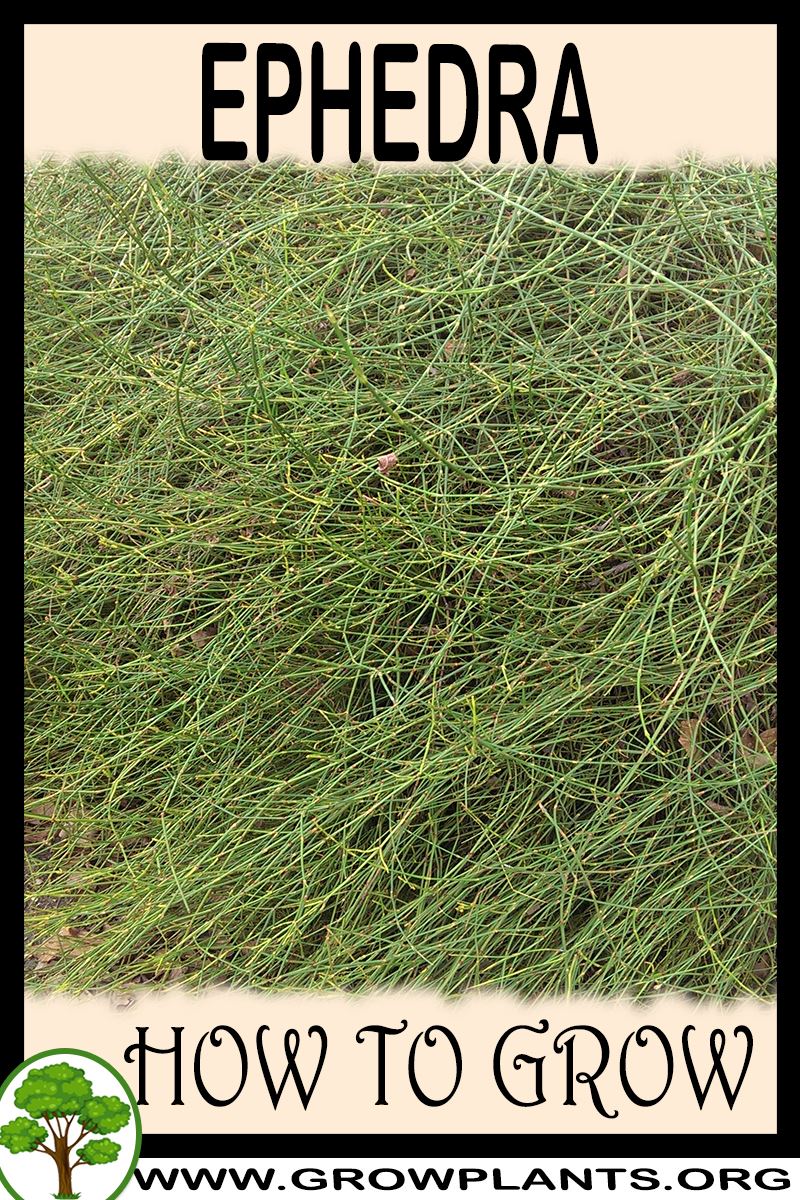
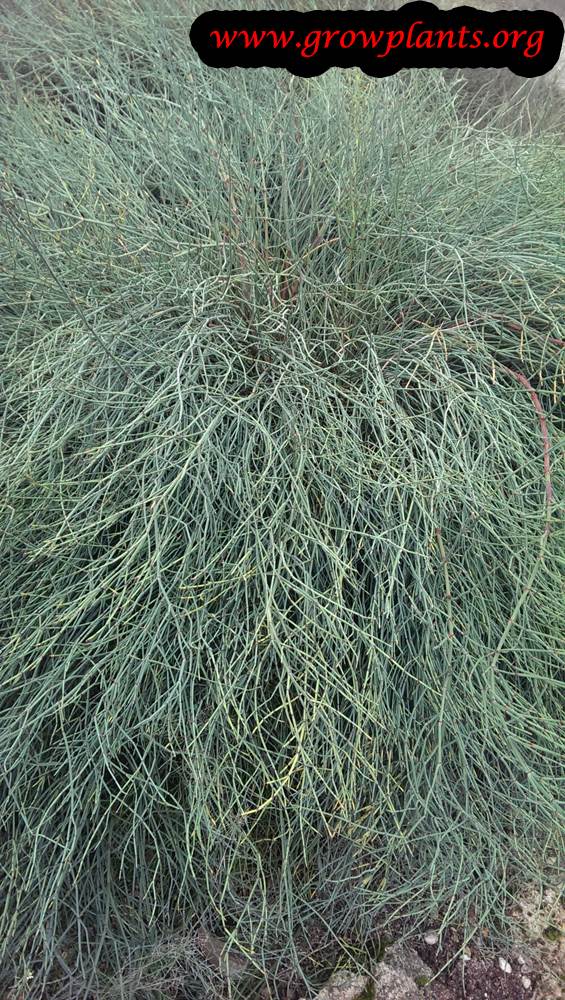
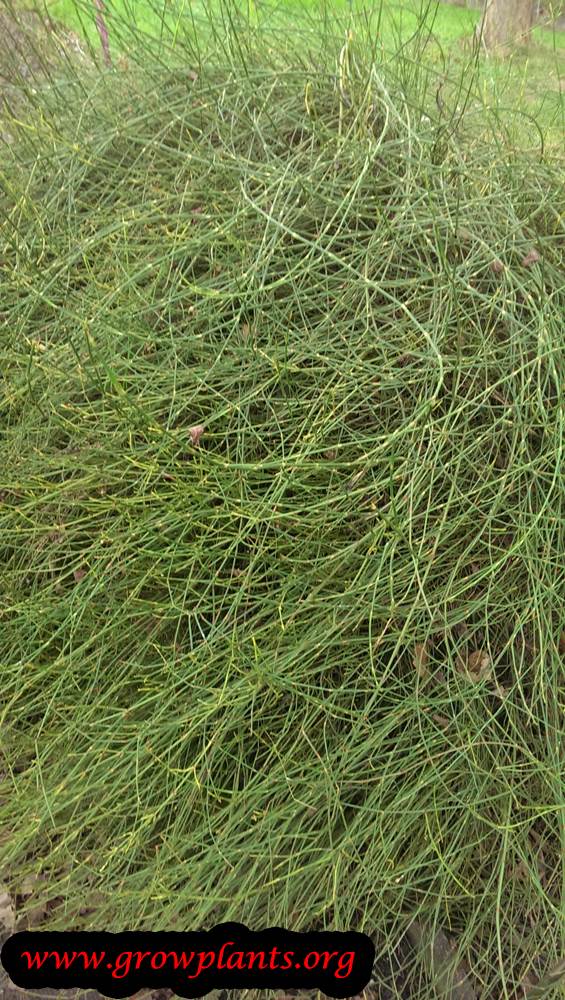
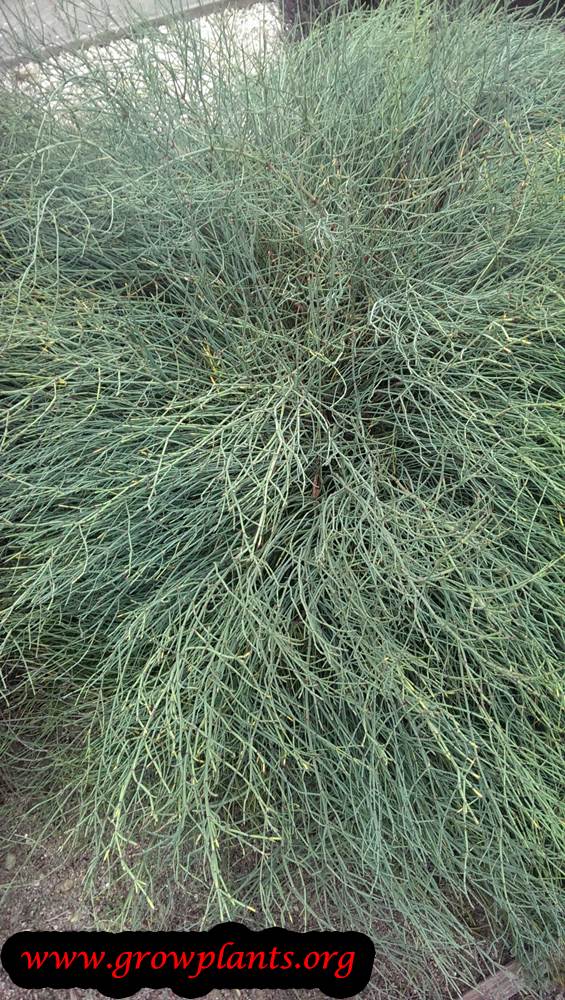
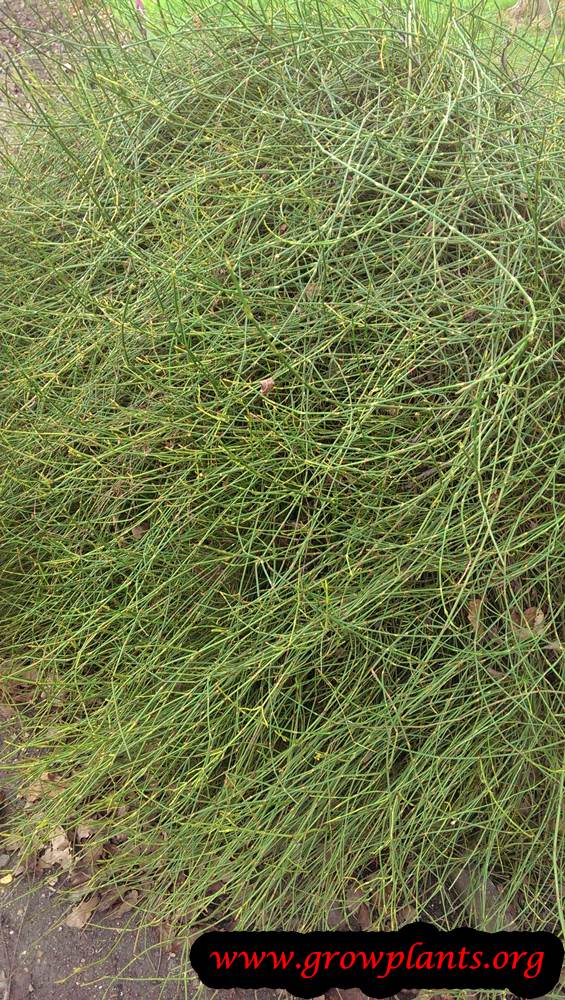
Overview: Ephedra is a wiry evergreen-stemmed shrub (Joint-pine) growing 0.1-3 m (4-120 in) tall, with green needle-like jointed stems and reduced leaves. A tough, drought-tolerant plant, it is grown as an ornamental and for its edible fleshy female cones.
Quick Specifications
| Specification | Attribute |
|---|---|
| Plant Type / Life Cycle | Perennial (shrub) |
| Foliage Type | Evergreen stems |
| Mature Size | 0.1-3 m (4-120 in) tall |
| Growth Rate | Moderate |
| Hardiness | USDA zone 5-11 |
Growth Form & Structure
- Height & Spread: 0.1-3 m (4-120 in) tall depending on conditions; also suited to containers.
- Growth Habit & Form: Broom-like shrub of slender green jointed photosynthetic stems.
- Lifespan & Maturity: Long-lived perennial.
Anatomy & Physical Features
- Leaves & Foliage: Leaves reduced to tiny scales; the green needle-like jointed stems carry out photosynthesis.
- Flower Characteristics: Not a true flowering plant – yellow pollen and seed cones are borne on separate male and female plants (full detail in the Bloom guide).
- Fruit Profile: Fleshy, berry-like female cones that are edible (full detail in the Fruit guide).
Primary Uses & Landscape Value
- Edible Uses: The fleshy female cones are edible.
- Functional & Ornamental Roles: Grown as a drought-tolerant ornamental shrub; some species are the traditional source of ephedra (ma huang).
Care Guide: Planting, Soil & Watering
Overview: Ephedra is a tough, drought-tolerant shrub of arid and temperate regions that thrives in full sun and sharply drained soil. Once established it needs only occasional water and resents wet, heavy ground.
Quick Care Requirements
| Requirement | Ideal Condition |
|---|---|
| Planting Season | Warm season (spring through autumn) |
| Growth Rate | Moderate |
| Soil Type | Well-drained, sandy or gritty (lean soils are fine) |
| Water Need | Low to moderate – let the soil dry between waterings |
Planting & Establishment
- Best Planting Season: Plant from spring through autumn while the soil is warm, giving roots time to settle before extremes.
- How to Plant:
- Hole Preparation: Dig a hole roughly twice the width of the root ball and just as deep, loosening the sides so young roots spread easily.
- Soil Amendments: On heavy ground work in coarse sand or grit to sharpen drainage; rich amendments are unnecessary for this lean-soil plant.
- Planting Depth: Set the plant at the same depth it grew in its pot, with the root collar at soil level and never buried.
- Growth Speed & Expectations: Growth is moderate; expect steady, unhurried filling out in a sunny, well-drained spot.
Soil, Watering & Drainage Care
- Soil Mix & Drainage Needs: Fast drainage is essential – soggy soil rots the roots of this desert-adapted shrub; a gritty, open mix suits containers.
- Watering Schedule & Technique:
- Young / Newly Planted: Water regularly through the first season to establish the roots, letting the top few cm dry between waterings.
- Established: Water deeply but infrequently; established plants tolerate drought and need little extra water.
- Seasonal Adjustments: Water more during prolonged summer heat and very little over the cool months.
Climate, Light & Hardiness
Ephedra shrubs are tough, sun-loving plants of subtropical, Mediterranean, desert, and temperate climates, thriving in full sun with generally good cold tolerance and strong drought adaptation.
Quick Climate Specifications
| Climate Zones | Subtropical, Mediterranean, Desert, Temperate |
|---|---|
| USDA Hardiness Zones | 5–11 |
| Frost Tolerance | High |
| Light Conditions | Full Sun |
Sunlight & Light Exposure
Optimal Light Setup
Needs full sun; this is an open, arid-country shrub with no shade requirement.
Direct Sun Requirement
Essential for healthy, compact growth.
Best Exposure / Orientation
Open, unshaded desert or dryland-style plantings.
Temperature Extremes & Hardiness
USDA Hardiness & Regional Limits
Hardy across a broad zone 5–11 range, reflecting the genus's adaptability from desert to cool temperate climates.
Cold Damage & Winter Protection
Generally very cold hardy; little winter protection is typically needed within its range.
Frost Sensitivity
Tolerates frost well.
Extreme Heat Tolerance
Excellent; well adapted to hot, dry desert and Mediterranean summers.
Wind, Humidity & Microclimate
Humidity Preferences
Prefers dry air, typical of desert and Mediterranean climates.
Dry-Air Tolerance
Excellent.
Rainfall & Seasonal Moisture
Drought tolerant once established; needs only light to moderate watering.
Growing in Pots, Balconies & Indoors
Ephedra is a tough, drought-hardy desert shrub grown in full sun. The grower confirms it is not a houseplant but grows well in containers, so grow it in a gritty pot on a hot, sunny patio. Note it is toxic if eaten – keep it away from children and pets.
Quick Details
- Container Size: 15-40 L, deep and gritty – height ranges widely (0.1-3 m) by type, so match the pot to the plant
- Indoor Suitability: Not a houseplant; an outdoor sun-and-drought shrub for a container
- Best Spot: Full sun – as hot and bright as possible
- Soil & Drainage: A very free-draining, gritty or sandy mix; it hates wet roots
- Watering in Pots: Water sparingly – let the mix dry well between soakings, and keep it nearly dry in the cool season
Indoors & On the Windowsill
- Not a houseplant: The grower marks it as unsuitable indoors – it needs blazing sun and dry, airy conditions that a room cannot provide.
- Windowsill: Only the hottest, sunniest sill comes close, and even then it prefers to be outdoors; low light makes it weak and open.
- Cool, dry rest: Hardy and drought-adapted, it wants a cool, dry winter outdoors – never a warm, humid room.
- Safety: The plant contains ephedrine-type alkaloids and is toxic if eaten – keep pots out of reach of children and pets and never treat it as edible.
On a Balcony or Patio
- Light & wind: Give it the hottest, brightest, most exposed spot; it thrives on heat and reflected warmth from walls. Water only when the gritty mix has dried.
- Practicalities: An easy, architectural evergreen for a sunny pot; sharp drainage matters far more than feeding.
Choosing the Pot, Soil & Long-Term Care
- Pot & drainage: A pot with generous drainage holes and a layer of grit at the base; terracotta suits these plants because it dries quickly and the crown must never sit wet. Top-dress with grit to keep the neck dry.
- Potting mix: A very free-draining, gritty or sandy mix – drainage matters more than richness.
- Feeding: Feed sparingly – a weak balanced feed a few times in the growing season; these plants dislike rich conditions and lush, soft growth.
- Repotting: Repot only every few years into fresh gritty mix; it is slow and resents disturbance.
Fertilizing & Feeding
Ephedra is a lean, drought-tolerant shrub that performs best with minimal feeding – it is adapted to poor, well-drained soils and does not need a rich fertilizer program.
Quick Fertilizing Specs
| Feeding Level | Light – a low-input, drought-tolerant shrub that rarely needs supplemental feeding. |
|---|---|
| Best Feeding Period | Spring through summer while the shrub is establishing or actively growing. |
| Soil pH | Tolerates a wide range of soil types provided drainage is sharp; it does not require special pH adjustment. |
| Organic Options | A light organic mulch that breaks down slowly suits this low-fertility-adapted shrub better than concentrated fertilizer. |
| Reduce/Stop Feeding | Stop feeding as growth slows heading into winter. |
Feeding by Growth Stage
Establishment After Planting
Help young Ephedra shrubs form a strong root system in their well-drained site before pushing top growth.
| Nutrient direction | Keep feeding minimal and root-focused; this desert-adapted shrub establishes best without rich fertilizer inputs. |
|---|---|
| Timing | During the first growing season after planting, spring through autumn. |
| Frequency | Light feeding is rarely needed at this stage; the priority is watering-in and root establishment rather than fertilizer. |
| Fertilizer types | A light, balanced fertilizer only if the planting site is genuinely poor soil, Well-drained native soil amended lightly with organic matter at planting time is usually enough |
| Precautions | Avoid rich or high-nitrogen fertilizer at planting – it can push soft growth poorly suited to this shrub’s naturally lean, drought-tolerant habit. |
Established Maintenance Growth
Maintain healthy, naturally slow-to-moderate growth once the shrub is established in its well-drained, sunny site.
| Nutrient direction | This is a low-input plant; minimal feeding is usually enough to keep it healthy – more fertilizer does not translate into better performance. |
|---|---|
| Timing | Through the active growing months once the shrub is established, typically spring into summer. |
| Frequency | An occasional light feeding at most; many established plantings need none at all in reasonably fertile soil. |
| Fertilizer types | A light application of balanced fertilizer only if growth looks notably weak, Organic mulch that breaks down slowly to supply modest background fertility |
| Precautions | Overfeeding this drought- and lean-soil-adapted shrub can cause leggy, weak growth and reduce its natural resilience. |
Winter Rest
Allow the shrub to slow down and rest through the colder months.
| Nutrient direction | None – withhold fertilizer while growth is slowed for winter. |
|---|---|
| Timing | Through the winter months when growth naturally slows. |
| Frequency | No feeding at this stage. |
| Fertilizer types | No feeding is appropriate while the shrub is in its winter resting period. |
| Precautions | Do not fertilize during the winter rest period; resume light feeding only once active growth resumes. |
Nutrient Deficiency Signs & Corrections
Overall pale, yellow-green stem color and slower-than-expected growth.
| Possible causes | Very low soil fertility with no organic matter input, Excessively fast-draining, nutrient-poor sandy soil, Root stress from waterlogging despite this shrub’s drought tolerance |
|---|---|
| Appears first on | Overall stem color, most visible on older growth |
| What to check | Soil fertility and organic matter content, Drainage and any signs of waterlogging, Root health at the base of the shrub |
| Possible correction | Apply a light, balanced fertilizer only if poor soil is confirmed as the cause; avoid assuming a nutrient problem before ruling out drainage or root stress. |
New stem growth emerges pale or yellowish rather than the typical green.
| Possible causes | High soil pH limiting iron availability, Waterlogged or compacted soil restricting root uptake, Recent transplant or root disturbance |
|---|---|
| Appears first on | Newest stem growth first |
| What to check | Soil pH and drainage conditions, Recent planting or root disturbance history, Overall root health |
| Possible correction | Improve drainage and confirm soil pH is not excessively alkaline; apply a chelated iron product per its label only if true chlorosis is confirmed. |
Stems yellow, soften, or dieback despite otherwise adequate care.
| Possible causes | Soil staying too wet for this drought-adapted shrub’s root system, Poor drainage causing root rot rather than a nutrient shortage, Planting site incompatible with this shrub’s need for sharp drainage |
|---|---|
| Appears first on | Lower stems and root crown first |
| What to check | How often and how much the site is watered or irrigated, Site drainage and soil texture, Root and crown firmness for rot |
| Possible correction | Reduce watering frequency and improve drainage rather than adding fertilizer, since symptoms here are usually a water-management issue, not a nutrient one. |
Pruning, Training & Seasonal Maintenance
Ephedra is an evergreen, jointed-stemmed shrub whose green stems – not the tiny scale-like leaves at the nodes – do most of the plant’s photosynthesis, so pruning is mainly cosmetic shaping rather than a health necessity. It tolerates cutting at almost any time of year, but the best window is right after the fruit has ripened on female plants, so the current crop of edible arils is not removed. Because the genus spans everything from low mats to small shrubby trees up to about 3m, the degree of shaping needed varies a lot with the individual plant’s habit.
Quick Pruning & Maintenance Specs
| Pruning Tolerance | Moderate–High – stems regrow readily from nodes; avoid stripping too much green stem at once |
| Primary Pruning Window | After fruit ripens/drops on female plants |
| Secondary Maintenance Window | Any season for light shaping |
| Typical Frequency | Light shaping once or twice a year |
| Main Objective | Maintain form/density ("for design") while preserving fruit on female plants |
| Young Plant Priority | Build a balanced framework of stems from the base |
| Mature Plant Priority | Selective shaping; remove crowded or old unproductive stems |
| Best Tool Type | Bypass secateurs, loppers for older base stems on larger specimens |
| Avoid Heavy Pruning During | Fruit development on female plants |
Pruning by Plant Age & Size
Newly Established
Minimal – remove only damaged stems and let the plant build its base network of stems.
Young / Formative
No formal training system (not trained to a leader or vase). Light pinching of stem tips can encourage a denser, bushier habit if a fuller form is wanted.
Mature / Established
Selective removal of old, congested or misshapen stems at the base keeps an open, healthy framework and the desired ornamental form. On female plants, time this for right after the fruit has been harvested or has dropped.
Seasonal Pruning Schedule
Post-Harvest
Objective: shape the plant and thin congested growth without sacrificing the season’s arils. Remove: old stems, overly dense growth, anything spoiling the desired form. Do not remove: developing fruit-bearing green stems before fruit matures. Expected response: fresh green stem growth from the base and nodes. Flowering/fruiting impact: neutral to positive – removes competition for next season’s flowering nodes.
Ongoing Sanitary
Objective: remove dead stem sections at any time of year. Remove: fully brown, dead joints/stems. Do not remove: green photosynthetic stem tissue.
Flowering & Fruiting Wood
Ephedra is dioecious – only female plants set the edible fruit. Flowers (strobili) and the fruit that follows form at nodes along the green stems, so heavy stem removal before fruiting reduces the number of fruiting nodes for that year. Prune female plants after the fruit is harvested or has dropped, not before, to protect the current crop. Male plants (flowers only, no fruit) can be shaped more freely without a fruiting-timing concern.
Structural Pruning & Training
This is genuinely a "for design" plant – shaping is about the plant’s silhouette rather than a fruit-production framework. Thin overly dense clumps of stems at the base to let light into the centre and keep the form open. Toward the top of this genus’s size range (nearer 3m), reduce height and spread by removing whole stems at the base rather than heading mid-stem, which keeps the jointed-stem look intact.
Special Growth to Remove
- Dead/browned stem sections – they will not green up again.
- Overcrowded basal stems competing for space – thin at the base.
- On female plants past fruiting, spent fruiting stems can be cut back to encourage fresh fruiting wood for next season.
Container & Small-Space Pruning
Grows well in a container. Keep shaping cuts lighter and more frequent than an in-ground specimen to hold a compact size, and favour removing whole stems at the base over heading cuts, which avoids a stubby, cut-off look on a plant that is on close display in a small pot.
Tools
Bypass secateurs for most stem cuts (semi-woody but slender stems); loppers only for the base of older, thicker stems on larger specimens.
Tool Hygiene & Disease Risk
Routine – no significant transmissible disease is documented for this genus; clean, sharp tools are sufficient.
Cut Placement & Technique
Cut stems back to a node or right at the base rather than partway along an internode, since regrowth comes from the nodal joints.
Heavy Pruning & Rejuvenation
Tolerated in moderation. Renew an old, leggy plant by removing the oldest third of stems at the base over two seasons rather than cutting the whole plant back at once – since the stems are also the plant’s only photosynthetic tissue, removing too much at once starves it temporarily.
Post-Pruning Care
Water as normal (this is a low-water, drought-tolerant plant) – do not increase watering or feeding after shaping cuts. Watch for fresh regrowth at the cut nodes.
Common Pruning Mistakes
- Shaping female plants hard before the fruit has ripened, sacrificing the crop.
- Removing too much green stem at once, cutting into the plant’s main photosynthetic tissue and slowing recovery.
- Heading cuts mid-internode instead of at a node or the base, leaving a bare, unsightly stub.
When NOT to Prune
Avoid heavy shaping of fruiting female plants while the crop is still developing.
Recommended Tools (by task)
- bypass_secateurs – most Ephedra stems are semi-woody but slender; bypass secateurs give a clean nodal cut without crushing the stem.
- loppers – for the base of older, thicker stems on larger, established specimens toward the top of this genus’s size range.
Pruning Troubleshooting
| Problem | Possible Cause | What to Check | Corrective Action |
| Poor fruit set | Hard pruning was done before/during flowering, removing fruiting nodes | Timing of the last prune relative to flowering/fruit season, and whether the plant is male or female | Confirm the plant’s sex; shift pruning to after fruit harvest only |
| Bare, leggy base | Years of light shaping without any renewal thinning | Age and density of stems at the base | Begin gradual renewal removal of the oldest stems |
| Dieback of a cut stem | Heading cut left mid-internode instead of at a node or the base | Cut location | Re-cut cleanly back to the nearest healthy node |
Propagation Guide
Ephedra species are usually increased by dividing the rooted suckers that spread from the base of an established plant, or by semi-hardwood stem cuttings, since both methods guarantee the sex of this dioecious shrub and root reasonably reliably; seed can also be used, but since male and female flowers grow on separate plants, seedlings will not reveal their sex until they mature, and germination is often slow and uneven. Propagation is moderate in difficulty overall, easiest where division from an existing colony is possible.
Quick Propagation Specs
| Best Propagation Method | Division of rooted suckers |
| Alternative Methods | Semi-hardwood stem cuttings; Seed |
| Propagation Difficulty | Moderate |
| Seed True-to-Type | Variable (sex of dioecious seedlings is unpredictable) |
| Vegetative True-to-Type | Yes, including sex of the parent |
| Best Propagation Season | Divide or take cuttings in spring or autumn; sow seed in spring |
| Seed Germination Time | Slow and irregular, often several weeks to a few months |
| Cutting Rooting Time | Several weeks to a few months |
| Germination Temperature | 18–24°C (64–75°F) |
| Seed Sowing Depth | Shallow, just covering the seed |
Growing from Seed
Seed Handling & Viability
Collect seed from the ripe, fleshy fruiting cones the site notes as edible, and clean off the pulp before sowing; reasonably fresh seed germinates best.
Dormancy & Pre-Sowing Treatment
Seed of many Ephedra species shows some dormancy, and a period of cold stratification can improve and even out germination.
Sowing Season
Spring, after any stratification period.
Sowing Depth & Orientation
Sow shallow, just covering the seed.
Germination Conditions
A warm, gritty, free-draining mix reflecting this plant’s arid and mediterranean-type origins, in full sun.
Germination Time
Can be slow and irregular; allow several weeks to months before giving up on a batch.
Seedling Care
Grow on in a very free-draining mix and avoid overwatering, reflecting the species’ drought tolerance; sex will not be visible until plants mature and flower.
Stem Cuttings
Cutting Type
Semi-hardwood segments of the jointed, needle-like green stems.
Best Timing
Late spring to summer, from firm, non-flowering growth.
Cutting Preparation
Take short segments with two or more joints/nodes; lightly wound the base.
Rooting Setup
A free-draining, gritty propagation mix; keep on the dry side of moist given this plant’s drought tolerance, and avoid waterlogging.
Rooting Hormone
Optional, but may improve and speed rooting since Ephedra stems can be slow to root.
Rooting Time
Rooting is generally slow; allow several weeks to a few months before testing for resistance.
Division, Offsets, Pups & Suckers
Many Ephedra species spread by underground rhizomes, producing rooted suckers around the base of an established plant; separating these with their own root system is the most reliable way to guarantee the sex of a new plant, which matters since only female Ephedra bear the edible fruit noted on site, and it establishes faster than seed. Divide suckers in spring or autumn, keep the newly separated piece shaded and consistently watered until it resumes active growth, and avoid taking any sucker that lacks its own independent roots.
Bloom & Flower Guide
Quick Details
- Cone Season: Spring to summer
- Reproductive Structure: Small yellowish pollen cones and separate seed cones – not true flowers
- Plant Habit: Dioecious – male and female cones grow on separate plants
- Edibility: Not edible – the plant contains ephedrine-type alkaloids
Detailed Blooming Overview
Ephedra is a gymnosperm – a distant relative of the conifers – so despite the “flower” label it does not produce true flowers. Instead it carries tiny cone-like structures along its jointed green stems: yellowish pollen cones on male plants and seed cones on female plants, appearing in spring and summer. In some species the seed cones ripen with a fleshy, berry-like bract.
Flower Characteristics
- Yellowish pollen cones, small and clustered along the leafless, jointed stems.
- Male and female cones are borne on separate plants (dioecious).
Bloom Care & Thinning
- Pollination: Wind-pollinated, like most gymnosperms; grow male and female plants nearby for seed to set.
- Naming note: These are cones, not flowers – no petals or true blooms are formed.
- Safety: All parts contain ephedrine-type alkaloids and should not be eaten casually.
Fruit & Uses
Many Ephedra species produce small fleshy, berry-like fruits (formed from swollen cone scales) that are eaten fresh in the regions where the plant grows wild; the wiry green stems of some species are also dried and steeped as a traditional herbal tea (hence the common names Mormon-tea and Brigham tea). Because this genus includes species that vary greatly in their alkaloid content, treat any stem-tea use with caution rather than as an everyday beverage.
Quick Edible Specs
| Edible Parts | Fruit (fleshy fruiting scales); stems used as a traditional tea in some species |
|---|---|
| Main Use(s) | Culinary (fresh fruit) / traditional herbal tea (stems) |
| Eaten Raw or Cooked | Fruit eaten raw; stems used as a steeped infusion, not eaten directly |
| Preparation Required | None for ripe fruit; steeping/drying for stem tea |
| Harvest Season | Fruit ripens after the spring/summer bloom (see 17778-b16 bloom season) |
| Storage | Fruit is best used fresh; dried stems can be stored for later tea use |
| Safety/Toxicity Caveat | Ephedra is the source of the alkaloid ephedrine, which is concentrated in the stems of several species; alkaloid levels vary a great deal by species, so stem tea should not be treated as a routine drink, used as a stimulant, or given to children, pregnant people, or anyone with heart conditions without professional guidance |
Fruit
The edible part most straightforwardly used as food is the fleshy fruit, which forms after flowering and is eaten out of hand when ripe. Ripe fruits are soft and brightly coloured; they are picked directly from the female plants (Ephedra is dioecious, with separate male and female plants – see 17778-p03).
Pseudostem / Cane / Sap
The jointed green stems of some Ephedra species, particularly low-alkaloid American desert types, have traditionally been dried and steeped in hot water as ‘Mormon tea’. This is a traditional infusion use rather than a food, and should be approached cautiously given the genus’s association with ephedrine-type alkaloids (see safety note).
Preparation, Uses & Safety
Ripe fruit needs no preparation beyond picking. Stems intended for tea are typically cut, dried, and steeped rather than eaten whole. The overriding safety point for this genus is that several Ephedra species are the natural source of ephedrine, a stimulant alkaloid with real cardiovascular risk in excess – do not treat stem tea as a everyday drink or supplement, and do not rely on this page for medical or dosing guidance.
Pests, Diseases & Troubleshooting
Overview: Ephedra (joint-fir / Mormon-tea) is a wiry, near-leafless desert gymnosperm adapted to lean, arid, free-draining soils, and it is one of the most pest-free plants you can grow. Its only real enemy is excess water – root and crown rot – with just the occasional scale, mite or aphid, so ‘troubleshooting’ is mostly about drainage and restraint with the hose.
Quick Troubleshooting Overview
| Issue / Pest | Main Symptom | Primary Solution |
|---|---|---|
| Root / crown rot | Yellowing, dieback, soft base in wet soil | Sharp drainage; water sparingly; never waterlog |
| Scale insects | Small bumps on green stems, occasional honeydew | Horticultural oil; prune affected stems |
| Spider mites | Faint stippling/bronzing in hot, dry, still air | Rinse; insecticidal soap if persistent |
| Aphids | Rare colonies on soft new jointed shoots | Water jet; insecticidal soap |
| Rust fungi | Yellow-orange pustules on stems (host plant) | Remove affected stems; improve airflow |
Common Pests & Management
- Scale insects (Diaspididae / Coccidae):
- Symptoms: Small brown, grey or waxy bumps along the green photosynthetic stems, occasionally with honeydew and mild dieback; uncommon and usually minor.
- Prevention & Control: Scrape or prune off the few affected stems and apply a horticultural oil to smother scale and crawlers. Healthy, well-sited plants rarely see significant infestations.
- Spider mites (Tetranychus urticae):
- Symptoms: Faint stippling and a dull bronzed cast on the stems in hot, dry, sheltered or glasshouse conditions; fine webbing in bad cases.
- Prevention & Control: Hose the plant down and improve airflow; treat persistent mites with insecticidal soap or a light horticultural oil. Outdoor desert plantings are seldom troubled.
- Aphids (Aphididae):
- Symptoms: Occasional small colonies on the softest new jointed shoots, with slight distortion and honeydew.
- Prevention & Control: Knock off with water and rely on natural predators; treat only heavy colonies with insecticidal soap.
Diseases & Fungal Issues
- Root and crown rot (Phytophthora / Fusarium / Pythium spp.):
- Symptoms: The main disease risk: yellowing, stem dieback and a soft, discoloured crown or root system in soil that stays wet or drains poorly. Can kill an otherwise tough plant.
- Treatment & Management: Prevent it – plant in very gritty, free-draining soil (or a raised, xeric bed), water sparingly and only when the soil is dry, and never allow standing water at the crown. Rot, once advanced, cannot be reversed.
- Rust fungi (Puccinia / Pucciniastrum spp.):
- Symptoms: Ephedra can act as a host for certain rust fungi, showing yellow-to-orange powdery pustules on the stems, with distortion in humid conditions; uncommon in dry gardens.
- Treatment & Management: Remove and destroy affected stems, improve air movement, keep foliage dry, and site in the open sun and airflow the plant naturally prefers. Fungicide is rarely justified.
Growing Difficulties & Abiotic Problems
- Overwatering / poor drainage:
- Cause & Symptoms: The number-one problem: adapted to deserts, Ephedra rots if kept moist, showing yellowing, dieback and collapse in wet or heavy soil.
- Correction Strategy: Grow in sharply drained, gritty or sandy soil, water infrequently and deeply, and hold back sharply in cool or dormant periods. Containers must drain freely.
- Cold sensitivity (species-dependent):
- Cause & Symptoms: Hardiness varies widely by species; tender types brown and die back in hard frost.
- Correction Strategy: Match the species to your climate, site in a warm, sheltered, sunny spot, and keep plants dry through cold spells to improve hardiness.
- Chlorosis on rich/wet soil:
- Cause & Symptoms: Grown too lush or wet, or in overly rich soil, plants can yellow and grow weakly, unlike their tight desert form.
- Correction Strategy: Keep them lean – avoid heavy feeding, plant in poor, mineral soil, and give full sun for compact, healthy growth.
What Helps – Products & Tools
Ephedra needs almost no products. Keep insecticidal soap and horticultural oil for the rare scale, mite or aphid, and treat any rot as a drainage problem, not a spray target. The most valuable ‘tools’ here are gritty soil, a raised bed and a light hand on watering.