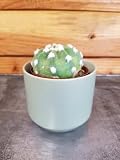


Plant Profile & Key Characteristics
Overview: A vigorous evergreen aquatic-to-marginal perennial (Spade-leaf sword / Creeping burhead) reaching about 50-100 cm, grown for its bold heart-shaped leaves. It is used as an ornamental pond, bog and aquarium plant.
Quick Specifications
| Specification | Attribute |
|---|---|
| Plant Type / Life Cycle | Perennial (herbaceous aquatic/marginal) |
| Foliage Type | Evergreen in warm conditions |
| Mature Size | 50-100 cm tall (20-40 in) |
| Growth Rate | Moderate to fast |
| Hardiness | USDA 9b+ |
Growth Form & Structure
- Height & Spread: Grows 50-100 cm (20-40 in) tall in shallow water or wet soil; also grown submerged in aquariums.
- Growth Habit & Form: Clump-forming marginal/emergent water plant with long-petioled, heart-shaped leaves and creeping flower stems.
- Lifespan & Maturity: Establishes quickly and persists as a spreading clump in suitable wet conditions.
Anatomy & Physical Features
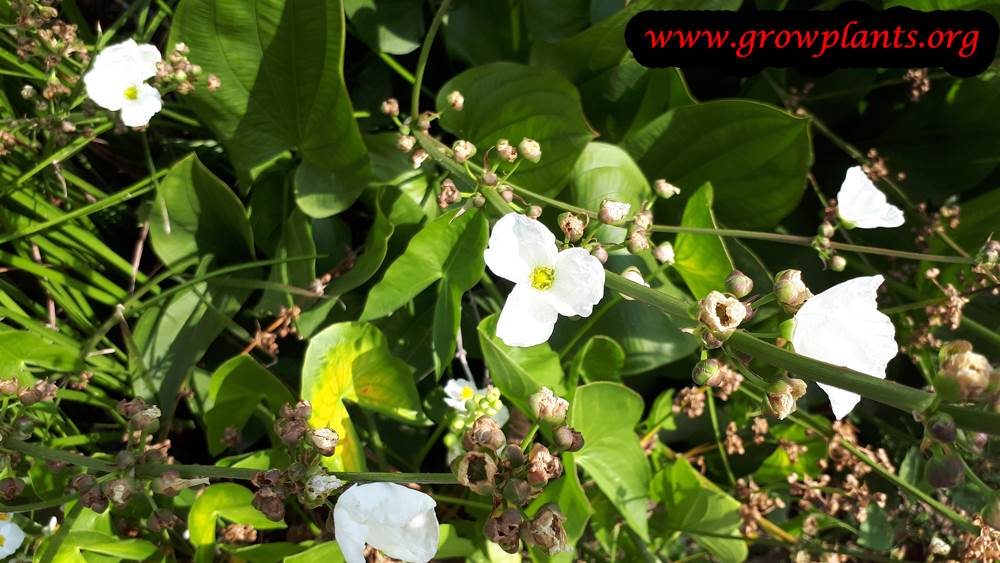
- Leaves & Foliage: Green, heart-shaped (cordate) leaves held on long stalks.
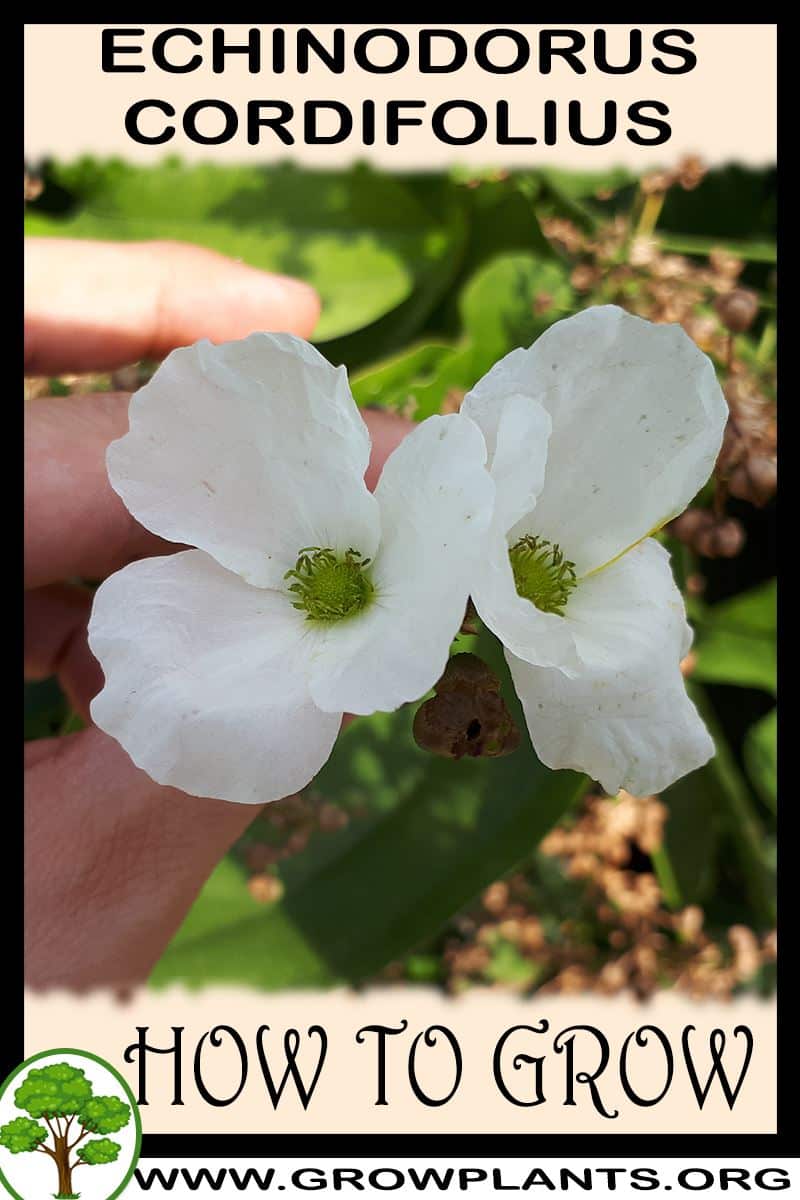
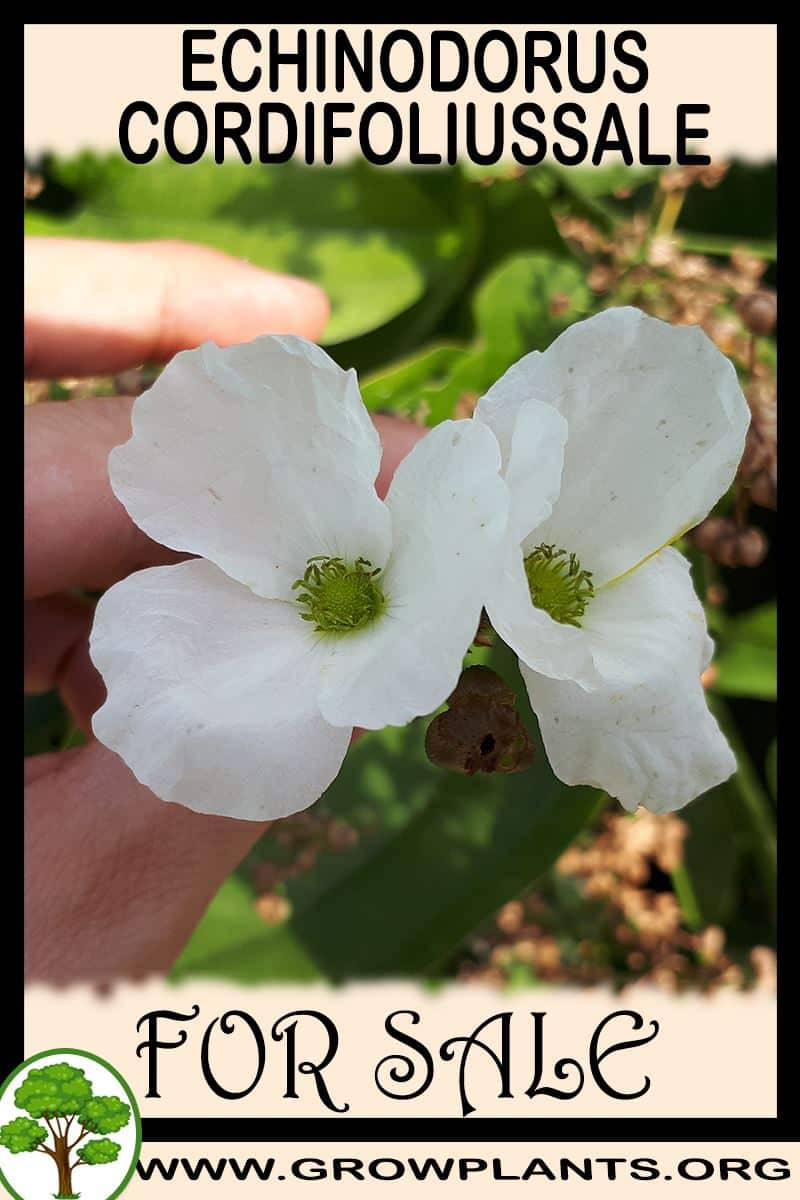
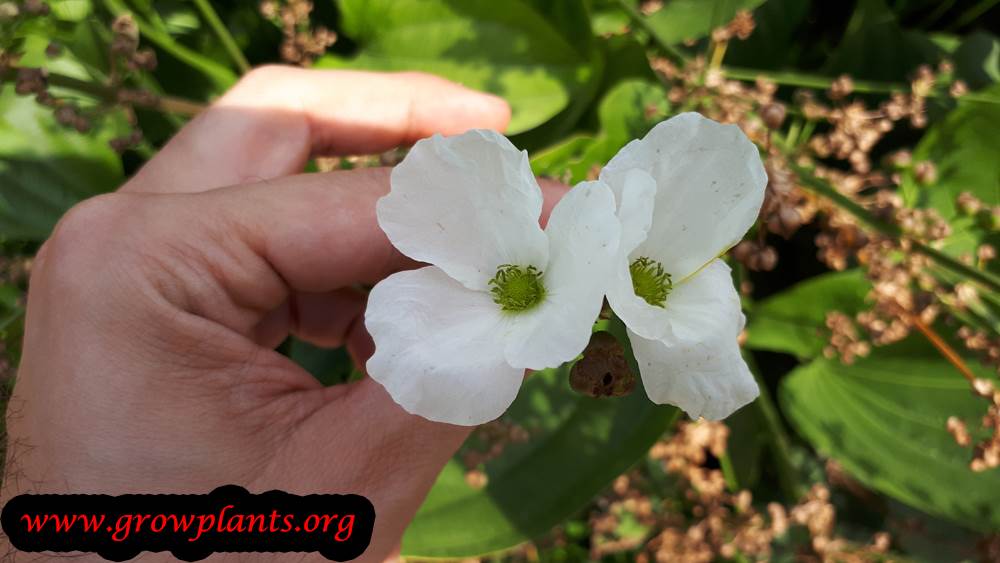
- Flower Characteristics: White flowers with a yellow-green centre, of triangular bowl shape with three petals.
Primary Uses & Landscape Value
- Functional & Ornamental Roles: Ornamental pond-margin, bog-garden and aquarium plant.
Care Guide: Planting, Soil & Watering
Overview: Echinodorus cordifolius is a vigorous aquatic (marginal) plant grown in rich soil at the water’s edge, in shallow water, or submerged in an aquarium. It needs constant moisture and never dries out, thriving from full sun to bright shade.
Quick Care Requirements
| Requirement | Ideal Condition |
|---|---|
| Planting Season | In the warm season — spring through autumn |
| Growth Rate | Moderate to Fast |
| Soil Type | Rich, fertile substrate in shallow water or permanently wet, boggy ground |
| Water Need | High — an aquatic plant that needs constantly wet soil or standing water |
Planting & Establishment
- Best Planting Season: Plant during the warm season, from spring through autumn.
- How to Plant:
- Hole Preparation: Root it into a rich substrate at the margin of a pond or in a submerged pot, keeping the base in shallow water or permanently saturated soil.
- Soil Amendments: Use a heavy, nutrient-rich soil or aquatic substrate rather than a light, free-draining mix.
- Planting Depth: Set the crown at the substrate surface with water covering the roots; as a marginal it can grow partly submerged.
- Growth Speed & Expectations: Fast to moderate; it spreads readily and can become invasive, so give it room or contain it.
Soil, Watering & Drainage Care
- Soil Mix & Drainage Needs: Unlike most plants it wants water-retentive, rich soil and no drainage — grow it in standing water, boggy ground or an aquarium, keeping the roots permanently wet.
- Watering Schedule & Technique:
- Young / Newly Planted: Keep it submerged or the soil saturated from the start; never let it dry out.
- Established: Maintain constant standing water or wet soil year-round.
- Seasonal Adjustments: Keep wet at all times; top up water in summer heat and reduce only if growth slows in cooler months.
Climate, Light & Hardiness
Echinodorus cordifolius is a warm-climate aquatic/marginal plant suited to tropical, subtropical, and mediterranean settings, or to year-round life in an aquarium, and it tolerates everything from full sun to full shade as long as light stays plentiful. It is reliably winter-hardy outdoors only from USDA zone 9b and warmer; in colder regions it must be grown as a pond annual or overwintered in a heated aquarium or indoors.
Quick Climate Specifications
| Climate Zones | Tropical, subtropical, mediterranean, or year-round aquarium culture |
|---|---|
| USDA Hardiness Zones | 9b+ |
| Approx. Survival Minimum | In-ground pond-margin plantings are generally tied to zone 9b winter minimums (approximately −4°C to −1°C / 25°F to 30°F average); submerged crowns in water that doesn't freeze solid may survive somewhat colder conditions |
| Frost Tolerance | Low |
| Light Conditions | Full sun to full shade (needs ample overall light) |
Sunlight & Light Exposure
Optimal Light Setup
Grows best with bright light, but adapts to a wide range from full sun to full shade on an outdoor pond margin.
Direct Sun Requirement
Tolerates full direct sun without difficulty at a pond margin.
Shade & Heat Management
Also grows in full shade provided overall light levels remain high; in an aquarium, deeper shade should be offset with supplemental lighting to keep growth healthy.
Best Exposure / Orientation
Open pond-margin exposure outdoors, or a well-lit aquarium/indoor tank where winters are too cold for outdoor culture.
Temperature Extremes & Hardiness
USDA Hardiness & Regional Limits
Hardy outdoors as a marginal/pond plant only in zone 9b and warmer; elsewhere it behaves as a tender perennial that needs to overwinter in an aquarium, indoors, or be replanted annually.
Cold Damage & Winter Protection
Growth slows and foliage declines as water and air temperatures approach freezing. In mild-winter areas, siting the plant where the pond stays deep enough that the root zone doesn't freeze helps it come through winter; in colder regions, move potted or aquarium specimens indoors before frost.
Frost Sensitivity
Low frost tolerance - ice or hard freeze reaching the crown is likely to kill the plant.
Extreme Heat Tolerance
Naturally at home in the warm-to-hot conditions of tropical and subtropical climates.
Wind, Humidity & Microclimate
Microclimate Recommendations
In climates colder than zone 9b, grow it in a container that can be moved to a heated greenhouse, indoor aquarium, or bright indoor spot for winter; in zone 9b and warmer, site it in the deeper, more thermally stable part of the pond margin for extra winter buffering.
Growing in Pots, Balconies & Indoors
Echinodorus cordifolius is a marsh and aquarium plant rather than an ordinary potted specimen. The grower grows it indoors in an aquarium, and it thrives there – or in a pond or bog container – as long as it gets plenty of light.
Quick Details
- Container Size: A wide, water-holding container, aquarium or pond basket – it likes permanently wet feet.
- Indoor Suitability: Yes – excellent indoors in an aquarium or a bright, humid spot, but only with strong light.
- Best Spot: Very bright light, from full sun to bright shade.
- Soil & Drainage: Heavy, rich aquatic substrate; unlike most potted plants it wants standing water, not free drainage.
- Watering in Pots: Keep permanently wet – it is a true water plant.
Indoors & On the Windowsill
- Houseplant: This is one of the few plants the grower keeps indoors – it does well submerged or half-submerged in an aquarium or a bright terrarium.
- Light is everything: Give it the strongest light you can indoors; in dim rooms it stretches and fades, so a very bright window or a grow light keeps it compact.
- Humidity: It loves moisture in the air, which makes a glass tank or a bathroom with a bright window ideal.
On a Balcony or Patio
- As a pond or bog plant: Outdoors it is happiest in a watertight container or pond margin in full sun; keep the reservoir topped up in hot weather as it drinks and evaporates fast.
- Warmth: It is tender, so bring it under cover or indoors before the cold season in frost-prone climates.
Choosing the Pot, Soil & Long-Term Care
- Container & water: Use a wide container that holds water rather than draining freely – a pond basket, glazed bowl or aquarium; a saucer of standing water is a feature here, not a fault.
- Substrate: A heavy, nutrient-rich aquatic or loam substrate topped with gravel keeps it anchored and fed.
- Feeding: Container plants run through nutrients fast because watering washes them out, so feed a little more often through the growing season than you would in open ground.
- Repotting: Refresh the mix or pot up about every couple of years; for perennials, lightly trim the roots and top growth at the same time.
Grower’s Container Tip
- Grow it in water: The grower’s own method is to grow it submerged in an aquarium – kept underwater with strong light it forms a lush, full rosette.
Fertilizing & Feeding
Grown submerged in an aquarium or pond, this fast-spreading sword plant draws most of what it needs from a nutrient-rich substrate and the surrounding water column, so it is a light feeder compared with soil-grown ornamentals and rarely needs a separate liquid fertilizer once established.
Quick Fertilizing Specs
| Feeding Level | Light feeder once rooted in a rich substrate |
|---|---|
| Main Nutrient Priority | Root-zone nutrition from an enriched aquatic substrate, with nitrogen supporting steady leaf production |
| Best Feeding Period | While the plant is actively producing new leaves during the warmer growing months |
| Organic Options | A nutrient-rich planted-aquarium substrate or root tabs pushed near the root zone |
| Micronutrients | Iron is the micronutrient most often limiting in aquatic setups; usually supplied by a substrate additive or root tab rather than a foliar spray |
| Reduce/Stop Feeding | Ease off supplemental feeding when growth visibly slows in cooler water or lower light |
Feeding by Growth Stage
Rooting in after planting
Help newly planted or divided crowns anchor their roots into the substrate and resume active leaf production.
| Nutrient direction | Rely on a nutrient-rich planting substrate to feed the developing root system rather than dosing the water column heavily. |
|---|---|
| Timing | In the weeks right after planting or transplanting a division into the substrate. |
| Frequency | No extra dosing is typically needed beyond what the enriched substrate already provides while roots establish. |
| Fertilizer types | An enriched aquatic planting substrate, Root tabs placed near the base of the plant |
| Precautions | Avoid disturbing new roots with frequent replanting or heavy substrate stirring while the crown is settling in. |
Active leaf and runner growth
Support the plant’s naturally fast, spreading growth of new heart-shaped leaves and runners through the main growing season.
| Nutrient direction | A nitrogen-forward root-zone nutrient source keeps leaf production and runner spread going strong. |
|---|---|
| Timing | Through the warmer months when light and temperature favor fast growth. |
| Frequency | Replenish root tabs or substrate nutrients as older ones deplete and new leaf growth slows. |
| Fertilizer types | Root tabs renewed near the root zone, A liquid aquatic fertilizer for the water column if the substrate alone is not enough |
| Routine trace nutrients | iron |
| Precautions | Avoid overdosing the water column, which can fuel algae growth faster than the plant can use the added nutrients. |
Cooler-water slowdown
Match feeding to the plant’s naturally reduced growth when water temperature and light both drop.
| Nutrient direction | None – withhold supplemental feeding while growth is minimal. |
|---|---|
| Timing | During cooler months outdoors, or whenever light and temperature in an indoor setup are reduced. |
| Frequency | No feeding at this stage. |
| Fertilizer types | No feeding at this stage; the plant is not growing actively enough to use added nutrients. |
| Precautions | Do not fertilize while growth has slowed; unused nutrients simply accumulate in the water and can encourage algae. |
Nutrient Deficiency Signs & Corrections
New leaves emerge pale yellow while the veins stay greener, and overall new growth looks washed out.
| Possible causes | insufficient iron availability in the substrate or water column, water chemistry that limits how much iron the plant can take up, reduced light limiting the plant’s overall nutrient uptake |
|---|---|
| Appears first on | newest leaves |
| What to check | substrate age and richness, water source and hardness, recent water-change and dosing routine |
| Possible correction | Add an iron-containing root tab or aquatic-plant supplement near the root zone, following its label. |
Older, lower leaves fade to pale green or yellow and overall leaf production slows.
| Possible causes | a depleted or aging planting substrate, low organic or fish waste load feeding the water column, heavy competition from algae or other fast-growing plants |
|---|---|
| Appears first on | older, lower leaves |
| What to check | substrate age, stocking and feeding of the tank or pond, frequency of water changes |
| Possible correction | Refresh or supplement the substrate with root tabs and confirm the water column is carrying enough dissolved nutrients. |
Small pinhole-like spots or ragged holes develop in otherwise healthy-looking leaf tissue.
| Possible causes | low potassium availability relative to fast growth, an imbalance from heavy nitrogen dosing without matching potassium, physical damage from snails or fish mistaken for a deficiency |
|---|---|
| Appears first on | leaves of any age, scattered across the plant |
| What to check | recent fertilizing balance, growth rate relative to feeding, presence of snails or grazing fish |
| Possible correction | Use a balanced aquatic root tab or liquid fertilizer that supplies potassium alongside nitrogen, per its label. |
Pruning, Training & Seasonal Maintenance
Echinodorus cordifolius is a herbaceous aquatic/marginal plant with no woody tissue, grown either fully submersed in an aquarium or as a marginal plant at a pond edge. Because it has no dormancy when kept in a stable, warm aquarium, its maintenance trimming is really an ongoing, year-round task of removing individual spent leaves and flower stalks rather than a single seasonal event; grown outdoors as a marginal in its hardiness range, autumn/winter dieback of some leaves is normal and is when most tidying happens. This species is also notable for producing small plantlets along its emergent flower stalks (the ‘creeping’ habit in its common name, Creeping burhead), which is a propagation opportunity as much as a maintenance task.
Quick Pruning & Maintenance Specs
| Pruning Tolerance | Moderate (herbaceous, but each leaf is a real photosynthetic resource) |
| Primary Pruning Window | Ongoing in a stable aquarium; concentrated in autumn/winter for outdoor marginal plantings |
| Typical Frequency | Remove spent leaves/flower stalks as noticed |
| Main Objective | Remove dead/dying material, manage plantlet runners, control size in a tank or small pond |
| Young Plant Priority | Minimal – let the plant establish before any trimming |
| Mature Plant Priority | Remove dead leaves and spent flower stalks at the base; thin outer/older leaves for size and light |
| Best Tool Type | Precision snips (fine, aquascaping-style blade) |
| Avoid Heavy Pruning During | Shortly after planting or transplanting, before the plant is established |
Pruning by Plant Age & Size
Newly Established
Leave a newly planted specimen undisturbed apart from removing any already-dead or damaged leaves from transport/planting.
Young / Formative
No training applies to this herbaceous rosette-forming plant; simply let new leaves develop.
Mature / Established
Remove yellowing or dying leaves and spent flower stalks at their base as part of routine tank or pond maintenance, and thin the outer, older leaves on a large specimen (this plant can reach 50–100cm, sizeable for a home aquarium) to control size and let light reach lower plants.
Special Growth to Remove
- Dead or yellowing leaves, cut at the base near the crown.
- Spent flower stalks once flowering is finished.
- Plantlets that form along the flower stalks – left in place they will root and expand the planting; in a size-limited tank or bed, trim and remove or replant them elsewhere instead.
Container & Small-Space Pruning
In an aquarium, this plant’s mature size (50–100cm) is large relative to typical tank dimensions, so routine trimming of outer/older leaves and light root trimming at replanting are the main tools for keeping it in scale and preventing it from shading out other tank plants. In an outdoor container or small pond, the same leaf-and-stalk trimming applies.
Tools
Precision snips (a fine aquascaping-style blade) – the only tool needed, since leaves and flower stalks are soft throughout.
Tool Hygiene & Disease Risk
Routine – clean, sharp snips are enough; no tool-transmissible plant disease is documented for this species, though rinsing tools between different tanks or ponds is a sensible precaution against moving algae or pest snails, which are noted risks for aquatic plantings generally.
Cut Placement & Technique
Cut leaf petioles and flower stalks cleanly at their base near the crown; when separating plantlets, cut the connecting runner stem at the point where the daughter plant is to be detached.
Heavy Pruning & Rejuvenation
Given its fast-to-medium growth rate and continuous leaf replacement, a leggy or overgrown specimen can be cut back close to the crown when replanting or dividing, and it will regrow fresh leaves from the base; this is a routine aquascaping technique for sword-type plants rather than a rare last resort.
Post-Pruning Care
In an aquarium, ensure adequate light and root-zone nutrients (this plant favors a rich substrate) to support regrowth after trimming; in an outdoor pond, protect the crown from hard freezes if leaves were removed heading into winter.
Common Pruning Mistakes
- Leaving dead or decaying leaves in the water instead of removing them promptly, which fouls water quality in an aquarium.
- Cutting flower stalks too early, before plantlets forming on them have had a chance to develop and root.
- Letting plantlet runners crowd a small tank or bed instead of thinning them.
When NOT to Prune
Avoid heavy leaf removal on a plant not yet established after planting or transplanting, and avoid cutting still-green, healthy leaves – only remove leaves that are truly dead or dying, since this herbaceous plant has no woody reserve to fall back on.
Recommended Tools (by task)
- precision_snips – removing spent leaves, flower stalks, and separating plantlets on this soft aquatic plant.
Propagation Guide
Echinodorus cordifolius is most easily increased by dividing rooted crown offsets or by detaching the small plantlets that often form along its flower stalks; seed propagation also works but takes longer to reach a usable size underwater. Vegetative propagation is not required to keep the species true, and overall propagation is easy for a home aquarist.
Quick Propagation Specs
| Best Propagation Method | Division of crown offsets / stalk plantlets |
| Alternative Methods | Seed |
| Propagation Difficulty | Easy |
| Seed True-to-Type | Usually true-to-type |
| Vegetative True-to-Type | Yes |
| Best Propagation Season | Spring – Summer, during active growth |
Growing from Seed
Seed is a viable but slower option for this species. Sow fresh seed onto wet mud or into shallow water over a rich substrate and keep it warm and well lit; seedlings take longer to reach a size worth transplanting compared with divided offsets.
Division, Offsets, Pups & Suckers
Established clumps can be lifted and separated into rooted crown sections, each kept with roots and a growing point attached, then replanted into rich aquatic substrate. Spring through summer, while the plant is in active growth, is the best time to divide.
Runners & Stolons
As is typical for many Echinodorus (sword plant) species, small plantlets can form along the flower stalk; once a plantlet has developed a few leaves and some roots of its own it can be detached and potted separately.
Because this species can behave as invasive where it escapes cultivation, keep propagated offsets and plantlets contained rather than releasing them into open waterways.
Bloom & Flower Guide
Quick Details
- Bloom Season: Summer into autumn
- Flower Appearance: White, three-petalled flowers with a yellow-green centre, cupped like a shallow bowl, on an emergent stalk
- Edibility: Grown as an ornamental water and aquarium plant – not eaten
Detailed Blooming Overview
The spade-leaf sword sends up an emergent flower stalk above the water carrying small white, three-petalled flowers with a yellow-green centre. A distinctive habit of Echinodorus is that the flower stalk often produces young plantlets along its length, which can be pegged down or potted to make new plants – frequently more reliable than seed.
Flower Characteristics
- White flowers with three petals and a yellow-green centre.
- Cupped, shallow bowl shape.
- Carried on a tall stalk that rises above the water.
Bloom Care & Thinning
- Propagation: Plantlets that form on the flower stalk can be separated and grown on once they have roots and a few leaves.
- Pollination: The emergent flowers are visited by insects.
- Water level: Flowering is easiest when the plant can grow up out of the water.
Pests, Diseases & Troubleshooting
Amazon swords are robust aquarium and pond plants that are essentially pest-free when grown submerged; almost every “problem” is really an algae, snail, or nutrient issue rather than an insect. Grown emersed (out of water) they can pick up ordinary sap-suckers like aphids. The keys to a healthy sword are strong root feeding, balanced light and nutrients, and patience through leaf transitions.
Quick Troubleshooting Overview
| Issue / Pest | Main Symptom | Primary Solution |
|---|---|---|
| Nutrient deficiency | Yellowing, pinholes, or pale new leaves | Root fertilizer tabs; chelated iron and traces |
| Algae on leaves | Green spot, black-brush, or hair algae on old leaves | Balance light/CO2/nutrients; algae-eaters; trim old leaves |
| Snails | Rasped holes in older leaves; booming population | Remove by hand; cut feeding; assassin snails |
| Aphids (emersed only) | Colonies on aerial leaves above the water | Rinse/submerge leaf; wipe off; avoid pond pesticides |
| Leaf ‘melt’ / transition | Old leaves dissolving after replanting or a change | Trim melted leaves; keep conditions stable; wait for new growth |
| Rhizome rot | Soft, mushy, foul rhizome; leaves detach | Cut to firm tissue; do not bury the crown |
Common Pests & Management
- Pond & bladder snails (Physella, Planorbella spp.):
- Symptoms: Small snails that hitchhike in on plants graze algae harmlessly at first, but when overfed they multiply rapidly and begin rasping holes in the older, softer sword leaves, and their numbers themselves become a nuisance.
- Prevention & Control: Reduce fish/plant feeding to starve the population, remove snails and egg clutches by hand, and use a floating-lettuce or blanched-vegetable trap to lift them out at night. Assassin snails or loaches provide biological control; snails on a healthy sword usually indicate excess nutrients.
- Aphids (emersed growth) (Rhopalosiphum, Aphis spp.):
- Symptoms: Only a problem when the plant is grown emersed or its leaves reach above the waterline: soft green colonies gather on the aerial leaves and flower spikes, sucking sap.
- Prevention & Control: Simply submerging the affected leaf for a day drowns most aphids, or wipe them off by hand and rinse. Avoid using insecticides on aquatic plants sharing water with fish or invertebrates; physical removal is the safe route.
- Nuisance algae (green spot, black-brush, hair algae):
- Symptoms: Not an animal pest but the sword’s most common affliction: algae films and tufts settle on the broad, slow-growing older leaves when light, CO2, and nutrients are out of balance, especially green spot algae under strong light with low phosphate.
- Prevention & Control: Balance lighting duration and intensity with CO2 and nutrient supply, keep the tank clean with regular water changes, and add algae-eaters such as Otocinclus, Amano shrimp, or nerite snails. Trim heavily coated old leaves so clean new growth can take over.
Diseases & Fungal Issues
- Rhizome & crown rot (bacterial/fungal soft rot):
- Symptoms: If the fleshy rhizome is buried too deep, damaged, or left in stagnant low-oxygen substrate, it turns soft, brown, and foul and the leaves detach; a rotting rhizome can foul the water.
- Treatment & Management: Plant with the crown/rhizome sitting at or just above the substrate surface, keep water moving and oxygenated, and cut any soft rot back to firm white tissue with a clean blade. A healthy, well-planted sword rarely rots.
- Leaf melt (physiological/transition):
- Symptoms: Not a pathogen but often mistaken for disease: after replanting, a shift in light, CO2, or water chemistry, or the change from emersed to submersed growth, old leaves yellow, soften, and dissolve.
- Treatment & Management: Keep conditions stable, trim the melting leaves to redirect energy, and be patient; the plant grows a fresh set of true submersed leaves from the crown once settled. Root tabs support the recovery.
Growing Difficulties & Abiotic Problems
- Nutrient deficiency (heavy root feeder):
- Cause & Symptoms: Amazon swords are hungry root feeders; starved plants show yellowing between veins, pinholes and ragged holes in older leaves (potassium), or pale, stunted new leaves (iron and trace elements).
- Correction Strategy: Push nutrients to the roots with substrate fertilizer tabs, and dose chelated iron and a comprehensive trace-element fertilizer for the new growth. Feeding the roots is the single biggest factor in large, lush swords.
- Light & CO2 imbalance:
- Cause & Symptoms: Too little light or CO2 gives small, pale, leggy leaves, while too much light without matching nutrients and CO2 invites algae on the slow old leaves.
- Correction Strategy: Match light intensity and photoperiod to your CO2 and nutrient dosing; moderate, balanced conditions suit swords best. Adjust one factor at a time and give the plant weeks to respond.
- Old-leaf dieback:
- Cause & Symptoms: Large outer leaves naturally age, yellow, and decline over time, and shaded lower leaves die back as the plant grows.
- Correction Strategy: Trim off spent and heavily algae-covered leaves at the base to keep the plant tidy and let light reach new growth; this is normal turnover, not disease.
What Helps — Products & Tools
Manage swords through the water and substrate, not with pesticides, which can harm fish and invertebrates. The essential tools are substrate root-fertilizer tabs plus a chelated-iron and trace-element supplement for lush growth, balanced lighting and (in planted tanks) CO2, and biological algae control from Otocinclus, Amano shrimp, and nerite snails. Physical removal (hand-picking snails, submerging or wiping aphid-covered emersed leaves, and trimming old algae-coated leaves) handles the rest safely.