
Plant Profile & Key Characteristics
Also known as: Abromeitiella chlorantha, Navia brevifolia, Tillandsia chlorantha
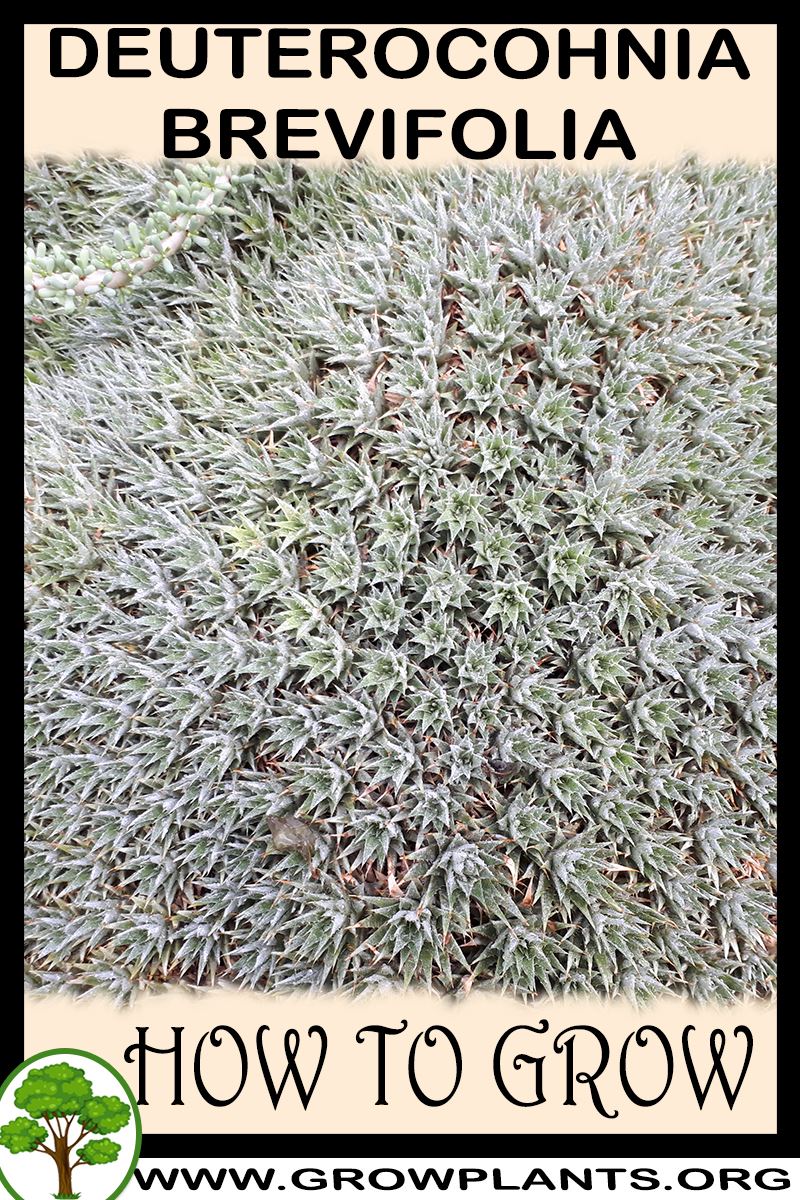
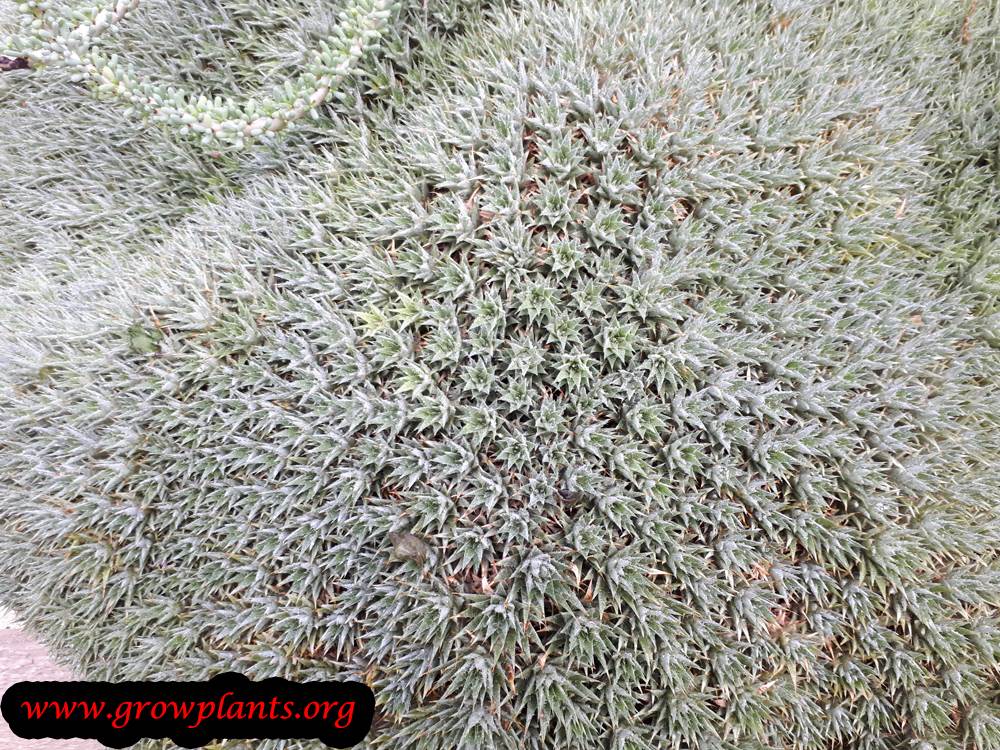
Overview: Deuterocohnia brevifolia (Abromeitiella chlorantha) is an evergreen, drought-tolerant terrestrial bromeliad forming spiny rosettes that mass together into cushion-like mounds. It is grown as an ornamental and groundcover, often on rock or in shallow containers.
Quick Specifications
| Specification | Attribute |
|---|---|
| Plant Type / Life Cycle | Perennial (evergreen bromeliad) |
| Foliage Type | Evergreen |
| Mature Size | Height 5-7.5 cm (2-3 in) |
| Growth Rate | Slow |
| Root System | Shallow; often lithophytic/epiphytic (grows on rock) |
| Toxicity | Non-toxic |
| Hardiness | USDA zones 10b+ (10a with winter protection) |
Growth Form & Structure
- Height & Spread: A miniature cushion just 5-7.5 cm (2-3 in) tall spreading into a dense ball; ideal for shallow pots or mounted on rock.
- Growth Habit & Form: Slow-spreading colony of small spiny rosettes that merge into a dense ball- or cushion-shaped mat.
- Lifespan & Maturity: Long-lived perennial; very slow to build up its mounds.
Anatomy & Physical Features
- Leaves & Foliage: Green, spear-shaped leaves with spiny margins arranged in tight rosettes.
- Flower Characteristics: Cone-shaped flowers in green, yellow, orange or purple, borne in clusters on stems (full detail in the Bloom guide).
Primary Uses & Landscape Value
- Functional & Ornamental Roles: Ornamental drought-tolerant groundcover and rock/container specimen; grown as a houseplant outside the tropics.
Care Guide: Planting, Soil & Watering
Overview: Deuterocohnia brevifolia is a drought-tolerant bromeliad that needs sharply drained soil, warmth (above about 15C) and good air humidity. It likes to grow among rocks, tolerates dryness at the roots, and prefers pure rain or filtered water.
Quick Care Requirements
| Requirement | Ideal Condition |
|---|---|
| Planting Season | In spring (year-round in tropical climates) |
| Growth Rate | Slow |
| Soil Type | Sharply well-draining, gritty or rocky soil |
| Water Need | Low to Moderate – let the roots dry between waterings |
Planting & Establishment
- Best Planting Season: Plant in spring, or year-round in the tropics.
- How to Plant:
- Hole Preparation: Plant into gritty, free-draining ground or among rocks; sharp drainage is essential.
- Soil Amendments: Add grit or lava rock to open the mix; as it naturally grows on rock, avoid heavy, water-holding soil.
- Planting Depth: Set the base of the rosette at the surface without burying the crown.
- Growth Speed & Expectations: Slow-growing, with tight rosettes that clump into a low ball over time.
Soil, Watering & Drainage Care
- Soil Mix & Drainage Needs: A very free-draining, gritty medium (or grown on rock or bark); good drainage plus air humidity keeps the roots healthy.
- Watering Schedule & Technique:
- Young / Newly Planted: Water lightly, letting the medium dry between waterings; use rain or filtered water.
- Established: Sparse watering – it is drought-tolerant, but maintain humidity around the plant and avoid overwatering.
- Seasonal Adjustments: Less water in cool winter; a little more in heat, keeping the roots on the dry side.
Climate, Light & Hardiness
Deuterocohnia brevifolia is a drought-tolerant succulent bromeliad suited to subtropical, mediterranean, and tropical climates (or grown as a houseplant elsewhere), thriving anywhere from full sun to full shade. It prefers frost-free conditions above about 15°C (59°F), though established plants can survive light frost - corresponding to USDA zone 10b, and zone 10a with attentive overwinter care.
Quick Climate Specifications
| Climate Zones | Subtropical, mediterranean, tropical (or houseplant) |
|---|---|
| USDA Hardiness Zones | 10b+ (10a possible with overwinter protection) |
| Optimal Temp Range | Prefers temperatures above approximately 15°C (59°F) |
| Cold Damage Begins | Growth and appearance likely suffer as temperatures approach freezing; best kept frost-free |
| Approx. Survival Minimum | Can survive brief light frost, but sustained freezing is not tolerated |
| Frost Tolerance | Low |
| Light Conditions | Full sun to full shade |
| Wind Tolerance | Low |
Sunlight & Light Exposure
Optimal Light Setup
Adapts to a wide range from full sun to full shade; indoors, choose a spot with good light even without direct sun.
Direct Sun Requirement
Tolerates full direct sun outdoors.
Shade & Heat Management
Also grows well in shade; unlike many succulents it doesn't require blasting direct sun to thrive.
Best Exposure / Orientation
Outdoors, a warm, rocky, or slightly elevated spot with ambient humidity; indoors, bright light kept away from cold drafts, heaters, and air-conditioning vents (a humid, well-lit bathroom can work well).
Temperature Extremes & Hardiness
USDA Hardiness & Regional Limits
Hardy outdoors in zone 10b and warmer; zone 10a growers can succeed with attentive overwinter care that protects the plant from frost and wind.
Cold Damage & Winter Protection
Keep frost-free where possible; provide a wind-sheltered position, mulch, and cover for occasional light frost. Indoors, keep well away from cold windows, heaters, and air-conditioning airflow.
Frost Sensitivity
Low tolerance - can survive brief light frost but not sustained freezing.
Extreme Heat Tolerance
As a drought-tolerant succulent it handles heat well, provided some ambient humidity and appropriate watering are maintained.
Wind, Humidity & Microclimate
Humidity Preferences
Prefers relatively high ambient humidity despite being drought-tolerant; in the wild it often grows epiphyte-like on rocks in humid microclimates.
Dry-Air Tolerance
Moderate; tolerates dry air for periods thanks to its drought tolerance, but grows best with some ambient humidity.
Wind Tolerance
Low; site away from strong wind, drafts, heaters, and air-conditioning airflow.
Microclimate Recommendations
Outdoors, grow on rocks or in a sheltered, humid microclimate; indoors, a naturally humid room with good light (such as a bathroom) away from HVAC drafts suits it well.
Growing in Pots, Balconies & Indoors
Deuterocohnia brevifolia is a tiny, cushion-forming bromeliad and, in the grower’s experience, is often easier indoors than out – away from wind, with steady humidity and easy control over what it gets. It makes a charming, low houseplant.
Quick Details
- Container Size: Small – a shallow pot, or mounted on cork or bark, suits this compact rosette.
- Indoor Suitability: Yes – a genuine houseplant, often better indoors than out.
- Best Spot: Bright light with a little direct sun; it also tolerates part to full shade.
- Soil & Drainage: Very free-draining – it is mostly epiphytic and hates a wet, airless root ball.
- Watering in Pots: Sparing to moderate; drought-tolerant but wants humidity, so mist rather than soak.
Indoors & On the Windowsill
- Houseplant: A real houseplant – as the grower notes, outside the tropics it is usually easier indoors, sheltered from wind with steady humidity.
- Placement: Choose a bright spot with a little sun, but keep it away from fans, heaters and air-conditioning, which dry it out; a bright bathroom works well.
- Watering indoors: In a humid room it needs less water – let it approach dryness between drinks and rely on humidity.
On a Balcony or Patio
- Shelter from wind: Outdoors it dislikes drying wind; a bright, sheltered spot on a patio in warm weather suits it, brought in before cold.
- Watering: In open air it dries faster – check it often, but never leave it sitting wet.
Choosing the Pot, Soil & Long-Term Care
- Pot or mount: Grow it in a small, very free-draining pot, or mount it epiphytically on cork or bark – the way it grows in nature.
- Potting mix: Fill with a well-aerated, organic-rich medium – a good potting mix, or peat/coir blended with perlite or vermiculite for drainage.
- Feeding: Container plants run through nutrients fast because watering washes them out, so feed a little more often through the growing season than you would in open ground.
- Repotting: Refresh the mix or pot up about every couple of years; for perennials, lightly trim the roots and top growth at the same time.
Grower’s Container Tip
- Mount on cork or bark: The grower grows it disconnected from soil on cork or bark; when mounted this way, keep the roots moist and cover them with bark or moss to hold humidity.
Fertilizing & Feeding
A slow-growing, drought-tolerant rosette succulent that naturally clusters into dense mats, this species needs very little supplemental nutrition and is easily overfed; light, infrequent feeding during active growth is enough, with none while it rests through the cold season.
Quick Fertilizing Specs
| Feeding Level | Very light feeder |
|---|---|
| Main Nutrient Priority | A dilute, low-nitrogen feeding that avoids pushing soft, lush growth on a naturally slow, drought-adapted plant |
| Best Feeding Period | During the warmer part of the growing season when the rosettes are actively putting on new growth |
| Reduce/Stop Feeding | Hold off on any feeding once cold weather sets in, matching the plant’s own guidance to avoid fertilizing in autumn and winter |
| Micronutrients | No routine micronutrient product is needed for this species |
Feeding by Growth Stage
Warm-season active growth
Give the clustering rosettes just enough nutrition to support their naturally slow growth without encouraging soft tissue that frost or rot can damage.
| Nutrient direction | A light, low-nitrogen feeding applied as a dilute spray suits this slow-growing succulent far better than a strong dose. |
|---|---|
| Timing | During the warmer months of active growth, well away from any risk of frost. |
| Frequency | Light, infrequent feeding is enough; this species rarely needs feeding beyond an occasional application during its main growing period. |
| Fertilizer types | A diluted, low-nitrogen succulent or cactus fertilizer applied as a spray |
| Precautions | Favor purified or rain water and well-drained conditions when feeding; this succulent dislikes standing moisture around its roots and rosette center. |
Cool-season rest
Let the plant rest through cooler weather, when it is more cold-hardy but not in active growth.
| Nutrient direction | None – withhold fertilizer through the cooler resting period. |
|---|---|
| Timing | Through autumn and winter, or any period of cool temperatures when growth pauses. |
| Frequency | No feeding at this stage. |
| Fertilizer types | No feeding at this stage; withholding fertilizer in cooler weather also supports better cold tolerance. |
| Precautions | Do not fertilize during the cool resting period; feeding now can push tender growth that is more vulnerable to cold damage. |
Nutrient Deficiency Signs & Corrections
Older leaves toward the base of the rosette fade to a paler green and overall growth appears stalled even in the growing season.
| Possible causes | very low nutrient availability in fast-draining, mineral potting mixes, leaching from repeated overhead watering or misting, the plant’s naturally slow growth being mistaken for a nutrient problem |
|---|---|
| Appears first on | older, lower rosette leaves |
| What to check | time since any feeding, type and drainage of the potting mix, watering routine and water source |
| Possible correction | Apply a light, low-nitrogen feeding during the active growing season rather than assuming a chronic problem. |
The base of a rosette softens, discolors, or collapses, sometimes spreading to neighboring rosettes in the mat.
| Possible causes | excess moisture held around the roots or rosette center, poorly draining soil or a container without adequate drainage, fertilizing during cool, wet weather when the plant is not actively growing |
|---|---|
| Appears first on | base of the rosette and roots |
| What to check | soil moisture and drainage, recent watering frequency, whether feeding occurred outside the active growing season |
| Possible correction | Improve drainage, let the mix dry between waterings, and avoid feeding outside the active warm-season growth period. |
Leaf tips or margins develop dry, brown, scorched patches after a feeding.
| Possible causes | a fertilizer applied too strong for this light-feeding species, feeding a plant that is not actively growing and cannot use the nutrients, salt buildup in a container with limited drainage |
|---|---|
| Appears first on | leaf tips and margins |
| What to check | strength and timing of the last feeding, container drainage, whether the plant was actively growing when fed |
| Possible correction | Water thoroughly to help flush excess salts and return to a lighter, more dilute feeding during active growth only. |
Pruning, Training & Seasonal Maintenance
Deuterocohnia brevifolia forms tight rosettes that clump into ball-like mats; it does not tolerate structural pruning and needs almost none – maintenance is limited to removing dead leaves and spent rosettes. Because each rosette flowers once from its centre and then gradually declines while neighbouring offsets continue the clump, cleanup is about clearing that spent growth rather than shaping a canopy. The safest window is tied to hardiness zone: in borderline zones (10a–11a) do any cutting during the warm growing season so wounds heal before cold, while in warmer zones (11b+) it can be done any time.
Quick Pruning & Maintenance Specs
| Pruning Tolerance | Low (grooming only, no structural cuts) |
| Primary Pruning Window | Zone 11b+: all year; Zone 10a: spring–summer; Zone 10b–11a: spring–autumn |
| Typical Frequency | Occasional, as dead leaves/rosettes appear |
| Main Objective | Remove dead leaves and spent (post-bloom) rosettes to keep the mat tidy |
| Mature Plant Priority | Clear spent rosettes from the clump; thin overcrowded offsets only if propagating |
| Best Tool Type | Precision snips / grafting knife for clean offset division |
| Avoid Heavy Pruning During | Cold or wet weather, especially near the cold edge of its hardiness range |
Pruning by Plant Age & Size
Newly Established
Leave newly planted or newly potted clumps undisturbed while they root in; only remove any leaves damaged in transit or planting.
Young / Formative
No training is applicable – the plant forms its ball-shaped clump naturally through offsetting, with no pinching, staking or framework involved.
Mature / Established
As the mat matures, individual rosettes that have flowered will yellow and decline; remove these along with any accumulated dead leaf litter within the clump to maintain airflow and appearance. Divide and remove excess offsets only if controlling clump size or propagating.
Special Growth to Remove
- Spent (post-flowering) rosettes – each rosette blooms once from its centre and then fades; remove it once clearly dead so the surrounding offsets take over.
- Dead leaves – the plant’s own care guidance is simply to remove dead leaves and plants; this is the core of its maintenance.
Container & Small-Space Pruning
This species is very well suited to pots, cork or bark mounts (it grows epiphyte-like on rock and bark in habitat). In containers or on mounts, the same light approach applies – just clear dead leaves and spent rosettes; there is no need for size-reduction pruning since growth is slow and naturally compact, and root pruning is not part of its routine care.
Tools
- Precision snips – for trimming dead leaves and detaching spent rosettes.
- Grafting knife – for cleanly separating offsets from the clump when dividing.
Tool Hygiene & Disease Risk
Routine – clean, sharp tools are sufficient; aphids are the only noted pest and are not spread by pruning cuts.
Cut Placement & Technique
Cut or pull dead leaves close to their point of attachment; remove a spent rosette at its base where it joins the mat, taking care not to disturb the roots of adjacent live offsets. When dividing, use a clean blade to separate an offset with some of its own root intact.
Heavy Pruning & Rejuvenation
Not applicable – this species does not tolerate or need hard rejuvenation pruning. Renewal happens naturally as new offsets replace spent rosettes; there is no cutting-back technique that rejuvenates an individual rosette.
Post-Pruning Care
Let any cut surfaces dry/callus briefly and avoid heavy watering immediately after removing rosettes or offsets, to reduce rot risk. Otherwise resume its normal dry-between-waterings routine.
Common Pruning Mistakes
- Cutting into live, healthy rosettes for shaping – the plant’s ball form comes from natural offsetting, not trimming.
- Leaving spent, decaying rosettes in place too long, which can hold moisture against the clump and invite rot.
- Watering heavily right after removing tissue, encouraging rot at the cut.
When NOT to Prune
Avoid cutting during cold weather in the cooler part of its hardiness range (zones 10a–11a), and avoid working on the clump during prolonged wet conditions.
Recommended Tools (by task)
- precision_snips – routine removal of dead leaves and spent rosettes without disturbing the tight clump.
- grafting_knife – a sterile, clean blade for dividing offsets when propagating or thinning an overcrowded mat.
Propagation Guide
Because established plants form dense, ball-like clusters of rosettes, the fastest and most practical way to propagate Deuterocohnia brevifolia is to separate rooted offsets from the clump; seed is also used, particularly to raise new stock, and generally comes true to the species. Vegetative propagation (division) is really only necessary when you want to guarantee a specific leaf or flower color form. Difficulty is easy by division and moderate from seed, given its multi-month germination and specific humidity needs.
Quick Propagation Specs
| Best Propagation Method | Division of offsets |
| Alternative Methods | Seed |
| Propagation Difficulty | Easy (division) / Moderate (seed) |
| Seed True-to-Type | Usually true-to-type, though individual color forms can vary |
| Vegetative True-to-Type | Yes – the only reliable way to fix a specific color form |
| Best Propagation Season | End of spring to early autumn for seed; offsets divided during active growth (all year in tropical climates, spring elsewhere) |
| Seed Germination Time | 1–2 months |
| Germination Temperature | 25–30°C (77–86°F) by day, cooler at night |
| Seed Sowing Depth | Surface sow – press onto the medium, do not bury |
Growing from Seed
Seed Handling & Viability
Use fresh seed for best results; between collection and sowing, store seed in a dry, dark location.
Sowing Season
End of spring to early autumn.
Sowing Depth & Orientation
Sow onto sphagnum or peat moss and keep it moist – the seed sits on the surface of the medium rather than being buried. When sowing in trays, space seed at roughly 3x2cm (1.5×1 inch).
Germination Conditions
High humidity with a light, consistently moist (not wet) medium, plenty of light, and 25–30°C (77–86°F) by day with cooler night temperatures. Water sparingly – do not overwater.
Germination Time
Roughly 1–2 months.
Seedling Care
Seedlings need the same conditions as mature plants and should be moved on to a location free of algae buildup once they are established.
Division, Offsets, Pups & Suckers
Mature plants naturally cluster into dense, ball-like groups of rosettes, which makes division the quickest way to multiply this species and the only reliable way to preserve a particular leaf or flower color. Separate an offset that already has its own roots (or a basal section capable of rooting) from the parent clump with a clean cut, let the cut surface dry briefly, and pot it into the same well-drained mix the species prefers. Divide during active growth – year-round in tropical conditions, otherwise in spring.
Bloom & Flower Guide
Quick Details
- Bloom Season: Winter to spring
- Flower Appearance: Tubular green to yellow flowers in a cone-shaped spike rising from the centre of the rosette
- Edibility: Ornamental only, not eaten
Detailed Blooming Overview
Deuterocohnia brevifolia is a cushion-forming succulent bromeliad that flowers from winter into spring, sending up slender spikes of tubular green-to-yellow blooms from the middle of each rosette. Unlike many bromeliads that die after flowering, this one is long-lived and repeat-blooming, so the mature cushion keeps flowering season after season.
Flower Characteristics
- Tubular green-to-yellow flowers gathered into a cone-shaped spike.
- Borne from the centre of the tight rosettes.
Bloom Care & Thinning
- After flowering: Trim away the spent spikes; the rosette lives on and will flower again.
- Encouraging bloom: Bright light and a warm, dry rest support repeat flowering.
Pests, Diseases & Troubleshooting
Deuterocohnia is a tough, xerophytic terrestrial bromeliad from arid South America that forms dense cushions or rosettes and is remarkably free of pests when kept lean and sharply drained. Like other hard-leaved bromeliads its chief risk is rot from overwatering or trapped moisture in the crown, with scale and mealybug the only common insects. Pest-specific literature is thin, so this profile follows hard-leaved bromeliad and xerophyte generalities.
Quick Troubleshooting Overview
| Issue / Pest | Main Symptom | Primary Solution |
|---|---|---|
| Crown / root rot | Soft, browning centre; collapse in wet, airless conditions | Sharp drainage, dry-side watering, airflow |
| Scale insects | Brown bumps on leaves; sticky film | Wipe/scrape off, horticultural oil |
| Mealybugs | White cottony tufts in leaf axils and crown | Alcohol swab, horticultural oil |
| Spider mites | Faint stippling, dullness in hot dry air | Rinse, raise humidity, light oil if needed |
| Overwatering damage | Yellowing, mushy base, no roots | Gritty mix, water sparingly, free drainage |
Common Pests & Management
- Scale insects (Diaspididae / Coccidae spp.):
- Symptoms: Small brown, grey or tan limpet-like bumps on the stiff leaves and in the rosette, sometimes with sticky honeydew and sooty mould.
- Prevention & Control: Scrape or wipe off small numbers; remove badly affected leaves; spray horticultural oil to smother scale and its crawlers, repeating as needed; keep plants unstressed and airy.
- Mealybugs (Pseudococcus / Planococcus spp.):
- Symptoms: White, cottony, waxy tufts collect in leaf axils, the crown and among old leaf bases, weakening the plant and inviting sooty mould.
- Prevention & Control: Dab with rubbing alcohol on a cotton bud; brush out debris where they hide; spray horticultural oil or insecticidal soap into the rosette, repeating for crawlers; check roots in pots for root mealybugs.
- Spider mites (Tetranychus spp.):
- Symptoms: In very hot, dry, dusty conditions the leaves may show faint stippling and a dull cast; uncommon on this succulent-like plant.
- Prevention & Control: Usually needs no action; hose off dust and improve air movement; use a light horticultural oil only in the rare persistent case.
Diseases & Fungal Issues
- Crown and root rot (Pythium / Phytophthora / Fusarium):
- Symptoms: The centre of the cushion or rosette and the roots turn soft, brown and foul, leaves collapse and pull away easily, driven by overwatering, water sitting in the crown, or airless, poorly drained conditions.
- Treatment & Management: Prevention is decisive: grow in gritty, fast-draining mix, water sparingly and let it dry fully between waterings, avoid leaving water standing in the crown, and give bright light and good airflow; remove rotted material and repot dry survivors into fresh open mix.
- Fungal leaf spot (Various fungi):
- Symptoms: Occasional brown or black leaf spots in unusually wet, humid, stagnant conditions; largely cosmetic on a healthy plant.
- Treatment & Management: Improve airflow and reduce overhead wetting, remove marked leaves, and keep the crown clear of debris; rarely needs a fungicide.
Growing Difficulties & Abiotic Problems
- Overwatering / poor drainage:
- Cause & Symptoms: Adapted to arid, rocky ground, it rots quickly if kept wet or grown in a heavy, water-retentive mix.
- Correction Strategy: Use a sharply drained, gritty mineral mix, water sparingly and only when dry, and never leave it standing wet; err on the dry side, especially in cool weather.
- Cold-wet damage:
- Cause & Symptoms: Cold combined with wet causes soft patches and rot; the plant tolerates drought far better than damp cold.
- Correction Strategy: Keep it dry and bright in cold weather, protect from persistent cold rain, and ensure excellent drainage year-round.
- Sunburn on soft growth:
- Cause & Symptoms: Plants moved abruptly from shade to fierce sun can scorch, with bleached or browned patches.
- Correction Strategy: Acclimatise gradually to strong light; in the hottest climates give a little relief from harsh midday sun while keeping conditions bright.
What Helps – Products & Tools
This arid bromeliad needs almost no chemistry: horticultural oil or insecticidal soap for the occasional scale or mealybug is about all. Its health rests on a gritty, fast-draining mix, sparing watering, bright light and airflow – the same regime that prevents the crown and root rot that is its only real threat.