Plant Profile & Key Characteristics
Overview: A familiar rosette-forming herb, biennial to perennial, with a flower stalk rising anywhere from 10-110 cm (4-44 in) and topped by a golden flower that becomes the well-known seed clock. Every part is edible, from the toothed leaves to the sweet white taproot.
Quick Specifications
| Specification | Attribute |
|---|---|
| Plant Type / Life Cycle | Biennial or herbaceous perennial |
| Foliage Type | Deciduous (herbaceous rosette) |
| Mature Size | 10-110 cm (4-44 in) tall in flower |
| Growth Rate | Fast |
| Root System | Long, fleshy white taproot (edible) |
| Toxicity | Non-toxic / fully edible |
| Hardiness | USDA zones 3-10 |
Growth Form & Structure
- Height and Spread: A low basal rosette of leaves with flower stalks from 10 up to about 110 cm (4-44 in); can be grown in containers, though it is rarely kept indoors.
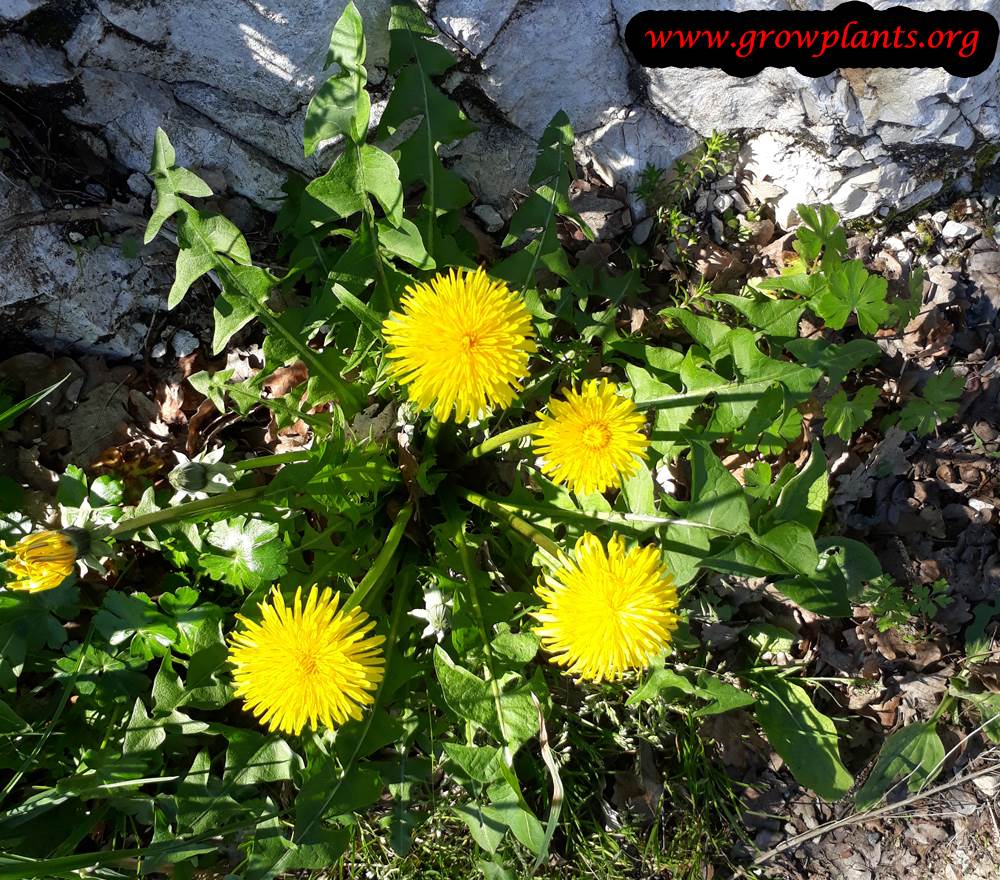
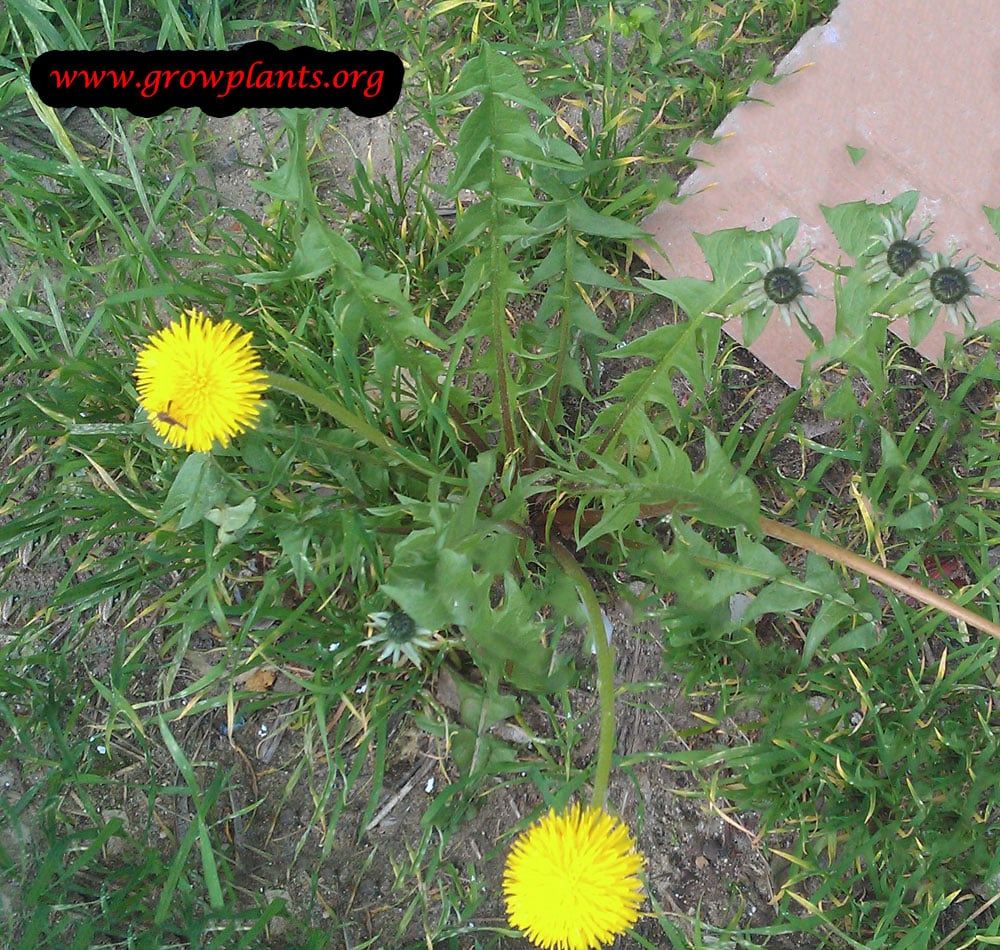
- Growth Habit and Form: Stemless rosette of leaves radiating from the crown, with hollow leafless flower stalks rising from the centre.
- Lifespan and Maturity: Establishes quickly from seed; the taproot is usually ready to harvest from the second year, and the plant readily self-sows.
Anatomy & Physical Features
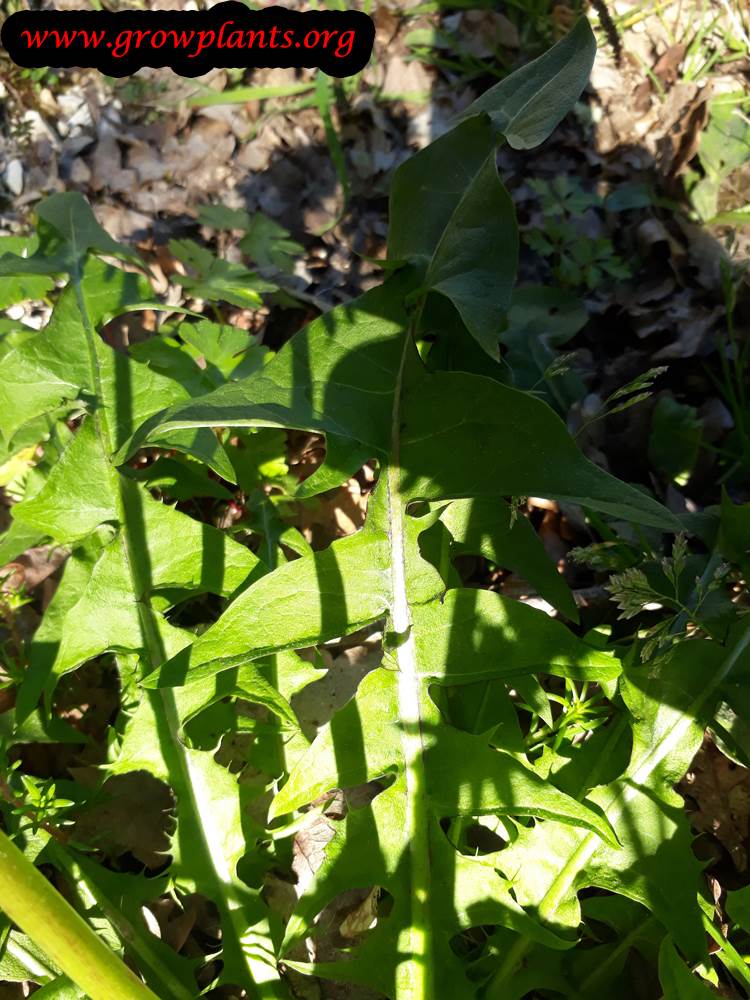
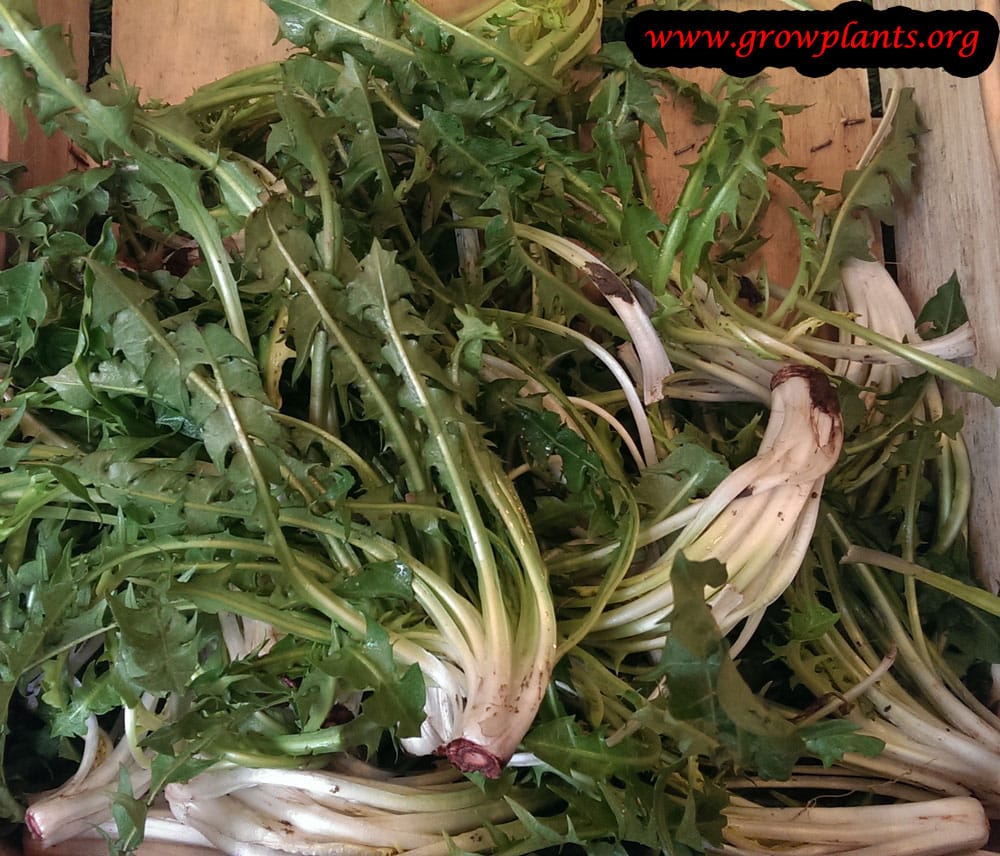
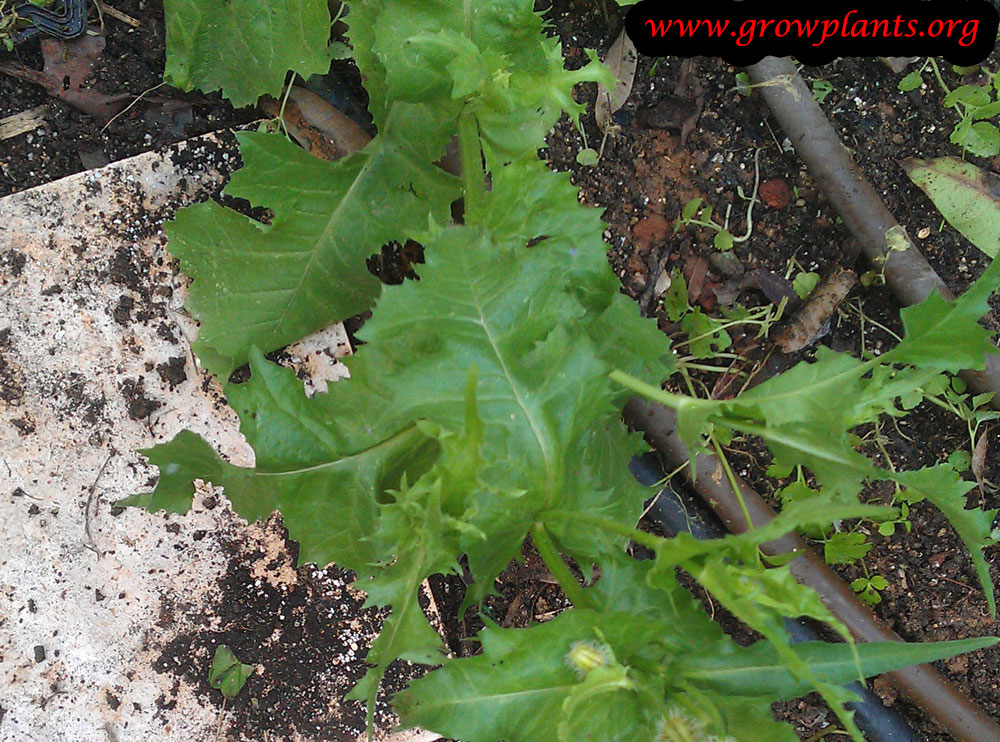
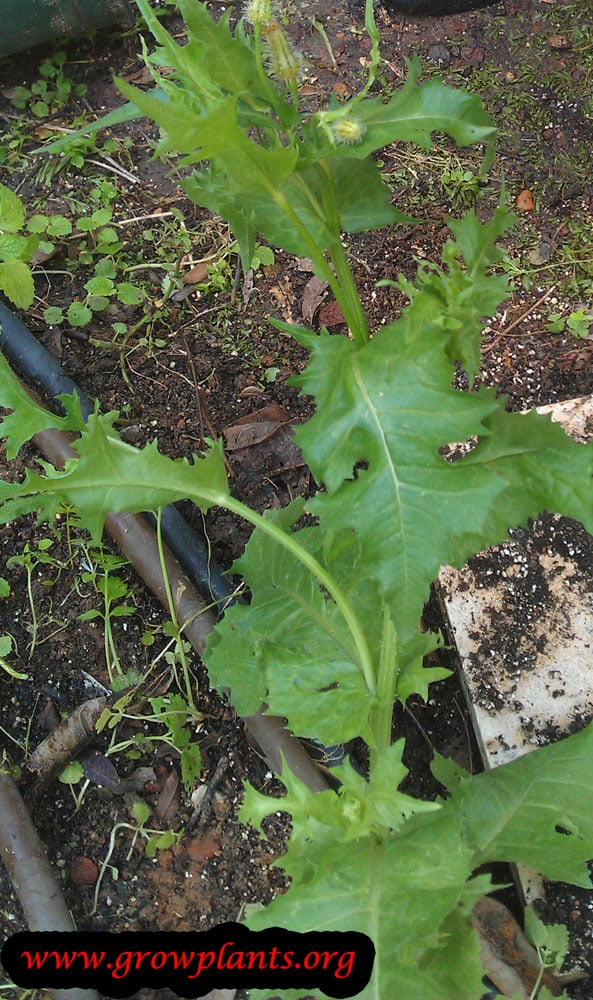
- Leaves and Foliage: Green, deeply pinnatisect leaves with jagged, tooth-like lobes (the source of the name ‘dent-de-lion’, lion’s tooth).
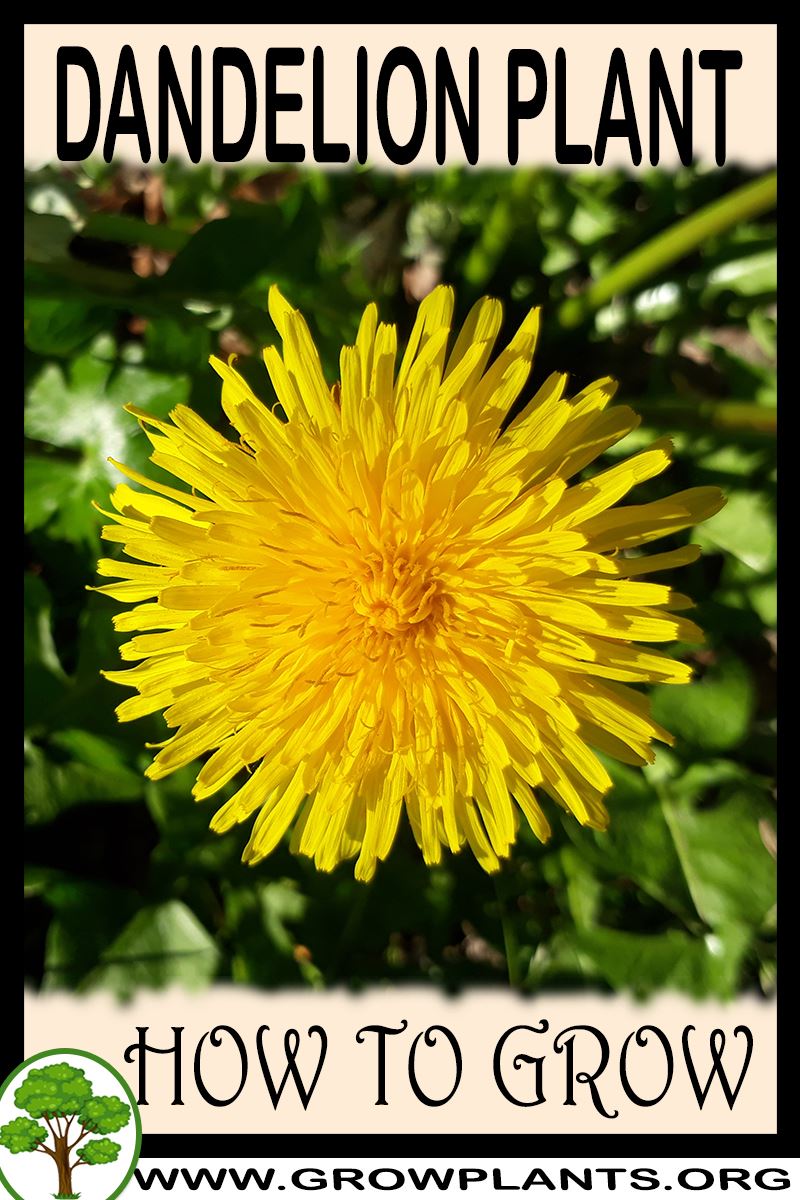
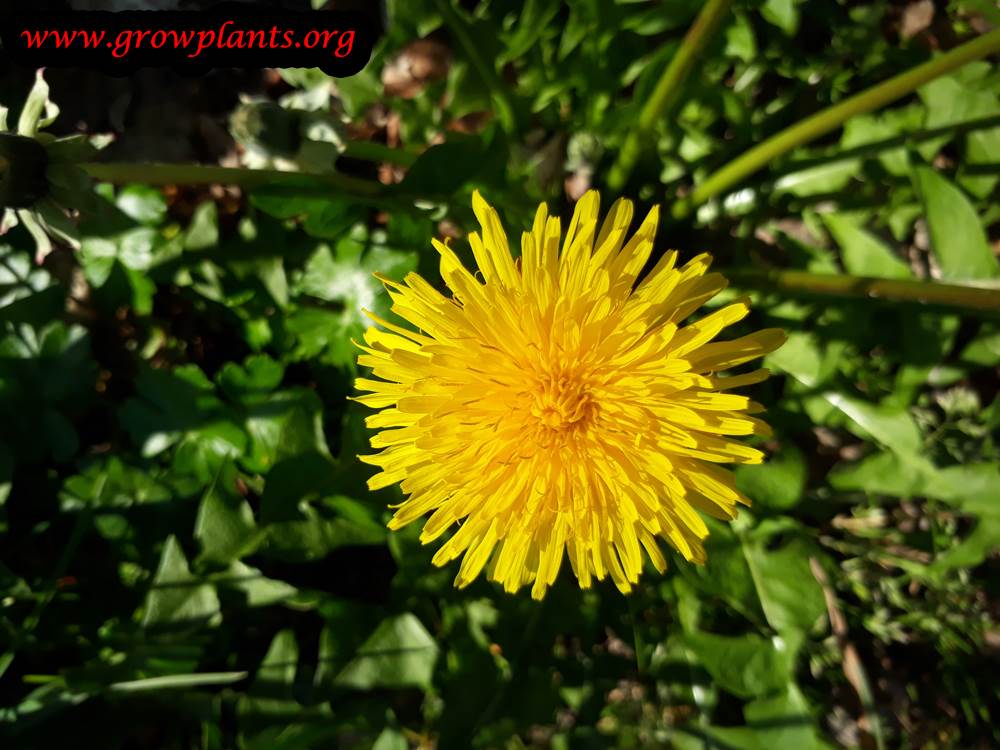
- Flower Characteristics: Solitary golden-yellow flower 1-5 cm across that matures into the round white parachute seed head.
Primary Uses & Landscape Value
- Edible Uses: Young leaves eaten raw in salads or cooked when older; flowers and buds used for beverages and wine; the sweet white taproot is roasted for a coffee-like drink.
- Functional and Ornamental Roles: A pollinator-friendly wild edible and herbal plant; note it self-seeds aggressively and is widely regarded as a lawn and garden weed.
Care Guide: Planting, Soil & Watering
Overview: Dandelion (Taraxacum) is a fast-growing, cool-season biennial or perennial that grows almost anywhere in full sun to part shade (hardiness zones 3–10). It is adaptable to most soils and, with its deep taproot, needs only low water.
Quick Care Requirements
| Requirement | Ideal Condition |
|---|---|
| Planting Season | Spring in temperate climates; autumn in frost-free areas |
| Growth Rate | Fast |
| Soil Type | Adaptable to most soils; loose, deep soil grows a longer taproot |
| Water Need | Low — modest, occasional water; the deep taproot reaches moisture well |
Planting & Establishment
- Best Planting Season: Sow or plant in spring in temperate climates, or in autumn in frost-free areas, for cool-season growth.
- How to Plant:
- Hole Preparation: For transplants, make a hole deep enough for the taproot to sit straight; for sowing, prepare a fine, loose bed.
- Soil Amendments: No rich amendment is needed; loose, deep soil simply lets the taproot grow long and straight.
- Planting Depth: Sow seed shallowly (barely covered); set transplants with the crown at soil level.
- Growth Speed & Expectations: Fast-growing and quick to flower; it establishes within a single season.
Soil, Watering & Drainage Care
- Soil Mix & Drainage Needs: Undemanding on soil and drainage, though loose, deep ground gives the best taproot. In containers use a deep pot so the root can develop.
- Watering Schedule & Technique:
- Young / Newly Planted: Keep the soil lightly moist while seedlings establish.
- Established: Once established it needs little water — the taproot draws on deeper moisture; water only in prolonged dry spells.
- Seasonal Adjustments: A little more in summer heat; little in cool, moist seasons.
Climate, Light & Hardiness
Dandelion is an extremely adaptable, cool-weather-preferring biennial/perennial suited to mediterranean, desert, subtropical, temperate, and tropical climates, growing in full sun to half shade in warmer climates. It is exceptionally cold-hardy and its main climate sensitivity is a preference for cooler growing conditions rather than any real cold-damage risk.
Quick Climate Specifications
| Climate Zones | Mediterranean, desert, subtropical, temperate, tropic |
|---|---|
| USDA Hardiness Zones | Zones 3–10 |
| Frost Tolerance | High |
| Light Conditions | Full sun; half shade in warmer climates |
Sunlight & Light Exposure
Optimal Light Setup
Full sun is preferred in cooler climates; in warmer climates some half shade helps it cope with heat.
Temperature Extremes & Hardiness
USDA Hardiness & Regional Limits
Extremely wide-ranging (zones 3–10) and highly cold-hardy; planting timing shifts with climate - autumn planting in frost-free areas, spring planting in temperate ones - to take advantage of cool weather.
Extreme Heat Tolerance
Prefers cool weather; hot conditions can push it to flower and set seed quickly rather than damaging the plant outright.
Growing in Pots, Balconies & Indoors
Dandelion (Taraxacum) is a hardy, edible rosette plant, easily grown in pots for its nutritious leaves and flowers – not an ornamental houseplant, but a compact, useful salad crop that will grow on a bright, sunny sill.
Quick Details
- Container Size: A pot about 5-15 L (1.5-4 gal) and reasonably deep for its long taproot; a plant of 10-110 cm (4-44 in)
- Indoor Suitability: Not grown as a room houseplant (the grower marks it “No”); as a leaf crop it will grow on a bright, sunny sill
- Best Spot: Full sun; a little afternoon shade suits it in hot climates and keeps leaves tender
- Soil & Drainage: Any decent, free-draining mix; it is very undemanding
- Watering in Pots: Low to moderate – it is drought-tolerant, but steady moisture keeps the leaves mild rather than bitter
Indoors & On the Windowsill
- Use indoors: The grower marks it as not a decorative houseplant, but a pot of dandelions on a bright, sunny sill gives a handy, cut-and-come-again supply of edible leaves.
- Windowsill growing: Give it the sunniest sill; light shade produces paler, milder, less bitter leaves for salads.
- Overwintering: Fully hardy – it can stay outdoors year-round, reshooting from the taproot each spring.
On a Balcony or Patio
- Light & wind: Thoroughly easy in any sunny balcony pot; deadhead the flowers before they seed if you do not want it spreading to neighbouring pots.
- Practicalities: A deeper pot suits its taproot; ensure water drains away freely.
Choosing the Pot, Soil & Long-Term Care
- Pot & drainage: A deeper 5-15 L pot with strong drainage holes; skip a standing water saucer to avoid root rot.
- Potting mix: Any free-draining general mix.
- Feeding: Feed lightly for tender leaves; it needs little.
- Repotting: Refresh the mix each year, or simply resow – it germinates readily.
Fertilizing & Feeding
A light to moderate feeder: nitrogen-forward feeding keeps the edible leaves tender and mild, tapering to a lighter, balanced feeding as the taproot develops for those growing it to harvest the root.
Quick Fertilizing Specs
| Feeding Level | Light to moderate feeder |
|---|---|
| Main Nutrient Priority | Nitrogen-forward feeding for tender, mild leaves |
| Best Feeding Period | Through the main cool-weather leaf-growing season |
| Organic Options | Compost or aged manure worked into the bed |
| Reduce/Stop Feeding | Ease off feeding before harvesting the taproot |
| Micronutrients | Rarely an issue in average garden soil; correct only if diagnosed |
| Soil pH | Tolerates a wide range of well-drained soils |
Feeding by Growth Stage
Establishment from seed or transplant
Get young plants off to a strong start as the taproot and leaf rosette form.
| Nutrient direction | A balanced, light feeding supports establishment without pushing overly lush, bitter growth. |
|---|---|
| Timing | At planting and while seedlings establish, in the cool-weather planting window. |
| Frequency | A light feeding at establishment is usually enough. |
| Fertilizer types | A balanced complete fertilizer worked in at planting, Compost or aged organic matter |
| Precautions | Keep feeding light; this plant grows readily and self-seeds, and rich feeding only encourages more of it in the bed. |
Leaf growth for continuous harvest
Keep producing tender, mild-flavored leaves for repeated cutting.
| Nutrient direction | A nitrogen-forward feeding encourages the tender green leaf growth this crop is grown for. |
|---|---|
| Timing | Through the main leaf-growing season, especially in cool weather. |
| Frequency | Light, regular feeding keeps leaf regrowth tender after cutting. |
| Fertilizer types | A nitrogen-rich or complete fertilizer with extra nitrogen, Compost or aged manure worked into the bed |
| Precautions | Harvest leaves young and often; older, heavily fed leaves turn tougher and more bitter. |
Root development for harvest
Support taproot growth for plants being grown on for their edible root.
| Nutrient direction | A balanced feeding with steady potassium supports root development without excess soft top growth. |
|---|---|
| Timing | As plants mature into a second season, before the taproot is dug. |
| Frequency | Light, infrequent feeding is enough at this stage. |
| Fertilizer types | A balanced complete fertilizer used sparingly |
| Precautions | Ease off feeding ahead of digging the taproot so growth doesn’t stay overly soft. |
Nutrient Deficiency Signs & Corrections
Small, pale leaves and noticeably slower leaf regrowth after cutting.
| Possible causes | low available soil nitrogen, nitrogen leached out by heavy watering or rain, low soil organic matter |
|---|---|
| Appears first on | older leaves first |
| What to check | recent feeding history, soil organic matter, how frequently leaves have been harvested |
| Possible correction | Apply a nitrogen-forward fertilizer and build soil organic matter to support steady leaf regrowth. |
Browning or scorch along the margins of older leaves and generally weak growth.
| Possible causes | low soil potassium, potassium leaching from light, well-drained soil, a feeding routine skewed heavily toward nitrogen |
|---|---|
| Appears first on | margins of older leaves |
| What to check | recent fertilizer balance, soil texture and drainage, overall plant vigor and root development |
| Possible correction | Shift toward a more balanced fertilizer rather than a nitrogen-only feeding, especially as roots are developing. |
Interveinal yellowing on the newest leaves while the veins stay green.
| Possible causes | high soil pH limiting iron availability, waterlogged or compacted soil restricting root function, naturally low soil iron |
|---|---|
| Appears first on | newest leaves |
| What to check | soil pH, drainage and recent watering, root health |
| Possible correction | Correct soil pH or drainage first, and apply a chelated iron product per its label if new leaves stay pale. |
Pruning, Training & Seasonal Maintenance
Dandelion (Taraxacum) is a low, stemless rosette herb with no woody or structural growth to prune in the traditional sense. The only real ‘pruning’ tasks are trimming leaves at the base and, more importantly for garden management, removing flower heads before they go to seed – the plant is explicitly noted as invasive and self-seeds readily via wind-blown seed heads, so timely flower removal is the single most impactful maintenance step.
Quick Pruning & Maintenance Specs
| Pruning Tolerance | High (for leaf/flower removal – there is no woody structure to damage) |
| Primary Pruning Window | Spring through autumn, whenever flower heads appear – remove before the seed head (‘clock’) forms |
| Secondary Maintenance Window | Leaf trimming can be done year-round per the facts |
| Typical Frequency | Check for flower heads every few days to a week during bloom to stay ahead of seed-set; trim leaves as often as desired |
| Main Objective | Prevent unwanted self-seeding/spread, the plant’s main documented problem, and keep the rosette producing tender new leaves |
| Young Plant Priority | None – the rosette establishes from seed/seedling with no training needed |
| Mature Plant Priority | Consistent flower removal before seed-set is the single highest-value task given its invasive tendency |
| Best Tool Type | Precision snips or fingers |
| Avoid Heavy Pruning During | Not applicable – there is no heavy or structural pruning for this rosette herb |
Seasonal Pruning Schedule
- Ongoing Sanitary (spring/summer, during bloom): the single most important task – remove flower stalks before the fluffy seed heads mature and disperse, since the facts specifically recommend pre-seed thinning as invasive-control.
- Ongoing (year-round): trim older leaves at the base any time, per the facts’ note that leaves are harvestable all year; this removes tougher outer leaves and encourages tender new inner growth.
Special Growth to Remove
Flower stalks and developing seed heads are the priority removal target – cut before the white ‘clock’ forms and disperses seed, directly addressing the plant’s documented invasive/aggressive spreading habit. Older, tougher outer leaves can be trimmed at the base to make room for tender new inner leaves; this doubles as harvest, which the separate edible-uses module covers in depth, but regular leaf removal is itself the plant’s routine maintenance.
Container & Small-Space Pruning
Container growing is possible per the facts. The same two tasks apply – deadhead before seed-set and trim leaves – with the practical benefit that a contained planting makes wind-dispersed seed spread easier to control than an in-ground planting.
Tools
Precision snips, or bare-hand pinching, for both flower-stalk removal and leaf trimming – no larger cutting tools are relevant to this soft-stemmed rosette herb.
Tool Hygiene & Disease Risk
Routine – no disease risk is noted in the facts; ordinary clean-tool care is sufficient.
Cut Placement & Technique
Trim leaves at the base of the stem close to the crown, per the facts’ own harvesting guidance, favouring younger leaves as more tender. Cut flower stalks low, at or near the base, before the seed head opens.
Post-Pruning Care
No special aftercare is needed beyond normal watering; removing flower heads has no negative effect on the plant’s vigour since it readily produces more from the rosette.
Common Pruning Mistakes
Letting flower heads mature into seed ‘clocks’ before removing them, allowing wind-dispersed seed to spread the plant well beyond the original clump, its main documented problem; waiting too long to trim leaves, which produces tougher, more bitter growth per the facts’ own note that younger leaves are more tender.
When NOT to Prune
No meaningful restriction – leaf trimming and flower removal can be done whenever needed. If the taproot is wanted, the facts note it is typically pulled after the plant establishes in its second year, but that is a harvest matter covered by the separate edible-uses module, not this pruning module.
Recommended Tools (by task)
- precision_snips – flower-stalk deadheading to prevent seeding, and routine leaf trimming.
Propagation Guide
Dandelion is grown almost entirely from seed, which it produces abundantly and disperses on wind-borne, feathery seed heads; many common dandelions reproduce apomictically, meaning seedlings tend to closely resemble the parent even without cross-pollination. Propagation from seed is Easy, and no grafting or deliberate vegetative propagation is needed.
Quick Propagation Specs
| Best Propagation Method | Seed |
| Propagation Difficulty | Easy |
| Seed True-to-Type | Apomictic seed may reproduce genetically similar plants |
| Best Propagation Season | Autumn in frost-free areas; spring in temperate climates |
| Seed Germination Time | Typically one to a few weeks |
| Seed Sowing Depth | Shallow, just lightly covered |
Growing from Seed
Sowing Season
Autumn in frost-free areas, or spring in temperate climates.
Sowing Depth & Orientation
Sow shallowly, lightly covered with soil.
Germination Conditions
Germinates readily without special treatment.
Seedling Care
Thin young seedlings to give the developing taproot room; deadheading spent flowers before seed forms helps limit unwanted self-seeding, since the plant is noted as invasive.
Leaf & Root Cuttings
Dandelion is not deliberately propagated from root cuttings, but its white taproot regenerates readily from fragments left in the soil — part of why removal is difficult once established. A whole young taproot can be transplanted successfully if lifted with the growing point intact, but broken root fragments should not be relied on as a controlled propagation method since they resprout unpredictably.
Bloom & Edible Flower Guide
Quick Details
- Bloom Season: Spring and summer, and often much of the year in mild climates
- Time to First Bloom: Within its first year from seed
- Flower Appearance: Bright yellow heads, 1-5 cm across, each made up of many strap-shaped ray florets
- Edibility: Yes – the golden flowers are edible and are used for wine, syrup, tea and as a garnish
Detailed Blooming Overview
What looks like a single dandelion flower is actually a head packed with dozens of tiny florets. The heads open with the sun and close in the evening or in dull weather, then mature into the familiar silvery seed clock. The flowers are cheerful, long-produced and genuinely useful in the kitchen, which is why gardeners so often make a virtue of this most persistent of plants.
Flower Characteristics
- Golden-yellow composite heads, 1-5 cm wide, of numerous ray florets.
- Held singly on hollow, milky stalks that rise above the leaf rosette.
- Open by day and close at night, later forming round, downy seed heads.
Bloom Care & Thinning
- Managing the bloom: If you want to limit spread, thin and remove the flower heads before they set seed, as the grower advises.
- Harvesting flowers: Pick fully open heads on a dry, sunny day for the best flavour and colour.
- Pollination: Bees visit the flowers freely, though many dandelions also set viable seed apomictically, without any pollination at all.
- Uses: The petals are used to make beverages such as dandelion wine and tea, and as an edible garnish.
Fruit & Uses
Dandelion is a fully edible plant: the leaves, the flowers with their unopened buds, and the white taproot are all eaten. Young leaves and the flowers/buds are typically used raw, while older leaves are best cooked, and the root is usually dried and roasted rather than eaten raw.
Quick Edible Specs
| Edible Parts | Leaves, flowers & flower buds, taproot |
|---|---|
| Main Use(s) | Culinary (salad greens, cooked greens); beverage (flower and root) |
| Eaten Raw or Cooked | Leaves: raw when young, cooked when older; flowers/buds: used fresh for beverages; root: not eaten raw, dried/roasted for beverage |
| Preparation Required | Leaves: none when young, cook if older and bitter; root: wash, dry and roast before brewing |
| Harvest Season | Leaves: all year; flowers/buds: spring–summer bloom season; root: once the plant is established, from its second year |
| Time to First Harvest | Leaves can be picked as soon as the rosette is established; the root is left to mature for a season or more before lifting (see Propagation for establishment timing) |
| Storage | Fresh leaves and flowers keep only briefly refrigerated; dried root stores well for later brewing |
| Safety/Toxicity Caveat | Generally safe to eat, but only harvest from lawns/areas known to be free of herbicide, pesticide or heavy roadside pollution; the milky sap can irritate skin or cause a mild allergic reaction in sensitive people |
Leaves & Greens
The deeply toothed, lion’s-tooth-shaped (“dent de lion”) green leaves are the most commonly eaten part. Young leaves are tender enough to eat raw in salads; as the plant ages the leaves turn more bitter and are better cooked, similar to other leafy greens. Harvest by trimming leaves at the base of the stem; because harvest runs all year, younger, more tender leaves can be selected at any time.
Flowers & Flower Buds
The yellow flowers, along with their unopened buds, are edible and are mainly used to make a beverage (traditionally dandelion wine or tea). Pick them during the spring–summer bloom season while still fresh; once a flower head matures into its fluffy white seed head it is no longer used as food.
Roots & Tubers
The white taproot has a mildly sweet flavour and is edible. The site recommends waiting until the plant is established in its second year before pulling the root. It is not eaten raw – the traditional preparation is to wash, slice, dry and roast the root, then brew it as a caffeine-free “coffee”-style beverage. Note that lifting the taproot ends that plant, so root harvest and ongoing leaf harvest from the same plant are mutually exclusive.
Harvesting
Leaves are a cut-and-come-again crop that can be trimmed at the base of the stem throughout the year, with younger leaves preferred for eating raw. Flowers/buds are gathered fresh during bloom season. The root is a one-time harvest: pull it once the plant has established, generally from its second year on, since digging it up removes the whole plant.
Preparation, Uses & Safety
Young leaves need no preparation beyond washing and are used raw in salads; older, more bitter leaves are cooked like other bitter greens. Flowers and buds are used fresh to make dandelion beverages (tea/wine-style infusions). The root is dried and roasted before brewing into a root “coffee” – it is not intended to be eaten raw. Only harvest dandelion from ground you know has not been treated with herbicides or pesticides and is away from heavy roadside pollution, since the plant readily takes up contaminants. The milky latex sap in the stems can irritate skin or trigger a mild reaction in people sensitive to it; wearing gloves when harvesting in quantity is a reasonable precaution. Dandelion has a long history of traditional medicinal use, but no health or dosing claims are made here.
Pests, Diseases & Troubleshooting
Overview: Dandelion is an exceptionally tough, deep-rooted perennial that is essentially free of serious pests and diseases; when problems do occur they are minor sap-suckers or foliar fungi in crowded, damp conditions. Grown as an edible or wildflower it needs almost no protection – good airflow is enough.
Quick Troubleshooting Overview
| Issue / Pest | Main Symptom | Primary Solution |
|---|---|---|
| Aphids | Colonies on flower stems | Water jet, insecticidal soap |
| Powdery mildew | White coating on leaves | Improve airflow |
| Downy mildew | Pale patches, grey underside | Reduce leaf wetness |
| Rust | Orange pustules on leaves | Remove infected leaves |
| Root rot | Decline in waterlogged soil | Improve drainage |
Common Pests & Management
- Aphids (Aphidoidea):
- Symptoms: Clusters of tiny soft-bodied green, black or grey insects on new shoots, flower buds and leaf undersides. Feeding causes puckered, curled or yellowing young growth, and a sticky honeydew that fosters sooty mould and attracts ants.
- Prevention & Control: Knock colonies off with a firm jet of water and pinch out badly infested tips. Encourage ladybirds, lacewings and hoverflies, and avoid excess nitrogen that pushes soft sappy growth. For persistent outbreaks apply insecticidal soap or a light horticultural/neem oil, coating leaf undersides and spraying in the cool of evening to protect pollinators.
- Slugs & Snails (Gastropoda):
- Symptoms: Ragged holes with smooth edges eaten from tender leaves and seedlings, plus tell-tale silvery slime trails; damage appears overnight and in damp, shaded spots.
- Prevention & Control: Water in the morning so foliage and soil dry by night, and clear hiding places such as boards and dense debris. Trap with beer-baited saucers, hand-pick after dark, and protect plants with barriers of grit, copper tape or wool. Iron-phosphate baits are a wildlife-safer option if pressure is high.
- Leaf Miners (Liriomyza spp.):
- Symptoms: Winding pale tunnels or blotchy blister-mines meandering within the leaf, caused by larvae feeding between the upper and lower surfaces; heavy mining reduces vigour and disfigures foliage.
- Prevention & Control: Pick off and destroy mined leaves before larvae mature, and clear plant debris. Encourage parasitic wasps, which are the main natural control. Floating row cover excludes egg-laying adults on low crops; sprays are rarely justified as the larvae are shielded inside the leaf.
Diseases & Fungal Issues
- Powdery Mildew (Erysiphales):
- Symptoms: A white to greyish powdery coating on leaves and shoots, usually starting on the upper surface; affected leaves may yellow, distort and drop. Worst in crowded plantings with warm days, cool nights and poor airflow.
- Treatment & Management: Space and prune for good air movement and sun, and avoid wetting foliage late in the day. Remove affected leaves and clear fallen debris. Where needed, apply a sulphur or potassium-bicarbonate fungicide, or a horticultural oil, at first signs and repeat per label.
- Downy Mildew (Peronosporaceae):
- Symptoms: Pale yellow angular patches on the upper leaf surface with a greyish-purple downy growth beneath, favoured by cool, wet, humid conditions; leaves brown and collapse.
- Treatment & Management: Improve airflow and drainage, water at the base in the morning, and remove infected leaves promptly. Rotate crops and choose resistant varieties. Copper-based fungicides give some protection when conditions favour disease.
- Rust (Pucciniales):
- Symptoms: Powdery orange, brown or rusty pustules on leaf undersides with yellow flecks above; heavy infection causes early leaf yellowing and drop.
- Treatment & Management: Remove and destroy infected leaves and avoid wetting foliage. Space plants for airflow and choose resistant types where available. Sulphur fungicides applied early can check spread when the disease is recurrent.
Growing Difficulties & Abiotic Problems
- Overwatering & Root Rot:
- Cause & Symptoms: Yellowing lower leaves, wilting despite wet soil, and a soft, foul-smelling root ball or stem base result from waterlogged, airless soil that suffocates and rots the roots.
- Correction Strategy: Let the soil dry appropriately between waterings, plant in free-draining media, and ensure pots have working drainage holes. Ease off water in cool or dormant periods and never leave the plant standing in a saucer of water.
- Sunscald / Leaf Scorch:
- Cause & Symptoms: Bleached, tan or brown dead patches on the most exposed leaves or bark, appearing after a sudden move into strong sun, intense heat, or reflected heat, especially on soft or previously shaded growth.
- Correction Strategy: Acclimatise plants gradually to stronger light, provide light shade during fierce afternoon heat, and keep roots evenly moist so the plant can transpire. Site sensitive plants where they escape the harshest midday and reflected sun.
What Helps – Products & Tools
As a robust, near-weedy plant, dandelion almost never needs treatment; for a rare aphid or mildew problem on cultivated crops, insecticidal soap or a light sulphur fungicide is more than sufficient. Good spacing and airflow do the rest.