

Plant Profile & Key Characteristics
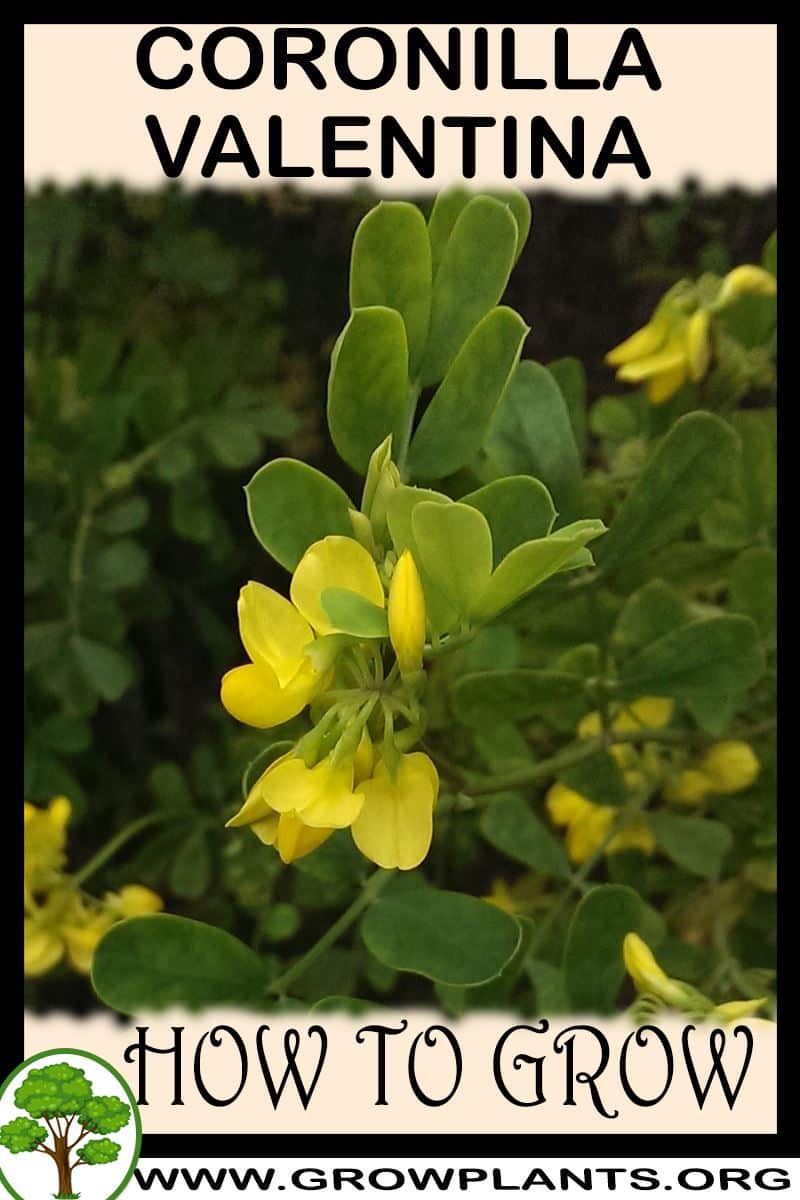
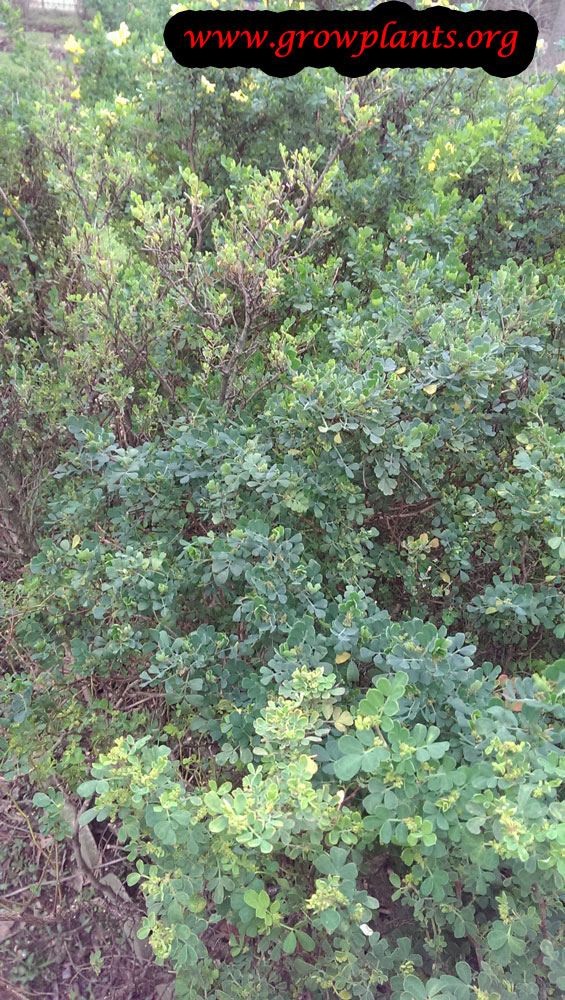
Overview: Coronilla valentina (scorpion vetch) is an evergreen legume shrub of 40-90 cm (16-36 in), with pinnate green foliage. It is a perennial grown as a fragrant, nitrogen-fixing ornamental for its pea-shaped flowers.
Quick Specifications
| Specification | Attribute |
|---|---|
| Plant Type / Life Cycle | Perennial |
| Foliage Type | Evergreen |
| Mature Size | 40-90 cm (16-36 in) |
| Growth Rate | Moderate |
| Root System | Taproot with nitrogen-fixing nodules (legume) |
| Hardiness | USDA zones 8-11 |
Growth Form & Structure
- Height & Spread: A compact shrub of 40-90 cm (16-36 in); grows well in containers.
- Growth Habit & Form: Bushy, rounded evergreen legume shrub.
- Lifespan & Maturity: Moderate-growing, flowering over a long spring-to-summer season.
Anatomy & Physical Features
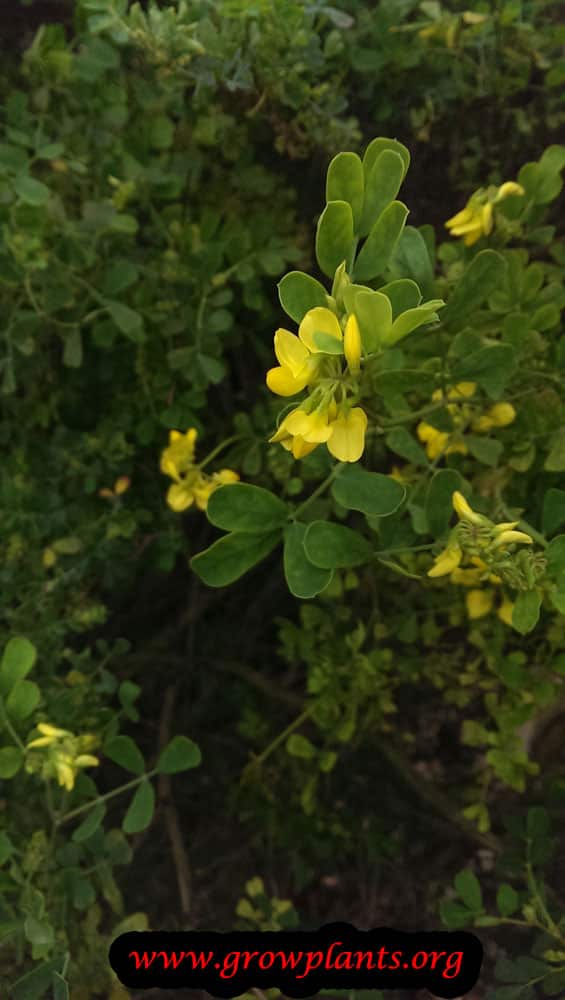
- Leaves & Foliage: Green, oval leaflets arranged in a pinnate (feather-like) structure.
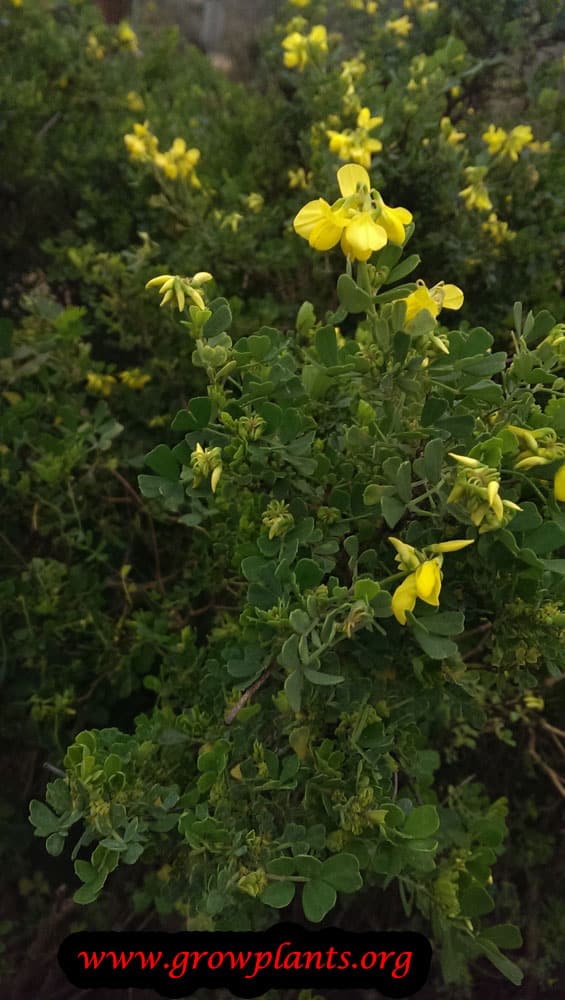
- Flower Characteristics: Fragrant yellow flowers in the classic pea-flower shape.
Primary Uses & Landscape Value
- Functional & Ornamental Roles: Fragrant ornamental shrub for borders and containers that also fixes nitrogen, improving the soil.
Care Guide: Planting, Soil & Watering
Overview: A Mediterranean legume shrub that fixes its own nitrogen. It thrives in well-drained soil in sun to part shade and needs only low-to-moderate watering.
Quick Care Requirements
| Requirement | Ideal Condition |
|---|---|
| Planting Season | In the warm season – spring, summer or autumn |
| Growth Rate | Moderate |
| Soil Type | Well-draining; tolerant of lean soils |
| Water Need | Low to Moderate |
Planting & Establishment
- Best Planting Season: Plant from spring through autumn in mild, frost-free climates (zone 8-11).
- How to Plant:
- Hole Preparation: Dig a hole twice the width of the root ball and equally deep.
- Soil Amendments: As a nitrogen-fixer it needs no rich feeding; a little compost aids establishment and added grit improves drainage.
- Planting Depth: Set the root collar at soil level and do not bury the stem.
- Growth Speed & Expectations: Moderate growth.
Soil, Watering & Drainage Care
- Soil Mix & Drainage Needs: Sharp drainage is preferred; it is container-friendly in a free-draining mix.
- Watering Schedule & Technique:
- Young / Newly Planted: Water regularly to help it establish.
- Established: Drought-tolerant – water sparingly, letting the soil dry between waterings.
- Seasonal Adjustments: Give minimal water in cool, wet months and a little more in summer heat.
Climate, Light & Hardiness
Coronilla valentina is an evergreen shrub for mild Mediterranean, subtropical and warm-temperate gardens, thriving in full sun to half shade. It is moderately hardy - the dataset cites roughly zones 8–11 - taking cool winters and brief light frost but not hard freezes.
Quick Climate Specifications
| Climate Zones | Mediterranean, subtropical, warm temperate |
|---|---|
| USDA Hardiness Zones | Approximately 8–11 (per dataset) |
| Optimal Temp Range | Approximately 15–25 °C / 59–77 °F |
| Cold Damage Begins | Foliage and flower buds injured by frost below roughly −3 °C / 27 °F |
| Approx. Survival Minimum | Established plants tolerate brief frost to around −7 °C / 19 °F; varies with age and exposure |
| Frost Tolerance | Low–Moderate |
| Light Conditions | Full sun to half shade |
| Wind Tolerance | Moderate |
| Salt / Coastal Tolerance | Moderate |
Sunlight & Light Exposure
Optimal Light Setup
Full sun produces the most compact growth and the heaviest show of fragrant yellow flowers; it still performs in half shade, though growth is looser and bloom lighter.
Best Exposure / Orientation
A warm, sunny, sheltered aspect suits its Mediterranean origins and encourages its long winter-to-spring flowering.
Temperature Extremes & Hardiness
USDA Hardiness & Regional Limits
This is a mild-winter evergreen, reliable outdoors only where hard frosts are uncommon - roughly the dataset’s zone 8–11 range. Cold tolerance varies with plant age, exposure and how long the cold lasts.
Cold Damage & Winter Protection
Established plants shrug off brief light frost, but sharp or prolonged freezes scorch foliage and flower buds. In marginal areas the foot of a sunny wall, or a container that can be moved, gives useful protection.
Extreme Heat Tolerance
It handles warm, dry Mediterranean summers well.
Wind, Humidity & Microclimate
Dry-Air Tolerance
Well adapted to dry Mediterranean air.
Coastal / Salt Tolerance
As a Mediterranean shrub it has reasonable tolerance of coastal exposure and salt spray, which differs from tolerance of saline irrigation water.
Microclimate Recommendations
A warm, sheltered, free-draining spot - such as against a sunny wall - buffers its main weakness, winter cold.
Growing in Pots, Balconies & Indoors
Coronilla valentina is a compact Mediterranean shrub that makes an excellent evergreen pot plant for a sunny balcony or patio. It is not a houseplant, but a pot lets you move it under cover in the coldest climates.
Quick Details
- Container Size: About 20-40 L (5-10 gal) for a mature shrub
- Indoor Suitability: Not a houseplant; a bright, sheltered patio or balcony shrub that can overwinter under cover in cold areas
- Best Spot: Full sun to light shade; sunniest spot gives the best flowering
- Soil & Drainage: Water moderately – let the surface dry slightly between waterings; it tolerates dry spells but not standing water
- Watering in Pots: Houseplant limits: Not a houseplant – it wants full sun and open air, not indoor conditions. Overwintering indoors: In cold climates a pot lets you shift this Mediterranean shrub into a bright, frost-free room or greenhouse over winter and back out in spring.
Indoors & On the Windowsill
- Light, heat & wind: Give it the sunniest spot you can. Walls, railings and paving reflect heat, so pots dry quickly – check moisture daily in warm weather, and shelter tall growth from wind. A drip irrigation kit with a timer can take over that watering check automatically.
On a Balcony or Patio
- Pot & drainage: A 20-40 L pot with strong drainage holes; skip a standing water saucer to avoid root rot. Terracotta breathes and dries fast; glazed or plastic holds moisture longer.
- Potting mix: Use a well-aerated, organic-rich mix – peat or coir blended with perlite or vermiculite for free drainage.
- Feeding: Potted plants lose nutrients as watering leaches them from the mix, so feed more often than in open ground – a balanced liquid feed through the growing season.
- Repotting: Refresh the mix or pot up about every two years; lightly prune the root ball and shape the top growth after flowering.
Choosing the Pot, Soil & Long-Term Care
Growing this plant in a greenhouse
A greenhouse can give coronilla valentina frost protection and cold protection. In the right climate it may also be kept growing through winter, depending on how much warmth and light are provided.
Greenhouse at a glance
| Greenhouse suitability | Conditional - depends on your climate |
|---|---|
| Main benefits | frost protection, cold protection |
| Season extension | earlier spring & later autumn |
| Outdoor protection advisable below | about -3°C |
| Suitable types | unheated greenhouse, polycarbonate greenhouse, lean-to |
| Heating | Heating is optional - useful mainly for winter growing in cold areas. |
Related greenhouse guides
- Greenhouses: How to Choose the Right Greenhouse
- Best Lean-To Greenhouses
- Polycarbonate Greenhouses: What to Look for Before Buying
Fertilizing & Feeding
A light feeder – an ornamental legume that fixes much of its own nitrogen; a light balanced feed supports growth and bloom, and high-phosphorus bloom boosters are unnecessary.
Quick Fertilizing Specs
| Feeding Level | Light – an ornamental legume that fixes much of its own nitrogen. |
|---|---|
| young_feeding | A modest balanced feed as new plants establish. |
| mature_feeding | Light, occasional balanced feeding through bloom. |
| Main Nutrient Priority | Balanced nutrition with restrained nitrogen. |
| Best Feeding Period | Through spring growth and the blooming period. |
| Organic Options | Compost or well-rotted organic matter. |
| Soil pH | Tolerates a range; near neutral is fine. |
| Reduce/Stop Feeding | Stop feeding as the plant enters dormancy. |
| Micronutrients | Rarely needed; correct only if a deficiency shows. |
Feeding by Growth Stage
Spring flush of growth
Fuel healthy new shoots and leaves as growth resumes.
| Nutrient direction | A balanced complete fertilizer; keep nitrogen restrained since this legume fixes much of its own. |
|---|---|
| Timing | As new growth begins in spring. |
| Frequency | A light feeding as the plant breaks into active growth. |
| Fertilizer types | Balanced complete fertilizer, Compost or well-rotted organic matter |
| Precautions | Avoid heavy nitrogen, which pushes leaves at the expense of flowers. |
Flowering
Sustain steady flowering without forcing soft growth.
| Nutrient direction | Stay with a balanced feed and adequate nitrogen; a high-phosphorus bloom booster does not force more flowers. |
|---|---|
| Timing | Through the blooming period. |
| Frequency | Light, occasional feeding while in bloom. |
| Fertilizer types | Balanced complete fertilizer |
| Precautions | Do not reach for high-phosphorus formulas to push bloom; balanced nutrition and light drive flowering. |
Dormancy / rest period
Let the plant rest with little to no nutrient demand.
| Nutrient direction | None – withhold fertilizer while the plant is dormant. |
|---|---|
| Timing | Through winter dormancy or the seasonal rest period. |
| Frequency | No feeding at this stage. |
| Fertilizer types | No feeding at this stage – withhold fertilizer until active growth resumes. |
| Precautions | Do not fertilize until active growth resumes; excess salts on a resting plant only risk root injury. |
Nutrient Deficiency Signs & Corrections
Overall pale, yellow-green foliage and weak growth even on reasonable soil.
| Possible causes | Poor rhizobial nodulation, so little nitrogen is being fixed, Cold or waterlogged soil suppressing root and nodule activity, Genuinely low soil nitrogen on very poor ground |
|---|---|
| Appears first on | Older, lower leaves first. |
| What to check | Dig a root and look for pink, active nodules, Soil drainage and temperature, Whether the seed or bed carried the right legume inoculant |
| Possible correction | Ensure the right rhizobia are present, improve drainage and warmth, and give only a modest balanced feed if the ground is truly poor. |
Yellowing between the veins of the youngest leaves while the veins stay green.
| Possible causes | High or alkaline soil pH locking up iron and manganese, Waterlogged or cold roots reducing micronutrient uptake, Occasionally low available iron or manganese in the soil |
|---|---|
| Appears first on | New growth at the shoot tips. |
| What to check | Soil pH, Drainage and watering habits, Whether symptoms follow cool, wet spells |
| Possible correction | Correct soil pH toward the plant’s preferred range, improve drainage, and if it persists apply a chelated iron or manganese product per its label. |
Vigorous leafy growth but sparse flowering.
| Possible causes | Excess nitrogen driving foliage at the expense of flowers, Too little light for good bud set, Overly rich or frequent feeding |
|---|---|
| Appears first on | The whole plant, especially the most vigorous shoots. |
| What to check | Recent nitrogen inputs, Light exposure, Overall vigor versus bloom |
| Possible correction | Reduce nitrogen, rely on a balanced feed, and give more light rather than reaching for a high-phosphorus bloom booster, which does not force flowers. |
Scorched leaf edges, wilting, or white crusting on the soil despite adequate water.
| Possible causes | Over-application of fertilizer, Poor leaching in containers or heavy soil, Letting the root zone dry out between heavy feeds |
|---|---|
| Appears first on | Leaf margins and tips; container plants first. |
| What to check | Recent fertilizer amounts, Drainage, Soil crusting or white surface residue |
| Possible correction | Ease off feeding, water thoroughly to flush excess salts from the root zone, then feed only lightly. |
Pruning, Training & Seasonal Maintenance
Coronilla valentina is a small evergreen Mediterranean legume shrub (40–90 cm) grown for its fragrant yellow pea-flowers; it tolerates and even needs light pruning because it flowers freely and tends to grow leggy and short-lived if left unchecked. The safest and most effective time is straight after the main flush of bloom, since flowers are carried mainly through winter and spring on growth made the previous season — pruning then shapes the plant without sacrificing the coming display. Keep cuts light and regular rather than hard and occasional.
Quick Pruning & Maintenance Specs
| Pruning Tolerance | Moderate — responds to light shaping; dislikes very hard cuts into bare old wood |
| Primary Pruning Window | Just after the main spring flowering flush |
| Typical Frequency | Once or twice yearly, light |
| Main Objective | Keep compact and bushy; prevent legginess and prolong the plant’s life |
| Young Plant Priority | Tip-prune to build a dense, well-branched framework |
| Mature Plant Priority | Shape after flowering; remove tired and straggly shoots |
| Best Tool Type | Bypass secateurs |
| Avoid Heavy Pruning During | The flowering period; hardest heat or drought |
Pruning by Plant Age & Size
Newly Established
Remove only damaged growth in the first season while roots establish in the well-drained soil it prefers.
Young / Formative
Tip-prune the shoots lightly to encourage branching and a dense, mounded, multi-stem shrub — formative shaping now prevents the open, leggy habit that plagues older, unpruned plants.
Mature / Established
After flowering, shorten the shoots that have bloomed to keep the shrub compact and to stimulate fresh growth that will carry next season’s flowers. Remove tired, woody, bare stems in favour of younger growth.
Seasonal Pruning Schedule
Post-Flowering
Objective: reshape and stimulate new flowering wood. Remove: spent flowering shoots, shortening them to strong lower growth. Do NOT remove: young shoots not yet flowered. Expected response: fresh, branched growth that ripens for next winter/spring bloom. Flowering impact: pruning now protects the coming display; pruning in autumn or winter would cut off forming buds.
Ongoing Sanitary
Objective: keep the bush clean. Remove: aphid- or mite-affected tips and any dead twigs. Do NOT remove: healthy budded wood.
Flowering & Fruiting Wood
Coronilla flowers chiefly on shoots grown the previous season, blooming from late winter into spring with a long fragrant display. Because next year’s flowers form on the growth made after this year’s bloom, the timing rule is simple: prune promptly after flowering so the plant has the whole season to build and ripen new flowering wood. Cutting in autumn or winter removes buds and sacrifices the show.
Structural Pruning & Training
Aim for a dense, rounded shrub. Thin out crossing or congested inner twigs lightly to keep air moving, and shorten leggy shoots to strong side branches to control the roughly knee-to-waist-high spread. Avoid opening the plant so much that it becomes gappy — density is part of its appeal.
Special Growth to Remove
Remove bare, exhausted old stems in favour of vigorous younger shoots as the plant ages; this staged renewal keeps a short-lived shrub attractive longer. There are no grafts, so no rootstock suckers apply.
Container & Small-Space Pruning
Well suited to a container (confirmed suitable). Tip-prune more often to hold a neat dome and prevent the legginess that shows quickly in a pot; refresh by shortening after flowering. No root pruning is required beyond normal repotting.
Tools
Bypass secateurs for the light shaping and shoot-shortening this soft-wooded shrub needs. Precision snips suit deadheading and fine tip work. Loppers, saws and hedge shears are unnecessary and shearing would spoil the natural form.
Tool Hygiene & Disease Risk
Routine: clean, sharp secateurs are sufficient. No notable tool-transmitted disease; wipe blades if cutting out pest-infested tips.
Cut Placement & Technique
Cut just above an outward-facing bud or a strong side shoot to steer growth outward and keep the centre open. Use thinning cuts back to a junction rather than shearing across the shoot tips, which would give a formal, unnatural surface.
Heavy Pruning & Rejuvenation
Only moderately tolerated: Coronilla resents very hard cuts into old, bare wood and may not break well from it. Rather than one severe rejuvenation, renew gradually by removing a share of the oldest stems each year after flowering. A badly overgrown plant is often better replaced, as it is naturally short-lived.
Post-Pruning Care
Water moderately after cutting; the plant likes well-drained soil and dislikes sitting wet. Fresh growth will follow without feeding. Watch new shoots for aphids.
Common Pruning Mistakes
- Pruning in autumn or winter and cutting off the forming flower buds.
- Cutting hard into old bare wood, from which it regrows poorly.
- Never pruning, so the shrub becomes leggy, gappy and short-lived.
- Shearing it into a formal ball and losing the loose, fragrant character.
When NOT to Prune
Do not prune during the flowering period or in peak summer heat and drought, and avoid hard cuts on a newly planted, unestablished shrub. Wait until the main flush of bloom has finished.
Recommended Tools (by task)
- bypass_secateurs — for post-flowering shaping and shortening shoots to strong side growth.
- precision_snips — for deadheading and fine tip-pruning to keep the plant dense.
Pruning Troubleshooting
| Problem | Possible Cause | What to Check | Corrective Action |
| Leggy, bare-based shrub | Never tip-pruned; growth left unchecked | Length of bare stem vs. leafy top | Tip-prune young growth regularly; renew oldest stems after flowering |
| Few flowers this season | Pruned in autumn/winter, removing buds | When last pruning was done | Shift all shaping to just after the spring flush |
| Bare stump fails to reshoot after hard cut | Cut back into old wood it will not break from | Whether cuts were into leafless old wood | Renew gradually into younger wood; replace if exhausted |
Propagation Guide
This evergreen legume shrub is raised easily from seed or from semi-hardwood cuttings, and the site notes that vegetative propagation, while not required, is easy to do. Use cuttings to keep named forms — such as the pale-yellow ‘Citrina’ or the glaucous subspecies — true, since seed will not reproduce them reliably.
Quick Propagation Specs
| Best Propagation Method | Semi-hardwood cuttings (or seed) |
| Alternative Methods | Seed |
| Propagation Difficulty | Easy |
| Seed True-to-Type | Mostly uniform for the species; cultivars not true from seed |
| Vegetative True-to-Type | Yes |
| Best Propagation Season | Cuttings in summer; sow in spring |
| Germination Temperature | Roughly 15–20°C (59–68°F) |
Growing from Seed
Dormancy & Pre-Sowing Treatment
The hard seed coat germinates more evenly after an overnight soak or a light scarify. Sow in spring into a free-draining mix.
Stem Cuttings
Semi-hardwood cuttings taken in summer root readily in a gritty, free-draining medium; rooting hormone is optional. This is the route to keep a chosen cultivar identical to the parent.
Bloom & Flower Guide
Quick Details
- Bloom Season: Spring and summer (often starting in late winter in mild areas)
- Time to First Bloom: Usually within a year or two of planting, once the shrub is established
- Flower Appearance: Fragrant yellow pea (butterfly-shaped) flowers in clusters
- Edibility: Ornamental only, the plant is considered toxic and the flowers should not be eaten
Detailed Blooming Overview
Coronilla valentina, the scorpion vetch, is grown above all for its long season of scented yellow flowers, which can open from the tail of winter and carry on through spring. The bright, honey-scented clusters stand out against the neat evergreen foliage and are a welcome early nectar source, but the plant belongs in the border rather than the kitchen.
Flower Characteristics
- Yellow, fragrant flowers in the classic butterfly (pea) shape.
- Carried in rounded clusters above blue-green foliage.
- Scented and attractive to early pollinators.
Bloom Care & Thinning
- Safety: Coronilla contains cardiac glycosides; enjoy the scent and colour but keep the flowers out of reach of children and pets.
- Site for flowering: Full sun and free-draining soil give the longest, most generous bloom.
- After flowering: A light trim once the main flush fades keeps the shrub compact and encourages repeat flowering.
Pests, Diseases & Troubleshooting
Overview: Coronilla (scorpion vetch, a Mediterranean legume shrub) is a tough, drought-tolerant, generally pest-resistant plant; note that many Coronilla species are toxic if eaten. As a legume its typical pests are aphids, caterpillars (including legume-feeding species) and occasional spider mites, while its main diseases are powdery mildew, rust, leaf spot and root rot in wet soil. Full sun and sharp drainage keep it healthy; its pest set is best understood at the legume/family level.
Quick Troubleshooting Overview
| Issue / Pest | Main Symptom | Primary Solution |
|---|---|---|
| Aphids | Sticky, curled new shoots; honeydew | Water jet, insecticidal soap, beneficials |
| Caterpillars | Chewed leaves and buds; frass | Hand-pick, Bt spray |
| Spider mites | Stippling and webbing in hot, dry sites | Hose undersides, horticultural oil |
| Powdery mildew | White powder on leaves in humidity | Airflow, sun, sulfur/bicarbonate |
| Rust / leaf spot | Rusty or brown spots on leaves | Remove leaves, airflow, fungicide if severe |
| Root rot | Wilt and dieback in wet, heavy soil | Improve drainage, water less |
Common Pests & Management
- Aphids (incl. legume aphids, Aphis craccivora and allies):
- Symptoms: Soft green or black clusters on tender new shoots, buds and flower stems; curling, yellowing, honeydew, sooty mold and virus transmission.
- Prevention & Control: Hose off colonies and encourage lady beetles, lacewings and hoverflies; insecticidal soap clears heavy infestations, and lean feeding limits soft growth.
- Leaf-eating caterpillars (legume-feeding moths & loopers):
- Symptoms: Chewed leaves, notched margins and eaten buds, with dark frass; several caterpillars favor legumes.
- Prevention & Control: Hand-pick at dusk and apply Bacillus thuringiensis (Bt) for selective control; encourage birds and parasitic wasps.
- Spider mites (Tetranychus spp.):
- Symptoms: Fine stippling and bronzing with faint webbing in hot, dry, sheltered conditions.
- Prevention & Control: Hose the foliage, keep plants from drought-stress, and use horticultural oil or insecticidal soap if mites persist.
- Scale & mealybugs (occasional):
- Symptoms: Waxy bumps or cottony tufts on stems and leaf axils with honeydew, mainly on stressed or sheltered plants.
- Prevention & Control: Prune infested twigs, treat with horticultural oil or insecticidal soap, and improve airflow.
Diseases & Fungal Issues
- Powdery mildew (Erysiphe spp.):
- Symptoms: White powdery coating on leaves and shoots in crowded, humid, or shaded conditions; leaves yellow and drop.
- Treatment & Management: Improve airflow and light, avoid crowding, remove affected leaves, and treat with sulfur or potassium-bicarbonate.
- Rust (Uromyces spp., legume rusts):
- Symptoms: Rusty-brown powdery pustules on leaf undersides with yellow flecks above; heavy rust yellows and drops leaves.
- Treatment & Management: Remove and destroy infected leaves, improve airflow, avoid overhead watering, and use sulfur or an appropriate fungicide if rust recurs.
- Leaf spot & anthracnose (Cercospora/Colletotrichum):
- Symptoms: Brown or dark spots and blotches on leaves in warm, wet, crowded conditions; usually cosmetic.
- Treatment & Management: Space plants, avoid overhead wetting, remove infected debris, and use copper only if spotting is severe.
- Root & crown rot (Phytophthora/Pythium):
- Symptoms: Wilting, yellowing and dieback despite moist soil, with dark decayed roots, in heavy or waterlogged ground.
- Treatment & Management: Plant in free-draining soil, water sparingly once established, and avoid waterlogging; prevention through drainage is the main defense.
Growing Difficulties & Abiotic Problems
- Toxicity (handling note)
- Cause & Symptoms: Many Coronilla species are poisonous if eaten — a safety issue rather than a disease.
- Correction Strategy: Site away from children, pets and livestock and wash hands after handling; do not plant where animals graze.
- Root rot from overwatering
- Cause & Symptoms: This drought-tolerant shrub rots in wet, heavy soil, showing wilt and dieback.
- Correction Strategy: Plant in well-drained soil, water sparingly, and improve heavy ground with grit.
- Legginess / poor bloom
- Cause & Symptoms: Rich soil or shade gives lush growth with fewer of its yellow pea flowers.
- Correction Strategy: Grow in full sun and lean soil, and prune after flowering to keep the plant compact and floriferous.
- Cold damage
- Cause & Symptoms: Marginal-climate cold browns foliage and can kill tender shoots.
- Correction Strategy: Site in a sheltered spot in colder areas; it usually recovers from the base.
What Helps – Products & Tools
Culture leads: full sun, sharp drainage and airflow prevent most problems on this tough legume. For pests, insecticidal soap and neem handle aphids, mites, scale and mealybugs, and Bacillus thuringiensis (Bt) covers caterpillars. For disease, use sulfur or potassium-bicarbonate against powdery mildew and rust, copper for leaf spot if severe, and good drainage against root rot. Follow the label and protect pollinators.