Plant Profile & Key Characteristics
Overview: Coreopsis lanceolata (lance-leaved coreopsis) is a clump-forming herbaceous plant reaching 0.3-1.2 m (12-48 in), with narrow green foliage. It is grown as a perennial (sometimes annual) ornamental for its long display of daisy-like flowers, which attract pollinators.
Quick Specifications
| Specification | Attribute |
|---|---|
| Plant Type / Life Cycle | Perennial or annual |
| Foliage Type | Evergreen where mild (herbaceous) |
| Mature Size | 0.3-1.2 m (12-48 in) |
| Growth Rate | Moderate to fast |
| Root System | Fibrous, clump-forming |
| Toxicity | Non-toxic |
| Hardiness | USDA zones 4-10 |
Growth Form & Structure
- Height & Spread: Forms clumps 0.3-1.2 m (12-48 in) tall; grows well in borders and containers.
- Growth Habit & Form: Bushy, clump-forming herbaceous plant that self-seeds readily and can spread.
- Lifespan & Maturity: Fast to flower, blooming from spring through autumn; short-lived but self-perpetuating by seed.
Anatomy & Physical Features
- Leaves & Foliage: Green leaves ranging from linear to spoon-shaped.
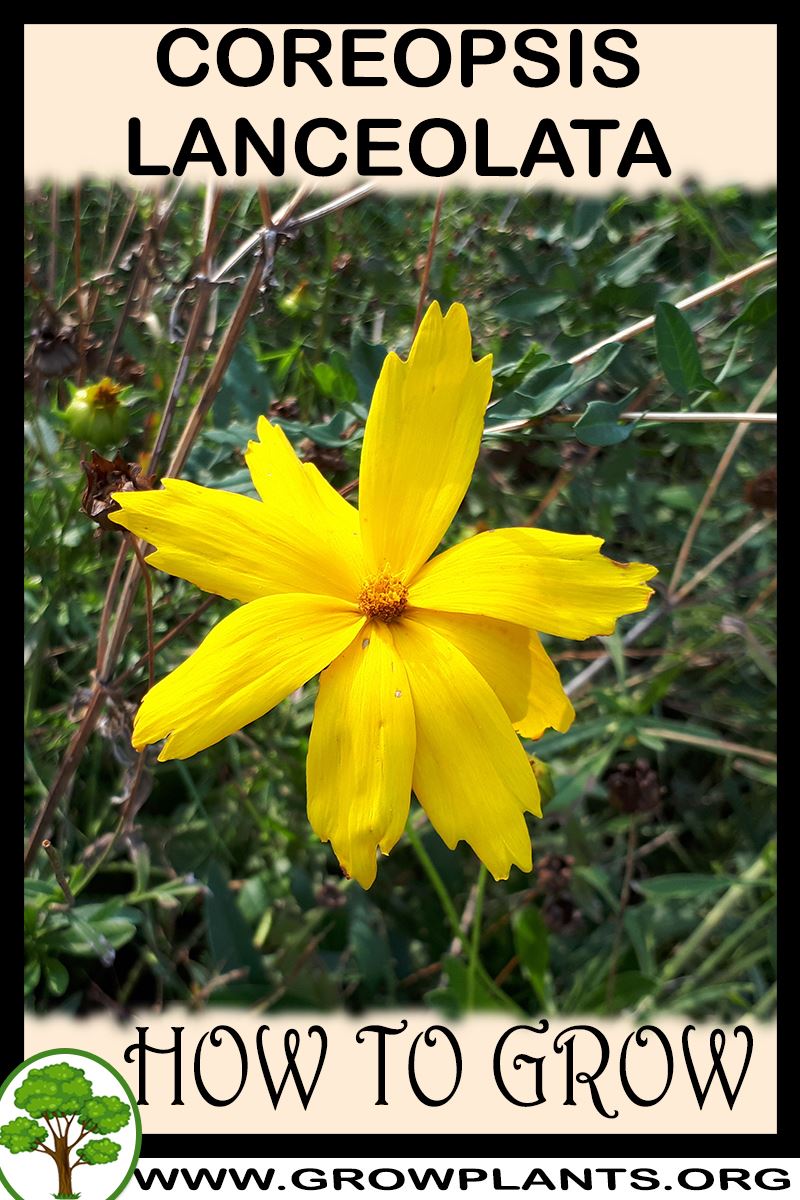
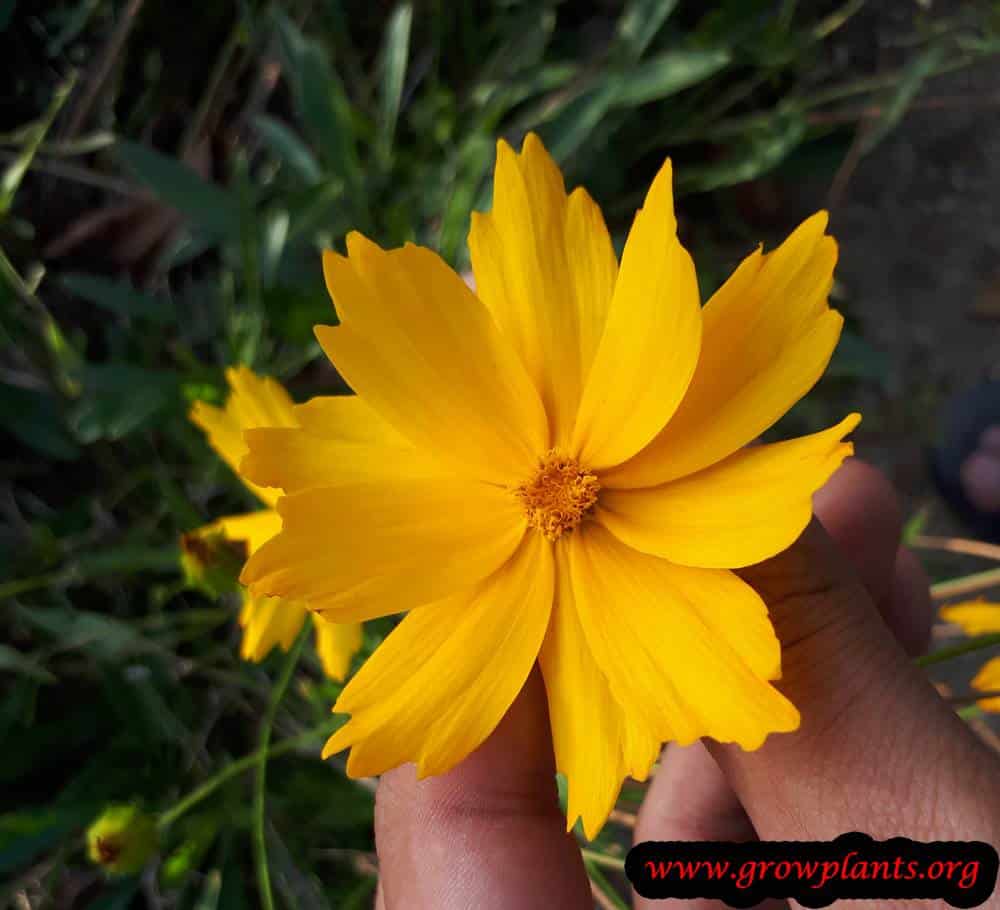
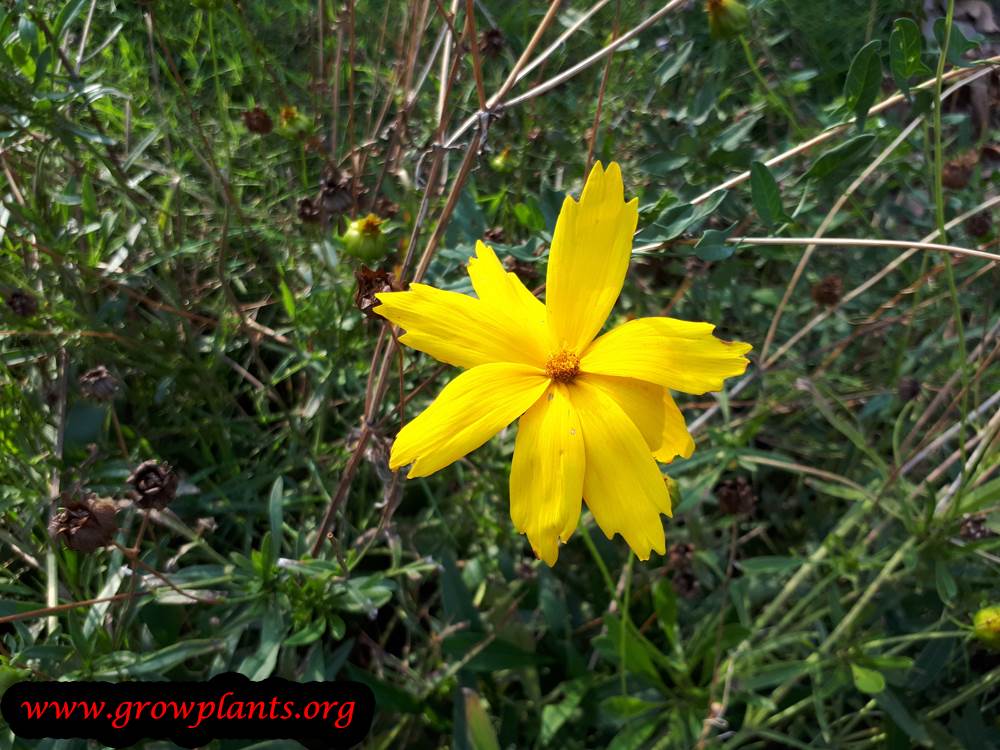
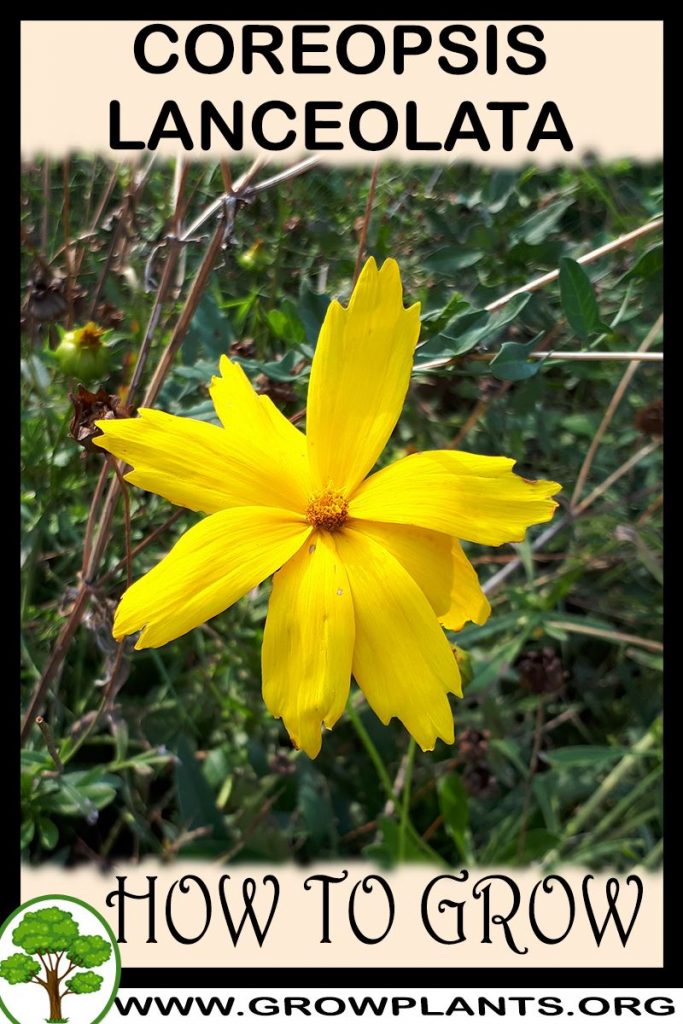
- Flower Characteristics: Daisy-like flowers in yellow to orange.
Primary Uses & Landscape Value
- Functional & Ornamental Roles: Ornamental border and meadow plant, excellent for pollinators and as a cut flower; can self-seed freely.
Care Guide: Planting, Soil & Watering
Overview: An easy-going, daisy-flowered perennial or annual for sunny spots. It tolerates ordinary well-drained soil and needs only moderate watering.
Quick Care Requirements
| Requirement | Ideal Condition |
|---|---|
| Planting Season | In the warm season – spring through summer |
| Growth Rate | Moderate to Fast |
| Soil Type | Well-draining, tolerant of average or lean soils |
| Water Need | Moderate |
Planting & Establishment
- Best Planting Season: Plant in spring to summer after the last frost.
- How to Plant:
- Hole Preparation: Make a hole as wide as, and as deep as, the root ball.
- Soil Amendments: Undemanding; a little compost aids establishment, but avoid over-rich soil.
- Planting Depth: Set the crown at soil level, not buried.
- Growth Speed & Expectations: Fast to moderate; it blooms readily in its first season.
Soil, Watering & Drainage Care
- Soil Mix & Drainage Needs: Needs good drainage and tolerates poorer soils; it is container-friendly in a well-drained mix.
- Watering Schedule & Technique:
- Young / Newly Planted: Water regularly to help it establish.
- Established: Fairly drought-tolerant – water moderately, letting the soil dry between waterings.
- Seasonal Adjustments: Water more in summer heat and less in cool, wet spells.
Climate, Light & Hardiness
Coreopsis lanceolata (Lance-leaved coreopsis) is a sun-loving perennial suited to temperate, Mediterranean, and subtropical climates. It flowers best in full sun and tolerates a wide range of winter cold.
Quick Climate Specifications
| Climate Zones | Temperate, Mediterranean, subtropical |
|---|---|
| USDA Hardiness Zones | 4–10 |
| Light Conditions | Full sun to half shade (reduced flowering in shade) |
Sunlight & Light Exposure
Optimal Light Setup
Full sun gives the best flowering; half shade is tolerated but blooms less.
Temperature Extremes & Hardiness
USDA Hardiness & Regional Limits
Hardy as a perennial across USDA zones 4–10.
Cold Damage & Winter Protection
Dies back to the crown in cold winters and regrows in spring; may be evergreen in milder climates.
Wind, Humidity & Microclimate
Microclimate Recommendations
An open, sunny bed with average moisture suits this easygoing perennial well.
Growing in Pots, Balconies & Indoors
Lanceleaf coreopsis (Coreopsis lanceolata) is a sun-loving perennial and, as the grower notes, not a houseplant – indoor light is far too weak for it. It grows well, though, in a container on a sunny balcony or patio.
Quick Details
- Container Size: A roomy pot suited to its size (about 0.3-1.2 m (12-48 in))
- Indoor Suitability: Not a houseplant – grow it outdoors in good light
- Best Spot: Full sun (fewer flowers in half shade)
- Soil & Drainage: Well-aerated organic mix – peat or coir with perlite/vermiculite; strong drainage holes
- Watering in Pots: Keep evenly moist – pots dry faster than open ground; avoid waterlogging
Indoors & On the Windowsill
- Not a houseplant: The grower confirms it will not grow indoors – it needs more light than a room provides.
- Windowsill: Even a bright sill is generally too weak for a good display; grow it outside.
On a Balcony or Patio
- Light & wind: Give it the sunniest spot; on exposed balconies stake or shelter taller growth from wind.
- Watering: Walls and paving reflect heat, so the pot dries quickly – check moisture regularly and make sure it drains freely.
Choosing the Pot, Soil & Long-Term Care
- Pot & drainage: A pot with strong drainage holes to match its size; skip a standing-water saucer to avoid root rot.
- Potting mix: A well-aerated organic mix – peat or coir with perlite or vermiculite.
- Feeding: Feed potted plants more often than those in the ground, as watering leaches nutrients away.
- Repotting: Refresh the mix or pot on about every couple of years (for perennials, with a light root and top prune).
Fertilizing & Feeding
An easy-going, pollinator-attracting perennial with no particular care demands, this plant is a light feeder that thrives without rich soil and can spread vigorously if pushed with heavy feeding.
Quick Fertilizing Specs
| Feeding Level | Light feeder |
|---|---|
| Main Nutrient Priority | Balanced feeding kept light rather than nitrogen-heavy |
| Best Feeding Period | From spring growth through its long spring-to-autumn bloom |
| Organic Options | A light top-dressing of compost worked into well-drained soil |
| Reduce/Stop Feeding | Ease off as the extended bloom season winds down toward autumn |
| Micronutrients | Rarely an issue in ordinary garden soil; correct specific issues only when diagnosed |
| Soil pH | Tolerates a wide range and performs well in ordinary, well-drained garden soil |
Feeding by Growth Stage
Spring growth
Support fresh basal foliage as the plant resumes growth after winter.
| Nutrient direction | A light, balanced feeding is enough; this easy-going plant does not need rich soil to perform well. |
|---|---|
| Timing | As new growth emerges in spring. |
| Frequency | Light feeding is usually enough as growth resumes; minimal feeding is needed beyond that. |
| Fertilizer types | A balanced complete garden fertilizer, applied sparingly, A light top-dressing of compost |
| Precautions | Avoid rich or heavy feeding, which can encourage this naturally spreading plant to become more vigorous and crowd its neighbors. |
Spring-to-autumn repeat bloom
Sustain the plant through its long season of daisy-like, pollinator-attracting flowers, which can continue from spring into autumn.
| Nutrient direction | Keep feeding light and balanced; heavy feeding is not needed to support this plant’s naturally long bloom season. |
|---|---|
| Timing | Through the extended spring, summer, and autumn flowering period. |
| Frequency | Light feeding is usually enough through the long bloom season; minimal feeding is needed beyond that. |
| Fertilizer types | A balanced complete garden fertilizer, applied sparingly |
| Precautions | Avoid nitrogen-heavy feeding, which favors leafy growth and vigorous spreading over flowering. |
Autumn/winter dieback and rest
Let the plant rest naturally after its autumn/winter cutback of dead parts.
| Nutrient direction | None – withhold fertilizer while the plant is dormant. |
|---|---|
| Timing | From autumn/winter dieback and pruning through winter dormancy. |
| Frequency | No feeding at this stage. |
| Fertilizer types | No feeding at this stage – allow the plant to rest until spring growth resumes |
| Precautions | Do not fertilize a dormant plant; wait for active spring growth before resuming light feeding. |
Nutrient Deficiency Signs & Corrections
Older, lower leaves fade to pale green or yellow and overall growth slows noticeably.
| Possible causes | very low soil fertility, nitrogen leaching from heavy rain or watering, competition from aggressive neighboring plants |
|---|---|
| Appears first on | older, lower leaves |
| What to check | recent feeding history, soil fertility and organic matter, surrounding plant competition |
| Possible correction | Apply a light, balanced feeding rather than a heavy one, since this plant needs only modest fertility. |
Plant grows lush and spreads vigorously but produces fewer daisy-like flowers than expected.
| Possible causes | overfeeding with a nitrogen-heavy fertilizer favoring leafy growth over flowers, too much shade for a plant that blooms best in full sun, overcrowding from the plant’s own vigorous, spreading habit |
|---|---|
| Appears first on | whole-planting effect rather than a single stem |
| What to check | recent fertilizer type and amount, light exposure, plant spacing and spread |
| Possible correction | Cut back to light, balanced feeding, improve sun exposure, and divide or thin an overly spread planting. |
Leaves show stippling, distortion, or fine webbing alongside reduced vigor.
| Possible causes | aphid or spider mite activity, drought stress increasing susceptibility to mites, overfeeding producing soft growth more attractive to aphids |
|---|---|
| Appears first on | leaf undersides and new growth |
| What to check | signs of aphids or spider mites on leaf undersides, recent watering consistency, recent feeding amount |
| Possible correction | Address the pest directly per label guidance, correct watering, and avoid overfeeding, which can make new growth more attractive to aphids. |
Pruning, Training & Seasonal Maintenance
Coreopsis lanceolata is a herbaceous perennial with no woody framework, so "pruning" here means deadheading through its long spring–autumn bloom period and a single cutback of dead top growth once it dies down in autumn/winter. It tolerates cutting back hard with no risk to next year’s flowering, since all new growth and flower stems arise fresh from the crown each season rather than from retained wood.
Quick Pruning & Maintenance Specs
| Pruning Tolerance | High (herbaceous, regrows from the crown) |
| Primary Pruning Window | Autumn/Winter dormant cutback |
| Secondary Maintenance Window | Ongoing deadheading through Spring–Summer–Autumn bloom |
| Typical Frequency | Deadhead every 1–2 weeks in bloom; one cutback at season’s end |
| Main Objective | Prolong bloom, tidy dead growth, and limit self-seeding spread |
| Best Tool Type | Precision snips |
Seasonal Pruning Schedule
Ongoing Sanitary (Spring–Summer–Autumn, during bloom)
Objective: keep the plant flowering longer and reduce unwanted self-sown seedlings, since this species is noted as spreading readily.
Remove: spent flower heads/stems, snipped back to the nearest set of leaves or a lower bud.
Don’t remove: healthy unopened buds or foliage.
Expected response: continued flush of new blooms; removing spent heads before they set seed also curbs volunteer seedlings.
Dormant/Winter
Objective: clear away the dead top growth once the plant dies back for winter.
Remove: all dead/collapsed foliage and stems.
Expected response: a clean crown that resprouts fully in spring; cutting back hard at this stage carries no risk since the plant does not rely on old stems for next year’s flowers.
Special Growth to Remove
- Spent flower stems (deadheading, and to limit self-seeding).
- Dead/dying foliage and stems, mainly cleared in the autumn/winter cutback.
Tools
- Precision snips: the only tool needed — all cuts are through soft, herbaceous stems.
Tool Hygiene & Disease Risk
Routine: keep tools reasonably clean and sharp. Aphids and spider mites are the plant’s known pests, neither of which is a tool-transmitted disease risk, so no special disinfection protocol is warranted.
Cut Placement & Technique
Deadhead just above the next set of leaves or a side bud lower on the same stem, rather than leaving a bare stub. For the end-of-season cutback, cut stems down near the basal foliage/crown.
Post-Pruning Care
No special aftercare is needed beyond the plant’s normal average watering; because it is a modest, average-water perennial there is no fertilizing push required after cutback.
Common Pruning Mistakes
- Letting spent flowers go to seed throughout the season, which accelerates the self-seeding spread this species is already prone to.
- Leaving the winter cutback until very late, so dead stems flop and smother the emerging spring crown.
When NOT to Prune
Hold off on deadheading late-season flowers if you want the plant to self-sow for naturalizing in a wild or meadow-style planting — otherwise deadhead promptly to control its spread.
Recommended Tools (by task)
- precision_snips – for deadheading through the bloom season and the light autumn/winter cutback of this herbaceous perennial.
Propagation Guide
Coreopsis lanceolata is easiest and most commonly grown from seed, which the site notes is not strictly necessary to supplement with vegetative reproduction – though dividing established clumps is a simple way to multiply named or particularly good-flowering plants. This is an Easy plant to propagate by either method, and self-sown seedlings often appear readily once established.
Quick Propagation Specs
| Best Propagation Method | Seed |
| Alternative Methods | Clump division |
| Propagation Difficulty | Easy |
| Seed True-to-Type | Usually true-to-type (species form; named color selections may vary) |
| Vegetative True-to-Type | Yes |
| Best Propagation Season | Spring to summer for sowing; division in early spring or autumn |
| Seed Germination Time | Typically 1–3 weeks |
| Germination Temperature | Roughly 18–24°C (64–75°F) |
Growing from Seed
Sowing Season
Sow in spring to summer, matching the site’s planting season.
Sowing Depth & Orientation
Surface-sow or cover very lightly, as this small daisy-type seed generally needs light to germinate well.
Germination Conditions
Full sun and moderately warm conditions (roughly 18–24°C / 64–75°F) with average, consistent moisture suit germination best.
Germination Time
Typically within a couple of weeks under favorable conditions, though timing can vary with temperature and seed freshness.
Division, Offsets, Pups & Suckers
Established clumps can be divided, ideally in early spring or autumn, by lifting the plant and separating rooted sections with a portion of crown and roots attached to each division. This is a quick way to increase plants that are flowering well and keeps clumps from becoming congested.
Bloom & Flower Guide
Quick Details
- Bloom Season: Spring, summer and into autumn
- Time to First Bloom: From an early sowing it can flower in its first summer; established plants bloom freely each year
- Flower Appearance: Daisy-like flowers, chiefly yellow or orange
- Edibility: Ornamental only – grown as a cut flower and to attract pollinators, not for eating
Detailed Blooming Overview
Coreopsis lanceolata (Lance-leaved Coreopsis, or tickseed) is a cheerful, long-flowering perennial that carries bright daisy blooms from spring right through to autumn. The flowers are mostly sunny yellow or orange, held on slender stems above narrow foliage, and they are a reliable draw for bees and butterflies. Given a sunny spot it keeps producing wave after wave of bloom.
Flower Characteristics
- Daisy-like flowers, chiefly yellow or orange (some forms bring in white, red, purple or mixed tones).
- Held on wiry stems that make them excellent for cutting.
Bloom Care & Thinning
- Encouraging bloom: Full sun and lean, well-drained soil suit it best; deadheading spent flowers keeps a steady succession coming.
- After flowering: A light shear once the first flush fades encourages a fresh late-season flush.
- Pollination: Freely visited by bees and butterflies.
Bloom Health & Protection
- Powdery mildew: Can dust the foliage around the flowers in humid spells; open spacing and good airflow help, and a sulfur- or potassium-bicarbonate-based fungicide can be used if needed.
Pests, Diseases & Troubleshooting
Overview: Coreopsis (tickseed) is a sun-loving, easy-going daisy-family perennial/annual that is fairly pest-tolerant but prone to a few classic problems: aphids and spider mites on the foliage, leafhoppers that spread aster yellows, and slugs on young growth, with powdery mildew, botrytis and rust in humid or crowded plantings. The one to watch is aster yellows, a phytoplasma disease with no cure. Full sun, airflow and deadheading keep plants clean.
Quick Troubleshooting Overview
| Issue / Pest | Main Symptom | Primary Solution |
|---|---|---|
| Aphids | Sticky, curled new shoots and buds | Water jet, insecticidal soap, beneficials |
| Spider mites | Stippling, bronzing and webbing in heat | Hose undersides, horticultural oil |
| Leafhoppers (aster yellows) | Distorted, green, deformed flowers | Control hoppers, rogue infected plants |
| Slugs & snails | Chewed young leaves, slime trails | Night hand-pick, iron-phosphate bait |
| Powdery mildew | White powder on leaves in humidity | Airflow, base water, sulfur/bicarbonate |
| Botrytis / crown rot | Grey mould or collapse in wet, crowded sites | Space plants, improve drainage, remove debris |
Common Pests & Management
- Aphids (Aphis/Myzus spp.):
- Symptoms: Soft green or black clusters on new shoots, buds and flower stems; curling, yellowing, honeydew and virus spread.
- Prevention & Control: Hose off colonies and encourage lady beetles, lacewings and hoverflies; insecticidal soap clears heavy infestations, and lean feeding limits soft growth.
- Spider mites (Tetranychus urticae):
- Symptoms: Fine stippling turning bronze, with faint webbing on leaf undersides in hot, dry weather; stressed plants suffer most.
- Prevention & Control: Keep plants watered, hose the undersides, and apply horticultural oil or insecticidal soap if mites build up; introduce predatory mites.
- Leafhoppers (Macrosteles/Empoasca spp.) — aster-yellows vectors:
- Symptoms: Small wedge-shaped insects that hop when disturbed and cause stippling and marginal yellowing; critically, they transmit the aster-yellows phytoplasma that deforms plants.
- Prevention & Control: Manage weeds that harbor them, hose foliage and encourage spiders and predatory bugs, and use insecticidal soap or neem on nymphs; controlling hoppers is the main way to limit aster yellows.
- Slugs & snails (Deroceras, Helix spp.):
- Symptoms: Ragged holes in young leaves and stems with silvery slime trails, worst in damp, mulched, shaded spots overnight.
- Prevention & Control: Hand-pick after dark, remove damp hiding places, and use iron-phosphate bait or copper barriers around emerging plants.
- Beetles & caterpillars (occasional):
- Symptoms: Chewed petals and leaves from beetles or caterpillars, with frass on damaged foliage.
- Prevention & Control: Hand-pick, apply Bacillus thuringiensis (Bt) for caterpillars, and encourage birds and predatory insects.
Diseases & Fungal Issues
- Aster yellows (phytoplasma) — the one to watch:
- Symptoms: Yellowed, stunted growth with grossly deformed, greenish, leafy or sterile flowers; spread by leafhoppers and incurable.
- Treatment & Management: There is no cure — promptly remove and destroy infected plants to stop spread, control leafhopper vectors, and manage nearby weed hosts; do not propagate from symptomatic plants.
- Powdery mildew (Erysiphe/Golovinomyces spp.):
- Symptoms: White powdery coating on leaves and stems in crowded, humid plantings with cool nights; leaves yellow and dry.
- Treatment & Management: Space and thin for airflow, water at the base early in the day, remove affected leaves, and treat with sulfur or potassium-bicarbonate; choose resistant varieties.
- Botrytis (grey mould) & crown/stem rot (Botrytis, Sclerotinia, Rhizoctonia):
- Symptoms: Fuzzy grey mould on spent flowers and foliage, or sudden wilting and collapse with rotted crown/stem in wet, crowded conditions.
- Treatment & Management: Deadhead spent blooms, improve airflow and drainage, remove debris, avoid overwatering, and cut out affected tissue; a fungicide helps only alongside these cultural fixes.
- Rust & leaf spot (Coleosporium, Cercospora, Septoria):
- Symptoms: Rusty pustules on undersides or brown leaf spots in warm, wet weather, causing yellowing and leaf drop.
- Treatment & Management: Improve airflow, avoid overhead watering, remove infected leaves and debris, and use sulfur or an appropriate fungicide if recurrent.
Growing Difficulties & Abiotic Problems
- Flopping / legginess
- Cause & Symptoms: Rich soil, shade or lack of deadheading gives floppy, sparse-flowering plants.
- Correction Strategy: Grow in full sun and lean soil, deadhead regularly to prolong bloom, and cut back after the main flush; avoid overfeeding.
- Short-lived perennials
- Cause & Symptoms: Some tickseeds decline after a few years, especially in heavy or wet soil.
- Correction Strategy: Divide clumps every few years, ensure sharp drainage, and let a few flowers set seed to renew the planting.
- Root rot from wet soil
- Cause & Symptoms: Wet winter soil rots the crown, a common cause of loss.
- Correction Strategy: Plant in well-drained soil, avoid winter waterlogging, and site on a slight rise or in raised beds in heavy ground.
- Chlorosis
- Cause & Symptoms: Pale, yellow leaves in poor or waterlogged soil.
- Correction Strategy: Feed lightly, improve drainage, and correct persistent yellowing with a balanced fertilizer.
What Helps – Products & Tools
Culture leads: full sun, airflow, deadheading and good drainage prevent most problems. Insecticidal soap and neem handle aphids, mites and leafhoppers; iron-phosphate bait manages slugs, and Bacillus thuringiensis (Bt) covers caterpillars. For disease, use sulfur or potassium-bicarbonate against powdery mildew and rust, and rely on sanitation and drainage against botrytis, crown rot and (incurable) aster yellows — rogue infected plants promptly. Follow the label and protect pollinators.