Plant Profile & Key Characteristics
Overview: A fast-growing legume tree reaching 10-30 m, evergreen in warm climates and deciduous where winters are cold. It is grown as an ornamental shade tree, valued for showy red-orange flowers that attract pollinators and birds.
Quick Specifications
| Specification | Attribute |
|---|---|
| Plant Type / Life Cycle | Perennial (tree) |
| Foliage Type | Evergreen to deciduous (cold-deciduous) |
| Mature Size | 10-30 m (30-100 ft) tall |
| Growth Rate | Moderate to fast |
| Toxicity | Seeds and other parts are toxic (contain erythrina alkaloids) |
| Hardiness | USDA zones 9+ |
Growth Form & Structure
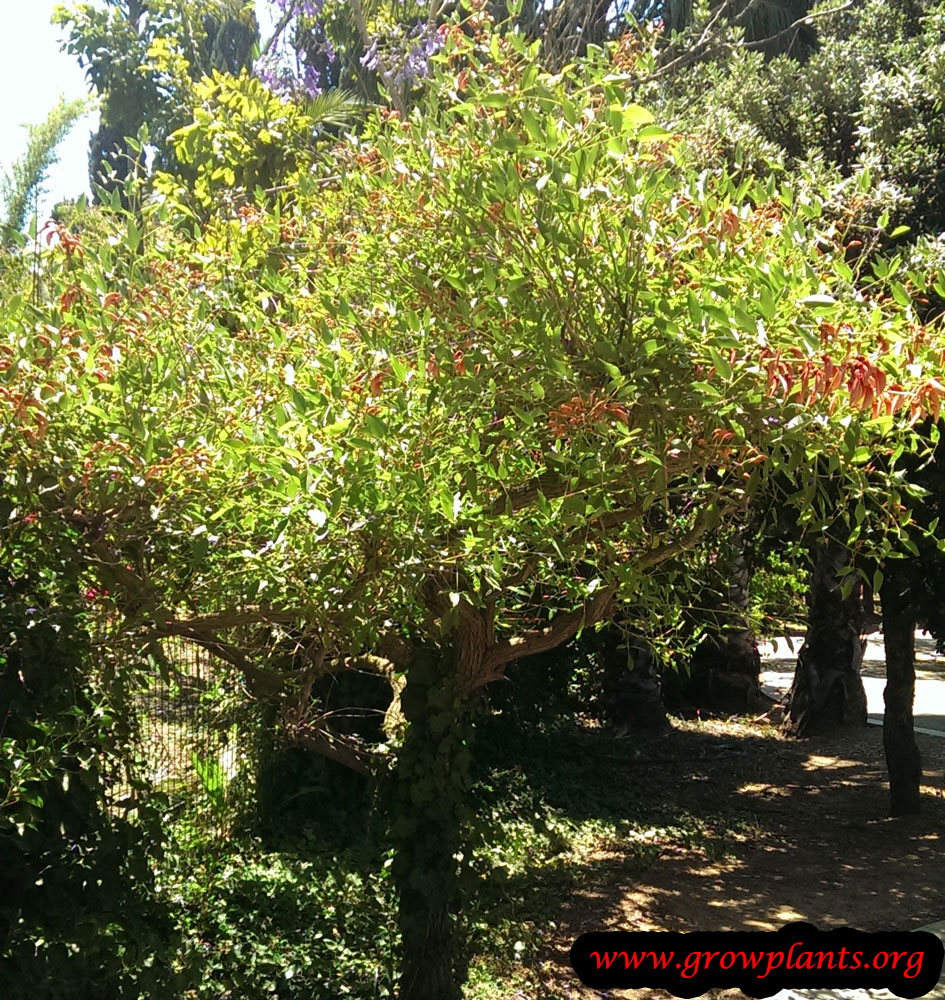
- Height & Spread: A large tree 10-30 m (30-100 ft) tall with a broad spreading canopy; not suited to containers.
- Growth Habit & Form: Spreading tree with an open canopy and often prickly branches.
- Lifespan & Maturity: A long-lived tree that reaches flowering size relatively quickly for its type.
Anatomy & Physical Features
- Trunk & Bark: Trunk and branches are often armed with scattered prickles.
- Leaves & Foliage: Green (sometimes yellow-variegated) trifoliate leaves, the deltoid leaflets borne in groups of three.
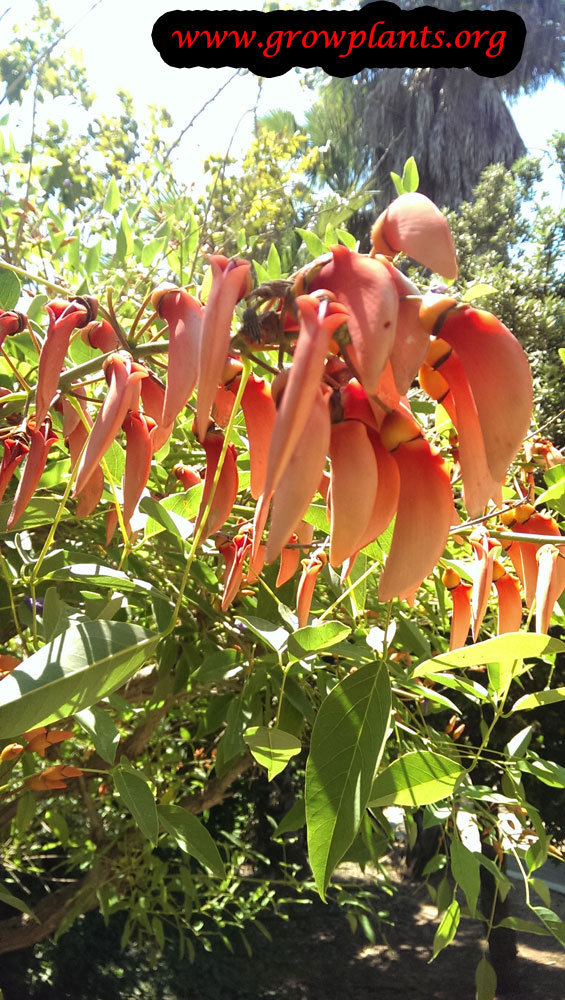
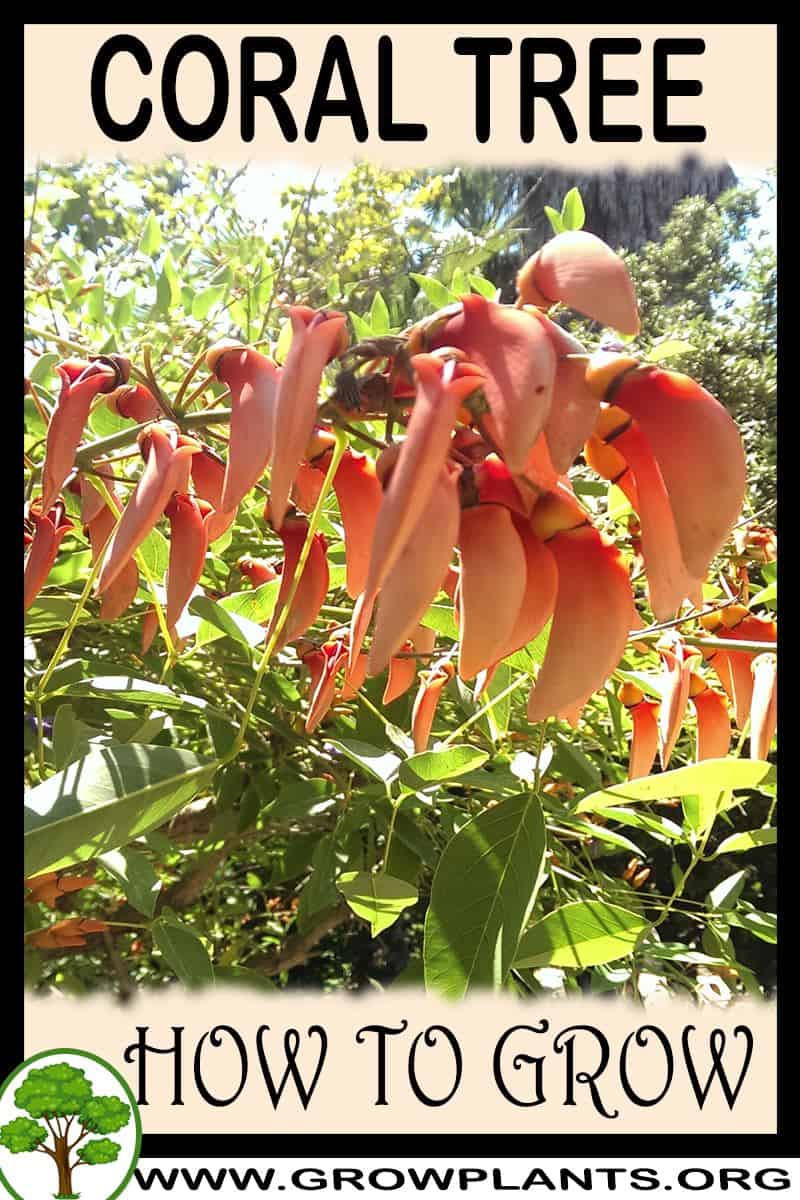
- Flower Characteristics: Striking red-orange half-moon to pea-shaped flowers in spring, rich in nectar.
Primary Uses & Landscape Value
- Functional & Ornamental Roles: Ornamental flowering shade tree that attracts pollinators and birds; a nitrogen-fixing legume.
Care Guide: Planting, Soil & Watering
Overview: The coral tree is a fast-growing, sun-loving legume tree that thrives in deep, well-drained soil. As a nitrogen-fixer it tolerates poorer soils and needs only moderate water once established.
Quick Care Requirements
| Requirement | Ideal Condition |
|---|---|
| Planting Season | Late winter to spring |
| Growth Rate | Moderate to Fast |
| Soil Type | Deep, well-drained |
| Water Need | Moderate (deep, infrequent) |
Planting & Establishment
- Best Planting Season: Plant from late winter into spring as the weather warms; it is suited to frost-free areas (roughly zone 9 and warmer).
- How to Plant:
- Hole Preparation: Dig a hole about twice the width of the root ball and the same depth, loosening the sides.
- Soil Amendments: Being a legume it fixes its own nitrogen, so skip rich nitrogen feeds; focus on improving drainage in heavy soil with grit.
- Planting Depth: Set the root collar level with the surrounding soil; do not bury the base of the trunk.
- Growth Speed & Expectations: Fast to moderate – it quickly develops into a spreading shade tree, so allow generous space.
Soil, Watering & Drainage Care
- Soil Mix & Drainage Needs: Needs deep, freely draining ground and dislikes waterlogged soil; its large eventual size makes it unsuitable for containers.
- Watering Schedule & Technique:
- Young / Newly Planted: Water deeply and regularly through the first seasons to establish the root system.
- Established: Once established, water moderately and deeply, allowing the soil to dry between waterings; it is fairly drought-tolerant.
- Seasonal Adjustments: Reduce or stop watering in winter (especially for deciduous forms); water more during summer heat.
Climate, Light & Hardiness
Coral trees are tropical to subtropical legume trees, evergreen in warm areas and cold-deciduous where winters are cooler, grown in full sun for their striking red-orange flowers. Cold tolerance varies by species, but the site data places the group at roughly USDA zone 9 and warmer, where frost may cut back the top yet an established tree often resprouts.
Quick Climate Specifications
| Climate Zones | Tropical, subtropical, mediterranean |
|---|---|
| USDA Hardiness Zones | Approximately 9 and warmer (site data; varies by species) |
| Optimal Temp Range | Approximately 20–32°C (68–90°F) |
| Cold Damage Begins | Foliage and soft growth suffer near 0–3°C (32–37°F) |
| Approx. Survival Minimum | Established trees may lose the top to frost yet resprout from wood or base; survival varies by species, age, exposure duration, and conditions |
| Frost Tolerance | Low (top); often root/base hardy in zone 9 |
| Light Conditions | Full sun |
| Wind Tolerance | Low to moderate (brittle wood) |
Sunlight & Light Exposure
Optimal Light Setup
Full sun is essential for good form and flowering.
Direct Sun Requirement
A true sun tree - strong direct light drives its vigorous growth and bloom.
Best Exposure / Orientation
An open, warm, sheltered site suits its soft, fast growth.
Temperature Extremes & Hardiness
USDA Hardiness & Regional Limits
The site places the group at zone 9 and up, but cold tolerance differs markedly between species - some are strictly frost-free, others take light frost and behave as cold-deciduous, dying back and reshooting in spring.
Cold Damage & Winter Protection
Frost damages foliage and soft wood; in zone 9 a hard freeze may kill the top while the base survives and resprouts. Protect young trees over their first winters.
Frost Sensitivity
Frost-sensitive overall, with young trees and tender species most at risk; treat the stated zone as a genus-level guide and check the specific species.
Extreme Heat Tolerance
Excellent - adapted to warm, sunny climates and high heat.
Wind, Humidity & Microclimate
Wind Tolerance
The soft, brittle wood breaks easily in strong wind - give it a sheltered position.
Coastal / Salt Tolerance
Several coral trees tolerate coastal conditions and salt-laden air well, though this varies by species.
Microclimate Recommendations
A warm, sunny, wind-sheltered spot suits it and, at the cool edge, improves the chance the top survives winter rather than dying back.
Growing in Pots, Balconies & Indoors
Coral trees are big, thick-trunked flowering trees – the grower rates them neither as houseplants nor as container plants. They need open ground; a pot suits only a young seedling briefly.
Quick Details
- Container Size: Only short-term – a deep nursery pot for a seedling
- Indoor Suitability: No
- Best Spot: Full sun
- Soil & Drainage: Free-draining mix
- Watering in Pots: Average while young in a pot
Indoors & On the Windowsill
- Not for indoors or pots: Too large for a container; keep it for open ground. Young trees of tender species also need frost protection.
On a Balcony or Patio
- Young trees only: A seedling can spend its first year in a big pot before being planted out.
- Safety: The seeds are toxic if eaten – keep them away from children and pets.
Choosing the Pot, Soil & Long-Term Care
- Short-term potting: If raised in a pot, use a deep container with a free-draining mix and plant out before it becomes root-bound; feed while potted.
Growing this plant in a greenhouse
A greenhouse can give coral tree frost protection and cold protection. In the right climate it may also be kept growing through winter, depending on how much warmth and light are provided.
Greenhouse at a glance
| Greenhouse suitability | Conditional - depends on your climate |
|---|---|
| Main benefits | frost protection, cold protection |
| Season extension | earlier spring & later autumn |
| Outdoor protection advisable below | about 5°C |
| Maintain greenhouse minimum | around 5°C for active growth |
| Suitable types | heated greenhouse, glass greenhouse, polycarbonate greenhouse |
| Heating | Heating is optional - useful mainly for winter growing in cold areas. |
Related greenhouse guides
- Greenhouses: How to Choose the Right Greenhouse
- Best Greenhouse Heaters
- Greenhouse Climate Control: Temperature, Ventilation and Humidity
- Polycarbonate Greenhouses: What to Look for Before Buying
Fertilizing & Feeding
A light to moderate feeder. As a nitrogen-fixing legume it supplies much of its own nitrogen, so it needs only modest, balanced feeding through spring and the flowering season; heavy nitrogen produces leaves at the expense of flowers.
Quick Fertilizing Specs
| Feeding Level | Light to moderate |
|---|---|
| Main Nutrient Priority | Balanced nutrition; go easy on nitrogen |
| Best Feeding Period | Spring through the flowering season |
| Organic Options | Compost, aged manure or leaf mulch |
| Soil pH | Adapts to a wide range; needs well-drained soil |
| Reduce/Stop Feeding | Ease off as growth slows into dormancy |
Feeding by Growth Stage
Spring flush and canopy growth
Support the new season’s shoot and leaf growth so the plant enters bloom in good health.
| Nutrient direction | A balanced complete fertilizer; because this is a nitrogen-fixing legume it needs only gentle nitrogen, so favour a light balanced feed over a heavy nitrogen push. |
|---|---|
| Timing | As growth resumes in spring. |
| Frequency | A few light feedings spread through the active growing season. |
| Fertilizer types | A balanced granular or slow-release complete fertilizer, Compost or other organic matter worked into the surface |
| Precautions | Keep fertilizer off the trunk and avoid overfeeding nitrogen, which pushes foliage at the expense of flowers. |
Flowering
Sustain flowering without forcing excessive leafy growth.
| Nutrient direction | Continue a balanced complete fertilizer; adequate overall nutrition, not high phosphorus, drives good bloom. |
|---|---|
| Timing | Through the flowering period. |
| Frequency | Light, steady feeding during bloom. |
| Fertilizer types | A balanced complete fertilizer |
| Precautions | Avoid high-phosphorus bloom-booster products; balanced, light nutrition suits this plant better. |
Dormancy or winter rest
Let the plant rest as growth and nutrient demand fall away in the cool season.
| Nutrient direction | None – withhold fertilizer while the plant is dormant. |
|---|---|
| Timing | Autumn into winter, as growth slows. |
| Frequency | No feeding at this stage. |
| Fertilizer types | No feeding at this stage while the plant is dormant. |
| Precautions | Do not fertilize until active growth resumes in spring. |
Nutrient Deficiency Signs & Corrections
Older, lower leaves turn uniformly pale or yellow and overall growth is weak.
| Possible causes | Low soil nitrogen or poor root-nodule activity on this legume, Waterlogged or compacted roots limiting uptake, Very sandy, low-fertility soil |
|---|---|
| Appears first on | Older, lower leaves |
| What to check | How wet the root zone stays and whether the soil drains freely, Whether the plant has been fed at all this season, General soil fertility and organic matter |
| Possible correction | Improve drainage, work in organic matter, and apply a balanced complete fertilizer at a modest rate. |
New leaves are pale or yellow between green veins while the veins stay green.
| Possible causes | High (alkaline) soil pH locking up iron, Waterlogged or cold soil reducing root uptake, A genuine iron shortage in the soil |
|---|---|
| Appears first on | Youngest leaves at the shoot tips |
| What to check | Soil pH and whether the soil is chalky or alkaline, How well the soil drains and whether symptoms follow wet spells, Whether only the new growth is affected |
| Possible correction | Correct soil pH where possible and apply a chelated iron product according to its label; improve drainage. |
Older leaves develop browning, scorched margins.
| Possible causes | Potassium shortage in the soil, Fertilizer or soil salt build-up in the root zone, Drought stress between waterings |
|---|---|
| Appears first on | Margins of older leaves |
| What to check | Recent fertilizer use and any salt crust on the soil surface, Soil moisture and the watering pattern, Whether only leaf edges, not whole leaves, are affected |
| Possible correction | Water thoroughly to rinse excess salts through, even out watering, and use a balanced fertilizer with adequate potassium at a modest rate. |
Pruning, Training & Seasonal Maintenance
Pruning & the Edible Harvest
Where the young leaves or flowers are eaten (some species only) they come from new spring growth, so structural pruning has little effect; the seeds are toxic and not a food, so edible relevance is marginal.
Coral tree is a fast-growing legume tree with soft, brittle wood, and unusually among these trees it tolerates hard pruning — many Erythrina are routinely pollarded or coppiced and resprout strongly. The trade-offs are that brittle limbs break easily under their own end-weight, and most species carry sharp prickles on stems and branches, so timing, wide branch angles and safe technique matter. Prune in the cool, dry dormant window; many species flower in spring on bare or new wood, so late-winter reduction is done knowing it can trim that spring’s display.
Quick Pruning & Maintenance Specs
| Pruning Tolerance | High — tolerates pollarding/coppicing, resprouts vigorously |
| Primary Pruning Window | Autumn–Winter (cool, dry, dormant) |
| Typical Frequency | Formative when young; then periodic reduction of heavy/brittle limbs |
| Main Objective | Sound wide-angled scaffold; reduce end-weight on brittle limbs |
| Young Plant Priority | Wide branch angles; avoid weak narrow forks in brittle wood |
| Mature Plant Priority | Remove deadwood/storm-broken limbs; shorten heavy horizontal limbs |
| Best Tool Type | Loppers and saw; pole pruner for height and to stay clear of prickles |
| Avoid Heavy Pruning During | Wet weather (large wounds) and, if bloom matters, before spring flowering |
Pruning by Plant Age & Size
Newly Established
Remove damaged growth only; wear gloves for the prickles. Let the young tree build a trunk before structural cuts.
Young / Formative
Build a scaffold with wide branch angles — in brittle wood, narrow forks are especially failure-prone. Shorten any over-long, heavy laterals early to prevent later breakage.
Mature / Established
Remove deadwood and storm-broken brittle limbs, reduce end-weight on long horizontal branches, and raise the crown for clearance. Where used as a living fence or hedge, it can be pollarded to a framework.
Seasonal Pruning Schedule
Autumn–Winter (Dormant, main window)
Objective: structure, deadwood and end-weight reduction on a brittle tree. Remove dead and broken limbs, shorten heavy horizontals, and (for size control) pollard if desired. Do NOT leave long, heavy, unsupported limbs. Expected response is vigorous resprouting; be aware that on spring-blooming species late-winter cuts trim that season’s flowers.
Ongoing Sanitary
Cut out and destroy shoot tips distorted by Erythrina gall wasp, and remove storm-broken brittle wood promptly.
Flowering & Fruiting Wood
Flowering habit is species-dependent: many coral trees bloom in spring on bare or old wood, others on new spring shoots. Heavy late-winter cutting therefore can remove that season’s flowering wood; if the display is a priority, reduce after bloom instead. It is grown as an ornamental for flower and shade rather than a harvest.
Structural Pruning & Training
The governing issue is brittle wood and end-weight: shorten heavy horizontal limbs to reduce breakage, favour wide branch angles, and control height on what can become a very large tree. It tolerates being pollarded back to a framework for size control or living-fence use.
Special Growth to Remove
Remove root/basal suckers (used deliberately for living fences, unwanted elsewhere), thin prickly watersprouts after heavy cuts, and cut out gall-wasp-infested tips. Wear gloves throughout for the prickles.
Container & Small-Space Pruning
Not suited to containers as a full-size tree; some species are grown small or as caudex/bonsai subjects. In confined spaces it must be kept as a height-reduced, end-weight-managed tree rather than allowed to build heavy brittle limbs.
Tools
Match tool to cut: loppers for young wood, a pruning saw for the soft but thick brittle limbs, and a pole pruner both to reach height and to keep hands away from the prickles. Bypass secateurs handle small shoots. Hedge shears are inappropriate for a specimen tree.
Tool Hygiene & Disease Risk
Increased. The standout issue is Erythrina gall wasp — cut out and destroy infested shoots — and, on some species, cankers; otherwise routine. Wear gloves and eye protection for the prickles as much as for hygiene.
Cut Placement & Technique
The three-cut method is essential here: brittle limbs tear and drop if removed in a single cut, so undercut first. Cut to the branch collar; make pollard cuts back to the same knuckles each cycle to build a controlled head.
Heavy Pruning & Rejuvenation
Well tolerated — coral trees pollard and coppice readily and resprout vigorously. On a large old tree, stagger heavy reduction over seasons, thin the crowded resprouts afterwards, and expect the loss of a season’s bloom.
Post-Pruning Care
Thin the mass of resprouts that follows a hard cut down to strong, well-placed shoots. Watch the soft flush for gall wasp, and shade newly exposed brittle limbs against sunburn in strong sun.
Common Pruning Mistakes
- Leaving heavy, end-weighted brittle limbs that snap in wind.
- Removing a limb in one cut and tearing the soft bark down the trunk.
- Ignoring gall-wasp-infested tips, letting the pest build up.
- Not thinning the dense resprouts after pollarding.
When NOT to Prune
Avoid removing all the spring flowering wood if bloom is wanted, and avoid large wounds during wet weather; do not prune drought-stressed trees hard.
Recommended Tools (by task)
- bypass_secateurs — small shoots, gall-infested tips and light formative cuts.
- loppers — young branches and thinning of prickly watersprouts.
- pruning_saw — the soft but thick brittle scaffold and pollard limbs, via the three-cut method.
- pole_pruner — height reduction and reaching into a large crown while keeping hands clear of prickles.
Pruning Troubleshooting
| Problem | Possible Cause | What to Check | Corrective Action |
| Limbs snapping under their own weight | Brittle wood carrying too much end-weight | Length and load of horizontal limbs | Shorten heavy horizontals; keep limbs shorter and better distributed |
| Bark torn down the trunk after a cut | Heavy limb removed in one cut on soft wood | How limbs were removed | Use the three-cut method (undercut first) on all weighty limbs |
| Distorted, galled shoot tips | Erythrina gall wasp | New growth and shoot tips for galling | Cut out and destroy infested tips; monitor the flush |
| Dense thicket of prickly resprouts after pollarding | Resprouts not thinned | Number of shoots per pollard knuckle | Thin to a few strong shoots per site |
Propagation Guide
Coral trees are exceptionally easy from large hardwood cuttings — even thick, metre-long "truncheon" branches root when set in the ground in spring — and this is the fast, practical way to reproduce a chosen plant. Seed also grows readily once the hard coat is scarified, but seedlings vary across this large genus. Easy.
Quick Propagation Specs
| Best Propagation Method | Hardwood / truncheon cuttings |
| Alternative Methods | Seed (scarified) |
| Propagation Difficulty | Easy |
| Seed True-to-Type | Variable (genus-level) |
| Vegetative True-to-Type | Yes |
| Best Propagation Season | End of winter to spring (site) |
Stem Cuttings
Cutting Type
Hardwood cuttings, from finger-thick pieces up to large truncheons (thick branch sections).
Best Timing
Late winter to spring, before or as growth resumes (site).
Cutting Preparation
Let the cut end callus and dry for a day or two, then set it upright in free-draining soil.
Rooting Hormone
Not needed — Erythrina roots easily.
Rooting Time
Roots and shoots usually appear within a few weeks in warm weather.
Growing from Seed
Dormancy & Pre-Sowing Treatment
Hard seed coat — nick or hot-water soak before sowing. Note that the seeds of many Erythrina are toxic.
Germination Conditions
Warm, moist, well-drained soil; scarified seed sprouts within a few weeks. Seedlings vary, so use cuttings to keep a particular form.
Bloom & Flower Guide
Quick Details
- Bloom Season: Spring
- Flower Appearance: Brilliant red-to-orange flowers, curved like a half-moon and opening to a pea shape, in showy spikes
- Edibility: Not edible – the seeds and other parts contain toxic alkaloids; treat the plant as poisonous
Detailed Blooming Overview
Coral trees blaze with red-orange flower spikes in spring, often on nearly bare branches. The tubular, nectar-rich blooms are pollinated by birds – sunbirds and hummingbirds – as well as insects.
Flower Characteristics
- Red-orange flowers, half-moon shaped, opening to a pea shape.
- Carried in showy spikes.
Bloom Care & Thinning
- Pollination: By birds and insects, drawn to the abundant nectar.
- Safety: Seeds and plant tissues are toxic if eaten.
Pests, Diseases & Troubleshooting
Overview: Coral tree (Erythrina) is a legume tree whose overriding modern threat is the invasive erythrina gall wasp, which deforms and can kill trees across the genus; borers, scale and aphids add to the load, and the brittle wood makes limb failure a structural concern. Management combines vigilant removal of galls and borer wood, gentle control of sap-suckers, and sound structural pruning. Note the seeds and bark contain toxic alkaloids.
Quick Troubleshooting Overview
| Issue / Pest | Main Symptom | Primary Solution |
|---|---|---|
| Erythrina gall wasp | Swollen, deformed, curled leaves and stems; galls; defoliation | Prune out galls, use systemic where permitted, monitor closely |
| Stem / twig borer | Wilting shoot tips, frass, hollowed twigs | Prune out infested wood, keep tree vigorous, remove deadwood |
| Scale | Bumps on stems and leaves, sooty mould | Horticultural oil, prune, protect parasitoids |
| Aphids & mealybugs | Honeydew, distorted new growth, attendant ants | Hose off, soap/oil, control ants |
| Branch canker / dieback | Sunken cankers and dying limbs | Prune to healthy wood, disinfect tools, improve vigour |
| Brittle-wood breakage | Limbs snap in wind | Structural pruning, avoid weak forks and over-thinning |
Common Pests & Management
- Erythrina gall wasp (Quadrastichus erythrinae):
- Symptoms: The signature, devastating pest: a tiny invasive wasp whose larvae induce swollen galls and thick curling of leaves, petioles and young stems; heavy infestation deforms all new growth, defoliates the canopy and can kill trees, especially young or stressed ones.
- Prevention & Control: Prune out and destroy galled shoots as they appear and monitor new flushes constantly; keep trees vigorous, and where the pest is established use trunk-injected or soil-applied systemic insecticides (where permitted) since sprays reach the concealed larvae poorly. Support and plant biocontrol parasitoids where released, and choose less-susceptible species where possible.
- Stem & twig borers (Terastia meticulosa / wood-boring beetles):
- Symptoms: Caterpillars of the erythrina twig borer and various beetle larvae tunnel shoot tips and branches, causing wilting terminals, frass at entry holes, hollowed twigs and structural weakening.
- Prevention & Control: Prune out and burn wilted, frass-marked tips and infested wood, keep the tree vigorous and unstressed (borers favour weak trees), remove deadwood promptly, and avoid unnecessary wounds that invite egg-laying.
- Scale insects (Coccoidea):
- Symptoms: Immobile bumps or cottony masses on stems, branches and leaf undersides sap the tree, causing yellowing and dieback; soft scales excrete honeydew that blackens with sooty mould and attracts ants.
- Prevention & Control: Prune out heavily encrusted wood, apply horticultural oil to smother crawlers, control ants that protect scale, and conserve the parasitic wasps and ladybirds that normally regulate populations.
- Aphids & mealybugs (Aphididae / Pseudococcidae):
- Symptoms: Colonies on tender new growth and flower stalks distort shoots and leave honeydew and sooty mould; ants tending them are a common sign.
- Prevention & Control: Hose off colonies, encourage and protect natural enemies, control ants, and use insecticidal soap or horticultural oil on persistent infestations; avoid forcing soft growth with excess nitrogen.
Diseases & Fungal Issues
- Branch canker & dieback (Botryosphaeria / Fusarium):
- Symptoms: Sunken, discoloured cankers on branches and trunk, wilting and dying limbs, sometimes with dark staining in the wood; often follows stress, wounds or gall-wasp damage.
- Treatment & Management: Prune well back into healthy wood, disinfecting tools between cuts, remove and destroy dead and cankered limbs, and keep trees vigorous and unstressed; avoid injuries and improve drainage where root stress predisposes trees.
- Thread blight / leaf spot (fungal complex):
- Symptoms: Leaf spots, blotches and, in humid climates, fine fungal threads webbing leaves that brown and die, causing patchy defoliation.
- Treatment & Management: Prune for an open, airy canopy, remove fallen and blighted leaves, avoid overhead wetting, and use copper in persistent wet-season outbreaks.
- Root rot (Phytophthora spp.):
- Symptoms: Decline, yellowing and dieback with dark rotted roots and crown in waterlogged or poorly drained soil.
- Treatment & Management: Plant in well-drained soil, avoid overwatering and soil piled against the trunk, and improve drainage; remove trees that are severely affected at the crown.
Growing Difficulties & Abiotic Problems
- Brittle wood & limb failure:
- Cause & Symptoms: Coral tree wood is soft and brittle, so heavy limbs and weak forks can split or snap in wind or under their own weight, a real hazard on large trees.
- Correction Strategy: Prune for good structure while young, remove weakly attached and over-extended limbs, avoid topping (which forces weak regrowth), and site large trees away from targets.
- Frost & cold damage:
- Cause & Symptoms: Soft new growth and shoot tips are damaged or killed by frost and cold snaps in marginal climates, causing blackened dieback.
- Correction Strategy: Site in a warm, sheltered spot, avoid late feeding that pushes tender growth into cold weather, and prune out cold-damaged wood after the danger passes.
- Chlorosis on alkaline soil:
- Cause & Symptoms: Yellowing between the veins of new leaves on high-pH or waterlogged soils where iron and manganese are unavailable.
- Correction Strategy: Improve drainage and organic matter, lower pH where practical, and apply chelated iron/manganese as a corrective.
What Helps – Products & Tools
Coral-tree tools centre on horticultural oil (scale, mealybug, aphids), insecticidal soap, and – for the gall wasp, whose larvae are hidden inside galls – trunk-injected or soil-applied systemic insecticides where permitted, since contact sprays are ineffective. Copper helps with wet-season leaf blight. Sharp, disinfected pruning tools for galls, borer wood and cankers are the single most useful ‘product,’ alongside sound structural pruning. Note: seeds and bark contain toxic erythrina alkaloids – keep away from children and pets.