
Plant Profile & Key Characteristics
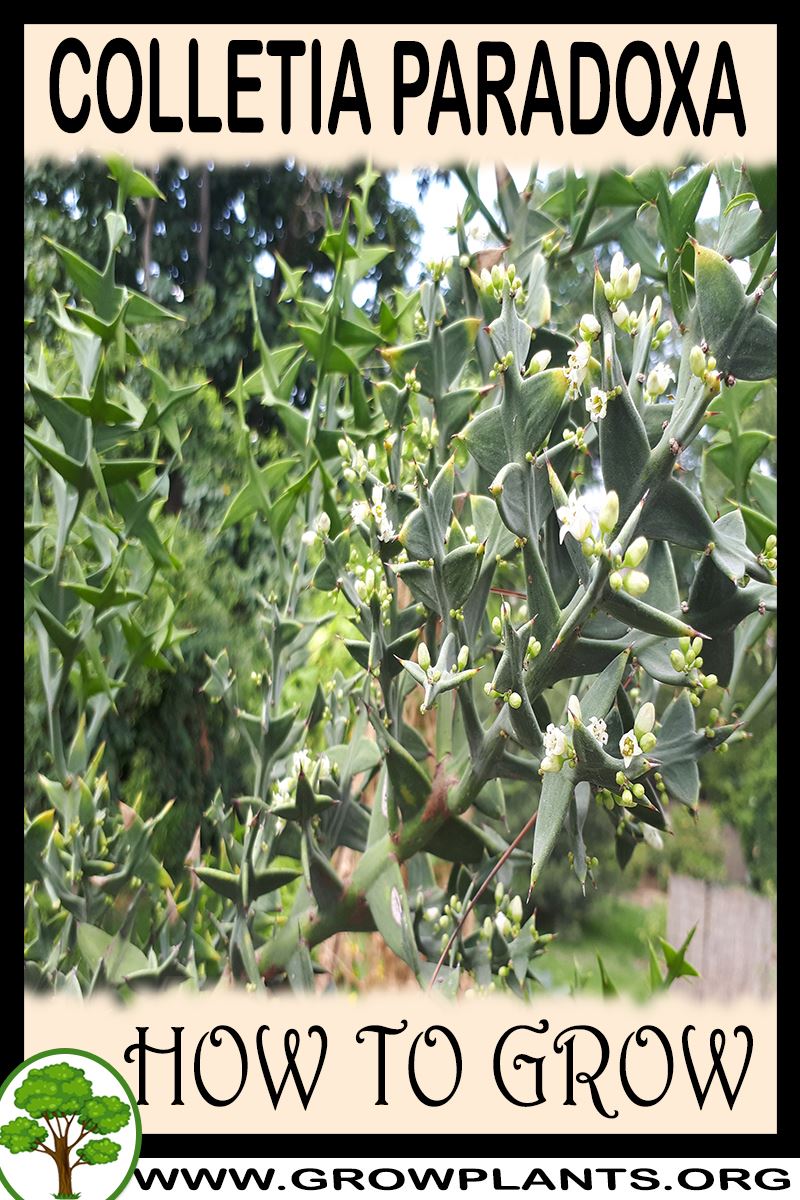
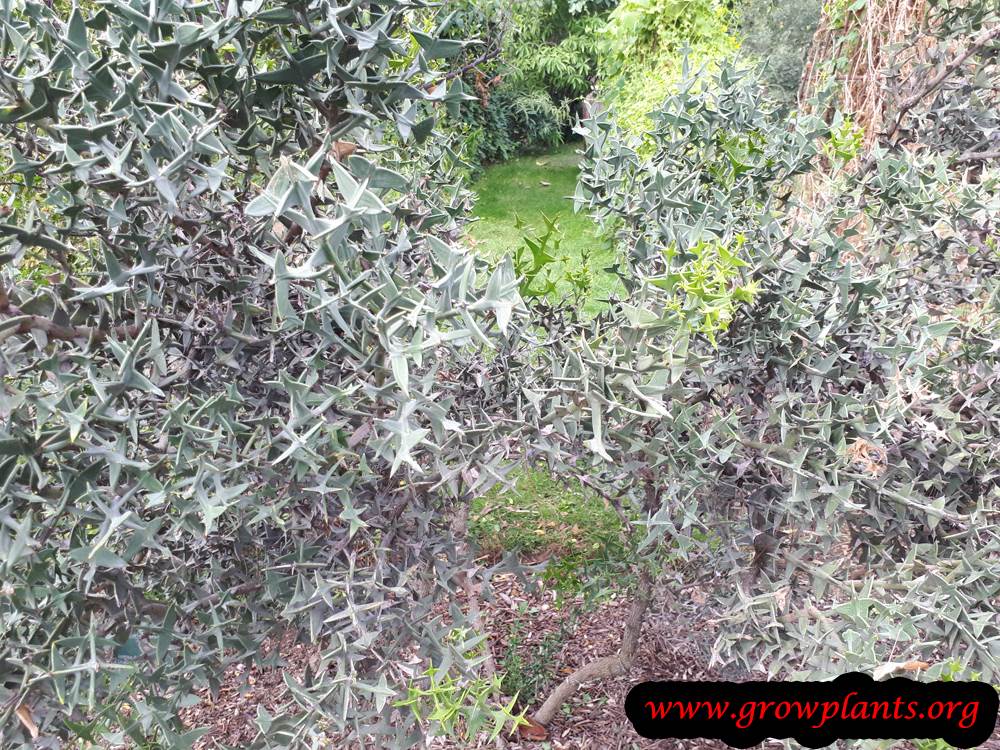
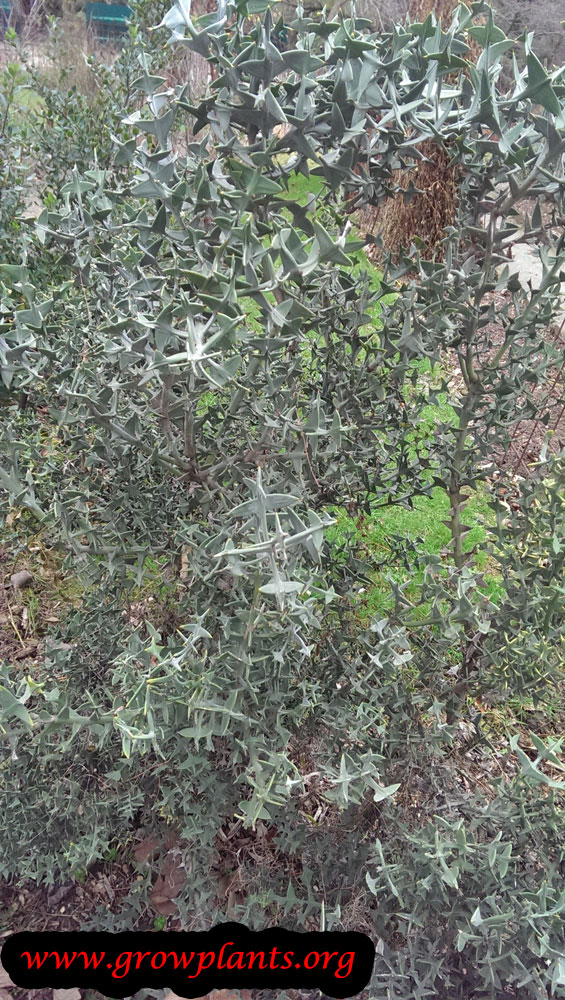
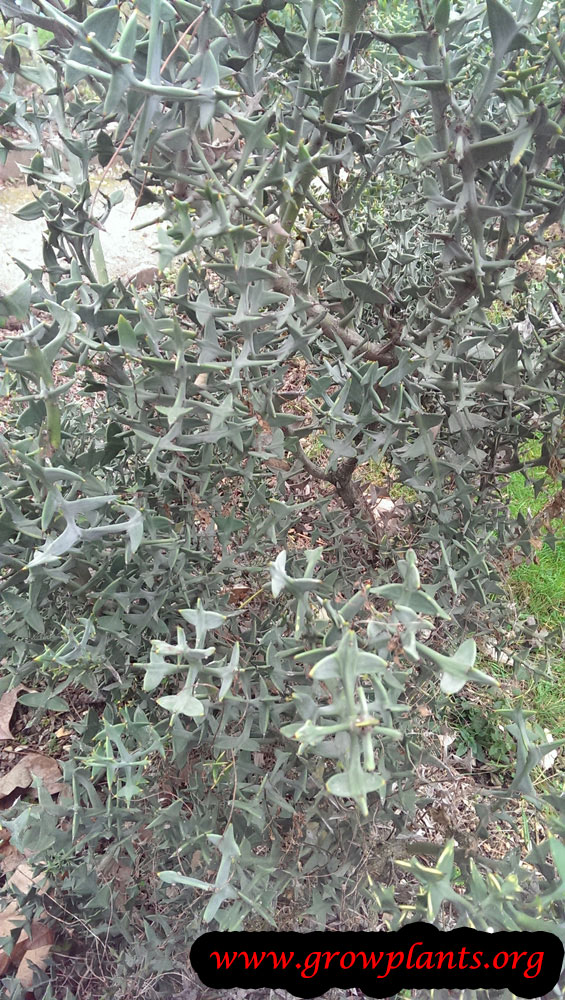
Overview: A slow-growing, spiny succulent shrub reaching 1-5 m, notable for being almost leafless — its flattened, triangular green stems both photosynthesise and act as spines. It is evergreen and grown as an ornamental, xeriscape and bonsai plant.
Quick Specifications
| Specification | Attribute |
|---|---|
| Plant Type / Life Cycle | Perennial (evergreen shrub) |
| Foliage Type | Evergreen — leafless; photosynthesis via flattened green stems |
| Mature Size | 1-5 m (3-16 ft) |
| Growth Rate | Slow |
| Root System | Nitrogen-fixing (actinorhizal root nodules) |
| Hardiness | USDA zone 9-11 |
Growth Form & Structure
- Height & Spread: 1-5 m (3-16 ft); can be container-grown and trained as bonsai
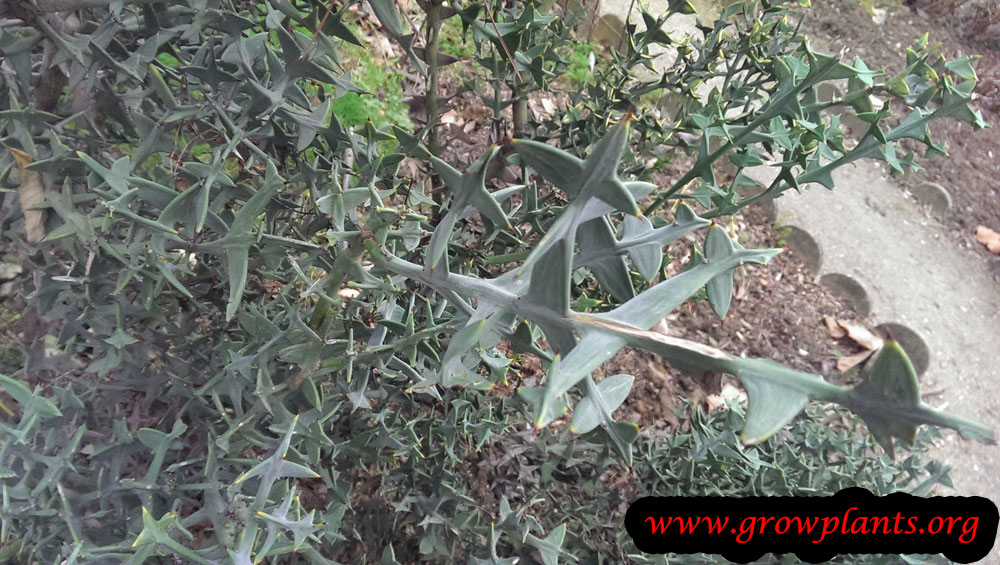
- Growth Habit & Form: Dense, spiny succulent shrub of flattened triangular green stems with sharp points
- Lifespan & Maturity: Slow-growing and long-lived
Anatomy & Physical Features
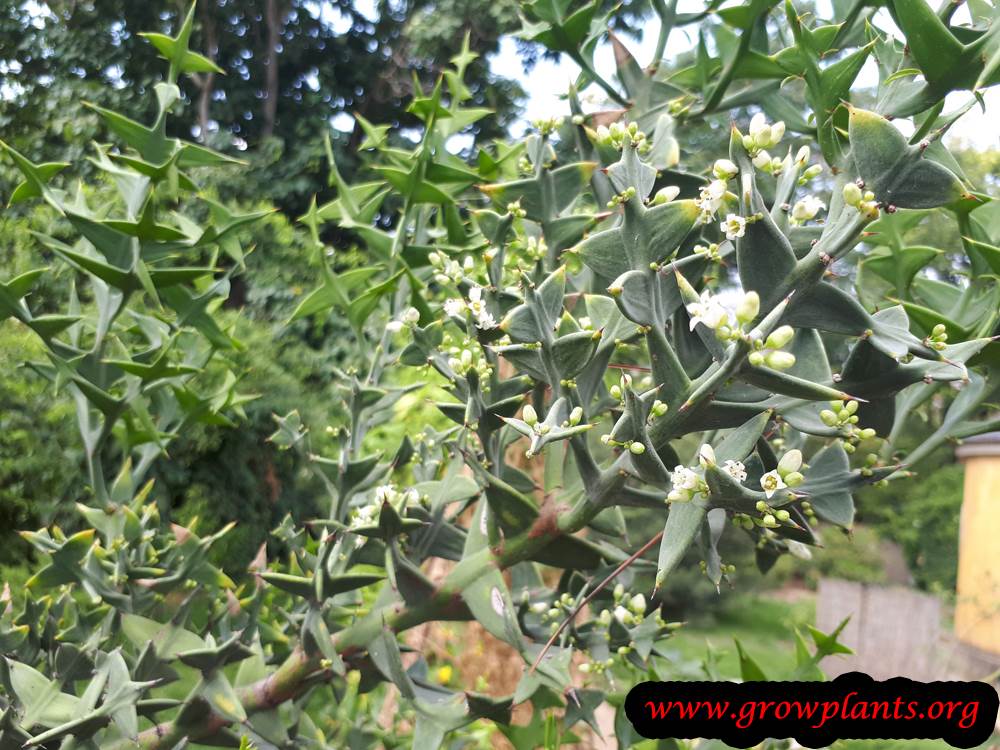
- Leaves & Foliage: Essentially leafless; the green triangular pointed stems perform photosynthesis and serve as spines
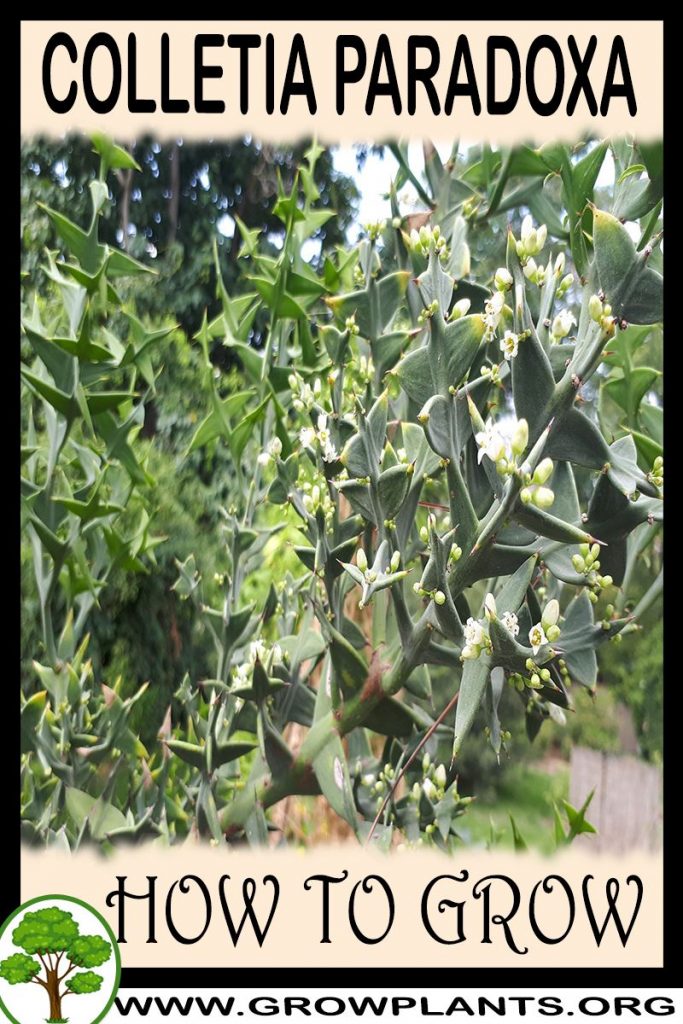
- Flower Characteristics: Small white bell-shaped flowers in clusters, fragrant, appearing in autumn
Primary Uses & Landscape Value
- Functional & Ornamental Roles: Ornamental specimen and bonsai subject; drought-tolerant xeriscape and security/barrier plant; nitrogen-fixing and attracts pollinators
Care Guide: Planting, Soil & Watering
Overview: Colletia paradoxa (anchor plant) is a slow-growing, spiny, drought-tolerant succulent shrub (hardy roughly zones 9–11) for full sun to half shade. It needs sharply well-draining soil and very little water, and as a nitrogen-fixer it thrives in lean ground.
Quick Care Requirements
| Requirement | Ideal Condition |
|---|---|
| Planting Season | In spring, summer or autumn |
| Growth Rate | Slow |
| Soil Type | Lean, gritty, sharply well-draining |
| Water Need | Low – let the soil dry out between waterings |
Planting & Establishment
- Best Planting Season: Plant in spring, summer or autumn while the soil is warm.
- How to Plant:
- Hole Preparation: Dig a hole a little wider than the root ball and loosen the surrounding soil for drainage.
- Soil Amendments: Add grit or coarse sand to heavy soil; being nitrogen-fixing it needs no rich feeding and prefers lean ground.
- Planting Depth: Set the root collar at soil level and firm gently.
- Growth Speed & Expectations: A slow grower reaching 1–5 m (40–200 in) over time; handle with care, as the stems are sharply spiny.
Soil, Watering & Drainage Care
- Soil Mix & Drainage Needs: Very sharp drainage is essential to prevent rot; in containers use a gritty, cactus-style mix.
- Watering Schedule & Technique:
- Young / Newly Planted: Water young plants occasionally until roots establish, letting the soil dry between waterings.
- Established: Water established plants sparingly — they are highly drought-tolerant and rot in wet soil.
- Seasonal Adjustments: A little water in prolonged summer drought; keep nearly dry in winter.
Climate, Light & Hardiness
Colletia paradoxa (anchor plant) is a tough, drought-tolerant, nitrogen-fixing shrub suited to mediterranean, desert, subtropical and temperate climates, growing best in full sun to light shade. It has moderate cold hardiness for a succulent-stemmed shrub, generally surviving outdoors through USDA zone 9 winters.
Quick Climate Specifications
| Climate Zones | Mediterranean, desert, subtropical and temperate climates |
| USDA Hardiness Zones | approximately 9–11 |
| Optimal Temp Range | approximately 15–30°C (59–86°F) |
| Cold Damage Begins | typically below approximately 0°C (32°F) on tender new growth |
| Approx. Survival Minimum | established plants may briefly tolerate temperatures approaching −5 to −7°C (19–23°F) for short periods, typical of zone 9 |
| Frost Tolerance | Moderate |
| Light Conditions | Full sun to half shade |
| Wind Tolerance | High |
Sunlight & Light Exposure
Optimal Light Setup
Full sun gives the densest, most compact spiny growth; tolerates half shade with a looser habit.
Shade & Heat Management
Handles hot, dry summer sun well once established; light afternoon shade is optional in the hottest desert locations.
Best Exposure / Orientation
Open, sunny sites; the spiny, near-leafless stems are well adapted to intense light.
Temperature Extremes & Hardiness
USDA Hardiness & Regional Limits
Site data places this shrub at approximately zone 9–11 as an outdoor perennial (not grown as a houseplant).
Cold Damage & Winter Protection
Young plants are more cold-sensitive than established specimens and benefit from a sheltered site or mulch through their first winters in zone 9.
Frost Sensitivity
Moderate – tolerates occasional light frost once mature, but prolonged hard freezes can damage or kill stems.
Extreme Heat Tolerance
Good; a drought- and heat-adapted shrub well suited to desert and mediterranean summers.
Wind, Humidity & Microclimate
Humidity Preferences
Adaptable to both dry mediterranean/desert air and more humid subtropical or temperate conditions.
Wind Tolerance
High – its rigid, spine-like stems are naturally wind-resistant, making it useful in exposed sites.
Rainfall & Seasonal Moisture
Adapted to a dry-summer, low-rainfall pattern typical of mediterranean and desert climates; good drainage matters more than rainfall amount.
Microclimate Recommendations
Well suited to open, exposed positions; it is grown outdoors (including as bonsai), not as a houseplant.
Growing in Pots, Balconies & Indoors
Colletia paradoxa (anchor plant) is a large, architectural, extremely spiny shrub reaching 1-5 m (3-16 ft) – not a houseplant. The grower confirms it is not suited to growing indoors, but it does grow in a large container, making a striking, drought-tough patio specimen while young.
Quick Details
- Container Size: A large, sturdy tub while young; long term it prefers the open ground
- Indoor Suitability: Not an indoor plant
- Best Spot: Full sun to part shade, outdoors
- Soil & Drainage: Free-draining; very drought tolerant once established
- Watering in Pots: Modest – let it dry out between waterings
Indoors & On the Windowsill
- Not a houseplant: The grower is clear that it will not grow indoors, and its size and fierce spines rule it out – even a bright windowsill will not suit it for long.
On a Balcony or Patio
- A sunny-patio container shrub: It makes a good tubbed specimen in full sun while young, and copes well with wind and drought. Site it well away from paths, seating and children – the vicious spines are no joke.
- Practicalities: Use a heavy pot for stability and make sure runoff drains freely.
Choosing the Pot, Soil & Long-Term Care
- Pot & drainage: A large pot with strong drainage holes and no standing saucer of water; terracotta breathes and dries faster than glazed or plastic.
- Potting mix: A gritty, free-draining mix suits this dry-country shrub.
- Feeding: Feed lightly in the growing season; potted plants need it a little more often as nutrients leach.
- Repotting: Pot up as it grows, then expect to plant it out in the ground for the long term.
Safety: Not known to be toxic, but the rigid spines can cause injury – handle with care and site it thoughtfully.
Fertilizing & Feeding
A light feeder: it needs little fertilizer and grows best in a lean, well-drained mix with only occasional dilute feeding during active growth.
Quick Fertilizing Specs
| Feeding Level | Light feeder |
|---|---|
| Main Nutrient Priority | Lean, low-nitrogen feeding |
| Best Feeding Period | Active growing season only |
| Reduce/Stop Feeding | Stop feeding during cool, dark, or dormant rest periods |
| Organic Options | A little compost or worm castings worked into the gritty mix |
| Soil pH | Tolerates a wide range; slightly acidic to near neutral |
| Micronutrients | Rarely needed; correct only if a deficiency shows |
Feeding by Growth Stage
Active growth
Support steady, firm growth during the active growing season without forcing soft, weak tissue.
| Nutrient direction | Lean, low-nitrogen complete feeding; keep it dilute and light. |
|---|---|
| Timing | During the active growing season when new leaves are forming. |
| Frequency | Feed sparingly, with only occasional light feedings while the plant is actively growing. |
| Fertilizer types | A balanced or low-nitrogen complete fertilizer, well diluted, A specialized cactus and succulent fertilizer |
| Precautions | Avoid heavy or high-nitrogen feeding, which forces soft, stretched growth and makes roots prone to rot; always apply to moist soil rather than a bone-dry mix. |
Dormant rest
Let the plant rest; there is no active growth to support, so added nutrients are not needed.
| Nutrient direction | None – withhold fertilizer during the rest period. |
|---|---|
| Timing | During the cool, low-light, or dormant rest period. |
| Frequency | No feeding at this stage. |
| Fertilizer types | No feeding at this stage; do not fertilize until active growth resumes. |
| Precautions | Do not fertilize resting plants; feeding now pushes weak growth and lets salts build up in the mix. |
Nutrient Deficiency Signs & Corrections
Older leaves turn uniformly pale and growth slows over a long stretch.
| Possible causes | Low nitrogen availability in an old, depleted mix, Roots damaged or restricted by soggy, poorly drained soil, Very low light limiting overall growth |
|---|---|
| Appears first on | Oldest, lower leaves |
| What to check | Whether the mix is old and has never been refreshed, Drainage and whether roots are sitting wet, Light levels |
| Possible correction | Refresh into a fresh, gritty mix, correct drainage and light, then resume light feeding once the plant is actively growing. |
Brown, dry leaf tips or margins with a white crust on the soil surface.
| Possible causes | Fertilizer salts accumulating in the mix from overfeeding, Infrequent, incomplete watering that never flushes the pot |
|---|---|
| Appears first on | Leaf tips and margins |
| What to check | Whether feeding has been too strong or too frequent, Whether the pot ever drains freely when watered |
| Possible correction | Leach the pot thoroughly with clean water to flush accumulated salts, then ease back on feeding. |
Newest leaves yellow between still-green veins.
| Possible causes | High soil pH reducing iron and manganese availability, Cold, waterlogged soil impairing root uptake |
|---|---|
| Appears first on | Youngest leaves |
| What to check | Whether the soil is alkaline, Whether the soil stays cold and wet |
| Possible correction | Improve drainage and correct pH; if it persists, apply a chelated iron or manganese product per its label. |
Pruning, Training & Seasonal Maintenance
Colletia paradoxa, the anchor plant, is a spiny, slow-growing woody shrub that carries out most of its photosynthesis through flattened, triangular, thorn-tipped green stem segments rather than true leaves, and is popular both as a barrier/architectural shrub and as a bonsai subject. It tolerates moderate pruning – enough to shape and control its size – but because the plant is largely leafless and depends on those green spine-segments for energy, cuts should stay measured rather than sweeping. The safe, standard window is winter dormancy, and pruning here is explicitly about design and form rather than fruit or flower production.
Quick Pruning & Maintenance Specs
| Pruning Tolerance | Moderate – shapeable, but avoid removing large amounts of green photosynthetic stem at once |
| Primary Pruning Window | Winter (dormant season) |
| Typical Frequency | Once yearly for shaping; light spot-checks the rest of the year |
| Main Objective | Design/architectural shaping – barrier form, hedge line, or bonsai silhouette |
| Young Plant Priority | Establish basic form/leader while stems are still flexible |
| Mature Plant Priority | Maintain shape; remove crossing, dead or overcrowded spiny growth |
| Best Tool Type | Bypass secateurs for most cuts; loppers or a pruning saw for older basal wood |
| Avoid Heavy Pruning During | Late summer/early autumn, ahead of the first frost, and during active spring growth |
Pruning by Plant Age & Size
Newly Established
Remove only damaged or dead growth in the first season or two; let the plant build its basic spiny framework before shaping it.
Young / Formative
Open-form or bonsai-style structural training, depending on the intended use: for a hedge or barrier planting, select and encourage the main framework stems now; for bonsai, this is when wiring and directional pruning have the most effect, since stems are still flexible.
Mature / Established
Maintenance shifts to controlling size and density – removing crossing or overly congested spiny stems, and keeping any trained/bonsai silhouette clean – rather than building new structure.
Seasonal Pruning Schedule
Dormant/Winter
Objective: the plant’s stated pruning season, and the safest time for structural and design cuts. Remove: dead, damaged or clearly misplaced stems, and any growth crowding the intended shape. Do not remove: more than a modest portion of the plant’s green stem tissue in one session, since that tissue is doing the leaf’s job. Expected response: renewed growth from the cut point the following season, without forcing an untimely flush into cold weather. Flowering impact: minimal – the autumn bloom develops on the coming season’s new growth, so a winter, pre-growth-flush cut should not sacrifice that year’s flowering.
Structural Pruning & Training
Because the plant is grown as much for form – as a barrier hedge or as bonsai – as for anything else, structural decisions matter more than they would on a purely ornamental flowering shrub. Select and retain the stems that define the desired silhouette; remove others that cross, rub, or grow inward and disrupt it. On bonsai specimens, wiring while stems are young is the main technique for directing growth, with cuts used mainly to remove what wiring can’t fix.
Special Growth to Remove
- Dead or dieback stems – remove back to clean, green tissue.
- Crossing or rubbing spiny stems – given the sharp, triangular thorn-segments, tangled growth is both a design problem and a handling hazard, so thin it out where two stems are wearing against each other.
- Basal shoots that disrupt the intended form – retain or remove depending on whether they support the desired shape (a fuller hedge base) or work against it (an unwanted extra leader on a bonsai).
Container & Small-Space Pruning
Grown successfully in containers, which suits its slow growth rate and its use as bonsai. Container specimens need more deliberate size and root management than an in-ground barrier planting – root pruning at repotting, paired with the same winter-season top pruning, keeps a potted or bonsai specimen in scale, whereas an in-ground plant can be left to reach its fuller 1-5m (3-16ft) size with lighter, purely corrective cuts.
Tools
Bypass secateurs for most stems; loppers for thicker basal wood on an older or in-ground specimen; a pruning saw only for genuinely old, thick trunk wood on a mature in-ground plant. Handle with care and eye protection given the rigid, pointed thorn-segments along every stem.
Tool Hygiene & Disease Risk
Routine – clean, sharp tools are sufficient; no specific transmissible disease risk is noted for this species (pest pressure noted is limited to snails and slugs, not a pathogen of concern).
Cut Placement & Technique
Use thinning cuts (removing a stem back to its point of origin) in preference to heading cuts for most shaping, since this keeps the plant’s naturally open, angular form rather than forcing a dense flush of new growth. Cut just outside the branch collar on larger basal wood; avoid flush cuts and avoid leaving long stubs, both of which slow healing on a slow-growing shrub.
Heavy Pruning & Rejuvenation
Tolerated in moderation – an overgrown or misshapen specimen can be cut back hard in winter to restore a barrier or bonsai silhouette – but because the plant relies on its green stem tissue for photosynthesis, a severe rejuvenation cut is best spread across two winters rather than done all at once, to avoid leaving the plant with too little green surface to recover quickly.
Post-Pruning Care
Water normally through the following growth flush; this is a drought-tolerant, small-water-requirement species, so there’s no need to increase watering after a cut. Watch regrowth for excessive basal shoot flushing after a hard cut and thin it back to the intended framework as it develops.
Common Pruning Mistakes
- Removing too much green stem tissue at once, underestimating that it’s doing a leaf’s job on this largely leafless plant.
- Pruning in late summer or autumn, pushing tender new growth into the first frost of a marginal zone 9 site.
- Handling cut material without care for the rigid thorn-segments, a real hazard specific to this genus.
When NOT to Prune
- Late summer through early autumn, ahead of first frost, to avoid forcing frost-tender new growth.
- During the active spring growth flush, when cuts are more likely to be followed by a stress-driven, uneven regrowth response than a clean one.
Recommended Tools (by task)
- bypass_secateurs – the primary tool for most stem-diameter cuts on this shrub.
- loppers – thicker basal or older wood beyond secateur capacity.
- pruning_saw – genuinely old, thick trunk wood on a mature in-ground specimen.
Pruning Troubleshooting
| Problem | Possible Cause | What to Check | Corrective Action |
| Dense flush of basal shoots after a hard cut | Severe rejuvenation pruning in one session | How much green stem tissue was removed at once | Thin excess shoots back to a chosen framework; spread future hard cuts over two winters |
| Sparse autumn flowering | Over-thinning removed too much of the current season’s new growth before bloom | Timing of the last pruning relative to the growth flush | Shift heavier cuts to winter dormancy, before the season’s new growth (and its flowers) has formed |
| Dieback at cut ends | Cuts made during active growth or ahead of frost | Season the cut was made in; recent frost exposure at the site | Prune only in winter dormancy; cut back to clean green tissue below the dieback |
Propagation Guide
Colletia paradoxa is most commonly raised from seed, since the site notes that grafting or vegetative propagation is not required to keep the species true; semi-ripe stem cuttings are also used, mainly to get a compact, bonsai-ready plant faster than seed allows. Detailed published propagation data for this species is limited, and germination can be slow, so overall difficulty is best rated moderate.
Quick Propagation Specs
| Best Propagation Method | Seed |
| Alternative Methods | Semi-ripe stem cuttings |
| Propagation Difficulty | Moderate |
| Seed True-to-Type | Usually true-to-type – no named cultivars are described for this species |
| Vegetative True-to-Type | Yes, cuttings reproduce the parent plant true to type |
| Best Propagation Season | Seed: spring. Cuttings: summer, when growth is semi-ripe |
Growing from Seed
Dormancy & Pre-Sowing Treatment
Like many shrubs in the buckthorn family (Rhamnaceae), the hard seed coat often benefits from scarification (a light nick or a warm-water soak) to improve and speed up germination, though this is general genus-level guidance rather than site-confirmed for this exact species.
Sowing Season
Spring, ahead of the plant’s spring–autumn active growing period.
Germination Conditions
Sow in well-drained soil in a sunny position, consistent with this drought-tolerant plant’s general growing requirements. Keep the sowing medium lightly moist, not wet, while germinating.
Germination Time
Germination is often slow and uneven for this genus, potentially taking anywhere from several weeks to a few months; exact timing is not well documented for this species.
Stem Cuttings
Cutting Type
Semi-ripe (partially hardened) shoot tips.
Best Timing
Summer, once new growth has begun to firm up.
Cutting Preparation
Take a cutting just below a node and trim away lower growth before inserting; handle carefully, as the stems and modified spiny branchlets are sharp.
Rooting Setup
Insert into a well-drained, sandy propagation mix and keep humid (e.g. under cover or misted) while roots form; avoid waterlogging given this plant’s drought-tolerant, well-drained-soil preference.
Rooting Hormone
May be beneficial for this slow-growing woody shrub, though not confirmed as required by site data.
Rooting Time
Rooting is not well documented for this species but, given its generally slow growth, likely takes several weeks or more.
Bloom & Flower Guide
Quick Details
- Bloom Season: Autumn
- Time to First Bloom: On established shrubs, once the flattened green stems are well developed
- Flower Appearance: Small, white, bell-shaped flowers in dense clusters along the stems
- Edibility: Ornamental – grown for its sculptural, pollinator-friendly display, not for eating
Detailed Blooming Overview
The anchor plant flowers in autumn, when its curious, flattened blue-green stems become studded with clusters of small, waxy, white, bell-shaped blooms. They carry a sweet, almond-like fragrance that makes the shrub a magnet for bees and other pollinators – a fitting habit for a nitrogen-fixing plant that gives back to its surroundings. The flowers are borne directly on the spine-tipped stems, so the display is as architectural as it is scented.
Flower Characteristics
- Flowers: Small white bell-shaped flowers in clusters along the stems.
- Fragrance: Sweetly almond-scented, carrying on the autumn air.
- Pollinators: Strongly attractive to bees and other pollinating insects.
Bloom Care & Thinning
- Enjoying the bloom: Site the shrub where its autumn scent and pollinator activity can be appreciated up close.
- After flowering: Any tidying or shaping is best done once the flowers finish – wear thick gloves, as the anchor-shaped spines are sharp.
- Feeding: As a nitrogen-fixer it needs little feeding; lean conditions suit both plant and flowering.
Pests, Diseases & Troubleshooting
Overview: The anchor plant is an unusual, spiny, near-leafless shrub (its flattened triangular cladodes do the photosynthesis) with a naturally tough, drought-hardy constitution and very few documented pests; its thorny structure deters browsers. The main risks are root rot in wet or heavy soils and occasional sap-suckers on soft new growth. Because it is rarely grown and little-documented, treat pest identifications cautiously.
Quick Troubleshooting Overview
| Issue / Pest | Main Symptom | Primary Solution |
|---|---|---|
| Root rot | Wilting and dieback in wet or heavy soil | Sharp drainage, water sparingly |
| Scale | Waxy bumps on stems/cladodes; honeydew | Horticultural oil, prune |
| Aphids | Sticky new growth in spring | Water jet, insecticidal soap |
| Mealybugs | White cottony clusters at nodes | Alcohol dab, horticultural oil |
| Cold/sun stress | Damaged stems after weather extremes | Full sun, shelter from hard frost |
| Snails/slugs | Minor grazing on soft new shoots | Hand-pick, barriers |
Common Pests & Management
- Scale (Coccidae (soft/armored scale)):
- Symptoms: Occasional waxy or brown bumps on the green stems and cladodes, with honeydew and sooty mold on heavier infestations.
- Prevention & Control: Scrape off and apply horticultural oil to smother; prune out badly encrusted stems; conserve natural predators.
- Aphids (Aphis spp.):
- Symptoms: Clusters of soft insects on the softest new spring growth, with honeydew and slight distortion.
- Prevention & Control: Usually minor and self-correcting; hose off or use insecticidal soap if numbers climb; conserve ladybirds and lacewings.
- Mealybugs (Pseudococcus spp.):
- Symptoms: White cottony clusters tucked at nodes and stem junctions with honeydew.
- Prevention & Control: Spot-treat with alcohol, insecticidal soap or horticultural oil; inspect new plants before introducing them.
- Snails & slugs (Deroceras / Cornu spp.):
- Symptoms: Minor grazing on the softest new shoots; established spiny growth is left alone.
- Prevention & Control: Hand-pick after dark and use barriers around young plants if needed; rarely a serious problem.
Diseases & Fungal Issues
- Root & crown rot (Phytophthora / Pythium):
- Symptoms: The main disease risk – wilting, dieback and collapse where soil is heavy, wet or overwatered; roots dark and soft.
- Treatment & Management: Grow in sharply drained, gritty soil, water sparingly once established, and never leave it waterlogged; container plants must drain freely.
- Foliar/stem fungal issues:
- Symptoms: Very few documented; occasional minor spotting or sooty mold (secondary to sap-sucker honeydew) in humid, still conditions.
- Treatment & Management: Improve airflow and light, control any sap-suckers, and avoid overhead watering; fungicide rarely if ever needed.
Growing Difficulties & Abiotic Problems
- Root rot from overwatering:
- Cause & Symptoms: As a xerophyte, it resents wet feet; heavy or waterlogged soil is the primary cause of decline.
- Correction Strategy: Plant in free-draining gritty soil in full sun, water sparingly, and avoid rich, moisture-retentive mixes.
- Cold/frost damage:
- Cause & Symptoms: Hard frost can damage or blacken the green stems in marginal climates.
- Correction Strategy: Site in a warm, sheltered, sunny spot; protect or grow under cover in cold-winter areas.
- Chlorosis in poor drainage:
- Cause & Symptoms: Yellowing and weak growth in compacted or wet soil.
- Correction Strategy: Improve drainage and aeration; feed lightly only if genuinely deficient – it thrives on lean soil.
- Slow growth:
- Cause & Symptoms: Naturally slow-growing; not a fault.
- Correction Strategy: Be patient, avoid overfeeding, and give it full sun and sharp drainage to grow steadily.
What Helps – Products & Tools
This tough xerophyte rarely needs intervention – sharp drainage and full sun prevent most problems. If sap-suckers appear, horticultural oil and insecticidal soap manage scale, mealybug and aphids; there is little call for fungicide beyond correcting drainage.