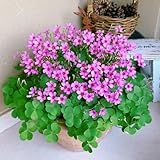




Plant Profile & Key Characteristics
Overview: A low herbaceous legume, 5–40 cm tall, grown mainly as a nitrogen-fixing groundcover and green manure. Depending on species it behaves as an annual, biennial or evergreen perennial, and it can spread aggressively.
Quick Specifications
| Specification | Attribute |
|---|---|
| Plant Type / Life Cycle | Perennial, biennial or annual (varies by species) |
| Foliage Type | Evergreen (herbaceous) |
| Mature Size | 5–40 cm H (2–16 in) |
| Growth Rate | Moderate to fast |
| Root System | Fibrous with nitrogen-fixing root nodules (some species taprooted) |
| Toxicity | Non-toxic / edible (used as forage and food) |
| Hardiness | USDA zones 2–10 |
Growth Form & Structure
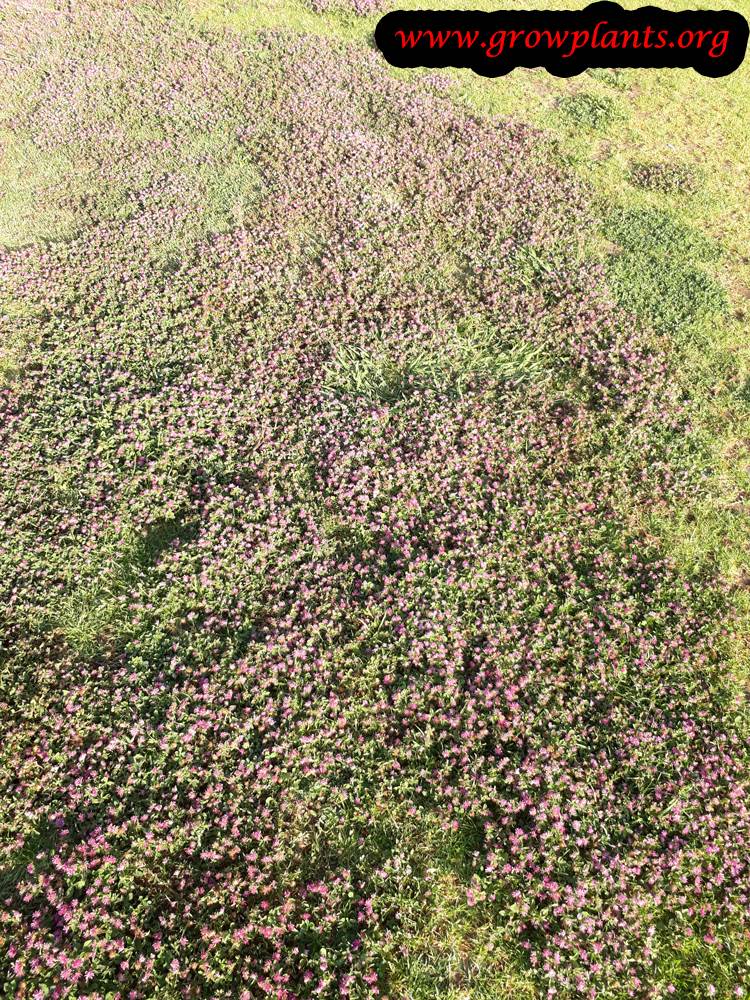
- Height & Spread: Low mat 5–40 cm tall, spreading to form a dense groundcover; also grows well in planters and containers.
- Growth Habit & Form: Spreading, mat-forming groundcover; vigorous and can become invasive.
- Lifespan & Maturity: Fast to establish from seed; lifespan depends on species (annual to persistent perennial).
Anatomy & Physical Features
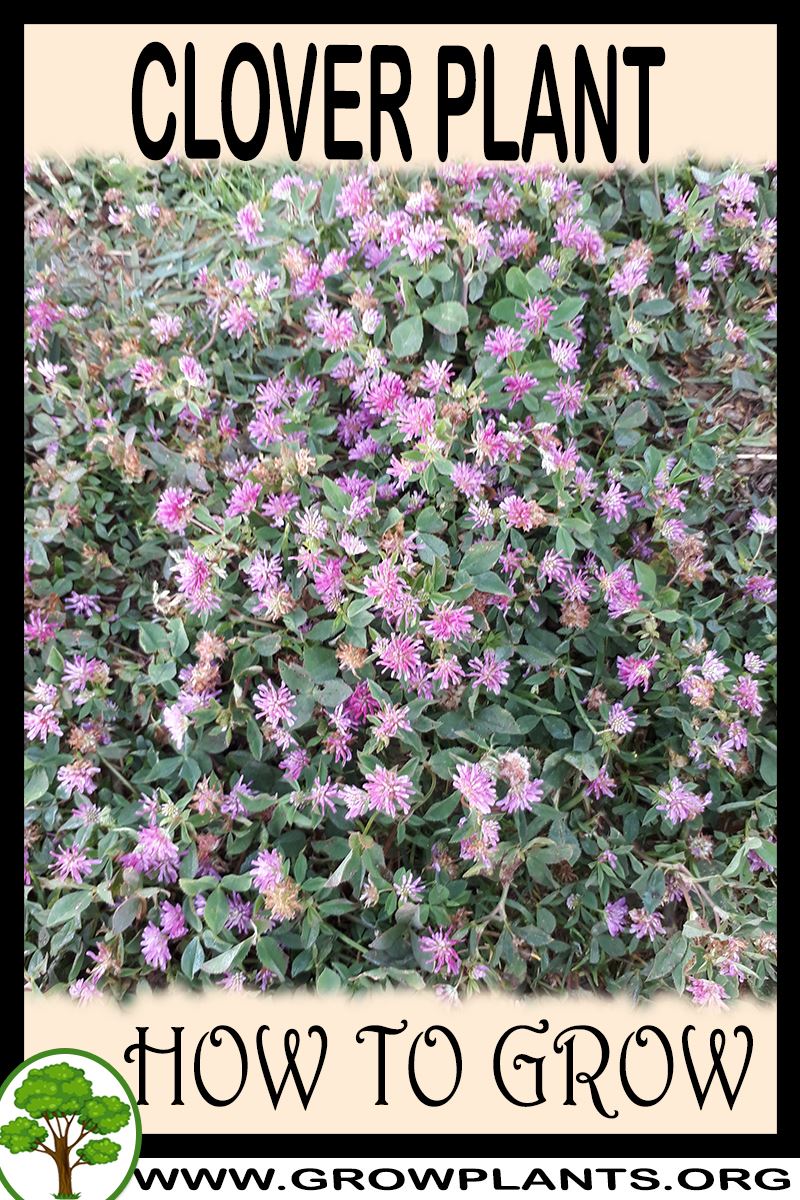
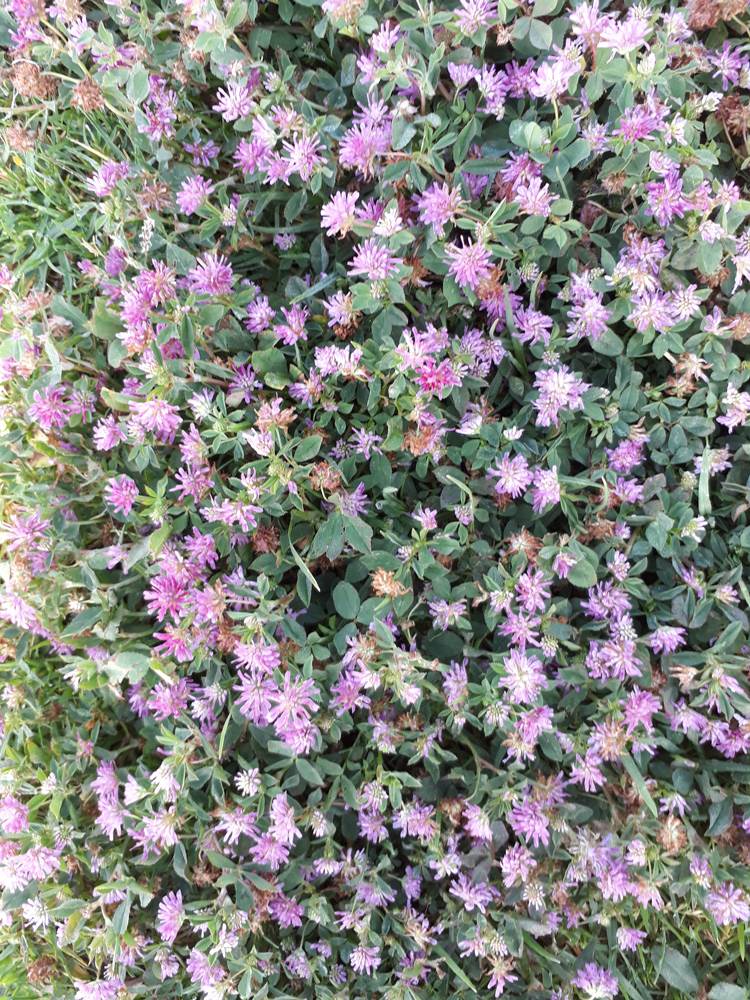
- Leaves & Foliage: Green or purple leaves, sometimes with white or purple markings, usually in groups of three oval, round or elliptic leaflets.
- Flower Characteristics: Rounded, ball-shaped heads of many linear petals in white, yellow, pink, purple or mixed shades (full detail in the Bloom accordion).
Primary Uses & Landscape Value
- Edible Uses: Leaves and flowers are edible and the plant is widely used as forage.
- Functional & Ornamental Roles: Nitrogen-fixing groundcover and green manure, ornamental lawn substitute and pollinator plant.
Care Guide: Planting, Soil & Watering
Overview: Clover (Trifolium) is a tough, low, spreading groundcover that grows almost anywhere in full sun to part shade, and as a legume it fixes its own nitrogen and improves the soil. It is very adaptable about moisture, coping with anything from fairly dry to quite damp ground.
Quick Care Requirements
| Requirement | Ideal Condition |
|---|---|
| Planting Season | In spring, or in autumn to winter in mild-winter regions |
| Growth Rate | Moderate to fast |
| Soil Type | Adaptable to most soils; best in reasonably fertile, moisture-retentive ground |
| Water Need | Moderate — adaptable, tolerating both drier and wetter conditions |
Planting & Establishment
- Best Planting Season: Sow or plant in the cool seasons — spring, or autumn to winter where winters are mild.
- How to Plant:
- Hole Preparation: Rake the ground to a fine, crumbly tilth for sowing, or dig a hole slightly wider than the plug or root ball.
- Soil Amendments: Little is needed — as a nitrogen-fixer clover thrives even in poorer soils, though a little organic matter aids establishment.
- Planting Depth: Barely cover broadcast seed, or set plugs and plants so the crown sits at soil level.
- Growth Speed & Expectations: Moderate to fast, quickly knitting into a dense, low mat.
Soil, Watering & Drainage Care
- Soil Mix & Drainage Needs: Adaptable to most soils with reasonable drainage; tolerates a wide range of conditions.
- Watering Schedule & Technique:
- Young / Newly Planted: Keep evenly moist until it establishes and the plants knit together.
- Established: Water moderately; established clover adapts to both drier and wetter soil.
- Seasonal Adjustments: Water more in summer heat and less during cool, wet seasons.
Climate, Light & Hardiness
Clover is a low, spreading nitrogen-fixing legume - perennial, biennial or annual by species - grown in full sun to half shade as ground cover and green manure, and it favours cool growing weather. It is broadly cold-hardy, the site data spanning roughly USDA zone 2–10, with summer heat and drought, rather than winter cold, being the usual limit.
Quick Climate Specifications
| Climate Zones | Temperate, mediterranean, subtropical, desert, tropical (high elevation) |
|---|---|
| USDA Hardiness Zones | Approximately 2–10 (site data; varies by species) |
| Optimal Temp Range | Approximately 15–24°C (59–75°F) |
| Cold Damage Begins | Hardy species overwinter well; top growth slows and may die back in hard frost |
| Frost Tolerance | High (most species); varies by species |
| Light Conditions | Full sun to half shade |
| Wind Tolerance | High (low, ground-hugging habit) |
Sunlight & Light Exposure
Optimal Light Setup
Full sun suits it best; it also grows in half shade, useful for cover under lighter canopies.
Shade & Heat Management
In hot climates, part shade and moisture help it through the summer, when heat is more limiting than cold.
Temperature Extremes & Hardiness
USDA Hardiness & Regional Limits
The site gives a wide zone 2–10 range across the genus. Most clovers are cool-season plants that grow strongly in spring and autumn; perennial types are reliably winter-hardy, while annual types complete their cycle and reseed. Cold tolerance and lifecycle vary by species.
Cold Damage & Winter Protection
Hardy species tolerate hard frost, dying back on top and returning or reseeding; little winter protection is usually needed within their range.
Frost Sensitivity
Generally frost-hardy - frost is rarely the limiting factor for most clovers.
Extreme Heat Tolerance
Limited for many species - as cool-season plants they can go dormant, thin out or die back in prolonged summer heat and drought, which is their main climatic constraint.
Wind, Humidity & Microclimate
Wind Tolerance
Excellent - the low, mat-forming habit shrugs off wind.
Rainfall & Seasonal Moisture
Favours reliable cool-season moisture; it grows in mediterranean, temperate and even desert or high-tropical settings where a cool, moist growing window exists.
Microclimate Recommendations
Cool, bright, evenly moist conditions give the densest cover; in hot climates use it in the cool season or in lightly shaded, moister spots.
Growing in Pots, Balconies & Indoors
Clover is a low, spreading plant that fills a shallow pot, window box or hanging planter easily. It is not grown as a room houseplant, but a bright sill can hold a small pot of it as fresh green cover.
Quick Details
- Container Size: About 5-15 L (1-4 gal) – a wide, shallow pot or trough suits its spreading habit
- Indoor Suitability: Not a room houseplant; a bright, sunny sill can hold a small pot
- Best Spot: Full sun to light shade
- Soil & Drainage: Aerated, organic-rich mix – peat or coir with perlite or vermiculite; must drain freely
- Watering in Pots: Keep the mix evenly moist – clover dislikes drying right out, but pots must not stay waterlogged
Indoors & On the Windowsill
- Houseplant limits: Not grown as an indoor houseplant – it wants real daylight to stay dense and green.
- Windowsill growing: A bright, sunny sill can carry a shallow pot or trough of clover as low green cover.
On a Balcony or Patio
- Light, heat & wind: Give it the sunniest spot you can. Walls, railings and paving reflect heat, so pots dry quickly – check moisture daily in warm weather, and shelter tall growth from wind. A drip irrigation kit with a timer can take over that watering check automatically.
Choosing the Pot, Soil & Long-Term Care
- Pot & drainage: A wide, shallow 5-15 L pot with strong drainage holes; skip a standing water saucer to avoid root rot. Terracotta breathes and dries fast; glazed or plastic holds moisture longer.
- Potting mix: Use a well-aerated, organic-rich mix – peat or coir blended with perlite or vermiculite for free drainage.
- Feeding: Potted plants lose nutrients as watering leaches them, so feed more often than in open ground. As a legume it fixes much of its own nitrogen, so favour a low-nitrogen feed richer in phosphorus and potassium.
- Repotting: Refresh the mix or divide and replant about every year or two as it fills the pot.
Fertilizing & Feeding
A very light feeder – this nitrogen-fixing ground cover usually needs no fertilizer on decent soil; feed lightly only where growth is weak.
Quick Fertilizing Specs
| Feeding Level | Light – a nitrogen-fixing ground cover that rarely needs feeding. |
|---|---|
| young_feeding | A modest balanced feed as seedlings establish. |
| mature_feeding | Little to none on decent soil; a light balanced feed only if weak. |
| Main Nutrient Priority | Balanced, with nitrogen kept low. |
| Best Feeding Period | Through the active growing season. |
| Organic Options | Compost or well-rotted organic matter worked into the bed. |
| Soil pH | Near neutral to slightly acidic suits most legumes. |
| Reduce/Stop Feeding | Withhold feeding through dormancy. |
| Micronutrients | Rarely needed; correct only if a deficiency shows. |
Feeding by Growth Stage
Establishment
Help a new stand knit in and develop roots and nodules.
| Nutrient direction | A modest balanced feed to start; rely mostly on organic matter and the plant’s own nitrogen fixation. |
|---|---|
| Timing | As seedlings or divisions establish. |
| Frequency | A light feeding while the stand establishes. |
| Fertilizer types | Balanced complete fertilizer, Compost or well-rotted organic matter |
| Precautions | Do not over-apply nitrogen; this legume supplies much of its own. |
Active growth
Maintain dense, healthy cover through the growing season.
| Nutrient direction | Keep nitrogen low – this nitrogen-fixing ground cover rarely needs feeding; a light balanced feed suffices on poor soil only. |
|---|---|
| Timing | Through the active growing season. |
| Frequency | Little to none on decent soil; a light feed only if growth is weak. |
| Fertilizer types | Light balanced fertilizer if needed |
| Precautions | Overfeeding, especially with nitrogen, is wasteful and can encourage weak, disease-prone growth. |
Dormancy / seasonal slowdown
Let the stand rest during cold or dry dormancy.
| Nutrient direction | None – withhold fertilizer while the plant is dormant. |
|---|---|
| Timing | Through winter dormancy or a dry-season slowdown. |
| Frequency | No feeding at this stage. |
| Fertilizer types | No feeding at this stage – withhold fertilizer until active growth resumes. |
| Precautions | Do not fertilize until active growth resumes; excess salts on a resting plant only risk root injury. |
Nutrient Deficiency Signs & Corrections
Overall pale, yellow-green foliage and weak growth even on reasonable soil.
| Possible causes | Poor rhizobial nodulation, so little nitrogen is being fixed, Cold or waterlogged soil suppressing root and nodule activity, Genuinely low soil nitrogen on very poor ground |
|---|---|
| Appears first on | Older, lower leaves first. |
| What to check | Dig a root and look for pink, active nodules, Soil drainage and temperature, Whether the seed or bed carried the right legume inoculant |
| Possible correction | Ensure the right rhizobia are present, improve drainage and warmth, and give only a modest balanced feed if the ground is truly poor. |
Yellowing between the veins of the youngest leaves while the veins stay green.
| Possible causes | High or alkaline soil pH locking up iron and manganese, Waterlogged or cold roots reducing micronutrient uptake, Occasionally low available iron or manganese in the soil |
|---|---|
| Appears first on | New growth at the shoot tips. |
| What to check | Soil pH, Drainage and watering habits, Whether symptoms follow cool, wet spells |
| Possible correction | Correct soil pH toward the plant’s preferred range, improve drainage, and if it persists apply a chelated iron or manganese product per its label. |
Scorched leaf edges, wilting, or white crusting on the soil despite adequate water.
| Possible causes | Over-application of fertilizer, Poor leaching in containers or heavy soil, Letting the root zone dry out between heavy feeds |
|---|---|
| Appears first on | Leaf margins and tips; container plants first. |
| What to check | Recent fertilizer amounts, Drainage, Soil crusting or white surface residue |
| Possible correction | Ease off feeding, water thoroughly to flush excess salts from the root zone, then feed only lightly. |
Pruning, Training & Seasonal Maintenance
Clover is a low, spreading nitrogen-fixing groundcover rather than a plant that is pruned in the woody sense — the source correctly notes there is “no need” for pruning, and management is done by mowing or shearing the whole mat. The two real objectives are to refresh a patchy, over-tall stand by cutting it low, and to shear off spent flower heads before they seed, since Trifolium spreads readily and can become invasive. It regrows quickly from the crown and stolons after cutting. Because it regrows so readily, legacy grower notes describe it as tolerant of shearing or mowing at any time of year, not just during the growing season.
Pruning & the Edible Harvest
Clover has only minor edible use — the flowers (for example red-clover tea) and young leaves are eaten in small amounts — and it is grown chiefly as a nitrogen-fixing cover crop or lawn. It is sheared or mown as a mass rather than pruned, so cutting has minimal effect on any edible harvest; eat only in moderation.
Quick Pruning & Maintenance Specs
| Pruning Tolerance | High — regrows freely from crown and runners |
| Primary Pruning Window | Growing season, when flower heads fade or the stand grows leggy |
| Typical Frequency | Occasional shear/mow as needed |
| Main Objective | Rejuvenate the mat and remove seed heads to limit spread |
| Young Plant Priority | Let it knit together; no cutting |
| Mature Plant Priority | Shear/mow to reset height and deadhead in bulk |
| Best Tool Type | Mower or shears (this is a mass, not selective, cut) |
Pruning by Plant Age & Size
Newly Established
Do not cut — allow the young plants to spread and cover. Cutting too soon slows establishment of the groundcover mat.
Young / Formative
No structural training applies to a stoloniferous groundcover. Simply let it fill the space; direction is by containment at the edges, not by pruning individual stems.
Mature / Established
Shear or mow the whole stand to reset height, remove spent flowers and encourage fresh, dense low growth. This is the single most useful operation and can be repeated through the season.
Seasonal Pruning Schedule
Summer Canopy Management
Objective: keep the mat dense and stop unwanted seeding. Remove: spent flower heads and over-tall growth by shearing/mowing. Do NOT remove: the crown — cut above it so the plant regrows. Impact: deadheading in bulk limits self-seeding of this potentially invasive plant.
Ongoing Sanitary
Objective: keep foliage clean. Remove: slug-damaged or rotting patches. Do NOT remove: healthy runners knitting the cover together.
Structural Pruning & Training
Control is by edging and containment rather than stem selection — sever runners at the boundary to stop the mat creeping where it is not wanted.
Special Growth to Remove
The runners (stolons) are the plant’s means of spread: retain them within the intended area, cut them off at the edges to contain it. Shear flower heads before seed set to reduce volunteers.
Container & Small-Space Pruning
In a pot or small bed, trim the overhanging edges and shear the top occasionally to keep a tidy cushion; the container itself limits the spread that makes clover troublesome in open ground.
Tools
Because clover is cut as a mass, hedge shears or a mower are the correct tools — one of the few plants here where shearing is appropriate. Precision snips are needed only to remove an odd damaged patch.
Tool Hygiene & Disease Risk
Routine: clean equipment is enough. No significant tool-borne disease; clear cut debris to discourage slugs and rot in the moist mat.
Cut Placement & Technique
Set the mower or shears high enough to cut above the crowns and leaf bases so the plant regrows quickly; scalping to bare ground weakens the stand.
Post-Pruning Care
Water lightly if cut in dry heat; clover tolerates a range of moisture and greens up fast. No feeding is needed — as a nitrogen fixer it supplies much of its own.
Common Pruning Mistakes
- Scalping to bare soil, which removes the crowns and thins the stand.
- Letting flower heads mature and seed, then finding clover spreading into unwanted areas.
- Trying to prune individual stems selectively instead of shearing the mat as a whole.
When NOT to Prune
Do not shear newly planted clover before it has knitted together, and avoid cutting hard in drought stress. If you want it to flower for pollinators, delay deadheading until the display has passed.
Recommended Tools (by task)
- hedge_shears — for shearing the mat as a mass to reset height and deadhead in bulk (mower serves the same purpose on larger areas).
Propagation Guide
Clovers are usually established from seed, broadcast and lightly covered for ground-cover or green-manure use and often inoculated with the right Rhizobium so they fix nitrogen. Stoloniferous species such as white clover also root along creeping stems and can be divided, while clumping kinds regrow from the crown; because this is a large genus, the best method varies with the species.
Quick Propagation Specs
| Best Propagation Method | Seed, broadcast and lightly covered |
| Alternative Methods | Rooted stolons / crown division (species-dependent) |
| Propagation Difficulty | Easy |
| Seed True-to-Type | Species- and cultivar-dependent; many clovers cross-pollinate |
| Best Propagation Season | Spring or autumn |
| Germination Temperature | Cool to mild, roughly 10–20°C (50–68°F) |
| Seed Sowing Depth | Shallow, about 0.5–1 cm (up to 0.5 in) |
Growing from Seed
Dormancy & Pre-Sowing Treatment
Some clover seed is hard-coated; commercial seed is often pre-scarified, and a soak can help home-saved seed. Inoculating with the matching Rhizobium supports nitrogen fixation.
Sowing
Broadcast onto a firm surface and cover only lightly, keeping the soil moist for even establishment.
Runners & Stolons
Stoloniferous species root at the nodes where creeping stems touch moist soil. Rooted sections can be lifted and replanted to increase a patch.
Division, Offsets, Pups & Suckers
Clump- or crown-forming clovers can be lifted and divided in spring, each piece keeping roots.
Bloom & Edible Flower Guide
Quick Details
- Bloom Season: Spring and summer
- Time to First Bloom: Usually in its first year
- Flower Appearance: Rounded, ball-shaped heads of many small, narrow-petalled flowers in white, yellow, pink, purple or a blend
- Edibility: Edible, the flower heads are eaten raw in small amounts and steeped for teas; best in moderation
Detailed Blooming Overview
Clover carries its bloom as dense, rounded heads, each one a cluster of many tiny pea-family flowers. The heads sit just above the foliage and are among the most familiar sights of a summer meadow. Beyond their charm, the flower heads of clovers such as red and white clover are a recognised edible flower, gathered fresh for salads or dried for tea, while their steady nectar makes them a favourite of bees.
Flower Characteristics
- Ball-shaped heads made up of many small flowers with narrow petals.
- Colours range through white, yellow, pink and purple, sometimes mixed.
- Highly attractive to bees and a valued nectar source.
Bloom Care & Thinning
- Pollination: Worked mainly by bees, which the flowers reward well.
- Mowing and rebloom: As a ground cover, a light mow after the first flush of flowers tidies the planting and often brings a fresh round of bloom.
- Harvesting flowers: Pick heads that have just opened fully, taking a few and leaving the rest for the bees.
Fruit & Uses
Safety first: this plant is grown here as an ornamental ground cover and nitrogen-fixing plant, not as a documented food crop, so treat any edible use as minor foraging. The flower heads and young leaves of common clovers are traditionally foraged in small amounts, but they are best dried or cooked and eaten only in moderation.
Quick Edible Specs
| Edible Parts | Flower heads and young leaves (minor / foraged) |
|---|---|
| Main Use(s) | Flower heads dried for herbal tea; young leaves as a cooked pot-herb |
| Eaten Raw or Cooked | Flowers dried; leaves cooked; eat sparingly |
| Preparation Required | Dry or cook, and consume only in small amounts |
| Safety/Toxicity Caveat | Not a site-documented food; raw clover in quantity can cause bloating and digestive upset. Identify the species correctly and eat only in moderation |
Flowers & Flower Buds
The rounded, ball-shaped flower heads (white, yellow, pink or purple) are traditionally dried and steeped as a herbal tea.
Leaves & Greens
Young leaves, borne in the characteristic groups of three, are traditionally used as a cooked green. They are better cooked than raw and should be taken only in small quantities.
Preparation, Uses & Safety
Because clover is grown here as a ground cover rather than a food, treat it as a minor foraged plant: dry the flowers for tea, cook the young leaves, and eat only small amounts. Traditionally used in folk medicine; no health claims are made.
Pests, Diseases & Troubleshooting
Overview: Clover is a tough nitrogen-fixing legume grown as forage, cover crop or lawn; it is rarely killed by pests but is grazed by molluscs and several legume-specialist insects, and is prone to a handful of fungal diseases in dense, humid stands. Cultural balance – good drainage, airflow and rotation – keeps it healthy without spraying.
Quick Troubleshooting Overview
| Issue / Pest | Main Symptom | Primary Solution |
|---|---|---|
| Slugs & snails | Chewed seedlings and holed leaves | Reduce thatch, handpick, iron-phosphate bait |
| Aphids | Clustered insects, honeydew, stunting | Water jet, beneficials, insecticidal soap |
| Clover / pea weevils | U-shaped notches on leaf margins | Encourage ground beetles, tolerate light damage |
| Clover rot | Collapsing plants with white fungal growth | Rotate, improve drainage, remove infected plants |
| Powdery mildew | White powdery coating on leaves | Improve airflow, avoid over-feeding, sulphur if severe |
Common Pests & Management
- Slugs and snails (Gastropoda):
- Symptoms: Chewed seedlings and irregular holes in leaves with slime trails, worst in damp, shady, thatchy stands.
- Prevention & Control: Reduce thatch and standing moisture, handpick at night, use beer traps or grit barriers, and apply pet-safe iron-phosphate bait where seedlings are being lost.
- Aphids (Aphidoidea (incl. Acyrthosiphon pisum)):
- Symptoms: Green or brown soft-bodied insects massed on shoots and undersides, causing honeydew, sooty mould, curling and stunting; they can also transmit legume viruses.
- Prevention & Control: Encourage lady beetles, lacewings and parasitic wasps, knock colonies off with water, and spot-treat heavy outbreaks with insecticidal soap or neem.
- Clover leaf and root weevils (Sitona spp.):
- Symptoms: Characteristic U-shaped notches chewed into leaf margins by adults, while larvae feed on the nitrogen-fixing root nodules, weakening vigour.
- Prevention & Control: Rotate legume plantings, encourage ground beetles and birds, keep plants growing vigorously to outpace feeding, and accept light notching as cosmetic; nematode drenches can reduce larval loads in valued stands.
- Clover mite (Bryobia praetiosa):
- Symptoms: Tiny reddish mites causing fine silvery stippling in hot, dry weather, sometimes migrating onto walls and into homes in large numbers.
- Prevention & Control: Keep the stand well watered to reduce stress, maintain a bare or gravel border around buildings, and hose down affected areas; horticultural oil or insecticidal soap suppresses heavy outbreaks.
- Caterpillars and cutworms (Noctuidae):
- Symptoms: Nocturnal larvae shearing seedlings at ground level or chewing foliage, leaving frass and ragged patches.
- Prevention & Control: Handpick at night, use cardboard collars for prized seedlings, encourage birds and predatory beetles, and apply Bacillus thuringiensis (Bt) to actively feeding larvae if needed.
Diseases & Fungal Issues
- Clover rot (sclerotinia crown and stem rot) (Sclerotinia trifoliorum):
- Symptoms: Sudden collapse of plants over winter and early spring, with soft rotted crowns and cottony white mycelium bearing hard black sclerotia.
- Treatment & Management: Rotate away from clover and other legumes for several seasons, improve drainage, avoid dense over-sowing, and remove and destroy infected plants; there is no practical chemical cure in the field.
- Clover rust (Uromyces trifolii):
- Symptoms: Reddish-brown powdery pustules on leaves and stems, later darkening, causing yellowing and premature leaf drop.
- Treatment & Management: Cut or graze affected growth, improve airflow, avoid excess nitrogen, and sow rust-tolerant cultivars; sulphur fungicide helps only in high-value plantings.
- Powdery mildew (Erysiphe trifolii):
- Symptoms: White powdery coating on upper leaf surfaces in warm, humid, crowded conditions, leading to yellowing and reduced vigour.
- Treatment & Management: Thin dense stands for airflow, avoid over-feeding with nitrogen, and apply sulphur, potassium bicarbonate or a milk-based spray on valued plants.
Growing Difficulties & Abiotic Problems
- Waterlogging and root rot:
- Cause & Symptoms: Compacted or poorly drained soil suffocates roots and invites rot organisms, causing yellowing, stunting and thinning stands.
- Correction Strategy: Improve drainage and aeration, avoid working wet soil, and grow clover on sites that do not pond after rain.
- Nutrient imbalance despite nitrogen fixation:
- Cause & Symptoms: Although clover fixes its own nitrogen, deficiency of phosphorus, potassium or (on acid soils) molybdenum and cobalt limits nodulation and vigour, showing as poor growth and pale plants.
- Correction Strategy: Correct soil pH toward neutral, supply phosphorus and potassium as needed, and inoculate seed with the correct Rhizobium strain on new ground.
What Helps – Products & Tools
Cultural tools do most of the work: iron-phosphate slug bait, insecticidal soap or neem for aphids and mites, Bt for caterpillars, and rotation plus drainage improvement against sclerotinia clover rot. Reserve sulphur or potassium-bicarbonate fungicide for mildew and rust on high-value stands, and use Rhizobium inoculant when establishing clover on new ground.