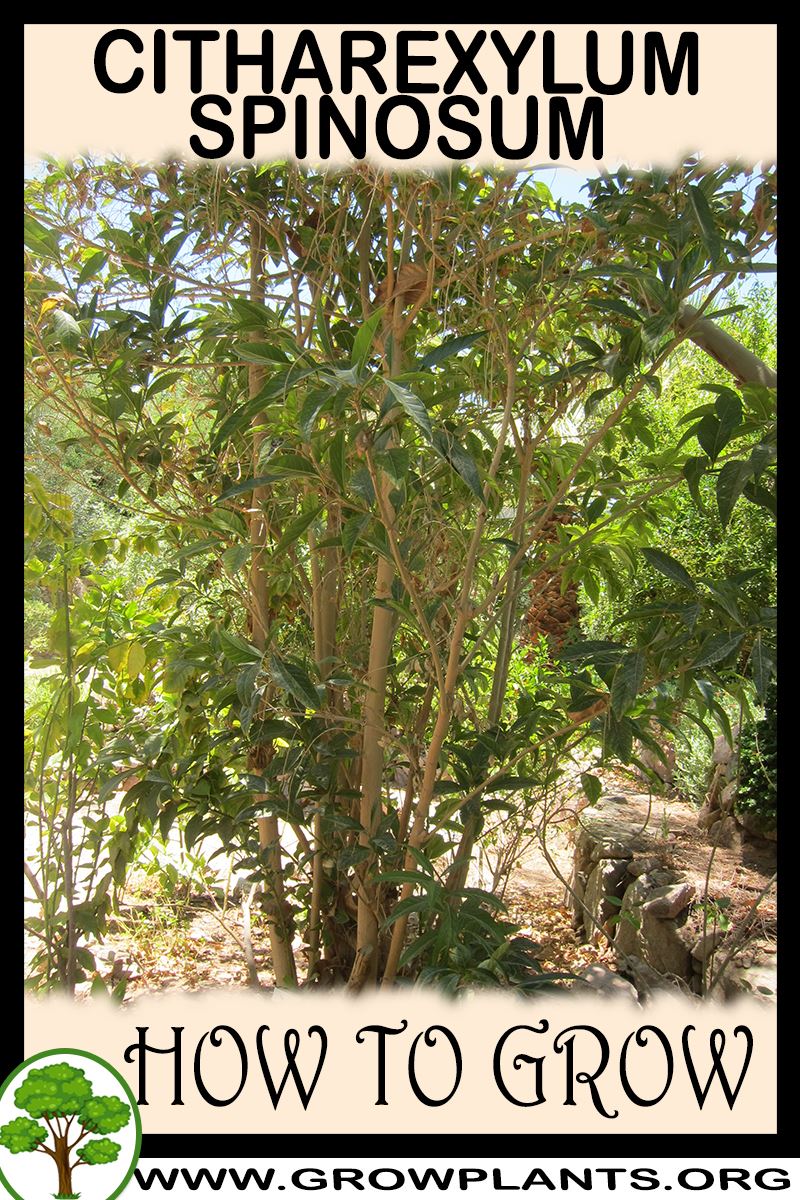



Plant Profile & Key Characteristics
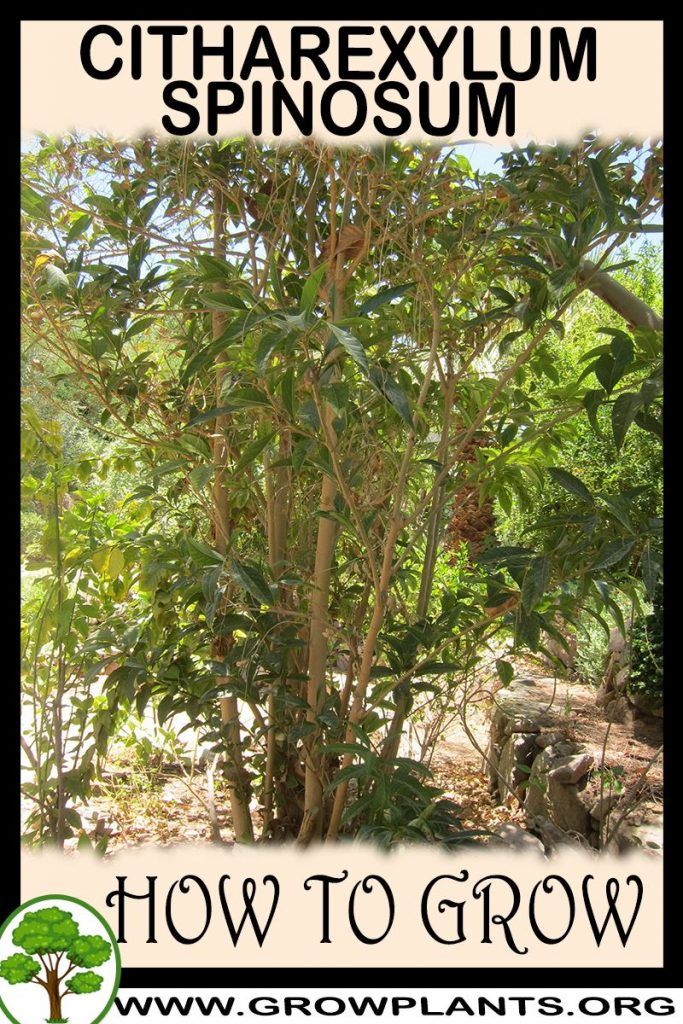
Overview: An evergreen to semi-deciduous tree growing 6-12 m (20-40 ft) tall, grown mainly as an ornamental and traditional medicinal tree, with small edible fruit. Its glossy foliage flushes red or yellow when young.
Quick Specifications
| Specification | Attribute |
|---|---|
| Plant Type / Life Cycle | Perennial (tree) |
| Foliage Type | Evergreen to semi-deciduous |
| Mature Size | 6-12 m (20-40 ft) tall |
| Growth Rate | Fast to moderate |
Growth Form & Structure
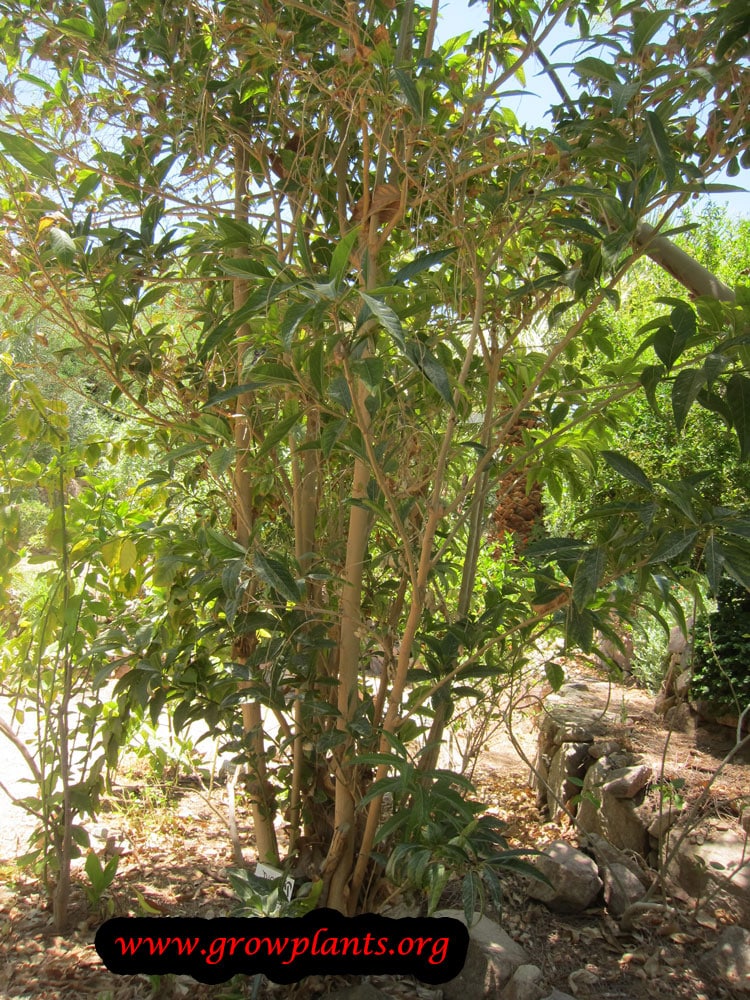
- Height & Spread: 6-12 m (20-40 ft); not suited to container growing
- Growth Habit & Form: Upright evergreen tree with a rounded, glossy canopy
- Lifespan & Maturity: Fast to moderate growth; begins fruiting in about 3-5 years
Anatomy & Physical Features
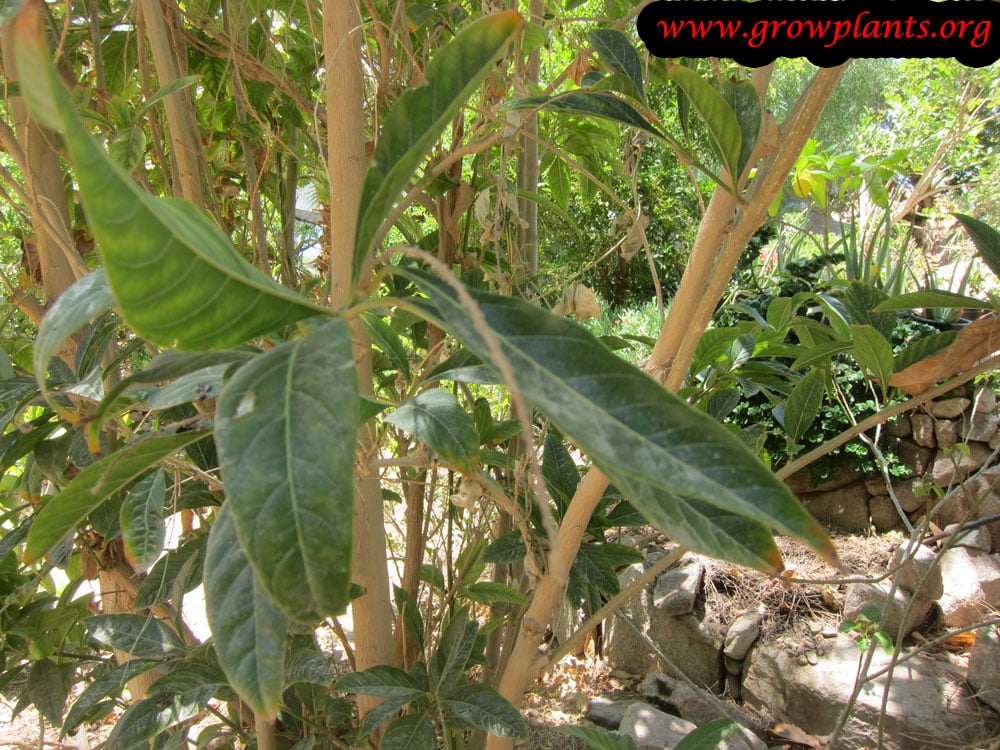
- Leaves & Foliage: Elliptic to ovate, glossy green leaves, reddish or yellow when young
- Flower Characteristics: Small white, fragrant flowers borne on inflorescences
- Fruit Profile: Small fruit ripening red to black, with a bittersweet flavour
Primary Uses & Landscape Value
- Edible Uses: Fruit eaten fresh or made into jam
- Functional & Ornamental Roles: Ornamental shade/specimen tree with traditional medicinal use; flowers and fruit attract bees and birds
Care Guide: Planting, Soil & Watering
Overview: Citharexylum spinosum (Florida fiddlewood) is a fast, adaptable evergreen-to-semideciduous tree that grows in full sun to part shade and well-drained soil. It needs moderate, even moisture and is hardy in zone 9+.
Quick Care Requirements
| Requirement | Ideal Condition |
|---|---|
| Planting Season | Warm season – spring through autumn (also winter in the tropics) |
| Growth Rate | Moderate to Fast |
| Soil Type | Well-draining, adaptable |
| Water Need | Moderate – keep lightly moist; let the surface dry between waterings |
Planting & Establishment
- Best Planting Season: Plant in spring, summer or autumn (also winter in the tropics); it is hardy in zone 9+.
- How to Plant:
- Hole Preparation: Dig a hole as wide as, and no deeper than, the root ball (a little wider to loosen the surrounding soil).
- Soil Amendments: Mix some organic matter or compost into the backfill, and mulch after planting to conserve moisture.
- Planting Depth: Set the root collar at soil level and firm gently, keeping mulch off the trunk. Note it can be invasive, so site it with care.
- Growth Speed & Expectations: A moderate-to-fast grower reaching 6–12 m; it begins bearing its small fruit in about 3–5 years.
Soil, Watering & Drainage Care
- Soil Mix & Drainage Needs: Adaptable but needs free drainage. It is not recommended for containers.
- Watering Schedule & Technique:
- Young / Newly Planted: Water regularly to establish, keeping the soil lightly moist for the first weeks.
- Established: Water moderately and deeply, letting the top few centimetres dry between waterings.
- Seasonal Adjustments: More in hot, dry weather; less in cool or wet periods.
Climate, Light & Hardiness
Florida fiddlewood grows across subtropical, mediterranean, desert, temperate, and tropical climates as an ornamental, medicinal, and lightly edible-fruited tree. It thrives in full sun to half shade and needs a broadly warm, largely frost-free climate.
Quick Climate Specifications
| Climate Zones | Subtropics, Mediterranean, desert, temperate, tropics |
|---|---|
| USDA Hardiness Zones | Approximately 9 and warmer |
| Light Conditions | Full Sun to Half Shade |
Sunlight & Light Exposure
Optimal Light Setup
Full sun to half shade suits this tree across its range of climates.
Temperature Extremes & Hardiness
USDA Hardiness & Regional Limits
Grown from roughly USDA zone 9 upward, spanning desert, mediterranean, and tropical conditions.
Growing in Pots, Balconies & Indoors
Fiddlewood (Citharexylum spinosum) is a 6-12 m (20-40 ft) tree that the grower says is neither a houseplant nor a container plant. It also spreads readily, so it is best as a ground tree – and worth siting carefully because it can be invasive.
Quick Details
- Container Size: Not suited to pots; a large pot only while very young
- Indoor Suitability: Not a houseplant and not a container tree – too large
- Best Spot: Full sun to light shade
- Soil & Drainage: Aerated, organic-rich mix that drains freely
- Watering in Pots: Keep the mix lightly moist – pots dry faster than open ground; water once the surface starts to dry.
Indoors & On the Windowsill
- Houseplant limits: No – far too large and light-hungry to grow indoors.
- Windowsill growing: Not possible; this is a full-sized tree.
- Overwintering: A young potted specimen could be sheltered frost-free, but it will quickly outgrow any pot.
On a Balcony or Patio
- Only while young: A young tree can stand on a patio in a large pot briefly; plan to plant it out – and note it can become invasive, so contain or manage seedlings.
Choosing the Pot, Soil & Long-Term Care
- Pot & drainage: A deep pot with strong drainage holes; skip a standing-water saucer to avoid root rot. Terracotta breathes and dries faster, while glazed or plastic hold moisture longer.
- Potting mix: Well-aerated, organic-rich mix – peat or coir with perlite and a little organic matter; it must drain freely.
- Feeding: Potted plants use up their food faster because nutrients leach out with each watering, so feed a little more often than plants in open ground.
- Moving on: Refresh part of the mix and pot up every couple of years; for established plants, lightly prune the root ball and top growth when you repot. It will outgrow pot life quickly.
Fertilizing & Feeding
Grown mainly as an ornamental and shade tree with a light edible fruit crop as a bonus rather than the main goal, so this tree does well on the lighter end of fruit-tree feeding rather than an intensive orchard routine.
Quick Fertilizing Specs
| Feeding Level | Light – a low-input tree, not an intensively cultivated fruit crop. |
|---|---|
| young_feeding | A nitrogen-forward complete fertilizer to build canopy before the tree begins fruiting. |
| mature_feeding | A balanced, complete fertilizer once the tree is flowering and setting fruit. |
| Main Nutrient Priority | Balanced feeding overall, with attention to potassium and boron once the tree is fruiting. |
| Best Feeding Period | The warm active-growth months. |
| Organic Options | Compost or aged organic mulch spread around, but not against, the trunk. |
| Micronutrients | Iron and manganese are usually covered by a complete fruit-tree fertilizer; boron only matters around bloom and fruit set. |
| Soil pH | Does best in well-drained soil; no strong pH preference is documented for this species. |
| Reduce/Stop Feeding | Ease off feeding as growth slows going into the cooler part of the year. |
Feeding by Growth Stage
Newly Planted Tree
Help a young fiddlewood establish roots in its new spot without pushing top growth the roots can’t yet support.
| Nutrient direction | Keep feeding light and balanced while the root system establishes. |
|---|---|
| Timing | During the first growing season after planting, once new growth resumes. |
| Frequency | A few light feedings spread across the active growing season is usually plenty. |
| Fertilizer types | A balanced, complete fertilizer formulated for young trees, Well-rotted compost worked into the surrounding soil |
| Precautions | Keep fertilizer away from the trunk and taper amounts down as the season cools. |
Young, Non-Bearing Tree
Support steady canopy and root development before the tree reaches fruiting size.
| Nutrient direction | Lean toward a nitrogen-forward feed to drive vegetative growth, paired with a complete fertilizer that supplies routine trace elements. |
|---|---|
| Timing | Through the tree’s active growing seasons, before it reaches bearing size. |
| Frequency | Regular light feedings during warm-season growth flushes, tapering off as growth slows. |
| Fertilizer types | A nitrogen-forward complete fertilizer for young trees, Composted organic matter as a soil-building supplement |
| Routine trace nutrients | iron, manganese |
| Precautions | Watch for leaf scorch, a sign of overfeeding – scale back rather than feeding more often. |
Established, Approaching Fruiting
Shift from a growth-focused feed to a balanced one as the tree matures toward its first fruit set.
| Nutrient direction | Move to a balanced, complete fertilizer rather than a heavily nitrogen-leaning one. |
|---|---|
| Timing | As the tree matures, in the seasons leading up to its first bloom and fruit set. |
| Frequency | A modest, evenly spaced feeding routine through the growing season. |
| Fertilizer types | A balanced, complete fruit-tree fertilizer, Organic mulch renewed around, not against, the trunk |
| Routine trace nutrients | iron, manganese |
| Precautions | This species can be vigorous; avoid over-stimulating growth with excess nitrogen. |
Mature, Fruit-Bearing Tree
Sustain flowering and fruit development on a tree that is now fruiting regularly.
| Nutrient direction | Keep a balanced feeding approach with some attention to potassium to support fruit development. |
|---|---|
| Timing | Around the tree’s bloom and fruit-development window, tapering as fruit ripens. |
| Frequency | A light, balanced feeding routine through the growing season is generally enough for this lower-demand tree. |
| Fertilizer types | A balanced, complete fruit-tree fertilizer with modest potassium emphasis, Organic mulch to build soil fertility over time |
| Routine trace nutrients | iron, manganese |
| Precautions | Avoid heavy nitrogen at bloom time, which can favor leafy growth over fruit set. |
Nutrient Deficiency Signs & Corrections
Yellowing between the veins on newer leaves while the veins themselves stay green.
| Possible causes | High soil pH locking out available iron, Waterlogged or compacted soil limiting root uptake, Genuine iron shortage in poor or heavily leached soil |
|---|---|
| Appears first on | the newest leaves |
| What to check | Soil drainage and compaction around the root zone, Soil pH if testing is available, Whether older leaves remain unaffected, a hallmark of iron chlorosis |
| Possible correction | Improve drainage and aeration first; if pH is driving it, correct it gradually and consider a chelated iron product per its label. |
General pale green to yellow color across older leaves, with slowed new growth.
| Possible causes | Insufficient nitrogen in the soil, Waterlogged roots limiting nutrient uptake, Nitrogen leaching in fast-draining soil |
|---|---|
| Appears first on | older, lower leaves |
| What to check | Overall growth rate and leaf color trend over the season, Soil drainage and watering routine, Recent fertilizing history |
| Possible correction | Introduce a balanced or nitrogen-leaning fertilizer and reassess once new growth emerges. |
Marginal browning or scorch along the edges of older leaves.
| Possible causes | Potassium depletion during fruit development, Drought stress reducing nutrient uptake, Excess soil salts interfering with potassium availability |
|---|---|
| Appears first on | older leaves, along the leaf margins |
| What to check | Whether scorch coincides with heavy fruit set, Recent watering consistency, Soil salinity if the site is irrigated with hard water |
| Possible correction | Support with a balanced fertilizer that includes potassium, and keep watering consistent during fruit development. |
Pruning, Training & Seasonal Maintenance
Citharexylum spinosum is pruned essentially for form rather than for cropping – the source guidance is simply “for design,” reflecting its role as a fast-to-medium growing ornamental and shade tree with only secondary edible fruit. It tolerates cuts at any time of year, so timing is driven by growth flushes and shaping goals rather than a fixed dormant or post-harvest window; the main objectives are a clean shade-tree structure, controlled height and spread, and, where the plant self-seeds too freely, limiting seed dispersal.
Quick Pruning & Maintenance Specs
| Pruning Tolerance | Moderate–High |
| Primary Pruning Window | All year, timed around active growth flushes |
| Typical Frequency | Annual to biennial shaping, plus sanitary removal as needed |
| Main Objective | Clean shade-tree structure with controlled height and spread |
| Young Plant Priority | Establish a single dominant leader and well-spaced scaffold before the tree outgrows easy shaping |
| Mature Plant Priority | Crown raising for clearance, size control on a fast grower, thinning of crossing growth |
| Best Tool Type | Loppers and a pruning saw for scaffold work; pole pruner for upper-canopy height control once mature |
| Avoid Heavy Pruning During | Peak spring bloom, if flowering display or fruit for wildlife is wanted that season |
Pruning by Plant Age & Size
Newly Established
Remove only damaged growth; select and secure a single central leader early, since a fast, upright grower like this is easiest to correct while still small.
Young / Formative
Central-leader training with height raised gradually to the desired clearance; because growth is fast to medium, check the framework every season rather than every few years so codominant stems or narrow crotches can be corrected before they set structurally.
Mature / Established
Ongoing crown maintenance: raise the canopy as needed for pedestrian or vehicle clearance under a 6–12 m shade tree, thin crossing or rubbing limbs, and head back height or spread as the design calls for, given the plant’s willingness to be cut at any time.
Structural Pruning & Training
Remove crossing and rubbing branches to keep a clean crown; because this species can grow fast and has noted invasive tendencies, size and spread control through regular shaping also helps keep it within its intended footprint rather than seeding into surrounding areas unchecked.
Special Growth to Remove
Spent flower clusters can be removed after bloom where seed spread is a concern – since the small fruit are bird-dispersed and the species is noted as invasive in some settings, deadheading before fruit ripens is a practical way to limit self-seeding without giving up the spring flower display most years.
Tools
Loppers and a pruning saw handle the branch sizes typical of scaffold and crown work on this tree; a pole pruner is worth adding once the tree reaches its mature 6–12 m height, for raising or thinning upper growth without climbing.
Tool Hygiene & Disease Risk
Routine – only aphids and spider mites are noted as issues, neither of which is a tool-transmissible pathogen, so clean, sharp tools are sufficient.
Cut Placement & Technique
Use thinning cuts back to a lateral or the branch collar for crown work rather than indiscriminate heading, which spoils the natural shade-tree form; stage the removal of any large limb (undercut, then finish from above) to avoid bark tearing on bigger crown-raising cuts.
Heavy Pruning & Rejuvenation
Tolerated well given the fast growth rate and year-round pruning window described for this species – a crown that has gotten away can be reduced significantly and will refill quickly, though this comes at the cost of that season’s flowers.
Post-Pruning Care
After significant crown opening, watch newly exposed bark for sunburn in full sun; keep an eye on regrowth vigour, since a fast grower can need a follow-up shaping pass sooner than a slow-growing tree would.
Common Pruning Mistakes
Letting codominant leaders develop unchecked while the tree is young and fast-growing, which is much harder to correct later on a 6–12 m tree; flush cuts when raising the crown, which slow wound closure on a tree already prone to rapid regrowth.
When NOT to Prune
Hold off heavy crown work at peak spring bloom if the flower display or the bird-attracting fruit that follows is wanted that season.
Recommended Tools (by task)
- Formative leader/scaffold correction on a young tree – loppers: clean cuts on the pencil-to-thumb wood typical at this stage
- Crown raising and thinning on a maturing tree – pruning_saw: for scaffold-sized limbs beyond lopper capacity
- Upper-canopy height and clearance control on a mature 6–12 m tree – pole_pruner: reaches high growth without climbing
Propagation Guide
Citharexylum spinosum is most commonly and easily grown from seed – the site’s own note that the tree can behave invasively points to seed germinating and naturalizing readily – and grafting is not necessary. Semi-hardwood cuttings are sometimes used in nursery propagation of evergreen ornamental trees like this one as a secondary option. Propagation is Easy from seed.
Quick Propagation Specs
| Best Propagation Method | Seed |
| Alternative Methods | Semi-hardwood stem cuttings |
| Propagation Difficulty | Easy (seed) |
| Best Propagation Season | Spring through autumn (also possible in winter in tropical climates), matching the site’s planting season |
Growing from Seed
Seed Handling & Viability
The site does not detail seed handling for this species. As general guidance for a bird-dispersed, fleshy-fruited tree like this, clean the pulp away from the seed before sowing, since residual pulp can encourage mold and inhibit germination.
Sowing Season
Sow within the site’s planting season – spring through autumn, and also winter in tropical climates.
Germination Conditions
A moist, well-drained propagation mix in full sun to half shade, matching the site’s growing conditions for the mature plant; exact germination timing is not documented for this species.
Stem Cuttings
Cutting Type
Semi-hardwood cuttings, as commonly used for evergreen ornamental trees and shrubs of this type.
Best Timing
During the warm growing season.
Rooting Setup
A well-draining propagation mix kept warm and humid; specific rooting details are not documented for this species, so seed remains the better-supported, more reliable method.
Rooting Hormone
May be beneficial to improve consistency, though not confirmed as necessary.
Bloom & Flower Guide
Quick Details
- Bloom Season: Spring
- Flower Appearance: Small white fragrant flowers in slender drooping spikes
- Edibility: The flowers are not eaten
Detailed Blooming Overview
Florida fiddlewood flowers in spring, hanging out slender sprays of tiny white flowers that carry a sweet fragrance. The scented bloom is one of the tree’s main ornamental attractions and a good nectar source before the small dark fruit forms.
Flower Characteristics
- Small and white, pleasantly fragrant.
- Carried in slender, often drooping spike-like clusters.
Bloom Care & Thinning
- Pruning for bloom: Prune to shape as needed; flowering follows on the new growth.
- Pollination: The flowers are worked by bees.
- Light: Full sun to half shade supports flowering.
Fruit & Uses
Note: this is a minor, little–documented wild edible rather than a widely grown food crop – treat the following as general guidance rather than a guarantee, and try only a small amount the first time. The small fruit is the only edible part, eaten fresh or made into jam once fully ripe.
Quick Edible Specs
| Edible Parts | Fruit |
|---|---|
| Main Use(s) | Culinary – fresh eating (minor/occasional use), jam |
| Eaten Raw or Cooked | Raw when fully ripe; also cooked into jam |
| Preparation Required | None beyond picking fully ripe fruit; not well documented as a cultivated food crop |
| Harvest Season | Summer |
| Time to First Harvest | Several years for a young tree to begin fruiting (see Propagation) |
| Storage | Best used fresh or made into jam soon after picking |
| Safety/Toxicity Caveat | No specific toxicity is documented for the ripe fruit, but this species is not a well–established food crop – confirm identification and sample cautiously |
Fruit
The small fruit ripens from red to black and has a bitter–sweet flavour. It is simply picked from the tree by hand once fully coloured black and soft. Ripe fruit can be eaten out of hand or cooked down into jam; birds are strong competitors for the crop.
Harvesting
Pick in summer once fruit has darkened fully to black, a stage beyond the red colour it passes through while ripening. There is no special harvest technique beyond hand–picking.
Preparation, Uses & Safety
Ripe fruit is eaten raw or cooked into jam. Because this species is grown mainly as an ornamental and shade tree rather than as a food crop, and its edible use is not well documented in mainstream food references, treat it as a minor, occasional edible: confirm identification, use only fully ripe (black) fruit, and try a small amount first.
Pests, Diseases & Troubleshooting
Overview: Fiddlewood is a hardy ornamental tree (Verbenaceae) with few serious problems; its signature pest is the fiddlewood leafroller caterpillar, alongside general sap-suckers like scale, aphids and whitefly, and cosmetic sooty mould and leaf spots in humid, crowded conditions. Sanitation, airflow and encouraging natural enemies keep it healthy.
Quick Troubleshooting Overview
| Issue / Pest | Main Symptom | Primary Solution |
|---|---|---|
| Fiddlewood leafroller | Rolled/tied leaves, skeletonised foliage | Handpick/prune rolls, Bt, conserve parasitoids |
| Scale insects | Bumps on twigs/leaves, honeydew, sooty mould | Prune, horticultural oil, ant control |
| Aphids & whitefly | Sticky curled tips, clouds of white flies | Water jet, soap/oil, yellow sticky traps |
| Caterpillars | Chewed, ragged leaves | Handpick, Bt, encourage birds |
| Sooty mould | Black film over honeydew | Control sap-suckers; it then clears |
| Leaf spot | Brown spots in humid weather | Airflow, sanitation, copper if severe |
Common Pests & Management
- Fiddlewood leafroller (Epicorsia oedipodalis):
- Symptoms: The characteristic pest: caterpillars roll, tie and web the leaves together and feed inside, skeletonising foliage; outbreaks can partly defoliate the tree, though it usually recovers with fresh flush.
- Prevention & Control: Prune out and destroy rolled, webbed leaves and hand-pick caterpillars. Conserve parasitic wasps and predators, and encourage insectivorous birds. Bacillus thuringiensis (Bt) or spinosad control heavy outbreaks selectively; the tree tolerates moderate defoliation, so spray only when needed.
- Scale insects (Coccus spp., Saissetia spp., armored scales):
- Symptoms: Brown, black or waxy bumps along twigs, leaf veins and stems, with sticky honeydew and black sooty mould; heavy scale weakens shoots and yellows leaves.
- Prevention & Control: Prune out encrusted twigs, control the ants that protect scale, and conserve parasitic wasps and ladybirds. Horticultural oil smothers crawlers – cover undersides and repeat for successive generations.
- Aphids and whitefly (Aphis spp.; Bemisia tabaci, Trialeurodes vaporariorum):
- Symptoms: Aphids cluster on tender flush, curling tips and dropping honeydew; whiteflies rise in white clouds when disturbed and also excrete honeydew, feeding sooty mould.
- Prevention & Control: Hose off colonies, hang yellow sticky traps for whitefly, and conserve ladybirds, lacewings and parasitic wasps (Encarsia). Treat hot-spots with insecticidal soap or horticultural oil, covering leaf undersides; avoid excess nitrogen.
- Leaf-chewing caterpillars (various Lepidoptera larvae):
- Symptoms: Ragged holes and chewed margins on leaves from assorted caterpillars, sometimes with frass and light webbing.
- Prevention & Control: Hand-pick where practical, encourage birds and predatory insects, and use Bacillus thuringiensis (Bt) for heavier feeding. Keep the tree vigorous so it out-grows minor damage.
- Mealybugs (Planococcus citri, Ferrisia virgata):
- Symptoms: White cottony clusters in leaf axils and under leaves with honeydew and sooty mould, mainly on sheltered or stressed growth.
- Prevention & Control: Dislodge with a water jet or dab of oil, control tending ants, and conserve ladybirds and lacewings; remove badly infested shoots.
Diseases & Fungal Issues
- Sooty mould (complex of fungi on honeydew):
- Symptoms: A black, soot-like film coating leaves, twigs and anything below, wherever scale, aphids, whitefly or mealybugs leave honeydew; it blocks light but does not infect tissue.
- Treatment & Management: Control the underlying sap-sucking pests and the mould gradually weathers off; hose or wipe leaves of prized specimens. It is a symptom, not a primary disease.
- Leaf spot (Cercospora spp., Colletotrichum spp.):
- Symptoms: Brown to greyish leaf spots and blotches, sometimes with yellow halos, in warm humid weather or on crowded, shaded trees; premature leaf drop if severe.
- Treatment & Management: Improve airflow and light with pruning, remove and destroy affected and fallen leaves, and avoid overhead wetting. Copper-based protectant fungicide only during prolonged wet spells.
- Root and collar rot (Phytophthora spp., Pythium spp.):
- Symptoms: Wilting, dieback and dark, decayed roots or basal bark on trees in heavy, waterlogged soil.
- Treatment & Management: Plant in free-draining soil, keep irrigation off the trunk, and avoid waterlogging. Remove severely affected trees and improve drainage before replanting.
- Wood decay and dieback (Botryosphaeria and other canker fungi):
- Symptoms: Dead, cankered branches and dieback, usually entering through wounds or drought/stress-weakened wood.
- Treatment & Management: Prune out dead and cankered wood well below the damage in dry weather, make clean cuts, and keep the tree watered and un-stressed; avoid unnecessary wounding.
Growing Difficulties & Abiotic Problems
- Frost sensitivity:
- Cause & Symptoms: Fiddlewood is subtropical and frost-tender; hard cold blackens young growth and can defoliate or kill young trees.
- Correction Strategy: Grow in a warm, sheltered, frost-free position, protect young trees over cold nights, and avoid exposed cold sites.
- Messy fruiting and self-seeding:
- Cause & Symptoms: The tree fruits heavily, dropping berries that stain and germinate; it can become weedy in warm climates.
- Correction Strategy: Site away from paving and pools, sweep up fallen fruit, and remove seedlings; check local invasiveness before planting.
- Wind and salt exposure:
- Cause & Symptoms: Coastal wind and salt scorch leaves and can break brittle branches.
- Correction Strategy: Provide a windbreak in exposed coastal sites and prune to a strong, open framework.
- Leaf colour change and drop:
- Cause & Symptoms: Older leaves naturally turn orange-red before dropping, which can be mistaken for disease; drought stress worsens leaf fall.
- Correction Strategy: Recognise this as normal seasonal behaviour, and keep soil moisture even to reduce stress-related shedding.
What Helps – Products & Tools
Manage fiddlewood mainly by sanitation, airflow and encouraging natural enemies. Useful products include Bacillus thuringiensis (Bt) or spinosad for the leafroller and caterpillars, horticultural oil and insecticidal soap for scale, aphids and mealybugs, yellow sticky traps for whitefly, and copper-based protectant fungicide for persistent leaf spot. Spray oils and Bt in the evening to protect pollinators.