Plant Profile & Key Characteristics
Overview: A compact herbaceous perennial reaching 20-60 cm (8-24 in), grown mainly as an ornamental groundcover and cut flower with silver-edged foliage. It is evergreen in mild climates and dies back in colder ones, and its late-season blooms are a valued pollinator magnet.
Quick Specifications
| Specification | Attribute |
|---|---|
| Plant Type / Life Cycle | Perennial (herbaceous) |
| Foliage Type | Evergreen (deciduous in cold climates) |
| Mature Size | 20-60 cm (8-24 in) tall |
| Growth Rate | Moderate to fast |
| Toxicity | Foliage mildly toxic to cats and dogs (contains pyrethrins) |
| Hardiness | USDA zones 5-10a |
Growth Form & Structure
- Height & Spread: 20-60 cm (8-24 in) tall in the ground; also grows well in planters and containers
- Growth Habit & Form: Low, mounding to spreading clump-forming perennial; can be vigorous/invasive
- Lifespan & Maturity: Reaches full size within a single season; a long-lived perennial
Anatomy & Physical Features
- Leaves & Foliage: Green leaves with white (silver) margins, linear and deeply lobed, giving the ‘gold and silver’ effect
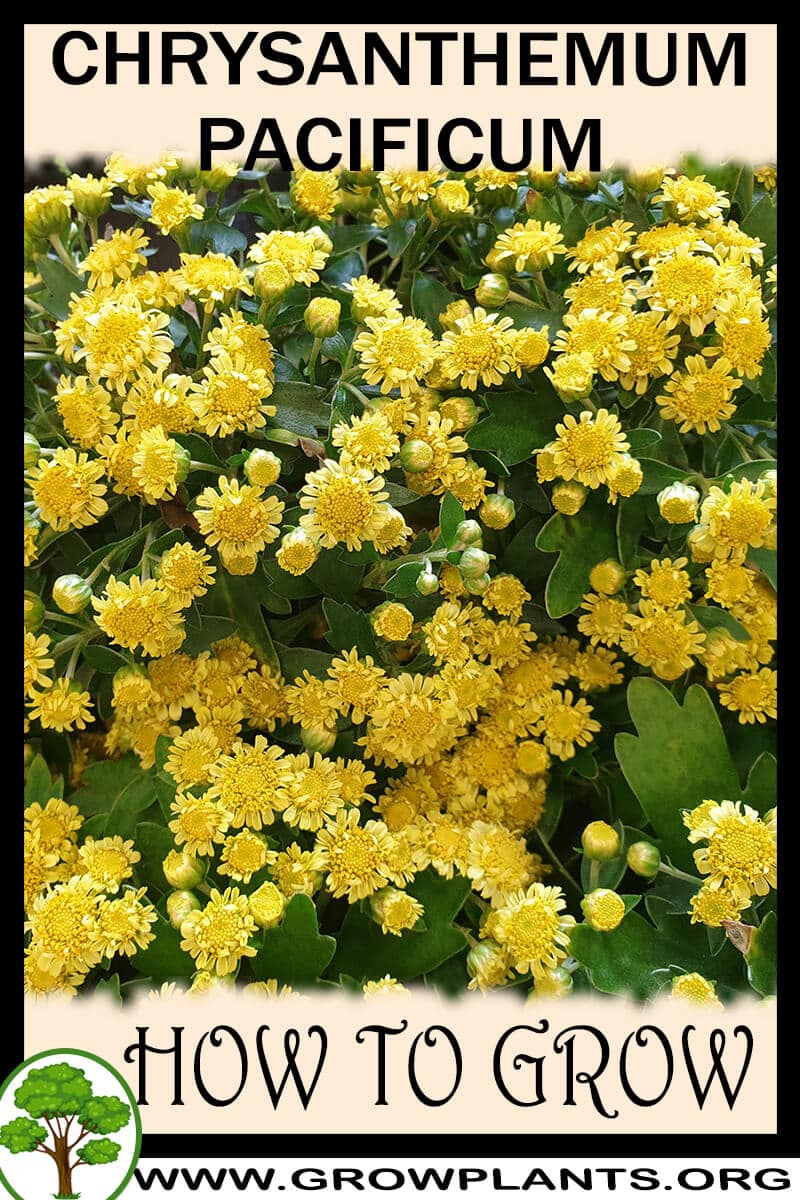
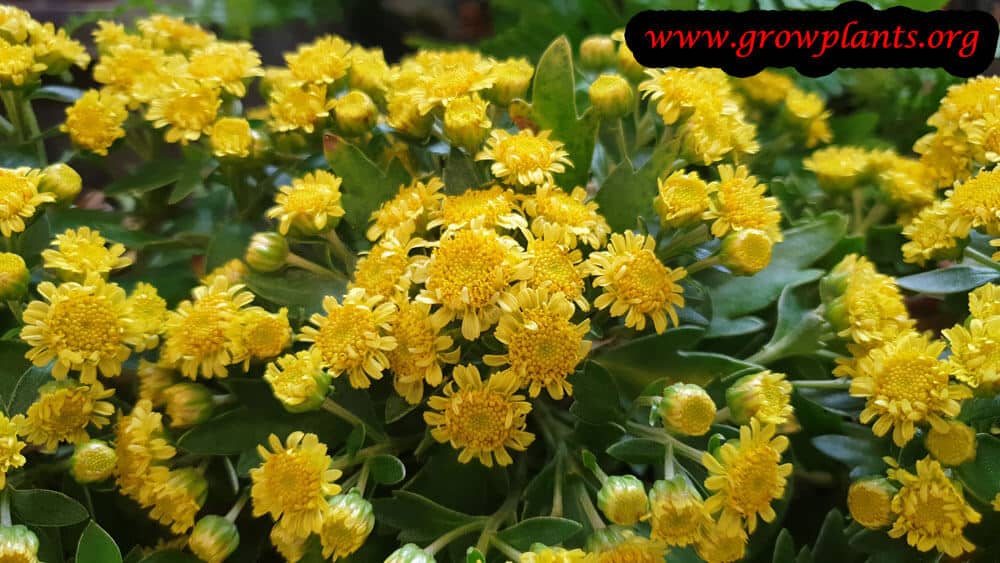
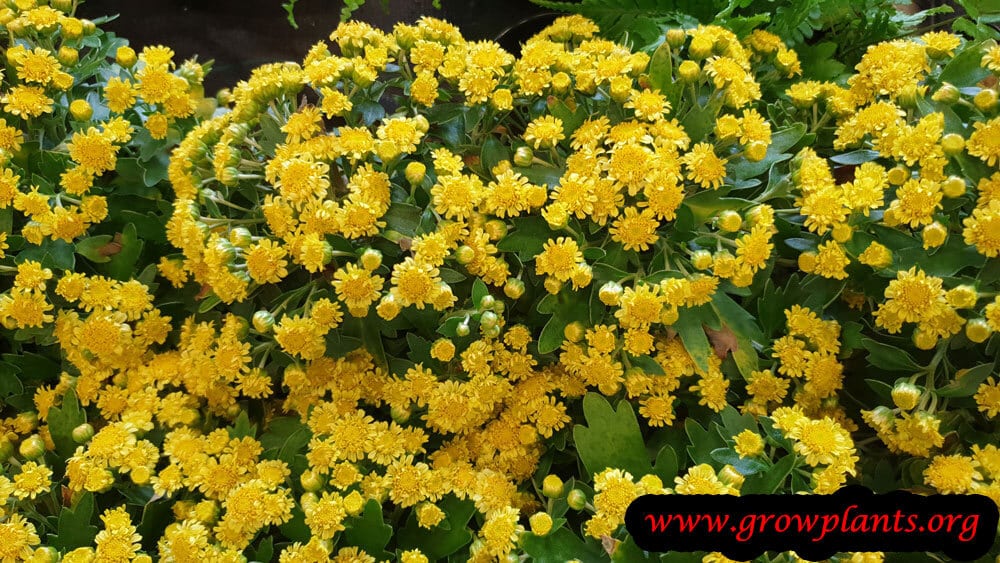
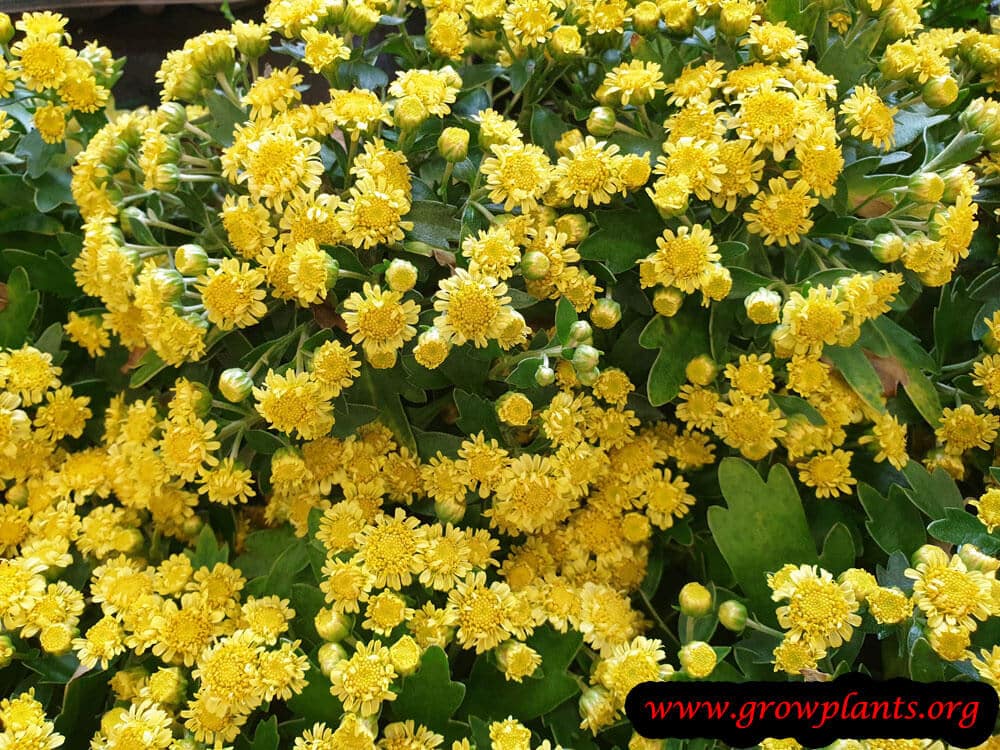
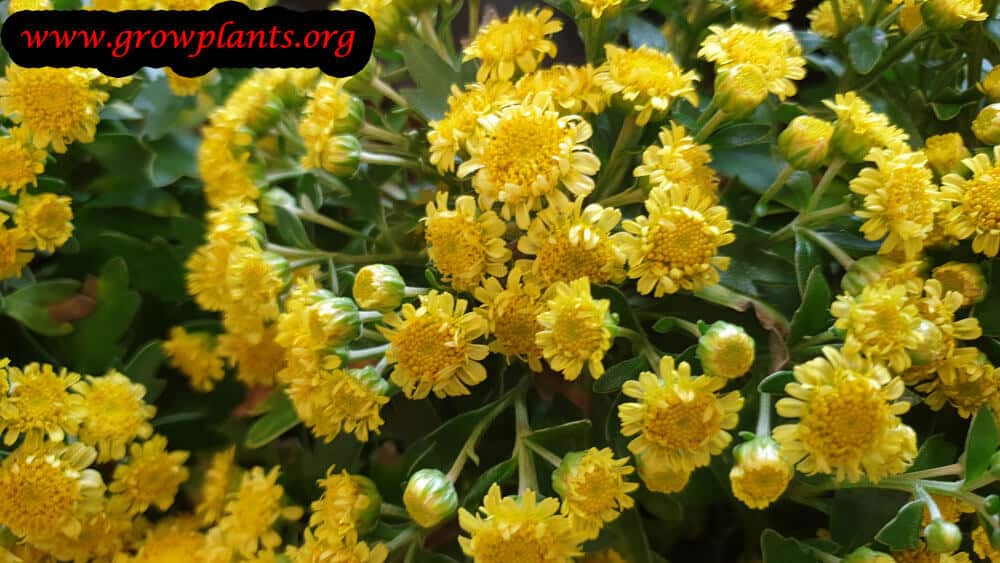
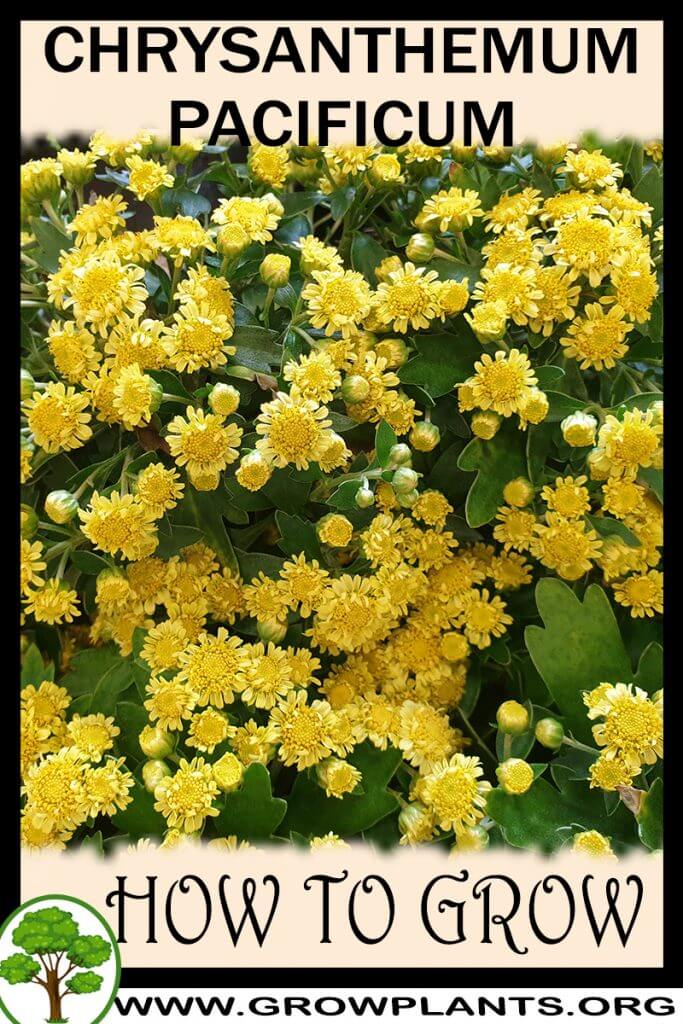
- Flower Characteristics: Small yellow pom-pom flowerheads in the late season (see the Bloom accordion for detail)
Primary Uses & Landscape Value
- Functional & Ornamental Roles: Ornamental groundcover and border plant, cut flower, pollinator plant, and container subject
Care Guide: Planting, Soil & Watering
Overview: Chrysanthemum pacificum (Ajania) is a hardy, spreading ornamental perennial that thrives in cool weather and full sun to part shade in ordinary, well-drained soil. It needs only moderate, even moisture and tolerates a range of temperate to mediterranean conditions (zones 5–10a).
Quick Care Requirements
| Requirement | Ideal Condition |
|---|---|
| Planting Season | Spring to summer, after the last frost |
| Growth Rate | Moderate to Fast |
| Soil Type | Ordinary, well-draining |
| Water Need | Moderate – let the top of the soil dry between waterings |
Planting & Establishment
- Best Planting Season: Plant in spring or summer once frost has passed; it grows in cool temperate to mediterranean conditions (zones 5–10a).
- How to Plant:
- Hole Preparation: Dig a hole about twice the width of the root ball and the same depth.
- Soil Amendments: Loosen the soil and mix in some compost or organic matter, especially if drainage is poor.
- Planting Depth: Set the crown level with the surrounding soil – do not bury it. Note that it spreads vigorously and is considered invasive, so give it room or contain it.
- Growth Speed & Expectations: A moderate-to-fast grower forming a spreading, evergreen-to-deciduous clump 20–60 cm tall.
Soil, Watering & Drainage Care
- Soil Mix & Drainage Needs: Undemanding but needs free drainage; avoid soggy soil. It also grows well in containers with a well-drained mix and drainage holes.
- Watering Schedule & Technique:
- Young / Newly Planted: Water regularly to establish, keeping the soil lightly moist.
- Established: Once established it is fairly tough – water moderately, letting the top few centimetres of soil dry between waterings.
- Seasonal Adjustments: More water in summer heat; much less in cool, wet winters.
Climate, Light & Hardiness
Chrysanthemum pacificum (Ajania pacifica) is a cool-weather-loving perennial suited to temperate, Mediterranean, and subtropical climates, thriving in full sun to half shade. It is reliably hardy from USDA zone 5 through 10a, with site data specifically noting a preference for cool conditions over intense heat.
Quick Climate Specifications
| Climate Zones | Temperate, Mediterranean, subtropical |
|---|---|
| USDA Hardiness Zones | 5–10a |
| Approx. Survival Minimum | Roughly −29 to −23°C (−20 to −10°F) for the dormant crown, consistent with USDA zone 5 |
| Frost Tolerance | High |
| Light Conditions | Full Sun to Half Shade |
| Wind Tolerance | Moderate to High |
Sunlight & Light Exposure
Optimal Light Setup
Full sun brings the best flowering and the most compact, silvery foliage; half shade is tolerated with slightly looser growth.
Direct Sun Requirement
Not obligatory but recommended for the best bloom and foliage color.
Shade & Heat Management
In the warmer end of its range (subtropical, zone 9–10a), afternoon shade and consistent moisture help it cope with heat, since site data specifically flags a preference for cool weather over hot conditions.
Best Exposure / Orientation
An open, sunny bed with good air circulation suits its mounding habit.
Temperature Extremes & Hardiness
USDA Hardiness & Regional Limits
Reliably hardy zone 5–10a per site data – a genuinely cold-hardy herbaceous perennial, not merely a warm-climate plant.
Cold Damage & Winter Protection
Top growth dies back with hard frost in a typical dormant-perennial pattern; the crown and roots tolerate winter cold well within its rated zone range.
Frost Sensitivity
Low – the dormant crown withstands seasonal freezing; only actively growing spring foliage is vulnerable to a late hard frost.
Extreme Heat Tolerance
Limited – site data explicitly favors cool weather. In hot-summer or subtropical climates at the upper end of its zone range, it benefits from afternoon shade and will not perform as vigorously as in cooler conditions.
Wind, Humidity & Microclimate
Humidity Preferences
Adapted to the drier air of Mediterranean and temperate climates; does not require high humidity.
Dry-Air Tolerance
Moderate to high.
Wind Tolerance
Moderate to high; its compact, mounding growth habit resists wind damage.
Rainfall & Seasonal Moisture
Prefers well-distributed moisture without prolonged waterlogging; adapted to the seasonal rainfall patterns of Mediterranean and temperate climates.
Microclimate Recommendations
An open, sunny, well-ventilated spot with reliable winter cold suits this species best; in hot-summer or subtropical areas, some afternoon shade helps offset the site-noted preference for cool weather.
Growing in Pots, Balconies & Indoors
Chrysanthemum pacificum (Ajania, gold-and-silver chrysanthemum) is a mounding perennial (20-60 cm / 8-24 in) grown for its silver-edged foliage and late yellow buttons. It is not a houseplant – it needs full sun – but it makes a neat, hardy container plant for a sunny patio or balcony, and a pot helps contain its invasive spread.
Quick Details
- Container Size: A medium pot; it spreads at the base, so divide every year or two
- Indoor Suitability: Not a houseplant – it needs full sun
- Best Spot: Full sun to half shade outdoors
- Soil & Drainage: Ordinary well-drained potting mix
- Watering in Pots: Average; let the surface dry between waterings
Indoors & On the Windowsill
- Not indoors: The grower marks it unsuitable indoors – it is a sun-loving perennial that needs strong light to stay compact and flower.
- Overwintering: Hardy – a potted plant can stay outdoors over winter; it dies back and reshoots in spring.
- Note: The grower flags it as invasive – a pot keeps its spreading habit in check.
On a Balcony or Patio
- Light & shape: Give it the sunniest spot for tight, silvery growth; pinch it back in early growth for a denser, self-supporting mound.
- Practicalities: Divide every year or two to refresh it and stop it filling the pot.
Choosing the Pot, Soil & Long-Term Care
- Pot & drainage: A medium pot with strong drainage holes; skip a standing-water saucer.
- Potting mix: Ordinary free-draining potting mix.
- Feeding: Potted plants exhaust and leach nutrients faster than those in the ground, so feed lightly during active growth – more often than you would in open soil.
- Repotting & division: Lift and divide every year or two, refreshing the mix and curbing its spread.
Fertilizing & Feeding
A moderate feeder: balanced feeding through spring and summer growth supports its mounding, white-edged foliage and pollinator-friendly yellow blooms, with feeding easing off as growth slows in cool weather.
Quick Fertilizing Specs
| Feeding Level | Moderate feeder |
|---|---|
| Main Nutrient Priority | Balanced feeding with adequate nitrogen for foliage, easing toward bloom support as flowering nears |
| Best Feeding Period | Spring through summer while the plant is actively growing |
| Organic Options | Compost or organic matter worked into the bed |
| Micronutrients | Usually met by a complete fertilizer; correct only a diagnosed issue |
Feeding by Growth Stage
Spring growth and mound formation
Build the plant’s dense, mounding foliage and its distinctive white-margined leaves as growth resumes in cool spring weather.
| Nutrient direction | A balanced fertilizer with adequate nitrogen supports full foliage and a well-shaped mound. |
|---|---|
| Timing | As new growth resumes in spring while temperatures are still cool. |
| Frequency | A light feeding as growth resumes, repeated if foliage looks thin. |
| Fertilizer types | A balanced complete fertilizer, Compost or organic matter worked into the bed |
| Precautions | This plant favors cool weather; avoid heavy feeding right before a hot spell, which stresses growth more than nutrition can fix. |
Spring to summer bloom
Support the pompom-shaped yellow flowers that attract pollinators and work well as cut flowers.
| Nutrient direction | Continue balanced feeding with adequate nitrogen; a high-phosphorus product is not needed to drive bloom. |
|---|---|
| Timing | Through the spring to summer bloom period. |
| Frequency | A light feeding as buds form is usually enough to carry the plant through bloom. |
| Fertilizer types | A balanced complete fertilizer at a light rate |
| Precautions | Avoid heavy nitrogen once buds form, which can favor foliage over flowering and result in floppy stems. |
Post-bloom rest
Let the plant rest once flowering finishes, whether it holds its foliage or dies back where grown as deciduous.
| Nutrient direction | None – withhold fertilizer once the bloom period ends and growth clearly slows. |
|---|---|
| Timing | From the end of bloom through autumn pruning and into winter. |
| Frequency | No feeding during this rest period. |
| Fertilizer types | No feeding at this stage; do not fertilize until active growth resumes in spring. |
| Precautions | Do not fertilize a plant that has finished blooming and slowed growth; resume feeding only once new spring growth appears. |
Nutrient Deficiency Signs & Corrections
Older, lower leaves fade to pale green or yellow and overall mound growth is thin.
| Possible causes | low available soil nitrogen, poor or depleted bed soil, heavy competition from nearby plants |
|---|---|
| Appears first on | older, lower leaves |
| What to check | soil organic matter, recent feeding history, root crowding or competition |
| Possible correction | Apply a balanced fertilizer and work in organic matter, then watch for greener regrowth. |
New leaves emerge yellow while the veins remain green.
| Possible causes | soil pH too high for good iron availability, waterlogged soil limiting root uptake, cool, wet spring soil temporarily slowing nutrient uptake |
|---|---|
| Appears first on | newest leaves |
| What to check | soil pH and drainage, watering consistency, recent temperature and moisture conditions |
| Possible correction | Improve drainage, correct pH toward neutral where practical, or apply a chelated iron product per its label. |
Leaf margins brown or scorch despite adequate watering.
| Possible causes | fertilizer salt buildup from overfeeding, inconsistent watering that concentrates salts, poor bed or container drainage |
|---|---|
| Appears first on | leaf margins and tips |
| What to check | recent feeding amounts, drainage, watering consistency |
| Possible correction | Ease off feeding, water thoroughly to flush accumulated salts, and return to lighter feeding afterward. |
Pruning, Training & Seasonal Maintenance
Chrysanthemum pacificum (Ajania pacifica) is grown as a low mounding perennial for its silver-margined foliage and yellow pompom flowers. It tolerates moderate pruning, and its own care notes describe maintenance happening all year – removing infected leaves and shaping for design as needed – on top of which an early-season cutback of the previous year’s tired top growth keeps the mound dense. Because flowers form on the current season’s new growth, none of this shaping or cutback timing costs the plant its bloom.
Quick Pruning & Maintenance Specs
| Pruning Tolerance | Moderate |
| Primary Pruning Window | Late Winter – Early Spring (cut back old top growth before new shoots emerge), plus ongoing sanitary/design trims year-round |
| Secondary Maintenance Window | Pinching in spring – early summer to control mound density |
| Typical Frequency | Ongoing light trims plus one annual hard cutback |
| Main Objective | Compact mounded habit; remove infected leaves; deadhead |
| Young Plant Priority | Pinch tips to establish a bushy mound |
| Mature Plant Priority | Annual cutback of old growth, ongoing deadheading, shaping |
| Best Tool Type | Precision snips |
| Avoid Heavy Pruning During | Peak spring – summer bloom, while pollinators are actively visiting |
Pruning by Plant Age & Size
Newly Established
Light pinching only, once the plant is rooted in, to begin building a bushy base.
Young / Formative
Repeated pinching through the first growing season builds a dense mound – there is no leader or central stem system to train in this low, spreading habit.
Mature / Established
Annual cutback of old top growth, ongoing deadheading through the bloom season, and shaping/design trims as needed.
Seasonal Pruning Schedule
Pre-Growth/Early-Spring
Objective: clear the previous season’s tired growth before new shoots emerge.
Remove: old, dead or weathered stems and foliage.
Do not remove: live basal shoots already emerging.
Expected response: a vigorous, fresh mound.
Flowering/fruiting impact: none negative – this sets up the season’s bloom.
Ongoing Sanitary
Objective: keep foliage clean and the mound tidy, per the plant’s own all-year pruning guidance.
Remove: infected or pest-damaged leaves (aphids and spider mites are noted issues), any dieback.
Do not remove: healthy silver-margined foliage, which is the plant’s main display value outside of bloom.
Expected response: reduced spread of pests/disease through the dense mound.
Post-Flowering
Objective: deadhead spent pompom flowerheads.
Remove: spent flower stems.
Do not remove: side buds and foliage.
Expected response: a tidier plant and possibly a further flush.
Flowering/fruiting impact: prevents energy loss to seed-set and helps curb the plant’s noted invasive spreading tendency, without reducing next season’s bloom.
Structural Pruning & Training
No true structural framework – pinching for density is this plant’s equivalent of training. Thinning is generally not beneficial here: the mounded, silver-foliage look depends on density, so avoid opening up the canopy the way you might on a woody shrub.
Special Growth to Remove
- Infected or pest-damaged leaves (aphids, spider mites).
- Spent flower stems.
- Rooted or spreading stems at the mound’s edge, if containing the plant’s noted invasive spread is a goal.
Container & Small-Space Pruning
In containers, pinch more assertively to keep the mound in proportion to the pot, with more frequent light shaping trims than an in-ground planting would need to avoid it becoming leggy or root-bound.
Tools
Precision snips – every cut is through soft herbaceous stems and foliage, with no woody growth on this plant.
Tool Hygiene & Disease Risk
Increased. Aphids and spider mites are present, and dense mounded foliage can harbor and spread these pests; clean tools when removing visibly infected leaves to avoid carrying them to unaffected parts of the mound.
Cut Placement & Technique
Pinch just above a leaf node to promote branching. Deadhead spent flower stems back to the nearest healthy leaf pair or bud. Cut old top growth back near the base in early spring.
Heavy Pruning & Rejuvenation
Moderate – an old, sparse or leggy mound tolerates being cut back hard near the base in early spring to force fresh, dense regrowth. Expect a few weeks of bare appearance before the mound fills back in; a severely congested clump is better rejuvenated by dividing it (a propagation task, not covered here) alongside the cutback.
Post-Pruning Care
Water in after a hard spring cutback and watch the new flush for aphids or spider mites. No extra feeding is required purely for pruning recovery.
Common Pruning Mistakes
- Shearing the whole mound uniformly instead of selectively deadheading, which flattens its informal look and can remove developing buds.
- Letting infected leaves sit and spread pests or disease through the dense mound.
- Delaying the spring cutback too long and cutting into already-emerging new shoots.
When NOT to Prune
Avoid a hard cutback once new shoots are actively emerging in spring – cut before, not into, new growth. Avoid heavy shaping right at peak bloom when pollinators are actively visiting.
Recommended Tools (by task)
- Precision snips – pinching tips, deadheading, and the early-spring cutback of this plant’s soft herbaceous stems; the only tool needed at any stage.
Propagation Guide
Chrysanthemum pacificum (gold and silver chrysanthemum) is most easily propagated by stem cuttings or by dividing the spreading clump, both of which keep the plant true to type and establish quickly. Seed is also an option but is slower and less commonly used for this spreading perennial; overall propagation is easy.
Quick Propagation Specs
| Best Propagation Method | Stem cuttings |
| Alternative Methods | Division; seed |
| Propagation Difficulty | Easy |
| Vegetative True-to-Type | Yes |
| Best Propagation Season | Spring to summer |
Stem Cuttings
Cutting Type
Softwood tip cuttings from actively growing stems.
Best Timing
Spring to summer.
Rooting Setup
Insert into moist, well-drained soil; this vigorous spreading perennial roots without special equipment.
Rooting Hormone
Not necessary for this easily rooting species, though optional to speed rooting.
Division, Offsets, Pups & Suckers
Because it spreads and can be invasive, established clumps are easy to lift and divide into rooted sections in spring; replant divisions promptly and keep them moist until re-established.
Bloom & Flower Guide
Quick Details
- Bloom Season: Spring to summer
- Flower Appearance: Small, yellow, button-like pompom flowers held in clusters above the silver-edged leaves
- Edibility: Some chrysanthemums are edible, but this is an ornamental species grown for its foliage and flowers, so treat the blooms as ornamental only.
Detailed Blooming Overview
Also known as Ajania pacifica or gold-and-silver chrysanthemum, this plant is prized as much for its white-margined leaves as for its flowers. It carries clusters of small, yellow, button-shaped pompom blooms that sit like beads of gold above the foliage, and they draw in pollinators.
Flower Characteristics
- Small yellow, button or pompom-shaped flowers.
- Massed in clusters.
- Attractive to pollinators.
Bloom Care & Thinning
- Encouraging more flowers: Pinch back the growing tips earlier in the season for a bushier plant carrying more flower clusters.
- Tidying: Remove spent flowers to keep the plant neat.
Bloom Health & Protection
- Aphids: They gather on buds and flowering shoots; a jet of water or insecticidal soap keeps the blooms clean.
Pests, Diseases & Troubleshooting
Overview: Pacific chrysanthemum is a tough, silver-edged foliage groundcover in the chrysanthemum group, grown more for its leaves than its small autumn flowers. It is generally hardier and less pest-troubled than florist mums, but still shares the genus’s aphids, leaf miner, mites and rust risk, and dislikes wet, poorly drained soil.
Quick Troubleshooting Overview
| Issue / Pest | Main Symptom | Primary Solution |
|---|---|---|
| Aphids | Sticky tips, sooty mould on new growth | Water jet, beneficials, insecticidal soap |
| Leaf miner | Serpentine mines in leaves | Remove mined leaves; sticky traps; parasitic wasps |
| Spider mites | Stippling and bronzing in dry heat | Hose foliage, predatory mites, oil |
| Chrysanthemum white rust | White waxy pustules under leaves | Destroy infected plants; airflow; notifiable in places |
| Root/crown rot | Wilt and blackening in wet soil | Improve drainage; ease off watering |
Common Pests & Management
- Aphids (Myzus persicae, Macrosiphoniella sanborni):
- Symptoms: Soft green or dark aphids clustering on shoot tips and leaf undersides, with honeydew and sooty mould; can also carry viruses.
- Prevention & Control: Dislodge with water, conserve ladybirds and lacewings, and treat stubborn colonies with insecticidal soap or neem oil on the undersides. Avoid over-feeding with nitrogen.
- Chrysanthemum leaf miner (Chromatomyia syngenesiae):
- Symptoms: Pale winding tunnels inside the leaves; heavy mining yellows and disfigures the foliage that is the plant’s main ornamental value.
- Prevention & Control: Remove and destroy mined leaves, use yellow sticky traps for the adult flies, and conserve parasitic wasps. Clear weedy composites nearby.
- Two-spotted spider mite (Tetranychus urticae):
- Symptoms: Fine stippling, dull bronzed leaves and light webbing in hot, dry, sheltered spots.
- Prevention & Control: Hose down foliage and raise humidity, release predatory mites, and spot-treat with horticultural oil; avoid broad-spectrum insecticides.
- Thrips (Frankliniella occidentalis):
- Symptoms: Silvery flecking and distorted new growth; can introduce Tomato spotted wilt virus.
- Prevention & Control: Use blue sticky traps, remove weeds and rogue out virus-suspect plants; predatory mites and evening spot-sprays of spinosad or soap help.
Diseases & Fungal Issues
- Chrysanthemum white rust (Puccinia horiana):
- Symptoms: Yellow spots above with buff-to-white waxy pustules beneath; a serious, sometimes notifiable rust of the genus.
- Treatment & Management: Report and destroy affected plants where required, buy clean stock, avoid wetting foliage and improve airflow; sanitation is the priority.
- Powdery mildew (Golovinomyces cichoracearum):
- Symptoms: White powdery film on leaves in crowded, humid, shaded conditions.
- Treatment & Management: Space and thin for light and airflow, remove affected leaves, and treat with potassium bicarbonate, sulfur or horticultural oil.
- Leaf spot (Septoria spp., Alternaria spp.):
- Symptoms: Dark spots on lower leaves spreading upward in wet weather.
- Treatment & Management: Remove affected foliage and debris, water at the base, and use copper if pressure is high.
Growing Difficulties & Abiotic Problems
- Root and crown rot in wet soil:
- Cause & Symptoms: This drought-tolerant groundcover resents soggy ground; roots blacken and shoots wilt and rot at the base.
- Correction Strategy: Grow in sharply drained soil in full sun, water sparingly once established, and never let it sit wet over winter.
- Loss of silver leaf edge / legginess:
- Cause & Symptoms: Too much shade or rich feeding gives soft, sprawling, all-green growth and poor form.
- Correction Strategy: Site in full sun with lean soil, shear lightly after flowering to keep it compact, and avoid heavy fertiliser.
- Interveinal chlorosis:
- Cause & Symptoms: Yellowing between veins on alkaline or waterlogged soils indicates iron/manganese lock-out.
- Correction Strategy: Improve drainage, keep pH slightly acidic, and apply chelated iron if needed.
What Helps – Products & Tools
Cultural care – full sun, sharp drainage, spacing and leaf sanitation – prevents most trouble. Helpful products include insecticidal soap and neem/horticultural oil (aphids, mites, thrips), yellow/blue sticky traps (leaf miner and thrips), and protectant sulfur or copper plus potassium bicarbonate for rust, mildew and leaf spot. Spray in the evening to spare pollinators.