
Plant Profile & Key Characteristics
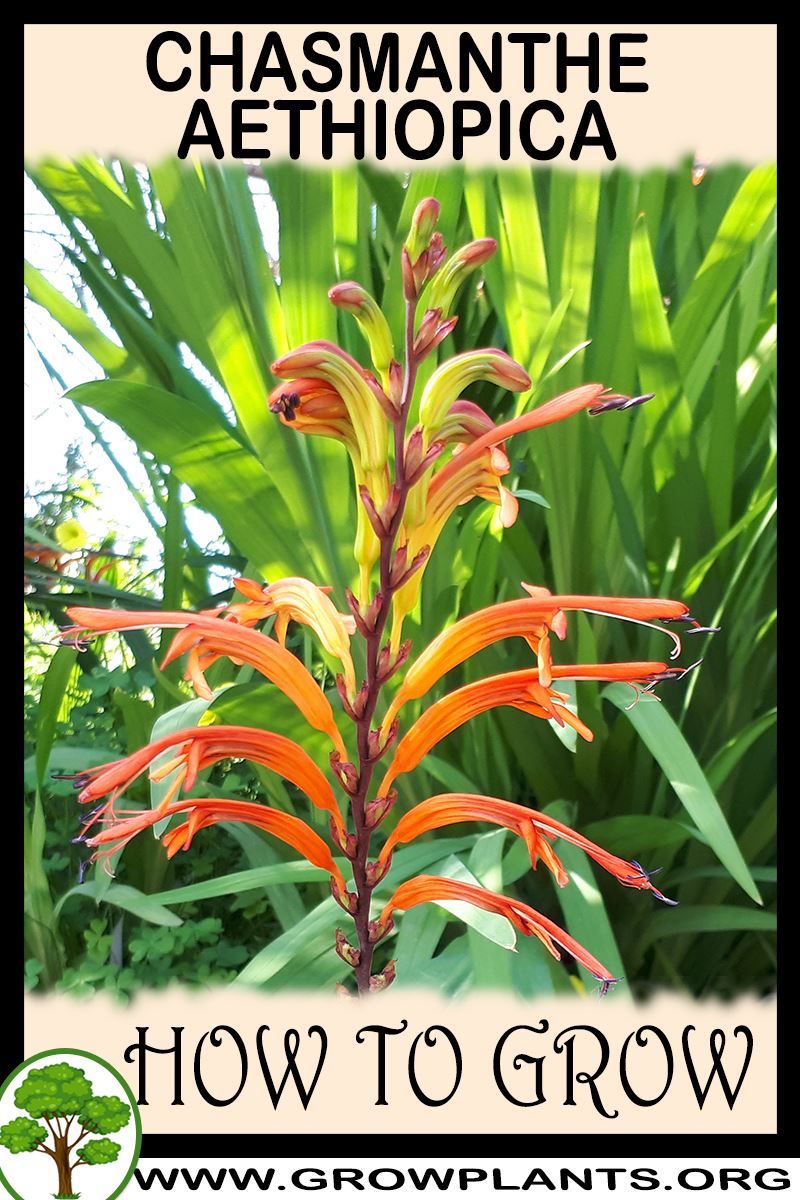
Overview: A herbaceous cormous geophyte, 40-150 cm (16-60 in) tall, grown as an ornamental and cut flower for its arching spikes of orange tubular flowers. It is a deciduous perennial for subtropical, Mediterranean and desert gardens.
Quick Specifications
| Specification | Attribute |
|---|---|
| Plant Type / Life Cycle | Perennial (deciduous geophyte) |
| Foliage Type | Deciduous |
| Mature Size | 40-150 cm (16-60 in) tall |
| Growth Rate | Fast to moderate |
| Root System | Cormous geophyte (grows from a corm) |
| Hardiness | USDA zone 10+ |
Growth Form & Structure
- Height & Spread: 40-150 cm (16-60 in) tall; can also be grown in containers.
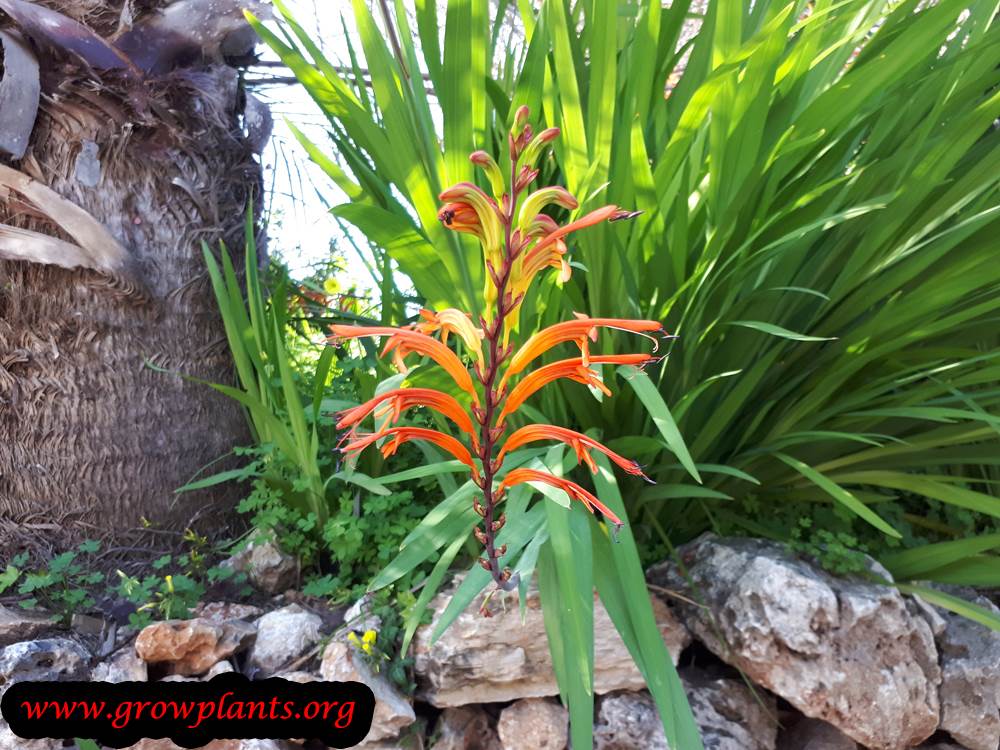
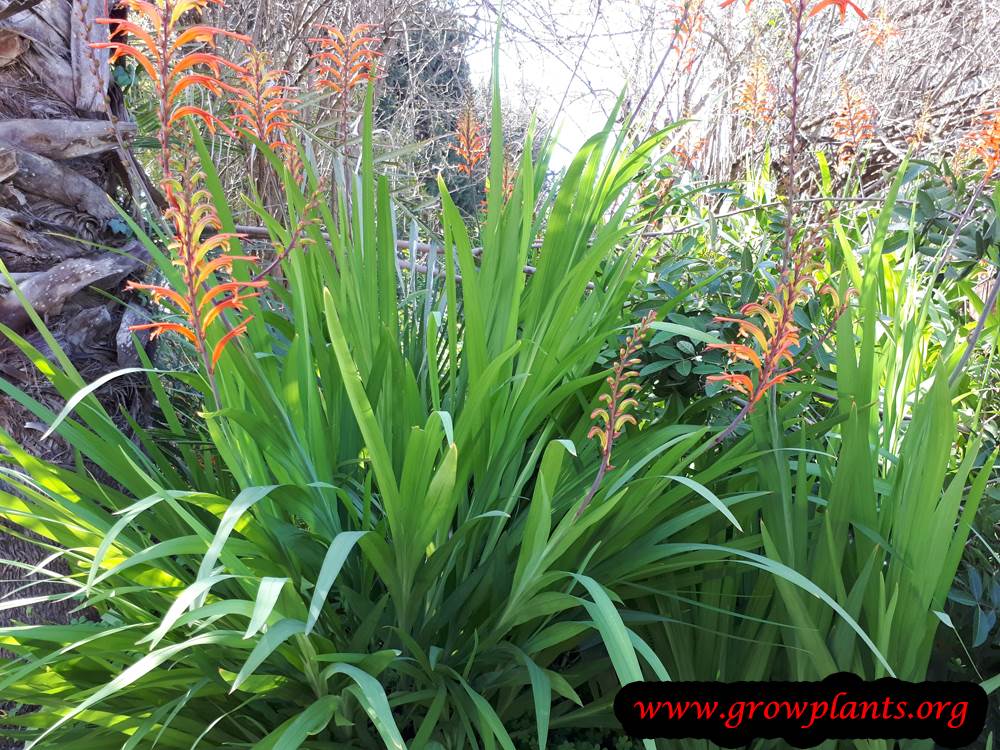
- Growth Habit & Form: Clumping cormous perennial forming a fan of upright sword-shaped leaves.
- Lifespan & Maturity: Perennial that grows from a corm, dying back after flowering and regrowing each season.
Anatomy & Physical Features
- Leaves & Foliage: Green, sword-shaped (iris-like) leaves.
- Flower Characteristics: Orange tubular flowers on upright stalks, opening from the bottom up (full detail in the Bloom section).
Primary Uses & Landscape Value
- Functional & Ornamental Roles: Ornamental border plant and cut flower; nectar-rich blooms attract birds.
Care Guide: Planting, Soil & Watering
Overview: This clump-forming cormous perennial enjoys full sun to light shade and free-draining soil. It is fairly drought tolerant, needing only a low to moderate supply of water.
Quick Care Requirements
| Requirement | Ideal Condition |
|---|---|
| Planting Season | Spring to summer |
| Growth Rate | Moderate to fast |
| Soil Type | Well-draining |
| Water Need | Low to moderate – water in growth, keep drier when dormant |
Planting & Establishment
- Best Planting Season: From spring to summer.
- How to Plant:
- Hole Preparation: Plant the corms into loosened, free-draining soil.
- Soil Amendments: Add a little compost and, on heavy ground, grit to sharpen drainage.
- Planting Depth: Set corms at roughly two to three times their own depth, with the growing tip upward.
- Growth Speed & Expectations: A moderate to fast grower producing sword-like leaves and flower spikes 40-150 cm tall.
Soil, Watering & Drainage Care
- Soil Mix & Drainage Needs: Grow in well-draining soil; the corms rot in wet ground, so drainage matters most. It also grows in a free-draining container of gritty potting mix.
- Watering Schedule & Technique:
- Young / Newly Planted: Water regularly for the first few weeks so the root ball never dries out completely while the plant establishes.
- Established: Once settled, water deeply but let the top few centimetres dry before watering again; it copes well with short dry spells.
- Seasonal Adjustments: Increase watering during hot, dry weather and cut right back in winter as growth slows.
Climate, Light & Hardiness
Chasmanthe aethiopica is a winter-growing, summer-dormant geophyte from a mediterranean-type climate, so it wants full sun and tolerates the dry season via its underground corm. It is broadly hardy across USDA zone 10 and warmer, well suited to subtropical, mediterranean, and desert gardens.
Quick Climate Specifications
| Climate Zones | Subtropical, Mediterranean, or desert |
|---|---|
| USDA Hardiness Zones | Approximately 10 and warmer |
| Frost Tolerance | Low |
| Light Conditions | Full sun |
Sunlight & Light Exposure
Optimal Light Setup
Needs full sun to flower and grow well.
Direct Sun Requirement
Full direct sun is preferred, consistent with its mediterranean-climate origin.
Temperature Extremes & Hardiness
USDA Hardiness & Regional Limits
Suited to USDA zone 10 and warmer; the deciduous, dormant corm survives the dry off-season and re-sprouts with the return of cooler, wetter conditions.
Cold Damage & Winter Protection
Active winter-to-spring foliage and flowers can be damaged by frost; where marginal, mulching over the corm during dormancy offers some protection.
Frost Sensitivity
Frost-sensitive, particularly while in active growth or bloom during the cooler months.
Growing in Pots, Balconies & Indoors
Chasmanthe aethiopica is a sun-loving cormous perennial (to about 1.5 m) related to Crocosmia. The grower does not rate it as a houseplant – it needs full sun – but it grows happily in a container on a bright balcony or patio, going dormant after flowering.
Quick Details
- Container Size: A medium-to-deep pot with room for the corms to multiply
- Indoor Suitability: Not a houseplant – it needs full sun to grow and flower
- Best Spot: Full sun
- Soil & Drainage: Free-draining potting mix
- Watering in Pots: Small to average while in growth; keep drier during dormancy
Indoors & On the Windowsill
- Not a houseplant: The grower marks it unsuitable indoors; as a full-sun geophyte it will not perform in a room.
- Dormancy: After flowering the top growth dies back and the corms rest – a natural break, not a problem; keep the pot cool and dry then.
On a Balcony or Patio
- Full sun: Give it the sunniest spot on the balcony or patio; stake taller flower spikes if the position is windy. Being tender, a pot lets you shelter the corms from hard frost.
Choosing the Pot, Soil & Long-Term Care
- Pot & drainage: A medium-to-deep pot with strong drainage holes and no standing saucer; the corms increase, so leave room.
- Potting mix: Free-draining potting compost, ideally with some grit or perlite.
- Potted plants exhaust and leach nutrients faster than those in the ground, so feed more often – a balanced feed through the growing season.
- Overwintering: In cold climates move the pot somewhere frost-free (or lift and store the corms dry) over winter, and restart it as growth resumes.
Fertilizing & Feeding
A corm-forming perennial grown for its tall orange flower spikes – feeding matters most while the sword-shaped leaves are actively growing and building up the corm, and should stop once the foliage dies back for its dormant rest.
Quick Fertilizing Specs
| Feeding Level | Light to moderate |
|---|---|
| young_feeding | Light feeding as new corms or divisions send up their first leaves. |
| mature_feeding | Light, regular feeding through leaf growth and into the bloom period for established clumps. |
| Main Nutrient Priority | A balanced feed through leaf growth, shifting toward potassium as flowering approaches to support the corm and bloom stalk. |
| Best Feeding Period | From active leaf emergence through flowering. |
| Organic Options | Working aged compost or organic matter into the bed at planting supports the corms through the season. |
| Reduce/Stop Feeding | Stop feeding once flowering finishes and the foliage begins to yellow and die back. |
Feeding by Growth Stage
Leaf Emergence and Growth
Support strong sword-shaped foliage growth that will fuel the corm and the coming flower spike.
| Nutrient direction | A balanced feed to support healthy leaf growth and corm development. |
|---|---|
| Timing | As new leaves emerge and extend at the start of the growing season. |
| Frequency | Feed lightly and regularly through the leaf-growth period to keep the clump vigorous. |
| Fertilizer types | A balanced granular or liquid fertilizer worked into the bed or container around the emerging leaves, Aged compost or other organic matter mixed into the soil at the start of the season |
| Precautions | Keep fertilizer away from direct contact with the corm itself, and avoid feeding into soggy, poorly drained soil. |
Bud Formation and Bloom
Support the tall flower spike and its tubular orange blooms while keeping the corm well fed for the following season.
| Nutrient direction | Shift toward a more potassium-forward feed to support strong flowering and a healthy corm going into rest. |
|---|---|
| Timing | As flower stalks form and bloom, typically toward the end of winter into spring. |
| Frequency | Feed lightly through budding and bloom, tapering off as flowering finishes. |
| Fertilizer types | A balanced to potassium-leaning liquid or granular fertilizer applied around the base of the flowering stalks |
| Precautions | Avoid heavy nitrogen-forward feeding during bloom, since it can push leafy growth at the expense of flowering. |
Post-Bloom Dieback and Dormancy
Let the foliage yellow and die back naturally, storing the season’s energy in the corm without pushing new growth.
| Nutrient direction | None – withhold fertilizer once flowering ends and the leaves begin dying back. |
|---|---|
| Timing | After flowering finishes, as leaves yellow and are cut back at the base in autumn or winter. |
| Frequency | No feeding at this stage – the corm is resting and does not benefit from added nutrients. |
| Fertilizer types | No feeding at this stage – allow the foliage to die back naturally without any fertilizer product. |
| Precautions | Do not fertilize a dying-back or dormant corm; wait for fresh leaf growth the following season before feeding again. |
Nutrient Deficiency Signs & Corrections
Sword-shaped leaves emerge thin, pale, or noticeably smaller than in previous seasons.
| Possible causes | Insufficient feeding during the leaf-growth period, Overcrowded corms competing for limited nutrients and space, Insufficient light reducing overall vigor |
|---|---|
| Appears first on | The newest emerging leaves |
| What to check | Check how crowded the clump has become and whether it is due for dividing, Check light exposure at the planting site |
| Possible correction | Divide overcrowded clumps at the appropriate season and resume balanced feeding during the next leaf-growth period. |
The clump produces healthy leaves but few or no flower spikes.
| Possible causes | Insufficient light, since flowering depends heavily on adequate sun exposure, A nitrogen-heavy feeding routine that favors leaf growth over flowering, Corms that are too young, too crowded, or not yet mature enough to bloom well |
|---|---|
| Appears first on | Absence of flower stalks despite otherwise healthy foliage |
| What to check | Check light exposure at the planting site, Check whether feeding has leaned heavily nitrogen-forward rather than balanced |
| Possible correction | Improve light conditions, shift toward a more balanced or potassium-leaning feed near bloom time, and divide overcrowded clumps. |
Pruning, Training & Seasonal Maintenance
Chasmanthe aethiopica is a herbaceous, corm-based geophyte with no woody growth to prune — the only real task is managing its natural annual die-back. It grows through the cool season, flowers on tall stalks from end of winter into spring, then its strappy leaves yellow and die as the corm enters summer dormancy. The dead foliage can be left standing through the dry summer and is best cut away at the base in autumn, just as the corm is about to push new growth, so removal never interferes with the corm’s food-storage cycle.
Quick Pruning & Maintenance Specs
| Pruning Tolerance | Low (die-back removal only, no shaping) |
| Primary Pruning Window | Autumn, once old foliage is fully dry and before new growth emerges |
| Secondary Maintenance Window | After flowering (spring), to deadhead spent stalks if seed is not wanted |
| Typical Frequency | Once per year, at the end of the dormancy cycle |
| Main Objective | Clear spent foliage/flower stalks without cutting into the corm’s active growth |
| Young Plant Priority | Leave first-season foliage fully in place to build up the corm |
| Mature Plant Priority | Remove old dead leaves and stalks at the base each autumn; divide crowded corm clumps if needed |
| Best Tool Type | Bypass secateurs |
| Avoid Heavy Pruning During | Active leaf growth and flowering (winter to spring) — green leaves are still feeding the corm |
Pruning by Plant Age & Size
Newly Established
Do not remove any foliage in the first growth cycle; the leaves are building up the corm’s reserves and cutting them back early weakens next year’s flowering.
Young / Formative
No structural training applies to this strappy-leaved, non-branching geophyte — there is nothing to stake or shape beyond occasionally supporting a heavy flower stalk in windy spots.
Mature / Established
On established clumps, the main job is clearing fully dead leaves and stalks each autumn and, every few years, lifting and dividing overcrowded corm clusters to keep flowering strong.
Special Growth to Remove
- Dead leaves: once fully brown and dry (typically by autumn), cut at the base of the plant.
- Spent flower stalks: cut back after blooming if seed set is not wanted, which redirects the corm’s energy into itself rather than into seed production; leave a stalk in place if collecting seed or cut flowers were harvested from it already.
Tools
- Bypass secateurs: for the fibrous, strap-like leaf bases and flower stalks, which are too tough for small snips.
Tool Hygiene & Disease Risk
Routine hygiene is generally sufficient, though this species is noted for rust susceptibility, so if rust-affected foliage is being cut, wipe the blade clean afterward before using it on healthy plants to avoid spreading spores.
Cut Placement & Technique
Cut dead leaves and spent flower stalks close to ground level at the base of the plant, taking care not to nick the corm or any emerging new growth just below the soil surface.
Heavy Pruning & Rejuvenation
Not applicable in the woody sense: there is no framework to rejuvenate. If flowering declines, the fix is lifting and dividing crowded corm offsets rather than any form of hard pruning.
Post-Pruning Care
After the autumn clean-up, resume normal watering as new shoots appear; no feeding is needed specifically for the cut-back itself, though a light feed at the start of the new growth flush supports the coming bloom.
Common Pruning Mistakes
- Cutting back green, still-functional leaves before they have fully died, which weakens the corm.
- Removing foliage too early in autumn, before the leaves have finished feeding the corm from the previous cycle.
- Cutting into the corm itself when trimming leaves at the base.
When NOT to Prune
Do not cut back foliage while it is still green during winter growth or spring flowering — wait until it has fully yellowed and dried as the plant moves into summer dormancy.
Recommended Tools (by task)
- bypass_secateurs: clean base cuts through tough, fibrous dead leaves and flower stalks without crushing them.
Propagation Guide
Chasmanthe aethiopica is most easily and reliably increased by dividing the offset cormlets that form around its corm (what this site calls a “bulb”), which the site notes is easier than growing from seed though not strictly necessary. Seed is a workable but slower alternative, and this plant is overall Easy to propagate by corm division.
Quick Propagation Specs
| Best Propagation Method | Corm division (separating offset cormlets) |
| Alternative Methods | Seed (slower to establish) |
| Propagation Difficulty | Easy |
| Seed True-to-Type | Usually true-to-type |
| Vegetative True-to-Type | Yes |
| Best Propagation Season | Corms are best lifted and divided once dormant, after the foliage dies back in autumn/winter; replant corms, cormlets and seed for the plant’s spring/summer planting season |
Growing from Seed
Seed is a viable but slower way to raise new plants; sow it in a well-drained, sunny position and expect germination to be somewhat uneven, as is typical for cormous Iridaceae relatives, with seedlings needing time to bulk up before they can be treated like an established corm.
Rhizomes, Tubers, Bulbs & Corms
Chasmanthe aethiopica grows from a corm — the underground storage structure this site refers to as a “bulb” — and corm division is the easiest, truest-to-type way to increase it. Lift and divide clumps once the foliage has died back for the season (the site’s own cue for cutting the dead leaves at the base), separating offset cormlets that have their own growing point from the parent corm. As with related cormous Iridaceae, small cormlets can be replanted directly or, in mild climates, briefly stored in a cool, dry, dark place until the next planting season. Replant corms and cormlets in well-drained soil in full sun.
Bloom & Flower Guide
Quick Details
- Bloom Season: Late winter into spring
- Flower Appearance: Orange tubular flowers ranged along an upright spike, opening from the bottom upward
- Edibility: Not eaten – grown as an ornamental and cut flower
Detailed Blooming Overview
Chasmanthe aethiopica (cobra lily) is a deciduous geophyte grown from a corm for its bright, one-sided flower spikes. It blooms from late winter into spring in subtropical, Mediterranean and desert gardens, roughly zone 10 and warmer, and makes a fine cut flower.
Flower Characteristics
- Slim, tubular orange flowers arranged along one side of a tall stalk.
- The spike opens progressively from the base toward the tip, extending the display.
- The nectar-rich tubes are shaped for birds – sunbirds are natural pollinators.
Bloom Care & Thinning
- After flowering: Let the foliage die down naturally so the corm can build up for next year’s bloom.
- Position: A warm, sunny spot gives the strongest flower spikes.
Pests, Diseases & Troubleshooting
Overview: African cornflag is a South African corm plant in the iris family, so its problems mirror its relatives (gladiolus, crocosmia): thrips and aphids on foliage and flowers, and corm rots in storage or wet soil. It is generally easy and vigorous; the main cautions are thrips and keeping corms from rotting.
Quick Troubleshooting Overview
| Issue / Pest | Main Symptom | Primary Solution |
|---|---|---|
| Gladiolus thrips | Silvery streaked leaves, spotted flowers | Sticky traps; soap; treat corms |
| Aphids | Curled tips, honeydew, virus spread | Water jet; soap; remove virused plants |
| Spider mites | Stippled, dull foliage in dry heat | Hose; humidity; oil/soap |
| Slugs & snails | Grazed shoots and flowers | Handpick; barriers |
| Corm rot | Soft, rotting or mouldy corms | Dry storage; drainage; discard soft corms |
| Rust | Orange pustules on leaves | Airflow; remove leaves |
Common Pests & Management
- Gladiolus thrips (Thrips simplex):
- Symptoms: Silvery-white streaking and flecking on leaves, and browning, spotted or distorted flowers; tiny dark slivers that dart when disturbed. The signature pest of Iridaceae corms.
- Prevention & Control: Monitor with sticky traps, remove and destroy badly affected flowers and foliage, and treat/inspect corms before storage and planting. Insecticidal soap or spinosad-type products help during heavy activity; store corms cool to suppress the pest.
- Aphids (Aphidoidea):
- Symptoms: Clusters of small green, black or grey soft-bodied insects on new shoots, buds and leaf undersides; curled distorted growth, honeydew and sooty mould.
- Prevention & Control: Blast off with a strong jet of water and squash colonies early. Encourage ladybirds, lacewings and hoverflies; avoid excess nitrogen that fuels soft growth. Use insecticidal soap or neem for stubborn outbreaks, sprayed in the evening to spare pollinators.
- Spider mites (Tetranychus urticae):
- Symptoms: Fine pale stippling on leaves, a dull bronzed look, and fine webbing on undersides in hot, dry conditions. Leaves dry and drop as numbers build.
- Prevention & Control: Raise humidity and hose down foliage to break the cycle; mites thrive on dry, dusty plants. Release predatory mites where practical, and treat with insecticidal soap or horticultural oil, coating leaf undersides over repeat applications.
- Slugs & snails (Gastropoda):
- Symptoms: Grazed shoots, leaves and flowers with slime trails in damp conditions.
- Prevention & Control: Hand-pick after dark, clear damp debris, and use grit or iron-phosphate bait around emerging shoots.
Diseases & Fungal Issues
- Corm rot (Fusarium / Botrytis / Penicillium spp.):
- Symptoms: Corms turn soft, brown, dry-rotted or blue-green mouldy in storage or in cold wet soil; plants come up weak or not at all.
- Treatment & Management: Lift and cure corms dry where climate demands, store them cool, dry and airy, and discard any that are soft or spotted. In the ground, ensure free drainage and avoid waterlogging dormant corms.
- Rust (Uromyces / Puccinia spp.):
- Symptoms: Orange-brown powdery pustules on leaves, weakening the plant in warm humid weather.
- Treatment & Management: Improve airflow and spacing, remove and destroy affected leaves, and avoid overhead watering; fungicide is seldom needed on a vigorous clump.
- Mosaic virus (Potyvirus (aphid-spread)):
- Symptoms: Mottled, streaked or distorted leaves and broken flower colour, spread by aphids and infected corms.
- Treatment & Management: There is no cure: remove and destroy affected plants, control aphids, and start with clean healthy corms.
Growing Difficulties & Abiotic Problems
- Corm rot from wet soil / storage:
- Cause & Symptoms: Failure to sprout, soft corms and gaps in the planting from waterlogged soil or damp storage.
- Correction Strategy: Plant in free-draining soil, avoid summer-wet conditions during dormancy, and store lifted corms cool, dry and well-ventilated.
- Overcrowding / poor flowering:
- Cause & Symptoms: Congested clumps that flower less over time.
- Correction Strategy: Lift and divide established clumps every few years, replanting healthy corms in refreshed soil.
- Frost tenderness:
- Cause & Symptoms: Damage to foliage and corms in hard frost, as this is a tender South African species.
- Correction Strategy: Grow in a sheltered spot, mulch in marginal climates, or lift and store corms over cold winters.
What Helps – Products & Tools
Care is mostly cultural – good drainage, dry storage and dividing clumps. Keep insecticidal soap or spinosad and sticky traps for thrips and aphids, iron-phosphate bait for slugs, and simply rogue out any virused or rotten corms rather than treating them.