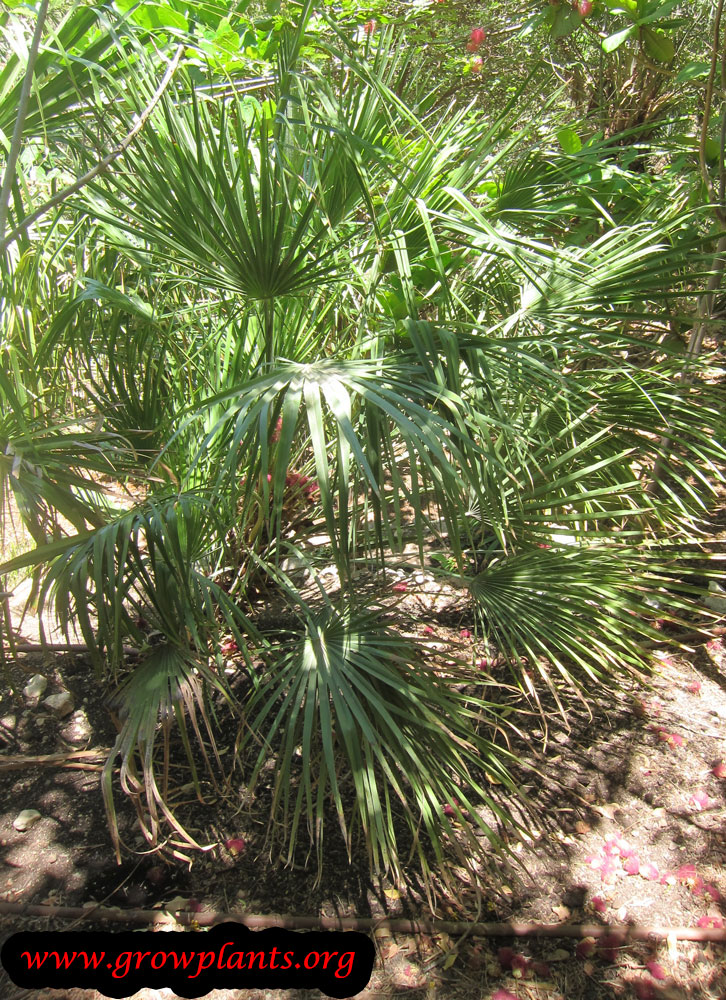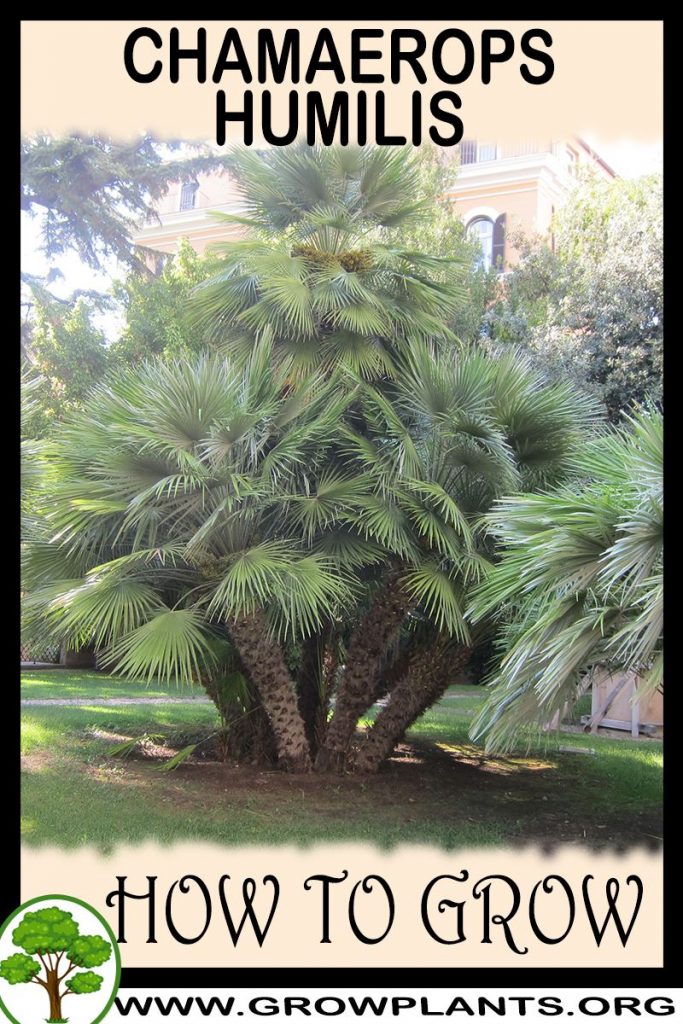
Plant Profile & Key Characteristics
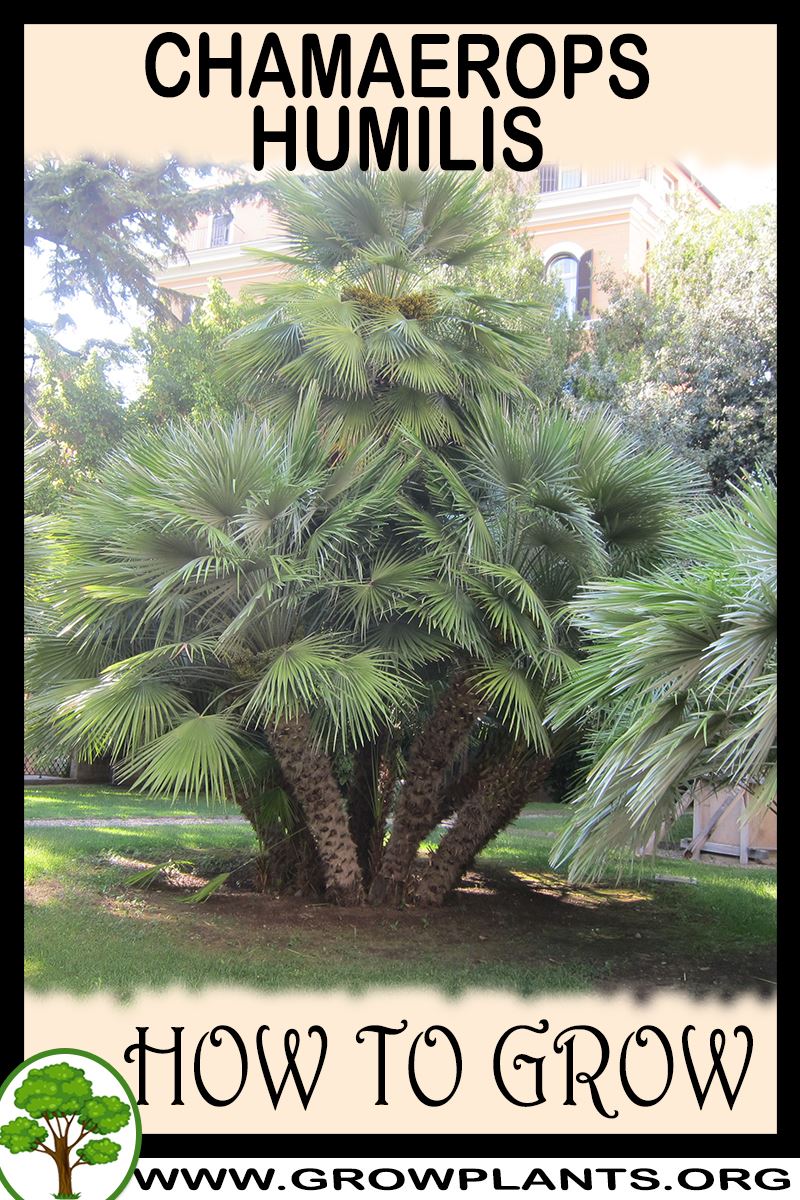
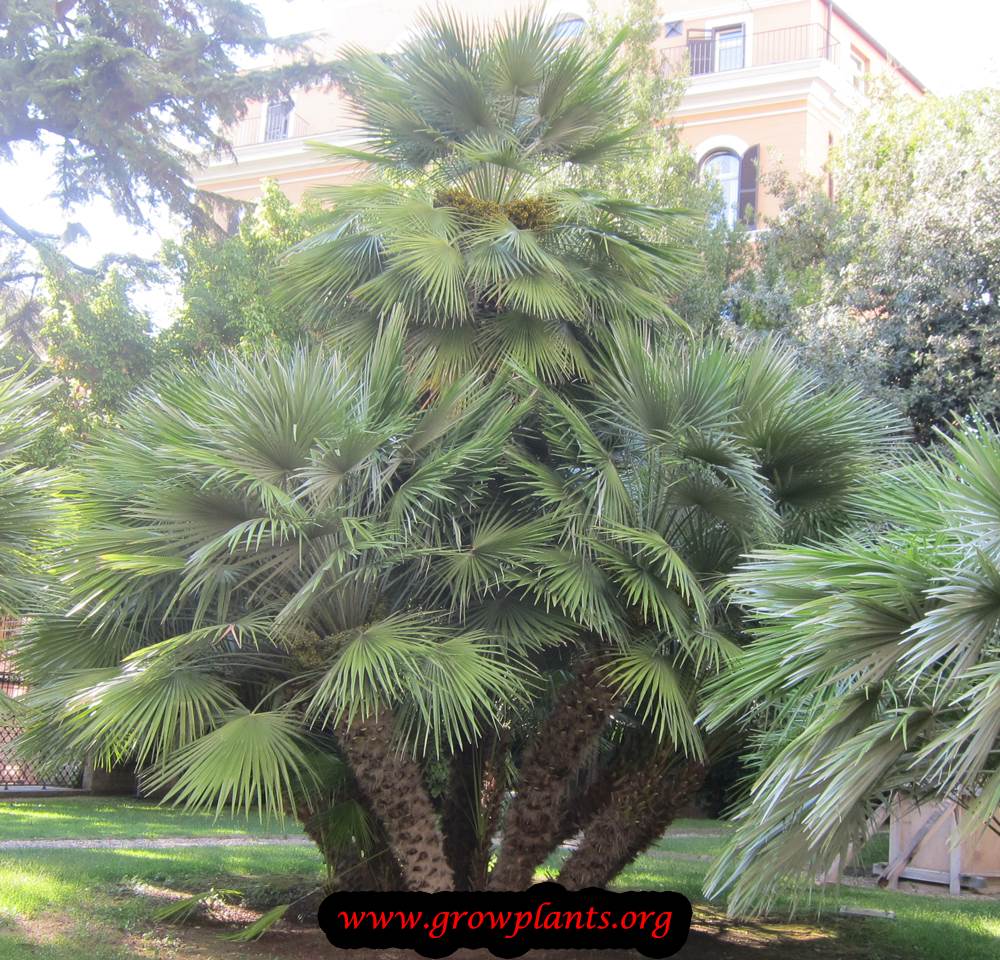
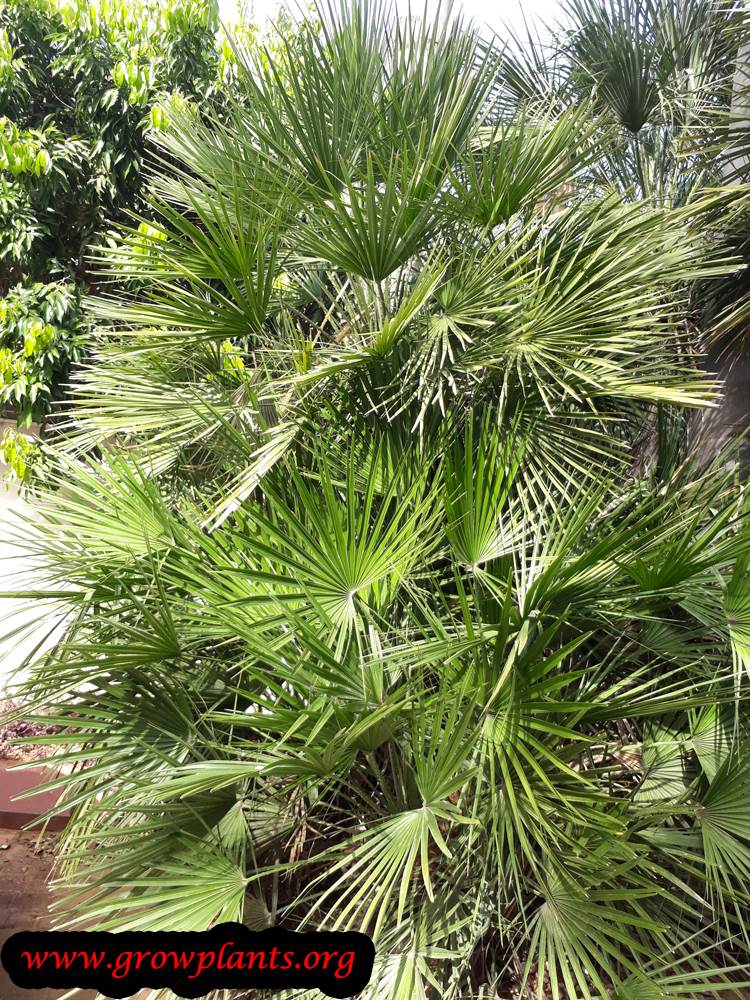
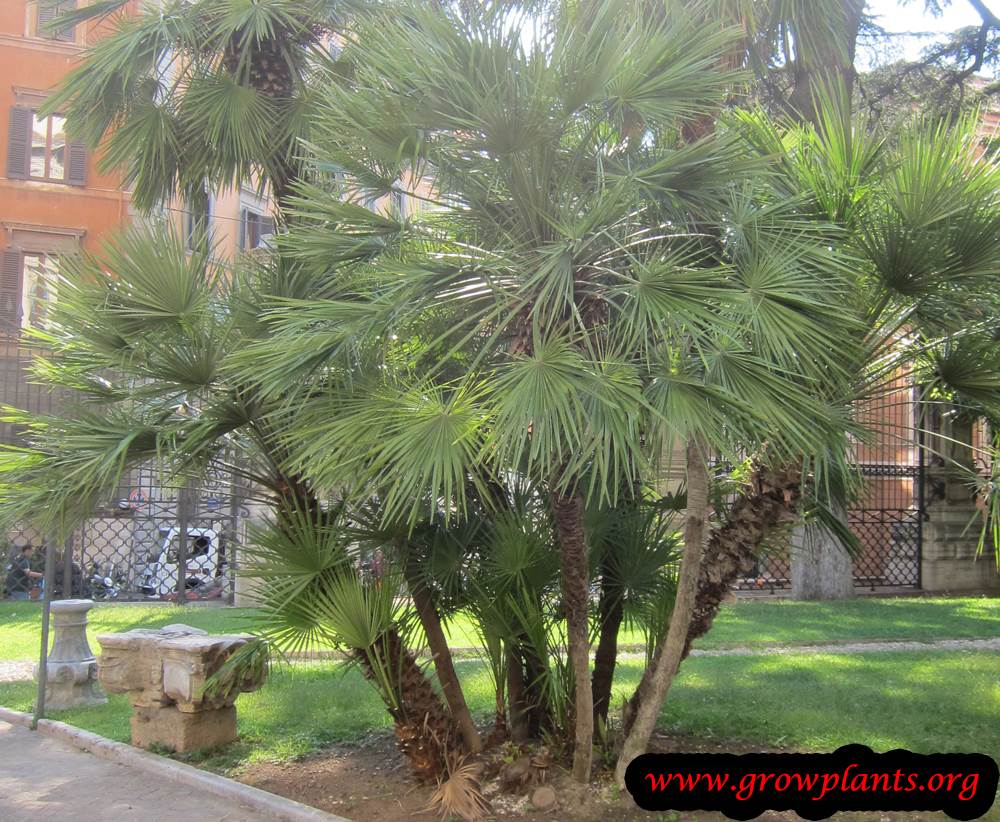
Overview: A clumping evergreen fan palm, 1-4 m (3-12 ft) tall, grown as a hardy architectural ornamental. It is a slow-to-moderate perennial suited to Mediterranean, desert, subtropical and even cool-temperate gardens.
Quick Specifications
| Specification | Attribute |
|---|---|
| Plant Type / Life Cycle | Perennial (evergreen palm shrub) |
| Foliage Type | Evergreen |
| Mature Size | 1-4 m (3-12 ft) tall |
| Growth Rate | Moderate to slow |
| Root System | Clumping and suckering, with a vigorous/aggressive root system |
| Hardiness | USDA zone 8+ |
Growth Form & Structure
- Height & Spread: 1-4 m (3-12 ft) tall, spreading into a clump; also grown in containers and indoors.
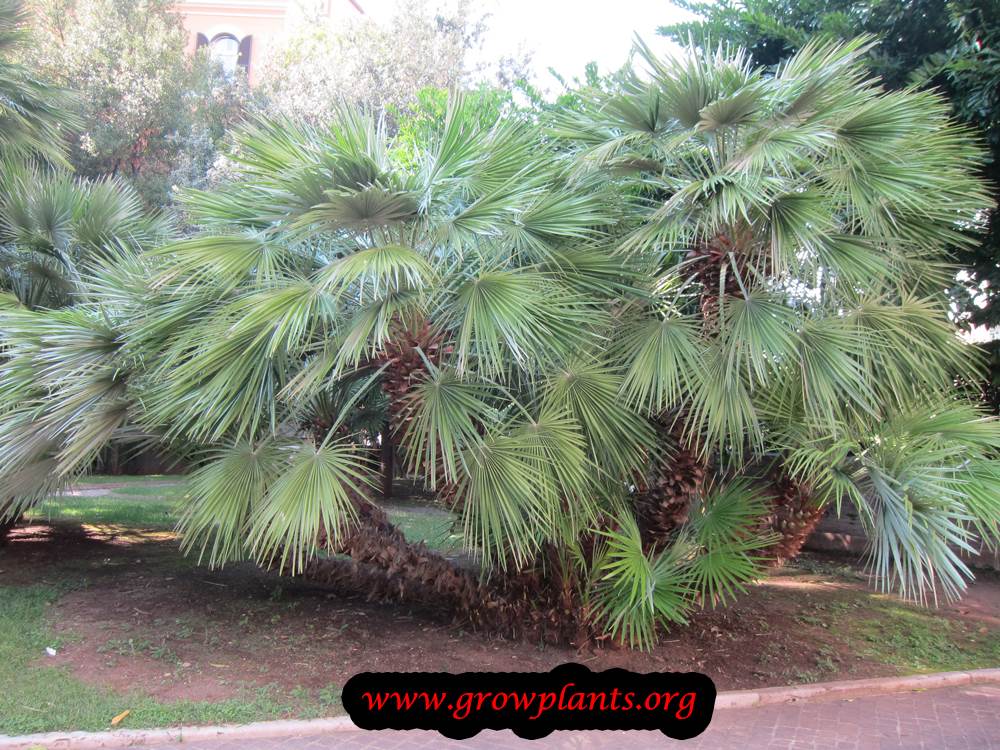
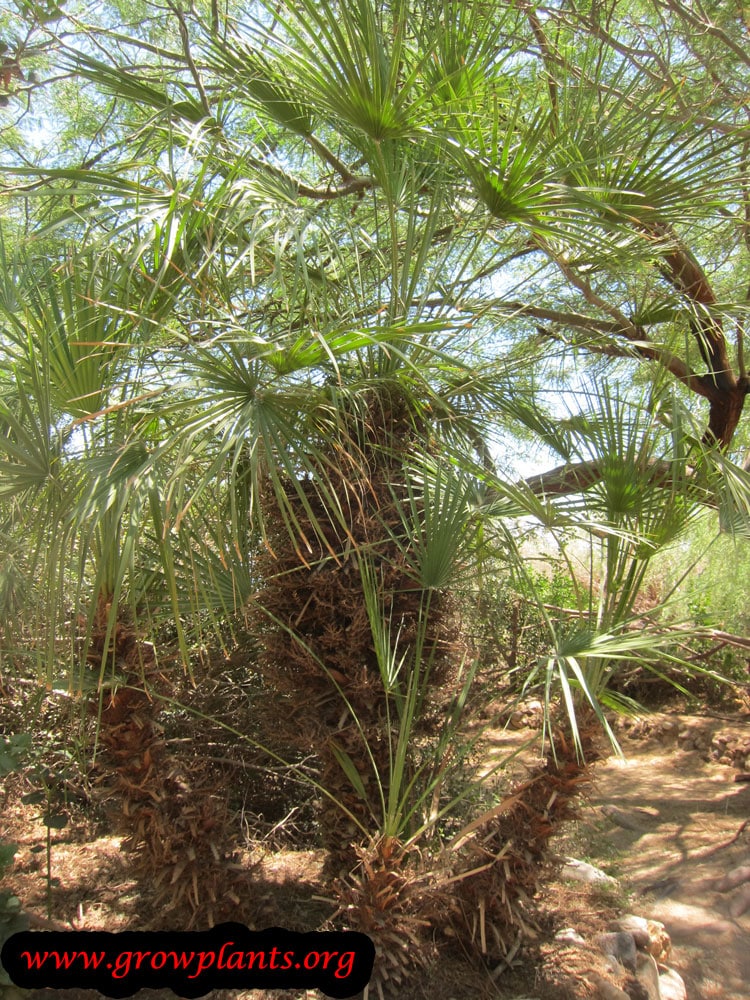
- Growth Habit & Form: Multi-stemmed, clumping (suckering) fan palm.
- Lifespan & Maturity: Slow-to-moderate, long-lived perennial.
Anatomy & Physical Features
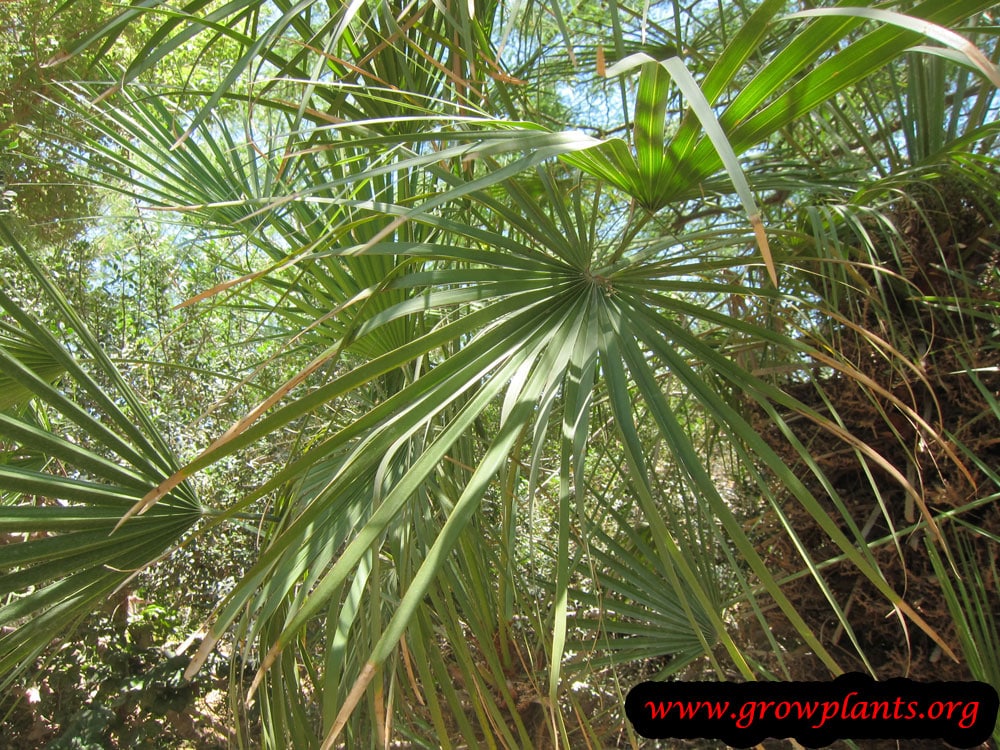
- Leaves & Foliage: Green fan-shaped fronds, 1-2 m long, split into narrow segments, on spiny leaf stalks.
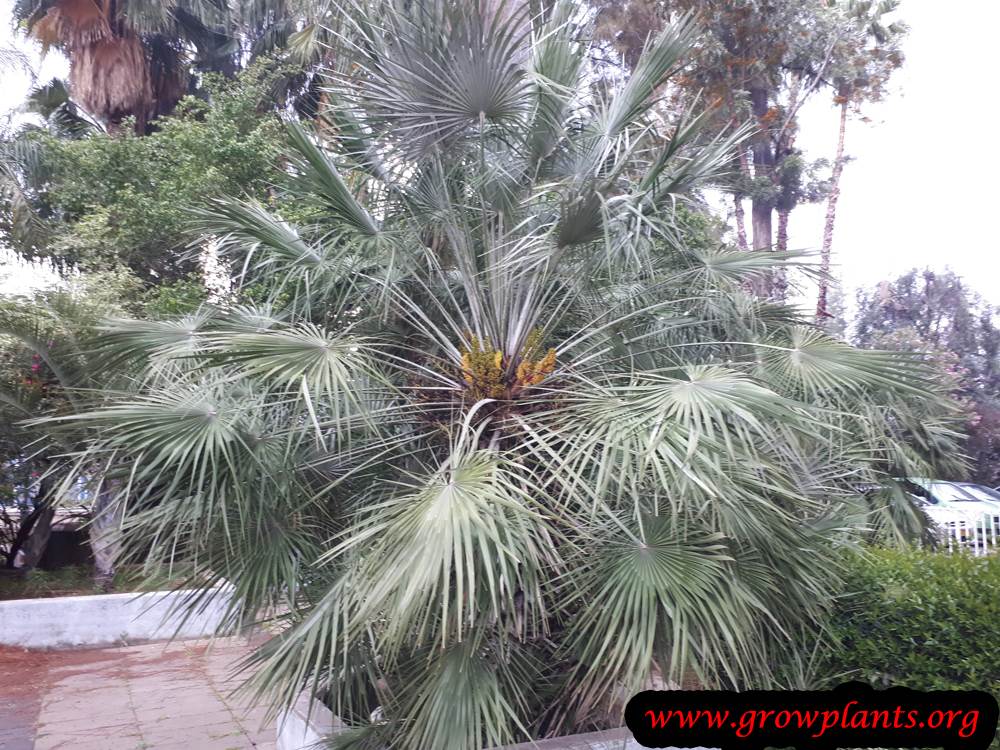
- Flower Characteristics: Yellow flowers in dense branched clusters, with male and female on separate plants (dioecious) (full detail in the Bloom section).
Primary Uses & Landscape Value
- Functional & Ornamental Roles: Hardy architectural ornamental for Mediterranean, coastal and xeriscape plantings; also grown in large containers.
Care Guide: Planting, Soil & Watering
Overview: This tough European fan palm thrives in full sun in Mediterranean, desert and subtropical gardens and is notably hardy for a palm. It wants well-drained soil and only a low to moderate supply of water once established.
Quick Care Requirements
| Requirement | Ideal Condition |
|---|---|
| Planting Season | Through the warm season, from spring to autumn |
| Growth Rate | Slow to moderate |
| Soil Type | Well-draining; tolerates poor, sandy ground |
| Water Need | Low to moderate – water to establish, then let it dry between waterings |
Planting & Establishment
- Best Planting Season: Through the warm season, from spring to autumn.
- How to Plant:
- Hole Preparation: Dig a hole about twice the width of the root ball and just as deep, loosening the sides so young roots spread easily.
- Soil Amendments: Improve heavy soil with grit or coarse sand; this palm prefers lean, free-draining ground over rich, wet soil.
- Planting Depth: Set the palm at the depth it grew before, keeping the crown clear of buried soil.
- Growth Speed & Expectations: A slow to moderate grower forming a clumping palm of 1-4 m.
Soil, Watering & Drainage Care
- Soil Mix & Drainage Needs: Plant in free-draining soil; it tolerates poor, sandy ground and hardy down to around -10 C, but rots in cold, wet soil. It grows well in a large, free-draining container and can be brought indoors in bright light.
- Watering Schedule & Technique:
- Young / Newly Planted: Water regularly for the first few weeks so the root ball never dries out completely while the plant establishes.
- Established: Once settled, water deeply but let the top few centimetres dry before watering again; it copes well with short dry spells.
- Seasonal Adjustments: Increase watering during hot, dry weather and cut right back in winter as growth slows.
Climate, Light & Hardiness
European fan palm is the most cold–hardy palm in this dataset, suited to Mediterranean, desert, subtropical, temperate, and tropical climates and hardy outdoors from about zone 8 upward. It grows in full sun to half shade and, once established, tolerates cold down to roughly −10°C (14°F).
Quick Climate Specifications
| Climate Zones | Mediterranean, desert, subtropics, temperate, tropics |
|---|---|
| USDA Hardiness Zones | 8+ |
| Approx. Survival Minimum | Established plants may tolerate cold to roughly −10°C (14°F) |
| Frost Tolerance | High |
| Light Conditions | Full Sun to Half Shade |
Sunlight & Light Exposure
Grows well in full sun to half shade, tolerating a range of light exposures better than most palms.
Temperature Extremes & Hardiness
USDA Hardiness & Regional Limits
Hardy outdoors from about zone 8 upward, making it suitable for cooler temperate gardens where few other palms survive.
Cold Damage & Winter Protection
The site notes established plants can handle cold down to about −10°C (14°F); young plants are more vulnerable and benefit from protection during establishment.
Frost Sensitivity
Good frost tolerance for a palm once established, though prolonged severe cold can still damage fronds.
Wind, Humidity & Microclimate
Dry-Air Tolerance
Its small to average water needs and Mediterranean/desert adaptability indicate good tolerance of dry air and arid conditions.
Growing in Pots, Balconies & Indoors
Mediterranean fan palm (Chamaerops humilis) is a tough, compact palm that the grower confirms grows well both as a houseplant and in containers. It takes sun or part shade and is among the more cold-tolerant palms, making it a versatile choice for a bright room, patio, or balcony.
Quick Details
- Container Size: A medium to large, stable pot
- Indoor Suitability: A good houseplant in a bright spot; equally happy outdoors
- Best Spot: Full sun to part shade; bright light indoors
- Soil & Drainage: Free-draining, gritty mix
- Watering in Pots: Low to moderate – drought-tolerant; let the surface dry
Indoors & On the Windowsill
- A genuine houseplant: Marked Yes – it does well indoors given the brightest position available.
- Windowsill growing: A sunny sill suits it; it enjoys direct light, unlike shade-loving palms.
- Care indoors: Water only when the surface dries; it resents constant moisture.
On a Balcony or Patio
- Light & shelter: Full sun and it copes with wind and heat well; a heavy pot keeps it stable.
- Watering & heat: Drought-tolerant, but pots still dry fast in summer – water when the mix dries.
- Overwintering: One of the hardiest palms, but shelter pot roots in the hardest frosts.
Choosing the Pot, Soil & Long-Term Care
- Pot & drainage: A medium-to-large, stable pot with strong drainage holes; skip a standing-water saucer to avoid root rot. Terracotta breathes and dries quickly, which suits this plant.
- Potting mix: A well-aerated, organic-rich mix – peat or coir blended with perlite or vermiculite for free drainage.
- Feeding: Potted plants run their soil down fast as nutrients leach out, so feed more often than plants in open ground during active growth.
- Repotting: Refresh the mix or pot up about every two years; on established plants, lightly prune the root ball and top growth to keep them balanced.
Fertilizing & Feeding
A tough, cold-tolerant landscape palm that grows steadily with routine feeding through the warm season but does not demand a rich or frequent program once established.
Quick Fertilizing Specs
| Feeding Level | Moderate |
|---|---|
| young_feeding | Keep feeding light while the aggressive root system is establishing in a new planting site |
| mature_feeding | A steady, moderate program through the active growing season once established in the landscape |
| Main Nutrient Priority | A complete palm fertilizer supplying balanced nitrogen alongside potassium and magnesium |
| Best Feeding Period | Spring through summer while temperatures are warm and growth is active |
| Organic Options | Well-rotted compost worked into the root zone supports steady, gentle fertility |
| Micronutrients | Manganese and iron are worth watching for, especially in alkaline or heavily irrigated soils |
| Soil pH | Tolerates a wide range of soils but performs best in well-drained ground; heavy alkaline soils raise the risk of chlorosis |
| Reduce/Stop Feeding | Taper off as growth slows heading into cooler autumn and winter months |
Feeding by Growth Stage
Establishment after planting
Let the vigorous, spreading root system anchor itself before adding fertilizer salts to the root zone
| Nutrient direction | Hold feeding back and let the plant rely on native soil fertility while new roots extend outward |
|---|---|
| Timing | The first season after planting in the ground or a large container |
| Frequency | No feeding is needed at this stage while the root system is establishing |
| Fertilizer types | No feeding is needed at this stage; focus on consistent watering to support root establishment instead |
| Precautions | Do not fertilize a freshly planted specimen until clear new growth confirms the roots have taken hold |
Established growth
Sustain steady frond and clump growth once the palm is rooted into its site
| Nutrient direction | A balanced, complete palm fertilizer with routine potassium and magnesium to keep older fronds from yellowing |
|---|---|
| Timing | Warm months when the palm is actively producing new fronds |
| Frequency | A modest, evenly spaced feeding program through the active season is generally sufficient |
| Fertilizer types | A complete palm-formulated fertilizer supplying potassium and magnesium alongside nitrogen, Well-rotted compost as a supplemental, gentler option |
| Routine trace nutrients | manganese, magnesium |
| Precautions | Ease back on feeding once growth slows in cooler weather; avoid concentrating fertilizer near the base where the shallow, aggressive roots are most active |
Nutrient Deficiency Signs & Corrections
Newest fronds emerge pale yellow to whitish while older fronds remain a normal green
| Possible causes | Iron deficiency, Alkaline soil pH limiting iron availability, Waterlogged or compacted soil restricting root function |
|---|---|
| Appears first on | Newest emerging fronds |
| What to check | Soil pH and drainage, Recent irrigation practices, Whether the planting site is unusually alkaline |
| Possible correction | Improve drainage, correct pH where practical, and apply a chelated iron product per its label if the pattern continues |
New fronds emerge weak, streaked with necrotic, frizzled leaflet tips
| Possible causes | Manganese deficiency, Cold, wet, or high-pH soil locking out manganese, Root stress from poor drainage |
|---|---|
| Appears first on | Newest emerging fronds and the growing point |
| What to check | Soil drainage and pH, Whether a complete palm fertilizer with manganese has been applied recently, Recent cold or waterlogged spells |
| Possible correction | Improve drainage, switch to a complete palm fertilizer including manganese, and apply a chelated manganese product per its label if severe |
Older, lower fronds develop yellow-orange spotting and necrotic leaflet tips while the newest fronds stay green
| Possible causes | Potassium deficiency, Long-term feeding with a nitrogen-heavy, potassium-poor fertilizer, General nutrient depletion in sandy, well-drained soil |
|---|---|
| Appears first on | Oldest fronds, progressing toward younger ones if uncorrected |
| What to check | Feeding history and fertilizer type used, Soil texture and drainage, Whether older symptomatic fronds are being pruned off prematurely |
| Possible correction | Switch to a complete palm fertilizer supplying potassium and avoid removing symptomatic fronds too early, since the plant recycles nutrients from them |
Older fronds show broad yellow banding along the leaflet margins while the center of the leaflet and the newest growth stay green
| Possible causes | Magnesium deficiency, Sandy or heavily leached soil low in magnesium, Competing potassium feeding without magnesium included |
|---|---|
| Appears first on | Oldest fronds first |
| What to check | Soil texture and leaching history, Whether the fertilizer program includes magnesium, Overall feeding history |
| Possible correction | Use a complete palm fertilizer that includes magnesium and avoid heavy potassium-only feeding programs |
Pruning, Training & Seasonal Maintenance
Chamaerops humilis, the European fan palm, is unusual among palms for suckering freely from its base, so it is naturally a multi-trunked, clumping plant unless deliberately trained otherwise. Each individual trunk still has just one growing point and tolerates no heading or rejuvenation, but at the clump level growers make a real choice: let suckers develop for a dense multi-stem specimen, or remove them consistently to keep a single trunk. Routine work is best done in autumn, tidying the season’s spent fronds and flower/fruit clusters before winter, though hazardous or storm-damaged fronds can be removed at any time. The petioles are sharply spined, so technique and hand protection matter as much as timing.
Quick Pruning & Maintenance Specs
| Pruning Tolerance | Low per trunk (single growing point); clump shape is a separate, elective choice |
| Primary Pruning Window | Autumn |
| Secondary Maintenance Window | Any time, for hazard or storm-damaged fronds only |
| Typical Frequency | Annual tidy plus spot removal as needed |
| Main Objective | Sanitation and clump-form management (retain or thin suckers) |
| Young Plant Priority | Decide early: allow basal suckers for a multi-trunk clump, or remove new shoots consistently to train a single trunk |
| Mature Plant Priority | Remove dead fronds and spent flower/fruit clusters; selectively remove excess suckers only if thinning an overcrowded clump |
| Best Tool Type | Loppers or a pruning saw for tough, fibrous petiole bases |
| Avoid Heavy Pruning During | Always avoid removing green fronds; minimize unnecessary crown wounding given this species’ known borer pest pressure |
Pruning by Plant Age & Size
Newly Established
Remove only fully dead fronds. Leave developing basal growth points undisturbed while the plant settles in.
Young / Formative
This is the key training decision: allow new basal suckers to develop if a multi-trunk clump is wanted (the species’ natural habit), or remove new basal shoots as they appear, consistently, to train and keep a single trunk. Both are horticulturally valid – decide the desired form early, since a removed sucker position will not return the same way.
Mature / Established
Maintain the form already chosen – keep removing or keep allowing suckers accordingly. Otherwise, sanitize dead fronds and spent flower/fruit clusters at the base of each crown.
Seasonal Pruning Schedule
Autumn
Objective: clean up the season’s spent fronds and flower/fruit clusters ahead of winter. Remove: fully dead fronds, spent inflorescences, and unwanted new suckers if training to a single trunk. Do not remove: green fronds, or suckers you intend to keep. Expected response: a tidier clump and more resources directed to the retained stems. Flowering impact: none – flowers form on new growth each season.
Ongoing Sanitary
Remove broken, storm-damaged or hazardous fronds at any time, independent of the autumn schedule; the sharp petiole spines make damaged fronds a real safety issue near paths and seating areas.
Special Growth to Remove
- Basal/root suckers – an elective choice, not a requirement: retain them to build a natural multi-trunk clump, or remove them consistently if a single-trunk form is wanted.
- Dead fronds and spent flower/fruit clusters at the base of each crown.
- Old, fibrous leaf-base "boots" on the trunk are cosmetic only – leaving them causes no harm, and stripping them creates unnecessary wounds without a functional benefit.
Container & Small-Space Pruning
Chamaerops is a common container and patio specimen when young. In a pot, sucker retention naturally produces a denser multi-stem look, while removing suckers keeps the plant to fewer stems for a tighter space. Because the spines are a hazard in high-traffic areas, prioritize removing only fully dead fronds near paths; pruning cannot reduce the size of an already-formed trunk, so use container size and sucker management, not hard cutting, to control scale.
Tools
Loppers for basal sucker removal and thick petiole bases; a pruning saw for removing an entire spent or overcrowded trunk from a mature clump. Heavy, gauntlet-style gloves are essential when handling this species’ sharply spined petioles.
Tool Hygiene & Disease Risk
Increased – this species is a known host of the palm borer moth (Paysandisia archon). Minimize unnecessary wounding of the crown and trunk, remove and dispose of any infested material away from healthy palms, and clean tools between plants when handling pest-affected material.
Cut Placement & Technique
Cut fronds and spent flower stalks close to the trunk without gouging into living trunk tissue. When removing a sucker, cut it flush at its point of attachment at the base to avoid a stub that can rot. Wear heavy gloves and handle cut material carefully – the petiole margins are sharply spined.
Heavy Pruning & Rejuvenation
Not tolerated at the individual-trunk level – each trunk has one growing point and cannot be cut back and regrown. Unlike solitary palms, however, an entire overcrowded or spent trunk within a multi-trunk clump can be removed at its base without harming the remaining trunks – the closest thing this species has to renewal pruning.
Post-Pruning Care
After removing a sucker or an entire trunk, monitor the cut base for rot during wet weather. Normal watering is sufficient; there is no need to fertilize specifically because of a routine trim.
Common Pruning Mistakes
- Reflexively removing all basal suckers without realizing that clumping is this species’ natural, often desirable habit.
- Stripping green fronds for a "cleaner" look, which weakens the crown.
- Skinning off fibrous leaf-base boots for cosmetic reasons, creating wounds with no functional benefit.
When NOT to Prune
Avoid heavy frond or sucker removal during hot, dry summer stress. Avoid unnecessary wounding of the crown given this species’ known borer pest. Do not remove a sucker you intend to keep – once cut, that trunk position will not regrow in the same place.
Recommended Tools (by task)
- loppers – basal sucker removal and thick, fibrous petiole bases.
- pruning_saw – removing an entire spent or overcrowded trunk from a mature multi-trunk clump.
- blade_disinfectant – given known borer pest pressure, disinfect between cuts when handling infested material.
Pruning Troubleshooting
| Problem | Possible Cause | What to Check | Corrective Action |
| Clump looks thin and sparse instead of full | Suckers were removed too aggressively or too early | Review pruning history; look for cut stubs at the base | Stop removing new suckers and allow basal shoots to rebuild the clump over subsequent seasons |
| Frass or boring holes in the crown or upper trunk | Paysandisia archon (palm borer) infestation, a known pest of this species | Inspect the crown and upper trunk for larval tunnels, frass, or wilting fronds | Remove and destroy infested material, avoid unnecessary wounding, and consult regional palm-pest guidance |
| One trunk in a clump declines while others stay healthy | Natural senescence of that stem’s single growing point, not disease | Confirm only one trunk is affected | Remove the affected trunk at its base; the remaining trunks are unharmed |
Propagation Guide
European fan palm is easily grown from seed, which is the most practical route to a single specimen, while its naturally clustering habit also allows well-rooted basal suckers to be divided off to create new plants true to the parent. Both methods are comparatively forgiving for a palm, making this one of the easier palms to propagate at home.
Quick Propagation Specs
| Best Propagation Method | Seed |
| Alternative Methods | Division of rooted basal suckers/offsets |
| Propagation Difficulty | Easy |
| Seed True-to-Type | Yes (true species; dioecious, so seed comes from separate male and female plants) |
| Vegetative True-to-Type | Yes (division) |
| Best Propagation Season | Spring–summer–autumn, matching the site’s planting season |
| Seed Germination Time | Commonly a few weeks to a couple of months |
| Germination Temperature | About 24–29°C (75–85°F) |
| Seed Sowing Depth | Shallow, just covered |
Growing from Seed
Seed Handling & Viability
Clean seed of fruit pulp before sowing; use reasonably fresh seed for the best germination rate.
Dormancy & Pre-Sowing Treatment
The seed coat is hard; soaking seed for a day or two commonly speeds and improves germination.
Sowing Season
Sow during the warm months, spring through autumn, matching the site’s planting season.
Sowing Depth & Orientation
Sow shallow, seed just covered, in a well-draining mix.
Germination Conditions
Warm, evenly moist conditions germinate this species relatively reliably compared with many other palms.
Germination Time
Typically a few weeks to a couple of months, though timing can vary with seed freshness and warmth.
Seedling Care
Keep young seedlings protected from frost, since cold tolerance builds up as the palm matures (the site notes established plants tolerate temperatures down to about -10°C/14°F).
Division, Offsets, Pups & Suckers
Chamaerops humilis naturally forms clumps of multiple stems from the base, and well-rooted basal suckers can be separated to start new plants true to the parent. Choose suckers with their own roots already established, remove them in spring with as much root as possible, trim back some of the fronds to reduce water loss while new roots establish, and keep the division shaded and consistently moist until it is growing actively. Because the site notes this species has an aggressive root system, expect some root disturbance to the parent clump when removing a sucker.
Bloom & Flower Guide
Quick Details
- Bloom Season: Spring
- Flower Appearance: Small yellow flowers packed on short branched stalks among the leaf bases; plants are usually male or female
- Edibility: Ornamental palm — not eaten
Detailed Blooming Overview
Europe’s only native palm, the hardy European fan palm flowers in spring with clusters of small yellow flowers tucked among its clustering stems and leaf bases. It is typically dioecious, so male and female flowers appear on separate plants. It is grown as a tough, cold-tolerant ornamental.
Flower Characteristics
- Small yellow flowers borne on short, branched inflorescences; the species is usually dioecious.
Bloom Care & Thinning
- Encouraging bloom: Flowers with maturity; the palm is very hardy and low-maintenance.
Fruit & Uses
European fan palm is grown mainly as an ornamental, but its tender inner growing point (“palmito”) has a long history of being eaten as a foraged vegetable in parts of the Mediterranean, and its small date-like fruit has occasionally been eaten in times of scarcity. The heart is eaten raw or lightly cooked; the fruit is dry, fibrous and only marginally palatable.
Quick Edible Specs
| Edible Parts | Heart/growing point (palmito); fruit (marginal) |
|---|---|
| Main Use(s) | Traditional foraged vegetable (heart); minor, mostly historical fruit use |
| Eaten Raw or Cooked | Heart: raw or cooked; Fruit: raw |
| Preparation Required | Heart: peel away the outer leaf bases and fiber to reach the pale inner core; Fruit: none, but little flesh to separate from the seed |
| Harvest Season | Heart: any time, but destructive to that stem; Fruit: autumn once dates turn brown/black |
| Storage | Best used fresh; neither part is typically stored |
| Safety/Toxicity Caveat | No toxicity reported; the fruit has low food value and is mostly fibrous around a large seed |
Pseudostem / Cane / Sap
The tender, pale inner core at the growing tip – commonly called “palmito” or heart of palm – has traditionally been harvested and eaten in parts of Spain and the western Mediterranean, raw in salads or lightly cooked. Because this species naturally forms clumps with multiple suckering stems (see the site’s note on its aggressive root system), cutting the growing point of one stem for its heart kills that individual stem but does not necessarily kill the whole clump.
Fruit
The small, oval, date-like fruit ripens from green to yellow-brown or blackish in autumn. It carries very little flesh around a hard seed and is dry and fibrous rather than sweet or juicy. It has been eaten in the past during times of food scarcity but is not considered a worthwhile food source today.
Preparation, Uses & Safety
no toxicity is reported for either part, but food value is limited – the heart is a genuine, if minor, traditional foraged vegetable, while the fruit is only marginally edible and mostly of historical interest rather than a real food source. Harvesting the heart ends growth of the stem it is taken from, so it is a one-time harvest per stem, not a repeatable one.
Pests, Diseases & Troubleshooting
Overview: The Mediterranean fan palm is a hardy, drought-tolerant palm that shrugs off most trouble, but in warmer regions it faces two serious borers – the red palm weevil and the palm borer moth – alongside the usual mites, scale and mealybug, and root rot in wet soil. Vigilance for the borers and good drainage are the priorities; the sap-suckers are minor by comparison.
Quick Troubleshooting Overview
| Issue / Pest | Main Symptom | Primary Solution |
|---|---|---|
| Red palm weevil | Wilting/collapsing crown, holes, frass, chewing sound | Monitor/trap; remove & report; drench |
| Palm borer moth | Tunnelled fibres, sawdust frass, weakened crown | Prune out; treat; sanitation |
| Spider mites | Stippled, dusty fronds in heat | Hose; oil/soap |
| Scale | Bumps on fronds/stems, sooty mould | Horticultural oil |
| Mealybugs | White fluff in crown and leaf bases | Alcohol swab; oil |
| Root/crown rot | Rot at base in wet soil; Ganoderma conk | Drainage; remove diseased material |
Common Pests & Management
- Red palm weevil (Rhynchophorus ferrugineus):
- Symptoms: A devastating borer whose grubs tunnel through the crown, causing wilting, lopsided or collapsing new growth, holes oozing frass and fluid, and sometimes an audible chewing; often fatal and hidden until advanced.
- Prevention & Control: Monitor with pheromone traps and inspect crowns regularly; avoid unnecessary frond wounds that attract egg-laying, and seal cuts. Remove and destroy (and, where required, report) infested palms, and use crown drenches or systemic treatments preventively in high-risk regions – this is a notifiable/quarantine pest in many areas.
- Palm borer moth (Paysandisia archon):
- Symptoms: Large larvae bore into the trunk and leaf bases, leaving sawdust-like frass, tunnelled fibre, chewed and perforated emerging fronds, and a weakened crown.
- Prevention & Control: Inspect for frass and holes, prune out and destroy infested tissue, and keep palms unstressed. Beneficial nematodes or labelled treatments applied into the crown help where the pest is established; trap adults where feasible.
- Spider mites (Tetranychus urticae):
- Symptoms: Fine pale stippling on leaves, a dull bronzed look, and fine webbing on undersides in hot, dry conditions. Leaves dry and drop as numbers build.
- Prevention & Control: Raise humidity and hose down foliage to break the cycle; mites thrive on dry, dusty plants. Release predatory mites where practical, and treat with insecticidal soap or horticultural oil, coating leaf undersides over repeat applications.
- Scale insects (Coccidae / Diaspididae):
- Symptoms: Immobile brown, tan or white bumps on stems and leaf undersides; sticky honeydew and blackish sooty mould on soft scale. Growth slows and leaves yellow.
- Prevention & Control: Scrape off light infestations by hand and prune heavily-encrusted stems. Smother the rest with horticultural or neem oil, covering undersides; repeat to catch mobile crawlers. Conserve parasitic wasps and ladybirds.
- Mealybugs (Pseudococcus / Planococcus spp.):
- Symptoms: White cottony tufts in growth tips, leaf joints and along stems; sticky honeydew and sooty mould follow. On succulents/cacti check the root zone too, where root mealybugs coat roots in white powder.
- Prevention & Control: Wipe or dab colonies with a cotton swab dipped in dilute alcohol; rinse plants and encourage predators (ladybirds, lacewings). For root mealybug, bare-root, wash the roots and repot in fresh mix. Follow up with horticultural oil or insecticidal soap.
Diseases & Fungal Issues
- Ganoderma butt rot (Ganoderma zonatum):
- Symptoms: Wilting and general decline followed by a shelf-like (conk) bracket fungus forming low on the trunk; the internal lower trunk rots and the palm eventually collapses. Incurable.
- Treatment & Management: There is no cure or effective fungicide: remove and destroy affected palms including the stump, and do not replant a palm in the same spot. Avoid trunk wounds, which are entry points.
- Root & crown rot (Phytophthora / Pythium / Rhizoctonia spp.):
- Symptoms: Wilting despite moist soil, blackened mushy roots or stem base, yellowing lower leaves and collapse. Poorly drained or waterlogged soil rots the roots and base of otherwise drought-loving fan palms.
- Treatment & Management: This is a water-management disease first: plant in free-draining soil, avoid waterlogging and never let pots stand in saucers of water. Remove and destroy collapsed plants, improve drainage, and drench with a labelled biofungicide only as a support measure.
- Leaf spot & false smut (Fungal (various)):
- Symptoms: Brown or black spots and oily lesions on fronds in humid conditions; mostly cosmetic.
- Treatment & Management: Improve airflow, avoid overhead watering, and remove badly affected fronds; a copper fungicide is only an occasional aid in wet climates.
Growing Difficulties & Abiotic Problems
- Root/crown rot from overwatering:
- Cause & Symptoms: Yellowing, soft base and decline where a drought-tolerant palm is kept too wet.
- Correction Strategy: Plant in free-draining soil, water deeply but infrequently once established, and never waterlog the crown or root zone.
- Cold & frost damage:
- Cause & Symptoms: Browning, spotting or death of fronds after hard frost, though Chamaerops is among the hardier palms.
- Correction Strategy: Site in a sheltered spot in marginal climates, protect the crown in severe cold, and delay removing damaged fronds until the danger of frost passes.
- Nutrient deficiency (K/Mg):
- Cause & Symptoms: Yellowing, spotting or frizzling of older fronds from potassium or magnesium shortage on sandy soils.
- Correction Strategy: Use a balanced palm fertiliser with micronutrients, and correct magnesium/potassium deficiencies specifically; do not remove yellowing fronds too early, as the palm recycles nutrients from them.
What Helps – Products & Tools
The key defences are borer vigilance (pheromone traps, prompt removal of infested palms) and sharp drainage – Ganoderma and rot have no cure. For sap-suckers keep horticultural oil and insecticidal soap, use a proper palm fertiliser for deficiencies, and follow local rules for red palm weevil.