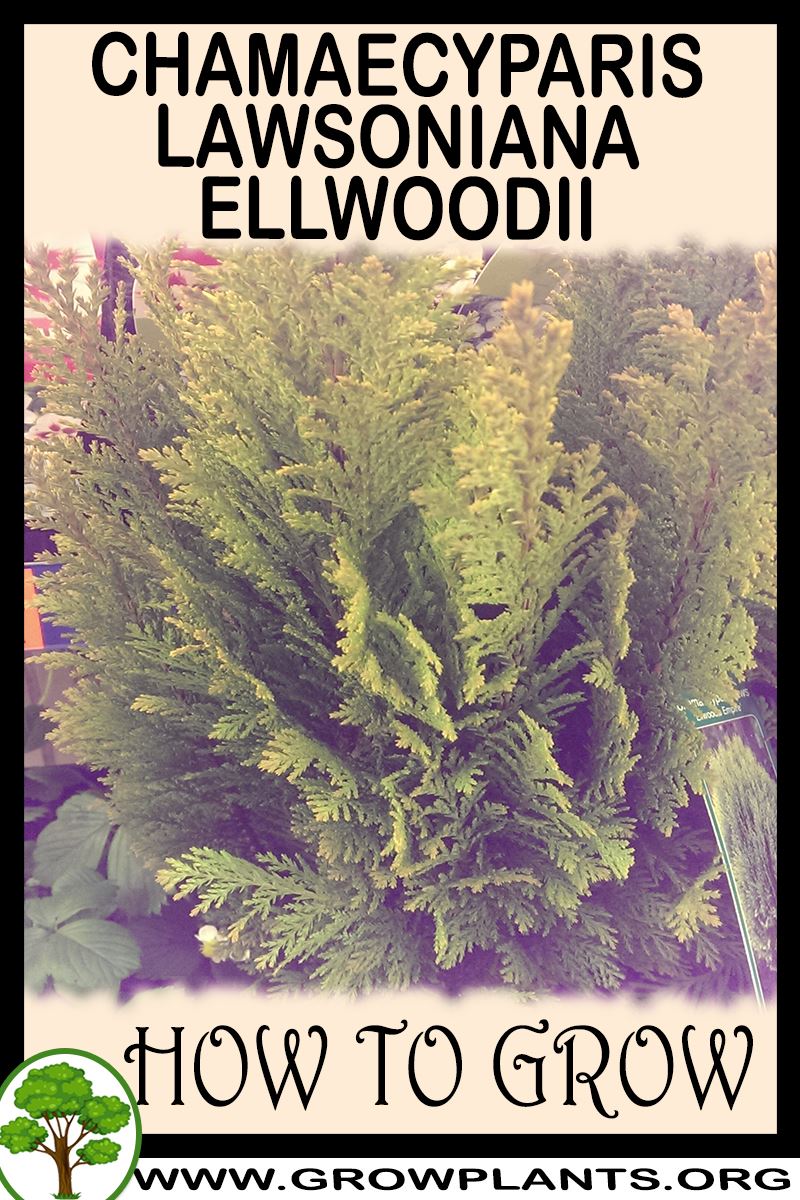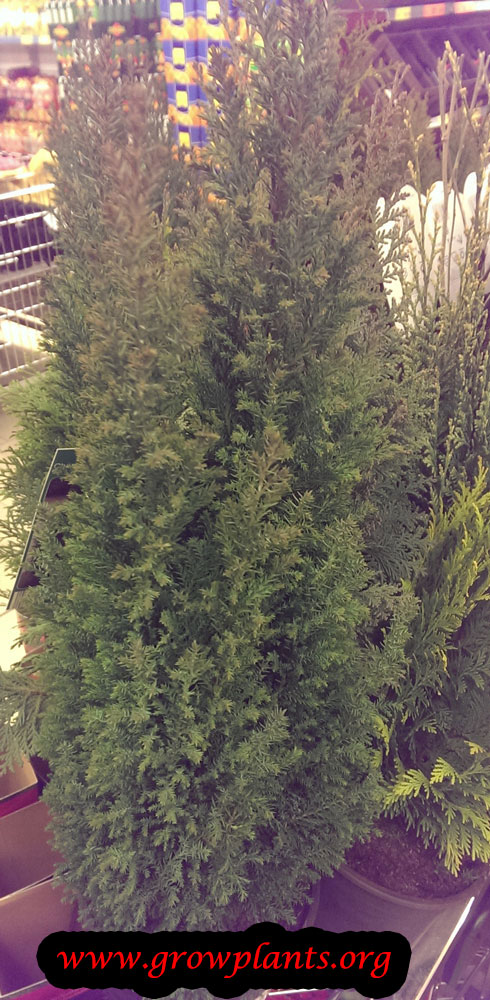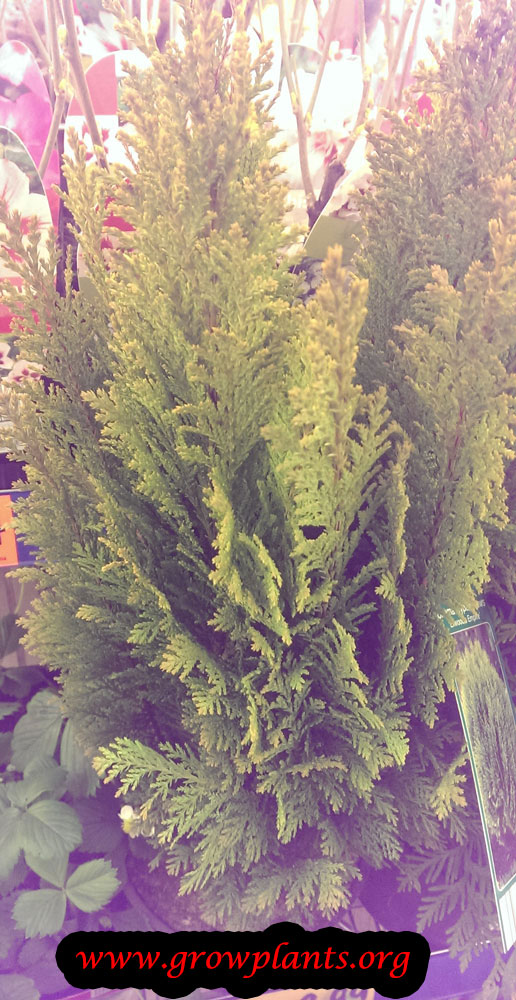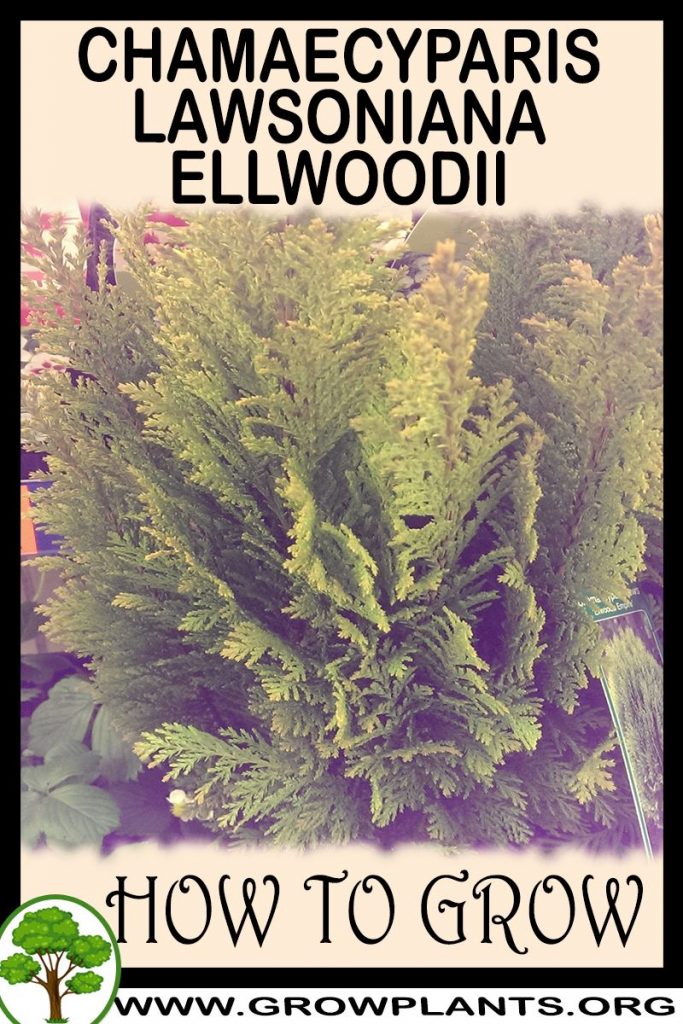
Plant Profile & Key Characteristics
Also known as: Ellwoodii conifer, Ellwoodii plant, Portor ford cedar ellwoodii, Cypress ellwoodii
Overview: A compact evergreen conifer, usually 1-5 m (about 3-16 ft) tall, grown as an ornamental hedge, container plant or bonsai. This ‘Ellwoodii’ cultivar is a slow-to-moderate perennial for temperate and subtropical settings, or indoors with care.
Quick Specifications
| Specification | Attribute |
|---|---|
| Plant Type / Life Cycle | Perennial (evergreen conifer) |
| Foliage Type | Evergreen |
| Mature Size | 1-5 m (3-16 ft) tall |
| Growth Rate | Fast to moderate |
| Hardiness | USDA zone 5-10 |
Growth Form & Structure
- Height & Spread: 1-5 m (3-16 ft) tall; well suited to containers and kept smaller when potted.
- Growth Habit & Form: Compact, columnar dwarf conifer.
- Lifespan & Maturity: Long-lived perennial with fast-to-moderate growth.
Anatomy & Physical Features
- Leaves & Foliage: Soft, feathery scale-like foliage in green, grey-green or yellowish tones.
- Flower Characteristics: Small cones rather than true flowers – reddish male and brown female (full detail in the Bloom section).
Primary Uses & Landscape Value
- Functional & Ornamental Roles: Ornamental hedge, container and patio plant; also grown indoors (with good light) and as bonsai.
Care Guide: Planting, Soil & Watering
Overview: This compact evergreen conifer prefers cool conditions and moist, slightly acidic soil, and can also be grown in a bright, airy spot indoors. It needs a moderate supply of water and is prone to rot if overwatered in pots.
Quick Care Requirements
| Requirement | Ideal Condition |
|---|---|
| Planting Season | Spring to summer in zones 5-10a; spring to autumn in zone 10b |
| Growth Rate | Moderate to fast |
| Soil Type | Moist, slightly acidic, well-draining |
| Soil pH | Slightly acidic |
| Water Need | Moderate – keep evenly moist but avoid overwatering, especially in containers |
Planting & Establishment
- Best Planting Season: From spring to summer in zones 5-10a, extending through autumn in zone 10b.
- How to Plant:
- Hole Preparation: Dig a hole about twice the width of the root ball and just as deep, loosening the sides so young roots spread easily.
- Soil Amendments: Mix in leaf mould or compost to retain moisture and gently acidify the soil; avoid lime.
- Planting Depth: Set the plant so the root collar sits level with the surrounding soil; never bury the stem or trunk base.
- Growth Speed & Expectations: A moderate to fast grower kept to 1-5 m, popular as a hedge, specimen or bonsai.
Soil, Watering & Drainage Care
- Soil Mix & Drainage Needs: Give it moist, slightly acidic, free-draining soil. In containers keep plants small, starting in a pot about 20% larger than the root ball and potting up as it fills out; take particular care not to overwater potted plants, as they rot easily.
- Watering Schedule & Technique:
- Young / Newly Planted: Keep the soil evenly moist while the plant establishes, without letting it sit wet.
- Established: Water deeply enough to keep the root zone moist, letting the surface just begin to dry; in pots be especially careful not to overwater.
- Seasonal Adjustments: Water more in summer heat and cut back in winter as growth slows.
Climate, Light & Hardiness
The Ellwoodii cultivar of Lawson cypress is a cold-hardy conifer for temperate and subtropical climates, and can also be grown indoors with the right care. Unlike many conifers, it performs best in full sun only where summers stay cool, needing part to full shade in hot-summer climates to avoid heat stress.
Quick Climate Specifications
| Climate Zones | Temperate or subtropical climates; also grown indoors as a houseplant with attentive care |
|---|---|
| USDA Hardiness Zones | 5–10 |
| Frost Tolerance | High |
| Light Conditions | Full sun in cool climates; half shade to full shade where summers are hot |
Sunlight & Light Exposure
Optimal Light Setup
In cool-summer climates, full sun gives the best dense, compact growth; in hot-summer regions, half to full shade is preferable.
Direct Sun Requirement
Direct sun is only beneficial where summer heat stays moderate; intense hot-sun exposure is a known stress point for this cultivar.
Shade & Heat Management
This cultivar specifically suffers in hot summer days in full sun, so gardeners in warm climates should provide afternoon shade or a filtered-light position.
Temperature Extremes & Hardiness
USDA Hardiness & Regional Limits
Reliably hardy across zone 5–10, and can also be grown as a container or indoor plant outside this range with the right care.
Cold Damage & Winter Protection
Site guidance highlights a preference for cold temperatures and moist, slightly acidic soil; well-established plants need no winter protection within their hardiness range.
Frost Sensitivity
Very frost tolerant.
Extreme Heat Tolerance
Notably more heat-sensitive than many conifers - hot summer sun can stress this cultivar, making shade management important in warm climates.
Wind, Humidity & Microclimate
Rainfall & Seasonal Moisture
Needs consistently moist soil through the growing season; in containers, guard against overwatering even as the soil is kept from drying out.
Microclimate Recommendations
A cool, humid microclimate suits this cultivar best; in hot climates, place it in filtered light or afternoon shade and keep the foliage free of dust, which it tolerates poorly, especially when grown indoors.
Growing in Pots, Balconies & Indoors
Unusually for a conifer, the grower grows ‘Ellwoodii’ as an indoor plant and gives specific indoor care – it also does well in containers on a balcony or patio. It stays a compact, soft-textured column, so it suits pots for a long time.
Quick Details
- Container Size: Start close to the root ball and pot up gradually (see the grower’s tip below)
- Indoor Suitability: Yes – the grower keeps it indoors with bright light and good air movement
- Best Spot: Bright, airy and cool; in hot climates give it half to full shade outdoors
- Soil & Drainage: Peat-based mix (or potting mix) with lava grit for sharp drainage
- Watering in Pots: Average, but take care not to overwater in containers
Indoors & On the Windowsill
- Houseplant care (grower’s): Give it a bright, well-ventilated spot and wipe the foliage clean of dust now and then – it does not like sitting under a long build-up of dust.
- Windowsill: Being naturally compact, it takes a bright sill or airy room well; keep it cool and out of hot, stagnant corners.
- Overwintering: Hardy outdoors in cool climates; a potted plant only needs shelter from the harshest cold.
On a Balcony or Patio
- Light & wind: Full sun in cool climates gives the best colour; in hot-summer areas move it to half or full shade so it does not scorch. Pots on a balcony or patio dry fast – walls, railings and paving reflect heat – so check moisture often and water more in warm, windy spells. Remember a full pot is heavy and sheds run-off when watered.
- Overwatering risk: In a pot it is easy to keep it too wet – err on the drier side and make sure water drains freely.
Choosing the Pot, Soil & Long-Term Care
- Pot & drainage: Use a pot with strong drainage holes and skip a standing-water saucer so the roots never sit wet – that is the fastest route to root rot. Terracotta breathes and dries faster, while glazed or plastic pots hold moisture longer.
- Potting mix: Peat soil with a little lava grit, or a good potting mix – drainage is important for this plant.
- Watering in pots: Average; the grower warns specifically against overwatering container plants.
- Feeding: Potted plants need feeding a little more often than those in the ground, as regular watering steadily leaches nutrients away – feed lightly through the growing season.
- Repotting: When it fills its pot, move up to the next size; on large plants, replace part of the soil instead.
Grower’s Container Tip
- Gradual pot-up (grower’s method): Start in a pot only about 20% bigger than the root ball. Each time the tree fills that pot, step it up to the next size, and keep going until it reaches the size you want. The grower prefers this because soil loses its structure over time, and it keeps the tree easier to care for.
- Tray test: If you stand it in a saucer, let water fill the tray when you water – but it should drain and dry that same day. If it is still wet, you have watered too much.
Fertilizing & Feeding
A light feeder that prefers acidic, evenly moist soil: modest feeding supports establishment in the ground or in a container, with drainage and avoiding waterlogged roots mattering more than feeding rate.
Quick Fertilizing Specs
| Feeding Level | Light feeder |
|---|---|
| Main Nutrient Priority | Balanced feeding suited to acid-loving plants |
| Best Feeding Period | Spring as new growth resumes |
| Organic Options | Compost or leaf mold worked into the planting mix |
| Reduce/Stop Feeding | Taper off once the plant is established, whether in the ground or in a container |
| Micronutrients | Usually unnecessary in well-drained, suitably acidic soil; correct only a diagnosed issue |
| Soil pH | Prefers slightly acidic soil |
Feeding by Growth Stage
Establishment after planting or potting
Help a young Ellwoodii cypress establish in humus-rich, slightly acidic soil, whether planted in the ground or a container.
| Nutrient direction | A balanced fertilizer suited to acid-loving plants supports steady establishment without pushing loose, soft growth that spoils this cultivar’s fine, feathery form. |
|---|---|
| Timing | During the first growing seasons after planting or potting up. |
| Frequency | A light feeding as growth resumes in spring, repeated later only if growth still looks weak. |
| Fertilizer types | A balanced fertilizer formulated for acid-loving trees and shrubs, Compost or leaf mold worked into the planting mix |
| Precautions | Drainage matters as much as feeding: this cultivar is prone to root rot in soggy soil, and container plantings especially need to dry between waterings rather than staying constantly wet. |
Established maintenance
Maintain dense, colorful foliage on an established garden specimen or hedge with minimal routine feeding.
| Nutrient direction | Light, balanced feeding maintains color and density once the plant is settled in. |
|---|---|
| Timing | In spring, mainly if foliage color has faded or growth has clearly slowed. |
| Frequency | An occasional light feeding is generally sufficient for an established in-ground planting. |
| Fertilizer types | A balanced fertilizer for acid-loving plants, used sparingly, A topdressing of leaf mold or compost |
| Precautions | Keep the root zone from staying constantly wet, particularly in hot weather when this cultivar can struggle; overwatering combined with feeding raises the risk of root and crown rot. |
Container and indoor-grown plants
Replace nutrients that wash out of container growing media faster than from garden soil, for plants kept potted or grown indoors.
| Nutrient direction | A light, balanced feeding through the growing season suits a plant whose roots are confined to a pot and whose mix is refreshed periodically. |
|---|---|
| Timing | Through the active growing season for potted or indoor specimens. |
| Frequency | Light, regular feedings through the growing season rather than one heavy application, tapering off as growth slows. |
| Fertilizer types | A balanced fertilizer for acid-loving plants suited to container use, A controlled-release product mixed into the potting media at repotting time |
| Precautions | Containers dry and drain differently from garden soil: let the pot approach dryness between waterings rather than leaving standing water in a saucer, and prioritize good air movement and dust-free foliage for indoor specimens over frequent feeding. |
Nutrient Deficiency Signs & Corrections
New growth yellows between the veins while older foliage stays green, most noticeable on the newest shoots.
| Possible causes | soil or potting mix pH too high for this acid-preferring plant, limiting iron and manganese uptake, waterlogged roots reducing nutrient uptake, heavy, poorly drained soil or an overdue-for-repotting container |
|---|---|
| Appears first on | newest growth at shoot tips |
| What to check | soil or potting mix pH, drainage and recent watering, how long since the plant was last repotted, if container-grown |
| Possible correction | Correct pH toward the acidic side and improve drainage; apply a chelated iron or manganese product per its label if yellowing continues. |
Foliage browns and branches die back, often starting near the base or crown, and the problem worsens with continued watering.
| Possible causes | Phytophthora root rot, a disease this species is known to be susceptible to in wet soil, waterlogged, poorly drained soil or a container that stays soggy, root damage from planting too deep or a pot without adequate drainage |
|---|---|
| Appears first on | lower branches or the base of the plant, spreading upward |
| What to check | soil or potting mix drainage and how often it stays wet, planting depth or whether the pot drains freely, whether roots look discolored or soft when checked |
| Possible correction | This is primarily a drainage and disease issue, not a nutrient one: improve drainage and reduce watering; fertilizer will not correct root rot and may add stress if roots are already compromised. |
Overall foliage looks thin and pale green to yellow-green, with reduced new growth.
| Possible causes | low available nitrogen in the soil or potting mix, old, depleted potting mix that has not been refreshed, competition from nearby dense planting, if grown in the ground |
|---|---|
| Appears first on | older, interior foliage |
| What to check | feeding history, age of the potting mix or soil organic matter, competition from nearby plants |
| Possible correction | Apply a balanced fertilizer suited to acid-loving plants and consider refreshing old potting mix. |
Pruning, Training & Seasonal Maintenance
‘Ellwoodii’ is a slow-growing, dense, dwarf-conical cultivar of Lawson cypress commonly grown as a specimen, in a container, or short-term as an indoor ‘living Christmas tree’ (per its own container and indoor-care facts). Pruning tolerance is moderate, but this cultivar’s naturally dense juvenile foliage needs little more than occasional light shaping and removal of dead or browned interior growth — especially since it dislikes prolonged dust and poor air movement when grown indoors (per its own indoor-care fact), which can itself cause browning that shouldn’t be mistaken for a pruning problem.
Quick Pruning & Maintenance Specs
| Pruning Tolerance | Moderate |
| Primary Pruning Window | Autumn–winter, per its own pruning-season fact, for any structural work |
| Secondary Maintenance Window | Light shaping during the growing season |
| Typical Frequency | Light touch-up 1–2x/year |
| Main Objective | Maintain the dense, naturally conical juvenile form; remove dead/browned interior foliage |
| Young Plant Priority | Let the naturally dense cone form develop; no leader competition typically an issue on this compact cultivar |
| Mature Plant Priority | Light shaping only; distinguish indoor/dust-related browning from true dieback |
| Best Tool Type | Precision snips or bypass secateurs for the fine juvenile foliage |
| Avoid Heavy Pruning During | Hot, dry spells outdoors; over-handling of a short-term indoor specimen |
Pruning by Plant Age & Size
Newly Established
Minimal pruning; avoid unnecessary wounding.
Young / Formative
No structural training needed — the cultivar’s dense conical habit is self-forming. Light shaping only if a stray shoot disrupts the outline.
Mature / Established
Light annual tidy of any dead or browned patches, especially interior growth if grown indoors where reduced air movement is a documented risk for this cultivar.
Container & Small-Space Pruning
Explicitly relevant here, since this cultivar’s own facts confirm indoor and container growing. Keep growth compact with light, more frequent trims rather than infrequent hard cuts. Because container specimens have limited root volume, don’t let trimming outpace what the roots can support. When grown indoors, periodically clean dust off the foliage (its own stated indoor-care need) — a dusty, poorly ventilated indoor spot can cause browning that looks like, but isn’t, a pruning or disease problem. Repot in stages as the plant fills its container rather than hard-pruning roots to keep it in an undersized pot.
Tools
- Precision snips for the fine, dense juvenile foliage typical of this dwarf cultivar.
- Bypass secateurs for slightly thicker touch-up cuts.
Tool Hygiene & Disease Risk
Increased if material or tools move between this plant and outdoor Lawson cypress stock, since Phytophthora lateralis root rot is a serious, well-documented risk at the species level. Routine clean-tool care is sufficient for an indoor or container specimen kept isolated from other conifers.
Cut Placement & Technique
Light, precise cuts within the dense green outer foliage; avoid cutting into the shaded, less-foliated interior, which won’t refill.
Heavy Pruning & Rejuvenation
Not tolerated and not needed — this slow-growing dwarf cultivar rarely outgrows its space quickly enough to require rejuvenation, and like other Chamaecyparis it won’t reliably regenerate from bare wood.
Post-Pruning Care
For indoor specimens, keep in bright, ventilated light and wipe dust from the foliage regularly rather than assuming any browning can be cut away. For outdoor or container specimens, normal watering and no extra feeding after light trims.
Common Pruning Mistakes
- Treating indoor dust-related browning as a pruning problem and cutting into it, rather than addressing air circulation and cleaning.
- Letting an indoor specimen sit in a stagnant, dusty corner and then over-pruning it to compensate.
- Hard-pruning roots to keep an outgrown specimen in too small a pot instead of potting up.
When NOT to Prune
Avoid pruning a stressed indoor specimen (dusty, poor light, or recently overwatered, per its own container-care caution) until conditions are corrected. Avoid heavy structural cuts outside its documented autumn–winter window.
Recommended Tools (by task)
- precision_snips — fine, dense juvenile foliage typical of this dwarf cultivar.
- bypass_secateurs — slightly thicker general touch-up cuts.
- blade_disinfectant — species-level Phytophthora lateralis risk, relevant if tools or material cross over to outdoor Lawson cypress stock.
Pruning Troubleshooting
| Problem | Possible Cause | What to Check | Corrective Action |
| Foliage browning, especially interior/lower | Indoors: dust buildup blocking light and air exchange. Outdoors: possible Phytophthora lateralis (species-level risk) | Dust film on foliage (indoor) vs. base/root discoloration (outdoor) | Indoors, clean foliage and improve air movement rather than pruning; outdoors, don’t assume pruning will fix root-disease dieback — investigate the base and roots |
| Sparse patches after trimming | Cut into interior wood with little foliage | Cut location | Shift to lighter, more frequent trims within the green outer layer |
| Slow decline in a container | Pot-bound roots or infrequent repotting | Roots circling the pot base | Pot up in stages rather than compensating with hard top pruning |
Propagation Guide
The most practical way to increase Chamaecyparis lawsoniana ‘Ellwoodii’ is from semi-hardwood stem cuttings, which is how this compact, blue-green juvenile-foliage cultivar is normally multiplied while keeping its true dwarf form; seed-grown plants are not guaranteed to stay true to the cultivar and are far slower to reach a similar size. The site notes vegetative propagation is not strictly required, and cuttings are considered easy, so overall difficulty is Easy to Moderate.
Quick Propagation Specs
| Best Propagation Method | Semi-hardwood stem cuttings |
| Alternative Methods | Seed (variable, not guaranteed true to the ‘Ellwoodii’ form) |
| Propagation Difficulty | Easy to Moderate |
| Seed True-to-Type | No – seedlings vary and may not keep the compact, juvenile-foliage form |
| Vegetative True-to-Type | Yes |
| Best Propagation Season | Late summer into autumn/winter for cuttings |
| Cutting Rooting Time | Often several weeks to a few months – conifer cuttings root slowly |
| Germination Temperature | Roughly 15–21°C (59–70°F) |
Growing from Seed
Dormancy & Pre-Sowing Treatment
Cupressaceae seed such as this often germinates more evenly after a period of cold, moist stratification over winter, though the site does not specify a treatment.
Sowing Season
Sow in autumn (fresh from cones) or in spring after cold stratification.
Germination Conditions
Cool, moist, well-drained medium in a sheltered spot; keep evenly moist rather than wet.
Germination Time
Germination is typically slow and can be uneven, often taking several weeks to a few months.
Seedling Care
Grow young seedlings in light shade at first (per site light data, this cultivar prefers half to full shade where summers are hot) and protect from hard frost and drought while roots establish.
Stem Cuttings
Cutting Type
Semi-hardwood tip cuttings, 8–12cm (3–5in), taken from healthy side shoots.
Best Timing
Late summer through autumn/winter, once growth has begun to firm up.
Cutting Preparation
Trim just below a node and strip the lower foliage; a thin heel of older wood can improve success in slow-rooting conifers.
Rooting Setup
Use a free-draining, peaty mix (the site’s own container guidance notes peat soil with lava grit or a standard potting mix for good drainage); keep humid and out of direct hot sun, consistent with this cultivar’s preference for shade in hot climates.
Rooting Hormone
Beneficial rather than essential – it can improve rooting percentage and speed for this relatively slow-rooting conifer.
Rooting Time
Often several weeks to a few months; conifer cuttings are notably slower to root than most broadleaf shrubs.
Bloom & Flower Guide
Quick Details
- Bloom Season: Spring
- Flower Appearance: Not true flowers but tiny cones at the shoot tips – reddish male cones and small brown female cones, both resembling little scales
- Edibility: Not edible; the aromatic foliage can irritate the skin of sensitive people, so wear gloves when clipping
Detailed Blooming Overview
As a conifer, Ellwoodii does not bear true flowers – instead it produces small cones in spring. It is monoecious, carrying both the tiny reddish male cones and the small brown female cones on the same tree (a common misconception is that the two sexes sit on separate plants). Pollination is by wind.
Flower Characteristics
- Reddish male cones and brown female cones, scale-like and easy to overlook.
- Both cone types on the same plant; pollen is carried on the wind.
Bloom Care & Thinning
- Managing the cones: Nothing is needed – the cones are minor. Just shear or shape the plant as usual for its role as a hedge or feature.
Pests, Diseases & Troubleshooting
Overview: Despite the ‘Chamae-‘ prefix this is a false-cypress conifer, not a palm, and its overriding threat is Phytophthora root rot (especially Phytophthora lateralis, which is lethal to Lawson cypress); cypress aphid and canker are the other serious problems. Get the drainage right and keep the plant unstressed, because most damage here is not something you spray away.
Quick Troubleshooting Overview
| Issue / Pest | Main Symptom | Primary Solution |
|---|---|---|
| Phytophthora root rot | Foliage fades bronze then dies, often whole plant | Sharp drainage; remove & destroy; resistant stock |
| Cypress aphid | Brown, dying patches from inside/base outward | Monitor; soap/oil in spring; tolerate light |
| Coryneum/Seiridium canker | Sunken twig cankers, resin, flagging branches | Prune out; sterilise tools; reduce stress |
| Scale | Bumps on scale-foliage, sooty mould | Horticultural oil |
| Spider mites | Stippled, dull, bronzing foliage in heat | Hose; oil/soap |
| Bagworms | Spindle-shaped bags of foliage; defoliation | Handpick bags; Bt on young larvae |
Common Pests & Management
- Cypress aphid (Cinara cupressi):
- Symptoms: Large brown aphids feeding on older inner shoots, causing brown, dying patches that spread from the inside and base of the plant outward – the browning often appears well after the aphids have gone.
- Prevention & Control: Inspect from mid-spring, when damage is done early and quietly; dislodge with water and encourage ladybirds and lacewings. Treat active colonies with insecticidal soap or horticultural oil; avoid clipping into bare brown wood, which will not regreen.
- Scale insects (Coccidae / Diaspididae):
- Symptoms: Immobile brown, tan or white bumps on stems and leaf undersides; sticky honeydew and blackish sooty mould on soft scale. Growth slows and leaves yellow.
- Prevention & Control: Scrape off light infestations by hand and prune heavily-encrusted stems. Smother the rest with horticultural or neem oil, covering undersides; repeat to catch mobile crawlers. Conserve parasitic wasps and ladybirds.
- Spider mites (Tetranychus urticae):
- Symptoms: Fine pale stippling on leaves, a dull bronzed look, and fine webbing on undersides in hot, dry conditions. Leaves dry and drop as numbers build.
- Prevention & Control: Raise humidity and hose down foliage to break the cycle; mites thrive on dry, dusty plants. Release predatory mites where practical, and treat with insecticidal soap or horticultural oil, coating leaf undersides over repeat applications.
- Bagworms (Psychidae):
- Symptoms: Small spindle-shaped ‘bags’ covered in bits of foliage hanging from branches; heavy numbers defoliate and can kill conifers.
- Prevention & Control: Hand-pick and destroy the bags in the dormant season to remove overwintering eggs. Spray Bacillus thuringiensis (Bt) on young larvae early in the season if infestations recur.
- Juniper/cypress webworm & mites (various):
- Symptoms: Webbed, browning shoot tips and fine mite webbing in hot dry weather.
- Prevention & Control: Prune out webbed tips, hose foliage, and use horticultural oil for mites; keep plants watered in drought to reduce stress.
Diseases & Fungal Issues
- Phytophthora root rot (Phytophthora lateralis / cinnamomi):
- Symptoms: Foliage dulls, yellows then bronzes and dies, often taking a whole plant or a run of a hedge; the inner bark at the base is discoloured cinnamon-brown. Lawson cypress is exceptionally susceptible to P. lateralis, a lethal water-borne root disease.
- Treatment & Management: There is no cure once established: remove and destroy affected plants, improve drainage decisively, avoid moving contaminated soil or water, and do not replant Lawson cypress in infected ground. Where the disease is known, plant Phytophthora-resistant cultivars or alternative conifers.
- Coryneum / Seiridium canker (Seiridium cardinale):
- Symptoms: Sunken, resin-oozing cankers on twigs and branches that girdle and kill them, leaving scattered brown ‘flagged’ branches through the canopy.
- Treatment & Management: Prune out cankered wood well below the lesion in dry weather and sterilise tools between cuts; dispose of prunings. Keep trees vigorous with adequate water, since drought-stressed plants are far more prone.
- Needle/foliage blight (Fungal (various)):
- Symptoms: Browning and dieback of scale-foliage, sometimes confused with aphid or canker damage.
- Treatment & Management: Improve airflow, avoid overhead watering, and prune out affected foliage; healthy trees generally recover.
Growing Difficulties & Abiotic Problems
- Root rot from wet / heavy soil:
- Cause & Symptoms: Bronzing, thinning and death of plants on poorly drained or waterlogged sites, which also invites Phytophthora.
- Correction Strategy: Plant only in well-drained soil, never in wet hollows; avoid overwatering established plants and improve heavy ground before planting.
- Brown patches that won’t regrow:
- Cause & Symptoms: Dead brown zones inside the canopy from aphid, drought or shading – false cypress will not resprout from bare old wood.
- Correction Strategy: Never clip back into leafless brown wood; keep hedges lightly and regularly trimmed within green growth, and address the underlying cause early.
- Drought & wind scorch:
- Cause & Symptoms: Foliage browning after dry spells, cold winds or transplant stress.
- Correction Strategy: Water deeply during establishment and drought, mulch the root zone, and shelter new plants from desiccating wind.
What Helps – Products & Tools
The most important ‘tools’ are free-draining soil and clean, sterilised pruning gear – there is no spray for Phytophthora. For pests, keep horticultural oil and insecticidal soap (cypress aphid, scale, mites) and Bt for bagworms; choose resistant cultivars where root rot is known.