
Plant Profile & Key Characteristics
Overview: Cast iron plant is an evergreen rhizomatous perennial forming clumps of upright leaves 30-60 cm (12-24 in) tall. This exceptionally tough, shade-loving plant is grown as an ornamental and popular houseplant.
Quick Specifications
| Specification | Attribute |
|---|---|
| Plant Type / Life Cycle | Perennial (evergreen herbaceous) |
| Foliage Type | Evergreen |
| Mature Size | 30-60 cm tall (12-24 in) |
| Growth Rate | Moderate |
| Root System | Rhizomatous |
| Toxicity | Non-toxic (safe around pets) |
| Hardiness | USDA zones 8-11 |
Growth Form & Structure
- Height & Spread: 30-60 cm (12-24 in) tall, slowly spreading into a clump; excellent as a container and indoor plant.
- Growth Habit & Form: Clump-forming rhizomatous perennial with leaves rising directly from the ground.
- Lifespan & Maturity: Long-lived and slow to establish, then very durable.
Anatomy & Physical Features
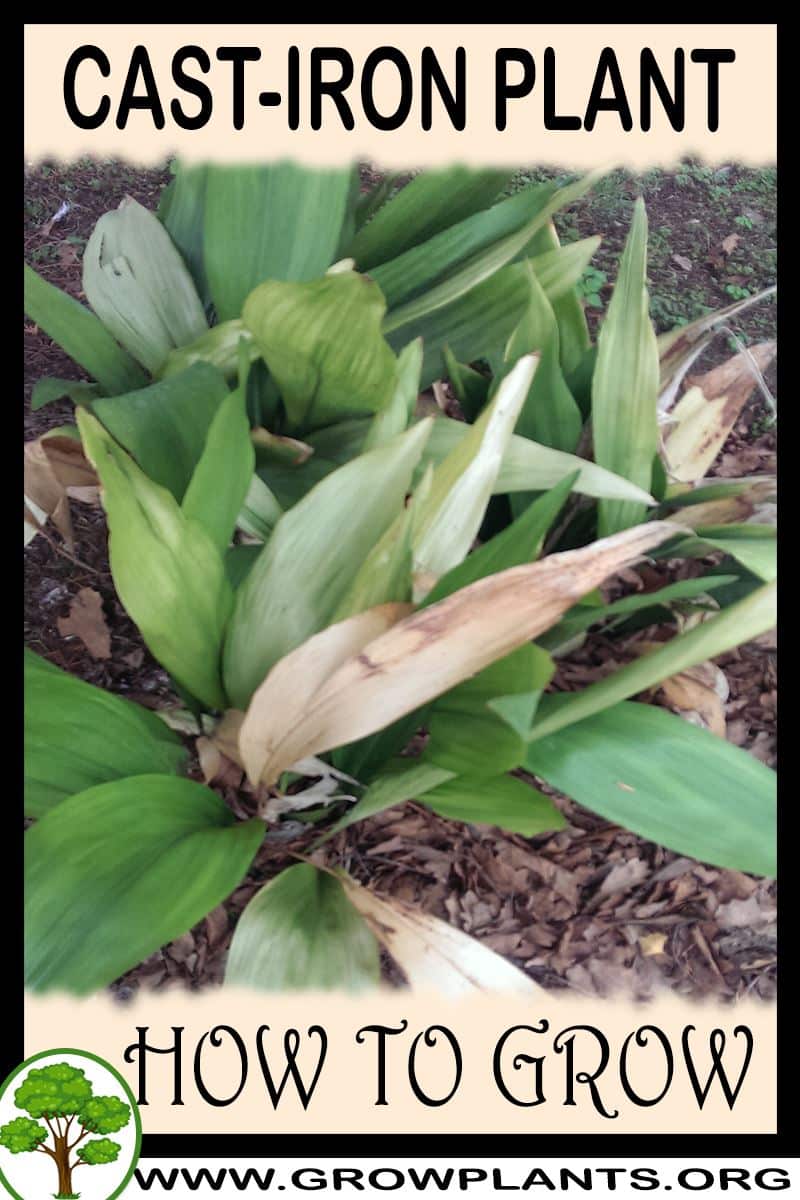
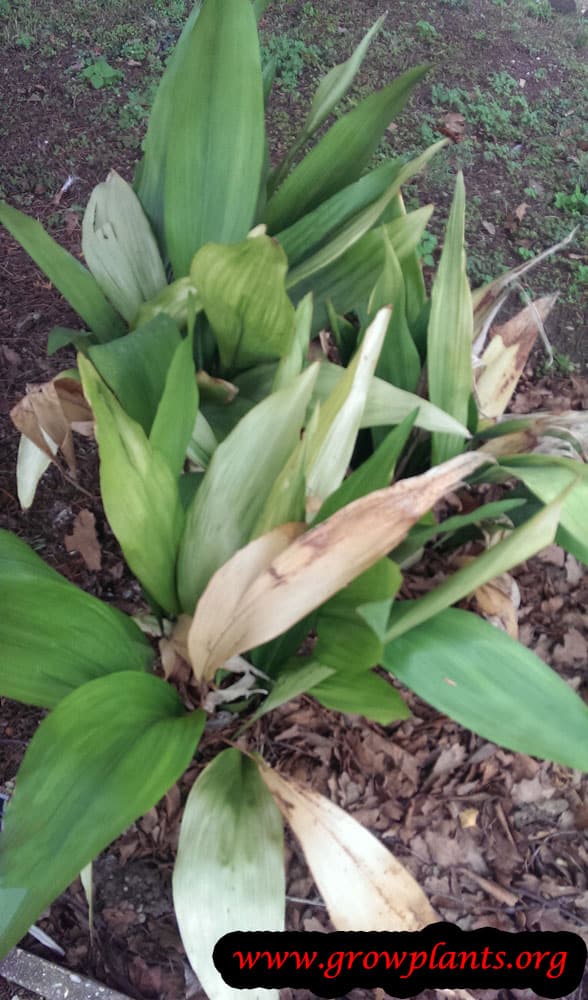
- Leaves & Foliage: Broad green lance-shaped leaves borne on short stalks – the main ornamental feature.
- Flower Characteristics: Small purple-brown and white flowers produced at the base of the plant near soil level (see Bloom guide).
Primary Uses & Landscape Value
- Functional & Ornamental Roles: Ornamental foliage plant for deep shade, and a tolerant houseplant.
Care Guide: Planting, Soil & Watering
Overview: The cast iron plant is a famously tough, shade-loving evergreen (hardiness zone 8–11) grown outdoors in deep shade or as a houseplant. It likes rich, well-drained soil kept moderately moist.
Quick Care Requirements
| Requirement | Ideal Condition |
|---|---|
| Planting Season | Spring, summer or autumn |
| Growth Rate | Slow to moderate |
| Soil Type | Rich, well-drained |
| Water Need | Moderate – keep lightly moist, not waterlogged |
Planting & Establishment
- Best Planting Season: Plant in spring, summer or autumn.
- How to Plant:
- Hole Preparation: Dig a hole about the width of the rhizome and root ball, loosening the surrounding soil.
- Soil Amendments: Work compost or organic matter into the backfill for rich, moisture-retentive yet free-draining soil.
- Planting Depth: Set the rhizome just at the soil surface; do not bury the crown.
- Growth Speed & Expectations: Growth is slow to moderate, forming a 30–60 cm clump – patience is needed, but the plant is very forgiving.
Soil, Watering & Drainage Care
- Soil Mix & Drainage Needs: Rich, well-drained soil suits it; it tolerates poor light and neglect but not soggy roots. Ordinary potting mix works well indoors.
- Watering Schedule & Technique:
- Young / Newly Planted: Keep newly planted divisions lightly moist while they root in.
- Established: Water established plants regularly to keep the soil lightly moist, giving an average to generous amount, and let excess drain.
- Seasonal Adjustments: Water more in warm growth and less in winter.
Climate, Light & Hardiness
Cast iron plant is an extremely tough, shade-loving foliage perennial usable outdoors in warm-temperate to subtropical climates (zone 8–11) or indoors almost anywhere; it demands full shade and, true to its reputation, tolerates a wide range of conditions.
Quick Climate Specifications
| Climate Zones | Temperate, Mediterranean, subtropics, or indoor as houseplant |
|---|---|
| USDA Hardiness Zones | 8–11 |
| Frost Tolerance | Moderate (for established outdoor plantings; grown as a houseplant elsewhere) |
| Light Conditions | Full Shade |
Sunlight & Light Exposure
Optimal Light Setup
Deep shade suits it best, whether under dense outdoor canopy or away from direct window light indoors.
Direct Sun Requirement
None; direct sun scorches the foliage - this is a true shade specialist.
Temperature Extremes & Hardiness
USDA Hardiness & Regional Limits
Reliably outdoor-hardy from zone 8–11; below that it is grown as a houseplant instead, where typical indoor room temperatures suit it well.
Cold Damage & Winter Protection
Reputed among the tougher broadleaf evergreens of its type, but the site's growing data supports outdoor use only from zone 8 upward.
Extreme Heat Tolerance
Handles warm subtropical summers well in shade with adequate moisture.
Wind, Humidity & Microclimate
Humidity Preferences
Adaptable to both humid outdoor shade gardens and the drier air of indoor rooms, part of its reputation for toughness.
Microclimate Recommendations
As a houseplant, keep it away from cold draughts and heater vents; outdoors, site it beneath canopy sheltered from wind and direct sun.
Growing in Pots, Balconies & Indoors
The Cast Iron Plant (Aspidistra elatior) earns its name as one of the toughest, most forgiving houseplants there is, and the grower confirms it for both indoor and container growing. It thrives in deep shade where little else will, making it ideal for dim corners indoors and shady patios alike.
Quick Details
- Container Size: A medium pot; it is slow and happy left slightly pot-bound
- Indoor Suitability: An excellent, near-indestructible houseplant
- Best Spot: Full shade to low light – it dislikes direct sun, which scorches the leaves
- Soil & Drainage: Ordinary well-drained potting mix
- Watering in Pots: Average – keep lightly moist; it tolerates occasional neglect and drying
Indoors & On the Windowsill
- Outstanding houseplant: The grower confirms it, and it is famous for surviving low light, dry air, draughts and irregular watering – perfect for a shady corner or hallway.
- Best light: Bright, indirect light gives the fullest growth, but it copes with genuinely dim spots better than almost any other plant. Keep it out of hot direct sun.
- Easy care: Wipe the broad leaves occasionally to keep them glossy; it rarely needs fuss.
On a Balcony or Patio
- Light & wind: On a patio it wants a shaded, sheltered spot – never hot sun. It is unbothered by cool, shady positions where flowering plants would sulk.
- Practicalities: Water when the surface dries; being slow-growing it seldom needs frequent repotting.
Choosing the Pot, Soil & Long-Term Care
- Pot & drainage: Use a medium pot with strong drainage holes; skip a standing-water saucer to avoid root rot. Terracotta breathes and dries faster, while glazed or plastic pots hold moisture longer, which suits it, though it also tolerates drying.
- Potting mix: A rich, well-aerated organic mix – peat or coir with plenty of compost or organic matter, lightened with perlite or vermiculite for drainage.
- Feeding: Potted plants exhaust their soil quickly as nutrients leach out – feed lightly but regularly through the growing season.
- Repotting: Refresh the mix or pot up about every two years; for clumping perennials, lift and divide, trimming the roots and old top growth as you go.
Fertilizing & Feeding
A very light feeder overall: this famously tough houseplant thrives on minimal fertilizer and easily shows stress from overfeeding, so err on the side of doing less.
Quick Fertilizing Specs
| Feeding Level | Light feeder |
|---|---|
| Main Nutrient Priority | Balanced feeding with adequate nitrogen to keep the broad, glossy leaves deep green |
| Best Feeding Period | Through active growth in warmer months |
| Organic Options | Compost or a mild organic houseplant feed |
| Reduce/Stop Feeding | Hold off feeding in low light or during slow winter growth |
| Micronutrients | Iron and manganese are usually adequate from a complete houseplant fertilizer; correct only a diagnosed issue |
| Soil pH | Tolerates a wide range; near neutral, well-drained soil is typical |
Feeding by Growth Stage
Settling in after planting or repotting
Let roots recover and establish in fresh soil before asking the plant to grow.
| Nutrient direction | None – hold fertilizer while roots settle into the new soil. |
|---|---|
| Timing | Immediately after planting or repotting, into the following weeks. |
| Frequency | No feeding during this settling-in period. |
| Fertilizer types | No feeding at this stage; fresh potting soil supplies what the plant needs while roots recover. |
| Precautions | Withhold fertilizer until new growth confirms the roots have recovered; feeding stressed roots can cause burn. |
Active growth in shade or low light
Maintain deep green, glossy foliage through the plant’s naturally slow but steady growth.
| Nutrient direction | A balanced fertilizer with adequate nitrogen keeps leaf color rich; iron and manganese support that color in this shade-loving plant. |
|---|---|
| Timing | Through the warmer months when the plant is putting on new leaves. |
| Frequency | Minimal feeding is usually enough; this is a naturally light-demand plant. |
| Fertilizer types | A balanced complete houseplant fertilizer at a light rate, A complete product supplying routine iron and manganese |
| Routine trace nutrients | iron, manganese |
| Precautions | This plant is well known for reacting poorly to overfeeding, so keep feeding light and infrequent. |
Rest during deep shade or winter slowdown
Let the plant coast through its slowest growth without pushing unused nutrients.
| Nutrient direction | None – growth all but stops in deep shade or cool, dim conditions, so no fertilizer is needed. |
|---|---|
| Timing | During the darkest, coolest part of the year or in very low light placement. |
| Frequency | No feeding while growth is essentially dormant. |
| Fertilizer types | No feeding at this stage; unused fertilizer salts can build up in slow-growing, low-light conditions. |
| Precautions | Do not fertilize until brighter conditions or warmer weather bring new leaf growth back. |
Nutrient Deficiency Signs & Corrections
Older leaves pale to yellow-green and new leaves emerge smaller than usual.
| Possible causes | low available nitrogen in old potting soil, infrequent repotting or feeding, root crowding limiting nutrient uptake |
|---|---|
| Appears first on | older leaves |
| What to check | time since last repotting or feeding, potting mix condition, root crowding in the pot |
| Possible correction | Refresh the potting mix or resume light balanced feeding once active growth is confirmed. |
New leaves show yellowing between the veins while veins stay green.
| Possible causes | high soil pH limiting micronutrient availability, waterlogged, poorly drained soil, old, depleted potting mix |
|---|---|
| Appears first on | newest leaves |
| What to check | potting mix pH and age, drainage and watering habits, time since repotting |
| Possible correction | Repot into fresh, well-drained mix and apply a chelated iron or manganese product per its label if the issue persists. |
Leaf tips and margins turn brown and crisp.
| Possible causes | fertilizer salt buildup from consistent overfeeding, low humidity concentrating salts at leaf edges, inconsistent watering allowing salts to accumulate |
|---|---|
| Appears first on | leaf tips and margins |
| What to check | recent feeding frequency and amount, watering consistency, visible mineral crust on the soil surface |
| Possible correction | Cut back on feeding, flush the potting mix thoroughly with water, and resume only light feeding. |
Pruning, Training & Seasonal Maintenance
Cast iron plant is grown almost entirely for its tough, long-lived architectural leaves, so its "pruning" is leaf grooming rather than shaping: individual dead, yellowed, or damaged leaf blades are cut out at the base as they appear, which can be done at any time of year without affecting the rhizome’s growth. There is no woody framework or seasonal fruiting cycle to manage – the inconspicuous flowers form at soil level and aren’t a pruning consideration – and the plant doesn’t benefit from hard cutback the way a herbaceous perennial might, since new leaves emerge slowly, one at a time, from the rhizome.
Quick Pruning & Maintenance Specs
| Pruning Tolerance | Low (leaf grooming only, no shaping) |
| Primary Pruning Window | As needed, year-round; a once-a-year full tidy in late autumn/winter is a convenient catch-up |
| Main Objective | Remove dead/damaged foliage, keep the clump tidy |
| Young Plant Priority | None – let new divisions establish |
| Mature Plant Priority | Remove old/damaged blades individually; divide congested rhizome clumps for size control |
| Best Tool Type | Precision snips or bypass secateurs |
| Avoid Heavy Pruning During | Right after division/repotting, while roots re-establish |
Pruning by Plant Age & Size
Newly Established
No pruning – just remove any leaves damaged during transplant handling.
Young / Formative
No structural training – the plant simply produces new leaf blades from the rhizome over time.
Mature / Established
Ongoing removal of individual spent leaves at the base; when a clump becomes crowded, divide the rhizome for size control and propagation rather than cutting the canopy back.
Special Growth to Remove
- Dead, yellowed, or physically damaged leaf blades – cut the petiole where it meets the rhizome, not partway up the leaf.
- Spent flower structures at soil level – can be tidied once finished, though they’re easy to miss under the foliage.
Container & Small-Space Pruning
This is predominantly grown in pots or shade beds; leaf grooming is the main task and matters more for appearance since specimens are viewed closely. Divide and repot when the rhizome fills the container rather than trying to control size by cutting foliage.
Tools
Precision snips or bypass secateurs – Aspidistra leaf stalks are fibrous and tougher than typical houseplant foliage, so a clean bypass tool gives a better cut than pinching by hand.
Tool Hygiene & Disease Risk
Routine – clean, sharp tools are sufficient. No notable pruning-transmissible disease risk beyond general hygiene, given the aphid pressure noted.
Cut Placement & Technique
Cut each unwanted leaf at its base where the petiole meets the rhizome, without damaging the rhizome itself. Don’t cut leaves mid-blade – it leaves a visible dead stub.
Common Pruning Mistakes
- Cutting leaves partway up instead of at the base, leaving an unsightly stub that won’t regrow.
- Over-pruning healthy green leaves for a "tidy" look – each leaf is slow to replace, so remove only truly dead/damaged foliage.
When NOT to Prune
Avoid removing large amounts of foliage right after transplanting or dividing, while the reduced root system re-establishes.
Recommended Tools (by task)
- precision_snips – clean removal of individual dead or damaged leaf blades at the base.
Propagation Guide
Cast iron plant (Aspidistra elatior) is propagated almost exclusively by dividing its spreading rhizome, and the site itself notes that vegetative reproduction is effectively necessary for this species, since its inconspicuous, ground-level flowers rarely produce viable seed in cultivation. Division is easy, though as with the plant’s overall medium growth rate, new divisions take a little time to bulk up into full pots.
Quick Propagation Specs
| Best Propagation Method | Rhizome division |
| Alternative Methods | Seed (rarely used; plants seldom set seed in cultivation) |
| Propagation Difficulty | Easy |
| Vegetative True-to-Type | Yes |
| Best Propagation Season | Spring, at the start of active growth, within the site’s spring–summer–autumn planting season |
| Time Until Division Establishes | Several weeks to a few months, consistent with the plant’s medium growth rate |
Growing from Seed
Aspidistra elatior can technically be grown from seed, but this is rarely practiced because plants seldom set seed in cultivation and rhizome division is far more reliable and predictable. Where seed is available, sow it fresh in a warm, humid, well-drained medium and expect slow, uneven germination.
Rhizomes, Tubers, Bulbs & Corms
Divide the spreading rhizome in spring as new growth begins. Use a clean, sharp knife to cut sections of rhizome that each carry at least two to three leaves and a healthy portion of roots; smaller pieces are slower to recover. Because the site notes vegetative reproduction is effectively required for reliable increase, division is the standard method for this species. Pot divisions promptly in well-drained soil, keep them shaded and evenly moist while new roots establish, and expect new growth to take some time to resume, consistent with the plant’s own medium growth rate.
Bloom & Flower Guide
Quick Details
- Bloom Season: Summer
- Flower Appearance: Small purple-brown flowers marked with white, borne right at the base of the plant
- Edibility: Ornamental only – grown for its tough evergreen foliage, not for the flowers
Detailed Blooming Overview
Grown mostly for its hard-wearing leaves, the cast iron plant also flowers – but you have to look for it. The small, fleshy, purple-brown and white flowers appear right at soil level, at the base of the plant, half-hidden beneath the foliage. They open in summer and are easy to miss entirely.
Flower Characteristics
- Small purple-brown flowers marked with white.
- Borne at the base of the plant, at soil level, largely hidden by the leaves.
Bloom Care & Thinning
- Managing the bloom: No special care is needed; simply clear away old leaves if you want to see the low-set flowers.
Pests, Diseases & Troubleshooting
Overview: The cast iron plant (Aspidistra elatior) is one of the most indestructible foliage plants, its few problems being slow scale and mites, overwatering root rot, and – most characteristically – leaf scorch in direct sun. The cast iron plant earns its name – it is one of the most forgiving foliage plants, tolerating shade, neglect and poor conditions with ease. Its few genuine problems are slow-moving scale and mites on the tough leaves, root rot from a heavy hand with the watering can, and, most characteristically, bleached scorch when this deep-shade plant is exposed to direct sun. Keep it shaded, water sparingly, and wipe the leaves and it will thrive for decades.
Quick Troubleshooting Overview
| Issue / Pest | Main Symptom | Primary Solution |
|---|---|---|
| Scale insects | Brown/tan bumps along leaves and stems, sooty mould | Wipe/scrape off, treat with horticultural oil |
| Spider mites | Fine stippling and dull leaves in dry air | Wipe leaves, raise humidity, horticultural oil |
| Mealybugs | White cottony tufts at leaf bases | Alcohol swab, horticultural/neem oil |
| Leaf spot / anthracnose | Brown spots or blotches on leaves | Remove affected leaves, improve airflow, avoid wet foliage |
| Leaf scorch | Bleached, brown, papery patches in sunlight | Move to shade – never direct sun on this plant |
Common Pests & Management
- Scale insects (Pinnaspis aspidistrae (fern scale), soft scale):
- Symptoms: Small brown, tan or white waxy bumps clinging along the leaves, midribs and stems; sticky honeydew and sooty mould with soft scale, and dull, tired-looking foliage where heavy.
- Prevention & Control: Wipe or scrape off with a soft cloth or old toothbrush – the sturdy leaves take handling well – then smother remaining crawlers with horticultural oil, repeating every couple of weeks until clear.
- Spider mites (Tetranychus urticae):
- Symptoms: Fine pale stippling and a dull, greyish cast on the leaves, occasionally with fine webbing, in warm, dry, low-humidity air.
- Prevention & Control: Wipe the leaves with a damp cloth, raise humidity, and rinse the plant; apply horticultural oil or insecticidal soap for persistent infestations.
- Mealybugs (Pseudococcus / Planococcus spp.):
- Symptoms: White cottony tufts tucked into leaf bases and along the rhizome at soil level, with sticky honeydew and slow decline.
- Prevention & Control: Dab colonies with an alcohol swab, isolate new plants, control ants, and treat lingering infestations with horticultural or neem oil into the crevices.
Diseases & Fungal Issues
- Leaf spot & anthracnose (Colletotrichum / Ascochyta aspidistrae):
- Symptoms: Brown or tan spots and blotches, sometimes with yellow halos or dark margins, mainly on plants kept too wet, crowded or in stagnant air.
- Treatment & Management: Remove and destroy affected leaves, improve air movement, avoid wetting the foliage, and keep the plant uncrowded; a copper fungicide is only needed if spotting spreads.
- Root & rhizome rot (Pythium / Phytophthora spp.):
- Symptoms: Yellowing, wilting and a mushy, foul rhizome and roots from waterlogged soil or chronic overwatering – the main way people kill this otherwise indestructible plant.
- Treatment & Management: Let the top of the soil dry before watering, use a free-draining mix and a pot with drainage, and repot into fresh mix trimming away any rotted rhizome if caught in time.
Growing Difficulties & Abiotic Problems
- Leaf scorch from sun:
- Cause & Symptoms: The signature problem: bleached, brown, papery patches where this deep-shade plant is hit by direct sunlight.
- Correction Strategy: Keep it in shade to bright indirect light only – never direct sun – and move scorched plants out of the light; damaged leaves won’t recover but new growth will be fine.
- Brown leaf tips:
- Cause & Symptoms: Browning tips and edges from dry air, fluoride/salts in tap water, or fertiliser build-up.
- Correction Strategy: Flush the pot periodically to leach salts, use low-mineral water where possible, keep humidity reasonable, and feed only lightly.
- Overwatering decline:
- Cause & Symptoms: Yellowing lower leaves and general sulking from soil kept constantly wet – this plant prefers to be under- rather than over-watered.
- Correction Strategy: Water sparingly, allowing the soil to partly dry between waterings, and ensure the pot drains freely.
- Cold damage:
- Cause & Symptoms: Chilled, blackened or collapsed foliage after exposure to frost or hard cold.
- Correction Strategy: Keep above freezing; although very tough, it is not reliably frost-hardy in the coldest zones – shelter or bring under cover in hard winters.
What Helps – Products & Tools
This plant needs almost nothing: a damp cloth to wipe the leaves is the most-used tool. For the rare pest, horticultural/neem oil and insecticidal soap handle scale, mites and mealybugs; copper fungicide is a last resort for leaf spot. The real keys are shade (no direct sun) and restrained watering rather than any product.