Plant Profile & Key Characteristics
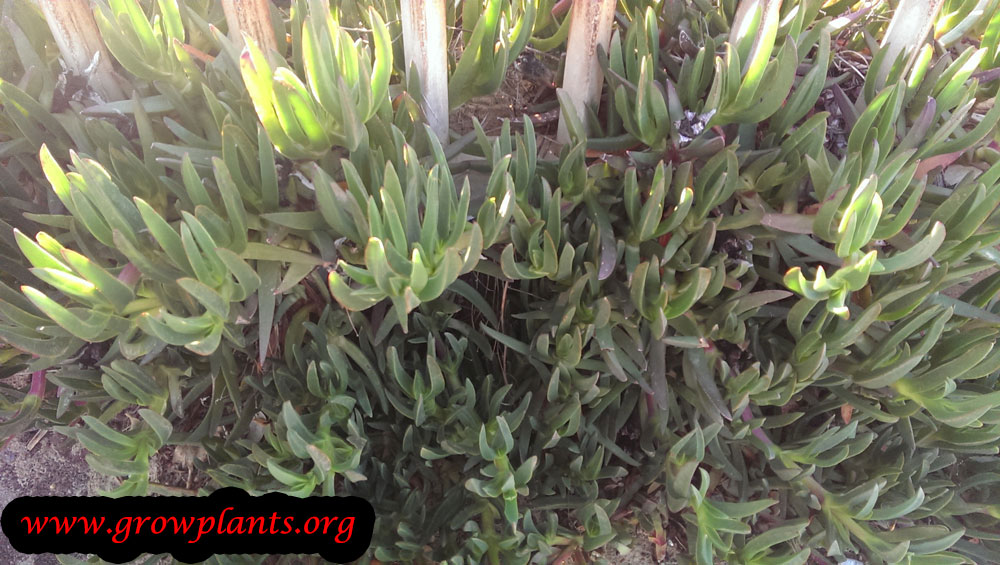
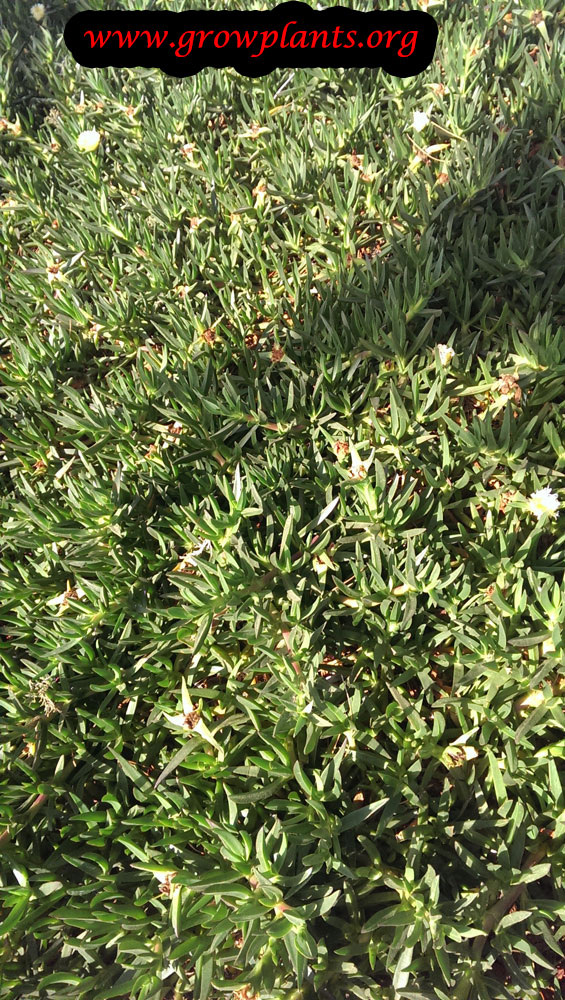
A vigorous evergreen creeping succulent (pig face / sourfig) forming mats about 5-20 cm (2-8 in) high and spreading widely. A drought- and salt-tolerant perennial groundcover with white, orange, yellow, red, pink or purple flowers and edible fig-shaped fruit; it can be invasive.
Quick Specifications
| Specification | Attribute |
|---|---|
| Plant Type / Life Cycle | Perennial |
| Foliage Type | Evergreen (succulent) |
| Mature Size | 5-20 cm (2-8 in) tall, spreading widely |
| Growth Rate | Fast to moderate |
| Root System | Shallow, fibrous; roots at the stem nodes as it creeps |
| Toxicity | Non-toxic; fruit and leaves edible |
| Hardiness | USDA zone 8+ |
Growth Form & Structure
- Height & Spread: 5-20 cm (2-8 in) tall, spreading as far as allowed; also grown trailing from containers
- Growth Habit & Form: Prostrate, mat-forming succulent groundcover with fleshy 3-angled leaves; roots at the nodes
- Lifespan & Maturity: Fast-establishing perennial; bears fruit about 1 year from planting
Anatomy & Physical Features
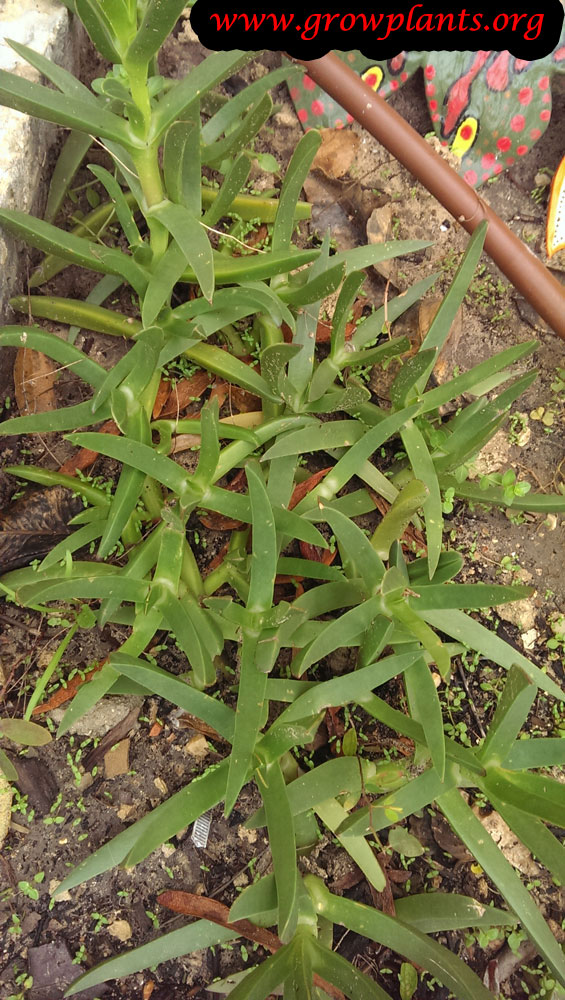
- Leaves & Foliage: Fleshy, linear 3-angled green or red leaves
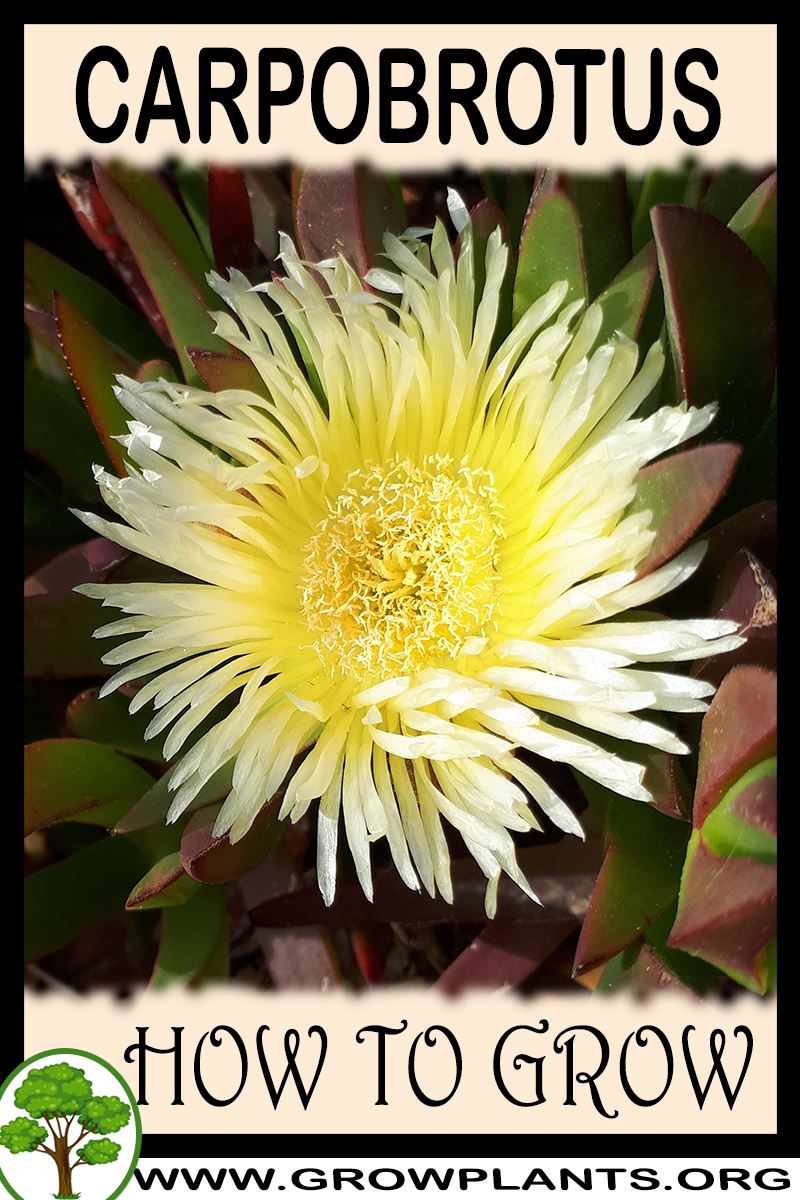
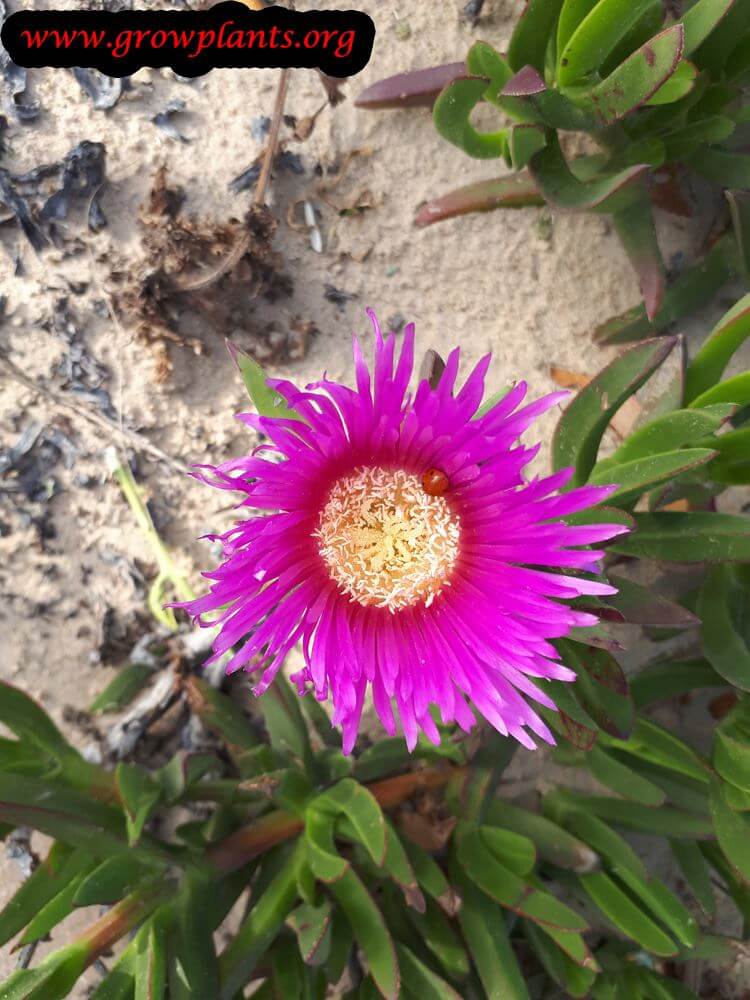
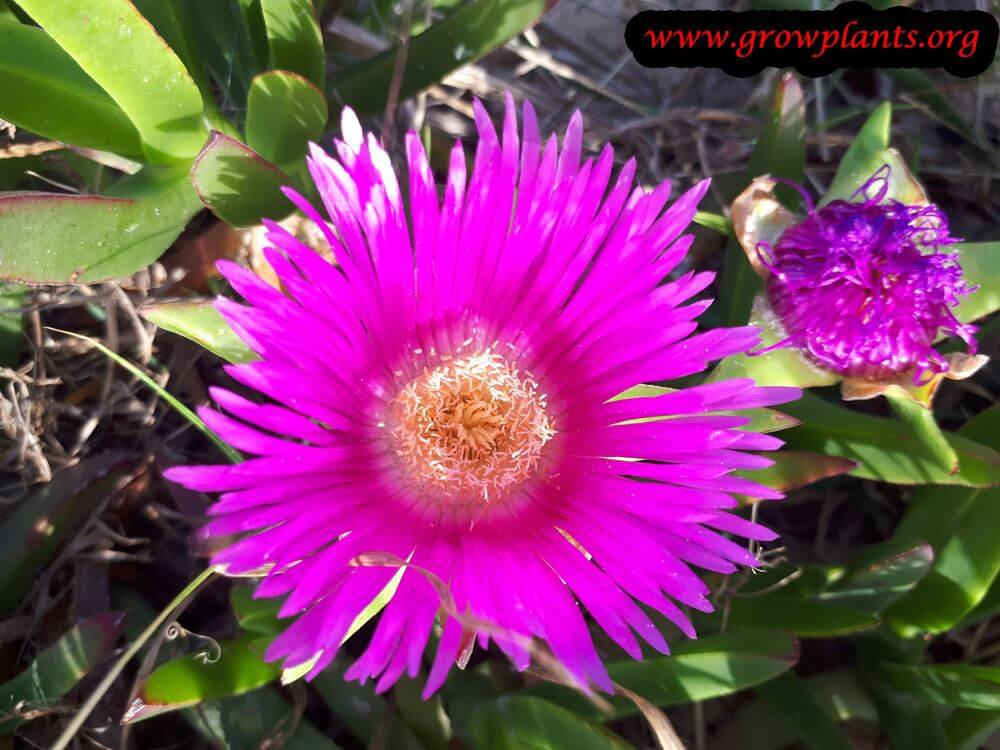
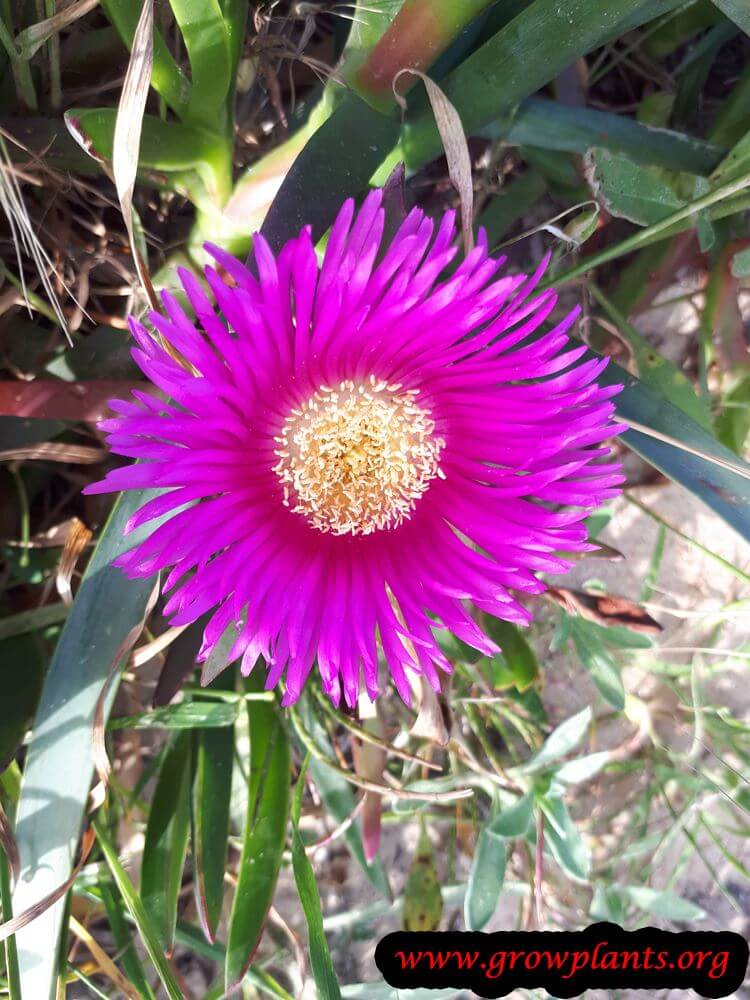
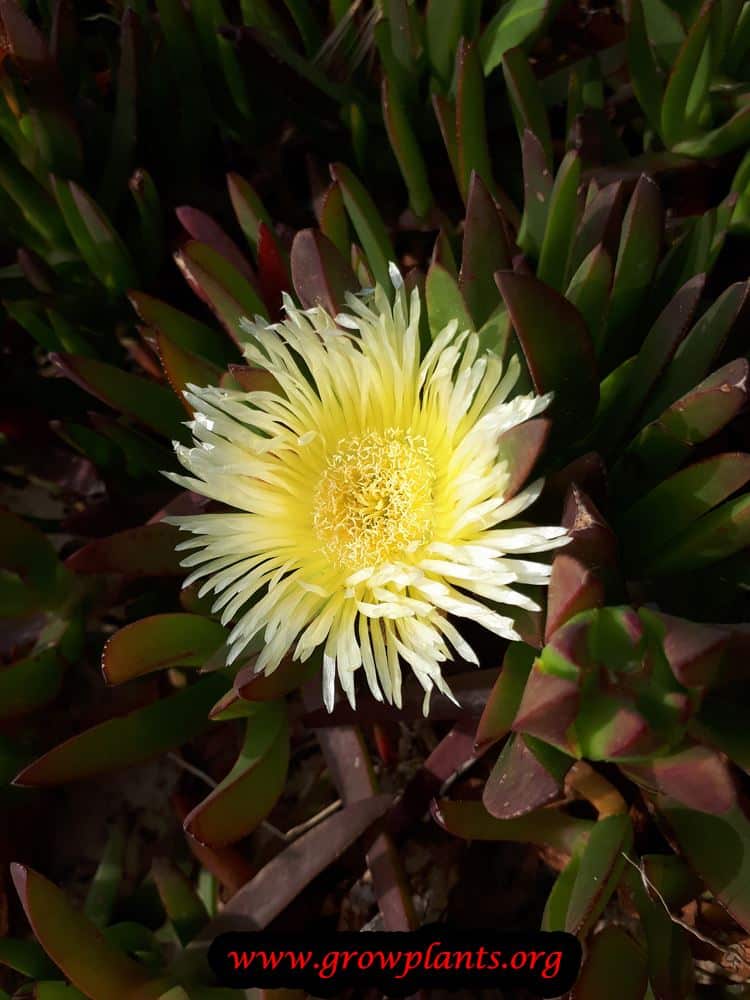
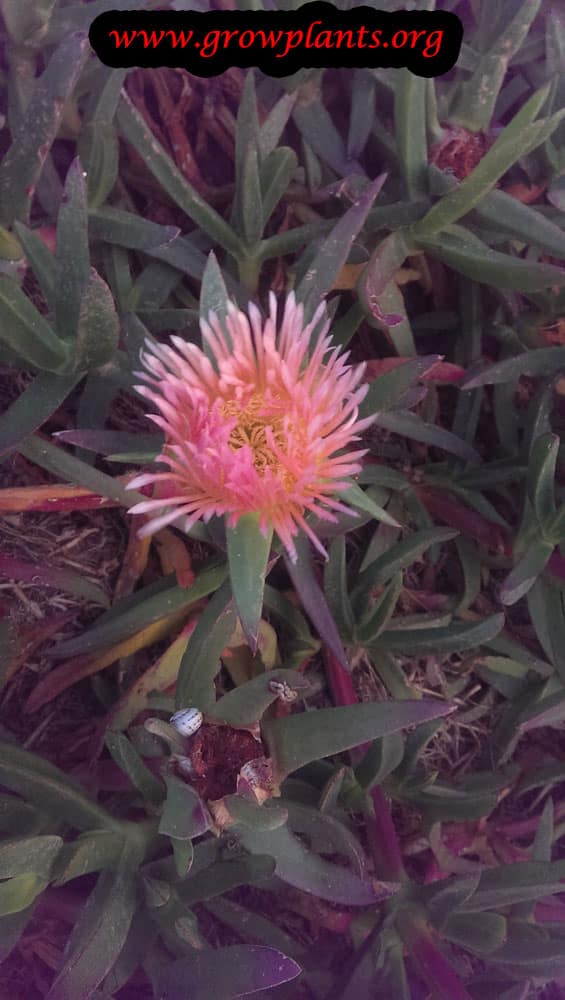
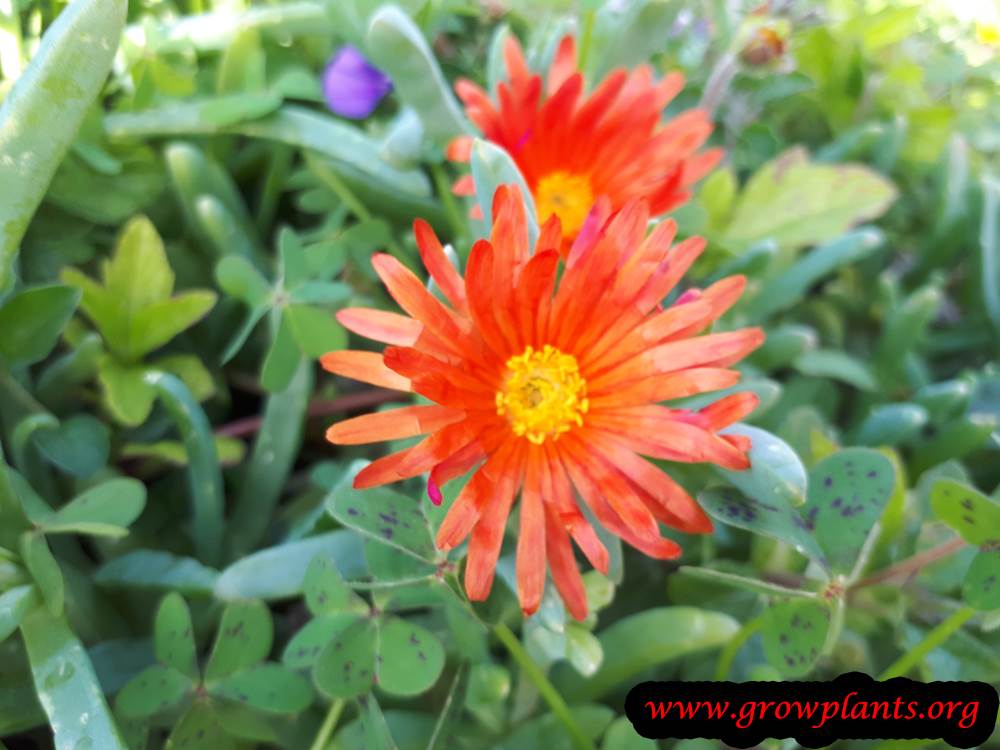
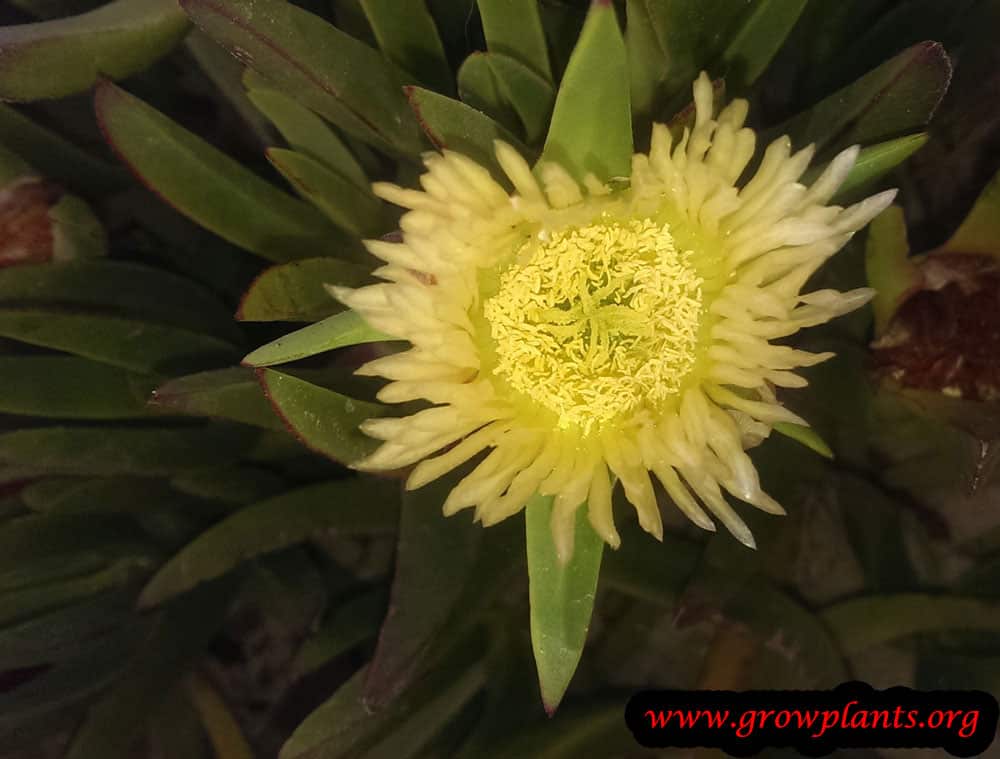
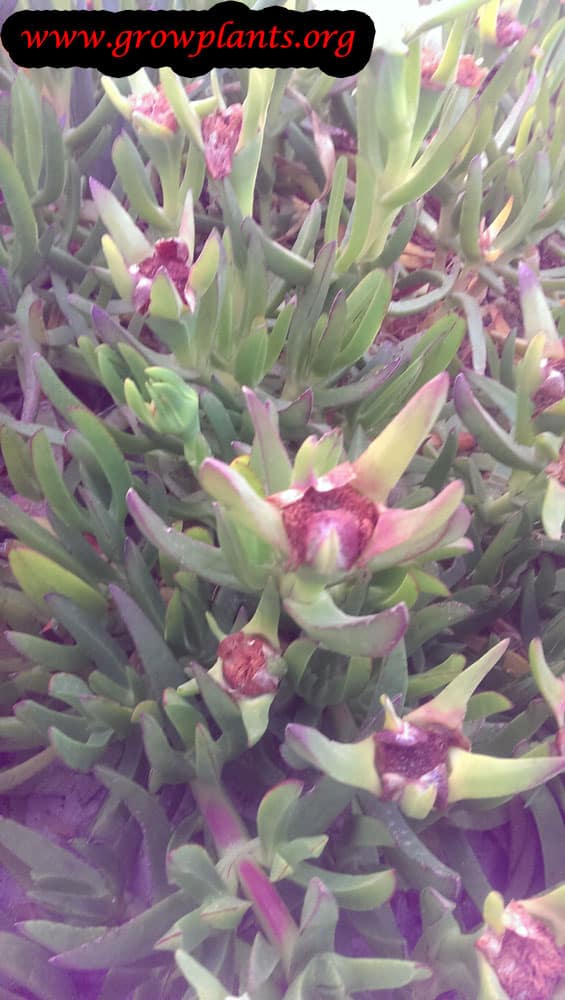
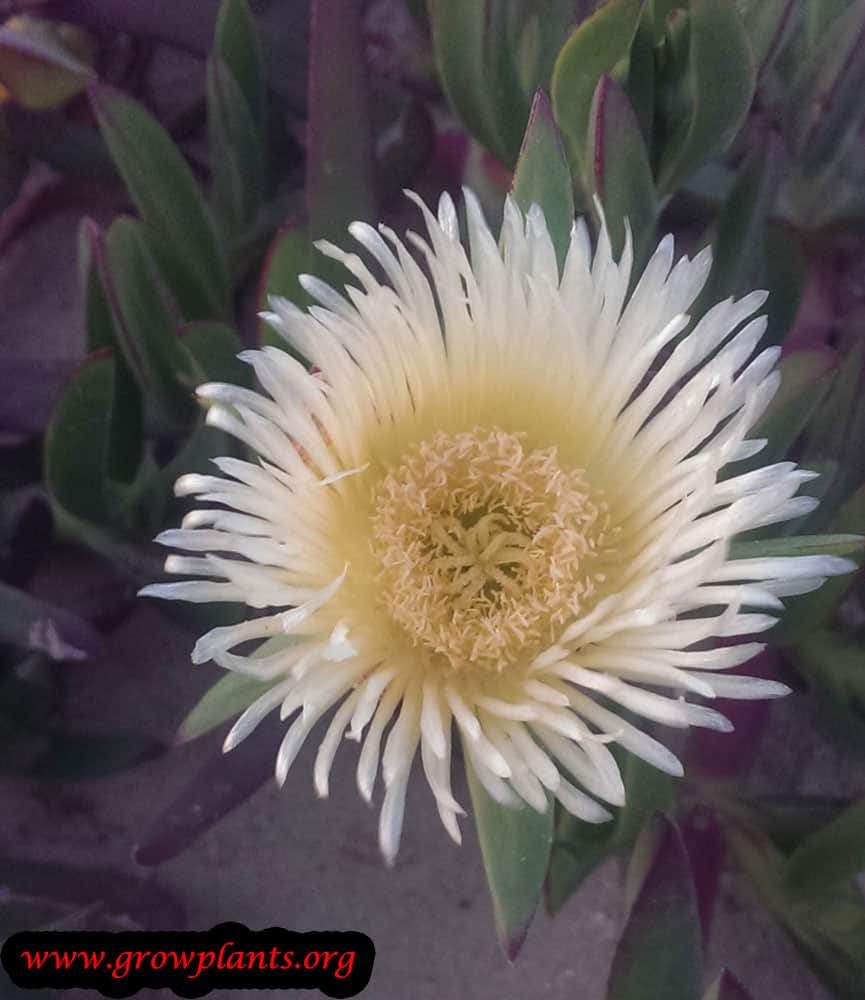
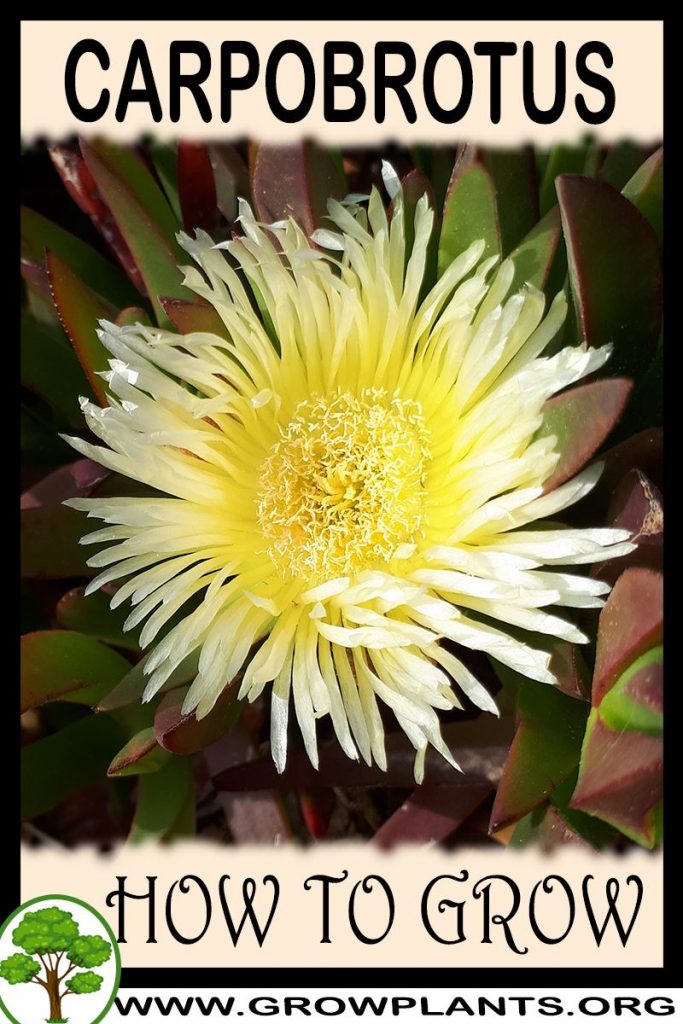
- Flower Characteristics: Large, daisy-like white, orange, yellow, red, pink or purple many-petalled flowers
- Fruit Profile: Fleshy, fig-shaped green fruit; edible
Primary Uses & Landscape Value
- Edible Uses: Fruit eaten raw, in jams, pickles, cooked or dried; the fleshy leaves are also cooked, eaten raw or pickled
- Functional & Ornamental Roles: Drought- and salt-tolerant groundcover for banks, coastal and rockery planting and erosion control; spillover container plant. Can be invasive – site with care
Care Guide: Planting, Soil & Watering
Overview: A fast-spreading, mat-forming coastal succulent for full sun and sandy, very free-draining soil. Extremely drought- and salt-tolerant, it needs little water and can become invasive.
Quick Care Requirements
| Requirement | Ideal Condition |
|---|---|
| Planting Season | Year-round (any time in mild, frost-free climates) |
| Growth Rate | Fast to moderate |
| Soil Type | Sandy and free-draining |
| Water Need | Low – very drought-tolerant |
Planting & Establishment
- Best Planting Season: Plant at any time of year in frost-free, mild climates.
- How to Plant:
- Hole Preparation: Dig a shallow hole for the small root mass, or simply lay and peg cuttings onto the soil.
- Soil Amendments: Add coarse sand or grit if the soil is heavy; no rich feeding is needed.
- Planting Depth: Set shallowly with the crown at soil level; stems root readily wherever they touch the ground.
- Growth Speed & Expectations: Fast to moderate, spreading widely as a dense, low groundcover.
Soil, Watering & Drainage Care
- Soil Mix & Drainage Needs: Sandy, free-draining soil; tolerates poor, saline, coastal ground. Grows in containers with a free-draining mix.
- Watering Schedule & Technique:
- Young / Newly Planted: Light watering to establish.
- Established: Water sparingly – it is highly drought-tolerant.
- Seasonal Adjustments: Occasional water in prolonged heat; little to none otherwise.
Climate, Light & Hardiness
Carpobrotus (pig face / sour fig) is a tough, mat-forming coastal succulent suited to desert, Mediterranean, subtropical, tropical, and temperate climates, grown in full sun. It is reliably cold-hardy to about USDA zone 8 and is prized for exceptional wind and salt tolerance along coastlines.
Quick Climate Specifications
| Climate Zones | Desert, Mediterranean, subtropical, tropical, and temperate; especially well suited to coastal climates |
|---|---|
| USDA Hardiness Zones | Typically zone 8 and warmer |
| Frost Tolerance | Moderate |
| Light Conditions | Full Sun |
| Wind Tolerance | High |
| Salt / Coastal Tolerance | High |
Sunlight & Light Exposure
Optimal Light Setup
Full sun is essential for dense, healthy mat growth and good flowering; the genus does not perform well in shade.
Direct Sun Requirement
Needs many hours of direct sun daily, including exposed, open sites with reflected heat.
Shade & Heat Management
Handles intense heat and sun exposure without special protection, making it a reliable choice for hot, exposed sites.
Best Exposure / Orientation
An open, fully sun-exposed site - including exposed coastal banks, dunes, and slopes - suits this genus better than a sheltered or shaded position.
Temperature Extremes & Hardiness
USDA Hardiness & Regional Limits
Hardy outdoors year-round in roughly USDA zone 8 and warmer. As a low, ground-hugging succulent it sheds cold air readily, but young plantings benefit from establishment through a full growing season before facing their first winter.
Cold Damage & Winter Protection
Well-drained, sandy soil reduces cold-wet stress in winter; little other protection is typically needed within its hardiness range.
Frost Sensitivity
Moderate frost tolerance for an evergreen succulent; foliage may show cosmetic damage from hard frost but established plantings generally recover.
Extreme Heat Tolerance
Excellent heat tolerance, well suited to hot, dry, and coastal-exposed summer conditions.
Wind, Humidity & Microclimate
Humidity Preferences
Adapts to a wide humidity range, from dry Mediterranean and desert air to humid coastal and subtropical conditions.
Dry-Air Tolerance
Tolerates dry air well.
Wind Tolerance
Excellent wind tolerance; its low, creeping, mat-forming habit makes it a classic choice for exposed, windy coastal sites.
Coastal / Salt Tolerance
Outstanding salt and coastal tolerance - Carpobrotus is widely used for dune stabilization and seaside landscaping, handling salt spray and sandy, saline soils well.
Rainfall & Seasonal Moisture
Adapted to climates with a dry season and drought conditions; it does not require or want consistently wet soil.
Microclimate Recommendations
Well suited as a groundcover on sunny, exposed banks, dunes, and coastal slopes where erosion control and salt exposure would challenge less tolerant plants; note its vigorous spreading habit can become invasive if not contained.
Growing in Pots, Balconies & Indoors
Carpobrotus (one of the pigface or ice plants) is a low, spreading, sun-loving succulent groundcover – only 5-20 cm (2-8 inches) tall but trailing as wide as you let it. It is not a houseplant, but it is superb spilling over the edge of a large container, a raised planter or a hanging basket in full sun on a balcony or patio.
Quick Details
- Container Size: A wide, shallow pot or trough, or a hanging basket – it wants room to trail rather than depth
- Indoor Suitability: Not an indoor plant – it needs full sun and space to spread; grow it outdoors
- Best Spot: Full sun
- Soil & Drainage: Sandy, gritty, free-draining mix; it thrives in lean soil and hates wet feet
- Watering in Pots: Water sparingly – it is very drought-tolerant; let the mix dry between waterings
Indoors & On the Windowsill
- Not for indoors: The grower’s answer is No – Carpobrotus wants full, direct sun and room to trail, which a room can’t provide; indoors it grows weak and leggy.
- Sunniest sill only: At most a young plant might sit briefly on the sunniest windowsill, but it really belongs outside in full sun.
On a Balcony or Patio
- Light & wind: Give it the hottest, sunniest spot – it loves reflected heat from walls and railings and shrugs off wind and salt air, which makes it a fine coastal-balcony plant. Let the stems cascade over the pot rim or basket edge.
- Practicalities: It spreads fast, so give it its own container; pots against warm walls dry quickly, but this succulent tolerates that better than most – water only when dry.
Choosing the Pot, Soil & Long-Term Care
- Pot & drainage: A wide container or hanging basket with strong drainage holes; skip a standing-water saucer to avoid root rot – it rots easily if kept wet.
- Potting mix: A sandy, gritty, free-draining mix – a cactus/succulent mix or potting mix cut with sand and grit. A ready-made cactus and succulent soil mix provides that structure without mixing it yourself.
- Feeding: Feed only lightly and occasionally; too much feed gives soft, floppy growth. A light annual feed replaces what leaches from the pot.
- Repotting: Refresh the mix and cut back straggly stems every year or two to keep it neat.
Fertilizing & Feeding
A very light feeder; this drought-adapted succulent grows slowly and needs only occasional, dilute feeding during active growth, and none while resting. Overfeeding does more harm than too little.
Quick Fertilizing Specs
| Feeding Level | Light |
|---|---|
| Main Nutrient Priority | Lean, nitrogen-light feeding; avoid rich, high-nitrogen fertilizers |
| Best Feeding Period | Warm, active growing season only |
| Organic Options | A little compost or worm castings worked into a gritty mix; slow-release granular made for cacti and succulents |
| Micronutrients | Not routinely needed; correct only if a specific deficiency appears |
| Soil pH | Tolerates a wide range; prefers sharply drained, gritty media |
| Reduce/Stop Feeding | Taper off as growth slows and stop entirely during dormancy |
Feeding by Growth Stage
Active growth (warm season)
Support steady, compact growth without forcing soft, leggy stems.
| Nutrient direction | Lean, nitrogen-light feeding using a dilute balanced or low-nitrogen fertilizer; this succulent stores water and grows slowly, so it feeds sparingly. |
|---|---|
| Timing | During the warm, actively growing months when new leaves or stems are forming. |
| Frequency | Infrequent, light feeding through the growing season is usually enough; err toward under-feeding. |
| Fertilizer types | A dilute, balanced or low-nitrogen liquid fertilizer, A slow-release granular formulated for cacti and succulents |
| Precautions | Overfeeding is the main risk; excess fertilizer and salts scorch roots and cause soft, floppy growth. Feed less rather than more, and never feed dry, stressed plants. |
Dormant rest (cool or dry season)
Let the plant rest; growth halts and nutrient demand disappears.
| Nutrient direction | None – withhold fertilizer while the plant is dormant. |
|---|---|
| Timing | During cool winter months or hot, dry rest periods when the plant is not actively growing. |
| Frequency | No feeding at this stage. |
| Fertilizer types | No feeding at this stage; resume only when active growth returns. |
| Precautions | Do not fertilize until warm weather and active growth resume. |
Nutrient Deficiency Signs & Corrections
Pale, stretched, or unusually soft new growth with washed-out color.
| Possible causes | Insufficient light causing etiolation, Low nitrogen availability in an exhausted mix, Root confinement in a small pot |
|---|---|
| Appears first on | Newest growth at the stem tips. |
| What to check | Light exposure and day length, How long since the plant was last repotted or fed, Whether roots fill the container |
| Possible correction | Move to brighter light, refresh the mix, and offer a light, dilute low-nitrogen feeding during active growth rather than heavy fertilizing. |
Browned, dried leaf tips or edges and crusty deposits on the soil surface or pot.
| Possible causes | Accumulated fertilizer salts from overfeeding, Poor drainage or infrequent leaching, Underwatering that concentrates salts in the mix |
|---|---|
| Appears first on | Leaf tips and margins, oldest leaves first. |
| What to check | Recent fertilizer amounts and how often it was fed, Drainage and how freely the mix dries, Salt crust on the soil or container rim |
| Possible correction | Stop feeding, flush the mix thoroughly with plain water to leach salts, and resume only very light feeding once the plant recovers. |
Yellowing between the veins on newer leaves while the veins stay greener.
| Possible causes | Iron becoming unavailable in alkaline or overly wet mix, Waterlogged, poorly aerated roots, High soil pH reducing micronutrient uptake |
|---|---|
| Appears first on | Newest leaves. |
| What to check | Alkalinity of the mix and the irrigation water, Drainage and root health, Whether the mix stays wet too long |
| Possible correction | Improve drainage and correct alkalinity; if it persists, apply a chelated iron product according to its label. |
Pruning, Training & Seasonal Maintenance
Carpobrotus is a fast-spreading, low, trailing succulent groundcover – it stays only 5–20cm tall but spreads as wide as space allows, rooting along its creeping stems as it goes, and the source notes it can become invasive if left unchecked. Because of this, the main pruning objective isn’t shaping or fruiting-wood management but containment: shearing or clipping back the trailing stems to hold the mat within bounds and to keep the centre of the planting from thinning out and going bare/woody. Cutting can be done year-round, but a hard renewal shear will remove that season’s developing fruit (which takes about a year to ripen), so timing matters if fruiting is wanted rather than purely ornamental cover.
Quick Pruning & Maintenance Specs
| Pruning Tolerance | Moderate to High – tolerates shearing well as a groundcover |
| Primary Pruning Window | All year for edge trimming/containment |
| Secondary Maintenance Window | Periodic renewal shear to prevent a bare, woody centre |
| Typical Frequency | Frequent light edging; occasional harder renewal cut |
| Main Objective | Contain spread and keep the mat dense; renew a thinning centre |
| Young Plant Priority | Let it establish and spread; little to no cutting needed early on |
| Mature Plant Priority | Edge/contain regularly; renewal-shear an ageing, bare-centred mat |
| Best Tool Type | Hedge shears for edging/renewal; bypass secateurs for spot removal of individual runners |
| Avoid Heavy Pruning During | Avoid a full renewal shear while fruit is actively developing, if fruit is wanted |
Pruning by Plant Age & Size
Newly Established
Minimal intervention – let the plant spread and knit together; only remove damaged growth.
Young / Formative
No structural training in the usual sense; the useful early task is directing or pinning down runners toward the area meant to be covered, and cutting back any runner that heads somewhere unwanted before it roots in.
Mature / Established
Shear the mat’s edges regularly to hold its footprint, and periodically cut the whole planting back harder to refresh dense, low growth once the centre starts to thin and become woody/bare.
Seasonal Pruning Schedule
Summer Canopy Management
Objective: keep the spreading mat within its bounds during active growth. Remove: runners crossing into unwanted areas, and any excess trailing growth. Do not remove: the whole mat at once – work in sections so the planting isn’t left bare. Expected response: denser regrowth from the cut points. Flowering/fruiting impact: cutting stems that are already carrying developing fruit removes that fruit, since it takes roughly a year to ripen.
Ongoing Sanitary
Objective: containment and tidiness. Remove: stray runners, damaged growth, any time of year given the plant’s continuous growth habit. Do not remove: the entire mat in one pass on an established planting – renew it in stages instead.
Structural Pruning & Training
- Height & spread control: this is the central task – regular edging keeps the naturally unlimited spread in check.
- Renewal pruning: cutting an older section back hard encourages fresh, low, dense regrowth and prevents the woody, thinning centre that develops in unmanaged mats.
- Canopy density: thinning isn’t needed – density is wanted here, so cuts are about containment and renewal, not opening the plant up.
Special Growth to Remove
- Runners/stolons – the main thing to manage; cut back or redirect any runner crossing a bed edge, path, or into a neighbouring planting before it roots and becomes established there.
- Spent flower stems – can be tidied away once flowering finishes if a neater look is wanted.
Container & Small-Space Pruning
In a container or hanging planter, the trailing habit is often left unclipped for ornamental effect, but the same rule applies in reverse: without the constant containment work needed in the ground, a container specimen still benefits from an occasional light shear so it doesn’t become straggly and bare at the base of each trailing stem.
Tools
- Hedge shears – edging and renewal cuts across a spreading mat; genuinely appropriate here, unlike on a selectively-pruned succulent.
- Bypass secateurs – spot removal of individual runners or damaged stems.
Tool Hygiene & Disease Risk
Routine – clean, sharp tools are sufficient; the listed pests (snails, slugs) are not tool-transmitted, though a dense, poorly-ventilated mat is more likely to shelter them, which is itself a reason to keep growth from getting overly thick.
Cut Placement & Technique
Shear across the mat’s surface for edging and renewal rather than cutting individual stems one by one; for targeted runner removal, cut back to just past a rooted node so the remaining stem doesn’t die back untidily.
Heavy Pruning & Rejuvenation
Well tolerated – an old, thinning, woody-centred planting can be cut back hard in sections to force fresh low growth; because this sacrifices flowers and any developing fruit for that section, stagger renewal across the planting over a couple of seasons rather than cutting the whole area back at once if fruiting matters.
Post-Pruning Care
No feeding is typically needed after a routine edging trim. After a harder renewal cut, water normally (this is still a drought-tolerant succulent, so avoid overwatering) and watch the cleared area for slug/snail activity while regrowth is soft and low.
Common Pruning Mistakes
- Letting the mat run unchecked until it has spread well beyond the intended area, at which point containment becomes a much bigger job.
- Never renewing an ageing planting, leading to a bare, woody centre with growth only around the edges.
- Shearing a whole fruiting planting hard in one pass and losing an entire season’s developing fruit.
When NOT to Prune
- Avoid a full renewal shear while fruit is actively developing if a fruit crop is wanted – fruit takes about a year to ripen from flowering.
- Avoid cutting a newly planted, still-establishing patch – let it knit together first.
Recommended Tools (by task)
- hedge_shears – edging and periodic renewal cuts across the spreading mat; the plant’s dense, low, uniform growth habit genuinely suits shearing.
- bypass_secateurs – spot removal of stray runners or damaged stems where a shear would be overkill.
Pruning Troubleshooting
| Problem | Possible Cause | What to Check | Corrective Action |
| Bare, woody centre with growth only at the edges | Planting never renewal-pruned | Age of the planting and density at the centre versus the perimeter | Cut back sections hard on a rotation to force fresh low growth |
| Spread has escaped the intended bed/area | Runners not checked/contained regularly | Rooted nodes beyond the bed edge or into neighbouring plantings | Cut runners back to inside the bed edge and shear the boundary regularly |
| Little to no fruit despite good flowering | Whole planting sheared while fruit was still developing | Timing of the last renewal cut relative to flowering | Stagger renewal shearing across sections/seasons instead of cutting the whole planting at once |
Propagation Guide
Carpobrotus species are most easily and reliably increased from stem cuttings, since the trailing succulent stems root readily at the nodes wherever they touch soil; seed is a workable but slower alternative. Propagation is easy for a home grower, though because the genus can naturalize aggressively in mild coastal climates, it is worth confirming a species is appropriate for the site before propagating it.
Quick Propagation Specs
| Best Propagation Method | Stem cuttings |
| Alternative Methods | Seed; transplanting already-rooted trailing-stem sections |
| Propagation Difficulty | Easy |
| Seed True-to-Type | Usually true-to-type for the species, though flower colour can vary within the genus |
| Vegetative True-to-Type | Yes |
| Best Propagation Season | Warm growing months; can be attempted nearly year-round in frost-free climates |
| Seed Germination Time | Typically several weeks, often uneven |
| Cutting Rooting Time | Usually a few weeks under warm conditions |
| Germination Temperature | Roughly 20–25°C (68–77°F) |
| Seed Sowing Depth | Surface-sow or cover only very lightly – the seed is fine |
Growing from Seed
Seed Handling & Viability
The site lists seed alongside vegetative reproduction as a standard way to start this genus. Detailed storage life is not documented at species level, so use seed reasonably fresh where possible rather than assuming long shelf life.
Sowing Season
Sow during the warm growing months; this lines up with the plant’s year-round recommended planting season in mild, frost-free climates.
Sowing Depth & Orientation
Surface-sow or cover with only a very thin layer of sandy mix, since the seed is small.
Germination Conditions
Warm conditions (roughly 20–25°C / 68–77°F) with light, consistent moisture in a well-drained, sandy medium reflecting the plant’s natural well-drained, sandy-soil preference; avoid waterlogging.
Germination Time
Expect several weeks, with germination often uneven – this is typical of the genus rather than a sign of failure.
Seedling Care
Seedlings are slower to form a useful mat than rooted cuttings. Grow on in a well-drained, sandy mix under full sun and pot on or transplant once seedlings are established.
Stem Cuttings
Cutting Type
Firm, non-flowering sections of trailing succulent stem, roughly 10–15cm (4–6in) long.
Best Timing
Take cuttings in the warmer growing months; in frost-free climates this can extend close to year-round, consistent with the plant’s all-year recommended planting season.
Cutting Preparation
Cut cleanly just below a node and strip leaves from the portion that will be buried. Let the cut end callus in a dry, shaded spot for a day before inserting, which reduces rot risk in succulent stems. If a trailing stem already shows roots forming at a node, that rooted section can simply be severed and transplanted directly rather than treated as a fresh cutting.
Rooting Setup
Insert into a well-drained, sandy or gritty mix that mirrors the plant’s natural well-drained, sandy soil; keep lightly moist (not wet) in full sun to bright light.
Rooting Hormone
Not necessary. Carpobrotus stems are noted to root readily on their own, including from broken fragments – part of why the genus spreads and naturalizes so easily where it escapes cultivation.
Rooting Time
New roots typically establish within a few weeks under warm conditions.
Bloom & Flower Guide
Quick Details
- Bloom Season: Spring, summer and into autumn
- Flower Appearance: Large, daisy-like flowers with many narrow petals in white, red, orange, yellow, pink or purple
- Edibility: Grown mainly as an ornamental ground cover; the showy flowers are not the eaten part of the plant
Detailed Blooming Overview
Pig face rewards a sunny, dry spot with a long, colourful season of bloom from spring through autumn. The many-petalled flowers open wide in bright sunshine and close up again in dull weather or toward evening, so the display is at its best on clear, sunny days. It is a tough, drought-tolerant ground cover that flowers freely with almost no attention.
Flower Characteristics
- Large, glossy, daisy-like flowers packed with many slender petals.
- Colours span white, red, orange, yellow, pink and purple.
Bloom Care & Thinning
- Pollination: Bees and other insects work the open flowers in sunshine.
- Managing the bloom: No deadheading needed – give it full sun and sharp drainage and it will flower generously on its own.
Fruit & Uses
Carpobrotus (“pig face” or sour fig) is grown mainly as an ornamental, drought-tolerant ground cover, but its fig-shaped fruit is genuinely edible and, in some species, so are the fleshy leaves. Both are eaten raw or after simple processing – no special preparation is required.
Quick Edible Specs
| Edible Parts | Fruit; leaves (species-dependent) |
|---|---|
| Main Use(s) | Culinary – eaten fresh, or made into jam, pickles, salad and dried fruit; leaves cooked, eaten raw, or pickled |
| Eaten Raw or Cooked | Both – fruit and leaves can be eaten raw or cooked/pickled |
| Preparation Required | None required for basic eating; optional cooking, drying or pickling for jams/preserves |
| Harvest Season | Fruit: summer, autumn and winter. Leaves: all year, once the plant is established |
| Time to First Harvest | Fruiting begins relatively quickly once the plant is established – see the Fruit section below for the site’s specific figure |
| Storage | Fruit can be dried for longer storage; otherwise best used fresh or processed into jam/pickles |
| Safety/Toxicity Caveat | No toxicity noted by the source; watch for snail/slug damage on ripening fruit |
Fruit
The fruit is fig-shaped and green, ripening across summer, autumn and winter. It needs no special preparation and can be eaten straight off the plant, or processed in quantity into jam, pickles, salad, cooked dishes or dried fruit. The site notes the plant can begin fruiting in as little as about a year once established, though this should be treated as a rough guide rather than a guarantee. Watch for snail and slug damage to ripening fruit.
Leaves & Greens
In this genus the fleshy, linear leaves are also edible once the plant has established full young growth, and can be harvested year-round. They are used cooked, raw or pickled. As with many succulent, salt-tolerant coastal plants, the leaves are naturally salty and mucilaginous; pickling or cooking is a traditional way to mellow that flavour, though eating them raw is also an established use.
Harvesting
Fruit is picked once ripe across its summer-to-winter season with no special technique required; leaves can be cut as needed through the year once the plant is well established, though heavy leaf harvesting will reduce the plant’s fruiting vigour since the same growth is feeding both.
Preparation, Uses & Safety
No special preparation is required for either part – fruit and leaves can both be eaten raw. Beyond fresh eating, the fruit is traditionally turned into jam, pickles, salads or dried fruit, and the leaves into pickles or cooked dishes. No toxicity or safety caveat is noted for this genus; the main practical caution is that Carpobrotus is an aggressive, spreading ground cover in some regions, which is a growth/garden-management concern rather than an eating one.
Pests, Diseases & Troubleshooting
Overview: Carpobrotus (ice plant / pigface) is a tough, salt- and drought-tolerant coastal succulent groundcover that is very nearly pest-free; the few pests it gets are sap-suckers (mealybugs, scale, occasional aphids) and slugs/snails in damp sites. Its overwhelming real threat is not a pest at all but root and stem rot from overwatering and poor drainage, so honest management here is mostly about lean soil, sharp drainage and restraint with the hose rather than spraying.
Quick Troubleshooting Overview
| Issue / Pest | Main Symptom | Primary Solution |
|---|---|---|
| Mealybugs | White cottony clusters in leaf joints, honeydew | Water jet or alcohol swab, neem/oil |
| Scale | Brown/gray bumps on stems, honeydew | Scrape off, prune runners, horticultural oil |
| Slugs / snails | Chewed holes and slime trails in damp sites | Reduce watering, hand-pick, iron-phosphate bait |
| Root / stem rot | Yellowing, soft collapsing patches of the mat | Sharp drainage, water less, remove rotted sections |
| Overwatering | General softening and rot in heavy or wet soil | Lean sandy soil, minimal irrigation once established |
| Frost damage | Glassy then brown-mushy leaves after freeze | Site warm, keep dry in cold, trim and let regrow |
Common Pests & Management
- Mealybugs (Pseudococcus / Planococcus spp.):
- Symptoms: White cottony clusters tucked into leaf joints, growing tips and the dense mat beneath the foliage; honeydew and sooty mold; usually the most likely pest on an otherwise trouble-free groundcover.
- Prevention & Control: Hose off with a strong water jet or wipe with an alcohol-dipped swab; thin congested growth to expose colonies; encourage ladybirds and lacewings. Neem or horticultural oil and insecticidal soap handle stubborn patches.
- Scale insects (Coccidae / Diaspididae):
- Symptoms: Small brown or gray bumps on stems and older leaves that do not rub off; localized yellowing and honeydew from soft scales.
- Prevention & Control: Scrape off light infestations; prune out badly affected runners. Horticultural oil smothers scale; repeat to catch crawlers.
- Aphids (Aphididae):
- Symptoms: Small soft insects on tender new growth and flower buds, with distortion and honeydew; occasional rather than chronic on these succulents.
- Prevention & Control: Rinse off with water; encourage beneficials; treat lingering colonies with insecticidal soap.
- Slugs and snails (Gastropoda):
- Symptoms: Irregular chewed holes and slime trails on fleshy leaves and stems, especially in damp, shaded, over-irrigated plantings.
- Prevention & Control: Reduce watering and clear damp hiding places; hand-pick at night; use barriers or iron-phosphate baits around vulnerable young plantings.
Diseases & Fungal Issues
- Root and stem rot (Phytophthora / Pythium / Fusarium):
- Symptoms: Patches of the mat yellow, brown and collapse, with soft, rotted stems and roots; almost always caused by overwatering, poor drainage or planting in heavy, water-retentive soil — by far the main way these plants die.
- Treatment & Management: Plant in free-draining, even sandy or gritty soil; water sparingly once established (they are highly drought- and salt-tolerant); never let the crown sit wet. Remove and destroy rotted sections, improve drainage, and replant healthy runners into dry ground.
- Sooty mold (Capnodium spp.):
- Symptoms: Black superficial film over leaves and stems wherever honeydew from mealybugs, scale or aphids has settled; blocks light but does not infect tissue.
- Treatment & Management: Control the sap-sucking pest producing the honeydew, then rinse the mold away; it clears once the honeydew source is removed.
Growing Difficulties & Abiotic Problems
- Overwatering and poor drainage:
- Cause & Symptoms: Yellowing, softening and rotting of the mat when grown too wet or in heavy soil; as a coastal succulent groundcover, Carpobrotus is adapted to lean, dry, sandy conditions and quickly rots with excess moisture.
- Correction Strategy: Establish in well-drained, low-fertility soil and water only until established, then rely on rainfall in most climates; avoid irrigation basins and heavy mulch over the crown.
- Frost damage:
- Cause & Symptoms: Fleshy leaves turn glassy, translucent and then brown-mushy after frost; these plants are only lightly frost-tolerant and are damaged by hard freezes.
- Correction Strategy: In frost-prone areas site against warm walls or slopes and keep plants on the dry side going into cold; trim damaged growth once warmth returns and the mat will usually regenerate.
- Heat, sun and salt tolerance notes:
- Cause & Symptoms: Rarely a problem — these are extremely sun-, heat-, drought- and salt-tolerant — but very congested growth can shade out and rot underneath, and newly divided pieces can scorch before rooting.
- Correction Strategy: Allow airflow through the mat and let new divisions root before exposing them to the harshest sun; otherwise this plant thrives on neglect in full sun and coastal salt spray.
What Helps — Products & Tools
This plant needs very little intervention. Keep insecticidal soap and neem or horticultural oil for the occasional mealybug, scale or aphid patch, and iron-phosphate slug bait for damp plantings. The most valuable “tools” are cultural: free-draining sandy soil, minimal irrigation once established, and prompt removal of any rotted sections — overwatering, not insects, is what kills these succulents.