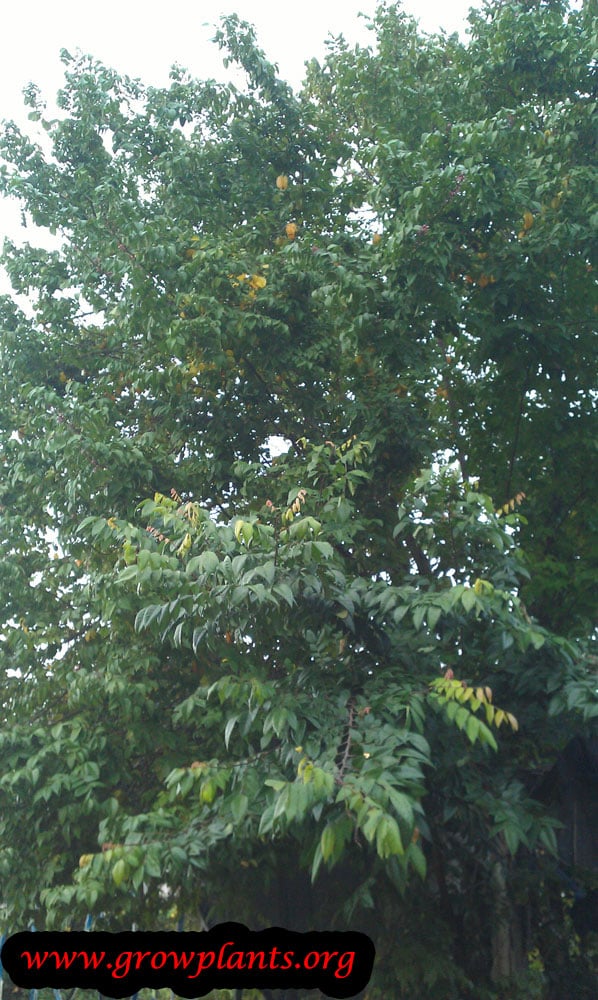
Plant Profile & Key Characteristics
Also known as: Star fruit, Five corner
Overview: Carambola (Averrhoa carambola, star fruit) is a moderate- to slow-growing evergreen to semi-deciduous tree reaching 3-6 m (10-20 ft). It is grown for its edible star-shaped fruit and as an ornamental.
Quick Specifications
| Specification | Attribute |
|---|---|
| Plant Type / Life Cycle | Perennial |
| Foliage Type | Evergreen to semi-deciduous |
| Mature Size | 3-6 m (10-20 ft) tall |
| Growth Rate | Moderate to slow |
| Toxicity | Non-toxic / edible fruit |
| Hardiness | USDA zone 10+ (zone 9 with care) |
Growth Form & Structure
- Height & Spread: 3-6 m (10-20 ft) in the ground; fruits well in a large container of at least 20 L (5 gal), stepped up as it grows
- Growth Habit & Form: Small, bushy-canopied evergreen tree; flowers and fruit are borne directly on the trunk and branches (cauliflory)
- Lifespan & Maturity: Long-lived; begins bearing fruit in about 3-4 years
Anatomy & Physical Features
- Leaves & Foliage: Compound green leaves; new growth flushes red
- Flower Characteristics: Small white-purple flowers borne on the trunk and branches (see the Bloom guide)
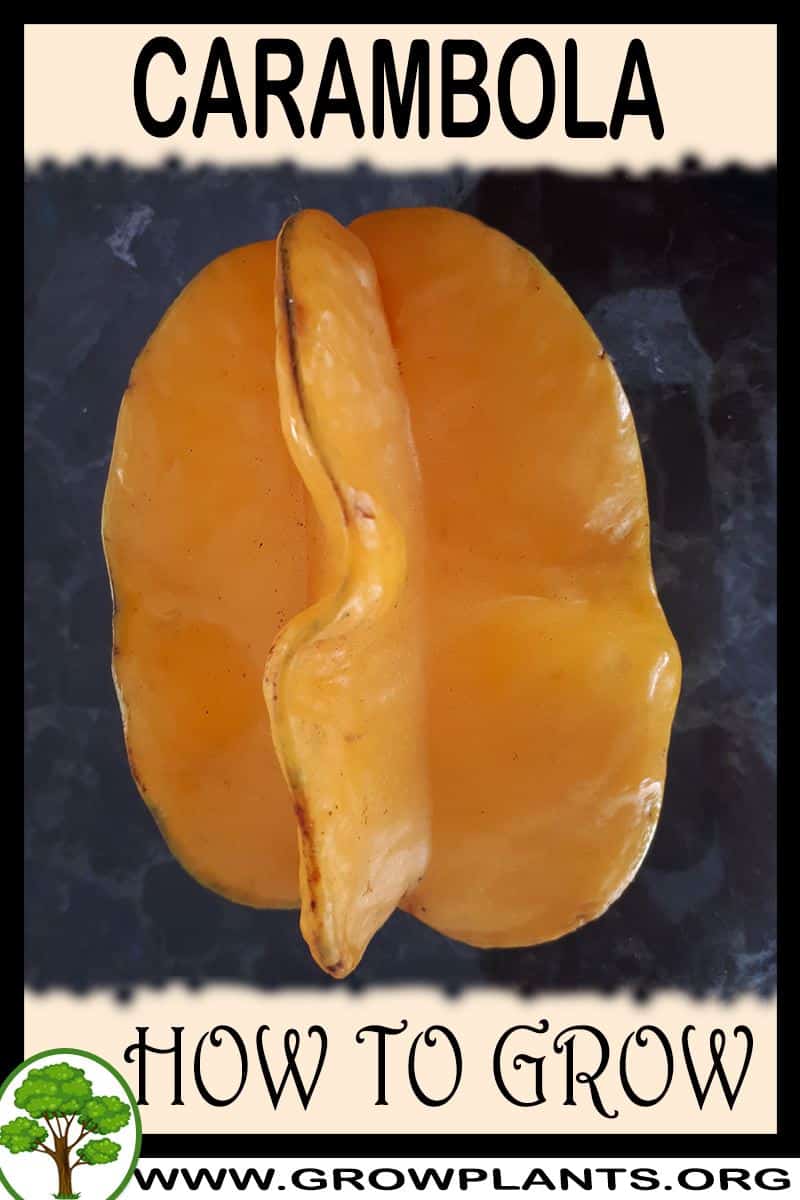
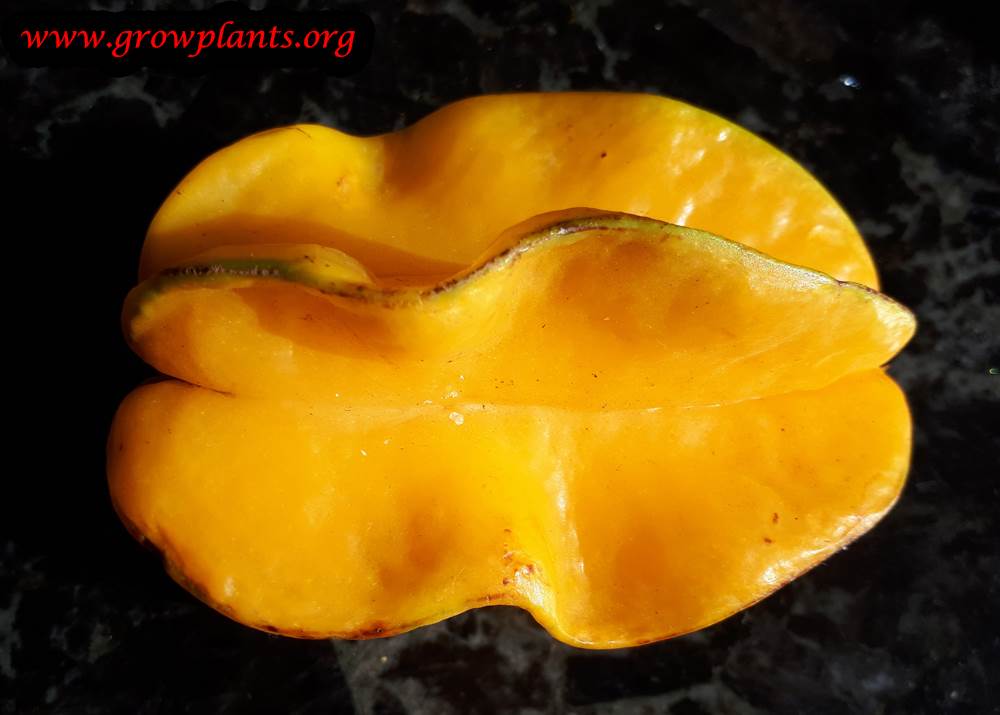
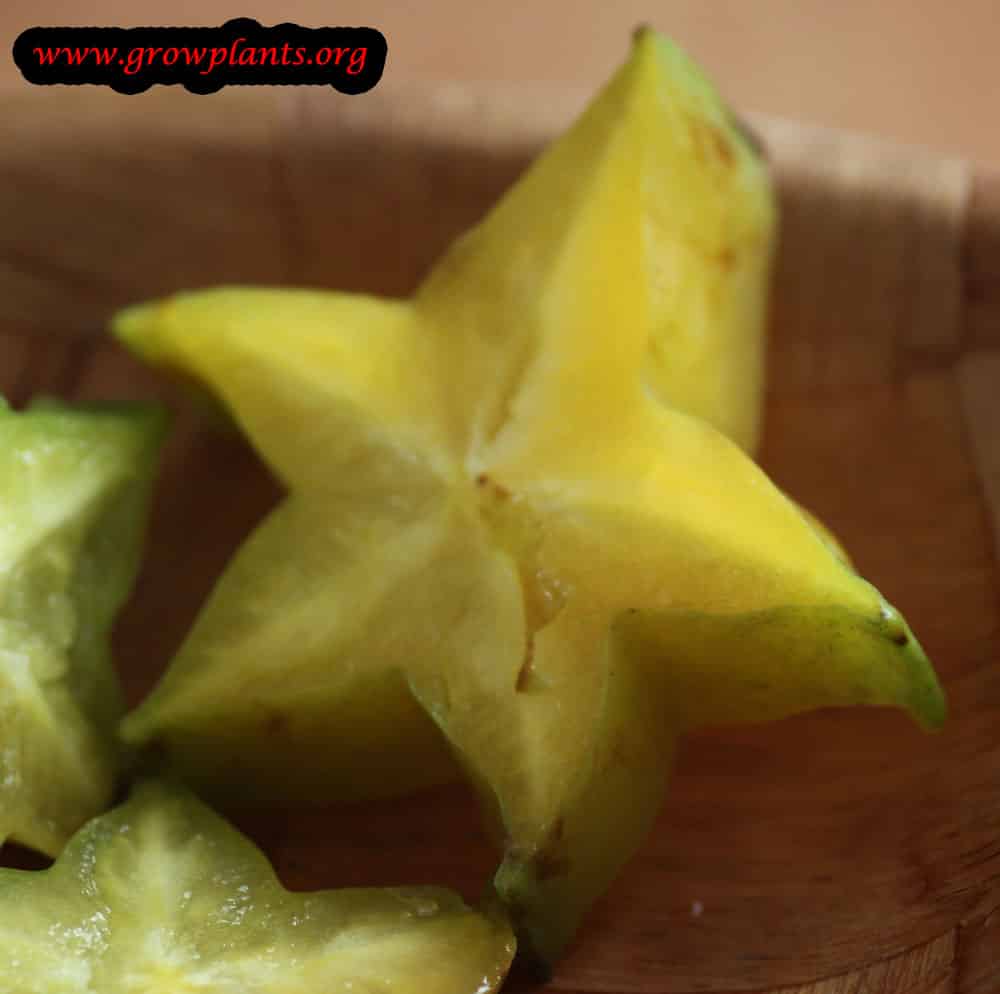
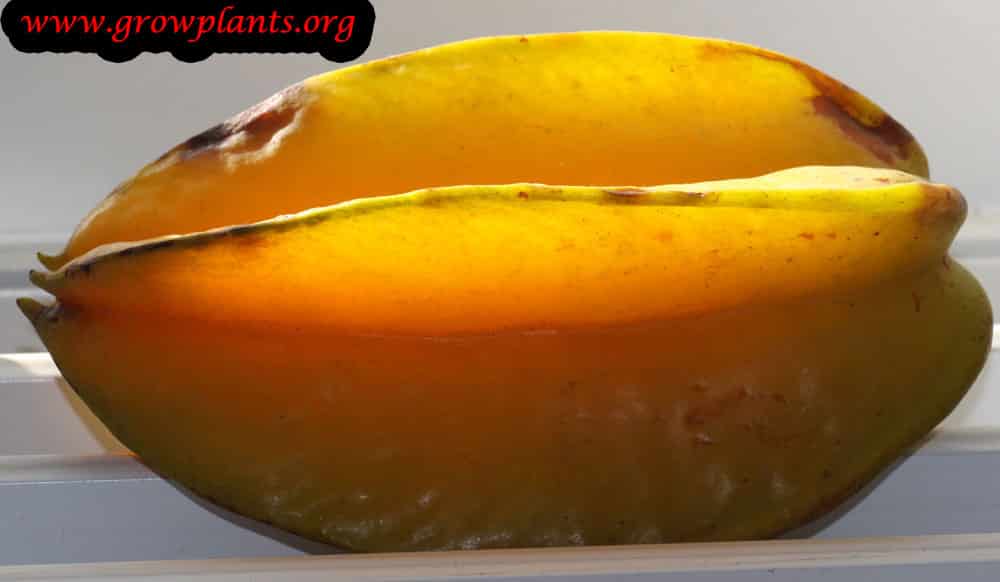
- Fruit Profile: Ribbed fruit that forms a star when sliced, yellow when ripe, flavour sweet to sour depending on cultivar (see the Fruit guide)
Primary Uses & Landscape Value
- Edible Uses: Fruit eaten fresh, in salads or made into jam; can be eaten slightly green
- Functional & Ornamental Roles: Fruit tree and ornamental specimen; suitable for large containers
Care Guide: Planting, Soil & Watering
Overview: Carambola (starfruit) is a tropical to subtropical fruit tree that grows best in full sun to light shade in deep, rich, organic, well-draining soil. It needs steady, moderate moisture and shelter from wind, especially while young, and drainage that prevents its roots from staying waterlogged.
Quick Care Requirements
| Requirement | Ideal Condition |
|---|---|
| Planting Season | Spring in zone 9; spring to summer in zone 10; spring to autumn in zone 11; year-round in zone 12+ |
| Growth Rate | Slow to Moderate |
| Soil Type | Rich, organic, well-draining soil with plenty of compost and humus |
| Water Need | Moderate – keep the root zone evenly moist without waterlogging |
Planting & Establishment
- Best Planting Season: Plant in spring in cooler (zone 9) areas, extending through summer, autumn or year-round as the climate warms (zones 10–12+). Protect young trees from wind.
- How to Plant:
- Hole Preparation: Dig a hole at least twice as wide as the root ball.
- Soil Amendments: Backfill with the excavated soil enriched with organic matter, chopped dead leaves, humus and compost.
- Planting Depth: Set the tree so the root collar sits at soil level, cover lightly but firmly enough to hold it upright, then finish with a layer of mulch.
- Growth Speed & Expectations: Slow to moderate, reaching about 3–6 m; remove the first years’ fruit so the young tree can build structure.
Soil, Watering & Drainage Care
- Soil Mix & Drainage Needs: Rich, organic soil with good drainage is key; in containers use peat-based potting soil with drainage holes and inert material such as lava grit in the base, and let any saucer drain the same day.
- Watering Schedule & Technique:
- Young / Newly Planted: Water regularly to keep the soil consistently moist as the tree establishes.
- Established: Water deeply and evenly, keeping moisture steady through the growing and fruiting season.
- Seasonal Adjustments: Increase in hot, dry weather; reduce in cool weather, and shelter from wind and cold, which damage the tree and fruit.
Climate, Light & Hardiness
Carambola (starfruit) is a tropical, mediterranean, and subtropical fruit tree that is sensitive to wind. It grows in full sun to half shade and is normally limited to USDA zone 10 and warmer, though with careful siting it can succeed in zone 9.
Quick Climate Specifications
| Climate Zones | Tropical, Mediterranean, subtropical |
|---|---|
| USDA Hardiness Zones | 10+ (possible in zone 9 with good care and siting) |
| Wind Tolerance | Low |
| Light Conditions | Full Sun to Half Shade |
Sunlight & Light Exposure
Optimal Light Setup
Full sun to half shade suits this tree.
Temperature Extremes & Hardiness
USDA Hardiness & Regional Limits
Normally grown in USDA zone 10 and warmer; in zone 9, success depends on careful site selection and protection, reflecting real but limited cold tolerance.
Frost Sensitivity
Fruit quality and set can be damaged by cold and wind, per site data on fruit harvest - protection from both is important in marginal zones.
Wind, Humidity & Microclimate
Wind Tolerance
The tree and its fruit are noted as sensitive to wind, especially while young; a sheltered planting site is recommended.
Growing in Pots, Balconies & Indoors
Carambola (star fruit) is a 3-6 m (10-20 ft) tree. The grower says it isn’t a houseplant but grows well in a container and will even fruit in a 5-gallon (20 L) pot – a fine patio tree, best kept as a shrub. He gives a detailed potting method (see the Grower’s Tip).
Quick Details
- Container Size: 20 L (5 gal) minimum – larger is better
- Indoor Suitability: Not a houseplant; a productive patio container tree
- Best Spot: Full sun to light shade
- Soil & Drainage: Aerated, organic-rich mix that drains freely
- Watering in Pots: Keep the mix lightly moist – pots dry faster than open ground; water once the surface starts to dry.
Indoors & On the Windowsill
- Houseplant limits: Not a houseplant – it needs strong sun and is sensitive to wind, and wants the light only outdoors provides.
- Windowsill growing: Too large for a sill; keep it in a container outdoors.
- Overwintering: Frost-tender, so in cold areas keep it potted and move it to a bright, frost-free spot for winter.
On a Balcony or Patio
- Light & wind: Give it full sun but shelter it – carambola is sensitive to wind. Reflected heat dries pots fast, so check moisture often.
- Keep it as a shrub: The grower advises training it as a shrub when potted, which keeps it manageable and productive.
Choosing the Pot, Soil & Long-Term Care
- Pot & drainage: Use a pot with good drainage holes and some lava grit in the base; peat-based mix works well. A saucer is fine, but empty it the same day so roots don’t sit in water.
- Potting mix: Well-aerated, organic-rich mix – peat or coir with perlite and a little organic matter; it must drain freely.
- Feeding: Potted plants use up their food faster because nutrients leach out with each watering, so feed a little more often than plants in open ground.
- Refresh the soil: As the mix loses vitality, swap part of it out when you pot up rather than replacing it all at once.
Grower’s Container Tip
- Grow up in stages: Start in a pot only about 20% bigger than the root ball. Each time the roots fill it, move up one size until you reach the final pot – this keeps the soil healthy and the tree well cared for. It will fruit even in a 5-gallon (20 L) container, though bigger is better; once the plant is large, replace part of the soil rather than all of it.
Fertilizing & Feeding
Carambola grows best in rich soil with regular organic matter and light feeding across the growing season; young trees are usually protected from wind and thinned of fruit so they can focus energy on building a strong framework before full production begins.
Quick Fertilizing Specs
| Feeding Level | Moderate |
|---|---|
| young_feeding | A few light, balanced feedings spread across the growing season. |
| mature_feeding | Lighter feeding, leaning to potassium as fruit develops. |
| Main Nutrient Priority | Balanced nutrition while young; potassium emphasis as the tree matures and fruits. |
| Best Feeding Period | Through the warm growing season. |
| Organic Options | Rich soil built up with compost, humus and organic matter. |
| Reduce/Stop Feeding | Ease off feeding as the tree matures and after fruit harvest. |
Feeding by Growth Stage
Newly planted
Help a newly planted Carambola establish roots in rich, well-drained soil enriched with organic matter, and protect it from wind while it settles in.
| Nutrient direction | Go easy at planting; rely on organic matter and a light balanced feed once new growth begins. |
|---|---|
| Timing | At and just after planting. |
| Frequency | Minimal feeding at first; let the roots establish before feeding more. |
| Fertilizer types | Organic matter, compost or humus mixed into the planting area, A light balanced complete fertilizer once new growth begins |
| Precautions | Shelter the young tree from wind, and avoid strong fertilizer against fresh roots. |
Young, pre-bearing tree
Build a strong, wind-resistant framework while the tree is young; fruit is often removed in the first years so the tree can focus on growth.
| Nutrient direction | A balanced fertilizer with a nitrogen lean, plus ongoing organic matter, supports steady framework growth. |
|---|---|
| Timing | Through the active growing season while the tree is young. |
| Frequency | A few light feedings spread across the growing season. |
| Fertilizer types | A balanced fruit-tree fertilizer with a nitrogen lean, Organic matter and compost |
| Precautions | Continue wind protection while the trunk and branches are still developing. |
Established tree approaching bearing
Keep the maturing tree in steady health as it approaches full fruit production.
| Nutrient direction | A balanced complete fruit-tree fertilizer with the minor nutrients such a blend usually supplies. |
|---|---|
| Timing | During the active growing season. |
| Frequency | Steady, moderate feeding through the season. |
| Fertilizer types | A balanced complete fruit-tree fertilizer, Compost or other organic matter |
| Routine trace nutrients | iron, manganese, zinc |
| Precautions | Watch for pale new leaves, which can signal a micronutrient shortage such as iron. |
Mature, fruit-bearing tree
Support flowering and the star-shaped fruit this tree is named for.
| Nutrient direction | A balanced fertilizer leaning toward potassium as fruit develops; a settled mature tree needs only light feeding. |
|---|---|
| Timing | From flowering through fruit development. |
| Frequency | A few light, well-timed feedings across the fruiting period. |
| Fertilizer types | A balanced complete fertilizer with adequate potassium, Compost or other organic matter |
| Routine trace nutrients | iron, manganese, zinc |
| Precautions | Fruit is easily bruised, so handle the tree gently at harvest; excess nitrogen also favors leaves over fruit. |
Nutrient Deficiency Signs & Corrections
New leaves are pale or yellow between green veins while the veins themselves stay green.
| Possible causes | High (alkaline) soil pH locking up iron, Waterlogged or cold soil reducing root uptake, A genuine iron shortage in the soil |
|---|---|
| Appears first on | Youngest leaves at the shoot tips. |
| What to check | Soil pH and whether the soil is alkaline, How well the soil drains and whether symptoms follow wet spells, Whether only new growth is affected |
| Possible correction | Correct soil pH where possible, improve drainage, and apply a chelated iron product per its label. |
Older leaves develop browning, scorched margins.
| Possible causes | Potassium shortage in the soil, Fertilizer or soil salt build-up in the root zone, Wind stress drying leaf margins, since this tree is sensitive to strong wind |
|---|---|
| Appears first on | Margins of older leaves. |
| What to check | Recent fertilizer use and any salt crust on the soil surface, Soil moisture and the watering pattern, Wind exposure at the site |
| Possible correction | Water thoroughly to move excess salts through the soil, use a balanced fertilizer with adequate potassium, and improve wind shelter if needed. |
Fruit forms but stays small, sour, or of inconsistent quality.
| Possible causes | Seed-grown, non-grafted tree with variable cultivar quality, A heavy fruit set left unthinned on a young tree, Nutrient shortage limiting fruit development |
|---|---|
| Appears first on | Fruit across the tree. |
| What to check | Whether the tree is grafted or seed-grown, Whether young trees have had fruit thinned to focus energy on growth, Recent feeding history |
| Possible correction | Favor grafted planting stock for reliable quality, thin fruit on young trees, and maintain steady balanced feeding. |
Pruning, Training & Seasonal Maintenance
Carambola tolerates moderate to fairly hard pruning and responds with a vigorous new flush that carries the next round of flowers, so shaping the tree is not a trade-off against cropping the way it is for spur-fruiting trees. The safest and most effective window is right after the main harvest, between growth flushes, when cuts stimulate new flowering wood instead of removing an already-set crop. Because young trees are notably wind-sensitive, pruning in the first two years is aimed as much at building a low, wind-resistant framework as at future fruiting.
Quick Pruning & Maintenance Specs
| Pruning Tolerance | Moderate–High |
| Primary Pruning Window | Autumn, after the main harvest and between flushes |
| Secondary Maintenance Window | All year, for dead or wind-damaged wood |
| Typical Frequency | One structural round per year plus ongoing sanitary removal |
| Main Objective | Low, wind-firm, open canopy that keeps fruiting wood within reach |
| Young Plant Priority | Build low, sturdy branching and wind tolerance; thin flowers/fruit the first two years so energy goes into structure |
| Mature Plant Priority | Height and spread control, canopy renewal after each harvest cycle |
| Best Tool Type | Bypass secateurs and loppers for the twiggy growth; saw reserved for storm-damaged limbs |
| Avoid Heavy Pruning During | An active flowering or young-fruit-set flush, and ahead of windy season on a young, unestablished tree |
Pruning by Plant Age & Size
Newly Established
Minimal intervention – stake and shelter from wind, remove only damaged growth, and avoid heading cuts while the root system is still anchoring the tree.
Young / Formative
Train to a low, open, multi-leader framework with branching kept close to the ground to cut wind resistance and keep future fruit within reach; pinch vigorous shoot tips to encourage branching. Thin off flowers and young fruit for the first one to two years so the tree channels energy into establishing structure rather than an early crop.
Mature / Established
Maintain a low, moderately open, umbrella-shaped canopy; head back the tallest shoots annually to keep the tree wind-firm and hand-harvestable, and remove one or two of the oldest, least productive limbs each year as renewal.
Seasonal Pruning Schedule
Post-Harvest (Autumn)
Objective: reset canopy shape and stimulate the next flowering flush. Remove: crossing, crowded or overly tall shoots and any storm-stressed wood. Do not remove: healthy lower framework branches that keep the tree wind-firm. Expected response: a new vegetative flush that carries the following bloom. Flowering/fruiting impact: positive – this cut creates the next round of flowering wood rather than removing an existing crop.
Ongoing Sanitary (All Year)
Objective: remove dead or wind-broken wood as it appears. Remove: dead, broken or clearly declining branches. Do not remove: living wood carrying a current flush of flowers or young fruit. Expected response: reduced decay entry points; no impact on the current crop if kept strictly sanitary.
Flowering & Fruiting Wood
Carambola flowers and fruits on new growth produced at each vegetative flush – and, on older trees, sometimes directly from twigs and mature branch wood rather than only shoot tips. Because bloom follows the new flush rather than being fixed to one-year-old or spur wood, pruning timed to just after harvest stimulates the very growth that will flower next, instead of cutting away a season’s crop the way heading an apple spur or a grapevine cane would.
Structural Pruning & Training
Keep the canopy open enough for light penetration and hand harvest by removing crossing and rubbing branches; control height and spread primarily for wind resistance, since the tree is explicitly wind-sensitive, especially when young.
Special Growth to Remove
Rootstock suckers below the graft union – most garden carambola are grafted named cultivars because seedling trees can be tasteless or poor bearers, so any growth arising below the union should be removed as soon as it appears. Dead or wind-snapped wood can be removed at any time of year.
Container & Small-Space Pruning
Carambola is explicitly suited to container culture and is best trained and pruned as a shrub form when grown this way rather than left to grow as a full tree – meaning more frequent tip-pruning to control height and spread, paired with the container’s own repotting cycle rather than heavy top pruning to manage size.
Tools
Precision snips or bypass secateurs handle flush tipping and twig thinning; loppers take the pencil-to-thumb-thick branches typical of the tree’s twiggy growth; a pruning saw is reserved for oversized or storm-damaged limbs.
Tool Hygiene & Disease Risk
Routine – the only pest noted for this tree is aphids, with no documented graft-transmissible pathogen, so clean, sharp tools are sufficient and extra disinfection is not required for routine cuts.
Cut Placement & Technique
Favour thinning cuts over heading cuts for structural work; cut just outside the branch collar; angle tipping cuts toward an outward-facing bud or shoot to redirect the next flush away from the canopy interior.
Heavy Pruning & Rejuvenation
Tolerated – a wind- or storm-damaged tree can be cut back hard and will reflush vigorously; expect a delayed crop for one growth cycle while the tree rebuilds its flowering wood.
Post-Pruning Care
Watch newly exposed bark for sunburn after opening the canopy in strong subtropical sun; shield young regrowth from wind until it hardens off; hold off feeding immediately after a hard cut and let the new flush emerge first.
Common Pruning Mistakes
Over-thinning a young tree before its roots have anchored it against wind; leaving rootstock suckers below the graft to grow on, which reverts to poor seedling-quality fruit; pruning heavily during an active bloom flush and losing an otherwise achievable crop.
When NOT to Prune
Avoid structural pruning during an active flowering or young-fruit-set flush if that crop is wanted; avoid hard pruning going into the windy season on a young, still-unestablished tree.
Recommended Tools (by task)
- Formative shaping and flush tipping on a young tree – precision_snips: clean, crush-free cuts on soft new flush growth
- Branch thinning and renewal on a mature tree – loppers: two-hand leverage for the pencil-to-thumb wood typical of carambola’s twiggy growth
- Removing storm-damaged or dead limbs – pruning_saw: for wood too large for secateurs or loppers
Pruning Troubleshooting
| Problem | Possible Cause | What to Check | Corrective Action |
| Little or no fruit after pruning | Cuts made during or just before a flowering flush | Pruning date against the local harvest and flush calendar | Shift structural cuts to right after harvest, between flushes |
| Wind-snapped branches | Canopy left too tall or dense on a young tree | Canopy height and density relative to the tree’s establishment stage | Lower and open the canopy earlier; stake young trees through their first windy seasons |
| Fruit only on the outer canopy | Dense, unthinned interior | Light penetration into the canopy centre | Use selective thinning cuts to open the interior, not just tip pruning |
Propagation Guide
Carambola is easy to raise from seed, which the site describes in detail, but because seedling trees vary greatly in fruit quality – some cultivars can be tasteless or barely bear fruit – grafting or budding onto seedling rootstock is used to reproduce good, known cultivars true-to-type, and air layering is listed as another way to start growing. Propagation is Easy from seed and Moderate by grafting or air layering.
Quick Propagation Specs
| Best Propagation Method | Seed for a species tree; grafting/budding required to preserve named, good-fruiting cultivars |
| Alternative Methods | Air layering |
| Propagation Difficulty | Easy (seed) – Moderate (air layering, grafting) |
| Seed True-to-Type | Variable – seedling fruit taste and productivity are unpredictable |
| Vegetative True-to-Type | Yes |
| Best Propagation Season | By hardiness zone: spring in zone 9, spring–summer in zone 10, spring–autumn in zone 11, all year in zone 12+ |
| Seed Germination Time | 4–10 weeks |
| Germination Temperature | Warm, above 27°C (80°F) |
| Seed Sowing Depth | About 1 cm (0.5 in) |
Growing from Seed
Seed Handling & Viability
Use fresh seed – it loses viability quickly. If seed must be held briefly, keep it in a dark spot at room temperature, but sow soon after extraction.
Dormancy & Pre-Sowing Treatment
Soak seeds in room-temperature water before sowing; germinating them first on a damp paper towel or cotton can also be used.
Sowing Season
Follows the planting season by hardiness zone: spring in zone 9, spring to summer in zone 10, spring to autumn in zone 11, and all year in zone 12+.
Sowing Depth & Orientation
About 1 cm (0.5 in) deep. Sow each seed in its own pot rather than together.
Germination Conditions
Moist soil, warm weather above 27°C (80°F), and high humidity, with average to generous watering.
Germination Time
4–10 weeks.
Seedling Care
Keep the soil moist with high humidity, in half sun to full sun.
Grafting & Budding
Why Grafting Is Used
Because seedling carambola can be tasteless or a poor bearer, grafting or budding is used to guarantee the fruit quality and productivity of a known cultivar (the site notes ‘Kari’ as a sweet, heavy-bearing example).
Preferred Grafting Methods
Not detailed by the site; whip, cleft, or side-veneer grafting and chip or patch budding are the general techniques used for carambola.
Rootstock
Seedling carambola, raised as described above.
Scion Selection
Healthy wood from a known, good-fruiting cultivar.
Best Grafting Season
During the plant’s active growing period, aligned with its planting season for the local hardiness zone.
Graft Aftercare
Keep the union protected from drying until it has knit, and remove rootstock growth below the graft.
Air & Ground Layering
Air layering is listed by the site as another way to start this tree. Choose a healthy, semi-hardwood branch, wound or girdle the bark, and wrap it in moist sphagnum moss covered with plastic; a rooting hormone can help but is not described as essential. Rooting commonly takes several weeks to a couple of months in warm, humid conditions. Once well rooted, sever and pot up the layer and keep it shaded and humid until established.
Bloom & Flower Guide
Quick Details
- Bloom Season: Spring where winters are cool, extending spring to autumn in warmer areas and year-round in the tropics
- Flower Appearance: Small lilac to white-purple flowers, often clustered on the twigs and trunk
- Edibility: The flowers are not eaten
Detailed Blooming Overview
Carambola, the starfruit tree, produces pretty little lilac-purple flowers that often cluster along the twigs and even directly on the trunk. The bloom season stretches longer the warmer the climate, and each flush of flowers is the promise of the ribbed, star-sectioned fruit to follow.
Flower Characteristics
- Small, in white flushed with purple to lilac.
- Carried in clusters on the twigs and trunk of the tree.
Bloom Care & Thinning
- Thinning the bloom: For the first two years, thin the flowers so the young tree can establish before carrying a crop.
- Pollination: The flowers are worked by bees and flies.
- Light and shelter: Full sun to half shade with protection from wind supports flowering.
Fruit & Uses
Carambola (star fruit) is grown for its fruit, which is eaten fresh out of hand, sliced into salads, or made into juice and jam. It can be eaten raw at any stage from partly green through fully ripe, with flavour ranging from tart to sweet depending on the cultivar.
Quick Edible Specs
| Edible Parts | Fruit |
|---|---|
| Main Use(s) | Culinary – fresh eating, salad, juice, jam |
| Eaten Raw or Cooked | Raw (also used in juice/jam); can be eaten while still partly green, not only fully ripe |
| Preparation Required | None – wash and slice; the ridges give the star–shaped cross–section when cut |
| Harvest Season | Varies by climate: summer into early autumn in cooler zones, extending through winter or year–round in warmer/tropical zones |
| Time to First Harvest | A relatively quick–bearing tree once established (see Propagation for grafted vs. seed–grown timing) |
| Storage | Handle gently – the fruit bruises easily; can be picked slightly under–ripe and left to finish ripening |
| Safety/Toxicity Caveat | People with kidney disease or reduced kidney function should NOT eat carambola: it contains a natural neurotoxin (caramboxin) and oxalates that healthy kidneys clear normally but that can build up to dangerous, even life–threatening levels in impaired kidneys. This does not affect safety for people with normal kidney function, for whom the fruit is a common, safe food. |
Fruit
The fruit is oblong with 4–6 ridges that give it a star shape in cross–section; skin colour turns from green to yellow as it ripens, though the fruit is often picked and eaten while still partly green. Flavour ranges from sour to sweet depending on the cultivar. Because the fruit bruises easily, it should be picked and handled gently. Fruit is eaten fresh, sliced into salads, or processed into juice or jam.
Harvesting
Pick as fruit colours up, judging by the cultivar’s typical ripe colour rather than a fixed date, since fruit can be harvested part–green or left to fully ripen on the tree. Handle carefully to avoid bruising, and expect losses to birds if the crop is not protected.
Preparation, Uses & Safety
Carambola needs no cooking or peeling – it is simply washed, sliced, and eaten. Large harvests are commonly juiced or made into jam. The one significant safety caveat is for people with kidney disease: carambola contains compounds that a healthy kidney filters out but that can accumulate to toxic levels in someone with impaired kidney function, so it should be avoided entirely in that case.
Note: If a young tree sets a heavy fruit crop early, it is best to remove some of the developing fruit while still small, so the tree can establish a strong framework before full cropping.
Pests, Diseases & Troubleshooting
Overview: Carambola (Averrhoa carambola) is a tropical fruit tree whose sweet fruit is a magnet for fruit flies, and whose tender new growth and fruit are attacked by broad mite, red-banded thrips and various scale, while warm humid conditions bring anthracnose, Cercospora and algal leaf spot. An integrated approach – orchard sanitation, fruit-fly trapping and bagging, and good drainage – keeps a healthy tree cropping.
Quick Troubleshooting Overview
| Issue / Pest | Main Symptom | Primary Solution |
|---|---|---|
| Fruit flies | Maggots inside dropped/soft fruit, sting marks and rot | Sanitation, bagging, protein-bait and pheromone traps |
| Broad mite | Distorted, bronzed, corky new leaves and fruit russeting | Sulphur or miticidal oil on new growth |
| Red-banded thrips | Silvered leaves, black specks, scarred fruit skin | Encourage predators; spinosad/oil if severe |
| Scale & mealybug | Bumps/cottony tufts, honeydew, sooty mould | Horticultural oil, control ants |
| Anthracnose | Dark sunken spots on fruit and leaves, fruit rot | Sanitation, airflow, copper fungicide |
| Chlorosis | Yellowing between veins on alkaline soil | Iron/manganese chelate, acidify, mulch |
Common Pests & Management
- Fruit flies (Bactrocera / Anastrepha spp.):
- Symptoms: Females sting the ripening fruit, leaving puncture marks; maggots tunnel the flesh, causing internal breakdown, premature drop and rot. A major limiting pest wherever these flies occur.
- Prevention & Control: Practice strict sanitation – collect and destroy all fallen and infested fruit. Bag developing fruit, hang protein-bait and pheromone (methyl eugenol) traps, and harvest promptly at colour-break. Cover-sprays of spinosad bait can supplement trapping in heavy pressure.
- Broad mite (Polyphagotarsonemus latus):
- Symptoms: Microscopic mites that deform, curl, bronze and stiffen the youngest leaves and shoot tips, and russet or corky the fruit skin; damage looks like a growth disorder because the mites are invisible to the naked eye.
- Prevention & Control: Inspect new flushes with a lens, remove badly distorted tips, and avoid excess nitrogen that fuels soft growth. Treat new growth with wettable sulphur or horticultural/miticidal oil, covering shoot tips and leaf undersides; repeat as new flushes emerge.
- Red-banded thrips (Selenothrips rubrocinctus):
- Symptoms: Rasping feeding silvers and bronzes the leaves, littered with tiny black varnish-like faecal specks; fruit surfaces become scarred and russeted. Larvae carry a distinctive red band.
- Prevention & Control: Encourage predatory mites, lacewings and minute pirate bugs; hose foliage and avoid dust. For outbreaks use spinosad or horticultural oil in the evening, targeting leaf undersides, and rotate modes of action.
- Scale insects (Coccidae / Diaspididae):
- Symptoms: Brown, waxy or armoured bumps on stems, leaves and fruit; soft scale exudes honeydew that fuels sooty mould and attracts ants. Twigs weaken and yellow under heavy loads.
- Prevention & Control: Prune out encrusted twigs, encourage parasitic wasps and ladybirds, and control ants that protect scale. Smother with horticultural oil, thoroughly coating stems and leaf undersides, and repeat for crawlers.
- Mealybugs (Planococcus / Pseudococcus spp.):
- Symptoms: White cottony masses in leaf axils, on fruit clusters and at branch crotches, with honeydew and sooty mould; fruit clusters can be downgraded.
- Prevention & Control: Wash off colonies, encourage lacewings and mealybug destroyers, and manage ants. Horticultural oil or insecticidal soap controls persistent infestations.
- Aphids (Aphis spp.):
- Symptoms: Colonies on soft new shoots causing curling and honeydew; mainly a nuisance on tender flushes and a vector concern.
- Prevention & Control: Blast off with water, conserve natural enemies, and use insecticidal soap or neem only when flushes are heavily colonised.
Diseases & Fungal Issues
- Anthracnose (Colletotrichum gloeosporioides):
- Symptoms: Dark, sunken spots on leaves and especially on fruit, enlarging into soft rot with pink-orange spore masses in humid weather; a major post-harvest and field rot.
- Treatment & Management: Remove mummified fruit and dead wood, prune for airflow and light, and avoid overhead irrigation. Protectant copper or approved fungicide sprays during flowering and fruit development reduce infection; handle fruit carefully and cool promptly after harvest.
- Cercospora leaf spot (Cercospora averrhoae / Pseudocercospora):
- Symptoms: Small brown to purplish angular leaf spots that can coalesce, causing yellowing and premature leaf drop in wet seasons.
- Treatment & Management: Rake and destroy fallen leaves, improve airflow, and avoid wetting foliage. Copper fungicide gives control when pressure is high; well-fed, vigorous trees shrug off minor infection.
- Algal leaf spot (Cephaleuros virescens):
- Symptoms: Raised, velvety, grey-green to orange-red circular patches on leaves (and sometimes bark) in humid, shaded, sheltered plantings; largely cosmetic but weakening if heavy.
- Treatment & Management: Improve airflow and light by pruning, reduce leaf wetness, and maintain tree vigour. Copper sprays check severe cases; the alga favours stagnant, over-crowded canopies.
- Root and collar rot (Pythium / Phytophthora spp.):
- Symptoms: Wilting, thin yellow canopy, dieback and dark, decayed roots or oozing collar lesions in waterlogged or poorly drained soil.
- Treatment & Management: Plant on a mound in free-draining soil, avoid waterlogging and trunk injury, and keep mulch off the trunk. Improve drainage and, where established, phosphonate treatments can help suppress Phytophthora.
- Sooty mould:
- Symptoms: Black superficial film on leaves and fruit growing on honeydew from scale, mealybug and aphids.
- Treatment & Management: Control the sap-sucking insects and the mould weathers away; wipe prized fruit clean. It blocks light but does not infect the tree.
Growing Difficulties & Abiotic Problems
- Cold and frost sensitivity:
- Cause & Symptoms: A tropical/subtropical tree, carambola is damaged by frost and prolonged cold – leaf burn, twig dieback, and death of young trees.
- Correction Strategy: Site in the warmest, most sheltered spot, protect young trees on cold nights, and grow in a container to move under cover in marginal climates.
- Micronutrient chlorosis on alkaline soil:
- Cause & Symptoms: On high-pH or calcareous soils, iron, manganese and zinc lock up, yellowing the leaves between green veins.
- Correction Strategy: Apply iron and manganese chelates and foliar micronutrient sprays, mulch heavily with organic matter, and lower pH over time; maintain even moisture.
- Fruit cracking and sunburn:
- Cause & Symptoms: Irregular watering causes fruit to split, and exposed fruit on a thin canopy scald in intense sun.
- Correction Strategy: Keep soil moisture even with mulch and regular irrigation, and maintain enough canopy to shade the fruit; thin or bag exposed fruit.
- Salt and wind sensitivity:
- Cause & Symptoms: Salty soil, saline irrigation or salt-laden wind scorches leaf margins and stunts growth.
- Correction Strategy: Leach salts with good-quality water, improve drainage, and provide a windbreak in coastal sites.
- Fruit and flower drop:
- Cause & Symptoms: Heat stress, drought, waterlogging or poor pollination cause heavy shedding of flowers and small fruit.
- Correction Strategy: Maintain even moisture and mulch, avoid stress at flowering, and ensure pollinator activity; some drop is a natural self-thinning.
What Helps – Products & Tools
Lead with orchard hygiene, fruit bagging, drainage and traps. Useful products for this tree include protein-bait and pheromone fruit-fly traps, wettable sulphur and horticultural/miticidal oil (broad mite, thrips, scale, mealybug), spinosad (thrips, fruit-fly bait), insecticidal soap and neem (aphids), copper fungicide (anthracnose, Cercospora, algal spot) and iron/manganese chelates for chlorosis. Spray oils in the evening and follow all label and pre-harvest-interval guidance on a food crop.