Plant Profile & Key Characteristics
Overview: A bold, clump-forming herbaceous perennial geophyte reaching 0.8-2.5 m, rising each year from a fleshy rhizome and grown for its large paddle-shaped leaves and showy flowers. Very adaptable, it tolerates shallow water or drought and grows from USDA zone 9 upward, or as a houseplant.
Quick Specifications
| Specification | Attribute |
|---|---|
| Plant Type / Life Cycle | Perennial (rhizomatous geophyte) |
| Foliage Type | Evergreen (in frost-free climates) |
| Mature Size | 0.8-2.5 m (2.6-8 ft) |
| Growth Rate | Fast to moderate |
| Root System | Rhizomatous – a fleshy underground rhizome |
| Toxicity | Non-toxic (Canna indica rhizomes are an edible starch source) |
| Hardiness | USDA zone 9+ |
Growth Form & Structure
- Height & Spread: Upright, banana-like stems reach 0.8-2.5 m (2.6-8 ft) and spread into a clump; also grown in large containers or at pond margins.
- Growth Habit & Form: Clump-forming herbaceous perennial with erect leafy stems from a spreading rhizome.
- Lifespan & Maturity: Fast-growing; the rhizome enlarges and multiplies each season, so clumps expand quickly.
Anatomy & Physical Features
- Leaves & Foliage: Large, paddle-shaped elliptic leaves, green or variegated with purple, yellow or white.
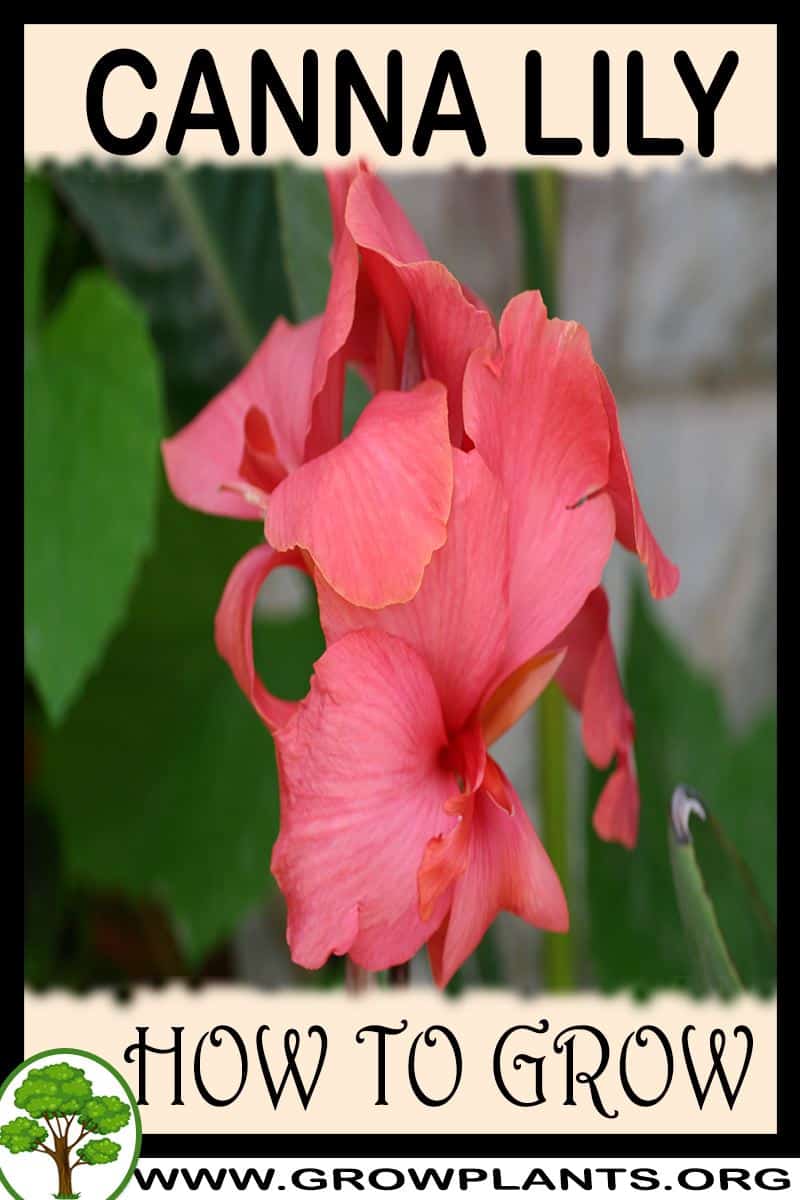
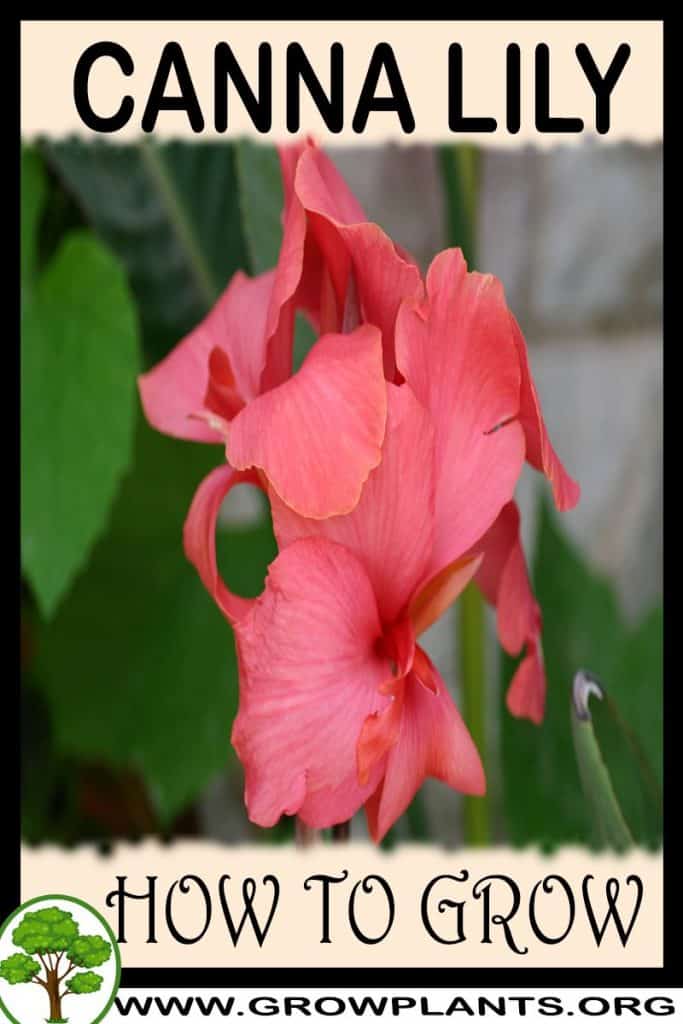
- Flower Characteristics: Showy, asymmetric flowers in red, yellow, pink, orange or white, often spotted or patterned (see the Bloom guide for detail).
Primary Uses & Landscape Value
- Edible Uses: The starchy rhizome of the edible species Canna indica (‘achira’ / Queensland arrowroot) is eaten when cooked.
- Functional & Ornamental Roles: Ornamental border and hedge plant, cut flower, container and marginal/pond plant tolerating shallow water; also drought tolerant.
Care Guide: Planting, Soil & Watering
Overview: Cannas are vigorous rhizomatous plants that love rich, moist soil and full sun. They are remarkably adaptable – thriving in everything from ordinary borders to the margins of ponds – and are heavy feeders that reward generous soil and steady moisture.
Quick Care Requirements
| Requirement | Ideal Condition |
|---|---|
| Planting Season | Spring, summer or autumn, in warm soil |
| Growth Rate | Moderate to fast |
| Soil Type | Rich, fertile, moisture-retentive (tolerates wet ground) |
| Water Need | Moderate to high – keep consistently moist; tolerates boggy soil and even shallow water |
Planting & Establishment
- Best Planting Season: Plant rhizomes in the warm season – spring through autumn – once the soil has warmed and frost has passed.
- How to Plant:
- Hole Preparation: Dig a hole a few centimetres deeper than the rhizome so it can be set just below the surface.
- Soil Amendments: Work in plenty of compost or well-rotted organic matter – cannas are hungry plants that thrive in rich soil.
- Planting Depth: Lay the rhizome roughly 5–10 cm deep with the growing points upward and cover with soil.
- Growth Speed & Expectations: Grows quickly in warm, rich, moist conditions and can spread aggressively, forming clumps that multiply each season.
Soil, Watering & Drainage Care
- Soil Mix & Drainage Needs: Give it rich, moisture-retentive soil; unusually, it tolerates wet feet and can be grown at pond margins or in shallow water, though ordinary moist borders suit it well.
- Watering Schedule & Technique:
- Young / Newly Planted: Keep the soil consistently moist as shoots emerge and establish.
- Established: Water generously and regularly, especially in heat – cannas rarely object to abundant moisture.
- Seasonal Adjustments: Water freely in summer; reduce as growth slows in cool weather and when the plant dies back.
Climate, Light & Hardiness
Canna lily thrives in warm, humid-to-moderately-dry climates from the tropics to the temperate garden, equally at home at a pond’s edge or in a drought-tolerant border once established. It prefers full sun for the strongest bloom and is reliably hardy outdoors only in mild-winter regions.
Quick Climate Specifications
| Climate Zones | Mediterranean, desert, subtropical, temperate, tropical, or as a houseplant in colder climates |
|---|---|
| USDA Hardiness Zones | 9+ for the rhizome to reliably overwinter outdoors |
| Optimal Temp Range | Approximately 20–32°C (68–90°F) |
| Cold Damage Begins | Approximately 5°C (41°F) – foliage blackens with light frost |
| Approx. Survival Minimum | A mulched, dormant rhizome may briefly survive near 0°C (32°F), but sustained freezing kills it |
| Frost Tolerance | Low |
| Light Conditions | Full Sun to Full Shade (best flowering in full sun) |
| Wind Tolerance | Moderate |
| Salt / Coastal Tolerance | Moderate |
Sunlight & Light Exposure
Optimal Light Setup
Full sun gives the most compact growth and heaviest bloom; the plant also tolerates half shade to full shade but flowers more sparsely and stems stretch.
Direct Sun Requirement
Best with most of the day in direct sun.
Shade & Heat Management
In hot desert climates, a little afternoon shade can help protect variegated-leaf cultivars from scorch.
Best Exposure / Orientation
Open, unobstructed exposure – avoid planting beneath dense tree canopy.
Temperature Extremes & Hardiness
USDA Hardiness & Regional Limits
Reliably perennial outdoors from zone 9 southward. In colder zones the rhizome usually needs heavy mulch or lifting and frost-free indoor storage over winter.
Cold Damage & Winter Protection
Top growth collapses at the first real frost; mulch heavily in marginal zones or lift and store rhizomes where winters are colder.
Frost Sensitivity
Foliage and stems are frost-sensitive, though the underground rhizome tolerates cold better than the leaves.
Extreme Heat Tolerance
Excellent – thrives in hot, humid summer conditions typical of subtropical and tropical gardens.
Wind, Humidity & Microclimate
Humidity Preferences
Prefers moderate to high humidity, consistent with its origins at pond and stream margins.
Dry-Air Tolerance
Tolerates drier air once established, but growth and bloom are strongest with consistent moisture.
Wind Tolerance
The broad, soft leaves can shred in sustained strong wind; a sheltered spot keeps foliage looking neater.
Coastal / Salt Tolerance
Moderate salt tolerance makes it usable in near-coastal gardens with some wind shelter.
Rainfall & Seasonal Moisture
Adapted to a wide moisture range – it can grow directly in shallow standing water at a pond edge, or tolerate drought once established, reflecting its dual identity as a marginal aquatic and a tough landscape plant.
Microclimate Recommendations
Good near ponds, in low damp spots, or in any warm, sunny border; a warm south-facing wall can help push the effective hardiness slightly further north.
Growing in Pots, Balconies & Indoors
Canna lily is a bold, tropical-looking plant of 0.8-2.5 m (32-100 in). The grower lists it as suitable indoors and it grows readily in containers – though it flowers best with plenty of light, so it doubles as a striking patio plant.
Quick Details
- Container Size: A large, deep pot to support its height and fleshy rhizomes
- Indoor Suitability: Can be grown indoors with strong light; compact cultivars suit rooms best
- Best Spot: Full sun for best flowering; tolerates half to full shade with fewer blooms
- Soil & Drainage: Rich, moisture-retentive mix that still drains
- Watering in Pots: Flexible – small to generous; it enjoys plenty of water in warm weather
Indoors & On the Windowsill
- Indoors: The grower marks it as suitable indoors. Give it the brightest possible spot and choose a compact cultivar for a room; tall types quickly outgrow indoor light.
- Overwintering: In cold climates the rhizomes are tender – lift and store them, or bring the whole pot into a bright, frost-free place over winter and restart it in spring.
On a Balcony or Patio
- Light & wind: A sunny patio or balcony brings the best flowers and foliage colour. It is tall and leafy, so shelter it from strong wind and check moisture often – big leaves lose water fast.
Choosing the Pot, Soil & Long-Term Care
- Pot & drainage: A pot with strong drainage holes is essential; skip a permanently full standing-water saucer to avoid root rot. Terracotta breathes and dries faster, while glazed or plastic holds moisture longer.
- Potting mix: Rich and organic but free-draining – it likes moisture but not stagnant water.
- Feeding: Potted plants need feeding more often than those in the ground, since watering steadily leaches nutrients out of the container.
- Repotting: Divide congested rhizomes and refresh the mix every year or two.
Growing this plant in a greenhouse
A greenhouse can give canna lily frost protection and cold protection.
Greenhouse at a glance
| Greenhouse suitability | Good - clearly useful |
|---|---|
| Main benefits | frost protection, cold protection |
| Season extension | earlier spring & later autumn |
| Outdoor protection advisable below | about 5°C |
| Maintain greenhouse minimum | around 5°C for active growth |
| Suitable types | unheated greenhouse, polycarbonate greenhouse |
| Heating | Heating is optional - useful mainly for winter growing in cold areas. |
Related greenhouse guides
- Greenhouses: How to Choose the Right Greenhouse
- Polycarbonate Greenhouses: What to Look for Before Buying
Fertilizing & Feeding
A vigorous, long-blooming plant with a steady appetite through spring growth and its extended bloom season, then a full rest once growth slows in the cooler months.
Quick Fertilizing Specs
| Feeding Level | Moderate – a vigorous grower that blooms over a long season and appreciates steady feeding. |
|---|---|
| Main Nutrient Priority | Balanced nutrition rather than a phosphorus-heavy bloom feed; adequate nitrogen drives the spring flush, then steady balanced feeding sustains repeat blooming. |
| Best Feeding Period | Spring growth through the extended spring-to-autumn bloom season. |
| Organic Options | Compost or well-rotted organic matter worked into the rich, moist soil this plant favors. |
| Reduce/Stop Feeding | Taper off as the bloom season ends and stop through the cool-season rest. |
Feeding by Growth Stage
Spring shoot and foliage flush
Fuel the flush of new shoots and broad foliage as the rhizome comes out of its slower winter growth and heads toward the first bloom.
| Nutrient direction | A balanced, nitrogen-adequate feed to support the vigorous leafy growth this plant is known for. |
|---|---|
| Timing | As new shoots push up and leaves expand in spring. |
| Frequency | A light-to-moderate feeding as growth resumes is usually enough to carry the plant into its first bloom. |
| Fertilizer types | A balanced, general-purpose flowering-plant fertilizer worked into the soil around the rhizome., Compost or well-rotted organic matter mixed into the rich, moist soil this plant favors. |
| Precautions | Keep fertilizer away from direct contact with the rhizome itself and water in well after feeding. |
Extended spring-through-autumn bloom
Sustain repeated flowering across the growing season, since this plant can bloom continuously from spring into autumn rather than in one short burst.
| Nutrient direction | A balanced feed rather than a phosphorus-heavy ‘bloom booster’ – steady, adequate nutrition supports the extended flowering display better than extra phosphorus. |
|---|---|
| Timing | Through the extended spring-into-autumn bloom period, alongside routine deadheading of spent flower stems. |
| Frequency | Several light, well-spaced feedings through the long bloom season help sustain continuous flowering without overdriving leafy growth. |
| Fertilizer types | A balanced flowering-plant fertilizer applied at moderate strength through the bloom season., A refreshed mulch layer to keep the rich, moist soil this plant prefers even through summer heat. |
| Precautions | Cut spent flower stems back to the rhizome after each bloom flush to encourage the next round, and avoid a heavy nitrogen feed that favors leaves over continued flowering. |
Cool-season rest
Let the rhizome rest through the coolest part of the year when growth slows or stops, even where the plant stays evergreen.
| Nutrient direction | None – withhold fertilizer while growth is dormant or minimal. |
|---|---|
| Timing | The coolest months of the year, once flowering has finished and growth has visibly slowed. |
| Frequency | No feeding at this stage; feeding resumes once vigorous spring growth restarts. |
| Fertilizer types | No feeding at this stage – let the rhizome rest without fertilizer until spring growth resumes. |
| Precautions | Do not fertilize during this rest period; feeding a slowed or dormant rhizome risks salt buildup with little active growth to use the nutrients. |
Nutrient Deficiency Signs & Corrections
The plant produces lush foliage but few flower stalks.
| Possible causes | Excess nitrogen favoring leafy growth over flowering., Insufficient direct sun, since cannas flower best in full sun., Spent flower stems left in place instead of being cut back, which can slow the next bloom flush. |
|---|---|
| Appears first on | Whole-plant flowering performance rather than a single leaf. |
| What to check | Recent fertilizer history and nitrogen content., Hours of direct sun the planting receives., Whether spent stems have been cut back after each bloom. |
| Possible correction | Ease back on nitrogen in favor of a more balanced feed, confirm the plant gets full sun, and keep cutting spent stems back to the rhizome to encourage rebloom. |
Leaves yellow between veins that stay green, most noticeable on newer growth.
| Possible causes | Iron becoming less available in waterlogged or high-pH soil, which is more likely where cannas are grown at a pond edge or in constantly wet ground., Poor aeration in soil that stays saturated., A general nutrient shortfall from nutrients leaching out of consistently wet or boggy soil. |
|---|---|
| Appears first on | The newest leaves first. |
| What to check | Whether the planting site stays waterlogged rather than just consistently moist., Soil pH in the root zone., Feeding history, since wet or aquatic-margin soil can leach nutrients faster. |
| Possible correction | Improve aeration or drainage where the site is fully waterlogged, and if the pattern is classic interveinal yellowing, apply a chelated iron product per its label. |
Plants grown at a pond edge or in a water-garden container show paler, weaker growth than those grown in ordinary garden soil.
| Possible causes | Nutrients leaching out faster in standing or moving water than in regular soil., Insufficient organic matter in a water-garden planting medium., Root competition in a crowded aquatic planting basket. |
|---|---|
| Appears first on | Whole-plant vigor compared with in-ground plantings. |
| What to check | Whether the plant is in standing or slow-moving water and how often nutrients might be washed away., Richness of the planting medium used in the aquatic container., Crowding within the planting basket. |
| Possible correction | Use a rich, heavy planting medium suited to water gardens, feed a little more often to offset leaching, and divide crowded baskets. |
Pruning, Training & Seasonal Maintenance
Canna lily tolerates moderate, ongoing pruning tied to its bloom cycle rather than a single seasonal event: each flowering stalk blooms once, and cutting it back near the rhizome once it starts to fade signals the plant to push out new flowering shoots, keeping the clump in continuous bloom through the growing season. In climates where it dies back over winter, a second, seasonal cutback of the whole clump also applies; where it stays evergreen (this species is rated hardy from zone 9), that dormant cutback isn’t needed.
Quick Pruning & Maintenance Specs
| Pruning Tolerance | Moderate |
| Primary Pruning Window | Ongoing through the growing season, as each flower stalk finishes blooming |
| Secondary Maintenance Window | Autumn/dormant cutback where grown outside its evergreen range or after frost browns the foliage |
| Typical Frequency | Continuous light removal of spent stalks and leaves through the season |
| Main Objective | Prolong bloom by removing spent flower stalks; keep the clump tidy |
| Young Plant Priority | Let the clump establish before removing any growth |
| Mature Plant Priority | Routine spent-stalk removal at the base; seasonal cutback in marginal climates |
| Best Tool Type | Bypass secateurs for leaves, loppers for thick basal stalks |
| Avoid Heavy Pruning During | Active blooming; before a killing frost has actually browned the foliage in marginal climates |
Pruning by Plant Age & Size
Newly Established
No pruning while the clump is establishing – let it build up leaf and rhizome mass first.
Young / Formative
No structural training applies to this rhizomatous clump-former; just space and let it fill in.
Mature / Established
As each flower stalk finishes blooming and begins to fade, cut it back near the base close to the rhizome – this is the plant’s own core pruning guidance, and it is what keeps the clump producing new flowering shoots rather than sitting on spent stalks. Remove yellowing leaves as sanitary maintenance throughout the season.
Seasonal Pruning Schedule
Ongoing Sanitary
Objective: prolong bloom and keep the clump tidy. Remove: flower stalks once they begin to fade, cut back near the rhizome; damaged or yellowing leaves. Do not remove: actively blooming stalks or emerging new shoots. Expected response: the rhizome pushes new flowering stalks. Flowering impact: positive – this is what sustains continuous bloom.
Dormant / Winter (where not evergreen)
Objective: seasonal tidy after frost or dieback, in climates outside this species’ evergreen range. Remove: foliage and stalks once frost has browned them. Do not remove: green, still-photosynthesizing foliage before a true killing frost – cutting back too early wastes energy the plant would otherwise still be pulling into the rhizome.
Special Growth to Remove
Spent flower stalks, cut near the base close to the rhizome once they begin to fade – the central recurring task for this plant. Dead or yellowing leaves, removed at the base of the petiole. At season’s end in marginal climates, the whole top growth is removed once frost has browned it.
Container & Small-Space Pruning
The same spent-stalk removal applies in pots, though confined rhizomes fill their container faster and may need more frequent division. Where grown as a marginal aquatic in a pond container (this species tolerates shallow water), remove spent stalks and old foliage promptly so they don’t foul the water.
Tools
Bypass secateurs for leaves and thinner stalks; loppers for the thick, fleshy basal stalks on a mature clump (this species can reach 2.5m). No saw is needed – there is no woody tissue. Hedge shears are not appropriate; shearing the clump would strip developing flower stalks along with spent ones.
Tool Hygiene & Disease Risk
Routine: clean tools are sufficient. No significant tool-transmitted disease risk is documented for this species.
Cut Placement & Technique
Cut a spent flower stalk cleanly near its base, close to the rhizome/crown, without damaging emerging new shoots nearby. Remove yellow leaves at the base of the petiole.
Heavy Pruning & Rejuvenation
The whole clump can be cut back hard at dormancy or after a killing frost in marginal climates, or to refresh an overcrowded or storm-damaged clump even in a warm, evergreen setting; expect vigorous regrowth from the rhizome. In true evergreen zones this hard cutback is optional rather than required.
Post-Pruning Care
Keep the soil moist after cutback – this species tolerates and often favors damp to shallow-water conditions. Watch for regrowth emerging from rhizome nodes. No extra feeding is needed right after cutting back.
Common Pruning Mistakes
Cutting spent stalks too high instead of near the base, leaving an unsightly stub; removing a stalk before it has actually finished blooming; letting spent stalks accumulate, which reduces continuous bloom; shearing the whole clump like a hedge and losing developing flower stalks; cutting back foliage in marginal climates before a true killing frost has browned it.
When NOT to Prune
Avoid cutting actively blooming stalks. In climates where this plant isn’t fully evergreen, avoid a hard seasonal cutback before frost has actually browned the foliage – premature cutback wastes energy the plant is still storing in the rhizome.
Recommended Tools (by task)
- bypass_secateurs – routine removal of spent stalks and leaves.
- loppers – thick basal stalks on a large, mature clump.
- soft_ties_stakes – this species can reach 2.5m with heavy flower heads and may need staking in exposed or windy spots.
Propagation Guide
Canna lily is most practically propagated by dividing its rhizome (sometimes loosely called the plant’s “bulb”), which the site notes is easier than raising it from seed even though not strictly necessary. Most garden Canna types are complex hybrids, so seed-grown plants usually will not come true to the parent’s flower color or leaf pattern — division is the reliable way to keep a specific selection. Overall this is an easy plant to propagate by division.
Quick Propagation Specs
| Best Propagation Method | Rhizome division |
| Alternative Methods | Seed |
| Propagation Difficulty | Easy (division); Moderate (seed, due to a hard seed coat) |
| Seed True-to-Type | Hybrid offspring vary; named cultivars generally do not come true from seed |
| Vegetative True-to-Type | Yes |
| Best Propagation Season | Spring, summer or autumn for planting; division is best done as new growth begins in spring |
Growing from Seed
Seed Handling & Viability
Canna seed has a very hard, dark seed coat.
Dormancy & Pre-Sowing Treatment
Nick or file the seed coat, or soak the seed, before sowing to improve and speed up germination.
Germination Conditions
Warm temperatures give the most reliable results.
Germination Time
Can be slow and uneven, especially without scarification; timing varies with treatment and warmth.
Seedling Care
Grow seedlings on in warm, bright conditions until well established before moving them to their final position.
Rhizomes, Tubers, Bulbs & Corms
Canna grows from a thick rhizome, which the site’s own pruning guidance refers to informally as a “bulb” (cutting the dying top back to it after bloom). Divide clumps when dormant or just as new shoots emerge, cutting the rhizome into sections that each carry at least one visible growth bud (“eye”) and, where possible, some roots attached. Letting cut surfaces dry briefly before replanting helps reduce rot risk.
Bloom & Flower Guide
Quick Details
- Bloom Season: Spring through autumn in warm climates; summer where seasons are cooler
- Flower Appearance: Bold, showy flowers in red, yellow, pink, orange or white – often spotted, dotted or bicoloured
- Edibility: Grown as an ornamental and cut flower; not cultivated as an edible flower
Detailed Blooming Overview
Canna is prized for a long, generous display that runs from spring right through autumn where it is warm. Each spike opens flower after flower over many weeks, making it a reliable choice for a hot border or a cutting patch. What reads as showy petals are in fact modified stamens (staminodes), which is why the blooms look so full.
Flower Characteristics
- Large, vivid flowers in red, yellow, pink, orange, white or combinations, sometimes spotted, dotted or patterned.
- Borne on tall spikes above broad, paddle-shaped leaves.
Bloom Care & Thinning
- Keep it blooming: Remove spent flowers regularly, and cut back a finished spike to a side shoot to encourage the next flush.
- Feeding and water: Steady moisture and rich soil support the long bloom; canna also tolerates shallow water at the pond edge.
- Clump care: Lift and divide crowded rhizomes every few years to keep flowering strong.
Pests, Diseases & Troubleshooting
Overview: Cannas (Canna) are bold, lush foliage plants whose signature pest is the canna leaf roller, alongside Japanese beetles, spider mites and slugs; their most damaging problems, however, are diseases — canna rust and, above all, the incurable canna mosaic/streak viruses that have swept through nursery stock. This is a garden canna (Canna × generalis / Canna spp.); the profile is the standard canna set. Management centres on garden hygiene, buying clean virus-free rhizomes, and prompt removal of rolled leaves and infected plants, with insecticides kept to a supporting role.
Quick Troubleshooting Overview
| Issue / Pest | Main Symptom | Primary Solution |
|---|---|---|
| Canna leaf rollers | Leaves rolled/tied shut, ragged or skeletonised when unfurled | Remove rolled leaves, Bacillus thuringiensis, hygiene |
| Japanese beetle | Skeletonised leaves and chewed flowers | Hand-pick, milky spore for grubs, neem |
| Red spider mite | Stippling, bronzing and webbing in hot dry spells | Hose undersides, horticultural oil |
| Canna rust | Orange-brown pustules on leaf undersides | Remove leaves, airflow, sulphur fungicide |
| Canna mosaic / streak virus | Yellow mottling, streaking and leaf distortion | Destroy plant, buy clean stock, control aphids |
| Bud rot / Botrytis | Blackened or grey-mouldy buds and flowers | Remove spent blooms, improve airflow, sanitation |
Common Pests & Management
- Larger Canna Leaf Roller (Calpodes ethlius):
- Symptoms: The caterpillar of the Brazilian skipper uses silk to roll and tie the leaf shut, then feeds inside; unrolling reveals a green larva, frass, and ragged, skeletonised, window-paned foliage.
- Prevention & Control: Pick off and destroy rolled leaves with the larvae inside, clear old foliage in autumn to remove overwintering pupae, spray Bacillus thuringiensis or spinosad while caterpillars are young, and encourage predatory wasps.
- Lesser Canna Leaf Roller (Geshna cannalis):
- Symptoms: Smaller moth larvae that web the unfurling leaves and new shoot together, feeding on the tender rolled tissue and leaving holes and brown scarring as leaves open.
- Prevention & Control: Same approach — remove affected leaves, keep the bed clean, and apply Bt to the leaf whorl where the larvae hide.
- Japanese Beetle (Popillia japonica):
- Symptoms: Adult beetles skeletonise leaves between the veins and chew flowers, often clustering to feed; their grubs also feed on roots in turf.
- Prevention & Control: Hand-pick beetles into soapy water in the cool of the morning, treat lawn grubs with milky spore or beneficial nematodes, and use neem as a deterrent; avoid pheromone traps, which draw in more beetles.
- Red Spider Mite (Tetranychus urticae):
- Symptoms: Fine pale stippling, bronzed leaves and webbing on the undersides during hot, dry weather, especially on stressed or sheltered plants.
- Prevention & Control: Keep plants well watered, hose the undersides of leaves, and treat with insecticidal soap or light horticultural oil.
- Slugs & Snails (Deroceras, Cornu aspersum):
- Symptoms: Ragged holes in emerging shoots and young leaves, with slime trails, worst in damp conditions and as growth pushes up in spring.
- Prevention & Control: Hand-pick at night, clear hiding places, ring clumps with grit, and use iron-phosphate bait around emerging shoots.
- Aphids (Aphis spp., Myzus persicae):
- Symptoms: Colonies on soft new growth and flower buds with honeydew; critically, they spread the canna viruses from plant to plant.
- Prevention & Control: Hose off, encourage beneficials, and use insecticidal soap or neem — controlling aphids is a key part of limiting virus spread.
Diseases & Fungal Issues
- Canna Rust (Puccinia thaliae):
- Symptoms: Numerous raised orange to rusty-brown pustules on the undersides of leaves with yellow flecking above, leading to browning and premature death of the foliage in warm, humid weather.
- Treatment & Management: Remove and destroy infected leaves, space plants and improve airflow, water at the base rather than overhead, clean up debris, and apply a sulphur or appropriate rust fungicide if it takes hold.
- Canna Yellow Mottle / Yellow Streak & Mosaic Viruses (CaYMV, CaYSV, Bean Yellow Mosaic):
- Symptoms: The most serious canna problem — yellow mottling, streaking and flecking along the veins, distorted, stunted or streaked leaves and poor, deformed flowers; there is no cure, and much nursery stock is chronically infected.
- Treatment & Management: Buy clean, virus-tested rhizomes, inspect before planting, control aphids that spread the viruses, disinfect cutting tools between plants, and dig up and destroy (do not compost) any infected clump.
- Bud Rot / Bacterial Blight (Xanthomonas spp.) & Botrytis (Botrytis cinerea):
- Symptoms: Blackened, slimy buds and streaked leaves from bacterial bud rot, or fuzzy grey mould rotting the buds and spent flowers in cool, wet, crowded conditions.
- Treatment & Management: Remove and destroy affected buds and faded flowers, improve airflow and spacing, avoid overhead watering, and keep the planting clean; copper can help with bacterial blight.
- Rhizome Rot (Fusarium / Pythium spp.):
- Symptoms: Soft, foul-smelling, rotting rhizomes in waterlogged soil or during winter storage.
- Treatment & Management: Grow in well-drained soil, avoid overwatering, and lift, dry and store rhizomes cool, dry and airy where winters freeze; discard any soft ones.
Growing Difficulties & Abiotic Problems
- Cold & Frost / Overwintering:
- Cause & Symptoms: Foliage is blackened by frost and rhizomes rot if left in cold, wet ground over winter in temperate climates.
- Correction Strategy: In cold regions lift the rhizomes after the first frost and store them dry and frost-free, or mulch heavily where marginally hardy.
- Wind Tatter:
- Cause & Symptoms: The large, soft, paddle-shaped leaves shred and brown along the edges in strong wind.
- Correction Strategy: Site in a sheltered spot out of strong, drying winds.
- Nutrient & Water Needs:
- Cause & Symptoms: As hungry, thirsty plants, cannas show pale, weak growth and poor flowering when starved or allowed to dry out.
- Correction Strategy: Feed generously through the growing season, keep the soil consistently moist (they even thrive at pond margins), and mulch to conserve moisture.
What Helps — Products & Tools
Bacillus thuringiensis (Bt) or spinosad targets the leaf-roller caterpillars; neem and insecticidal soap cover aphids, beetles and mites; a sulphur or rust-specific fungicide checks canna rust; and iron-phosphate bait deals with slugs. The most important safeguard against the serious viruses is buying clean, virus-tested rhizomes and controlling aphids — no spray cures an infected plant.