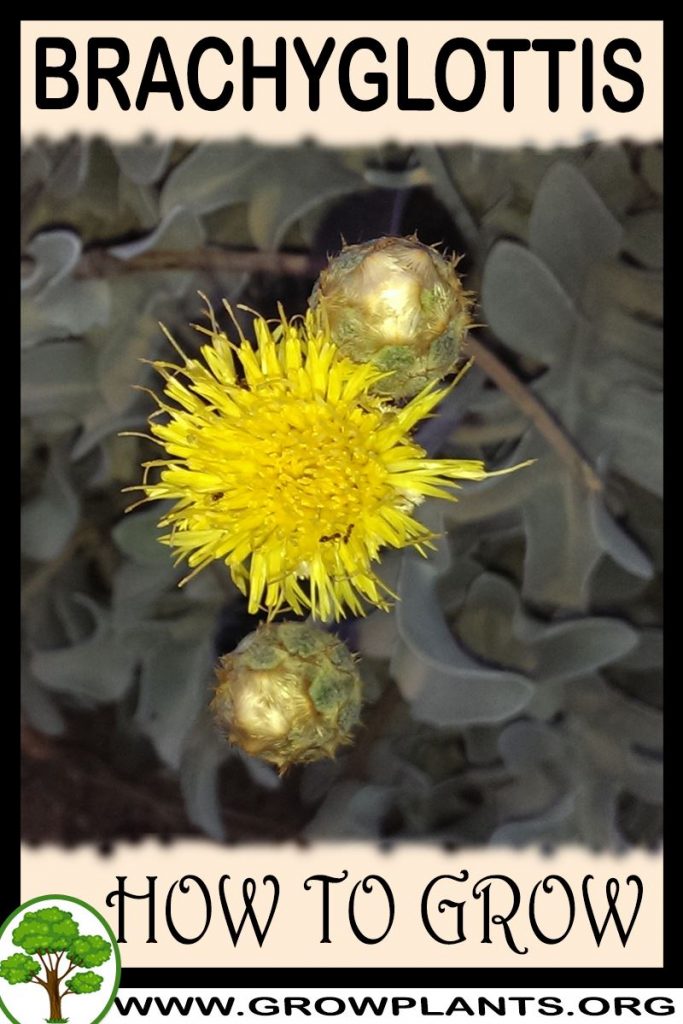
Plant Profile & Key Characteristics
Overview: Brachyglottis (daisy bush) is a perennial evergreen shrub, about 50-150 cm tall, grown as an ornamental in subtropical, mediterranean, desert and temperate climates. It is valued for its grey, felted foliage and clusters of yellow daisy flowers.
Quick Specifications
| Specification | Attribute |
|---|---|
| Plant Type / Life Cycle | Perennial (evergreen shrub) |
| Foliage Type | Evergreen |
| Mature Size | 50-150 cm tall (20-60 in) |
| Growth Rate | Moderate |
| Hardiness | USDA zones 8-11 |
Growth Form & Structure
- Height & Spread: 50-150 cm (20-60 in) in the ground; also grown in containers.
- Growth Habit & Form: Mounded, bushy evergreen shrub.
- Lifespan & Maturity: Perennial shrub reaching mature size within a few seasons.
Anatomy & Physical Features
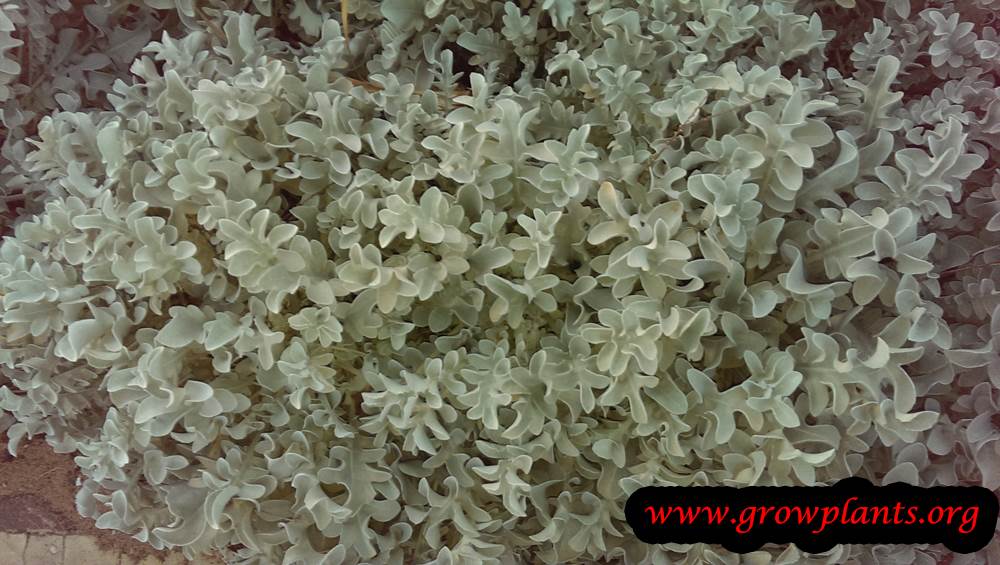
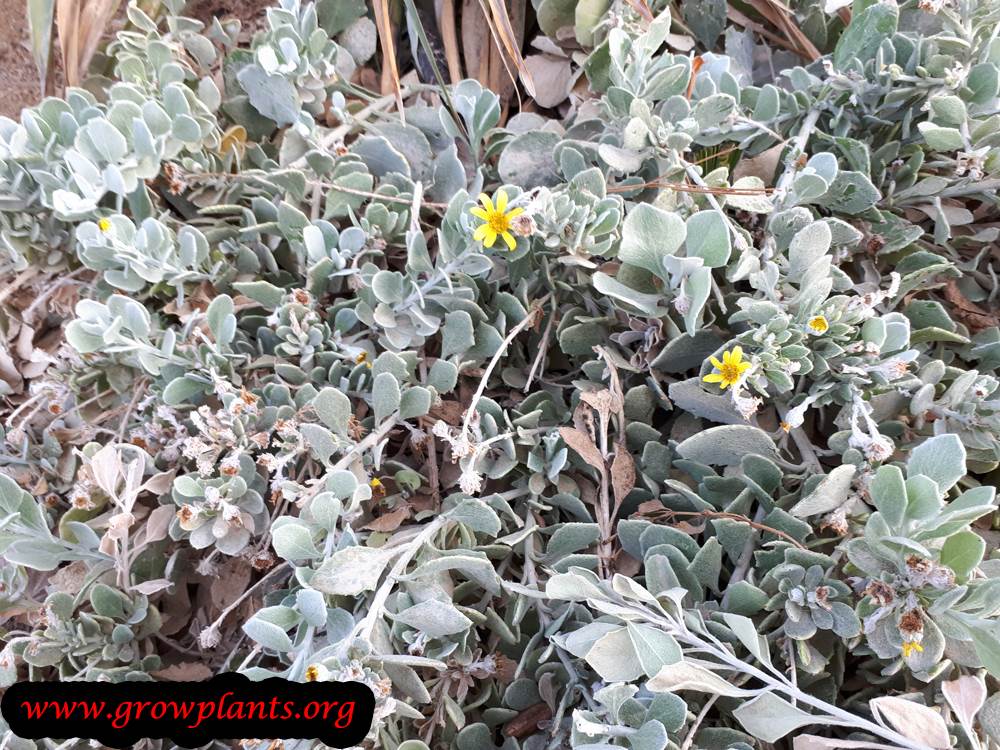
- Leaves & Foliage: Green to grey leaves, elliptic to oblong or ovate, often hairy and velvety – a key ornamental feature.
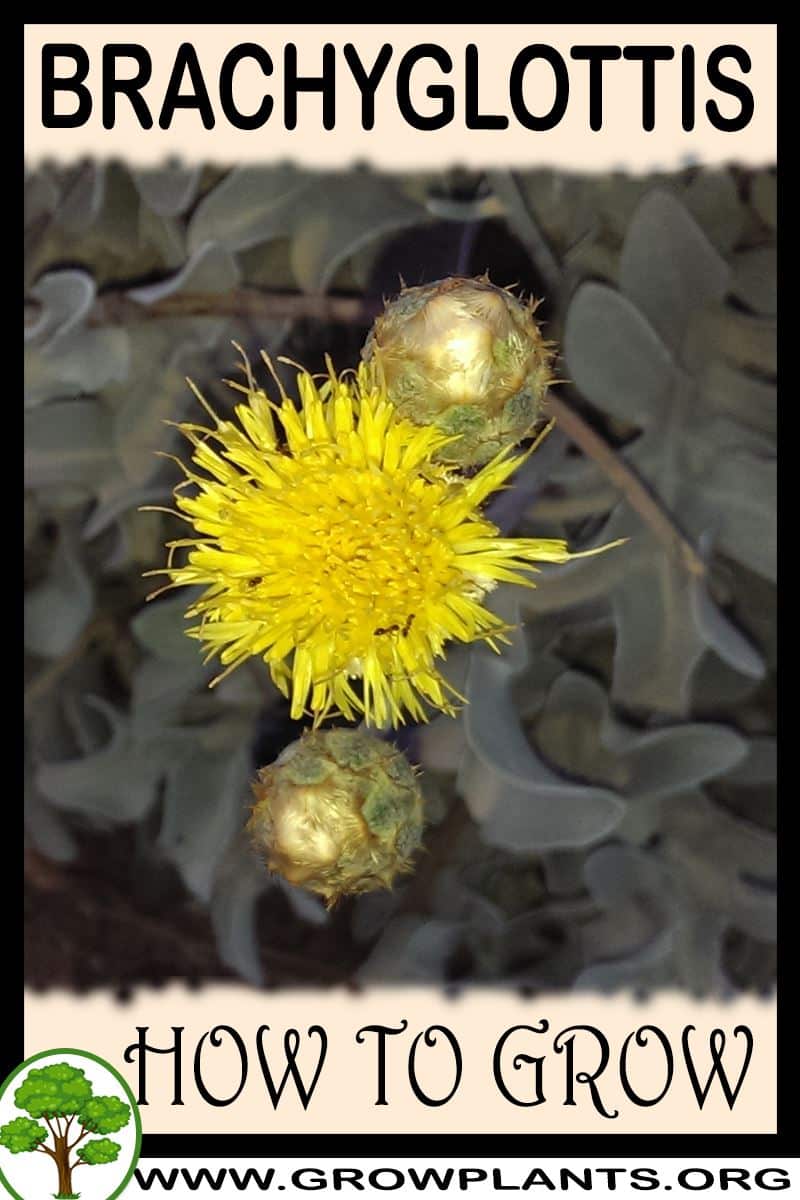
- Flower Characteristics: Yellow, daisy-shaped flowers borne in clusters (summary only – see the Bloom guide).
Primary Uses & Landscape Value
- Functional & Ornamental Roles: Ornamental foliage-and-flower shrub for borders, coastal and dry gardens, and containers.
Care Guide: Planting, Soil & Watering
Overview: Brachyglottis (daisy bush) is an evergreen, often silver-leaved shrub for subtropical, Mediterranean, desert and temperate gardens, growing best in full sun to light shade and tolerating coastal wind. It wants well-drained soil and only modest water, being drought-tolerant once established.
Quick Care Requirements
| Requirement | Ideal Condition |
|---|---|
| Planting Season | Spring through autumn |
| Growth Rate | Moderate |
| Soil Type | Well-drained soil |
| Water Need | Low to moderate – drought-tolerant once established |
Planting & Establishment
- Best Planting Season: Plant from spring through autumn while the soil is warm.
- How to Plant:
- Hole Preparation: Dig a hole the depth of the rootball and about half again as wide on free-draining ground.
- Soil Amendments: Work a little compost into the backfill and add grit on heavy soil to sharpen drainage.
- Planting Depth: Set the root collar at soil level and firm gently.
- Growth Speed & Expectations: Moderate, forming a rounded shrub of roughly 50-150 cm.
Soil, Watering & Drainage Care
- Soil Mix & Drainage Needs: Free-draining soil suits it best; the silvery, felted foliage dislikes sitting in cold, wet ground.
- Watering Schedule & Technique:
- Young / Newly Planted: Water regularly to establish the roots through the first season.
- Established: Water sparingly to moderately, letting the soil dry between waterings.
- Seasonal Adjustments: More during summer heat, much less in cool, wet weather.
Climate, Light & Hardiness
Brachyglottis is a tough, drought-adapted shrub suited to sunny, well-drained sites across subtropical, mediterranean, desert, and temperate climates. Its grey, felted foliage reflects strong sun and helps it cope with heat and dry conditions, and it is broadly hardy through USDA zone 8–11.
Quick Climate Specifications
| Climate Zones | Subtropical, Mediterranean, desert, or temperate |
|---|---|
| USDA Hardiness Zones | Approximately 8–11 |
| Frost Tolerance | Moderate |
| Light Conditions | Full sun to half shade |
Sunlight & Light Exposure
Optimal Light Setup
Best in full sun, which keeps the grey, hairy foliage compact and reduces the risk of fungal problems.
Direct Sun Requirement
Full direct sun is well tolerated and generally preferred; half shade is acceptable but growth tends to be looser.
Shade & Heat Management
Its felted, silvery leaves are adapted to reflect intense sun and heat, making it a good choice for hot, exposed positions.
Temperature Extremes & Hardiness
USDA Hardiness & Regional Limits
Suited to USDA zone 8–11; established plants handle the cooler end of this range reasonably well thanks to their tough, evergreen habit.
Cold Damage & Winter Protection
Hard frost can damage foliage and stem tips; in the coldest part of its range, a sheltered site or winter mulch around the base is worthwhile.
Frost Sensitivity
Moderately frost-sensitive; brief light frosts are usually tolerated once the plant is established.
Extreme Heat Tolerance
Good heat tolerance, being naturally suited to hot, dry summer conditions.
Growing in Pots, Balconies & Indoors
Brachyglottis is a tough, silver-leaved evergreen shrub the grower does not treat as a houseplant. Wind- and salt-tolerant, it is an excellent plant for a sunny, breezy container on a patio or exposed balcony, where its felted grey foliage and yellow daisy flowers shrug off conditions that trouble other pot plants.
Quick Details
- Container Size: A medium to large pot to suit the shrubby growth
- Indoor Suitability: Not a houseplant – an outdoor sun-loving shrub
- Best Spot: Full sun to half shade, including exposed, coastal spots
- Soil & Drainage: Free-draining mix – it hates wet roots
- Watering in Pots: Small to average – established plants take drought well
Indoors & On the Windowsill
- Houseplant limits: Not an indoor plant: it needs sun, air movement and a cool season outdoors.
- A tough choice: Where other pot plants sulk in wind and salt spray, this one thrives – keep it outside.
On a Balcony or Patio
- Light, wind & salt: One of the best pots for an exposed, windy or seaside balcony; still, check moisture, as pots dry fast.
- Practicalities: Clip it over after flowering to keep the silvery mound dense and neat.
Choosing the Pot, Soil & Long-Term Care
- Pot & drainage: Use a pot with strong drainage holes and skip a standing saucer of water, which invites root rot; terracotta breathes and dries fast, while glazed or plastic holds moisture longer.
- Potting mix: Well-aerated and organic-rich – a peat- or coir-based mix opened up with perlite or vermiculite and enriched with compost.
- Feeding: Feed lightly – it is not hungry, and lush growth is weaker; a modest feed keeps it healthy.
- Repotting: Refresh the mix and pot up roughly every couple of years; for perennials, lightly prune the root ball and top growth at the same time.
Fertilizing & Feeding
A light feeder – this tough, well-drained-soil shrub with grey-green foliage does best on modest, balanced feeding rather than rich diets.
Quick Fertilizing Specs
| Feeding Level | Light – an easy-care shrub suited to lean, well-drained soil. |
|---|---|
| young_feeding | A light balanced feed as new plants establish. |
| mature_feeding | Occasional light feeding through the growing season. |
| Main Nutrient Priority | Balanced nutrition to support foliage and the daisy-like yellow flower clusters. |
| Best Feeding Period | Spring through summer while the plant is actively growing and blooming. |
| Organic Options | Compost or well-rotted organic matter, used sparingly given the plant’s preference for lean, well-drained soil. |
| Soil pH | Prefers well-drained soil; tolerates a range of pH. |
| Reduce/Stop Feeding | Reduce feeding as growth slows heading into autumn and winter. |
| Micronutrients | Rarely needed; correct only if a deficiency shows. |
Feeding by Growth Stage
Spring growth flush
Support new grey-green foliage growth as the season starts.
| Nutrient direction | A light, balanced feed suits this lean-soil shrub without pushing soft, floppy growth. |
|---|---|
| Timing | As new growth begins in spring. |
| Frequency | A light feeding as growth resumes is usually enough. |
| Fertilizer types | Balanced complete fertilizer at a light rate, Compost or well-rotted organic matter used sparingly |
| Precautions | Avoid rich, heavily fertilized soil, which can produce weak growth prone to flopping; ensure good drainage. |
Bloom period
Support the yellow, daisy-shaped flower clusters through their bloom period.
| Nutrient direction | Continue only light, balanced feeding; extra phosphorus is not needed to drive more bloom. |
|---|---|
| Timing | Through the spring and summer flowering period. |
| Frequency | Minimal feeding is needed while the plant is in bloom. |
| Fertilizer types | Balanced complete fertilizer at a light rate |
| Precautions | Watch for slugs and snails around the base; avoid overwatering alongside feeding. |
Autumn and winter rest
Let the plant rest as growth slows in cooler weather.
| Nutrient direction | None – withhold fertilizer while growth is minimal. |
|---|---|
| Timing | Through autumn and winter. |
| Frequency | No feeding at this stage. |
| Fertilizer types | No feeding at this stage – resume once active spring growth appears. |
| Precautions | Do not fertilize during the rest period; wait for active growth to resume. |
Nutrient Deficiency Signs & Corrections
Pale, dull foliage and weak, sparse new growth.
| Possible causes | Low soil nitrogen in lean, well-drained soil, Nutrients leached away by rain or watering, Poor soil fertility overall |
|---|---|
| Appears first on | Older, lower leaves first. |
| What to check | Recent feeding history, Soil drainage and fertility, Overall plant vigor |
| Possible correction | Apply a light, balanced fertilizer during active growth. |
Yellowing between the veins of the newest leaves while veins stay green.
| Possible causes | High or alkaline soil pH locking up iron or manganese, Waterlogged soil reducing uptake despite the plant’s drought tolerance, Low available iron or manganese in the soil |
|---|---|
| Appears first on | New growth at the shoot tips. |
| What to check | Soil pH, Drainage, Whether symptoms follow wet spells |
| Possible correction | Correct soil pH toward the plant’s preferred range, improve drainage, and if it persists apply a chelated iron or manganese product per its label. |
Scorched leaf edges or wilting despite adequate water.
| Possible causes | Over-application of fertilizer on this light-feeding shrub, Poor leaching in containers, Fertilizing during hot, dry spells |
|---|---|
| Appears first on | Leaf margins and tips; container plants first. |
| What to check | Recent fertilizer amounts, Drainage, Soil surface for crusting or residue |
| Possible correction | Ease off feeding, water thoroughly to flush excess salts, and resume with only light feeding. |
Pruning, Training & Seasonal Maintenance
Brachyglottis is a rounded, mound-forming evergreen shrub grown mainly for its grey-green, felted foliage, with a secondary spring–summer flush of yellow daisy flowers on the current season’s growth. It tolerates moderate-to-fairly-hard pruning, is best cut in autumn/winter (or right after flowering) to maintain a tight, dense mound, and because bloom forms on new wood, a seasonal trim does not sacrifice next year’s flowers.
Quick Pruning & Maintenance Specs
| Pruning Tolerance | Moderate |
| Primary Pruning Window | Autumn–Winter |
| Secondary Maintenance Window | Deadhead after spring–summer bloom |
| Typical Frequency | Annual shape/renewal cut, plus post-bloom deadheading |
| Main Objective | Maintain a dense, compact mound and prevent bare, woody centers |
| Young Plant Priority | Pinch/tip young growth to build multiple branching stems |
| Mature Plant Priority | Annual shape trim; periodic renewal of leggy interior growth |
| Best Tool Type | Hand shears or bypass secateurs |
| Avoid Heavy Pruning During | Hard frost periods; peak flowering if display is the priority that season |
Pruning by Plant Age & Size
Newly Established
Remove only damaged or frost-nipped growth in the first year; pinch soft tips lightly to encourage branching once the plant is rooted in.
Young / Formative
No central-leader system — train as an open, multi-stemmed mound by pinching and lightly shaping several main branches from the base rather than a single trunk.
Mature / Established
Give an annual all-over shape trim to keep the mound dense, and periodically remove a few of the oldest, most bare interior stems to let light reach the center and prevent the classic gappy, leggy look this genus is prone to.
Seasonal Pruning Schedule
| Dormant/Winter | Objective: shape and renew. Cut back to maintain a tight mound and remove dead or frost-damaged growth; light enough not to remove all of the wood that will carry spring flowers. |
| Post-Flowering (old-wood bloomers) | Deadhead spent flower clusters after the spring–summer bloom to tidy the plant and prevent it going to seed; can double as a light shaping trim. |
Structural Pruning & Training
Focus on keeping the mound dense rather than letting it stretch and gap in the middle; thin a few of the oldest woody stems each year rather than shearing the surface only, since surface-only shearing over time leads to a hollow, bare-centered shrub.
Special Growth to Remove
- Dead or frost-damaged shoot tips
- Spent flower clusters after bloom
- Overly long, outward-reaching stems that spoil the mounded shape
Container & Small-Space Pruning
Suits large containers; trim slightly more often than in-ground plants to keep it compact, and expect a somewhat smaller, tighter mound in a pot — no root-pruning is typically needed unless clearly pot-bound.
Tools
- Hand shears for the routine all-over shape trim
- Bypass secateurs for selective removal of old interior stems and deadheading
Tool Hygiene & Disease Risk
Routine: clean, sharp tools are sufficient. This plant’s main documented problems are slugs and snails rather than a transmissible pathogen, so no special blade-disinfection protocol is needed.
Cut Placement & Technique
Use thinning cuts (removing a stem back to its point of origin) for interior renewal rather than heading cuts, which just thicken the outer shell; when shearing the surface, keep an even, slightly domed profile so light reaches all sides evenly.
Heavy Pruning & Rejuvenation
A leggy, overgrown or frost-damaged plant tolerates a hard cutback into old wood in spring as new growth resumes; expect a temporary loss of flowers that season while the shrub regrows its shape.
Post-Pruning Care
Water in after a hard cutback to support regrowth; watch newly exposed interior wood for slug/snail damage on tender new shoots.
Common Pruning Mistakes
- Shearing only the outer surface every year without ever thinning the interior, leading to a hollow, bare-centered shrub
- Hard-pruning right before a hard frost, exposing tender new growth to cold damage
- Leaving spent flowers unremoved, which encourages a straggly look and unwanted self-seeding
When NOT to Prune
Avoid hard pruning immediately before an expected hard frost, and avoid a heavy cutback during the main spring–summer flowering display if bloom is the priority that year.
Recommended Tools (by task)
- bypass_secateurs — deadheading and selective removal of old interior stems
- hedge_shears — the routine all-over shape trim that keeps the mound dense
Pruning Troubleshooting
| Problem | Possible Cause | What to Check | Corrective Action |
| Bare, gappy center | Years of surface-only shearing with no interior thinning | Look inside the canopy for a hollow shell of leafless stems | Thin several old stems back to their origin over 1–2 seasons to let interior buds break |
| Reduced flowering | Pruned too hard or too late, removing developing buds | Timing of last major cut relative to bloom period | Shift heavy trims to right after flowering or well before the spring bud flush |
| New growth chewed or ragged | Slug/snail feeding on tender post-prune regrowth | Inspect fresh shoots at dusk/dawn for slime trails or damage | Use standard slug/snail control around freshly pruned plants |
Propagation Guide
Brachyglottis roots readily from semi-hardwood cuttings, which is the recommended method whenever you want to keep a specific cultivar’s exact leaf and flower characteristics; species seed is a viable but less certain alternative for cultivar identity. Propagation is Easy.
Quick Propagation Specs
| Best Propagation Method | Semi-hardwood stem cuttings |
| Alternative Methods | Seed (species only) |
| Propagation Difficulty | Easy |
| Seed True-to-Type | Usually true-to-type for the species; cultivar-dependent for named selections |
| Vegetative True-to-Type | Yes |
| Best Propagation Season | Late summer into autumn |
| Cutting Rooting Time | Several weeks to a couple of months |
Growing from Seed
Species seed will germinate under typical warm, moist conditions, but for a specific cultivar seed is unreliable – the site notes vegetative propagation is highly recommended when a particular cultivar is wanted.
Stem Cuttings
Cutting Type
Semi-hardwood tip cuttings, roughly 8–10cm (3–4in).
Best Timing
Late summer into autumn, which conveniently coincides with this plant’s autumn/winter pruning window.
Cutting Preparation
Trim just below a node and strip the lower leaves.
Rooting Setup
Free-draining, gritty cutting mix in a sheltered spot or cold frame; the grey, felted foliage is prone to rot if kept too wet, so avoid overly humid, waterlogged conditions.
Rooting Hormone
Optional – can improve consistency but is not essential.
Rooting Time
Typically several weeks to a couple of months.
Bloom & Flower Guide
Quick Details
- Bloom Season: Spring into summer
- Flower Appearance: Bright yellow daisy flowers carried in clusters above silvery foliage
- Edibility: Not edible – an ornamental shrub
Detailed Blooming Overview
Brachyglottis (daisy bush, formerly grouped with Senecio) is an evergreen shrub grown as much for its felted grey foliage as for its bloom. In late spring and summer it is topped with sprays of cheerful yellow daisies. It suits subtropical, Mediterranean, desert and temperate gardens across roughly zones 8-11.
Flower Characteristics
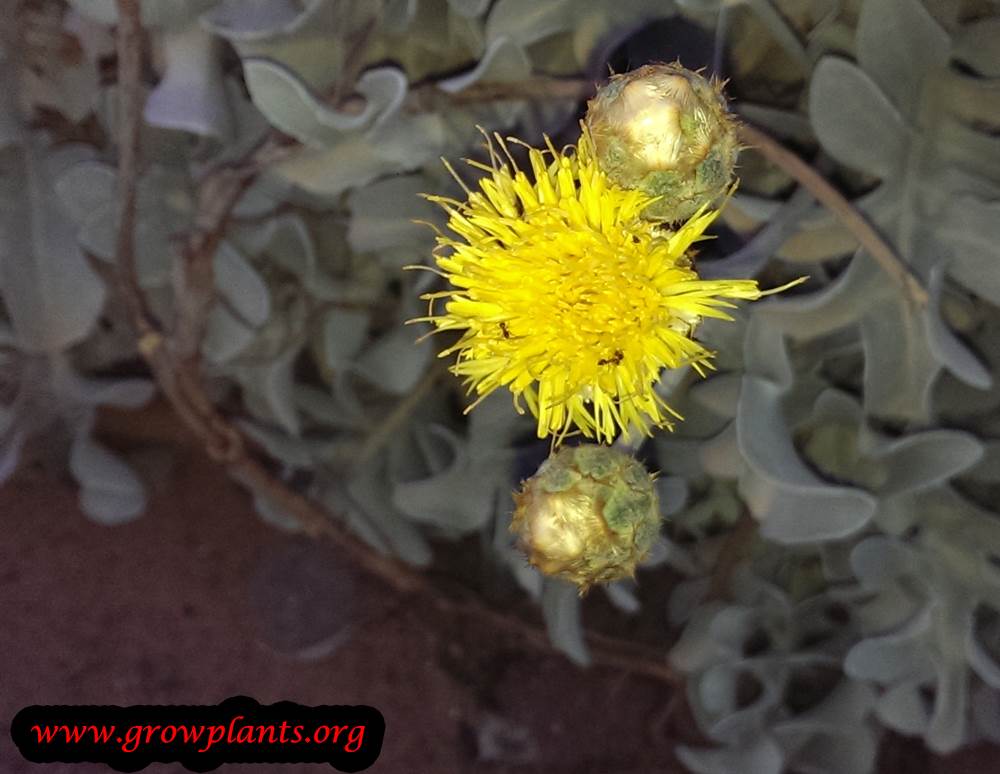
- Classic yellow daisy flowers with a ray of petals around a golden disc.
- Borne in branched clusters that stand above the silvery, velvety leaves.
- A magnet for bees and other pollinators.
Bloom Care & Thinning
- After flowering: Trim the shrub over once the display fades to keep it compact and encourage fresh silver growth.
- Position: Full sun and free-draining soil give the best flowering.
- Safety: As a relative of the senecios, it is not edible – grow it for looks, not the plate.
Pests, Diseases & Troubleshooting
Overview: Brachyglottis (the silver-grey daisy bushes formerly grouped under Senecio, such as ‘Sunshine’) are tough, sun-loving, coastal-hardy shrubs in the daisy family that are largely pest- and disease-free. When problems do occur they are minor: sap-suckers on soft new growth, occasional fungal leaf issues in damp, crowded conditions, and root rot in heavy wet soil. Grow them lean, sunny and well-drained and they mostly look after themselves.
Quick Troubleshooting Overview
| Issue / Pest | Main Symptom | Primary Solution |
|---|---|---|
| Aphids | Colonies on soft new shoots; distortion and honeydew | Hose off; insecticidal soap |
| Leaf miner / capsid | Pale winding trails or puckered, spotted young leaves | Remove affected leaves; usually cosmetic |
| Scale insects | Bumps on stems; honeydew and sooty mould | Horticultural oil; prune infested wood |
| Powdery mildew | White powdery film on leaves in humid, still air | Improve airflow; avoid overhead watering |
| Root rot | Wilting and dieback in wet, heavy soil | Sharp drainage; avoid overwatering |
| Legginess | Open, bare, sprawling growth | Prune/trim after flowering to keep compact |
Common Pests & Management
- Aphids (Aphis / Brachycaudus spp.):
- Symptoms: Small green, grey or black aphids clustered on the soft new shoots and flower buds, causing curling, distortion, honeydew and secondary sooty mould. Mostly a spring-flush nuisance.
- Prevention & Control: Hose colonies off and let ladybirds, hoverflies and lacewings – which the daisy flowers attract – do the rest. Treat only persistent build-ups with insecticidal soap on the affected tips, and avoid high-nitrogen feeding that softens growth.
- Leaf miner (Agromyzidae):
- Symptoms: Pale, winding or blotchy trails mined within the leaf tissue by tiny larvae, and occasional puckering; damage is cosmetic on this vigorous shrub.
- Prevention & Control: Pick off and destroy mined leaves to break the cycle, and encourage parasitic wasps. No spray is usually justified; the shrub grows past minor mining.
- Scale insects (Coccidae / Diaspididae):
- Symptoms: Immobile brown or white bumps on stems and leaf undersides, with honeydew and sooty mould from soft scales. Uncommon but possible on sheltered or stressed plants.
- Prevention & Control: Prune out heavily infested twigs and conserve natural enemies. Apply horticultural oil to smother scale and crawlers if numbers build; keep the plant open and airy.
- Capsid / plant bugs (Miridae):
- Symptoms: Sap-sucking bugs that feed on soft young growth and buds, leaving small puckered, distorted, spotted leaves and occasional distorted shoot tips.
- Prevention & Control: Damage is usually minor and cosmetic; tolerate it and encourage general predators. Remove badly distorted tips. Treat only if damage is severe, with an evening application of a soft insecticide such as insecticidal soap.
Diseases & Fungal Issues
- Powdery mildew (Erysiphe / Golovinomyces spp.):
- Symptoms: A white powdery coating on the leaves in warm, humid, still or crowded conditions, causing some yellowing; more likely on soft, shaded growth than on plants in their preferred open, sunny sites.
- Treatment & Management: Grow in full sun with good air movement and avoid crowding and overhead watering. Prune to open the bush and remove badly affected leaves. A sulfur or potassium-bicarbonate spray helps in a bad spell, but siting usually prevents it.
- Root & crown rot (Phytophthora / Pythium spp.):
- Symptoms: Wilting, yellowing and dieback despite moist soil, with dark rotted roots – driven by heavy, poorly drained or waterlogged soil, the main disease risk for these dry-loving shrubs.
- Treatment & Management: Plant in free-draining soil (raised or mounded in heavy ground) and avoid overwatering; established plants are drought-tolerant. Remove and replace collapsed plants, improving drainage first – there is no cure once roots rot.
- Fungal leaf spot / rust (various fungi):
- Symptoms: Brown or dark spots, or occasional rust pustules, on leaves in prolonged damp weather; largely cosmetic.
- Treatment & Management: Improve airflow, avoid wetting foliage, and remove and dispose of affected leaves. Fungicides are seldom needed; cultural improvement resolves most cases.
Growing Difficulties & Abiotic Problems
- Root rot from overwatering / heavy soil:
- Cause & Symptoms: These grey-leaved, drought- and coast-adapted shrubs resent wet feet; in heavy or poorly drained soil they yellow, wilt and rot at the roots.
- Correction Strategy: Grow in free-draining soil in full sun, water sparingly once established, and never leave them waterlogged. Improve drainage before replanting a lost shrub.
- Legginess & open growth:
- Cause & Symptoms: Left untrimmed, Brachyglottis becomes leggy, open and bare at the base over time, especially in shade or rich soil.
- Correction Strategy: Trim lightly but regularly, ideally after flowering, to keep growth dense and compact; grow in full sun and avoid over-feeding. Hard renovation pruning is tolerated but best done in stages.
- Frost damage on soft growth:
- Cause & Symptoms: Though hardy, soft new growth and flower buds can be nipped by hard or late frost, causing blackened tips.
- Correction Strategy: Site in a sheltered, sunny spot in cold areas, avoid feeding late in the season (which pushes tender growth), and simply trim out frost-damaged tips once the risk passes.
- Poor flowering / weak silver colour in shade:
- Cause & Symptoms: In too much shade the plant flowers poorly and the characteristic silver-grey felted foliage becomes greener and looser.
- Correction Strategy: Give it full sun for the best foliage colour and flowering; these are plants for open, bright, well-drained positions rather than shade.
What Helps – Products & Tools
Brachyglottis needs very little: keep insecticidal soap or horticultural / neem oil for occasional aphids and scale, and a sulfur or potassium-bicarbonate spray in reserve for powdery mildew in a humid spell. Sharp-draining soil, full sun and a trim after flowering are the real tools. Fungicides are rarely warranted. Spray oils in the evening to protect pollinators, which the daisy flowers attract in numbers.