Plant Profile & Key Characteristics
Overview: Bignay is an evergreen tropical tree that can reach 5-30 m but stays smaller in cooler zones, with small red-to-black edible berries. It is grown as an ornamental, shade tree, bonsai and fruit tree.
Quick Specifications
| Specification | Attribute |
|---|---|
| Plant Type / Life Cycle | Perennial tree |
| Foliage Type | Evergreen |
| Mature Size | 5-30 m (15-100 ft); smaller in zones 10b-11a |
| Growth Rate | Fast to Moderate |
| Hardiness | USDA zone 10b+ |
Growth Form & Structure
- Height & Spread: 5-30 m (15-100 ft) in the ground, staying smaller in cooler zones; not suited to pots except as a bonsai.
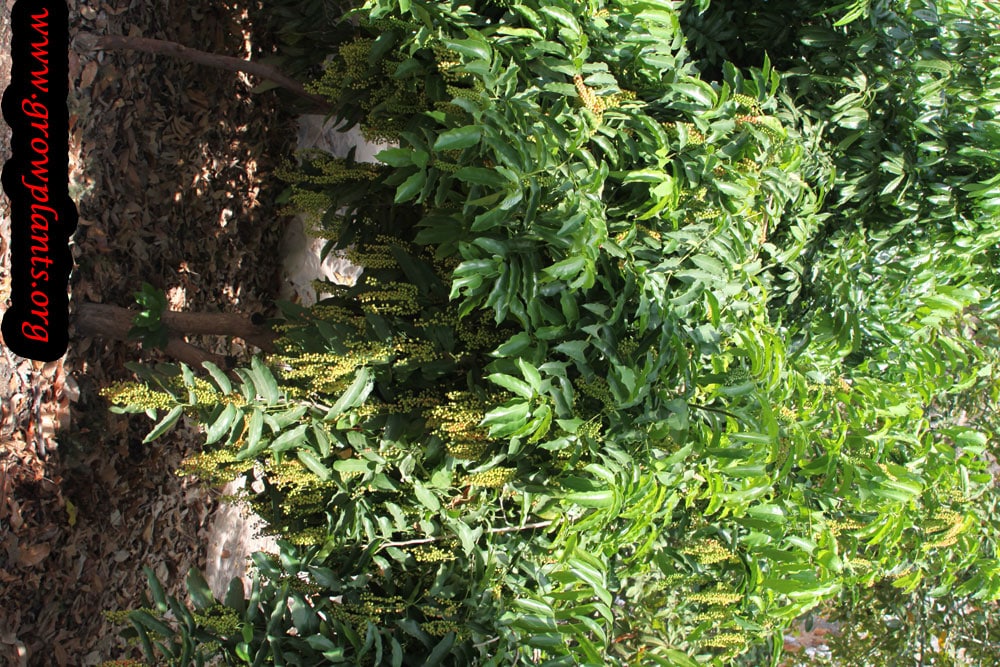
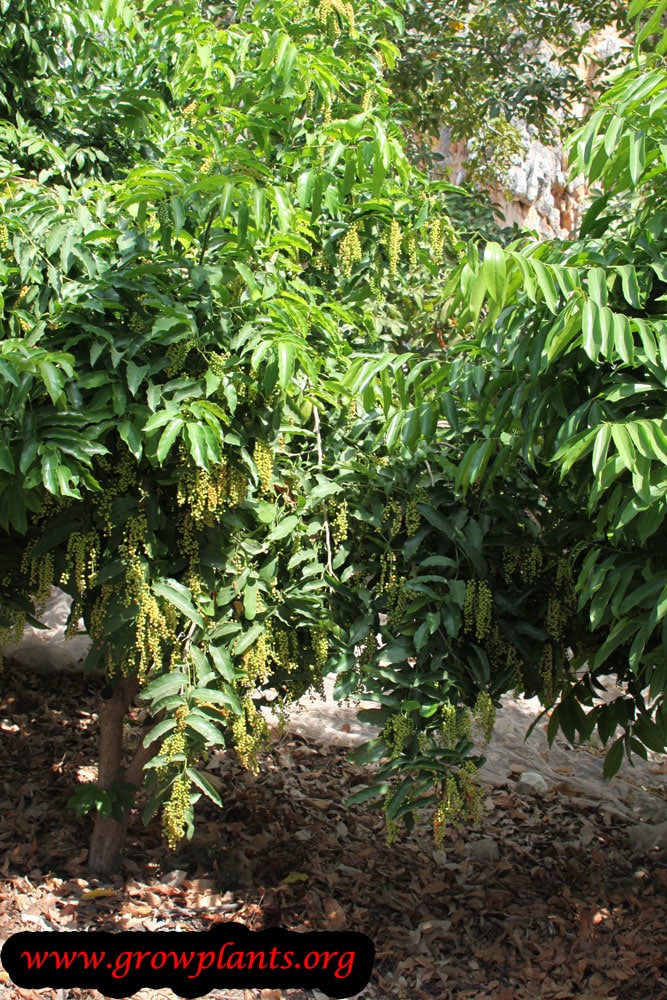
- Growth Habit & Form: Upright evergreen tree with a dense, leafy canopy.
- Lifespan & Maturity: Long-lived tree; typically bears fruit 2-5 years after planting.
Anatomy & Physical Features
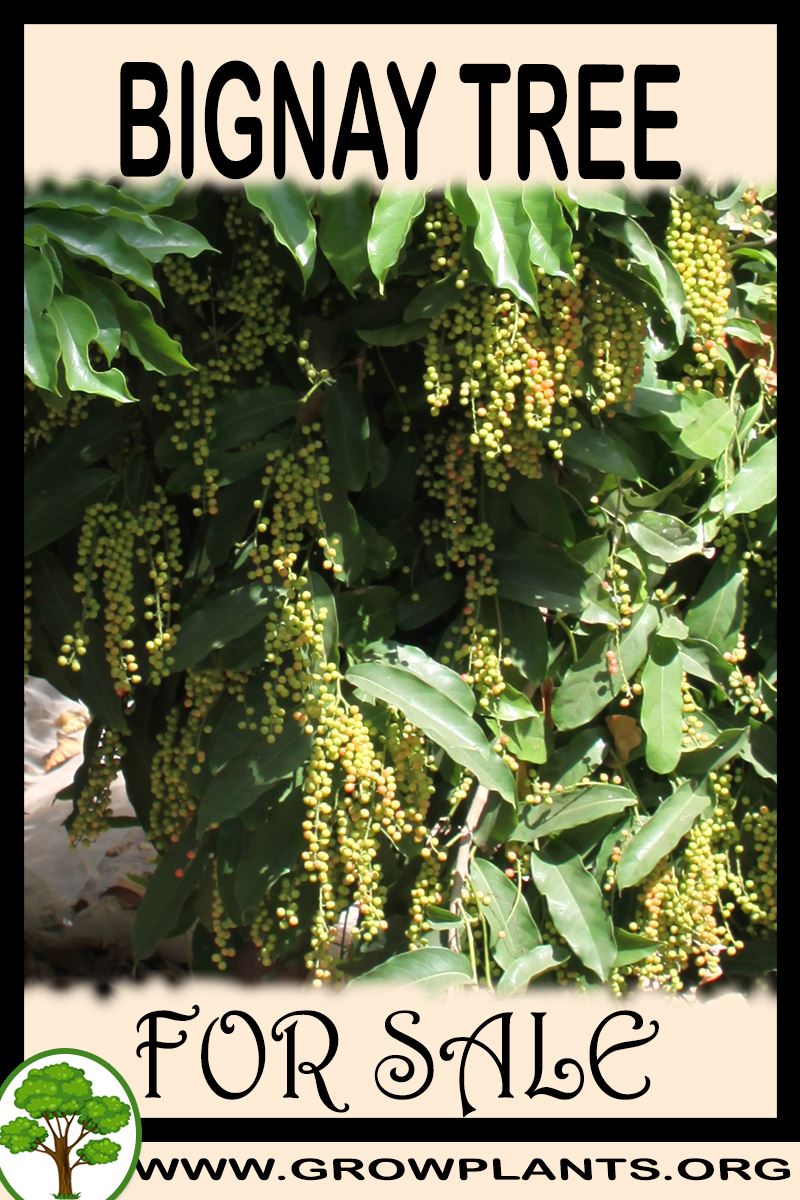
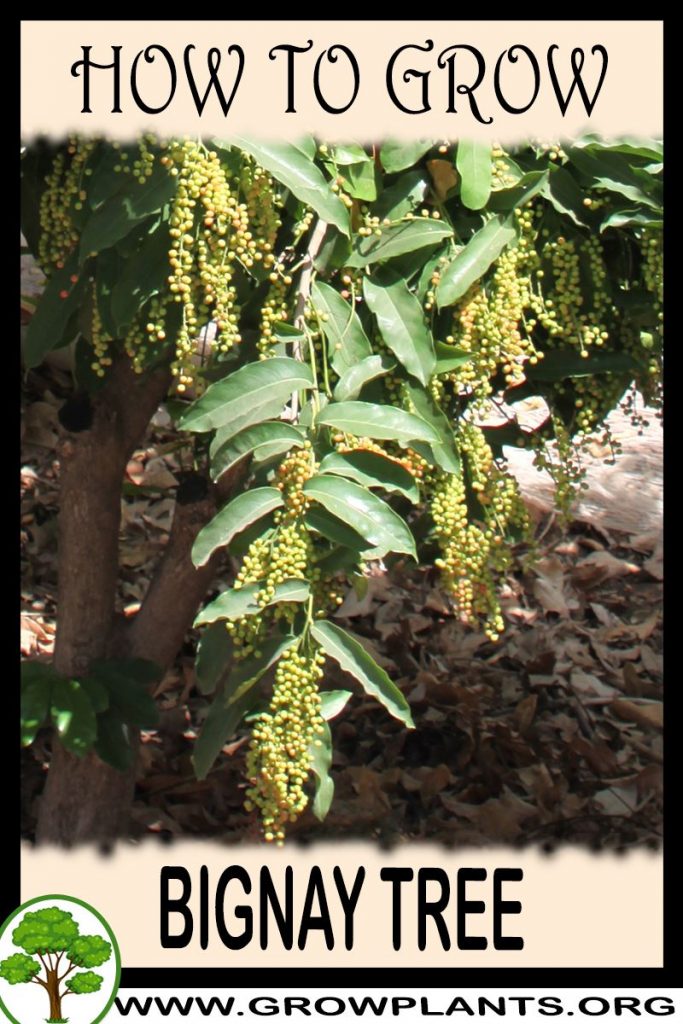
- Flower Characteristics: Small green flowers in strings with an unpleasant smell; usually dioecious, though some female cultivars self-pollinate (see the Bloom accordion).
- Fruit Profile: Small berries 3-7 mm, ripening red to purple-black (see the Fruit accordion).
Primary Uses & Landscape Value
- Edible Uses: Fruit eaten raw or made into juice.
- Functional & Ornamental Roles: Grown as an ornamental and shade tree and trained as bonsai.
Care Guide: Planting, Soil & Watering
Overview: Bignay is a tropical to subtropical tree that grows in rich, moisture-retentive but well-draining soil kept mulched. It needs a frost-free site and moderate to high water.
Quick Care Requirements
| Requirement | Ideal Condition |
|---|---|
| Planting Season | Spring for best results (also summer and autumn; winter in the tropics) |
| Growth Rate | Moderate to Fast |
| Soil Type | Rich, well-draining, mulched |
| Water Need | Moderate to High |
Planting & Establishment
- Best Planting Season: Plant in spring for the strongest establishment, though summer and autumn also work (and winter in the tropics).
- How to Plant:
- Hole Preparation: Dig a hole as deep as the current root ball plus about 20% extra.
- Soil Amendments: Mix organic matter, humus and dried leaves into the backfill, then mulch the surface to hold moisture.
- Planting Depth: Loosen the root ball slightly, set the collar at soil level, cover lightly without hard compacting, and stake if the tree is unstable.
- Growth Speed & Expectations: Moderate to fast; in cooler zones (10b–11a) it stays considerably smaller than in the tropics.
Soil, Watering & Drainage Care
- Soil Mix & Drainage Needs: Rich soil that holds moisture yet drains freely, topped with mulch to keep the roots cool and damp.
- Watering Schedule & Technique:
- Young / Newly Planted: Water daily (preferably in the morning) for the first two weeks after planting.
- Established: Water regularly and deeply, keeping the soil moist but not waterlogged.
- Seasonal Adjustments: More water in warm, dry weather; less in cool conditions.
Climate, Light & Hardiness
Bignay is a tropical, mediterranean, and subtropical fruit tree that needs frost-free conditions. It grows in full sun to half shade and is only suited to warm-winter climates.
Quick Climate Specifications
| Climate Zones | Tropical, Mediterranean, subtropical |
|---|---|
| USDA Hardiness Zones | Approximately 10b and warmer |
| Frost Tolerance | None |
| Light Conditions | Full Sun to Half Shade |
Sunlight & Light Exposure
Optimal Light Setup
Full sun to half shade suits this tree.
Temperature Extremes & Hardiness
USDA Hardiness & Regional Limits
Grown outdoors from roughly USDA zone 10b upward; the site data specifies frost-free conditions are required.
Frost Sensitivity
Described as needing frost-free conditions, meaning even light frost risks damage, particularly to young trees.
Growing in Pots, Balconies & Indoors
Bignay can reach 5-30 m (15-100 ft), staying smaller in cooler zones. The grower says it is not a houseplant and not for ordinary containers – only workable as a bonsai. Grow it in the ground unless you train it as bonsai.
Quick Details
- Container Size: Not for ordinary pots; possible only as a trained bonsai
- Indoor Suitability: Not a houseplant; container-grown only as a bonsai
- Best Spot: Full sun to light shade
- Soil & Drainage: Aerated, organic-rich mix that drains freely
- Watering in Pots: Keep the mix consistently moist and water freely in warm weather – pots dry fast; make sure drainage is sharp so roots never sit wet.
Indoors & On the Windowsill
- Houseplant limits: No – it grows too large and light-hungry for indoor life.
- Windowsill growing: Not a sill plant.
- As a bonsai: Bonsai is the only pot route the grower endorses; the female tree can carry small fruit even when kept compact.
On a Balcony or Patio
- Bonsai on the patio: A bonsai can sit on a bright patio; the tree itself is too big for lasting pot life otherwise.
- Note: The fruiting tree can give off an unpleasant smell, worth remembering near a seating area.
Choosing the Pot, Soil & Long-Term Care
- Pot & drainage: A deep pot with strong drainage holes; skip a standing-water saucer to avoid root rot. Terracotta breathes and dries faster, while glazed or plastic hold moisture longer.
- Potting mix: Well-aerated, organic-rich mix – peat or coir with perlite and a little organic matter; it must drain freely.
- Feeding: Potted plants use up their food faster because nutrients leach out with each watering, so feed a little more often than plants in open ground.
- Bonsai care: Refresh part of the mix and pot up every couple of years; for established plants, lightly prune the root ball and top growth when you repot.
Fertilizing & Feeding
Bignay is a fast-to-medium growing tropical fruit tree that benefits from organic matter at planting and steady balanced feeding through its early years, easing to light, potassium-leaning feeding once mature and bearing fruit.
Quick Fertilizing Specs
| Feeding Level | Moderate |
|---|---|
| young_feeding | Steady, balanced feeding through the growing season while the tree establishes and builds its framework. |
| mature_feeding | Lighter feeding, leaning to potassium as fruit develops. |
| Main Nutrient Priority | Balanced nutrition while young; potassium emphasis as the tree matures and fruits. |
| Best Feeding Period | Through the warm growing season. |
| Organic Options | Compost, humus and well-rotted mulch worked around the root zone. |
| Reduce/Stop Feeding | Ease off feeding as the tree matures and after fruit harvest. |
Feeding by Growth Stage
Newly planted
Help a newly planted Bignay tree establish roots in soil enriched with organic matter, as recommended at planting.
| Nutrient direction | Go easy at planting; rely on the organic matter worked into the planting hole and a light balanced feed once new growth begins. |
|---|---|
| Timing | At and just after planting. |
| Frequency | Minimal feeding at first; let the roots establish before feeding more. |
| Fertilizer types | Organic matter, compost or well-rotted mulch mixed into the planting area, A light balanced complete fertilizer once new growth begins |
| Precautions | Avoid strong fertilizer against fresh roots, which can scorch them; keep the new tree consistently watered while it settles in. |
Young, pre-bearing tree
Build a strong trunk and branch framework during this tree’s fast-to-medium early growth.
| Nutrient direction | Balanced feeding with a nitrogen lean supports steady leafy growth while the framework develops. |
|---|---|
| Timing | Through the active growing season while the tree is young. |
| Frequency | Light, regular feeding across the growing season. |
| Fertilizer types | A balanced fruit-tree fertilizer with a nitrogen lean, Compost or other organic matter |
| Precautions | Keep growth steady rather than forced; overly soft growth is more prone to pest and wind damage. |
Established tree approaching bearing
Keep the maturing tree in steady health as it approaches fruit production.
| Nutrient direction | A balanced complete fruit-tree fertilizer with the minor nutrients such a blend usually supplies. |
|---|---|
| Timing | During the active growing season. |
| Frequency | Steady, moderate feeding through the season. |
| Fertilizer types | A balanced complete fruit-tree fertilizer, Compost or other organic matter |
| Routine trace nutrients | iron, manganese, zinc |
| Precautions | Watch for pale new leaves, which can signal a micronutrient shortage such as iron. |
Mature, fruit-bearing tree
Support flowering and fruit development, keeping in mind that this dioicous species needs a male tree nearby, or a self-pollinating female cultivar, to set fruit.
| Nutrient direction | A balanced fertilizer leaning toward potassium as fruit develops; a settled mature tree needs only light feeding. |
|---|---|
| Timing | From before flowering through fruit development. |
| Frequency | Light, well-timed feeding around the fruiting period. |
| Fertilizer types | A balanced complete fertilizer with adequate potassium, Compost or other organic matter |
| Routine trace nutrients | iron, manganese, zinc |
| Precautions | Excess nitrogen at this stage favors leaves over fruit; keep feeding light and balanced. |
Nutrient Deficiency Signs & Corrections
New leaves are pale or yellow between green veins while the veins themselves stay green.
| Possible causes | High (alkaline) soil pH locking up iron, Waterlogged soil reducing root uptake, A genuine iron shortage in the soil |
|---|---|
| Appears first on | Youngest leaves at the shoot tips. |
| What to check | Soil pH and whether the soil is alkaline, Drainage and whether symptoms follow wet spells, Whether only new growth is affected |
| Possible correction | Correct soil pH where possible, improve drainage, and apply a chelated iron product per its label. |
The tree flowers but sets little or no fruit.
| Possible causes | No compatible male tree or self-pollinating cultivar nearby, since this species is typically dioicous, Excess nitrogen favoring leaf growth over fruiting, Poor pollinator activity around bloom time |
|---|---|
| Appears first on | Overall fruit set across the canopy. |
| What to check | Whether a male tree or self-pollinating female cultivar is present, Recent nitrogen-heavy feeding, Pollinator activity during bloom |
| Possible correction | Confirm pollination needs are met with the right tree combination, and ease back on nitrogen if growth is very leafy with little fruit. |
Overall growth stays weak or thin rather than the tree’s typical fast-to-medium pace.
| Possible causes | General nutrient shortage in poor soil, Waterlogged or compacted roots limiting uptake, Insufficient sun |
|---|---|
| Appears first on | New shoots across the tree. |
| What to check | Feeding history, Soil drainage, Sun exposure |
| Possible correction | Improve drainage and sun exposure, then apply a balanced fruit-tree fertilizer at a moderate rate. |
Pruning, Training & Seasonal Maintenance
Bignay is a fast-to-medium-growing evergreen tree that can become quite large (up to around 30 m in ideal tropical conditions, smaller at the cooler edge of its range) and tolerates moderate structural pruning, mainly for shape and size control rather than to influence fruiting. Because the species is dioecious, and fruiting trees are sometimes grafted with both a female (fruiting) branch and a male (pollinating) branch – or rely on self-pollinating female cultivars – any pruning must be done with care not to remove the tree’s pollen source.
Quick Pruning & Maintenance Specs
| Pruning Tolerance | Moderate |
| Primary Pruning Window | Winter |
| Typical Frequency | Light-to-moderate, mainly shape and size maintenance |
| Main Objective | Size/shape control on a potentially large tree; preserve pollinator wood on grafted/dioecious specimens |
| Young Plant Priority | Establish structure while clearly identifying and protecting any grafted male pollinator branch |
| Mature Plant Priority | Height and spread control, remove crossing/crowded growth, keep tracking pollinator wood |
| Best Tool Type | Loppers and pruning saw for structural cuts, pole pruner on a large mature specimen |
| Avoid Heavy Pruning During | Spring–summer bloom |
Pruning by Plant Age & Size
Newly Established
Minimal – remove only damaged growth.
Young / Formative
Light formative shaping only – pruning is more for design than for any formal leader or vase system. If the tree was grafted with a male pollinator branch onto a female tree, mark or track that branch clearly from the start so it is never mistaken for surplus growth.
Mature / Established
Manage size and spread, since the species can reach a large size unpruned; remove crossing or crowded branches; continue protecting any grafted pollinator wood.
Seasonal Pruning Schedule
| Stage | Objective | Remove | Do Not Remove | Expected Response | Flowering/Fruiting Impact |
| Dormant/Winter | Shape and size control | Crossing or crowded branches | Any grafted male pollinator branch on a female tree | Cleaner canopy going into spring growth | None if pollinator wood is preserved; loss of fruiting if it is removed |
Flowering & Fruiting Wood
Bignay is dioecious, with male and female flowers on separate trees (some female cultivars self-pollinate). Because fruiting trees are sometimes specifically grafted with a male branch for pollination, the single most important fruiting-wood rule here is not about wood age but about not removing that grafted pollinator branch – doing so removes the pollen source and can stop fruit set on an otherwise healthy female tree.
Structural Pruning & Training
Thin crossing or rubbing branches for a cleaner canopy. Height and spread control is the main structural concern on a species that can reach around 30 m unpruned (though naturally smaller at the cooler end of its range), especially in a garden or shade-tree setting where full size is not wanted.
Special Growth to Remove
No unwanted growth (suckers/watersprouts) is flagged for this species. The notable exception is growth to protect rather than remove: any grafted male pollinator branch on a female fruiting tree must be identified and left intact.
Container & Small-Space Pruning
Standard container growing is not possible for this species – bonsai is the sole exception, which follows its own specialised wiring, pinching and root-pruning discipline rather than this general in-ground guidance.
Tools
Loppers and a pruning saw for structural cuts on a tree that can become quite large, a pole pruner for height maintenance on a mature specimen, and bypass secateurs for smaller twig work.
Tool Hygiene & Disease Risk
Routine – only aphids are flagged, with no disease noted.
Cut Placement & Technique
Thinning cuts for crossing or crowded branches back to their point of origin, cut outside the branch collar. Take particular care to correctly identify branch origin – rootstock, scion, or grafted pollinator wood – before cutting on a grafted specimen.
Heavy Pruning & Rejuvenation
Moderate size reduction is tolerated for a tree outgrowing its space, but avoid overly hard rejuvenation that removes major limbs at once on a specimen that might carry the only pollinator wood; stage any significant reduction over more than one season and confirm what each limb is before removing it.
Post-Pruning Care
Water normally; watch for aphids on the new flush. No special feeding is needed beyond routine care.
Common Pruning Mistakes
- Mistakenly removing a grafted male pollinator branch on a female fruiting tree, which loses fruit set entirely.
- Letting an unpruned tree outgrow its space given its large potential size.
- Not distinguishing formative, cosmetic shaping from any real structural need.
When NOT to Prune
Avoid heavy cuts right before or during the spring–summer bloom, and take extra care during any pruning on a known dioecious-grafted specimen to avoid the pollinator branch.
Recommended Tools (by task)
- loppers – medium structural and crossing-limb cuts.
- pruning_saw – larger limbs on a mature specimen.
- pole_pruner – height maintenance on a tree that can reach around 30 m.
Pruning Troubleshooting
| Problem | Possible Cause | What to Check | Corrective Action |
| No fruit despite a healthy flowering female tree | Pollinator source removed – the grafted male branch was pruned off, or no male tree/self-pollinating cultivar is nearby | Presence and health of the grafted male wood or a nearby male tree | Identify and protect any grafted pollinator branch before future pruning, or graft/plant a pollinator if missing |
| Tree outgrowing its space | No size-control pruning done while young | Current height and spread versus available space | Begin staged size reduction in the winter window; do not remove more than a portion at once |
Propagation Guide
Bignay is dioecious, so getting a fruiting tree depends on establishing a known, ideally self-pollinating, female cultivar – something grafting is used to guarantee; seed-grown trees are easy to raise but their sex is unknown until maturity, and stem cuttings, taken exactly as the site describes, are a reliable vegetative alternative once suitable material is available. Seed itself is Easy, while securing reliable fruiting through grafting or cultivar selection is Moderate.
Quick Propagation Specs
| Best Propagation Method | Stem cuttings, or grafting to secure a known female (ideally self-pollinating) cultivar |
| Alternative Methods | Seed |
| Propagation Difficulty | Easy (seed, cuttings) to Moderate (ensuring reliable fruiting via cultivar/sex selection) |
| Seed True-to-Type | Variable – seedling sex (male or female) is not predictable |
| Vegetative True-to-Type | Yes – preserves known sex and fruiting characteristics |
| Best Propagation Season | Early spring for cuttings, before new growth starts; spring to summer for sowing |
| Seed Germination Time | 3–6 weeks |
| Cutting Rooting Time | Typically several weeks under warm, humid conditions |
| Seed Sowing Depth | 2cm (1in) |
Growing from Seed
Seed Handling & Viability
Store seed in a dry, dark place until sowing.
Sowing Season
Spring to summer.
Sowing Depth & Orientation
Sow 2cm (1in) deep, in mulch-rich soil.
Sowing Spacing
Best sown in individual pots, or if sowing directly at the growing site, space at roughly 2x3m (6–10ft).
Germination Conditions
Full sun with high humidity; water an average to large amount and do not let the medium dry out until germination occurs.
Germination Time
3–6 weeks.
Seedling Care
Keep the soil moist and rich in organic matter as seedlings establish.
Stem Cuttings
Cutting Type
Cuttings taken from the top of the plant’s growth.
Best Timing
Early spring, before the branch starts actively growing.
Cutting Preparation
Take cutting material from the most vigorous, top growth.
Rooting Setup
A moist, peat-based soil with high humidity; water regularly and do not let it dry out.
Rooting Hormone
Recommended; using a rooting hormone is part of the site’s own method for this species.
Rooting Time
Not specified by the site; expect several weeks under warm, humid conditions.
Grafting & Budding
Why Grafting Is Used
Bignay is dioecious – male and female flowers normally grow on separate trees – though some female cultivars are self-pollinating. It is best to grow or graft a self-pollinating female cultivar; if one cannot be found, grafting both female and male material onto the same tree (or growing a male and a female tree together) ensures pollination and fruiting.
Rootstock
Seedling Antidesma bunius.
Scion Selection
Use wood from a known female cultivar, ideally one that is self-pollinating; where needed, also take material from a known male to graft alongside it.
Best Grafting Season
Early spring, in line with this species’ best cutting/sowing timing.
Graft Aftercare
Protect the graft union until it heals and remove rootstock suckers that appear below it.
Bloom & Flower Guide
Quick Details
- Bloom Season: Spring to summer
- Flower Appearance: Tiny green flowers in slender spikes
- Edibility: The flowers are insignificant and not eaten
Detailed Blooming Overview
Bignay flowers in spring and summer, producing slender spikes of tiny green flowers. They are grown as the precursor to the fruit rather than for looks, and they carry an unpleasant scent – a small trade-off on the way to a heavy crop.
Flower Characteristics
- Small and green, borne along stems in spike-like inflorescences, with an unpleasant smell.
- The tree is usually dioecious, with male and female flowers on separate trees, though some female cultivars are self-pollinating.
Bloom Care & Thinning
- Pollination: The flowers are pollinated by flies, and self-pollinating cultivars can set fruit on their own.
- Planting for fruit set: Where a cultivar is not self-fertile, having both male and female trees ensures the flowers lead to fruit.
- Light: Full sun to half shade supports flowering.
Fruit & Uses
Bignay is grown for its small, grape-sized fruit, eaten fresh or pressed for juice. Fruit can be eaten either red (less ripe) or fully ripe purple-black, with flavour and sweetness changing as it ripens.
Quick Edible Specs
| Edible Parts | Fruit |
| Main Use(s) | Culinary – eaten raw, juice |
| Eaten Raw or Cooked | Raw, or juiced |
| Preparation Required | None beyond picking; the small seed inside each fruit is typically not eaten |
| Harvest Season | Summer / Autumn |
| Safety/Toxicity Caveat | No toxicity noted by the site; the flowers themselves have an unpleasant smell, but that is not a food-safety issue |
Fruit
The fruit is small, 3–7 mm, changing from red to purple-black as it fully ripens, and the site notes it can be eaten at either stage – red, less-ripe fruit as well as the fully ripe purple-black fruit – with riper fruit generally sweeter. Fruits are harvested in summer and autumn, with birds noted as the main competing pest, so picking promptly once coloured is worthwhile. The site notes no special handling is required beyond simply picking the fruit. It is eaten fresh out of hand or pressed into juice; as with many small berry-like fruits, the tiny seed inside each one is generally not eaten.
Preparation, Uses & Safety
No toxicity or required processing is indicated by the site for the fruit itself – it is a straightforward fresh-eating and juicing fruit. Note that the flowers have a distinctly unpleasant smell (per the site’s own care notes), which is a nuisance for gardeners rather than any food-safety concern with the fruit.
Pests, Diseases & Troubleshooting
Overview: Bignay (Antidesma bunius) is a hardy tropical fruit tree with relatively few well-documented serious pests; its main pressure comes from fruit-eating birds on the ripening berry clusters, with fruit flies, scale, mealybugs and aphids as secondary sap-sucking pests, and minor fungal leaf spots and sooty mould in humid conditions. Its most important ‘growing difficulty’ is not a pest at all but its dioecious habit — separate male and female trees are needed for fruit. Management is mostly cultural: netting, sanitation, good drainage and correct pollination.
Quick Troubleshooting Overview
| Issue / Pest | Main Symptom | Primary Solution |
|---|---|---|
| Birds | Ripening berries stripped from clusters | Netting, bag clusters, prompt harvest |
| Fruit flies | Stung, maggoty, dropping berries | Sanitation, bagging, bait traps |
| Scale / mealybugs | Bumps or cottony masses, sooty mould | Prune, ant control, horticultural oil |
| Leaf spot | Brown spots on leaves | Airflow, sanitation, copper if persistent |
| No fruit set | Flowers but never fruits | Ensure both male and female trees |
Common Pests & Management
- Fruit-eating birds & bats ((various)):
- Symptoms: Ripening clusters of small red-to-black berries stripped or pecked as they colour up; this is the main and most reliable ‘pest’ pressure on the crop.
- Prevention & Control: Net trees or bag fruit clusters as they ripen, harvest promptly, and use visual or noise deterrents; because the fruit ripens unevenly, repeated picking reduces losses.
- Fruit flies (Bactrocera / Ceratitis spp.):
- Symptoms: Stung, softening berries with internal maggots and early drop, as on many tropical fruits, though the small berry size limits damage.
- Prevention & Control: Collect and destroy fallen fruit, bag clusters, and hang protein-bait or pheromone traps where fruit flies are prevalent; harvest at proper maturity.
- Scale insects & mealybugs (Coccidae / Pseudococcidae):
- Symptoms: Brown limpet bumps or white cottony masses on twigs and leaf undersides, with honeydew and sooty mould blackening the foliage.
- Prevention & Control: Prune out infested twigs, control attending ants with trunk bands, encourage ladybirds and parasitic wasps, and treat with horticultural oil if needed.
- Aphids (Aphidoidea):
- Symptoms: Soft insects on new flush causing honeydew, sooty mould and distorted young leaves, mainly on nursery and young trees.
- Prevention & Control: Hose off, encourage beneficials, control ants, and use insecticidal soap on persistent flushes.
Diseases & Fungal Issues
- Fungal leaf spot ((various fungi)):
- Symptoms: Brown to angular leaf spots in warm, humid, wet conditions, sometimes with premature leaf drop; generally minor on established trees.
- Treatment & Management: Improve airflow with pruning, remove fallen leaves, and avoid overhead watering; copper fungicide can be used if a leaf disease becomes persistent.
- Sooty mould (Capnodium spp.):
- Symptoms: A black superficial coating on leaves and fruit growing on the honeydew of scale, mealybugs and aphids; it blocks light rather than infecting tissue.
- Treatment & Management: Control the underlying sap-sucking insects and their ants, and the sooty mould clears; rinse foliage to speed recovery.
- Root rot (Phytophthora / Pythium spp.):
- Symptoms: Wilting, yellowing and dieback with browned roots in waterlogged or poorly drained soil.
- Treatment & Management: Plant in free-draining soil, avoid waterlogging, and keep the trunk base dry; improve drainage before replanting.
Growing Difficulties & Abiotic Problems
- Dioecious — no fruit without both sexes:
- Cause & Symptoms: Bignay trees are usually male or female, so a lone or all-male planting flowers but never fruits.
- Correction Strategy: Plant female trees with at least one male nearby for pollination, or grow known fruiting (grafted female) selections.
- Cold sensitivity:
- Cause & Symptoms: As a tropical/subtropical tree it is frost-tender, with cold blackening foliage and damaging young growth.
- Correction Strategy: Site in a warm, frost-free, sheltered spot, protect young trees in cold snaps, or grow in a container to move under cover.
- Uneven ripening:
- Cause & Symptoms: Berries in a cluster ripen at different times (green to red to near-black), complicating harvest and inviting bird damage.
- Correction Strategy: Pick over trees repeatedly, taking fully coloured fruit; net or bag clusters to protect the slowly ripening berries.
What Helps — Products & Tools
The most useful tools are bird netting, fruit-cluster bags and secateurs for airflow pruning. Where pests warrant it, suitable types are horticultural oil or insecticidal soap for scale, mealybugs and aphids, protein-bait or pheromone fruit-fly traps, and copper fungicide for persistent leaf spot; controlling honeydew-producing insects clears sooty mould. Correct drainage rather than a spray addresses root rot.
Frequently Asked Questions
How do you grow a bignay tree?
Plant bignay in spring for the strongest establishment, though summer and autumn plantings also work (and winter in the tropics). Give it rich soil that holds moisture yet drains freely, topped with mulch, and water daily in the first two weeks after planting, then keep the soil consistently moist as it establishes. Remember it grows into a large tree in the ground, staying smaller only in cooler zones.
What does bignay fruit taste like and how is it eaten?
Bignay fruit is small (3-7 mm) and changes from red to purple-black as it ripens; it can be eaten at either stage, with riper fruit generally sweeter. It is eaten fresh out of hand or pressed into juice, and it’s harvested in summer and autumn – pick promptly once colored, since birds are the main competing pest for the crop.
Why doesn’t my bignay tree produce fruit?
Bignay is dioecious, so a lone tree or an all-male planting flowers but never fruits. Plant a female tree with at least one male nearby for pollination, choose a self-pollinating female cultivar, or use a grafted selection that carries both female and male wood on the same tree.
Can bignay be grown in a pot?
No, not as an ordinary container plant or houseplant – the only pot route is training it as a bonsai. Grow it in the ground unless you’re training it as a bonsai; even kept compact that way, a female tree can still carry small fruit.
How cold-hardy is bignay?
Bignay needs frost-free conditions and is only reliably grown outdoors from roughly USDA zone 10b upward. Even light frost risks damage, particularly to young trees, so it suits tropical to warm-subtropical, essentially frost-free climates.