

Plant Profile & Key Characteristics
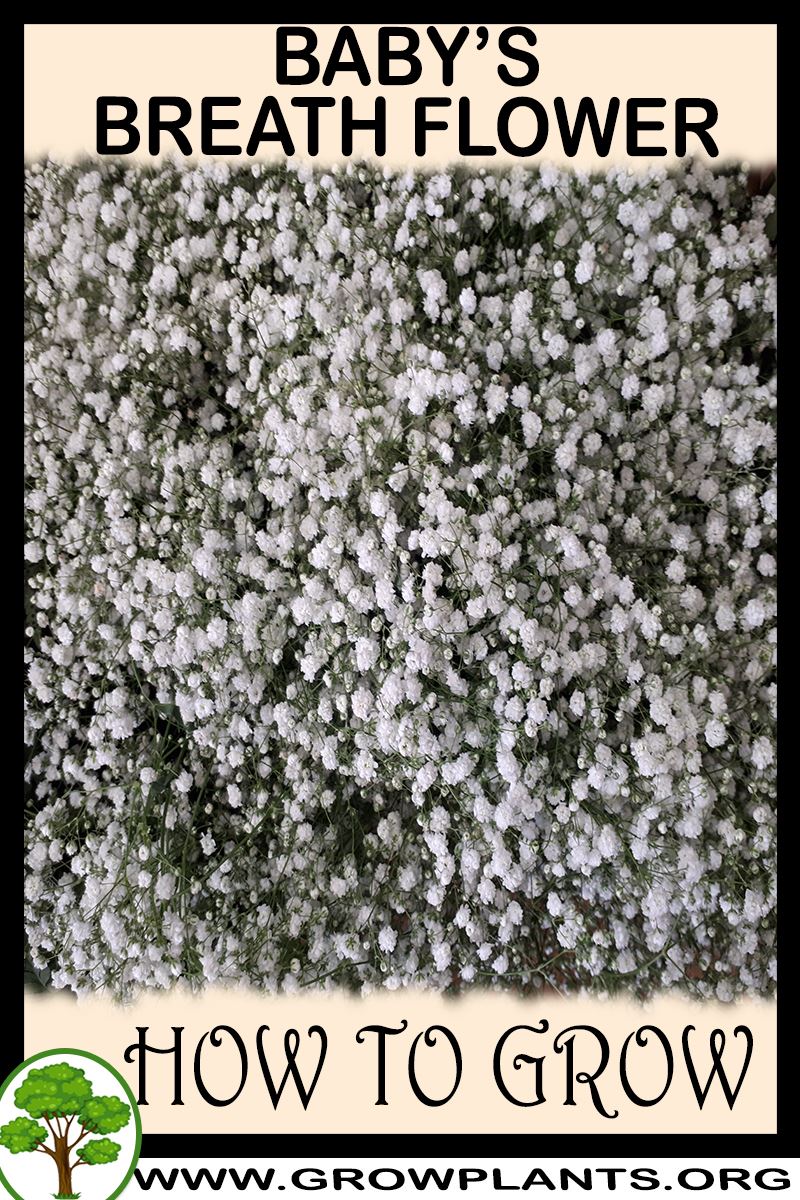
Overview: A fast-growing annual (annual baby’s breath) forming an airy 30-80 cm mound of slender branching stems topped with clouds of tiny white flowers. Grown mainly as a fragrant filler and cut flower.
Quick Specifications
| Specification | Attribute |
|---|---|
| Plant Type / Life Cycle | Annual |
| Mature Size | 30-80 cm (12-32 in) |
| Growth Rate | Fast |
| Hardiness | USDA zone 3-10 |
Growth Form & Structure
- Height & Spread: 30-80 cm; grown in beds and containers (not an indoor plant).
- Growth Habit & Form: Airy, much-branched herbaceous annual with fine wiry stems.
- Lifespan & Maturity: Annual – completes its life cycle within one season and is fast to reach flowering.
Anatomy & Physical Features
- Leaves & Foliage: Small green linear to lanceolate leaves.
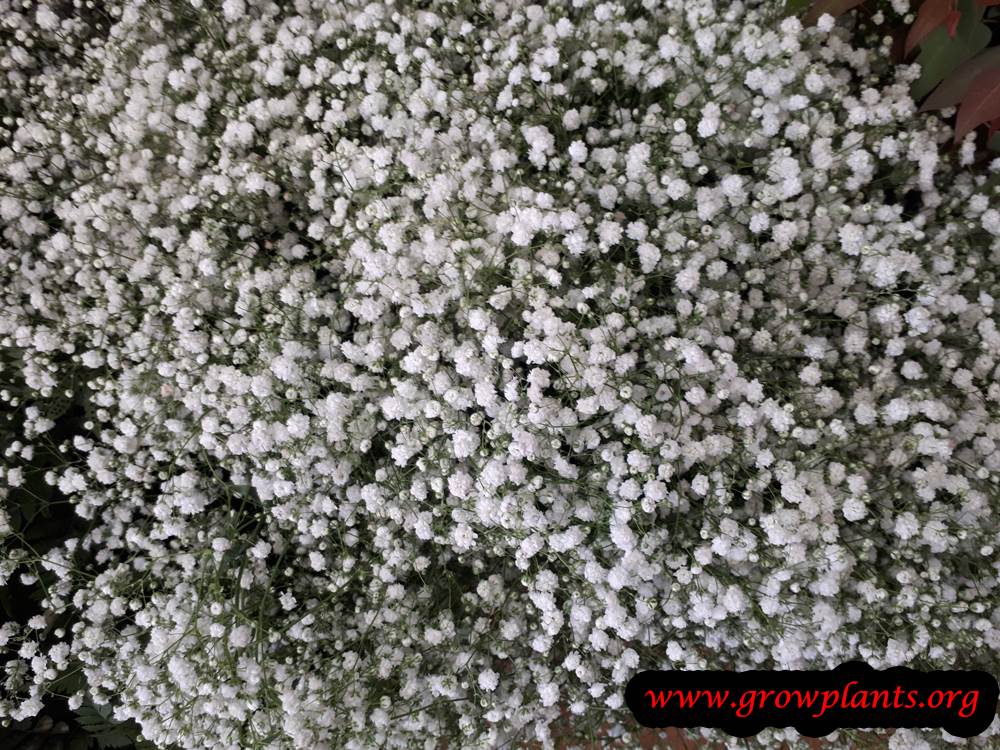
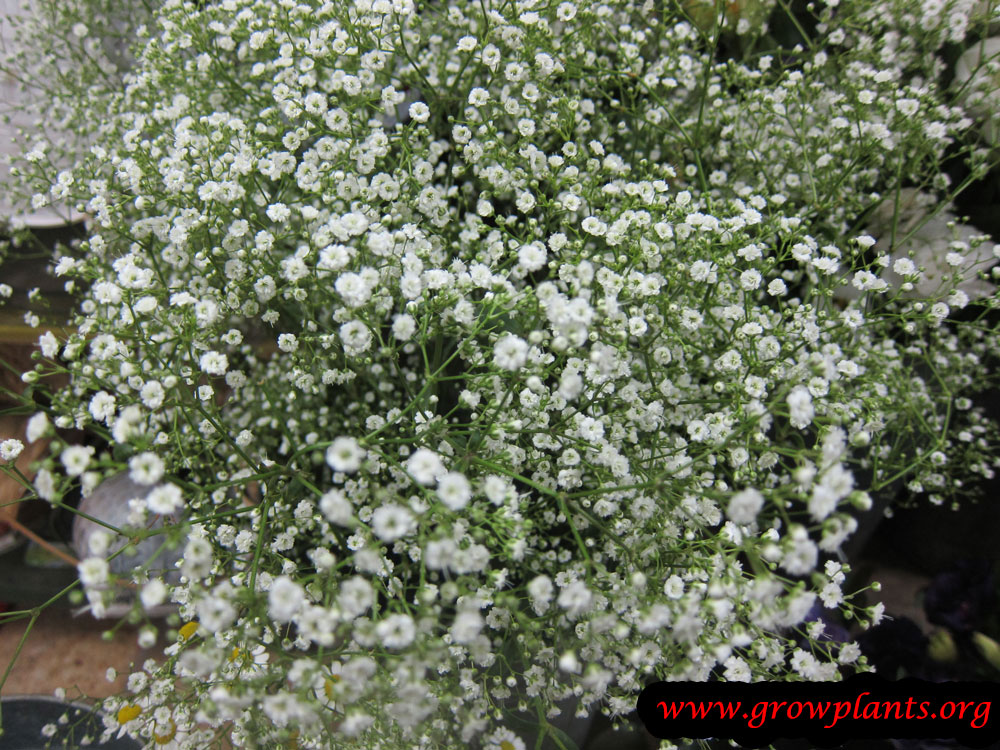
- Flower Characteristics: Masses of tiny white pompon-like flowers in dense, crowded sprays; lightly fragrant.
Primary Uses & Landscape Value
- Functional & Ornamental Roles: Ornamental filler and fresh or dried cut flower; bedding and container plant.
Care Guide: Planting, Soil & Watering
Overview: Baby’s breath is a fast-growing annual grown for its airy clouds of tiny white flowers. It thrives in full sun with light, well-draining soil and warm conditions, and famously prefers neutral to alkaline, even chalky, ground.
Quick Care Requirements
| Requirement | Ideal Condition |
|---|---|
| Planting Season | Spring to summer, once the weather is warm |
| Growth Rate | Fast |
| Soil Type | Light, well-draining soil |
| Soil pH | Neutral to alkaline — a classic lime-loving plant |
| Water Need | Moderate — water evenly but let the surface dry between waterings; it dislikes wet, heavy soil |
Planting & Establishment
- Best Planting Season: Sow or plant in spring and into summer once the danger of frost has passed and the soil has warmed; as a quick annual it can be succession-sown through the warm season.
- How to Plant:
- Hole Preparation: Prepare a light, open, freely draining bed in full sun, loosening any compacted soil so the roots can run.
- Soil Amendments: Improve heavy soil with grit or compost to sharpen drainage; if the soil is acidic, add a little garden lime, since baby’s breath performs best on neutral-to-alkaline ground.
- Planting Depth: Set transplants at the same depth they grew in their pots, with the crown at soil level; sow seed only shallowly.
- Growth Speed & Expectations: Growth is fast — plants romp away in warm weather and flower within a couple of months from sowing.
Soil, Watering & Drainage Care
- Soil Mix & Drainage Needs: Provide light, sharply draining soil; baby’s breath resents constant wet and will rot in heavy, waterlogged ground, so drainage matters more than richness.
- Watering Schedule & Technique:
- Young / Newly Planted: Keep the soil evenly moist while seedlings and young plants establish.
- Established: Water moderately once established, letting the surface dry between waterings; it tolerates some dryness better than constant wet.
- Seasonal Adjustments: Water a little more in hot, dry spells and ease off in cool or rainy weather.
Climate, Light & Hardiness
Baby's breath (Gypsophila elegans) is an annual cut-flower plant adapted to a wide range of climates - Mediterranean, desert, subtropical, and temperate - and requires full sun. As an annual, its life cycle is short by design, but its broad hardiness-zone range shows it germinates and flowers successfully across a wide span of regional climates.
Quick Climate Specifications
| Climate Zones | Mediterranean, desert, subtropical, temperate |
| USDA Hardiness Zones | Approximately 3–10, per site data; grown as a warm-season annual throughout this range |
| Frost Tolerance | Low; frost ends the growing season, consistent with its annual habit |
| Light Conditions | Full sun |
Sunlight & Light Exposure
Optimal Light Setup
Full sun is required for strong, floriferous growth - this is not a shade-tolerant species.
Direct Sun Requirement
Needs direct sun for the greater part of the day.
Best Exposure / Orientation
Open, unshaded beds or borders suit this airy, wiry-stemmed annual best; it is not grown indoors.
Temperature Extremes & Hardiness
USDA Hardiness & Regional Limits
Site data shows successful outdoor culture across zones 3–10, reflecting its role as a broadly adaptable, fast-cycling spring/summer annual rather than a plant selected for winter survival.
Frost Sensitivity
Frost-sensitive; as an annual it completes its life cycle before hard frost and does not need to survive winter cold.
Extreme Heat Tolerance
Good; its adaptability to desert and subtropical zones points to solid heat tolerance in full sun, provided some soil moisture is available.
Wind, Humidity & Microclimate
Rainfall & Seasonal Moisture
Its spread across desert, Mediterranean, subtropical, and temperate zones shows tolerance of varied seasonal rainfall patterns, from dry-summer to more evenly moist climates.
Microclimate Recommendations
A fully open, sunny site with reasonable drainage is the main requirement; no special wind or coastal precautions are indicated by the available data.
Growing in Pots, Balconies & Indoors
Annual baby’s breath (Gypsophila elegans) is an airy, full-sun plant grown for its clouds of tiny flowers and for cutting – not a houseplant, as the grower notes. It grows happily in a sunny container or balcony box but wants open sky and sharp drainage, not a shaded room.
Quick Details
- Container Size: A medium pot a size or two larger than the root ball, with room for its loose, spreading habit
- Indoor Suitability: Not a houseplant – it needs full sun and belongs outdoors
- Best Spot: Full sun
- Soil & Drainage: Light, sharp-draining mix; baby’s breath prefers a neutral to slightly limy soil – add grit if needed
- Watering in Pots: Moderate – let the surface dry between waterings; never leave it soggy
Indoors & On the Windowsill
- Houseplant limits: The grower marks it as no for indoor growing – a full-sun annual will stretch and flop in low light.
- Windowsill growing: Only the sunniest sill would suit it, and even then it prefers to be outdoors.
- Season: Grown as an annual, sow or plant into fresh mix each time.
On a Balcony or Patio
- Light & wind: Give it the sunniest, most open spot; walls and paving reflect heat so pots dry fast – check moisture often, and support the wiry stems if the balcony is windy.
- Pet safety: Baby’s breath is mildly toxic if chewed – keep pots out of reach of curious pets on a balcony.
Choosing the Pot, Soil & Long-Term Care
- Pot & drainage: Strong drainage holes and a gritty, free-draining mix; skip a standing-water saucer to avoid root rot.
- Potting mix: Light and sharp-draining, on the neutral-to-limy side rather than acidic.
- Feeding: Feed sparingly – too much nitrogen gives leaves at the expense of flowers; pots still leach faster than open ground.
- Repotting: As an annual it is usually replaced each season with fresh mix.
Fertilizing & Feeding
Baby’s breath is a light feeder. As a fast-cycling annual grown mainly for its airy cut flowers, it does better on modest, well-timed feeding than on heavy fertility.
Quick Fertilizing Specs
| Feeding Level | Light |
|---|---|
| Main Nutrient Priority | Balanced, light feeding to support quick, prolific blooming without excess leafy growth |
| Best Feeding Period | Early in the growing season, shortly after seedlings are established |
| Organic Options | Compost worked into well-drained soil at planting time |
| Reduce/Stop Feeding | Feeding tapers off naturally as the plant completes its single-season life cycle |
Feeding by Growth Stage
Establishment & Early Growth
Help young seedlings establish and bulk up quickly ahead of their fast bloom cycle.
| Nutrient direction | Balanced, light feeding to support quick establishment and healthy early growth |
|---|---|
| Timing | At planting and shortly after seedlings are established |
| Frequency | A light feeding early on is usually enough for this fast-growing annual |
| Fertilizer types | A balanced, light-strength fertilizer worked in at planting, Compost mixed into well-drained soil at planting time |
| Precautions | Avoid heavy nitrogen feeding, which produces excess airy foliage at the expense of the tiny flower clusters this plant is grown for |
Bloom
Support the dense clusters of small flowers through the bloom period.
| Nutrient direction | Light, balanced feeding to sustain flowering without encouraging floppy growth |
|---|---|
| Timing | Spring into summer and autumn, through the bloom period |
| Frequency | Established plantings often need little to no additional feeding once flowering is underway |
| Fertilizer types | A light, balanced feeding only if flowering looks sparse |
| Precautions | Rarely needs feeding once blooming well; extra fertility mainly produces weak, floppy stems |
End-of-Season Decline
Let the plant complete its natural single-season life cycle without further fertility inputs.
| Nutrient direction | None – withhold fertilizer as the plant completes its life cycle |
|---|---|
| Timing | Late in the growing season, as flowering and growth naturally wind down |
| Frequency | No feeding at this stage |
| Fertilizer types | No feeding at this stage; a fresh planting the following season starts its own establishment feeding |
| Precautions | Do not fertilize a declining annual planting at the end of its life cycle |
Nutrient Deficiency Signs & Corrections
Pale, slow-growing seedlings that fail to bulk up
| Possible causes | Low soil fertility at planting, Cool soil temperatures slowing nutrient uptake, Poor drainage stressing young roots |
|---|---|
| Appears first on | Youngest leaves and new shoots |
| What to check | Soil fertility at planting, Soil temperature and timing of planting, Drainage |
| Possible correction | Apply a light, balanced fertilizer at planting and confirm adequate soil warmth and drainage |
Abundant leafy growth with sparse, weak flower clusters
| Possible causes | Excess nitrogen favoring foliage over flowering, Overcrowded planting reducing air and light to individual stems, Insufficient staking or support for the naturally airy flower stems |
|---|---|
| Appears first on | Whole-plant flowering pattern |
| What to check | Fertilizer history, especially recent nitrogen applications, Plant spacing, Support or staking in place |
| Possible correction | Cut back on nitrogen feeding and ensure adequate spacing and support |
Wilting or yellowing despite regular watering
| Possible causes | Waterlogged, poorly drained soil causing root stress, Root rot in heavy or compacted soil, Excess fertilizer salts in a small planting area |
|---|---|
| Appears first on | Lower stems and roots first, then the whole plant |
| What to check | Soil drainage, Watering frequency, Recent fertilizer application rates |
| Possible correction | Improve drainage, avoid overwatering, and avoid fertilizing stressed plants until they recover |
Pruning, Training & Seasonal Maintenance
Baby’s breath is a fast-growing annual grown for its cloud of small flowers on fine, much-branched stems, so “pruning” here is really about shaping the plant while it grows and harvesting stems, not managing a permanent structure. It tolerates cutting at any point in the season – its own facts note pruning happens across the whole season rather than in a fixed window – because cuts are essentially just harvesting or light shaping rather than structural work on woody growth. There is no dormant season to time cuts around and no framework to preserve from year to year, since the plant completes its life cycle in one season.
Quick Pruning & Maintenance Specs
| Pruning Tolerance | High (for a soft annual – tolerates frequent cutting/harvest) |
| Primary Pruning Window | All season, as flower stems mature and are ready to harvest or fade |
| Typical Frequency | Ongoing through spring–autumn while the plant is actively flowering |
| Main Objective | Encourage bushy branching, harvest cut-flower stems, keep the cloud of bloom tidy |
| Young Plant Priority | Pinch the growing tip early to force lateral branching into the characteristic airy, many-stemmed form |
| Mature Plant Priority | Cut mature flowering stems for use; remove faded stems to keep the display fresh |
| Best Tool Type | Fine precision snips or scissors |
Pruning by Plant Age & Size
Newly Established
Once seedlings are established, pinch out the growing tip – this is the one formative cut that matters, since it forces the multiple fine side-branches that give the plant its characteristic airy, cloud-like flowering habit instead of a single sparse stem.
Young / Formative
No structural training system applies (no leader, no framework) – branching density is entirely a function of that early pinch, not ongoing training.
Mature / Established
Cut stems for the vase as flowers open, and remove any faded flowering stems at their base to keep pushing new bloom rather than seed formation, for as long as the plant remains actively growing.
Seasonal Pruning Schedule
Summer Canopy Management (ongoing, spring–autumn)
Objective: sustain bloom production and stem quality for cutting. Remove: mature stems for harvest and any faded, spent flowering stems. Do not remove: young unopened side-branches still forming buds. Expected response: continued branching and flowering from the remaining growth. Flowering impact: regular harvesting/removal of spent stems keeps the plant producing rather than setting seed and declining early.
Special Growth to Remove
- Spent, faded flowering stems – remove at the base once bloom is finished to keep the plant productive.
Container & Small-Space Pruning
This plant is not grown as an indoor houseplant but does tolerate a planter/container outdoors; in a container, pinch a little harder and more often than an in-ground planting to keep its naturally sprawling, fast-growing habit in proportion to the pot rather than letting it flop over the rim.
Tools
Fine precision snips or scissors only – stems are thin, wiry and soft, with no woody growth to justify heavier tools.
Tool Hygiene & Disease Risk
Routine. This plant’s known problems (aphids, snails, slugs) are pests rather than tool-transmissible diseases, so ordinary clean, sharp tools are sufficient – no special disinfection routine is called for.
Cut Placement & Technique
Harvest or deadhead stems by cutting back to a lower branching point or leaf node, which encourages a fresh side-branch rather than leaving a dead-ended bare tip.
Post-Pruning Care
No special aftercare beyond normal watering; because this is a single-season annual, there is no rejuvenation or heavy-pruning stage to plan for – once the plant finishes its season it is simply removed rather than cut back hard and carried over.
Common Pruning Mistakes
- Skipping the early tip pinch, resulting in a sparse, leggy plant instead of the desired airy, many-branched cloud.
- Letting faded flower stems sit uncut, which pushes the plant toward seed-set and an earlier end to flowering.
When Not to Prune
No meaningful restricted window – as an annual with no persistent wood or dormant season, this plant does not have a stage where cutting is harmful, aside from avoiding removal of unopened buds needed for the next flush.
Recommended Tools (by task)
- precision_snips – pinching young growth and harvesting/deadheading the fine, soft flowering stems all season.
Propagation Guide
Baby’s breath (Gypsophila elegans) is propagated only from seed – no grafting or vegetative method is needed – and it establishes best when sown directly where it is to grow, since this taprooted annual dislikes having its roots disturbed by transplanting. As a simple, seed-only annual, propagation is easy.
Quick Propagation Specs
| Best Propagation Method | Seed, sown directly in place |
| Propagation Difficulty | Easy |
| Seed True-to-Type | Usually true-to-type (open-pollinated species seed) |
| Best Propagation Season | Spring or summer |
| Seed Sowing Depth | Shallow – just lightly cover the seed |
Growing from Seed
Sowing Season
Sow in spring or summer, directly into the garden bed, border, or final container.
Sowing Depth & Orientation
Sow thinly and cover only lightly. Because Gypsophila forms a taproot and resents transplanting, direct-sowing in its final position gives far more reliable establishment than raising and later moving seedlings.
Germination Conditions
Full sun and well-drained soil; keep the seedbed lightly moist until germination.
Seedling Care
Thin crowded seedlings in place with scissors rather than transplanting them, to avoid disturbing the taproot.
Bloom & Flower Guide
Quick Details
- Bloom Season: Spring, summer and autumn
- Flower Appearance: Masses of tiny white pompon-like flowers in crowded, airy clusters along the stems
- Edibility: Not edible – grown as a cut and dried flower; the plant contains saponins and the dried stems can irritate skin and airways
Detailed Blooming Overview
Baby’s breath is grown almost entirely for its clouds of tiny white flowers, which are indispensable as a filler in bouquets. Each bloom is minute, but they are carried in such crowded, branching sprays that the plant reads as a soft haze of white from late spring into autumn. It is quick from seed and flowers over a long period, especially with successional sowing.
Flower Characteristics
- Very small white flowers in a pompon form.
- Borne in dense, crowded clusters along branching stems.
Bloom Care & Thinning
- Cutting: An excellent fresh or dried cut flower; cut the sprays when about half the tiny flowers are open.
- Support: The fine, top-heavy stems benefit from light support to keep the flowering sprays upright.
- Handling: Wear gloves if sensitive – the sap and dried material can irritate the skin.
Bloom Health & Protection
- Aphids: May gather on the soft flowering shoots; insecticidal soap or neem oil usually controls them.
- Powdery mildew and grey mould: Humid, crowded conditions can dust or spot the flowering sprays; improving airflow, and a sulfur-based fungicide where needed, helps.
Pests, Diseases & Troubleshooting
Overview: Baby’s breath (Gypsophila elegans) is an airy annual for hot, sunny, sharply drained, slightly alkaline soil, and its worst enemy is wet, heavy or acid ground – which brings crown/root rot, damping-off and Botrytis – far more than insects. The main pests are aphids and leafhoppers (the latter spreading aster yellows) plus leaf miners; management is overwhelmingly about drainage, spacing and hygiene rather than spraying.
Quick Troubleshooting Overview
| Issue / Pest | Main Symptom | Primary Solution |
|---|---|---|
| Aphids | Colonies on soft tips and buds, honeydew, distortion | Water jet, insecticidal soap, encourage predators |
| Leafhoppers (aster yellows) | Yellowed, distorted, greened/deformed flowers | Remove infected plants; control hoppers, weeds |
| Leaf miners | Pale winding tunnels/blotches inside leaves | Pick off mined leaves; sticky traps |
| Botrytis (grey mould) | Grey fuzzy rot on flowers/stems in damp air | Airflow, spacing, remove debris |
| Crown / root rot, damping-off | Collapsing seedlings or wilting, rotten base | Sharp drainage, don’t overwater – the key issue |
Common Pests & Management
- Aphids (Aphis / Myzus spp.):
- Symptoms: Soft green or black colonies on the tender shoot tips, buds and flower stems; curled growth, honeydew and sooty mould; they can also transmit viruses.
- Prevention & Control: Blast off with water, encourage ladybirds and lacewings, and avoid excess nitrogen. Treat heavy colonies with insecticidal soap.
- Leafhoppers (Macrosteles and others) — aster yellows vector:
- Symptoms: Small wedge-shaped insects that hop when disturbed; more importantly they spread the aster yellows phytoplasma, causing yellowing, stunting, distorted growth and greened, deformed flowers.
- Prevention & Control: There is no cure for infected plants – pull and destroy them at once. Control weeds that host the disease and the hoppers, use floating row cover on seedlings, and knock down heavy hopper numbers with insecticidal soap or a targeted product.
- Leaf miners (Liriomyza spp.):
- Symptoms: Pale, winding tunnels or blotches mined between the leaf surfaces by the larvae; heavy mining reduces vigour and looks unsightly.
- Prevention & Control: Pick off and destroy mined leaves, use yellow sticky traps to catch adult flies, and encourage parasitic wasps; systemic control is rarely warranted on an annual.
- Thrips (occasional):
- Symptoms: Silvery flecking and distorted buds/flowers; can also spread viruses.
- Prevention & Control: Use blue sticky traps, remove spent flowers, and treat with insecticidal soap if numbers build.
Diseases & Fungal Issues
- Crown & root rot (Pythium, Phytophthora, Rhizoctonia, Sclerotinia):
- Symptoms: Wilting despite moist soil, yellowing, and a soft, brown, rotten crown and root; whole plants collapse. Baby’s breath strongly resents wet, heavy or acidic soil, which is the usual trigger.
- Treatment & Management: Prevention is drainage – grow in gritty, free-draining, neutral-to-alkaline soil in full sun, space plants for airflow, and never overwater. Remove and destroy rotted plants; do not replant into the same wet spot.
- Damping-off (seedlings):
- Symptoms: Seedlings fail to emerge or topple with a pinched, rotted stem base soon after germinating, in cold, wet, over-sown conditions.
- Treatment & Management: Sow thinly in fresh, free-draining, sterile mix, water sparingly with good light and airflow, and avoid cold-wet compost.
- Botrytis / grey mould (Botrytis cinerea):
- Symptoms: Fuzzy grey mould rotting the massed tiny flowers and stems in humid, still, crowded conditions.
- Treatment & Management: Improve air circulation and spacing, remove faded flowers and debris, and avoid overhead watering; treat persistent cases with an appropriate fungicide.
- Powdery mildew:
- Symptoms: White powdery coating on foliage in humid conditions with poor airflow.
- Treatment & Management: Space plants in full sun with good ventilation; apply sulphur or potassium-bicarbonate fungicide if it spreads.
Growing Difficulties & Abiotic Problems
- Wet / acid soil intolerance:
- Cause & Symptoms: Poor performance, yellowing and rot on heavy, wet or acidic ground – the plant’s name (Gypsophila, "chalk-loving") signals its need for lime and drainage.
- Correction Strategy: Add grit and lime to raise pH and drainage, or grow in raised beds/containers; water sparingly.
- Flopping / weak stems (too rich or shady):
- Cause & Symptoms: Lush, floppy, sparse-flowering growth in over-rich soil or too much shade.
- Correction Strategy: Grow in lean soil in full sun, avoid heavy feeding, and provide light support for tall stems.
- Poor germination / short life:
- Cause & Symptoms: As a quick annual it is short-lived and flowers briefly; erratic in cold, wet conditions.
- Correction Strategy: Sow successionally in warm, well-drained soil for a continuous display.
What Helps — Products & Tools
For baby’s breath, culture beats chemistry: sharp drainage, lime, full sun and spacing prevent most trouble. Keep insecticidal soap for aphids, thrips and leafhoppers, yellow/blue sticky traps for leaf-miner and thrip adults, and a sulphur or potassium-bicarbonate fungicide for mildew. Note that aster yellows has no cure – rogue out infected plants promptly.