
Plant Profile & Key Characteristics
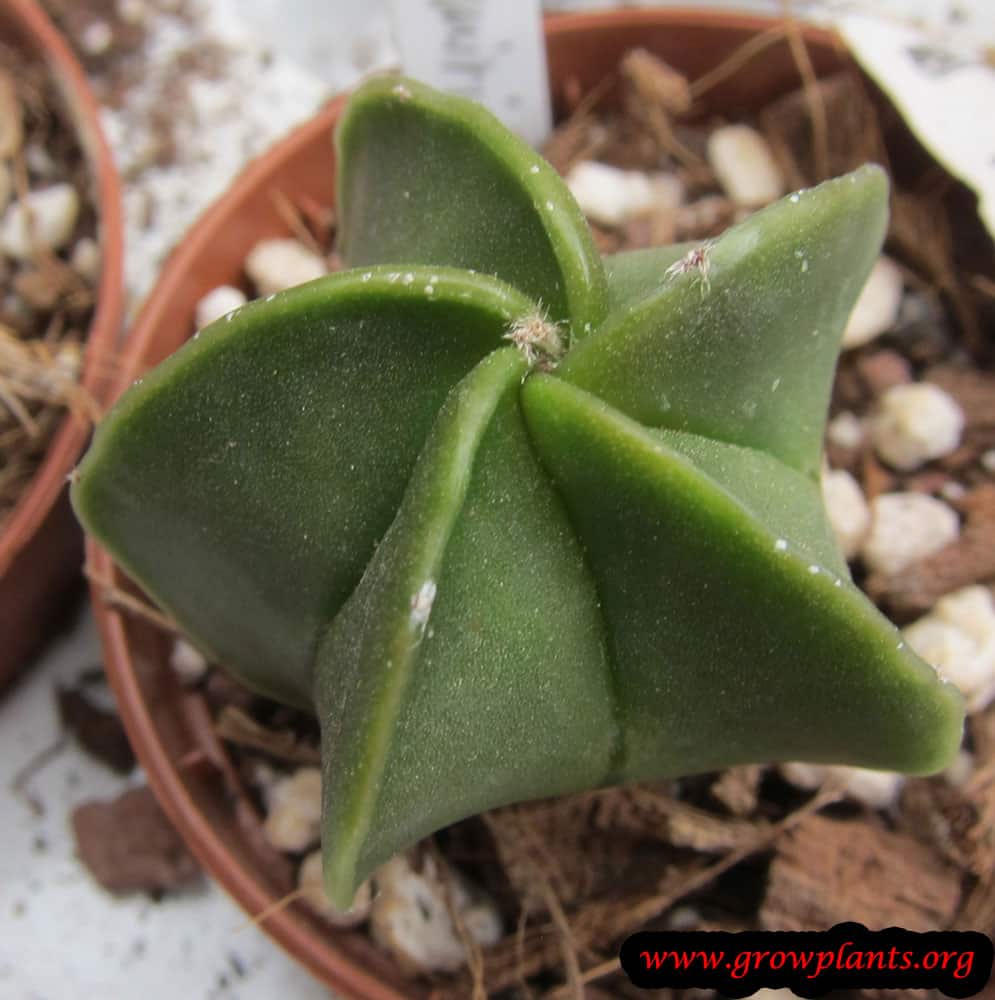
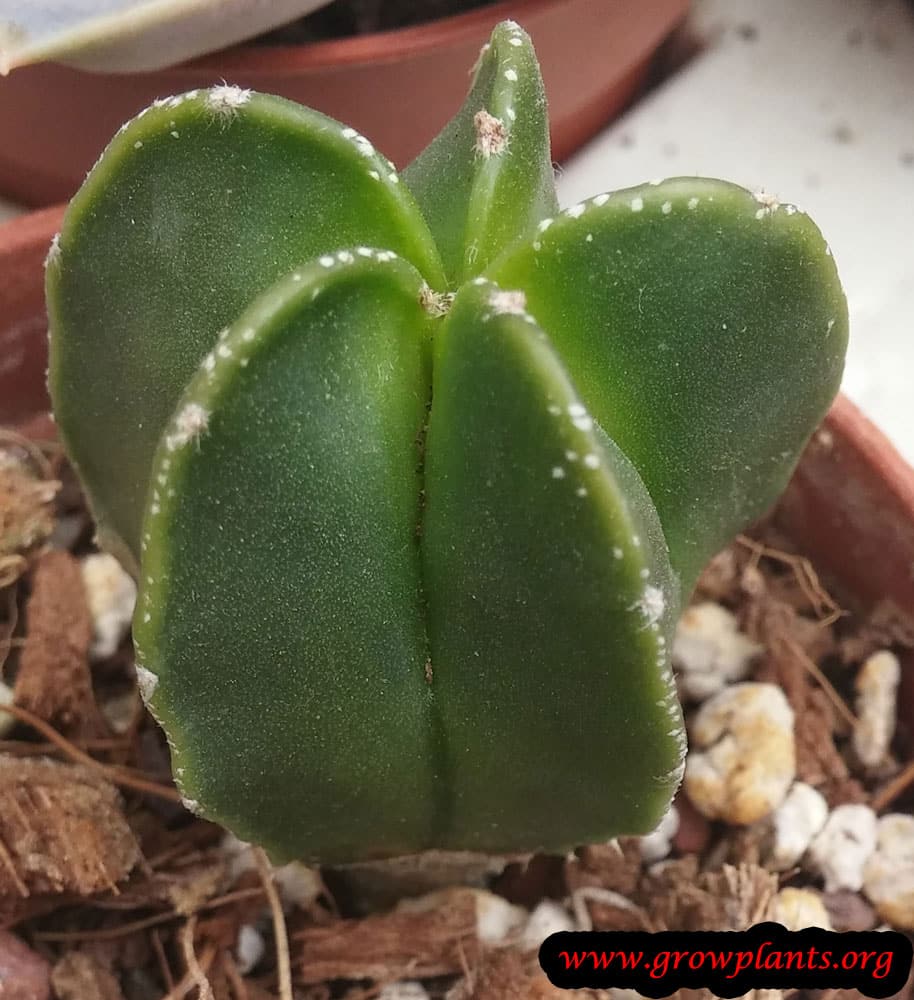
Overview: Astrophytum is a genus of slow-growing star-shaped or rounded cacti, usually kept small (5-10 cm / 2-4 in) though capable of larger size over time. These drought-tolerant perennial succulents are grown as ornamentals.
Quick Specifications
| Specification | Attribute |
|---|---|
| Plant Type / Life Cycle | Perennial (evergreen stem succulent) |
| Foliage Type | Evergreen (leafless stem succulent) |
| Mature Size | Usually 5-10 cm (2-4 in); up to 0.5-1 m (20-40 in) over many years |
| Growth Rate | Slow |
| Root System | Shallow root system |
| Toxicity | Non-toxic |
| Hardiness | USDA zones 9b-12 (9a with care) |
Growth Form & Structure
- Height & Spread: Typically a compact 5-10 cm (2-4 in) body; grows well in a shallow container with fast-draining cactus mix.
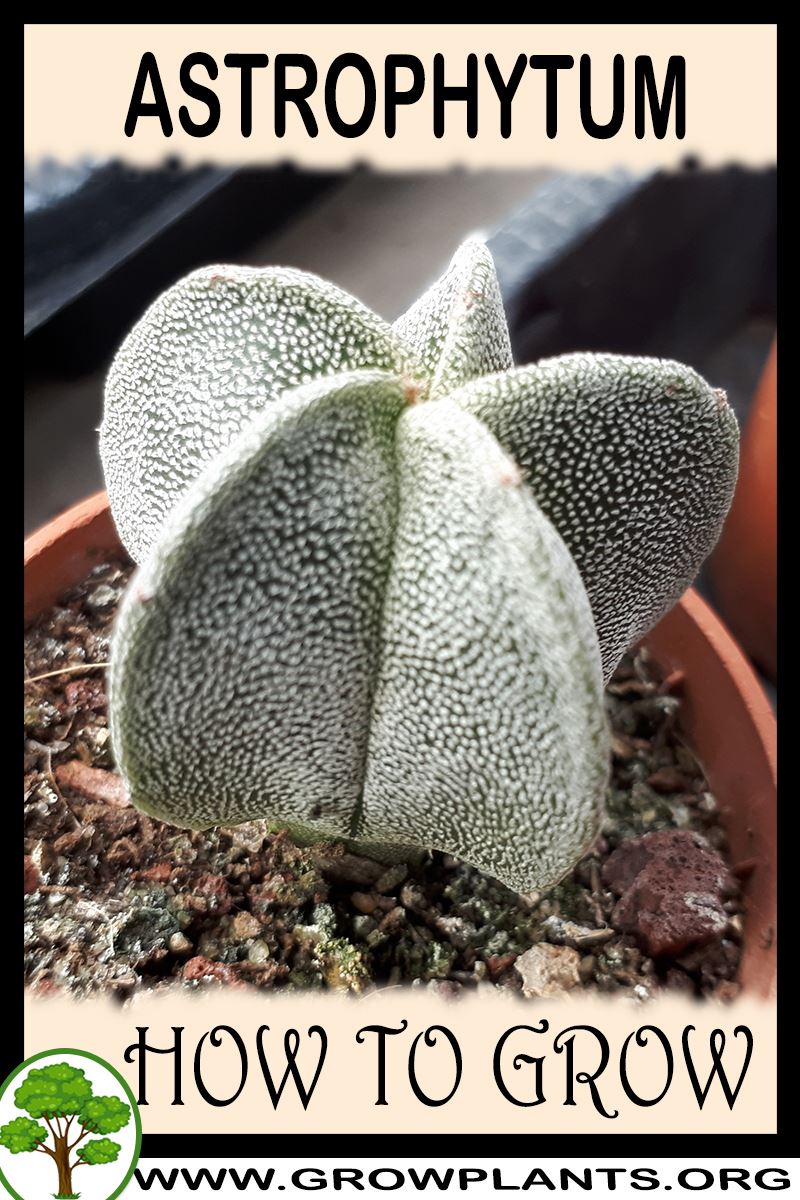
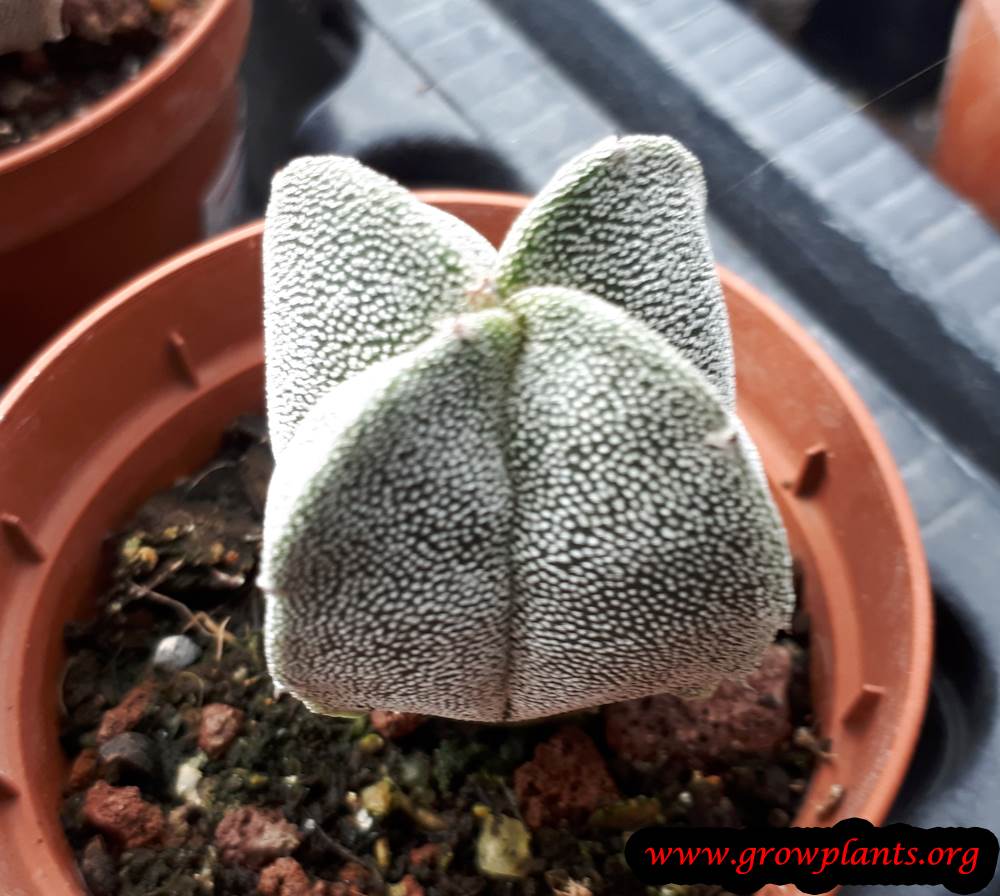
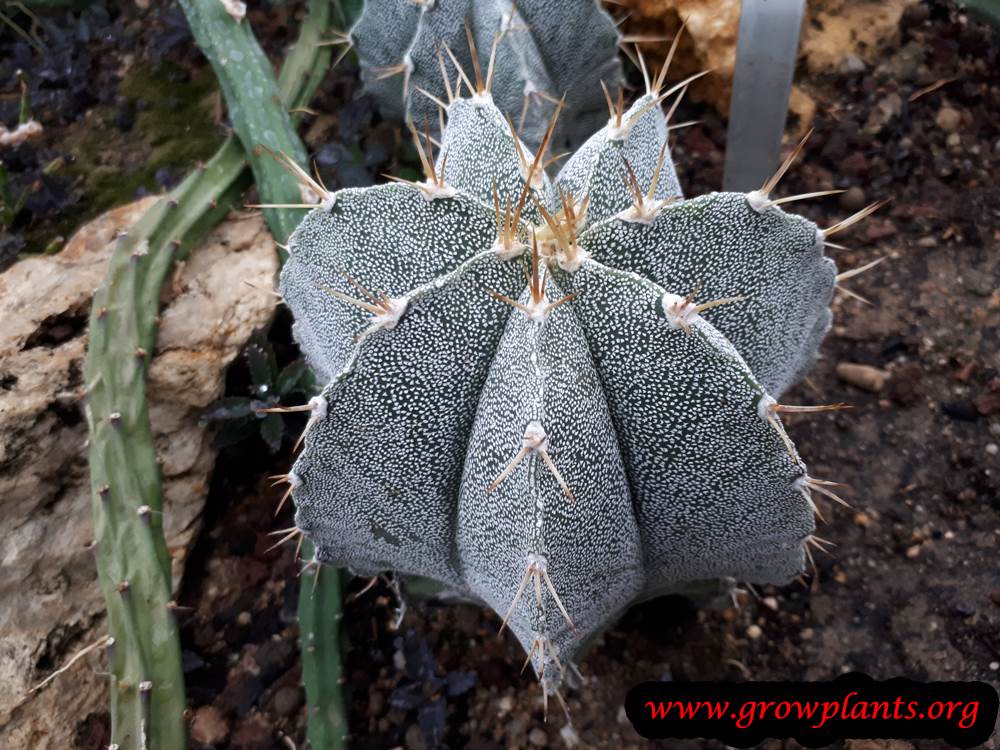
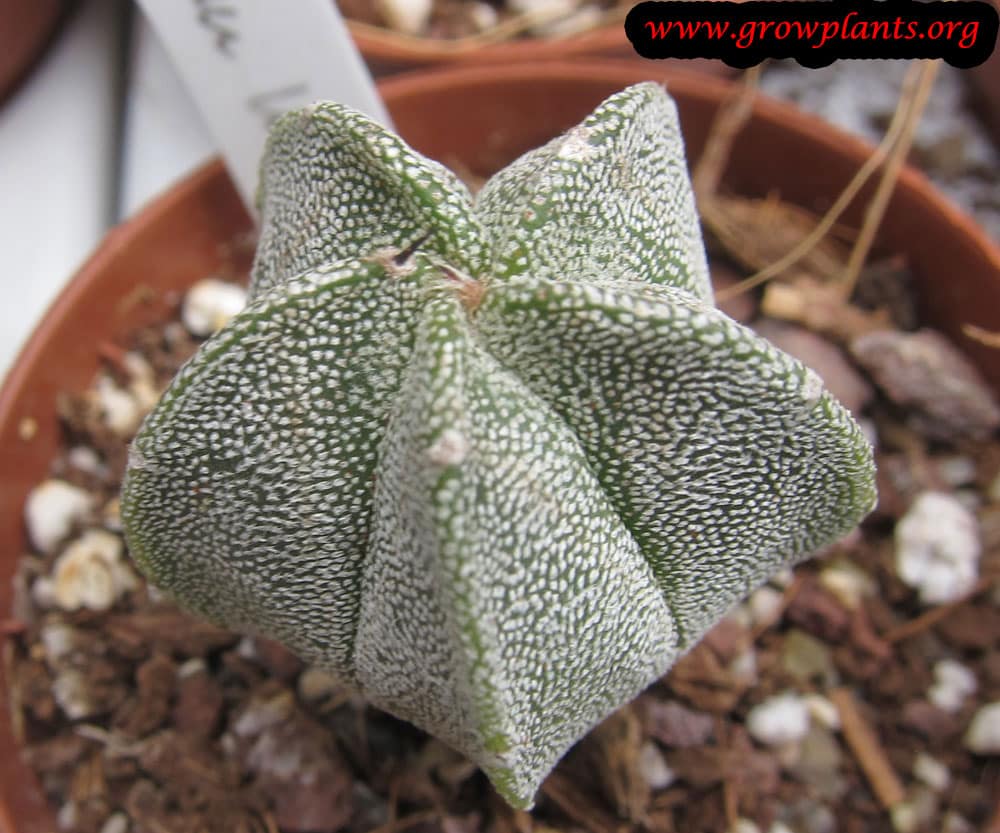
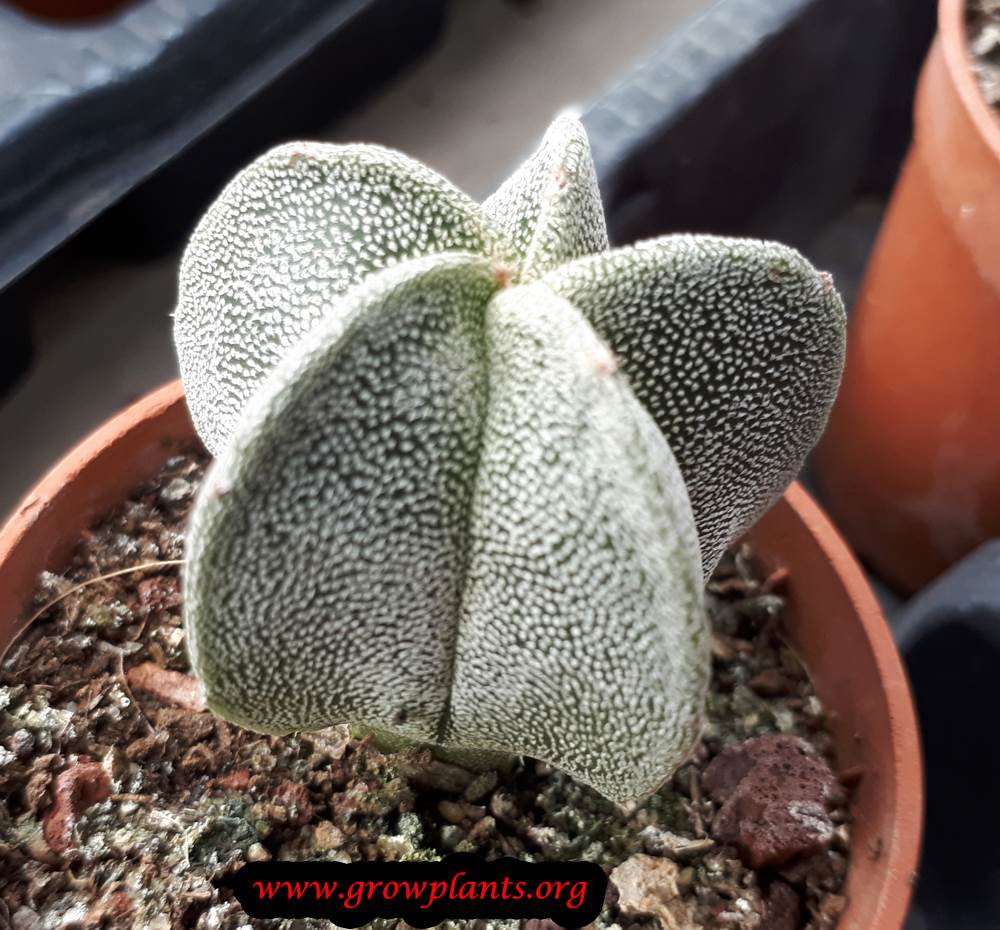
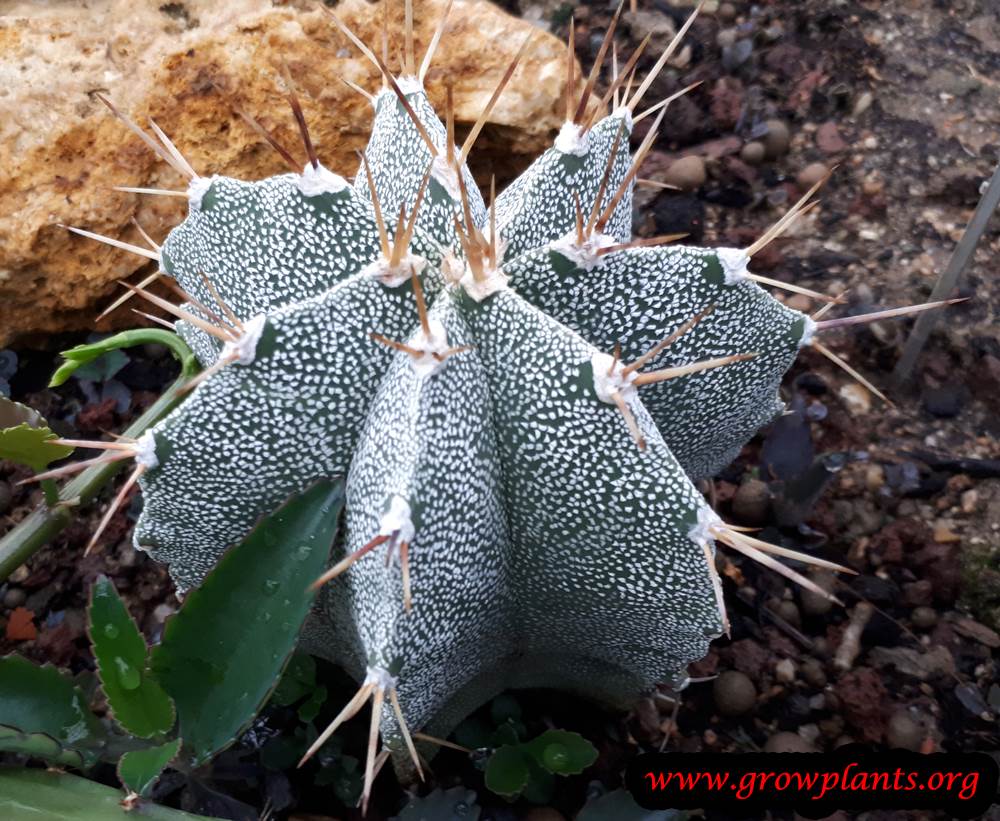
- Growth Habit & Form: Solitary star-shaped or rounded ribbed body; some species spineless, others spiny.
- Lifespan & Maturity: Long-lived and very slow-growing.
Anatomy & Physical Features
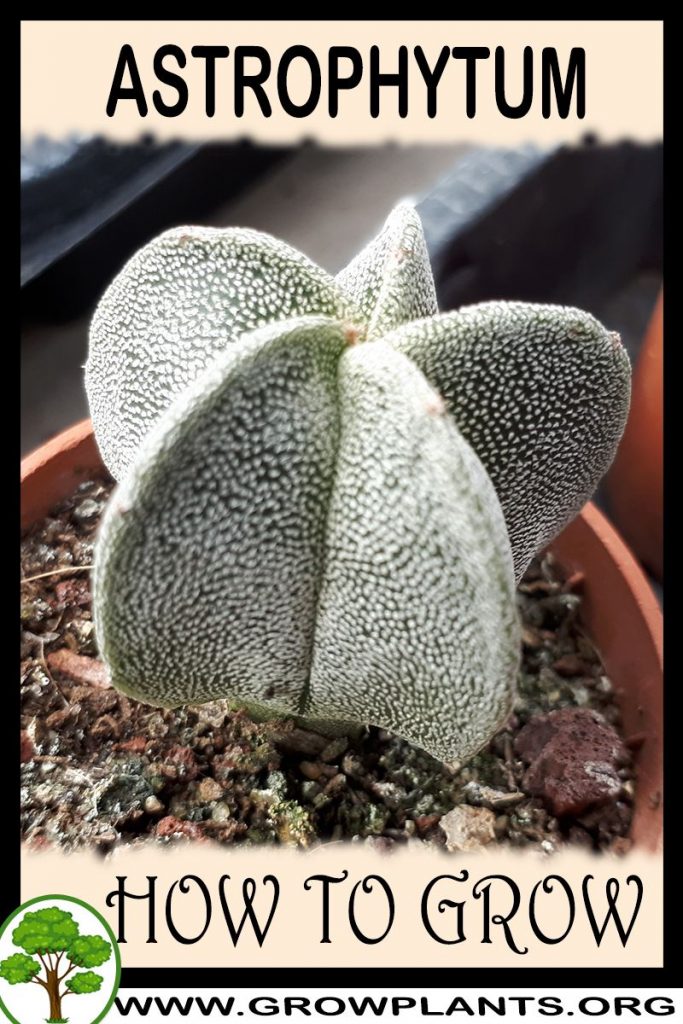
- Leaves & Foliage: Leafless; the green, blue-green or yellowish-green ribbed body is often flecked with white woolly scales, sometimes velvety.
- Flower Characteristics: Yellow flowers with multiple petals borne at the crown (see Bloom guide).
Primary Uses & Landscape Value
- Functional & Ornamental Roles: Ornamental collector’s cacti for pots, rockeries and drought-tolerant plantings.
Care Guide: Planting, Soil & Watering
Overview: Astrophytum is a genus of slow-growing desert cacti (hardiness zone 9b–12, or 9a with care) for full sun. They need gritty, very free-draining soil and infrequent watering, drying out fully between waterings.
Quick Care Requirements
| Requirement | Ideal Condition |
|---|---|
| Planting Season | Spring–summer in zone 9–10; spring–autumn in zone 11; year-round in zone 12 |
| Growth Rate | Slow |
| Soil Type | Gritty, sandy cactus mix, very free-draining |
| Water Need | Low – let the soil dry out fully between waterings; never overwater |
Planting & Establishment
- Best Planting Season: Plant spring to summer in zone 9–10, spring to autumn in zone 11, and year-round in zone 12.
- How to Plant:
- Hole Preparation: Dig a shallow hole into gritty, well-drained soil or cactus mix – the roots are shallow. Handle spiny species with folded paper or padding to protect your hands; some Astrophytum are spineless and need no such precaution.
- Soil Amendments: Use a sandy, well-drained cactus mix; add grit rather than moisture-holding organic matter, and place gravel or small rocks at the base for drainage.
- Planting Depth: Set it at its original depth and firm the mix around the base with a spoon or small trowel – press gently, do not squeeze the plant.
- Growth Speed & Expectations: Growth is slow, eventually reaching 0.5–1 m though often kept much smaller.
Soil, Watering & Drainage Care
- Soil Mix & Drainage Needs: Sharp drainage is critical – use cactus potting mix with grit and a layer of gravel or lava rock at the pot base, in a container 20–50% larger (it need not be deep). Ensure plenty of drainage holes, and refresh the soil every few years.
- Watering Schedule & Technique:
- Young / Newly Planted: Water seedlings and new plants sparingly, keeping the mix barely moist without ever soaking it.
- Established: Water established plants lightly and only once the soil has dried out completely; overwatering causes rot.
- Seasonal Adjustments: Water occasionally in the warm growing season and keep nearly dry through cool winter months.
Climate, Light & Hardiness
Astrophytum cacti are desert-to-subtropical succulents that need maximum sun and excellent drainage; they are moderately cold-tolerant for cacti but should be kept dry and sheltered from prolonged freezing.
Quick Climate Specifications
| Climate Zones | Desert, Mediterranean, Subtropical, Temperate |
|---|---|
| USDA Hardiness Zones | 9b–12 reliably; 9a possible with extra care and shelter |
| Approx. Survival Minimum | Established, dry plants generally tolerate brief dips to about −5°C (23°F) |
| Frost Tolerance | Low |
| Light Conditions | Full Sun |
Sunlight & Light Exposure
Optimal Light Setup
Needs full, direct sun for most of the day to keep growth compact and maintain the plant's characteristic woolly, patterned skin; too little light causes weak, stretched growth.
Direct Sun Requirement
Full sun is essential; even in hot desert climates these cacti generally do not need shade cloth once acclimated.
Shade & Heat Management
Very heat tolerant; the main risk in hot climates is not too much sun but excess water combined with heat.
Best Exposure / Orientation
South-facing, open, unobstructed positions with reflected heat, such as a rock garden, suit it well.
Temperature Extremes & Hardiness
USDA Hardiness & Regional Limits
Reliable outdoors in zones 9b–12; can succeed in zone 9a with a sheltered, well-drained site and winter protection from rain.
Cold Damage & Winter Protection
Site data notes this genus does best kept above roughly −5°C (23°F). Cold combined with wet soil is far more damaging than dry cold alone - keep the plant bone-dry through winter cold spells.
Frost Sensitivity
Sensitive to frost, especially when the soil is moist; brief light frost may be tolerated if the plant is dry, but hard freezes cause tissue damage.
Extreme Heat Tolerance
Excellent; thrives in the intense summer heat typical of desert and Mediterranean climates.
Wind, Humidity & Microclimate
Humidity Preferences
Prefers dry air; humid, stagnant conditions encourage the fungal problems noted as a difficulty for this genus.
Dry-Air Tolerance
Excellent - a true xerophyte adapted to arid air.
Rainfall & Seasonal Moisture
Needs a distinct dry period between waterings and resents constantly damp conditions; this is a climate adaptation as much as a watering habit.
Microclimate Recommendations
A raised, gritty, fast-draining bed or container that mimics rocky desert terrain and stays sheltered from winter rain best replicates its native climate.
Growing in Pots, Balconies & Indoors
Astrophytum is a small, slow star-shaped cactus. The grower marks it as not a deep-room houseplant, but on a bright, sunny windowsill with direct sun it does very well in a pot – and it is happiest of all on a hot balcony or patio.
Quick Details
- Container Size: A shallow pot only 20-50% wider than the plant – the roots are shallow, so depth is not needed
- Indoor Suitability: Not a deep-indoor houseplant, but thrives on a bright, sunny windowsill with direct sun
- Best Spot: Full sun – the sunniest sill, balcony or patio you have
- Soil & Drainage: Cactus/succulent mix over a base of gravel, lava rock or pebbles for sharp drainage
- Watering in Pots: Small amounts – let the mix dry out fully between waterings and never overwater
Indoors & On the Windowsill
- Windowsill growing: Give it the brightest, sunniest window with direct sun; in weak indoor light it etiolates and loses its neat shape, so a full-sun sill is essential.
- Houseplant limits: It will not thrive deep in a room away from a window – light is the limiting factor.
- Overwintering: Being tender, a potted plant is easily kept frost-free on a sunny sill through a cold winter, staying nearly dry until warmth returns.
On a Balcony or Patio
- Light & heat: Loves full sun and reflected heat from walls and paving; a hot, sunny balcony is ideal. Protect from prolonged cold rain, which it hates.
- Practicalities: Small and light – easy to move under cover if a wet or cold spell threatens.
Choosing the Pot, Soil & Long-Term Care
- Pot & drainage: A shallow pot 20-50% wider than the plant with plenty of drainage holes and a base layer of gravel, lava rock or pebbles; no standing-water saucer.
- Potting mix: A gritty, sharp-draining mix – cactus/succulent compost, or sandy soil with perlite and a layer of gravel or lava grit; never anything that stays soggy.
- Feeding: Feed sparingly – a diluted low-strength feed once or twice in the growing season is plenty; too much causes soft, weak growth.
- Repotting: After a few years, once the roots fill the pot or the mix breaks down, move up a size and replace the soil – not before, as it resents disturbance.
Fertilizing & Feeding
A light feeder: this slow-growing star cactus needs only an occasional, dilute, low-nitrogen feed during its active growing season, with no fertilizer at all while growth is slow or resting.
Quick Fertilizing Specs
| Feeding Level | Light – feed sparingly and only while actively growing |
|---|---|
| Main Nutrient Priority | A low-nitrogen, cactus-formulated feed rather than a general all-purpose fertilizer |
| Best Feeding Period | The warm active growing season |
| Organic Options | Not a primary feeding route; a gritty, mineral cactus mix matters more than added organic matter |
| Reduce/Stop Feeding | Stop feeding entirely once growth slows or the plant is resting |
| Micronutrients | Rarely an issue in a well-drained cactus mix; correct only a diagnosed deficiency |
| Soil pH | Tolerates a range of soil pH provided drainage is excellent |
Feeding by Growth Stage
Active growing season growth
Support slow, compact growth of the ribbed, star-shaped body without pushing soft, weak tissue.
| Nutrient direction | A light, low-nitrogen cactus-specific fertilizer used sparingly supports steady growth without encouraging rot-prone soft tissue. |
|---|---|
| Timing | During the warm season when the plant is actively putting on growth. |
| Frequency | An occasional light feeding through the active growing season is usually enough. |
| Fertilizer types | A dilute, low-nitrogen cactus-specific fertilizer, A gritty, fast-draining cactus potting mix with gravel or lava rock worked in |
| Precautions | Only feed when the soil is otherwise ready for watering, and let the mix dry between waterings; overwatering combined with feeding is the main cause of rot in this genus. |
Slow growth and dormant rest
Let the plant rest without pushing new growth when temperatures drop or light is reduced.
| Nutrient direction | None – withhold fertilizer while growth is slow or the plant is resting. |
|---|---|
| Timing | The cooler part of the year, or any period when the plant is not actively growing. |
| Frequency | No feeding during this rest period. |
| Fertilizer types | No feeding at this stage; resume only once active growth returns in the following growing season. |
| Precautions | Reduce watering alongside withholding fertilizer; a resting cactus fed or watered like an actively growing one is prone to rot. |
Nutrient Deficiency Signs & Corrections
Overall pale, dull green coloring and little to no new growth during the active season.
| Possible causes | very lean soil with no feeding for an extended period, roots that are not functioning well due to rot or disturbance, insufficient light limiting growth regardless of feeding |
|---|---|
| Appears first on | the whole plant body rather than one area |
| What to check | recent feeding history, root condition, light exposure |
| Possible correction | Resume a light, low-nitrogen cactus feed during the active growing season once root health is confirmed. |
Weak, soft ribs or discoloration along the body margins despite otherwise adequate light and water.
| Possible causes | low soil potassium in an old, unrefreshed potting mix, heavy nitrogen feeding without balance, root stress limiting nutrient uptake |
|---|---|
| Appears first on | the ribs and body surface generally |
| What to check | age of the potting mix, recent fertilizer type used, root condition |
| Possible correction | Switch to a balanced, low-nitrogen cactus fertilizer and refresh old potting mix. |
New growth at the crown emerges pale yellow rather than the plant’s normal green.
| Possible causes | high soil pH tying up available iron, waterlogged or poorly draining mix, root stress limiting nutrient uptake |
|---|---|
| Appears first on | newest growth at the crown |
| What to check | mix drainage and pH, recent watering pattern, root health |
| Possible correction | Improve drainage and, if it persists, apply a chelated iron product per its label at a reduced cactus-appropriate rate. |
Pruning, Training & Seasonal Maintenance
Astrophytum species are slow-growing, single-bodied globular cacti that need essentially no routine pruning: the plant is left to grow undisturbed, and the only “cut” most specimens will ever need is the removal of rotten or damaged tissue if rot sets in. There is no season restriction for this kind of corrective cut – it is done whenever rot or damage appears, not on a schedule – and it has no effect on flowering, since flower buds arise from the crown’s areoles independent of any pruning.
Quick Pruning & Maintenance Specs
| Pruning Tolerance | Low (corrective only) |
| Primary Pruning Window | As needed, whenever rot or damage is found (not seasonal) |
| Typical Frequency | Rare – most plants are never cut in their lifetime |
| Main Objective | Remove rotten/damaged tissue before it spreads; otherwise leave undisturbed |
| Best Tool Type | Sterile grafting/craft knife |
| Avoid Pruning During | Cool, damp weather when cut surfaces heal slowly and rot risk is higher |
Pruning by Plant Age & Size
Newly Established
Do not cut. A recently potted or rooted Astrophytum should be left completely alone while it settles in; any wound at this stage is a serious rot risk.
Young / Formative
No structural training applies – the plant simply forms its ribbed, star-shaped body on its own.
Mature / Established
Only intervene if rot, a squashed area, or a dead patch appears; otherwise no maintenance cutting is needed even on old specimens.
Special Growth to Remove
- Rotten or mushy tissue – cut back into firm, healthy flesh as soon as it is noticed, to stop spread to the rest of the body.
- Any offset (“pup”) that has been knocked loose or is rotting at its base can be removed and treated as a cutting.
Container & Small-Space Pruning
Astrophytum is grown in shallow, fast-draining cactus mix and stays small for years, so container specimens rarely need any size control. The main container-specific risk is that overpotting or poor drainage encourages the rot that then forces a corrective cut, so a snug pot and gritty mix reduce how often pruning is ever needed.
Tools
- Grafting/craft knife – the only tool needed, for the rare clean removal of rotten tissue or for taking a cutting.
Tool Hygiene & Disease Risk
High-risk: any cut into cactus flesh is an entry point for fungal rot, and this species is noted as susceptible to fungal problems. Use a sterile blade, cut into visibly healthy tissue, and let the wound dry and callus in a shaded, dry spot for one to several weeks before any repotting or watering near the cut.
Cut Placement & Technique
Cut well back into firm, healthy, unblemished flesh – a shallow cut that leaves any soft or discolored tissue behind will simply let the rot continue. Handle the plant through folded paper or a thick cloth rather than bare hands, since the spines are a real hazard at close range.
Heavy Pruning & Rejuvenation
Not tolerated. Astrophytum has a single growing point and does not respond to hard cutting back or rejuvenation pruning the way a shrub would; a badly rotted plant is better restarted from a healthy offset or the salvaged healthy top than “renewed” by cutting.
Post-Pruning Care
After any corrective cut, keep the plant dry and in light shade while the wound calluses (often several weeks), then resume its normal small, infrequent watering once the cut has sealed over. Do not feed to “encourage healing” – this species is naturally slow-growing and extra fertilizer will not speed callusing.
Common Pruning Mistakes
- Cutting shallowly and leaving soft, rotten tissue behind, so the rot simply continues under the new surface.
- Watering or repotting a fresh cut before it has fully calloused, which invites rot into the wound.
- Handling the spiny body with bare hands during any cutting work.
When NOT to Prune
Never cut healthy tissue “for shape” – this genus is not tolerant of cosmetic pruning. Avoid cutting during cool, humid conditions when wounds heal slowly, and avoid watering right after a cut is made.
Recommended Tools (by task)
- grafting_knife – the single appropriate tool for removing rotten tissue or taking a cutting cleanly.
- blade_disinfectant – sterilizing the blade before cutting into a rot-prone, slow-healing cactus body is the single most important step to avoid spreading fungal infection.
Propagation Guide
The fastest and most reliable way to increase Astrophytum is by removing a rooted offset (“daughter plant”) or by taking a body/stem cutting, since cutting is noted to be easier than starting from seed; seed remains useful for raising new plants true to the species, though named cultivar patterns are best kept by vegetative propagation. Overall difficulty is moderate: neither method is technically hard, but both need patience – a cut surface can take weeks to months to callus before rooting begins, and seedlings need careful, consistent moisture without overwatering.
Quick Propagation Specs
| Best Propagation Method | Offsets (daughter plants) or body/stem cuttings |
| Alternative Methods | Seed |
| Propagation Difficulty | Moderate |
| Seed True-to-Type | Yes for the species; named cultivar patterns/forms are best preserved vegetatively |
| Vegetative True-to-Type | Yes |
| Best Propagation Season | Spring–summer, timing shifting earlier or later by hardiness zone (see Sowing Season) |
| Seed Germination Time | 2–6 weeks |
| Cutting Rooting Time | Callusing alone can take several weeks to a few months before roots begin forming |
| Germination Temperature | Roughly 21–27°C (70–80°F) is typical for cactus seed |
| Seed Sowing Depth | 0.5cm (0.25in) |
Growing from Seed
Seed Handling & Viability
Store seed in a dry, dark place at room temperature until sowing.
Sowing Season
Best sown in spring, though sowing is possible in autumn and winter in hot climates (with seedlings kept in half shade during summer). Timing shifts with hardiness zone: spring to summer in zone 9–10, spring to autumn in zone 11, and year-round in zone 12.
Sowing Depth & Orientation
Sow at about 0.5cm (0.25in) deep.
Germination Conditions
Full sun, sandy or well-ventilated cactus potting mix with good drainage; keep the soil moist without overwatering, and don’t let it dry out completely during germination.
Germination Time
2–6 weeks.
Seedling Care
Grow seedlings in full sun with only small amounts of water, kept lightly moist without overwatering. Space seedlings roughly 10x20cm (4–8in) apart, or about 2x2cm (1x1in) when pricking out into trays for transplanting.
Stem Cuttings
Cutting Type
Whole-body cutting – rather than a small offset, the plant itself is cut into pieces.
Best Timing
During the warm growing season, when cut surfaces heal and roots form fastest.
Cutting Preparation
Use a sterile knife to cut the cactus into pieces, then let the cut surface heal (callus) in a shaded spot; this can take a few weeks and sometimes several months before it is ready to plant.
Rooting Setup
Once callused, set the piece onto soil with a stick or other support so it doesn’t fall over, cover lightly with soil at the base and sides, and water only a small amount at first.
Rooting Hormone
Not indicated as needed for this method; optional at most.
Rooting Time
Not precisely specified beyond the callusing period; expect a gradual process measured in weeks after callusing before roots are well established.
Division, Offsets, Pups & Suckers
Daughter plants (offsets) can be removed and grown on separately. When lifting one, take care to keep all its roots attached: use a plastic spatula or a similarly firm tool (harder or softer depending on the soil) to gently uncover and free the roots, and an air blower or a stream of water can help clear soil from around them without damage – if washed, let the offset dry afterward before planting.
Bloom & Flower Guide
Quick Details
- Bloom Season: Spring into summer.
- Time to First Bloom: A few years, once the plant reaches flowering size.
- Flower Appearance: Glossy yellow, many-petalled flowers, often with an orange to red throat, opening at the crown of the plant.
- Edibility: Ornamental only – the flowers are not eaten.
Detailed Blooming Overview
Astrophytum cacti crown their sculptural, star-shaped bodies with surprisingly large, silky yellow flowers. The blooms emerge from the growing point in the warm months and typically open for a few days each, often revealing a warm red-orange centre.
Flower Characteristics
- Yellow flowers with numerous fine petals.
- Frequently a red to orange throat.
- Borne at the top of the plant body.
Bloom Care & Thinning
- Encouraging bloom: Strong light, a dry winter rest and mature size all help these cacti flower.
Pests, Diseases & Troubleshooting
Overview: Star cacti (Astrophytum spp.) are slow, distinctive cacti threatened far more by rot than by pests; overwatering, mealybugs (including root mealybugs) and red spider mite are the recurring issues. These slow-growing star cacti are, like most cacti, far more threatened by rot than by insects – overwatering and a cold, wet root zone are the number-one killers. The pests that do appear are mealybugs (including hidden root mealybugs), scale and red spider mite, all favouring dry, stagnant conditions. Grow them lean in a gritty, fast-draining mix with careful, restrained watering and good light, and check the roots at repotting for the hidden mealybugs that so often go unnoticed.
Quick Troubleshooting Overview
| Issue / Pest | Main Symptom | Primary Solution |
|---|---|---|
| Overwatering rot | Soft, mushy, discoloured base; plant collapses | Water sparingly, gritty fast-draining mix – the #1 killer |
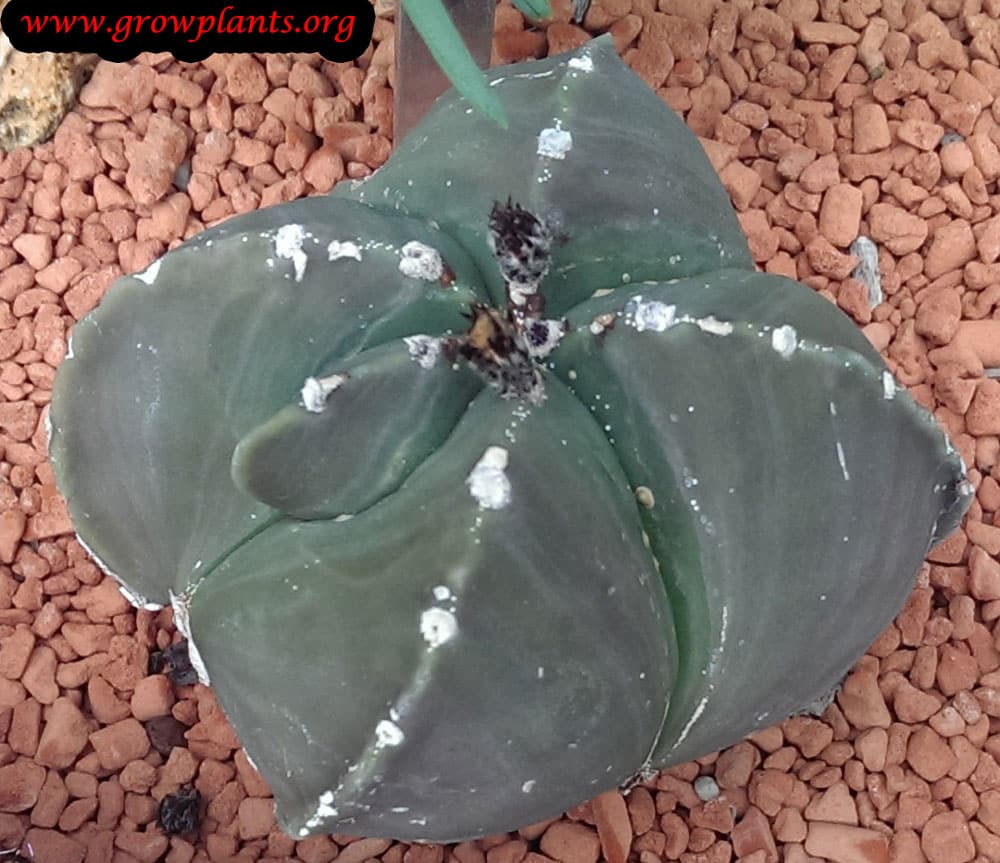
| Mealybugs | White cottony tufts in the crown/ribs and on roots | Alcohol swab, systemic/oil; check roots at repotting |
| Red spider mite | Fine rusty/bronzed scarring near the apex, webbing | Raise humidity, rinse, miticide; leaves permanent scars |
| Scale | Waxy bumps on the body | Scrape off, horticultural oil |
| Fungal scab/spotting | Corky, rusty or dark spots on the body | Improve airflow, avoid moisture on the body, reduce humidity |
Common Pests & Management
- Mealybugs (Pseudococcus / Planococcus spp.):
- Symptoms: White cottony tufts tucked among the ribs, in the woolly crown and around the areoles, with sticky honeydew and slow decline; a very common cactus pest.
- Prevention & Control: Dab colonies with an alcohol-dipped swab, isolate new plants, and treat with horticultural oil or a systemic; inspect regularly as they hide in the wool and ribs.
- Root mealybugs (Rhizoecus spp.):
- Symptoms: White, cottony, waxy deposits on the roots and inner pot wall, causing unexplained stalling, poor growth and gradual decline – hidden below soil and easily missed.
- Prevention & Control: Check the roots at every repot; if found, wash off the soil, cut away infested roots, drench with a systemic or soak the bare roots, and repot into fresh mix and a clean pot.
- Scale insects (Diaspididae, soft scale):
- Symptoms: Small brown, tan or waxy bumps stuck to the body, sometimes with honeydew, causing yellowish scarring where they feed.
- Prevention & Control: Scrape off gently with a soft brush or fingernail, then treat with horticultural oil; repeat to catch crawlers.
- Red spider mite (Tetranychus / cactus spider mite):
- Symptoms: Fine rusty-brown or bronzed scarring, especially near the growing apex, with very fine webbing in hot, dry, stagnant air – the scarring is permanent.
- Prevention & Control: Raise humidity and improve airflow, rinse the plant, and apply a miticide or horticultural oil; act early since the corky scars it leaves never heal.
- Fungus gnats (Sciaridae):
- Symptoms: Small dark flies over the soil and white larvae in a wet mix; larvae can nibble roots and their presence signals an over-wet, over-organic medium.
- Prevention & Control: Let the mix dry out well between waterings, use a gritty mineral-rich medium, top-dress with grit, and use yellow sticky traps or a BTI drench for the larvae.
Diseases & Fungal Issues
- Root & basal rot (Fusarium / Phytophthora / Pythium spp.):
- Symptoms: Softening, browning or blackening at the base and roots that spreads upward, causing the plant to collapse – almost always triggered by overwatering, cold-wet soil or poor drainage.
- Treatment & Management: Water sparingly into a gritty, fast-draining mineral mix, never leave the plant cold and wet, and keep water off the body; if caught early, cut out all rotted tissue back to clean flesh, dust with sulphur, and re-root the healthy top.
- Soft / black rot (Erwinia and fungi):
- Symptoms: Sudden soft, dark, wet, foul patches spreading through the body, often entering through wounds or via standing water in the crown.
- Treatment & Management: Avoid injury and water pooling in the crown, keep conditions airy and on the dry side, and cut away all affected tissue immediately, salvaging any clean growth.
- Fungal scab & spotting (Phyllosticta and others):
- Symptoms: Corky, rusty, tan or dark spots and patches on the body surface, from persistent surface moisture, high humidity and stagnant air.
- Treatment & Management: Improve ventilation, lower humidity, keep the body dry, and remove the source of moisture; damage is largely cosmetic and permanent, so prevention is key.
Growing Difficulties & Abiotic Problems
- Overwatering rot:
- Cause & Symptoms: The overwhelming cause of death: a cold, wet, poorly drained root zone rots the base and roots.
- Correction Strategy: Use a gritty, mostly mineral, fast-draining mix, water thoroughly but infrequently and only when the mix is fully dry, and keep the plant on the dry side in cool weather.
- Etiolation:
- Cause & Symptoms: Pale, elongated, distorted growth losing the compact ‘star’ shape, from too little light.
- Correction Strategy: Give bright light (with some acclimatised direct sun for most species); the stretched growth won’t reverse, but new growth will be compact in good light.
- Sunburn / scorch:
- Cause & Symptoms: Bleached, yellow or corky scorched patches when an under-lit plant is moved abruptly into strong sun – worse on the spineless, unprotected bodies of species like the bishop’s cap.
- Correction Strategy: Increase light gradually to acclimatise the plant, and provide light shading during the fiercest midday sun, especially for spineless types.
- Corking:
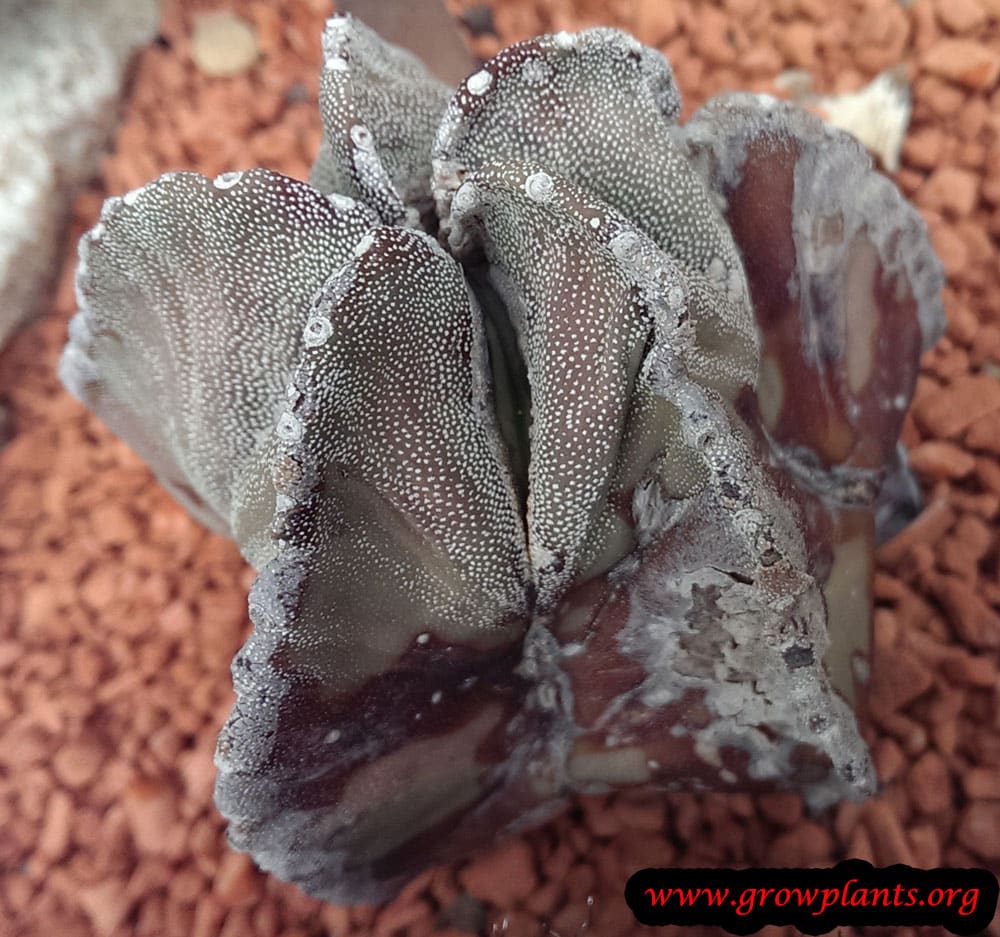
- Cause & Symptoms: Natural brown, bark-like corky tissue forming from the base upward with age – often mistaken for disease.
- Correction Strategy: Recognise this as normal ageing, not rot (it is firm and dry, not soft and wet); no action is needed.
What Helps – Products & Tools
For cacti the best ‘products’ are cultural: a gritty mineral mix, a clean pot, and a disciplined, sparing watering routine. For pests, use horticultural oil or a systemic for mealybugs and scale, a miticide for red spider mite (act early – its scars are permanent), and yellow sticky traps or a BTI drench for fungus gnats. Sulphur powder helps seal and protect cut surfaces after removing rot. Always check the roots for hidden mealybugs when repotting.