
Plant Profile & Key Characteristics
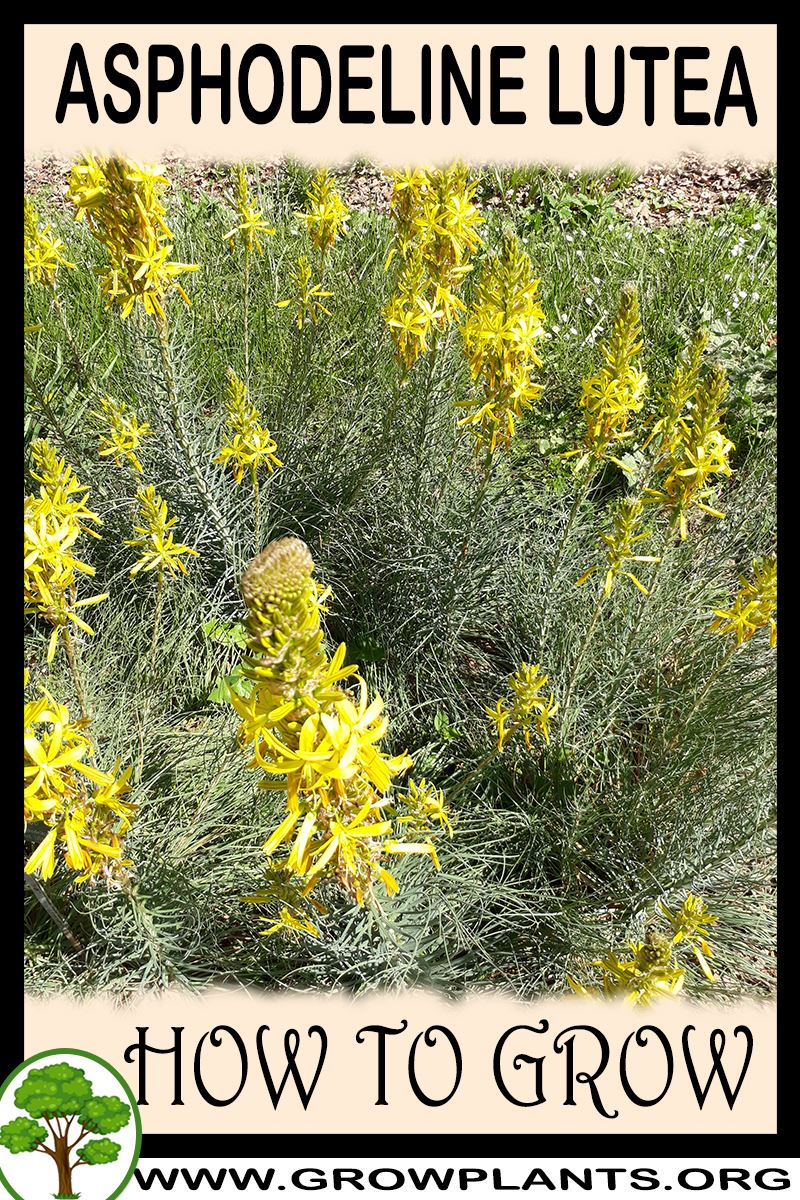
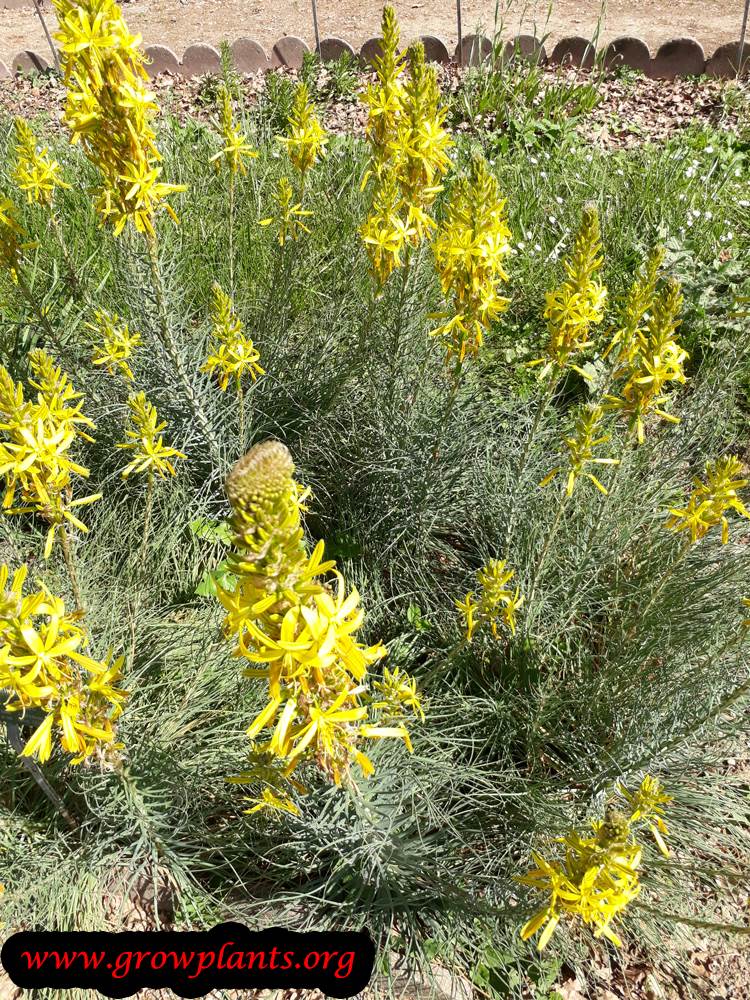
Overview: Yellow asphodel is an evergreen herbaceous perennial forming grassy clumps 50-120 cm (20-48 in) tall. This drought-tolerant plant is grown mainly as an ornamental but also has edible and medicinal uses.
Quick Specifications
| Specification | Attribute |
|---|---|
| Plant Type / Life Cycle | Perennial (evergreen herbaceous) |
| Foliage Type | Evergreen |
| Mature Size | 50-120 cm tall (20-48 in) |
| Growth Rate | Fast to moderate |
| Root System | Fleshy spindle-shaped tuberous roots |
| Toxicity | Non-toxic / edible (leaves, flowers and cooked roots) |
| Hardiness | USDA zones 6-9 |
Growth Form & Structure
- Height & Spread: 50-120 cm (20-48 in) tall in flower, forming an upright clump; grows well in containers.
- Growth Habit & Form: Clump-forming herbaceous perennial with a rosette of grassy leaves and tall flower spikes.
- Lifespan & Maturity: Long-lived perennial from fleshy tuberous roots.
Anatomy & Physical Features
- Leaves & Foliage: Green linear to spear-shaped leaves, edible when cooked.
- Flower Characteristics: Yellow star-shaped flowers with six petals and prominent stamens on tall spikes; short-lived and sweet-tasting (see Bloom guide).
Primary Uses & Landscape Value
- Edible Uses: Leaves eaten cooked, flowers eaten raw or in fruit salad, and roots eaten after cooking.
- Functional & Ornamental Roles: Ornamental and medicinal drought-tolerant perennial for mediterranean gardens.
Care Guide: Planting, Soil & Watering
Overview: Yellow asphodel is a Mediterranean perennial (hardiness zone 6–9) grown in full sun to part shade. It is drought tolerant and needs sharply well-drained soil with only modest watering.
Quick Care Requirements
| Requirement | Ideal Condition |
|---|---|
| Planting Season | Spring to summer |
| Growth Rate | Moderate to fast |
| Soil Type | Well-drained |
| Water Need | Low to moderate – drought tolerant |
Planting & Establishment
- Best Planting Season: Plant in spring or summer.
- How to Plant:
- Hole Preparation: Dig a hole about the width of the root system in free-draining ground.
- Soil Amendments: It thrives in lean, well-drained soil; work in a little organic matter but prioritise drainage over richness.
- Planting Depth: Set the crown at soil level.
- Growth Speed & Expectations: Growth is moderate to fast, forming a 50–120 cm clump.
Soil, Watering & Drainage Care
- Soil Mix & Drainage Needs: Sharp drainage is the priority – the fleshy-rooted plant rots in wet soil. It grows well in containers with free-draining mix.
- Watering Schedule & Technique:
- Young / Newly Planted: Water young plants occasionally to establish them without keeping the soil wet.
- Established: Once established it is drought tolerant, needing only a small to average amount of water.
- Seasonal Adjustments: Water lightly in summer heat and withhold in wet or cool periods.
Climate, Light & Hardiness
Asphodeline lutea is a drought-tolerant Mediterranean perennial that does best in full sun with moderately cold winters; it is hardy across USDA zone 6–9.
Quick Climate Specifications
| Climate Zones | Mediterranean, subtropical, temperate |
|---|---|
| USDA Hardiness Zones | 6–9 |
| Frost Tolerance | Moderate to High |
| Light Conditions | Full Sun to Half Shade; tolerates Full Shade with some light |
Sunlight & Light Exposure
Optimal Light Setup
Full sun brings the best flowering.
Shade & Heat Management
Half shade is acceptable, and the plant can persist in fairly shaded spots as long as some light reaches it, though flowering is likely reduced there.
Temperature Extremes & Hardiness
USDA Hardiness & Regional Limits
Zone 6–9 spans cold-temperate through warm-Mediterranean climates.
Frost Sensitivity
As a zone-6-hardy herbaceous perennial, the dormant crown tolerates winter freezes well.
Extreme Heat Tolerance
Well adapted to hot, dry Mediterranean summers, being a drought-tolerant species.
Wind, Humidity & Microclimate
Rainfall & Seasonal Moisture
Suited to Mediterranean-type climates with a dry summer / wetter winter pattern, consistent with its drought tolerance and preference for well-drained soil.
Growing in Pots, Balconies & Indoors
Yellow Asphodel (Asphodeline lutea) is not a houseplant – the grower confirms – but it grows well in a container on a sunny patio, where its tall spikes of star-shaped yellow flowers stand out. This Mediterranean perennial thrives on sun and sharp drainage, conditions a pot delivers easily.
Quick Details
- Container Size: A medium-to-large, deep pot for a plant of 50-120 cm (20-48 in)
- Indoor Suitability: Not a houseplant; it needs full outdoor light
- Best Spot: Full sun to part shade (even full shade with light, per the grower)
- Soil & Drainage: Well-drained soil; it dislikes wet feet
- Watering in Pots: Low to average – let the surface dry between waterings
Indoors & On the Windowsill
- Why not indoors: The grower does not rate it as a houseplant – it is a sun-loving Mediterranean perennial that grows lax and shy-flowering without strong outdoor light.
- Overwintering: Hardy in many climates, the pot can usually stay outside; keep it on the dry side through a cold, dormant winter.
On a Balcony or Patio
- Light & wind: Give it the brightest, warmest spot you have. Walls and paving reflect heat and pots dry fast, so check moisture often in warm spells; shelter tall or top-heavy growth from wind and stake if needed.
- Practicalities: A full pot is heavy once watered – set it in its final place first, and make sure drainage runoff has somewhere to go.
Choosing the Pot, Soil & Long-Term Care
- Pot & drainage: Use a medium-to-large, deep pot with generous drainage holes and no standing-water saucer – this plant hates wet feet. Terracotta is ideal because it breathes and dries out fast.
- Potting mix: A gritty, free-draining mix – loam or potting soil cut with coarse sand, perlite or grit; avoid heavy, water-holding composts.
- Feeding: Feed only lightly through the growing season; container plants lose nutrients to leaching, but this one prefers lean conditions to soft, overfed growth.
- Repotting: Pot up or refresh the mix every couple of years once roots fill the pot; take the chance to check drainage and trim any dead roots.
Fertilizing & Feeding
A light feeder: this drought-tolerant Mediterranean perennial performs well in lean, well-drained soil and needs only modest feeding to support its spring flower spikes.
Quick Fertilizing Specs
| Feeding Level | Light feeder |
|---|---|
| Main Nutrient Priority | Balanced feeding without excess nitrogen, which can produce lush leaves at the expense of flowering |
| Best Feeding Period | Spring, as growth resumes ahead of bloom |
| Organic Options | A light compost top-dressing worked into well-drained soil |
| Reduce/Stop Feeding | Ease off feeding once bloom finishes and the flower stems are cut back |
| Micronutrients | Usually adequate from a complete fertilizer in well-drained soil |
| Soil pH | Tolerates a wide range of well-drained soils |
Feeding by Growth Stage
Spring growth
Support the linear, spear-shaped foliage as growth resumes ahead of flowering.
| Nutrient direction | A light, balanced complete fertilizer supports steady leaf growth without forcing overly lush foliage. |
|---|---|
| Timing | As growth resumes in spring. |
| Frequency | A light feeding at the start of spring growth is usually enough. |
| Fertilizer types | A balanced complete fertilizer at a light rate, A light compost top-dressing |
| Precautions | Avoid heavy nitrogen feeding, which can favor leafy growth over the flower spikes this plant is grown for. |
Bloom
Sustain the tall spikes of star-shaped yellow flowers through their bloom period.
| Nutrient direction | Continue light, balanced feeding rather than switching to a bloom-booster product; steady balanced nutrition carries the flower spikes. |
|---|---|
| Timing | During the spring to summer bloom period. |
| Frequency | Feeding is rarely needed during bloom beyond the light spring application. |
| Fertilizer types | A light organic top-dressing if the soil is thin |
| Precautions | Keep feeding minimal during bloom; this drought-tolerant plant is prone to weak, floppy stems if overfed. |
Post-bloom rest
Let the plant rest once flower stems are cut back after bloom, through autumn and winter.
| Nutrient direction | None – withhold fertilizer once bloom finishes and through the dormant season. |
|---|---|
| Timing | Autumn through winter, after flower stems are removed. |
| Frequency | No feeding at this stage. |
| Fertilizer types | No feeding at this stage; do not fertilize until new growth resumes in spring. |
| Precautions | Withhold fertilizer during the post-bloom rest; this drought-adapted plant does not need feeding while dormant. |
Nutrient Deficiency Signs & Corrections
Older leaves pale to yellow-green and flower spikes are sparse or short.
| Possible causes | low available soil nitrogen, very lean, sandy soil with little organic matter, nutrient leaching from heavy rain or watering |
|---|---|
| Appears first on | older, lower leaves |
| What to check | recent feeding history, soil organic matter, watering and drainage |
| Possible correction | Apply a light, balanced complete fertilizer in spring. |
Leaf margins scorch or brown and flower stems stay weak.
| Possible causes | low soil potassium, sandy, fast-draining soil that leaches nutrients, uneven watering |
|---|---|
| Appears first on | older leaf margins |
| What to check | soil fertility and drainage, stem sturdiness, consistency of watering |
| Possible correction | Correct with a balanced or potassium-supportive fertilizer per its label. |
Leaf tips brown and growth stalls despite adequate watering.
| Possible causes | fertilizer salt buildup from overfeeding a naturally light feeder, under-watering that concentrates salts, poor drainage |
|---|---|
| Appears first on | leaf tips |
| What to check | recent fertilizer amounts, drainage, watering consistency |
| Possible correction | Ease off feeding and water thoroughly to flush accumulated salts. |
Pruning, Training & Seasonal Maintenance
Asphodeline lutea is a clump-forming, evergreen herbaceous perennial grown mainly as an ornamental (its leaves, flowers and roots are also edible, but that use is covered separately). Because its foliage persists rather than dying back completely each year, pruning is lighter-touch than for a fully deciduous perennial: it mainly means removing tattered or dead leaves and cutting out spent flower stalks, done in autumn/winter as the bloom season finishes and the clump heads into its slower period.
Quick Pruning & Maintenance Specs
| Pruning Tolerance | Moderate |
| Primary Pruning Window | Autumn/Winter |
| Typical Frequency | 1–2 tidy-ups a year |
| Main Objective | Remove dead/tattered leaves and spent flower stalks; this is an evergreen clump, not a full seasonal cutback |
| Best Tool Type | Precision snips/bypass secateurs |
Pruning by Plant Age & Size
Newly Established
Remove only clearly dead or damaged leaves while the clump establishes; avoid cutting into the healthy evergreen rosette.
Mature / Established
Each autumn/winter, remove any tattered or dead leaf blades at their base and cut spent flower stalks down once bloom is finished, since the individual flowers are short-lived and the stalk has no further ornamental value after bloom.
Special Growth to Remove
- Dead or tattered leaves – cut at the base, leaving healthy evergreen foliage intact.
- Spent flower stalks – remove once flowering has finished for the season.
Tools
- precision_snips or bypass_secateurs – sufficient for this herbaceous perennial’s leaves and flower stalks
Tool Hygiene & Disease Risk
Routine: clean, sharp tools are enough; its main pest issue (slugs) is not spread through pruning cuts.
Cut Placement & Technique
Cut dead leaves and spent flower stalks close to their base within the clump, without disturbing the surrounding healthy evergreen foliage.
Post-Pruning Care
Normal watering is enough afterward – this is a drought-tolerant plant that wants only a small to average amount of water; no extra feeding is needed for this kind of light cleanup.
Common Pruning Mistakes
- Cutting the clump back hard as if it were fully deciduous, when it is evergreen and only needs tattered/dead material removed.
- Leaving spent flower stalks in place long after bloom, when they have no remaining ornamental value.
When NOT to Prune
Avoid removing healthy evergreen leaves along with the dead ones – unlike a deciduous perennial, this plant doesn’t benefit from a full seasonal cutback.
Recommended Tools (by task)
- Dead/tattered leaf removal – precision_snips: selective cuts that leave healthy evergreen foliage untouched.
- Spent flower stalk removal – bypass_secateurs: clean base cuts once bloom has finished.
Propagation Guide
Asphodeline lutea can be grown readily from seed, but for a faster-established plant that matches an existing clump it is more easily increased by dividing its fleshy rootstock, in line with the site’s own note that vegetative propagation is not required but is the easier route. Seed of this species comes true, so division is used mainly for speed and convenience rather than necessity, and overall difficulty is easy.
Quick Propagation Specs
| Best Propagation Method | Division of the fleshy rootstock |
| Alternative Methods | Seed |
| Propagation Difficulty | Easy |
| Seed True-to-Type | Yes (species) |
| Vegetative True-to-Type | Yes |
| Best Propagation Season | Spring or summer, matching the site’s planting season |
| Seed Germination Time | Several weeks; germination can be slow and uneven |
| Germination Temperature | Around 15–20°C (59–68°F) |
| Seed Sowing Depth | Shallow, just covering the seed |
Growing from Seed
Sowing Season
Spring, aligning with the site’s Spring/Summer planting season.
Sowing Depth & Orientation
Sow shallowly, just covering the seed.
Germination Conditions
Moderate warmth and consistently moist, well-drained soil.
Germination Time
Several weeks; germination among asphodels can be slow and uneven, so patience is needed.
Seedling Care
Grow seedlings on in well-drained soil until a small rootstock has formed before transplanting; young plants are drought tolerant once established but need even moisture at the seedling stage.
Division, Offsets, Pups & Suckers
Asphodeline lutea forms a clump on a fleshy rootstock that can be lifted and divided in spring or summer, matching the plant’s normal planting season on the site. Divide so each section keeps a portion of the fleshy roots and at least one active growth point or rosette; larger divisions with more roots attached establish fastest. Reducing the leaves by about half at replanting lessens moisture loss while new roots establish, and the soil should be kept evenly moist, without waterlogging, until new growth confirms the division has taken. As the site notes, vegetative propagation is not strictly necessary for this species, but it is the easier and faster route to a flowering-size plant.
Bloom & Edible Flower Guide
Quick Details
- Bloom Season: Spring into summer
- Flower Appearance: Star-shaped yellow flowers with six petals and prominent stamens, along a tall spike
- Edibility: Edible – the sweet-tasting yellow flowers are eaten raw and added to salads
Detailed Blooming Overview
Yellow asphodel sends up tall spikes studded with star-shaped yellow flowers, each with six petals and showy stamens. The flowers are sweet and genuinely edible – good raw or scattered through a salad – but they are short-lived, opening and fading within a day, so pick them the same day you want to use them. Bloom runs from spring into summer.
Flower Characteristics
- Star-shaped yellow flowers with six petals and prominent stamens.
- Sweet flavour; the flowers are eaten raw or in fruit and green salads.
- Each flower is short-lived, lasting about a day.
Bloom Care & Thinning
- Harvesting the flowers: Gather them fresh on the day of use, as they do not keep once cut.
- Managing the bloom: Cut back spent flower stems in autumn or winter to tidy the clump.
Fruit & Uses
Asphodeline lutea (yellow asphodel) has traditional edible uses alongside its ornamental role: the flowers are eaten raw, while the young leaves and the roots are eaten only after cooking. These are folk/foraging uses rather than a mainstream food crop, so leaves and roots should always be cooked thoroughly and eaten in modest amounts.
Quick Edible Specs
| Edible Parts | Leaves, flowers, roots |
|---|---|
| Main Use(s) | Culinary – raw flowers in salads/fruit salad; cooked leaves and roots as a cooked green/root vegetable |
| Eaten Raw or Cooked | Flowers: raw. Leaves and roots: cooked |
| Preparation Required | None for flowers; Cook for leaves and roots |
| Harvest Season | Spring / Summer |
| Time to First Harvest | Leaves and flowers can be picked once the plant is established and actively growing; see Propagation for how the plant is started |
| Storage | Flowers have a short life and should be harvested and used the same day; leaves and roots are best used fresh, soon after harvest |
| Safety/Toxicity Caveat | Do not eat the roots or leaves raw – cook thoroughly. Raw or undercooked roots can be bitter and may cause digestive upset |
Flowers & Flower Buds
The flowers are yellow with six petals and prominent stamens, and taste sweet. They are eaten raw, most often added to fruit salad or other fresh salads. Because the flowers are short-lived, pick them the same day they are meant to be eaten – do not try to store them.
Leaves & Greens
The leaves are green and linear to spear-shaped. Harvest by cutting at the base of the leaves during spring and summer. They are eaten cooked, not raw.
Roots & Tubers
The roots are edible once cooked. Because harvesting the roots means digging up all or part of the plant, it is a one-time or occasional harvest rather than a repeatable one like the leaves or flowers – if roots are taken, the plant (or that portion of it) will not regrow from the same spot.
Harvesting
Leaves and flowers can be harvested repeatedly through spring and summer while the plant is in growth and bloom; flowers must be used the same day they are picked. Root harvest is destructive to the plant and best treated as a single, occasional harvest rather than a cut-and-come-again crop.
Preparation, Uses & Safety
Flowers are used fresh and raw, typically in fruit salads or other salads. Leaves and roots must be cooked before eating; cooking softens the texture and reduces bitterness. As with other Asphodelaceae roots, avoid eating the roots raw and keep portions modest, since undercooked roots can cause stomach upset. No medicinal dosing is implied here – any traditional medicinal use of the plant is separate from its food use and is not addressed in this section.
Pests, Diseases & Troubleshooting
Overview: King’s spear (Asphodeline lutea) is a tough, drought-adapted Mediterranean perennial that is naturally low-pest, its chief enemy being wet, poorly drained soil rather than any insect. Asphodels are tough, drought-adapted Mediterranean perennials that are naturally low-pest; their main enemy is not an insect but wet, poorly drained soil, which rots the fleshy roots and crown. Grow them lean and dry with excellent drainage and full sun, protect emerging spring shoots from slugs, and they will largely look after themselves – after flowering they die back into a natural summer dormancy, which is normal, not disease.
Quick Troubleshooting Overview
| Issue / Pest | Main Symptom | Primary Solution |
|---|---|---|
| Slugs & snails | Chewed young shoots and flower spikes, slime trails | Handpick at night, barriers/traps, iron-phosphate bait |
| Aphids | Sticky, distorted new growth and flower stems | Hose off, encourage predators, insecticidal soap if needed |
| Crown & root rot | Collapse, yellowing, rotten roots in wet soil | Sharp drainage, dry siting, remove affected plants |
| Rust | Orange-brown pustules on leaves | Remove affected leaves, improve airflow, avoid wetting foliage |
| Summer dieback | Foliage yellows and dies down after flowering | Normal dormancy – reduce water and let it rest |
Common Pests & Management
- Slugs & snails (Gastropoda):
- Symptoms: Ragged holes and chewed tissue on emerging spring shoots and young flower spikes, with tell-tale slime trails, worst in damp, mild conditions.
- Prevention & Control: Handpick after dark, clear damp hiding places, and protect new growth with grit or copper barriers, traps, or iron-phosphate bait around the crown.
- Aphids (Aphididae):
- Symptoms: Small colonies of soft green or black insects on tender new leaves and flower stems, causing sticky, distorted growth.
- Prevention & Control: Dislodge with a water jet, encourage ladybirds and lacewings, and spot-treat persistent clusters with insecticidal soap, mainly on the flower stems.
- Thrips (Thysanoptera):
- Symptoms: Silvery flecking and fine distortion on leaves and within flowers in hot, dry weather.
- Prevention & Control: Usually minor; remove badly affected flowers, monitor with sticky traps, and treat only heavy infestations with insecticidal soap or neem.
- Spider mites (Tetranychus urticae):
- Symptoms: Fine stippling and a dull cast on foliage in prolonged hot, dry spells, occasionally with fine webbing.
- Prevention & Control: Rarely serious outdoors; a strong water spray and improved conditions usually suffice, with horticultural oil for stubborn cases.
Diseases & Fungal Issues
- Crown & root rot (Phytophthora / Sclerotinia / Rhizoctonia spp.):
- Symptoms: Sudden wilting, yellowing and collapse with soft, dark, decayed roots and crown – the principal risk, driven by wet, heavy or poorly drained soil, especially over winter.
- Treatment & Management: Plant in sharply drained, gritty soil in full sun, avoid winter wet and overwatering, do not mulch heavily over the crown, and remove and destroy rotted plants; do not replant into the same spot.
- Rust (Uromyces / Puccinia spp.):
- Symptoms: Orange-brown to rusty pustules on leaves, sometimes with yellowing, mainly in humid or crowded plantings.
- Treatment & Management: Remove and destroy affected leaves, improve air movement and spacing, avoid overhead watering, and apply a sulphur-based fungicide only if it becomes severe.
Growing Difficulties & Abiotic Problems
- Winter-wet root rot:
- Cause & Symptoms: The dominant problem: fleshy roots rot in cold, wet, poorly drained soil, causing crown collapse.
- Correction Strategy: Site in raised, gritty, free-draining ground in full sun, keep dry in winter, and improve drainage with grit rather than watering more.
- Post-flowering summer dormancy:
- Cause & Symptoms: Foliage yellows and dies back after flowering – this is natural summer dormancy for these Mediterranean plants, not a disease.
- Correction Strategy: Reduce watering and allow the plant to rest and die down; growth returns in the cooler, moister season.
- Chlorosis in heavy soil:
- Cause & Symptoms: Pale, weak foliage where grown in dense, wet, or unsuitable soil.
- Correction Strategy: Improve drainage and lighten the soil with grit; these plants prefer lean, well-drained conditions to rich, moist ones.
What Helps – Products & Tools
Asphodels are a low-input plant: the key ‘tools’ are grit for drainage and slug protection for spring shoots. Useful products are iron-phosphate slug bait or copper barriers, insecticidal soap for the occasional aphid or thrip, and – only if rust appears – a sulphur fungicide. Focus on siting and drainage rather than spraying.