

Plant Profile & Key Characteristics
Overview: Aristea africana is a small evergreen rhizomatous perennial about 10-20 cm tall, grown as a drought-tolerant ornamental with iris-like foliage and bright blue-purple flowers. It suits warm gardens and can also be grown as a container or house plant.
Quick Specifications
| Specification | Attribute |
|---|---|
| Plant Type / Life Cycle | Perennial |
| Foliage Type | Evergreen |
| Mature Size | 10-20 cm tall (4-8 in) |
| Growth Rate | Moderate |
| Root System | Rhizomatous |
| Hardiness | USDA zones 10b and warmer |
Growth Form & Structure
- Height & Spread: 10-20 cm (4-8 in) tall, spreading slowly by rhizomes; grows well in pots.
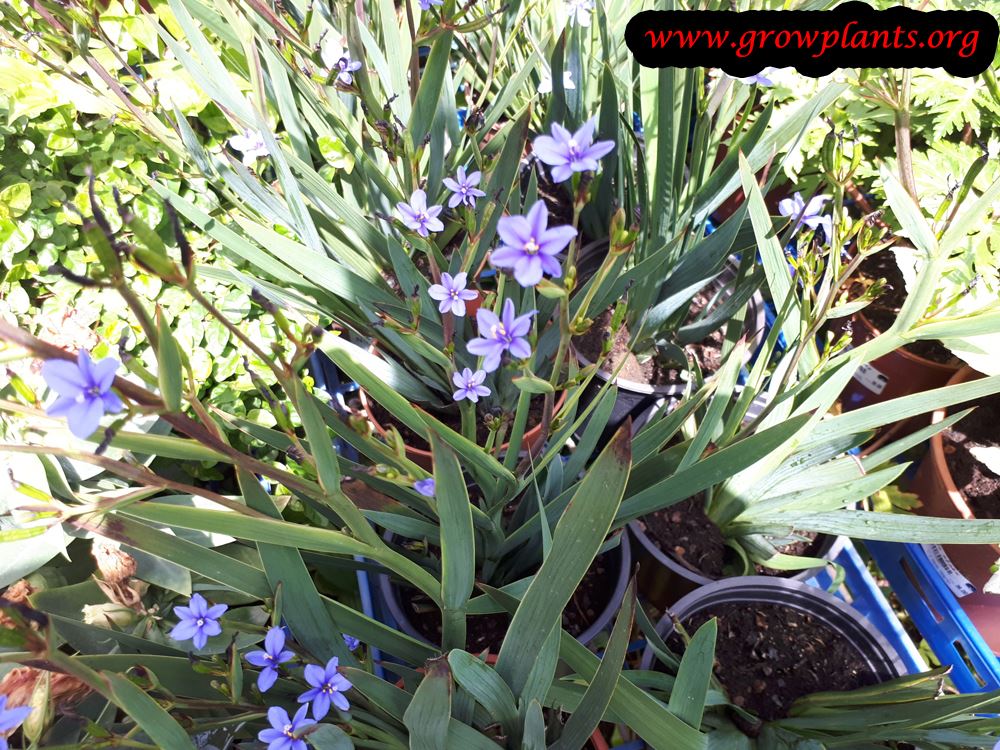
- Growth Habit & Form: Low clumping rhizomatous herb with fans of linear leaves, iris-like in habit.
- Lifespan & Maturity: Evergreen perennial that spreads gradually into a clump.
Anatomy & Physical Features
- Leaves & Foliage: Green linear leaves, held in connected fans.
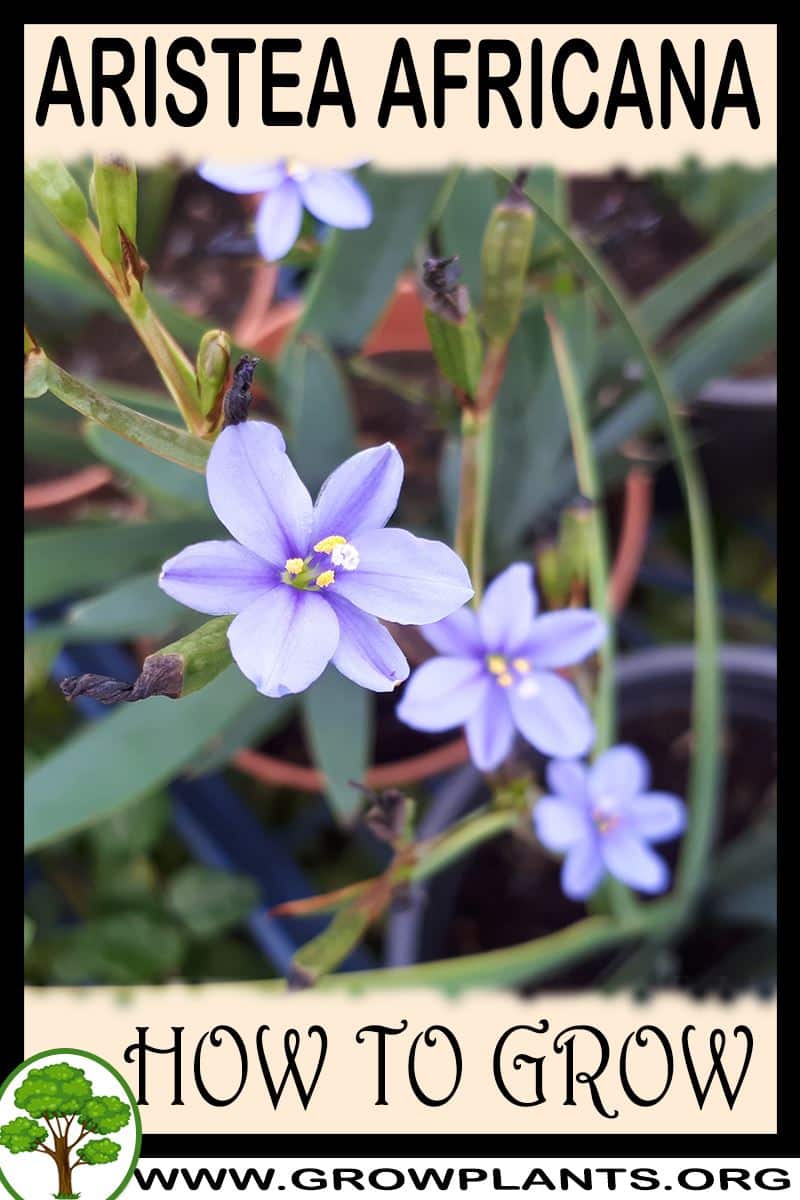
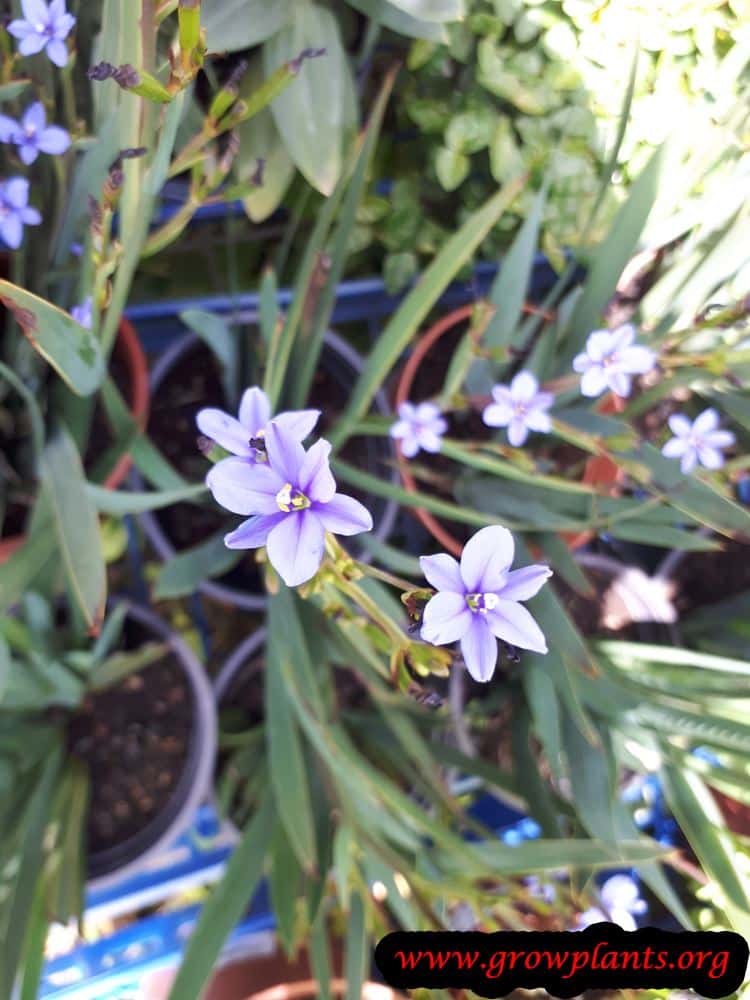
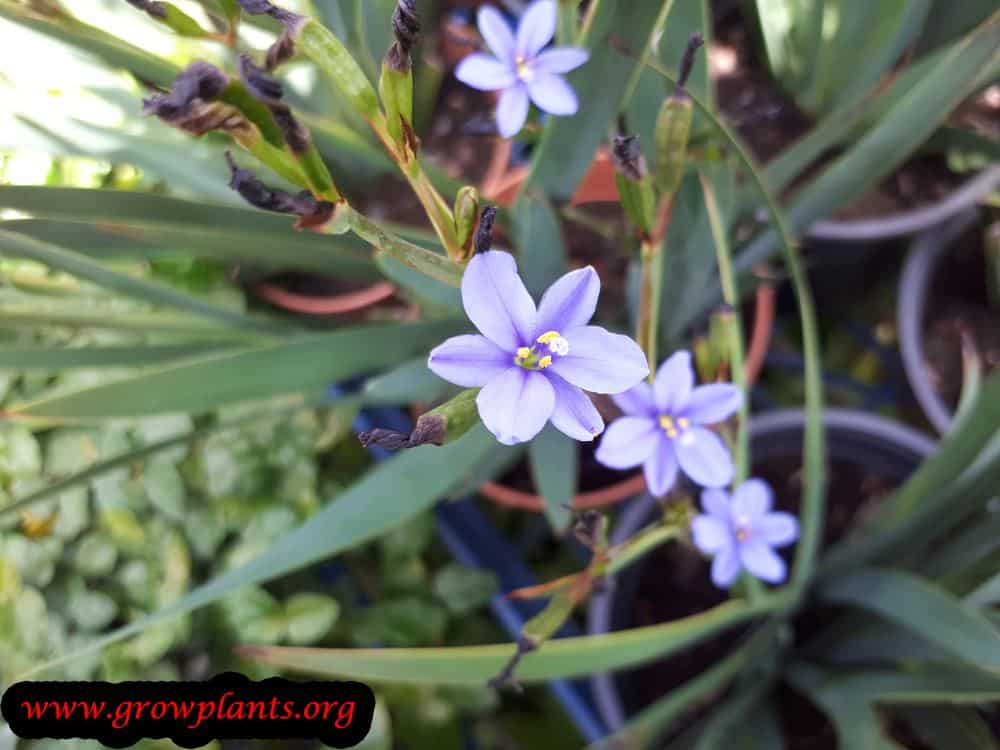
- Flower Characteristics: Round-faced purple to blue flowers with six petals and yellow stamens.
Primary Uses & Landscape Value
- Functional & Ornamental Roles: Drought-tolerant ornamental for beds, rockeries and containers, or grown indoors with good light.
Care Guide: Planting, Soil & Watering
Overview: Aristea africana is a drought-tolerant, rhizomatous evergreen that grows in sun or shade and prefers well-drained soil. It needs only light-to-moderate water and dislikes soggy ground.
Quick Care Requirements
| Requirement | Ideal Condition |
|---|---|
| Planting Season | In spring through summer |
| Growth Rate | Moderate |
| Soil Type | Well-draining |
| Water Need | Low to Moderate; let the surface dry between waterings |
Planting & Establishment
- Best Planting Season: Plant in spring or summer during the warm season.
- How to Plant:
- Hole Preparation: Dig a hole slightly wider than the root ball and loosen the soil, ensuring the site drains freely.
- Soil Amendments: Add a little compost to poor soil and grit to heavy ground to improve drainage.
- Planting Depth: Set the rhizome and root ball so the crown sits level with the soil surface.
- Growth Speed & Expectations: A moderate grower staying compact at 10-20 cm (4-8 in).
Soil, Watering & Drainage Care
- Soil Mix & Drainage Needs: Provide well-drained soil; it is drought tolerant and resents waterlogging. It also grows well in containers with a free-draining mix.
- Watering Schedule & Technique:
- Young / Newly Planted: Keep lightly moist while it establishes.
- Established: Once established, water sparingly to moderately, letting the surface dry between waterings.
- Seasonal Adjustments: Water a little more in summer heat and reduce in winter.
Climate, Light & Hardiness
Aristea africana (Rocket Cape blue) is a drought-tolerant, rhizomatous perennial suited to tropical, subtropical, and mediterranean climates or life as a houseplant, confidently hardy outdoors from about USDA zone 10b upward. It adapts to a wide light range from full sun to full shade.
Quick Climate Specifications
| Climate Zones | Tropics, Mediterranean, Subtropics, or indoors as houseplant |
|---|---|
| USDA Hardiness Zones | 10b+ (confirmed); performance in colder zones is not well documented |
| Frost Tolerance | Low |
| Light Conditions | Full Sun to Full Shade |
Sunlight & Light Exposure
Optimal Light Setup
Adaptable from full sun to full shade; flowering is generally best with more light.
Temperature Extremes & Hardiness
USDA Hardiness & Regional Limits
Reliable in essentially frost-free to mild-winter zone 10b and warmer. The source growing notes acknowledge it may be possible to grow in colder areas but do not confirm a specific lower limit - treat colder-zone success as unproven rather than assume greater hardiness.
Cold Damage & Winter Protection
Given its drought-tolerant, mediterranean/subtropical origins, expect real sensitivity to frost; protect it or grow in containers wherever winter frost occurs.
Frost Sensitivity
Likely frost-sensitive; without confirmed cold-hardiness data, avoid exposing it to freezing temperatures.
Extreme Heat Tolerance
Good - consistent with its drought-tolerant habit and suitability for tropical, subtropical, and mediterranean heat.
Wind, Humidity & Microclimate
Rainfall & Seasonal Moisture
Comfortable with a mediterranean-style wet/dry seasonal pattern as well as more humid subtropical and tropical moisture, given its broad climate range and drought tolerance.
Growing in Pots, Balconies & Indoors
The grower says Aristea can be grown indoors as a houseplant given enough light, and it grows well in pots and planters too. It is a small, adaptable plant that takes full sun through to shade, but indoors it needs a bright, well-lit spot.
Quick Details
- Container Size: A small-to-medium pot a step larger than the root ball
- Indoor Suitability: A houseplant with good light (grower’s ‘Yes, with light’)
- Best Spot: Full sun, half or full shade – bright light indoors
- Soil & Drainage: Free-draining organic mix; drains freely
- Watering in Pots: Small to average – keep lightly moist; avoid waterlogging
Indoors & On the Windowsill
- A houseplant with light: Grows indoors as long as it gets plenty of light – the brightest window you have; in dim rooms it weakens.
- Windowsill growing: Its compact size suits a bright sill; turn it for even growth.
- Care: Ordinary room warmth is fine; keep it out of dark corners and cold draughts.
On a Balcony or Patio
- Light & wind: Very adaptable outdoors from full sun to shade; shelter exposed pots from strong wind and keep soil evenly moist as pots dry quickly.
- Practicalities: A neat, small container plant for balcony groupings.
Choosing the Pot, Soil & Long-Term Care
- Pot & drainage: Use a pot with strong drainage holes and skip a standing-water saucer (or empty it promptly) to avoid root rot; terracotta breathes and dries faster, while glazed or plastic pots hold moisture longer.
- Potting mix: Use a well-aerated organic mix – peat or coir with perlite or vermiculite – that drains freely.
- Feeding: Potted plants exhaust their mix faster than those in open ground – nutrients leach away with each watering – so feed lightly through the active growing season.
- Repotting: Refresh the mix and pot up about every couple of years; when you do, lightly prune the root ball and any leggy top growth.
Fertilizing & Feeding
This drought-tolerant rhizomatous perennial is a light feeder – a balanced feeding as growth resumes supports its foliage and flowers, but it does not need much beyond that and is easy to overfeed relative to its naturally modest needs.
Quick Fertilizing Specs
| Feeding Level | Light feeder |
|---|---|
| Main Nutrient Priority | A modest balanced feed as active growth resumes, tapering off around bloom |
| Best Feeding Period | Spring into summer, while the plant is actively growing and flowering |
| Organic Options | Compost or well-rotted organic matter worked lightly into well-drained soil |
| Soil pH | Tolerates a wide range of soil pH provided the soil drains well |
| Reduce/Stop Feeding | Stop feeding once flowering finishes and growth slows for the year |
Feeding by Growth Stage
Spring Growth From the Rhizome
Support the rhizome in pushing up healthy new foliage as active growth resumes.
| Nutrient direction | A balanced, modest feeding supports steady foliage growth without overwhelming this naturally light feeder. |
|---|---|
| Timing | As new growth emerges from the rhizome in spring. |
| Frequency | A light feeding as growth resumes is usually enough; this plant does not need frequent feeding to perform well. |
| Fertilizer types | A balanced, general-purpose garden fertilizer used at a light rate, Compost or well-rotted organic matter worked in lightly |
| Precautions | Avoid heavy feeding, which is more likely to cause soft, rot-prone growth than to improve performance in this drought-tolerant plant. |
Flowering Period
Support a good flowering display without pushing excess soft foliage.
| Nutrient direction | Continue light, balanced feeding through flowering; there is no need for a high-phosphorus bloom formula. |
|---|---|
| Timing | Through the spring and summer flowering period. |
| Frequency | Light, infrequent feeding, if any, is generally enough while the plant is in bloom. |
| Fertilizer types | A balanced, general-purpose garden fertilizer used sparingly |
| Precautions | Avoid overwatering alongside feeding, since this drought-tolerant plant is more at risk from excess moisture than from underfeeding. |
Post-Bloom Rest
Let the plant rest after flowering without pushing new growth it doesn’t need at this point in its cycle.
| Nutrient direction | None – withhold fertilizer once flowering has finished for the year. |
|---|---|
| Timing | After flowering ends, through the remainder of the year until active growth resumes. |
| Frequency | No feeding at this stage. |
| Fertilizer types | No feeding at this stage – allow the plant to rest undisturbed |
| Precautions | Do not fertilize after bloom; this plant’s rhizome is prone to rot if fed and watered heavily while it is not actively growing. |
Nutrient Deficiency Signs & Corrections
Foliage looks pale or yellow-green overall and new growth is sparse.
| Possible causes | low soil nitrogen, poor soil fertility, root stress limiting nutrient uptake |
|---|---|
| Appears first on | older leaves |
| What to check | overall foliage color, soil fertility, root health and drainage |
| Possible correction | Apply a balanced fertilizer at the recommended label rate during active growth. |
The rhizome softens or the plant wilts and declines despite what seems like adequate watering.
| Possible causes | poorly drained or waterlogged soil, overwatering a drought-tolerant plant that expects drier conditions, fungal pathogens favored by consistently wet soil |
|---|---|
| Appears first on | the rhizome and base of the leaves |
| What to check | soil drainage, recent watering frequency, firmness and color of the rhizome |
| Possible correction | Improve drainage, reduce watering frequency, and hold off on feeding until the plant shows signs of recovery. |
New leaves yellow between the veins while the veins stay green.
| Possible causes | iron chlorosis from high soil pH, waterlogged or poorly aerated roots, root stress limiting micronutrient uptake |
|---|---|
| Appears first on | new growth |
| What to check | soil pH, soil drainage and aeration, recent watering pattern |
| Possible correction | Correct drainage and soil conditions first, then apply a chelated iron product per its label if chlorosis continues. |
Pruning, Training & Seasonal Maintenance
Aristea africana is a herbaceous, evergreen rhizomatous perennial with strappy leaves and no woody structure – pruning is limited to sanitation, not shaping. The main jobs are removing individual leaves as they yellow or brown and cutting out spent flower stalks, ideally in autumn to winter when the clump is between growth pushes. This keeps the fan of foliage looking fresh year-round rather than forcing a hard seasonal cutback.
Quick Pruning & Maintenance Specs
| Pruning Tolerance | Low–Moderate (sanitation-level cuts only) |
| Primary Pruning Window | Autumn to winter |
| Typical Frequency | A few times a year, as leaves/stalks decline |
| Main Objective | Remove spent flower stems and dead/browning leaves |
| Young Plant Priority | Leave undisturbed while establishing |
| Mature Plant Priority | Ongoing removal of individual dead leaves and spent bloom stalks; divide congested clumps |
| Best Tool Type | Precision snips or bypass secateurs |
Pruning by Plant Age & Size
Newly Established
No pruning beyond removing any damaged leaves on planting; let the clump establish undisturbed.
Young / Formative
No structural training applies to this low (10–20 cm) clump-forming perennial.
Mature / Established
Routine removal of individual yellowed or browned leaves and spent flower stalks; overcrowded clumps can be lifted and divided at the rhizome to renew vigor, which doubles as propagation.
Seasonal Pruning Schedule
- Autumn to Winter: Objective – sanitary tidy between the spring–summer bloom and next growth push. Remove: dead leaves and any remaining spent flower stems. Do NOT remove: healthy green leaf fans. Expected response: a cleaner clump heading into the next growing season; no impact on next season’s flowering since old leaves are not the flowering structure.
Special Growth to Remove
- Spent flower stems, once the round purple/blue blooms have finished.
- Individual dead or browning leaves.
Container & Small-Space Pruning
Suitable for pots or as a houseplant with light. The same light sanitation routine applies; no compact-form pruning is needed since the plant stays low and clumping on its own.
Tools
- Precision snips or bypass secateurs for removing dead leaves and spent flower stalks.
Tool Hygiene & Disease Risk
Routine: clean, sharp tools are sufficient; no specific transmissible disease risk is noted for this species.
Cut Placement & Technique
Cut dead leaves and spent flower stalks down at their base near the rhizome/crown, avoiding cuts into healthy green tissue.
Common Pruning Mistakes
- Cutting back healthy green leaves along with the dead ones.
- Leaving spent flower stalks in place indefinitely instead of clearing them at the autumn–winter tidy.
When NOT to Prune
- Avoid removing green, actively photosynthesizing leaf fans, even if the clump looks untidy – only cut what has actually died back.
Recommended Tools (by task)
- Removing dead leaves and spent flower stalks (mature plants): precision_snips – all cuts on this herbaceous perennial are soft-stem and small, at the base of the fan.
Propagation Guide
Aristea africana is most easily increased by dividing an established clump of its rhizomes, which gives a flowering-size plant much faster than seed; the site records no dedicated seed-sowing data for this species, but notes that vegetative propagation, while not strictly necessary, is a recognized method alongside seed. Both routes are generally easy for this species, with division simply being quicker to a usable plant.
Quick Propagation Specs
| Best Propagation Method | Rhizome division |
| Alternative Methods | Seed |
| Propagation Difficulty | Easy |
| Seed True-to-Type | Usually true-to-type (species plant) |
| Vegetative True-to-Type | Yes |
| Best Propagation Season | Spring to summer, matching the plant’s active growing/planting season |
Growing from Seed
Sow in spring or summer in well-drained soil. No specific germination temperature or timeframe is reported for this species; expect seed-grown plants to take noticeably longer than divisions to reach flowering size.
Rhizomes, Tubers, Bulbs & Corms
Rhizome Division
Best done in spring to summer while the plant is in active growth. Lift an established clump and separate it into sections, making sure each section keeps healthy roots and at least one growth point (a fan of leaves) attached. Replant divisions promptly into well-drained soil and water them in well while they re-establish.
Bloom & Flower Guide
Quick Details
- Bloom Season: Spring into summer
- Flower Appearance: Rounded flowers of purple or blue with six spreading segments and bright yellow stamens
- Edibility: Ornamental only – grown for its blue flowers, not for eating
Detailed Blooming Overview
Aristea africana is a rhizomatous member of the iris family whose clear blue to purple flowers open along wiry stems in spring and summer. As with most of the genus, the individual flowers are short-lived – each one typically opens for a single day – but the plant keeps producing a steady succession over the season, so the display carries on well.
Flower Characteristics
- Six spreading segments in blue to purple, arranged in a neat rounded flower.
- Bright yellow stamens at the centre.
- Each bloom is fleeting, replaced by fresh flowers over a long season.
Bloom Care & Thinning
- Encouraging bloom: Full sun brings the best flowering; the flowers open with the day’s warmth and light.
- Tidying: Remove spent flower stems after the season to keep the clump neat.
Pests, Diseases & Troubleshooting
Overview: Aristea is a South African, rhizomatous member of the iris family grown for its blue star flowers and grassy foliage; like most Iridaceae it is fairly robust but can be troubled by aphids, thrips and by rot in wet, poorly drained soil. Documented pest information for this genus is limited, so management follows the well-known iris-family pattern: full sun, sharp drainage, good airflow, and vigilance for thrips and rhizome rot.
Quick Troubleshooting Overview
| Issue / Pest | Main Symptom | Primary Solution |
|---|---|---|
| Aphids | Sticky, distorted new growth, virus spread | Water jet, insecticidal soap, beneficials |
| Thrips | Silvery streaking on leaves and flowers | Sticky traps, spinosad, remove old blooms |
| Spider mites | Fine speckling in hot, dry spells | Hose foliage, horticultural oil |
| Slugs & snails | Grazed seedlings and soft foliage | Traps, grit barrier, iron-phosphate bait |
| Rhizome / root rot | Wilting, soft rot in wet soil | Sharp drainage, water sparingly |
| Leaf spot / rust | Spots or pustules on leaves | Airflow, remove leaves, copper / sulfur |
Common Pests & Management
- Aphids (Aphididae):
- Symptoms: Soft green or black aphids clustered on new shoots, flower stalks and buds, causing distortion, honeydew and sooty mould, and capable of spreading viruses within iris relatives.
- Prevention & Control: Hose them off with water and encourage ladybirds, lacewings and hoverflies. Remove badly infested growth. Insecticidal soap or neem clears stubborn colonies; avoid broad-spectrum sprays that harm the aphids’ natural enemies.
- Thrips (Thysanoptera):
- Symptoms: Silvery streaking, flecking and distortion on the grassy leaves and star flowers, with black frass specks; thrips are the classic iris-family pest and can disfigure the blooms.
- Prevention & Control: Monitor with blue sticky traps, remove spent flowers where thrips shelter, and keep plants vigorous. Encourage predatory mites and pirate bugs. Treat hotspots with spinosad or insecticidal soap on the foliage and buds.
- Spider mites (Tetranychus urticae):
- Symptoms: Fine pale stippling and a dull cast to the foliage with faint webbing in hot, dry, dusty conditions.
- Prevention & Control: Hose the foliage to raise humidity and dislodge mites, avoid drought stress, and protect predatory mites; horticultural oil or insecticidal soap handles persistent colonies.
- Slugs & snails (Gastropoda):
- Symptoms: Grazed seedlings, chewed soft new leaves and slime trails, worst in damp, shady, mild conditions.
- Prevention & Control: Hand-pick after dark, set beer traps, and ring plants with sharp grit. Iron-phosphate baits are a pet-safe option for heavy pressure; good drainage and airflow reduce the damp they favour.
Diseases & Fungal Issues
- Rhizome & root rot (Fusarium / Phytophthora / Pythium):
- Symptoms: Wilting and yellowing foliage, poor vigour, and soft, dark, decayed rhizomes and roots in heavy, wet or waterlogged soil — the main disease risk for iris relatives.
- Treatment & Management: Grow in free-draining soil in full sun, avoid overwatering and never let the rhizomes sit wet, and improve drainage on heavy ground. Remove and destroy rotted plants; replant healthy divisions in fresh, well-drained soil.
- Leaf spot (Cercospora / Heterosporium spp.):
- Symptoms: Brown or grey spots and streaks on the leaves, sometimes with yellow halos, spreading in warm, wet, humid conditions and browning the foliage.
- Treatment & Management: Remove spotted and dead leaves, improve air movement, and water at the base to keep foliage dry. Copper fungicide gives preventive control where leaf spot recurs in damp seasons.
- Rust (Puccinia spp.):
- Symptoms: Small orange to brown powdery pustules on the leaves and stems, with yellowing and weakening of the foliage in humid weather.
- Treatment & Management: Remove and destroy affected leaves, thin for airflow, and avoid wetting the foliage. Sulfur fungicide can be applied if rust becomes persistent; healthy, airy plantings rarely need it.
Growing Difficulties & Abiotic Problems
- Rot from wet, heavy soil:
- Cause & Symptoms: Adapted to sharp-draining South African soils, Aristea rots at the rhizome in constantly wet or poorly drained ground.
- Correction Strategy: Plant in gritty, free-draining soil in full sun, water moderately and let the surface dry between times, and use raised beds on heavy ground.
- Poor flowering in shade:
- Cause & Symptoms: Too little sun gives lush grassy growth but few of the blue star flowers, and lax habit.
- Correction Strategy: Site in full sun, avoid excess nitrogen, and divide congested clumps to keep them vigorous and free-flowering.
- Cold damage:
- Cause & Symptoms: As a South African plant it can be damaged by hard frost, browning the foliage in cold snaps.
- Correction Strategy: Grow in a sheltered, warm position or protect during cold weather; in cold-winter areas treat as tender and shelter the crowns.
What Helps — Products & Tools
Use a water jet and insecticidal soap or neem for aphids and mites, spinosad and blue sticky traps for thrips, and iron-phosphate bait with a grit barrier for slugs and snails. Copper fungicide covers leaf spot and sulfur handles rust in damp weather, but the decisive control is cultural — full sun and sharp drainage to prevent rhizome rot.