Plant Profile & Key Characteristics
Overview: Cape dandelion / capeweed (Arctotheca calendula) is a low, spreading groundcover just 5-15 cm tall, grown as an evergreen perennial in mild climates or an annual in cold ones. It carries bright yellow daisy flowers above dandelion-like foliage and spreads vigorously.
Quick Specifications
| Specification | Attribute |
|---|---|
| Plant Type / Life Cycle | Perennial (grown as an annual in cold climates) |
| Foliage Type | Evergreen in frost-free climates |
| Mature Size | 5-15 cm tall (2-6 in), spreading wide |
| Growth Rate | Fast to moderate |
| Hardiness | USDA zones 9-11 as perennial (3-9 as annual) |
Growth Form & Structure
- Height & Spread: Only 5-15 cm (2-6 in) high but spreading to form a wide mat; also suited to containers and hanging baskets.
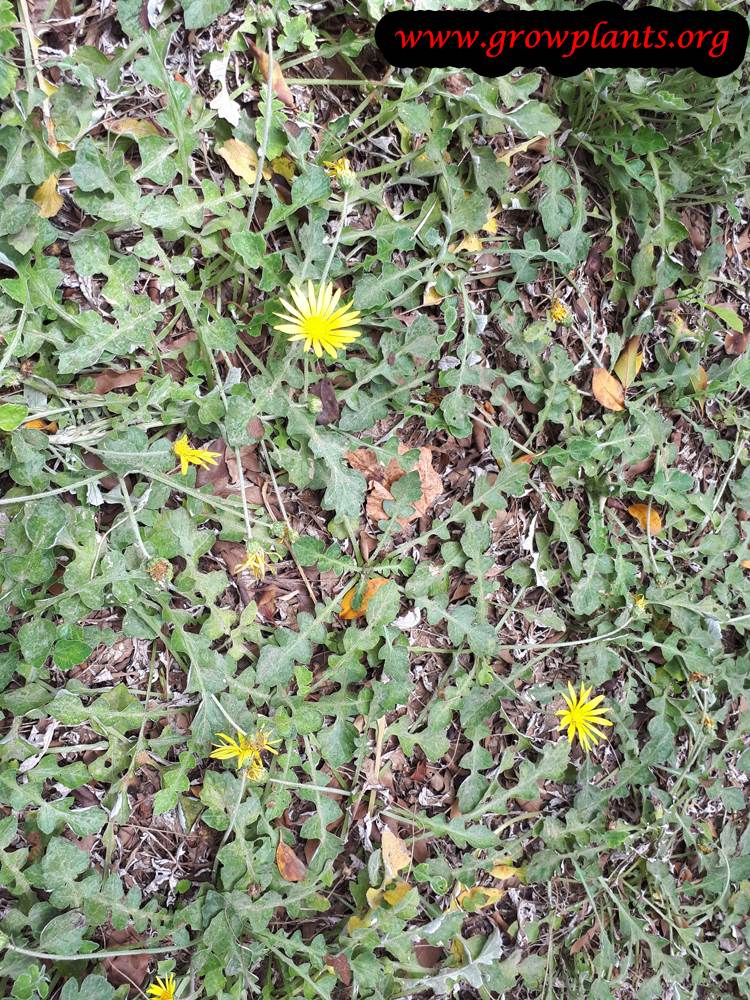
- Growth Habit & Form: Low, mat-forming groundcover that spreads outward via creeping runners.
- Lifespan & Maturity: Fast to establish; short-lived where grown as an annual, longer-lived in mild climates.
Anatomy & Physical Features
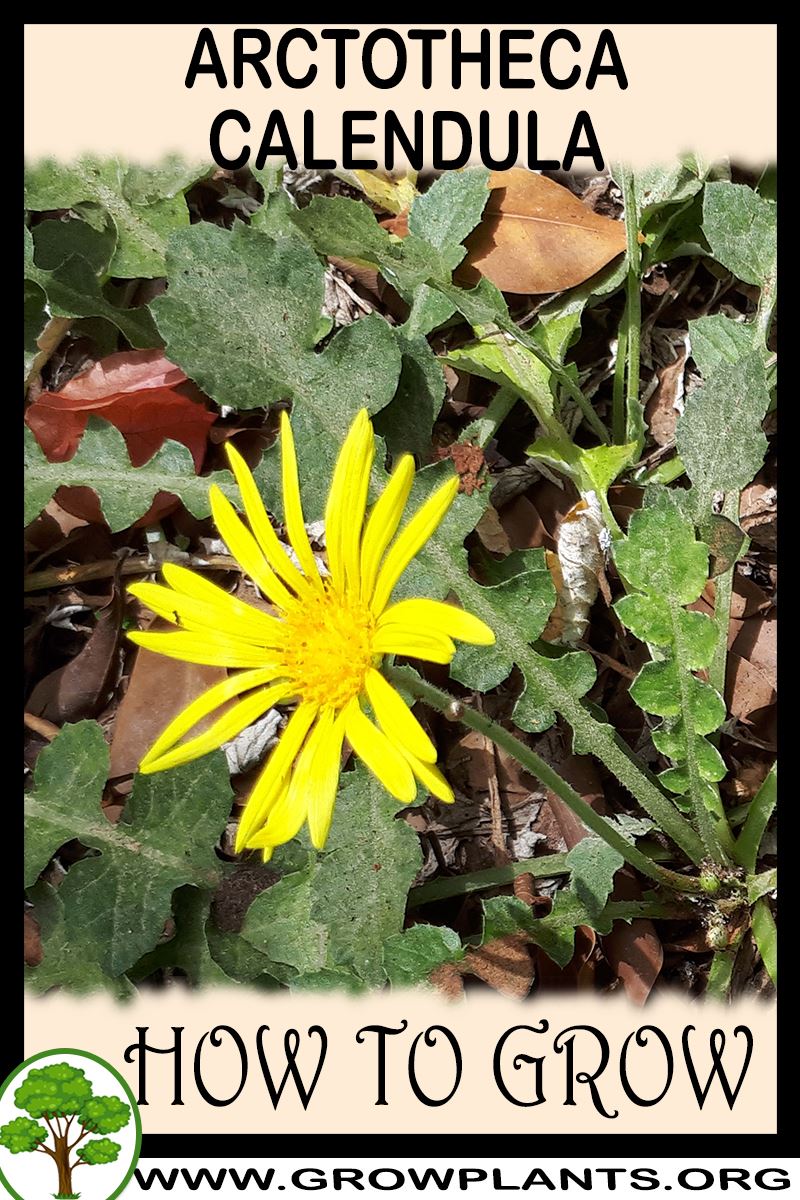
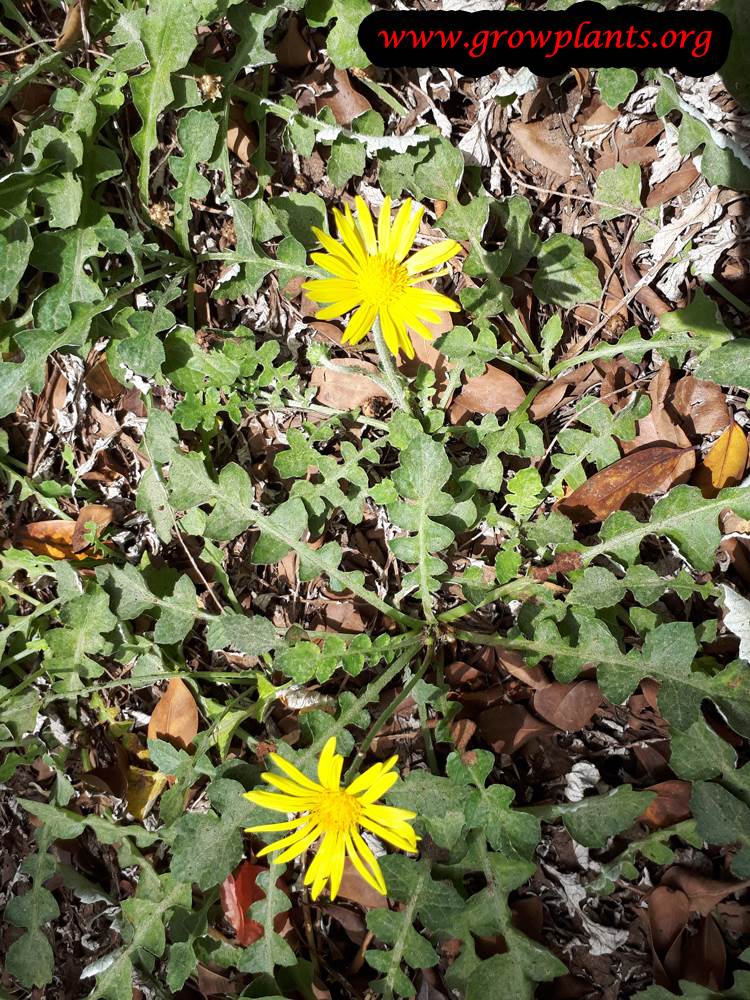
- Leaves & Foliage: Green pinnatisect (deeply toothed) leaves resembling dandelion foliage.
- Flower Characteristics: Bright yellow daisy-shaped flowers held above the foliage.
Primary Uses & Landscape Value
- Functional & Ornamental Roles: Fast ground-covering ornamental for banks and open ground; tolerates Mediterranean, desert and coastal sites but can be aggressively invasive.
Care Guide: Planting, Soil & Watering
Overview: Cape dandelion is a fast, low groundcover that thrives in full sun and adapts to most well-drained soils. It needs only modest water and is quite drought tolerant once established.
Quick Care Requirements
| Requirement | Ideal Condition |
|---|---|
| Planting Season | In spring after the last frost (as an annual); spring through autumn as a perennial |
| Growth Rate | Fast |
| Soil Type | Adaptable; well-draining |
| Water Need | Low to Moderate; let the surface dry between waterings |
Planting & Establishment
- Best Planting Season: Plant in spring once frost has passed; in frost-free zones you can also plant through summer and autumn.
- How to Plant:
- Hole Preparation: Dig a hole a little wider than the root ball and loosen the surrounding soil, making sure the site drains freely.
- Soil Amendments: It is not fussy, but a little compost worked into poor soil helps it fill in quickly.
- Planting Depth: Set the root ball level with the surface and firm gently; do not bury the crown.
- Growth Speed & Expectations: A fast, spreading groundcover that stays low (5-15 cm / 2-6 in) but covers ground quickly; it can become invasive, so site it where spread is welcome.
Soil, Watering & Drainage Care
- Soil Mix & Drainage Needs: Almost any free-draining soil suits it, but avoid waterlogged ground. It also grows well in containers with a standard well-draining mix.
- Watering Schedule & Technique:
- Young / Newly Planted: Water to keep the soil lightly moist while plants root in.
- Established: Once established it needs little water; soak occasionally and let the surface dry between waterings.
- Seasonal Adjustments: Water more in summer heat and cut back in cool or rainy periods.
Climate, Light & Hardiness
Arctotheca calendula (Cape dandelion) is a low, spreading groundcover suited to Mediterranean, desert, subtropical, and temperate climates. It tolerates a wide range of light from full sun to almost full shade, and is evergreen and perennial in mild-winter areas while colder regions grow it as an annual.
Quick Climate Specifications
| Climate Zones | Mediterranean, Desert, Subtropical, Temperate |
|---|---|
| USDA Hardiness Zones | 9–11 as a perennial; grown as an annual in zones 3–9 |
| Frost Tolerance | Low to Moderate |
| Light Conditions | Full Sun to Almost Full Shade (with ambient light) |
Sunlight & Light Exposure
Optimal Light Setup
Adapts to a broad light range, from full sun through half shade to almost full shade, provided some ambient light reaches the foliage.
Temperature Extremes & Hardiness
USDA Hardiness & Regional Limits
Reliably perennial in USDA zones 9–11. In zones 3–9, it is grown as a spring-planted annual, since it does not survive harder winter freezes.
Frost Sensitivity
Moderate to low frost tolerance; hard freezes kill top growth and, outside zone 9, the whole plant.
Growing in Pots, Balconies & Indoors
Cape weed (Arctotheca calendula) is a very low groundcover of just 5-15 cm (2-6 in) that the grower grows in containers but not as a houseplant. It is a tough, drought-tolerant edger for a sunny pot; note it is invasive, so a container is a sensible way to enjoy it without it spreading.
Quick Details
- Container Size: Small – a 2-5 L (0.5-1 gal) pot or a wide, shallow pan for a spreading mat
- Indoor Suitability: Not a room houseplant; being so small it could sit on a bright, sunny sill
- Best Spot: Full sun to half shade – the sunnier the better
- Soil & Drainage: Free-draining mix; it tolerates lean, dry soil
- Watering in Pots: Modest – let the surface dry between waterings; it is drought tolerant
Indoors & On the Windowsill
- Houseplant limits: The grower does not list it as a houseplant – it wants full sun.
- Windowsill: Because it is so low-growing, a very bright, sunny sill is the most you could try indoors.
- Containing it: Growing it in a pot and deadheading keeps this invasive spreader in check.
On a Balcony or Patio
- Light & wind: Give it the sunniest spot; walls, railings and paving throw back heat so pots dry quickly – check moisture often and shelter or stake it on an exposed, windy balcony.
- Practicalities: Account for the weight of a full pot and make sure drainage water can run away freely without staining the balcony.
Choosing the Pot, Soil & Long-Term Care
- Pot & drainage: Use a pot with strong drainage holes and skip a standing-water saucer to avoid root rot; terracotta breathes and dries faster, while glazed or plastic holds moisture longer.
- Potting mix: Well-aerated and organic-rich – a quality potting mix, or peat/coir with perlite or vermiculite.
- Feeding: Potted plants use up their soil faster as nutrients leach out with each watering – feed lightly through the growing season.
- Repotting: Refresh the surface mix each year and pot on or divide every couple of years, trimming the roots lightly once it fills the container.
Fertilizing & Feeding
A light feeder: this drought-tolerant, fast-spreading groundcover needs little beyond a modest balanced feeding to establish and flower, and is much more likely to be overfed than underfed.
Quick Fertilizing Specs
| Feeding Level | Light feeder |
|---|---|
| Main Nutrient Priority | Balanced feeding, used sparingly on an undemanding, self-sufficient groundcover |
| Best Feeding Period | During establishment and through the spring bloom period |
| Organic Options | Compost worked into the bed only at planting |
| Reduce/Stop Feeding | Ease off once established, and again as the planting rests through the hottest, driest part of the year |
| Micronutrients | Rarely an issue in this adaptable, low-input groundcover; correct only a diagnosed deficiency |
| Soil pH | Tolerates a wide range of soil conditions |
Feeding by Growth Stage
Establishment as a groundcover
Help newly planted or seeded groundcover spread and knit together quickly.
| Nutrient direction | A light, balanced feeding is enough to support the fast spread this groundcover is known for. |
|---|---|
| Timing | At planting or seeding and through early establishment. |
| Frequency | A single light feeding at establishment is generally sufficient. |
| Fertilizer types | A balanced complete fertilizer at a light rate, Compost worked into the bed at planting |
| Precautions | This is already an assertive, spreading grower; avoid heavy feeding, which can make it harder to keep within bounds. |
Spring daisy-flower bloom
Support the display of yellow, daisy-shaped flowers over the low, spreading foliage.
| Nutrient direction | Light, balanced feeding maintains flowering without pushing rank growth this groundcover does not need. |
|---|---|
| Timing | Through the spring flowering period. |
| Frequency | Rarely needs feeding once established and flowering well on its own. |
| Fertilizer types | A balanced complete fertilizer at a light rate, only if growth looks thin |
| Precautions | Deadheading spent leaves and flowers helps tidiness more than additional feeding does. |
Rest through the hottest, driest part of the year
Let this drought-tolerant groundcover coast through the hottest, driest stretch without pushing growth it cannot support on little water.
| Nutrient direction | None – withhold fertilizer during the hot, dry rest period. |
|---|---|
| Timing | Through the hottest, driest part of the year, when growth naturally slows. |
| Frequency | No feeding at this stage. |
| Fertilizer types | No feeding at this stage; hold off fertilizing until cooler weather brings active growth back. |
| Precautions | Do not fertilize a plant resting through heat and drought; withhold feeding until growth resumes with cooler, moister conditions. |
Nutrient Deficiency Signs & Corrections
Foliage looks pale and thin and the groundcover fills in more slowly than expected for such a vigorous spreader.
| Possible causes | very low available soil nitrogen, extremely poor, sandy soil, unusually dense shade slowing overall growth |
|---|---|
| Appears first on | older leaves across the planting |
| What to check | soil quality and texture, light levels across the planting, whether the thin patch matches a known poor-soil area |
| Possible correction | Apply a light, balanced complete fertilizer; this vigorous grower usually needs very little to fill back in. |
New leaves turn yellow while the veins stay green, most visible on the newest growth at the edge of the planting.
| Possible causes | strongly alkaline soil limiting iron availability, waterlogged soil after heavy rain despite this plant’s drought tolerance, naturally low soil iron |
|---|---|
| Appears first on | newest growth |
| What to check | soil pH, drainage after rain or watering, whether the pattern is spread evenly or limited to wet spots |
| Possible correction | Improve drainage where the soil stays wet and apply a chelated iron product per its label if the pattern persists. |
Leaf edges brown or scorch and patches of the groundcover struggle despite this plant’s reputation for thriving on little care.
| Possible causes | fertilizer salts building up from feeding more than this light feeder needs, salts concentrating as the drought-tolerant planting dries between waterings, poor drainage holding salts near the roots |
|---|---|
| Appears first on | leaf margins and tips |
| What to check | how much and how often fertilizer has been applied, watering pattern and drainage, whether affected patches match where feeding was heaviest |
| Possible correction | Stop supplemental feeding, water thoroughly to flush salts, and rely on this plant’s naturally low nutrient needs going forward. |
Pruning, Training & Seasonal Maintenance
Cape dandelion (Arctotheca calendula) is a very low, mat-forming groundcover with no woody structure, so there is no shaping or training to do. "Pruning" here means routine tidying — removing dead leaves and spent flowers — and, because this species is documented as invasive, deadheading before seed matures and containing its spreading runners are the genuinely important tasks, not cosmetic shaping.
Quick Pruning & Maintenance Specs
| Pruning Tolerance | Moderate (soft, low-growing tissue; tolerates being cut back hard) |
| Primary Pruning Window | Ongoing, year-round |
| Typical Frequency | Deadhead every 1–2 weeks during spring–summer bloom; edge/contain runners as needed |
| Main Objective | Prevent unwanted seeding and spread, given documented invasiveness |
| Mature Plant Priority | Deadhead promptly; cut back runners at bed margins to contain spread |
| Best Tool Type | Precision snips |
Seasonal Pruning Schedule
Ongoing Sanitary
Objective: tidy appearance and, most importantly, spread control. Remove: spent flower heads before seed sets, dead or tired leaves, runners that have crept beyond the intended planting area. Do not remove: the whole mat unnecessarily — it regenerates readily from the crown and runners, so light, frequent maintenance is enough. Expected response: continued flushes of yellow daisy blooms and a contained footprint. Flowering/seeding impact: prompt deadheading is the main way to stop this species self-sowing beyond where it’s wanted.
Special Growth to Remove
- Spent flower heads — the priority task, to prevent seed set and unwanted spread given the plant’s documented invasiveness.
- Runners/stolons that have rooted outside the intended bed — cut and lift at the rooting point to stop them establishing further.
- Dead or tired leaves, mainly for appearance.
Container & Small-Space Pruning
Growing it in a container removes most of the spread risk associated with its runners, and only light deadheading is needed to keep a pot planting tidy.
Tools
- Precision snips — for deadheading and cutting back runners; no larger tool is needed for this low, soft groundcover.
Tool Hygiene & Disease Risk
Routine: clean tools are sufficient; no significant transmissible disease risk is noted for this species.
Cut Placement & Technique
Deadhead at the base of the flower stem; cut runners at the point where they root to prevent them re-establishing as new plants.
Heavy Pruning & Rejuvenation
A tired or overgrown mat can be cut back hard (sheared or mown) to rejuvenate it; it regrows readily from the crown and surviving runners.
Post-Pruning Care
Water lightly after a hard cutback; otherwise no special aftercare is needed given how fast this plant regrows.
Common Pruning Mistakes
- Leaving spent flower heads to go to seed, the single biggest issue for this species given its documented invasive tendency.
- Letting runners establish outside the intended area before finally cutting them back, rather than containing them proactively.
Recommended Tools (by task)
- precision_snips — the only tool needed, for deadheading and cutting back stray runners on this low groundcover.
Propagation Guide
Cape dandelion establishes easily from seed, which it produces prolifically and sheds freely — underlying its reputation as an aggressive self-sower. As a low, mat-forming grower, its trailing stems also readily root where they touch soil, offering a simple vegetative alternative. Propagation is easy either way.
Quick Propagation Specs
| Best Propagation Method | Seed |
| Alternative Methods | Division of rooted, mat-forming stems |
| Propagation Difficulty | Easy |
| Seed True-to-Type | Usually true-to-type |
| Vegetative True-to-Type | Yes |
| Best Propagation Season | Spring (as annual); spring, summer or autumn (as perennial) |
| Seed Germination Time | Typically within one to a few weeks in warm conditions |
| Germination Temperature | Roughly 15–21°C (59–70°F) |
| Seed Sowing Depth | Shallow – lightly cover |
Growing from Seed
Seed Handling & Viability
Seed is produced abundantly; keep any saved seed dry and cool.
Sowing Season
Spring for annual types; spring through autumn where grown as a perennial.
Sowing Depth & Orientation
Shallow, lightly covered.
Germination Conditions
Sunny to partly shaded, kept lightly moist until seedlings emerge.
Germination Time
Typically within one to a few weeks.
Seedling Care
Thin as needed. Because this species self-sows and spreads readily, deadhead spent flowers before seed set where uncontrolled spread is a concern.
Runners & Stolons
As a low, mat-forming grower, Cape dandelion’s trailing stems root at the nodes where they contact soil. A rooted section can be lifted with its own roots and separated from the parent to start a new plant with no special treatment needed — this vegetative spread, alongside prolific seeding, is part of why the species is considered invasive in some regions.
Bloom & Flower Guide
Quick Details
- Bloom Season: Spring into summer
- Time to First Bloom: In its first season when grown as an annual, quickly after establishing
- Flower Appearance: Yellow, daisy-like flowerheads, usually with a darker centre, on short stalks above the foliage
- Edibility: Not edible – the plant can build up nitrates and is toxic to grazing livestock
Detailed Blooming Overview
Capeweed carpets the ground with bright yellow daisies from spring into summer. Each flowerhead has a ring of clear yellow rays around a darker eye, held just above the dandelion-like, lobed leaves. It is a vigorous, fast-spreading plant – valued as quick ground cover but weedy in many regions – and it seeds prolifically once flowering gets under way. It is also sold under names such as capeweed, treasure flower, Cape dandelion and cape marigold.
Flower Characteristics
- Yellow, daisy-like heads with a darker central disc.
- Held on short stalks above coarse, lobed foliage.
- Free-flowering and very free-seeding.
Bloom Care & Thinning
- Safety first: The plant can accumulate nitrates and is toxic to grazing animals, so keep it away from stock and out of food.
- Managing the bloom: Remove flowerheads before they set seed to curb its spread.
Pests, Diseases & Troubleshooting
Overview: This is an easy, fast-growing daisy that is largely trouble-free in sun and sharp drainage, but its soft foliage and abundant flowers attract sap-sucking insects, and it is prone to mildews, grey mould and — above all — root rot in wet or heavy soil. Arctotheca calendula (capeweed) is an extremely vigorous, spreading ground-cover daisy — so tough it is invasive in mild climates — and shrugs off most pests, with wet-soil rot its only real weakness. Full sun, free drainage and restrained watering prevent nearly every problem.
Quick Troubleshooting Overview
| Issue / Pest | Main Symptom | Primary Solution |
|---|---|---|
| Aphids | Sticky, distorted new growth and buds | Water jet, beneficials, insecticidal soap |
| Thrips | Silvery flecking on leaves and petals | Sticky traps, spinosad, remove old blooms |
| Leaf miners | Pale winding tunnels in leaves | Pick mined leaves, conserve parasitic wasps |
| Whitefly | White clouds when disturbed, honeydew | Yellow sticky traps, insecticidal soap |
| Downy / powdery mildew | Yellow patches or white coating on leaves | Airflow, base watering, sulfur / copper |
| Root rot | Wilting in wet soil, blackened crown | Free drainage, cut watering, raised beds |
Common Pests & Management
- Aphids (Aphis / Myzus / Macrosiphum spp.):
- Symptoms: Clusters of soft green, grey or black aphids on new shoots, buds and flower stems, causing distorted growth, sticky honeydew, sooty mould and, importantly, the spread of plant viruses.
- Prevention & Control: Hose colonies off with water and squash small groups. Encourage ladybirds, lacewings and hoverflies, which thrive around daisies. Where numbers build, use insecticidal soap or neem, focusing on shoot tips and buds; avoid broad-spectrum sprays that kill the aphids’ predators.
- Thrips (Thysanoptera (Frankliniella spp.)):
- Symptoms: Silvery streaking and flecking on leaves and petals, browning or distorted buds, and black frass specks. Thrips also spread tospoviruses, making them more than a cosmetic pest.
- Prevention & Control: Monitor with blue or yellow sticky traps and remove spent blooms where thrips shelter. Encourage predatory mites and minute pirate bugs. Treat hotspots with spinosad or insecticidal soap, targeting buds and growing points.
- Leaf miners (Liriomyza spp.):
- Symptoms: Pale, winding serpentine tunnels mined within the leaves by small fly larvae, giving foliage a scribbled, blotched appearance and reducing vigour when heavy.
- Prevention & Control: Pick off and destroy mined leaves to kill the larvae inside, and hang sticky traps for the adult flies. Conserve the parasitic wasps that naturally control them by avoiding harsh insecticides; spinosad helps in severe cases.
- Whitefly (Trialeurodes / Bemisia spp.):
- Symptoms: Clouds of tiny white moth-like insects that fly up when foliage is disturbed, plus honeydew, sooty mould and weakening of the plant. Worst in warm, sheltered, humid sites.
- Prevention & Control: Use yellow sticky traps to monitor and reduce adults, and encourage Encarsia parasitic wasps and lacewings. Spray insecticidal soap or horticultural oil onto leaf undersides in the evening, repeating to catch new generations.
- Spider mites (Tetranychus urticae):
- Symptoms: Fine pale stippling giving a dull, bleached look, with delicate webbing on leaf undersides during hot, dry conditions; leaves may bronze and drop.
- Prevention & Control: Raise humidity and hose the foliage, avoid drought stress, and protect predatory mites. Insecticidal soap or horticultural oil controls persistent infestations.
Diseases & Fungal Issues
- Downy mildew (Peronosporaceae (Plasmopara / Bremia)):
- Symptoms: Yellow, angular patches on the upper leaf surface with a greyish or purplish downy mould beneath, developing in cool, wet, humid weather and causing leaves to yellow and collapse.
- Treatment & Management: Improve air circulation and drainage, water at the base and never in the evening, and remove infected foliage. Space plants well. Copper fungicide gives preventive cover in damp climates where downy mildew recurs.
- Powdery mildew (Golovinomyces cichoracearum):
- Symptoms: A white powdery coating on the upper leaves and stems, worst on crowded plants in warm days with cool, humid nights; leaves yellow and dry out.
- Treatment & Management: Thin and space plants for airflow, cut back crowded growth, and avoid excess nitrogen. Apply sulfur, potassium bicarbonate or neem at first signs; these keep daisies clean without harming beneficials.
- Botrytis (grey mould) (Botrytis cinerea):
- Symptoms: Fuzzy grey-brown mould on ageing flowers, buds and crowded lower foliage in cool, damp, still conditions, with soft rotting of tissue and a dusty spore cloud when disturbed.
- Treatment & Management: Deadhead spent flowers promptly, remove faded and rotting material, and open up the planting for air movement and quicker drying. Avoid overhead watering; where it persists, a targeted fungicide can help in wet spells.
- Root & crown rot (Pythium / Phytophthora / Rhizoctonia):
- Symptoms: Wilting despite moist soil, blackened roots and a soft, collapsing crown, especially in heavy, wet, poorly drained ground — the main killer of these otherwise easy daisies.
- Treatment & Management: Grow in free-draining soil or raised beds, water only when the surface dries, and never let plants sit waterlogged. Remove and destroy rotted plants and improve drainage; no spray replaces good drainage.
Growing Difficulties & Abiotic Problems
- Root rot from overwatering / wet soil:
- Cause & Symptoms: These South African and Mediterranean daisies evolved in sharp-draining, sunny sites; heavy or constantly wet soil suffocates roots, causing wilting, yellowing and collapse.
- Correction Strategy: Plant in gritty, free-draining soil or raised beds in full sun, water deeply but let the surface dry between times, and ease off in cool, wet weather.
- Poor flowering & legginess:
- Cause & Symptoms: Too little sun, excess nitrogen or lack of deadheading gives lush leaves but few flowers and lax, sprawling growth.
- Correction Strategy: Site in full sun, feed lightly with a balanced (not high-nitrogen) fertiliser, deadhead regularly, and pinch or trim to keep plants compact and blooming.
- Chlorosis in cold, wet soils:
- Cause & Symptoms: Cold, waterlogged or very alkaline soils lock up nutrients and yellow the foliage, often with poor root function underneath.
- Correction Strategy: Improve drainage and warmth, hold off feeding until active growth resumes, and use a balanced feed; chelated iron helps if alkalinity is the cause.
What Helps — Products & Tools
Rely on gentle tools: a water jet and insecticidal soap or neem for aphids, whitefly and mites; spinosad for thrips and leaf-miner outbreaks; blue and yellow sticky traps for monitoring; and sulfur, potassium bicarbonate or neem for powdery mildew, with copper fungicide for downy mildew in damp weather. The decisive control for these daisies is cultural — full sun and sharp drainage to keep root rot away.