Plant Profile & Key Characteristics
Overview: Jasminum sambac (Arabian jasmine) is an evergreen, fragrant shrub-to-vine 1–3 m (3–9 ft), grown for its intensely scented white flowers. It is used as ornamental hedging and groundcover, and its flowers flavour jasmine tea and are used in garlands and perfume.
Quick Specifications
| Specification | Attribute |
|---|---|
| Plant Type / Life Cycle | Perennial |
| Foliage Type | Evergreen (semi-evergreen in cooler climates) |
| Mature Size | 1–3 m (3–9 ft) |
| Growth Rate | Moderate to fast |
| Toxicity | Non-toxic (true jasmine) |
| Hardiness | USDA zones 9–11a |
Growth Form & Structure
- Height & Spread: A shrub-to-vine 1–3 m (3–9 ft); trained on supports, grown as groundcover, or in containers.
- Growth Habit & Form: Evergreen, twining shrub-to-climber; scrambles over supports or trails as groundcover.
- Lifespan & Maturity: Fast-establishing perennial climber that blooms mainly spring and summer.
Anatomy & Physical Features
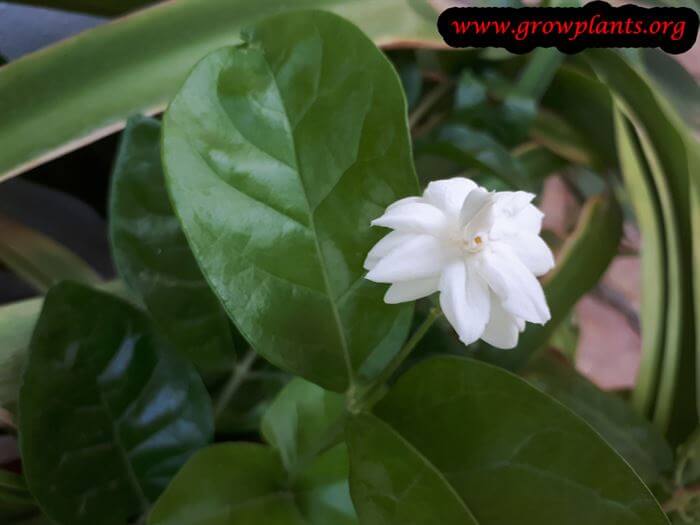
- Leaves & Foliage: Dark green, elliptic leaves.
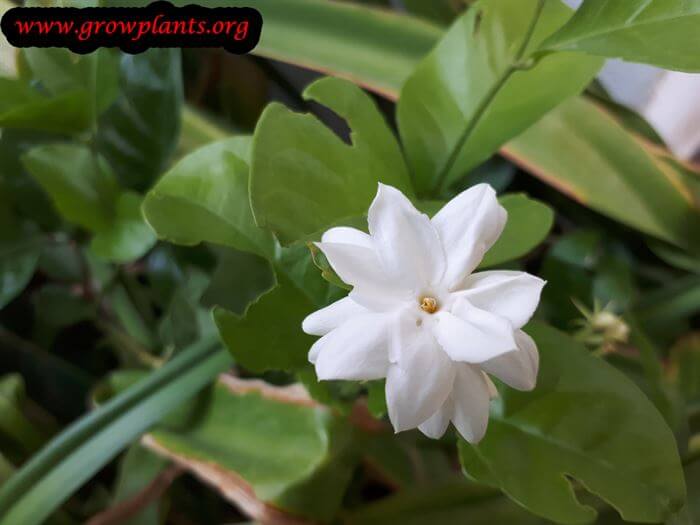
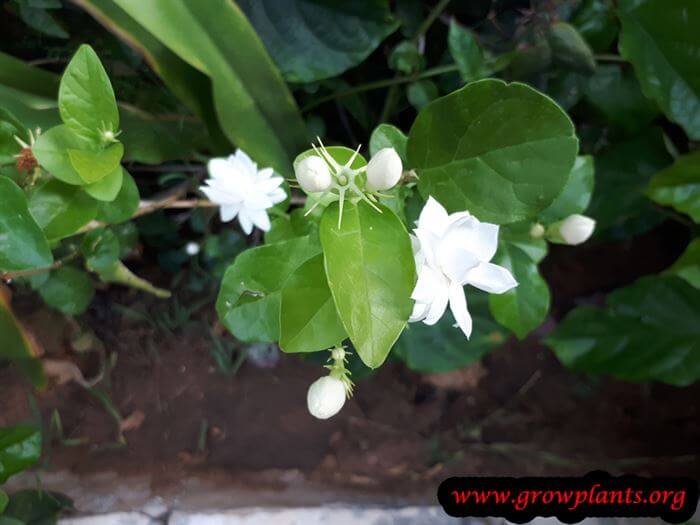
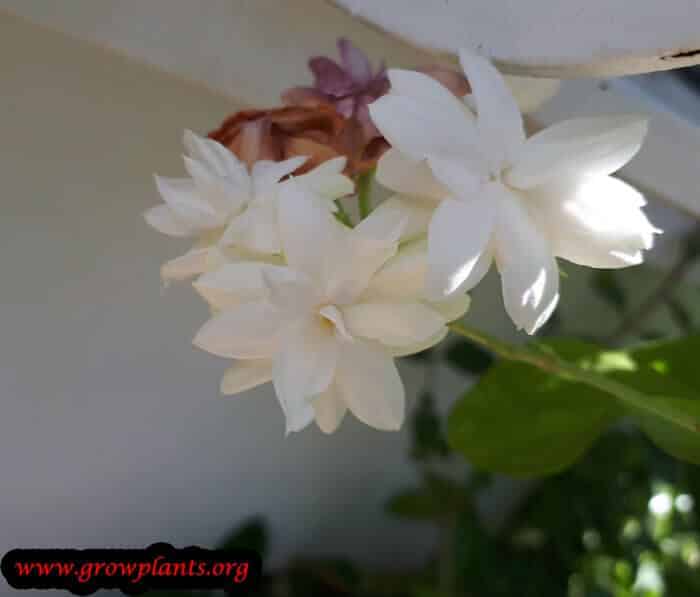
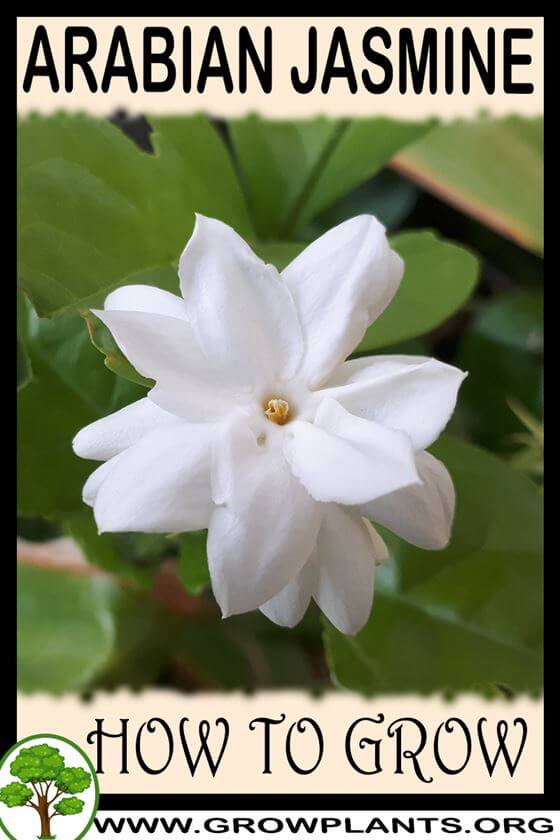
- Flower Characteristics: Intensely fragrant, white, five-petalled (often double) flowers in clusters.
Primary Uses & Landscape Value
- Edible Uses: Flowers are used to scent jasmine tea and in garlands and perfumery.
- Functional & Ornamental Roles: Fragrant ornamental climber for trellises, arbours, hedging and groundcover; attracts pollinators and is valued in perfumery.
Care Guide: Planting, Soil & Watering
Overview: Arabian jasmine (Sambac) is a warm-climate evergreen shrub-to-vine for full sun to part shade in fertile, well-drained soil, easily trained on a support. Prized for its intensely fragrant white flowers, it is vigorous and can spread aggressively.
Quick Care Requirements
| Requirement | Ideal Condition |
|---|---|
| Planting Season | In spring or autumn |
| Growth Rate | Moderate to fast |
| Soil Type | Fertile and well-draining |
| Water Need | Moderate; keep evenly moist, not waterlogged |
Planting & Establishment
- Best Planting Season: Plant in spring or autumn, in the milder parts of the growing season.
- How to Plant:
- Hole Preparation: Dig a hole a little wider than the root ball in fertile, well-drained soil.
- Soil Amendments: Work in compost or organic matter to enrich the soil and improve its structure.
- Planting Depth: Set the root ball at the level it grew, firm gently, and add a support or trellis to train the stems.
- Growth Speed & Expectations: A moderate to fast grower reaching 1-3 m; prune after flowering to keep the vigorous, arching growth in bounds.
Soil, Watering & Drainage Care
- Soil Mix & Drainage Needs: Fertile but free-draining soil suits it best; in containers use a good potting mix with drainage and keep it evenly moist.
- Watering Schedule & Technique:
- Young / Newly Planted: Water regularly to keep the soil evenly moist while establishing.
- Established: Water when the surface begins to dry, keeping the soil moderately moist.
- Seasonal Adjustments: More in summer heat, less in winter.
Climate, Light & Hardiness
Arabian jasmine is a subtropical to warm-temperate plant that thrives in full sun to half shade with warm, humid growing conditions. It is evergreen where winters stay mild, but it is frost-tender and needs shelter or container culture outside its warm-climate comfort zone.
Quick Climate Specifications
| Climate Zones | Subtropical, Mediterranean |
|---|---|
| USDA Hardiness Zones | 9–11a |
| Cold Damage Begins | Approximately 10°C (50°F) |
| Approx. Survival Minimum | Established plants may briefly tolerate light frost near 0°C (32°F), but sustained freezing kills top growth |
| Frost Tolerance | Low |
| Light Conditions | Full Sun / Half Shade |
| Wind Tolerance | Moderate |
Sunlight & Light Exposure
Optimal Light Setup
Full sun brings on the heaviest, most fragrant bloom; half shade is a good compromise in very hot climates or as an indoor/patio plant.
Direct Sun Requirement
Several hours of direct sun daily encourages the strongest flowering and compact growth.
Shade & Heat Management
In the hottest inland summers, light afternoon shade helps prevent leaf scorch without noticeably reducing bloom.
Best Exposure / Orientation
A south- or west-facing bed or container, ideally sheltered from cold winter wind, suits this plant best.
Temperature Extremes & Hardiness
USDA Hardiness & Regional Limits
Reliably grown outdoors in zone 9–11a. Outside that range, it is best grown in a container and moved under cover for winter.
Cold Damage & Winter Protection
Foliage and flower buds begin to suffer at around 10°C (50°F). In marginal zone 9 gardens, mulch the root zone and bring potted specimens indoors before frost threatens.
Frost Sensitivity
Frost tender: a hard freeze kills stems back to the ground or destroys the whole plant, though mature specimens in zone 9 may resprout from the roots after a light frost.
Extreme Heat Tolerance
Handles hot, humid subtropical summers well once established, provided soil moisture is kept consistent.
Wind, Humidity & Microclimate
Humidity Preferences
Prefers moderate to high humidity, reflecting its native tropical and subtropical Asian range; flowering and fragrance are best in warm, humid conditions.
Dry-Air Tolerance
Tolerates lower humidity but may grow more slowly and flower less fragrantly in very dry air; indoor plants benefit from a nearby humidity tray.
Wind Tolerance
Established hedges and vines handle typical garden wind reasonably well, though young plants appreciate a wind-sheltered spot while they establish.
Microclimate Recommendations
In zone 9, planting near a warm wall or in a courtyard microclimate helps buffer winter cold snaps.
Growing in Pots, Balconies & Indoors
Arabian jasmine (Jasminum sambac) is a fragrant, fast-growing evergreen shrub-to-vine, 1-3 m, grown for its sweetly scented white flowers. The grower does not list it as an indoor houseplant – it is a sun-loving climber best trained on a trellis outdoors – but it grows well in a large container on a warm patio or balcony, and in cold climates a pot lets you shelter it over winter.
Quick Details
- Container Size: A large container with a trellis or support; pot up in stages as it climbs
- Indoor Suitability: Not a true houseplant – too vigorous and sun-hungry; only a very bright sunroom near a sunny window comes close
- Best Spot: Full sun to half shade, outdoors with support to climb
- Soil & Drainage: Well-drained, organic-rich mix; strong drainage holes
- Watering in Pots: Average amounts; keep evenly moist in growth but never waterlogged – pots dry faster than open ground
Indoors & On the Windowsill
- Not a room houseplant: The grower marks it as unsuitable as an indoor houseplant. As a 1-3 m fragrant climber it needs strong light and room to grow; a bright, airy conservatory or a very sunny window with a support is the closest indoor option, mainly to enjoy the scent.
- Overwintering under cover: Frost-tender (hardiness zone 9-11a). A pot is useful for portability – in cold climates keep it containerised and move it into a bright, frost-free space for winter, then back out when it warms.
On a Balcony or Patio
- Light, support & heat: Give it a sunny, sheltered spot with a trellis, obelisk or railing to climb. It flowers freely in warmth, but reflected heat dries pots fast, so water attentively. Shelter new growth from strong wind.
- Keep it in bounds: It is vigorous and can be invasive in the open ground, so a container is a tidy way to enjoy it – prune to keep it shapely.
Choosing the Pot, Soil & Long-Term Care
- Pot & drainage: A large pot with strong drainage holes; skip a standing water saucer. Glazed or plastic pots hold moisture more steadily than fast-drying terracotta, which suits its average water needs.
- Potting mix: A well-aerated, organic-rich mix – coir or peat with perlite.
- Feeding: Feed regularly through the growing and flowering season, as potted climbers leach nutrients and bloom heavily.
- Repotting: Pot up in stages as it grows; refresh the top of the mix yearly and prune after the main flush to keep it flowering and contained.
Growing this plant in a greenhouse
A greenhouse can give arabian jasmine frost protection and cold protection. In the right climate it may also be kept growing through winter, depending on how much warmth and light are provided.
Greenhouse at a glance
| Greenhouse suitability | Conditional - depends on your climate |
|---|---|
| Main benefits | frost protection, cold protection |
| Season extension | earlier spring & later autumn |
| Outdoor protection advisable below | about 10°C |
| Maintain greenhouse minimum | around 10°C for active growth |
| Suitable types | heated greenhouse, polycarbonate greenhouse, lean-to |
| Heating | Heating is recommended in cold climates for continuous growth. |
Related greenhouse guides
- Greenhouses: How to Choose the Right Greenhouse
- Best Greenhouse Heaters
- Greenhouse Climate Control: Temperature, Ventilation and Humidity
- Best Lean-To Greenhouses
Fertilizing & Feeding
A moderate feeder. This vigorous, fragrant-flowered shrub grows fast as a hedge or ground cover and flowers well with steady balanced feeding through its spring-into-summer growth and bloom, tapering off once flowering ends.
Quick Fertilizing Specs
| Feeding Level | Moderate feeder |
|---|---|
| Main Nutrient Priority | Balanced feeding with adequate nitrogen to support this shrub’s fast, dense growth as a hedge or ground cover; extra phosphorus is not needed for the fragrant flowers |
| Best Feeding Period | Spring into summer, during active growth and bloom |
| Organic Options | Compost worked into the soil at planting and as a topdressing |
| Reduce/Stop Feeding | Stop feeding once bloom is over and growth slows in cooler weather |
| Micronutrients | Usually met by a complete fertilizer; correct only diagnosed issues |
| Soil pH | Tolerates a wide range in well-drained soil |
Feeding by Growth Stage
Spring growth before bloom
Support this fast-growing shrub’s flush of new stems and foliage as it fills in a hedge or ground cover planting.
| Nutrient direction | A balanced complete fertilizer with adequate nitrogen supports the vigorous, dense growth this jasmine is prized for. |
|---|---|
| Timing | As new growth resumes in spring, ahead of the main bloom. |
| Frequency | Regular light-to-moderate feedings support the spring flush of growth. |
| Fertilizer types | A balanced complete fertilizer, Compost worked into the soil |
| Routine trace nutrients | iron, manganese |
| Precautions | This shrub can be aggressive and spread readily, so avoid heavy nitrogen feeding, which only adds to rank, hard-to-control growth. |
Spring-into-summer bloom
Keep the plant flowering well through its fragrant spring-into-summer bloom season.
| Nutrient direction | Steady, balanced nutrition supports strong flowering; extra phosphorus is not needed to bloom well. |
|---|---|
| Timing | Through the spring-into-summer bloom period. |
| Frequency | Light, regular feeding through the bloom season keeps flowering steady. |
| Fertilizer types | A balanced complete fertilizer, A balanced fertilizer formulated for flowering shrubs |
| Routine trace nutrients | iron, manganese |
| Precautions | Keep nitrogen moderate during bloom so the plant favors flowers over purely vegetative growth. |
After bloom and cooler-season rest
Let the shrub coast after flowering ends and through the cooler, slower part of the year.
| Nutrient direction | None – withhold fertilizer once flowering is over and the plant is not in active growth. |
|---|---|
| Timing | After the main bloom finishes and through the cooler months. |
| Frequency | No feeding at this stage; resume only when spring growth returns. |
| Fertilizer types | No feeding at this stage; do not fertilize until spring growth resumes. |
| Precautions | Do not fertilize now; feeding an already vigorous, spreading shrub out of season only encourages unwanted growth. |
Nutrient Deficiency Signs & Corrections
Older, lower leaves fade to pale green or yellow and the shrub grows and flowers weakly for its usual vigorous self.
| Possible causes | low available soil nitrogen, nitrogen leached from light or sandy soils, a planting left unfed through its active growing season |
|---|---|
| Appears first on | older, lower leaves |
| What to check | recent feeding history, soil texture and drainage, overall vigor of new growth compared with this shrub’s normally fast pace |
| Possible correction | Apply a balanced complete fertilizer with adequate nitrogen during spring active growth and monitor for recovery. |
New leaves turn pale to yellow between the veins while the veins themselves stay green.
| Possible causes | high soil pH reducing iron availability, poorly drained or overly wet soil limiting root uptake, root stress from compacted or waterlogged soil |
|---|---|
| Appears first on | newest leaves at the shoot tips |
| What to check | soil pH, drainage around the root zone, root health for compaction or waterlogging |
| Possible correction | Correct pH if high, improve drainage, and, only if a true deficiency is confirmed, apply a chelated iron product per its label. |
Leaf margins brown or scorch and growth stalls despite adequate watering, especially in containers.
| Possible causes | fertilizer salt buildup in the root zone, under-watering that concentrates salts, excessive or too-frequent feeding during the growing season |
|---|---|
| Appears first on | leaf margins and tips |
| What to check | recent fertilizer amounts and frequency, watering consistency, drainage, especially in containers |
| Possible correction | Ease off feeding, water thoroughly to flush accumulated salts, then return to lighter feeding. |
Pruning, Training & Seasonal Maintenance
Arabian jasmine flowers on new growth, so the winter pruning window noted for this species lines up with real horticultural logic: cutting back before the spring growth flush maximises the fresh wood that carries the coming season’s fragrant blooms. It is a vigorous, aggressive grower that can be trained as a shrub/hedge, a ground cover, or a twining vine on a trellis, and the training approach – not just the timing – should match which of those forms it is being grown as.
Quick Pruning & Maintenance Specs
| Pruning Tolerance | High |
| Primary Pruning Window | Winter, before the spring growth flush |
| Secondary Maintenance Window | Light shaping/tip-pinching through the growing season |
| Typical Frequency | One hard annual cutback, plus ongoing containment trims |
| Main Objective | Renew flowering wood; contain this plant’s vigorous, spreading growth |
| Young Plant Priority | Choose and train the form – shrub/hedge, ground cover, or trellised vine |
| Mature Plant Priority | Winter renewal cut; ongoing control of suckers, layered stems and spread |
| Best Tool Type | Bypass secateurs (and hedge shears only if grown as a clipped hedge) |
| Avoid Heavy Pruning During | Active spring–summer bloom |
Pruning by Plant Age & Size
Newly Established
Minimal – remove only damaged growth; decide and start training toward the intended form (staked/trellised vine vs. free-standing shrub) early, since redirecting a mature plant later is harder.
Young / Formative
Two valid systems depending on the growing form: as a vine, select 2–3 main twining leaders and tie them to a trellis or support as they extend; as a shrub or hedge, pinch tips to build multiple low branches instead of a climbing habit.
Mature / Established
Winter renewal cutback of the past season’s growth, plus ongoing removal of stems that have rooted where they touch soil (layering) if spread is not wanted, and of unwanted trellis growth reaching beyond its support.
Seasonal Pruning Schedule
Dormant/Winter
Objective: renew the wood that will carry the spring–summer bloom. Remove: older, less productive stems and about a third of the previous season’s growth, cutting to a healthy bud or side shoot. Do not remove: the whole plant’s framework at once – stage a hard renewal over two seasons on very old, overgrown specimens. Expected response: vigorous new shoots that flower in spring–summer. Flowering impact: positive – this is the main driver of the coming bloom.
Ongoing Sanitary
Objective: keep growth contained through the season. Remove: stray runners rooting into unwanted ground (layering), suckers from the base if a hedge form is wanted, and any dead/aphid- or scale-damaged tips. Do not remove: stems currently in bud/flower if avoidable. Expected response: controlled spread without interrupting bloom. Flowering impact: none if kept light.
Structural Pruning & Training
As a vine: tie leaders to the trellis as they grow, since this species climbs by twining rather than clinging, and select which shoots become permanent framework vs. which get pinched back. As a shrub/hedge: remove crossing/inward growth and control height & spread with the winter cutback plus in-season trims.
Special Growth to Remove
- Rooted layers – stems that have touched soil and rooted, given this plant’s noted aggressive/invasive tendency; cut them free of the parent if spread is not wanted.
- Basal suckers – remove if a single-form hedge/shrub is wanted; otherwise they simply thicken the base, which is fine for a dense hedge.
- Dead or pest-damaged tips (aphids, scale) – remove and dispose of, don’t compost heavily infested material.
Container & Small-Space Pruning
In a container, harder and more frequent pinching keeps the vigorous growth in scale; without a trellis, tip-pinching instead of letting it climb will keep it as a compact mounding shrub rather than a sprawling vine.
Tools
Bypass secateurs for the winter renewal cut and stem selection; soft ties or stakes for training leaders onto a trellis; hedge shears only if it is being grown and clipped as a formal hedge – for an informally shaped shrub or a trellised vine, shears would strip flower buds indiscriminately and are not appropriate.
Tool Hygiene & Disease Risk
Routine – no specific pathogen risk is flagged, but aphids and scale insects noted on this species can be moved on tools/hands between plants, so wipe down after working on an infested specimen.
Cut Placement & Technique
Cut to an outward-facing bud on shrub-trained plants to keep the centre open; on the vine form, cut back to a strong node when removing excess trellis growth so the remaining leader keeps climbing cleanly.
Heavy Pruning & Rejuvenation
Tolerates hard renewal pruning well, cutting an overgrown specimen back by half or more in winter; expect a flush of vegetative regrowth before flowering resumes later in the season, and stage very old, woody plants over two winters rather than removing everything at once.
Post-Pruning Care
Water normally; watch the resulting flush of soft new growth for aphids, a pest already noted on this species. No extra feeding is needed beyond normal seasonal care.
Common Pruning Mistakes
- Pruning hard in spring or summer, cutting off the season’s new flowering wood before it blooms.
- Letting trailing stems root into the ground unchecked, given this plant’s aggressive spreading habit, then having to dig out rooted layers later.
- Shearing a specimen or trellised plant as if it were a formal hedge, losing the open, flower-covered look.
When NOT to Prune
Avoid heavy cutting during the spring–summer bloom, and avoid disturbing newly tied-in trellis leaders while they are still establishing their grip.
Recommended Tools (by task)
- Winter renewal cutback (mature plants): bypass_secateurs.
- Training leaders onto a trellis (young/vine form): soft_ties_stakes.
- Formal hedge clipping only (if grown as a hedge, not as a vine or informal shrub): hedge_shears.
Propagation Guide
Arabian jasmine is propagated almost entirely from semi-hardwood stem cuttings (or air layering for larger branches) rather than seed — many double-flowered forms rarely set viable seed, and even the single-flowered form is most reliably kept true through vegetative propagation. Propagation is moderate: cuttings root well but benefit from consistent warmth and humidity, and can take a while to establish.
Quick Propagation Specs
| Best Propagation Method | Semi-hardwood stem cuttings |
| Alternative Methods | Air layering; seed (single-flowered forms, uncommon in cultivation) |
| Propagation Difficulty | Moderate |
| Seed True-to-Type | Yes for the single-flowered form; double-flowered cultivars are cultivar-dependent and rarely produce viable seed |
| Vegetative True-to-Type | Yes |
| Best Propagation Season | Spring and autumn |
| Cutting Rooting Time | Several weeks under warm, humid conditions |
| Germination Temperature | Warm, roughly 24–27°C (75–80°F) |
| Seed Sowing Depth | Lightly cover |
Growing from Seed
Seed Handling & Viability
Relevant mainly to the single-flowered form, since many popular double-flowered varieties rarely set viable seed.
Germination Conditions
Use a well-drained mix kept warm and evenly moist.
Stem Cuttings
Cutting Type
Semi-hardwood tip or nodal cuttings.
Best Timing
Warmer months, during active growth.
Cutting Preparation
Cut just below a node and remove the lower leaves before inserting the cutting into the rooting medium.
Rooting Setup
Use a well-drained mix and keep humidity high around the leafy top (for example with a clear cover or misting) so the cutting doesn’t wilt before it roots.
Rooting Hormone
Can improve consistency and is commonly used commercially, though not strictly required for home propagation.
Rooting Time
Typically several weeks under warm, humid conditions.
Air & Ground Layering
Larger, more mature branches can be air layered to get a head start on a bigger plant faster than starting from a small cutting; this is a useful alternative for a shrub-to-vine grower like this one with plenty of trellised stems to work from.
Bloom & Edible Flower Guide
Quick Details
- Bloom Season: Spring and summer, and often on and off through warm spells
- Time to First Bloom: Flowers readily once established, often within the first year or two
- Flower Appearance: Small, intensely fragrant white flowers with five petals (or fully double forms), carried in small clusters
- Edibility: The flowers of true Arabian jasmine (Jasminum sambac) are edible and are the classic flower used to scent jasmine tea and flavour desserts – note that this applies only to true jasmine, not to unrelated plants sold under a “jasmine” name
Detailed Blooming Overview
Arabian jasmine is grown above all for its scent – small white flowers that open in the evening and fill the air with a sweet, heady fragrance. The blooms come mainly in spring and summer but a healthy plant in a warm spot will flower in flushes over a long season. These are the flowers traditionally used to perfume jasmine tea, so the plant is as useful as it is ornamental.
Flower Characteristics
- Small, waxy white flowers, single (five-petalled) or fully double depending on the form.
- Strongly fragrant, especially in the evening, and carried in small clusters.
Bloom Care & Thinning
- Light and warmth: Plenty of sun and warmth bring the most flowers; a sheltered, frost-free spot suits it best.
- Prune after flowering: A light trim once a flush finishes shapes the plant and encourages the new growth that carries the next flowers.
- Feeding: Steady feeding through the growing season supports repeated flushes of bloom.
- Pollinators: The evening scent draws moths and other pollinators to the flowers.
Bloom Health & Protection
- Jasmine bud worm can bore into the buds and cause them to drop before opening – picking off affected buds and a treatment such as Bt or neem oil, timed to the budding period, helps keep it down.
- Aphids and whiteflies on the buds and soft shoots can weaken flowering – a spray of insecticidal soap or neem oil usually clears them.
Fruit & Uses
The fragrant white flowers of Arabian jasmine (Jasminum sambac) are the edible/culinary part, prized for scenting tea and other foods rather than eaten as a dish in their own right. Flowers are used fresh, no cooking needed.
Quick Edible Specs
| Edible Parts | Flowers |
|---|---|
| Main Use(s) | Culinary – flavouring/scenting tea (jasmine tea) and, in small amounts, syrups or desserts |
| Eaten Raw or Cooked | Raw/fresh – infused rather than cooked |
| Preparation Required | None; use freshly opened flowers, remove the green calyx if desired |
| Harvest Season | Spring through summer, during the bloom season (see Blooming) |
| Time to First Harvest | Once the plant is established and flowering; see Blooming for the bloom season |
| Storage | Best used fresh the day of picking, or dried for later tea-scenting; loses fragrance quickly |
| Safety/Toxicity Caveat | Only the flowers are used; no specific caveat noted for this species, but only eat flowers known to be free of pesticide residue |
Flowers & Flower Buds
Flowers are picked when freshly opened and most fragrant, typically gathered in the morning or evening when scent is strongest. The clustered white (or double) flowers described on this page are the classic jasmine used to scent tea – traditionally, fresh flowers are layered with tea leaves so the leaves absorb the fragrance overnight, then the spent flowers are removed. Flowers are also used, in small quantities, to flavour syrups, desserts, or infused water.
Harvesting
Pick individual open flowers by hand; picking does not damage the plant and can be repeated through the bloom season as new flowers open. There is no single harvest window – flowers are gathered as they open.
Preparation, Uses & Safety
Use flowers fresh for scenting tea or syrups, or air-dry them for later use; no cooking or detoxification step is required. Because the flowers are the only part used, avoid harvesting from plants treated with garden chemicals if the flowers are intended for consumption.
Pests, Diseases & Troubleshooting
Overview: Jasmines are vigorous but generally resilient; their main threats are sap-sucking insects (aphids, scale, mealybugs, whiteflies and spider mites) whose honeydew invites sooty mold, plus fungal leaf spots in still, humid air. Manage them with good airflow, routine inspection of new growth, and cultural or organic controls before reaching for any spray.
Quick Troubleshooting Overview
| Issue / Pest | Main Symptom | Primary Solution |
|---|---|---|
| Aphids | Sticky honeydew, sooty mold, distorted new shoots | Blast off with water; insecticidal soap; encourage ladybirds |
| Scale & mealybugs | Brown bumps or white fluff on stems, sticky leaves | Wipe/prune infested wood; horticultural oil |
| Spider mites | Fine stippling, dull leaves, webbing in dry heat | Raise humidity; hose foliage; miticidal soap or oil |
| Whiteflies | Tiny white flies rising when disturbed, yellowing | Yellow sticky traps; insecticidal soap under leaves |
| Leaf spot / blight | Brown or black spots, premature leaf drop | Improve airflow, remove debris, copper if persistent |
| Chlorosis | Yellow leaves with green veins on alkaline soil | Acidify soil, apply chelated iron |
Common Pests & Management
- Aphids (Aphis spp.):
- Symptoms: Clusters of soft green or black insects on tender shoot tips and buds; sticky honeydew, curled new leaves and black sooty mold following behind. Look under growing tips first.
- Prevention & Control: Knock colonies off with a firm water jet, pinch badly infested tips, and support ladybirds and lacewings. For stubborn outbreaks use insecticidal soap or a light horticultural oil, coating the shoot tips.
- Soft & armored scale (Coccus / Saissetia spp.):
- Symptoms: Immobile brown, tan or black bumps along stems and leaf undersides; foliage turns sticky then blackens with sooty mold, and heavy infestations weaken the vine.
- Prevention & Control: Prune out the worst-encrusted wood, scrub light infestations off by hand, and smother the rest with horticultural or neem oil applied in the cool of evening; repeat as crawlers hatch.
- Mealybugs (Planococcus citri):
- Symptoms: White cottony tufts in leaf axils and along stems, sticky residue and stunted, distorted growth; common on plants under cover.
- Prevention & Control: Dab spots with an alcohol-moistened swab, hose the plant down, and treat persistent colonies with insecticidal soap or oil; avoid over-feeding with nitrogen, which fuels them.
- Spider mites (Tetranychus urticae):
- Symptoms: Fine pale stippling, a dull bronzed look, and fine webbing on leaf undersides during hot, dry spells.
- Prevention & Control: Raise humidity and rinse foliage regularly; mites hate moisture. Treat with insecticidal soap or a miticidal horticultural oil, and avoid dusty, drought-stressed conditions.
- Whiteflies (Trialeurodes vaporariorum):
- Symptoms: Tiny white moth-like flies that flutter up when the plant is disturbed; yellowing, sticky leaves and sooty mold.
- Prevention & Control: Hang yellow sticky traps, encourage parasitic wasps, and spray insecticidal soap on leaf undersides where the scale-like nymphs feed.
- Jasmine budworm & blossom midge (Hendecasis duplifascialis / Contarinia maculipennis):
- Symptoms: Buds fail to open, discolor, swell or drop; caterpillars bore into buds while midge larvae feed inside, ruining the fragrant flowers this species is grown for.
- Prevention & Control: Pick off and destroy affected buds promptly, clear fallen buds to break the cycle, and encourage natural parasites; a targeted bio-insecticide (Bacillus thuringiensis) helps against the caterpillar stage.
Diseases & Fungal Issues
- Fungal leaf spot & blight (Cercospora / Alternaria spp.):
- Symptoms: Brown to black spots, sometimes ringed, that enlarge and merge; heavy spotting brings premature leaf drop, worst in crowded, humid, poorly ventilated plants.
- Treatment & Management: Remove and bin affected leaves, thin growth for airflow, water at the base to keep foliage dry, and apply a copper-based fungicide only if spotting keeps spreading.
- Rust (Uromyces / Puccinia spp.):
- Symptoms: Orange to rusty-brown pustules on leaf undersides with yellow flecking above; leaves may yellow and fall.
- Treatment & Management: Strip infected leaves, avoid overhead watering, improve spacing, and use a sulfur or copper fungicide on recurring cases.
- Sooty mold:
- Symptoms: A black, soot-like film coating leaves and stems that blocks light but does not infect tissue directly.
- Treatment & Management: It is a symptom of sap-sucking pests – control the aphids, scale, mealybugs or whiteflies producing the honeydew, then wipe or rinse the film away.
- Root & stem rot (Phytophthora / Fusarium spp.):
- Symptoms: Wilting despite moist soil, blackening at the base, and collapse; caused by waterlogged, poorly drained soil.
- Treatment & Management: Plant in free-draining soil, never let the crown sit in water, and remove and destroy plants that have rotted at the base.
Growing Difficulties & Abiotic Problems
- Chlorosis (iron deficiency):
- Cause & Symptoms: Yellowing leaves with green veins, most on new growth, common in alkaline or over-limed soils that lock up iron.
- Correction Strategy: Lower soil pH with acidic organic matter and apply chelated iron; keep mulched to buffer the root zone.
- Failure to bloom:
- Cause & Symptoms: Lush leaves but few flowers from too much nitrogen, too little light, or mistimed pruning that removes flowering wood.
- Correction Strategy: Grow in full sun to light shade, ease off high-nitrogen feed, use a balanced or bloom feed, and prune right after flowering.
- Leaf drop & yellowing:
- Cause & Symptoms: Sudden yellowing and leaf loss from overwatering, cold drafts, or a sharp change in position or temperature.
- Correction Strategy: Let the top of the soil dry between waterings, shelter from cold winds, and acclimate plants gradually when moving them.
- Cold / frost damage:
- Cause & Symptoms: Blackened, wilted shoots after frost on the more tender species.
- Correction Strategy: Site in a sheltered spot, mulch the roots, and protect or bring tender container jasmines under cover in cold snaps.
What Helps – Products & Tools
For jasmine, lean on cultural fixes first – airflow, base watering and hand-removal – then reach for insecticidal soap, neem or horticultural oil for aphids, scale, mealybugs, mites and whiteflies. Yellow sticky traps monitor whiteflies; copper or sulfur fungicide handles persistent leaf spot and rust; and chelated iron corrects lime-induced yellowing. Spray oils in the evening to protect pollinators.