Plant Profile & Key Characteristics
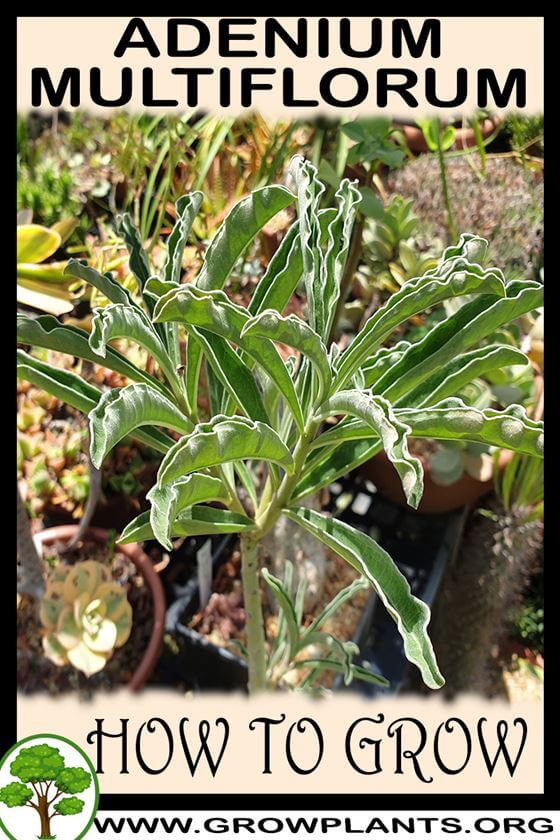
Overview: Adenium multiflorum (impala lily / desert rose) (Adenium multiflorum) is a slow-growing, succulent perennial shrub reaching 0.5-2 m (20-80 in), with a swollen water-storing base. It is grown as an ornamental specimen, bonsai and houseplant, and is drought-deciduous, dropping its leaves in dry or cool spells but able to stay evergreen if kept watered.
Quick Specifications
| Specification | Attribute |
|---|---|
| Plant Type / Life Cycle | Perennial (succulent shrub) |
| Foliage Type | Drought-deciduous (can remain evergreen with watering) |
| Mature Size | 0.5-2 m (20-80 in) |
| Growth Rate | Slow to moderate |
| Root System | Caudiciform – swollen, water-storing base (caudex) |
| Toxicity | Toxic – the milky sap contains cardiac glycosides and is poisonous if ingested |
| Hardiness | USDA zones 10b-12 |
Growth Form & Structure
- Height & Spread: 0.5-2 m (20-80 in) in the ground; readily kept far smaller as a potted or bonsai specimen, where the swollen caudex is displayed above the soil.
- Growth Habit & Form: Fleshy, succulent shrub with a thick, tapering caudex and stout branches carrying leaves toward the tips.
- Lifespan & Maturity: Long-lived perennial that thickens its caudex slowly over many years.
Anatomy & Physical Features
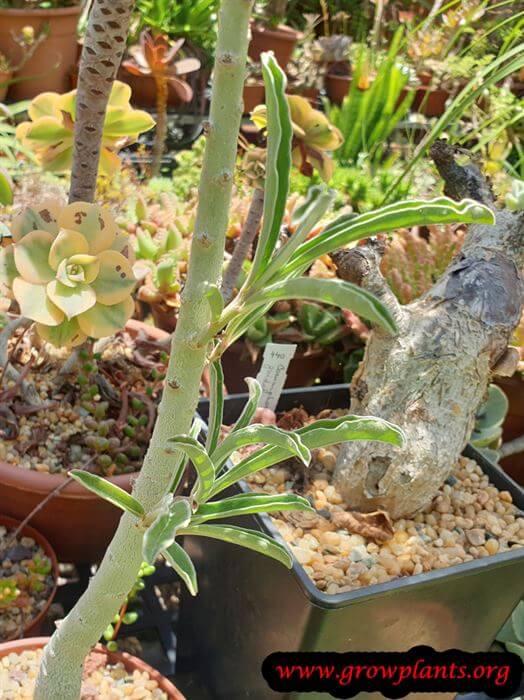
- Trunk & Bark: Swollen, water-storing caudex and thick branches with smooth, pale grey-green bark.
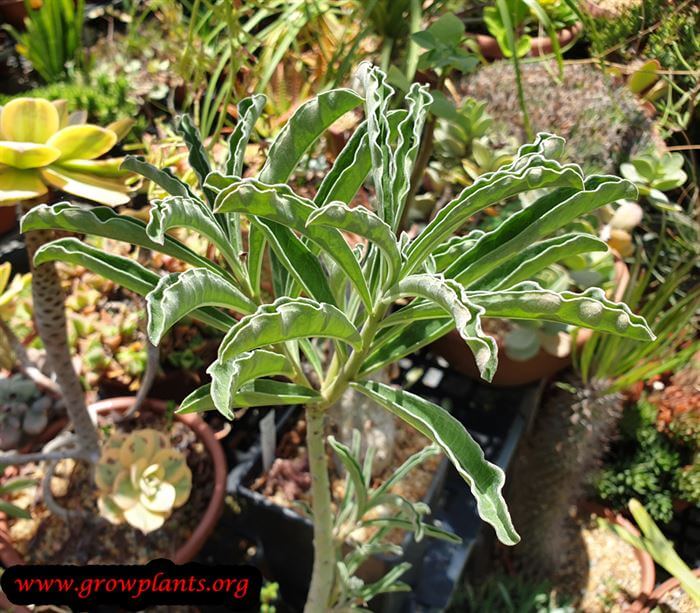
- Leaves & Foliage: Green, glossy, egg-shaped (obovate) leaves, narrow at the base and wider toward the tip, clustered at the branch ends.
- Flower Characteristics: Showy, mostly flat, five-petalled flowers (sometimes double or full) in pink or pink-and-white.
Primary Uses & Landscape Value
- Functional & Ornamental Roles: Ornamental flowering specimen for bonsai, containers, houseplant culture and hot, dry (desert / xeriscape) plantings.
Care Guide: Planting, Soil & Watering
Overview: The desert rose is a succulent shrub with a swollen water-storing base that needs a bright, frost-free position and fast-draining soil. It stores moisture in its caudex, so it is watered on a soak-and-dry basis – let the mix dry out fully before watering again to keep the roots and base from rotting.
Quick Care Requirements
| Requirement | Ideal Condition |
|---|---|
| Planting Season | Autumn through spring in frost-free climates |
| Growth Rate | Slow to Moderate |
| Soil Type | Gritty, fast-draining succulent mix |
| Water Need | Low – soak-and-dry; let the soil dry out completely between waterings |
Planting & Establishment
- Best Planting Season: In frost-free climates plant from autumn through spring; always keep it out of frost, which the plant cannot tolerate.
- How to Plant:
- Hole Preparation: Dig a hole a little wider than the root ball in a warm, sunny, sheltered spot, and loosen any heavy surrounding soil to improve drainage.
- Soil Amendments: Blend coarse sand or grit into the soil (or use a dedicated cactus/succulent mix) so water drains away quickly – avoid rich, water-holding ground.
- Planting Depth: Set the plant so the swollen caudex sits at or just above soil level; do not bury the base, as buried tissue rots easily.
- Growth Speed & Expectations: Growth is slow to moderate, forming a compact shrub with a characterful thickened base over time.
Soil, Watering & Drainage Care
- Soil Mix & Drainage Needs: Use a gritty, very free-draining mix so water never lingers around the roots. It grows well in a container, where a cactus/succulent potting mix with plenty of drainage holes suits it far better than heavy garden soil.
- Watering Schedule & Technique:
- Young / Newly Planted: Water sparingly to settle it in, letting the surface dry before watering again while the roots establish.
- Established: Soak the soil thoroughly, then let it dry out completely before the next watering; err on the side of too little rather than too much.
- Seasonal Adjustments: Water a little more in the warm growing season and keep it nearly dry when cool and leafless, so the caudex is never sitting in wet soil.
Climate, Light & Hardiness
Desert rose is a frost-tender succulent shrub from warm African savanna climates that wants full sun for the best flowering and form, though it tolerates a surprisingly wide range of light including full shade indoors; it needs essentially frost-free conditions and has no meaningful cold hardiness.
Quick Climate Specifications
| Climate Zones | Desert, Mediterranean, Subtropical (or houseplant) |
|---|---|
| USDA Hardiness Zones | 10b–12 |
| Cold Damage Begins | Approximately 10°C (50°F) |
| Approx. Survival Minimum | Essentially frost-free; even brief exposure near 0°C (32°F) risks fatal damage |
| Frost Tolerance | None |
| Light Conditions | Full Sun / Half Shade / Full Shade |
Sunlight & Light Exposure
Optimal Light Setup
Full sun produces the most compact growth, the healthiest swollen caudex, and the most flowers; the site's own data shows it also tolerates half shade and even full shade - useful for indoor culture - though flowering is reduced with less light.
Direct Sun Requirement
Outdoors, needs strong direct sun for peak flowering; indoors, give it the brightest window available.
Shade & Heat Management
In very intense, prolonged desert heat with reflected sun (against a pale wall, for example), light afternoon shade can help, though most plants take full sun without issue.
Best Exposure / Orientation
A south-facing, full-sun outdoor bed, or the brightest available window indoors or in a greenhouse in cooler climates.
Temperature Extremes & Hardiness
USDA Hardiness & Regional Limits
Reliable outdoors only in essentially frost-free zone 10b–12; elsewhere it must be grown as a container or houseplant and brought under cover for winter.
Cold Damage & Winter Protection
Cool temperatures below roughly 10°C (50°F) can bring on leaf drop and stem softening, with a real risk of rot in damp soil. Bring container plants indoors well before any risk of cold nights, and keep the soil nearly dry through the cool season.
Frost Sensitivity
Essentially no frost tolerance - the site's own care notes specify frost-free conditions are required, and even brief light frost can fatally damage the stems and caudex.
Extreme Heat Tolerance
Excellent; well adapted to hot desert and subtropical summers provided drainage is sharp.
Wind, Humidity & Microclimate
Humidity Preferences
Not fussy about ambient humidity - its native savanna habitat has both a humid wet season and a dry season, so soil-moisture management matters more than air humidity.
Dry-Air Tolerance
Good - handles dry indoor or desert air well, part of why it thrives as a houseplant in arid regions.
Wind Tolerance
The thick but brittle stems can snap in strong wind, particularly on container-grown plants with a heavy caudex; a sheltered spot is best for potted specimens.
Rainfall & Seasonal Moisture
Adapted to a wet-summer/dry-winter seasonal pattern: it is naturally summer-deciduous if kept dry and cool, but per the site's notes can stay evergreen with consistent warmth and water. Mirror that wet/dry seasonality rather than watering evenly year-round.
Microclimate Recommendations
A warm, sheltered, full-sun spot - a patio, courtyard, or against a warm wall - buffers both wind and marginal winter chill; move container plants under cover well ahead of any cool snap.
Growing in Pots, Balconies & Indoors
Adenium multiflorum (Desert rose) is a swollen-stemmed succulent shrub prized as a flowering bonsai-style pot plant. The grower confirms it can be grown indoors as a houseplant, and its love of warmth, sun and a dry root run makes it a natural container subject. Note that Adenium sap is poisonous, so keep it away from children and pets.
Quick Details
- Container Size: A container matched to the caudex and root system – wider than deep; pot up gradually as it grows, bonsai-style
- Indoor Suitability: A genuine houseplant – the grower says yes; give it the brightest window you can
- Best Spot: Full sun for best flowering; it tolerates half to full shade but flowers less – a very bright indoor spot is ideal
- Soil & Drainage: Very free-draining, frost-free succulent mix; strong drainage holes
- Watering in Pots: Small to moderate amounts in growth; let it dry between waterings. It is summer-deciduous and rests dry if kept unwatered, so ease right off in the cool season.
Indoors & On the Windowsill
- A real houseplant: The grower rates it suitable indoors. Grown as a living bonsai for its fat caudex and flowers, it does well by a hot, bright window; the more direct sun it gets, the better it blooms.
- Light indoors: Give it your sunniest window. In dim light it grows soft and shy to flower; strong light keeps the stem stout and the blooms coming.
- Overwintering indoors: Frost-tender (hardiness zone 10b-12) and needs a frost-free winter; indoors keep it warm and much drier through the cool season, when it may drop its leaves and rest.
- Safety: The sap is poisonous – keep the plant out of reach of children and pets, and wash your hands after pruning.
On a Balcony or Patio
- Light & heat: Loves a hot, sunny, sheltered balcony; reflected wall heat suits it. Pots dry fast, which it prefers – never leave it standing wet. Bring it in well before any frost.
- Practicalities: A heavy caudex makes a mature plant top-stable but the pot can be weighty; ensure drainage runoff can escape and the plant is not left in a saucer of water.
Choosing the Pot, Soil & Long-Term Care
- Pot & drainage: A wide, very free-draining pot with strong holes; skip a standing water saucer to protect the caudex from rot. Terracotta suits it as it breathes and dries fast.
- Potting mix: A gritty, fast-draining succulent mix – add plenty of perlite, pumice or coarse sand.
- Feeding: A dilute balanced-to-low-nitrogen feed during active growth; pots leach nutrients, but ease off entirely in the resting season.
- Repotting: Pot up gradually as the caudex swells, every couple of years, refreshing the mix; many growers lift the caudex slightly at each repot for that classic bonsai look.
Growing this plant in a greenhouse
A greenhouse can give adenium multiflorum frost protection and cold protection.
Greenhouse at a glance
| Greenhouse suitability | Good - clearly useful |
|---|---|
| Main benefits | frost protection, cold protection |
| Outdoor protection advisable below | about 10°C |
| Maintain greenhouse minimum | around 10°C for active growth |
| Suitable types | unheated greenhouse, polycarbonate greenhouse |
| Heating | Heating is optional - useful mainly for winter growing in cold areas. |
Related greenhouse guides
- Greenhouses: How to Choose the Right Greenhouse
- Polycarbonate Greenhouses: What to Look for Before Buying
- Greenhouse Climate Control: Temperature, Ventilation and Humidity
Fertilizing & Feeding
This succulent, caudex-forming shrub stores water and energy in its swollen base and needs only light feeding; because it naturally drops its leaves and rests through the cooler part of the year, feeding needs to track that active/dormant cycle rather than run on a fixed year-round schedule.
Quick Fertilizing Specs
| Feeding Level | light |
|---|---|
| Main Nutrient Priority | Low-nitrogen feeding while the plant is in leaf and actively growing, without pushing lush growth at the expense of flowering |
| Best Feeding Period | The warm season while the plant is fully in leaf and actively growing |
| Organic Options | A well-diluted cactus/succulent liquid feed suits container and bonsai-style plantings of this species |
| Reduce/Stop Feeding | Stop entirely once the plant begins dropping its leaves for its natural rest period |
Feeding by Growth Stage
In-Leaf Active Growth
Support steady growth of the swollen caudex, stems, and leaves while the plant is fully in leaf, setting it up to flower well.
| Nutrient direction | Keep nitrogen low; this succulent shrub flowers and develops its characteristic swollen base best on measured, low-nitrogen feeding rather than lush growth. |
|---|---|
| Timing | The warm season while the plant is actively in leaf, typically alongside its main flowering window. |
| Frequency | Feed only occasionally while the plant is actively growing; this succulent tolerates infrequent, light feeding far better than a frequent schedule. |
| Fertilizer types | A cactus/succulent-formulated liquid fertilizer diluted well below general houseplant strength, A low-nitrogen blend appropriate for caudex-forming succulents grown in fast-draining mix |
| Precautions | This plant’s sap is irritating if it contacts skin or eyes, so wear gloves when handling it during feeding, repotting, or pruning; feed only into free-draining mix, since the swollen base is vulnerable to rot in wet soil. |
Leafless Winter Rest
Let the plant rest through its natural leaf-drop period without pushing new growth it can’t support in cooler, lower-light conditions.
| Nutrient direction | None – withhold fertilizer once the plant drops its leaves and enters its rest period. |
|---|---|
| Timing | Once the plant begins shedding leaves heading into the cooler part of the year. |
| Frequency | No feeding at this stage; resume once the plant leafs out and active growth resumes. |
| Fertilizer types | No feeding at this stage – the leafless, resting plant is watered very sparingly and not fertilized at all until new leaves appear |
| Precautions | Do not fertilize a leafless, dormant plant; without leaves to use the nutrients, feeding mainly builds up salts around roots that are already less active. |
Nutrient Deficiency Signs & Corrections
Soft, discolored, or mushy tissue at the swollen base (caudex) or lower stem.
| Possible causes | Overwatering, especially while the plant is leafless and resting, Fertilizing into wet, poorly drained soil, Fungal or bacterial rot taking hold after physical injury to the caudex |
|---|---|
| Appears first on | the swollen base or lower stem |
| What to check | Inspect the caudex and lower stem for soft or discolored tissue, Review recent watering against whether the plant is in leaf or leafless, Check drainage of the potting mix |
| Possible correction | Cut back watering immediately, improve drainage, remove any soft tissue, and hold off on fertilizer until the plant is dry and stable. |
New leaves emerging pale yellow-green rather than the plant’s normal deeper green.
| Possible causes | High soil or water pH locking out iron and other micronutrients, A fertilizer lacking trace elements, Root stress from overwatering or a waterlogged caudex limiting nutrient uptake |
|---|---|
| Appears first on | newest leaves as they emerge |
| What to check | Check the pH of the potting mix and irrigation water, Confirm whether a complete fertilizer with trace elements has been used, Inspect the caudex and roots for rot or stress |
| Possible correction | Address drainage and root health first, then use a complete succulent fertilizer with trace elements if the pale color persists. |
The plant grows and leafs out normally but produces few or no flowers.
| Possible causes | Excess nitrogen encouraging leafy growth at the expense of flowering, Insufficient light, since this plant flowers best in full sun to very bright conditions, A plant still too young or recently repotted to have redirected energy toward flowering |
|---|---|
| Appears first on | flowering pattern across the whole plant |
| What to check | Review recent fertilizer nitrogen content and feeding frequency, Confirm the plant is getting full sun to very bright light, Consider whether the plant is young or was recently repotted |
| Possible correction | Reduce nitrogen-heavy feeding, increase light exposure, and allow more time if the plant is young or recently disturbed. |
Pruning, Training & Seasonal Maintenance
Adenium multiflorum, the desert rose, is one of the few succulents that not only tolerates structural pruning but is grown specifically for how well it responds to it – it is a classic bonsai and caudex-display subject, and cutting back a branch reliably forces fresh branching and more flowering tips rather than stalling growth the way it would on most cacti or leaf succulents. Because flowers form at the tips of new growth, pruning during the active season directly multiplies future bloom sites. The plant’s own care record notes pruning can be done all year for design purposes, though cuts heal and rebranch fastest during warm active growth and are best avoided during winter dormancy or cold spells given the plant’s frost-free requirement. The sap is poisonous, so cutting technique and handling matter as much as timing.
Quick Pruning & Maintenance Specs
| Pruning Tolerance | High for a succulent (tolerates hard structural and bonsai-style cuts, unlike most cacti) |
| Primary Pruning Window | Active growth season (warm months) for shaping cuts |
| Secondary Maintenance Window | Any time, for dead or rotten material |
| Typical Frequency | Occasional shaping cuts through the growing season, plus removal of damage as needed |
| Main Objective | Bonsai-style branch structure, caudex display, and stimulating fresh flowering branch tips |
| Young Plant Priority | Let the caudex and root system establish; light pinching once several leaf sets are present to start branching |
| Mature Plant Priority | Ongoing shape maintenance and periodic renewal cuts to refresh flowering wood |
| Best Tool Type | Precision snips or a grafting knife for clean, sap-managed cuts |
| Avoid Heavy Pruning During | Winter dormancy/cool weather, and immediately after repotting |
Pruning by Plant Age & Size
Newly Established
Leave a young plant largely unpruned while it builds its caudex and root system; once it carries several sets of leaves, light pinching of the growing tip can begin encouraging branching.
Young / Formative
This is where bonsai-style shaping happens – select which branches to keep or remove to establish the trunk/caudex silhouette, favoring an open form that shows off the swollen caudex rather than a dense, congested crown. There is no fruit-tree-style leader or vase system here; branch choices are made individually for form, the way they are on any bonsai subject.
Mature / Established
Periodic renewal cuts encourage fresh flowering branches and keep the plant in proportion, and overly long, unbranched whips are cut back to induce new branching rather than left to run.
Seasonal Pruning Schedule
Pre-Growth/Early-Spring
Objective: shape the plant as new leaf growth resumes after winter dormancy. This is a strong time for structural cuts, since the plant responds with vigorous fresh branching just as active growth is beginning. Do not make large structural cuts while the plant is still leafless and dormant.
Summer Canopy Management
Objective: build bloom density. Light tipping and pinching during active growth encourages a bushier form and more branch tips, since flowers form at those new tips. Flowering impact: this pruning trades some current flowers for more branch points and more flowers on the next flush.
Dormant/Winter
Objective: minimal intervention only. Remove dead or rotted material as found, but avoid heavy cuts – the plant is summer deciduous and slow to callus in cool, dry dormancy, and it needs frost-free conditions, so wounds are at more risk during this period.
Structural Pruning & Training
Branch selection drives the bonsai silhouette and caudex display that make this species popular as an ornamental/houseplant subject. Remove crossing or inward-growing branches to keep the form open and let the caudex remain visible – unlike most succulents, opening the canopy here is a deliberate ornamental goal, not just a health measure. Control height and spread with tip pruning through the growing season.
Special Growth to Remove
- Dead, shriveled or rotted branch tips, removed promptly to stop rot spreading toward the caudex.
- Long, unbranched whip-like growth, cut back to force branching.
- On grafted specimens (grafting is used to fix a particular flower cultivar), any rootstock growth appearing below the graft union.
Container & Small-Space Pruning
Most Adenium multiflorum are grown in pots or indoors as houseplants and as bonsai, so container culture is the norm rather than the exception here. Root pruning at repotting is paired with top pruning as a core bonsai practice, keeping the root mass and canopy in balance and encouraging the caudex to swell above the soil line rather than putting energy into root spread. A very free-draining, gritty mix is essential, since fresh cuts combined with wet soil are the main path to stem and root rot.
Tools
- Precision snips for pinching soft new growth tips.
- Bypass secateurs for woodier branches.
- A grafting knife for clean, precise structural cuts on the trunk or caudex where bonsai-style shaping calls for it.
Tool Hygiene & Disease Risk
Increased risk, but the concern here is toxicity rather than disease transmission: the plant’s own care record flags it as poisonous, and Adenium sap is a skin and eye irritant. Wipe blades clean of sap between cuts, wear gloves and eye protection for any significant pruning, and keep cut material away from children and pets. Use a clean, sharp blade on every cut regardless, since ragged cuts on succulent tissue are more prone to rot.
Cut Placement & Technique
Cut cleanly just above a leaf node or bud, angled to direct new growth the way you want the branch to develop; avoid tearing or crushing the succulent tissue. Let the latex sap dry and seal before the wound is exposed to moisture – many growers let a fresh cut air-dry for a day before resuming normal watering. Keep cuts on the caudex itself as clean and minimal as possible, since it is usually the plant’s main display feature.
Heavy Pruning & Rejuvenation
Hard cutbacks to reshape an overgrown plant are well tolerated during active growth, and the plant typically rebranches vigorously from the cut points – this is a genuine exception among succulents, most of which do not take rejuvenation pruning well. Time any hard renewal for warm, active-growth months so wounds callus quickly and rot risk stays low; avoid it going into or during winter dormancy.
Post-Pruning Care
Let fresh cuts dry and callus in a warm, bright spot before resuming normal watering, and hold back on watering for a few days after a major cut to reduce rot risk at the wound. Do not fertilize immediately after a hard prune. Watch for sunburn only if a dramatic canopy opening suddenly exposes previously shaded stem to strong sun.
Common Pruning Mistakes
- Watering heavily right after a hard cut, inviting rot at the fresh wound.
- Making major structural cuts during winter dormancy, when healing is slow.
- Using a dull or dirty blade, leaving ragged cuts that are more prone to rot.
- Handling the toxic sap without gloves or eye protection.
When NOT to Prune
Avoid heavy structural cuts during winter dormancy or cold weather, given the plant’s frost-free requirement and slow winter healing. Avoid pruning immediately after repotting, which doubles the stress on the plant at once. Avoid cutting during prolonged wet or humid conditions, since fresh wounds combined with excess moisture are the main route to stem rot in this species.
Recommended Tools (by task)
- precision_snips – pinching soft new growth tips to build branching and bloom density.
- bypass_secateurs – structural branch cuts during shaping.
- grafting_knife – clean, sap-managed precision cuts on the trunk or caudex for bonsai-style work.
Propagation Guide
For the straight species, seed is the most practical and popular method and tends to produce a more pronounced swollen caudex base than cutting-grown plants; the site notes vegetative propagation (cuttings or grafting) is only needed to preserve a specific named cultivar’s flower form. Overall this is an Easy to Moderate plant to propagate by seed or cuttings, but grafting a named cultivar is more of a Moderate to Difficult skill.
Quick Propagation Specs
| Best Propagation Method | Seed (species); stem cuttings or grafting (named cultivars) |
| Alternative Methods | Grafting onto seedling rootstock |
| Propagation Difficulty | Easy to Moderate (seed/cuttings); Moderate to Difficult (grafting) |
| Seed True-to-Type | Usually true-to-type for the species; cultivar-dependent and variable for named hybrids |
| Vegetative True-to-Type | Yes |
| Best Propagation Season | Autumn, winter or spring per the site’s planting season; warmth generally gives the most reliable rooting and germination |
Growing from Seed
Sowing Depth & Orientation
Sow in a very well-drained, gritty mix, lightly covered.
Germination Conditions
Warm conditions with moderate moisture; avoid waterlogging the mix.
Germination Time
Typically within a couple of weeks under warm conditions, though timing can vary.
Seedling Care
Grow on with bright light and cautious watering, allowing the mix to dry between waterings as with the mature plant.
Stem Cuttings
Cutting Preparation
The plant’s sap is caustic and poisonous, so wear gloves when taking cuttings. Let the cut end dry and callus in a shaded spot before inserting it into a well-drained, gritty medium, since the milky sap needs to seal to avoid rot.
Rooting Hormone
Optional; can be beneficial but is not strictly necessary.
Rooting Time
Several weeks under warm conditions; cutting-grown plants generally develop a less pronounced caudex than seed-grown ones.
Grafting & Budding
Why Grafting Is Used
Grafting is the standard commercial way to reproduce a specific named flower-form cultivar exactly, as the site notes vegetative propagation is required for cultivar identity.
Rootstock
Vigorous seedling Adenium rootstock is typically used.
Best Grafting Season
Warm, actively growing periods (spring through summer) give the most reliable graft take.
Bloom & Flower Guide
Quick Details
- Bloom Season: Autumn, winter and spring
- Time to First Bloom: Seed-grown plants flower after a couple of years; grafted plants can flower sooner
- Flower Appearance: Mostly flat, five-petalled flowers in pink or pink-and-white, sometimes double or fully packed
- Edibility: None – the plant’s sap is poisonous; the flowers are not edible
Detailed Blooming Overview
The desert rose is grown as an ornamental and as a bonsai for its swollen trunk and its showy trumpet-backed flowers. It tends to bloom in the cooler, drier part of the year, often carrying its flowers when the plant is bare or nearly so, which makes the display all the more striking. Bright light and a dry rest are what bring the flowers on.
Flower Characteristics
- Mostly flat, five-petalled flowers, sometimes double or fully packed.
- Colour is pink, or pink with white toward the centre.
Bloom Care & Thinning
- Light for flowers: As much bright sun as you can give brings the fullest flowering.
- Dry rest: A cooler, drier spell as the plant slows encourages it to set flower buds.
- Deadhead: Removing spent blooms keeps the plant tidy and can encourage further flushes.
- Safety: The milky sap contains cardiac glycosides and is toxic if eaten; handle pruning with care and keep it away from children and pets.
Pests, Diseases & Troubleshooting
Overview: The desert rose (Adenium multiflorum) is a caudex-forming succulent of the Apocynaceae; the impala lily is the South African species of desert rose, grown as an ornamental caudex bonsai and houseplant, blooming in the cool season. Its main vulnerabilities are soft-bodied sap-suckers on the fleshy new growth and flower buds, and — the number-one killer — rot of the roots, stem and swollen caudex from overwatering and cold. Management is cultural first: a sharply draining mineral mix, strong light, warmth, and disciplined watering, with gentle organic controls for pests. Note the milky sap is toxic (Apocynaceae) — wear gloves and keep away from children and pets.
Quick Troubleshooting Overview
| Issue / Pest | Main Symptom | Primary Solution |
|---|---|---|
| Root / caudex rot | Soft, brown, mushy stem or caudex; yellowing, collapse — from wet/cold soil | Dry out, cut to firm tissue, sharp drainage, water less |
| Oleander aphids | Bright yellow aphids massing on buds and new shoots; sticky honeydew | Rinse off, insecticidal soap, encourage predators |
| Mealybugs | White cottony tufts in leaf axils, flowers and on roots | Alcohol swab, isolate, check root ball, oil/soap |
| Scale & spider mites | Bumps on stems / fine stippling and webbing in dry heat | Wipe off, raise humidity, horticultural oil |
| Thrips / whitefly | Distorted, silvered new leaves and flowers; flying whitefly | Sticky traps, remove affected buds, soap/oil |
| Cold / overwatering | Leaf drop, soft blackened stem tips in cold wet conditions | Keep warm and drier, especially in winter rest |
Common Pests & Management
- Oleander aphid (Aphis nerii):
- Symptoms: As an Apocynaceae relative of oleander, Adenium draws the bright yellow, black-legged oleander aphid, which masses on flower buds, stalks and soft new shoots, deforming them and coating growth in sticky honeydew and sooty mould.
- Prevention & Control: Blast them off with a water jet, squash small colonies, and encourage ladybirds, lacewings and hoverflies. For heavier cases use insecticidal soap or a light horticultural/neem oil, sprayed in the cool evening to protect pollinators.
- Mealybugs, including root mealybugs (Planococcus citri, Rhizoecus spp.):
- Symptoms: White cottony tufts in leaf axils, flower clusters and stem crevices; root mealybugs show as white waxy deposits on the roots and inner pot wall at repotting, quietly weakening the plant.
- Prevention & Control: Dab foliage colonies with diluted alcohol, isolate the plant, and inspect the root ball at every repot — rinse roots and repot into fresh dry mineral mix if root mealybugs are present. Oil or soap drenches help; avoid overly rich, soft growth.
- Scale insects (soft & armored):
- Symptoms: Brown or grey limpet-like bumps on stems, caudex and leaf ribs, with honeydew and sooty mould from soft scale; weakens and yellows the plant.
- Prevention & Control: Scrape or wipe off, prune badly infested twigs, and smother with horticultural oil. Support natural enemies when grown outdoors.
- Spider mites (Tetranychus urticae):
- Symptoms: In hot, dry, still air, fine pale stippling, dull bronzed leaves and faint webbing on undersides; leaves yellow and drop.
- Prevention & Control: Improve airflow, rinse foliage, and avoid hot stagnant spots; spot-treat with a light horticultural oil if they persist.
- Thrips & whitefly:
- Symptoms: Thrips silver and distort new leaves and flowers, leaving dark specks; whitefly rise in clouds when disturbed and add honeydew.
- Prevention & Control: Use blue (thrips) and yellow (whitefly) sticky traps to monitor, remove badly affected buds/leaves, and treat with insecticidal soap or oil; conserve predatory insects.
Diseases & Fungal Issues
- Root, stem & caudex rot (Fusarium, Phytophthora, Pythium):
- Symptoms: The number-one killer of Adenium. The caudex, stem base or roots turn soft, brown-black and mushy, often with a foul smell; leaves yellow and drop and branches collapse. Triggered by overwatering, heavy soil, poor drainage and cold, wet conditions — especially in the cool rest period.
- Treatment & Management: Prevent with a fast, gritty mineral mix, a well-drained pot, strong light and warmth, and watering only when the soil is dry and the plant is in active growth. If rot appears, unpot, cut back to firm, clean, green tissue, let the wound callus in the air for several days, dust with sulfur/fungicide, and repot dry. Keep it warm and nearly dry to recover.
- Fungal leaf spot & anthracnose (Cercospora, Colletotrichum):
- Symptoms: Brown or black spots and blotches on leaves, sometimes with yellow halos, spreading in warm, humid, wet-foliage conditions; heavy infection causes leaf drop.
- Treatment & Management: Remove spotted leaves, water at the base and keep foliage dry, improve airflow and spacing, and use a copper fungicide only if it keeps spreading.
- Bacterial stem rot & sooty mould:
- Symptoms: Soft, water-soaked collapsing stem tips (bacterial rot) entering through wounds in warm wet conditions; black sooty mould coating leaves beneath aphid/scale honeydew.
- Treatment & Management: Cut out bacterial rot well into healthy tissue with a sterile blade, keep the plant drier and warmer, and avoid overhead water and wounding. Control sap-suckers to clear sooty mould.
Growing Difficulties & Abiotic Problems
- Overwatering & cold (rot trigger):
- Cause & Symptoms: Wet soil plus cool temperatures is the fatal combination — soft caudex, yellowing and leaf drop. Adenium is summer-active and rests in the cool season.
- Correction Strategy: Water freely only in warm active growth and let the mix dry between waterings; cut back sharply in the cool rest period and keep the plant above about 10°C.
- Dormancy leaf drop (normal):
- Cause & Symptoms: Yellowing and leaf loss as temperatures fall is natural summer/winter deciduous behaviour, not disease — provided the caudex stays firm.
- Correction Strategy: Reduce water, keep warm and bright, and resume normal care as growth restarts. Check the caudex is firm to rule out rot.
- Sunburn & corky edema:
- Cause & Symptoms: Sudden full sun after low light scorches leaves and caudex; erratic watering and low light/humidity swings can raise corky, warty edema patches on leaves.
- Correction Strategy: Reacclimatise to full sun gradually, and steady the watering and light to prevent edema; affected leaves are cosmetic and shed naturally.
- Few flowers (light/feed):
- Cause & Symptoms: Sparse bloom usually means too little light or too much nitrogen driving leaves over flowers.
- Correction Strategy: Give maximum sun and use a bloom-type (higher phosphorus/potassium) feed in the growing season for best flowering.
What Helps — Products & Tools
For desert rose the essentials are a gritty, sharply draining succulent/cactus mix and sulfur or copper fungicide plus rooting/wound powder for treating rot cuts. Against pests use insecticidal soap and light horticultural / neem oil for oleander aphids, mealybugs, scale and mites, with yellow and blue sticky traps for whitefly and thrips. Strong light, warmth and disciplined, dry-side watering prevent nearly every serious problem. Handle with gloves — the sap is toxic.