Plant Profile & Key Characteristics
Overview: Acerola cherry (Malpighia emarginata) is an evergreen to semi-deciduous shrub or small tree reaching 1-3 m, grown for its vitamin-C-rich red fruit. This perennial also serves as an attractive ornamental and container plant.
Quick Specifications
| Specification | Attribute |
|---|---|
| Plant Type / Life Cycle | Perennial (fruiting shrub/small tree) |
| Foliage Type | Evergreen to semi-deciduous |
| Mature Size | 1-3 m (3-10 ft) tall |
| Growth Rate | Slow to Moderate |
| Toxicity | Non-toxic; fruit edible |
| Hardiness | USDA zone 9+ |
Growth Form & Structure
- Height & Spread: 1-3 m (3-10 ft) in the ground; grows well in a container where it can be kept smaller.
- Growth Habit & Form: Bushy shrub to small tree that can be pruned open to improve airflow and fruiting.
- Lifespan & Maturity: Perennial; typically begins bearing fruit within about 2-3 years, with repeat harvests.
Anatomy & Physical Features
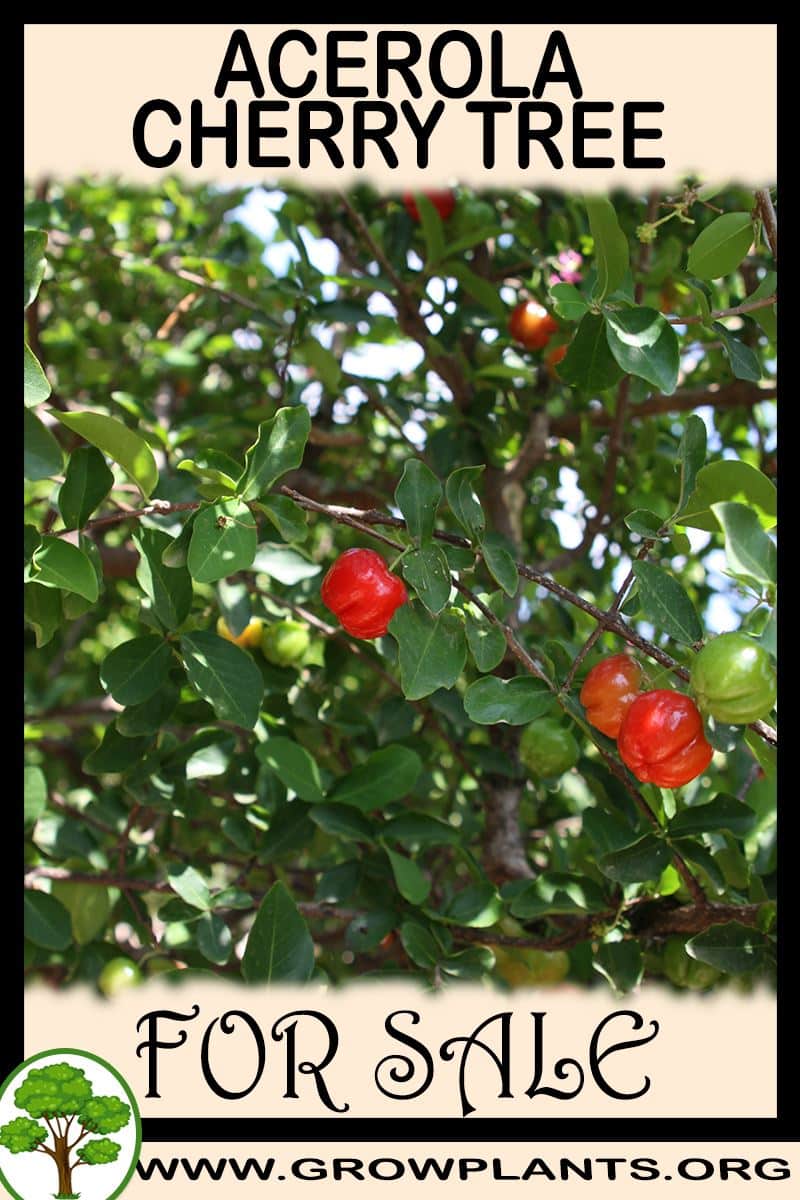
- Leaves & Foliage: Small, glossy green ovate leaves.
- Flower Characteristics: Pink five-petalled flowers 0.5-1.5 cm across, borne in clusters of 3-5; bee- and self-pollinated.
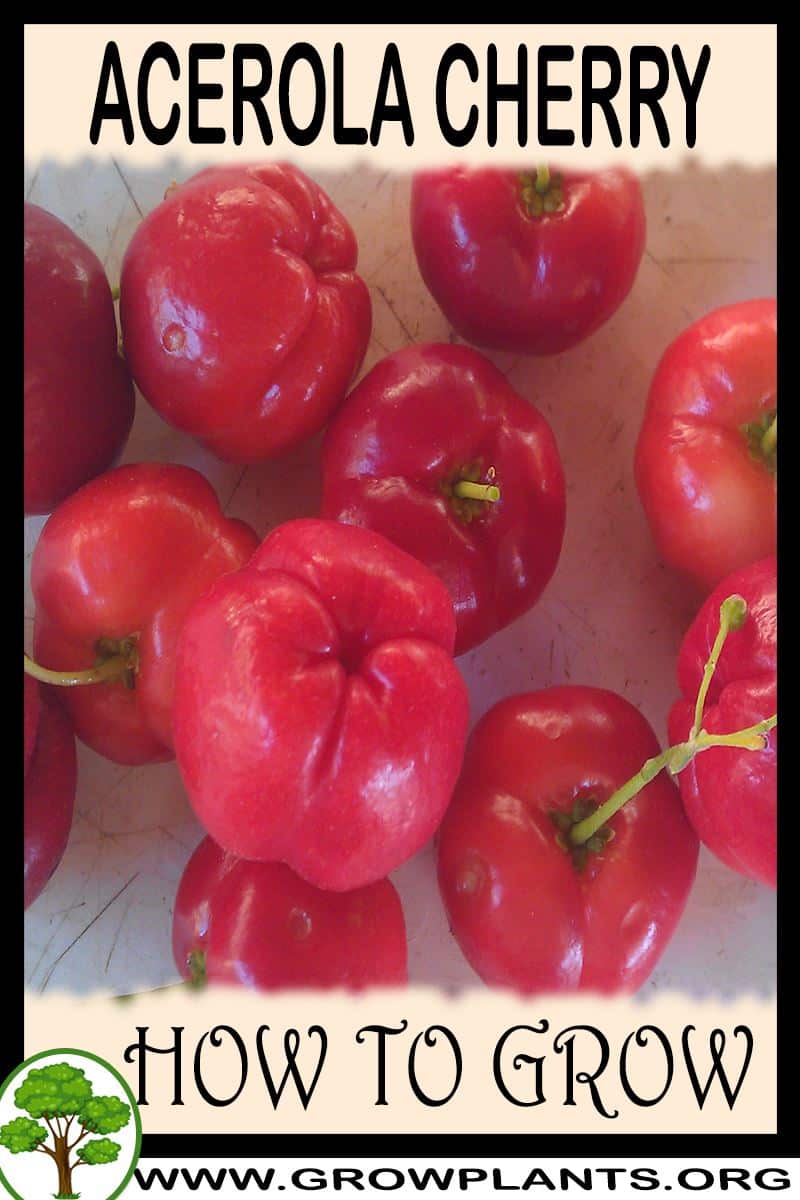
- Fruit Profile: Red, cherry-like drupe with a tart flavour and exceptionally high vitamin C content.
Primary Uses & Landscape Value
- Edible Uses: Eaten fresh or pressed for juice.
- Functional & Ornamental Roles: Backyard fruiting shrub, ornamental, and container plant.
Care Guide: Planting, Soil & Watering
Overview: Acerola (Malpighia emarginata) is a frost-tender evergreen shrub to small tree, grown for its vitamin-C-rich cherries, that thrives in full sun to half shade in well-drained soil. It appreciates steady moisture and shelter, as it is sensitive to wind.
Quick Care Requirements
| Requirement | Ideal Condition |
|---|---|
| Planting Season | Spring, summer or autumn (frost-free, zone 9+) |
| Growth Rate | Slow to moderate |
| Soil Type | Well-draining |
| Water Need | Moderate; keep evenly moist, not waterlogged |
Planting & Establishment
- Best Planting Season: Plant in spring, summer or autumn in a warm, frost-free, sheltered spot out of strong wind.
- How to Plant:
- Hole Preparation: Dig a hole about twice as wide as the root ball and no deeper, in a sunny, wind-protected position.
- Soil Amendments: Work compost or organic matter into the backfill and improve drainage on heavy soils.
- Planting Depth: Set the root collar level with the soil surface, never buried, and firm in.
- Growth Speed & Expectations: A slow to moderate grower reaching 1-3 m; young plants generally begin fruiting within 2-3 years.
Soil, Watering & Drainage Care
- Soil Mix & Drainage Needs: Wants a well-drained soil; good drainage prevents root rot, while a little organic matter helps hold even moisture.
- Watering Schedule & Technique:
- Young / Newly Planted: Water regularly to keep the soil evenly moist as the plant establishes.
- Established: Water moderately and deeply, letting the top few centimetres dry between waterings.
- Seasonal Adjustments: More water in summer heat and while fruit develops; reduce in cooler weather.
Climate, Light & Hardiness
Acerola cherry (Malpighia emarginata) is a tropical-to-subtropical evergreen-to-semi-deciduous shrub or small tree for tropical, Mediterranean, and subtropical climates in full sun to half shade, best kept frost-free. It is somewhat more cold-tolerant than its close relative Malpighia glabra per the site's own zone data, but remains sensitive to wind.
Quick Climate Specifications
| Climate Zones | Tropical, Mediterranean, Subtropical |
|---|---|
| USDA Hardiness Zones | 9+ |
| Approx. Survival Minimum | approximately −6.7°C (20°F) at the zone 9 boundary, briefly, for an established plant |
| Frost Tolerance | Low (site data specifies frost-free preferred) |
| Light Conditions | Full Sun / Half Shade |
| Wind Tolerance | Low |
Sunlight & Light Exposure
Optimal Light Setup
Full sun to half shade.
Direct Sun Requirement
Beneficial but flexible.
Best Exposure / Orientation
A warm, sunny, wind-sheltered site.
Temperature Extremes & Hardiness
USDA Hardiness & Regional Limits
Zone 9+, per site data, somewhat wider than the zone 10b+ given for the closely related Malpighia glabra elsewhere in this batch.
Cold Damage & Winter Protection
Best kept frost-free; protect from cold, especially while young.
Frost Sensitivity
Low frost tolerance overall.
Extreme Heat Tolerance
Good in genuinely warm climates.
Wind, Humidity & Microclimate
Wind Tolerance
Low – site data specifically notes sensitivity to wind; provide shelter from strong or persistent wind.
Microclimate Recommendations
A warm, sunny, wind-sheltered, frost-free site is important for this species.
Growing in Pots, Balconies & Indoors
Acerola cherry is a compact shrub of 1-3 m (3-10 ft). The grower confirms it can be grown in a container but is not a houseplant, and notes it is sensitive to wind – so give it a sheltered, sunny spot outdoors.
Quick Details
- Container Size: A 20-40 L (5-10 gal) pot suits this compact shrub
- Indoor Suitability: Not a houseplant; grow it outdoors
- Best Spot: Full sun to half shade, sheltered from wind
- Soil & Drainage: Rich, free-draining mix
- Watering in Pots: Average – keep evenly moist, never waterlogged
Indoors & On the Windowsill
- Houseplant limits: Compact but not a houseplant per the grower – it fruits best in strong light. A bright, sunny windowsill is the nearest indoor option, though a sunny patio is much better.
- Overwintering: Its small size makes it easy to shelter in a bright, frost-free spot for the cool season in cold climates.
On a Balcony or Patio
- Light & wind: Give it a bright, sheltered position out of the wind. Pots dry fast in sun, so check moisture regularly.
Choosing the Pot, Soil & Long-Term Care
- Pot & drainage: Use a pot with plenty of drainage holes; skip a standing water saucer to avoid root rot. Terracotta breathes and dries faster, while glazed or plastic pots hold moisture longer.
- Potting mix: A well-aerated, organic-rich mix – peat or coir blended with perlite or vermiculite for drainage.
- Feeding: Potted plants need feeding more often than those in the ground, as nutrients leach out with each watering – feed lightly through the active growing season.
- Repotting: Refresh the mix or pot up about every two years; for an established specimen, replace part of the soil and lightly prune the roots and top growth.
Fertilizing & Feeding
Acerola cherry is grown chiefly for its vitamin-C-rich fruit, and while it shares its compact shrub-to-small-tree habit with its Malpighia relatives, feeding here is aimed squarely at supporting repeated flushes of fruit rather than ornamental bloom.
Quick Fertilizing Specs
| Feeding Level | Moderate; a compact fruiting shrub that fruits best on steady, restrained feeding. |
|---|---|
| Main Nutrient Priority | Balanced nutrition while the plant is establishing, shifting toward potassium to support the fruit crop. |
| Best Feeding Period | Through the frost-free growing season while flowering and fruit flushes are underway. |
| Organic Options | Compost or aged manure worked into the root zone supports steady growth and fruiting. |
| Reduce/Stop Feeding | Ease off as growth slows going into cooler weather so the plant isn’t pushed into soft new growth ahead of any chill. |
Feeding by Growth Stage
Newly planted
Establish a young Acerola cherry in a frost-free, sheltered site before it faces the stress of wind or full sun exposure.
| Nutrient direction | Light, balanced nutrition to support root establishment. |
|---|---|
| Timing | In the weeks after planting, once the site is confirmed frost-free. |
| Frequency | A light feeding at planting is usually enough for a young plant to establish. |
| Fertilizer types | A balanced complete fertilizer used lightly, Compost blended into the planting hole |
| Precautions | Hold off on heavy feeding until the root system has spread, since this plant is sensitive to wind while young. |
Young plant, building canopy
Build a full, healthy canopy of leaves ahead of the plant’s first flowering and fruiting cycle.
| Nutrient direction | A nitrogen-leaning balanced feed to encourage vigorous branching and foliage. |
|---|---|
| Timing | Through the main warm-season growth period. |
| Frequency | Regular light feedings through the growing season suit this plant better than one large dose. |
| Fertilizer types | A balanced, nitrogen-forward complete fertilizer, A diluted liquid feed for container-grown plants |
| Routine trace nutrients | iron, manganese, zinc |
| Precautions | Taper off before cooler weather so new shoots have time to harden. |
Established, approaching first fruit
Carry the plant through its first flowering flush toward its first crop of vitamin-C-rich fruit.
| Nutrient direction | Balanced nutrition supporting both continued canopy growth and the coming fruit set. |
|---|---|
| Timing | From first flowering through early fruit development. |
| Frequency | Steady, moderate feeding through this period supports flowering and fruit set without forcing excess soft growth. |
| Fertilizer types | A balanced complete fertilizer with routine trace elements |
| Routine trace nutrients | iron, manganese, zinc |
| Precautions | This plant can flower and fruit in flushes rather than all at once, so feeding is best kept steady rather than timed to a single event. |
Mature and bearing
Support an established, fruiting Acerola cherry through repeated flushes of flowers and fruit across the warm season.
| Nutrient direction | Balanced feeding shifting toward potassium to support fruit development and quality. |
|---|---|
| Timing | Across each bloom-to-harvest flush during the frost-free growing season. |
| Frequency | Moderate, evenly spaced feedings through each fruiting flush work better than a single heavy application. |
| Fertilizer types | A balanced to potassium-leaning complete fruiting fertilizer |
| Routine trace nutrients | iron, manganese, zinc |
| Precautions | Because fruit forms in repeated flushes, avoid stopping feeding abruptly mid-season, which can cut a flush short. |
Nutrient Deficiency Signs & Corrections
New leaves yellow between the veins while the veins remain green.
| Possible causes | High soil pH reducing iron availability, Waterlogged or compacted soil limiting root uptake, A genuine iron shortage |
|---|---|
| Appears first on | New growth toward the shoot tips. |
| What to check | Soil pH, Drainage, Whether only new leaves show the pattern |
| Possible correction | Correct drainage and pH first, then apply a chelated iron product per its label if the pattern continues. |
Flowers appear but few develop into fruit.
| Possible causes | Excess nitrogen favoring foliage over fruit, A boron shortage affecting fruit set, Insufficient sun for good flowering, Water stress during flowering |
|---|---|
| Appears first on | The current flowering flush. |
| What to check | Recent nitrogen-heavy feeding, Sun exposure, Watering consistency during bloom |
| Possible correction | Ease back on nitrogen, confirm adequate sun and even watering, and consider a boron-containing product per its label if the pattern persists. |
Overall growth looks thin and fruit is smaller than expected.
| Possible causes | A general nutrient shortfall on poor soil, Root competition or crowding, Underwatering during active growth |
|---|---|
| Appears first on | New growth and developing fruit across the plant. |
| What to check | Feeding history, Root zone crowding or competition, Watering consistency |
| Possible correction | Review feeding and watering history and resume steady balanced feeding once growth is clearly active again. |
Pruning, Training & Seasonal Maintenance
Acerola cherry tolerates light-to-moderate pruning and flowers and fruits on new growth through spring and summer, with harvest running into autumn, so the safest structural window is late winter – after the coldest weather and after the previous year’s fruiting has fully finished, but before the new spring flush begins. Because this shrub is frost-free-only and reacts to pruning with a flush of soft new growth, autumn cuts risk both cutting into the tail of the harvest and pushing tender growth into cold weather unhardened.
Quick Pruning & Maintenance Specs
| Pruning Tolerance | Light–Moderate |
| Primary Pruning Window | Late winter, after harvest has finished and before the spring flush |
| Secondary Maintenance Window | Light interior thinning after the main summer/autumn harvest |
| Typical Frequency | 1x/year structural, plus light spot maintenance |
| Main Objective | Open crossing interior growth; reduce wind sensitivity |
| Young Plant Priority | Build a balanced, open framework of well-spaced stems |
| Mature Plant Priority | Thin crossing/rubbing branches without stripping bearing wood |
| Best Tool Type | Bypass secateurs |
| Avoid Heavy Pruning During | Autumn (still fruiting) and any active bloom period |
Pruning by Plant Age & Size
Newly Established
Minimal – remove only wind-damaged or dead growth; this species is noted as slow-to-medium growing and sensitive to wind while young.
Young / Formative
No formal training system needed; select for an open, balanced habit with well-spaced stems so the shrub stands up to wind rather than relying on dense growth for support.
Mature / Established
Thin crossing and rubbing interior branches to keep the canopy open; keep cuts light given the plant’s modest size (1–3 m).
Seasonal Pruning Schedule
Pre-Growth/Late Winter
Objective: shape and thin before the new season’s flush. Remove: dead, wind-damaged, or crossing wood. Do not remove: large volumes of wood at once. Expected response: a new flush with a full growing season to harden before winter. Flowering/fruiting impact: minimal, done ahead of bloom.
Flowering & Fruiting Wood
Flowers and fruit form on current-season growth through spring and summer, with harvest extending into autumn, rather than on old wood. Pruning during that period removes flowers or unripe fruit directly, so structural cuts belong before bloom starts, once the prior season’s harvest is complete.
Structural Pruning & Training
Remove crossing and rubbing branches in the interior; avoid over-opening the canopy given the plant’s noted sensitivity to wind.
Container & Small-Space Pruning
Suits a container well given its compact size (1–3 m); prune mainly for light and size maintenance rather than aggressive shaping, and keep container plants out of strong wind exposure.
Tools
Bypass secateurs for essentially all cuts on this small-statured shrub’s fine wood.
Tool Hygiene & Disease Risk
Routine risk – aphids are the only reported pest, with no disease-transmission concern noted, so clean, sharp tools suffice.
Cut Placement & Technique
Use clean bypass cuts just outside the branch collar; avoid flush cuts and long stubs.
Heavy Pruning & Rejuvenation
Not documented as tolerating hard rejuvenation cuts; treat size reduction as gradual, light thinning over successive late-winter sessions rather than one severe cut.
Post-Pruning Care
Protect fresh late-winter cuts if a late cold snap follows; water at the plant’s normal average rate and skip fertilizing purely to force a flush; net or otherwise protect developing fruit from birds as harvest approaches, per the species’ own fruit-pest note.
Common Pruning Mistakes
- Pruning in autumn while fruit is still being harvested.
- Assuming a fast recovery on a species that is only slow-to-medium growing.
- Over-thinning a wind-sensitive canopy, increasing breakage risk.
When NOT to Prune
Avoid pruning during active bloom and while fruit is still on the plant (summer into autumn); avoid autumn cuts specifically on this frost-free-only species, since new growth then won’t harden before cold weather.
Recommended Tools (by task)
- bypass_secateurs – handles essentially all cuts on this small, fine-wooded shrub.
Pruning Troubleshooting
| Problem | Possible Cause | What to Check | Corrective Action |
| Lost fruit after pruning | Cuts made while fruit was still ripening in autumn | Timing of the cut versus harvest completion | Wait until harvest is fully finished before pruning |
| Cold-damaged tips | Autumn pruning forced tender new growth | Whether recent cuts triggered a new flush before winter | Shift structural pruning to late winter instead |
| Wind-broken branches | Canopy thinned too aggressively | How much interior growth was removed | Leave more interior branching for wind buffering |
Propagation Guide
Acerola cherry is best and most simply started from seed, and the site notes that grafting or vegetative reproduction is not necessary for this plant; cuttings remain a possible optional alternative if a grower wants to reproduce one particular plant exactly. Propagation from seed is Easy.
Quick Propagation Specs
| Best Propagation Method | Seed |
| Alternative Methods | Semi-hardwood cuttings (optional, not required) |
| Propagation Difficulty | Easy |
| Seed True-to-Type | Usually true-to-type – the site notes grafting is not needed to get good plants |
| Vegetative True-to-Type | Yes |
| Best Propagation Season | Spring, summer, autumn |
Growing from Seed
Seed Handling & Viability
Clean seed of surrounding fruit pulp before sowing; the site does not specify a storage method for this entry.
Sowing Season
Spring, summer, or autumn, matching the site’s planting season.
Germination Conditions
Warm, consistently moist conditions; species in this genus are often somewhat slow and irregular to germinate, so allow patience over several weeks or more.
Seedling Care
Since the site notes grafting is not necessary, seed-grown seedlings can generally be grown on as-is to become the permanent plant.
Stem Cuttings
Cutting Type
Semi-hardwood cuttings from healthy current-season growth, useful only if a grower wants to duplicate one particular plant exactly.
Best Timing
Spring through autumn, during active growth.
Rooting Setup
A free-draining rooting mix kept warm and humid.
Rooting Hormone
Optional.
Rooting Time
Not documented for this entry; commonly a few weeks under warm, humid conditions for similar semi-hardwood cuttings.
Bloom & Flower Guide
Quick Details
- Bloom Season: Spring to summer, often in flushes
- Flower Appearance: Pink five-petaled flowers, roughly 0.5-1.5 cm, in clusters of three to five
- Edibility: The flower is not eaten; the plant is grown for its vitamin-C-rich edible fruit
Detailed Blooming Overview
Acerola cherry blooms in flushes, its small pink five-petaled flowers gathered in clusters of three to five and followed quickly by the bright red fruit.
Flower Characteristics
- Pink flowers with five petals, about 0.5-1.5 cm across.
- Borne in clusters of three to five.
Bloom Care & Thinning
- Pollination: Bees, with some self-pollination; large native solitary bees (such as Centris oil-bees) are the most effective pollinators.
Fruit & Uses
Acerola (Malpighia emarginata) is grown chiefly for its red, cherry-like fruit, noted by the site as an especially vitamin C-rich fruit; the fruit is the plant’s only edible part. It is eaten fresh out of hand or juiced.
Quick Edible Specs
| Edible Parts | Fruit |
| Main Use(s) | Culinary – fresh eating, juice |
| Eaten Raw or Cooked | Raw |
| Preparation Required | None |
| Harvest Season | Summer, autumn |
| Time to First Harvest | A few years for young plants; see Propagation for details |
| Safety/Toxicity Caveat | None noted |
Fruit
The bright red, cherry-shaped fruit is notably high in vitamin C, which is the main reason acerola is grown beyond its use as an ornamental shrub. Ripe fruit is picked by hand in summer and autumn; being thin-skinned and perishable, it is usually eaten fresh soon after picking or promptly juiced rather than stored. Netting the tree helps protect the ripening crop from birds.
Preparation, Uses & Safety
Fruit is eaten raw as a fresh snack or pressed into juice; no cooking is required. No toxic parts or safety cautions are noted. (No specific vitamin C figures are given here, as exact values vary by cultivar and ripeness — the site’s general “high vitamin C” claim is preserved without adding invented numbers.)
Pests, Diseases & Troubleshooting
Overview: Acerola (Barbados cherry) is a hardy small tree with one serious underground enemy – root-knot nematode – plus the sap-suckers and fruit flies typical of tropical fruit, and a strong need for iron on alkaline soils. Grow it in well-drained soil, keep it mulched and unstressed, and manage fruit flies and birds around ripening to protect the vitamin-C-rich crop.
Quick Troubleshooting Overview
| Issue / Pest | Main Symptom | Primary Solution |
|---|---|---|
| Root-knot nematode | Stunting, wilting in heat, galled roots, decline | Clean stock/soil; heavy organic mulch; nematode-suppressive cover |
| Fruit flies | Maggots in soft ripe fruit; premature drop | Bait/traps; harvest promptly; sanitation of fallen fruit |
| Aphids/scale/whitefly | Honeydew, sooty mould, weak growth | Neem/soap; horticultural oil; conserve predators |
| Birds | Ripe fruit pecked and stripped | Netting; harvest at first colour |
| Cercospora leaf spot | Brown/grey leaf spots, some defoliation | Airflow; remove leaves; copper if severe |
| Iron chlorosis | Yellow young leaves, green veins on limey soil | Chelated iron; mulch; avoid over-liming |
Common Pests & Management
- Root-knot nematode (Meloidogyne spp.):
- Symptoms: The most damaging pest of acerola: plants are stunted, wilt in the heat despite moisture, decline in vigour and yield, and their roots carry knotty galls that block water and nutrient uptake.
- Prevention & Control: Plant nematode-free stock in clean or solarised soil, and build strong populations of soil microbes with heavy organic mulch and compost, which suppress nematodes and mask damage. Rotate or use nematode-suppressive ground covers, and keep trees well-watered and fed to tolerate low levels.
- Aphids (Aphidoidea):
- Symptoms: Soft green or brown aphids cluster on the soft new flush and flower clusters, leaving sticky honeydew that supports sooty mould and distorting young growth.
- Prevention & Control: Rinse colonies off and conserve ladybirds, lacewings and hoverflies. Neem or insecticidal soap on leaf undersides clears heavier colonies; avoid heavy nitrogen that drives soft flushes.
- Scale insects (Coccidae / Diaspididae):
- Symptoms: Brown, grey or white limpet-like scales encrust stems, leaf undersides and sometimes fruit, sapping vigour and (soft scales) producing honeydew and sooty mould.
- Prevention & Control: Prune out heavily encrusted wood and conserve parasitic wasps and ladybirds. A horticultural oil smothers the crawler stage; target repeat generations and keep trees unstressed.
- Whitefly (Aleyrodidae):
- Symptoms: Clouds of tiny white flies rise when foliage is disturbed; nymphs on leaf undersides excrete honeydew, blackening leaves with sooty mould and weakening growth.
- Prevention & Control: Hang yellow sticky traps, conserve natural enemies, and spray insecticidal soap or light oil to leaf undersides. Good airflow and avoiding soft over-fed growth keep numbers low.
- Fruit flies (Anastrepha suspensa / Ceratitis capitata):
- Symptoms: Females lay eggs in softening ripe fruit; the maggots tunnel the flesh, causing internal breakdown, premature drop and unusable fruit – a major issue for the soft, thin-skinned cherries.
- Prevention & Control: Hang fruit-fly bait traps to monitor and reduce adults, harvest fruit promptly at first ripeness rather than leaving it to soften on the tree, and collect and destroy all fallen and infested fruit to break the cycle.
- Birds (various):
- Symptoms: Ripening fruit is pecked, stripped and dropped by birds, which favour the bright red cherries and can take a large share of the crop.
- Prevention & Control: Net small trees as fruit colours, or harvest at first colour and ripen off the tree; scaring devices give only temporary relief.
Diseases & Fungal Issues
- Cercospora leaf spot (Cercospora / Pseudocercospora spp.):
- Symptoms: Brown to greyish leaf spots, sometimes with darker margins or yellow haloes, develop in warm humid weather and can merge, causing yellowing and some leaf drop.
- Treatment & Management: Improve airflow with pruning, avoid overhead watering late in the day and rake up fallen leaves. A copper fungicide checks spread where humidity keeps it active.
- Anthracnose (Colletotrichum spp.):
- Symptoms: Dark sunken lesions on leaves, shoots and especially fruit, with fruit rot in warm wet conditions; blossoms and young fruit may blight and drop.
- Treatment & Management: Prune for airflow, remove infected fruit and prunings, and avoid wetting foliage. A copper or approved fungicide protects flowers and fruit during prolonged wet weather.
- Rhizoctonia / root & collar rot (Rhizoctonia / Phytophthora spp.):
- Symptoms: In poorly drained or overwatered soil the roots and collar rot, the tree wilts and declines, and foliage yellows and thins.
- Treatment & Management: Plant in free-draining soil, never bury the collar, and avoid waterlogging. Remove severely affected trees; improving drainage and mulch (without piling against the trunk) is the main prevention.
- Sooty mould (Capnodium spp.):
- Symptoms: A superficial black film coats leaves and fruit wherever honeydew from aphids, scale or whitefly has fallen, reducing photosynthesis and marring fruit.
- Treatment & Management: Control the honeydew-producing pests and the mould dries and flakes off; wash valued fruit and foliage. It is a symptom, not a primary disease.
Growing Difficulties & Abiotic Problems
- Iron chlorosis:
- Cause & Symptoms: On alkaline or high-pH soils iron becomes unavailable and the youngest leaves yellow between green veins, weakening growth and cropping.
- Correction Strategy: Mulch to acidify gradually, feed appropriately and correct with chelated iron; avoid over-liming and improve drainage on heavy soils.
- Fruit drop from moisture stress:
- Cause & Symptoms: Irregular watering – drought then flooding – causes flower and young-fruit drop and can split soft ripe fruit.
- Correction Strategy: Keep soil moisture even with mulch and measured irrigation, especially through flowering and fruit set.
- Cold sensitivity:
- Cause & Symptoms: Acerola is tender; frost damages foliage and young wood and hard freezes can kill the tree.
- Correction Strategy: Site in a warm, sheltered, frost-free position or grow in containers to move under cover; protect young trees on cold nights.
What Helps – Products & Tools
For acerola keep neem and insecticidal soap for aphids, scale, whitefly and mites, a light horticultural oil for scale crawlers, fruit-fly bait traps and bird netting for the crop, and chelated iron for chlorosis on limey soils. A copper fungicide covers leaf spot and anthracnose in wet weather; the biggest single win, though, is heavy organic mulch to suppress root-knot nematode.
Frequently Asked Questions
What is acerola cherry, and what does the fruit taste like?
Acerola cherry is a shrub to small tree grown for its tart, red, cherry-like fruit, which is renowned for one of the highest natural vitamin C contents of any fruit. The fruit is eaten fresh out of hand or juiced.
How big does the acerola cherry tree get, and what does it look like?
Acerola cherry is a bushy shrub to small tree reaching 1-3 m (3-10 ft) tall, with small, glossy green ovate leaves. It can be pruned open to improve airflow and fruiting.
How do you grow acerola cherry from seed?
Acerola cherry is easiest to grow from seed. Clean the seed of surrounding fruit pulp before sowing, then keep it warm and consistently moist; germination in this genus is often somewhat slow and irregular, so allow patience over several weeks or more.
What is the most serious pest to watch for on acerola cherry?
The most damaging pest for acerola cherry is root-knot nematode: affected plants are stunted, wilt in the heat despite moisture, decline in vigour and yield, and their roots carry knotty galls that block water and nutrient uptake. Plant nematode-free stock in clean or solarised soil, and build up soil microbes with heavy organic mulch and compost to suppress nematodes.
When is the best time to prune acerola cherry?
The best time to prune acerola cherry is late winter, after the coldest weather and after the previous year’s fruiting has fully finished, but before the new spring flush begins. Avoid pruning in autumn, since new growth from an autumn cut won’t have time to harden before cold weather.