

Plant Profile & Key Characteristics
Overview: Acanthus arboreus (woody acanthus) is a evergreen or summer-deciduous rhizomatous herbaceous perennial of 30–150 cm, grown for its bold, spiny, deeply lobed foliage and tall flower spikes. It is a drought-tolerant ornamental for subtropical, Mediterranean and temperate gardens.
Quick Specifications
| Specification | Attribute |
|---|---|
| Plant Type / Life Cycle | Rhizomatous herbaceous perennial |
| Foliage Type | Evergreen or summer-deciduous |
| Mature Size | H: 30–150 cm (12–60 in) |
| Growth Rate | Moderate |
| Root System | Rhizomatous, spreading (can be aggressive) |
Growth Form & Structure
- Height & Spread: Reaches 30–150 cm tall; spreads outward by rhizomes into a broad clump and grows well in the ground or in large containers.
- Growth Habit & Form: Clump-forming herbaceous perennial with bold, lobed foliage topped by tall flower spikes.
- Lifespan & Maturity: Long-lived, drought-tolerant perennial; can be aggressive once established and can be hard to remove.
Anatomy & Physical Features
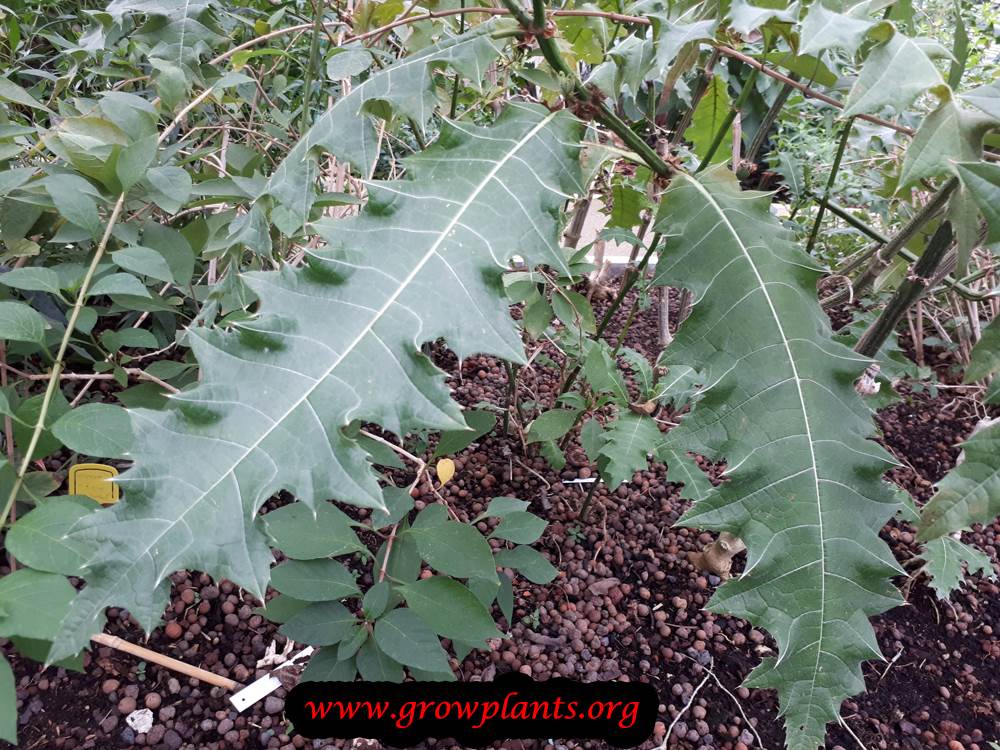
- Leaves & Foliage: Green, spoon-shaped, deeply lobed leaves, deeply lobed with spiny margins – the main ornamental feature.
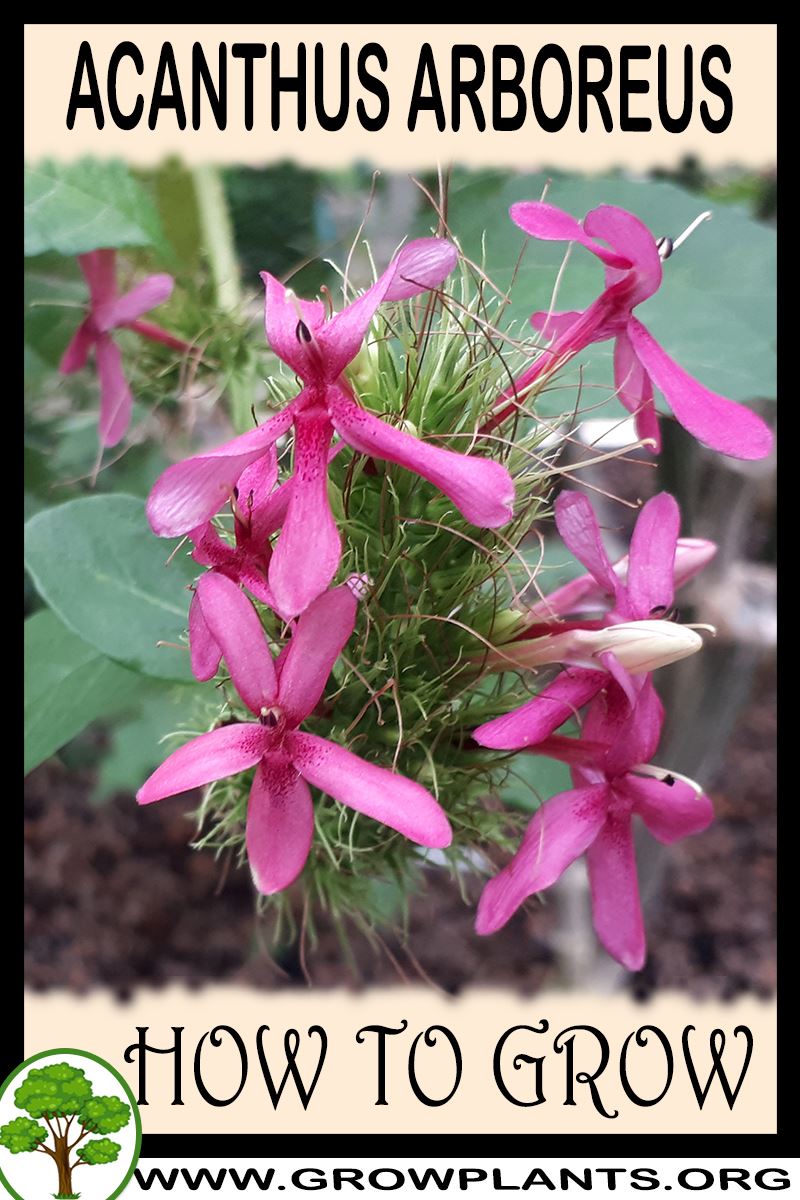
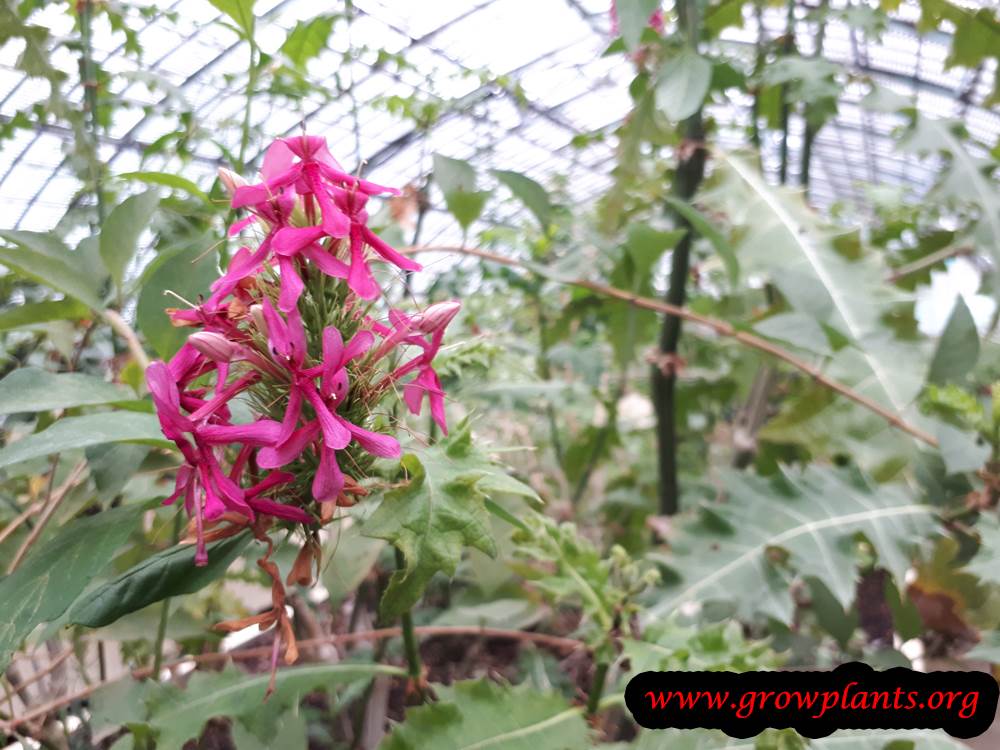
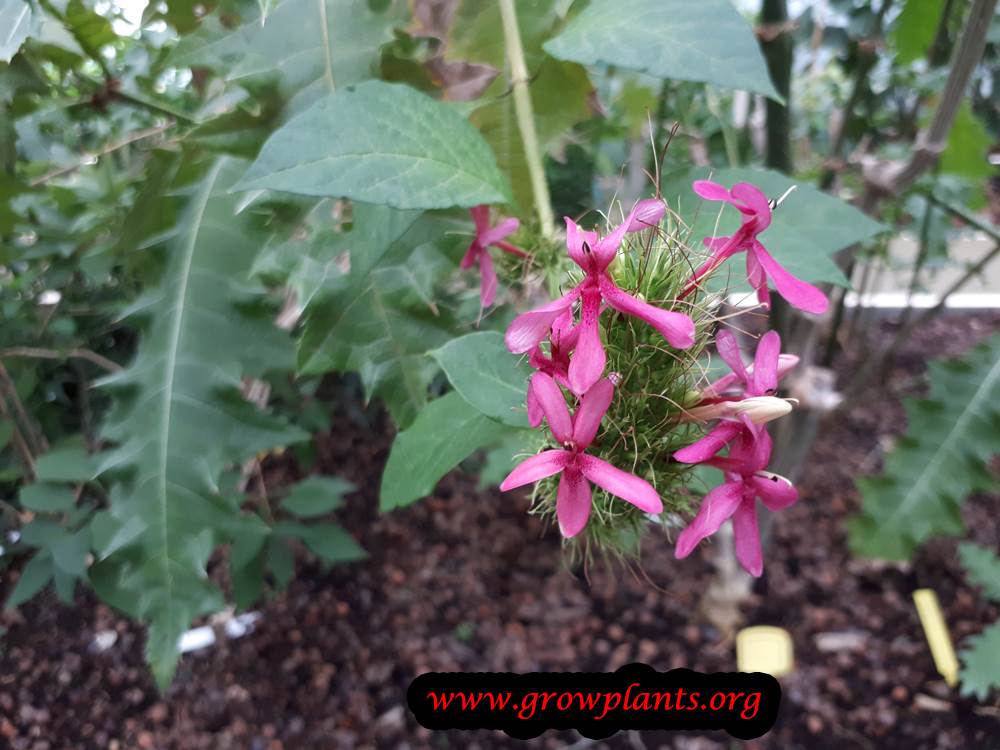
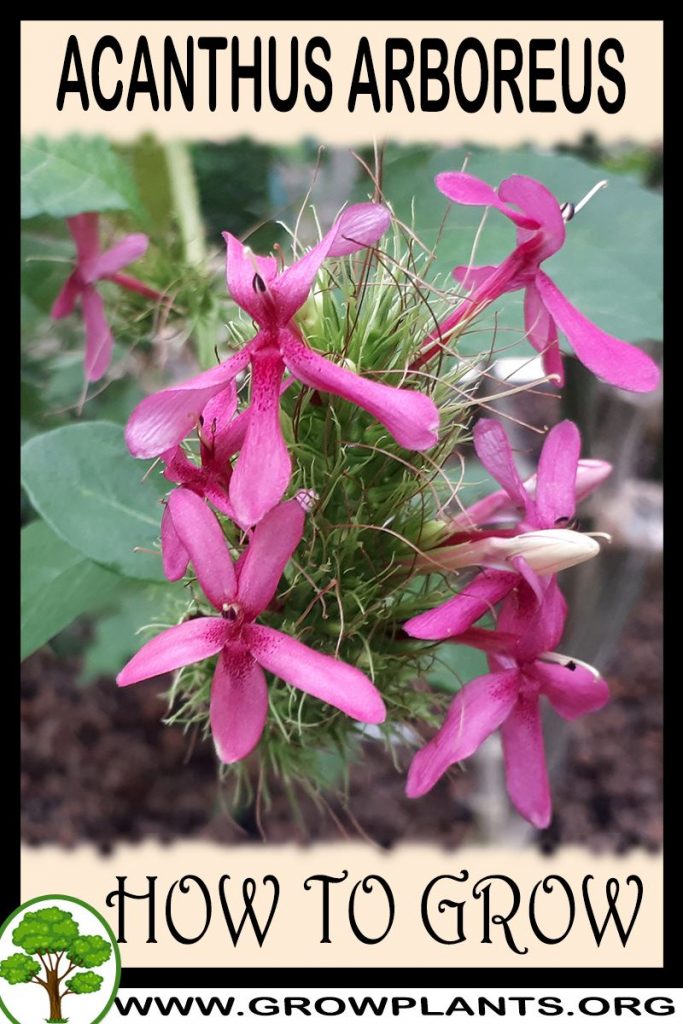
- Flower Characteristics: Pink-purple flower spikes borne at the tops of the stems in summer.
Primary Uses & Landscape Value
- Functional & Ornamental Roles: Architectural ornamental for borders and drought-tolerant plantings; can be grown in containers or, with care, indoors.
Care Guide: Planting, Soil & Watering
Overview: Acanthus arboreus is a tough, drought-tolerant rhizomatous perennial for full sun to part shade that thrives in well-drained soil topped with mulch (hardiness zone 7–10). Water moderately while it establishes; once settled it copes with dry spells and mainly wants soil that never stays soggy.
Quick Care Requirements
| Requirement | Ideal Condition |
|---|---|
| Planting Season | Spring to summer, in the warm growing season |
| Growth Rate | Moderate |
| Soil Type | Well-drained soil, mulched |
| Water Need | Moderate — water regularly while establishing, then drought-tolerant |
Planting & Establishment
- Best Planting Season: Plant in spring to summer during the warm growing season, once the soil has warmed, giving the rhizomes room to establish before their first winter.
- How to Plant:
- Hole Preparation: Dig a hole a little wider than the root ball to loosen the surrounding soil for the spreading rhizomes.
- Soil Amendments: Work in organic matter to improve a heavy soil and mulch the surface after planting to conserve moisture and keep roots cool.
- Planting Depth: Set the crown level with the soil surface — not buried — so the rhizome sits just at ground level.
- Growth Speed & Expectations: Moderate-growing but vigorous once established, forming a bold clump of architectural foliage that can spread aggressively.
Soil, Watering & Drainage Care
- Soil Mix & Drainage Needs: Above all it needs free-draining soil, as it resents wet feet; mulch conserves moisture and suppresses weeds, and in containers a free-draining mix with good drainage holes works well.
- Watering Schedule & Technique:
- Young / Newly Planted: Keep the soil evenly moist while the plant is establishing its rhizomes.
- Established: Water moderately once established — it is notably drought-tolerant and prefers a soil that dries somewhat between waterings to one kept wet.
- Seasonal Adjustments: In hot summers many types die back and rest, so water less then; more during active spring growth, less over winter.
Climate, Light & Hardiness
Acanthus arboreus (Acanthus arboreus) is a drought-tolerant, rhizomatous perennial of subtropical, Mediterranean and temperate climates, happiest in part sun to shade with cool-summer conditions. Grown in roughly USDA zones 7–10, it is root-hardy: winter cold cuts back the top growth while the rhizome survives underground and resprouts.
Quick Climate Specifications
| Climate Zones | Subtropical, Mediterranean, temperate |
|---|---|
| USDA Hardiness Zones | Approximately 7–10 |
| Optimal Temp Range | Mild, roughly 15–24 °C (59–75 °F) |
| Cold Damage Begins | Frost cuts down the foliage and soft top growth |
| Approx. Survival Minimum | Established rhizomes toward the zone 7 limit, roughly −18 to −12 °C (0 to 10 °F); the top is killed well above this |
| Frost Tolerance | Moderate (root-hardy; foliage tender) |
| Light Conditions | Full sun (not in hot summer) to full shade |
| Wind Tolerance | Moderate (large leaves) |
Sunlight & Light Exposure
Optimal Light Setup
Part sun to dappled shade gives the lushest foliage; full sun is fine in cool climates but the large leaves scorch under hot summer sun, where light to full shade serves it better.
Shade & Heat Management
In hot regions, afternoon or full shade keeps the bold leaves from wilting and browning; this is a plant that tolerates shade well and often looks best out of intense midday sun.
Best Exposure / Orientation
A cooler, part-shaded aspect sheltered from scorching sun and drying wind suits the foliage best.
Temperature Extremes & Hardiness
USDA Hardiness & Regional Limits
Grown outdoors in roughly zones 7–10. It suits mild-temperate to subtropical gardens and is root-hardy within this band. The top may be evergreen in mild winters but is cut back by frost in colder areas, resprouting from the rhizome in spring.
Cold Damage & Winter Protection
Foliage and flower stalks are frost-tender, yet the underground rhizome is considerably hardier and usually resprouts after the top is frosted off. A mulch over the crown steadies it through hard freezes at the cold edge of its range.
Frost Sensitivity
Foliage is frost-tender; evergreen in mild winters, cut back and resprouting from the rhizome where colder.
Extreme Heat Tolerance
Drought-adapted and heat-tolerant at the root, but the large leaves scorch and flag under intense sun and heat - shade, rather than more sun, is the answer in hot climates.
Wind, Humidity & Microclimate
Dry-Air Tolerance
Good - a Mediterranean, drought-tolerant plant that copes well with dry air.
Wind Tolerance
Moderate; the broad leaves and tall flower spikes can be tattered or bent by strong wind, so some shelter keeps them looking their best.
Microclimate Recommendations
A part-shaded, wind-sheltered pocket with a winter mulch over the rhizome gives the healthiest foliage and the best cold protection at the edge of its range.
Growing in Pots, Balconies & Indoors
Acanthus arboreus is a shrubby bear’s breeches (30-150 cm) grown for its bold foliage and flower spikes. The grower rates it a genuine houseplant, and its tolerance of shade makes it a striking foliage plant indoors in bright light, as well as in pots on a shaded patio.
Quick Details
- Container Size: A large, deep pot for its deep roots; the bigger the better for a full clump
- Indoor Suitability: Yes – the grower rates it a houseplant; grow it as bold foliage in bright, indirect light
- Best Spot: Full sun (not in fierce summer heat) to full shade
- Soil & Drainage: Rich, aerated, free-draining mix, kept evenly moist
- Watering in Pots: Average and steady – keep the mix moist, especially in heat
Indoors & On the Windowsill
- A genuine houseplant: The grower marks it yes for indoors. It takes bright, indirect light and tolerates shade; protect it from scorching midday sun through glass.
- Windowsill growing: An east or north sill suits it; give the large leaves room.
- Overwintering: Easy to keep indoors; outdoor pots rest and resprout from the deep roots.
On a Balcony or Patio
- Light & wind: A part-shaded balcony suits it – it dislikes fierce sun. Shelter the flower spikes from wind and keep the deep pot evenly moist.
Choosing the Pot, Soil & Long-Term Care
- Pot & drainage: Use a pot with strong drainage holes and skip a standing-water saucer, which invites root rot; terracotta breathes and dries faster, while glazed or plastic holds moisture longer.
- Potting mix: A light, aerated organic mix – peat or coir with perlite or vermiculite – gives the roots both moisture and air.
- Feeding: Potted plants use up their feed faster because each watering leaches nutrients away, so feed a little more often than plants in open ground.
- Repotting: Refresh the top of the mix and pot up every couple of years; a light root and top prune at repotting keeps established plants vigorous.
Fertilizing & Feeding
A light feeder: drought-tolerant Acanthus arboreus needs only modest balanced feeding and good organic matter, and can be vigorous without much fertilizer.
Quick Fertilizing Specs
| Feeding Level | Light |
|---|---|
| young_feeding | Balanced feeding to establish |
| mature_feeding | Balanced feeding through growth and bloom |
| Main Nutrient Priority | Balanced nutrition; adequate nitrogen for growth, not high phosphorus for bloom |
| Best Feeding Period | Spring through the flowering period |
| Organic Options | Compost, well-rotted manure and mulch |
| Micronutrients | Rarely needed where soil is healthy and near neutral |
| Soil pH | Well-drained soil; tolerates a range |
| Reduce/Stop Feeding | Ease off after flowering and stop during dormancy |
Feeding by Growth Stage
Spring growth
Fuel fresh spring growth of stems and foliage on Acanthus arboreus.
| Nutrient direction | A balanced complete fertilizer as growth resumes in spring supports strong leaves and stems. |
|---|---|
| Timing | Early in the growing season as new growth begins. |
| Frequency | A light feeding as growth starts, repeated modestly through spring. |
| Fertilizer types | Balanced complete flower or garden fertilizer, Compost or well-rotted organic matter |
| Precautions | Avoid heavy nitrogen, which produces lush foliage at the expense of flowers. |
Bloom
Support abundant, good-quality flowers on Acanthus arboreus through the blooming period.
| Nutrient direction | Keep feeding balanced with adequate nitrogen; balanced nutrition, not high phosphorus, drives good bloom. |
|---|---|
| Timing | From bud formation through the flowering period. |
| Frequency | Light, steady feeding while in active bloom. |
| Fertilizer types | Balanced complete fertilizer, Compost as a slow background source |
| Precautions | Do not rely on high-phosphorus ‘bloom booster’ products; balanced feeding is enough. |
Dormancy or rest
Let Acanthus arboreus rest without pushing new growth.
| Nutrient direction | None – withhold fertilizer during dormancy. |
|---|---|
| Timing | After flowering, through autumn and winter dormancy. |
| Frequency | No feeding at this stage. |
| Fertilizer types | No feeding at this stage; do not fertilize until active growth resumes. |
| Precautions | Do not fertilize dormant plants; resume only when growth restarts. |
Nutrient Deficiency Signs & Corrections
Overall pale, yellowing leaves with weak, slow growth.
| Possible causes | Low soil nitrogen, Poor, leached or sandy soil, Cold or waterlogged soil limiting uptake |
|---|---|
| Appears first on | Older, lower leaves |
| What to check | Feeding history, Soil organic matter, Drainage and weather |
| Possible correction | Apply a balanced complete fertilizer and build the soil with compost. |
Lush leafy growth but few flowers.
| Possible causes | Excess nitrogen relative to other nutrients, Too much shade, Over-feeding with a high-nitrogen fertilizer |
|---|---|
| Appears first on | The whole plant, as a balance of leaves over flowers |
| What to check | Fertilizer type and rate, Light levels, Overall vigour |
| Possible correction | Switch to balanced feeding, ease off nitrogen and ensure adequate light. |
Young leaves yellow between still-green veins.
| Possible causes | High soil pH limiting iron availability, Waterlogged or cold soil, A genuine micronutrient shortage |
|---|---|
| Appears first on | Youngest leaves |
| What to check | Soil pH, Drainage, Whether only new growth is affected |
| Possible correction | Correct pH where possible and, if needed, apply a chelated micronutrient product per its label. |
Pruning, Training & Seasonal Maintenance
Acanthus arboreus, also called Acanthus woody, is – despite the common name – a rhizomatous herbaceous perennial like the rest of the genus, with no lignified wood to prune; the name reflects its appearance and stature (to 30-150 cm) rather than a true woody framework. It carries pink-purple flowers atop its stems above spoon-shaped, deeply lobed, spine-edged leaves, and can be evergreen or summer deciduous depending on climate – where it drops foliage in summer heat as well as winter cold, dried leaves may need tidying at both points, though the plant’s stated cutback window is autumn-winter. It spreads aggressively by rhizome, so containing spread is an ongoing task alongside the seasonal tidy.
Quick Pruning & Maintenance Specs
| Pruning Tolerance | Low (grooming/cutback only – no woody framework) |
| Primary Pruning Window | Autumn-winter (cut back dry stalks and leaves) |
| Typical Frequency | Once-yearly cutback, plus removing spent flower spikes after summer bloom; possible extra tidy after summer dieback in hot climates |
| Main Objective | Remove dried/dead foliage and old flower stalks; keep the spreading rhizome in check |
| Young Plant Priority | None – let the clump establish; decide early whether spread needs containing |
| Mature Plant Priority | Autumn-winter cutback (and after summer dormancy where it occurs); periodic division to control spread |
| Best Tool Type | Bypass secateurs for stalks and leaves; spade for dividing the rhizome |
| Avoid Heavy Pruning During | Summer flowering |
Pruning by Plant Age & Size
Newly Established
Minimal – avoid disturbing the developing rhizome; remove only damaged leaves from planting.
Young / Formative
No structural training applies to this rhizomatous clump-former, whatever its common name suggests. Given its aggressive spreading habit, the one early decision worth making is whether to contain it (root barrier or a large container) rather than how to shape its top growth.
Mature / Established
Cut dry, dead or heat/cold-damaged stalks and leaves back to the base once they brown; divide congested clumps every few years to renew vigor and control spread.
Seasonal Pruning Schedule
Dormant/Winter: remove dry, dead or damaged stalks and leaves; leave any remaining healthy green foliage and the rhizome/crown untouched; the following season’s foliage and flower spikes arise fresh from the rhizome regardless of this cutback.
Summer Canopy Management (where summer deciduous): in climates where this species goes summer deciduous, tidy foliage as it browns and dies back from heat dormancy, rather than waiting for the standard autumn-winter window; this is a tidiness task with no bearing on next year’s bloom.
Structural Pruning & Training
There is no branch framework to manage. The relevant “structural” task is controlling the plant’s aggressive rhizome spread rather than shaping top growth.
Special Growth to Remove
Dry, dead stalks and leaves; spent flower spikes once bloom finishes; rhizome growth spreading beyond its intended area.
Container & Small-Space Pruning
Grows well in a container, which is also a practical way to contain its aggressive spread. Watch for the clump becoming pot-bound over time – dividing and repotting addresses this better than cutting back top growth.
Tools
Bypass secateurs for cutting dry stalks, leaves and spent flower spikes; a garden spade for dividing or removing spreading rhizome sections. Loppers, saws and hedge shears are not needed on this herbaceous perennial.
Tool Hygiene & Disease Risk
Routine – clean, sharp tools are sufficient; no transmissible disease risk is noted for this species. The spoon-shaped leaves have spined edges, so wear gloves when handling cut material.
Cut Placement & Technique
Cut dry stalks and leaves at the base, close to the crown, rather than pulling them; when dividing, sever rhizome sections cleanly with a spade.
Heavy Pruning & Rejuvenation
There is no woody structure to rejuvenate by hard pruning. An overcrowded or declining clump is renewed by lifting and dividing the rhizome, which also controls its spread.
Post-Pruning Care
Resume normal watering after cutback; no fertilizing is needed as a follow-up to this routine tidy.
Common Pruning Mistakes
Assuming the common name “woody” means it should be pruned like a shrub, rather than simply cut back as an herbaceous perennial; leaving summer-deciduous foliage to sit and rot instead of clearing it once it browns; letting the aggressive rhizome spread unchecked.
When NOT to Prune
Avoid cutting back the flower spikes while still in summer bloom; handle cut foliage with gloves given its spiny leaf margins.
Recommended Tools (by task)
- Bypass secateurs – cutting dry stalks, leaves and spent flower spikes at the base.
- Garden spade – dividing or removing spreading rhizome sections to control this aggressive grower.
Propagation Guide
Acanthus arboreus is readily increased by division and, most characteristically, by root cuttings — even small root fragments left in the ground sprout new plants, which is why the genus is described as aggressive. Seed is also easy. Overall easy to propagate.
Quick Propagation Specs
| Best Propagation Method | Division / root cuttings |
| Alternative Methods | Seed |
| Propagation Difficulty | Easy |
| Seed True-to-Type | Fairly true for the species |
| Vegetative True-to-Type | Yes |
| Best Propagation Season | Division/seed in spring; root cuttings in the dormant season (autumn–winter) |
Growing from Seed
Seed Handling & Pre-Sowing
The seed is fairly large; a warm-water soak before sowing can speed water uptake.
Sowing Season & Conditions
Sow in spring in warmth; germination takes a few weeks and can be uneven.
Rhizomes, Tubers, Bulbs & Corms
Rhizome Division
This is a rhizomatous perennial. Lift and split the crown/rhizome in autumn or early spring, making sure each division has a growth point (bud) and its own roots; replant at the same depth and keep moist while it re-establishes.
Leaf & Root Cuttings
Root Cuttings
The most reliable method: in the dormant season (autumn to winter) lift the plant or expose thick roots and cut pencil-thick sections. Keep the polarity correct — plant each piece the right way up, with the end that was nearest the crown uppermost — in gritty, free-draining medium. New shoots emerge in spring. Because any root left behind will resprout, this species spreads and can be hard to remove entirely.
Bloom & Flower Guide
Quick Details
- Bloom Season: Summer
- Flower Appearance: Pink-purple flowers carried in bold, upright spikes at the tops of the stems
- Edibility: Ornamental — the flowers are not eaten
Detailed Blooming Overview
Acanthus is grown as much for its architecture as its color, and the summer flower spikes are the high point of the season. The pink-purple blooms open along tall, erect stems, giving the plant a striking vertical accent that draws bees.
Flower Characteristics
- Pink-purple flowers borne toward the top of the stems.
- Held in tall, showy spikes above the foliage.
Bloom Care & Thinning
- Managing the bloom: Remove spent flower spikes to keep the plant tidy; cutting back after flowering encourages fresh foliage.
Pests, Diseases & Troubleshooting
Overview: Acanthus arboreus (a shrubby Arabian/East-African bear’s breeches) is a bold, largely trouble-free perennial (family Acanthaceae) whose main pests are slugs and snails shredding its soft young leaves, backed by occasional aphids and, in late season or crowded plantings, powdery mildew. Manage it culturally first: tidy the crown, encourage predators, use iron-phosphate baits, give good airflow, and plant in free-draining soil to avoid winter crown rot.
Quick Troubleshooting Overview
| Issue / Pest | Main Symptom | Primary Solution |
|---|---|---|
| Slugs & snails | Ragged holes and shredded edges on young leaves; slime trails, worst in damp shade | Trap, hand-pick at night, use barriers/iron-phosphate baits, keep crowns tidy |
| Powdery mildew | White powdery coating on foliage in late season / crowded plantings | Improve airflow, avoid overhead watering, cut back and remove affected leaves |
| Aphids | Sticky, distorted new growth with colonies on soft shoots and flower spikes | Water jet, insecticidal soap, encourage ladybirds and lacewings |
| Leaf scorch | Brown, crisp leaf margins in hot, dry, exposed sites | Give afternoon shade, mulch, keep evenly moist |
| Crown/root rot | Collapse and blackened crown in wet, heavy winter soils | Improve drainage; plant in free-draining soil, avoid waterlogging |
Common Pests & Management
- Slugs (Deroceras / Arion spp.):
- Symptoms: Irregular holes chewed through the large soft leaves, shredded and notched edges on emerging spring foliage, and tell-tale silvery slime trails; damage is worst in damp, shaded, mulched borders.
- Prevention & Control: Hand-pick after dark or after rain, set beer traps and remove daytime hiding places (loose debris, boards); use copper barriers around prized clumps and scatter iron-phosphate pellets, which are safe around wildlife and pets. Keep the crown clear of decaying leaves.
- Snails (Cornu aspersum):
- Symptoms: The same ragged holes and shredded new growth as slugs, plus rasped patches; snails shelter under leaves and in wall crevices and emerge in damp weather.
- Prevention & Control: Clear hiding places, hand-pick at dusk, and use barriers or iron-phosphate baits; encourage natural predators such as thrushes, hedgehogs, frogs and ground beetles by keeping the garden diverse.
- Aphids (Aphis / Macrosiphum spp.):
- Symptoms: Green or black aphids cluster on tender new shoots and developing flower spikes, causing sticky honeydew, sooty mould and distorted growth.
- Prevention & Control: Dislodge with a jet of water and squash small colonies; use insecticidal soap if needed and encourage ladybirds, lacewings and hoverflies. Avoid excess nitrogen feeding that promotes soft, aphid-prone growth.
- Caterpillars (various Lepidoptera larvae):
- Symptoms: Chewed holes and notches in the foliage, sometimes with frass (droppings) and rolled or webbed leaves.
- Prevention & Control: Hand-pick larvae, remove rolled leaves, and tolerate light damage on a vigorous plant; for heavy attacks use a Bacillus thuringiensis (Bt) biological spray, which targets caterpillars while sparing other insects.
Diseases & Fungal Issues
- Powdery mildew (Golovinomyces / Erysiphe spp.):
- Symptoms: A white to greyish powdery film coats the upper leaf surfaces, particularly in late season, in crowded plantings, or after dry-at-the-root / humid-in-the-air spells; badly affected leaves yellow and die back.
- Treatment & Management: Improve air circulation by thinning and spacing clumps, avoid wetting the foliage, and cut back and remove affected leaves (this often triggers a flush of clean new growth). Keep plants adequately watered at the roots; a sulphur or potassium-bicarbonate fungicide can be used on valued plants if mildew is persistent.
- Fungal & bacterial leaf spot (Cercospora / Pseudomonas spp.):
- Symptoms: Brown, tan or dark angular spots and blotches on the leaves, sometimes with yellow halos, worsening in wet, humid weather.
- Treatment & Management: Remove spotted leaves, avoid overhead watering, and improve airflow and drainage; clear fallen debris in the dormant season. Copper-based sprays help only in persistent, severe cases.
- Crown & root rot (Phytophthora / Sclerotium / Rhizoctonia):
- Symptoms: Wilting, yellowing and sudden collapse with a blackened, soft crown and rotted roots, typically in heavy, wet, poorly drained soil over winter.
- Treatment & Management: Plant in free-draining soil, avoid waterlogging, and do not mulch heavily right against the crown. Lift and divide congested clumps to renew vigour; discard badly rotted crowns.
Growing Difficulties & Abiotic Problems
- Leaf scorch in hot sun:
- Cause & Symptoms: Crisp brown margins and bleached patches on the big soft leaves in hot, dry, exposed positions or against reflected heat.
- Correction Strategy: Site in morning sun with afternoon shade in hot climates, mulch to keep roots cool and moist, and water deeply in dry spells.
- Winter dieback / dormancy:
- Cause & Symptoms: Foliage flops, browns and dies down in cold winters; this is largely normal, but soggy soil turns dormancy into crown rot.
- Correction Strategy: Cut back tired foliage, ensure sharp drainage, and mulch the crown in hard-frost areas; fresh growth returns from the deep, fleshy roots in spring.
- Reluctance to flower:
- Cause & Symptoms: Vigorous leaf growth but few flower spikes, often from too much shade, recent transplanting or root disturbance.
- Correction Strategy: Give a sunnier position, be patient after moving (Acanthus resents disturbance and can sulk for a season or two), and avoid over-feeding with nitrogen.
- Invasive spreading:
- Cause & Symptoms: The deep, brittle roots resprout readily, so the plant can become a persistent spreader from every root fragment left after digging.
- Correction Strategy: Site it where it can settle permanently, or contain it; remove all root pieces when relocating, as fragments regrow into new plants.
What Helps – Products & Tools
Bear’s breeches is a tough, largely trouble-free perennial, so cultural methods do most of the work: iron-phosphate slug/snail pellets and copper barriers for the main pest, good spacing and airflow against powdery mildew, and free-draining soil to prevent crown rot. Keep insecticidal soap for occasional aphids and a sulphur or potassium-bicarbonate fungicide for stubborn mildew; a Bt spray covers heavy caterpillar attacks. Water at the roots, not over the leaves.