Plant Profile & Key Characteristics
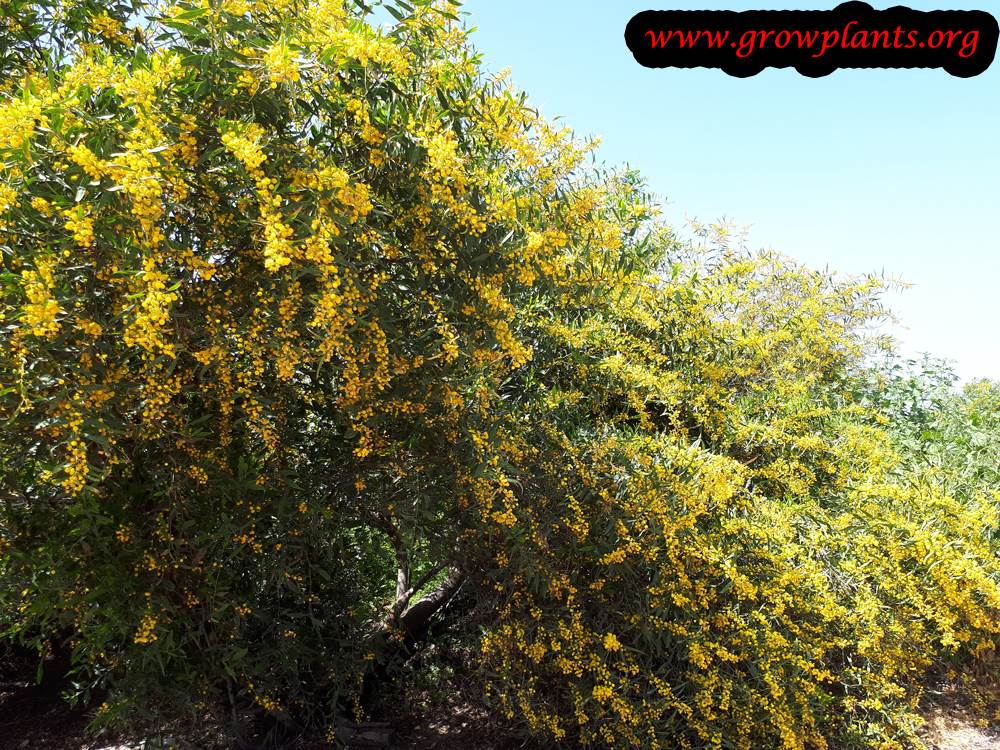
Overview: Acacia saligna (Port Jackson willow, golden wreath wattle) is a fast-growing evergreen tree or shrub, 2–8 m (6–24 ft) tall, with weeping willow-like foliage. It is grown ornamentally and as bonsai and is widely used for sand stabilisation, though it is highly invasive.
Quick Specifications
| Specification | Attribute |
|---|---|
| Plant Type / Life Cycle | Perennial evergreen tree/shrub |
| Foliage Type | Evergreen |
| Mature Size | 2–8 m (6–24 ft) tall |
| Growth Rate | Fast |
| Root System | Deep, extensive spreading roots that produce suckers (used for sand stabilisation; invasive) |
| Hardiness | USDA zones 8–11 |
Growth Form & Structure
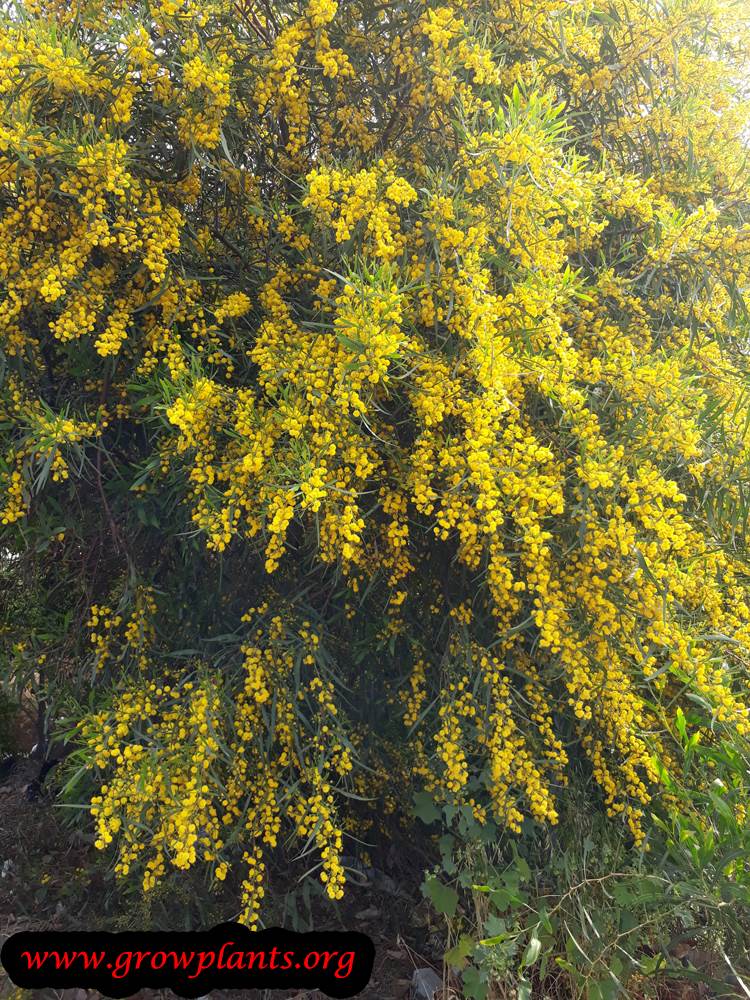
- Height & Spread: Reaches 2–8 m (6–24 ft) tall with a broad weeping canopy; can be container-grown or trained as bonsai.
- Growth Habit & Form: Fast, spreading tree or large shrub with pendulous (weeping) branches.
- Lifespan & Maturity: Quick to reach size; relatively short-lived as wattles go, and spreads readily by seed and suckers.
Anatomy & Physical Features
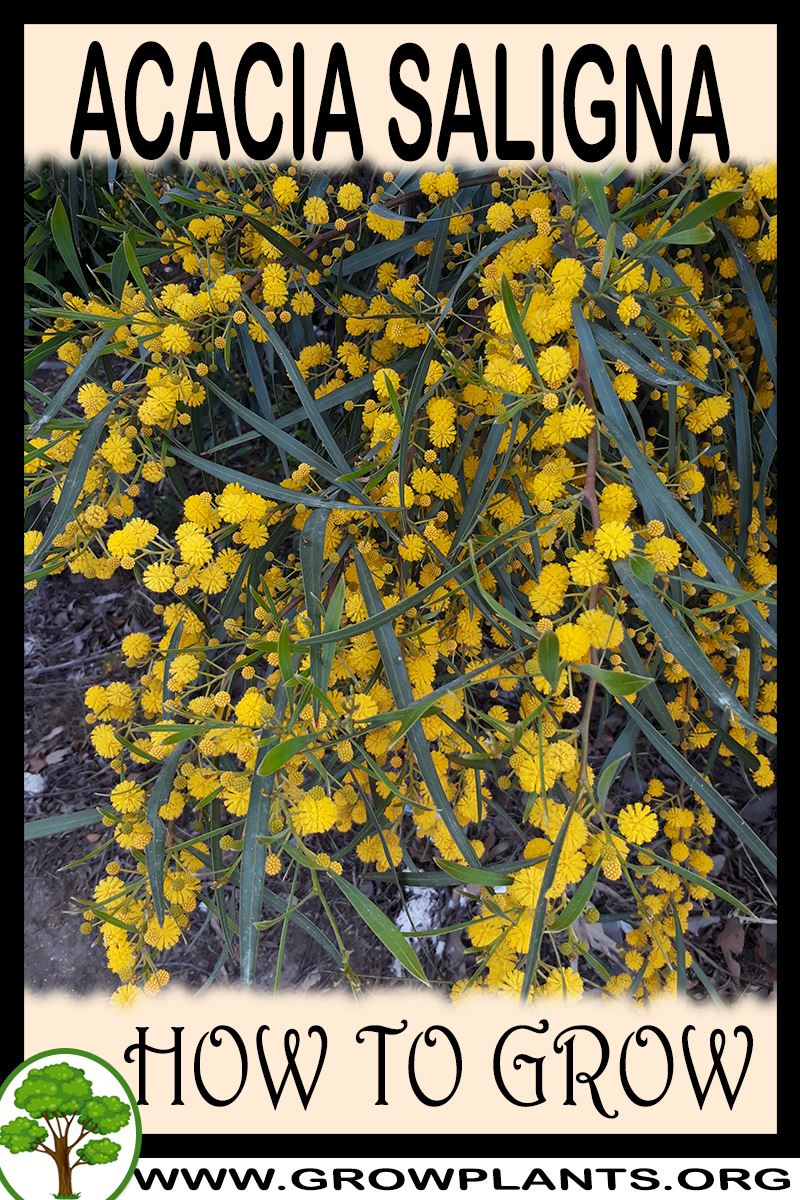
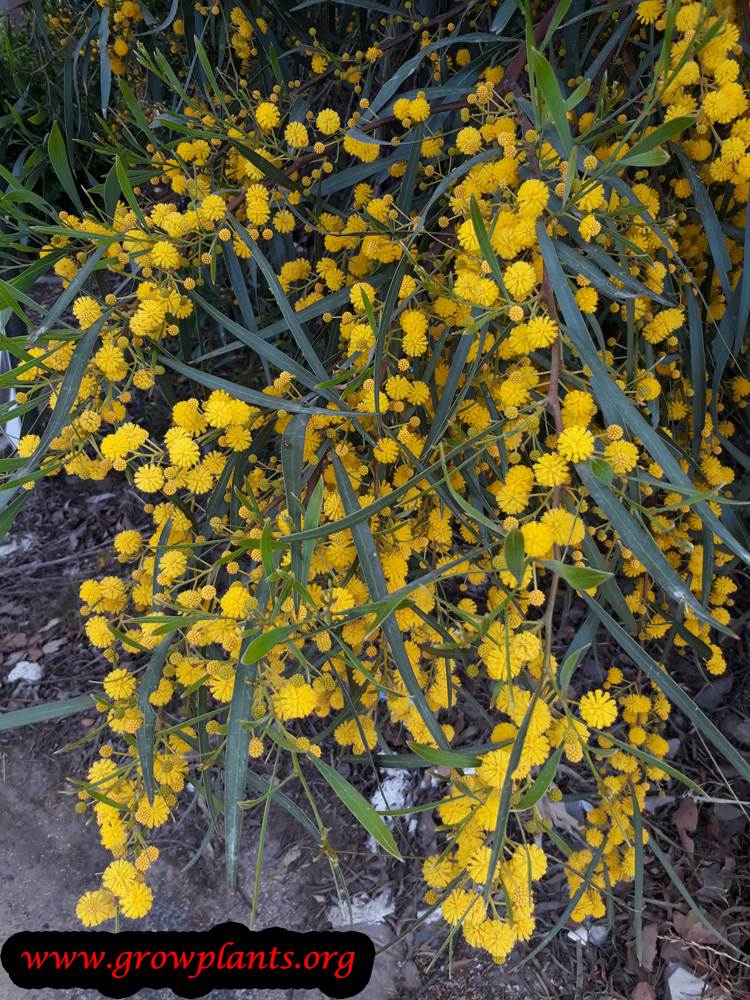
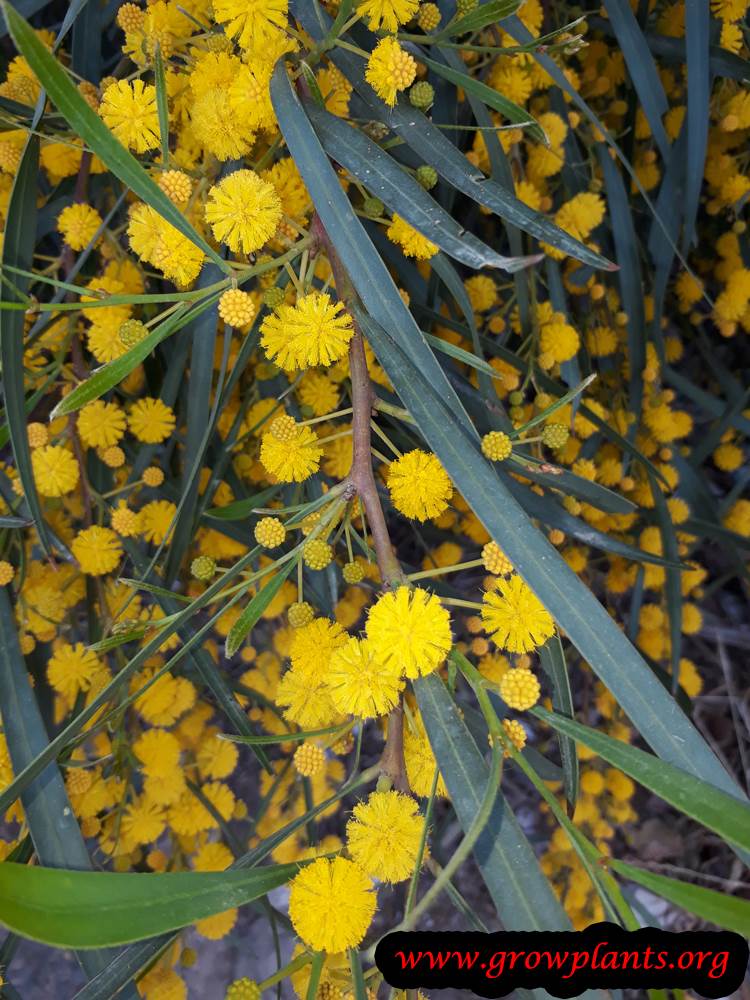
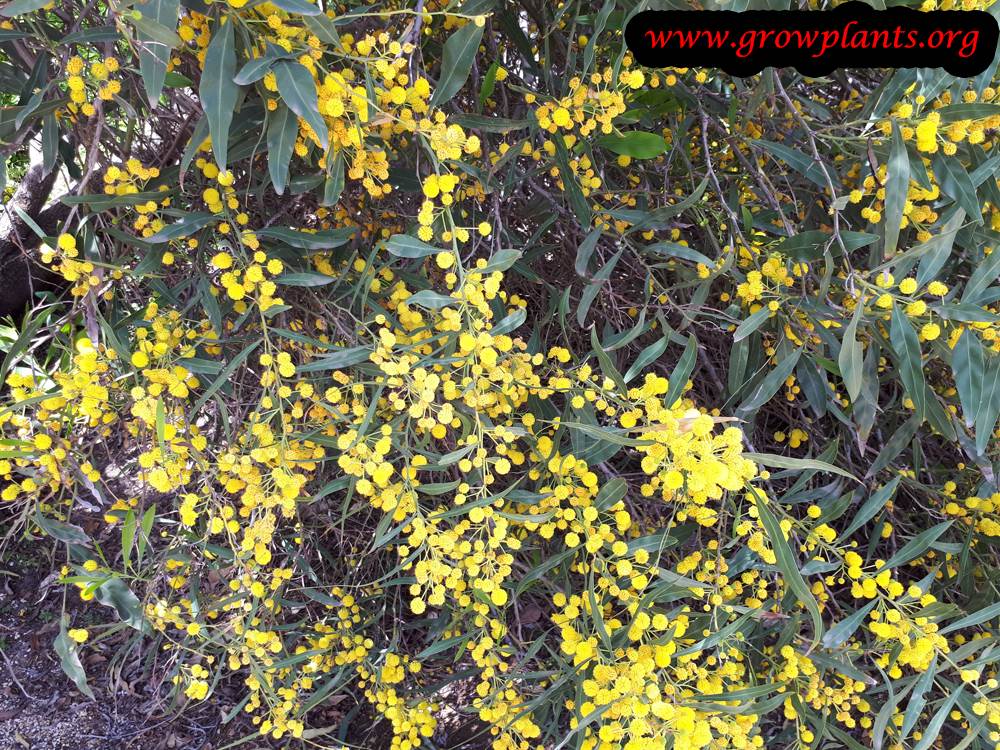
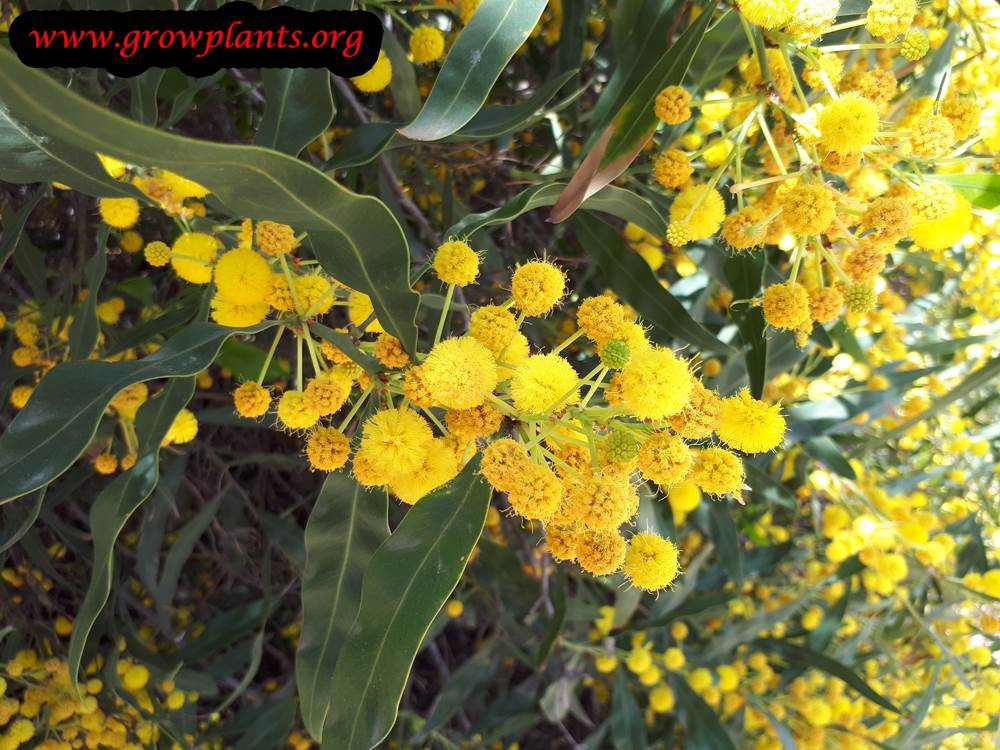
- Leaves & Foliage: Green linear phyllodes on weeping branches.
- Flower Characteristics: Yellow pompom (globular) flower heads borne mainly on the outer, sunlit branches.
Primary Uses & Landscape Value
- Functional & Ornamental Roles: Ornamental and bonsai subject, and a drought-tolerant tree used for sand-dune stabilisation and windbreaks – but highly invasive and best sited with care.
Care Guide: Planting, Soil & Watering
Overview: Acacia saligna is a fast-growing, drought-tolerant evergreen tree or shrub for full sun that thrives in sandy, sharply draining soil and needs little water once established. It tolerates poor soils but is highly invasive in many regions, so plant it with care.
Quick Care Requirements
| Requirement | Ideal Condition |
|---|---|
| Planting Season | Year-round in frost-free climates; spring or autumn in cooler areas |
| Growth Rate | Fast |
| Soil Type | Sandy, sharply draining soil; tolerates poor ground |
| Water Need | Low — very drought-tolerant; let the soil dry well between waterings |
Planting & Establishment
- Best Planting Season: In its suitable frost-free climates (zones 8–11) it can be planted almost year-round; in cooler areas plant in spring or autumn so it establishes before extremes of heat or cold. Note it is highly invasive in many regions.
- How to Plant:
- Hole Preparation: Dig a hole about twice the width of the root ball and no deeper, so the tree sits at its original level.
- Soil Amendments: Little enrichment is needed — this acacia thrives in lean, sandy soil and fixes its own nitrogen; the priority is sharp drainage rather than fertility.
- Planting Depth: Set the tree so the root collar sits at soil level — do not bury the trunk.
- Growth Speed & Expectations: Fast — it establishes and grows rapidly, quickly forming a small weeping tree or large shrub.
Soil, Watering & Drainage Care
- Soil Mix & Drainage Needs: Thrives in sandy, sharply draining soil and hates wet feet; in containers use a gritty, free-draining mix and avoid heavy, water-holding soils.
- Watering Schedule & Technique:
- Young / Newly Planted: Water young plants occasionally to help them establish their first season.
- Established: Once established it needs little to no supplementary water — let the soil dry well between waterings, as it is highly drought-tolerant.
- Seasonal Adjustments: An occasional deep soak in prolonged summer drought is plenty; withhold water in cool or wet weather.
Climate, Light & Hardiness
Acacia saligna is a fast-growing, drought-tolerant tree/shrub for subtropical, Mediterranean, desert, and temperate climates; full sun is important and it tolerates a fairly wide cold range down to about zone 8.
Quick Climate Specifications
| Climate Zones | Subtropical, Mediterranean, desert, temperate |
|---|---|
| USDA Hardiness Zones | 8–11 |
| Frost Tolerance | Moderate (young plants more tender than established specimens) |
| Light Conditions | Full Sun to Half Shade |
| Wind Tolerance | High |
| Salt / Coastal Tolerance | Moderate to High |
Sunlight & Light Exposure
Optimal Light Setup
Full sun gives the best flowering and form; this species is naturally suited to open, unshaded sites.
Temperature Extremes & Hardiness
USDA Hardiness & Regional Limits
Zone 8–11 spans cool-temperate margins through subtropical and desert heat.
Cold Damage & Winter Protection
Young plants are typically more cold-sensitive than established specimens, as is common for this genus; give new plantings some protection their first winter or two at the cold edge of the range.
Extreme Heat Tolerance
Excellent; it is well adapted to desert and Mediterranean summer heat.
Wind, Humidity & Microclimate
Wind Tolerance
High; this species is used for stabilizing sand dunes, per its own care notes, which reflects strong wind tolerance and a deep, anchoring root system.
Coastal / Salt Tolerance
Moderate to high, consistent with its role as a sand-binding, coastal-adapted species.
Dry-Air Tolerance
High; it needs only a small amount of water and is well suited to dry desert and Mediterranean air.
Growing in Pots, Balconies & Indoors
Golden-wreath wattle (Acacia saligna) is not a houseplant – the grower confirms – and it grows quickly into a tree of 2-8 m, so a container suits it only while young or for short-term display. It is tough and drought-tolerant, and a pot lets you enjoy it on a sunny patio before it needs the open ground.
Quick Details
- Container Size: A deep pot while young; it will soon want a large tub or planting out
- Indoor Suitability: Not a houseplant; a full-sun tree unsuited to indoor life
- Best Spot: Full sun to part shade
- Soil & Drainage: Sandy, free-draining soil
- Watering in Pots: Low – it is drought-tolerant; let it dry between waterings
Indoors & On the Windowsill
- Why not indoors: The grower does not treat it as a houseplant – it is a fast, sun-loving tree that quickly outgrows any room and needs bright, open conditions.
- While young: Grown in a pot it stays manageable for a season or two on a patio, but plan to plant it out or move up to a very large tub as it gains size.
On a Balcony or Patio
- Light & wind: Give it full sun and shelter a young, top-heavy plant from strong wind; a sandy, free-draining mix keeps the roots healthy and pots dry quickly in heat.
- Practicalities: Use a heavy pot for stability and let runoff drain away freely.
Choosing the Pot, Soil & Long-Term Care
- Pot & drainage: Use a deep pot with generous drainage holes and no standing-water saucer – this plant hates wet feet. Terracotta is ideal because it breathes and dries out fast.
- Potting mix: A gritty, free-draining mix – loam or potting soil cut with coarse sand, perlite or grit; avoid heavy, water-holding composts.
- Feeding: Feed only lightly through the growing season; container plants lose nutrients to leaching, but this one prefers lean conditions to soft, overfed growth.
- Repotting: Pot up or refresh the mix every couple of years once roots fill the pot; take the chance to check drainage and trim any dead roots.
Fertilizing & Feeding
A light feeder: as a nitrogen-fixing legume adapted to lean, sandy soil, this fast-growing tree meets much of its own nitrogen need and rarely benefits from heavy feeding.
Quick Fertilizing Specs
| Feeding Level | Light feeder |
|---|---|
| Main Nutrient Priority | Minimal, balanced feeding rather than nitrogen-heavy products, since this legume fixes much of its own nitrogen once established |
| Best Feeding Period | The first growing season or two while the young tree establishes |
| Organic Options | A light compost or organic matter worked into sandy soil at planting to aid establishment |
| Reduce/Stop Feeding | Feeding is usually unnecessary once the tree is well established in the landscape |
| Micronutrients | Rarely needed in sandy, well-drained soil; correct only a diagnosed deficiency |
| Soil pH | Tolerates a wide range of soils, including lean, sandy ground |
Feeding by Growth Stage
Newly planted establishment
Help a young tree root into sandy soil and develop the root nodules that let it fix its own nitrogen.
| Nutrient direction | A light, balanced complete fertilizer with modest phosphorus supports root and nodule development without overwhelming the plant’s own nitrogen-fixing ability. |
|---|---|
| Timing | Through the first growing season after planting. |
| Frequency | A light feeding at planting, rarely needing to be repeated as the tree establishes. |
| Fertilizer types | A balanced complete fertilizer at a light rate, Compost or organic matter worked into the planting area |
| Precautions | Avoid heavy nitrogen feeding, which can suppress the root nodules this legume relies on and push overly fast, weak growth in an already fast grower. |
Established growth
Maintain healthy canopy growth on a self-sufficient, well-established tree.
| Nutrient direction | As a nitrogen-fixing legume, this tree rarely needs supplemental nitrogen once established; minimal feeding is usually enough. |
|---|---|
| Timing | Once the tree is established in the landscape. |
| Frequency | Feeding is rarely needed for an established, healthy tree in reasonable soil. |
| Fertilizer types | A light, balanced complete fertilizer only if growth or foliage color suggests a need |
| Precautions | This species can be invasive in some regions; avoid feeding practices that encourage excessive spread beyond the intended planting area. |
Nutrient Deficiency Signs & Corrections
Older leaves pale to yellow-green despite this species’ normally strong self-sufficiency for nitrogen.
| Possible causes | poor root nodule development, waterlogged soil interfering with nodule function, very poor, compacted soil |
|---|---|
| Appears first on | older, lower leaves |
| What to check | soil drainage and compaction, root health and nodule presence if visible, recent watering patterns |
| Possible correction | Improve drainage first, and apply only a light balanced fertilizer if the pattern persists. |
New leaves show interveinal yellowing while veins stay green.
| Possible causes | high soil pH tying up iron, waterlogged or poorly aerated soil, root stress limiting uptake |
|---|---|
| Appears first on | newest leaves |
| What to check | soil drainage, soil pH if known, recent watering habits |
| Possible correction | Improve drainage and apply a chelated iron product per its label if the pattern continues. |
Leaf margins brown and growth stalls despite adequate watering.
| Possible causes | fertilizer salt buildup from overfeeding a naturally light feeder, under-watering that concentrates salts, excessive or too-frequent feeding |
|---|---|
| Appears first on | leaf margins and tips |
| What to check | recent fertilizer amounts, watering consistency, soil drainage |
| Possible correction | Ease off feeding entirely and water thoroughly to flush accumulated salts. |
Pruning, Training & Seasonal Maintenance
Acacia saligna is a fast-growing, weeping-branched small tree/shrub that is also notably weak-wooded and short-lived for a tree, and is recorded here as highly invasive with a tendency to spread by seed and to sucker from disturbed roots. Pruning tolerance is moderate: it recovers quickly from cuts, but its brittle, fast-formed wood means heavy heading cuts invite weak, breakage-prone regrowth rather than sound structure. Because it typically sets flower buds on the previous season’s growth, the safest time for anything beyond light corrective work is right after its spring bloom finishes, before the next season’s flowering wood is laid down – pruning hard in winter, ahead of bloom, risks cutting off flower buds already formed.
Quick Pruning & Maintenance Specs
| Pruning Tolerance | Moderate – recovers fast, but wood is weak/brittle |
| Primary Pruning Window | Just after spring bloom finishes |
| Typical Frequency | Annual light structural work; more if grown as a clipped bonsai/shaped specimen |
| Main Objective | Maintain a safe, well-attached branch structure on a fast, weak-wooded grower; manage its invasive spread |
| Young Plant Priority | Select well-attached leaders early, before weak, narrow-angled branches thicken |
| Mature Plant Priority | Remove weakly attached or storm-prone limbs; deadhead before seed set where invasiveness is a concern |
| Best Tool Type | Bypass secateurs and loppers for routine work; a pruning saw for larger limbs |
| Avoid Heavy Pruning During | Winter/pre-bloom (removes already-formed flower buds) and hot, dry stress periods |
Pruning by Plant Age & Size
Newly Established
Remove only damaged growth from transplant; avoid heading the leader, since this species’ natural weeping form starts from an intact leading shoot.
Young / Formative
Select well-attached scaffold branches early – because the wood is weak and fast-grown, narrow, poorly attached branch angles are best removed while still small, before they thicken into a structural liability. Allow the natural weeping branch habit to develop rather than heading shoots back hard.
Mature / Established
Periodically remove crossing, rubbing, or weakly attached limbs, and watch for and remove root suckers, which this species can throw up readily, especially from disturbed or damaged roots.
Flowering & Fruiting Wood
Flower buds form on the previous season’s wood ahead of the spring bloom. Pruning right after flowering removes none of the next crop of buds; pruning in the dormant winter period, before bloom, risks removing wood that is already carrying next season’s flowers.
Structural Pruning & Training
Preserve the natural weeping branch character rather than heading shoots into a dense, rounded outline. The main structural task is removing weak, narrow-angled, or crossing branches before they become a breakage risk, since this species is both fast-growing and comparatively short-lived/weak-wooded.
Special Growth to Remove
- Root suckers – this species can sucker from the roots, particularly after root disturbance or damage; remove promptly, both for tree structure and because unmanaged suckering contributes to its spread as an invasive species.
- Spent flowers/seed pods – where the goal is to limit its documented invasiveness, removing flowers or immature pods before seed set reduces self-seeding; young pods are also noted to have an unpleasant smell.
Container & Small-Space Pruning
Acacia saligna is also grown as bonsai, where its naturally weeping form is trained on a much smaller scale. In containers, pinch soft new growth repeatedly through the growing season to keep internodes short, and pair root pruning with top pruning at repotting rather than relying on top cuts alone to control size.
Tools
- bypass_secateurs – soft new growth and small branches
- loppers – medium weak/crossing branches
- pruning_saw – larger limb removal
Tool Hygiene & Disease Risk
Routine: clean, sharp tools are sufficient for general pruning. Aphids are its main recorded pest rather than a cut-transmitted disease, so blade disinfection between cuts is not a priority; sharp tools matter more here to get clean cuts on fast, soft growth that otherwise tears.
Cut Placement & Technique
Use thinning cuts back to a lateral or the branch collar rather than heading cuts into the middle of a branch, which on this fast, weak-wooded species tends to trigger a cluster of poorly attached, breakage-prone regrowth right at the cut.
Heavy Pruning & Rejuvenation
Use caution: while it resprouts readily after hard cuts, the resulting fast regrowth is typically weakly attached, compounding this species’ existing weak-wood tendency. Where practical, favor removing whole weak limbs at their origin over heading cuts that force a cluster of new weak growth.
Post-Pruning Care
No extra feeding is needed – Acacia is a nitrogen-fixing legume and a vigorous grower already. Watch regrowth for aphids, and monitor cut sites and root zones for new suckers to remove promptly.
Common Pruning Mistakes
- Heading cuts into the canopy, which produce a mass of weakly attached regrowth on an already weak-wooded species.
- Pruning hard in winter and removing the season’s already-formed flower buds.
- Leaving root suckers unmanaged, which both weakens the tree’s structure and helps this invasive species spread.
When NOT to Prune
Avoid heavy pruning in winter ahead of bloom (removes flower buds) and during hot, dry stress periods when the tree is less able to seal wounds and recover.
Recommended Tools (by task)
- Soft new growth / bonsai pinching – bypass_secateurs: clean small cuts for training work.
- Weak or crossing branch removal, young to mature tree – loppers: reach and leverage for the narrow-angled branches this species is prone to forming.
- Larger limb removal – pruning_saw: for cuts beyond lopper capacity on a tree that can reach 8m.
Pruning Troubleshooting
| Problem | Possible Cause | What to Check | Corrective Action |
| Branch breakage in wind/storms | Weak wood combined with a narrow-angled or heavily headed branch structure | Branch attachment angles, any prior heading cuts | Remove weakly attached limbs proactively at their origin rather than heading them |
| Dense cluster of vigorous upright shoots after a cut | A heading cut triggered a weak regrowth response typical of this fast grower | Location and type of the prior cut | Thin the resulting shoots to one or two well-placed ones; avoid further heading cuts |
| New suckers appearing at the base or along roots | Root disturbance/damage, or the species’ natural suckering tendency | Recent digging, mowing, or root injury nearby | Remove suckers promptly at their point of origin |
| Reduced bloom the following spring | Hard pruning performed in winter, removing already-formed flower buds | Timing of the last significant prune relative to bloom season | Shift structural pruning to just after flowering in future seasons |
Propagation Guide
Acacia saligna is most easily and reliably raised from seed, which the site confirms as a standard way to start the plant alongside vegetative options; because it is a straight species rather than a named cultivar, seed produces true plants and grafting is not required. Propagation is generally easy once the seed’s hard coat is broken, though given the plant’s noted invasiveness, seed should be collected and sown responsibly rather than left to self-sow uncontrolled.
Quick Propagation Specs
| Best Propagation Method | Seed |
| Alternative Methods | Semi-hardwood stem cuttings |
| Propagation Difficulty | Easy |
| Seed True-to-Type | Yes (open-pollinated species) |
| Vegetative True-to-Type | Yes |
| Best Propagation Season | Spring, though sowing is possible year-round in frost-free climates matching the site’s all-year planting season |
| Seed Germination Time | Typically 1–4 weeks after scarification |
| Cutting Rooting Time | Several weeks |
| Germination Temperature | Around 20–25°C (68–77°F) |
| Seed Sowing Depth | Shallow, roughly 0.5cm (0.25 inch) |
Growing from Seed
Seed Handling & Viability
Like most Acacia species, the seed has a hard, water-resistant coat and can be stored dry at room temperature for a fairly long period without a major loss of viability.
Dormancy & Pre-Sowing Treatment
The hard seed coat causes physical dormancy; nick the coat lightly or soak seed in hot (just-off-the-boil) water and allow it to cool and soak overnight before sowing to improve and speed germination.
Sowing Season
Best sown in spring; in warm, frost-free areas sowing is possible through most of the year, matching the site’s note that planting season runs all year.
Sowing Depth & Orientation
Sow shallowly, just covering the seed with free-draining, sandy soil.
Germination Conditions
Keep the sowing medium lightly moist but not waterlogged in a warm, sunny position; sandy, well-drained soil matches the plant’s own noted soil preference.
Germination Time
Germination is often irregular and can take anywhere from about one to four weeks after scarification, depending on temperature and seed freshness.
Seedling Care
Grow seedlings on in free-draining, sandy soil and pot up once several true leaves have formed; seedlings are fast growing once established.
Stem Cuttings
Cutting Type
Semi-hardwood cuttings from partially matured, current-season growth.
Best Timing
Warmer months, while the plant is actively growing.
Cutting Preparation
Take short sections with a few nodes, remove the lower leaves, and use a free-draining cutting mix.
Rooting Setup
A sandy, well-drained propagation mix under high humidity roots best, mirroring the site’s own sandy-soil preference for this species.
Rooting Hormone
Optional; a rooting hormone can improve and speed rooting but is not strictly required.
Rooting Time
Typically several weeks under warm, humid conditions.
Bloom & Flower Guide
Quick Details
- Bloom Season: Spring
- Flower Appearance: Bright yellow, pompom-like flower heads
- Edibility: Ornamental only – grown for its golden spring display, not eaten
Detailed Blooming Overview
In spring the weeping branches are lined with bright golden, pompom-like flower heads – a mass of fine stamens rather than showy petals. They are rich in pollen and a strong draw for bees. The heads crowd the sunny outer branches and are sparser deep inside the canopy. Note that this acacia is highly invasive in many regions, spreading freely by seed.
Flower Characteristics
- Bright yellow, rounded pompom flower heads (mostly fine stamens).
- Carried thickly along the weeping outer branches, sparser within.
- Pollen-rich and attractive to bees.
Bloom Care & Thinning
- Managing the bloom: Give a light prune after flowering for shape; removing spent flower heads before seed sets also helps limit its invasive self-seeding.
Fruit & Uses
Beyond its ornamental and bonsai use, Acacia saligna is one of the Australian wattles whose mature seeds (“wattleseed”) are used as food, roasted and ground into a flour-like meal. The seeds are not eaten raw – they require roasting or soaking/boiling first to cut natural anti-nutrient compounds and develop a nutty, coffee-like flavour.
Quick Edible Specs
| Edible Parts | Mature seeds |
|---|---|
| Main Use(s) | Culinary – roasted and milled into flour/meal (“wattleseed”), used in baking and as a coffee-like flavouring; sold commercially in roasted form |
| Eaten Raw or Cooked | Cooked/processed only – not eaten raw |
| Preparation Required | Soak and briefly boil, and/or oven-roast, before grinding; roasting also reduces anti-nutritional compounds and improves flavour |
| Harvest Season | Pods are collected once mature and dried, after the spring bloom (see Bloom season); avoid picking green pods, which the site notes have an unpleasant smell |
| Storage | Dried, roasted seed keeps well in a sealed container; unprocessed raw seed should not be stored as a ready-to-eat food |
| Safety/Toxicity Caveat | Raw, unprocessed seeds contain protease-inhibitor compounds and should not be eaten without soaking/boiling or roasting first; this species is also flagged on the site as highly invasive – check local regulations before propagating it for a food patch |
Seeds, Pods & Nuts
Pods are left to mature and dry on the tree before the seeds are collected; the site notes young, unripe pods have a bad smell, so pods are best gathered once fully mature and dried rather than green. Seeds are then processed – soaked and briefly boiled and/or roasted – before being ground into a flour-like meal used in baking or as a nutty, coffee-like flavouring, in the same way as other commercial Australian wattleseed.
Harvesting
Seed pods are gathered after they mature and dry following the spring flowering (see Blooming and Pruning for the flowering/pod cycle); this is a once-per-season harvest tied to the plant’s bloom timing, not a repeat cut-and-come-again crop.
Preparation, Uses & Safety
Do not eat raw seed straight from the pod. Standard preparation is soaking with a short boil and/or oven roasting, which both improves flavour and reduces natural anti-nutritional compounds, followed by grinding into meal/flour. Because the species is noted on this site as highly invasive, take care with seed handling/disposal to avoid unwanted spread.
Pests, Diseases & Troubleshooting
Overview: Golden-wreath wattle is a fast, tough, nitrogen-fixing Australian acacia that is largely trouble-free in cultivation; its main pests are sap-sucking psyllids, scale, and aphids, while its real weaknesses are a short life, brittle wind-prone limbs, and root rot on wet ground. Being vigorous and drought-hardy, it rarely needs intervention – a cultural, organic-first approach and correct siting handle almost everything.
Quick Troubleshooting Overview
| Issue / Pest | Main Symptom | Primary Solution |
|---|---|---|
| Acacia psyllids | Distorted, sticky new tips with tiny jumping insects; sooty mold | Encourage predators, hose off; horticultural oil if heavy |
| Scale & mealybugs | Bumps or cottony masses on phyllodes/stems; honeydew, sooty mold | Prune out, dab alcohol; horticultural oil in the evening |
| Aphids | Clustered soft-bodied insects on new growth; honeydew and ants | Water jet, ladybirds; insecticidal soap if needed |
| Borers | Fading branches, boring dust and exit holes in stressed wood | Keep tree vigorous; prune and destroy infested wood |
| Gall rust | Woody, contorted galls swelling stems and phyllodes | Prune out galls; used deliberately as biocontrol elsewhere |
| Root rot / windthrow | Decline in wet soil; snapped limbs after wind | Free-draining site, don’t waterlog; prune to a strong frame |
Common Pests & Management
- Acacia psyllids (Acizzia spp.):
- Symptoms: Tiny jumping, aphid-like insects on the new shoots and phyllodes cause curling, distortion, and stunting of the flush, with sticky honeydew and sooty mold; heavy infestations disfigure young growth.
- Prevention & Control: Encourage the many natural enemies (ladybirds, lacewings, parasitic wasps) that usually keep psyllids in check, and hose off colonies. Reserve horticultural oil or insecticidal soap for heavy build-ups on young or nursery plants, sprayed in the evening.
- Scale insects & mealybugs (Coccidae / Pseudococcidae):
- Symptoms: Immobile brown or waxy bumps, or white cottony mealybug masses, clustered along phyllodes, stems, and branch forks; they suck sap and excrete honeydew that blackens with sooty mold and attracts ants.
- Prevention & Control: Prune out heavily encrusted wood, rub off light colonies, and support parasitic wasps and lady beetles that specialise on them. Smother survivors with horticultural oil timed to the crawler stage; control ants that protect them.
- Aphids (Aphis spp.):
- Symptoms: Clusters of small soft-bodied insects on the tender new growth and flower buds, curling foliage and dripping honeydew followed by sooty mold and ants.
- Prevention & Control: Blast colonies off with water and rely on abundant natural predators, which usually control them; avoid excess nitrogen feeding. Treat only persistent outbreaks with insecticidal soap or neem, protecting pollinators.
- Wood-boring beetles (Cerambycidae / Buprestidae):
- Symptoms: Fading, dying branches with round or oval exit holes and boring dust (frass); these borers target trees already weakened by drought, age, or root problems, and can hasten the decline of this short-lived species.
- Prevention & Control: The key defence is a vigorous, well-sited, unstressed tree. Prune out and destroy dying, infested wood promptly, avoid bark wounds, and relieve drought stress; chemical control is rarely justified.
- Gall midges / gall-forming insects (Cecidomyiidae and allies):
- Symptoms: Abnormal swellings, lumps, or contorted growths on phyllodes, stems, or flower buds where the insects induce galls; usually cosmetic but can distort growth when abundant.
- Prevention & Control: Prune out and destroy galls where practical to reduce carry-over, and support the natural enemies that limit them. No spraying is normally needed on an established tree.
Diseases & Fungal Issues
- Gall rust (Uromycladium spp.):
- Symptoms: Woody, warty, or contorted galls swelling stems, phyllodes, and flower stalks, sometimes with a brown spore dust; severe infection distorts and can kill branches. Notably, this rust is deliberately used as a biological control agent against invasive A. saligna in some regions.
- Treatment & Management: In cultivation, prune out and destroy galled wood to limit spread and keep trees vigorous. There is no practical spray for large trees; where the species is unwanted, the rust is in fact encouraged rather than controlled.
- Root & collar rot (Phytophthora / Armillaria spp.):
- Symptoms: Thinning, yellowing, and branch dieback with a fading crown despite the tree’s drought tolerance; roots and the collar are dark and decayed, and white fungal mats may appear under basal bark with Armillaria – the result of wet, poorly drained ground.
- Treatment & Management: Plant only on free-draining soil and never waterlog this dryland species; keep mulch off the trunk. There is no cure once advanced – remove affected trees and improve drainage before replanting.
- Sooty mold (Capnodium spp.):
- Symptoms: A black, soot-like film coating phyllodes and stems, growing on the honeydew dropped by psyllids, scale, aphids, and mealybugs; it blocks light and dulls the foliage but does not infect the plant directly.
- Treatment & Management: Control the underlying sap-sucking insects and their attendant ants and the mold fades on its own; a wash of water or dilute soap cleans lightly coated foliage.
- Cankers & dieback (Botryosphaeria and allies):
- Symptoms: Sunken, cracked, or oozing lesions on branches that girdle and kill the wood beyond, with scattered dieback, typically on stressed or wounded trees.
- Treatment & Management: Keep trees healthy and avoid wounding; prune out cankered wood well below the lesion in dry weather and dispose of it. Vigour and good siting are the best protection.
Growing Difficulties & Abiotic Problems
- Brittle limbs & windthrow:
- Cause & Symptoms: Fast, soft growth makes wattles structurally weak; branches snap and whole trees can blow over in strong wind, especially on shallow or wet soils.
- Correction Strategy: Prune young trees to a strong, well-spaced framework, avoid over-lush growth from heavy feeding and watering, and give shelter on exposed sites; accept that this is a naturally short-lived, fast tree.
- Short lifespan / rapid decline:
- Cause & Symptoms: Acacia saligna is inherently short-lived, often declining within one to two decades as growth outpaces the wood; sudden dieback can follow stress.
- Correction Strategy: Manage expectations and plan for replacement, keep the tree unstressed and well-drained to reach its natural span, and remove hazardous declining specimens promptly.
- Waterlogging & root rot risk:
- Cause & Symptoms: Adapted to dry, well-drained ground, the tree yellows, declines, and succumbs to root rot where soils stay wet or compacted.
- Correction Strategy: Plant high on free-draining soil, avoid irrigation once established, and never let the root zone stay saturated; improve drainage rather than watering more.
- Frost tenderness when young:
- Cause & Symptoms: Young plants are frost-sensitive and can be cut back or killed by hard freezes, though established trees are hardier.
- Correction Strategy: Establish in the warm season, shelter and mulch young plants over their first winters in cooler areas, and delay pruning frost-damaged wood until growth resumes.
What Helps – Products & Tools
For this vigorous wattle the toolkit stays light and organic: horticultural oil and insecticidal soap or neem for psyllids, scale, mealybugs, and aphids; ant control to break the honeydew–sooty-mold cycle; targeted pruning-out of galls, borers, and cankered wood; and – most importantly – correct siting on free-draining soil plus a strong pruning framework to counter the tree’s brittleness and root-rot sensitivity. Chemical inputs are seldom needed on an established tree.