

Plant Profile & Key Characteristics
Overview: Molokhia (Corchorus) is a fast-growing herbaceous annual reaching 1-3 m (3-10 ft), with edible green leaves. It is cultivated mainly as a leafy vegetable, and also as a source of jute fibre and as an ornamental.
Quick Specifications
| Specification | Attribute |
|---|---|
| Plant Type / Life Cycle | Annual |
| Mature Size | 1-3 m (3-10 ft) |
| Growth Rate | Fast |
| Toxicity | Non-toxic / edible |
| Hardiness | USDA zone 10+ for autumn-to-spring cropping, zones 5-9 for spring cropping |
Growth Form & Structure
- Height & Spread: Tall and upright at 1-3 m (3-10 ft); can also be grown in large containers.
- Growth Habit & Form: Erect, branching herbaceous annual with slender fibrous stems.
- Lifespan & Maturity: Fast-growing, ready for repeated leaf harvest through spring, summer and autumn once established.
Anatomy & Physical Features
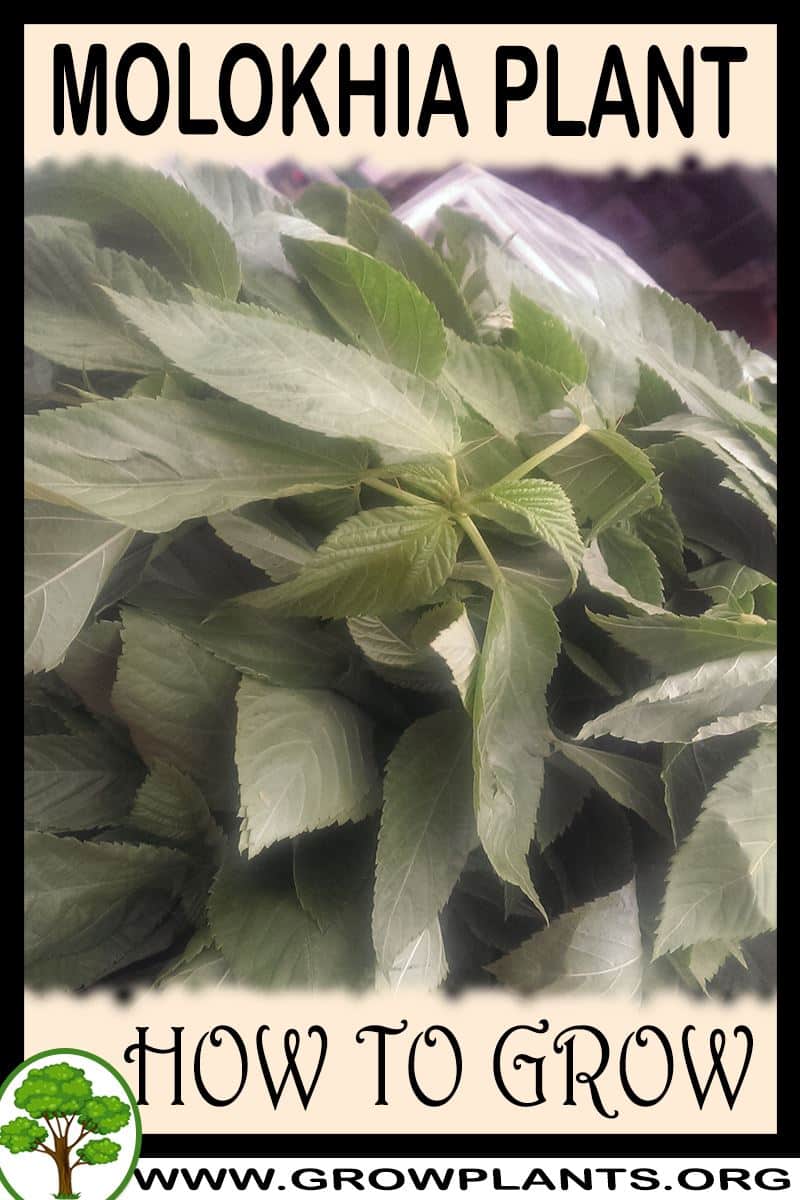
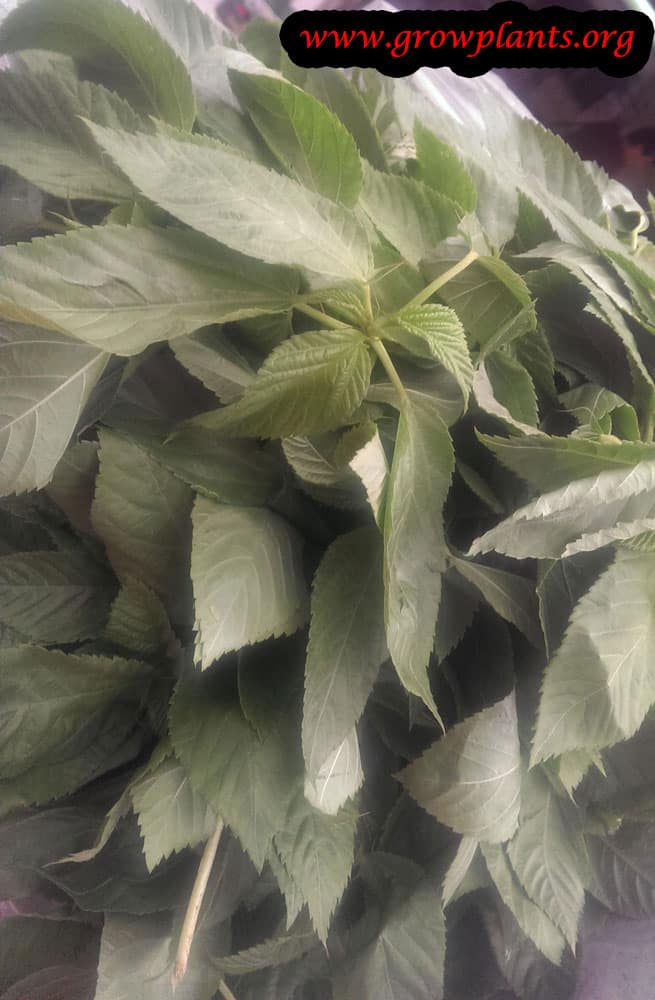
- Leaves & Foliage: Edible green, elliptic leaves with a pointed tip and serrated margin.
- Flower Characteristics: Small yellow flowers with five petals and five sepals.
Primary Uses & Landscape Value
- Edible Uses: Young and mature leaves are eaten raw or cooked, most famously in the thick Middle Eastern soup molokhia.
- Functional & Ornamental Roles: Fibre crop (jute) and traditional medicinal plant, and occasionally grown ornamentally.
Care Guide: Planting, Soil & Watering
Overview: A fast-growing warm-season leafy annual. It thrives in full sun with consistently moist, fertile soil and moderate watering.
Quick Care Requirements
| Requirement | Ideal Condition |
|---|---|
| Planting Season | In the warm season – spring, or autumn to winter in hot desert climates |
| Growth Rate | Fast |
| Soil Type | Fertile, moisture-retentive, well-draining |
| Water Need | Moderate – keep evenly moist |
Planting & Establishment
- Best Planting Season: Plant in spring once warmth arrives; in hot desert climates plant in the cooler autumn-to-winter window.
- How to Plant:
- Hole Preparation: Make a hole as deep as the root ball.
- Soil Amendments: Enrich with compost to support the lush, leafy growth it is grown for.
- Planting Depth: Set the crown at soil level, not buried.
- Growth Speed & Expectations: Fast-growing; it reaches harvestable size quickly in warm weather.
Soil, Watering & Drainage Care
- Soil Mix & Drainage Needs: Rich, moisture-retentive soil that still drains freely; container growth is possible in a large, well-drained pot.
- Watering Schedule & Technique:
- Young / Newly Planted: Keep the soil consistently moist.
- Established: Water regularly to maintain even moisture and tender leaves; do not let it dry out.
- Seasonal Adjustments: Water frequently in summer heat and less in cooler weather.
Climate, Light & Hardiness
Molokhia is a fast-growing warm-season annual leaf crop suited to tropical, subtropical, Mediterranean, and desert climates. Its planting window shifts with climate: an autumn-to-spring (cool-season) crop in USDA zone 10 and warmer, or a spring-planted warm-season crop in zone 5–9. It needs full sun and consistently moist soil.
Quick Climate Specifications
| Climate Zones | Tropical, subtropical, Mediterranean, desert |
|---|---|
| USDA Hardiness Zones | 10+ (autumn–spring planting) or 5–9 (spring planting) |
| Frost Tolerance | Very Low |
| Light Conditions | Full sun |
Sunlight & Light Exposure
Optimal Light Setup
Needs full sun for vigorous leaf production.
Temperature Extremes & Hardiness
USDA Hardiness & Regional Limits
As an annual, it is grown wherever a warm enough window exists: through the mild winter in hot zone 10+ climates, or during summer further north in zone 5–9.
Frost Sensitivity
Frost-tender; the growing window in each climate is chosen specifically to avoid frost.
Growing in Pots, Balconies & Indoors
Molokhia is a fast, heat-loving leafy annual rather than a houseplant – it thrives in a large pot or planter on a bright balcony or patio, but indoors the light is usually too weak. Give it the sunniest, warmest spot you have.
Quick Details
- Container Size: A generous pot or planter with free drainage – the grower confirms container growing but gives no set size, so match the pot volume to the plant’s size (1-3 m / 3-10 ft)
- Indoor Suitability: Not a true houseplant; it needs strong direct sun
- Best Spot: Full sun
- Soil & Drainage: Aerated, organic-rich mix that drains freely
- Watering in Pots: Keep the mix evenly moist; pots dry fast, so check often in warm weather.
Indoors & On the Windowsill
- Houseplant limits: The grower marks it as not suited to indoor life – it wants full sun to grow well, which an ordinary room rarely provides.
- Windowsill option: Only the brightest, sunniest sill comes close, and even then growth may be thin and drawn. It is happier outdoors.
On a Balcony or Patio
- Light and wind: Give it the sunniest, warmest spot. Walls and paving reflect heat so containers dry quickly – check moisture daily in hot spells, and shelter tall or exposed stems from strong wind.
- Practicalities: A full, watered pot is heavy – make sure the balcony can take the weight, and set a tray or feet to manage drainage runoff.
Choosing the Pot, Soil & Long-Term Care
- Pot and drainage: Choose a pot with strong drainage holes; if you stand it on a saucer, empty the saucer promptly so the roots never sit in water. Terracotta breathes and dries faster, while glazed or plastic pots hold moisture longer.
- Potting mix: Use a well-aerated, organic-rich mix – a good potting soil, or peat/coir blended with perlite or vermiculite for drainage and air.
- Watering: Water regularly to keep the mix evenly moist – pots dry out far faster than open ground, so check often in heat – but never leave it standing wet.
- Feeding: Potted plants run through their soil faster because nutrients leach out with every watering, so feed a little more often than you would in open ground.
Fertilizing & Feeding
A fast-growing leafy annual grown for repeated cuttings of its edible leaves: modest, nitrogen-forward feeding through establishment and leaf growth keeps regrowth vigorous after each harvest.
Quick Fertilizing Specs
| Feeding Level | Moderate feeder |
|---|---|
| young_feeding | A light, balanced starter feeding once seedlings are established and growing |
| mature_feeding | Steady, nitrogen-leaning feeding through the leafy growing season to support repeated leaf harvests |
| Main Nutrient Priority | Nitrogen to drive continuous leafy regrowth after cutting |
| Best Feeding Period | Through the warm growing season while leaves are being actively harvested |
| Organic Options | Compost or other organic matter worked into the bed at planting and as a topdressing during growth |
| Soil pH | Tolerates a wide range of garden soils; avoid extremes |
| Reduce/Stop Feeding | Ease off feeding as the plant shifts toward flowering and seed set late in the season |
Feeding by Growth Stage
Establishment after sowing or transplanting
Help young Molokhia seedlings root in and begin steady leafy growth.
| Nutrient direction | A balanced starter feeding with organic matter worked into the soil. |
|---|---|
| Timing | Shortly after seedlings are up and growing, or after transplanting. |
| Frequency | A single light starter feeding is usually enough to get plants growing strongly. |
| Fertilizer types | Balanced complete fertilizer, Compost or other organic matter worked into the bed |
| Precautions | Keep the soil consistently moist alongside feeding; this plant does not tolerate drying out while establishing. |
Leafy growth before harvest
Build a full, fast-growing canopy of leaves ahead of the first cuttings.
| Nutrient direction | A nitrogen-forward complete fertilizer to drive vigorous leaf production. |
|---|---|
| Timing | From early establishment through the run-up to the first harvest. |
| Frequency | Light, regular feeding supports the fast growth rate typical of this plant. |
| Fertilizer types | Complete fertilizer with a nitrogen emphasis |
| Precautions | Avoid heavy single doses; this fast grower responds better to steady light feeding than infrequent heavy applications. |
Sustained feeding through repeated leaf harvest
Keep the plant regrowing vigorously through the cutting season, since young leaves are harvested repeatedly for eating.
| Nutrient direction | Continue light, nitrogen-leaning feeding to fuel regrowth after each cutting. |
|---|---|
| Timing | Through spring, summer, and autumn while leaves are being cut for use. |
| Frequency | Light feeding after harvest rounds helps the canopy recover quickly for the next cutting. |
| Fertilizer types | Complete fertilizer with a nitrogen emphasis, applied lightly |
| Precautions | Because leaves are eaten, follow label guidance on any pre-harvest interval before cutting after feeding. |
Nutrient Deficiency Signs & Corrections
Pale, yellow-green leaves and noticeably slower regrowth after cutting.
| Possible causes | Low available nitrogen in the soil, Nitrogen leached away after heavy watering or rain, Repeated harvesting outpacing the feeding schedule |
|---|---|
| Appears first on | Older, lower leaves first, spreading upward if uncorrected. |
| What to check | Recent feeding history relative to harvest frequency, Soil drainage and recent rainfall, Overall canopy density compared to earlier in the season |
| Possible correction | Resume light, nitrogen-forward feeding and keep intervals consistent with how often leaves are cut. |
New leaves yellow between the veins while the veins themselves stay green.
| Possible causes | High or alkaline soil pH limiting iron availability, Waterlogged or poorly drained soil, Cool, wet conditions temporarily slowing root uptake |
|---|---|
| Appears first on | Youngest leaves at the growing tips. |
| What to check | Soil pH, Drainage around the root zone, Whether symptoms follow a cold or wet spell |
| Possible correction | Correct overly alkaline soil where practical and, if the pattern persists, apply a chelated iron product per its label. |
Interveinal yellowing on older leaves while the veins remain green.
| Possible causes | Magnesium leached from sandy or heavily irrigated soil, A nitrogen-heavy feeding pattern competing with magnesium uptake, Naturally low-magnesium garden soil |
|---|---|
| Appears first on | Older, lower leaves. |
| What to check | Feeding history for heavy nitrogen use without balance, Soil type and irrigation frequency, Whether yellowing is confined to older leaves |
| Possible correction | Switch to a balanced complete fertilizer and work organic matter into the bed to buffer nutrient swings. |
Pruning, Training & Seasonal Maintenance
Molokhia is a fast-growing, herbaceous leaf crop that is not pruned for structure – the plant tolerates frequent cutting well, and the ongoing work is really harvest plus tip-pinching, which keeps the plant bushy and productive rather than tall and sparse. Left unpinched it can grow 1–3m tall on a single fibrous main stem (the genus is also grown commercially for fiber), so pinching the growing tips both improves leaf yield by encouraging branching and delays the shift to flowering, after which leaves toughen. Because the source notes this species as aggressive and prone to self-seeding, removing spent flowers before seed drop is a genuine, ongoing part of its maintenance.
Quick Pruning & Maintenance Specs
| Pruning Tolerance | High – regrows readily from pinched or harvested stems |
| Primary Pruning Window | Ongoing through spring–autumn via tip-pinching and leaf harvest |
| Typical Frequency | Continuous light harvest, with tip-pinches every few weeks in early growth |
| Main Objective | Encourage branching for more harvestable leaf area; delay flowering/toughening; prevent unwanted self-seeding |
| Young Plant Priority | Pinch the growing tip once several leaf pairs have formed, to start branching early |
| Mature Plant Priority | Rotate leaf harvest across the plant; keep pinching regrowth; remove flower stems before seed set |
| Best Tool Type | Precision snips |
| Avoid Heavy Pruning During | The first couple of weeks after transplanting, before the plant is established |
Pruning by Plant Age & Size
Newly Established
Remove only damaged growth while the seedling roots in; hold off on tip-pinching until several leaf pairs are present.
Young / Formative
No formal training system applies to this herbaceous annual. Pinching the growing tip early is the key intervention – it forces lateral branching, and each new branch becomes another point for future leaf harvest instead of the plant putting all its growth into one tall central stem.
Mature / Established
Harvest leaves continuously (young top leaves can be eaten raw, larger lower leaves are better cooked, per this plant’s own leaf-use notes) and keep pinching regrowing tips to sustain multiple productive branches. Watch for flower buds and remove them promptly unless seed is intentionally being saved, since this species self-seeds aggressively once allowed to flower and set seed.
Structural Pruning & Training
Height & spread control: tip-pinching is the only lever available, and it matters more here than on many leafy annuals because an unpinched plant grows tall and increasingly fibrous (jute-like) rather than staying leafy and harvestable.
Special Growth to Remove
- Flower buds and stems – remove before they set seed, given this species’ documented aggressive, self-seeding habit, unless seed is being deliberately saved.
- Lower leaves, once picked, to keep the plant tidy and airflow open.
Container & Small-Space Pruning
Molokhia grows well in containers; pinch more assertively than an in-ground planting to keep a compact, continuously harvestable size within the pot’s limited space.
Tools
- Precision snips – tip-pinching and leaf harvest on soft, non-woody stems.
Tool Hygiene & Disease Risk
Routine. Only mites are noted as a pest for this species, with no documented tool-transmissible disease – clean, sharp tools are sufficient.
Cut Placement & Technique
Pinch or cut just above a leaf node to prompt branching. Harvest leaves individually or by stem tip rather than stripping a stem completely bare, so it can keep producing.
Heavy Pruning & Rejuvenation
A hard cutback of leggy, still-vegetative growth can work given how fast this species grows, forcing a fresh flush of branching. Once the plant has bolted and is flowering, however, cutting back will not restore leaf quality – at that point replacing the planting is generally more effective than rejuvenation pruning.
Post-Pruning Care
Keep the soil consistently moist to support fast regrowth after pinching or harvest; no extra feeding is needed specifically because of pruning.
Common Pruning Mistakes
- Letting the plant flower and set seed before harvest is finished, given its aggressive self-seeding tendency.
- Skipping early tip-pinching, leaving a single tall, increasingly fibrous stem with sparse upper leaves.
- Stripping an entire stem of leaves at once instead of harvesting selectively, slowing regrowth.
When NOT to Prune
- Avoid hard pinching or heavy harvest immediately after transplanting, before the plant is established.
- Don’t let flowering/seed-set periods go unmanaged – once flowering starts, seed can form and drop quickly given the plant’s self-seeding habit.
Recommended Tools (by task)
- precision_snips – tip-pinching and leaf harvest on this soft-stemmed leafy annual.
Propagation Guide
Molokhia is propagated almost exclusively from seed or seedling – the plant does not require grafting or vegetative reproduction to stay true to type. It grows so readily from seed, and self-seeds so freely that the site flags it as invasive/aggressive, that propagation is considered easy for a home grower.
Quick Propagation Specs
| Best Propagation Method | Seed (direct sow or seedling transplant) |
| Alternative Methods | None commonly needed – vegetative reproduction is not required |
| Propagation Difficulty | Easy |
| Seed True-to-Type | Usually true-to-type |
| Best Propagation Season | Spring; winter sowing in desert climates |
| Seed Germination Time | Typically around 1–2 weeks in warm soil (the site does not give an exact figure for this plant) |
| Germination Temperature | Roughly 20–25°C (68–77°F), typical for this warm-season leaf crop |
| Seed Sowing Depth | Shallow, around 0.5–1 cm (0.2–0.4 in) |
Growing from Seed
Seed Handling & Viability
No special drying or storage treatment is indicated by the site; standard dry, cool storage of the small seeds until sowing is sufficient.
Sowing Season
Sow in spring for regular in-ground planting; in desert climates the site recommends winter sowing instead, fitting an autumn-to-spring growing window.
Sowing Depth & Orientation
Sow shallowly and keep the seedbed moist; no particular orientation is needed for these small seeds.
Germination Conditions
Warm, evenly moist, well-drained soil in full sun gives the most reliable germination.
Seedling Care
Keep young seedlings consistently moist. Because Molokhia grows fast and self-seeds readily (the site notes it can be invasive/aggressive), thin seedlings and manage volunteer seedlings to keep the planting in bounds.
Bloom & Flower Guide
Quick Details
- Bloom Season: Autumn, as the days shorten
- Time to First Bloom: In its first season; flowering is triggered late, as day length shortens
- Flower Appearance: Small yellow flowers with five petals and five sepals, borne along the stems
- Edibility: Grown for its edible leaves; the small flowers are not the part eaten
Detailed Blooming Overview
Molokhia is grown for its leaves, and flowering marks the end of the plant’s most productive leaf phase. Being sensitive to day length, it holds off blooming until the days shorten in autumn, then carries small five-petaled yellow flowers along the stems. For the best leaves, harvest well before the plant flowers heavily; the small blooms are largely self-fertile.
Flower Characteristics
- Small yellow flowers with five petals and five sepals.
- Borne along the stems near the leaf joints.
Bloom Care & Thinning
- Managing the bloom: For a longer leaf harvest, pick regularly and expect quality to fall off once the plant flowers in earnest.
- Pollination: The small flowers are largely self-pollinating.
Fruit & Uses
Molokhia is grown almost entirely for its tender leaves, the signature ingredient of the classic Middle Eastern and North African molokhia soup. Young leaves are tender enough to eat raw, while more mature leaves are best cooked down into soup or added to other cooked dishes.
Quick Edible Specs
| Edible Parts | Leaves |
|---|---|
| Main Use(s) | Culinary — soup, cooked greens, eaten raw |
| Eaten Raw or Cooked | Both — young leaves raw, mature leaves cooked |
| Preparation Required | None for young leaves; Cook for mature leaves (traditional molokhia soup) |
| Harvest Season | Spring / Summer / Autumn |
| Time to First Harvest | Once the plant is established and producing full-size young leaves (see Growing Info for planting timeline) |
| Storage | Best used fresh; leaves can also be dried for later use |
| Safety/Toxicity Caveat | Only the leaves are the food part of this plant — the seeds/pods are not eaten |
Leaves & Greens
Leaves are green, elliptic in shape with a pointed tip and a serrated margin. Once the plant is established, leaves can be trimmed freely: pick fully grown young leaves to eat raw, and let others mature further for cooking. Cooked leaves are traditionally simmered into a thick, mucilaginous soup (the dish molokhia is named for); they can also be used in other cooked greens preparations.
Preparation, Uses & Safety
Young leaves need no preparation beyond washing and can be eaten raw. Mature leaves are typically chopped and cooked into soup, which is the plant’s best-known culinary use. Only the leaves of this plant are eaten — the seeds and seed pods of Corchorus species are not a food part and contain cardiac-glycoside compounds, so any seed pods that form after flowering should be left uneaten.
Pests, Diseases & Troubleshooting
Overview: Corchorus (jute mallow, the edible molokhia) is a fast warm-season leafy green whose tender foliage attracts a range of sap feeders and chewing insects — above all spider mites, plus aphids, whitefly, flea beetles and jute loopers/caterpillars. Its main diseases are stem/root rots (notably Macrophomina), damping-off and root-knot nematode. As an edible crop, lean on cultural and low-residue controls and observe harvest intervals on any spray.
Quick Troubleshooting Overview
| Issue / Pest | Main Symptom | Primary Solution |
|---|---|---|
| Spider mites | Stippling, bronzing and webbing in heat | Hose undersides, insecticidal soap/oil |
| Aphids | Sticky, curled new leaves; honeydew | Water jet, insecticidal soap, beneficials |
| Whitefly | White flies rise when disturbed; yellowing | Sticky traps, insecticidal soap |
| Flea beetles | Tiny shot-holes in leaves | Row cover, kaolin clay, sanitation |
| Jute looper / caterpillars | Chewed, skeletonized leaves; frass | Hand-pick, Bt spray |
| Stem / root rot | Wilting, blackened stem base and roots | Rotate, improve drainage, clean seed |
Common Pests & Management
- Spider mites (Tetranychus spp.) — the main pest:
- Symptoms: Fine pale stippling that bronzes whole leaves, with webbing on undersides; mites explode in hot, dry weather and can defoliate a crop quickly.
- Prevention & Control: Keep plants well watered and hose the undersides regularly to disrupt mites; encourage predatory mites, and use insecticidal soap or a light horticultural oil, observing the harvest interval on this leafy edible.
- Aphids (Aphis gossypii and allies):
- Symptoms: Soft green or black clusters on new growth and leaf undersides; curling, yellowing, honeydew and virus transmission.
- Prevention & Control: Blast off with water and support lady beetles, lacewings and hoverflies; insecticidal soap clears heavy colonies. Avoid over-feeding with nitrogen.
- Whitefly (Bemisia tabaci):
- Symptoms: Tiny white flies rising in clouds when disturbed; nymphs on undersides cause yellowing, honeydew and virus spread.
- Prevention & Control: Use yellow sticky traps to monitor and reduce adults, spray insecticidal soap on undersides, and support parasitic wasps; remove heavily infested lower leaves.
- Flea beetles (Nisotra/Phyllotreta spp.):
- Symptoms: Numerous tiny “shot-hole” punctures in leaves from small jumping beetles; heavy attack on seedlings stunts growth.
- Prevention & Control: Protect young plants with floating row cover, use kaolin-clay film as a deterrent, keep the area weed-free, and remove crop debris that shelters beetles.
- Jute semilooper & leaf-eating caterpillars (Anomis sabulifera and others):
- Symptoms: Green loopers and caterpillars chew and skeletonize leaves, leaving frass; a classic jute-crop defoliator.
- Prevention & Control: Hand-pick at dusk and apply Bacillus thuringiensis (Bt) for selective caterpillar control; encourage birds and parasitic wasps.
- Root-knot nematode (Meloidogyne spp.):
- Symptoms: Stunting, wilting and yellowing with knotty galls on the roots, worst in warm sandy soils.
- Prevention & Control: Rotate with non-hosts, add organic matter, solarize infested beds, and plant into clean soil; avoid replanting molokhia in known nematode ground.
Diseases & Fungal Issues
- Stem & root rot / charcoal rot (Macrophomina phaseolina, Sclerotium):
- Symptoms: Wilting and collapse with darkened, decayed stem base and roots, often with tiny black specks (microsclerotia) in the tissue; worst in hot, stressed, or waterlogged conditions.
- Treatment & Management: Rotate crops, improve drainage, avoid drought and heat stress, use clean seed, and remove and destroy infected plants; do not replant into infested soil.
- Damping-off (Pythium/Rhizoctonia):
- Symptoms: Seedlings rot at the soil line and topple, or fail to emerge, in cold, wet, overcrowded seedbeds.
- Treatment & Management: Sow in warm, well-drained soil at the right density, avoid overwatering, and provide airflow; treat seedbeds and use clean containers.
- Anthracnose & leaf spot (Colletotrichum/Cercospora):
- Symptoms: Dark sunken spots or blotches on leaves and stems in warm, wet weather, causing leaf drop.
- Treatment & Management: Space plants, avoid overhead watering, remove infected debris, rotate, and use clean seed; copper is an option but respect edible-harvest intervals.
- Root-knot nematode galling (see pests):
- Symptoms: Root galls that predispose plants to wilt and secondary rots.
- Treatment & Management: Manage with rotation, organic matter and solarization as above; healthy roots resist the follow-on rots.
Growing Difficulties & Abiotic Problems
- Bolting & toughening in heat/stress
- Cause & Symptoms: Drought or heat pushes early flowering and makes leaves fibrous and bitter.
- Correction Strategy: Keep soil evenly moist, harvest young leaves regularly, and pinch flower shoots to prolong tender leaf production.
- Cold sensitivity
- Cause & Symptoms: A tropical annual, molokhia stalls and yellows in cool weather and dies at frost.
- Correction Strategy: Grow only in warm conditions; sow after the soil warms and harvest before cold arrives.
- Nutrient chlorosis
- Cause & Symptoms: Pale, yellow leaves on this fast, hungry leafy crop in poor soil.
- Correction Strategy: Feed with a balanced fertilizer through growth and keep soil rich in organic matter for lush, tender leaves.
- Overwatering / poor drainage
- Cause & Symptoms: Waterlogging invites the stem and root rots that most threaten the crop.
- Correction Strategy: Plant on well-drained ground or raised beds and water to keep soil moist but never sodden.
What Helps – Products & Tools
Because molokhia is eaten, favor cultural and low-residue tools and always observe harvest intervals. Insecticidal soap and light horticultural oil handle mites, aphids and whitefly; floating row cover and kaolin clay deter flea beetles, yellow sticky traps monitor whitefly, and Bacillus thuringiensis (Bt) targets caterpillars. Against the key stem/root rots and nematodes, rely on rotation, drainage, clean seed and solarization; use copper only with attention to the harvest interval. Follow the label and protect pollinators.