

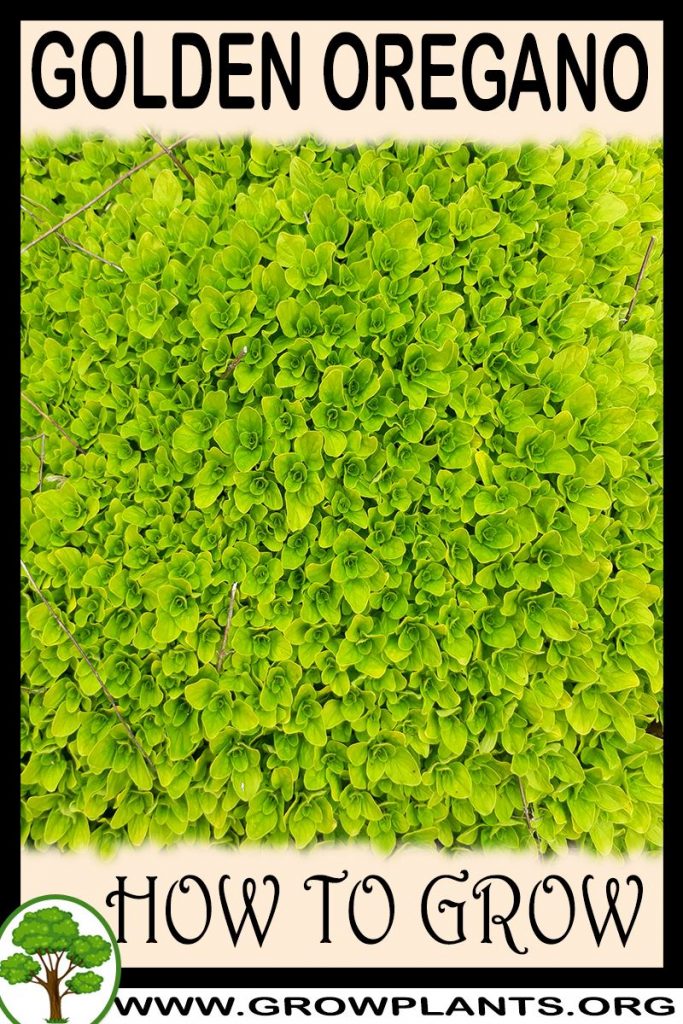
Plant Profile & Key Characteristics
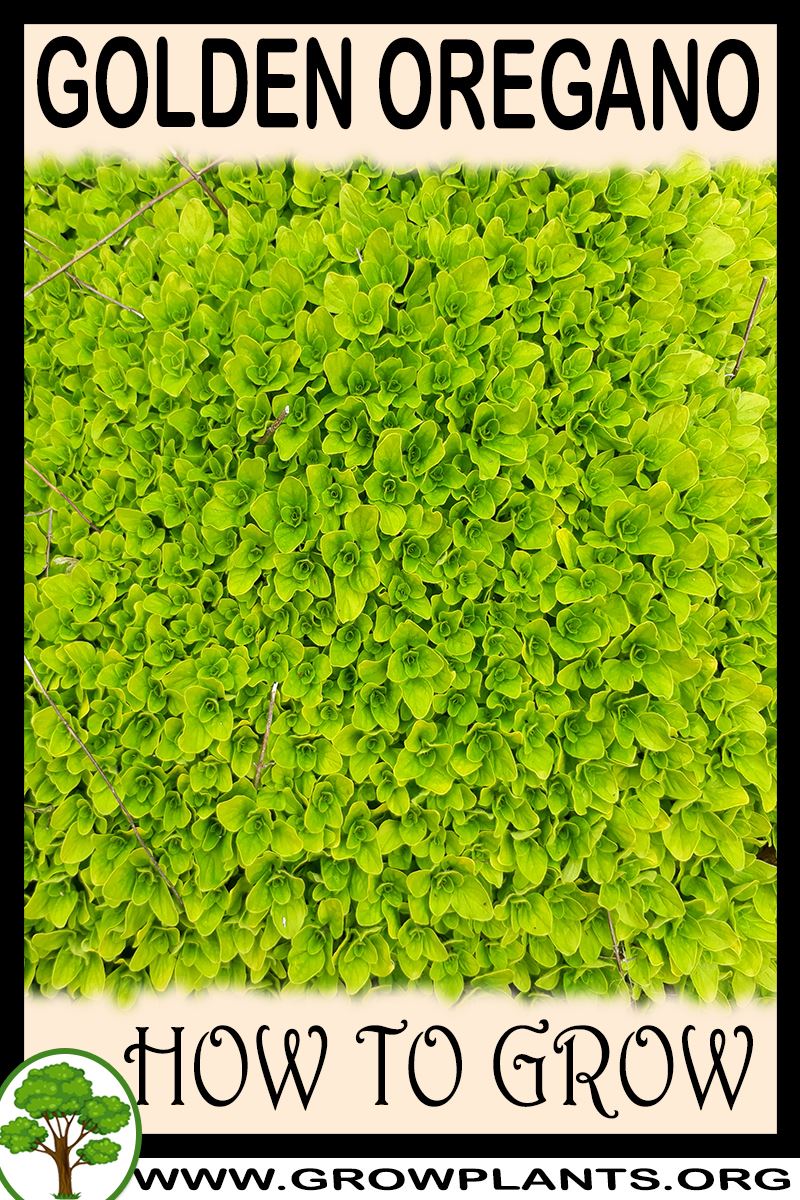
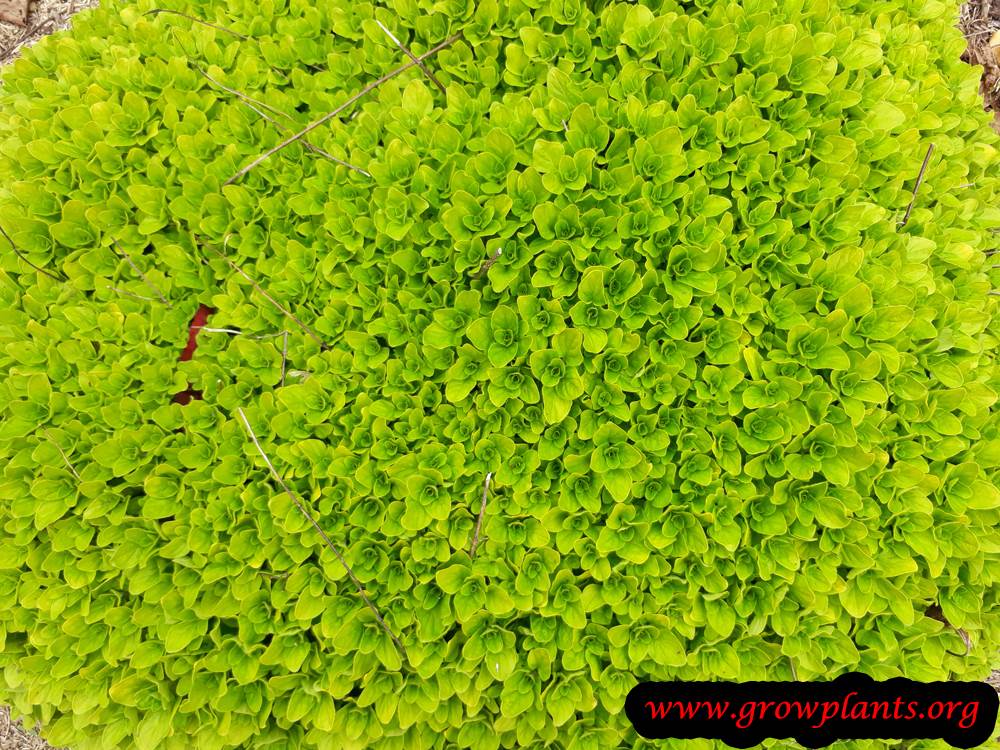
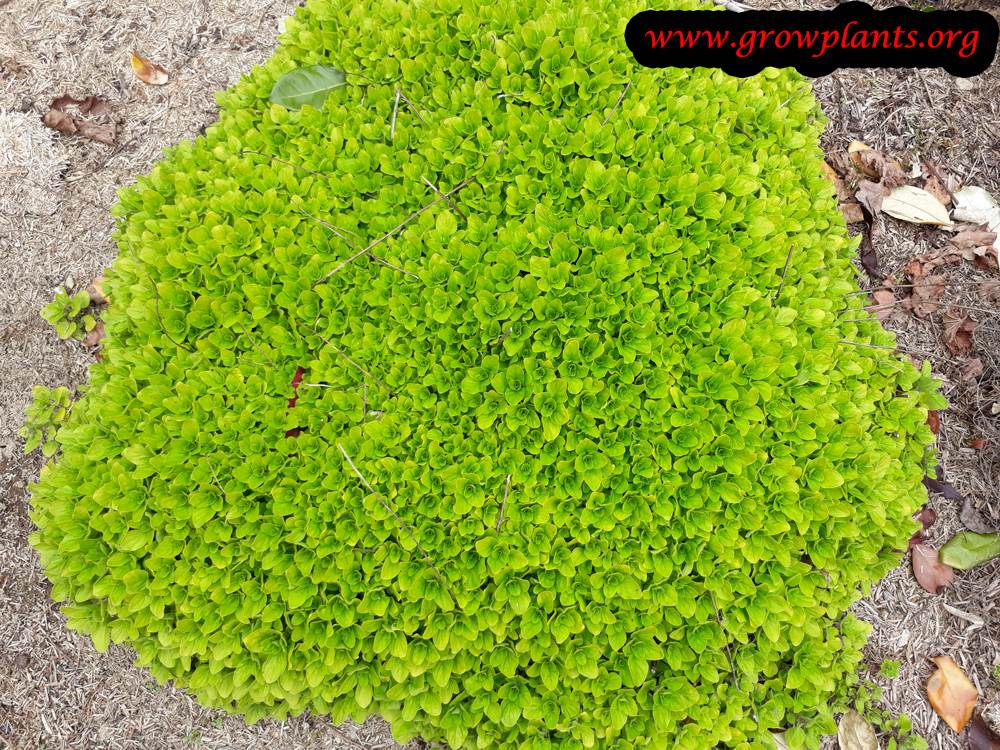
Overview: Golden oregano (Origanum vulgare ‘Aureum’) is a low, spreading aromatic perennial 5-30 cm tall, grown as much for its golden-yellow foliage as for its edible leaves. It is evergreen in mild climates and grown as an annual where winters are cold.
Quick Specifications
| Specification | Attribute |
|---|---|
| Plant Type / Life Cycle | Perennial (evergreen; grown as annual in cold climates) |
| Foliage Type | Evergreen |
| Mature Size | 5-30 cm (2-12 in) |
| Growth Rate | Moderate |
| Root System | Fibrous |
| Toxicity | Non-toxic / edible (culinary herb) |
| Hardiness | USDA zones 5-10 |
Growth Form & Structure
- Height & Spread: 5-30 cm (2-12 in); low and spreading, well suited to pots and edging.
- Growth Habit & Form: Low, mat-forming aromatic subshrub.
- Lifespan & Maturity: Long-lived perennial in mild climates.
Anatomy & Physical Features
- Leaves & Foliage: Hairy green-yellow (golden) leaves 1-3 cm; summer leaves smaller and thicker.
- Flower Characteristics: Small purple flowers in spikes, with edible green buds (full detail in the Bloom guide).
Primary Uses & Landscape Value
- Edible Uses: Leaves used fresh or dried as a herb, spice and in spreads.
- Functional & Ornamental Roles: Golden-foliage groundcover and edging plant; culinary herb.
Care Guide: Planting, Soil & Watering
Overview: Golden oregano (Origanum vulgare aureum) is a Mediterranean herb that loves full sun, warmth and light, sharply well-draining soil. It is sensitive to excess moisture and to water sitting on its leaves, so keep it on the drier side and water at the base.
Quick Care Requirements
| Requirement | Ideal Condition |
|---|---|
| Planting Season | Spring through autumn in the warm season; year-round in frost-free climates |
| Growth Rate | Moderate |
| Soil Type | Light, lean, well-draining soil – dislikes heavy, soggy ground |
| Water Need | Moderate – let the top of the soil dry between waterings |
Planting & Establishment
- Best Planting Season: Plant in the warm season – spring after the last frost through summer and autumn; in warm, frost-free climates it can be planted almost year-round.
- How to Plant:
- Hole Preparation: Dig a hole a little larger than the root ball so the roots have loose soil to spread into.
- Soil Amendments: Mix a little compost or organic matter into the backfill, but keep the overall blend light and free-draining rather than rich and moisture-holding.
- Planting Depth: Set the crown at soil level – do not bury the stem base, as a buried, damp crown is prone to rot in this moisture-sensitive plant.
- Growth Speed & Expectations: Growth is moderate; regular light harvesting of the tips keeps the plant bushy and productive.
Soil, Watering & Drainage Care
- Soil Mix & Drainage Needs: Use a light, gritty, sharply draining mix; in containers choose a free-draining, well-ventilated potting mix and make sure the pot drains freely. Good drainage is essential to prevent root rot.
- Watering Schedule & Technique:
- Young / Newly Planted: Keep the soil lightly moist (not wet) while the plant establishes its roots, watering with a moderate amount of water.
- Established: Once established it is fairly drought-tolerant: water deeply, then let the top of the soil dry out before watering again.
- Seasonal Adjustments: Cut back watering in winter and during cool, wet spells; give a little more in summer heat. Always water the soil, never the foliage.
Climate, Light & Hardiness
Golden oregano is a low, colorful cultivar of common oregano suited to Mediterranean, subtropical, and temperate climates, hardy through USDA zone 5–10. It takes full sun to half shade, and its golden leaf color is typically most vivid with good sun exposure.
Quick Climate Specifications
| Climate Zones | Mediterranean, subtropical, temperate |
|---|---|
| USDA Hardiness Zones | 5–10 |
| Frost Tolerance | Moderate |
| Light Conditions | Full sun to half shade |
Sunlight & Light Exposure
Optimal Light Setup
Full sun keeps the gold foliage color brightest and growth compact; half shade is tolerated but leaves may green up somewhat.
Temperature Extremes & Hardiness
USDA Hardiness & Regional Limits
Shares its parent species' solid cold hardiness, reliably perennial through USDA zone 5–10.
Wind, Humidity & Microclimate
Humidity Preferences
Prefers dry air and dry foliage, sensitive to moisture sitting on the leaves as with other oreganos.
Growing in Pots, Balconies & Indoors
Golden oregano (Origanum vulgare ‘Aureum’) is a low, golden-leaved, aromatic culinary herb. The grower does not rate it as a houseplant, but it is a fine kitchen-sill and container herb – on a bright, sunny spot it grows well in a pot.
Quick Details
- Container Size: A free-draining pot sized to the plant (general guidance – the grower confirms containers suit it, with no set volume)
- Indoor Suitability: Not a deep-indoor houseplant, but good on a bright, sunny windowsill
- Best Spot: Full sun to part shade (good light keeps the golden colour)
- Soil & Drainage: Well-drained, well-aerated mix; dislikes staying wet
- Watering in Pots: Water moderately; let the surface dry between waterings
Indoors & On the Windowsill
- Houseplant limits: The grower marks it as not a houseplant – indoors it needs direct light, so keep it to the sunniest sill; too little light also dulls the golden foliage.
- Windowsill growing: Its low, spreading habit suits a bright sill or the edge of a pot; pinch for bushy growth and harvest freely.
- Overwintering: Fairly hardy, but a pot can be sheltered on a bright sill in the coldest areas.
On a Balcony or Patio
- Light, wind & heat: It is happy on a balcony or patio in good light. Pots dry quickly because walls and paving reflect heat, so check them often in warm spells; shelter tall stems from wind and mind the pot weight and drainage runoff.
- Practicalities: Lovely spilling over the rim of a sunny balcony pot; give it plenty of light for the best leaf colour.
Choosing the Pot, Soil & Long-Term Care
- Pot & drainage: Use a pot with strong drainage holes and empty any standing saucer so the roots never sit in water and rot.
- Pot material: Terracotta breathes and dries quickly (handy for sun-loving Mediterranean plants); glazed or plastic pots hold moisture longer.
- Potting mix: Well-aerated, free-draining mix – a good potting mix, or peat/coir blended with perlite or vermiculite and some organic matter.
- Feeding: Potted plants use up nutrients faster because watering leaches them out, so feed a little more often than plants in open ground – lightly.
- Repotting: Refresh the mix or pot up every couple of years, lightly trimming the roots and top growth of perennials once the pot fills with roots.
Fertilizing & Feeding
A light feeder: this low, golden-yellow-leaved form of oregano is grown as much for its bright groundcover color as for culinary use, and lean feeding helps preserve its gold foliage color rather than pushing the plain green, overly vigorous growth heavier feeding tends to favor.
Quick Fertilizing Specs
| Feeding Level | Light feeder |
|---|---|
| Main Nutrient Priority | A balanced complete fertilizer used sparingly to support foliage while helping preserve golden leaf coloring |
| Best Feeding Period | During the active growing season |
| Organic Options | Compost or organic matter worked into well-drained soil |
| Reduce/Stop Feeding | Feeding eases off as growth slows going into the cooler part of the year |
| Micronutrients | Usually adequate from a complete fertilizer and organic matter in well-drained soil |
| Soil pH | Tolerates a wide range of well-drained soil |
Feeding by Growth Stage
Establishment after planting
Help newly planted golden oregano establish roots and fill in as a low groundcover.
| Nutrient direction | A balanced fertilizer plus organic matter supports steady root establishment without pushing overly vigorous, plain-green growth. |
|---|---|
| Timing | At planting, during the active growing season. |
| Frequency | A light feeding at planting is usually enough while roots establish. |
| Fertilizer types | A balanced complete fertilizer used sparingly, Organic matter worked into the planting hole |
| Precautions | Avoid rich soil or heavy early feeding, which can favor vigorous green growth over the compact golden habit this plant is grown for. |
Active growth and leaf harvest
Keep this golden-leaved groundcover filling in evenly with good color while its leaves are harvested for culinary use.
| Nutrient direction | Keep feeding light and balanced; lean feeding helps hold the leaves’ golden color, while heavier or nitrogen-forward feeding tends to push plain green, leggy growth. |
|---|---|
| Timing | Through the active growing season while harvesting leaves. |
| Frequency | Feed sparingly through the growing season; this undemanding herb rarely needs more. |
| Fertilizer types | A balanced complete fertilizer at a light rate, Compost or organic matter as a top-dressing |
| Precautions | If foliage starts trending plain green and leggy rather than compact and gold, ease back on feeding rather than adding more. |
Nutrient Deficiency Signs & Corrections
Leaves are unusually small and pale, beyond the plant’s normal golden coloring, and growth is sparse.
| Possible causes | low available soil nitrogen, leaching from watering, thin, low-organic-matter soil |
|---|---|
| Appears first on | older, lower leaves |
| What to check | recent feeding history, soil organic matter content, overall growth rate for the season |
| Possible correction | Apply a balanced fertilizer at a light rate; true nitrogen deficiency is uncommon in this undemanding plant. |
Interveinal yellowing appears on older leaves in a pattern distinct from the plant’s normal gold coloring, while the veins stay green.
| Possible causes | low soil magnesium, leaching from regular watering, an imbalance from heavier nitrogen feeding |
|---|---|
| Appears first on | older, lower leaves |
| What to check | soil magnesium status, soil drainage, recent fertilizer balance |
| Possible correction | Apply a labeled magnesium source and keep overall feeding light and balanced. |
New leaves show an unusually washed-out, whitish-yellow cast between the veins rather than a healthy gold, with the veins staying green.
| Possible causes | alkaline soil limiting iron availability, waterlogged roots from poor drainage, excess phosphorus tying up iron |
|---|---|
| Appears first on | newest growth at the shoot tips |
| What to check | soil pH and drainage, watering frequency, recent phosphorus-heavy feeding |
| Possible correction | Improve drainage first; apply a chelated iron product per its label only if alkaline soil is confirmed. |
Pruning, Training & Seasonal Maintenance
Golden oregano is the compact, golden-leaved form of common oregano, grown mainly as a low ornamental groundcover or edging plant rather than for bulk leaf harvest, and its color shows best on fresh new growth. A winter cutback removes old, faded foliage and, by forcing a flush of new leaves in spring, directly improves the plant’s golden color for the coming season – a benefit this species offers that plain green oregano does not need. Like common oregano, it is herbaceous-based and tolerates a hard cutback without hesitation.
Quick Pruning & Maintenance Specs
| Pruning Tolerance | High – resprouts readily from a hard cutback |
| Primary Pruning Window | Winter |
| Secondary Maintenance Window | Light shaping through summer to keep the low mound tidy |
| Typical Frequency | One annual winter cutback, plus occasional light tidying |
| Main Objective | Fresh golden foliage color and a tight, low mounding form |
| Young Plant Priority | Light pinching to build a dense mat rather than a single sprawling stem |
| Mature Plant Priority | Annual winter cutback to refresh foliage color and prevent a leggy, faded-looking mound |
| Best Tool Type | Precision snips (small-scale, soft-stemmed groundcover) |
| Avoid Heavy Pruning During | Peak summer heat, when a hard cutback adds unnecessary stress |
Pruning by Plant Age & Size
Newly Established
Pinch tips lightly to encourage the young plant to fill in low and dense rather than reaching upward.
Young / Formative
No formal training – as with common oregano, self-layering along the ground helps it fill in as a groundcover; guide or thin this spread if it is being used as a defined edging rather than a filler patch.
Mature / Established
An annual winter cutback close to the crown is the main maintenance event, refreshing both the plant’s shape and its golden foliage color for the following season.
Seasonal Pruning Schedule
Dormant/Winter
Objective: remove old, faded foliage and reset the mound before spring, directly improving next season’s leaf color since this cultivar’s gold tone is strongest on new growth. Remove: old stems and any winter-worn leaves. Do not remove: the crown. Expected response: a fresh flush of brightly colored new foliage in spring – this is the main payoff of pruning this particular cultivar. Flowering/fruiting impact: minimal; flowering (like the green form) follows later in summer regardless.
Summer Canopy Management
Objective: keep the low mound tidy and prevent it looking leggy or faded by midsummer. Remove: any overextended or flowering stems that disrupt the compact form. Do not remove: enough foliage to leave bare patches in what is meant to be a groundcover display. Expected response: a tighter, more uniformly colored mat.
Structural Pruning & Training
No framework training applies to this low groundcover cultivar; the relevant structural task is simply renewal – the winter cutback prevents the small (5-30 cm) mound from thinning out or fading in color as growth ages.
Special Growth to Remove
- Old, faded foliage each winter, to make room for the more brightly colored new flush.
- Flowering stems, if a tight foliage mound is preferred over bloom – flowering can make the mat look less uniform.
- Any stems that have rooted where they are not wanted, given this cultivar’s tendency to self-layer along the ground.
Container & Small-Space Pruning
This cultivar’s naturally compact size (5-30 cm) already suits pots, rock gardens, and edging well. In a container, keep the winter cutback on schedule to maintain the fresh golden color that is the main reason this plant is grown, and trim lightly through summer to keep it from spilling untidily over a pot’s edge.
Tools
Precision snips for both the winter cutback and any summer tidying – this is a small, soft-stemmed groundcover with no woody growth.
Tool Hygiene & Disease Risk
Routine: clean, sharp snips are sufficient; no notable pruning-transmitted disease risk beyond the general moisture sensitivity shared with other Origanum species in this batch.
Cut Placement & Technique
Shear the whole low mound back fairly close to the crown in winter rather than selectively thinning individual stems – this is a mat-forming plant, and an even cutback gives the most uniform flush of new golden growth.
Heavy Pruning & Rejuvenation
Tolerated and beneficial: because this cultivar’s appeal is its fresh golden new growth, a fairly hard annual winter cutback is not just safe but actively improves its display for the following season, unlike the woody herbs in this batch.
Post-Pruning Care
Water normally after the winter cutback; avoid heavy feeding, since overly lush growth on this cultivar can revert toward plain green and lose some of its gold coloring in shade or with excess nitrogen.
Common Pruning Mistakes
- Never cutting the mound back, so old growth accumulates and the golden color fades and looks patchy.
- Growing it in too much shade and then expecting pruning alone to restore strong gold color – light is the bigger factor.
- Over-fertilizing after pruning, which can green out the new growth instead of keeping it golden.
When NOT to Prune
Avoid a hard cutback in peak summer heat; otherwise this species is forgiving of pruning timing given its tolerance for cutting back hard.
Recommended Tools (by task)
- precision_snips – the annual winter cutback and any summer tidying on this small, soft-stemmed groundcover cultivar.
Propagation Guide
Golden oregano is best propagated using division or stem cuttings when the goal is to preserve the current plant form.
Quick Propagation Specs
| Preferred Method | Division or stem cuttings |
| Seed | Seed may vary; vegetative propagation preserves the golden form |
This species can also be propagated by layering – bending a branch over and covering it with earth. Spring, or autumn in warmer climates, is the best time; rooting takes about 2-5 weeks, and bending the branch slightly (even breaking it a little) can help.
Vegetative Propagation
Take healthy vegetative material with viable nodes, avoid flowering or damaged growth, and root it in a clean, free-draining propagation medium. Maintain steady humidity without keeping the medium waterlogged.
Seed Propagation
Seed may vary; vegetative propagation preserves the golden form. When seed is used, sow mature viable seed in a clean, free-draining medium.
Aftercare
Protect newly propagated plants from severe drought, heat and waterlogging until new roots and shoots are established.
Bloom & Edible Flower Guide
Quick Details
- Bloom Season: Summer
- Flower Appearance: Small purple flowers held in loose sprays above the golden foliage
- Edibility: The flowers and buds are edible, carrying the same warm oregano flavour as the leaves
Detailed Blooming Overview
In summer golden oregano lifts slender sprays of small purple flowers above its bright, golden-green leaves. The flowers and their buds are edible, milder but recognisably oregano, and lovely scattered fresh over food or dried with the herb. They are also a favourite of bees and hoverflies. If your priority is a big leaf harvest, though, you may prefer to keep the plant from flowering.
Flower Characteristics
- Colour is purple.
- Small flowers carried on upright stalks in loose, branching sprays.
- Aromatic, with the same flavour as the leaves.
Bloom Care & Thinning
- If you grow it for the leaves: Pinch out the flowering stems as they form to keep the foliage tender and productive; let some bloom if you want flowers for the kitchen or the bees.
- Pollination: The flowers are worked by bees and flies.
Fruit & Uses
Golden oregano is a golden-leaved form of common oregano, and its leaves are used the same way as green oregano – fresh or dried as a Mediterranean seasoning – with the young flower buds also edible. No cooking is required for the herb itself.
Quick Edible Specs
| Edible Parts | Leaves, Flower buds |
|---|---|
| Main Use(s) | Culinary herb / spice – pizza, pasta sauces, meats, vinegars and oils |
| Eaten Raw or Cooked | Raw (fresh) or dried; used as a seasoning rather than cooked on its own |
| Preparation Required | None for fresh use; dry for storage |
| Harvest Season | All year, cut-and-come-again once established |
| Time to First Harvest | Once the plant is established, qualitatively |
| Storage | Fresh for a few days, or dried and stored airtight for longer use |
| Safety/Toxicity Caveat | No toxicity noted; used the same as common oregano in ordinary culinary quantities |
Leaves & Greens
Leaves are hairy and green-yellow (golden), 1–3cm, with a smaller, thicker winter form. They are used fresh or dried exactly as common oregano leaves – in pasta sauces, roasted meats, oils and vinegars – and their golden color also makes them a decorative fresh garnish. Harvest by cutting stems once the plant is established.
Flowers & Flower Buds
The green buds are edible too, best picked young before the small purple flowers open, and can be used the same way as the leaves.
Preparation, Uses & Safety
Dry the leaves in a shaded, ventilated spot and store airtight, as with common oregano; dried leaves are more concentrated in flavor than fresh. No specific safety concerns are reported at normal culinary quantities.
Pests, Diseases & Troubleshooting
Overview: Golden oregano is an aromatic Mediterranean herb whose pungent oils make it naturally resistant to most pests; its real weaknesses are fungal rots brought on by wet soil, humid stagnant air and water sitting on the foliage. The golden-leaved form can scorch in fierce sun and shows fungal spotting more visibly. Grow it hard and lean in full sun with sharp drainage and airflow, water at the base, and you will rarely need to spray at all.
Quick Troubleshooting Overview
| Issue / Pest | Main Symptom | Primary Solution |
|---|---|---|
| Aphids | Curled shoot tips, sticky honeydew, sooty mould | Water jet, insecticidal soap, encourage ladybirds |
| Spider mites | Fine pale stippling and webbing in hot, dry spots | Raise humidity, rinse foliage, neem/soap |
| Leafhoppers | White stippling and hopping insects on leaves | Reflective mulch, soap spray if severe |
| Root & stem rot | Wilting, blackened base, plant collapse | Improve drainage, water less, avoid wet crowns |
| Botrytis grey mould | Fuzzy grey mould on damp, crowded stems | Thin plants, improve airflow, remove affected parts |
| Mint rust | Orange pustules on leaf undersides | Remove infected growth, improve airflow |
Common Pests & Management
- Aphids (Aphididae):
- Symptoms: Clusters of soft green, grey or black insects on tender shoot tips and flower stalks, causing curling and stunting with sticky honeydew and sooty mould. Usually the only insect of note on oregano-type herbs.
- Prevention & Control: Dislodge with a firm spray of water, repeated as needed. Encourage ladybirds, lacewings and hoverflies. For heavier outbreaks use insecticidal soap or a light neem spray on culinary herbs, washing leaves before use and observing any harvest interval on the label.
- Spider mites (Tetranychus urticae):
- Symptoms: Very fine pale stippling that gives leaves a dusty, bronzed look, with delicate webbing on undersides in hot, dry, still air – the classic problem on indoor or greenhouse plants.
- Prevention & Control: Raise humidity and rinse the foliage regularly, as mites hate moisture on the plant even though the roots want it dry. Spray insecticidal soap or neem oil, covering leaf undersides, and repeat to catch hatchlings.
- Leafhoppers (Cicadellidae):
- Symptoms: Small wedge-shaped insects that hop or run sideways when disturbed; their feeding leaves whitish stippling and can pale the foliage. Noted in the source and plausible on Lamiaceae herbs.
- Prevention & Control: Encourage general predators and use a reflective mulch to deter them. Knock populations down with insecticidal soap directed at leaf undersides only if numbers become damaging; light infestations need no action.
- Whitefly (Trialeurodes vaporariorum):
- Symptoms: Tiny white moth-like insects that rise in a cloud when the plant is brushed, with honeydew and sooty mould building on lower leaves, mostly under cover.
- Prevention & Control: Hang yellow sticky traps to monitor and reduce adults, rinse foliage, and use insecticidal soap or neem for persistent numbers; improving ventilation greatly limits them.
Diseases & Fungal Issues
- Root and stem (crown) rot (Rhizoctonia solani / Pythium spp.):
- Symptoms: Plants wilt despite moist soil, the base darkens and softens, and whole clumps collapse – almost always the result of heavy, wet, poorly drained soil or overwatering.
- Treatment & Management: Prevent by growing in gritty, sharply drained soil or a raised bed, spacing plants for airflow, and letting the surface dry between waterings. Remove and destroy collapsed plants; do not replant herbs into the same wet spot without improving drainage first.
- Botrytis grey mould (Botrytis cinerea):
- Symptoms: Soft browning and a fuzzy grey mould on stems and leaves in cool, damp, crowded conditions, particularly on dense or over-fertilised growth.
- Treatment & Management: Improve airflow by thinning and dividing, avoid overhead watering late in the day, and clear dead material. Cut out affected growth promptly; fungicides are rarely justified on a culinary herb if culture is corrected.
- Mint / herb rust (Puccinia menthae):
- Symptoms: Small orange-to-brown powdery pustules on the undersides of leaves with yellow flecking above, occasionally seen on Lamiaceae herbs in humid conditions.
- Treatment & Management: Remove and destroy infected leaves at once, improve air circulation, and avoid wetting foliage. Cutting the plant back hard and letting clean new growth flush is the simplest cure; a sulphur fungicide is a last resort.
- Powdery mildew (Erysiphales):
- Symptoms: A white powdery coating on leaves and stems in warm days with cool humid nights and stagnant air.
- Treatment & Management: Space and prune for airflow, avoid excess nitrogen, and remove affected leaves; a potassium-bicarbonate or sulphur spray helps in stubborn cases on ornamental (golden) forms.
Growing Difficulties & Abiotic Problems
- Root rot from overwatering:
- Cause & Symptoms: The single most common way these herbs are killed: constantly moist or heavy soil suffocates the roots, the plant yellows, wilts and rots at the base.
- Correction Strategy: Plant in free-draining, even gritty soil, use pots with drainage holes, and water only when the top of the soil has dried; err always on the dry side.
- Legginess and loss of flavour:
- Cause & Symptoms: In too little light or with too much nitrogen the plant grows soft, sprawling and pale, with weak aroma and oil content.
- Correction Strategy: Give the sunniest possible position, feed sparingly, and pinch and harvest regularly to keep growth compact, dense and flavourful.
- Fungal spotting from wet foliage:
- Cause & Symptoms: Water sitting on the leaves in humid, still conditions invites leaf spots and mould, as the source notes this herb dislikes moisture on its foliage.
- Correction Strategy: Water at the base in the morning, keep foliage dry, and ensure good spacing and air movement around each plant.
- Winter cold and wet:
- Cause & Symptoms: Marjoram and dittany in particular resent cold, soggy winters and can rot or die back where oregano would survive.
- Correction Strategy: Sharpen drainage, mulch with grit rather than moisture-holding organic matter over winter, and grow tender species in pots that can be moved under cover.
What Helps – Products & Tools
Because these are edible aromatic herbs, keep interventions gentle: a water jet and hand-removal first, then insecticidal soap or neem oil for aphids, mites and whitefly, yellow sticky traps for monitoring, and – only if a fungal problem takes hold – a sulphur or potassium-bicarbonate fungicide. The best tools of all are gritty free-draining soil, full sun and airflow. Wash harvested leaves and respect label harvest intervals.