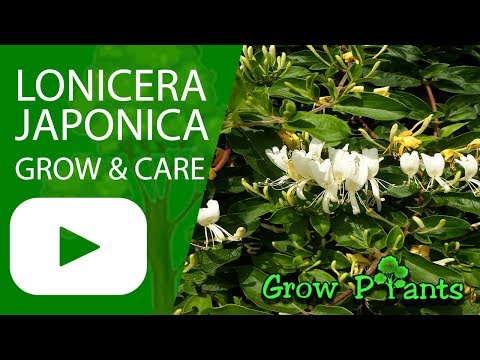

Plant Profile & Key Characteristics
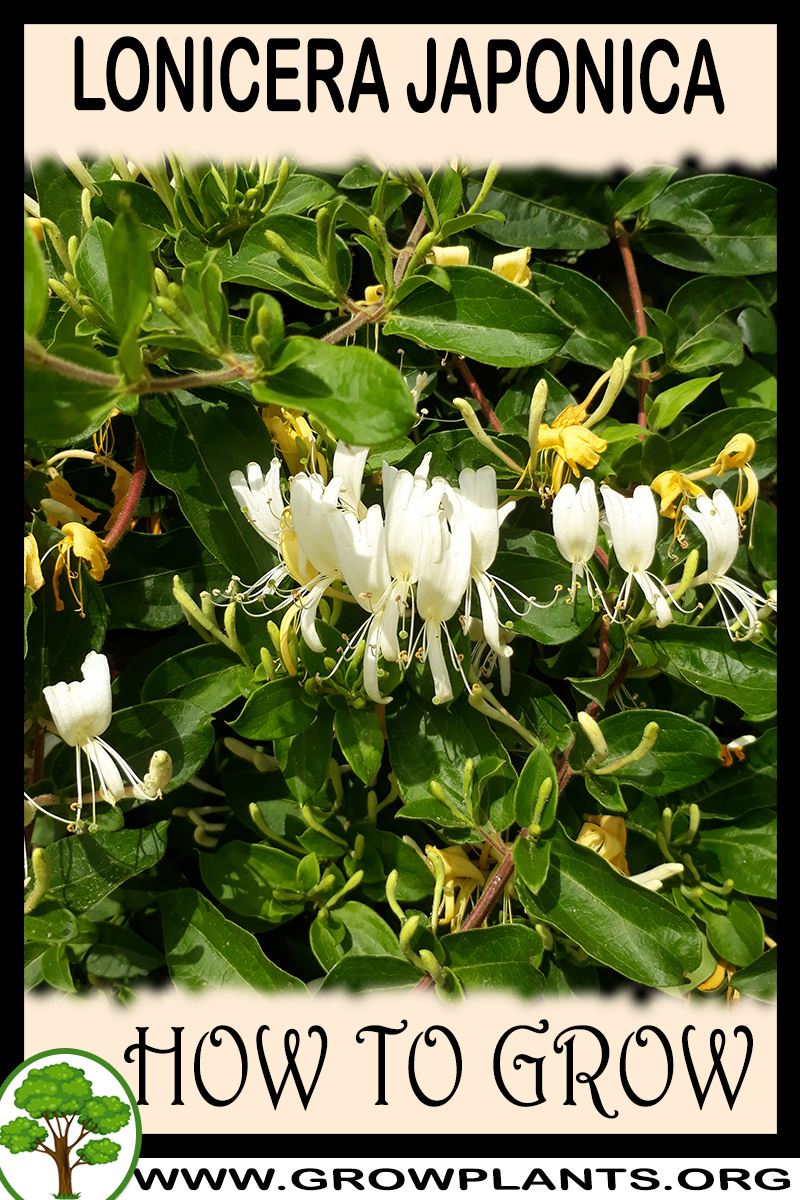
Overview: Lonicera japonica (Japanese honeysuckle) is a vigorous twining woody climber reaching 2-8 m, prized for its very fragrant white-to-yellow flowers. It is an evergreen to deciduous ornamental for fences and screens, but is notably invasive.
Quick Specifications
| Specification | Attribute |
|---|---|
| Plant Type / Life Cycle | Perennial (woody climbing vine) |
| Foliage Type | Evergreen to deciduous (climate dependent) |
| Mature Size | 2-8 m long (6-25 ft) as a climber |
| Growth Rate | Moderate to Fast |
| Hardiness | USDA zone 4+ |
Growth Form & Structure
- Height & Spread: Twines to 2-8 m over supports; can be container-grown on a trellis and pruned to keep it in bounds.
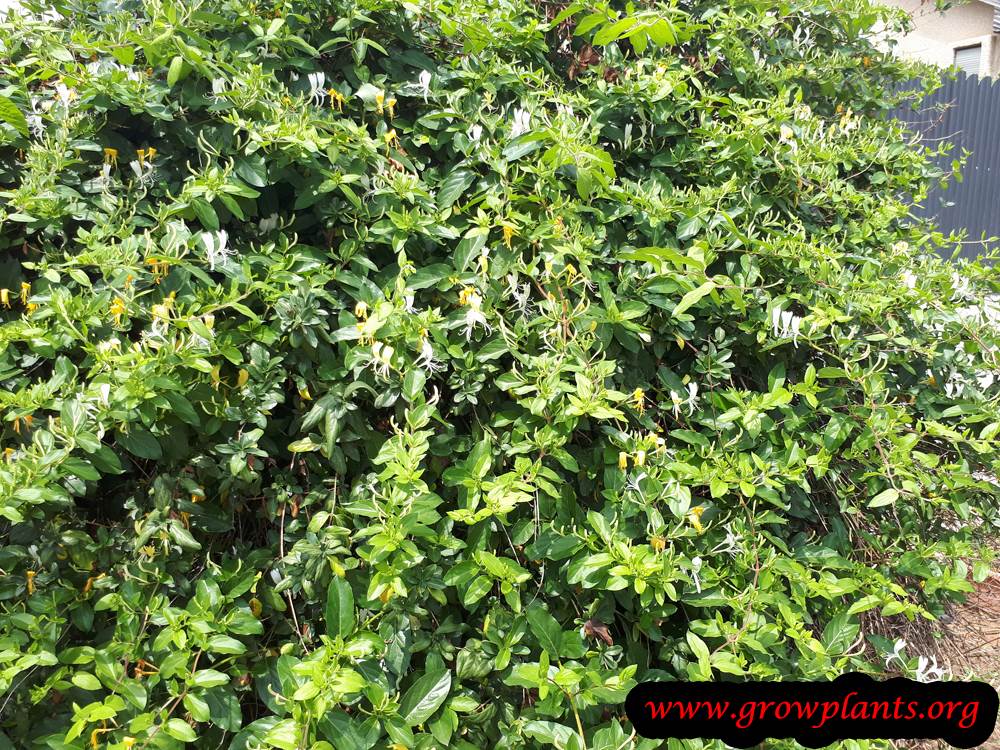
- Growth Habit & Form: Vigorous twining woody vine that will scramble as groundcover or climb; aggressive and can smother other plants.
- Lifespan & Maturity: Long-lived, fast-establishing perennial vine.
Anatomy & Physical Features
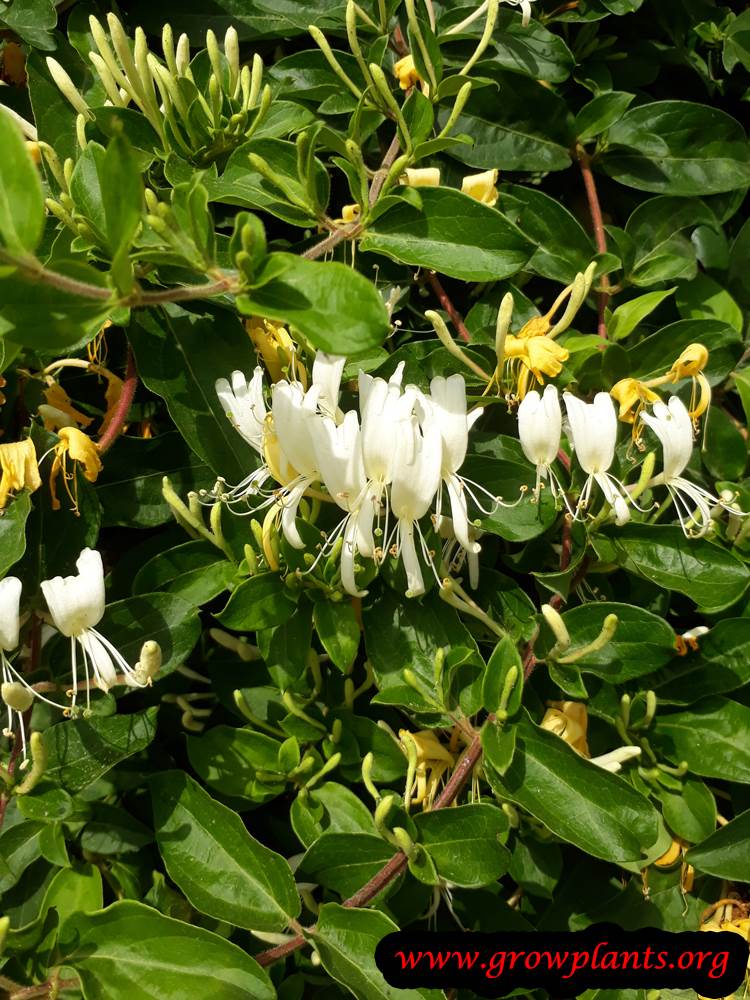
- Leaves & Foliage: Green, oval leaves.
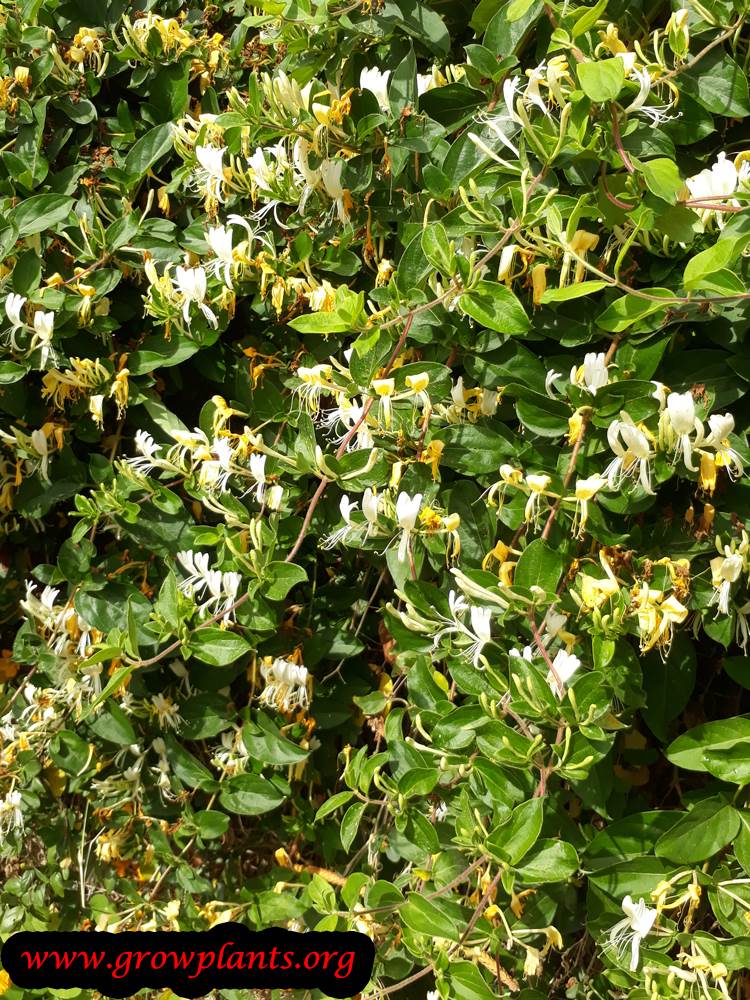
- Flower Characteristics: Very fragrant, two-lipped flowers opening white and ageing to cream/yellow (also red, pink or purple forms).
Primary Uses & Landscape Value
- Functional & Ornamental Roles: Fragrant ornamental climber for fences, trellises and pergolas, screening and groundcover; note its invasive tendency.
Care Guide: Planting, Soil & Watering
Overview: Japanese honeysuckle is a vigorous, adaptable climber for full sun to half shade that grows in almost any well-drained soil. It is tough and drought-tolerant once established, needing only low to moderate watering.
Quick Care Requirements
| Requirement | Ideal Condition |
|---|---|
| Planting Season | During the warm season, spring through autumn |
| Growth Rate | Moderate to Fast |
| Soil Type | Adaptable, well-draining soil |
| Water Need | Low to moderate — let the top of the soil dry between waterings; tolerates short dry spells |
Planting & Establishment
- Best Planting Season: Plant during the warm season, anytime from spring through autumn.
- How to Plant:
- Hole Preparation: Dig a hole about twice the width of the root ball and the same depth, loosening the sides and base.
- Soil Amendments: Work in compost or well-rotted organic matter to enrich the bed and improve both fertility and drainage.
- Planting Depth: Set the plant at the same level it grew in its pot, with the root collar at the soil surface — do not bury the stem.
- Growth Speed & Expectations: Expect moderate to fast growth in optimal conditions, filling out quickly through the warm season.
Soil, Watering & Drainage Care
- Soil Mix & Drainage Needs: Provide light, aerated, well-draining soil so water never pools around the roots; in containers use a quality free-draining potting mix and make sure the pot has drainage holes to prevent root rot.
- Watering Schedule & Technique:
- Young / Newly Planted: Keep the soil lightly moist while young plants establish, watering whenever the surface begins to dry.
- Established: Once established, water deeply but let the top few centimetres dry before watering again; the plant tolerates short dry spells.
- Seasonal Adjustments: Increase watering in hot, dry weather and reduce it in winter or during rainy spells.
Climate, Light & Hardiness
Lonicera japonica (Japanese honeysuckle) is an unusually adaptable climbing shrub, growing in mediterranean, desert, subtropical, temperate, or tropical climates and doing well in full sun to half shade. Cold tolerance is high: the site rates it to approximately zone 4 and above, and it is evergreen in milder climates but deciduous where winters are colder.
Quick Climate Specifications
| Climate Zones | Mediterranean, desert, subtropical, temperate, and tropical climates |
|---|---|
| USDA Hardiness Zones | Approximately 4 and above |
| Frost Tolerance | High |
| Light Conditions | Full Sun to Half Shade |
| Wind Tolerance | High – a vigorous, dense-growing vine |
Sunlight & Light Exposure
Optimal Light Setup
Full sun to half shade both work; full sun typically produces the densest flowering.
Temperature Extremes & Hardiness
USDA Hardiness & Regional Limits
Reliable outdoor culture spans an unusually wide range, approximately zone 4 and above, reflecting genuinely strong winter cold tolerance for a climbing shrub.
Cold Damage & Winter Protection
In colder parts of its range the vine drops its leaves and goes deciduous for winter rather than being damaged outright; in milder climates it stays evergreen year-round. Established plants tolerate hard winter freezes at the root with little concern.
Wind, Humidity & Microclimate
Wind Tolerance
Its vigorous, twining, dense growth habit generally tolerates wind well once established.
Microclimate Recommendations
Highly adaptable across microclimates; its main management challenge in mild climates is controlling vigorous spread rather than protecting it from climate stress.
Growing in Pots, Balconies & Indoors
Japanese honeysuckle is not a houseplant – the grower marks it unsuitable indoors – and as a vigorous, fast-climbing vine (2-8 m / 6-25 ft) it needs full sun and a sturdy support outdoors. It can be grown in a large container on a balcony to keep its roots contained, but it is not a windowsill plant.
Quick Details
- Container Size: A large pot of about 30-50 L (8-13 gal) with a strong trellis
- Indoor Suitability: Not an indoor plant; grow it outdoors against a support
- Best Spot: Full sun to part shade
- Soil & Drainage: Free-draining, organic-rich mix; it is not fussy
- Watering in Pots: Water moderately; established plants tolerate some dryness
Indoors & On the Windowsill
- Not a houseplant: Far too vigorous for indoors – it needs open air, strong light and room to climb.
- Windowsill: Not practical; it quickly outgrows any sill.
- Note: Very vigorous and potentially invasive – a container is a good way to enjoy the scent while keeping its running roots in check. The berries are mildly toxic if eaten, so keep them away from young children.
On a Balcony or Patio
- Light & wind: Give it a sunny wall or railing to scramble over and a firm support – it becomes heavy and wind-catching.
- Practicalities: Prune hard each year to keep a potted plant in bounds; pots dry fast in summer heat.
Choosing the Pot, Soil & Long-Term Care
- Pot & drainage: A large 30-50 L pot with strong drainage holes; skip a standing-water saucer to avoid root rot. Terracotta breathes and dries faster; glazed or plastic holds moisture longer.
- Potting mix: A light, aerated, organic-rich mix – potting compost or peat/coir with added perlite or vermiculite for drainage.
- Feeding: Nutrients wash out of pots faster than open ground, so feed potted honeysuckle more often – a balanced liquid feed through the active growing season.
- Repotting: Refresh the top layer of mix each year and renew it or pot up every couple of years; lightly trim the roots and top growth when you do.
Fertilizing & Feeding
A tough, fast-spreading hedge vine that thrives with little help once rooted in; keep feeding light, since generous nutrition mainly feeds its already aggressive growth rather than the plant’s health.
Quick Fertilizing Specs
| Feeding Level | Light feeder |
|---|---|
| Main Nutrient Priority | Balanced feeding with adequate nitrogen while young growth fills in |
| Best Feeding Period | Spring through summer while actively growing and blooming |
| Organic Options | Compost or leaf mold worked into well-drained soil |
| Reduce/Stop Feeding | Cut back on feeding once the vine has covered its hedge, fence, or trellis |
| Micronutrients | Rarely an issue in well-drained soil; correct only a diagnosed deficiency |
| Soil pH | Adaptable, doing best in well-drained soil |
Feeding by Growth Stage
Establishing after planting
Get roots settled into well-drained soil and start vigorous vine growth along its support.
| Nutrient direction | A balanced fertilizer with adequate nitrogen supports early root and shoot development. |
|---|---|
| Timing | The first growing season after planting. |
| Frequency | A light feeding at planting, repeated once new growth is clearly underway. |
| Fertilizer types | A balanced complete fertilizer, Compost or leaf mold worked into the planting area |
| Precautions | Avoid overfeeding new plantings; excess nitrogen encourages weak, floppy growth before the root system can support it. |
Vigorous growth and fragrant bloom
Support the twining growth and fragrant white, cream, yellow, or pink flowers through the season.
| Nutrient direction | Light, balanced feeding is usually all this vigorous grower needs to bloom well. |
|---|---|
| Timing | Spring through summer while actively climbing and flowering. |
| Frequency | An occasional light feeding suits an established planting; many need none at all once mature. |
| Fertilizer types | A balanced complete fertilizer, applied sparingly, A top-dressing of compost |
| Precautions | Because this vine is invasive and aggressive, avoid extra feeding that would only push it to spread faster. |
Dormant or winter-rest season
Let the vine rest through winter dormancy or deciduous leaf drop without pushing new growth.
| Nutrient direction | None – withhold fertilizer while the vine is dormant or leafless. |
|---|---|
| Timing | Late autumn through winter, ahead of the winter pruning season. |
| Frequency | No feeding at this stage; resume only after new spring growth appears. |
| Fertilizer types | No feeding at this stage; hold off fertilizing until active growth resumes. |
| Precautions | Do not fertilize dormant plants; nutrients applied now are wasted and can leach away before roots can use them. |
Nutrient Deficiency Signs & Corrections
Older leaves turn uniformly pale green or yellow and new shoots grow noticeably thin.
| Possible causes | low available soil nitrogen, heavy competition from surrounding turf or shrubs, nitrogen leaching in sandy, well-drained soil |
|---|---|
| Appears first on | older, lower leaves |
| What to check | recent feeding history, soil type and drainage, how crowded the planting site is |
| Possible correction | Apply a balanced fertilizer with available nitrogen and work compost into the surrounding soil. |
New leaves emerge yellow while the veins stay distinctly green.
| Possible causes | high or drifting soil pH limiting iron availability, compacted or poorly aerated soil restricting root uptake, root stress from recent transplant or heavy pruning |
|---|---|
| Appears first on | newest growth at the shoot tips |
| What to check | soil pH, soil compaction and drainage, whether the pattern follows recent root disturbance |
| Possible correction | Correct soil pH toward the plant’s preference and apply a chelated iron product per its label if the pattern persists. |
New leaves are small and narrow, with shortened growth between leaf nodes.
| Possible causes | low soil zinc, common in high-pH or heavily leached soil, excessive phosphorus feeding interfering with zinc uptake, cold or compacted soil limiting root activity |
|---|---|
| Appears first on | newest shoot growth |
| What to check | soil pH, recent fertilizer phosphorus content, soil compaction near the root zone |
| Possible correction | Correct soil pH, avoid excess phosphorus, and apply a chelated zinc product per its label if the pattern is confirmed. |
Pruning, Training & Seasonal Maintenance
Japanese honeysuckle is a vigorous, woody twining climber that tolerates hard pruning well and, left alone, quickly builds up into a congested tangle that goes bare and woody at its centre. Its main pruning need is renewal: periodically cutting out older interior stems so light reaches the base and new flowering growth keeps coming from low down, not just at the surface of the tangle. Winter, while the plant is leafless or resting, is the safest and most effective time for this work, and because flowers form on the current season’s new growth, a winter cutback does not cost the coming bloom.
Quick Pruning & Maintenance Specs
| Pruning Tolerance | High |
| Primary Pruning Window | Winter |
| Secondary Maintenance Window | Spot control of spreading stems through the growing season |
| Typical Frequency | Annual renewal cutback plus ongoing spread control |
| Main Objective | Renew interior growth; control size and invasive spread |
| Young Plant Priority | Establish onto its support or intended footprint |
| Mature Plant Priority | Remove oldest/deadest interior stems each winter to renew vigor |
| Best Tool Type | Loppers / bypass secateurs; hedge shears only if grown as a sheared screen |
| Avoid Heavy Pruning During | Active spring–summer flowering flush |
Pruning by Plant Age & Size
Newly Established
Remove only damaged growth; tie or direct young stems onto their support, fence, or the ground area they are meant to cover.
Young / Formative
No formal leader/vase training applies to this twining habit – the priority is simply guiding stems onto their intended support or footprint before growth accelerates.
Mature / Established
Each winter, cut dead stems and a portion of the oldest interior branches back to renew growth, following the plant’s own documented pattern of needing interior stems cut to keep producing vigorous new growth rather than an ever-thickening woody tangle.
Seasonal Pruning Schedule
Winter
- Objective: renew vigor and control size before spring growth resumes.
- Remove: dead stems throughout, plus a portion of the oldest, most congested inner branches.
- Do not remove: all of the outer flowering framework at once – renew gradually rather than shearing the whole plant back.
- Expected response: vigorous new growth from the renewed interior, carrying the coming season’s flowers.
- Flowering impact: none – blooms form on new growth produced after this cutback.
Structural Pruning & Training
The core structural task is renewal thinning of interior stems, since this species pushes almost all new growth to the outside of the plant if left unpruned, leaving a hollow, bare, woody core. Regular interior renewal keeps the whole plant productive rather than just its surface.
Special Growth to Remove
- Dead stems – the plant’s own documented main pruning target.
- Oldest, most congested interior branches – removed in rotation to renew growth.
- Stems that have layered (rooted) where they touch the ground, and spent berries where spread by seed is a concern – this species is noted as invasive/aggressive, so limiting self-layering and self-seeding is a real part of routine maintenance.
Container & Small-Space Pruning
Grows well in a large container if kept on a firm support, but expect to prune harder and more often than an in-ground plant to prevent it outgrowing a restricted space – this is a naturally fast, aggressive grower even when root-restricted.
Tools
Loppers for the thicker old interior stems removed during winter renewal; bypass secateurs for finer stem work and dead-stem removal. Hedge shears are appropriate only if the plant is deliberately kept as a sheared screen rather than a looser, renewal-pruned climber.
Tool Hygiene & Disease Risk
Routine care – keep tools clean and sharp; no significant transmissible disease is documented for this species beyond general good hygiene when removing dead wood.
Cut Placement & Technique
Use thinning cuts to remove whole interior stems back to their point of origin rather than shearing the surface, which worsens the bare-centre problem; cut dead wood back to visibly live tissue.
Heavy Pruning & Rejuvenation
Tolerates a hard rejuvenation cutback of an overgrown, tangled plant, cutting most stems back close to the base in winter; regrowth is typically fast and vigorous given the species’ documented fast-to-medium growth rate, though a full return to flowering coverage may take more than one season.
Post-Pruning Care
Water normally; no extra feeding is needed on an already fast-growing, weedy species. After a hard cutback, monitor the base for the vigorous resprouting this plant is known for, and be ready to direct or thin the new growth again the following winter.
Common Pruning Mistakes
- Shearing only the outer surface year after year, leaving a permanently bare, woody, unproductive centre.
- Leaving dead stems in place instead of removing them as the plant’s own care notes call for.
- Ignoring self-layered stems and berries, allowing the plant to spread beyond its intended area – a documented risk for this aggressive, invasive species.
When Not to Prune
Avoid major cutback during the active spring–summer flowering flush if uninterrupted bloom and fragrance are the goal; save renewal pruning for winter.
Pruning Troubleshooting
| Problem | Possible Cause | What to Check | Corrective Action |
| Flowering only at the surface, bare interior | Years of surface shearing without interior renewal | Look inside the canopy for dead, congested old stems | Begin gradual winter renewal, removing a portion of old interior stems each year |
| Plant spreading beyond its bed or support | Unremoved self-layered stems or berry drop | Ground around the base and any stems touching soil | Cut and lift rooted sections; remove spent berries where spread is a concern |
Recommended Tools (by task)
- loppers – cutting thicker old interior stems during winter renewal.
- bypass_secateurs – dead-stem removal and finer maintenance cuts.
- hedge_shears – only where the plant is deliberately maintained as a sheared hedge/screen rather than renewal-pruned.
Propagation Guide
Japanese honeysuckle roots so readily from stem cuttings, and self-layers wherever trailing stems touch soil, that vegetative propagation is both the easiest and the standard method; this ease of rooting is part of why the site flags the plant as invasive and aggressive. Seed is viable but slower and less predictable to germinate. Overall this is a very easy plant to propagate.
Quick Propagation Specs
| Best Propagation Method | Stem cuttings (softwood or semi-hardwood) |
| Alternative Methods | Layering; Seed |
| Propagation Difficulty | Easy |
| Seed True-to-Type | Usually true-to-type (species) |
| Vegetative True-to-Type | Yes |
| Best Propagation Season | Cuttings: late spring to summer; Layering: growing season; Seed: autumn sow or after cold stratification |
| Seed Germination Time | Often several weeks to a few months, staggered |
| Cutting Rooting Time | Often just a couple of weeks |
| Germination Temperature | Cool to moderate, roughly 15–21°C (59–70°F), after stratification |
| Seed Sowing Depth | Shallow, lightly covered |
Growing from Seed
Seed Handling & Viability
Seed comes from berries; clean off the pulp before sowing, since pulp left on the seed can inhibit germination and encourage mold.
Dormancy & Pre-Sowing Treatment
Fresh seed typically benefits from a period of cold, moist stratification – several weeks refrigerated, or simply sown outdoors in autumn to overwinter naturally.
Sowing Season
Autumn (for natural stratification) or spring after cold treatment.
Sowing Depth & Orientation
Sow shallow, lightly covered.
Germination Conditions
Cool and consistently moist; germination is often slow and irregular.
Germination Time
Can take several weeks to a few months and may be staggered.
Seedling Care
Grow on until sturdy before planting out.
Stem Cuttings
Cutting Type
Softwood or semi-hardwood tip cuttings.
Best Timing
Late spring through summer.
Cutting Preparation
Take a cutting with a few nodes and remove the lower leaves.
Rooting Setup
A moist, well-drained mix, or even plain water – this vine roots readily in either.
Rooting Hormone
Not necessary, though it can speed and even up rooting.
Rooting Time
Often just a couple of weeks, given how readily this species roots.
Air & Ground Layering
Flexible young to semi-mature stems root naturally wherever a node contacts moist soil, with no wounding usually necessary. Pin a low trailing stem to the ground at a node and keep that spot consistently moist; roots typically form within a matter of weeks. Once the layered section resists a gentle tug, sever it from the parent plant and transplant. This natural self-layering habit is a major reason the vine spreads so aggressively in the garden.
Bloom & Edible Flower Guide
Quick Details
- Bloom Season: Spring through autumn – a long flowering season
- Flower Appearance: Fragrant, two-lipped tubular flowers opening white or cream and ageing to yellow (pink and red forms also occur)
- Edibility: Edible flowers – the nectar is traditionally sipped and the dried blooms make honeysuckle tea; the berries that follow, however, are toxic – use only the flowers
Detailed Blooming Overview
Japanese honeysuckle scrambles into a fragrant curtain of two-lipped tubular flowers that open pale and deepen to yellow with age, filling the evening air with a powerful sweet scent. The flowers have long been enjoyed for their sweet nectar and dried for a traditional tea. Do keep the flowers and the fruit apart in your mind, though: the black berries that follow the blooms are poisonous.
Flower Characteristics
- Two-lipped tubular flowers, strongly fragrant, white to cream ageing yellow.
- Also found in pink and red forms; borne in pairs along the stems.
Bloom Care & Thinning
- Keeping it in bounds: This is a vigorous, potentially invasive climber – prune after the main flush to control it and encourage next season’s flowers.
- Pollination: Sweetly scented to draw moths, bees and other pollinators, especially in the evening.
Bloom Health & Protection
- Honeysuckle aphid: Clusters on soft new shoots and buds and distorts them – a jet of water, insecticidal soap or neem oil helps.
- Powdery mildew: A white bloom on leaves and shoots in crowded, still conditions – better airflow keeps it down.
Fruit & Uses
Japanese honeysuckle is grown mainly as an ornamental, fragrant climber, but its unopened flower buds have a long traditional use, dried and steeped as an herbal tea. The small dark berries this plant produces are not eaten and should not be treated as a food.
Quick Edible Specs
| Edible Parts | Flower buds only (not the berries) |
|---|---|
| Main Use(s) | Traditional herbal tea; medicinal-note (no health claims made) |
| Eaten Raw or Cooked | Dried and steeped as tea, not eaten as food |
| Preparation Required | Pick before the flower fully opens; dry before use |
| Harvest Season | During bloom season (spring/summer/autumn per site bloom data) |
| Time to First Harvest | Once the vine is established and flowering (see Propagation/Blooming for establishment) |
| Storage | Dried buds keep well stored airtight out of light |
| Safety/Toxicity Caveat | Only the flower buds are used; the berries of Japanese honeysuckle are not edible and should not be eaten, particularly by children or pets. |
Flowers & Flower Buds
The fragrant, tubular white-to-yellow buds (the site notes they can also appear cream, red, pink or purple) are picked just before they open and dried for later use as a traditional infused tea, a well-known ingredient in Chinese herbal preparations. Only the buds/flowers are used this way – the vine’s small berries that follow are not part of this edible use and are not eaten.
Preparation, Uses & Safety
Harvest unopened buds during the bloom season and air-dry them before steeping as tea; this is a traditional, mild herbal use with no cooking required. No medical or dosing claims are made here beyond noting the traditional use. Because the berries produced later in the season are not edible, they should be left on the vine or removed rather than sampled, especially where children or pets have access to the plant.
Pests, Diseases & Troubleshooting
Overview: Honeysuckles (Lonicera) are vigorous and generally resilient, but they are notably prone to aphids – including the honeysuckle witches’-broom aphid – plus spider mites, scale, whitefly and sawfly, and to powdery mildew, honeysuckle leaf blight, leaf spot and rust. Lonicera japonica (Japanese honeysuckle) is extremely vigorous and mildew-prone, and can become weedy where conditions suit it. Airflow, sensible pruning and avoiding drought stress prevent most of the mildew and mite problems that plague crowded, dry plants.
Quick Troubleshooting Overview
| Issue / Pest | Main Symptom | Primary Solution |
|---|---|---|
| Aphids | Sticky, curled shoot tips; witches’-broom on some | Water jet, insecticidal soap, prune brooms |
| Spider mites | Fine stippling and webbing in heat/drought | Rinse foliage, horticultural oil |
| Scale | Bumps on stems, honeydew, sooty mould | Prune out, horticultural oil, control ants |
| Powdery mildew | White powdery film on leaves | Prune for airflow, sulphur spray |
| Honeysuckle leaf blight | Brown blotches, curling, leaf drop | Remove debris, airflow, copper |
Common Pests & Management
- Honeysuckle aphid (Hyadaphis tataricae & Aphis spp.):
- Symptoms: Colonies on tender tips distort growth; on susceptible honeysuckles they trigger dense, deformed ‘witches’-broom’ clusters of stunted shoots at the branch ends, plus honeydew and sooty mould.
- Prevention & Control: Prune out and destroy witches’-broom growth, hose off colonies, apply insecticidal soap or neem to soft growth, conserve ladybirds and lacewings, and choose resistant varieties where brooming is a recurring problem.
- Spider mites (Tetranychus urticae):
- Symptoms: Fine pale stippling, dull bronzed leaves and fine webbing on shoot tips in hot, dry, dusty conditions.
- Prevention & Control: Rinse foliage, raise humidity, avoid drought stress, and treat with horticultural oil or insecticidal soap on the undersides.
- Scale insects (Coccidae & Diaspididae):
- Symptoms: Immobile brown or white bumps along stems and leaf undersides with honeydew, sooty mould and weak, yellowing growth.
- Prevention & Control: Prune out heavily infested wood, apply horticultural oil to smother crawlers, control the attending ants, and encourage parasitoid wasps.
- Whiteflies (Trialeurodes vaporariorum):
- Symptoms: Clouds of small white flying insects rise when foliage is disturbed, with honeydew and sooty mould below.
- Prevention & Control: Use yellow sticky traps, encourage natural enemies, and spray insecticidal soap or neem repeatedly.
- Honeysuckle sawfly / caterpillars (Zaraea / Abia spp. & leaf-rollers):
- Symptoms: Ragged, chewed or rolled leaves and defoliated shoots, with larvae feeding on the foliage.
- Prevention & Control: Handpick larvae, encourage birds and parasitic wasps, and spot-treat heavy attacks with Bt (for caterpillars) or an appropriate low-impact product.
Diseases & Fungal Issues
- Powdery mildew (Erysiphe / Podosphaera spp.):
- Symptoms: White powdery coating on leaves and shoots, later yellowing, curling and leaf drop, worst on dry-rooted, crowded plants in humid air.
- Treatment & Management: Prune for airflow and light, avoid drought stress and overhead watering, cut out badly affected growth, and spray sulphur or potassium bicarbonate at first sign; grow resistant varieties where possible.
- Honeysuckle leaf blight (Insolibasidium deformans):
- Symptoms: Water-soaked spots that brown, causing leaves to curl, blight and drop, especially on young foliage in wet spring weather.
- Treatment & Management: Rake up and destroy fallen leaves, improve airflow by pruning, avoid overhead wetting, and apply a copper or appropriate fungicide protectively in wet conditions if it recurs.
- Leaf spot (Cercospora / Septoria spp.):
- Symptoms: Brown or purplish spots that enlarge and may cause early leaf drop in wet weather.
- Treatment & Management: Remove affected leaves and debris, water at the base, improve airflow, and use copper only if it persists.
- Rust (Puccinia spp.):
- Symptoms: Orange to brown powdery pustules on leaf undersides with pale flecking above.
- Treatment & Management: Remove infected leaves, avoid wetting foliage, space for airflow, and use a sulphur fungicide if it spreads.
Growing Difficulties & Abiotic Problems
- Drought and heat stress:
- Cause & Symptoms: Dry roots and hot, stagnant air weaken honeysuckle and invite mildew and spider mites; leaves scorch and thin.
- Correction Strategy: Mulch to keep roots cool and moist, water deeply in dry spells, and site with the roots shaded and the top in good light and air movement.
- Chlorosis:
- Cause & Symptoms: Alkaline or poor soil yellows the foliage between green veins, reducing vigour.
- Correction Strategy: Mulch with organic matter, maintain reasonable fertility, and correct with iron chelate on chalky soils.
- Overgrowth and bare, congested centres:
- Cause & Symptoms: Vigorous climbers become tangled, bare at the base and prone to mildew and pests inside the mass.
- Correction Strategy: Prune after flowering to open the plant, remove old and crowded stems, and train onto a well-spaced support for airflow.
What Helps – Products & Tools
For honeysuckle the useful kit is insecticidal soap or neem for aphids and whitefly, horticultural oil for scale and spider mites, Bt for caterpillars, sulphur or potassium-bicarbonate spray for powdery mildew, and a copper fungicide for leaf blight or leaf spot. Pruning for airflow and keeping the roots cool and moist prevent most trouble. Spray in the evening to protect pollinators and follow the label.