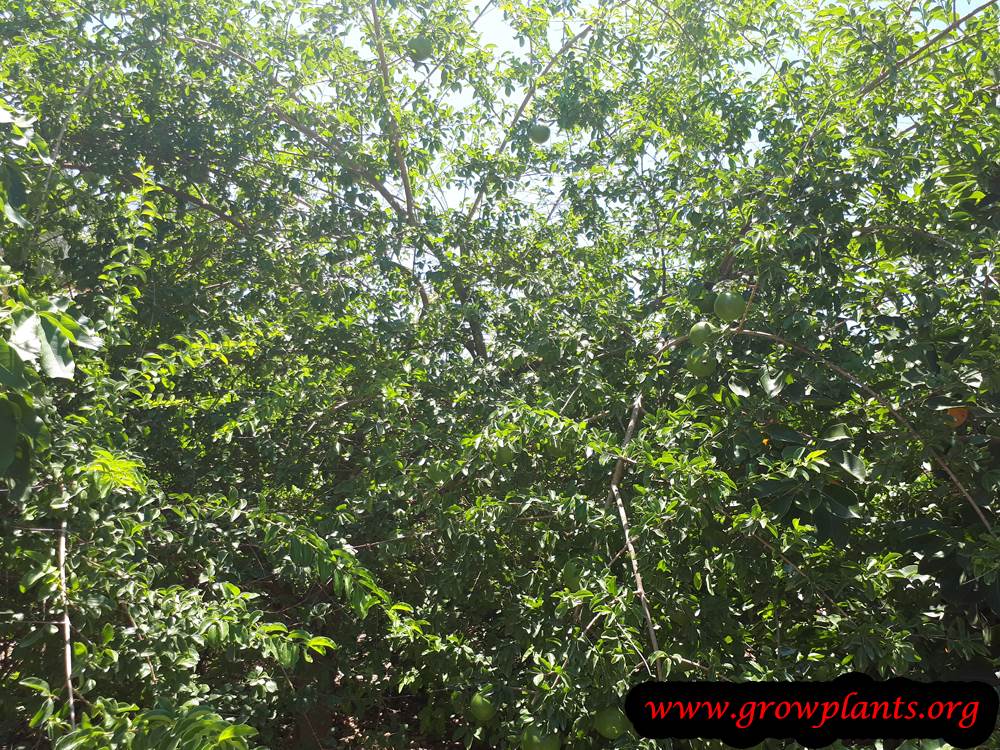
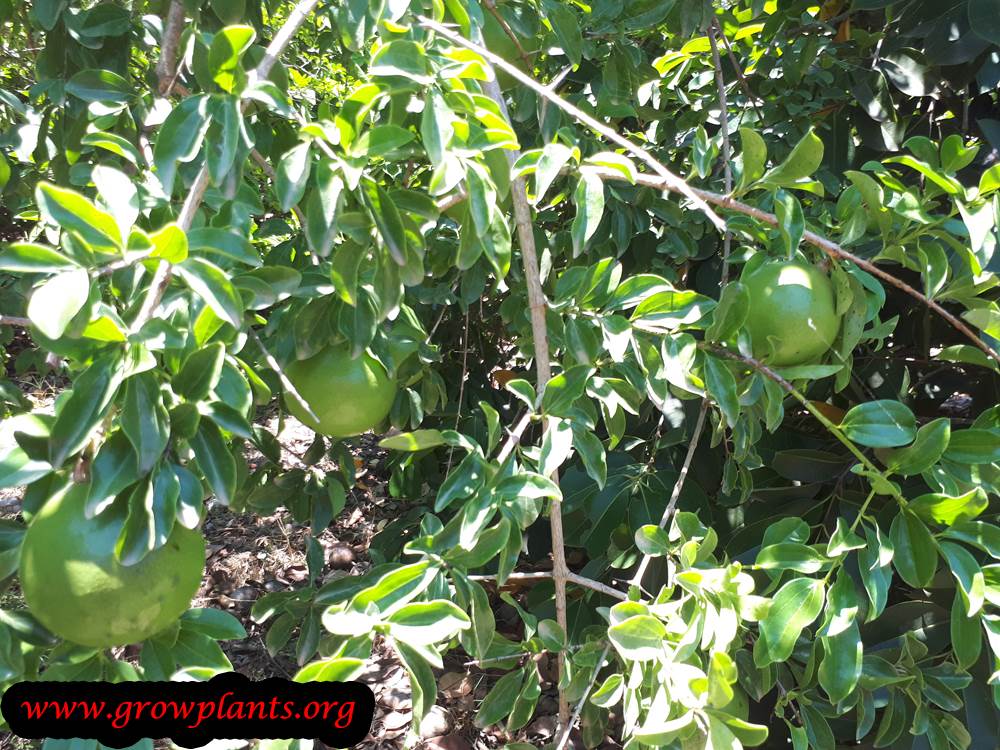
Care Guide: Planting, Soil & Watering
Overview: Monkey orange is a spiny, fast- to moderate-growing fruit tree that thrives in full sun to light shade with sharply well-draining soil that never holds water. It is drought-tolerant once established, needing only light to moderate watering, though it repays extra water while fruiting.
Quick Care Requirements
| Requirement | Ideal Condition |
|---|---|
| Planting Season | Spring in cooler zones; spring to autumn or year-round in warmer, frost-free areas |
| Growth Rate | Fast to moderate |
| Soil Type | Well-draining, well-aerated soil that does not hold water |
| Water Need | Low to moderate – drought-tolerant when established, more while fruiting |
Planting & Establishment
- Best Planting Season: Plant in spring in zone 10a, spring to autumn in zones 10b–11, and year-round in zone 12+; avoid planting in the heat of summer where temperatures top 40°C.
- How to Plant:
- Hole Preparation: Dig a hole as deep as the root ball plus an extra 20–40%, loosening the sides so the roots can spread into well-aerated soil.
- Soil Amendments: Mix organic matter and dried leaves through some of the backfill, keeping the soil light and free-draining, then mulch after planting to hold moisture.
- Planting Depth: Set the plant at the same depth it grew before, loosening the root ball slightly and firming the soil gently – neither packed hard nor left too loose – with the crown at the surface.
- Growth Speed & Expectations: Growth is fast to moderate; trees take roughly three to five years to begin bearing the aromatic, hard-shelled fruits.
Soil, Watering & Drainage Care
- Soil Mix & Drainage Needs: Provide light, well-aerated soil with excellent drainage so water simply flows away; in large containers use a gritty, sandy mix with ample drainage holes, as the tree reacts badly to overwatering.
- Watering Schedule & Technique:
- Young / Newly Planted: After planting, water lightly – avoid overwatering – giving a drink every couple of days (best in the morning) for the first two weeks while it settles in.
- Established: Water moderately and let the soil dry between waterings; established trees tolerate dry spells well.
- Seasonal Adjustments: Increase watering through the fruiting season and in prolonged heat, and cut right back in cool or dormant periods.
Climate, Light & Hardiness
Monkey orange grows in subtropical, tropical, Mediterranean, and desert climates in full sun to half shade, and is notably drought tolerant for long periods (though it needs water to fruit well). It has moderate cold tolerance for its warm-climate origin, with some flexibility down into zone 10a with care.
Quick Climate Specifications
| Climate Zones | Subtropical, Tropical, Mediterranean, Desert |
|---|---|
| USDA Hardiness Zones | 10b+, and 10a with the right care |
| Approx. Survival Minimum | approximately −1 to 1.7°C (30–35°F) at the zone 10 boundary, briefly, for an established plant |
| Frost Tolerance | Low |
| Light Conditions | Full Sun / Half Shade |
| Wind Tolerance | Moderate |
Sunlight & Light Exposure
Optimal Light Setup
Full sun is preferred; half shade is tolerated but not ideal.
Direct Sun Requirement
Full sun supports the best growth and fruiting.
Shade & Heat Management
Handles hot summer sun well, though site data notes that above roughly 40°C (104°F) it is better not to plant new trees during the hottest part of summer.
Best Exposure / Orientation
An open, sunny site suits it best.
Temperature Extremes & Hardiness
USDA Hardiness & Regional Limits
Reliable outdoors from zone 10b upward; zone 10a is workable with attentive care.
Cold Damage & Winter Protection
Site the plant in a warm, sheltered spot near its hardiness limit, and mulch young plants for root protection.
Frost Sensitivity
Low frost tolerance; treat as frost-sensitive, especially when young.
Extreme Heat Tolerance
Good, though extreme heat above about 40°C (104°F) makes it a poor time to plant new trees.
Wind, Humidity & Microclimate
Dry-Air Tolerance
Notably drought tolerant for long periods once established, reflecting its subtropical/desert-fringe origin, though water is needed for good fruiting.
Wind Tolerance
Not specifically documented; give reasonable shelter as a precaution.
Rainfall & Seasonal Moisture
Adapted to seasonal, sometimes sparse rainfall; tolerates dry spells well but crops best with more consistent moisture.
Microclimate Recommendations
A warm, sunny, well-drained site away from frost pockets works best.
Growing in Pots, Balconies & Indoors
Monkey orange (Strychnos spinosa) is a 2-5 m (6-15 ft) spiny tree. The grower says it isn’t a houseplant but can be grown in a large container if kept small as a shrub or bonsai. He gives a detailed potting method (see the Grower’s Tip).
Quick Details
- Container Size: At least 60-100 L (16-26 gal); keep the tree small
- Indoor Suitability: Not a houseplant; a large-container patio tree kept small
- Best Spot: Full sun to light shade
- Soil & Drainage: Aerated, organic-rich mix that drains freely
- Watering in Pots: Water when the top of the mix begins to dry; pots dry faster than open ground, so check often and don’t let it fully dry out.
Indoors & On the Windowsill
- Houseplant limits: Not a houseplant – it needs strong sun, is spiny, and does not react well to the overwatering that indoor pots invite.
- Windowsill growing: Too large and thorny for a sill; keep it in a big container outdoors.
- Overwintering: Frost-tender, so in cold areas keep it potted and shelter it frost-free over winter.
On a Balcony or Patio
- Light & handling: Give it full sun; mind the spines when placing it on a balcony. Pots dry fast in reflected heat, but this plant dislikes overwatering – let the mix approach dryness before watering.
- Keep it small: Train it as a shrub or bonsai to keep it in bounds.
Choosing the Pot, Soil & Long-Term Care
- Pot & drainage: Make plenty of drainage holes and use a well-ventilated mix – a blend with some sandy soil suits it. The grower advises against a saucer for this plant, as it dislikes sitting wet.
- Potting mix: Airy, free-draining mix with some grit or sand.
- Feeding: Potted plants use up their food faster because nutrients leach out with each watering, so feed a little more often than plants in open ground.
- Repotting: Every few years swap part of the soil (side and top) and trim some of the root ball rather than replacing everything.
Grower’s Container Tip
- Big pot, but start small and stay small: Use a container of at least 60-100 L (16-26 gal), but start a young tree in a pot only about 20% bigger than the root ball and move up in stages – don’t start a small tree in a huge pot. Keep it small as a shrub or bonsai, use a ventilated (part-sandy) mix, avoid a saucer, and don’t overwater, as it reacts badly to wet feet.
Fertilizing & Feeding
A deciduous, drought-tolerant tree that still needs reliable moisture and steady feeding to bear well – keep nitrogen forward while young, then balanced feeding paired with extra water once fruiting begins.
Quick Fertilizing Specs
| Feeding Level | moderate |
|---|---|
| young_feeding | nitrogen-forward feeding paired with mulch to build a young tree quickly |
| mature_feeding | balanced feeding through the growing season, stepped up around the fruiting period |
| Main Nutrient Priority | nitrogen while young, balanced through bloom and fruit development once mature |
| Best Feeding Period | the main warm-season growth flush leading into fruiting |
| Organic Options | mulch around young trees and organic matter worked into the planting hole |
| Micronutrients | a complete fruit-tree fertilizer generally supplies routine trace elements |
| Soil pH | adaptable, but performs best in well-drained soil |
| Reduce/Stop Feeding | ease off as the tree enters its deciduous dormant period |
Feeding by Growth Stage
Newly planted
Establish a newly planted Monkey orange with minimal stress.
| Nutrient direction | Keep feeding light and balanced while roots establish; mulch and organic matter matter more than fertilizer at this stage. |
|---|---|
| Timing | Once fresh growth appears after planting. |
| Frequency | A single light feeding is enough to start the first growing season. |
| Fertilizer types | A diluted, balanced young-tree fertilizer, Mulch and organic matter around the root zone |
| Precautions | Avoid overwatering or overfeeding right after planting – this species does not react well to soggy soil at any age. |
Young tree, building growth
Build canopy and root structure while the tree is spiny and establishing its form.
| Nutrient direction | Favor nitrogen to drive steady vegetative growth, mirroring the value mulch already brings young trees of this species. |
|---|---|
| Timing | Through active warm-season growth flushes. |
| Frequency | Regular light feedings through the growing season, tapering as growth slows. |
| Fertilizer types | A nitrogen-forward complete fertilizer for young fruit trees |
| Routine trace nutrients | iron, manganese, zinc |
| Precautions | Keep mulch refreshed around young trees, since the source care notes flag this as important while they establish. |
Established, approaching bearing age
Move a structurally established tree toward its first fruiting years.
| Nutrient direction | Shift to a balanced feed as the tree matures, moderating nitrogen so growth balances with reproductive development. |
|---|---|
| Timing | Spring through the main growing season. |
| Frequency | A few feedings spread across the active season. |
| Fertilizer types | A balanced complete fertilizer for fruiting trees |
| Routine trace nutrients | iron, manganese, zinc |
| Precautions | Because this tree is drought tolerant but needs water to fruit, always pair feeding with adequate irrigation rather than fertilizing a dry tree. |
Mature, bearing tree
Support flowering and fruit fill on a mature, bearing tree that needs extra water at fruiting time.
| Nutrient direction | Keep a balanced feed through bloom, and make sure watering increases alongside it during the fruiting season, as this species draws heavily on moisture to fill fruit. |
|---|---|
| Timing | From the spring growth flush through fruit development. |
| Frequency | Light, regular feeding through the growing season, stepped up around fruit fill. |
| Fertilizer types | A balanced complete fruiting-tree fertilizer |
| Routine trace nutrients | iron, manganese, zinc |
| Precautions | Increase watering alongside feeding during fruit development – this species is noted to need more water specifically to bear well. |
Nutrient Deficiency Signs & Corrections
Pale overall foliage color and weaker-than-expected new growth, especially on younger trees.
| Possible causes | Low soil nitrogen, Nutrient leaching from well-drained soil, Insufficient water limiting nutrient uptake, Root stress or competition from nearby plants |
|---|---|
| Appears first on | Older leaves first, spreading to the whole canopy |
| What to check | Recent watering consistency, since this species needs water to grow and fruit well, Growth compared with prior seasons, Whether mulch has broken down and needs refreshing |
| Possible correction | Apply a nitrogen-forward fertilizer for young or actively growing trees alongside consistent watering. |
Yellowing between the veins of new leaves while veins stay green.
| Possible causes | High soil pH reducing iron availability, Waterlogged or poorly drained soil, Root disturbance limiting uptake, Low soil iron |
|---|---|
| Appears first on | Newest growth |
| What to check | Drainage around the root zone, Whether the tree was recently overwatered, Soil pH relative to neighboring healthy trees |
| Possible correction | Improve drainage and correct soil conditions first; apply a chelated iron product per its label if chlorosis continues. |
Scorched or browned leaf margins on older leaves and fruit that fails to fill out well.
| Possible causes | Low soil potassium, Insufficient water during fruit fill limiting nutrient movement, Heavy fruit load depleting reserves, Sandy, fast-draining soil |
|---|---|
| Appears first on | Older leaf margins |
| What to check | Fruit size compared with prior seasons, Watering consistency during the fruiting period, Soil texture and nutrient retention |
| Possible correction | Shift toward a potassium-forward feed during fruit development, paired with the extra watering this species needs to fruit well. |
Pruning, Training & Seasonal Maintenance
Monkey orange is a deciduous, thorny, drought-tolerant tree or shrub (2–5m) that, by the grower’s own guidance, needs pruning strictly for design rather than routine renewal. Because the plant is armed with spines, safe technique and reach matter as much as timing. The stated pruning window is winter into spring – but that window overlaps with when the previous autumn’s flowers have finished developing into fruit that is ripening and being collected from the ground, so cuts during this period must be chosen carefully to avoid fruit-bearing wood.
Quick Pruning & Maintenance Specs
| Pruning Tolerance | Low |
| Primary Pruning Window | Winter–Spring |
| Typical Frequency | Occasional, as needed for shape |
| Main Objective | Light shaping/design, not renewal |
| Young Plant Priority | Establish desired form; protect the graft union if grafted for fruiting |
| Mature Plant Priority | Remove dead/damaged wood; light shaping only |
| Best Tool Type | Loppers and bypass secateurs, with thorn-resistant gloves |
| Avoid Heavy Pruning During | Autumn bloom and the winter–spring fruit-ripening period |
Pruning by Plant Age & Size
Newly Established
Remove only damaged growth. If the tree is a grafted selection (grafted for guaranteed female fruiting, or combining male and female), protect the graft union from accidental removal.
Young / Formative
Decide the form early – a single-trunk tree, a multi-stem shrub, or a container/bonsai specimen (this species is explicitly grown small in large pots). Container-grown plants need size control started while young.
Mature / Established
Limit work to removing dead or damaged wood and occasional shape correction. Heavier structural cutting is not part of this species’ normal care.
Seasonal Pruning Schedule
Dormant/Winter–Spring
Objective: shape the tree while it is leafless or thin, when its thorny structure is easiest to see and work around. Remove: dead, damaged, or crossing wood; correct form as needed. Do not remove: branches still carrying maturing or ripening fruit – since this species blooms in autumn and its fruit ripens through winter into spring, the pruning window and the fruit-ripening window overlap, and only non-fruiting deadwood or clearly excess growth should be cut during this time. Expected response: light, non-disruptive regrowth. Flowering/fruiting impact: minimal if cuts avoid fruit-bearing wood.
Structural Pruning & Training
Remove crossing or rubbing wood as needed; canopy density is not a priority since the species tolerates full sun to half shade regardless. Structural correction should stay light – this is not a species that benefits from an imposed formal framework.
Special Growth to Remove
Remove rootstock suckers below the graft union on grafted plants (grafting is used both to guarantee female fruiting without a male present, and to combine male and female on one tree). Handle and remove dead spiny wood carefully, since even dead thorny branches can injure.
Container & Small-Space Pruning
Monkey orange is explicitly grown small in large containers (roughly 60–100L) as a shrub or bonsai. Canopy pruning here works together with periodic root work – growers are advised to switch part of the soil and trim some of the root ball every few years – so keep canopy cuts light in the same season as root pruning rather than combining hard cutbacks on both ends at once.
Tools
- Loppers – the main tool, keeping hands at a safe distance from spines while making thinning cuts.
- Bypass secateurs – smaller deadwood removal and precise touch-ups.
Tool Hygiene & Disease Risk
Routine: clean, sharp tools are sufficient. No specific transmissible pathogen is documented for this species beyond general aphid pressure, which is not tool-borne.
Cut Placement & Technique
Use thinning cuts and avoid flush cuts or stubs. Given the thorns, favor longer-handled tools that keep hands out of the canopy, and wear protective gloves and eye protection when reaching into the plant.
Heavy Pruning & Rejuvenation
Not part of normal care for this species. Grower guidance is explicit that pruning is for design only, so hard rejuvenation cuts are neither typical nor recommended; if a plant has become overgrown, correct it gradually rather than with one heavy cut.
Post-Pruning Care
No special feeding is needed after routine cuts. Watch fresh wounds for aphid activity, the main documented pest, and keep an eye on cut sites given the plant’s thorny, somewhat brittle growth habit.
Common Pruning Mistakes
Attempting heavy structural pruning on a species that naturally needs very little; cutting fruit-bearing branches during the winter–spring window because it is mistaken for a simple dormant-pruning slot; skipping hand and eye protection given the thorns.
When NOT to Prune
Avoid pruning during the autumn bloom, and avoid removing branches carrying developing or ripening fruit through the winter–spring period – limit cuts in that window to genuine deadwood and design corrections.
Recommended Tools (by task)
- loppers – general shaping and deadwood removal: keeps hands clear of thorns during reach-in cuts.
- bypass_secateurs – fine touch-up cuts and small deadwood: precision on a compact, thorny plant.
Pruning Troubleshooting
| Problem | Possible Cause | What to Check | Corrective Action |
| No fruit despite a mature tree | Lacks a pollinating male (unless it is a self-fruiting grafted female) | Whether the tree is a grafted self-fruiting selection or needs a male partner | Confirm the cultivar/graft; add a male tree or replace with a self-fruiting graft |
| Thorn injuries during pruning | Insufficient hand/eye protection or tools with too short a reach | Tools and gloves used | Use long-handled loppers and thorn-resistant gloves |
| Fruit loss after winter/spring pruning | Fruit-bearing branches were cut during the same window the fruit is maturing | Timing of cuts relative to fruit development | Limit winter/spring cuts to deadwood and design corrections only |
Propagation Guide
Monkey orange tree is easiest to start from seed, which the site describes as straightforward and undemanding, typically germinating in about 3–10 weeks. Because some trees need a male pollinator to set fruit, grafting known male and female (or a self-fruiting female) material is used when a guaranteed, heavier-fruiting tree is wanted, while air layering and cuttings are also listed by the site as options, though it does not detail their technique for this species.
Quick Propagation Specs
| Best Propagation Method | Seed |
| Alternative Methods | Air layering; cuttings; grafting (for guaranteed/self-fruiting trees) |
| Propagation Difficulty | Easy by seed |
| Seed True-to-Type | True-to-type, but seedlings may need a separate male tree nearby to fruit unless grafted with a self-fruiting female selection |
| Vegetative True-to-Type | Yes |
| Best Propagation Season | Spring or autumn give the best results; in hardiness zone 10a, spring only |
| Seed Germination Time | 3–10 weeks |
| Seed Sowing Depth | 3–5 cm (about 1–2 in) |
Growing from Seed
Seed Handling & Viability
Store seed in a dry, dark location. The site specifically advises against refrigerating the seed, noting this species dislikes low temperatures.
Sowing Season
Spring or autumn give better results; in hardiness zone 10a, sow only in spring.
Sowing Depth & Orientation
Sow at a depth of about 3–5 cm (1–2 in). Seed can be started in individual pots, or grown on to be spaced as a shrub (about 2×2 m / 6×6 ft) or as a tree (about 3×3 m / 10×10 ft).
Germination Conditions
Needs full sun and lightly moist soil; water sparingly and avoid overwatering.
Germination Time
About 3–10 weeks.
Seedling Care
Water seedlings and allow the soil to dry between waterings.
Stem Cuttings
The site lists cuttings as a viable way to start this species but does not describe the technique in detail. As general practice for a woody, drought-tolerant tree like this, semi-hardwood cuttings taken during active growth, with a rooting hormone and warm, humid conditions, would be the standard approach, though specific rooting times for this species are not documented.
Grafting & Budding
Why Grafting Is Used
To reliably get fruit, this species needs both a male and a female tree, or a female that has been selected to bear fruit without a male present. Grafting lets growers combine male and female material on a single tree, or propagate a self-fruiting female that produces larger, juicier fruit.
Preferred Grafting Methods
The site describes grafting both male and female material onto the same tree so a single plant can produce fruit without needing a separate pollinator tree nearby.
Air & Ground Layering
Air layering is listed by the site as a viable method for this species, though the specific technique (branch age, wounding, medium, or rooting time) is not detailed in the source data.
Bloom & Flower Guide
Quick Details
- Bloom Season: Autumn
- Flower Appearance: Small yellow flowers borne in clusters
- Edibility: The flowers are not eaten – the tree is grown for its fruit, and the seeds of this genus are toxic
Detailed Blooming Overview
The monkey orange flowers in autumn, producing clusters of small, greenish-yellow flowers. They are modest in size but lightly scented, and they are what set the tree’s later fruit. Reliable watering while the plant is in flower and fruit makes all the difference to the crop.
Flower Characteristics
- Small yellow flowers carried in clusters.
Bloom Care & Thinning
- Pollination: Bees are the main visitors to the flowers.
- Managing the bloom: Keep the tree well watered through flowering to help the flowers set and hold.
Fruit & Uses
Safety note first: monkey orange belongs to the genus Strychnos, which includes toxic species, so only the pulp of fully ripe fruit is eaten – the hard seeds inside are not edible and the shell/rind is discarded, and unripe fruit should not be eaten. Once ripe, the soft pulp has a flavor likened to a mix of kiwi and banana and is eaten raw or made into jams and juice.
Quick Edible Specs
| Edible Parts | Fruit (pulp only) |
|---|---|
| Main Use(s) | Culinary – fresh eating, jams, juice |
| Eaten Raw or Cooked | Raw (also made into jams/juice) |
| Preparation Required | Remove toxic/inedible part – open the hard shell and discard the rind and seeds, eat only the pulp, and only once fully ripe |
| Harvest Season | Winter / spring |
| Time to First Harvest | Several years from planting (see Propagation for detail) |
| Storage | Fruit that has fallen still needs time to finish ripening before it is ready to eat |
| Safety/Toxicity Caveat | Seeds are not edible; genus includes toxic species, so eat only fully ripe fruit pulp and discard rind and seeds |
Fruit
The fruit has a strong, protective shell with a peel that turns from green to yellow-orange, and holds soft pulp around a cluster of hard, inedible seeds. Fruit is collected from the ground rather than picked from the tree, but a fruit that has fallen is not necessarily ready – it needs to be checked and, if needed, left to finish ripening before eating. If not collected promptly, fallen fruit attracts rats, mice and worms.
Preparation, Uses & Safety
To eat the fruit, crack open the hard shell, scoop out the soft pulp and discard the seeds, which are hard and not eaten. Once separated from the seeds and rind, the pulp is eaten raw, or used in quantity for jams and juice. Because this is a Strychnos species, treat any unripe fruit, rind or seed as off-limits and eat only fully ripe pulp.
Pests, Diseases & Troubleshooting
Overview: Monkey orange is a tough, spiny, drought-adapted African savanna tree that is naturally resilient and carries few documented pests, so this profile is drawn from its genus, family and comparable wild fruit trees. Its realistic problems are fruit flies and fruit-boring insects attacking the large hard-shelled fruit, generalist sap-suckers on soft growth, and spoilage of over-ripe fallen fruit by insects and rodents. Timely harvest and orchard hygiene matter more than spraying.
Quick Troubleshooting Overview
| Issue / Pest | Main Symptom | Primary Solution |
|---|---|---|
| Fruit flies | Sting marks and maggots in ripening fruit | Bag or harvest promptly, traps, clear fallen fruit |
| Fruit-boring moths/beetles | Tunnels and entry holes in fruit | Remove and destroy infested fruit, sanitation |
| Mealybugs / scale | Cottony fluff or bumps on shoots, honeydew | Horticultural oil, prune, control ants |
| Rodents & spoilage | Gnawed, rotting uncollected fruit on the ground | Collect fruit on time, clear windfalls |
| Anthracnose | Dark spots on leaves and fruit in wet weather | Airflow, sanitation, copper fungicide if needed |
| Frost damage | Dieback of young growth after cold | Site warm and sheltered; protect young trees |
Common Pests & Management
- Fruit flies (tephritids, e.g. Ceratitis / Bactrocera spp.):
- Symptoms: Sting punctures on ripening fruit, internal softening and maggots, and premature drop; the main insect threat to the edible fruit in warmer areas.
- Prevention & Control: Harvest fruit promptly as it ripens rather than leaving it on the tree, bag developing fruit where practical, hang protein-bait and lure traps to monitor and mass-trap, and collect and destroy all fallen fruit twice weekly to break the breeding cycle.
- Fruit-piercing and fruit-boring insects (moths, beetle larvae):
- Symptoms: Puncture wounds that admit rot, or tunnels and frass inside the hard-shelled fruit from boring larvae.
- Prevention & Control: Remove and destroy infested and over-ripe fruit, keep the ground clear of windfalls, and harvest at the right stage; exclusion and sanitation are the practical controls on this wild tree.
- Mealybugs and scale insects:
- Symptoms: White cottony masses (mealybugs) or brown/waxy bumps (scale) on shoots, leaf undersides and fruit stalks, with honeydew and sooty mould; ants often attend them.
- Prevention & Control: Prune out heavily infested shoots, control ants with sticky trunk bands, and spray horticultural or neem oil onto colonies; conserve the lady beetles and parasitic wasps that naturally suppress them.
- Aphids (on soft flush):
- Symptoms: Clusters of soft insects on tender new growth causing sticky, distorted shoots.
- Prevention & Control: Usually minor on this tough tree – rinse off, conserve natural enemies, and spray insecticidal soap only for heavy flushes.
- Rodents (rats, mice) and spoilage organisms:
- Symptoms: Gnawed, rotting fruit on the ground where windfalls are left uncollected – the situation the source describes.
- Prevention & Control: Collect ripe and fallen fruit on time (the fruit stores well once picked), clear windfalls, and reduce rodent harbourage around the tree; this is a harvest-timing and hygiene issue, not a foliage pest.
Diseases & Fungal Issues
- Anthracnose / leaf and fruit spot (Colletotrichum and allied fungi):
- Symptoms: Dark, sometimes sunken spots on leaves and fruit, and blossom or young-fruit blemishing in warm, wet, humid weather.
- Treatment & Management: Prune for an open, airy canopy, remove fallen leaves and mummified fruit, and avoid overhead wetting. A copper-based fungicide gives preventive protection through wet flowering and fruiting periods where the disease appears.
- Sooty mould (secondary):
- Symptoms: A black superficial film on leaves and fruit growing on the honeydew of mealybugs, scale and aphids.
- Treatment & Management: Control the sap-sucking insects and their ants; the mould then weathers away and does not infect the tree.
- Fruit and stem-end rots:
- Symptoms: Soft rot developing from wounds or the stem end on ripe or injured fruit.
- Treatment & Management: Harvest carefully to avoid injury, remove damaged fruit, and maintain sanitation; the thick hard shell gives the fruit good natural protection when handled well.
Growing Difficulties & Abiotic Problems
- Frost / cold sensitivity:
- Cause & Symptoms: Dieback of young growth and leaf damage after frost; the tree is adapted to warm, frost-free savanna.
- Correction Strategy: Site in the warmest, most sheltered position, protect young trees during cold snaps, and avoid frost pockets; mature trees tolerate heat and drought well.
- Slow establishment / drought adaptation:
- Cause & Symptoms: Very slow early growth and a deep taproot; young plants resent disturbance.
- Correction Strategy: Be patient, water young trees through establishment then let them rely on their drought tolerance, and avoid transplanting older plants, which dislike root disturbance.
- Nutrient deficiency / chlorosis:
- Cause & Symptoms: Yellowing and weak growth on poor or very alkaline soils.
- Correction Strategy: Feed lightly with a complete fertiliser including micronutrients and mulch to build soil; the tree is adapted to poor soils and rarely needs much.
- Fruit ripening / handling:
- Cause & Symptoms: Fruit takes a long time to ripen and the hard green shell can mislead on timing.
- Correction Strategy: Harvest when the shell colours and softens slightly, then ripen off the tree; do not leave fruit to over-ripen and fall, which invites pests and spoilage.
What Helps – Products & Tools
This resilient wild tree needs little: fruit-fly traps and fruit bags plus prompt harvest for the fruit, horticultural or neem oil and ant-control bands for mealybugs and scale, insecticidal soap for the occasional aphid flush, and a copper fungicide only if anthracnose appears in wet weather. Sanitation and harvest timing outperform any spray.