


Plant Profile & Key Characteristics
Also known as: camucamu berry, Cacari, Camocamo
Overview: Camu camu (Myrciaria dubia) is an evergreen shrub or small tree of 2-4 m (6.5-13 ft) from Amazonian floodplains, grown for its edible, intensely vitamin-C-rich fruit. It is slow-growing and can also serve as an ornamental or hedge in warm, wet climates.
Quick Specifications
| Specification | Attribute |
|---|---|
| Plant Type / Life Cycle | Perennial |
| Foliage Type | Evergreen |
| Mature Size | 2-4 m (6.5-13 ft) |
| Growth Rate | Slow |
| Toxicity | Non-toxic / fruit edible |
| Hardiness | USDA zone 11+ |
Growth Form & Structure
- Height & Spread: Reaches 2-4 m (6.5-13 ft) in the ground but can be kept small and still fruit; also grown in large containers.
- Growth Habit & Form: Multi-stemmed evergreen shrub or small tree, tolerant of seasonally flooded, wet soils; can be trained to a single trunk or kept bushy as a hedge.
- Lifespan & Maturity: Slow-growing and long-lived; begins to bear fruit about 3-7 years after planting.
Anatomy & Physical Features
- Leaves & Foliage: Oval leaves in shades of light to medium green.
- Flower Characteristics: Small white flowers with conspicuous stamens borne on brown stems, pollinated by bees.
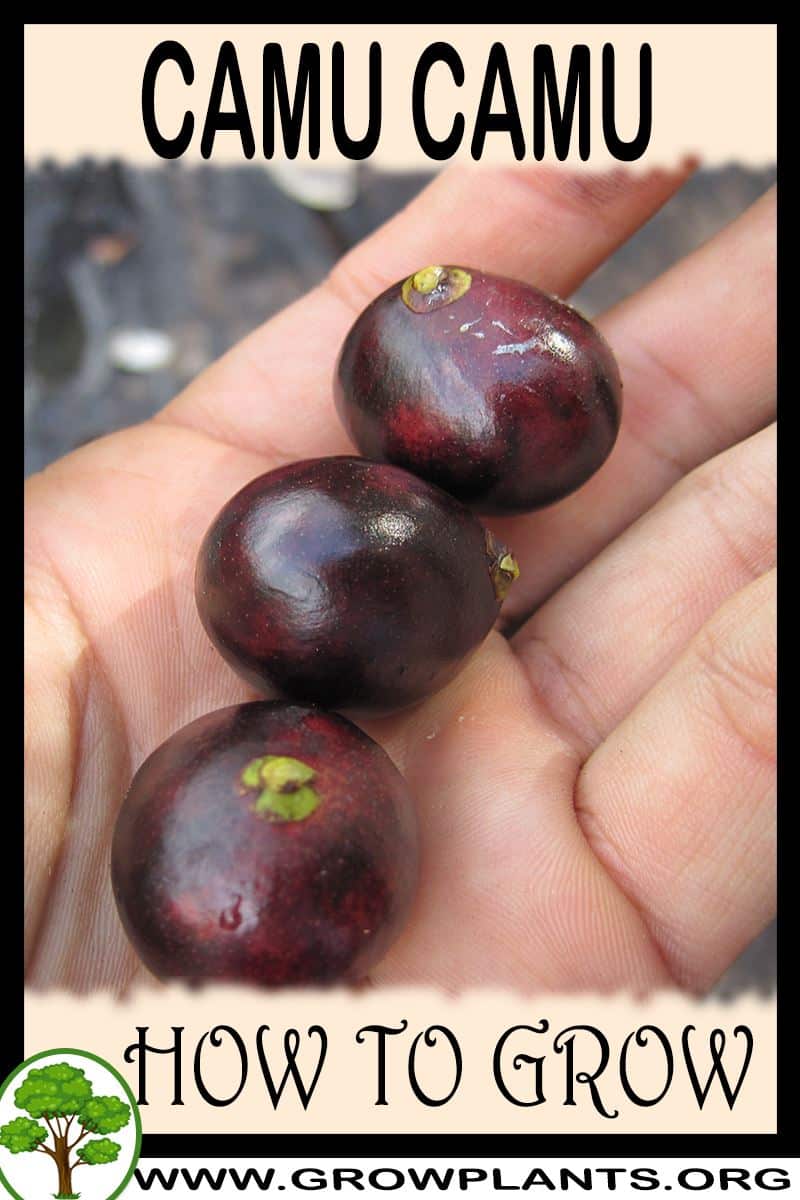
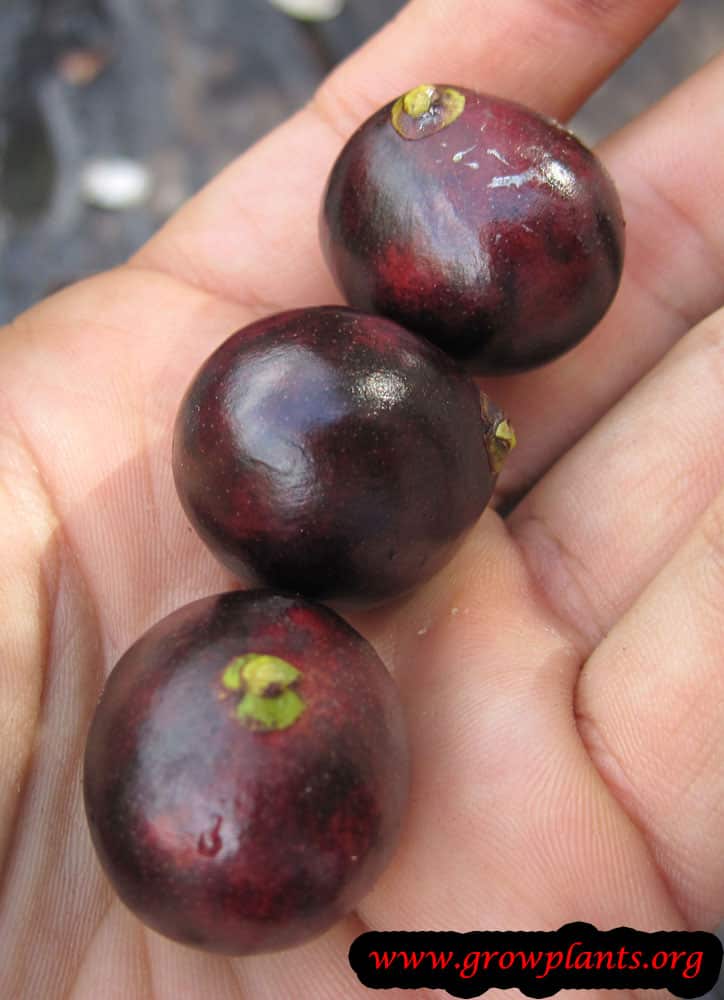
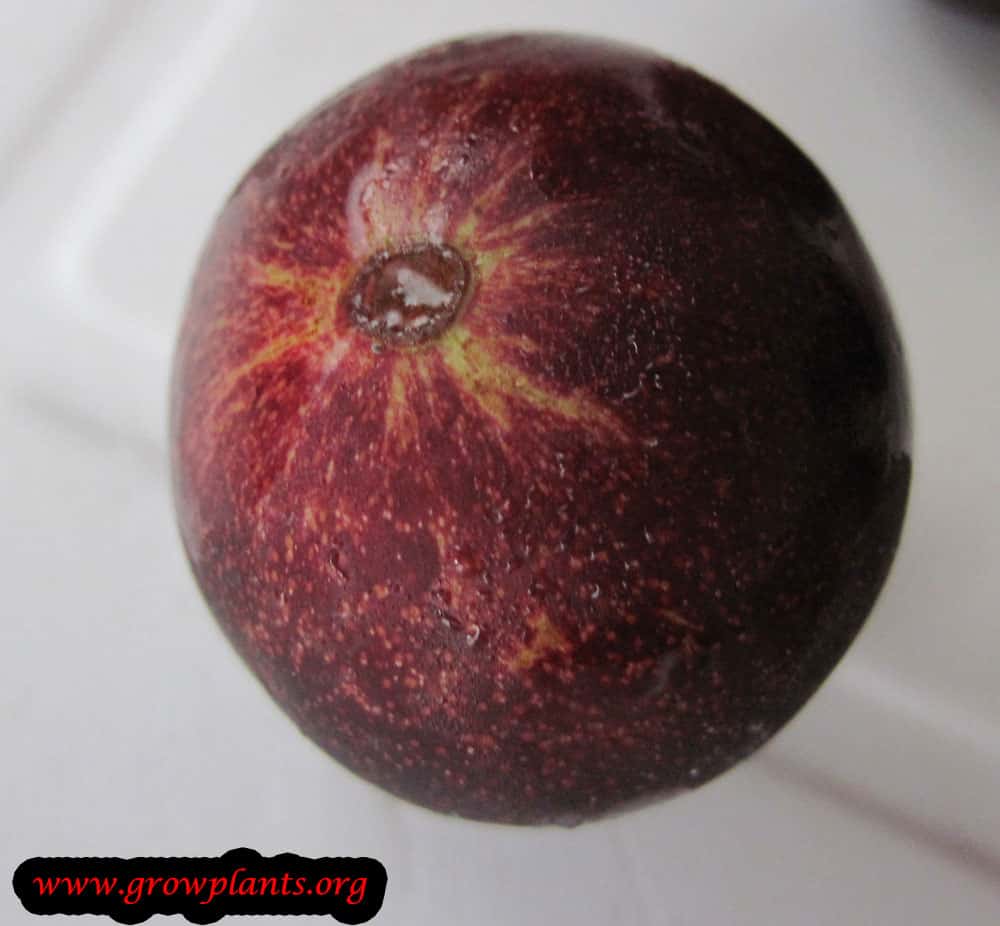
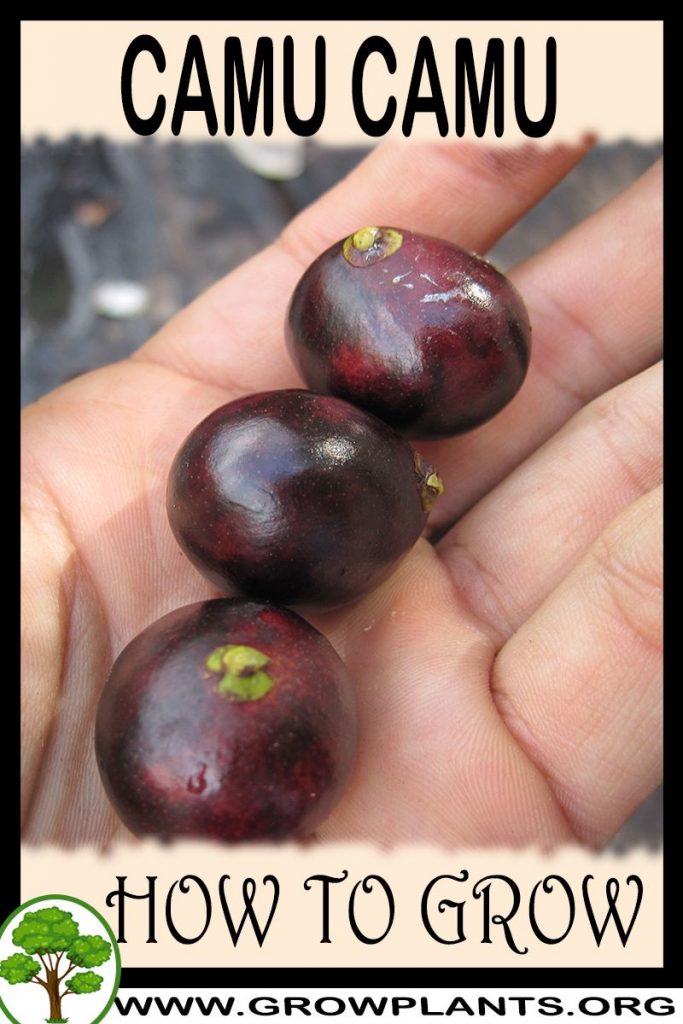
- Fruit Profile: Round berry 2-4 cm across with red-purple skin and pale white-yellow flesh; very sour and exceptionally high in vitamin C.
Primary Uses & Landscape Value
- Edible Uses: Fruit is usually processed rather than eaten raw — made into juice and jam and valued as a vitamin-C-rich health food.
- Functional & Ornamental Roles: Grown mainly as a fruit crop, but also used as a medicinal plant and an ornamental hedge.
Care Guide: Planting, Soil & Watering
Overview: Camu camu is a tropical, water-loving shrub that in the wild grows along flooded riverbanks. It needs full sun, constant moisture and rich, slightly acidic soil, and tolerates seasonally waterlogged ground.
Quick Care Requirements
| Requirement | Ideal Condition |
|---|---|
| Planting Season | Year-round in frost-free tropical and subtropical conditions |
| Growth Rate | Slow |
| Soil Type | Rich, moisture-retentive, slightly acidic; tolerates wet ground |
| Soil pH | Slightly acidic |
| Water Need | High – keep constantly moist; tolerates flooding |
Planting & Establishment
- Best Planting Season: In frost-free climates it can be planted at any time of year; give it a warm, sunny, permanently moist spot.
- How to Plant:
- Hole Preparation: Dig a generous hole in a low, moisture-holding site – near water if possible – loosening the surrounding soil.
- Soil Amendments: Mix in humus and organic matter, and add pine mulch to keep the soil acidic; top-dress with mulch and organic matter a few times a year.
- Planting Depth: Set the root collar level with the soil and firm in; keep other plants from crowding the base.
- Growth Speed & Expectations: Growth is slow, so be patient – plants take several years to reach fruiting size.
Soil, Watering & Drainage Care
- Soil Mix & Drainage Needs: Unlike most shrubs it thrives in wet, even flooded soil; keep the ground rich, acidic and constantly damp, and mulch to lock in moisture.
- Watering Schedule & Technique:
- Young / Newly Planted: Never let young plants dry out – water generously and keep the soil saturated.
- Established: Provide abundant water year-round; this is a wetland species that tolerates standing water.
- Seasonal Adjustments: Water most heavily in warm, dry periods; it naturally has a wet season, so err on the side of more water.
Climate, Light & Hardiness
Camu camu is a tropical, mediterranean, and subtropical fruit shrub or small tree that requires frost-free, consistently moist conditions. It grows in full sun and is only suited to the warmest hardiness zones.
Quick Climate Specifications
| Climate Zones | Tropical, Mediterranean, subtropical |
|---|---|
| USDA Hardiness Zones | Approximately 11 and warmer |
| Frost Tolerance | None |
| Light Conditions | Full Sun |
Sunlight & Light Exposure
Optimal Light Setup
Full sun is needed for good growth.
Temperature Extremes & Hardiness
USDA Hardiness & Regional Limits
Grown from roughly USDA zone 11 upward, among the more tender fruiting species in this dataset.
Frost Sensitivity
Site data specifies frost-free conditions are required; this species cannot tolerate freezing temperatures.
Wind, Humidity & Microclimate
Rainfall & Seasonal Moisture
Native to wetland-adjacent tropical habitat, it does best where soil moisture stays consistently high rather than in seasonally dry climates.
Growing in Pots, Balconies & Indoors
Camu camu is a 2-4 m (6.5-13 ft) shrub that can be kept small and still fruit. The grower doesn’t treat it as a houseplant, but it grows well in a container – a good patio plant where it can get full sun and steady moisture.
Quick Details
- Container Size: A large, deep container (grower didn’t state a size)
- Indoor Suitability: Not a houseplant; a patio or balcony container shrub
- Best Spot: Full sun
- Soil & Drainage: Aerated, organic-rich mix that drains freely
- Watering in Pots: Water generously and often – it likes plenty of moisture and pots dry fast; never let it dry out, but keep drainage sharp.
Indoors & On the Windowsill
- Houseplant limits: Not a houseplant – it wants full sun and a lot of water, more than indoor conditions allow.
- Windowsill growing: Too thirsty and light-hungry for a sill; keep it outdoors in a pot.
- Overwintering: It is frost-tender, so in cold areas keep it potted and move it somewhere bright and frost-free for winter.
On a Balcony or Patio
- Light & water: Give it full sun and never let the pot dry – this is a wetland plant that loves moisture; slightly acidic mix suits it. Reflected heat dries pots fast, so check often.
Choosing the Pot, Soil & Long-Term Care
- Pot & drainage: A deep pot with strong drainage holes; skip a standing-water saucer to avoid root rot. Terracotta breathes and dries faster, while glazed or plastic hold moisture longer.
- Potting mix: Well-aerated, organic-rich mix – peat or coir with perlite and a little organic matter; it must drain freely.
- Feeding: Potted plants use up their food faster because nutrients leach out with each watering, so feed a little more often than plants in open ground.
- Repotting: Refresh part of the mix and pot up every couple of years; for established plants, lightly prune the root ball and top growth when you repot.
Fertilizing & Feeding
Camu camu is an acid-soil-loving shrub grown for its fruit; it benefits from consistent feeding through its long wet-season growth, with attention to keeping the soil on the acidic side and giving young plants a nitrogen boost.
Quick Fertilizing Specs
| Feeding Level | Moderate |
|---|---|
| Main Nutrient Priority | Balanced nutrition with a nitrogen lean while young; ongoing organic matter to help keep soil acidity in the range this plant prefers. |
| Best Feeding Period | Through the warm, wet growing season. |
| Organic Options | Compost, humus and acidic mulch such as pine bark worked into the soil regularly. |
| Soil pH | Prefers slightly acidic soil; where soil is naturally more neutral or alkaline, acidic organic mulch helps shift it in the right direction. |
| Reduce/Stop Feeding | Ease off feeding where growth naturally slows outside the main wet, warm season. |
Feeding by Growth Stage
Establishment
Help a newly planted Camu camu establish roots in consistently moist, slightly acidic soil.
| Nutrient direction | Light, balanced feeding, plus organic matter and acidic mulch to support the soil conditions this plant prefers. |
|---|---|
| Timing | At and just after planting. |
| Frequency | Minimal feeding at first; let the roots establish before feeding more. |
| Fertilizer types | Organic matter, humus or acidic mulch such as pine bark mixed into the planting area, A light balanced complete fertilizer once new growth begins |
| Precautions | Keep the soil consistently moist while the plant establishes; avoid letting it dry out. |
Vegetative growth
Support the shrub’s leafy growth toward its mature size, with young seedlings and plants benefiting from a nitrogen boost to grow more vigorously.
| Nutrient direction | A nitrogen-leaning balanced fertilizer supports vigorous leafy growth while the shrub develops. |
|---|---|
| Timing | Through the active, warm growing season. |
| Frequency | Regular light feedings through the growing season support steady development; keep the soil mulched with organic matter to maintain acidity. |
| Fertilizer types | A balanced fertilizer with a nitrogen lean, Acidic organic mulch and compost worked in periodically |
| Precautions | Avoid letting soil drift toward alkaline, which can limit nutrient uptake in this acid-loving plant. |
Fruiting
Support flowering and fruit development on the maturing shrub, which can take some years to begin bearing well.
| Nutrient direction | A balanced fertilizer leaning toward potassium as fruit develops, alongside ongoing organic matter and acidic mulch. |
|---|---|
| Timing | From flowering through fruit development in the warm season. |
| Frequency | Steady, moderate feeding through the fruiting period. |
| Fertilizer types | A balanced fertilizer with adequate potassium, Acidic organic mulch and compost worked in periodically |
| Precautions | Fruit set can be affected by how many other Camu camu plants are nearby for pollination, not only by feeding. |
Nutrient Deficiency Signs & Corrections
New leaves emerge pale yellow between green veins.
| Possible causes | Soil pH drifting too high (less acidic) for this acid-loving plant, reducing iron availability, Waterlogged or poorly drained soil limiting root uptake, A genuine iron shortage in the soil |
|---|---|
| Appears first on | Newest leaves at the shoot tips. |
| What to check | Soil pH and whether acidic mulch has been kept up, Drainage and whether roots sit wet, Whether only new growth is affected |
| Possible correction | Reinforce soil acidity with organic, acidic mulch and improve drainage; if pale new growth persists, apply a chelated iron product per its label. |
Young seedlings grow slowly and stay small.
| Possible causes | Insufficient nitrogen to support vigorous young growth, Competition from weeds around the seedling, Too little sun or warmth for this warm-climate plant |
|---|---|
| Appears first on | Seedlings and young plants. |
| What to check | Recent nitrogen feeding, Weed pressure around the seedling, Sun and warmth at the planting site |
| Possible correction | Give young seedlings a nitrogen-leaning feed, keep the area weed-free, and confirm a warm, sunny location. |
The shrub flowers but produces little fruit.
| Possible causes | Too few other Camu camu plants nearby to support good pollination and fruit set, Excess nitrogen favoring leafy growth over fruiting, Young plant age before full fruiting maturity |
|---|---|
| Appears first on | Overall fruit set across the shrub. |
| What to check | Number and spacing of nearby plants, Recent nitrogen-heavy feeding, Plant age and maturity |
| Possible correction | Plant Camu camu in groups where possible, ease back on nitrogen if growth is very leafy, and be patient with a young plant. |
Pruning, Training & Seasonal Maintenance
Camu camu is a small, moist-soil-loving shrub or small tree that tolerates pruning throughout the year and can be deliberately trained into either form: kept as a single-trunk small tree by removing competing low branches while young, or encouraged into a bushier, multi-stemmed shrub by heading back the main trunk to force side growth. The choice should be made early and reinforced consistently as the plant grows.
Quick Pruning & Maintenance Specs
| Pruning Tolerance | High |
| Primary Pruning Window | All year for maintenance/damage removal; the tree-vs-shrub formative decision is best made while young |
| Typical Frequency | Ongoing, as needed |
| Main Objective | Establish and maintain either a single-trunk tree form or a multi-stem shrub/hedge form |
| Young Plant Priority | Tree form: remove competing low/lateral branches, keep one main trunk. Shrub form: head back the main trunk to force branching from the base/sides |
| Mature Plant Priority | Maintain the chosen form; prompt removal of dead or infected wood |
| Best Tool Type | Bypass secateurs/loppers for the formative heading cut, precision snips for infected-wood cleanup |
| Avoid Heavy Pruning During | The main bloom-to-harvest window (spring through autumn) if that season’s fruit matters |
Pruning by Plant Age & Size
Newly Established
Begin the tree-vs-shrub decision as soon as the young plant is establishing: for a tree form, start removing small competing side branches while they are still small; for a shrub/hedge form, head the main trunk back early to force multiple basal stems.
Young / Formative
Continue reinforcing whichever form was chosen – this doubles as the plant’s single-leader (tree) or multi-leader (shrub) training.
Mature / Established
Maintenance pruning to hold the established form, with prompt sanitation cuts on any infected or dead wood.
Seasonal Pruning Schedule
| Stage | Objective | Remove | Do Not Remove | Expected Response | Flowering/Fruiting Impact |
| Ongoing Sanitary | Remove dead/infected wood as it appears – pruning season is all year for this species | Infected or dead branches, cut a few cm past the visible damage into clean wood | Healthy current growth | Clean regrowth, reduced spread of dieback | Minimal if kept to sanitation only |
| Formative Heading (young plant) | Set the tree or shrub form | Competing branches (tree form) or the main trunk tip (shrub form) | The retained trunk or the desired basal stems | Strong flush from below the cut (shrub form) or a clean single trunk (tree form) | Sacrifices bloom/fruit on the removed section for that cycle – best timed outside spring–autumn where that season’s crop matters |
Flowering & Fruiting Wood
Flowers arise on current growth along the branches and stems, so light, frequent maintenance pruning does not threaten the crop much. A hard formative heading cut used to force the shrub form does sacrifice whatever bloom or fruit was on the removed trunk section for that cycle, so it is worth timing that cut outside the main bloom-to-harvest stretch (spring through autumn) where possible.
Structural Pruning & Training
The training method is itself the main structural choice: tree-form (remove low, competing branches, keep a single trunk) versus shrub-form (head the main trunk to force side branching). Canopy density on the shrub form should be thinned if stems become overly congested, since the species is also grown as an ornamental hedge and benefits from an open, not congested, structure for fruiting.
Special Growth to Remove
- Dead and infected branches – cut back a few centimetres into clean wood beyond the damaged section, a sanitation-style undercut past the visible damage.
- On tree-form training, the small competing low branches that would otherwise clutter the single trunk.
Container & Small-Space Pruning
Camu camu tolerates container growing. In a pot, the shrub-form training (heading the trunk to force compact, bushy side growth) is generally more practical than maintaining a taller single-trunk tree form, since it keeps the plant in scale with the container while still bearing fruit at a small size.
Tools
Bypass secateurs or loppers for the formative heading cut on the main trunk; precision snips or secateurs for the infected/dead-wood cleanup cuts.
Tool Hygiene & Disease Risk
Increased – the plant’s own care guidance specifically describes cutting infected branches back into clean wood, indicating this species can carry branch dieback or infection. Clean, and ideally disinfect, tools between cuts on infected material to avoid spreading it to healthy wood.
Cut Placement & Technique
For infected or dead wood, cut a few centimetres past the visibly damaged section into clean, healthy wood. For the formative heading cut, cut the main trunk at the height where basal branching is wanted. For tree-form training, remove competing low branches flush to the trunk without leaving stubs.
Heavy Pruning & Rejuvenation
The main-trunk heading cut used to force the shrub form is itself a fairly hard cut and is well tolerated – it is a deliberate, standard training technique for this species rather than a last resort. Expect vigorous new side shoots from below the cut.
Post-Pruning Care
Water consistently, since the species needs moist soil, especially while recovering from a formative heading cut. Monitor the new growth for aphids and, on developing fruit, birds.
Common Pruning Mistakes
- Not deciding on tree versus shrub form early, leading to a plant that is neither well-structured nor densely branched.
- Cutting infected wood right at the visible damage line instead of a few centimetres into clean wood, leaving infection behind.
- Over-pruning during the main bloom-to-harvest window and losing that cycle’s fruit.
When NOT to Prune
Avoid a major formative heading cut during the active spring-through-autumn bloom/fruit window if that season’s harvest is wanted; otherwise this species’ year-round pruning tolerance is unusually flexible.
Recommended Tools (by task)
- bypass_secateurs – general cuts and lighter formative heading.
- loppers – thicker trunk heading cuts when forcing the shrub form.
- blade_disinfectant – genuinely warranted given the facts’ explicit description of cutting infected wood back into clean tissue.
Pruning Troubleshooting
| Problem | Possible Cause | What to Check | Corrective Action |
| Plant lacks a defined tree or shrub shape | Never made or reinforced the early tree-vs-shrub training decision | Number of competing trunks/branches | Choose one form and either remove competing low branches (tree) or head the main trunk (shrub) |
| Dieback spreading along a branch | Infected wood cut too close to the damage instead of into clean wood | Cut ends for discoloration | Re-cut further back into clean, healthy tissue |
| Reduced fruiting after a hard cut | Formative heading done during the bloom/fruit window | Timing of the cut versus harvest season | Schedule formative cuts outside spring–autumn where that cycle’s fruit matters |
Propagation Guide
Camu camu is most easily started from seed, following a well-documented sowing process; air layering is the preferred vegetative method when a faster-fruiting, true-to-type tree is wanted, though it is not required. Propagation is Easy from fresh seed and Moderate by air layering.
Quick Propagation Specs
| Best Propagation Method | Seed |
| Alternative Methods | Air layering |
| Propagation Difficulty | Easy (seed) – Moderate (air layering) |
| Seed True-to-Type | Usually true-to-type, though fruiting performance can vary between seedlings |
| Vegetative True-to-Type | Yes |
| Best Propagation Season | Spring to early summer; sow fresh seed right after harvest |
| Seed Germination Time | 2 weeks to 1 month |
| Germination Temperature | Warm, roughly 24–30°C (75–86°F), typical for a tropical fruit tree |
| Seed Sowing Depth | About 2 cm (1 in) |
Growing from Seed
Seed Handling & Viability
Use fresh seed – camu camu seed loses viability quickly. If it must be held briefly before sowing, keep it at room temperature in a dark, dry spot, but sow as soon as possible rather than relying on longer storage.
Sowing Season
Best from spring to early summer, though sowing is possible from spring through autumn; fresh seed sown directly after harvest gives the best results.
Sowing Depth & Orientation
Sow about 2 cm (1 in) deep. Sow each seed in its own pot – this makes the seedlings easier to tend and lets you pick the strongest ones for transplanting.
Germination Conditions
Moist soil in full sun, in a light mix such as peat and perlite; high humidity speeds and evens germination, so a greenhouse or covered propagating box helps. Keep the soil consistently moist – mulch can help – without letting it dry out or become waterlogged.
Germination Time
Typically 2 weeks to 1 month.
Seedling Care
Seedlings benefit from a nitrogen-rich fertilizer to speed early growth, a weed-free area, sun, and warm conditions.
Air & Ground Layering
Air layering is the recommended vegetative method for camu camu because it brings a tree into fruiting sooner than a seedling would; grafting is not considered necessary. Choose a healthy, semi-hardwood branch, wound or girdle the bark, and wrap the area in moist sphagnum moss covered with plastic to hold humidity; a rooting hormone can be used to improve consistency, though it is not described as essential. Keep the wrap consistently moist through the warm season. Once a good mass of roots has formed – typically after some weeks to a few months – sever the layer below the roots, pot it up, and keep it shaded and humid until it establishes.
Bloom & Flower Guide
Quick Details
- Bloom Season: Summer, autumn, and winter
- Flower Appearance: White flowers with prominent, powderpuff-like stamens
- Edibility: The flowers are not eaten
Detailed Blooming Overview
Camu camu carries the delicate, fluffy flowers typical of the myrtle family, opening white with a spray of showy stamens. Blooming from summer through winter, the flowers stand out against the brown stems and set the stage for the vitamin-rich fruit.
Flower Characteristics
- White petals with notable stamens, giving a soft powderpuff look.
- Borne along the brownish stems.
Bloom Care & Thinning
- Pollination: The flowers are worked by bees.
- Light and moisture: Full sun with consistently moist, slightly acidic soil supports strong flowering.
Fruit & Uses
Camu camu is grown for its small, tart fruit, eaten fresh, made into jam, or juiced. The fruit ripens with a red-purple peel over white-yellow, fairly thick flesh.
Quick Edible Specs
| Edible Parts | Fruit |
| Main Use(s) | Culinary – eaten raw, jam, juice |
| Eaten Raw or Cooked | Raw, or processed into jam/juice |
| Preparation Required | None beyond picking; given its noted acidity, fruit is often juiced or sweetened for jam rather than eaten raw in quantity |
| Harvest Season | Spring / Summer / Autumn |
| Safety/Toxicity Caveat | No toxicity noted by the site |
Fruit
The fruit is 2–4 cm, with a red-purple peel and white-yellow, thickish flesh; the site notes that overall fruit yield is affected by how many camu camu plants are growing nearby. Harvest spans spring through autumn. The site lists birds and aphids as the main threats to ripening fruit, with netting recommended if birds take too much of the crop. Fruit is eaten fresh, made into jam, or juiced; given its natural tartness (a trait this species is well known for), juicing or sweetened preparations such as jam are common ways to use larger quantities.
Preparation, Uses & Safety
No toxicity or required processing is indicated by the site. The fruit can be eaten raw, but its pronounced tartness means it is very often processed into juice or jam instead of eaten out of hand in large amounts. Netting the tree is a practical step if birds are taking a significant share of the crop, not a food-safety measure.
Pests, Diseases & Troubleshooting
Overview: Camu camu is an Amazonian floodplain shrub in the myrtle family (Myrtaceae) grown for its intensely vitamin-C-rich fruit. As a Myrtaceae it is exposed to the family’s signature threats – above all myrtle rust – while its fleshy fruit draws birds and fruit flies. Documented horticultural pest data for this specialised crop is limited, so the profile below is anchored to its family and to tropical fruit ecology; manage organically and monitor closely.
Quick Troubleshooting Overview
| Issue / Pest | Main Symptom | Primary Solution |
|---|---|---|
| Birds | Ripe fruit pecked, stripped or knocked off | Netting, timely harvest, decoys |
| Fruit flies | Maggots in fruit; premature drop and rot | Sanitation, bagging, protein-bait traps |
| Myrtle rust | Bright yellow pustules on new leaves/shoots | Airflow, remove infected growth, protectant fungicide |
| Aphids & scale | Sticky, distorted shoots; honeydew and sooty mould | Insecticidal soap, horticultural oil |
| Leaf-cutter ants | Semicircular pieces cut from leaves overnight | Barriers, nest management (native range) |
| Iron chlorosis | Yellow new leaves with green veins | Acidify soil, chelated iron |
Common Pests & Management
- Fruit Flies (Anastrepha / Ceratitis spp.):
- Symptoms: Females sting ripening fruit to lay eggs; the maggots tunnel the flesh, causing softening, premature drop and rot, with tiny puncture marks the first sign. A key pest of any fleshy tropical fruit crop.
- Prevention & Control: Practise strict orchard sanitation – collect and destroy fallen and infested fruit to break the cycle – and harvest promptly. Bag developing fruit where practical, and hang protein-bait or pheromone traps to monitor and reduce adults before resorting to spot-baiting.
- Birds (Aves):
- Symptoms: Ripe and ripening fruit pecked, stripped or knocked to the ground, sometimes stripping a bush of its crop quickly – the source’s ‘birds’ note reflects a genuine pressure on a sweet-tart fruit.
- Prevention & Control: Protect with netting as fruit colours, harvest promptly at first ripeness, and use visual or audible deterrents; on floodplain plantings, timely picking is the most reliable defence.
- Aphids & Soft Scale (Aphidoidea; Coccidae):
- Symptoms: Sap-suckers on tender new growth and shoots, producing curling, sticky honeydew and sooty mould; scale forms fixed brown bumps on stems and leaf veins.
- Prevention & Control: Wash off aphids with water and support natural predators; scrape or oil scale colonies. Insecticidal soap and light horticultural oil handle both, sprayed in the evening; avoid heavy nitrogen that pushes soft, susceptible growth.
- Spider Mites & Mealybugs (Tetranychus; Pseudococcus spp.):
- Symptoms: Mites cause fine stippling, bronzing and webbing in hot dry conditions; mealybugs form white cottony masses in leaf axils, both weakening growth and fouling foliage with honeydew (mealybugs).
- Prevention & Control: Raise humidity and hose foliage to suppress mites; dab mealybugs with alcohol. Treat hot-spots with horticultural oil or insecticidal soap and conserve predatory mites and beetles.
- Leaf-cutter Ants (Atta / Acromyrmex spp.):
- Symptoms: In the native Amazonian range, ants cut neat semicircular pieces from leaves overnight and can defoliate young plants rapidly, carrying the fragments to underground fungus gardens.
- Prevention & Control: Protect young plants with sticky or physical trunk barriers, locate and manage nests, and time protection to establishment; this pest is largely regional and absent from most ex-situ plantings.
Diseases & Fungal Issues
- Myrtle Rust (Austropuccinia psidii):
- Symptoms: The most serious disease threat to any Myrtaceae – bright yellow-orange powdery pustules on young leaves, shoots, flower buds and fruit, causing distortion, dieback of new growth and, in severe cases, plant death.
- Treatment & Management: Inspect new flushes closely, prune out and bag infected growth without spreading spores, and maximise airflow. Protectant fungicides are used preventively on valuable plants where the disease is present; observe strict hygiene, since spores spread easily on tools, clothing and wind. Check regional quarantine status.
- Anthracnose / Leaf Spot (Colletotrichum spp.):
- Symptoms: Dark sunken spots and blotches on leaves and fruit in warm, wet conditions, causing fruit rot and premature leaf drop.
- Treatment & Management: Remove affected leaves and fruit, improve airflow, avoid overhead wetting of ripening fruit, and apply a copper-based fungicide preventively during prolonged wet weather.
- Root / Collar Rot (Phytophthora spp.):
- Symptoms: Wilting, yellowing and dieback with darkened roots; although camu camu tolerates seasonal flooding in habitat, it still rots in stagnant, poorly aerated soil.
- Treatment & Management: Ensure the soil, though it may be kept moist, is not stagnant and airless; avoid deep, permanent waterlogging in cultivation. Remove severely affected plants; a phosphonate can support valued specimens.
Growing Difficulties & Abiotic Problems
- Iron Chlorosis (alkaline soil):
- Symptoms: Cause & Symptoms: As an acid-loving floodplain plant, camu camu yellows between the veins of new leaves on neutral-to-alkaline soils where iron is locked up.
- Correction Strategy: Grow on acidic, humus-rich soil, mulch heavily, and correct chlorosis with chelated iron and elemental sulphur; use soft water for irrigation where possible.
- Cold Sensitivity:
- Symptoms: Cause & Symptoms: A lowland tropical plant, it is damaged by cool temperatures and frost, showing leaf blackening and dieback.
- Correction Strategy: Grow only in warm, frost-free conditions or under protection, keeping it sheltered and warm through any cool season.
- Water Stress:
- Symptoms: Cause & Symptoms: Adapted to flooded riverbanks, it resents drying out – leaf drop, poor fruit set and stunting follow drought.
- Correction Strategy: Keep the root zone consistently and generously moist (it tolerates far more water than most fruit), mulch well, and never let it dry out during fruiting.
- Fruit Sunburn / Cracking:
- Symptoms: Cause & Symptoms: Exposed fruit can scald in intense sun, and irregular watering can cause splitting.
- Correction Strategy: Maintain even soil moisture and some canopy shading of fruit; avoid sudden swings between dry and wet.
What Helps – Products & Tools
For camu camu the priorities are a Myrtaceae-appropriate protectant fungicide (copper, or a rust-labelled product) for myrtle rust and anthracnose, fruit netting and protein-bait fruit-fly traps for the crop, and insecticidal soap or horticultural oil for aphids, scale, mites and mealybugs. Chelated iron and elemental sulphur keep an acid-loving plant green on less-than-ideal soil. Rigorous sanitation of fallen fruit underpins fruit-fly control.