

Plant Profile & Key Characteristics
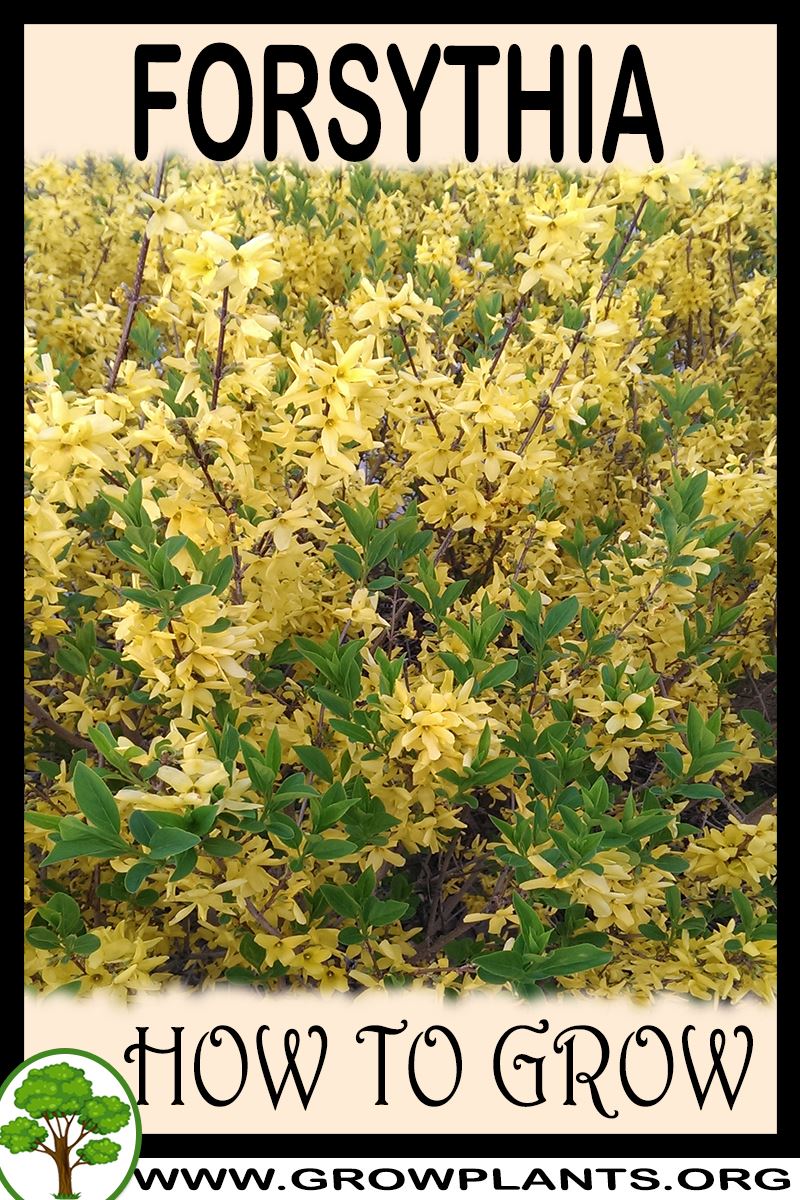
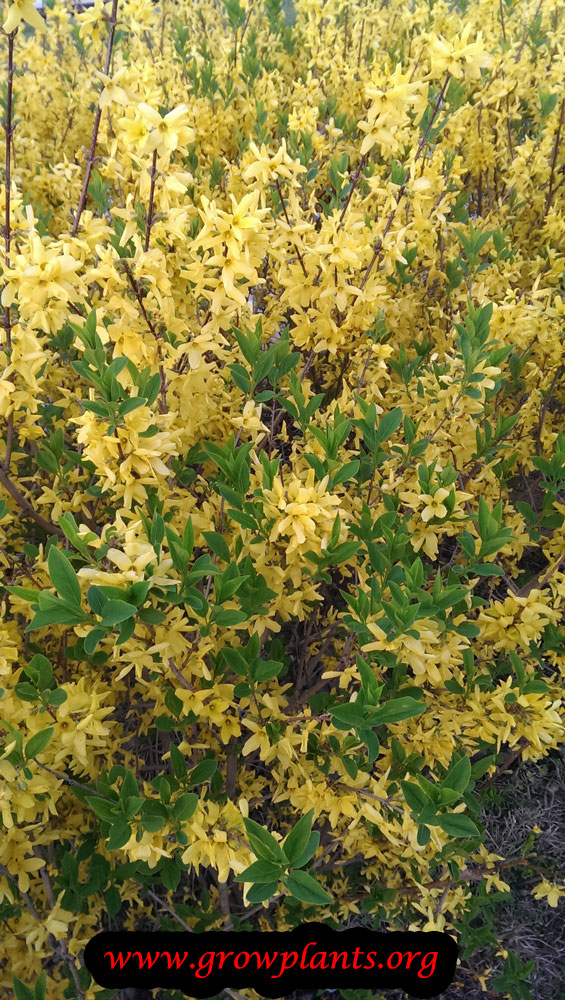
Overview: Forsythia is a moderate-growing deciduous shrub reaching 2–6 m (6–20 ft) tall with an arching, weeping habit. It is grown as an ornamental for the profuse yellow flowers that open on bare stems in early spring before the leaves emerge.
Quick Specifications
| Specification | Attribute |
|---|---|
| Plant Type / Life Cycle | Perennial |
| Foliage Type | Deciduous |
| Mature Size | 2–6 m (6–20 ft) tall, arching to a similar spread |
| Growth Rate | Moderate |
| Root System | Fibrous, spreading (stems root where they touch the soil) |
| Hardiness | USDA 5–8 |
Growth Form & Structure
- Height & Spread: 2–6 m (6–20 ft) tall with long arching canes of similar spread; can also be container-grown.
- Growth Habit & Form: Multi-stemmed deciduous shrub with a weeping, fountain-like form; tips root readily where they touch soil.
- Lifespan & Maturity: Moderate growth; a long-lived garden shrub that reaches flowering size within a few years.
Anatomy & Physical Features
- Leaves & Foliage: Elliptic, pointed green leaves that turn glowing red in autumn.
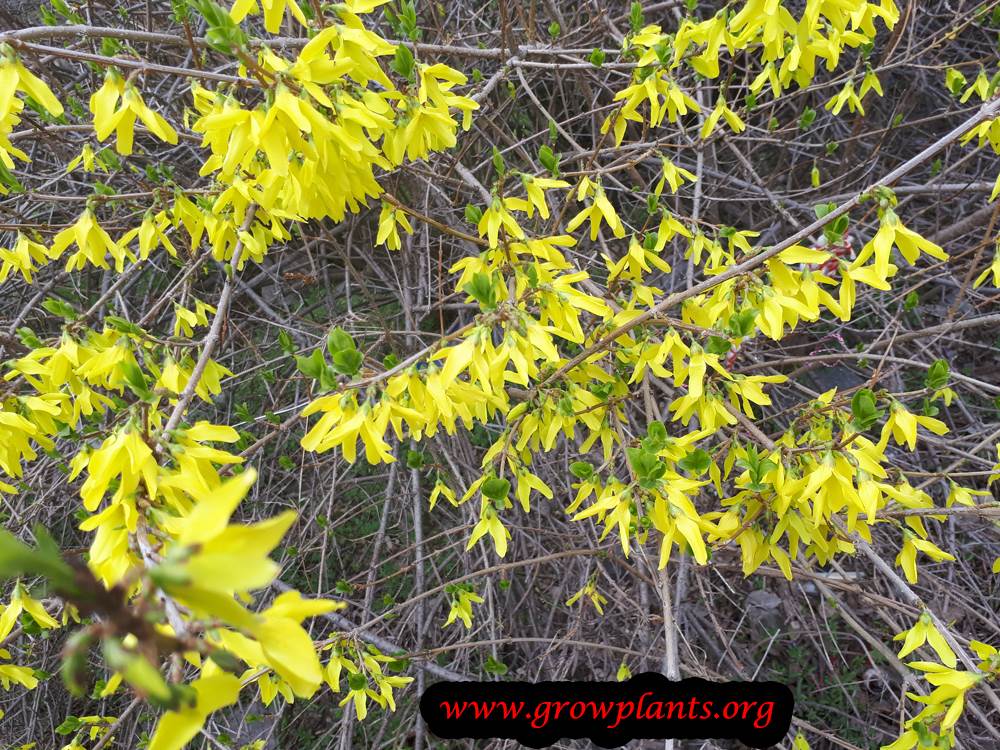
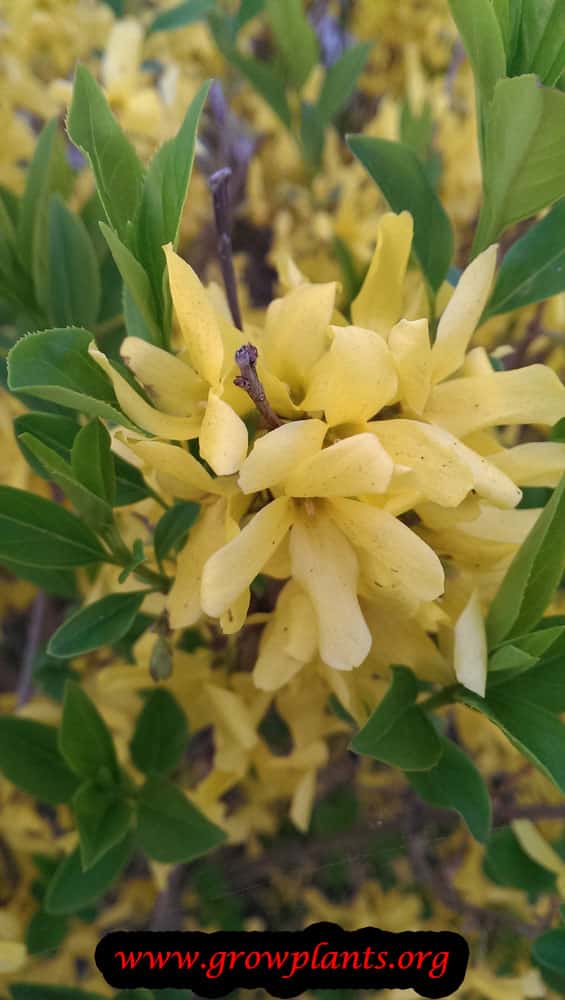
- Flower Characteristics: Bright yellow flowers borne all along the bare stems in early spring, before leaf-out.
Primary Uses & Landscape Value
- Functional & Ornamental Roles: Ornamental flowering shrub, informal hedge and specimen; branches force well for cut display, and it is also noted for medicinal use.
Care Guide: Planting, Soil & Watering
Overview: Forsythia is an easy, adaptable deciduous shrub that grows in full sun to part shade and prefers a reasonably rich, well-drained soil. It needs moderate, regular moisture but is not fussy about soil type once established.
Quick Care Requirements
| Requirement | Ideal Condition |
|---|---|
| Planting Season | Winter, spring or summer |
| Growth Rate | Moderate |
| Soil Type | Rich, well-draining; adaptable to most soils |
| Water Need | Moderate – regular watering, allowing slight drying between |
Planting & Establishment
- Best Planting Season: Plant in the dormant-to-growing season – winter, spring or summer – ideally in mild weather so roots establish before heat or hard frost.
- How to Plant:
- Hole Preparation: Dig a hole wider than the root ball so the roots can spread into loosened soil.
- Soil Amendments: Work in organic matter and compost to enrich the planting area.
- Planting Depth: Set the shrub at the depth it grew in its container, with the root collar at soil level.
- Growth Speed & Expectations: Moderate growth into a large arching shrub, 2-6 m (6-20 ft).
Soil, Watering & Drainage Care
- Soil Mix & Drainage Needs: A rich, well-drained soil suits it best; ensure water drains freely to avoid root rot. Container plants need a good potting mix with drainage holes.
- Watering Schedule & Technique:
- Young / Newly Planted: Water regularly to keep the soil moist while the shrub establishes in its first season.
- Established: Water deeply but let the surface dry between waterings; established plants are fairly tolerant.
- Seasonal Adjustments: More water in summer heat; less in winter dormancy.
Climate, Light & Hardiness
Forsythia is a very cold-hardy, early-spring-flowering deciduous shrub for temperate climates, growing best in full sun to half shade across USDA zone 5–8.
Quick Climate Specifications
| Climate Zones | Temperate |
|---|---|
| USDA Hardiness Zones | 5–8 |
| Frost Tolerance | High |
| Light Conditions | Full Sun to Half Shade |
Sunlight & Light Exposure
Optimal Light Setup
Full sun gives the heaviest bloom.
Temperature Extremes & Hardiness
USDA Hardiness & Regional Limits
Zone 5–8, a genuinely cold-temperate range.
Cold Damage & Winter Protection
Very cold hardy as a fully deciduous, dormant shrub; the main winter risk is to flower buds rather than to the plant itself, since a late hard freeze after an early warm spell can reduce that year's bloom.
Extreme Heat Tolerance
Not well suited to hot subtropical or desert summers; it is a cold-climate specialist.
Wind, Humidity & Microclimate
Rainfall & Seasonal Moisture
Prefers rich, evenly moist soil typical of temperate climates.
Growing in Pots, Balconies & Indoors
Forsythia lights up early spring with golden bloom, and the grower rates it for containers but not indoors. It is a hardy, deciduous shrub that needs winter chilling to set its flowers, so keep it outside on a patio or balcony.
Quick Details
- Container Size: A large tub, 40 L (10 gal) or more for this big deciduous shrub
- Indoor Suitability: Not a houseplant (grower); a hardy shrub that needs winter cold to flower
- Best Spot: Full sun to partial shade; a bright spot with some direct sun is ideal.
- Soil & Drainage: Aerated, organic-rich mix (quality potting mix, or peat/coir with perlite or vermiculite); it must drain freely.
- Watering in Pots: Keep the mix evenly moist, letting the surface dry slightly between waterings; pots dry faster than open ground.
Indoors & On the Windowsill
- Not a houseplant: The grower marks it unsuitable indoors – it needs full outdoor light and a cold winter to trigger its spring flowers; in a warm room it will not bloom well.
- No winter shelter needed: Leave it outdoors year-round; the winter chill is exactly what it needs.
On a Balcony or Patio
- Light & exposure: Give it a bright, open spot for the heaviest flowering; it is tough and wind-tolerant. Pots dry faster than borders, so water in warm spells.
- Practicalities: A big shrub in a tub is heavy and top-growth is vigorous – place it where it has room and prune after flowering.
Choosing the Pot, Soil & Long-Term Care
- Pot & drainage: A large tub with strong drainage holes; skip a standing-water saucer. Terracotta breathes and dries fast; glazed or plastic holds moisture longer.
- Potting mix: Use a well-aerated, organic-rich mix – quality potting mix, or peat/coir blended with perlite or vermiculite.
- Feeding: Feed through spring and summer; potted shrubs exhaust their mix faster than those in the ground.
- Repotting: Pot up or root-prune every couple of years; prune the top right after flowering, as blooms form on the previous year’s wood.
Fertilizing & Feeding
Forsythia is a classic early-spring flowering shrub grown for its mass of bright yellow blooms before the leaves emerge. It is a light feeder – balanced feeding after bloom supports the new growth that will carry next year’s flowers, since Forsythia blooms on wood formed the previous season. Heavy or late-season feeding tends to push soft growth at the expense of next spring’s flower buds.
Quick Fertilizing Specs
| Feeding Level | Light |
|---|---|
| Main Nutrient Priority | Balanced feeding with adequate nitrogen right after bloom supports the new growth that sets next year’s flowers; there is no need for a special high-phosphorus formula to improve flowering |
| Best Feeding Period | Right after spring bloom finishes, while the shrub is producing the new growth that will flower next year |
| Soil pH | Adapts to a wide range of well-drained garden soils, from rich to average fertility |
| Reduce/Stop Feeding | Stop feeding by mid-summer so new growth has time to harden off and set flower buds before autumn |
| Organic Options | A mulch layer around the root zone conserves moisture and adds gentle background nutrition as it breaks down |
Feeding by Growth Stage
Post-bloom growth flush
Support the new growth that follows spring flowering, since this is the wood that will carry next year’s blooms
| Nutrient direction | Balanced feeding with adequate nitrogen supports a healthy post-bloom growth flush; an established, vigorous shrub often needs only light supplemental feeding |
|---|---|
| Timing | Right after the spring flowers fade, as new leafy growth begins |
| Frequency | A single light feeding right after bloom is usually enough for an established shrub |
| Fertilizer types | A balanced, complete fertilizer suited to flowering shrubs, A slow-release balanced fertilizer applied once right after bloom |
| Precautions | Avoid heavy nitrogen feeding, since excess vigor pushes leafy growth at the expense of flower bud formation for next spring; keep fertilizer away from the base of the stems |
Summer flower bud set
Let the current season’s new growth mature and set the flower buds that will open the following spring
| Nutrient direction | Feeding is rarely needed during this period; the growth is already set by earlier feeding and further nitrogen at this stage does not improve next year’s bloom |
|---|---|
| Timing | Mid to late summer as this year’s new growth matures and sets next spring’s flower buds |
| Frequency | Minimal feeding is typically needed through this period |
| Fertilizer types | Generally no additional fertilizer is needed at this stage for an established, healthy shrub |
| Precautions | Avoid late-summer or autumn nitrogen feeding, since it can push soft new growth that fails to harden off before cold weather and may reduce next spring’s flowering |
Dormant season
Let the shrub rest through winter dormancy with its flower buds already set for spring
| Nutrient direction | None – withhold fertilizer through dormancy |
|---|---|
| Timing | Autumn through winter while the shrub is leafless and dormant |
| Frequency | No feeding at this stage |
| Fertilizer types | No feeding at this stage; resume light feeding right after bloom in spring |
| Precautions | Do not fertilize a dormant shrub, since feeding now offers no benefit and can encourage tender growth vulnerable to cold damage |
Nutrient Deficiency Signs & Corrections
Fewer flowers than expected in spring, along with pale or weak growth the previous summer
| Possible causes | Nitrogen deficiency limiting the post-bloom growth that carries next year’s flowers, Incorrect pruning timing that removed flower buds set during the prior summer, Too much shade, since Forsythia flowers best in full sun regardless of feeding, A hard late-winter cold snap damaging already-formed flower buds |
|---|---|
| Appears first on | The following spring’s bloom, tracing back to the prior summer’s growth |
| What to check | Timing of the last pruning relative to the bloom cycle, Recent feeding history through the growing season, Sun exposure at the planting site, Any late-winter cold events that could have damaged buds |
| Possible correction | Resume a light post-bloom feeding if the shrub has been underfed, and prune promptly after flowering rather than in winter, since late-winter pruning removes the buds that would have bloomed |
New leaves yellow between the veins while the veins stay green
| Possible causes | Iron deficiency associated with alkaline or waterlogged soil that limits iron uptake, Poorly drained or compacted soil restricting root function generally, Cool, wet spring soil temporarily slowing nutrient uptake |
|---|---|
| Appears first on | Newest leaves |
| What to check | Soil pH and drainage around the root zone, Whether yellowing is confined to new growth, which points toward iron, Recent watering pattern and soil temperature |
| Possible correction | Improve drainage and correct soil pH first; if chlorosis persists in an otherwise healthy, adequately fed shrub, a chelated iron product applied per its label can help |
Notched or chewed leaf margins with generally weak growth
| Possible causes | Weevil feeding damage, unrelated to a nutrient shortage, Underlying nutrient deficiency making the shrub more prone to weak, pest-susceptible growth, Root stress from poor drainage reducing overall vigor |
|---|---|
| Appears first on | Leaf margins, most visible in summer |
| What to check | Visible notching typical of weevil feeding on leaf edges, Recent feeding and watering history, Soil drainage around the root zone |
| Possible correction | Address the weevil issue directly, since fertilizer will not resolve leaf notching; only add light balanced feeding if the shrub remains weak once pests are managed |
Pruning, Training & Seasonal Maintenance
Forsythia is a deciduous shrub grown for its dramatic bright yellow flower display, which covers the whole plant in very early spring before the leaves emerge, blooming on the previous year’s (old) wood. Because next spring’s flower buds are set on wood grown the previous summer, the correct and safest pruning window is immediately after flowering finishes in spring – not during autumn or winter dormancy, when cutting would remove flower buds already formed for the coming display. Many forsythia are also grown with a naturally arching, sometimes weeping habit that responds far better to selective renewal cuts than to shearing.
Quick Pruning & Maintenance Specs
| Pruning Tolerance | High |
| Primary Pruning Window | Immediately after spring flowering finishes, before next year’s buds begin forming in summer |
| Secondary Maintenance Window | Light removal of dead/damaged/wayward growth any time |
| Typical Frequency | Annual, right after bloom |
| Main Objective | Renew flowering wood, control size/arching spread, maintain an open natural form |
| Young Plant Priority | Minimal shaping; let multiple basal canes establish |
| Mature Plant Priority | Annual renewal – remove some of the oldest canes at the base each year |
| Best Tool Type | Loppers/bypass secateurs for cane removal |
| Avoid Heavy Pruning During | Autumn and winter dormancy (removes already-formed flower buds); during the flowering display itself if it’s wanted uncut |
Pruning by Plant Age & Size
Newly Established
Minimal – let the naturally vigorous, multi-caned shrub establish for a season or two, removing only damaged growth.
Young / Formative
Multi-leader/cane-based training: allow several strong basal canes to develop rather than restricting the plant to a single leader. No central-leader or dense formal training is needed for the typical arching-shrub form, though it can be trained flat against a wall, espalier-style, with attentive post-bloom pruning if a formal form is specifically wanted.
Mature / Established
Ongoing renewal pruning: each year after bloom, remove roughly the oldest one-quarter to one-third of canes at ground level to stimulate vigorous new flowering wood and prevent the shrub’s center from becoming congested and unproductive.
Seasonal Pruning Schedule
Post-Flowering (old-wood bloomer): objective is to renew flowering wood and control size while there’s a full growing season ahead for new wood to mature and set next year’s buds; what to remove is some of the oldest, least-productive canes at the base plus any dead/damaged/crossing wood, and spent flower stems if a tidy formal look is wanted; what NOT to remove is young, vigorous canes from the current and previous year, which will carry most of next spring’s bloom; expected response is strong new cane growth through summer that sets next spring’s flower buds. This is the one window where hard pruning does not cost next year’s bloom – cutting at any other time removes wood that has already set, or is setting, next year’s flower buds.
Ongoing Sanitary: remove dead or weevil-damaged growth as noticed.
Flowering & Fruiting Wood
Forsythia flowers appear on one-year-old (previous season’s) wood, opening in very early spring before the leaves. Flower buds for that display are initiated on the current season’s new growth during the summer and autumn before it blooms. This is why pruning timing matters so much: cutting in autumn or winter removes wood that already carries next spring’s flower buds, directly reducing or eliminating the bloom show, while pruning immediately after flowering removes only wood that has just finished blooming, leaving the whole growing season for fresh wood to develop and set the following year’s buds.
Structural Pruning & Training
Renewal pruning of canes is the central technique: take out the oldest, thickest, least-floriferous canes at ground level on a rotating basis rather than shearing the whole shrub into a ball, which ruins the naturally graceful arching or weeping habit and, because shearing removes bud-bearing tips indiscriminately, sharply reduces bloom. Thin crowded interior canes for light and air. Control overall spread by selectively removing whole canes rather than heading back tips, which encourages dense twiggy regrowth at the shear line instead of the arching sprays forsythia is grown for.
Special Growth to Remove
- Oldest, woodiest, least-productive canes (renewal, as above).
- Dead or weevil-damaged wood (per this plant’s known pest pressure).
- Low, weak twiggy interior growth that produces little bloom.
Container & Small-Space Pruning
Less common in containers given the plant’s vigorous, spreading multi-cane habit and typical mature size (roughly 2–6m), but where grown in a large container, apply the same post-bloom renewal-cane approach more aggressively, removing a higher proportion of canes each year, to keep it in scale. Do not compensate for space limits by shearing, which sacrifices the arching flowering habit.
Tools
Loppers for removing mature canes at the base; bypass secateurs for thinner young wood and light touch-ups; a pruning saw is rarely needed except on very old, thick canes at the base of a long-neglected plant.
Tool Hygiene & Disease Risk
Routine – no major transmissible disease risk is highlighted for this species; clean, sharp tools are sufficient. Weevil damage (the noted pest) is an insect issue, not tool-spread.
Cut Placement & Technique
Remove whole canes flush at or near ground level for renewal cuts, not partway up the cane, which leaves a stub and encourages weak, twiggy resprouting. For light tip shaping, cut back to just above an outward-facing bud to maintain the natural arching habit.
Heavy Pruning & Rejuvenation
Tolerated very well – an old, overgrown, congested forsythia can be rejuvenated by cutting the entire shrub back hard (to roughly 15–30cm) immediately after flowering. This sacrifices most or all of that single spring’s bloom afterward while the plant rebuilds canes, but flowering resumes fully within a couple of seasons as new canes mature. Spreading the renewal over 2–3 years, removing roughly a third of old canes each year, avoids losing a whole season’s display at once and is the gentler alternative.
Post-Pruning Care
Water during establishment of vigorous new post-bloom growth if conditions are dry; no special feeding is required beyond normal care; watch new growth for weevil activity.
Common Pruning Mistakes
- Pruning in autumn or winter dormancy – the single most common forsythia mistake – which removes already-formed flower buds and results in a disappointing, patchy, or entirely absent spring bloom.
- Shearing into a tight ball or hedge shape, which destroys the natural arching form and removes most of the flowering wood.
- Never removing old canes, leading to a congested, increasingly bare-centered, weakly flowering shrub over the years.
When NOT to Prune
Do not prune during autumn or winter dormancy – this is the single biggest timing mistake for this species, since it removes wood already carrying next spring’s flower buds. Also avoid pruning during the flowering display itself if the show is wanted intact; wait until the petals drop.
Recommended Tools (by task)
- loppers – base-level cane renewal cuts on mature wood.
- bypass_secateurs – thinner wood and light touch-up shaping after bloom.
Pruning Troubleshooting
| Problem | Possible Cause | What to Check | Corrective Action |
| Little or no spring bloom | Pruned during autumn/winter dormancy, removing already-set flower buds (the classic forsythia mistake) | Timing of the last prune relative to the previous spring’s bloom | Shift all pruning to immediately after flowering next year; let the shrub bloom fully before cutting |
| Dense, twiggy, poorly-flowering shrub | Repeated shearing into a ball instead of selective cane renewal | A uniform sheared outline and congested interior | Switch to base-level renewal cuts, removing whole old canes rather than shearing tips |
| Bare, congested center with flowers only at the outer edge | Old canes never removed, shading out the interior | Age/density of canes at the base | Begin a 2–3 year renewal program removing about a third of the oldest canes annually |
Propagation Guide
Forsythia is most easily and reliably propagated from stem cuttings, which root readily at almost any time of year and are the standard way to reproduce named cultivars; low-growing branches that touch the soil will also root naturally where they lie. Seed is rarely used in cultivation since many garden Forsythia are hybrids with distylous flowers that set little viable seed, and seedlings would not come true to a named cultivar. Overall propagation is easy.
Quick Propagation Specs
| Best Propagation Method | Stem cuttings (softwood, semi-hardwood or hardwood) |
| Alternative Methods | Ground layering of low branches; seed (uncommon) |
| Propagation Difficulty | Easy |
| Seed True-to-Type | Hybrid offspring vary; named cultivars do not come true |
| Vegetative True-to-Type | Yes |
| Best Propagation Season | Softwood cuttings in late spring–early summer; semi-hardwood in summer; hardwood cuttings in the dormant season |
| Cutting Rooting Time | Often just a few weeks for softwood/semi-hardwood under humid conditions; hardwood cuttings root more slowly over winter |
Stem Cuttings
Cutting Type
Softwood or semi-hardwood tip cuttings root fastest; hardwood cuttings taken in the dormant season also root well and are a convenient low-effort option.
Best Timing
Late spring to early summer for softwood, mid-to-late summer for semi-hardwood, or autumn/winter for dormant hardwood cuttings.
Cutting Preparation
Take 10–15cm (4–6in) tip or stem sections, remove the lower leaves, and use a firm, healthy shoot.
Rooting Setup
Insert into a free-draining cutting mix and keep humid; softwood cuttings benefit from a covered tray or mist, while hardwood cuttings can be set directly in a sheltered nursery bed or pot outdoors.
Rooting Hormone
Optional – Forsythia roots so readily that hormone is not required, though it can speed and even out rooting.
Rooting Time
Typically a few weeks for softwood/semi-hardwood cuttings under warm, humid conditions; hardwood cuttings root more slowly, over the dormant season.
Air & Ground Layering
Forsythia’s arching branches root naturally wherever they touch moist soil. To encourage this deliberately, pin a low, flexible branch to the ground, lightly wound or nick the underside where it contacts the soil, and cover that section with soil while leaving the tip exposed. Rooting usually occurs within a growing season; sever and transplant the new plant once it has its own root system, typically the following dormant season.
Bloom & Flower Guide
Quick Details
- Bloom Season: Early spring, ahead of the leaves
- Flower Appearance: Bright yellow flowers borne all along the bare stems
- Edibility: Ornamental only – grown for its early-spring colour, not eaten
Detailed Blooming Overview
Forsythia is one of the first big splashes of spring – before the leaves appear, the arching bare stems are lined end to end with bright yellow flowers. The show is brief but brilliant. Because it flowers on wood made the previous year, the timing of pruning matters: cut right after the flowers fade so that next year’s display is not lost.
Flower Characteristics
- Bright yellow flowers set all along the bare stems.
- Appear in early spring, ahead of the foliage.
Bloom Care & Thinning
- Managing the bloom: Prune immediately after flowering – forsythia blooms on last year’s growth, so late pruning removes next spring’s flowers.
Pests, Diseases & Troubleshooting
Overview: Forsythia is a famously tough, fast-growing deciduous shrub with remarkably few pests or diseases; when troubles do occur they are usually minor sap-suckers or leaf-notching weevils, occasional galls and dieback, and – most commonly of all – poor spring flowering caused by frost or bad pruning rather than any pest. Good siting and light annual pruning keep it problem-free.
Quick Troubleshooting Overview
| Issue / Pest | Main Symptom | Primary Solution |
|---|---|---|
| Aphids | Clusters on new shoots, honeydew, curled tips | Blast off, encourage predators, soap if heavy |
| Spider mites | Stippled, dull, bronzed leaves in hot dry spells | Hose foliage, insecticidal soap/oil |
| Weevil notching | Notched leaf margins (adults); root grubs in pots | Tolerate; nematodes/barriers for larvae |
| Knobby galls / fasciation | Distorted, flattened or knobby swollen growth | Prune out, sanitise tools, remove if severe |
| Dieback / twig blight | Wilting, blackened shoots and dead twigs | Prune to healthy wood, improve vigour |
| Poor / no flowers | Little bloom in spring | Blame frost or wrong pruning; prune right after flowering |
Common Pests & Management
- Aphids (Aphis spp.):
- Symptoms: Colonies of small green or black soft-bodied insects on the soft new shoots in spring, with sticky honeydew, sooty mould and some curling of young leaves; seldom serious on this vigorous shrub.
- Prevention & Control: Hose them off, tolerate light numbers, and let ladybirds and lacewings do the work. Insecticidal soap handles heavy outbreaks; broad sprays are rarely justified.
- Two-spotted spider mite (Tetranychus urticae):
- Symptoms: Fine stippling and a dull, dusty, bronzed cast to the leaves in hot, dry, dusty conditions, sometimes with faint webbing.
- Prevention & Control: Hose the foliage to knock down mites and dust, keep the plant unstressed, and treat persistent infestations with insecticidal soap or a light horticultural oil.
- Weevils (notching) (Otiorhynchus sulcatus):
- Symptoms: Adults chew characteristic notches into leaf margins at night; in containers the pale C-shaped larvae feed on roots and can cause sudden wilting.
- Prevention & Control: Tolerate cosmetic adult notching on a garden shrub. For potted plants troubled by root grubs, drench with parasitic nematodes (Steinernema/Heterorhabditis) in warm soil and use sticky barriers on stems.
- Four-lined plant bug (Poecilocapsus lineatus):
- Symptoms: Sunken dark round spots on leaves where the bugs feed, which can merge and cause leaf distortion; damage appears suddenly in early season.
- Prevention & Control: Damage is largely cosmetic and short-lived; remove weedy hosts nearby and tolerate it. Insecticidal soap on nymphs helps if a young plant is badly hit.
Diseases & Fungal Issues
- Knobby galls / fasciation (Rhodococcus fascians (leafy gall) / crown gall Agrobacterium tumefaciens):
- Symptoms: Rounded knobby swellings and clusters of aborted, distorted, flattened (fasciated) shoots, often low on the plant or at the crown – a well-known oddity on forsythia that is usually more disfiguring than damaging.
- Treatment & Management: Prune out and destroy galled and fasciated growth well below the affected area, sterilising tools between cuts, and avoid wounding the base. Remove and replace severely and repeatedly affected plants, and do not propagate from galled stock.
- Leaf spot / anthracnose (Cercospora / Colletotrichum spp.):
- Symptoms: Brown or purplish spots and blotches on leaves in wet seasons, sometimes with early leaf yellowing and drop; largely cosmetic.
- Treatment & Management: Rake up and bin fallen leaves, improve airflow by thinning old stems, and avoid overhead watering. Fungicide is rarely necessary on an established shrub.
- Dieback / twig blight (Sclerotinia / Phomopsis spp.):
- Symptoms: Wilting, blackening and dying back of shoots and twigs, sometimes after cold injury or on stressed, congested plants.
- Treatment & Management: Prune affected twigs back into healthy wood, sterilising tools, thin the shrub for light and air, and keep it vigorous with correct siting and occasional feeding. Remove dead wood promptly.
Growing Difficulties & Abiotic Problems
- Poor or absent flowering:
- Cause & Symptoms: The commonest complaint: forsythia blooms on the previous season’s wood, so late-winter/early-spring frosts kill exposed flower buds, and pruning at the wrong time (or shearing) removes the buds before they open. Excess shade and over-feeding with nitrogen also cut bloom.
- Correction Strategy: Prune immediately after flowering, never in late season or winter; grow in full sun; and in cold areas choose bud-hardy cultivars or a sheltered spot so frost does not blast the buds.
- Legginess / bare base:
- Cause & Symptoms: Neglected plants become a thicket of old arching stems, bare and unproductive at the base.
- Correction Strategy: Renew regularly by cutting a portion of the oldest stems to the ground each year after flowering, or hard-renovate an overgrown shrub to force vigorous new flowering wood.
- Chlorosis / weak growth:
- Cause & Symptoms: Very poor or waterlogged soil, or extreme alkalinity, can pale the leaves and slow growth, though forsythia is broadly adaptable.
- Correction Strategy: Improve drainage, mulch, and feed lightly if growth is weak; it tolerates a wide pH range but resents standing water.
What Helps – Products & Tools
Forsythia needs little intervention – correct siting, sun, and well-timed pruning solve most ‘problems’, which are usually about flowering rather than pests. For the rare insect issue use insecticidal soap or light horticultural oil (aphids, mites) and parasitic nematodes for vine-weevil grubs in pots; for galls and dieback, sanitation and pruning out affected wood are the main tools.