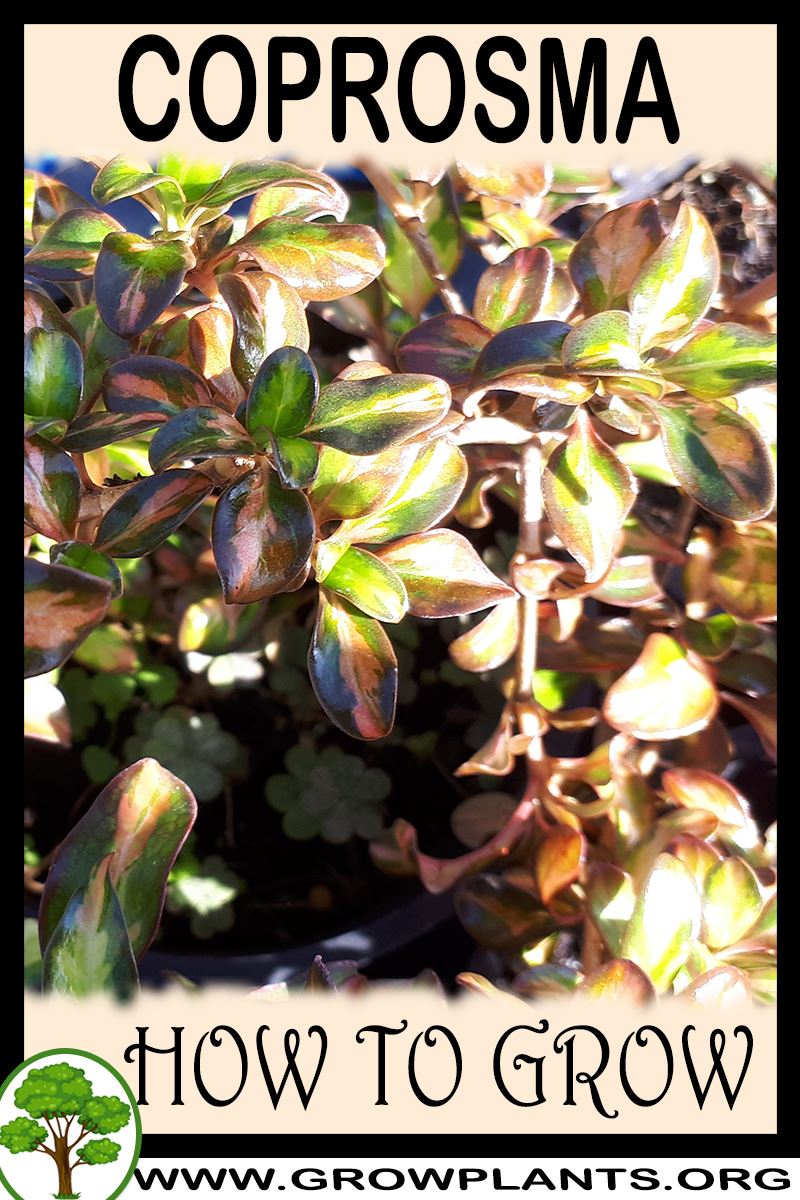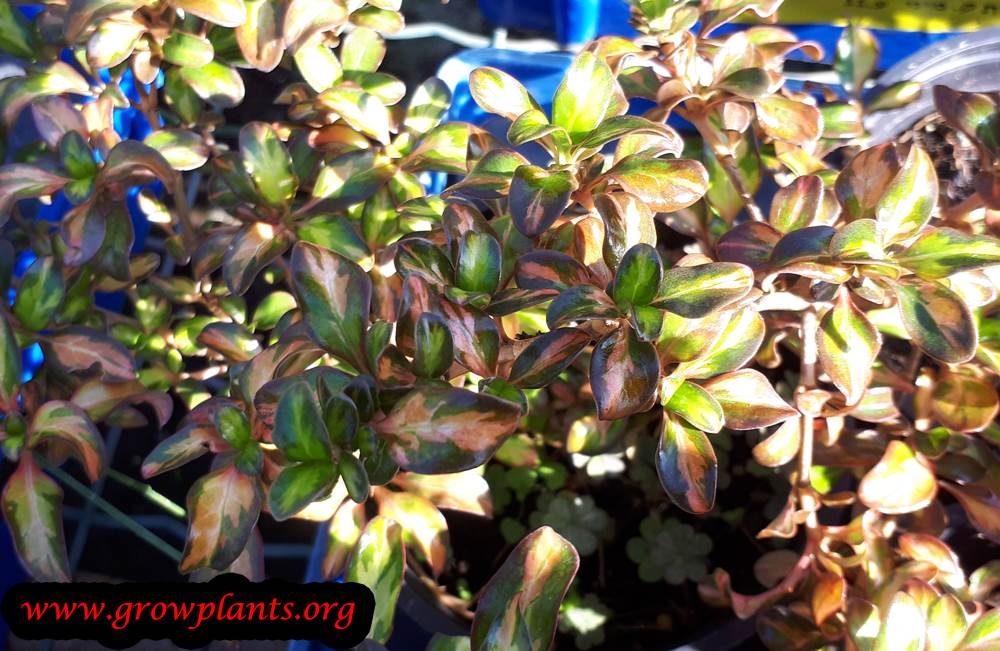


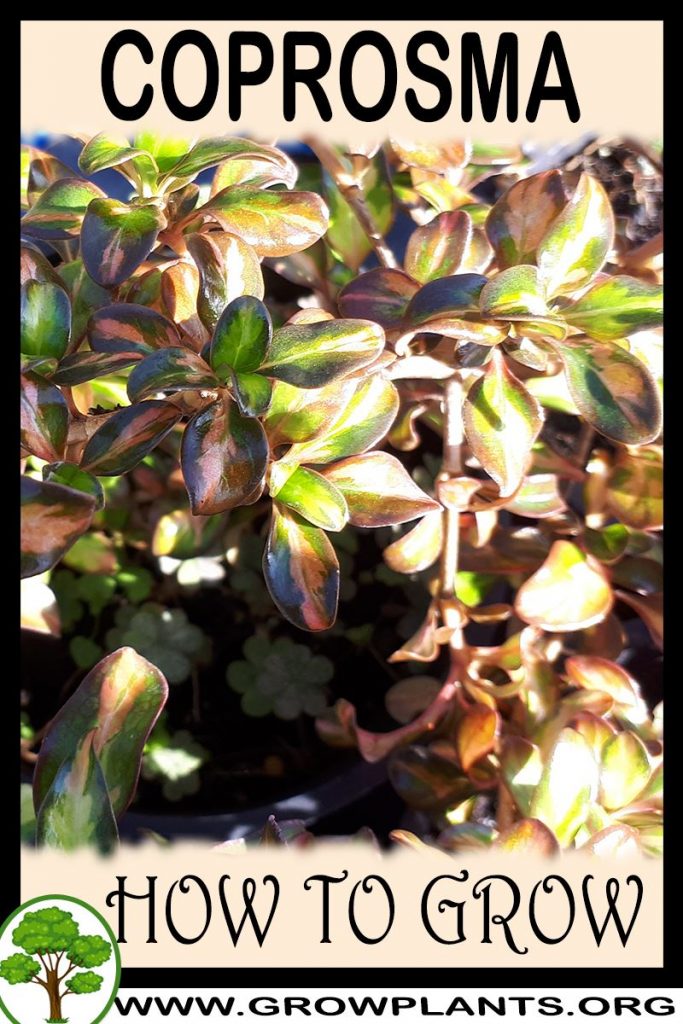
Plant Profile & Key Characteristics
Overview: Coprosma (mirror plant) is an evergreen shrub to small tree ranging from 0.3-5 m (1-15 ft), grown above all for its glossy, waxy, often vividly coloured leaves. It is a perennial ornamental prized as foliage colour, hedging and container plantings.
Quick Specifications
| Specification | Attribute |
|---|---|
| Plant Type / Life Cycle | Perennial |
| Foliage Type | Evergreen |
| Mature Size | 0.3-5 m (1-15 ft) |
| Growth Rate | Moderate to fast |
| Toxicity | Non-toxic |
| Hardiness | USDA zones 9+ |
Growth Form & Structure
- Height & Spread: Variable from low 0.3 m (1 ft) mounds to 5 m (15 ft) shrubs depending on cultivar; readily grown in containers.
- Growth Habit & Form: Dense, bushy evergreen shrub (occasionally a small tree) that clips well into hedges and rounded forms.
- Lifespan & Maturity: Moderate to fast-growing, quickly forming a solid, well-branched shrub.
Anatomy & Physical Features
- Leaves & Foliage: Waxy, high-gloss oval to elliptic leaves with wavy margins, in green or bright shades of purple, red, yellow, orange, pink, bordeaux or mixed variegation.
- Flower Characteristics: Insignificant creamy-white, needle-like flowers borne in small clusters.
Primary Uses & Landscape Value
- Functional & Ornamental Roles: Ornamental foliage shrub for hedges, mixed borders, coastal gardens and containers.
Care Guide: Planting, Soil & Watering
Overview: An evergreen shrub grown for glossy, colorful foliage. It likes moist but well-drained soil in sun to part shade and benefits from a mulch while young.
Quick Care Requirements
| Requirement | Ideal Condition |
|---|---|
| Planting Season | In the warm season – spring through autumn |
| Growth Rate | Moderate to Fast |
| Soil Type | Moist, well-draining |
| Water Need | Low to Moderate |
Planting & Establishment
- Best Planting Season: Plant from spring through autumn in mild, frost-free climates (zone 9+).
- How to Plant:
- Hole Preparation: Dig a hole twice the width of the root ball and equally deep.
- Soil Amendments: Work in compost and apply a mulch layer to conserve moisture, especially while the plant is young.
- Planting Depth: Set the root collar at soil level and do not bury the stem.
- Growth Speed & Expectations: Fast to moderate; it establishes and fills out fairly quickly.
Soil, Watering & Drainage Care
- Soil Mix & Drainage Needs: Moisture-retentive but free-draining soil; in pots use a quality potting mix with drainage holes.
- Watering Schedule & Technique:
- Young / Newly Planted: Keep evenly moist and mulched to help it establish.
- Established: Water moderately, letting the top few cm dry between waterings.
- Seasonal Adjustments: Water more in summer heat and less in cool winter.
Climate, Light & Hardiness
Coprosma is a colorful-foliage evergreen shrub for subtropical, Mediterranean, temperate, and tropical climates; it grows best in full sun to half shade and is comfortably hardy from about zone 9.
Quick Climate Specifications
| Climate Zones | Subtropical, Mediterranean, temperate, tropical |
|---|---|
| USDA Hardiness Zones | 9 and warmer |
| Frost Tolerance | Low to Moderate |
| Light Conditions | Full Sun to Half Shade |
Sunlight & Light Exposure
Optimal Light Setup
Full sun brings out the strongest leaf coloration in variegated and colored-leaf forms.
Temperature Extremes & Hardiness
USDA Hardiness & Regional Limits
Zone 9 and warmer; young plants benefit from mulch and a sheltered position while establishing, per the plant's own care notes.
Cold Damage & Winter Protection
Moderate cold tolerance at best; protect from hard freezes, especially while plants are young.
Extreme Heat Tolerance
Handles subtropical and tropical heat well with adequate moisture.
Wind, Humidity & Microclimate
Humidity Preferences
Naturally suited to humid subtropical and coastal climates.
Microclimate Recommendations
A sheltered site benefits young plants until they are established, consistent with its own mulch and establishment guidance.
Growing in Pots, Balconies & Indoors
Coprosma is a glossy-leaved, colourful shrub the grower rates for containers but not as an indoor houseplant. It shines in a pot on a sunny patio or balcony, where its foliage colours up in good light; indoors the light is simply too weak.
Quick Details
- Container Size: A large tub for a shrub – start around 20-40 L (5-10 gal) and pot up as it grows
- Indoor Suitability: Not an indoor houseplant (grower); a bright, frost-free spot outdoors suits it best
- Best Spot: Full sun to partial shade; a bright spot with some direct sun is ideal.
- Soil & Drainage: Aerated, organic-rich mix (quality potting mix, or peat/coir with perlite or vermiculite); it must drain freely.
- Watering in Pots: Let the top few centimetres of mix dry between waterings; pots drain fast, so check often, but never leave it waterlogged.
Indoors & On the Windowsill
- Houseplant limits: The grower marks it as not suited to life indoors – it needs strong outdoor light to keep its leaf colour and stays leggy in a room.
- Overwintering: It is frost-tender, so in cold-winter climates a potted plant is easily moved into a bright, cool, frost-free porch or greenhouse for winter and back out once frosts pass.
On a Balcony or Patio
- Light & exposure: Give it the sunniest spot for the best foliage colour; on exposed balconies shelter it from cold, drying winds. Walls and paving reflect heat, so check pot moisture often.
- Practicalities: A full tub is heavy – stand it on pot feet or a wheeled tray so runoff drains and the base does not sit wet.
Choosing the Pot, Soil & Long-Term Care
- Pot & drainage: A roomy tub with strong drainage holes; skip a standing-water saucer to avoid root rot. Terracotta breathes and dries faster; glazed or plastic holds moisture longer.
- Potting mix: Use a well-aerated, organic-rich mix – quality potting mix, or peat/coir blended with perlite or vermiculite.
- Feeding: As nutrients wash out of pots faster than open ground, feed potted plants regularly through the growing season with a balanced fertiliser.
- Repotting: Refresh the top few centimetres of mix each year and pot up (or root-prune and return to the same pot) about every two years.
Fertilizing & Feeding
Coprosma is grown mainly for its glossy, often brightly colored foliage rather than for flowers, and it is a tough, low-maintenance shrub once established. Light, balanced feeding through the growing season is enough to keep leaf color and density strong; heavy nitrogen feeding is unnecessary and can push soft growth at the expense of the leaf coloring the plant is valued for.
Quick Fertilizing Specs
| Feeding Level | Light |
|---|---|
| Main Nutrient Priority | Balanced feeding with modest nitrogen to support steady leaf growth and color; excess nitrogen can dull variegated or colored foliage forms |
| Best Feeding Period | Through the warm growing months of spring, summer, and autumn while the plant is actively putting on new growth |
| Soil pH | Prefers moist, well-drained soil and adapts to a range of garden soil types without special pH adjustment |
| Reduce/Stop Feeding | Ease off as growth slows going into the cooler part of the year and hold off until active growth resumes |
| Organic Options | A layer of mulch around young plants conserves moisture and breaks down to add gentle background nutrition |
Feeding by Growth Stage
Establishment after planting
Help a newly planted Coprosma build a strong root system before pushing top growth
| Nutrient direction | Light, balanced feeding supports root establishment without forcing soft top growth the young root system can’t yet support |
|---|---|
| Timing | In the first growing season after planting, once the plant shows signs of active new growth |
| Frequency | A few light feedings spaced through the establishment period are usually sufficient |
| Fertilizer types | A balanced, complete fertilizer formulated for shrubs or general garden use, A controlled-release balanced fertilizer worked into the planting area at planting time |
| Precautions | Avoid heavy feeding right at planting, since a stressed or minimal root system cannot take up a large nutrient load and excess fertilizer can burn young roots |
Active growth season
Maintain steady leaf growth, density, and foliage color through the main growing season
| Nutrient direction | Balanced feeding with modest nitrogen keeps foliage full and well colored; keep nitrogen restrained on colored or variegated forms, since excess nitrogen tends to push plain green growth and dull the leaf coloring |
|---|---|
| Timing | Spring through autumn while the plant is putting on active new growth |
| Frequency | Light, regular feedings through the active season keep growth steady without overdoing it |
| Fertilizer types | A balanced, complete fertilizer suited to evergreen shrubs, A slow-release balanced fertilizer applied once as growth resumes in spring |
| Routine trace nutrients | iron, manganese |
| Precautions | Keep fertilizer off the foliage and away from the base of the stem to avoid leaf and stem burn |
Cool-season slowdown
Let growth slow naturally through the coolest part of the year without pushing tender new shoots
| Nutrient direction | None – withhold fertilizer while growth is slow |
|---|---|
| Timing | Through the coolest months of the year, when growth visibly slows |
| Frequency | No feeding at this stage |
| Fertilizer types | No feeding at this stage; resume light feeding once new growth reappears in spring |
| Precautions | Do not fertilize during this slow period, since tender new growth pushed by feeding is more prone to cold damage |
Nutrient Deficiency Signs & Corrections
Overall leaf color looks pale or washed out and new growth is sparse or slow during the active growing season
| Possible causes | Nitrogen deficiency from infrequent feeding during active growth, Root stress from poorly drained or waterlogged soil limiting nutrient uptake, Insufficient light for the plant’s position, A root-bound container plant that has outgrown its pot |
|---|---|
| Appears first on | Overall foliage, most noticeable on newer growth |
| What to check | Recent feeding history through the growing season, Soil drainage and moisture around the root zone, Light exposure at the planting site, Whether a container plant is root-bound |
| Possible correction | Resume light, balanced feeding during active growth if the plant has been underfed; correct drainage or repot a root-bound plant, since feeding alone will not fix a root problem |
New leaves yellow between the veins while the veins themselves stay green
| Possible causes | Iron deficiency associated with alkaline or waterlogged soil that limits iron uptake, Compacted or poorly drained soil restricting root function generally, Cool soil temperatures temporarily slowing nutrient uptake |
|---|---|
| Appears first on | Newest leaves |
| What to check | Soil pH and drainage around the root zone, Whether yellowing is limited to new growth, which points toward iron, Recent watering pattern and soil temperature |
| Possible correction | Improve drainage and correct soil pH first; if chlorosis persists in an otherwise healthy, adequately fed plant, a chelated iron product applied per its label can help |
Leaf drop or dieback of shoot tips, sometimes with dull or discolored remaining foliage
| Possible causes | Root stress from overwatering or poor drainage rather than a nutrient shortage, General nutrient deficiency from a long period without any feeding, Aphid infestation weakening shoot tips, Salt buildup in container potting mix from repeated feeding without adequate leaching |
|---|---|
| Appears first on | Shoot tips and outer branches first |
| What to check | Signs of aphids on new growth, Soil drainage and recent watering history, Feeding history and, for containers, any visible salt crust on the soil surface, Overall root health if the plant can be checked |
| Possible correction | Address pests and drainage first, since both mimic nutrient deficiency; resume a light, balanced feeding routine if the plant has genuinely been underfed |
Pruning, Training & Seasonal Maintenance
Coprosma is an evergreen shrub-to-small-tree grown chiefly for its glossy, often vividly colored foliage, used as hedging, groundcover, or a specimen shrub depending on the cultivar and its size range. It tolerates pruning very well, including shaping and hedging cuts, and pruning here is almost entirely about foliage form and density rather than flowers, which are small and not ornamentally significant. Because pruning stimulates a flush of tender new growth, the safest and most effective window is spring, once frost risk has passed, with light trims possible through the rest of the growing season.
Quick Pruning & Maintenance Specs
| Pruning Tolerance | High |
| Primary Pruning Window | Spring, after frost risk passes |
| Secondary Maintenance Window | Light trims through summer |
| Typical Frequency | 1–2 formal shapings per year, plus light trims as needed |
| Main Objective | Foliage density, shape, and (for colored cultivars) preserving true leaf color |
| Young Plant Priority | Pinch tips to encourage branching and bushiness |
| Mature Plant Priority | Maintain shape, control size/legginess, remove reverted growth |
| Best Tool Type | Bypass secateurs (specimen) or hedge shears (formal hedge) |
| Avoid Heavy Pruning During | Autumn/winter cold snaps, when new growth would be frost-tender |
Pruning by Plant Age & Size
Newly Established
Minimal – remove only damaged growth and let the young plant build a root system before any hard prune.
Young / Formative
Pinch or tip-prune to encourage branching and bushiness; where grown as a hedge, begin light shaping early to establish a dense hedge line; where grown as a specimen, allow an open, naturally branched form.
Mature / Established
Maintain the intended form – hedge line or open specimen – control size, and address legginess with renewal cuts.
Seasonal Pruning Schedule
Pre-Growth/Early-Spring: the main shaping window, once frost risk has passed, so the resulting flush of new growth isn’t damaged by late cold.
Summer Canopy Management: light trims to keep hedge lines crisp or specimen form tidy.
Ongoing Sanitary: remove dead or damaged twigs as noticed at any time of year.
Structural Pruning & Training
Remove crossing or rubbing branches on specimens; thin lightly to let interior light reach the colorful foliage rather than only the outer shell; control height and spread, since the genus spans a wide size range (roughly 0.3–5m depending on cultivar) from low groundcovers to small trees.
Special Growth to Remove
- Reverted plain-green shoots on colored/variegated cultivars – these cultivars are typically propagated vegetatively to preserve their color (per this plant’s own propagation notes), and any all-green reversion tends to be more vigorous than the true-colored growth and should be cut out at its point of origin before it takes over.
- Dead or damaged twigs, removed as seen.
Container & Small-Space Pruning
Coprosma grows well in containers; use frequent light pinching/trimming rather than infrequent hard cuts to keep a compact form, and expect somewhat slower, more controllable growth than an in-ground plant.
Tools
Bypass secateurs for selective specimen shaping and removing reverted shoots; hedge shears only where the plant is genuinely maintained as a clipped formal hedge.
Tool Hygiene & Disease Risk
Routine – aphids (the noted pest) are not tool-transmitted; clean, sharp tools are sufficient, though wiping sap residue off blades after cutting aphid-affected growth avoids attracting more aphids to the next cut.
Cut Placement & Technique
Pinch just above a healthy node to trigger branching; for specimen shaping, use thinning cuts back to a lateral branch rather than heading cuts, to keep a natural form; avoid flush cuts.
Heavy Pruning & Rejuvenation
Tolerates a fairly hard cutback well if leggy or overgrown; do this in spring so the resulting flush has the whole growing season to harden off before any cold weather returns. Recovery is generally quick given the plant’s fast-to-medium growth rate.
Post-Pruning Care
Watch new soft growth for aphids; water as needed; avoid encouraging a tender flush late in the season by holding off on pruning as autumn approaches.
Common Pruning Mistakes
- Pruning in late autumn or winter, triggering a frost-tender flush that then gets damaged by cold.
- Repeatedly shearing a specimen plant into a flat wall, hollowing out the interior and losing the natural branching that shows off the foliage color.
- Ignoring reverted plain-green shoots on colored cultivars, letting them gradually dominate and dull the display.
When NOT to Prune
Avoid pruning in late autumn or early winter in any area with real frost risk, since the resulting new growth is cold-tender; avoid heavy cuts during extreme heat or drought stress.
Recommended Tools (by task)
- bypass_secateurs – selective specimen shaping and removal of reverted color-losing shoots.
- hedge_shears – only where the plant is grown and maintained as a clipped formal hedge.
Pruning Troubleshooting
| Problem | Possible Cause | What to Check | Corrective Action |
| Vigorous plain-green shoots appearing on a colored cultivar | Genetic reversion, which usually grows more vigorously than the true-colored foliage | Compare the shoot’s color and vigor to the rest of the plant | Cut the reverted shoot back to its point of origin as soon as it’s noticed |
| Bare, hollow-centered hedge | Repeated shallow shearing at the same line without renewal | Leaf density inside the canopy, not just the outer shell | Selectively thin or renewal-cut sections lower to force fresh interior/lower branching |
| Frost-burned new growth after pruning | Pruned too late in the season, exposing a tender flush to cold | Timing of the last cut relative to local frost dates | Prune earlier in spring; in cold years, delay pruning until frost risk has fully passed |
Propagation Guide
Coprosma is best propagated from semi-hardwood stem cuttings, which is necessary to keep the specific leaf color of colorful cultivars (green, purple, red, yellow, orange, pink or bordeaux forms) true to the parent plant. Seed-raised plants are possible but will not reliably reproduce a named cultivar’s foliage color, so cuttings are strongly preferred whenever color is important.
Quick Propagation Specs
| Best Propagation Method | Semi-hardwood stem cuttings |
| Alternative Methods | Seed (species/plain-green forms) |
| Propagation Difficulty | Easy to Moderate |
| Seed True-to-Type | Cultivar-dependent — colored-leaf forms do not come true from seed |
| Vegetative True-to-Type | Yes |
| Best Propagation Season | Spring, summer, autumn |
| Cutting Rooting Time | Typically several weeks under warm, humid conditions |
Stem Cuttings
Cutting Type
Semi-hardwood cuttings from firm, partially matured stems.
Best Timing
Spring through autumn, matching the plant’s active growing and planting seasons.
Cutting Preparation
Take a cutting with several leaf nodes, remove the lower leaves, and trim just below a node.
Rooting Setup
Insert into a free-draining cutting mix, keeping young rooted cuttings mulched as recommended for young plants of this species, and keep humid until rooted.
Rooting Hormone
Optional; can help speed rooting but is not required.
Rooting Time
Generally a few weeks under warm, humid conditions.
Bloom & Flower Guide
Quick Details
- Bloom Season: Spring and summer
- Flower Appearance: Small greenish white to cream flowers with slender, needle-like segments, in clusters
- Edibility: Ornamental only – grown for its glossy, colourful leaves, not for the flowers
Detailed Blooming Overview
Coprosma is grown for its glossy, often brightly coloured leaves rather than its bloom. The flowers are small and greenish white to cream, with slender needle-like parts, clustered quietly among the foliage. Plants are male or female (dioecious), and the wind-pollinated flowers are easy to overlook – the leaves remain the main event.
Flower Characteristics
- Small white-cream flowers with slender, needle-like segments, in clusters.
- Inconspicuous and wind-pollinated.
- Plants are single-sexed (dioecious).
Bloom Care & Thinning
- Managing the bloom: No special care is needed – prune for shape and foliage; the flowers ask for nothing.
Pests, Diseases & Troubleshooting
Overview: Coprosma (mirror bush) is a tough, glossy-leaved coastal shrub that is remarkably pest- and disease-free, tolerating wind, salt and poor soil. The few pests it gets are sap feeders on stressed or sheltered plants — scale, mealybugs, aphids and occasional spider mites — while its main disease risk is root rot in heavy, wet soil. Give it good drainage and airflow and it is close to trouble-free.
Quick Troubleshooting Overview
| Issue / Pest | Main Symptom | Primary Solution |
|---|---|---|
| Scale | Waxy bumps on stems/leaves; sooty mold | Prune, horticultural oil |
| Mealybugs | Cottony tufts in leaf axils; honeydew | Alcohol swab, horticultural oil |
| Aphids | Sticky, curled new growth | Water jet, insecticidal soap |
| Spider mites | Stippling in hot, dry, sheltered sites | Hose undersides, horticultural oil |
| Root rot | Wilt and dieback in wet, heavy soil | Improve drainage, water less |
| Leaf spot | Occasional spots in damp shade | Airflow, remove leaves, copper if needed |
Common Pests & Management
- Scale insects (soft & armored scales):
- Symptoms: Immobile brown, tan or waxy bumps along stems and on leaf veins; soft scales exude honeydew that blackens leaves with sooty mold, and heavy infestations cause yellowing and thin growth.
- Prevention & Control: Prune out badly encrusted stems, smother crawlers with horticultural oil, and repeat; encourage parasitic wasps and lady beetles that keep scale in check outdoors.
- Mealybugs (Pseudococcus/Planococcus spp.):
- Symptoms: Cottony white tufts in leaf axils and stem joints, with sticky honeydew and sooty mold; worst on sheltered or indoor plants.
- Prevention & Control: Dab colonies with an alcohol swab and treat with horticultural oil or insecticidal soap; improve airflow and inspect new plants before introducing them.
- Aphids (Aphis spp.):
- Symptoms: Clusters on soft new shoots, causing curling, yellowing and honeydew during the spring flush.
- Prevention & Control: Hose off and rely on beneficials; insecticidal soap handles heavy colonies, and lean feeding limits the soft growth they prefer.
- Spider mites (Tetranychus spp.):
- Symptoms: Fine stippling and dulling with faint webbing in hot, dry, sheltered positions or under glass.
- Prevention & Control: Improve airflow and hose the foliage; apply horticultural oil or insecticidal soap if mites persist.
Diseases & Fungal Issues
- Root rot (Phytophthora/Pythium spp.):
- Symptoms: Wilting, yellowing and branch dieback despite moist soil, with dark decayed roots, in heavy or waterlogged ground.
- Treatment & Management: Plant in free-draining soil (it resents wet feet), water only as needed, and avoid waterlogging; there is no cure once roots collapse, so prevention through drainage is essential.
- Fungal leaf spot (Cercospora and others):
- Symptoms: Brown or dark spots on leaves in damp, shaded, crowded conditions; usually minor and cosmetic.
- Treatment & Management: Improve airflow and light, avoid overhead wetting, and remove spotted leaves; copper fungicide is rarely needed but helps in persistent damp.
- Sooty mold (secondary):
- Symptoms: Black film on glossy leaves beneath scale or mealybug infestations.
- Treatment & Management: Control the honeydew-producing insects and wipe the film off; it clears once the pests are gone.
Growing Difficulties & Abiotic Problems
- Root rot from overwatering
- Cause & Symptoms: The main weakness of an otherwise tough shrub — wet, heavy soil causes wilting and dieback.
- Correction Strategy: Plant in well-drained soil, water sparingly once established, and improve heavy ground with grit before planting.
- Loss of variegation / leaf color
- Cause & Symptoms: Colorful variegated forms fade to green or lose intensity in low light.
- Correction Strategy: Grow in full sun to bright light to keep the best leaf color; prune out any all-green reverted shoots.
- Cold / wind burn
- Cause & Symptoms: Marginal-climate cold or harsh cold wind browns and crisps leaf edges.
- Correction Strategy: Site in a sheltered spot in colder areas; it recovers with new growth as warmth returns.
- Chlorosis
- Cause & Symptoms: Yellowing leaves in poor or alkaline soil.
- Correction Strategy: Feed lightly and mulch; correct persistent yellowing with chelated iron if soil is alkaline.
What Helps – Products & Tools
Culture keeps this shrub clean: good drainage, airflow and full sun prevent almost every problem. For the occasional sap feeder, horticultural oil and insecticidal soap handle scale, mealybugs, aphids and mites; a copper fungicide covers the rare leaf spot, and the key disease defense against root rot is simply well-drained soil. Follow the label and spray oils in the evening to protect pollinators.