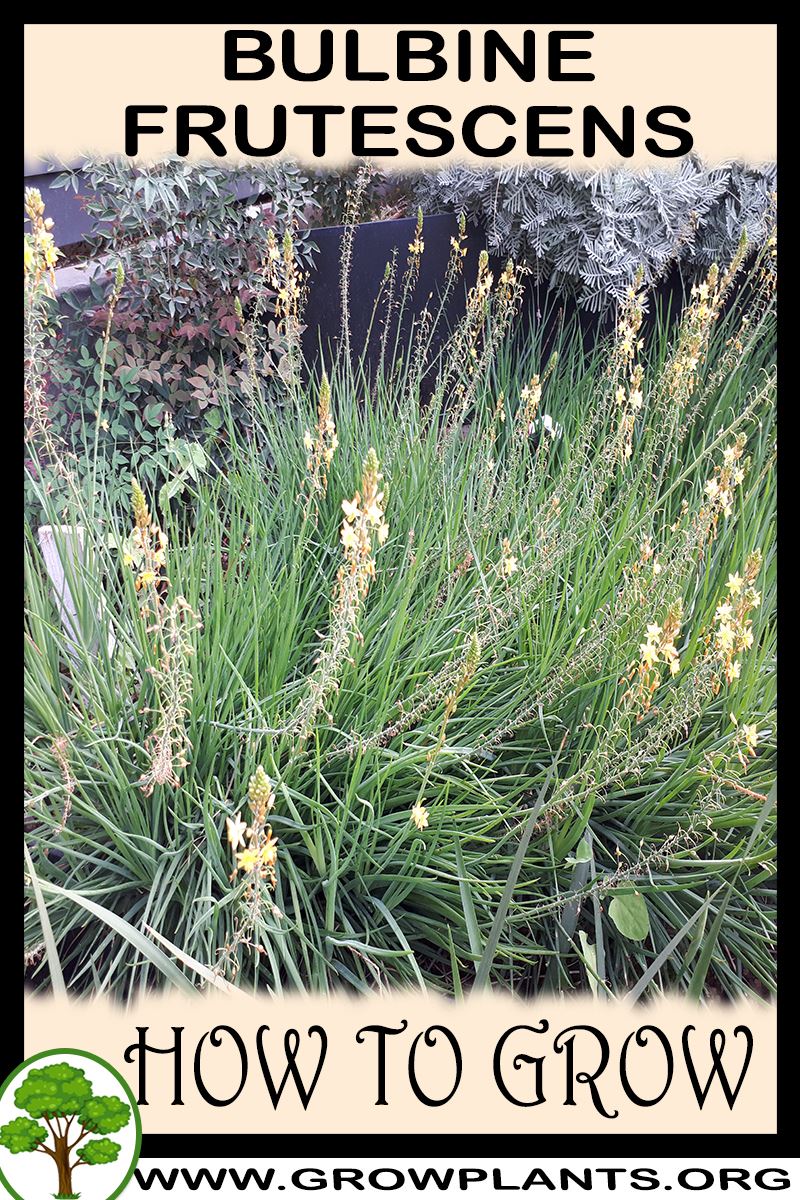
Plant Profile & Key Characteristics
Overview: A low, clump-forming succulent perennial reaching about 30-60 cm (1-2 ft), evergreen in mild climates and cold-deciduous where frost occurs. Grown as an ornamental, drought-tolerant border and groundcover plant.
Quick Specifications
| Specification | Attribute |
|---|---|
| Plant Type / Life Cycle | Perennial |
| Foliage Type | Semi-evergreen (deciduous in cold) |
| Mature Size | 30-60 cm tall (1-2 ft) |
| Growth Rate | Moderate |
| Root System | Fibrous, clump-forming |
| Toxicity | Non-toxic; leaf gel used topically in folk medicine |
| Hardiness | USDA zones 8-11 |
Growth Form & Structure
- Height & Spread: 30-60 cm (1-2 ft) tall, spreading into wider clumps; also grows well in containers.
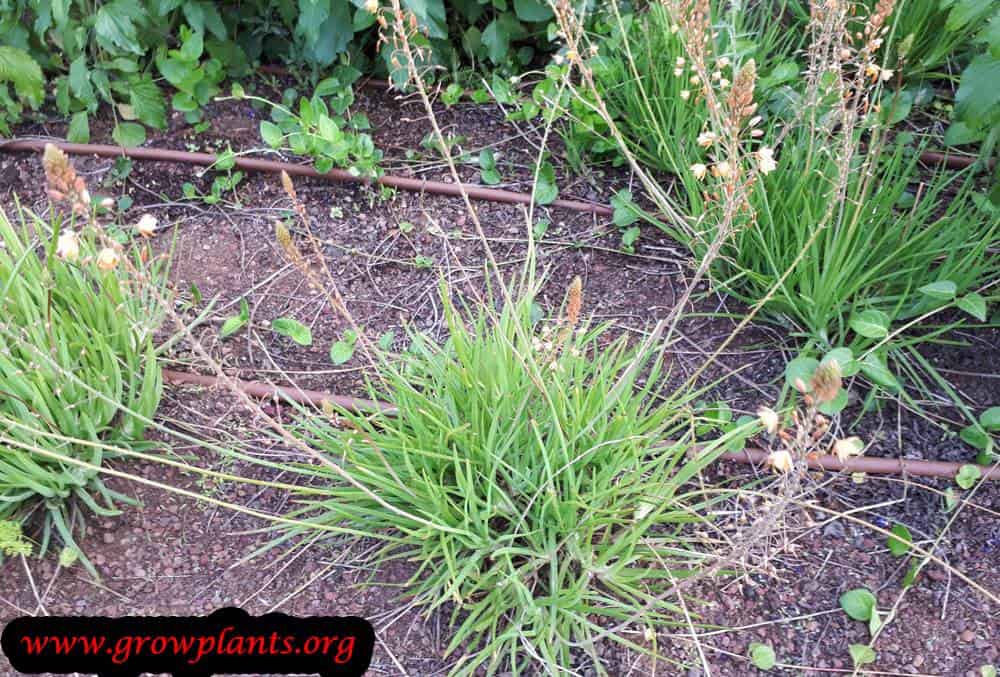
- Growth Habit & Form: Low, clumping succulent perennial that forms a spreading groundcover mat.
- Lifespan & Maturity: Perennial that reaches flowering size within a season or two.
Anatomy & Physical Features
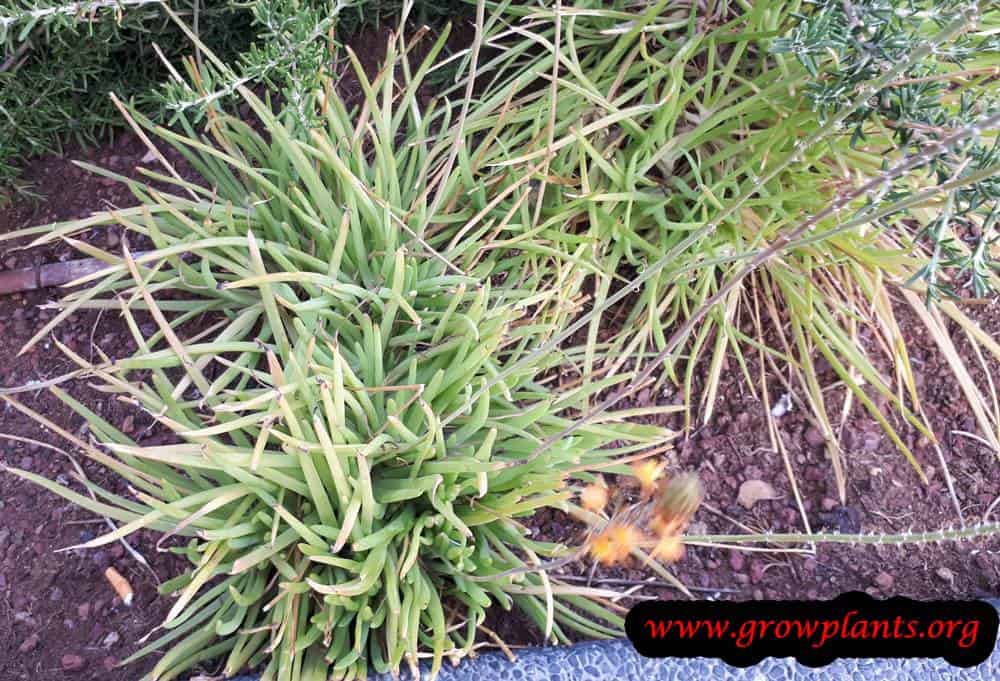
- Leaves & Foliage: Fleshy, linear, green succulent leaves in a basal clump.
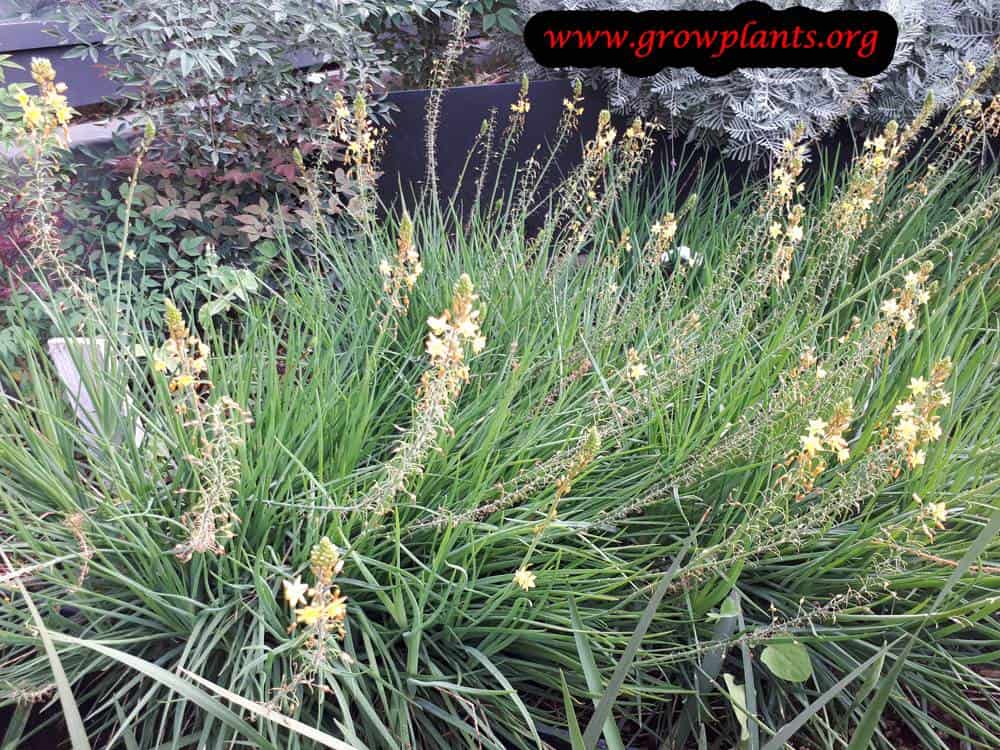
- Flower Characteristics: Yellow-orange star-shaped flowers carried on slender upright stalks over a long season.
Primary Uses & Landscape Value
- Functional & Ornamental Roles: Ornamental drought-tolerant groundcover and border plant; the leaf gel is also used topically like aloe in folk medicine.
Care Guide: Planting, Soil & Watering
Overview: A drought-hardy, sun-loving perennial for mediterranean to subtropical gardens (hardiness zone 8-11). It needs sharply drained soil and only light watering, tolerating dry summers with ease.
Quick Care Requirements
| Requirement | Ideal Condition |
|---|---|
| Planting Season | Spring through autumn |
| Growth Rate | Moderate |
| Soil Type | Well-drained (tolerates dry, lean soil) |
| Water Need | Low to Moderate – let the soil dry between waterings |
Planting & Establishment
- Best Planting Season: Plant across the warm season, from spring through autumn, so it roots in before cool weather.
- How to Plant:
- Hole Preparation: Dig a hole the width of the root ball; on heavy ground raise the bed or add grit so water drains freely.
- Soil Amendments: Little enrichment is needed – mix in coarse grit or sand if drainage is poor rather than rich compost.
- Planting Depth: Set the crown at soil level; planting too deep in damp soil risks rot.
- Growth Speed & Expectations: Moderate, steady growth into a low clump around 30-60 cm tall that spreads to form ground cover.
Soil, Watering & Drainage Care
- Soil Mix & Drainage Needs: Free-draining, even gritty soil is ideal; the one thing to avoid is waterlogging, which quickly rots this succulent-rooted plant.
- Watering Schedule & Technique:
- Young / Newly Planted: Water lightly but regularly for the first few weeks to help it root, without keeping the soil wet.
- Established: Once established water sparingly – a deep soak only when the soil has dried out.
- Seasonal Adjustments: It happily takes a dry summer; give occasional water in prolonged heat and none in wet winters.
Climate, Light & Hardiness
Bulbine frutescens is a drought-tolerant, succulent-leaved perennial for subtropical, Mediterranean, and temperate gardens; it wants full sun to half shade and a dry summer, and is hardy from about zone 8.
Quick Climate Specifications
| Climate Zones | Subtropical, Mediterranean, temperate |
|---|---|
| USDA Hardiness Zones | 8–11 |
| Frost Tolerance | Low to Moderate |
| Light Conditions | Full Sun to Half Shade |
Sunlight & Light Exposure
Optimal Light Setup
Full sun gives the most compact growth and best flowering.
Temperature Extremes & Hardiness
USDA Hardiness & Regional Limits
Zone 8–11.
Cold Damage & Winter Protection
The fleshy, succulent-type leaves are more vulnerable to hard freezes than a truly hardy perennial's foliage; protect in the coldest part of its range.
Extreme Heat Tolerance
Excellent; it explicitly thrives through a dry summer and hot conditions.
Wind, Humidity & Microclimate
Dry-Air Tolerance
High; the plant's own care notes call for a dry summer and well-drained soil.
Rainfall & Seasonal Moisture
Well suited to Mediterranean-pattern climates with a dry summer; poor tolerance of prolonged wet or humid conditions, which risk rot in the fleshy foliage.
Growing in Pots, Balconies & Indoors
Bulbine frutescens is not a deep-room houseplant – the grower does not list it as one – but this compact, aloe-like succulent (30-60 cm) is superb in containers and can just about manage indoors on a hot, sunny windowsill. It is drought-loving and easy, ideal for a bright balcony or patio.
Quick Details
- Container Size: A small-to-medium pot; it is happy slightly snug
- Indoor Suitability: Not a true houseplant; only a very sunny, hot windowsill will keep it compact
- Best Spot: Full sun to part shade
- Soil & Drainage: Gritty, free-draining succulent mix
- Watering in Pots: Low – let it dry out well between waterings
Indoors & On the Windowsill
- Windowsill only: The grower does not rate it as a houseplant, but a compact succulent like this can survive on the hottest, brightest sill you have; away from strong light it stretches and goes soft.
- Care indoors: Keep it warm, water sparingly, and give it the most direct sun possible – it stores water in its fleshy leaves and shrugs off neglect.
On a Balcony or Patio
- Light & wind: Give it the brightest, warmest spot you have. Walls and paving reflect heat and pots dry fast, so check moisture often in warm spells; shelter tall or top-heavy growth from wind and stake if needed.
- Practicalities: A full pot is heavy once watered – set it in its final place first, and make sure drainage runoff has somewhere to go.
Choosing the Pot, Soil & Long-Term Care
- Pot & drainage: Use a small-to-medium pot with generous drainage holes and no standing-water saucer – this plant hates wet feet. Terracotta is ideal because it breathes and dries out fast.
- Potting mix: A gritty, free-draining mix – loam or potting soil cut with coarse sand, perlite or grit; avoid heavy, water-holding composts.
- Feeding: Feed only lightly through the growing season; container plants lose nutrients to leaching, but this one prefers lean conditions to soft, overfed growth.
- Repotting: Pot up or refresh the mix every couple of years once roots fill the pot; take the chance to check drainage and trim any dead roots.
Fertilizing & Feeding
A light feeder: this drought-tolerant groundcover thrives in lean, well-drained soil with a dry summer rest and needs only minimal feeding to keep its star-shaped flowers coming.
Quick Fertilizing Specs
| Feeding Level | Light feeder |
|---|---|
| Main Nutrient Priority | Balanced feeding without excess nitrogen, which can produce soft, floppy growth in this compact groundcover |
| Best Feeding Period | The main growth and bloom period in spring and summer |
| Organic Options | A light compost top-dressing worked into well-drained soil |
| Reduce/Stop Feeding | Hold off feeding during the dry-summer rest and while growth is slow |
| Micronutrients | Usually adequate from a complete fertilizer in well-drained soil |
| Soil pH | Tolerates a wide range of well-drained soils |
Feeding by Growth Stage
Active growth
Support the linear succulent-like foliage as this groundcover fills in.
| Nutrient direction | A light, balanced complete fertilizer supports steady growth without forcing soft, floppy foliage. |
|---|---|
| Timing | As growth resumes in spring. |
| Frequency | A light feeding at the start of active growth is usually enough. |
| Fertilizer types | A balanced complete fertilizer at a light rate, A light compost top-dressing |
| Precautions | Keep feeding light; this drought-adapted plant is easily pushed into soft, floppy growth by overfeeding. |
Bloom
Sustain the star-shaped yellow-orange flowers on their stalks through the bloom period.
| Nutrient direction | Continue light, balanced feeding rather than switching to a bloom-booster product. |
|---|---|
| Timing | During the spring to summer bloom period. |
| Frequency | Feeding is rarely needed during bloom beyond the light application made as growth resumed. |
| Fertilizer types | A light organic top-dressing if the soil is thin |
| Precautions | Keep feeding minimal during bloom, especially as the plant heads into its dry-summer rest. |
Dry-summer and cool-season rest
Let the plant rest through its dry-summer and cooler-season slowdown, as this deciduous perennial dies back.
| Nutrient direction | None – withhold fertilizer during the dry-summer and cool-season rest. |
|---|---|
| Timing | Through the dry summer period and into cooler weather as the plant dies back. |
| Frequency | No feeding at this stage. |
| Fertilizer types | No feeding at this stage; do not fertilize until active growth resumes. |
| Precautions | Withhold fertilizer during the rest period; this drought-adapted plant does not need feeding while dormant. |
Nutrient Deficiency Signs & Corrections
Older leaves pale to yellow-green and flowering is sparse.
| Possible causes | low available soil nitrogen, very lean soil with little organic matter, nutrient leaching from heavy watering |
|---|---|
| Appears first on | older, lower leaves |
| What to check | recent feeding history, soil organic matter, watering and drainage |
| Possible correction | Apply a light, balanced complete fertilizer during active growth. |
Leaves yellow and soften at the base, with wilting despite moist soil.
| Possible causes | overwatering, especially during the dry-summer rest period, poorly drained soil, overfeeding pushing soft, rot-prone growth |
|---|---|
| Appears first on | lower leaves and the base of the plant |
| What to check | soil drainage and moisture, watering frequency relative to the season, recent fertilizer amounts |
| Possible correction | Improve drainage, reduce watering, and withhold feeding until the plant recovers. |
Leaf tips brown and growth stalls despite adequate watering.
| Possible causes | fertilizer salt buildup from overfeeding a naturally light feeder, under-watering that concentrates salts, poor drainage |
|---|---|
| Appears first on | leaf tips |
| What to check | recent fertilizer amounts, drainage, watering consistency |
| Possible correction | Ease off feeding and water thoroughly to flush accumulated salts. |
Pruning, Training & Seasonal Maintenance
Bulbine frutescens is a low, clumping succulent-leaved perennial that needs very little pruning – its main upkeep is removing spent flower spikes and the occasional dead or frost-nipped leaf fan. Because it reblooms continuously from fresh basal stalks rather than from persistent wood, grooming can be done any time it’s actively growing, with the heaviest tidy-up reserved for late winter once the coldest weather has passed. Routine grooming doesn’t affect bloom timing; leaving spent stalks in place mainly diverts energy and looks untidy.
Quick Pruning & Maintenance Specs
| Pruning Tolerance | Low–Moderate (grooming, not structural pruning) |
| Primary Pruning Window | Late winter–early spring, before the new flush |
| Secondary Maintenance Window | Ongoing through spring/summer for spent flower stalks |
| Typical Frequency | Light grooming every few weeks in bloom; one annual tidy in late winter |
| Main Objective | Remove spent flower stalks & damaged leaves, keep the clump tidy |
| Young Plant Priority | None – let the clump establish undisturbed |
| Mature Plant Priority | Thin/divide congested clumps; remove old leaf fans at the base |
| Best Tool Type | Precision snips or fingers |
| Avoid Heavy Pruning During | Peak summer heat/drought stress; right after transplanting |
Pruning by Plant Age & Size
Newly Established
No pruning beyond removing any transport-damaged leaves; let the rosette/clump settle in for its first season.
Young / Formative
No structural training – Bulbine spreads into a clump on its own; pinching isn’t needed.
Mature / Established
After a few years, clumps can build up old, woody leaf bases at the center; thin out the oldest fans at ground level to renew the clump and improve airflow.
Seasonal Pruning Schedule
Ongoing Sanitary
Objective: keep flowering going and the clump tidy. Remove: spent flower stalks cut at their base once flowers fade, plus any yellowed or frost-nipped leaves. Don’t remove: healthy green leaf fans. Expected response: more flower spikes, since energy isn’t going to seed set. Flowering impact: encourages continued rebloom.
Dormant / Late-Winter
Objective: clear cold-damaged growth before the spring flush. Remove: fully dead or frost-blackened foliage. Don’t remove: living green tissue, even if slightly marked. Expected response: clean new growth as temperatures rise.
Special Growth to Remove
- Spent flower stalks – cut at the base once flowers finish; leave to set seed only if self-sowing is wanted.
- Dead or frost-damaged leaves – snip or pull cleanly where the leaf meets the crown.
Container & Small-Space Pruning
In containers, deadhead more frequently since reliable watering keeps bloom nearly continuous. Watch for leaf fans crowding the pot; divide and repot when the clump fills the container rather than trying to control size by cutting foliage.
Tools
Precision snips for flower stalks and leaf removal; fingers work fine for snapping off spent stalks.
Tool Hygiene & Disease Risk
Routine – clean, sharp tools are sufficient. No notable pruning-transmissible disease risk; the documented pest pressure (aphids, snails) isn’t spread by cuts.
Cut Placement & Technique
Cut flower stalks close to where they emerge from the foliage clump, not partway up the bare stalk. Remove dead leaves at the point they attach to the crown, not mid-blade.
Heavy Pruning & Rejuvenation
Tolerates a hard cutback of an overgrown, leggy clump in late winter/early spring – cutting the whole clump back by about half renews compact growth. Expect a few weeks before it fills back in and resumes bloom.
Post-Pruning Care
Water normally but avoid overwatering freshly cut crowns, since the species prefers well-drained soil and a dry summer and wet cut tissue can rot. No extra feeding needed – resume normal light feeding on schedule.
Common Pruning Mistakes
- Leaving spent flower stalks in place, which reduces rebloom and looks untidy.
- Shearing the whole clump indiscriminately instead of removing individual stalks/leaves at their base.
- Cutting back hard during summer drought stress.
When NOT to Prune
Avoid hard cutback during peak summer heat or drought (the species is documented as preferring a dry summer and is stressed by combining heat with wounding), and right after transplanting until roots establish.
Recommended Tools (by task)
- precision_snips – clean removal of individual flower stalks and leaf fans without disturbing the clump.
Propagation Guide
Bulbine frutescens is most quickly and reliably increased by dividing its clumping offsets, or by simple stem cuttings from its somewhat succulent stems, both of which root readily; seed also grows true but takes longer to reach flowering size. All methods are easy, and vegetative division is especially useful for keeping named flower-colour selections (such as orange- versus yellow-flowered forms) true to type.
Quick Propagation Specs
| Best Propagation Method | Division of clumping offsets |
| Alternative Methods | Stem cuttings; seed |
| Propagation Difficulty | Easy |
| Seed True-to-Type | Yes for the species; cultivar-dependent for named colour selections |
| Vegetative True-to-Type | Yes |
| Best Propagation Season | Spring, summer or autumn, matching the site’s planting season |
| Seed Germination Time | Typically a few weeks |
| Cutting Rooting Time | Typically a few weeks |
| Germination Temperature | Around 20–25°C (68–77°F) |
| Seed Sowing Depth | Surface to shallow; light can aid germination |
Growing from Seed
Sowing Season
Spring through autumn, matching the site’s planting season.
Sowing Depth & Orientation
Surface-sow or barely cover the seed.
Germination Conditions
Warm, humid, bright conditions but not direct hot sun.
Germination Time
Typically a few weeks.
Seedling Care
Pot seedlings on into a free-draining, gritty mix once large enough to handle, and water lightly, allowing the surface to dry between waterings as for the mature plant.
Stem Cuttings
Cutting Type
Short sections of the somewhat succulent, semi-fleshy stems, including a few nodes.
Best Timing
Warmer growing months, spring through summer.
Cutting Preparation
Allow the cut end to callus briefly before inserting, as is standard practice for fleshy-stemmed cuttings, then remove the lowest leaves.
Rooting Setup
A free-draining, gritty or sandy mix watered sparingly roots cuttings well.
Rooting Hormone
Not necessary; Bulbine cuttings root readily without hormone, though it may modestly speed the process.
Rooting Time
Typically a few weeks.
Division, Offsets, Pups & Suckers
Bulbine frutescens naturally forms clumping offsets at its base. Lift and separate offsets that already carry their own roots during spring through autumn, matching the site’s planting season, and replant at the same depth. Water in, then allow the soil surface to dry between waterings as for the mature plant. This is the fastest, most reliable way to increase the plant and the standard method for keeping named colour selections true to type.
Bloom & Flower Guide
Quick Details
- Bloom Season: Spring and summer, often over a long period
- Flower Appearance: Star-shaped yellow-to-orange flowers on slender stalks, with fuzzy, bearded stamens
- Edibility: Ornamental only – grown for its long-lasting flowers, not eaten
Detailed Blooming Overview
Stalked bulbine carries slim spikes of yellow-to-orange, star-shaped flowers held well above the grassy foliage. A close look shows the hallmark of the genus – fluffy, bearded stamens that give each little flower a fringed centre. It is a long and generous bloomer through spring and summer, and the flowers draw bees.
Flower Characteristics
- Star-shaped flowers in yellow to orange, on slender stalks.
- Stamens carry distinctive fuzzy, bearded filaments (typical of Bulbine).
- Free-flowering over a long season, and attractive to bees.
Bloom Care & Thinning
- Managing the bloom: Shear off spent flower stalks to keep it blooming freely and looking neat.
Pests, Diseases & Troubleshooting
Overview: Bulbine is a tough, drought-hardy succulent that is close to pest-free in the open garden; its real enemies are overwatering and poor drainage, which cause soft rot, plus the odd sap-sucker or mollusc. Grow it lean and sunny and it rarely needs any intervention.
Quick Troubleshooting Overview
| Issue / Pest | Main Symptom | Primary Solution |
|---|---|---|
| Overwatering / root & crown rot | Mushy, translucent, collapsing stems and roots | Cut back watering, improve drainage, remove rotted parts |
| Mealybugs | White cottony tufts in leaf axils and crown | Wipe with alcohol, insecticidal soap or oil |
| Aphids | Distorted flower stalks, honeydew | Rinse off, soap spray if persistent |
| Snails & slugs | Ragged holes and slime trails on leaves | Hand-pick at night, iron-phosphate bait, grit barrier |
Common Pests & Management
- Mealybugs (Pseudococcus / Planococcus spp.):
- Symptoms: Small white cottony or waxy tufts tucked into leaf axils, the crown and roots, with sticky honeydew and sooty mould; growth may stall.
- Prevention & Control: Dab colonies with a cotton swab dipped in rubbing alcohol, or rinse and spray with insecticidal soap or a light horticultural oil. Check roots when repotting and isolate new plants.
- Aphids (Aphis spp.):
- Symptoms: Green, black or grey clusters mainly on the tender flower stalks, causing distortion and honeydew.
- Prevention & Control: Knock off with a water jet; encourage ladybirds and lacewings. Soap spray only if a stalk is heavily infested, keeping open flowers clear to protect bees.
- Slugs & snails (Helix, Deroceras spp.):
- Symptoms: Irregular chewed holes and shredded leaf tips, with tell-tale slime trails, mainly in damp shady spots or after rain.
- Prevention & Control: Hand-pick after dark, remove hiding places, and ring plants with grit or copper tape. Use iron-phosphate bait, which is safe around pets and wildlife.
- Scale & spider mites (occasional):
- Symptoms: Scale show as small brown limpet-like bumps on stems; mites cause fine stippling and webbing in hot, dusty, sheltered conditions.
- Prevention & Control: Scrape off scale or dab with alcohol; hose down for mites and raise humidity slightly. Horticultural oil controls both if numbers rise.
Diseases & Fungal Issues
- Root, stem & crown rot (Pythium / Fusarium, wet-soil fungi):
- Symptoms: Soft, translucent, brown or black mushy tissue at the base, collapsing leaves and a foul smell – almost always from overwatering or heavy, waterlogged soil.
- Treatment & Management: This is the plant’s main killer and is preventable: use gritty, free-draining soil, water sparingly, and never let it sit wet. Cut away all rotted tissue back to firm growth, dust with sulphur, and re-root healthy offsets in dry mix.
- Fungal leaf spot / botrytis (minor):
- Symptoms: Occasional brown spots or grey mould on leaves and spent flowers in cool, damp, crowded conditions.
- Treatment & Management: Remove affected leaves and spent flower stalks, improve airflow, and avoid overhead watering. Rarely needs fungicide.
Growing Difficulties & Abiotic Problems
- Overwatering:
- Cause & Symptoms: Yellowing, swollen translucent leaves and basal rot – the single most common problem, since Bulbine stores its own water.
- Correction Strategy: Let the soil dry well between waterings, especially in cool weather; grow in sandy, sharply drained soil or a cactus-type mix.
- Etiolation in low light:
- Cause & Symptoms: Stretched, pale, floppy growth with sparse flowering when grown in too much shade.
- Correction Strategy: Move to full sun or bright light; the plant is naturally compact and free-flowering in strong light.
- Frost damage:
- Cause & Symptoms: Blackened, mushy leaves after hard frost, as it is only lightly frost-tolerant.
- Correction Strategy: Protect or bring under cover in freezing climates; damaged clumps usually re-sprout from the base once warmth returns.
What Helps – Products & Tools
Because Bulbine is nearly pest-free, the shortlist is small: rubbing alcohol and insecticidal soap for mealybugs and aphids, horticultural oil for occasional scale or mites, iron-phosphate slug bait, and – most importantly – a free-draining, gritty succulent mix plus a light hand on the watering can to head off rot before it starts.