



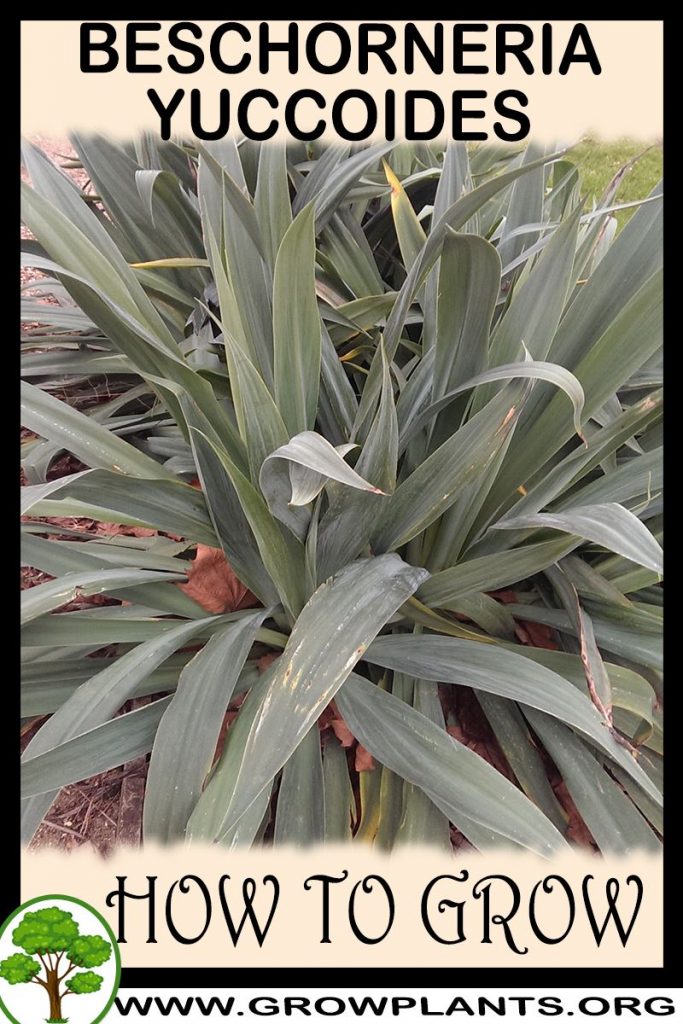
Plant Profile & Key Characteristics
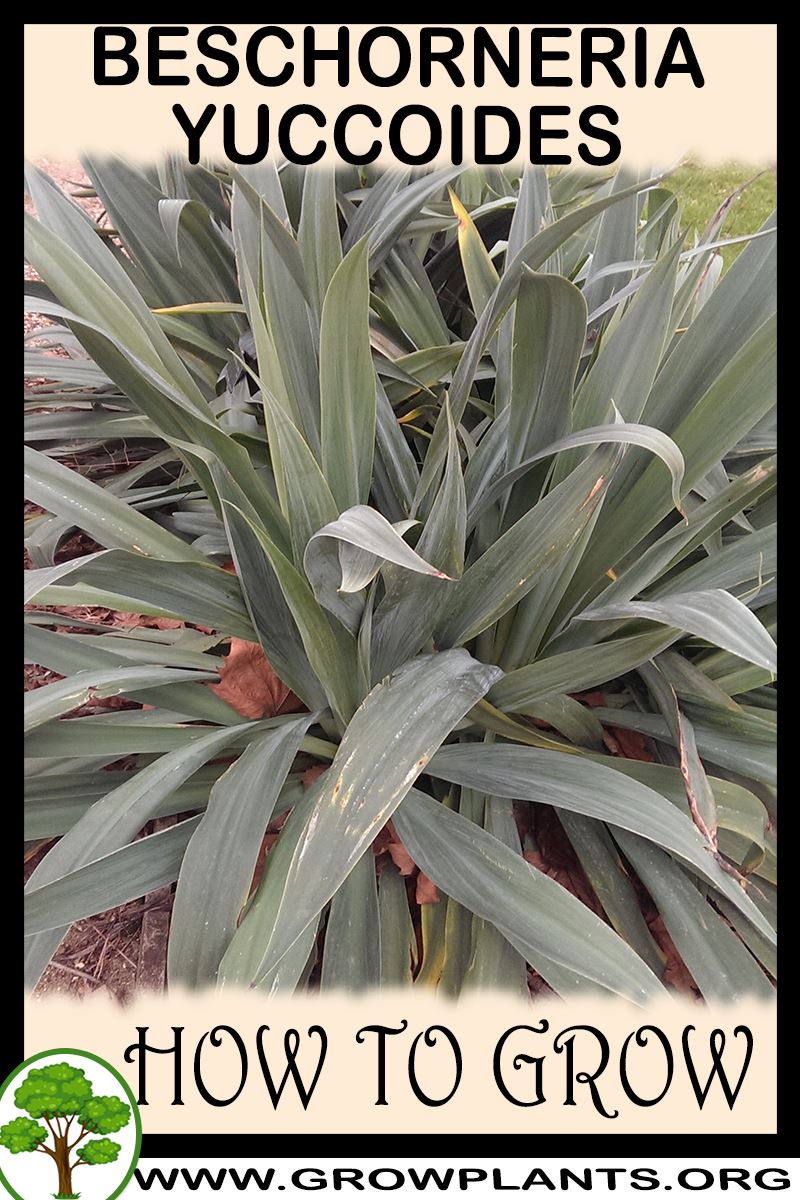
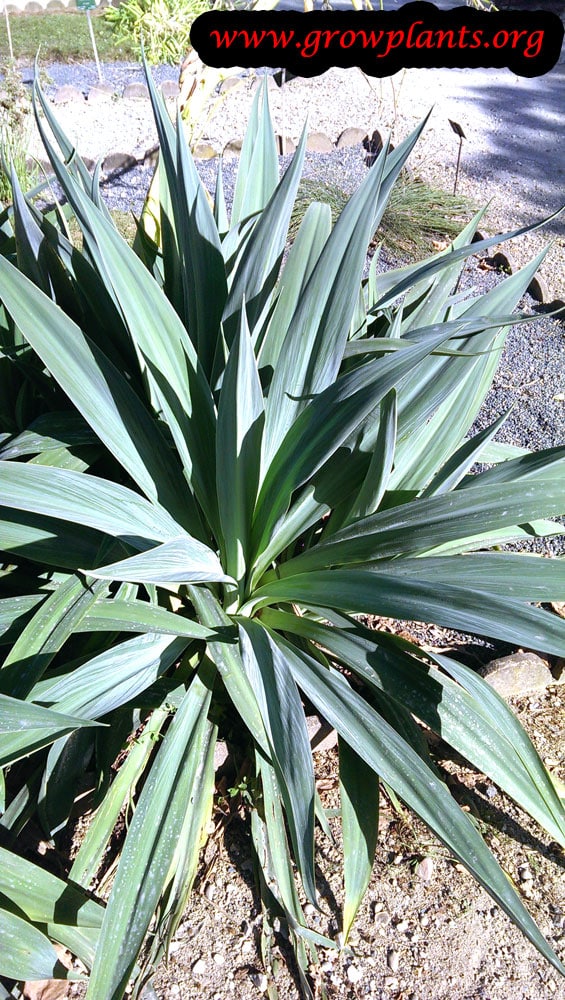
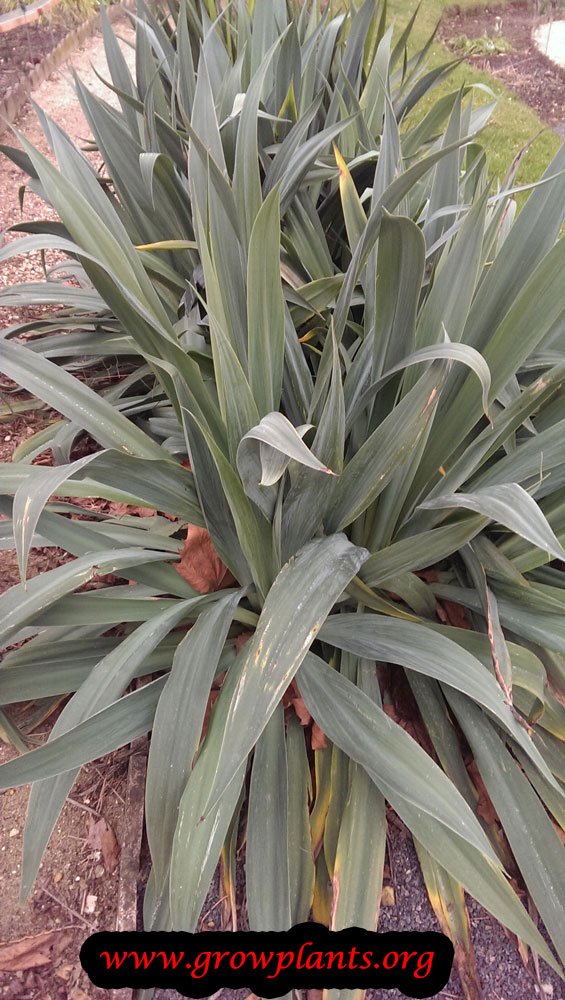
Overview: An evergreen succulent-leaved perennial forming rosettes of fleshy leaves 0.5-2 m (2-6 ft), with flower stalks rising 2-6 m (6-18 ft). It is grown as a drought-tolerant architectural ornamental; each rosette is monocarpic, dying after flowering as offsets take over.
Quick Specifications
| Specification | Attribute |
|---|---|
| Plant Type / Life Cycle | Perennial (monocarpic rosette; dies after flowering, replaced by offsets) |
| Foliage Type | Evergreen |
| Mature Size | Rosette 0.5-2 m (2-6 ft); flower stalk 2-6 m (6-18 ft) |
| Growth Rate | Slow |
| Hardiness | USDA zone 10-12 |
Growth Form & Structure
- Height & Spread: Leaf rosette 0.5-2 m (2-6 ft) with a flower stalk to 2-6 m (6-18 ft); can be container grown.
- Growth Habit & Form: Agave-like rosette of fleshy, spear-shaped leaves.
- Lifespan & Maturity: Slow-growing; each rosette flowers once then dies, replaced by offsets (monocarpic).
Anatomy & Physical Features
- Leaves & Foliage: Fleshy green (sometimes green-and-yellow), spiny-tipped, spear-shaped leaves in rosettes.
- Flower Characteristics: Pink to red bell-shaped flowers on a tall, arching stalk (full detail in the Bloom section).
Primary Uses & Landscape Value
- Functional & Ornamental Roles: Drought-tolerant architectural specimen for xeric and Mediterranean gardens; also a container feature.
Care Guide: Planting, Soil & Watering
Overview: Beschorneria yuccoides is a frost-tender, succulent-leaved rosette perennial (an Agave relative) that thrives in full sun to part shade and, crucially, a sharply drained soil. It is slow-growing and drought-tolerant, needing only light watering.
Quick Care Requirements
| Requirement | Ideal Condition |
|---|---|
| Planting Season | Year-round in frost-free climates; in cooler areas, in spring |
| Growth Rate | Slow |
| Soil Type | Sharply drained (sandy or gritty) |
| Water Need | Low – allow the soil to dry out between waterings |
Planting & Establishment
- Best Planting Season: Plant year-round where frost-free; in cooler zones plant in spring so it establishes before winter.
- How to Plant:
- Hole Preparation: Dig a hole roughly twice the width of the root ball.
- Soil Amendments: Mix in coarse sand or grit for fast drainage; avoid heavy, water-retentive material around the roots.
- Planting Depth: Set the rosette at the same level it grew, keeping the crown clear of soil so it does not rot.
- Growth Speed & Expectations: Slow; forms a 0.5–2 m rosette over years, sending up a tall flowering stalk (2–6 m) when mature – the rosette dies after flowering, with offsets replacing it.
Soil, Watering & Drainage Care
- Soil Mix & Drainage Needs: Wants a gritty, very free-draining mix; in containers ensure ample drainage and never leave it standing in water.
- Watering Schedule & Technique:
- Young / Newly Planted: Water lightly but regularly to settle the roots.
- Established: Drought-tolerant – water sparingly and only once the soil has dried; overwatering causes rot.
- Seasonal Adjustments: A little more in peak summer heat; keep nearly dry in winter, and protect from frost.
Climate, Light & Hardiness
Beschorneria yuccoides is a succulent-rosette perennial suited to warm, dry, frost-free climates; it wants full sun to half shade and has quite limited cold tolerance.
Quick Climate Specifications
| Climate Zones | Desert, subtropical, Mediterranean |
|---|---|
| USDA Hardiness Zones | 10–12 |
| Approx. Survival Minimum | Established rosettes may briefly tolerate a light frost near 0°C (32°F), but foliage is easily damaged |
| Frost Tolerance | Low |
| Light Conditions | Full Sun to Half Shade |
Sunlight & Light Exposure
Optimal Light Setup
Full sun is preferred, especially in cooler-summer or coastal locations, to keep the fleshy rosette compact and encourage flowering.
Direct Sun Requirement
Yes, generally well tolerated thanks to its succulent, drought-adapted leaves.
Shade & Heat Management
Half shade is acceptable in the hottest desert exposures to reduce leaf stress.
Temperature Extremes & Hardiness
USDA Hardiness & Regional Limits
Comfortable in zone 10–12, essentially frost-free climates; the plant's own care notes call simply for 'frost free' conditions.
Cold Damage & Winter Protection
Protect from frost, particularly while plants are young; older, established rosettes handle brief cold slightly better.
Frost Sensitivity
Low frost tolerance; there is no meaningful hardiness to hard freezes or prolonged cold.
Extreme Heat Tolerance
Good; as a desert- and Mediterranean-adapted succulent-type plant it handles heat and dry conditions well.
Wind, Humidity & Microclimate
Dry-Air Tolerance
High, consistent with its drought-tolerant, fleshy-leaved rosette form.
Wind Tolerance
Reasonably good given its sturdy, low rosette structure.
Rainfall & Seasonal Moisture
Adapted to low-rainfall desert and Mediterranean climates with a dry season; wet winter soil combined with cold meaningfully increases rot and cold-damage risk.
Growing in Pots, Balconies & Indoors
Beschorneria is not a houseplant – the grower confirms – but this architectural, agave-like succulent makes a fine container specimen for a sunny, sheltered patio. The evergreen rosette stays under 2 m, though its flower stalk can shoot up to 6 m, and a pot lets you move it to a frost-free spot in winter.
Quick Details
- Container Size: A wide, heavy pot to balance the broad rosette and tall flower spike
- Indoor Suitability: Not a houseplant; a full-sun succulent that needs far more light than a room offers
- Best Spot: Full sun to part shade
- Soil & Drainage: Sharp, free-draining, gritty mix
- Watering in Pots: Low – let it dry well between waterings; keep dry in cold weather
Indoors & On the Windowsill
- Why not indoors: The grower does not treat it as a houseplant – it is a sun-loving rosette that needs bright, open conditions and dislikes the low light and still air of a room.
- Overwintering: Its pot value is portability: shift it to a bright, frost-free porch or greenhouse in winter and keep it on the dry side.
On a Balcony or Patio
- Light & wind: Give it the sunniest, most open spot; a heavy pot and gritty mix stop the tall flower spike from toppling it. It shrugs off heat and reflected warmth.
- Practicalities: Use a wide, low, weighty pot for stability and ensure water drains away fast.
Choosing the Pot, Soil & Long-Term Care
- Pot & drainage: Use a wide, heavy pot with generous drainage holes and no standing-water saucer – this plant hates wet feet. Terracotta is ideal because it breathes and dries out fast.
- Potting mix: A gritty, free-draining mix – loam or potting soil cut with coarse sand, perlite or grit; avoid heavy, water-holding composts.
- Feeding: Feed only lightly through the growing season; container plants lose nutrients to leaching, but this one prefers lean conditions to soft, overfed growth.
- Repotting: Pot up or refresh the mix every couple of years once roots fill the pot; take the chance to check drainage and trim any dead roots.
Fertilizing & Feeding
A light feeder: this slow-growing, drought-tolerant rosette succulent needs only minimal, low-nitrogen feeding, with none at all while it rests.
Quick Fertilizing Specs
| Feeding Level | Light feeder |
|---|---|
| Main Nutrient Priority | Low-nitrogen feeding that favors compact, sturdy rosette growth over soft leaves |
| Best Feeding Period | Spring through the warm active growing season |
| Organic Options | A light compost top-dressing worked into well-drained, gritty soil |
| Reduce/Stop Feeding | Withhold feeding while the rosette rests, and after a rosette flowers and declines |
| Micronutrients | Rarely needed; correct only a diagnosed deficiency |
| Soil pH | Tolerates a range of well-drained soils |
Feeding by Growth Stage
Active rosette growth
Support the fleshy, spiny-tipped rosette of leaves during its main growth period without forcing soft growth.
| Nutrient direction | A low-nitrogen, diluted feeding favors compact, well-anchored rosette growth over lush, weak leaves. |
|---|---|
| Timing | During the warm active growing season. |
| Frequency | An occasional light feeding is plenty for this slow-growing succulent. |
| Fertilizer types | A low-nitrogen fertilizer formulated for succulents or cacti, A light compost top-dressing |
| Precautions | Keep feeding minimal; this drought-adapted rosette is easily pushed into soft, rot-prone growth by overfeeding or overwatering. |
Dormant or resting period
Let the rosette rest without pushing new growth, including after a mature rosette flowers and begins to decline.
| Nutrient direction | None – withhold fertilizer while the plant is resting or after flowering, when the flowering rosette naturally fades. |
|---|---|
| Timing | During cooler weather or any period without active new growth. |
| Frequency | No feeding at this stage. |
| Fertilizer types | No feeding at this stage; do not fertilize until active growth resumes. |
| Precautions | Withhold fertilizer during rest; feeding a dormant or declining rosette wastes nutrients and risks root rot. |
Nutrient Deficiency Signs & Corrections
Older leaves pale and overall growth is unusually slow even for this naturally slow grower.
| Possible causes | very lean, nutrient-poor soil over a long period, root stress limiting uptake, extended time without any feeding or soil refresh |
|---|---|
| Appears first on | older, lower leaves |
| What to check | how long since any feeding or soil refresh, root health, overall growing conditions |
| Possible correction | Apply a light, low-nitrogen fertilizer formulated for succulents. |
Leaves turn soft, translucent, or yellow at the base, with a mushy feel near the crown.
| Possible causes | overwatering, poorly drained soil, overfeeding pushing soft, rot-prone tissue |
|---|---|
| Appears first on | lower leaves and the base of the rosette |
| What to check | soil drainage and moisture, watering frequency, recent fertilizer amounts |
| Possible correction | Improve drainage, reduce watering, and withhold feeding until the plant recovers. |
Leaf tips brown or shrivel despite otherwise adequate care, especially in containers.
| Possible causes | fertilizer salt buildup in container soil, infrequent leaching of the pot, overfeeding a naturally light feeder |
|---|---|
| Appears first on | leaf tips |
| What to check | recent fertilizer amounts, how often the pot is watered through, container drainage |
| Possible correction | Ease off feeding and flush the pot with water to clear accumulated salts. |
Pruning, Training & Seasonal Maintenance
Beschorneria yuccoides is a rosette-forming succulent that is monocarpic at the rosette level: each individual rosette grows for years, eventually sends up a tall flowering stalk, and then that rosette dies once flowering is finished – while offset rosettes around it continue the clump. Because of this, “pruning” is not about shaping or renewing the rosette itself (it has one growing point and cannot be cut back to regrow) but about removing dead leaves, the spent flower stalk, and the dead mother rosette once it has finished its life cycle.
Quick Pruning & Maintenance Specs
| Pruning Tolerance | Low for the rosette itself (single growing point, no heading cuts); High for removing dead/spent material |
| Primary Pruning Window | Year-round, as leaves/stalks/rosettes decline |
| Main Objective | Remove dead leaves, spent flower stalks, and dead mother rosettes; let offsets take over |
| Best Tool Type | Precision tools for spiny leaf tips; loppers or a pruning saw for the thick flower stalk |
Pruning by Plant Age & Size
Newly Established
Remove only clearly dead or damaged leaves; a young rosette needs its full leaf area to build up to flowering size, which can take years.
Young / Formative
No structural training applies – this is a single-growing-point rosette, not a branching plant. There is nothing to head back or train.
Mature / Established
Once a rosette flowers, plan for its removal after the stalk finishes: cut the spent flower stalk near its base, and once the mother rosette itself has died back, remove it to make room for the offset rosettes that will replace it.
Special Growth to Remove
- Dead or damaged leaves – the spear-tipped leaves are spiny, so handle with care/gloves when removing.
- The spent flower stalk (which can reach 2–6m) – remove near its base once flowering and any seed set are finished.
- The dead mother rosette itself, once it has fully died back after flowering.
- Offset rosettes are the plant’s means of renewal after the mother rosette dies and should be retained – remove only to control clump spread.
Tools
- grafting_knife or precision_snips – clean removal of individual dead, spiny-tipped leaves
- loppers or pruning_saw – the thick, tall flower stalk and the dead mother rosette base
Tool Hygiene & Disease Risk
Routine: clean tools are enough. Its recorded pest issues (snails, slugs) are not spread by pruning cuts, so no special disinfection protocol is needed.
Cut Placement & Technique
Cut the flower stalk close to its base once it is clearly finished. When removing the dead mother rosette, cut low, near where it joins the crown/root mass, taking care not to damage neighboring offset rosettes crowded around it.
Heavy Pruning & Rejuvenation
Not applicable in the usual sense – a rosette cannot be cut back to “rejuvenate” it; once it has flowered and died, it is removed rather than pruned hard. Renewal comes from the offsets, not from cutting the old rosette.
Post-Pruning Care
No special aftercare beyond normal watering (this plant wants only a small amount of water); after removing a dead mother rosette, give the surrounding offsets a little extra room and light.
Common Pruning Mistakes
- Cutting into a living rosette’s crown expecting it to resprout – it will not, since it has a single growing point.
- Removing offset rosettes thinking they are unwanted suckers, when they are in fact the plant’s only means of continuing the clump after the mother rosette dies.
- Leaving the spent flower stalk standing indefinitely once it has clearly finished and dried.
When NOT to Prune
Do not cut into a still-living rosette’s growing point. Avoid removing the flower stalk while it may still be setting viable seed, if propagation from seed is wanted.
Recommended Tools (by task)
- Dead spiny leaf removal – grafting_knife or precision_snips: controlled, clean cuts close to sharp foliage.
- Spent flower stalk removal – loppers (thinner stalks) or pruning_saw (thicker, woody-based stalks up to several meters tall).
- Dead mother rosette removal – pruning_saw: the base can be tough and fibrous by the time the rosette has fully died back.
Propagation Guide
Beschorneria yuccoides is best propagated by dividing the basal offsets (“pups”) that the site notes grow up around the mother rosette as it declines after flowering – the site confirms vegetative propagation is the way to reproduce the same plant. Seed is a slower alternative, since this rosette succulent is slow-growing and may take time to reach flowering and offset-producing size.
Quick Propagation Specs
| Best Propagation Method | Division of Basal Offsets |
| Alternative Methods | Seed |
| Propagation Difficulty | Easy to Moderate (division); Difficult (seed, due to slow growth) |
| Seed True-to-Type | Generally true-to-type at the species level |
| Vegetative True-to-Type | Yes |
| Best Propagation Season | All year in frost-free conditions, best in spring in cooler climates (site recommended planting season) |
| Germination Temperature | Warm, roughly 20–27°C (68–81°F) |
Growing from Seed
Sowing Season
Sow in warm conditions, spring being the safest window in cooler climates.
Germination Conditions & Time
Use a free-draining, succulent-type mix; germination and subsequent growth are slow, consistent with this species’ generally slow growth rate.
Seedling Care
Grow seedlings in bright light with minimal water between waterings, as for other drought-tolerant rosette succulents; expect a long juvenile period before the plant reaches flowering and offsetting size.
Division, Offsets, Pups & Suckers
Timing
Offsets typically appear at the base as an older rosette matures or declines – per the site’s own care notes, spent mother rosettes and flower stalks are pruned away, which is also when offsets are most easily accessed.
Minimum Viable Size & Roots-Attached Requirement
Where possible, allow an offset to form its own roots before separating it from the mother plant; pot up rooted offsets individually.
Establishment Care
Let cut surfaces on any unrooted offset callus for a day or two before potting into a free-draining succulent mix, and water sparingly until new roots are established.
Bloom & Flower Guide
Quick Details
- Bloom Season: Spring and summer
- Time to First Bloom: After several years of building up a succulent rosette
- Flower Appearance: Coral-pink to red bell-shaped flowers along a tall, arching stalk
- Edibility: Ornamental only – grown for its dramatic flower spike, not eaten
Detailed Blooming Overview
This agave relative spends several years building a fleshy, spiny rosette, then sends up a tall, arching flower stalk – often 2 to 6 m – hung with coral-pink to red bell-shaped flowers. Flowering is a grand, once-in-a-lifetime event for each rosette: after it blooms, that rosette dies, but the offsets it has formed around its base carry the plant on. It makes a striking spring-to-summer show.
Flower Characteristics
- Pink to red, bell-shaped flowers.
- Carried on a tall, arching stalk that rises well above the leaves.
- The flowering rosette is monocarpic – it blooms once, then dies, replaced by offsets.
Bloom Care & Thinning
- Managing the bloom: Once the display fades, cut down the spent stalk and remove the exhausted mother rosette to give the young offsets room.
Fruit & Uses
Beschorneria yuccoides is grown almost entirely as an ornamental, drought-tolerant rosette plant, but its pink-to-red bell-shaped flowers have a documented traditional use as a cooked vegetable in parts of its native Mexico: the flowers are boiled and then fried. This is a minor, regional use rather than a widespread food crop.
Quick Edible Specs
| Edible Parts | Flowers |
|---|---|
| Main Use(s) | Culinary – cooked flowers, regional/traditional use |
| Eaten Raw or Cooked | Cooked (boiled, then fried) |
| Preparation Required | Cook – boil before frying; do not eat raw |
| Harvest Season | Spring to summer, during the plant’s single bloom period on its tall flower stalk (see Bloom season) |
| Storage | Best used fresh, shortly after picking |
| Safety/Toxicity Caveat | Not widely documented as a food plant; the species is not reported as seriously toxic, but sap/plant parts can cause mild irritation or gastrointestinal upset in sensitive individuals – use only well-cooked flowers and in modest amounts |
Flowers & Flower Buds
The bell-shaped pink or red flowers, borne on the tall stalk that emerges once before the rosette dies back (see the plant’s monocarpic habit under Blooming), are picked while fresh and cooked – traditionally boiled and then fried – rather than eaten raw. Because flowering happens only once per rosette before that rosette dies and is replaced by offsets, harvesting flowers for food removes that rosette’s only bloom and should be weighed against ornamental use (see Pruning for general flower-stalk removal).
Preparation, Uses & Safety
Only the cooked flower is used; raw consumption is not documented and is not advised given the limited safety information available for this species. This remains a minor traditional/regional food use rather than an established culinary crop – treat it as an occasional, well-cooked treat rather than a reliable food source.
Pests, Diseases & Troubleshooting
Overview: Beschorneria is a yucca- and agave-relative in the Asparagaceae, and like most rosette succulents it is close to pest-free. The realistic threats are sap-sucking scale and mealybugs sheltering in the leaf rosette, slugs and snails grazing the leaves, and – decisively – crown and root rot when the soil stays wet. Give it sharp drainage and full sun and it needs very little intervention.
Quick Troubleshooting Overview
| Issue / Pest | Main Symptom | Primary Solution |
|---|---|---|
| Snails & slugs | Grazed marks and holes on the leaves | Handpick at night, grit/copper barriers, iron-phosphate bait |
| Scale insects | Brown or white bumps on leaves, sticky honeydew | Scrape off, horticultural oil, control ants |
| Mealybugs | White cottony masses in the leaf rosette | Alcohol swab, insecticidal soap |
| Crown / root rot | Mushy, blackened base in wet soil | Sharp drainage; withhold water; remove rotted tissue |
Common Pests & Management
- Scale insects (Diaspididae / Coccidae):
- Symptoms: Immobile brown, grey or white bumps on leaves and along the rosette; soft scales leave honeydew and sooty mould, and heavy numbers weaken the plant.
- Prevention & Control: Scrape off or wipe light infestations, prune badly affected leaves, and apply horticultural oil to smother crawlers; control attendant ants.
- Mealybugs (Pseudococcidae):
- Symptoms: White cottony tufts nestled deep in the leaf rosette and around the crown, with honeydew and sooty mould.
- Prevention & Control: Dab with an alcohol-dipped swab, rinse, and treat with insecticidal soap or horticultural oil, repeating to catch protected crawlers.
- Snails and slugs (Cornu / Deroceras spp.):
- Symptoms: Grazed scars, holes and slime trails on the succulent leaves, worst in damp, shaded, mulched sites.
- Prevention & Control: Handpick after dark, ring plants with grit or copper tape, keep mulch off the crown, and use iron-phosphate pellets where needed.
- Agave snout weevil (Scyphophorus acupunctatus):
- Symptoms: In agave relatives this weevil bores into the crown, larvae tunnelling the core so the rosette collapses and rots; possible on Beschorneria by analogy with related genera.
- Prevention & Control: Keep plants unstressed and well-drained, remove and destroy any collapsing rosettes with their grubs, and treat valued specimens preventively where the weevil is known locally.
Diseases & Fungal Issues
- Crown and root rot (Phytophthora / Pythium spp.):
- Symptoms: Soft, blackened, foul-smelling crown and rotted roots after waterlogging or overwatering, leading to rosette collapse – the most likely killer.
- Treatment & Management: Plant in gritty, free-draining soil, water sparingly and never let it sit wet, remove rotted tissue, and lift and re-root healthy offsets if the parent is lost.
- Fungal leaf spot / anthracnose (Colletotrichum / Cercospora spp.):
- Symptoms: Brown or black spots and blotches on leaves in prolonged humidity or after cold, wet damage.
- Treatment & Management: Remove affected leaves, improve airflow, avoid overhead watering, and apply copper only if it persists.
Growing Difficulties & Abiotic Problems
- Overwatering rot:
- Cause & Symptoms: Too-frequent watering or heavy soil rots the crown and roots.
- Correction Strategy: Water only when the soil dries well, use a gritty succulent mix, and give full sun and airflow.
- Cold / frost damage:
- Cause & Symptoms: Hard frost damages the soft rosette and flower spike.
- Correction Strategy: Site in a sheltered, sunny spot and protect in unusually cold spells; it tolerates only light frost.
- Sunburn on shade-grown plants:
- Cause & Symptoms: Plants moved abruptly into strong sun can scorch.
- Correction Strategy: Acclimatise gradually to full sun.
What Helps – Products & Tools
For this succulent keep horticultural oil and insecticidal soap for scale and mealybugs, iron-phosphate bait with grit or copper barriers for slugs and snails, and copper fungicide only for occasional leaf spot. The decisive ‘tool’ is cultural – gritty, sharply drained soil and restrained watering to prevent crown rot.