

Plant Profile & Key Characteristics
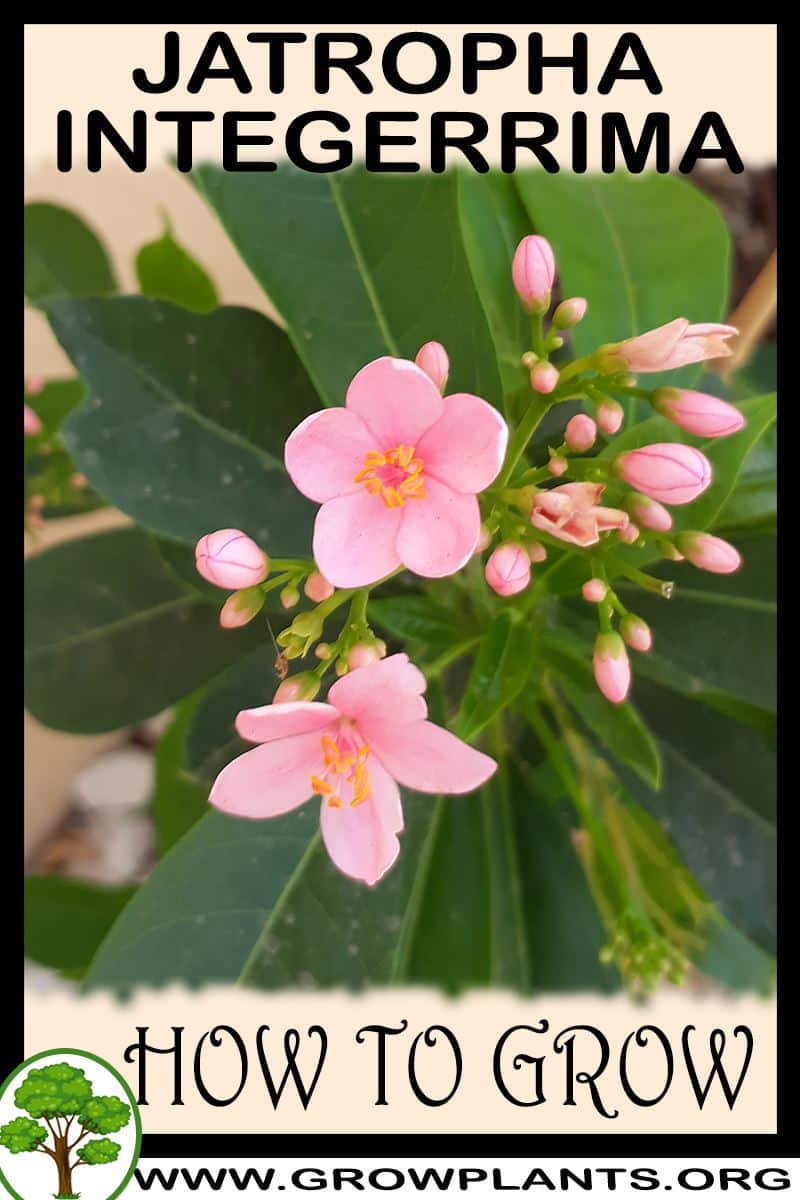
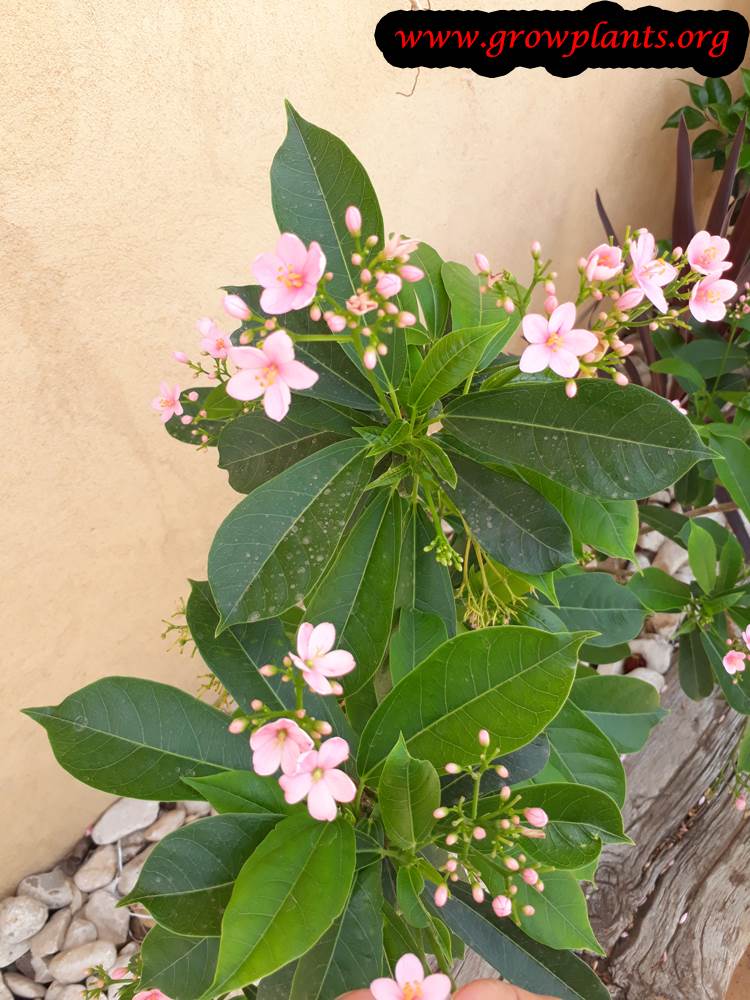
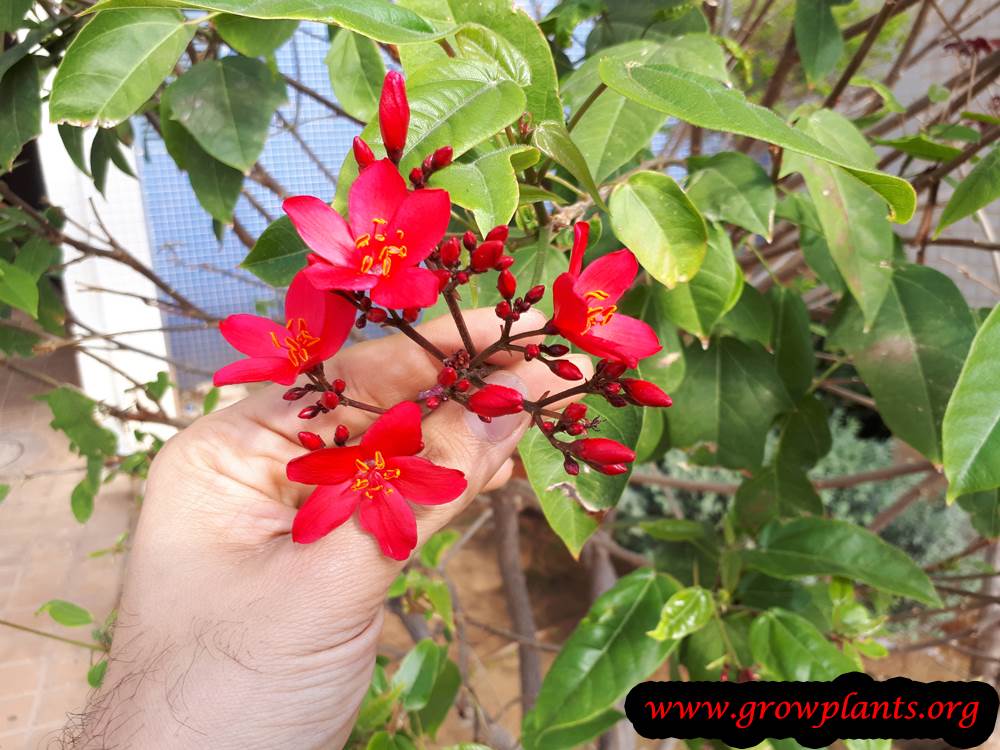
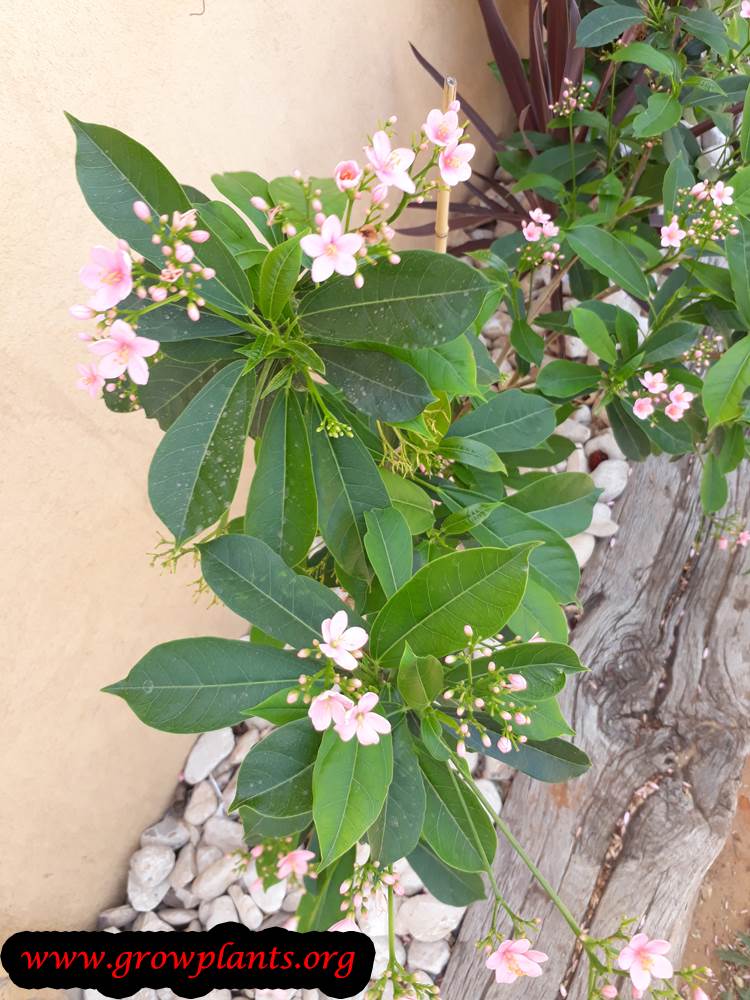
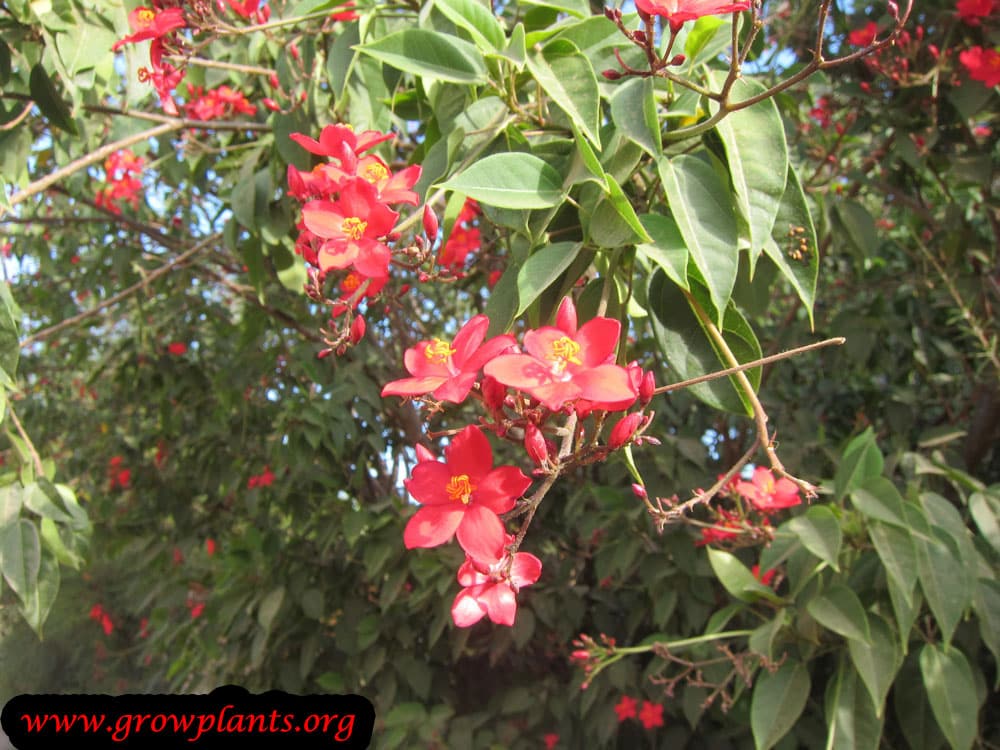
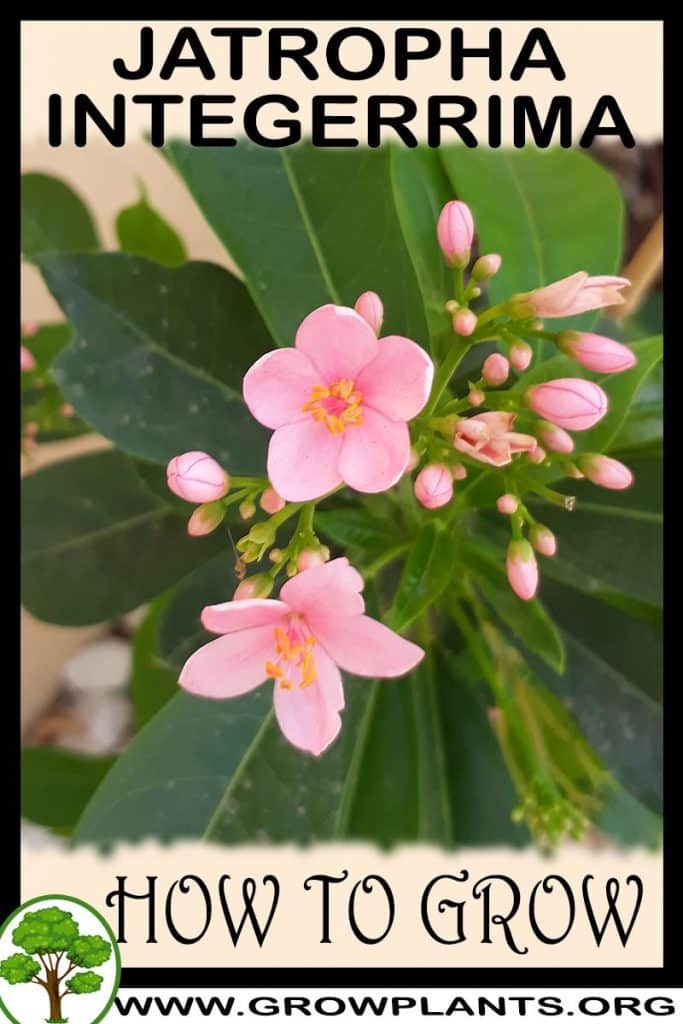
Overview: Jatropha integerrima (spicy jatropha / peregrina) is an evergreen shrub to small tree 2–5 m (6–15 ft) tall, grown for its near year-round clusters of red to pink flowers. It is a fast-growing tropical ornamental, but all parts are poisonous.
Quick Specifications
| Specification | Attribute |
|---|---|
| Plant Type / Life Cycle | Perennial |
| Foliage Type | Evergreen |
| Mature Size | 2–5 m tall (6–15 ft) |
| Growth Rate | Fast |
| Toxicity | Toxic – all parts, especially the seeds, are poisonous (contain curcin); the sap can irritate skin |
| Hardiness | USDA zones 10+ |
Growth Form & Structure
- Height & Spread: A shrub to small tree 2–5 m (6–15 ft); can be grown in large containers.
- Growth Habit & Form: Evergreen shrub or small multi-stemmed tree with an open, rounded canopy.
- Lifespan & Maturity: Fast-growing tropical perennial that flowers almost year-round in warm climates.
Anatomy & Physical Features
- Leaves & Foliage: Green, elliptic to three-lobed leaves.
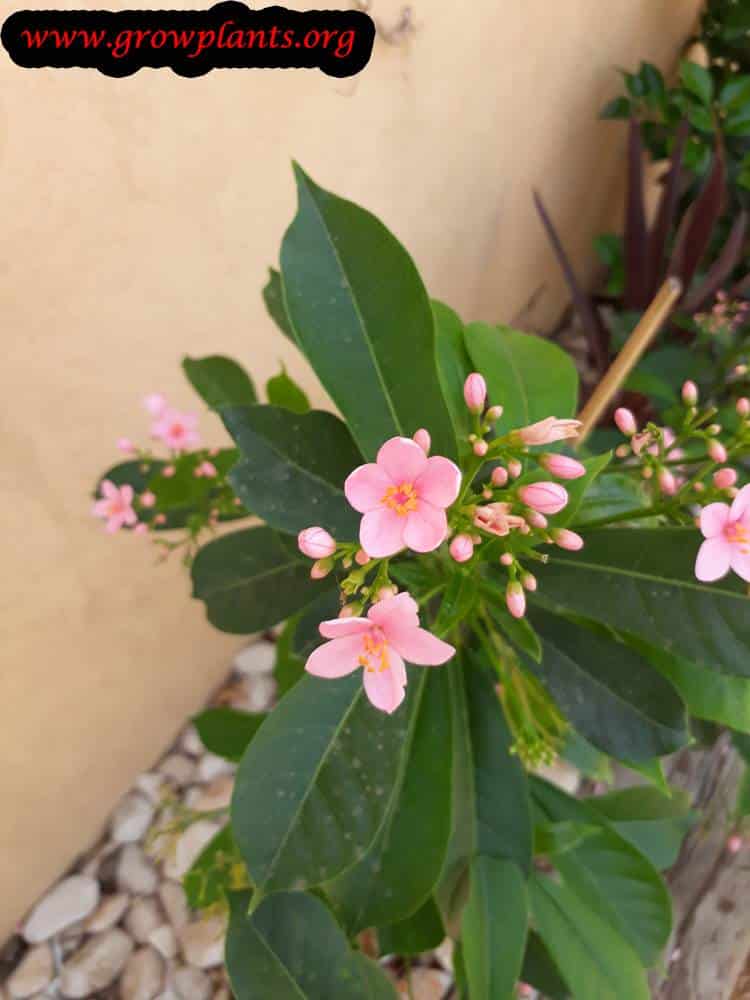
- Flower Characteristics: Star-shaped red to pink five-petalled flowers in clusters, borne almost continuously.
Primary Uses & Landscape Value
- Functional & Ornamental Roles: Ornamental flowering shrub and informal hedge; attracts butterflies and other pollinators.
Care Guide: Planting, Soil & Watering
Overview: Spicy jatropha thrives in warm, frost-free conditions (hardiness zone 10 and up) under full sun to light shade. It wants a well-draining soil and steady, moderate moisture, and as a fast grower it keeps flowering through most of the warm season.
Quick Care Requirements
| Requirement | Ideal Condition |
|---|---|
| Planting Season | Year-round in frost-free zones (10+); in cooler areas plant in spring after the last frost, avoiding winter |
| Growth Rate | Fast |
| Soil Type | Well-draining, fertile soil |
| Water Need | Moderate – water regularly but let the surface dry slightly between waterings |
Planting & Establishment
- Best Planting Season: In frost-free climates it can go in the ground almost any time of year; where winters are cool, plant in spring once the risk of frost has passed so it establishes in warmth.
- How to Plant:
- Hole Preparation: Dig a hole about twice the width of the root ball and the same depth, loosening the surrounding soil so young roots can spread easily.
- Soil Amendments: Work a little compost into the backfill, and on heavy ground add grit or coarse sand to sharpen drainage.
- Planting Depth: Set the plant so the top of the root ball sits level with the surrounding soil; keep the stem base at grade and do not bury it.
- Growth Speed & Expectations: A fast grower in warmth, quickly filling out as an ornamental shrub or informal hedge.
Soil, Watering & Drainage Care
- Soil Mix & Drainage Needs: It needs sharp drainage to avoid root rot; in containers use a free-draining mix and make sure there are ample drainage holes.
- Watering Schedule & Technique:
- Young / Newly Planted: Water newly planted specimens every couple of days at first to settle them in, keeping the root zone lightly moist.
- Established: Once rooted, water deeply but allow the top few cm to dry before watering again.
- Seasonal Adjustments: Ease off watering in the cool season when growth slows, and water more often during hot, dry spells.
Climate, Light & Hardiness
Spicy jatropha (peregrina) is a tropical-to-subtropical flowering shrub suited to tropical, Mediterranean, and subtropical climates, growing well in full sun to half shade. It is frost-tender, and in cooler climates growth and flowering pause through winter rather than continuing year-round.
Quick Climate Specifications
| Climate Zones | Tropical, Mediterranean, or subtropical climates |
|---|---|
| USDA Hardiness Zones | 10 and warmer |
| Frost Tolerance | None – Very Low |
| Light Conditions | Full sun or half shade |
Sunlight & Light Exposure
Optimal Light Setup
Grows well in full sun to half shade, producing the most flower clusters with good light.
Temperature Extremes & Hardiness
USDA Hardiness & Regional Limits
Reliable outdoors only in zone 10 and warmer; in cooler climates it is best grown as a container plant that can be moved to protection for winter.
Cold Damage & Winter Protection
Site guidance specifically avoids planting or transplanting in winter in cold climates, and flowering pauses through winter outside of consistently warm zones, both signs of this species' cold sensitivity.
Frost Sensitivity
Frost-sensitive; not suited to outdoor culture where freezing occurs.
Wind, Humidity & Microclimate
Microclimate Recommendations
A warm, sheltered, frost-free site suits this shrub best; in marginal climates, container culture with winter protection extends its growing range.
Growing in Pots, Balconies & Indoors
This tropical flowering shrub is not a houseplant, but the grower confirms it grows well in a container – a fine warm-climate patio or balcony plant that flowers freely in a sunny pot.
Quick Details
- Container Size: A medium to large pot to support a 2-5 m shrub kept pruned
- Indoor Suitability: Not an indoor plant – it needs strong light and warmth
- Best Spot: Full sun to half shade, warm and sheltered from frost
- Soil & Drainage: Well-aerated, free-draining mix
- Watering in Pots: Average – keep lightly moist, never waterlogged
Indoors & On the Windowsill
- Houseplant reality: Not a true houseplant; indoors it lacks the light and warmth to flower. A very bright, warm sunroom is the closest a room can come.
- Overwintering: Frost-tender – in cold climates bring the pot into a warm, bright space over winter and keep it on the dry side.
- Safety: All parts are toxic and the seeds especially so – keep it away from children and pets, indoors or out.
On a Balcony or Patio
- Light & wind: Give it the sunniest, warmest, most sheltered spot. Pots on a balcony or patio dry fast – walls, railings and paving reflect heat – so check moisture often and water more in warm, windy spells. Remember a full pot is heavy and sheds run-off when watered.
- Keep it pruned: Prune to keep a tidy, manageable shrub in the pot and to encourage flowering.
Choosing the Pot, Soil & Long-Term Care
- Pot & drainage: Use a pot with strong drainage holes and skip a standing-water saucer so the roots never sit wet – that is the fastest route to root rot. Terracotta breathes and dries faster, while glazed or plastic pots hold moisture longer.
- Potting mix: Fill with a well-aerated, organic mix – a quality potting mix, or peat/coir loosened with perlite or vermiculite.
- Watering in pots: Average and even; let the surface dry slightly between waterings.
- Feeding: Potted plants need feeding a little more often than those in the ground, as regular watering steadily leaches nutrients away – feed lightly through the growing season.
- Repotting: Refresh the mix and pot up about every couple of years, lightly trimming roots and top growth to keep it in balance.
Fertilizing & Feeding
A moderate feeder during its long flowering season: balanced feeding with adequate nitrogen, not a high-phosphorus bloom product, sustains this shrub’s characteristically extended flush of flowers.
Quick Fertilizing Specs
| Feeding Level | Moderate feeder |
|---|---|
| Main Nutrient Priority | Balanced feeding with adequate nitrogen to support both foliage and flowering |
| Best Feeding Period | Spring through the warm flowering season |
| Organic Options | Compost or aged organic matter worked into the root zone |
| Reduce/Stop Feeding | Held off through the cooler rest period at the cooler edge of its climate range |
| Micronutrients | Usually met by a complete fertilizer; correct only a diagnosed issue |
| Soil pH | Tolerates a wide range; well-drained soil matters more than pH |
Feeding by Growth Stage
Spring flush of growth
Fuel fresh leafy growth as the shrub breaks from any cool-season slowdown and heads into its main growing season.
| Nutrient direction | A balanced, complete fertilizer with adequate nitrogen supports healthy foliage and sets the plant up for strong flowering. |
|---|---|
| Timing | As new growth resumes in spring or the start of the warm season. |
| Frequency | A light feeding at the start of active growth is usually enough to kick off the season. |
| Fertilizer types | A balanced, complete fertilizer for flowering shrubs, Compost or aged organic matter worked into the root zone |
| Precautions | Avoid heavy nitrogen alone: balanced feeding with adequate nitrogen supports both foliage and the flowering that follows, rather than pushing leafy growth at the expense of blooms. |
Extended flowering season
Support this shrub’s characteristically long, often near-continuous flowering display through the warm season.
| Nutrient direction | Continued balanced feeding, rather than a specialty high-phosphorus product, is what sustains strong flowering over an extended season. |
|---|---|
| Timing | Through the warm flowering season, which for this species can run for much of the year in a suitably warm climate. |
| Frequency | Light, regular feeding through the bloom season supports the plant’s habit of flowering in flushes over a long period. |
| Fertilizer types | A balanced, complete fertilizer for flowering shrubs, A light compost topdressing to sustain organic matter |
| Precautions | There is no need to switch to a specialty high-phosphorus product for bloom; balanced feeding with adequate nitrogen is what actually drives flowering in most garden shrubs. |
Cool-season rest
Let the plant rest through cooler weather at the cooler edge of its climate range, when flowering and growth naturally pause.
| Nutrient direction | No feeding is needed while the plant is not in active growth or bloom. |
|---|---|
| Timing | During the cooler part of the year in climates at the cooler edge of this shrub’s range, when it is not in flower. |
| Frequency | No feeding during this rest period; resume only once active growth and flowering return. |
| Fertilizer types | No feeding at this stage; withhold fertilizer until active growth and flowering resume. |
| Precautions | Withhold fertilizer during this rest; feeding a plant that has paused growth wastes nutrients and can encourage weak, out-of-season growth. |
Nutrient Deficiency Signs & Corrections
Overall foliage pales and new growth slows, with fewer new flower clusters forming.
| Possible causes | low soil nitrogen, poor or depleted soil, competition from nearby plants |
|---|---|
| Appears first on | older, lower leaves |
| What to check | feeding history, soil organic matter, overall plant vigor and flowering compared to previous seasons |
| Possible correction | Apply a balanced complete fertilizer and improve soil organic matter. |
The plant produces lush green growth but few or no flower clusters.
| Possible causes | excess nitrogen from overfeeding, which favors leafy growth over flowering, insufficient light, since this species flowers best in full sun to light shade, the plant being young or recently pruned hard, delaying bloom |
|---|---|
| Appears first on | whole-plant flowering pattern rather than a specific leaf location |
| What to check | recent feeding amounts and type, how much direct light the plant receives, recent pruning history and plant age |
| Possible correction | Ease off nitrogen-heavy feeding, confirm the plant gets adequate light, and be patient with young or recently pruned plants; do not add extra phosphorus in an attempt to force bloom. |
New leaves at the shoot tips turn yellow while the veins remain green, and older leaves stay a normal color.
| Possible causes | alkaline soil limiting iron availability, waterlogged or poorly drained soil, root stress from recent transplanting or container confinement |
|---|---|
| Appears first on | newest leaves at shoot tips |
| What to check | soil pH, drainage and recent watering, container root condition if potted |
| Possible correction | Correct drainage and pH first; apply a chelated iron product per its label if yellowing persists. |
Pruning, Training & Seasonal Maintenance
Jatropha integerrima is a fast-growing, near-continuously flowering evergreen shrub commonly kept as a hedge or shaped specimen, so it tolerates fairly frequent shaping and responds with fresh flowering growth after each trim. Because it reblooms on new growth almost year-round in its frost-free (10+) range, pruning timing mainly affects how quickly the next flower flush appears rather than sacrificing a whole season’s bloom. Its main objective is size, density, and hedge-line control while keeping flowering wood renewed.
Quick Pruning & Maintenance Specs
| Pruning Tolerance | Moderate–High |
| Primary Pruning Window | Warm growing season (spring–summer flush) |
| Secondary Maintenance Window | Light touch-ups nearly year-round in truly frost-free climates |
| Typical Frequency | 2–3 shapings per growing season for hedges; lighter ongoing tidying for specimens |
| Main Objective | Density/size control and repeat flowering |
| Young Plant Priority | Pinch to force low branching before it gets leggy |
| Mature Plant Priority | Remove oldest/leggiest stems to keep flowering wood young |
| Best Tool Type | Bypass secateurs for routine cuts; hedge shears only if formally maintained as a sheared hedge row |
| Avoid Heavy Pruning During | Cold snaps at the cool edge of its hardiness range, and right before a period the plant is wanted for peak flower display |
Pruning by Plant Age & Size
Newly Established
Minimal – remove only transplant-damaged growth and let the young plant establish.
Young / Formative
Open multi-leader shrub form: pinch growing tips to force low branching, since this fast grower can otherwise become leggy quickly. If grown as a hedge, begin light shaping once plants have filled in at the desired spacing.
Mature / Established
Renewal-style thinning of the oldest, leggiest stems each year to keep flowering wood young and vigorous, alongside routine size/shape maintenance.
Seasonal Pruning Schedule
Ongoing
Objective: sustain the near-continuous bloom cycle. What to remove: leggy overextended shoots and, optionally, spent flower clusters for tidiness. What NOT to remove: all current flowering growth at once on a specimen valued for display. Expected response: a fresh flowering flush typically follows a shaping cut within the warm season. In marginal areas near the cooler edge of its 10+ range, a light trim before any expected cool spell reduces soft, cold-exposed new growth.
Flowering & Fruiting Wood
Flower clusters form on new growth at branch tips; because the plant reblooms on new flushes almost continuously in warm climates, a shaping cut made after one bloom flush stimulates the next round of flowering wood rather than costing a season’s display, unlike a true old-wood bloomer.
Structural Pruning & Training
Select well-spaced shoots for a balanced hedge or shrub form; remove crossing or rubbing stems; use heading cuts on overly vigorous shoots for height/spread control; thin the interior occasionally so light reaches lower growth and flowering is even top to bottom.
Special Growth to Remove
Leggy, overextended fast-growing shoots that unbalance the form. Spent flower clusters are not critical to remove but can be lightly deadheaded for tidiness.
Container & Small-Space Pruning
Container growing is supported for this species. Potted specimens need more frequent pinching than in-ground plants to stay compact given the plant’s fast growth, and canopy size should be kept in balance with the pot’s root volume – an oversized canopy on a root-restricted plant stresses it more than the same cut would in the ground.
Tools
- Bypass secateurs – most routine shaping and deadheading cuts.
- Loppers – thicker older basal stems on a renewal cut.
- Hedge shears – only if the plant is being maintained as a clipped hedge line (it is documented as commonly used this way); avoid shears on specimen plants where selective flowering display matters.
Tool Hygiene & Disease Risk
Routine: clean, sharp tools are sufficient – no notable transmissible disease is documented for this species. Jatropha sap can be a skin/eye irritant, so wear gloves when pruning and wipe blades afterward to keep sap residue off the cutting edge.
Cut Placement & Technique
Heading cuts are acceptable for hedge shaping; use thinning cuts back to a node or branch junction for larger renewal cuts; angle cuts slightly to shed water.
Heavy Pruning & Rejuvenation
Well tolerated given the plant’s fast growth rate – an overgrown or leggy specimen can be cut back by roughly a third to half during the warm growing season and typically regrows vigorously with resumed flowering within one flush cycle. On a stressed plant, spread a severe rejuvenation over two seasons rather than doing it all at once.
Post-Pruning Care
Keep soil consistently moist through the regrowth flush; sunburn is not a major concern since the plant is naturally full-sun adapted; watch tender new regrowth for common sap-feeding pests.
Common Pruning Mistakes
- Shearing the same hedge line repeatedly without ever thinning, which builds a dense outer shell over an increasingly bare interior.
- Making uneven partial cuts on a fast grower, leaving a permanently lopsided plant.
- Pruning heavily right before an unexpected cold snap at the cool edge of its hardiness range.
When NOT to Prune
Avoid major pruning just before a cold event in marginal (near-10) climates. Avoid removing all current bloom right before a period the plant is being grown for flower display as a specimen.
Recommended Tools (by task)
- Routine shaping/deadheading, any age – bypass_secateurs: clean cuts on the soft-to-semi-woody new growth that carries the flowers.
- Mature specimen renewal cuts – loppers: handles thicker older basal stems that secateurs can’t cut cleanly.
- Formal hedge maintenance – hedge_shears: only where the plant is kept as a clipped hedge row, matching its documented use as an ornamental hedge plant.
Pruning Troubleshooting
| Problem | Possible Cause | What to Check | Corrective Action |
| Sparse flowering after repeated shearing | Shearing keeps removing the new growth before flower clusters open | Compare the timing of the last shear against the bloom cycle | Shift from surface shearing to shaping cuts made just after a bloom flush finishes |
| Bare or hollow hedge interior | Hedge has only ever been sheared at the surface, never thinned | Look inside the hedge for dead, leafless zones | Make selective thinning cuts to open the canopy and let light reach the interior |
Propagation Guide
Jatropha integerrima is easiest to propagate from semi-hardwood stem cuttings, which root readily and quickly reproduce the parent plant’s flower color; seed is also a straightforward, generally true-to-type option since the site notes vegetative propagation is not required. Overall difficulty is Easy.
Quick Propagation Specs
| Best Propagation Method | Semi-hardwood stem cuttings |
| Alternative Methods | Seed |
| Propagation Difficulty | Easy |
| Seed True-to-Type | Usually true-to-type for the species form; named color selections are best kept true by cuttings |
| Vegetative True-to-Type | Yes |
| Best Propagation Season | Warm months; the site notes planting is fine all year except winter in cold climates |
| Seed Germination Time | Often within a couple of weeks under warm conditions |
| Cutting Rooting Time | Commonly a few weeks under warm conditions |
| Germination Temperature | Roughly 24–30°C (75–86°F) |
Growing from Seed
Seed Handling & Viability
Use reasonably fresh seed for best results.
Sowing Season
Warm months; avoid sowing in winter where climates are cold, matching the site’s planting-season guidance.
Sowing Depth & Orientation
Sow shallowly, just covering the seed.
Germination Conditions
Warm, humid conditions germinate this species fastest.
Germination Time
Often within a couple of weeks under warm conditions.
Seedling Care
Bright light and protection from cold are important while seedlings are young.
Stem Cuttings
Cutting Type
Semi-hardwood tip cuttings.
Best Timing
Warm growing season, avoiding cold months.
Cutting Preparation
Like other Euphorbiaceae, cut ends exude a milky sap; letting the cut end dry and callus briefly before inserting it can help reduce rot.
Rooting Setup
Well-drained, warm, humid rooting medium.
Rooting Hormone
Optional – this species typically roots readily without it, though hormone can improve consistency.
Rooting Time
Often just a few weeks.
Bloom & Flower Guide
Quick Details
- Bloom Season: Most of the year in warm climates; it pauses in winter where it is cool
- Flower Appearance: Star-shaped red to pink flowers with five petals, carried in loose clusters above the foliage
- Edibility: Not edible – the sap is a skin and eye irritant and all parts, especially the seeds, are poisonous if eaten
Detailed Blooming Overview
Peregrina is grown above all for its flowers, and in a warm climate it is rarely without them – it blooms almost year-round, easing off only through winter where nights turn cool. The bright five-petalled stars are held in airy clusters and draw butterflies and hummingbirds throughout the season.
Flower Characteristics
- Red to pink, five-petalled, and star-shaped.
- Carried in open clusters held above the leaves.
- Long blooming and attractive to butterflies and hummingbirds.
Bloom Care & Thinning
- Keeping it in bloom: Full sun, warmth, and light regular feeding keep the flowers coming; a light trim keeps the shrub tidy and encourages fresh flushes.
- Pollination: Butterflies and hummingbirds are the main visitors to the open flowers.
- Safety: Wear gloves when pruning – the milky sap irritates skin and eyes – and keep the seeds well away from children and pets, as they are the most poisonous part.
Pests, Diseases & Troubleshooting
Overview: Spicy jatropha is a tough, largely trouble-free Euphorbiaceae shrub whose few problems are sap-sucking insects under cover or stress and root rot in soggy soil. Keep it warm, in free-draining soil and full sun, and pests rarely take hold; note the milky sap is a skin and eye irritant, so wear gloves when pruning.
Quick Troubleshooting Overview
| Issue / Pest | Main Symptom | Primary Solution |
|---|---|---|
| Scale & mealybugs | White fluff or brown bumps on stems, sticky leaves | Wipe off / prune; horticultural or neem oil |
| Aphids | Distorted new growth, honeydew | Water jet; insecticidal soap |
| Spider mites | Stippled, dull leaves and webbing in dry heat | Raise humidity; hose foliage; miticidal oil |
| Whiteflies | Tiny white flies, yellowing leaves | Yellow sticky traps; insecticidal soap |
| Root rot | Wilting, yellowing, mushy base in wet soil | Improve drainage; water less; well-drained mix |
| Leaf drop | Sudden leaf loss after cold or dryness | Keep warm and evenly watered; shelter from cold |
Common Pests & Management
- Mealybugs (Planococcus citri):
- Symptoms: Cottony white masses in leaf axils and on stems, sticky honeydew and stunted, distorted shoots – most common on indoor or greenhouse plants.
- Prevention & Control: Dab with an alcohol swab, hose the plant, and treat lingering colonies with insecticidal soap or neem oil; avoid heavy nitrogen feeding.
- Scale insects (Coccus / Aspidiotus spp.):
- Symptoms: Fixed brown or tan bumps along stems and midribs, sticky foliage and sooty mold in bad cases.
- Prevention & Control: Prune the worst wood, scrape off light infestations, and smother the rest with horticultural or neem oil applied in the evening.
- Aphids (Aphis spp.):
- Symptoms: Soft-bodied insects on tender tips and flower stalks, curled new leaves and honeydew.
- Prevention & Control: Blast off with water, encourage ladybirds and lacewings, and use insecticidal soap for persistent clusters.
- Spider mites (Tetranychus urticae):
- Symptoms: Fine pale stippling, a dull bronzed cast and faint webbing under leaves in hot, dry, dusty conditions.
- Prevention & Control: Raise humidity and rinse the foliage; treat with insecticidal soap or a miticidal oil and relieve drought stress.
- Whiteflies (Bemisia / Trialeurodes spp.):
- Symptoms: Clouds of tiny white flies when disturbed, yellowing leaves and sticky honeydew.
- Prevention & Control: Hang yellow sticky traps and spray insecticidal soap on leaf undersides where nymphs settle.
Diseases & Fungal Issues
- Root & crown rot (Phytophthora / Pythium spp.):
- Symptoms: Wilting despite moist soil, yellowing, and a soft, blackening base – the main killer of this plant, caused by waterlogging.
- Treatment & Management: Plant in fast-draining soil, let it dry between waterings, never leave it standing in a saucer, and discard plants rotted at the crown.
- Leaf spot (Cercospora / Colletotrichum spp.):
- Symptoms: Brown or dark spots on leaves, sometimes with yellow halos, worst in warm, wet, crowded conditions.
- Treatment & Management: Remove affected leaves, water at the base, improve airflow, and use a copper fungicide only if it keeps spreading.
Growing Difficulties & Abiotic Problems
- Cold damage:
- Cause & Symptoms: Blackened, wilting or dropped leaves and dieback below about 10°C; this is a frost-tender tropical.
- Correction Strategy: Grow in a warm, sheltered spot or as a container plant that can be moved under cover in cool weather.
- Leaf drop:
- Cause & Symptoms: Sudden leaf loss from cold drafts, drying out, or a sharp change in light or position.
- Correction Strategy: Keep warm and evenly moist, shelter from wind, and acclimate gradually after any move.
- Chlorosis:
- Cause & Symptoms: Yellowing leaves from waterlogging or, occasionally, iron shortage in alkaline soil.
- Correction Strategy: Correct drainage first; if pH is high, apply chelated iron and acidic organic matter.
What Helps – Products & Tools
Jatropha needs little intervention: insecticidal soap, neem or horticultural oil covers scale, mealybugs, aphids, mites and whiteflies, yellow sticky traps monitor whiteflies, and a copper fungicide handles occasional leaf spot. The real safeguard is sharp drainage against root rot. Wear gloves – the sap is irritant – and spray oils in the evening to spare pollinators.