Plant Profile & Key Characteristics
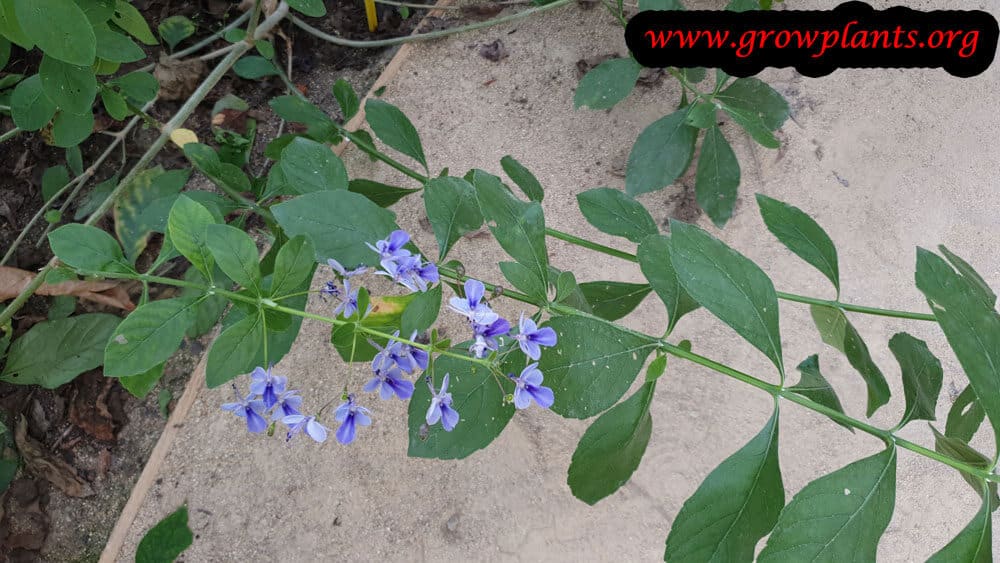
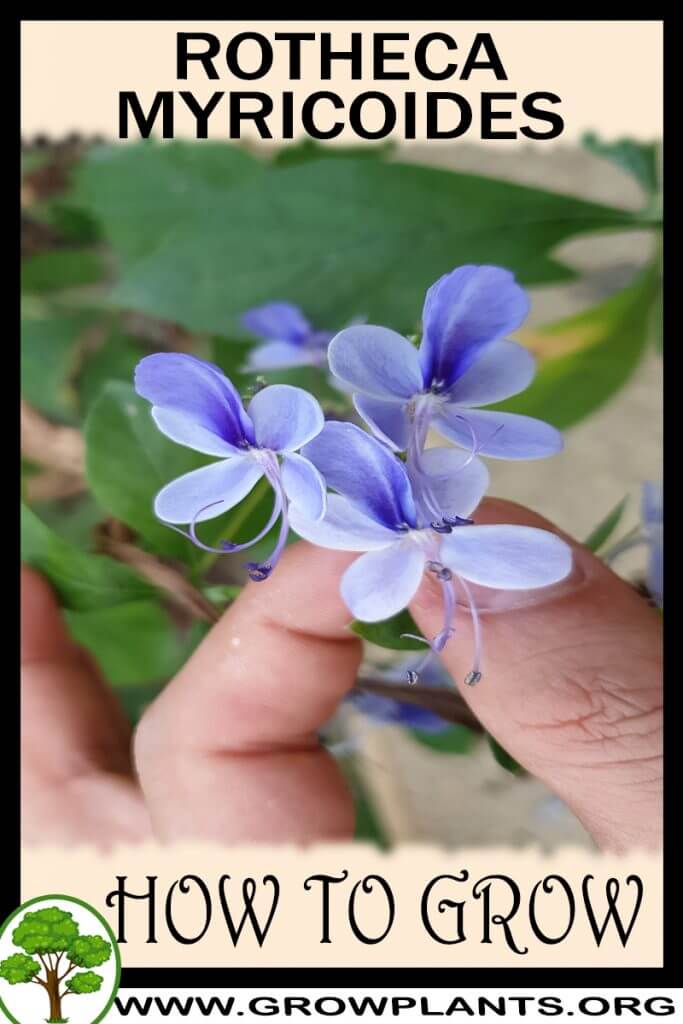
Overview: An evergreen shrub that can also scramble like a vine, about 50-130 cm (1.5-4 ft) tall, grown as an ornamental and informal hedge. It is prized for its distinctive butterfly-shaped blue-and-white flowers.
Quick Specifications
| Specification | Attribute |
|---|---|
| Plant Type / Life Cycle | Perennial (evergreen shrub) |
| Foliage Type | Evergreen |
| Mature Size | 50-130 cm (1.5-4 ft) tall |
| Growth Rate | Fast to moderate |
| Hardiness | USDA zones 9+ |
Growth Form & Structure
- Height & Spread: A shrub of 50-130 cm (1.5-4 ft) in the ground that can also be trained on support as a loose vine; grows well in containers.
- Growth Habit & Form: An evergreen, shrub-to-scandent plant of fast to moderate vigour, pruned mainly for shape in the cooler season.
- Lifespan & Maturity: A tender perennial that establishes quickly and flowers over a long warm season.
Anatomy & Physical Features
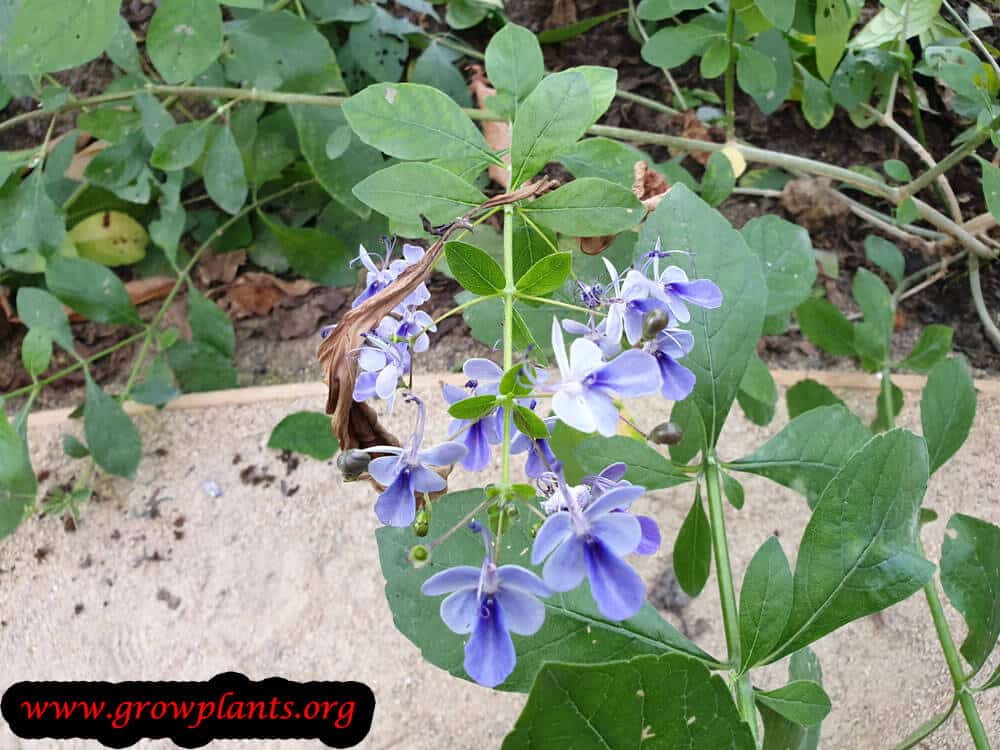
- Leaves & Foliage: Green leaves of oval shape.
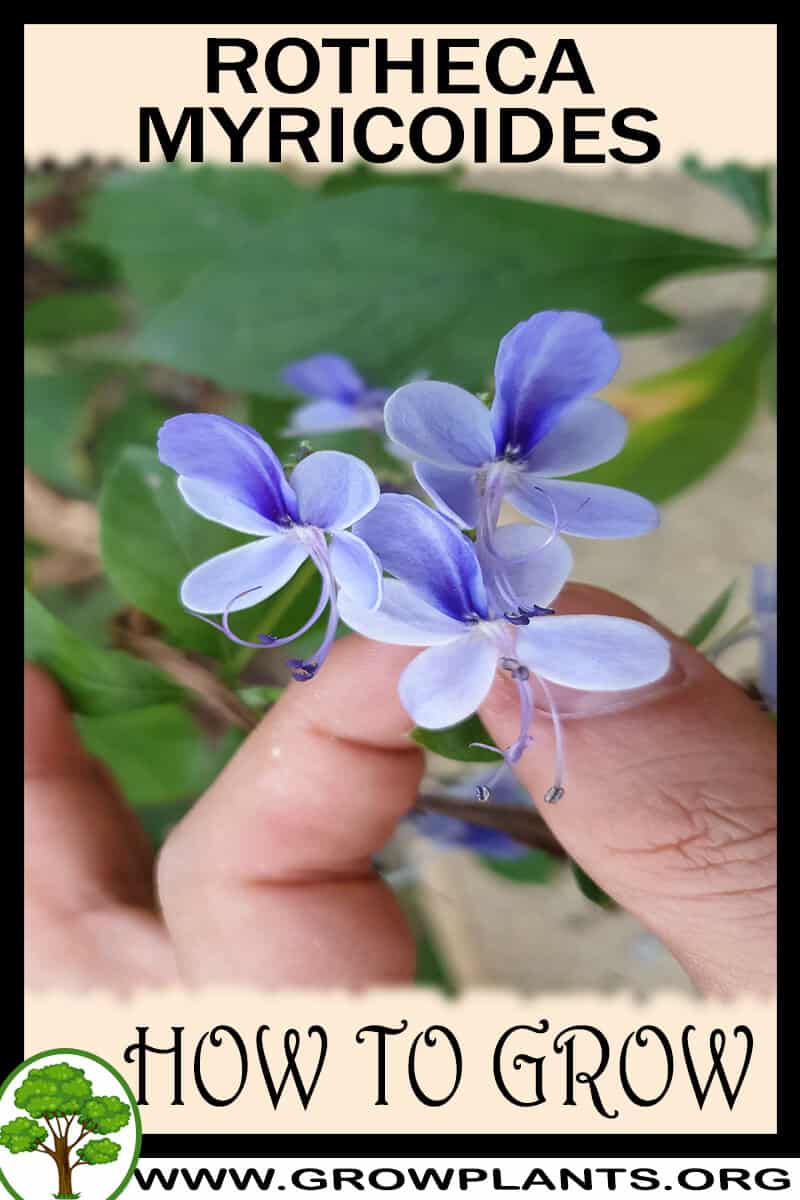
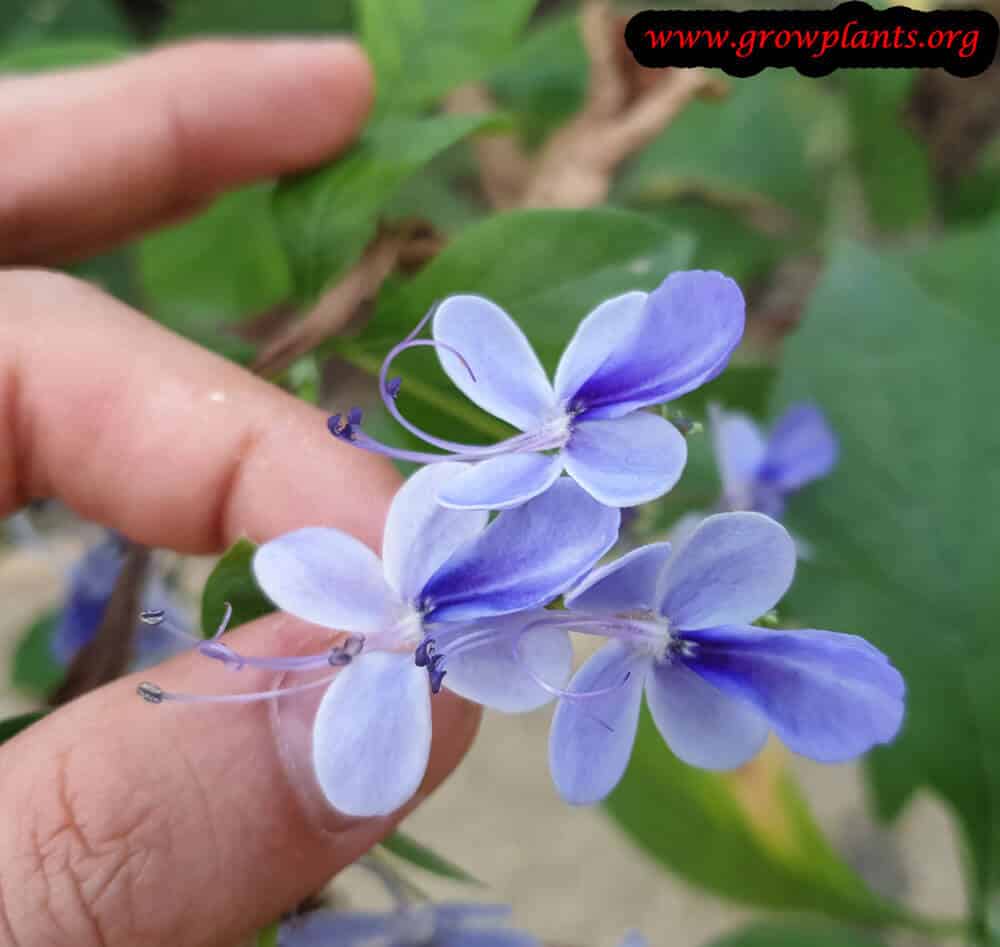
- Flower Characteristics: Butterfly-shaped flowers in blue, purple, white or bicolour, with a projecting lower petal.
Primary Uses & Landscape Value
- Functional & Ornamental Roles: Grown as a flowering ornamental and informal hedge for warm-climate and frost-free gardens, and as a container plant elsewhere.
Care Guide: Planting, Soil & Watering
Overview: Rotheca myricoides is a tender evergreen shrub (to climber) that likes rich, moisture-retentive soil in half shade to full sun. It enjoys steady, moderate to generous watering, but the soil must drain well so the roots never stay soggy.
Quick Care Requirements
| Requirement | Ideal Condition |
|---|---|
| Planting Season | In the warm season; in cold climates plant only in spring, or also in summer or autumn where frost-free |
| Growth Rate | Moderate to Fast |
| Soil Type | Rich, moist, well-draining soil |
| Water Need | Moderate to High — keep the soil moist, easing off as the surface dries |
Planting & Establishment
- Best Planting Season: Plant in the warm season; in cold climates plant only in spring so it has the whole warm season to establish, while in frost-free areas it can also go in during summer or autumn.
- How to Plant:
- Hole Preparation: Dig a hole wider than the root ball and loosen the base.
- Soil Amendments: Enrich the backfill with compost and organic matter to hold moisture and feed the plant.
- Planting Depth: Set the root collar at soil level and firm gently.
- Growth Speed & Expectations: A moderate to fast grower that fills out over the warm season.
Soil, Watering & Drainage Care
- Soil Mix & Drainage Needs: Give it rich but free-draining soil; in containers use a quality mix with good drainage so excess water escapes and the roots stay healthy.
- Watering Schedule & Technique:
- Young / Newly Planted: Keep newly planted shrubs evenly moist while they root in.
- Established: Water regularly to keep the soil moist through the growing season, easing off only as the surface begins to dry.
- Seasonal Adjustments: Increase watering in heat; in cooler weather reduce it and protect the plant from frost, as it is tender.
Climate, Light & Hardiness
Rotheca myricoides (butterfly bush, formerly classed in Clerodendrum) is an evergreen shrub-to-vine suited to tropical, mediterranean, subtropical, and temperate climates. It grows in half shade to full sun and is generally reliable outdoors from about USDA zone 9 upward, with limited tolerance of frost below that.
Quick Climate Specifications
| Climate Zones | Tropical, mediterranean, subtropical, temperate |
|---|---|
| USDA Hardiness Zones | 9+ |
| Frost Tolerance | Low |
| Light Conditions | Half shade / full sun |
Sunlight & Light Exposure
Optimal Light Setup
Grows well anywhere from half shade to full sun, making it flexible for different garden positions within its climate range.
Best Exposure / Orientation
In hotter, sunnier climates a little afternoon shade is a reasonable precaution, though the site data does not specify a strict heat limit.
Temperature Extremes & Hardiness
USDA Hardiness & Regional Limits
Generally grown as a reliable outdoor evergreen from around zone 9 upward; in cooler zones it should be treated as tender and given winter protection or grown in a container that can be moved indoors.
Frost Sensitivity
As a plant of tropical-to-warm-temperate origin with only a zone-9-and-up hardiness threshold noted, it should be considered sensitive to frost, though the site data does not give an exact damage or survival temperature.
Wind, Humidity & Microclimate
Microclimate Recommendations
A warm, sheltered spot consistent with its zone-9-plus hardiness is the safest placement where winters occasionally bring cold snaps.
Growing in Pots, Balconies & Indoors
The blue butterfly bush is a tender evergreen shrub (50-130 cm) with striking blue “butterfly” flowers. The grower does not treat it as a classic houseplant, but it is a fine patio container plant that can be moved to a bright window or conservatory to escape the cold.
Quick Details
- Container Size: A medium pot to match the shrub – around 10-20 L, potting up as it grows
- Indoor Suitability: Not a true houseplant, but a very bright, sunny window can hold a compact one, and it overwinters indoors well
- Best Spot: Full sun to part shade
- Soil & Drainage: Rich, free-draining potting or peat-and-perlite mix
- Watering in Pots: Average to generous; keep evenly moist, never waterlogged
Indoors & On the Windowsill
- As a windowsill / overwintering plant: The grower does not count it as a houseplant, but because it is tender it is often potted so it can spend winter in a bright, warm room or conservatory. Give it the sunniest window you have – in weak light it grows leggy and shy to flower.
- Overwintering: This is the main reason to pot it in cold climates – lift it out of frost and keep it just ticking over until warmth returns.
On a Balcony or Patio
- Light & wind: Full sun to part shade brings the best flowering; shelter it from strong wind and check moisture often, as pots against warm walls dry quickly.
Choosing the Pot, Soil & Long-Term Care
- Pot & drainage: A pot with strong drainage holes and no standing saucer. Terracotta breathes and dries faster; glazed or plastic holds moisture longer.
- Potting mix: A rich, well-aerated mix – potting or peat with perlite.
- Feeding & repotting: Feed through the growing season, and refresh the mix or pot on every couple of years, lightly pruning top and roots to keep it in bounds.
Fertilizing & Feeding
A vigorous evergreen hedge and flowering shrub that blooms over a long season; moderate, steady balanced feeding supports both the hedge growth and repeat flushes of its butterfly-shaped flowers.
Quick Fertilizing Specs
| Feeding Level | Moderate |
|---|---|
| Main Nutrient Priority | Balanced feeding with adequate nitrogen; no need for extra phosphorus to drive bloom |
| Best Feeding Period | Through the warm active growing and flowering season |
| Organic Options | Compost or organic matter worked into rich, moist soil |
| Soil pH | Tolerates a wide range; grows best in rich, moist soil |
| Micronutrients | Watch for iron-related yellowing in poorly drained or alkaline soil |
| Reduce/Stop Feeding | Ease off feeding as growth slows in cooler weather |
Feeding by Growth Stage
Spring Growth
Push fresh foliage and new stems on this hedge and flowering shrub as growth resumes.
| Nutrient direction | A balanced, complete fertilizer with adequate nitrogen supports new leafy growth. |
|---|---|
| Timing | As new growth resumes in spring, or in cooler climates once the frost risk has passed. |
| Frequency | Light, regular feeding as active growth gets going. |
| Fertilizer types | A balanced, complete fertilizer, Compost or organic matter worked into the planting area |
| Precautions | Avoid pushing excess soft growth with too much nitrogen, especially where this shrub is kept as a trimmed hedge. |
Blooming
Support the butterfly-shaped flower clusters this shrub is grown for.
| Nutrient direction | A balanced, complete fertilizer with adequate nitrogen carries bloom; high-phosphorus ‘bloom booster’ products are not needed. |
|---|---|
| Timing | Through the main flowering flush. |
| Frequency | Steady light feeding as flowering continues. |
| Fertilizer types | A balanced, complete fertilizer |
| Precautions | Do not rely on high-phosphorus products to drive bloom; balanced feeding and good light matter more. |
Repeat Bloom
Sustain successive flushes of flowers over this shrub’s long spring-to-autumn bloom season.
| Nutrient direction | Maintain gentle, balanced feeding to support repeat flushes of bloom, especially after pruning for shape. |
|---|---|
| Timing | Through the extended spring-to-autumn bloom season. |
| Frequency | Keep feeding light and regular to sustain repeat bloom. |
| Fertilizer types | A balanced, complete fertilizer, Light liquid feed for container-grown plants |
| Precautions | Container-grown plants lose nutrients with watering, so keep feeding light and steady. |
Cool-Season Rest
Let growth slow through cooler weather without pushing tender new growth.
| Nutrient direction | None – withhold fertilizer while growth is slow in cooler weather. |
|---|---|
| Timing | Through the coolest part of the year, where winters bring a slowdown in growth. |
| Frequency | No feeding at this stage. |
| Fertilizer types | No feeding at this stage – withhold fertilizer while growth is slow. |
| Precautions | Do not fertilize until active growth resumes. |
Nutrient Deficiency Signs & Corrections
Uniform pale-green to yellow older leaves with weak, sparse new growth.
| Possible causes | Low soil or media nitrogen, Leaching from frequent watering, Cold, wet soil slowing uptake |
|---|---|
| Appears first on | Older, lower leaves first. |
| What to check | Overall color and vigor, Watering and leaching pattern, Recent feeding history |
| Possible correction | Resume a balanced, complete fertilizer during active growth. |
Interveinal yellowing on the newest leaves while the veins stay green.
| Possible causes | High or alkaline soil pH locking up iron, Overwatering or poor drainage stressing roots, Low available iron |
|---|---|
| Appears first on | Newest leaves at the growing tips. |
| What to check | Soil pH, Drainage and watering, Whether new growth is worst affected |
| Possible correction | Correct pH and drainage; where needed apply a chelated iron product per its label. |
Scorching and browning along the margins of older leaves, with weak stems.
| Possible causes | Low soil potassium, Leaching from frequent watering, Imbalanced feeding |
|---|---|
| Appears first on | Margins of older, lower leaves. |
| What to check | Leaf margins versus centers, Watering and leaching, Feeding balance |
| Possible correction | Use a balanced, complete fertilizer that supplies potassium through the season. |
Pruning, Training & Seasonal Maintenance
Rotheca myricoides is a fast-to-medium growing evergreen shrub (sometimes trained as a loose vine) commonly grown as an ornamental hedge, so it tolerates a moderate amount of shaping well. Its own care notes describe pruning mainly “for design” in autumn to winter, meaning most cuts are cosmetic shape control rather than structural necessity. At only 50–130cm mature size, this is light, hand-tool work – not a plant that ever needs a saw.
Quick Pruning & Maintenance Specs
| Pruning Tolerance | Moderate |
| Primary Pruning Window | Autumn to winter |
| Secondary Maintenance Window | Light shaping through the growing season if grown as a clipped hedge |
| Typical Frequency | Once a year for shape, more often if maintained as a formal hedge |
| Main Objective | Shape and density control (design pruning) |
| Young Plant Priority | Pinch or tip young stems to encourage branching before any formal shaping |
| Mature Plant Priority | Maintain shape/density; remove dead or awkward growth |
| Best Tool Type | Bypass secateurs for informal shaping; hedge shears only if grown as a clipped hedge |
| Avoid Heavy Pruning During | Peak spring–autumn bloom flush |
Pruning by Plant Age & Size
Newly Established
Remove only damaged growth; pinch soft tips lightly to encourage a bushier base before any formal shape is set.
Young / Formative
If grown as a hedge, begin light shearing once the plants have filled in laterally. If grown as a loose specimen or trained vine-like against support, select and tie in the main framework stems rather than shearing.
Mature / Established
Annual shape maintenance: trim for design, thin out dead or weak interior wood, and on hedge-grown plants keep the sides tapered slightly narrower at the top so lower growth still receives light.
Flowering & Fruiting Wood
This shrub flowers over an extended spring–summer–autumn season, which points to blooming substantially on new growth produced through the season rather than on old wood alone. A single autumn–winter shape prune, taken after the main flowering has wound down, removes spent flowering tips without sacrificing the bulk of the next season’s bloom, which will form on the growth that follows.
Structural Pruning & Training
- Remove crossing or rubbing branches to keep an open, even shape.
- Control height and spread by heading back long shoots that outgrow the desired form.
- On hedge plantings, thin occasionally in addition to shearing so the interior doesn’t become a hollow shell of bare wood.
Container & Small-Space Pruning
Grows well in containers. Keep cuts a little harder than an in-ground hedge to hold a compact size relative to the pot, and prioritize thinning over shearing in a container so light reaches the whole plant, not just the exterior.
Tools
- Bypass secateurs for selective shaping and thinning cuts.
- Hedge shears only where the plant is being kept as a clipped, formal hedge.
Tool Hygiene & Disease Risk
Routine – clean, sharp tools are sufficient; no transmissible disease risk is documented for this species.
Cut Placement & Technique
Make selective cuts just above an outward-facing bud or node to keep growth open rather than congested; on hedges, taper the profile slightly narrower toward the top.
Heavy Pruning & Rejuvenation
Tolerates a fairly hard cutback if it becomes leggy or overgrown, since it is a fast-to-medium grower; expect a full rebound in growth the following season, with some loss of that season’s early bloom.
Post-Pruning Care
Keep watering consistent (this species likes average to ample moisture); avoid feeding immediately after a hard cutback since the regrowth flush will draw on existing reserves first.
Common Pruning Mistakes
- Shearing a loosely-grown specimen the same way as a formal hedge, which strips it of its natural arching form.
- Letting a hedge planting go unpruned for too long, producing bare, leggy growth low down.
When NOT to Prune
- Avoid heavy shaping cuts during the peak of the spring–autumn bloom flush, when most of the current flowers would be removed.
Recommended Tools (by task)
- bypass_secateurs – the main tool for selective shape and thinning cuts on this small shrub.
- hedge_shears – only where the planting is maintained as a clipped, formal hedge.
Propagation Guide
Rotheca myricoides is most easily and most commonly propagated from stem cuttings, which is recommended whenever it matters to keep an exact flower color true to the parent plant. Seed is possible but is used less often in cultivation since flower color can vary; overall this is an easy shrub to root from cuttings.
Quick Propagation Specs
| Best Propagation Method | Stem cuttings |
| Alternative Methods | Seed |
| Propagation Difficulty | Easy |
| Seed True-to-Type | Variable (flower color can differ from the parent plant) |
| Vegetative True-to-Type | Yes |
| Best Propagation Season | Spring to summer, the plant’s main growing season (spring only where winters are cold) |
| Cutting Rooting Time | Typically a few weeks under warm, humid conditions |
Growing from Seed
Seed is listed among the ways to start this plant, but the site specifically recommends vegetative propagation whenever a particular flower color needs to be preserved, which suggests seedlings are not reliably identical to the parent. Sow in the warm growing season in moist, well-drained soil and keep consistently damp until seedlings are established; specific germination timing is not documented for this species.
Stem Cuttings
Cutting Type
Softwood or semi-hardwood stem cuttings taken from healthy, non-flowering shoot tips.
Best Timing
Spring through summer, during active growth (in cold climates, start only in spring).
Rooting Setup
A moist, well-drained rooting medium with high humidity (a propagator or humidity cover helps) and warmth.
Rooting Hormone
Optional – can speed and even out rooting but is not essential.
Rooting Time
Typically a few weeks under warm, humid conditions.
Bloom & Flower Guide
Quick Details
- Bloom Season: Spring through summer into autumn
- Flower Appearance: Striking blue-and-violet flowers shaped like a butterfly – four paler upper petals and one deep-blue lower “wing”, with long, arching stamens like antennae
- Edibility: Ornamental – not eaten
Detailed Blooming Overview
The blue butterfly bush (Rotheca myricoides, formerly Clerodendrum myricoides) blooms over a long, warm season. Each flower really does resemble a small blue butterfly, complete with curving “antennae” of stamens, making it a favourite ornamental hedge or feature plant.
Flower Characteristics
- Blue and violet colouring – sometimes white or bicoloured.
- Butterfly form with a single deeper lower petal and prominent, curving stamens.
Bloom Care & Thinning
- For continuous bloom: Flowers on new growth in warmth and sun; a light prune keeps it tidy and encourages fresh flowering wood.
- Feeding: Feed and water steadily through the growing season for the best display.
Pests, Diseases & Troubleshooting
Overview: Rotheca myricoides (the blue butterfly bush or blue glory bower, formerly Clerodendrum ugandense) is an East African flowering shrub whose main pests are sap-suckers — spider mites (especially indoors), whiteflies, mealybugs, aphids and scale — while its diseases are limited to fungal leaf spot and root rot in wet soil. It is frost-tender, so cold-related leaf drop is a common non-living problem. Good humidity, airflow and even watering keep it healthy.
Quick Troubleshooting Overview
| Issue / Pest | Main Symptom | Primary Solution |
|---|---|---|
| Spider mites | Stippled, bronzed, webbed leaves (indoors) | Humidity, hose undersides, horticultural oil |
| Whiteflies | White flies and honeydew on foliage | Sticky traps, parasitic wasps, oil/soap |
| Mealybugs | White cottony masses at leaf axils | Alcohol dab; oil or insecticidal soap |
| Aphids | Sticky, distorted new growth and buds | Water jet, predators, insecticidal soap |
| Leaf spot | Dark spots and some leaf drop | Remove leaves, airflow, copper if recurrent |
| Cold / leaf drop | Yellowing and leaf fall after cold | Frost-free site; even watering; humidity |
Common Pests & Management
- Spider mites (Tetranychus urticae):
- Symptoms: The commonest pest, especially on plants grown indoors, under glass or in hot dry sites: fine pale stippling, bronzing and webbing on leaf undersides, with leaves yellowing and dropping in bad cases.
- Prevention & Control: Raise humidity, keep the plant out of hot dry drafts, and hose or wipe the foliage undersides regularly. Encourage predatory mites. Horticultural oil or insecticidal soap on the undersides controls outbreaks; rotate products to avoid resistance.
- Whiteflies (Aleyrodidae (Bemisia / Trialeurodes)):
- Symptoms: Clouds of tiny white flies rise from disturbed leaves; foliage yellows and is coated in honeydew and sooty mould. Common on this and related Clerodendrum-type plants under cover.
- Prevention & Control: Use yellow sticky traps to monitor and reduce adults, and encourage Encarsia parasitic wasps. Wash off honeydew and treat leaf undersides with insecticidal soap or neem/horticultural oil, repeating to catch newly hatched crawlers.
- Mealybugs (Pseudococcidae):
- Symptoms: White, cottony masses in leaf axils, on stems and around the growing points, with honeydew and sooty mould; growth pales and slows.
- Prevention & Control: Dab colonies with a cotton bud dipped in dilute alcohol or soap, and rinse the plant. Horticultural oil or insecticidal soap controls heavier infestations; check the crown and roots for root mealybug in pots.
- Aphids (Aphididae):
- Symptoms: Clusters of soft insects on soft new growth and flower buds, with distortion and sticky honeydew.
- Prevention & Control: Protect predators, dislodge with a water jet, and use insecticidal soap or light horticultural oil on the undersides for heavy colonies, sprayed in the evening to protect bees.
- Scale insects (Coccidae / Diaspididae):
- Symptoms: Small brown or waxy bumps on stems and leaf undersides, with honeydew from soft scales; feeding weakens the plant over time.
- Prevention & Control: Prune out heavily encrusted wood and scrub off light infestations. Horticultural oil smothers scales and crawlers; time treatment to the crawler stage and protect parasitic wasps.
Diseases & Fungal Issues
- Fungal leaf spot (Cercospora / Colletotrichum spp.):
- Symptoms: Brown or dark spots, sometimes with yellow halos, on the leaves in warm, wet, poorly ventilated conditions, causing spotting and some leaf drop.
- Treatment & Management: Remove and destroy spotted leaves, improve airflow, and avoid overhead watering so foliage dries quickly. Good spacing and sanitation usually suffice; a copper fungicide helps only where leaf spot recurs.
- Root rot (Phytophthora / Pythium spp.):
- Symptoms: Yellowing, wilting despite moist soil and mushy roots when grown in soggy soil or a waterlogged pot.
- Treatment & Management: Grow in rich, free-draining soil or mix and let the surface dry slightly between waterings; never leave pots standing in water. Improve drainage and repot rotted plants into fresh, airy medium after trimming dead roots.
Growing Difficulties & Abiotic Problems
- Cold sensitivity and leaf drop:
- Cause & Symptoms: Leaves yellow and drop and stems die back after cold snaps, as this East African shrub is frost-tender and dislikes chilling.
- Correction Strategy: Grow in a warm, sheltered, frost-free spot or bring container plants indoors before cold weather; protect from cold drafts. It may drop leaves and reshoot after a cool spell.
- Leaf drop from drought or over-wet stress:
- Cause & Symptoms: Sudden leaf yellowing and drop when the plant dries out badly or is kept too wet, and flower buds may abort.
- Correction Strategy: Keep watering even — moist but never waterlogged in growth, slightly drier when cool — and maintain humidity. Feed lightly in the growing season for steady growth.
- Chlorosis on poor or alkaline soil:
- Cause & Symptoms: Interveinal yellowing of younger leaves on thin or high-pH soils where iron uptake is limited.
- Correction Strategy: Improve soil with organic matter, keep it evenly moist and well-drained, and apply chelated iron to green up lime-induced yellowing.
What Helps — Products & Tools
For this tender shrub the soft toolkit covers most issues: horticultural or neem oil and insecticidal soap for spider mites, whiteflies, mealybugs, aphids and scale, yellow sticky traps to monitor whitefly, and a copper fungicide for stubborn leaf spot; chelated iron corrects lime chlorosis. Cultural care — warmth, humidity, airflow, even watering and good drainage — prevents most problems. Follow the label and protect the pollinators its flowers attract.