

Plant Profile & Key Characteristics
Also known as: Tree houseleek, Irish rose, Tree aeonium
Overview: A rosette-forming succulent grown for its striking whorls of green to near-black leaves. This drought-tolerant, evergreen perennial reaches about 0.3-1 m (1-3 ft) and is a popular ornamental for containers, Mediterranean gardens and as a houseplant.
Quick Specifications
| Specification | Attribute |
|---|---|
| Plant Type / Life Cycle | Perennial (succulent; rosettes are monocarpic) |
| Foliage Type | Evergreen (drought-deciduous during summer dormancy) |
| Mature Size | 0.3-1 m (1-3 ft) tall |
| Growth Rate | Slow to moderate |
| Root System | Shallow, fibrous root system |
| Toxicity | Non-toxic to cats and dogs |
| Hardiness | USDA zone 10+ |
Growth Form & Structure
- Height & Spread: About 0.3-1 m (1-3 ft), branching to form clumps of rosettes; grows well in containers roughly 60-90% larger than the root ball.
- Growth Habit & Form: Upright, branching subshrub with a tree-like habit, each stem tipped by a leaf rosette.
- Lifespan & Maturity: Long-lived as a clump, though each individual rosette is monocarpic – it dies after flowering while offsets carry the plant on.
Anatomy & Physical Features
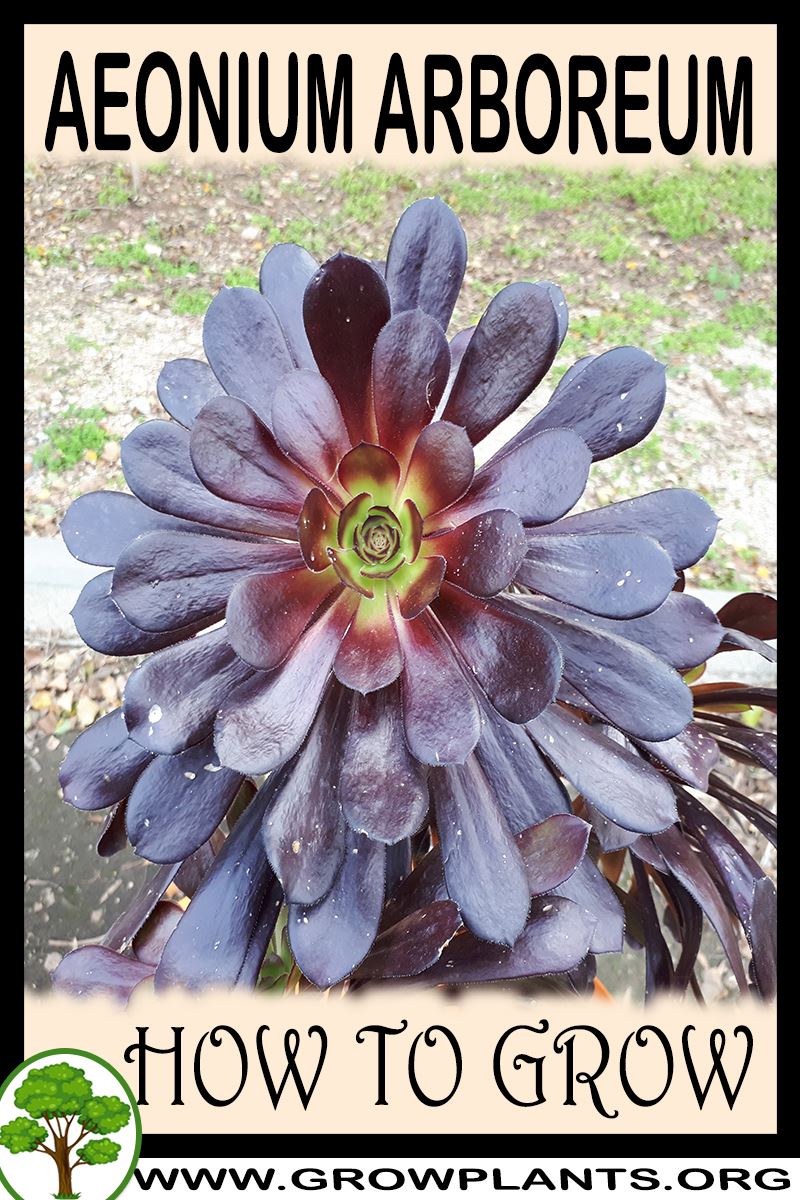
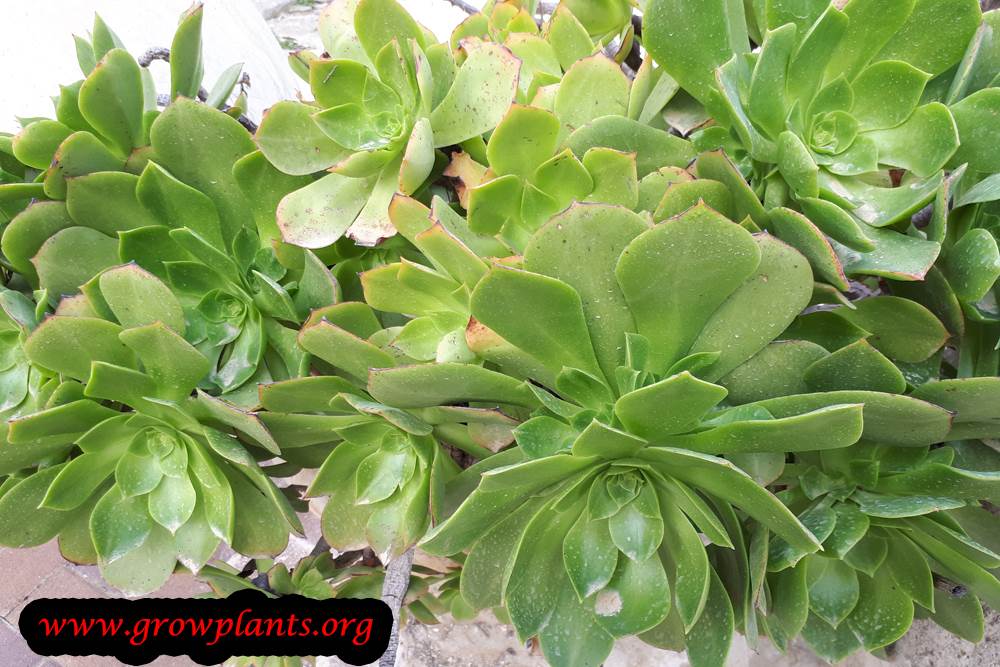
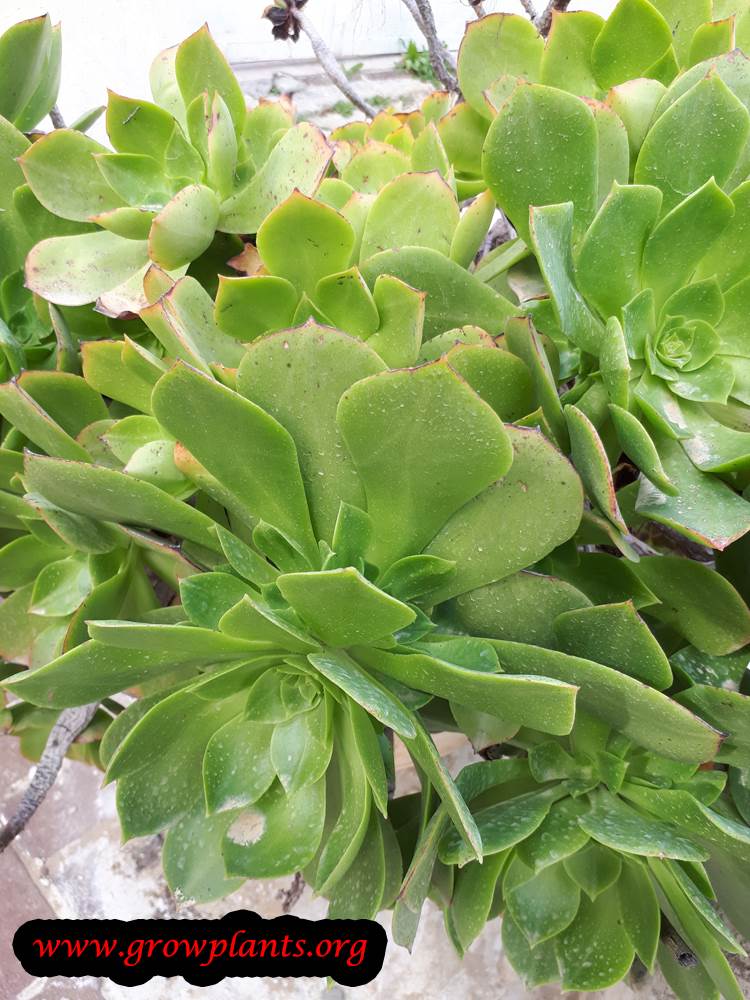
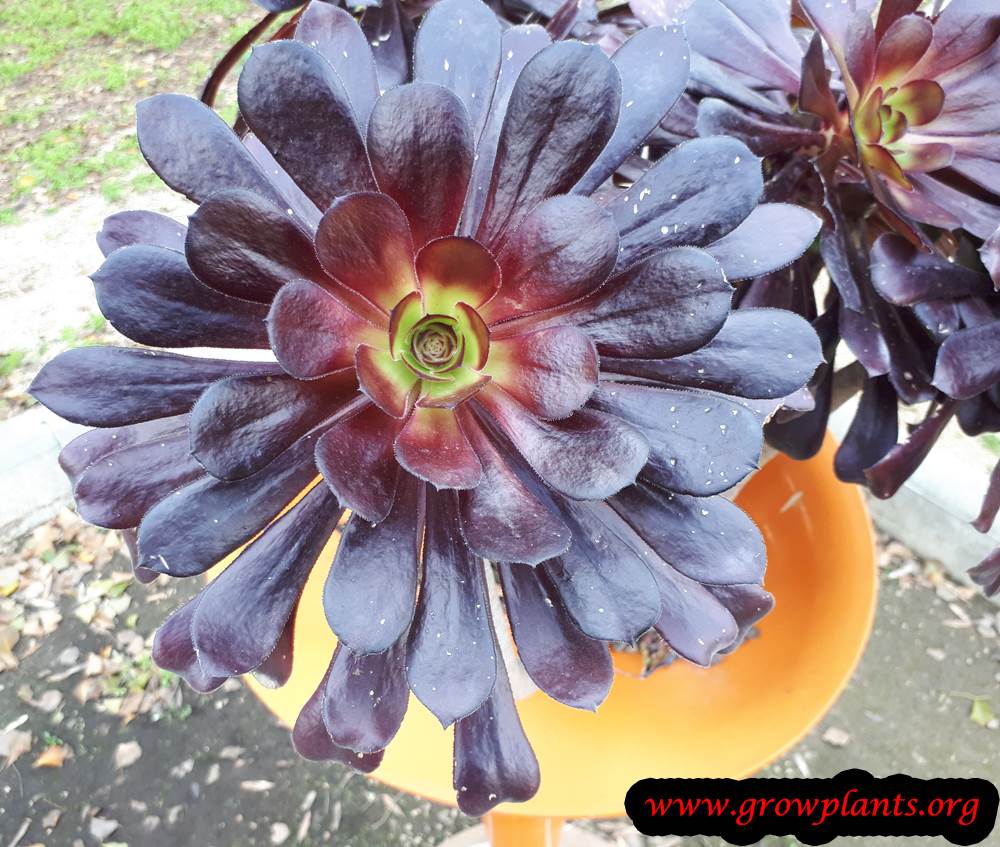
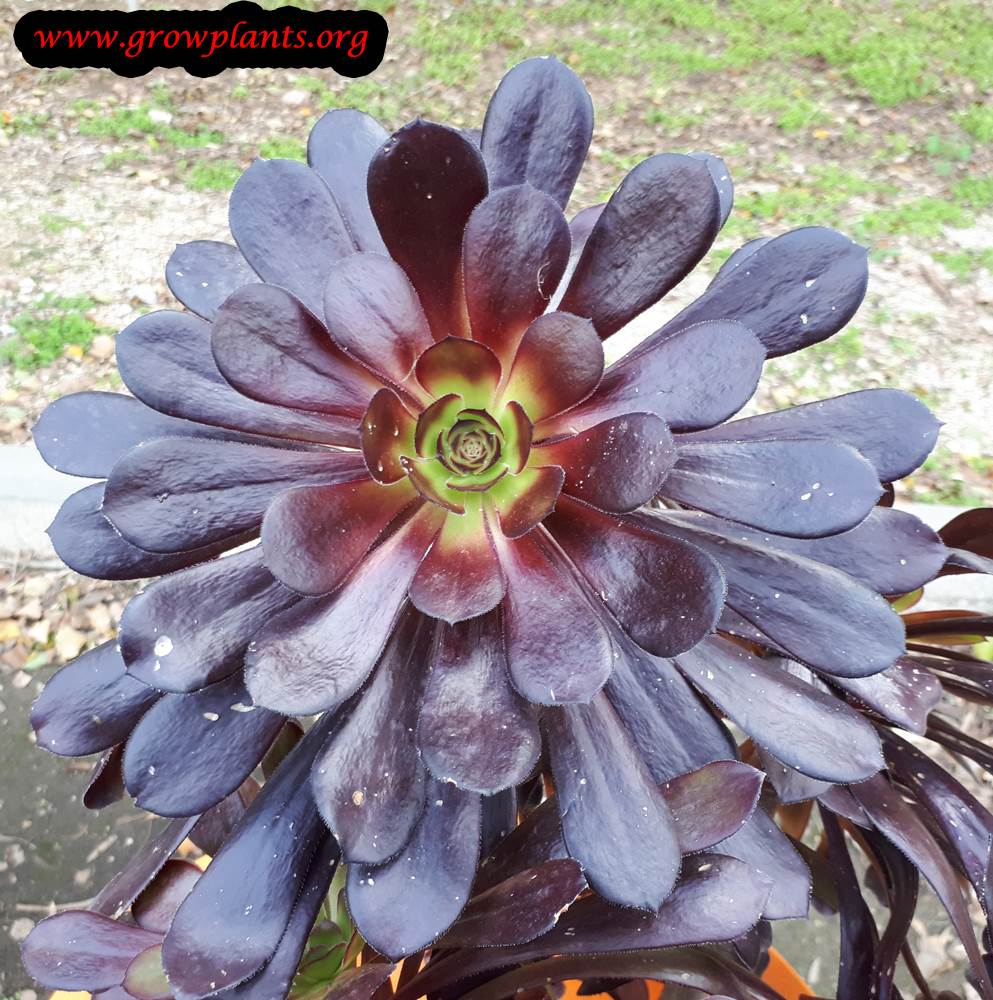
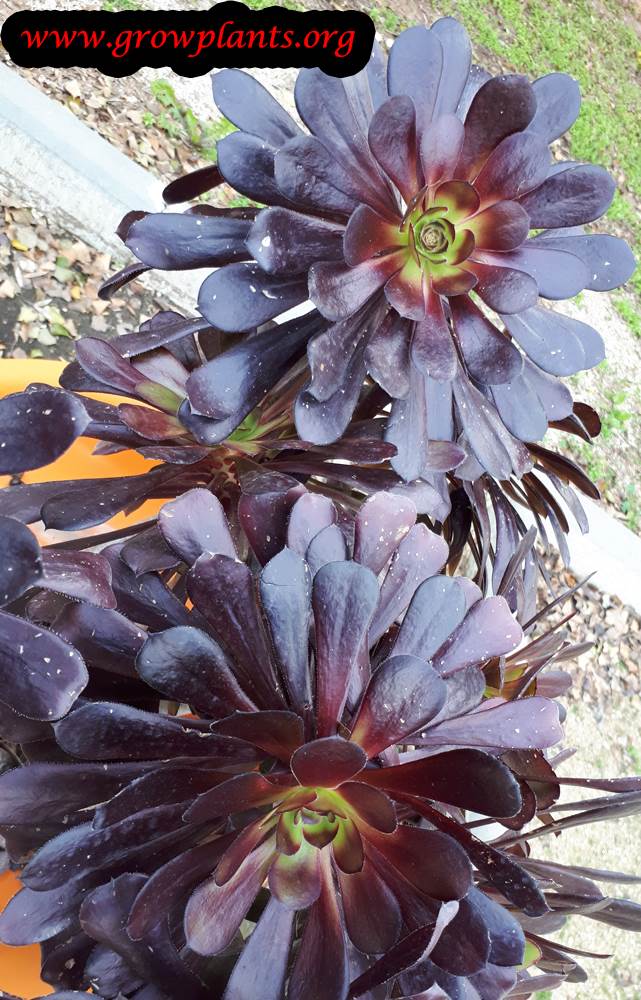
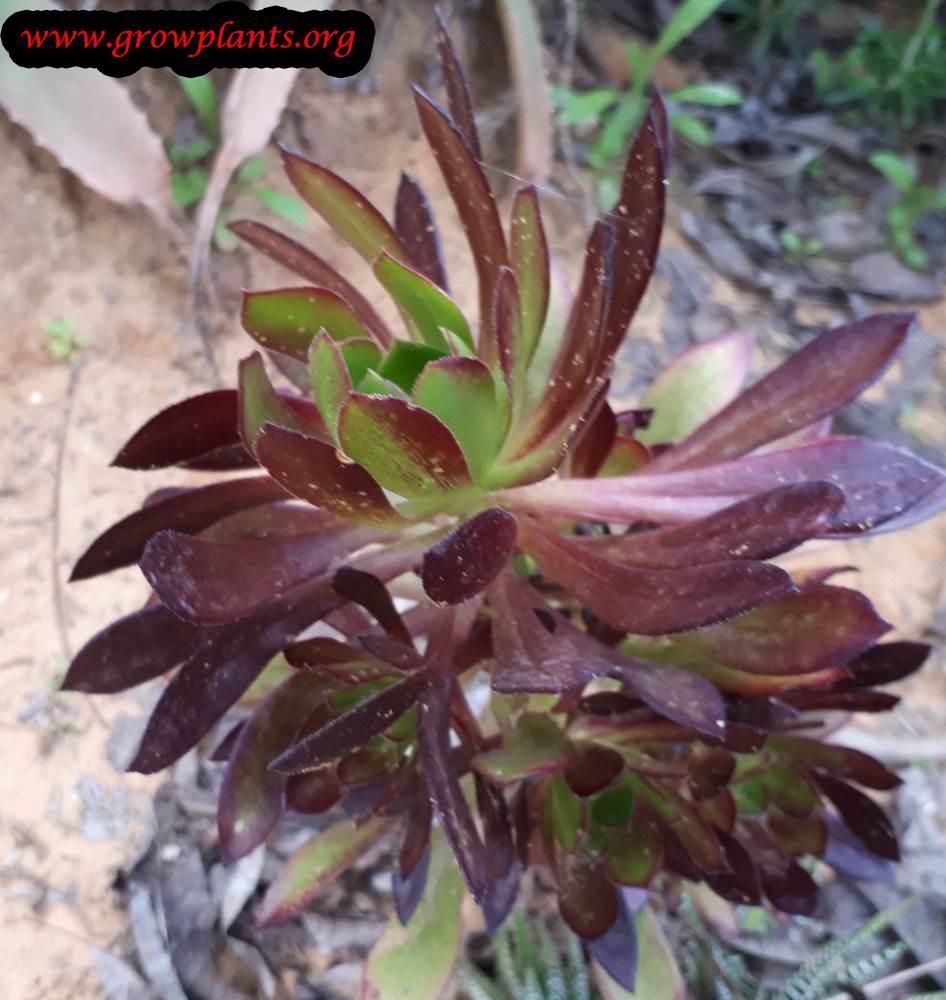
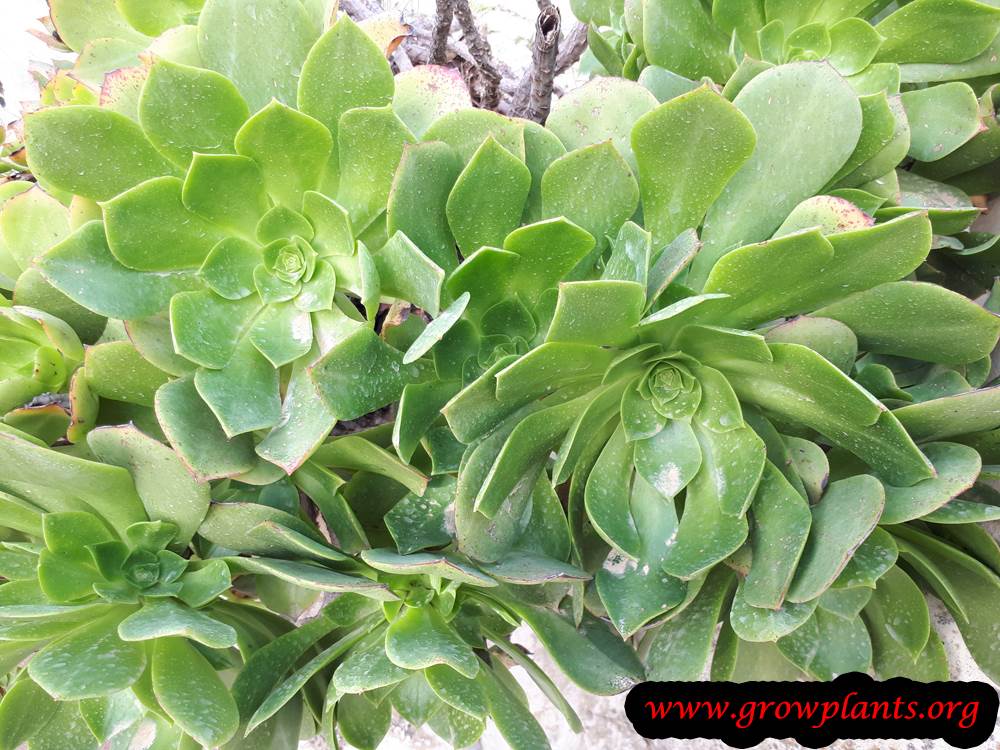
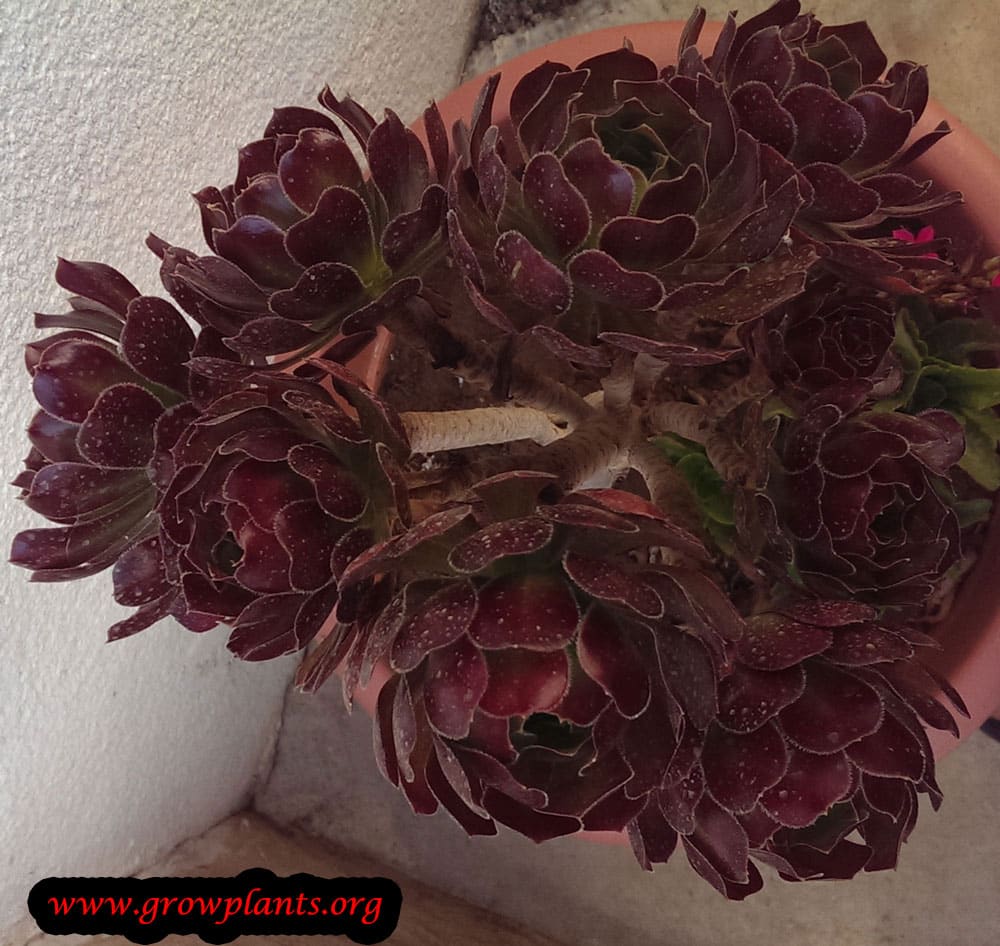
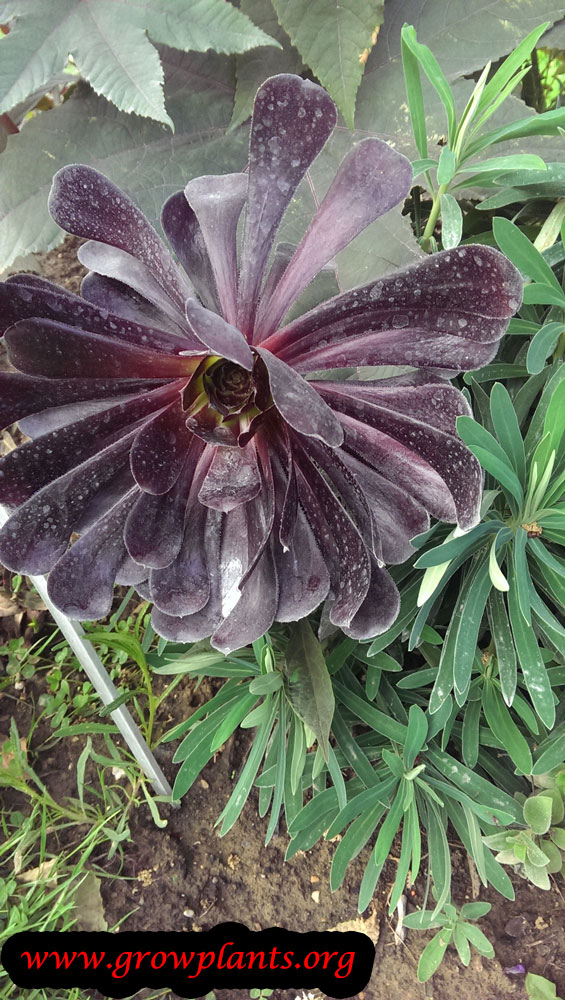
- Leaves & Foliage: Obovate to spoon-shaped leaves in terminal rosettes, ranging from green through red and red-brown to near-black-purple in cultivars such as ‘Zwartkop’.
- Flower Characteristics: Yellow, star-shaped flowers in a large, conical raceme at the stem tips.
Primary Uses & Landscape Value
- Functional & Ornamental Roles: Ornamental succulent for containers, rockeries and Mediterranean or drought-tolerant plantings; also grown indoors as a houseplant.
Care Guide: Planting, Soil & Watering
Overview: Aeonium arboreum (Aeonium arboretum) is a rosette-forming succulent that grows best in bright sun to light shade and sharply drained soil. It is drought-tolerant and sensitive to overwatering, so water only when the soil has dried and never let it sit in a puddle.
Quick Care Requirements
| Requirement | Ideal Condition |
|---|---|
| Planting Season | Spring to summer in zone 10a; spring to autumn in zones 10a–11a; year-round in zone 11+ |
| Growth Rate | Slow to Moderate |
| Soil Type | Well-draining, gritty/sandy soil |
| Water Need | Low to Moderate — let the soil dry between waterings, avoid puddling |
Planting & Establishment
- Best Planting Season: Plant in the warm growing season — spring to summer in zone 10a, spring to autumn in zones 10a–11a, and year-round in frost-free zone 11+.
- How to Plant:
- Hole Preparation: Dig a hole larger than the root ball in a well-drained spot; in rainy areas plant on a raised bed or above ground level so water cannot pool around the roots.
- Soil Amendments: Add grit or coarse sand to ensure sharp drainage, since the plant may rot and die if it sits in standing water.
- Planting Depth: Set the plant at soil level with the base of the rosette resting at the surface — do not bury the stem.
- Growth Speed & Expectations: Slow when young or grown from seed, becoming moderate once established in full sun with occasional feeding.
Soil, Watering & Drainage Care
- Soil Mix & Drainage Needs: Use a sharply drained, gritty mix. In containers choose a pot 60–90% larger than the root ball with good drainage — standing water at the roots can rot and kill the plant.
- Watering Schedule & Technique:
- Young / Newly Planted: Water lightly and regularly to settle it in, keeping the soil just moist.
- Established: Water only when the soil has dried — a small to average amount — and add water if the leaves start to soften or shrivel; never leave it standing in water.
- Seasonal Adjustments: Water a little more during active growth and heat; cut back in winter, and take extra care not to overwater during rainy periods.
Climate, Light & Hardiness
Aeonium arboreum is a Canary Island rosette succulent suited to mild, largely frost-free Mediterranean, coastal and warm subtropical climates, where it grows through the cooler months and rests in the heat of summer. It wants bright light - full sun where summers are mild, but part or bright shade where sun is intense - and has only low frost tolerance, so it is happiest in roughly USDA zone 10 and warmer.
Quick Climate Specifications
| Climate Zones | Mild Mediterranean, coastal and warm subtropical / desert-margin climates (largely frost-free) |
|---|---|
| USDA Hardiness Zones | Approximately zone 10 and warmer (site data); treat as tender, with cultivar variation |
| Optimal Temp Range | Roughly 18–24 °C (65–75 °F) for active cool-season growth; establishment around 20–28 °C (68–82 °F) per site data |
| Cold Damage Begins | Around 0 °C (32 °F) - light frost marks and disfigures the fleshy rosettes |
| Approx. Survival Minimum | Established plants may briefly survive a light freeze near −2 to −3 °C (upper 20s °F), usually with foliage damage |
| Frost Tolerance | Low |
| Light Conditions | Full sun in mild climates to bright / part shade where sun is intense |
| Wind Tolerance | Low to Moderate |
| Salt / Coastal Tolerance | Moderate |
Sunlight & Light Exposure
Optimal Light Setup
Give it bright light year-round. In cool or mild climates full sun keeps the rosettes compact and deepens leaf colour (especially in dark and red-leaved forms); indoors, use the brightest window available with some direct sun.
Direct Sun Requirement
Several hours of sun produce tight, well-coloured rosettes; pale, elongated, loosely-stacked growth is the sign of too little light. In strong-summer regions, however, that sun is best delivered in the cooler parts of the day.
Shade & Heat Management
During hot, dry summers the plant goes semi-dormant and the rosettes close up. Move container plants into bright shade and screen them from fierce afternoon sun to prevent scorching of the exposed rosette centres.
Best Exposure / Orientation
South- or west-facing for maximum light in cooler regions; an east-facing or lightly filtered exposure is safer in hot-summer areas.
Temperature Extremes & Hardiness
USDA Hardiness & Regional Limits
Site data places it around zone 10 and warmer - mild, essentially frost-free climates. Winter cold, not summer heat, sets the outdoor limit, and cold tolerance varies by cultivar, plant age, exposure duration and conditions.
Cold Damage & Winter Protection
Light frost disfigures the soft rosettes near 0 °C (32 °F). Where frost is expected, move containers under cover; container root zones freeze faster and more thoroughly than open ground.
Frost Sensitivity
Frost tolerance is low. Established plants may shrug off a brief, light freeze but are left scarred, and cold combined with wet soil is especially dangerous because it invites rot.
Extreme Heat Tolerance
It handles heat mainly by resting: growth pauses and the rosettes tighten through the hottest part of the year. Paired with some shade it comes through summer well, but do not expect active growth then.
Wind, Humidity & Microclimate
Humidity Preferences
Undemanding - its mild oceanic origin means ordinary garden or household humidity suits it, and no added humidity is needed.
Dry-Air Tolerance
As a succulent it tolerates dry air well.
Wind Tolerance
Fleshy stems and rosettes are brittle, and taller, top-heavy specimens (to about 1 m / 3 ft) can snap or rock loose in strong wind, so shelter or lightly support them in exposed spots; overall wind tolerance is low to moderate.
Coastal / Salt Tolerance
With Canary Island coastal-cliff origins it takes maritime exposure and light salt spray moderately well. That is not the same as tolerating saline soil or salty irrigation water, which it handles poorly.
Rainfall & Seasonal Moisture
It is adapted to a winter-wet, summer-dry pattern and dislikes heavy summer rain and standing water. In rainy areas a raised, sharply drained position matches its climate needs (a siting and drainage point, not a watering schedule).
Microclimate Recommendations
Give it a bright, sheltered, frost-free pocket with free drainage - a raised bed or a spot beside a sun-warmed wall helps in marginal, cooler zones.
Growing in Pots, Balconies & Indoors
Aeonium arboreum is a rosette-forming succulent that the grower confirms makes a good houseplant, and it is one of the classic container succulents. Grown in a pot it earns its keep indoors on a bright sill, out on a balcony in the warm season, and under cover through cold winters.
Quick Details
- Container Size: A pot about 60-90% larger than the root ball – or a small pot if you trim the roots at planting (grower’s guidance)
- Indoor Suitability: A good houseplant in a bright, airy spot; the grower gives specific indoor care below
- Best Spot: Bright light – full sun to half shade; indoors, the brightest window with some airflow
- Soil & Drainage: Free-draining sandy, potting or cactus mix with added gravel/lava rock; sharp drainage is essential
- Watering in Pots: Sparingly – if the leaves soften or start to curl, water; a little more often near heaters or air-conditioning
Indoors & On the Windowsill
- A good houseplant: The grower grows it indoors – choose a well-lit spot and give it fresh air every few days. Keep it away from heaters, and although it needs little water in a normal room, increase watering where air-conditioning or heating dries the air (the grower’s own guidance).
- Windowsill growing: The brightest windowsill keeps the rosettes tight and colourful; too little light makes them stretch and turn pale.
- Overwintering indoors: It is frost-tender (in the coldest zones it can die outdoors over winter), so a pot that comes inside for the cold months is the safest way to keep it – bright, cool and nearly dry until growth resumes.
On a Balcony or Patio
- Light & wind: A bright balcony suits it in the warm season, with some shelter from the fiercest midday sun and from strong wind that can dry or topple the pot. Reflected heat from walls dries the mix fast, so check it – but it would rather be dry than wet.
- Practicalities: Bring it back under cover before frost, and make sure water drains away freely so it never stands wet.
Choosing the Pot, Soil & Long-Term Care
- Pot & drainage: A pot with strong drainage holes and no standing-water saucer; terracotta breathes and dries fast, which suits succulents. Over a few years the mix stops draining well, so change it for fresh – the grower’s practice.
- Potting mix: Sandy, potting or cactus mix, with small stones – gravel, lava rock or pebbles – to sharpen drainage, as the grower advises.
- Feeding: Feed only lightly in active growth with a dilute succulent feed; these plants need very little.
Grower’s Container Tip
- Sizing the pot: Choose a pot about 60-90% bigger than the root ball – or keep it in a small pot and trim the roots when you plant. Add gravel, lava rock or pebbles for drainage, and refresh the whole mix every few years as its drainage fades.
Growing this plant in a greenhouse
A greenhouse can give aeonium arboreum frost protection and cold protection.
Greenhouse at a glance
| Greenhouse suitability | Conditional - depends on your climate |
|---|---|
| Main benefits | frost protection, cold protection |
| Outdoor protection advisable below | about 2°C |
| Maintain greenhouse minimum | around 2°C for active growth |
| Suitable types | unheated greenhouse, polycarbonate greenhouse |
| Heating | Heating is optional - useful mainly for winter growing in cold areas. |
Related greenhouse guides
- Greenhouses: How to Choose the Right Greenhouse
- Polycarbonate Greenhouses: What to Look for Before Buying
- Greenhouse Climate Control: Temperature, Ventilation and Humidity
Fertilizing & Feeding
Succulents are very light feeders. A little balanced feeding leaning low in nitrogen during the warm active season is plenty, and they get by without supplemental nutrients through their dormant rest.
Quick Fertilizing Specs
| Feeding Level | Light – succulents need very little fertilizer |
|---|---|
| Main Nutrient Priority | A balanced feed leaning low in nitrogen |
| Best Feeding Period | During the warm active growing season |
| Reduce/Stop Feeding | Stop feeding during dormancy in extreme heat or cold |
| Soil pH | Prefers a slightly acidic to near-neutral, fast-draining mix |
| Organic Options | A little worm castings or a dilute organic liquid feed, used sparingly |
Feeding by Growth Stage
Active growth
Support steady, compact rosette growth during the warm active season without forcing soft, weak growth.
| Nutrient direction | A dilute, balanced fertilizer leaning low in nitrogen; gentle and infrequent feeding suits a succulent. |
|---|---|
| Timing | During the warm active growing season, when the plant is putting out new leaves. |
| Frequency | Feed sparingly and infrequently while the plant is in active growth; err on the side of less. |
| Fertilizer types | A dilute balanced or cactus and succulent fertilizer, Diluted liquid feed applied to already-moist soil |
| Precautions | Over-feeding causes weak, stretched growth and can scorch roots; keep feeding light and apply only to moist soil on an actively growing plant. |
Dormant rest
Let the plant rest during dormancy in extreme heat or cold without pushing growth.
| Nutrient direction | None – withhold fertilizer while the plant is resting. |
|---|---|
| Timing | During dormancy, when growth naturally stalls in extreme heat or cold. |
| Frequency | No feeding at this stage. |
| Fertilizer types | No feeding at this stage – do not fertilize until active growth resumes. |
| Precautions | Do not fertilize a dormant or stressed succulent; withhold feeding until active growth returns. |
Nutrient Deficiency Signs & Corrections
Pale, elongated, stretched growth with widely spaced leaves.
| Possible causes | Too little light causing etiolation, Excess nitrogen from over-feeding pushing soft growth |
|---|---|
| Appears first on | New growth at the center of the rosette. |
| What to check | Light levels and exposure, Recent fertilizer use and strength |
| Possible correction | Move to brighter light and ease off feeding; keep any feeding dilute and infrequent. |
Brown, scorched leaf tips or margins.
| Possible causes | Fertilizer salt build-up in the soil, Under-watering or a very dry root zone |
|---|---|
| Appears first on | Older, outer leaves. |
| What to check | Soil for a salt crust, Watering pattern and drainage |
| Possible correction | Flush the pot with plain water to leach salts, improve drainage, and feed more lightly. |
Soft, translucent, yellowing leaves at the base.
| Possible causes | Over-watering and poor drainage causing root stress, Feeding while the plant is dormant or cold |
|---|---|
| Appears first on | Lower and inner leaves. |
| What to check | Soil moisture and drainage, Whether feeding continued into dormancy |
| Possible correction | Let the soil dry, improve drainage, and pause feeding until healthy active growth returns. |
Pruning, Training & Seasonal Maintenance
Aeonium arboreum is a branching, tree-like succulent whose individual rosettes are monocarpic – a rosette that flowers will die afterward, while the plant continues from branches lower down. Pruning is therefore mostly about managing that cycle (removing the spent flowering rosette/stem) and, on older plants, cutting back leggy, bare stems to force fresh branching and keep the plant multi-headed rather than single-stemmed and top-heavy. It tolerates pruning well year-round, with the best window being just after a rosette finishes blooming.
Quick Pruning & Maintenance Specs
| Pruning Tolerance | Moderate–High |
| Primary Pruning Window | After flowering; otherwise all year for light tidying |
| Typical Frequency | Annual light clean-up, occasional rejuvenation cut every few years |
| Main Objective | Remove spent flowering rosettes, encourage branching, prevent a bare/leggy stem |
| Young Plant Priority | Leave largely unpruned while a single rosette establishes |
| Mature Plant Priority | Cut back leggy stems above a leaf node to force new branch heads |
| Best Tool Type | Bypass secateurs for stems; precision snips for leaves |
| Avoid Heavy Pruning During | Summer dormancy/heat stress in hot-summer climates |
Pruning by Plant Age & Size
Newly Established
Leave a young, single-rosette plant alone beyond removing any dead lower leaves – there is no framework yet to shape.
Young / Formative
No formal training system is needed; if an early pinch or tip cut is done, it will encourage the plant to branch into multiple heads sooner rather than growing as one tall single stem.
Mature / Established
On an older plant that has become a tall, bare-stemmed “tree,” cut leggy stems back above a leaf node to force new branching lower down, and keep removing spent flowering rosettes as they finish blooming and die back.
Seasonal Pruning Schedule
Post-Flowering
Objective: remove the spent, dying rosette and redirect the plant’s energy into side branches. Remove: the flowered rosette and its bloom stalk once it has finished and begun to die back. Do not remove: healthy, non-flowering side rosettes lower on the same stem. Expected response: new branching from below the cut. Flowering impact: none – the rosette that flowered was going to die regardless; the cut simply tidies and redirects growth.
Ongoing Sanitary
Remove old, shrivelled lower leaves and any leaf showing infection, cutting it out cleanly if it can’t simply be pulled, so disease doesn’t spread through the rosette.
Structural Pruning & Training
Favour a multi-headed, branching form over one tall single stem – cutting back a leggy stem forces two or more new growth points from below the cut, which is the main way this species is kept compact and full rather than sparse and top-heavy.
Special Growth to Remove
The spent flowering rosette and bloom stalk once it has finished (this rosette will not regrow – it is naturally at the end of its life after flowering); dead or shrivelled lower leaves; any visibly infected leaves, cut out before they spread to the rest of the rosette.
Container & Small-Space Pruning
As a container/houseplant specimen, height and branching are easy to manage by cutting back a tall stem – the cut section itself can be left to callus and used as a new cutting, giving a second plant from the same prune. Keep pruned plants slightly drier than usual immediately after a cut while wounds heal.
Tools
Bypass secateurs for cutting through stems, which are more substantial and semi-woody at the base on a mature plant; precision snips for individual leaf and small-rosette removal.
Tool Hygiene & Disease Risk
Increased care when removing infected leaves – the source care notes specifically call for cutting out infected leaves before they spread through the plant, so wipe the blade between an infected cut and any healthy tissue.
Cut Placement & Technique
Cut stems just above a leaf node/rosette so the remaining stem has a point to branch from; avoid cutting mid-internode with no node below, which leaves a bare stub that won’t reliably resprout.
Heavy Pruning & Rejuvenation
Well tolerated: a tall, leggy, bare-stemmed plant can be cut back hard to a lower section of stem with leaves, and will typically branch and regrow from that point. Cut material can be left to callus for a few days and replanted as new stock, so a hard rejuvenation prune effectively propagates the plant at the same time.
Post-Pruning Care
Let cut surfaces callus for a few days before watering directly on them; hold back on watering the whole plant heavily right after a hard cut, and skip feeding until new growth is visibly underway.
Common Pruning Mistakes
Leaving spent, dead flowering rosettes in place indefinitely instead of cutting them out; watering straight onto a fresh cut before it calluses, inviting rot; never cutting back a leggy single stem, resulting in a tall, sparse, top-heavy plant.
When NOT to Prune
Avoid hard cuts during the plant’s summer semi-dormancy in hot, dry-summer climates, when it is resting and slower to callus and regrow.
Recommended Tools (by task)
- Young plant, leaf/rosette tidying → precision_snips – clean, small cuts suited to soft leaf tissue.
- Mature plant, leggy-stem rejuvenation cut → bypass_secateurs – needed for the firmer, semi-woody stem base on an older plant.
- Infected leaf removal between cuts → blade_disinfectant – the source care guidance specifically calls for removing infected leaves before they spread, warranting a wipe between cuts.
Propagation Guide
Aeonium arboreum grows easily from both seed and from stem or leaf cuttings; straight species seedlings come true, but the many purple- and black-leaved cultivars, such as ‘Atropurpureum’, ‘Velour’ and ‘Zwartkop’, must be propagated vegetatively to keep their distinctive leaf color. Difficulty is easy either way.
Quick Propagation Specs
| Best Propagation Method | Stem or leaf cuttings (required for named color cultivars) |
| Alternative Methods | Seed (true for the green species type) |
| Propagation Difficulty | Easy |
| Seed True-to-Type | Yes for the species; No for named color cultivars such as Atropurpureum, Velour and Zwartkop |
| Vegetative True-to-Type | Yes |
| Best Propagation Season | Cuttings best late spring to early summer, or any time indoors; seed best sown in spring (zone-adjusted timing extends into summer, autumn or all year) |
| Seed Germination Time | 6–8 weeks, sometimes longer |
| Germination Temperature | 20–28°C (68–82°F) |
| Seed Sowing Depth | about 0.5 cm (0.25 in) |
Growing from Seed
Seed Handling & Viability
Store seed in a dry, dark place at room temperature until sowing.
Sowing Season
Spring is best; in hardiness zone 10a sow spring to summer, zone 10b–11 spring to autumn, and zone 12+ all year. In hot-summer climates, avoid sowing in summer.
Sowing Depth & Orientation
Sow shallowly, about 0.5 cm (0.25 in) deep, in a well-drained, fine-particle sandy soil, or in potting mix, peat soil, or vermiculite (when using vermiculite, place only a thin layer of seed on top with soil beneath).
Germination Conditions
Needs light, good drainage, and a temperature around 20–28°C (68–82°F); keep the soil moist but never waterlogged or fully dry.
Germination Time
Typically 6–8 weeks, sometimes longer.
Seedling Care
Keep seedlings in bright light with lightly moist, well-ventilated soil.
Stem Cuttings
Cutting Type
Stem or leaf cuttings, handled the same way; cuttings are required to keep the color of named cultivars such as ‘Atropurpureum’, ‘Velour’ and ‘Zwartkop’.
Best Timing
Best started in late spring to early summer, though indoor cuttings can be taken any time depending on home temperature.
Cutting Preparation
Cut at the base by hand where possible rather than with a blade, and let the cut end callus for at least 24 hours. If cut with a sharp tool, or for stem cuttings, allow several days for the wound to heal before planting.
Rooting Setup
Insert the callused cutting into well-drained soil and water every few days, letting it dry between waterings but never fully drying out.
Rooting Time
Roots typically begin forming after a few weeks to a month.
Leaf & Root Cuttings
Leaf cuttings are prepared and rooted the same way as stem cuttings (see above): remove a leaf cleanly at its base, let it callus, then set it on well-drained soil and water sparingly until it roots and produces a new rosette.
Bloom & Flower Guide
Quick Details
- Bloom Season: Spring
- Flower Appearance: Yellow, star-shaped flowers packed into a large conical cluster at the end of the stem
- Edibility: Ornamental — the flowers are not eaten
Detailed Blooming Overview
Aeonium saves up for a spectacular spring show: a tall, cone-shaped spray of yellow flowers rising from the center of a rosette. It is worth knowing that the flowering rosette is monocarpic — once it blooms and sets seed, that particular rosette dies. On a branched plant the side rosettes simply carry on, so the plant as a whole lives on.
Flower Characteristics
- Small yellow, star-shaped flowers.
- Gathered into a large open cone at the stem tip.
Bloom Care & Thinning
- Managing the bloom: The rosette that flowered will not rebloom — cut it away once it fades and let the side rosettes take over.
- Pollination: Visited by bees and other insects.
Pests, Diseases & Troubleshooting
Overview: The tree aeonium is the largest and most vigorous species, branching into a shrub topped with green rosettes; its size makes it a magnet for aphids on the tall flower spikes. Aeonium arboreum is a Crassulaceae rosette succulent whose troubles are mostly cultural – rot from watering at the wrong time of year – with aphids on the flower stalks and mealybugs in the rosette as its main pests. Because these plants rest in summer and grow in the cooler months, matching water to that cycle is the key to health. Management is organic and cultural first: a gritty mix, well-timed watering, good airflow and hand-removal or beneficials before any spray.
Quick Troubleshooting Overview
| Issue / Pest | Main Symptom | Primary Solution |
|---|---|---|
| Aphids | Massed insects on flower stalk & rosette tips | Rinse/cut stalk; beneficials; control ants |
| Mealybugs (rosette & root) | Cottony tufts in rosette / white film on roots | Cotton-bud alcohol; wash roots & repot in fresh grit |
| Vine weevil | Notched leaves; roots eaten, sudden collapse | Check root ball; nematode drench; night-collect adults |
| Root / crown rot | Black mushy base or rosette, collapse | Gritty mix; keep dry in summer rest; cut to clean tissue |
| Summer leaf-shed | Rosettes close, lower leaves drop in heat | Normal dormancy – reduce water, shade, keep cool & dry |
| Etiolation | Stretched loose rosettes, faded colour | Bright light with gradual sun; grow light in winter |
Common Pests & Management
- Aphids (Aphis, Myzus spp.):
- Symptoms: Dense colonies of green, black or grey soft insects swarming the flower stalk, bud and tender new rosette growth in the cool growing season – the single most characteristic Aeonium pest – with sticky honeydew, sooty mould and distorted blooms.
- Prevention & Control: Rinse colonies off with a jet of water, wipe the rosette centre, or cut off a heavily infested flower stalk. Encourage ladybirds, lacewings and hoverflies, and control the ants that farm and spread them. A dilute insecticidal soap or neem spot-spray handles heavy runs.
- Mealybugs (including root mealybugs) (Planococcus citri, Pseudococcus spp., Rhizoecus spp.):
- Symptoms: Cottony white tufts nestled deep in the rosette and leaf axils, and white waxy film on the roots and pot wall; the rosette loses vigour and colour, with honeydew and sooty mould above ground.
- Prevention & Control: Dab foliar colonies with a cotton bud and dilute alcohol, working into the rosette centre; for root mealybug, unpot, wash the roots, discard the old mix and repot into fresh gritty medium. Keep plants uncrowded, quarantine new arrivals, and use beneficials under cover.
- Scale insects (Diaspididae & Coccidae spp.):
- Symptoms: Fixed brown or tan discs on stems and leaf undersides, weakening growth, with honeydew and sooty mould from soft-scale species.
- Prevention & Control: Scrape off by hand or with a cotton bud, prune out badly infested stems, and isolate the plant. Apply a light horticultural oil sparingly only if needed, kept out of the rosette centre in cool conditions.
- Vine weevil (Otiorhynchus sulcatus):
- Symptoms: Adults notch leaf margins at night; the white C-shaped larvae eat the roots and lower stem, collapsing an apparently healthy plant – a real risk in outdoor and container-grown Aeonium.
- Prevention & Control: Check the root ball at repotting and crush grubs, drench with entomopathogenic nematodes in warm soil, remove leaf litter, and hand-collect adults after dark.
- Spider mites (Tetranychus urticae):
- Symptoms: Fine pale stippling, dulling and faint webbing on leaves in hot, dry, stagnant air, most likely under glass or on drought-stressed plants.
- Prevention & Control: Improve airflow, avoid heat and drought stress, and rinse the foliage. Introduce predatory mites under cover; treat only stubborn cases with a light oil, kept out of the rosette.
- Slugs & snails (Deroceras, Helix & Cornu spp.):
- Symptoms: Ragged holes and slime trails on leaves and tender new growth of outdoor plants, especially in damp shaded spots.
- Prevention & Control: Hand-pick after dark, clear damp debris and hiding places, set copper barriers or beer traps around pots, and use pet-safe iron-phosphate pellets where damage is active.
Diseases & Fungal Issues
- Root & crown rot (Pythium, Phytophthora spp.):
- Symptoms: Blackening, softening and collapse of the stem base, roots or rosette centre, often after watering during the plant’s summer rest – the leading cause of death, driven by overwatering, a dense mix or heat combined with moisture.
- Treatment & Management: Use a gritty, fast-draining mix, water sparingly and keep plants nearly dry through their warm-season dormancy, and never let water sit in the rosette or saucer. Cut back to clean firm tissue and re-root the healthy crown; correcting watering and drainage is the true remedy.
- Grey mould / Botrytis (Botrytis cinerea):
- Symptoms: Fuzzy grey mould and soft brown rot on leaves and in the dense rosette in cool, damp, stagnant conditions, often starting on dead leaves.
- Treatment & Management: Improve ventilation, keep the foliage and rosette dry, strip away dead lower leaves and debris, and space plants. Remove affected parts promptly and correct the humid, airless conditions.
- Fungal leaf spots (Colletotrichum & related fungi):
- Symptoms: Sunken brown or black spots and blotches on leaves in persistently wet, humid conditions, sometimes with yellow halos.
- Treatment & Management: Keep foliage dry, water at the base, improve airflow and remove spotted leaves. Sanitation and drier air usually control it without fungicide.
Growing Difficulties & Abiotic Problems
- Summer dormancy leaf-shedding (natural):
- Cause & Symptoms: In hot, dry summers Aeonium go dormant: the rosettes close into tight buds and shed many lower leaves, which alarms growers who mistake it for disease or death.
- Correction Strategy: This is normal self-protection. Reduce watering to a minimum, give light shade and keep plants cool and mostly dry through the heat; they reopen and flush new leaves when cooler, moister growing conditions return.
- Overwatering & rot in dormancy:
- Cause & Symptoms: Watering an Aeonium through its warm-season rest, or keeping it warm and wet, quickly rots the stem and roots – the commonest fatal mistake.
- Correction Strategy: Match watering to the growth cycle: water in the cool growing season, keep nearly dry and shaded during summer dormancy, and always use a gritty mix with sharp drainage.
- Etiolation (stretching) in low light:
- Cause & Symptoms: Insufficient light stretches the stems and spaces out the leaves, loosening the tight rosettes and fading dark cultivars to plain green.
- Correction Strategy: Provide bright light with some direct sun; acclimatise gradually to stronger sun. A grow light keeps rosettes compact and colour deep through dull winters indoors.
- Sunburn / scorch:
- Cause & Symptoms: Sudden exposure to intense summer sun, especially on a dormant or newly-moved plant, bleaches and scorches leaves to dry brown patches.
- Correction Strategy: Move plants into stronger light in stages, and give light shade during the fiercest midday sun in hot climates, particularly for dark-leaved forms.
- Cold & frost damage:
- Cause & Symptoms: Most Aeonium are frost-tender; frost bursts the cells, leaving translucent, mushy, blackening leaves and rotted rosettes.
- Correction Strategy: Keep above about 5°C / 40°F, bring plants under cover before frost, and overwinter cool, bright and on the dry side rather than warm and wet.
What Helps – Products & Tools
Cultural tools lead: a gritty free-draining succulent mix, well-drained pots, and watering matched to the cool-season growth cycle. For pests keep cotton buds and dilute isopropyl alcohol for mealybugs, insecticidal soap or neem oil for aphids and scale, beneficial nematodes for vine-weevil grubs, iron-phosphate slug pellets outdoors, and predatory mites or ladybirds under cover. Watch the tall flower spikes for heavy aphid colonies as this vigorous species blooms.
Varieties & Cultivars
- Atropurpureum: Leaves are green with red, black-purple, or red-brown coloring. — Learn more about Atropurpureum · Shop Atropurpureum on Amazon
- Velour: Leaves are purple with green in the middle. — Learn more about Velour
- Zwartkop: Leaves are black-purple with a little bit of green. — Learn more about Zwartkop · Shop Zwartkop on Amazon
Frequently Asked Questions
How do you care for Aeonium arboreum?
Aeonium arboreum grows best in bright sun to light shade and sharply drained soil. It is drought-tolerant and sensitive to overwatering, so water only when the soil has dried and never let it sit in a puddle. During the warm active growing season, a little balanced feeding leaning low in nitrogen is plenty, and it gets by without supplemental nutrients through its dormant rest.
How do you propagate Aeonium arboreum?
Aeonium arboreum is easy to propagate, and it grows easily from both seed and from stem or leaf cuttings, though named color cultivars must be propagated vegetatively to keep their distinctive leaf color. For a cutting, let the cut end callus for at least 24 hours, then insert the callused cutting into well-drained soil and water every few days, letting it dry between waterings but never fully drying out. Roots typically begin forming after a few weeks to a month.
Why does an Aeonium arboreum rosette die after it flowers?
Each rosette is monocarpic — once it blooms and sets seed, that particular rosette dies. On a branched plant the side rosettes simply carry on, so the plant as a whole lives on, and the rosette that flowered will not rebloom. Once it fades, remove the spent, dying rosette to redirect the plant’s energy into side branches.
Is Aeonium arboreum toxic to cats and dogs?
No, Aeonium arboreum is non-toxic to cats and dogs.
Can Aeonium arboreum be grown indoors as a houseplant?
Yes, the grower confirms it makes a good houseplant. Indoors, choose a well-lit spot and give it fresh air every few days, keep it away from heaters, and increase watering where air-conditioning or heating dries the air. It is frost-tender and in the coldest zones can die outdoors over winter, so a pot that comes inside for the cold months is the safest way to keep it.