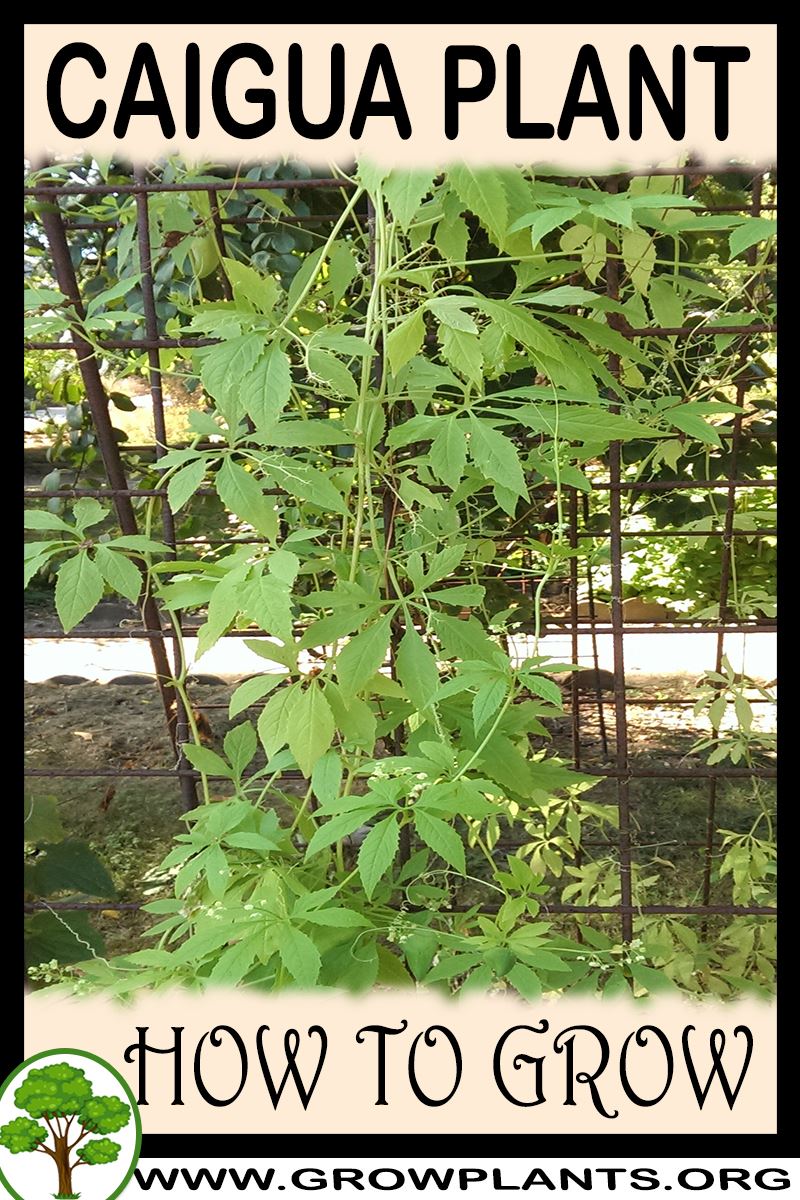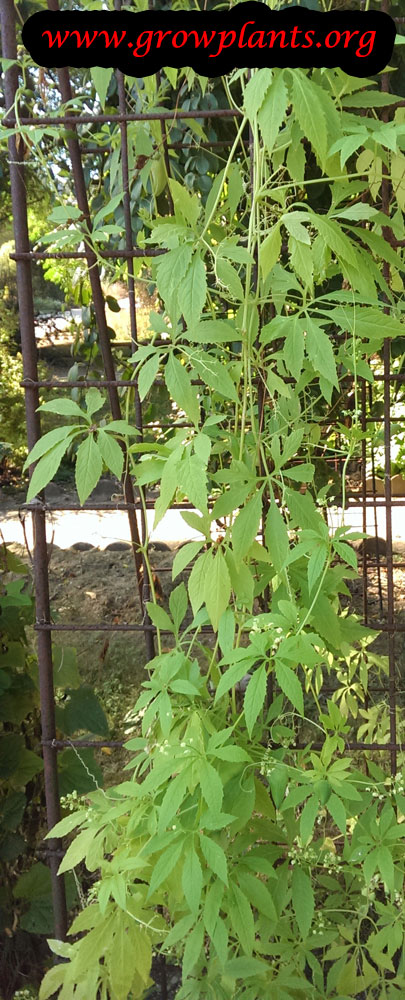


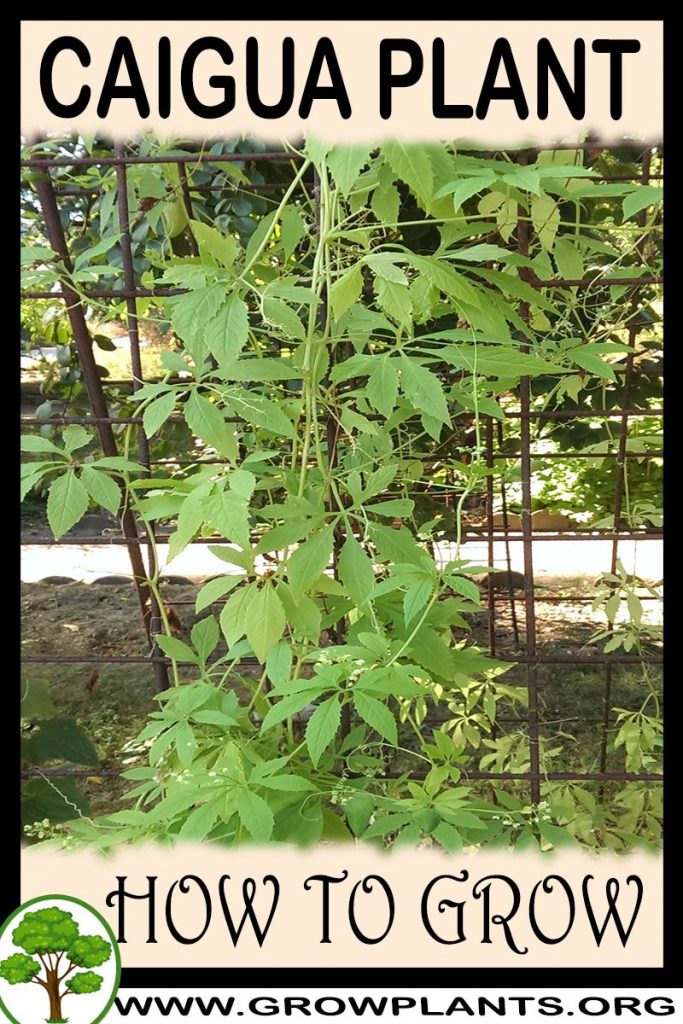
Plant Profile & Key Characteristics
Overview: Caigua is a fast-growing herbaceous climbing vine reaching 5-12 m (15-36 ft), evergreen in frost-free areas but usually grown as an annual where winters are cold. It is cultivated both as an edible crop – for its hollow green fruits, young shoots and lobed leaves – and as a fast ornamental screen.
Quick Specifications
| Specification | Attribute |
|---|---|
| Plant Type / Life Cycle | Perennial vine (grown as an annual in cold climates) |
| Foliage Type | Evergreen in frost-free climates; dies back where frost occurs |
| Mature Size | 5-12 m (15-36 ft) long |
| Growth Rate | Fast |
| Toxicity | Non-toxic / edible |
| Hardiness | USDA zone 7 and warmer |
Growth Form & Structure
- Height & Spread: Climbing vine 5-12 m (15-36 ft) long where trellised in the ground; stays smaller and more manageable in a container, but still needs support.
- Growth Habit & Form: Herbaceous tendril-climbing vine; a vigorous, aggressive scrambler that needs trellising.
- Lifespan & Maturity: Fast to establish, bearing fruit in about half a year from planting.
Anatomy & Physical Features
- Leaves & Foliage: Green, palmately divided into 5 or more lobes, 7-15 cm long; young leaves and shoots are edible.
- Flower Characteristics: Small white flowers, with separate male and female flowers on the same plant (monoecious).
- Fruit Profile: Green, elliptic to irregular fruit, some with soft spines, fleshy becoming hollow when mature, with black seeds.
Primary Uses & Landscape Value
- Edible Uses: Fruits eaten raw, cooked, pickled or stuffed; young leaves and shoots eaten raw or cooked.
- Functional & Ornamental Roles: Grown as an ornamental climber for quick screening on a trellis or fence.
Care Guide: Planting, Soil & Watering
Overview: Caigua is a fast, warm-season climbing vine that grows best in full sun to light shade and fertile, well-draining soil. It needs a sturdy trellis and steady, moderate moisture through the warm months.
Quick Care Requirements
| Requirement | Ideal Condition |
|---|---|
| Planting Season | Spring, after the last frost, once the soil is warm |
| Growth Rate | Fast |
| Soil Type | Fertile, well-draining soil rich in organic matter |
| Water Need | Moderate – keep evenly moist, water more in heat |
Planting & Establishment
- Best Planting Season: plant in spring once frost has passed and the soil has warmed; it is grown as an annual where winters are cold.
- How to Plant:
- Hole Preparation: dig a hole a little wider than the root ball, set beside a trellis or support the vine can climb.
- Soil Amendments: mix in compost or well-rotted organic matter to feed this hungry, fast-growing vine.
- Planting Depth: set the root ball level with the soil surface and keep the stem base at the surface – do not bury the stem.
- Growth Speed & Expectations: fast – it can be vigorous, even aggressive, and quickly covers a trellis 5–12 m in one warm season, so give it strong support.
Soil, Watering & Drainage Care
- Soil Mix & Drainage Needs: rich, free-draining soil; it also grows well in a large container with a quality, free-draining potting mix.
- Watering Schedule & Technique:
- Young / Newly Planted: keep the soil consistently moist while the vine establishes and starts to climb.
- Established: water regularly and deeply, not letting it dry out during active growth and fruiting.
- Seasonal Adjustments: water more during summer heat and ease off in cooler weather.
Climate, Light & Hardiness
Caigua is an Andean climbing cucurbit that grows in tropical to temperate climates, taking full sun or part shade, and is frost-tender. It is an evergreen perennial where frost-free and is grown as a warm-season annual wherever winters freeze.
Quick Climate Specifications
| Climate Zones | Tropical, subtropical, Mediterranean, and temperate |
| USDA Hardiness Zones | Site lists zone 7 upward; frost-free perennial, grown as an annual in colder areas |
| Optimal Temp Range | Approximately 18–30 °C (65–86 °F) |
| Cold Damage Begins | Chilling stress below roughly 10–13 °C (50–55 °F) |
| Approx. Survival Minimum | No frost tolerance - killed at or near 0 °C (32 °F) |
| Frost Tolerance | None |
| Light Conditions | Full sun (light part shade tolerated) |
| Wind Tolerance | Moderate |
Sunlight & Light Exposure
Optimal Light Setup
Full sun - give at least 6–8 hours of direct light a day for strong growth, good flowering, and well-ripened fruit. Shade reduces yield and delays or prevents ripening. It also accepts light or part shade, though fruiting and sweetness are best in full sun.
Direct Sun Requirement
Yes - a genuinely sun-demanding crop. Too little direct sun gives leggy growth, weak fruit set, and fruit that fails to ripen.
Shade & Heat Management
In extreme desert heat, light afternoon shade or shade cloth during the hottest hours protects leaves and flowers and helps prevent heat-related blossom drop.
Best Exposure & Orientation
In cool-summer regions a warm south- or west-facing aspect that banks heat gives the best ripening; in very hot desert areas an east-facing aspect with light afternoon shade eases heat stress.
Temperature Extremes & Hardiness
USDA Hardiness & Regional Limits
The site lists Caigua from about USDA zone 7 upward. It is an Andean climbing cucurbit that is an evergreen perennial only where the ground stays frost-free; where winters freeze it is grown as a warm-season annual. Hardiness and growing habit are separate: the top growth is frost-tender, yet the plant is easily cultivated as an annual across a wide range, and it tolerates milder, cooler, and partly shaded conditions better than melons do.
Cold Damage & Winter Protection
Growth slows in cool weather and the top growth is chilling- and frost-sensitive. Where the ground stays frost-free it behaves as an evergreen perennial and simply keeps growing; where frost occurs it is grown as an annual and removed at season's end.
Frost Sensitivity
Top growth is frost-tender and killed at or near 0 °C (32 °F). It survives winter only in essentially frost-free climates, where it persists as a perennial; elsewhere it is treated as an annual.
Extreme Heat Tolerance
Moderate - prefers warmth but handles milder, cooler summers better than melons; extreme, prolonged heat above about 35 °C (95 °F) can stress it and reduce fruit set.
Frost-Free Growing Season
Needs a warm, frost-free run of roughly half a year to fruit well. In colder regions start it early under cover and grow it through the frost-free season; unlike melons it copes with milder, less intensely hot summers.
Wind, Humidity & Microclimate
Humidity Preferences
Tolerates a range of summer humidity but does best in warm, airy conditions. High humidity with wet foliage encourages powdery mildew.
Dry-Air Tolerance
Tolerates moderately dry air well as long as soil moisture is kept up in the watering routine.
Wind Tolerance
Moderate - broad leaves and brittle stems can be damaged by strong wind, and windy conditions during flowering reduce pollinator visits and fruit set. A sheltered spot helps.
Rainfall & Seasonal Moisture
Suits a warm growing season with moderate moisture; avoid prolonged wet, humid spells, which favour powdery mildew. This describes seasonal climate, not a watering schedule.
Microclimate Recommendations
A warm, sheltered, sun-facing spot - for example a south-facing wall or slope in cooler climates - traps heat and lengthens the effective warm season, and dark mulch or plastic warms the soil early. Container root-zones heat, dry, and chill faster and are more wind- and frost-exposed, so shelter pots in extreme weather.
Growing in Pots, Balconies & Indoors
Caigua is a vigorous, climbing sun-loving vine that thrives in full sun, so it is not a houseplant – but grown in a large, free-draining pot it does well on a sunny balcony, patio or terrace. It is a vigorous, space-hungry climber, so give it a large, deep container and sturdy support.
Quick Details
- Container Size: A large, deep pot, about 20 L (5 gal) or more for this vigorous vine (general guidance – the grower confirms container growing but gave no size)
- Indoor Suitability: Not an indoor houseplant – it needs full sun; at most a compact cultivar on the very sunniest windowsill
- Best Spot: Full sun – the brightest, warmest spot on a balcony or patio
- Soil & Drainage: Well-drained, well-ventilated mix (potting mix, or peat/coir with perlite) with plenty of drainage holes
- Watering in Pots: Keep evenly moist but never waterlogged – it dislikes overwatering, and pots dry fast in the sun
Indoors & On the Windowsill
- Not a houseplant: The grower keeps it out of the house – indoor light is far too weak for this sun-loving crop.
- Windowsill limits: Only the very sunniest windowsill could support a compact cultivar; most plants of this size are better off outdoors.
- Annual, so no overwintering: This is a warm-season annual – rather than overwintering it, simply resow when the weather warms.
On a Balcony or Patio
- Light & wind: Give it the sunniest, most sheltered spot; train the vine up a strong trellis or netting and shelter it from wind; walls and paving reflect a lot of heat, so containers dry quickly – check moisture daily in warm weather.
- Practicalities: A full, wet pot is heavy, so make sure the balcony can take the weight, and manage drainage runoff.
Choosing the Pot, Soil & Long-Term Care
- Pot & drainage: Use a large, deep pot (about 20 L / 5 gal or more) with plenty of drainage holes; the grower stresses this crop does not tolerate overwatering, so never leave it standing in water (root rot). Terracotta breathes and dries faster; glazed or plastic holds moisture longer.
- Potting mix: A well-aerated, well-ventilated mix – potting mix, or peat/coir with perlite – as the grower recommends.
- Feeding: Potted plants need feeding more often than those in the ground, since watering leaches nutrients from the mix – feed regularly through the growing season.
Grower’s Container Tip
- Watch the saucer: If you stand the pot on a tray or saucer, make sure it dries out the same day – never let the roots sit in collected water.
Growing this plant in a greenhouse
A greenhouse can give caigua frost protection, cold protection, a longer growing season and controlled production. Under warm enough conditions it can keep growing well beyond the normal outdoor season and potentially be maintained year-round - though continuous cropping is not guaranteed and depends on temperature and light.
Greenhouse at a glance
| Greenhouse suitability | Excellent - a major practical advantage |
|---|---|
| Main benefits | frost protection, cold protection, a longer growing season, controlled production |
| Season extension | potentially year-round |
| Outdoor protection advisable below | about 13°C |
| Maintain greenhouse minimum | around 15°C for active growth |
| Suitable types | heated greenhouse, polycarbonate greenhouse, lean-to |
| Heating | Heating is recommended in cold climates for continuous growth. |
Related greenhouse guides
- Greenhouses: How to Choose the Right Greenhouse
- Best Greenhouse Heaters
- Greenhouse Climate Control: Temperature, Ventilation and Humidity
- Best Lean-To Greenhouses
Fertilizing & Feeding
This is a productive, appreciably hungry crop that responds to steady, balanced feeding and generous organic matter, leaning on nitrogen while the vines grow and favoring potassium as fruit develops.
Quick Fertilizing Specs
| Feeding Level | Moderate |
|---|---|
| Main Nutrient Priority | Balanced overall, nitrogen for the vines and potassium as fruit forms |
| Best Feeding Period | Through the warm active growing season |
| Organic Options | Compost, well-rotted manure, and general organic vegetable fertilizers |
| Soil pH | Slightly acidic to near neutral |
| Micronutrients | Usually supplied by compost and a complete fertilizer, and corrected only if a deficiency shows |
Feeding by Growth Stage
Establishment of young plants
Settle young plants and build a healthy root system and first true leaves.
| Nutrient direction | A balanced, complete feeding that supports steady root and early leaf growth without pushing soft, excessive top growth. |
|---|---|
| Timing | From transplanting or seedling establishment through the first flush of vine growth. |
| Frequency | Light, regular feeding while young plants establish. |
| Fertilizer types | A balanced complete vegetable fertilizer, Compost or other organic matter worked into the bed |
| Precautions | Avoid heavy nitrogen early, which encourages lush foliage at the expense of sturdy establishment. |
Vegetative vine growth
Build ample leaf area and strong vines ahead of flowering.
| Nutrient direction | A nitrogen-forward complete feeding to drive vigorous leaf and vine expansion. |
|---|---|
| Timing | During active spreading of the vines before heavy flowering. |
| Frequency | Steady feeding through the main growth phase. |
| Fertilizer types | A nitrogen-leaning complete fertilizer, Well-rotted compost as a supplement |
| Precautions | Keep feeding balanced overall, since runaway nitrogen can delay flowering and fruit set. |
Flowering and fruit development
Support abundant flowers, good fruit set, and quality fruit development.
| Nutrient direction | Shift toward a balanced feeding with strong potassium to support flowering, fruit set, and fruit filling. |
|---|---|
| Timing | From first flowering through fruit sizing and ripening. |
| Frequency | Regular feeding that continues through fruit development. |
| Fertilizer types | A balanced fertilizer with good potassium, Compost or a vegetable fertilizer suited to fruiting crops |
| Precautions | Keep watering even and consistent during fruiting to help calcium reach developing fruit and reduce blossom-end problems. |
Nutrient Deficiency Signs & Corrections
Older, lower leaves turn pale green to yellow and overall growth slows.
| Possible causes | Low soil nitrogen, Cold, wet soil that limits nitrogen uptake, Nitrogen leaching from sandy soil or heavy watering |
|---|---|
| Appears first on | Older, lower leaves |
| What to check | The color gradient from old to new leaves, Recent watering and rainfall, Whether any nitrogen has been applied during rapid growth |
| Possible correction | Apply a nitrogen-containing complete fertilizer and improve organic matter, and make sure soil is warm and well-drained so roots can take up nitrogen. |
Yellowing between the veins of older leaves while the veins themselves stay green.
| Possible causes | Low soil magnesium, High potassium levels competing with magnesium uptake, Acidic or heavily leached, sandy soil |
|---|---|
| Appears first on | Older, lower leaves |
| What to check | The pattern of interveinal yellowing versus whole-leaf yellowing, Soil acidity and recent high-potassium feeding, Drainage and leaching history |
| Possible correction | Correct soil acidity if needed and apply a magnesium source such as a soluble or chelated magnesium product per its label. |
A sunken, dark, leathery patch forms at the blossom end of developing fruit.
| Possible causes | Disrupted calcium movement into the fruit, Uneven or irregular watering, Excess nitrogen driving fast leafy growth |
|---|---|
| Appears first on | Blossom end of young, developing fruit |
| What to check | Consistency of soil moisture, Recent high-nitrogen feeding, Mulch and watering routine |
| Possible correction | Keep soil moisture even, mulch to buffer drying, and avoid excess nitrogen so calcium can reach developing fruit. |
Pruning, Training & Seasonal Maintenance
Caigua is a vigorous, aggressive-growing vine that can extend 5–12 m in a season, so unlike the smaller cucurbits in this group, its main pruning task is restraining size and directing growth onto a sturdy trellis rather than simple sanitary leaf removal. Cutting is tolerated well – the source describes pruning here as being done for design – and because the tips are also harvested as young edible shoots, regular tip removal is normal for this plant and encourages further branching rather than harming it.
Quick Pruning & Maintenance Specs
| Pruning Tolerance | Moderate to High |
| Primary Pruning Window | All year where grown as a perennial; through the growing season where grown as an annual |
| Main Objective | Restrain aggressive growth, train onto a trellis, shape for design |
| Young Plant Priority | Establish a strong leader onto a sturdy support able to carry a large vine |
| Mature Plant Priority | Ongoing containment – cut back extending growth to keep it within its allotted space |
| Best Tool Type | Bypass secateurs for stems; precision snips for tips/young shoots |
| Avoid Heavy Pruning During | Active flowering/fruiting flush (spring–autumn), if a fruit crop is wanted from that flush |
Pruning by Plant Age & Size
Newly Established
Minimal pruning; establish the plant onto a strong trellis or arbor built for a vine that can reach 5–12 m.
Young / Formative
Cane/vine training onto the trellis, with regular tip pinching of young growth – this is also how the edible shoots are harvested, and it naturally encourages a bushier, more branched vine rather than one long runner.
Mature / Established
Because the difficulty rating for this plant is aggressive, ongoing cutting back is the main mature-plant task – controlling spread and preventing it from overwhelming its support or neighboring plants, more so than any fruiting-wood logic.
Seasonal Pruning Schedule
Ongoing Sanitary & Growth Control (all year / all season)
Objective: keep the aggressive vine within bounds and encourage branching. Remove: excess extending growth, tips (doubling as shoot harvest). Do not remove: so much growth at once that the trellis is left bare, since this is a fast grower that can also be cut back hard if needed. Expected response: vigorous rebranching. Flowering/fruiting impact: tip removal on actively extending growth has little effect on the separate flowering laterals, since flowers/fruit form through spring–autumn on current growth throughout the vine.
Structural Pruning & Training
Vine training on a robust trellis or arbor is essential given the mature size. Because this species is described as aggressive, canopy thinning helps here (unlike the compact melons in this batch) – opening up congested growth improves airflow and access, and the plant recovers quickly.
Special Growth to Remove
- Excess extending vine growth, cut back to control spread.
- Young shoot tips – regularly removed both for design and as an edible harvest, which also promotes branching.
Container & Small-Space Pruning
Given its 5–12 m potential size, container growing calls for much more assertive size control than the other vines in this batch – frequent tip pinching and hard seasonal cutback are needed to keep a containerized caigua manageable, rather than the light sanitary-only approach that suits smaller melons.
Tools
- Bypass secateurs – for routine stem cutback on this vigorous vine.
- Precision snips – for pinching young tips/shoots.
- Loppers – for thicker growth if the vine is left to age on a permanent trellis.
Tool Hygiene & Disease Risk
Routine: clean, sharp tools are sufficient – no specific transmissible disease risk is noted for this species beyond general pest pressure (birds and slugs affect the fruit, not pruning cuts).
Cut Placement & Technique
Pinch young tips just above a leaf node to encourage branching. For heavier cutback of extending vine, cut back to a strong lateral or node rather than leaving long bare stubs.
Heavy Pruning & Rejuvenation
Tolerated well – as an aggressive, fast-growing vine, caigua can be cut back hard to control size without lasting harm, with vigorous regrowth expected. Where grown as a perennial, this is the main tool for keeping a multi-year vine in bounds.
Post-Pruning Care
After a hard cutback, expect rapid regrowth given the plant’s fast growth rate; keep watering consistent through the regrowth flush. No special wound care is needed on this soft-stemmed vine.
Common Pruning Mistakes
- Under-pruning an aggressive vine and letting it overwhelm its trellis or nearby plants.
- Using a support too light for a vine that can reach 5–12 m.
- Treating tip removal as harmful, when for this plant it is a normal, beneficial practice.
When NOT to Prune
- Avoid removing all current growth in one pass during an active flowering/fruiting flush if a fruit crop from that flush is wanted.
Recommended Tools (by task)
- bypass_secateurs – for routine growth control on this vigorous vine.
- precision_snips – for pinching young shoot tips.
- loppers – for thicker stems if left to establish on a permanent structure.
- soft_ties_stakes – for training onto a sturdy trellis.
Pruning Troubleshooting
| Problem | Possible Cause | What to Check | Corrective Action |
| Vine overwhelms its trellis or spreads into neighboring plants | Insufficient cutback for an aggressive-growth species | Check how long since the last hard cutback | Cut back extending growth regularly through the growing season |
| Sparse branching, one long runner | Tips never pinched | Look for a lack of side-branching | Pinch young tips to force lateral growth |
Propagation Guide
Caigua is grown from seed, either sown directly outdoors once the weather is warm or started as young nursery seedlings; grafting or other vegetative propagation is not needed. It is a vigorous, easy-to-start vine typical of the cucumber family.
Quick Propagation Specs
| Best Propagation Method | Direct sowing or transplanting seedlings |
| Propagation Difficulty | Easy |
| Seed True-to-Type | Usually true-to-type – caigua has few named cultivars, but seed can cross with other Cyclanthera plants if grown nearby |
| Best Propagation Season | Spring |
| Germination Temperature | Warm soil, similar to other cucurbit vines – roughly 20–25°C (68–77°F) |
Growing from Seed
Sowing Season
Sow in spring once the danger of frost has passed and the soil has warmed.
Germination Conditions
Like related cucurbit vines, seed germinates best in consistently moist, warm soil in full sun; the site does not give a precise sowing depth, but a shallow covering typical of cucurbit seed is appropriate.
Germination Time
Germination generally takes a couple of weeks under warm, moist conditions, though exact timing was not documented for this plant specifically.
Seedling Care
Provide full sun to half shade, average water, and a sturdy trellis or support early, since this is a fast-growing, vigorous vine that can reach 5–12 m (15–36 ft).
Bloom & Flower Guide
Quick Details
- Bloom Season: Spring, summer and autumn
- Flower Appearance: Small white flowers, with separate male and female flowers borne on the same plant (monoecious)
- Edibility: Flowers are ornamental – this vine is grown for its edible fruit, not its flowers
Detailed Blooming Overview
Caigua is a scrambling vine that carries small white flowers over a long warm season. It is monoecious: many small male flowers appear in little sprays, while the female flowers sit singly and go on to form the hollow fruits the plant is grown for. Good flowering and insect activity are what set the crop.
Flower Characteristics
- Small, white flowers.
- Separate male and female flowers on the same plant.
Bloom Care & Thinning
- Pollination: Worked by bees, which move pollen from the male to the female flowers.
- Encouraging fruit set: Grow in a sunny, sheltered spot with pollinators around so the female flowers set well.
Fruit & Uses
Caigua is grown for its edible pod-like fruit, eaten raw, cooked, pickled or stuffed, and for its edible young leaves and shoot tips, eaten raw or cooked.
Quick Edible Specs
| Edible Parts | Fruit (pod), young leaves, young shoots |
|---|---|
| Main Use(s) | Culinary – fruit as a raw/cooked/pickled/stuffed vegetable; leaves and shoots as cooked or raw greens |
| Eaten Raw or Cooked | Fruit: both. Leaves and shoots: both |
| Preparation Required | None for young fruit; larger, older pods may need deseeding as the interior hollows and seeds harden |
| Harvest Season | Fruit: spring, summer and autumn. Leaves/shoots: all year |
| Time to First Harvest | Roughly half a year from planting (see Propagation) |
| Storage | Best used fresh |
| Safety/Toxicity Caveat | None noted |
Fruit
Pods are green, elliptic to irregular in shape, sometimes bearing soft spikes. Harvest while still young and fleshy for the best eating quality – the flesh is used raw, cooked, pickled or stuffed like a pepper. Left too long, the interior becomes hollow and the seeds inside turn black and hard.
Leaves & Greens
Young, tender leaves are cut and eaten raw or cooked; they’re often harvested together with the young shoot tips rather than separately, similar to picking pea shoots. Leaves and shoots can be cut year-round. Because the plant is also grown for its fruit, taking large amounts of leaves and shoots can reduce the vigor available for fruiting, so it’s worth balancing how much foliage is picked against how much fruit is wanted.
Preparation, Uses & Safety
Fruit is eaten raw, cooked, pickled or stuffed. Leaves and young shoots are eaten raw or cooked (e.g. stir-fried). No safety caveats are noted for this species.
Pests, Diseases & Troubleshooting
Overview: Caigua (Cyclanthera pedata) is a vigorous cucurbit vine and, being aromatic and fast-growing, is noticeably more pest-resistant than cucumbers or squash, though it shares the classic cucurbit threats. Its main risks are sap-sucking insects that vector mosaic viruses, chewing beetles, and foliar mildews in humid weather. Grow it in sun with good airflow, keep it vigorous, and lean on prevention, floating covers and beneficials before sprays.
Quick Troubleshooting Overview
| Issue / Pest | Main Symptom | Primary Solution |
|---|---|---|
| Aphids | Curled shoot tips, honeydew, sooty mould; virus spread | Rinse off; insecticidal soap or neem; encourage predators |
| Cucumber beetles | Chewed leaves and flowers; spread bacterial wilt | Floating row cover; hand-pick; kaolin clay; trap crops |
| Spider mites | Fine stippling and webbing in hot, dry spells | Raise humidity; hose down; horticultural oil |
| Powdery mildew | White powdery coating on leaves late in season | Airflow; resistant habit; sulfur or potassium bicarbonate |
| Mosaic virus | Mottled, distorted leaves and stunting | Control aphids; remove infected plants; manage weeds |
Common Pests & Management
- Aphids (Aphis gossypii):
- Symptoms: Clusters of small soft insects on shoot tips and leaf undersides suck sap, curl the growth and drop honeydew that blackens with sooty mould; crucially, they transmit cucurbit mosaic viruses.
- Prevention & Control: Blast off with water, spray insecticidal soap or neem on the undersides, and encourage ladybirds, lacewings and hoverflies; early control also limits virus spread.
- Cucumber beetles (Diabrotica / Acalymma species):
- Symptoms: Yellow-and-black striped or spotted beetles chew leaves, flowers and young fruit and, more seriously, spread bacterial wilt as they feed. Larvae feed on roots.
- Prevention & Control: Protect young plants with floating row cover (lift at flowering for pollination), hand-pick beetles, use yellow sticky traps and kaolin clay, and clear crop debris where they overwinter.
- Spider mites (Tetranychus urticae):
- Symptoms: In hot, dry weather leaves show fine pale stippling, then bronze and dry, with delicate webbing on the undersides.
- Prevention & Control: Raise humidity, hose the undersides regularly, and apply horticultural oil or insecticidal soap; avoid drought-stressing the vine.
- Whiteflies (Bemisia / Trialeurodes species):
- Symptoms: Tiny white flies rise in clouds when disturbed, sucking sap, weakening the vine and spreading virus; honeydew fouls the leaves.
- Prevention & Control: Hang yellow sticky traps, rinse foliage, apply insecticidal soap, and encourage parasitic wasps; remove heavily infested lower leaves.
- Squash bugs (Anasa tristis):
- Symptoms: Grey-brown shield-shaped bugs and their bronze egg clusters on leaf undersides cause wilting and speckled, dying foliage.
- Prevention & Control: Hand-pick bugs and crush egg masses, trap them under boards laid at night, remove debris, and treat nymphs with insecticidal soap while young.
- Slugs, snails and birds (various species):
- Symptoms: Slugs and snails rasp holes in seedlings and low leaves, while birds may peck at soft new growth and fruit.
- Prevention & Control: Hand-pick molluscs after dark, use iron-phosphate bait and copper barriers, and net or use deterrents where birds are a problem.
Diseases & Fungal Issues
- Powdery mildew (Podosphaera / Erysiphe species):
- Symptoms: White powdery patches spread over leaves and stems, especially late in the season and in crowded plantings, yellowing and killing foliage.
- Treatment & Management: Space and trellis for airflow, avoid excess nitrogen, remove affected leaves, and spray sulfur, potassium bicarbonate or a milk-based solution; caigua is fairly tolerant.
- Downy mildew (Pseudoperonospora cubensis):
- Symptoms: Angular yellow blotches bounded by leaf veins on the upper surface with grey-purple fuzz beneath in cool, wet, humid conditions.
- Treatment & Management: Improve airflow, avoid wetting foliage, water early in the day, remove infected leaves, and use a copper fungicide preventively where the disease is common.
- Cucurbit mosaic viruses (CMV / WMV / ZYMV):
- Symptoms: Mottled light-and-dark green, distorted, blistered leaves, stunting and malformed fruit; incurable and spread by aphids.
- Treatment & Management: No cure; control aphids, remove and destroy infected plants promptly, manage weed reservoirs, and disinfect hands and tools.
- Bacterial wilt (Erwinia tracheiphila):
- Symptoms: Sudden wilting of runners then the whole vine, with sticky bacterial ooze that strings out when a cut stem is pressed; spread by cucumber beetles.
- Treatment & Management: No cure once infected; the key is controlling cucumber beetles, removing wilted plants immediately, and protecting young plants with covers.
- Anthracnose (Colletotrichum orbiculare):
- Symptoms: Dark, water-soaked spots on leaves and sunken lesions on fruit and stems in warm, wet weather.
- Treatment & Management: Rotate crops, use clean seed, avoid working plants when wet, remove debris, and apply a copper fungicide in persistent wet conditions.
Growing Difficulties & Abiotic Problems
- Poor fruit set:
- Cause & Symptoms: Cucurbits need insect pollination; cold, wet or pollinator-poor conditions, or covers left on at flowering, cause flowers to drop without setting.
- Correction Strategy: Lift row covers when flowering, plant pollinator-friendly flowers nearby, and hand-pollinate by transferring pollen from male to female flowers if needed.
- Blossom and fruit drop:
- Cause & Symptoms: Heat stress, drought or erratic watering cause young fruit and flowers to abort.
- Correction Strategy: Keep soil evenly moist with mulch, water deeply and regularly, and avoid heavy nitrogen that favours foliage over fruit.
- Sunscald and leaf scorch:
- Cause & Symptoms: Exposed fruit and stressed leaves bleach and scald in intense sun, especially if defoliated by disease.
- Correction Strategy: Maintain healthy leaf cover, keep the vine vigorous and watered, and provide light afternoon shade in very hot climates.
What Helps – Products & Tools
Prevention does most of the work: floating row covers, trellising for airflow and healthy watering. Keep insecticidal soap and neem oil for aphids, whitefly and mites, kaolin clay and yellow sticky traps for cucumber beetles and whitefly, iron-phosphate bait for slugs, and a copper fungicide or sulfur/potassium-bicarbonate spray for downy and powdery mildew. Apply oils in the evening and follow the label to protect the bees this crop depends on.
Frequently Asked Questions
What is caigua grown for?
Caigua is a fast-growing tropical vine grown for its hollow, mild green fruit and edible young shoots, and sometimes as an ornamental climber. It is a vigorous climbing vine reaching 5-12 m (15-36 ft), evergreen in frost-free areas but usually grown as an annual where winters are cold.
Why does caigua need such a sturdy support or trellis?
Caigua is a fast-growing climbing vine that reaches 5-12 m (15-36 ft), so it needs a sturdy trellis and steady, moderate moisture through the warm months to carry that much growth.
Which parts of caigua can you eat, and how?
Caigua is grown for its edible pod-like fruit, eaten raw, cooked, pickled or stuffed, and for its edible young leaves and shoot tips, eaten raw or cooked.
Can you grow caigua in a pot or container?
Yes. Caigua is a vigorous, climbing sun-loving vine that thrives in full sun, so it is not a houseplant – but grown in a large, free-draining pot it does well on a sunny balcony, patio or terrace. Use a large, deep pot, about 20 L (5 gal) or more for this vigorous vine, and give it a sturdy support to climb.
Is caigua frost-hardy, or does it need to be grown as an annual?
Caigua is frost-tender: it is an evergreen perennial where frost-free and is grown as a warm-season annual wherever winters freeze. Frost tolerance is none, and top growth is killed at or near 0 °C (32 °F); the site lists it from zone 7 upward as a frost-free perennial, grown as an annual in colder areas.
What pests and diseases affect caigua?
Caigua is a vigorous cucurbit vine and, being aromatic and fast-growing, is noticeably more pest-resistant than cucumbers or squash, though it shares the classic cucurbit threats. Its main risks are sap-sucking insects that vector mosaic viruses, chewing beetles, and foliar mildews in humid weather.