

Plant Profile & Key Characteristics
Overview: Encephalartos is a slow-growing evergreen cycad forming a stout, palm-like trunk 1-5 m (3-15 ft) tall crowned with stiff pinnate leaves. It is grown as a striking architectural ornamental; all parts are poisonous.
Quick Specifications
| Specification | Attribute |
|---|---|
| Plant Type / Life Cycle | Perennial (cycad) |
| Foliage Type | Evergreen |
| Mature Size | 1-5 m (3-15 ft) tall |
| Growth Rate | Slow |
| Toxicity | Toxic – all parts poisonous if ingested |
| Hardiness | USDA zone 8+ |
Growth Form & Structure
- Height & Spread: Stout trunked plant 1-5 m (3-15 ft) tall; slow enough to grow long-term in large containers and indoors.
- Growth Habit & Form: Palm-like cycad with a thick woody trunk topped by a rosette of arching pinnate fronds.
- Lifespan & Maturity: Very long-lived and slow to mature.
Anatomy & Physical Features
- Trunk & Bark: Thick, rough, woody trunk.
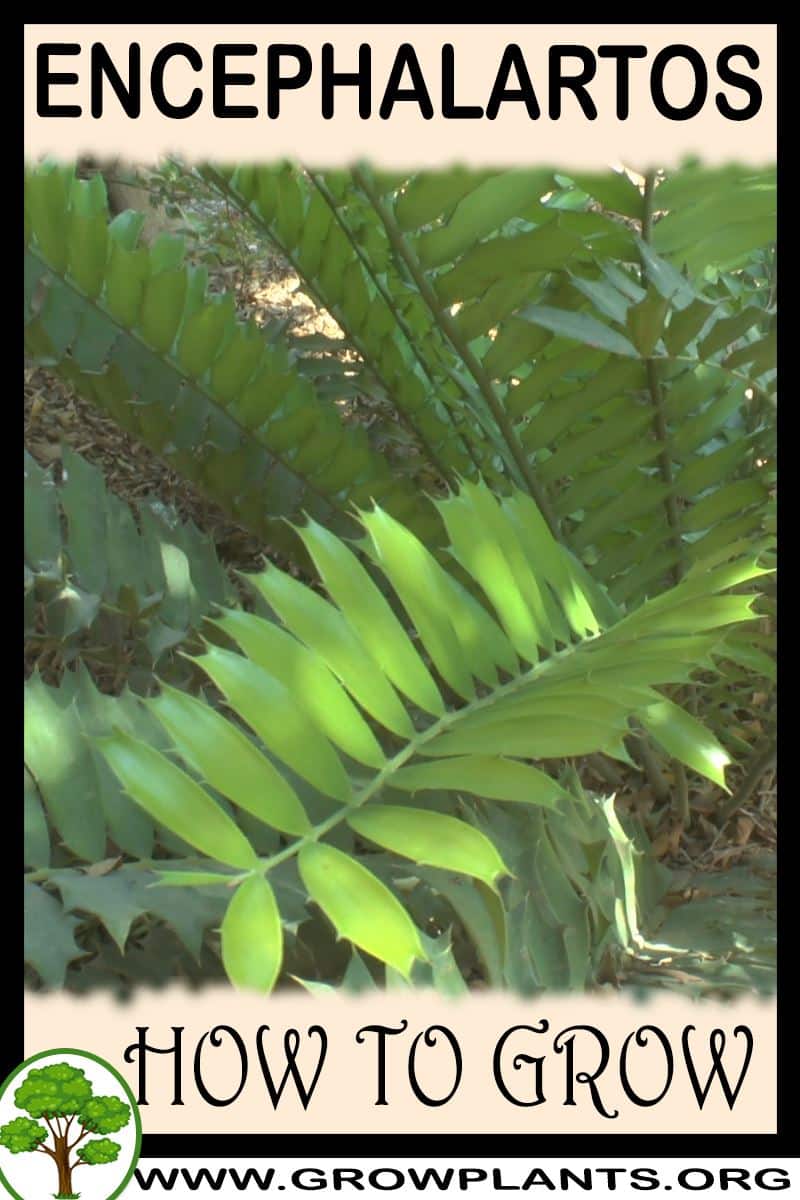
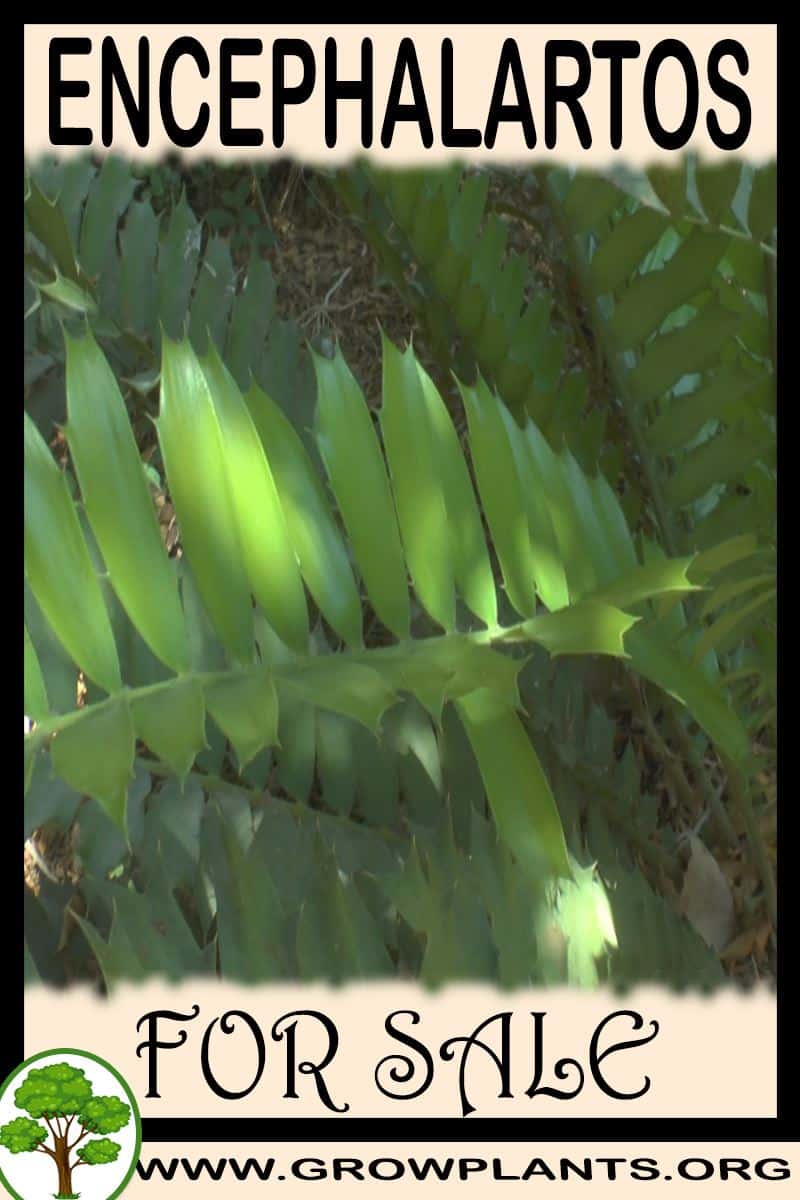
- Leaves & Foliage: Stiff green linear leaflets arranged in pinnate, feather-like fronds.
- Flower Characteristics: Not a true flowering plant – reproduces by yellow-brown cones borne on separate male and female plants (male cone-shaped, female feathery).
Primary Uses & Landscape Value
- Functional & Ornamental Roles: Grown as an architectural ornamental specimen for beds, large containers and interiors.
Care Guide: Planting, Soil & Watering
Overview: Encephalartos is a slow-growing cycad that prizes sharp drainage and a sunny to lightly shaded position. It is drought-tolerant once established and rots easily in soggy soil, so a gritty, free-draining medium is essential.
Quick Care Requirements
| Requirement | Ideal Condition |
|---|---|
| Planting Season | Warm season (spring through autumn) |
| Growth Rate | Slow |
| Soil Type | Well-drained, gritty or sandy |
| Water Need | Low to moderate – let the soil dry between waterings |
Planting & Establishment
- Best Planting Season: Plant in the warm season, from spring through autumn, so the roots establish in warmth.
- How to Plant:
- Hole Preparation: Dig a hole about twice the width of the root ball and equal in depth, loosening heavy soil for drainage.
- Soil Amendments: Mix in coarse sand or grit to guarantee fast drainage; avoid rich, water-holding soils around the stem base.
- Planting Depth: Set the plant with the base of the stem (caudex) at soil level – burying it invites rot.
- Growth Speed & Expectations: Growth is very slow; a cycad adds little each year but is exceptionally long-lived.
Soil, Watering & Drainage Care
- Soil Mix & Drainage Needs: Free drainage is critical – the fleshy stem rots in wet soil; a sandy, gritty mix suits both ground and containers.
- Watering Schedule & Technique:
- Young / Newly Planted: Water moderately while establishing, allowing the top of the soil to dry between waterings.
- Established: Water deeply but infrequently; established plants are drought-tolerant and prefer to dry out between drinks.
- Seasonal Adjustments: Water sparingly in cool months to avoid rot, and a little more during warm, active growth.
Climate, Light & Hardiness
Bread trees are slow-growing African cycads for warm subtropical, Mediterranean, warm-temperate and mild desert climates, and they can be grown as container or indoor plants where winters are cold. They take full sun to full shade, and their frost-tenderness - which varies between species - is the main factor governing outdoor culture.
Quick Climate Specifications
| Climate Zones | Subtropical, Mediterranean, warm temperate, mild desert, tropical; indoors in cold regions |
| USDA Hardiness Zones | Approximately zone 8 and warmer (per site data) |
| Optimal Temp Range | Approximately 20–32 °C (68–90 °F) |
| Cold Damage Begins | Foliage suffers with frost near 0 °C (32 °F) |
| Frost Tolerance | Low (varies by species) |
| Light Conditions | Full sun to full shade |
Sunlight & Light Exposure
Optimal Light Setup
Full sun to full shade; strong light produces a sturdy, compact plant, while shade is tolerated with slower growth.
Direct Sun Requirement
Not essential; the genus adapts to a broad light range, and many species relish full sun.
Shade & Heat Management
Shield soft new fronds from the most intense sun until they firm up.
Temperature Extremes & Hardiness
USDA Hardiness & Regional Limits
The site places the genus around zone 8 and warmer. Cold tolerance varies considerably between species, so verify the specific plant rather than assuming one figure.
Cold Damage & Winter Protection
Freezing damages the foliage and young plants are more vulnerable; in cold regions grow in containers moved under cover for winter.
Frost Sensitivity
Foliage is frost-tender; some species take brief light frost, but hard freezes cause damage.
Extreme Heat Tolerance
Good; these are warmth- and sun-tolerant plants adapted to hot climates.
Wind, Humidity & Microclimate
Dry-Air Tolerance
Good; the stiff, leathery fronds handle dry air well once established.
Wind Tolerance
Moderate to high; the rigid fronds are quite wind-resistant.
Microclimate Recommendations
A warm, sunny, well-drained, frost-free position suits them outdoors; container roots cool faster in winter and benefit from added protection.
Growing in Pots, Balconies & Indoors
Bread trees (Encephalartos) are slow-growing, palm-like cycads the grower confirms can be grown indoors and in containers. Their bold, stiff crowns make dramatic long-lived specimens, and being slow and tender (zone 8+) they suit pot culture, staying in scale for years and moving under frost-free cover in cold climates.
Quick Details
- Container Size: Snug – a 10-30 L (2.5-8 gal) pot suits this slow 1-5 m plant; it likes to be somewhat pot-bound
- Indoor Suitability: A genuine houseplant in a bright spot (grower: yes)
- Best Spot: Full sun to half shade, indoors or out; tolerates full shade but grows slower
- Soil & Drainage: Very free-draining, gritty mix (grower: well-drained)
- Watering in Pots: Sparing – let the top dry between waterings; never leave it standing wet
Indoors & On the Windowsill
- A true houseplant: Give it the brightest position available; it is tough, slow and very long-lived as an indoor feature.
- Care indoors: Water only when the top of the mix dries, feed sparingly, and keep it from cold draughts; expect slow, occasional flushes of new leaves.
- Overwintering: As a tender plant it can stay indoors year-round in cold climates, or come in from the patio before frost.
On a Balcony or Patio
- Light & shelter: It enjoys a warm, bright patio in the growing season; acclimatise it to stronger sun slowly to prevent scorch.
- Watering: Even outdoors, let pots dry between waterings – this drought-tolerant plant rots in wet soil.
Choosing the Pot, Soil & Long-Term Care
- Pot & drainage: A pot with strong drainage holes; skip a standing water saucer so roots never sit wet. Terracotta breathes and dries well, suiting this dry-loving plant.
- Potting mix: A gritty, very free-draining mix – potting compost with coarse sand, grit or perlite.
- Feeding: Feed lightly once or twice in the growing season; nutrients leach from pots, but this slow plant needs little.
- Repotting: It dislikes disturbance – repot only every few years and refresh the surface mix between times.
- Safety: All parts are poisonous – keep it well away from children and pets, and wash hands after handling.
Fertilizing & Feeding
A slow-growing, light feeder – a little balanced fertilizer with micronutrients during warm-season growth is all it needs, and none while it rests.
Quick Fertilizing Specs
| Feeding Level | Light |
|---|---|
| Main Nutrient Priority | A balanced complete feed with micronutrients |
| Best Feeding Period | Warm active growing season |
| Organic Options | Compost or slow-release organic granules |
| Micronutrients | Watch for manganese and magnesium on a palm-type feed |
| Soil pH | Well-drained soil; adaptable, near neutral |
| Reduce/Stop Feeding | Ease off feeding in the cool, low-growth season |
Feeding by Growth Stage
Newly planted / establishing
Encourage steady root establishment on a slow-growing plant without pushing soft growth.
| Nutrient direction | A gentle, balanced complete fertilizer after new growth appears; keep it light. |
|---|---|
| Timing | After planting, as the plant settles and begins to root. |
| Frequency | A light feeding during the warm active growing season is usually enough. |
| Fertilizer types | A balanced complete fertilizer, Slow-release granular fertilizer |
| Precautions | Avoid heavy feeding; excess fertilizer salts can scorch the roots of a slow grower. |
Active growth (warm season)
Support new frond flushes and firm, green foliage during the warm growing season.
| Nutrient direction | A balanced complete fertilizer that also supplies micronutrients; keep feeding light and steady. |
|---|---|
| Timing | Through the warm active growing season when new fronds emerge. |
| Frequency | Light feedings spread across the growing season; this is a slow, low-demand plant. |
| Fertilizer types | A balanced complete fertilizer with micronutrients, Slow-release palm-and-cycad type fertilizer |
| Routine trace nutrients | manganese, magnesium |
| Precautions | Avoid overfeeding; cycads are slow feeders and are prone to fertilizer burn. |
Cool-season rest
Let the plant rest while growth is minimal in cool or low-light conditions.
| Nutrient direction | None – withhold fertilizer while the plant is not actively growing. |
|---|---|
| Timing | During cool or dim months when frond production stops. |
| Frequency | No feeding at this stage. |
| Fertilizer types | No feeding at this stage until warm-season growth resumes. |
| Precautions | Do not fertilize a resting plant; wait for active growth to return. |
Nutrient Deficiency Signs & Corrections
New fronds emerge small, yellowish and weak, with frizzled or dead leaflets (“frizzle top”).
| Possible causes | Low manganese availability, High or alkaline soil pH reducing manganese uptake, Cold, wet or poorly drained soil limiting root function |
|---|---|
| Appears first on | Newest emerging fronds |
| What to check | soil pH, drainage and root health, whether feeding includes micronutrients |
| Possible correction | Correct soil pH and drainage, and apply a manganese-containing product following its label. |
Older, lower fronds show yellowing along the margins while the centre stays greener.
| Possible causes | Low magnesium availability, Leaching from sandy or container soils, Competition from high potassium |
|---|---|
| Appears first on | Older, lower fronds |
| What to check | soil test for magnesium, recent leaching or heavy watering, overall fertilizer balance |
| Possible correction | Apply a magnesium source such as a labelled Epsom-salt or dolomitic product following its guidance. |
Frond tips and margins turn brown and scorched, often after feeding.
| Possible causes | Excess fertilizer salts in the root zone, Insufficient leaching or watering, Feeding a plant that is not actively growing |
|---|---|
| Appears first on | Frond tips and margins |
| What to check | recent fertilizer applications, soil drainage, how thoroughly the plant is watered |
| Possible correction | Water thoroughly to flush excess salts and lighten future feeding. |
Pruning, Training & Seasonal Maintenance
Encephalartos is a cycad, not a palm or a fern – it grows from a single apical crown on a stout trunk and adds a whole ring of fronds in one slow flush, so its pruning tolerance is very low. The only routine cut is removing fully dead or broken fronds; healthy green fronds should be left in place because they feed the plant and shelter the growing point. It does not respond to structural or size-reducing pruning, and cutting into the crown can end the plant.
Quick Pruning & Maintenance Specs
| Pruning Tolerance | Very low – sanitary frond removal only |
| Primary Pruning Window | Any time a frond is fully dead (year-round) |
| Typical Frequency | Once or twice a year; this is a slow-growing plant |
| Main Objective | Remove spent fronds and old cones; keep the single crown intact |
| Young Plant Priority | Retain every healthy frond to build energy |
| Mature Plant Priority | Tidy fully-browned lower fronds and spent male cones |
| Best Tool Type | Bypass secateurs; a pruning saw for thick old frond bases |
| Avoid Heavy Pruning During | The soft new-frond flush – the emerging ring bruises easily |
Pruning by Plant Age & Size
Newly Established
Remove nothing but damaged or snapped fronds. A young cycad establishes very slowly and needs all of its leaf area; premature frond removal can stall it for years.
Young / Formative
No structural training applies – a cycad has one growing point and cannot be shaped into a branch framework. Let each annual flush harden and keep the crown undamaged.
Mature / Established
Limit cuts to fronds that have gone fully brown at the base, plus dried male cones. Basal offsets (pups) may be detached at the trunk if you want to propagate or keep a single clean stem.
Seasonal Pruning Schedule
Ongoing Sanitary
Objective: keep the trunk tidy and reduce hiding places for scale and the leaf-feeding moth larvae noted for this plant. Remove: only fronds that are more than about three-quarters brown, plus old dried cones. Do NOT remove: yellowing-but-still-partly-green fronds, which are still moving nutrients back to the trunk. Expected response: no regrowth from the cut point – the next flush comes only from the crown, on its own schedule.
Structural Pruning & Training
None applies. There are no branches to select, and thinning the crown only weakens the plant. Do not attempt to reduce height or reshape the trunk.
Special Growth to Remove
- Dead fronds – cut once fully brown, leaving a short stub rather than gouging the trunk.
- Spent cones – Encephalartos is dioecious (separate male and female plants); dried male cones can be removed after pollen release.
- Basal offsets – retain for a clustered look or detach cleanly for propagation; they are not a defect.
Container & Small-Space Pruning
As a container or indoor specimen the rule is unchanged: remove only the outermost fully-spent fronds and resist tidying the crown. Do not root-prune to control size – cycads resent root disturbance and recover very slowly.
Tools
Fully dead fronds part with sharp bypass secateurs; the thick, fibrous frond bases of an older Encephalartos may need a pruning saw. A clean knife is useful for detaching offsets. Hedge shears are never appropriate.
Tool Hygiene & Disease Risk
Increased risk on two counts: all parts are poisonous (cycasin), so wear gloves and wash tools and hands afterwards; and clean cuts reduce entry points for the crown and trunk rots that can kill a cycad. Wipe blades between plants if scale or borer damage is present.
Cut Placement & Technique
Cut a spent frond a few centimetres out from the trunk rather than flush, so the caudex is not wounded. Never cut into or through the growing crown.
Heavy Pruning & Rejuvenation
Not tolerated. Encephalartos has a single growing point and cannot be cut back to reduce height or rejuvenated by hard pruning – removing the crown stops trunk growth permanently, and the plant recovers only if it happens to push basal offsets.
Post-Pruning Care
Almost none is required. Keep the cut area dry at first and avoid overwatering, which is the main cause of rot after frond removal. Do not feed simply because you pruned.
Common Pruning Mistakes
- Stripping healthy green fronds for a “clean” trunk – this starves a slow plant that cannot quickly replace them.
- Cutting into the crown to reduce height – this can kill the growth axis outright.
- Removing the soft new flush by mistake because it looks limp – new fronds are meant to be floppy until they harden.
When NOT to Prune
Do not prune while the new frond flush is soft and expanding, and never remove green fronds for tidiness. Avoid frond removal on a recently transplanted or stressed plant.
Recommended Tools (by task)
- bypass_secateurs – clean removal of fully dead fronds close to the trunk.
- pruning_saw – for the thick, woody frond bases of a mature trunk that secateurs cannot manage.
- blade_disinfectant – wipe blades given the toxic sap and to limit crown-rot pathogens.
Pruning Troubleshooting
| Problem | Possible Cause | What to Check | Corrective Action |
| Whole crown yellowing after tidying | Too many green fronds removed | How many living fronds remain | Stop removing fronds; let the next flush rebuild leaf area |
| No new flush for a long period | Normal slow habit, or crown damage | Whether the central crown is firm and intact | Be patient if the crown is sound; a soft, discoloured crown means rot, not a pruning need |
| Soft, collapsing trunk after cuts | Rot entering through wounds / overwatering | Firmness at cut sites and soil moisture | Reduce watering, cut out rotten tissue, keep wounds dry |
Propagation Guide
Bread trees are increased from seed or from basal suckers. Being dioecious, they set seed only where male and female cones are both present and are usually hand-pollinated, and germination is slow; suckers give an exact copy but establish slowly. Cycads are not grafted, and propagation is demanding.
Quick Propagation Specs
| Best Propagation Method | Basal offsets (suckers) |
| Alternative Methods | Seed (needs male and female plants) |
| Propagation Difficulty | Difficult |
| Seed True-to-Type | Variable — the sexes are on separate plants |
| Vegetative True-to-Type | Yes |
| Best Propagation Season | The warm season |
| Germination Temperature | 25–30°C (77–86°F) |
| Seed Sowing Depth | Laid on its side, half-buried |
Growing from Seed
Seed Handling & Viability
The large seeds are recalcitrant; sow fresh, remove the fleshy outer coat, and keep them from drying out. Viable seed needs both a male and a female plant, coned at the same time, and usually hand pollination.
Sowing Depth & Orientation
Lay each seed on its side and half-bury it in a warm, gritty, free-draining medium.
Germination Conditions
Warm and humid, about 25–30°C (77–86°F).
Germination Time
Very slow and erratic, often over many months.
Division, Offsets, Pups & Suckers
Remove basal suckers in the warm season, let the cut surface callus and dry for several days, then pot into a very free-draining medium kept warm and barely moist. Not every sucker carries roots; those with some root initials establish best, and rooting is slow.
Bloom & Flower Guide
Quick Details
- Cone Season: Spring
- Flower Appearance: Not a true flower – plants are male or female and bear large cones; male cones are elongated and firm, female structures soft and feathery, in yellow-brown tones
- Edibility: Highly toxic – all parts contain harmful compounds; never eat any part
Detailed Blooming Overview
Encephalartos, the bread trees, are stout African cycads – cone-bearing gymnosperms rather than true flowering plants, so they do not really bloom. Male and female plants are separate, and in spring a mature plant produces large cones from the centre of its crown, in yellow-brown shades, with male cones firm and elongated and female cones bulkier. Every part of the plant is highly poisonous, so it is grown strictly as an ornamental specimen.
Flower Characteristics
- Reproductive structures are cones, not flowers, as in all gymnosperms
- Separate male and female plants (dioecious)
- Large cones in yellow-brown shades, male firm and elongated, female bulkier
Bloom Care & Thinning
- Managing the cone: cones form occasionally on mature plants and need no special care
- Seed set: grown as an ornamental; seed only forms where both a male and a female plant are present
- Safety: keep the plant and any shed material away from children and pets – all parts are toxic
Pests, Diseases & Troubleshooting
Overview: Encephalartos are slow, long-lived African cycads that are tough once established but face two serious modern threats – the devastating Asian cycad scale and the cycad blue butterfly whose larvae shred new flushes – plus root rot in wet soil and manganese-deficiency ‘frizzle top’. Many species are critically endangered and CITES-listed, so vigilant, non-chemical-first pest control protects both plant and a rare genetic resource.
Quick Troubleshooting Overview
| Issue / Pest | Main Symptom | Primary Solution |
|---|---|---|
| Asian cycad scale | White crusty scale smothering fronds and stems, browning | Isolate; oil sprays; cut infested fronds; systemic if severe |
| Cycad blue butterfly | New flush chewed/skeletonised by blue-green larvae | Protect emerging flush; hand-pick; Bt spray |
| Mealybugs | White cottony masses in crown and roots | Alcohol/oil; check roots; isolate |
| Frizzle top | New leaves chlorotic, frizzled, necrotic tips | Manganese sulphate drench; correct drainage |
| Root/crown rot | Soft base, collapse in wet soil | Sharp drainage; avoid overwatering; remove rot |
Common Pests & Management
- Asian cycad scale (cycad aulacaspis scale) (Aulacaspis yasumatsui):
- Symptoms: The single most destructive cycad pest worldwide. A white, crusty armoured scale that builds thick encrustations over frond undersides, stems and even roots, turning fronds yellow then brown; heavy infestations can kill a mature plant and have devastated wild and cultivated cycads globally.
- Prevention & Control: Act fast and isolate. Cut off and bag heavily encrusted fronds, then treat repeatedly with horticultural or fine paraffinic oil (which smothers scale and reaches root-crown colonies via soil drench), spraying at intervals to catch successive crawlers. Conserve introduced predators where present; use a systemic insecticide only for severe infestations on valuable specimens, following the label. Quarantine and inspect every incoming cycad.
- Cycad blue butterfly (cycad blue / plum judy) (Chilades pandava (syn. Luthrodes pandava)):
- Symptoms: Small butterfly whose green-to-reddish larvae swarm and devour the soft new flush, skeletonising and deforming emerging leaves so they harden misshapen or fail entirely.
- Prevention & Control: Watch the crown as a new flush emerges – the vulnerable window – and hand-pick eggs and larvae, or spray the tender flush with Bacillus thuringiensis or neem while leaves are soft. Once fronds harden they are safe. Protect flushes on prized plants with fine netting.
- Mealybugs (Pseudococcus spp.):
- Symptoms: White, cottony, waxy insects clustering in the crown, at frond bases and on roots; honeydew, sooty mould and weakened growth.
- Prevention & Control: Dab with alcohol, rinse, and apply horticultural oil or insecticidal soap; inspect and, if needed, bare-root and treat the root system. Isolate infested plants and re-treat to break the cycle.
- Spider mites & thrips (Tetranychus / Thrips spp.):
- Symptoms: Fine stippling, bronzing or silvery scarring on fronds, worst on plants grown warm and dry or under glass.
- Prevention & Control: Raise humidity, rinse foliage, and conserve natural enemies; treat with insecticidal soap or horticultural oil if numbers climb.
Diseases & Fungal Issues
- Root and crown rot (Phytophthora / Fusarium / Pythium spp.):
- Symptoms: Soft, discoloured, foul rot of the caudex base, roots or crown; fronds yellow, wilt and the plant may topple or collapse. Driven by wet, poorly drained soil and cold.
- Treatment & Management: Prevention is paramount: plant in very free-draining, gritty soil, water sparingly (especially in cool weather), and never let the caudex sit wet. Surgically cut out rotted tissue back to clean, firm flesh, dust with a fungicide or sulphur, and keep the wound dry to callus.
- Fungal leaf spot (Cercospora / Anthracnose spp.):
- Symptoms: Brown or black spots and blotches on fronds in humid, crowded, or overhead-watered conditions; usually cosmetic.
- Treatment & Management: Improve airflow and light, water at the base, remove badly spotted fronds, and only use a copper fungicide for persistent spread.
Growing Difficulties & Abiotic Problems
- Frizzle top (manganese deficiency):
- Cause & Symptoms: The classic cycad disorder: new leaves emerge chlorotic, weak, with frizzled, curled and necrotic tips and leaflets, because manganese is unavailable – often in alkaline, waterlogged or cold soils. Magnesium and cold can produce similar new-leaf distortion.
- Correction Strategy: Correct manganese with a manganese sulphate soil drench or foliar feed, lower soil pH toward slightly acidic, and improve drainage and warmth so roots can take up nutrients. Affected leaves won’t recover, but the next flush should emerge normal.
- Sunburn on tender flush:
- Cause & Symptoms: Newly emerged soft fronds, or shade-grown plants moved abruptly into full sun, scorch and brown.
- Correction Strategy: Harden new flushes gradually, provide light shade in fierce sun for young or recently moved plants, and site according to the species’ natural light exposure.
- Cold damage:
- Cause & Symptoms: Frost and prolonged cold blacken and kill fronds and can rot the growing point, especially on wet plants.
- Correction Strategy: Protect from frost, keep plants on the dry side through cold spells, and site in a warm, sheltered position; many Encephalartos tolerate only light frost.
What Helps – Products & Tools
Cycad care centres on oils and vigilance. Keep horticultural/paraffinic oil and insecticidal soap for the Asian cycad scale and mealybugs (with a systemic in reserve for severe scale on valuable plants), Bacillus thuringiensis or neem for cycad blue larvae on the flush, manganese sulphate for frizzle top, and a fungicide plus sharp, sterile knife for rot surgery. Quarantine every new cycad. Remember many species are CITES-protected – buy only legally sourced, documented plants.